Foolproof Jamaican Curry Chicken Patties

My first batch of jamaican curry chicken patties came out of the oven looking like flat, leaking envelopes. The filling had escaped through three separate seams, the crust was pale instead of that deep turmeric-yellow you get from a real Jamaican bakery, and the whole tray smelled amazing while looking like a disaster. That was attempt one of four.
The problem wasn’t the curry. It was the water content in the filling and how thin I was rolling the dough. Once I figured out that the filling needs to cook down to an almost paste-like thickness before it ever touches the dough, the leaking stopped completely. If you’ve ever bitten into a chicken patty jamaican bakeries sell by the dozen and wondered how they get that snap-crackle crust around a filling that stays put, that’s the exact fix.
This recipe is built around that one lesson. The dough is a straightforward flaky pastry tinted with turmeric and curry powder, and the filling is a thick, well-seasoned curry chicken you cook down on purpose — not a wet stew spooned straight from the pot.
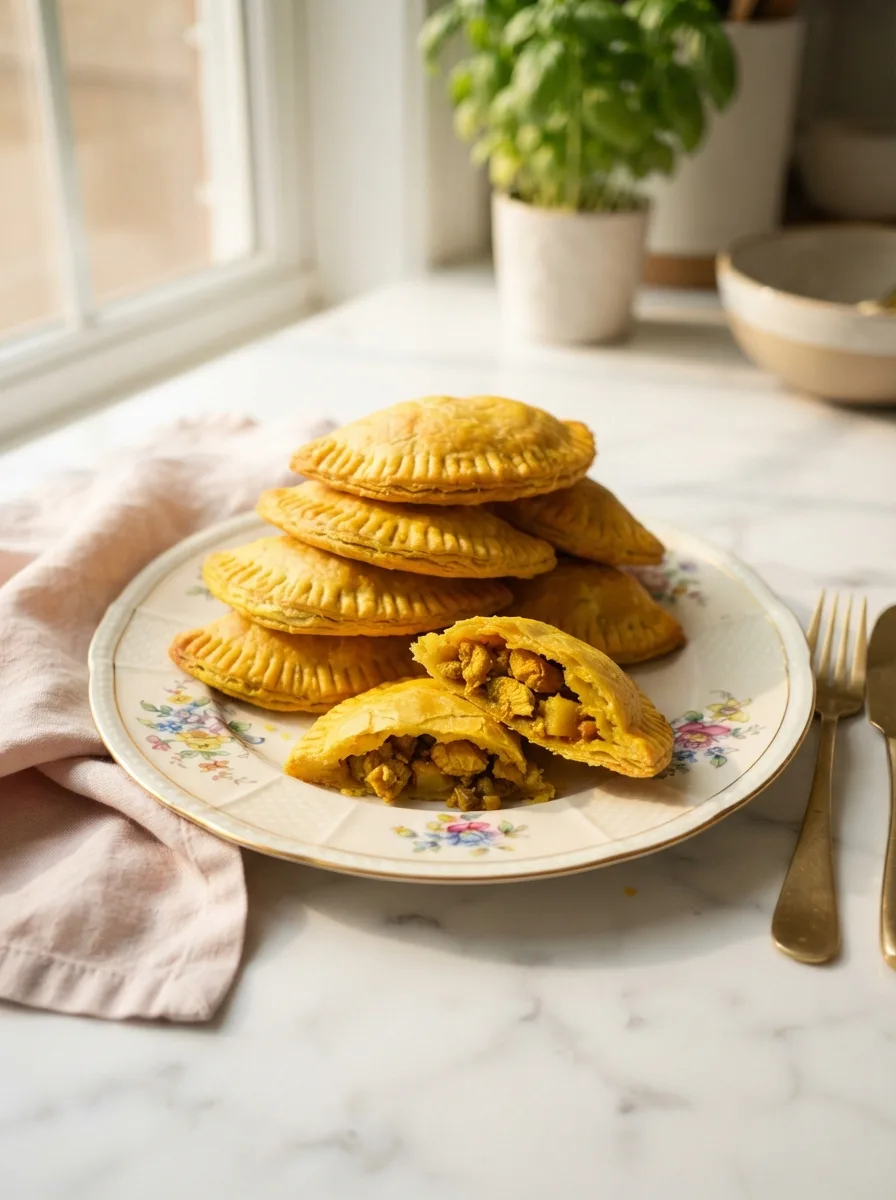
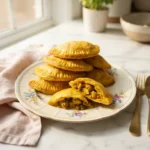
By test four, the crust held its shape through baking, cooling, and even a somewhat rough car ride to a friend’s house for feedback. The dough shatters into flaky layers, the curry filling stays thick and clingy instead of running out, and the color is the real deep golden-yellow you want from a proper jamaican curry chicken patty. This is the version I make now whenever the craving hits.
★★★★★ “I’ve made a lot of patty recipes that fall apart the second you pick them up. These didn’t. The filling stayed exactly where it was supposed to be.” — Denise R., recipe tester (pre-launch)
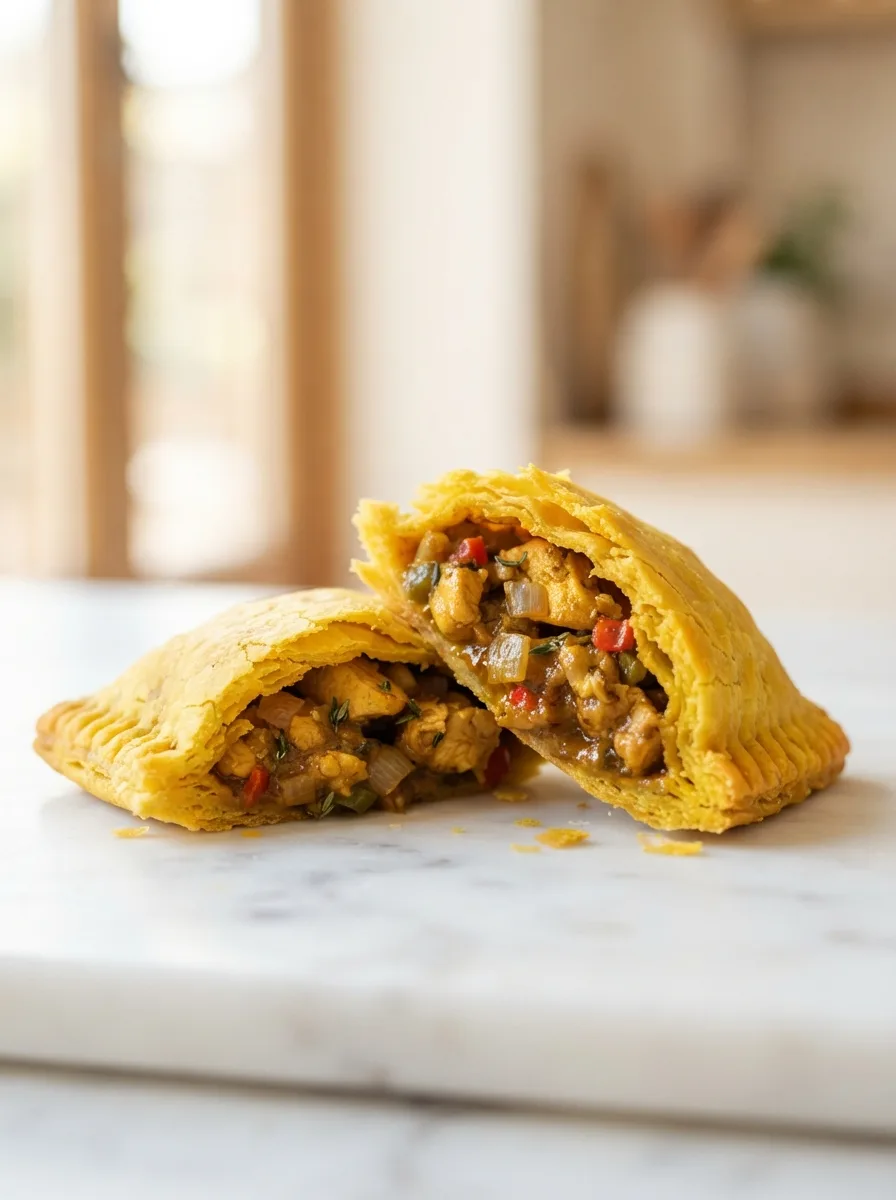
Why You’ll Love This Curry Chicken Patties Recipe
- A crust that actually holds together: The dough is chilled twice — once before rolling, once after filling — so it bakes into distinct flaky layers instead of a soggy shell.
- A filling that doesn’t leak: Cooking the curry chicken down until it’s thick enough to mound on a spoon means no more patties that seal shut and then burst open in the oven.
- Real curry flavor, not a shortcut version: Curry powder goes into both the dough and the filling, plus fresh thyme, scotch bonnet, and garlic, so the flavor doesn’t rely on one jar of seasoning to do all the work.
- Freezer-friendly for actual meal prep: These freeze unbaked or baked, so a Sunday batch turns into lunch for two weeks.
Key Ingredients
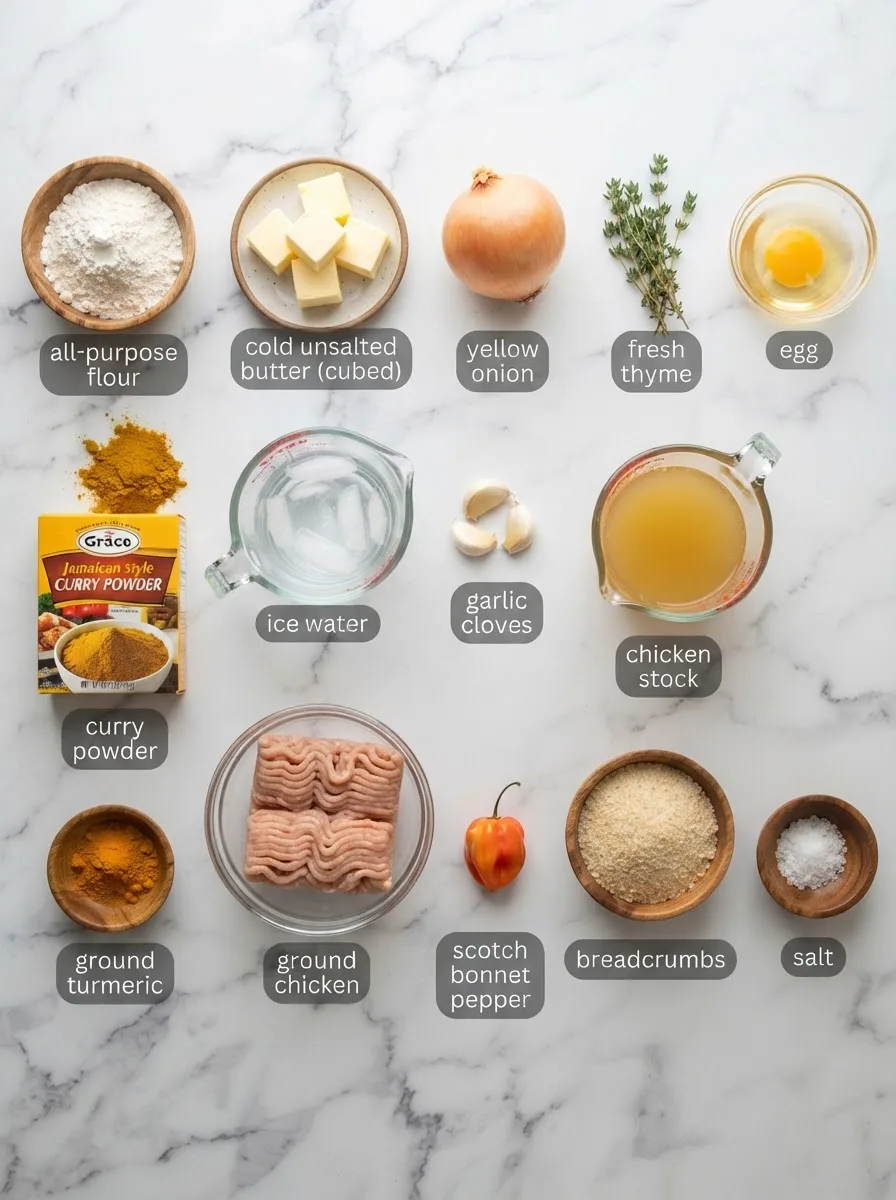
Curry powder (2 tablespoons in the dough, 3 in the filling). This is doing double duty — it’s what gives the pastry its signature yellow color and what carries most of the filling’s flavor. A Jamaican-style curry powder blend (allspice-forward, not the milder Indian-style blends) is worth seeking out. If you can’t find it, add a pinch of allspice to a standard curry powder to get closer to the real thing.
Ground turmeric. This is the ingredient responsible for that deep golden crust color. Curry powder alone gives you a dull yellow-brown; turmeric pushes it into the bright yellow you associate with a real jamaican curry chicken patty.
Scotch bonnet pepper. This is the most important variable in the filling. One pepper, seeds and all, gives real Caribbean heat without overwhelming the curry. If you’re heat-sensitive, remove the seeds and ribs first, or swap in a habanero for a slightly milder, fruitier version of the same heat.
Ground chicken. I use ground chicken thigh rather than breast — it stays juicier as the filling cooks down and reduces. Diced chicken thigh, pulsed briefly in a food processor, works just as well if ground chicken isn’t sold near you.
Cold butter. The butter needs to stay cold right up until it hits the oven. Warm butter melts into the flour instead of staying in distinct pieces, and distinct pieces are what create the flaky layers.
Ingredient Note: Don’t skip cooking the filling down after adding the breadcrumbs. The breadcrumbs absorb extra moisture, but the real fix for a leak-proof jamaican curry chicken patty is patience at the stove — the filling should be thick enough to hold a shape on the spoon before you turn off the heat.
Equipment You’ll Need
- Food processor or pastry cutter — for cutting the cold butter into the flour quickly. A box grater works in a pinch if you grate frozen butter directly into the flour.
- Large skillet — for cooking down the filling. A wide, heavy-bottomed skillet reduces liquid faster than a narrow saucepan.
- Rolling pin — for rolling the dough to an even thickness. A wine bottle works if you don’t own one.
- 3.5-inch round cutter or a small bowl — for cutting the dough circles. A drinking glass of the right size does the same job.
- Pastry brush — for the egg wash. The back of a spoon dipped in egg works if you don’t have one.
Controlling the Curry Heat Level (A Controlled Test)
I tested three heat levels side by side to figure out where most home cooks would land: no scotch bonnet, half a scotch bonnet with seeds removed, and one full scotch bonnet with seeds left in.
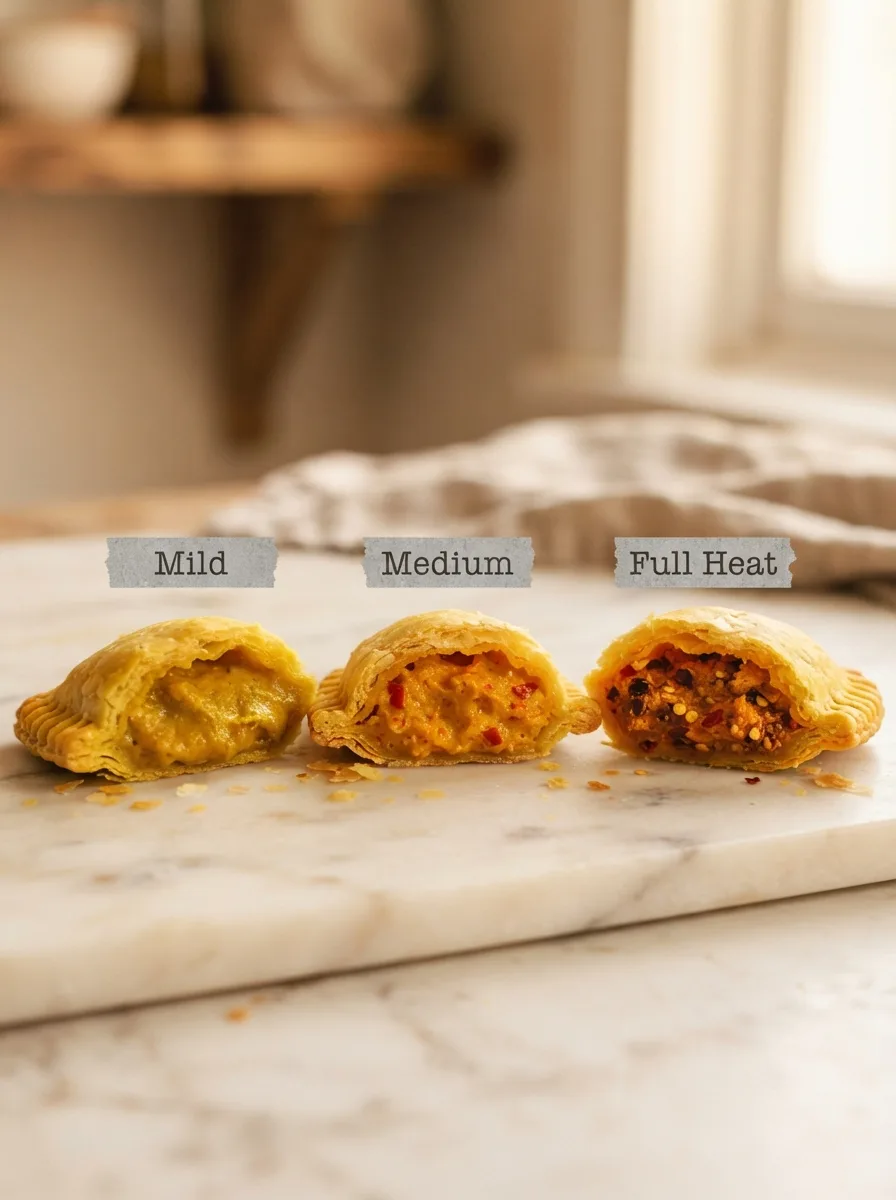
The no-pepper version tasted flat — curry powder alone doesn’t have enough brightness on its own, and several testers said it read as “safe but boring.” The half-pepper, seeds-removed version was the clear winner. It had real warmth that built after a few bites without anyone reaching for water. The full pepper with seeds was genuinely hot — good for scotch bonnet lovers, but two testers couldn’t finish more than one patty.
The recipe below defaults to one full scotch bonnet with the seeds removed, which lands close to that medium sweet spot. If you know your crowd runs hot or mild, adjust from there — it’s the one change that affects this recipe more than anything else.
How to Make Jamaican Curry Chicken Patties
Before you start: Cube your butter and put it back in the freezer for 10 minutes before you start the dough — this makes a noticeable difference in how flaky the crust turns out.
Step 1 — Make the Dough
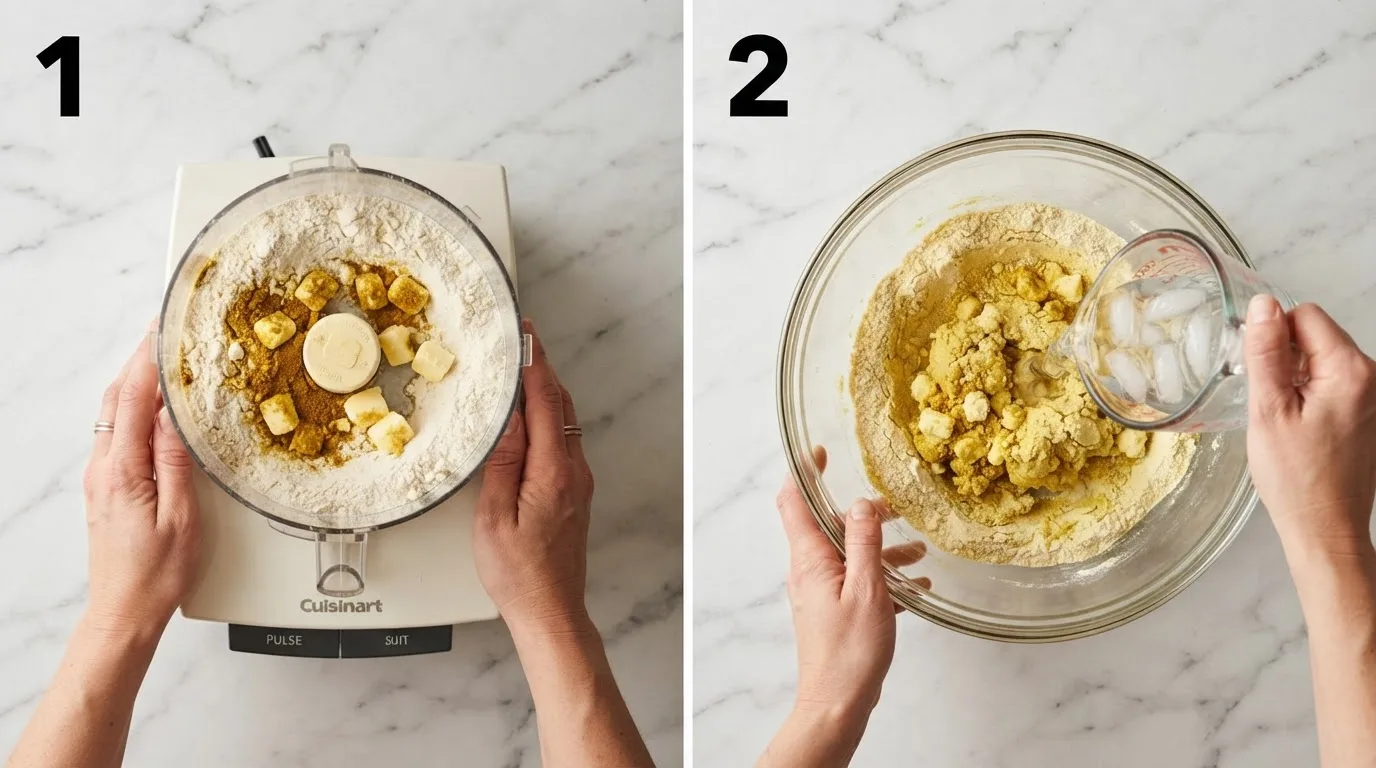
In a food processor, pulse the flour, curry powder, turmeric, and salt together until combined. Add the cold, cubed butter and pulse in short bursts until the mixture looks like coarse sand with some pea-sized butter pieces still visible. Those visible butter pieces are what melt during baking and create steam pockets — that’s the whole mechanism behind a flaky crust.
Step 2 — Chill the Dough
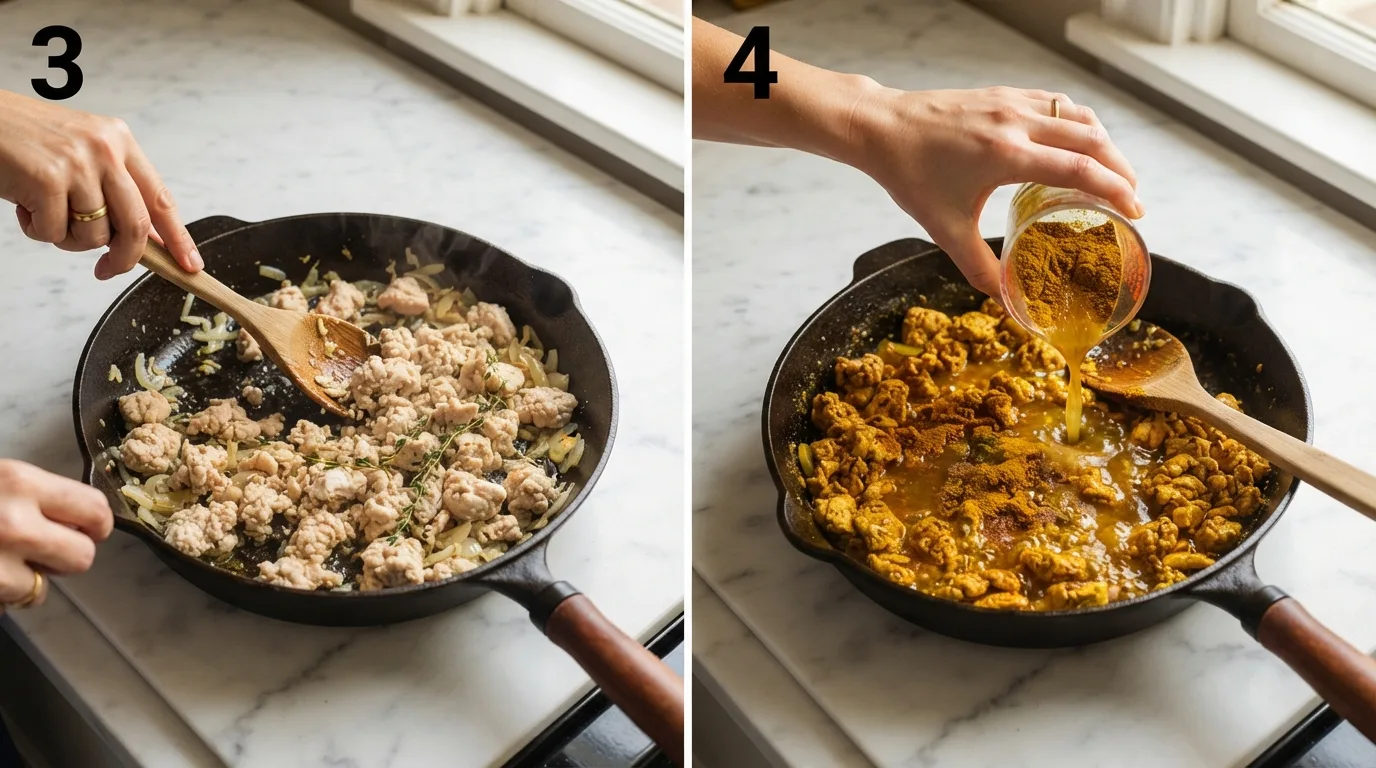
Drizzle in the ice water a tablespoon at a time, pulsing between additions, just until the dough clumps together when pressed between your fingers. Turn it out, shape it into a disc, wrap it tightly, and refrigerate for at least 30 minutes. The dough will feel slightly crumbly going in — that’s fine. It firms up and becomes easier to roll once it’s cold.
Step 3 — Cook the Filling Base
While the dough chills, heat oil in a large skillet over medium heat. Add the diced onion and cook for 4 to 5 minutes until it softens and turns translucent. Add the garlic, thyme, and minced scotch bonnet and cook for another minute until fragrant. Add the ground chicken and break it up with a spoon, cooking until it’s no longer pink.
Step 4 — Reduce the Filling Until Thick
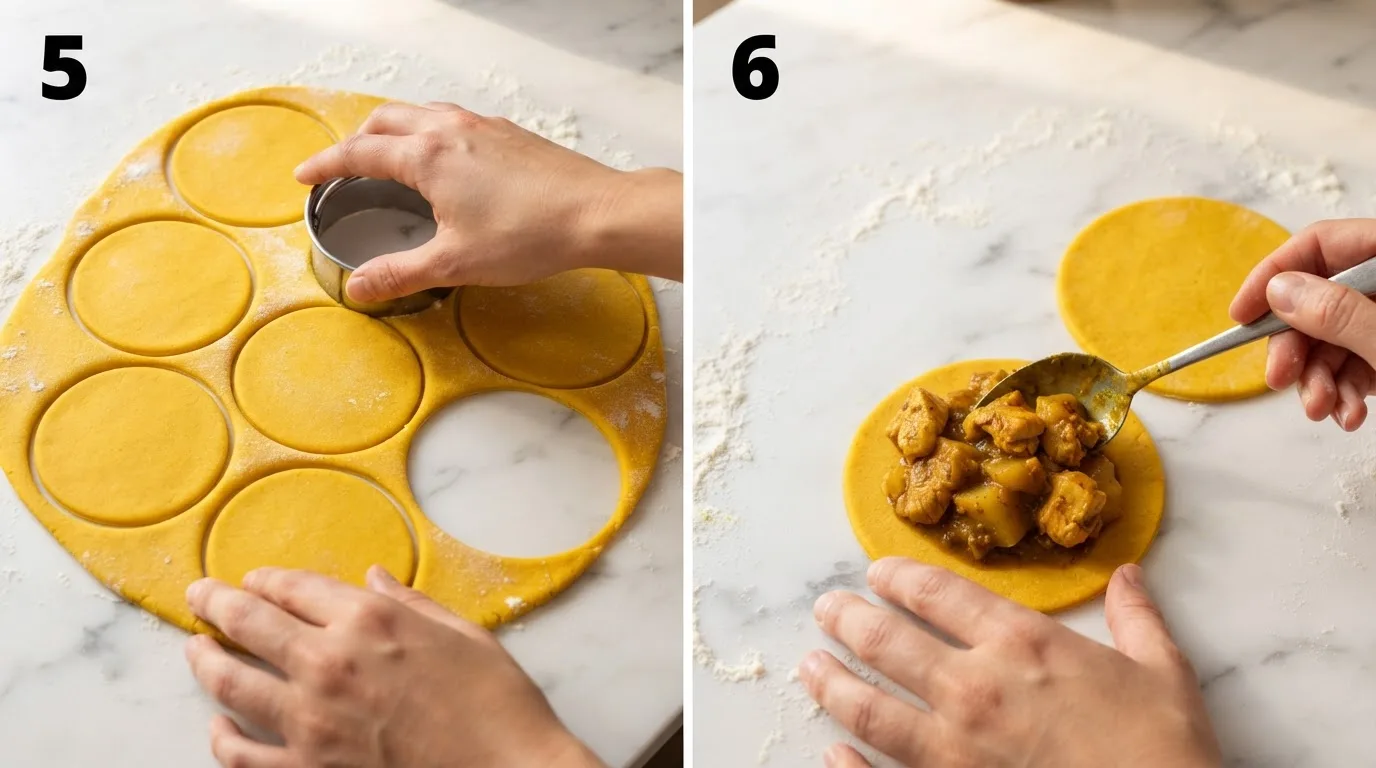
Stir in the curry powder and cook for 30 seconds to toast it slightly — this wakes up the spice before the liquid goes in. Pour in the chicken stock, bring it to a simmer, and let it cook, stirring occasionally, for 10 to 12 minutes. You’re looking for the liquid to reduce almost entirely, until the mixture holds together in a thick mound when you push it with a spoon. Stir in the breadcrumbs at the end and let the filling cool to room temperature before assembling — hot filling will melt the butter in the dough before it ever reaches the oven.
Step 5 — Roll and Cut the Dough
Roll the chilled dough out on a lightly floured surface to about ⅛-inch thickness. Cut circles using a 3.5-inch round cutter. You should get about 12 circles from one batch; gather and re-roll the scraps once if needed, keeping in mind the re-rolled dough will be slightly less flaky.
Step 6 — Fill and Seal
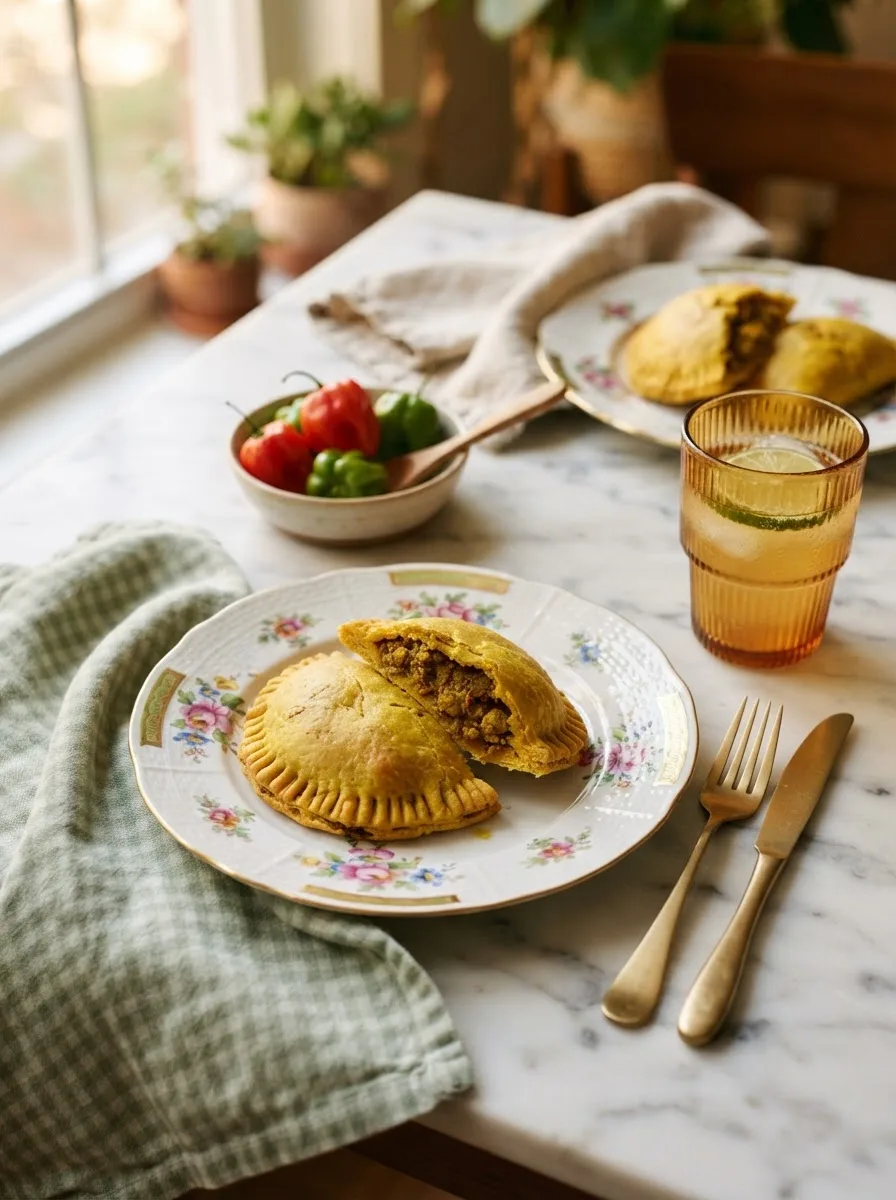
Place about 2 tablespoons of the cooled filling onto one half of each circle, leaving a small border clean. Fold the dough over into a half-moon shape and press the edges together with your fingers, then crimp firmly with a fork. This is the moment most first attempts go wrong — if the edges aren’t fully sealed, the filling will find the gap during baking. Press firmly enough that you can see the fork marks clearly indented, not just resting on the surface.
Step 7 — Egg Wash and Bake
Arrange the patties on a parchment-lined baking sheet, brush each one with beaten egg, and bake at 400°F for 25 to 28 minutes, until the crust is deep golden and firm to the touch. You’ll know they’re done when the edges have puffed slightly and the color has gone from pale yellow to a rich, almost bronze gold. Let them rest for 5 minutes before eating — the filling is still finishing its set during that time.
Pro Tips for Perfect Jamaican Curry Chicken Patties
Tip 1: Cool the filling completely before assembling. Warm filling softens the butter in the dough on contact, and softened butter means a crust that bakes up dense instead of flaky. Spread the filling on a plate to cool it faster if you’re short on time.
Tip 2: Double-chill for the flakiest layers. Chill the dough before rolling and again for 10 minutes after the patties are assembled and before they go in the oven. That second chill keeps the butter solid until the oven’s heat hits it, which is what creates distinct layers instead of a single dense sheet.
Tip 3: Crimp harder than feels necessary. A fork crimp that looks pressed but not deeply indented is the number one cause of leaking. Press until you can see clear ridges on both sides of the seam.
Tip 4: Weigh your flour if you have a scale. 1 cup of all-purpose flour can range from 120 to 150 grams depending on how it’s scooped. Too much flour makes the dough dry and prone to cracking when rolled; a kitchen scale removes that guesswork entirely.
Variations and Substitutions
Dietary Variations:
- Dairy-free: Swap the butter for an equal weight of cold, solid coconut oil. The dough is slightly less flaky but takes on a faint coconut note that actually works well with the curry.
- Gluten-free: A 1:1 gluten-free flour blend with xanthan gum works for the dough, though it will be more delicate to roll — chill it a full hour instead of 30 minutes and roll it slightly thicker to compensate.
Flavor Variations:
- Jerk chicken patties: Swap the curry powder in the filling for a spoonful of my jamaican jerk seasoning and skip the turmeric in the dough for a more traditional pale crust. The flavor profile shifts from warm and earthy to smoky and peppery.
- Curry paste shortcut: If you have a jar of tikka paste on hand, two tablespoons stirred into the filling in place of the curry powder gets you most of the way there faster, though the flavor leans slightly more Indian than Jamaican.
Ingredient Substitutions:
- Ground turkey works as a 1:1 swap for ground chicken with almost no difference in texture.
- Beef stock in place of chicken stock if that’s what’s in your fridge — the flavor shifts slightly richer but still works.
Troubleshooting
Why is my chicken patty jamaican filling leaking out during baking?
This almost always comes down to the seal, not the filling. If the fork crimp isn’t pressed deeply enough, steam builds inside the patty during baking and finds the weakest point in the seam. Press the crimp firmly enough to see clear indentations on both sides, and make sure the filling stays at least ½ inch from the edge before folding.
Why is my dough cracking when I try to roll it?
Cracking usually means the dough is too cold and firm straight out of the fridge, or there’s too much flour worked in. Let it sit at room temperature for 5 minutes before rolling, and roll from the center outward in short strokes rather than pressing hard in one spot.
Why does my filling taste flat even though I added curry powder?
Old curry powder loses potency fast — if it’s been in your pantry more than six months, it’s likely part of the problem. The other common cause is skipping the 30-second toast step before adding liquid; that brief moment in the dry pan wakes up the spice oils and makes a real difference in how forward the curry flavor comes through.
Storage and Make-Ahead
Counter: Baked patties can sit at room temperature for up to 2 hours before they should go in the fridge.
Refrigerator: Store baked patties in an airtight container for up to 4 days. Reheat rather than eating cold — the crust firms back up nicely with heat.
Freeze (unbaked): Assemble the patties, arrange them on a tray without touching, and freeze until solid, about 2 hours. Transfer to a freezer bag and bake straight from frozen, adding 8 to 10 minutes to the bake time.
Freeze (baked): Cool completely, then freeze in a single layer before transferring to a bag. Keeps well for up to 3 months.
Reheating: A 350°F oven for 12 to 15 minutes restores the flaky crust far better than a microwave, which will leave it soft and slightly damp.
Make-Ahead: The filling can be made up to 3 days ahead and refrigerated, which cuts a real chunk of hands-on time out of assembly day.
Frequently Asked Questions
Q: Are curry chicken jamaican patties spicy? A: As written, with one scotch bonnet and the seeds removed, they land medium — noticeable warmth without being overwhelming. Remove the pepper entirely for a mild version, or leave the seeds in for real heat.
Q: What’s the difference between a jamaican curry chicken patty and a beef patty? A: The dough is nearly identical — both get their yellow color from turmeric and curry powder. The difference is entirely in the filling: beef patties use ground beef with a more Scotch bonnet-forward seasoning, while these lean on curry powder and a longer reduction time to build flavor.
Q: Can I make these ahead for a party? A: Yes — assemble and refrigerate unbaked patties up to a day ahead, or bake them the morning of and reheat in a 350°F oven for 10 minutes right before serving.
Q: Can I air fry these instead of baking? A: Yes. Air fry at 375°F for about 15 minutes, flipping halfway, until golden. Brush with egg wash before air frying just as you would for the oven.
Q: My filling turned out watery — what went wrong? A: The filling wasn’t reduced long enough. It should hold its shape in a thick mound on a spoon before you turn off the heat — if it’s still pourable, it needs more time on the stove.
Q: Can I use rotisserie chicken instead of cooking chicken from raw? A: Yes, shredded rotisserie chicken works well. Pulse it briefly in a food processor for a finer texture closer to ground chicken, and reduce the cooking time on the filling since the chicken is already cooked.
Q: What should I serve alongside these? A: A bowl of parsnip and leek soup makes a genuinely good pairing on a cooler day, and a side of jamaican roti rounds out the meal if you want something more filling.
More Jamaican Recipes You’ll Love
- Jamaican Roti — soft, pliable flatbread that’s perfect for scooping up extra curry filling
- Parsnip and Leek Soup — a warm, comforting pairing for a cooler-weather meal alongside these patties
- Tikka Paste — the shortcut curry base referenced in the variations above
- Jamaican Jerk Seasoning — my go-to blend for the jerk variation of this recipe
Foolproof Jamaican Curry Chicken Patties
Ingredients
For the Dough:
- 3 cup all-purpose flour
- 2 tablespoon curry powder
- 1 tablespoon ground turmeric
- 1 teaspoon salt
- 1 cup cold unsalted butter, cubed
- 3/4 cup ice water
- 1 egg, beaten (for egg wash)
For the Curry Chicken Filling:
- 2 tablespoon oil
- 1 medium yellow onion, diced
- 3 clove garlic, minced
- 1 scotch bonnet pepper, seeds removed and minced
- 2 teaspoon fresh thyme leaves
- 1 pound ground chicken
- 3 tablespoon curry powder
- 1 cup chicken stock
- 1/3 cup plain breadcrumbs
- Salt and black pepper, to taste
Instructions
- In a food processor, pulse the flour, curry powder, turmeric, and salt together. Add the cold cubed butter and pulse until the mixture resembles coarse sand with pea-sized butter pieces remaining.
- Drizzle in the ice water a tablespoon at a time, pulsing between additions, until the dough clumps when pressed. Shape into a disc, wrap tightly, and refrigerate for at least 30 minutes.
- Heat oil in a large skillet over medium heat. Cook the onion for 4 to 5 minutes until translucent, then add garlic, thyme, and scotch bonnet and cook 1 minute more.
- Add the ground chicken and cook, breaking it up, until no longer pink. Stir in the curry powder and toast for 30 seconds.
- Pour in the chicken stock, bring to a simmer, and cook for 10 to 12 minutes, stirring occasionally, until the liquid reduces and the mixture holds together in a thick mound. Stir in the breadcrumbs and season to taste. Cool to room temperature.
- Roll the chilled dough to ⅛-inch thickness and cut into 3.5-inch circles, re-rolling scraps once if needed.
- Place 2 tablespoons of cooled filling on one half of each circle. Fold into a half-moon and press the edges together, then crimp firmly with a fork.
- Arrange on a parchment-lined baking sheet, chill for 10 minutes, then brush with beaten egg.
- Bake at 400°F for 25 to 28 minutes, until deep golden and firm. Rest for 5 minutes before serving.
Notes
- The filling can be made up to 3 days ahead and refrigerated, which cuts a significant amount of hands-on time out of assembly day.
- Unbaked assembled patties freeze well for up to 3 months — freeze flat on a tray before transferring to a bag, and bake straight from frozen with 8 to 10 extra minutes.
- Weighing the flour (about 130g per cup) gives more consistent dough than scooping, especially if the dough has cracked on previous attempts.
- Old curry powder (more than 6 months open) loses potency fast — a fresh jar makes a noticeable flavor difference in the filling.
- If doubling the recipe, cook the filling in two batches rather than one large batch — crowding the pan slows down the liquid reduction significantly.
- A 3.5-inch round cutter yields 12 patties from one batch of dough; a smaller cutter yields more, smaller patties with a shorter bake time.
- For a lighter version, brush with milk instead of egg wash — the crust will be slightly less glossy but still golden.
- Leftover filling on its own (without the dough) reheats well over rice for a quick lunch if you have extra after assembling patties.