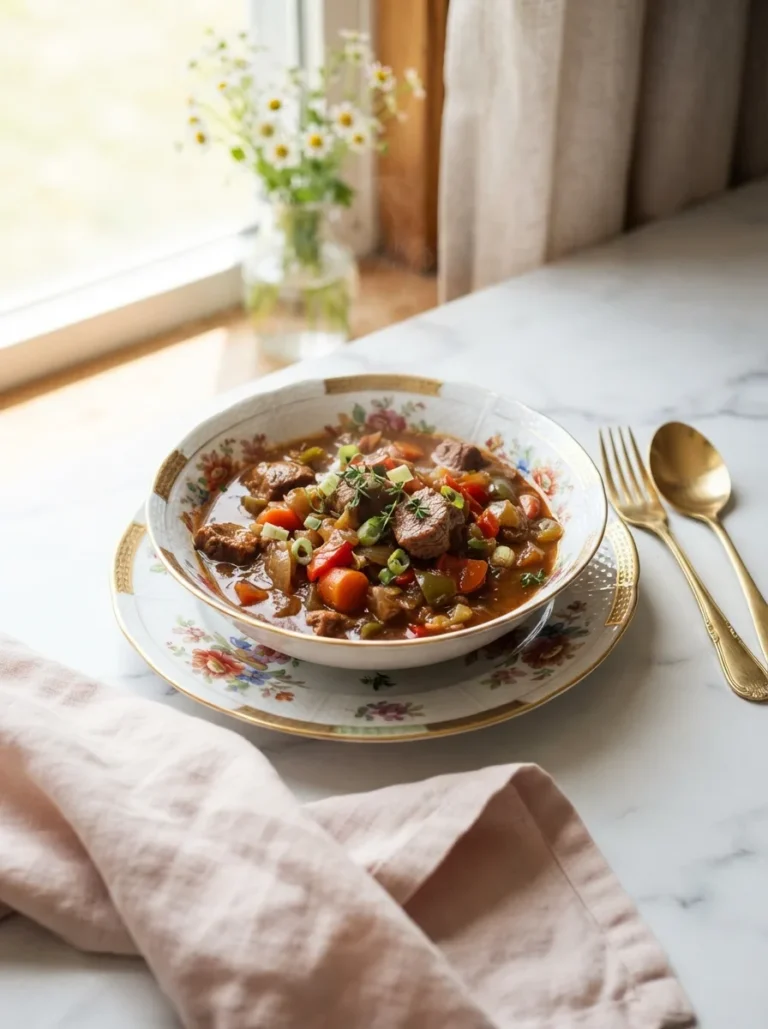
Foolproof Jamaican Jerk Seasoning

My second batch of homemade Jamaican jerk went straight into the trash: I used too many peppers, and the burn flattened every other flavor. That mistake led me to this Jamaican jerk seasoning recipe, a thick paste built with scotch bonnet peppers, pimento allspice, scallions, and aromatics instead of a dusty shaker blend.
I tested four batches, changing the heat level each time. The version below keeps the fruity pepper flavor noticeable while leaving room for allspice, thyme, garlic, and scallion. Heat level is the most important variable here, because scotch bonnet peppers can vary in size and intensity. Start with the listed amount, then adjust carefully in a later batch.
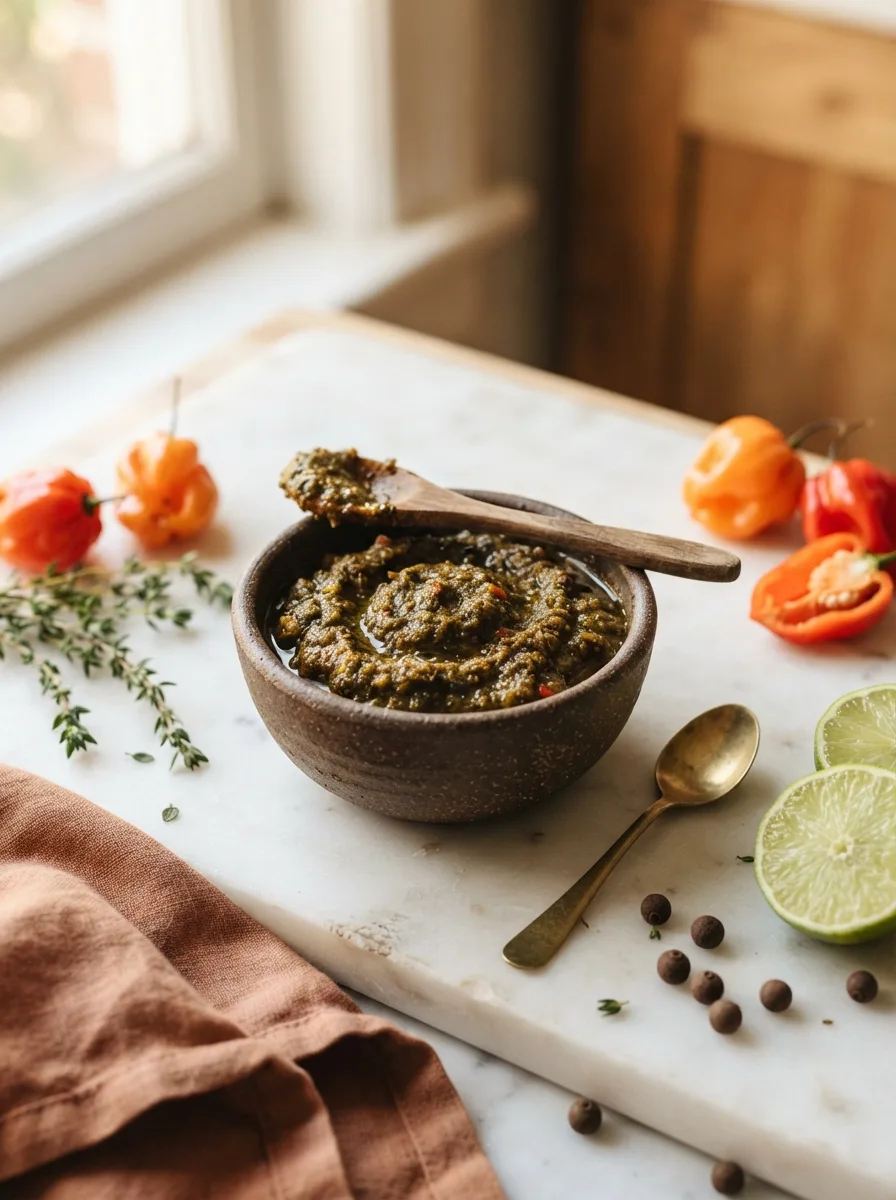
The result is a spoonable jerk marinade, not a dry rub. The raw paste may smell alarmingly hot when you first blend it; that is the scary moment. Don’t panic—the heat settles as it rests and cooks, and a few hours in the refrigerator lets the marinade cling to chicken or pork while the allspice and aromatics round out the taste.
★★★★★ “I’ve made jerk chicken from at least six different bottled seasonings over the years. This is the first time it’s tasted like the jerk pork I had in Ocho Rios. The allspice makes it.” — Denise R., recipe tester (pre-launch)
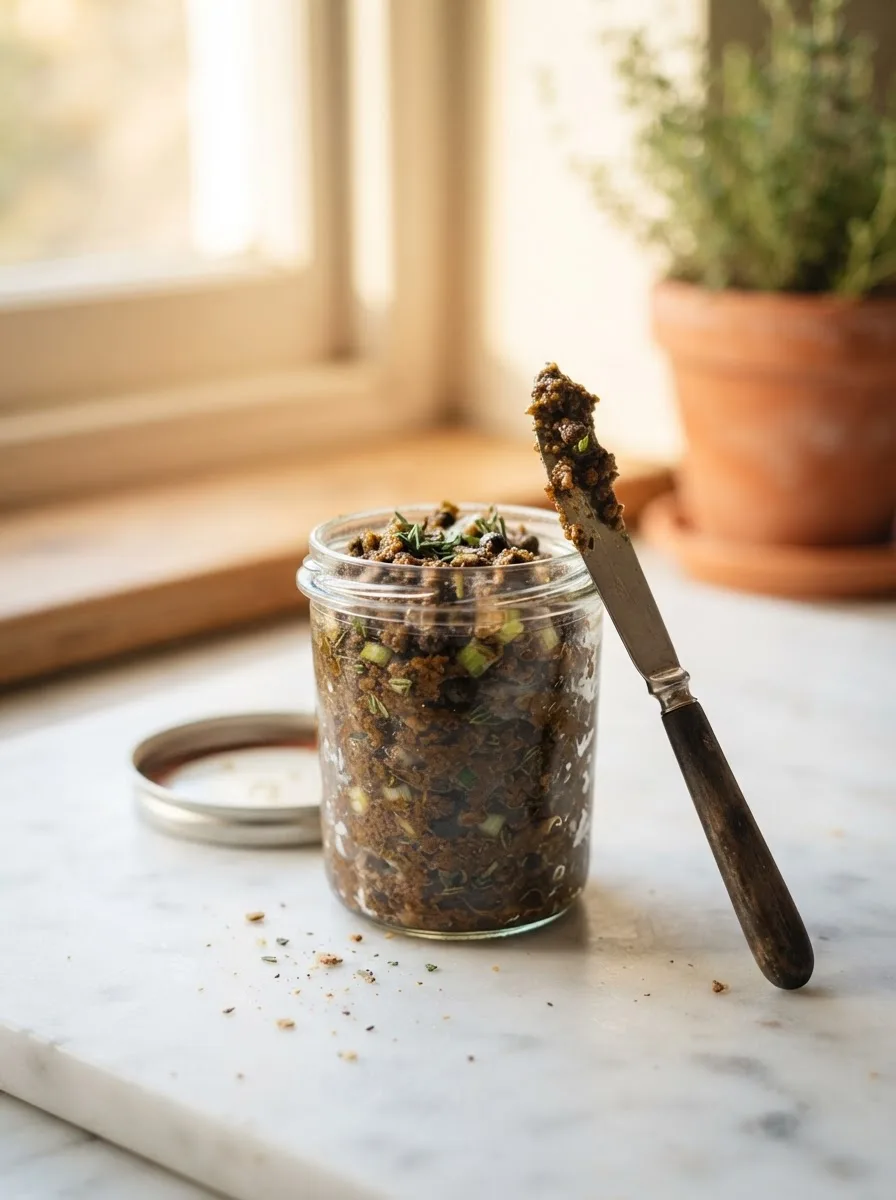
Why You’ll Love This Jamaican Jerk Seasoning
- Adjustable heat: You control the scotch bonnet amount instead of accepting the fixed heat in a bottled seasoning.
- Deeper spice flavor: Toasting whole allspice and cinnamon warms the spices, drives off surface moisture, and releases more aromatic oils before they are ground.
- Useful wet blend: This jerk seasoning works as a marinade straight from the blender and clings well to chicken or pork.
- Easy portions: Freeze extra paste in small portions so a spoonful of jerk seasoning is ready for another meal.
Key Ingredients
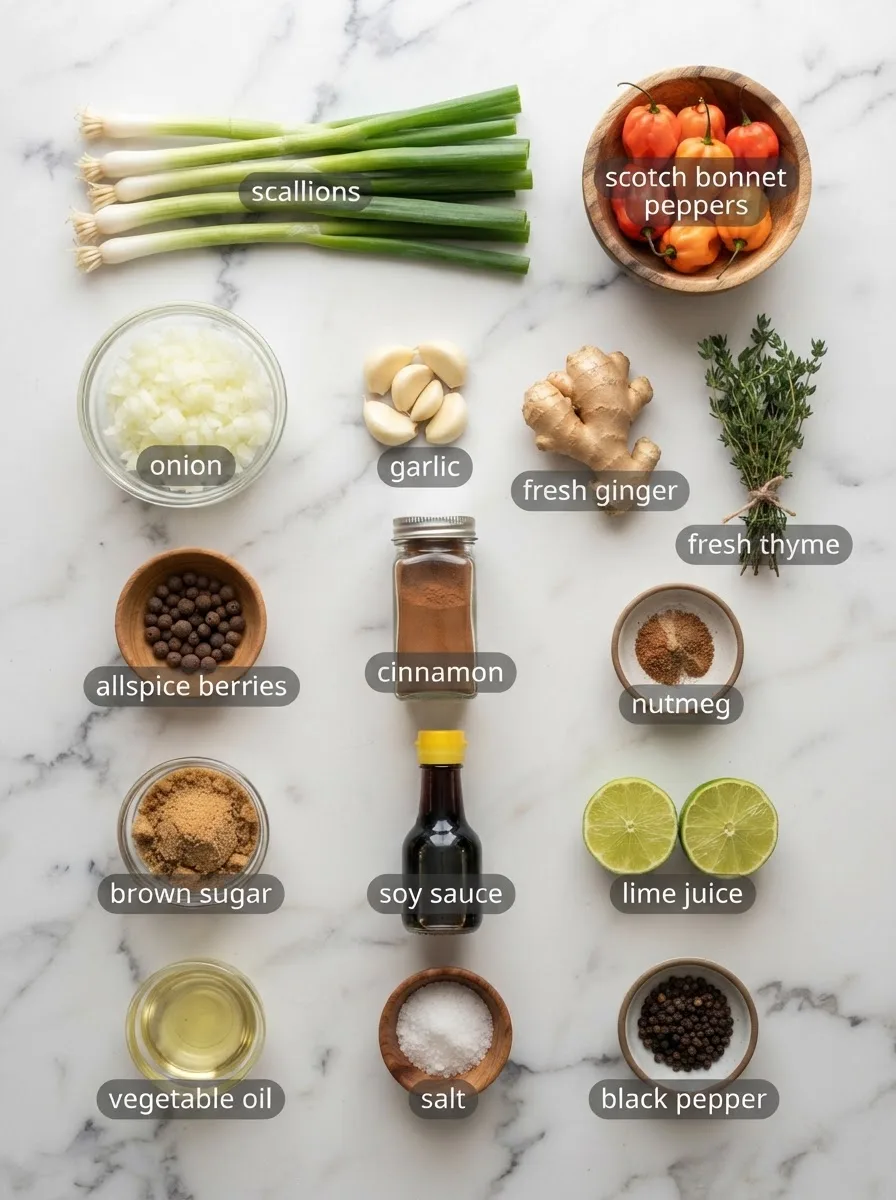
Scotch bonnet peppers. They bring fruity heat, not just burn, and give this homemade jerk seasoning its recognizable character. Their heat varies, so use the tested amount in the recipe before changing it.
Allspice berries (pimento). This is the warm, clove-like backbone of authentic jerk seasoning. Toasting whole berries helps release aromatic oils; ground allspice skips that step and gives a softer result.
Fresh thyme. Its green, peppery note keeps the blend from tasting heavy.
Scallions. They provide mild onion flavor, sweetness, water, and bulk. That moisture helps the blender turn the aromatics into a thick paste instead of a dry, stubborn mix.
Soy sauce, brown sugar, lime juice, oil, garlic, onion, and ginger. Together, they supply salt, sweetness, acidity, richness, and savory flavor. The sugar rounds the pepper heat, while the liquid ingredients help the paste blend smoothly.
Ingredient Note: Put on gloves before handling scotch bonnet peppers. Wash the gloves, knife, board, and hands carefully afterward; pepper oils can remain on surfaces and cause a painful surprise near your eyes.
Equipment You’ll Need
- Food processor or blender — Use a blender for a smoother paste or a food processor for more texture.
- Rubber gloves — Wear them while handling the peppers.
- Small dry skillet — Toasts the whole allspice and cinnamon.
- Spice grinder or mortar and pestle — Grinds the toasted spices into a coarse powder.
- Glass jar with lid — Use a clean, food-safe jar for the finished seasoning blend.
Controlling the Heat Level (A Controlled Test)
I made four jerk seasoning batches, changing only the number of whole scotch bonnet peppers: 2, 3, 4, or 6, with the seeds and ribs left in every batch. Pepper size varies, so use these counts as a practical guide rather than an exact heat scale. Capsaicin activates heat receptors in your mouth, which is why the burn can build for several seconds after tasting.
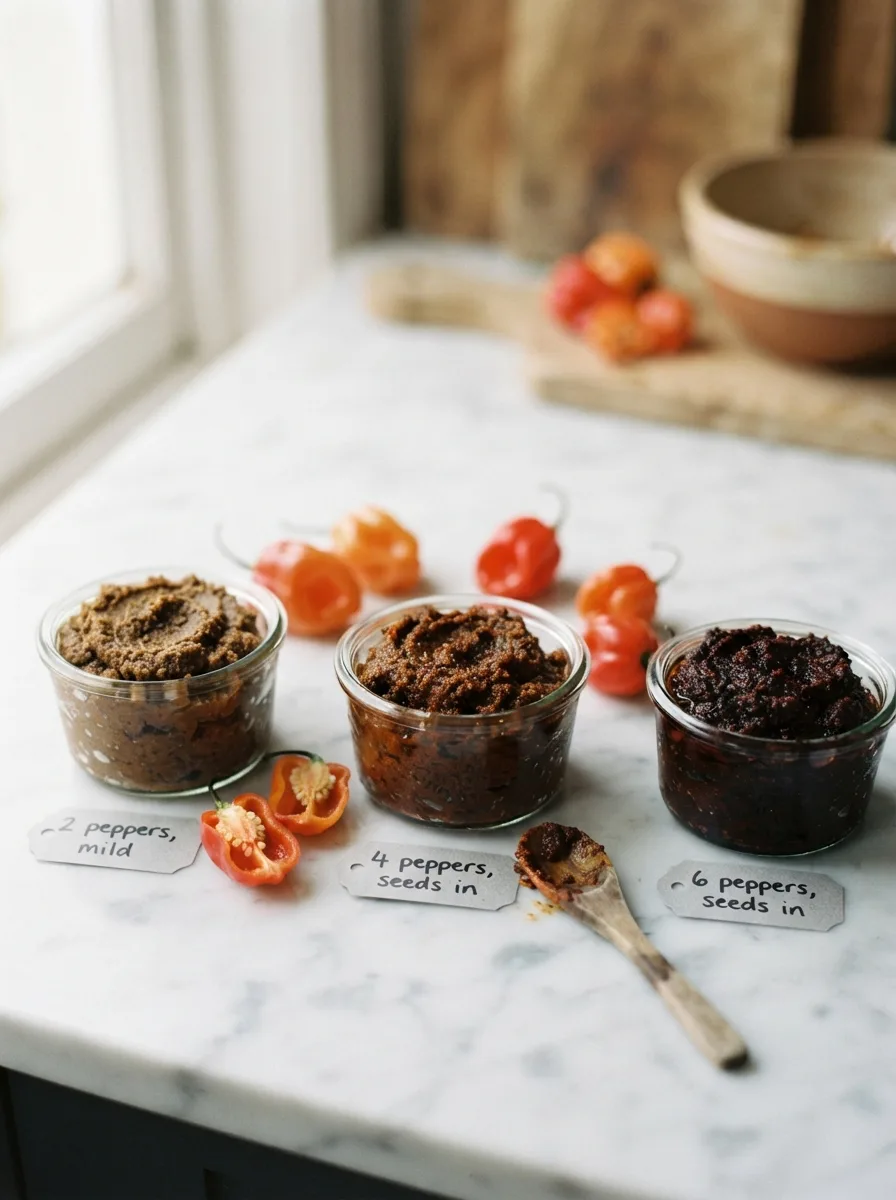
2 peppers: Mild and aromatic, but the scotch bonnet character is quiet.
3 peppers: Noticeable heat with the allspice and thyme still clear.
4 peppers: The balance I use in this recipe: a real jerk flavor without losing the other flavors.
6 peppers: Very hot; the burn begins to cover the spice blend. The trade-off is simple: more heat can mean fewer flavors in the finished seasoning.
How to Make Jamaican Jerk Seasoning
Before you start: Put on gloves before touching the 4 scotch bonnet peppers. Set out 4 trimmed scallions, ½ small onion, 4 garlic cloves, a 1-inch piece of ginger, ¼ cup fresh thyme leaves, 2 tablespoons allspice berries, 1 cinnamon stick, 1 tablespoon brown sugar, 2 tablespoons soy sauce, 2 tablespoons lime juice, 2 tablespoons oil, 1 teaspoon salt, and ½ teaspoon black pepper. Have your food processor or blender assembled; this jerk seasoning comes together quickly once the ingredients are ready.
Step 1 — Prep the Aromatics
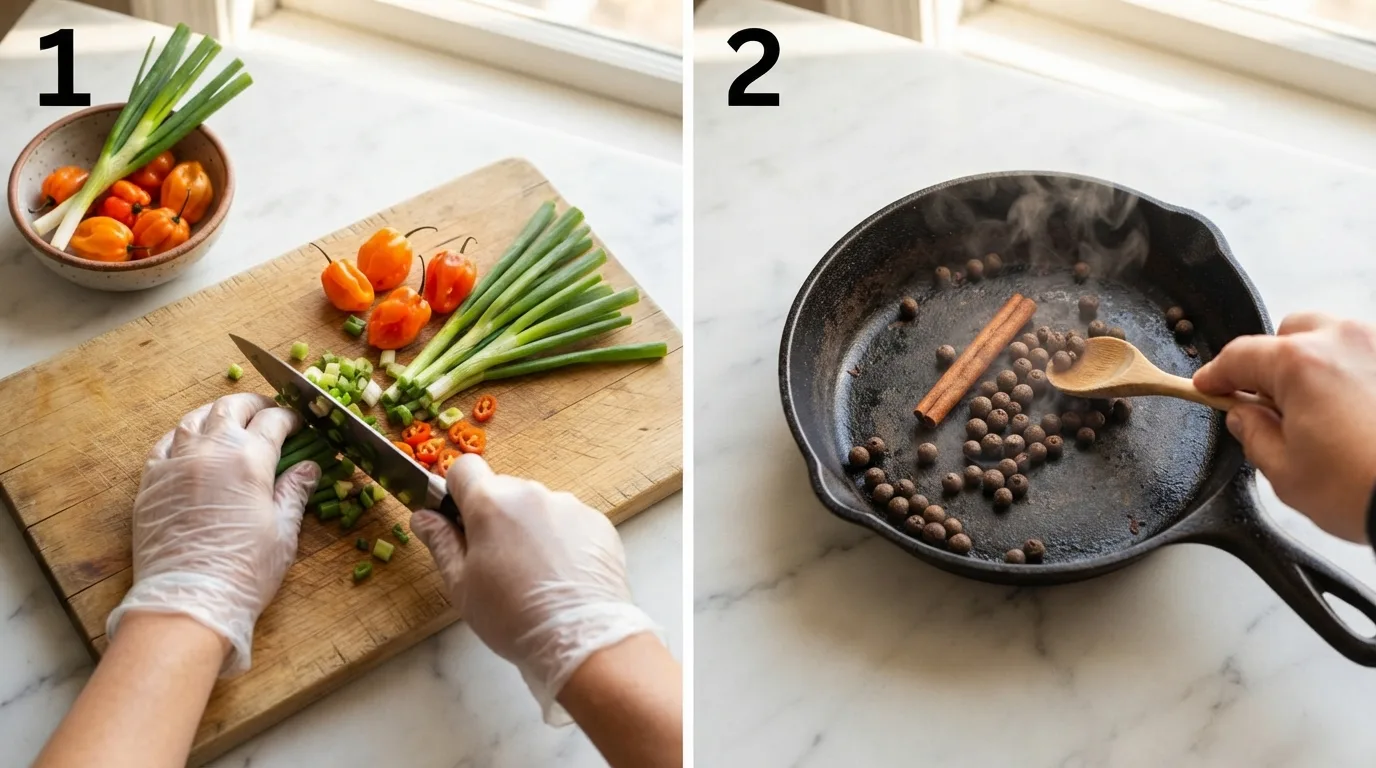
Roughly chop the scallions, onion, garlic, and ginger so the blade can break them down evenly. Remove the stems from the scotch bonnet peppers, but leave the seeds and ribs in for the tested 4-pepper heat level. Keep your gloves on through this entire step, and wash the cutting board and knife when you finish.
Step 2 — Toast and Grind the Whole Spices
Add the 2 tablespoons of allspice berries and the cinnamon stick to a dry skillet over medium heat. Toast for 60–90 seconds, shaking the pan constantly, until the spices smell fragrant. Heating them drives off surface moisture and helps release their aromatic oils. Cool for 1 minute, then grind them to a coarse powder. Stop before the mixture becomes dusty and hot.
Step 3 — Combine Everything in the Blender
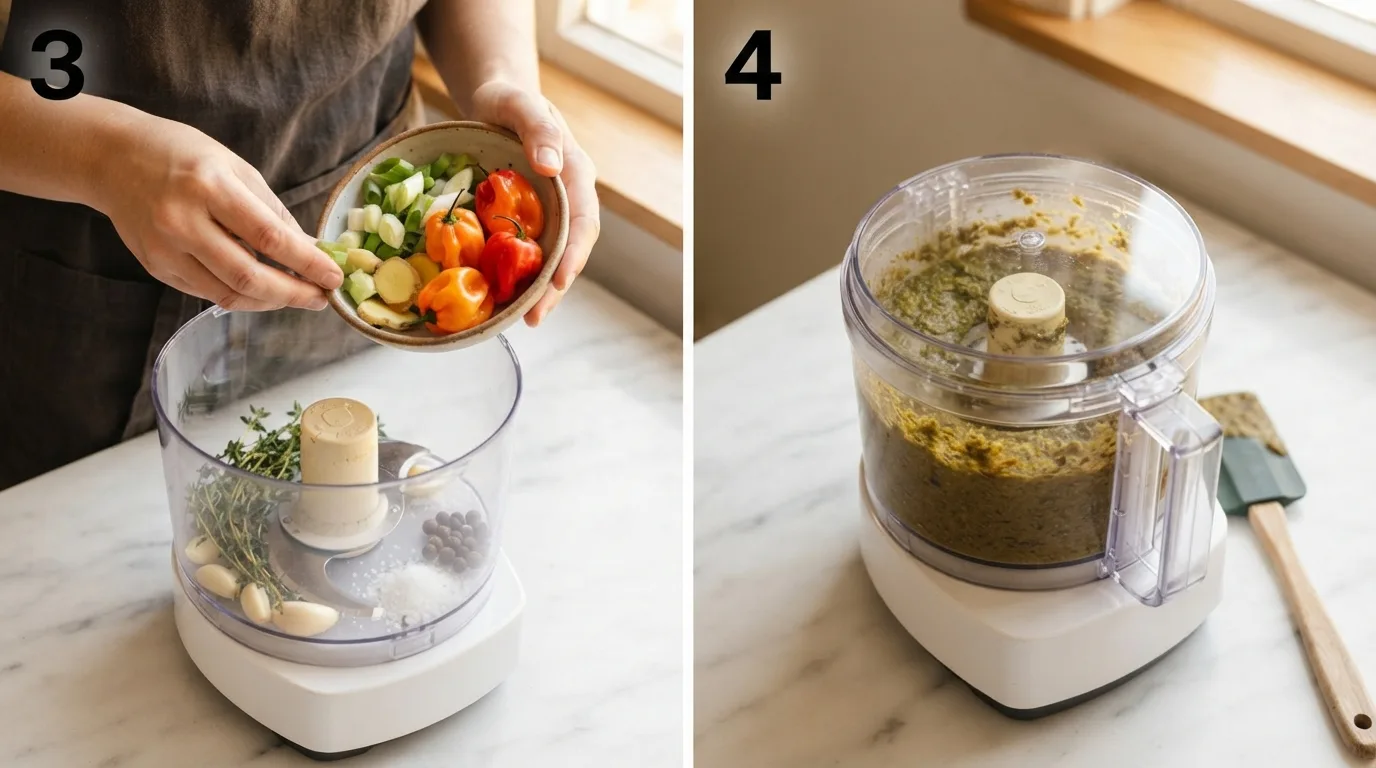
Add the scallions, onion, garlic, ginger, scotch bonnet peppers, thyme, ground toasted spices, brown sugar, soy sauce, lime juice, oil, salt, and black pepper to the blender or food processor. The scallions and onion bring enough moisture and bulk to help the blade pull the ingredients into a smooth mix.
Step 4 — Blend to a Smooth Paste
Blend on high for 1–2 minutes, stopping every 20–30 seconds to scrape down the sides. Oil and lime juice help the blade move through the vegetables, while the solids thicken the mixture into a spoonable paste. It should hold its shape on a spoon rather than pour like a sauce. If the blade stalls, add 1 tablespoon of water, blend for 20 seconds, and repeat only if needed.
Step 5 — Taste and Adjust the Heat
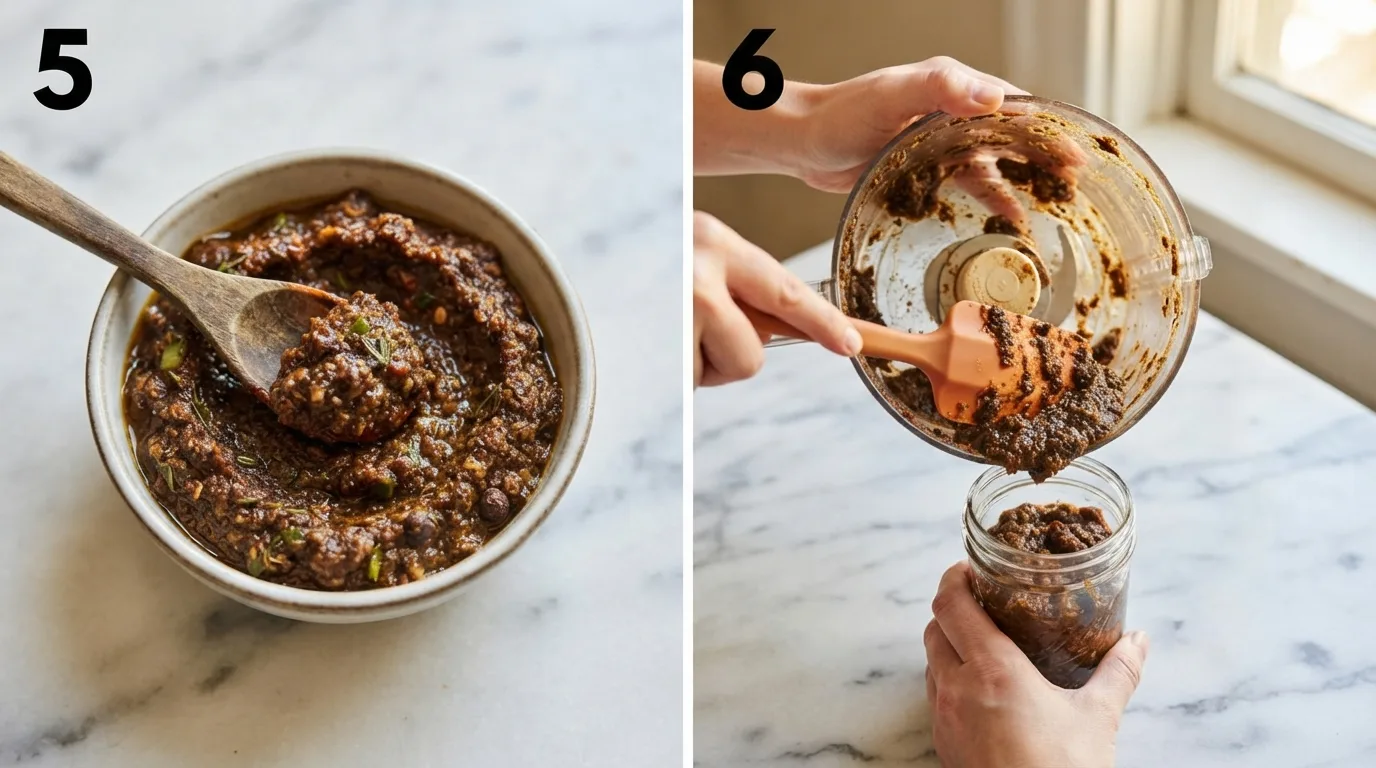
The raw paste may smell alarmingly hot, so this is the scary moment—don’t taste a spoonful. If you need to check the seasoning, touch a clean spoon to a tiny smear and taste only that amount after the paste has rested for 5 minutes. If it is too hot, stir in 1 tablespoon brown sugar or 2 tablespoons finely chopped onion. If it needs more punch, add 1 chopped scotch bonnet pepper, then blend for 20 seconds.
Step 6 — Transfer and Store
Scrape the paste into a clean, food-safe glass jar and refrigerate it promptly. Use it immediately if you are applying it to meat, or chill it for at least 15–20 minutes so the sugar, acid, pepper, and spices begin to meld. Do not leave this raw vegetable paste at room temperature for storage.
Pro Tips for Jamaican Jerk Seasoning
Tip 1: Toast the whole spices. Toast the allspice berries and cinnamon for 60–90 seconds over medium heat. Warming them releases aromatic oils before you grind them, giving the seasoning a fuller flavor.
Tip 2: Rest the paste briefly. Refrigerate the blended jerk seasoning for 15–20 minutes before using it. That short rest lets the acid, sugar, salt, and pepper settle into a more even taste.
Tip 3: Marinate chicken or pork for 2–12 hours. Two hours gives the surface time to absorb the marinade; 8–12 hours gives thicker cuts more flavor. Keep the meat refrigerated, and discard any marinade that has touched raw meat.
Dietary and flavor swaps: For a soy-free, gluten-free version, replace the soy sauce with the same amount of coconut aminos and add a pinch of salt. For less sugar, use 1 teaspoon brown sugar; the pepper will taste sharper. Habanero replaces scotch bonnet at the same quantity, while jalapeño makes the homemade Jamaican seasoning milder and less fruity. Replace ¼ cup fresh thyme with 1½ teaspoons dried thyme, or use 1 tablespoon ground allspice instead of toasted berries. For pineapple jerk, replace the lime juice with ¼ cup pineapple juice. These changes work, but the seasoning blend will not taste identical.
Variations and Substitutions
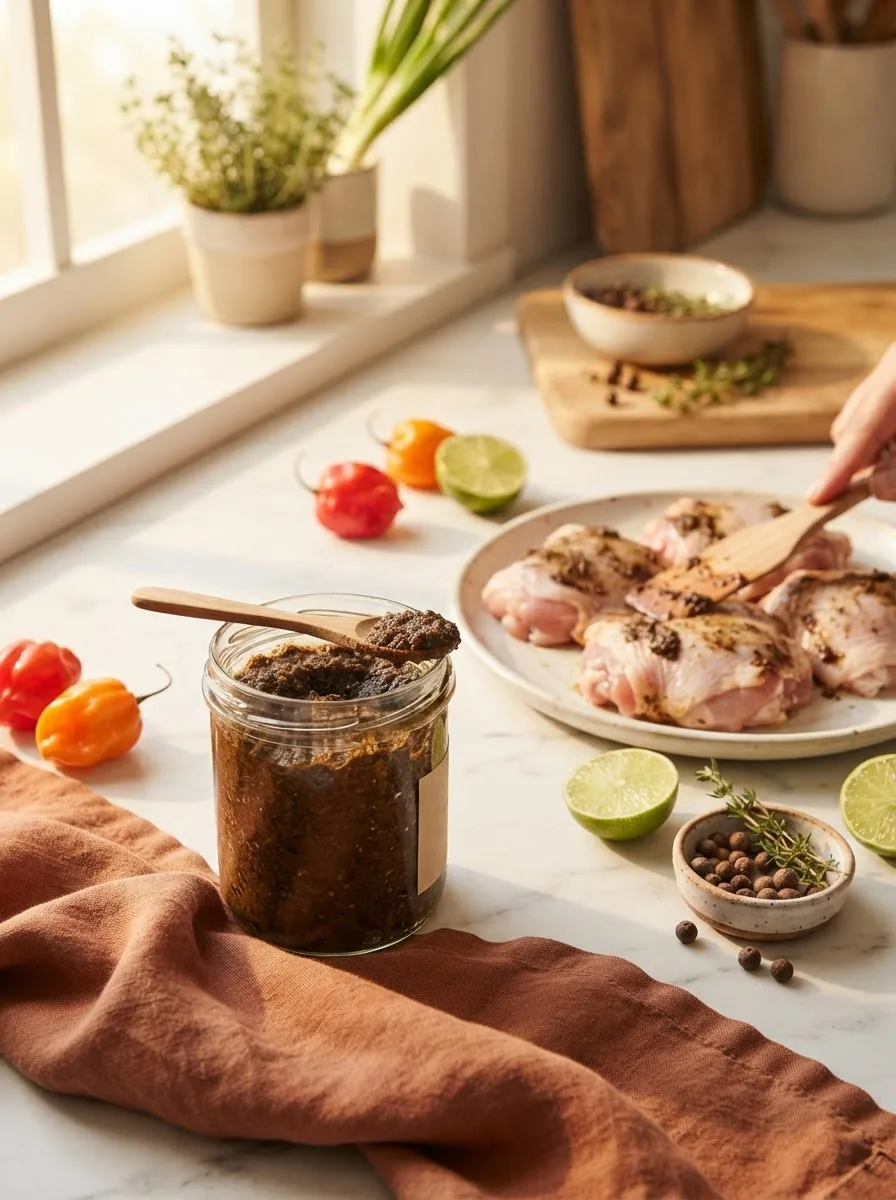
This homemade jerk paste also works as the marinade base for my Jamaican Stew Pork Recipe. Rub it onto the pork before refrigerating it overnight.
Troubleshooting
Why is my jerk seasoning too watery?
Too much lime juice, soy sauce, or oil adds water and liquid without adding vegetable solids. Blend in 1 scallion or 1 tablespoon finely chopped onion to give the mixture more bulk. Add water only when the blade cannot move through the paste.
Why is my jerk seasoning too hot to use?
Stir in 1 tablespoon brown sugar and 2 tablespoons finely chopped onion, then refrigerate the paste for 15 minutes before checking it again. The added solids spread out the pepper heat while the sugar softens its sharp edge. For another batch, use fewer peppers and keep the seeds and ribs consistent.
Why does my jerk seasoning taste flat or dull?
Old ground spices lose aroma over time. Toast fresh allspice berries and cinnamon for 60–90 seconds, cool them for 1 minute, and grind them before blending. Freshly released aromatic oils give the seasoning more depth than a stale jar.
Storage and Make-Ahead
Counter: Do not store the paste at room temperature. Raw garlic, onion, herbs, and peppers need refrigeration.
Refrigerator: Store in an airtight glass container and use within 5 days. Keep the jar cold and use a clean spoon each time.
Freeze: Spoon the seasoning into an ice cube tray, freeze it solid, and transfer the portions to a freezer bag or airtight container. Use within 6 months for the clearest flavors. One cube seasons about 1 pound of chicken.
Reheating: Reheating does not apply because this is a marinade, not a cooked dish. Thaw a frozen portion in the refrigerator overnight before using it on meat.
Make-Ahead: Prepare the jerk seasoning up to 5 days before cooking. Marinate chicken or pork in the refrigerator for 2–12 hours, then cook the meat promptly.
Frequently Asked Questions
Q: What’s the difference between jerk seasoning and jerk marinade? A: This recipe makes a wet paste, so it works as a marinade. A dry version requires dehydrating and grinding the paste into powder.
Q: Can I make this without scotch bonnet peppers? A: Yes. Habanero is the closest swap, while jalapeño makes the seasoning milder and less fruity.
Q: How spicy is authentic jerk seasoning? A: The four-pepper batch has noticeable heat. Pepper size varies, so use fewer scotch bonnet peppers for a milder result.
Q: Can I use this as a dry rub? A: Yes. Dehydrate the paste at 170°F for 3–4 hours, grind it into a powder, and store it in an airtight container.
Q: How long should I marinate meat? A: Refrigerate chicken or pork with the jerk seasoning for 2–12 hours. Discard marinade that touched raw meat.
Q: Is Jamaican jerk seasoning gluten-free? A: Use gluten-free soy sauce or coconut aminos. Check the label, because standard soy sauce may contain wheat.
Q: Can I freeze jerk seasoning paste? A: Yes. Freeze portions and use them within 6 months; follow the storage guidance above.
Q: What meat works best? A: Chicken thighs and pork shoulder are excellent choices. Use the seasoning lightly on tofu or shrimp, marinating shrimp for no more than 30 minutes.
More Jamaican Recipes You’ll Love
- Jamaican Roti — A soft, flaky flatbread for serving with jerk chicken and other Jamaican dishes.
- Jamaican Stew Pork Recipe — Use this same Jamaican jerk seasoning as a marinade before cooking the pork.
- Parsnip and Leek Soup — A mild, creamy contrast to the heat and spices in a Jamaican jerk meal.
- Tikka Paste — Another regional spice paste, made with yogurt and garam masala instead of scotch bonnet and allspice.
Foolproof Jamaican Jerk Seasoning
Ingredients
For the jerk paste:
- 6 scallions, roughly chopped
- 4 scotch bonnet peppers, stemmed (seeds and ribs left in for full heat)
- 1 small onion, chopped
- 6 clove garlic, peeled
- 1 (2-inch) piece fresh ginger, peeled and chopped
- 1/4 cup fresh thyme leaves
- 2 tablespoon whole allspice berries
- 1 cinnamon stick (or 1 teaspoon ground cinnamon)
- 1 teaspoon ground nutmeg
- 1 tablespoon brown sugar
- 1/4 cup soy sauce
- 1/4 cup fresh lime juice (about 2 limes)
- 1/4 cup vegetable oil
- 2 teaspoon salt
- 1 teaspoon black pepper
Instructions
- Put on gloves before handling the scotch bonnet peppers. Roughly chop the scallions, onion, garlic, ginger, and scotch bonnet peppers.
- Add the allspice berries and cinnamon stick to a dry skillet over medium heat. Toast for 60–90 seconds, shaking constantly, until fragrant. Let cool slightly, then grind to a coarse powder.
- Add the chopped aromatics, toasted spices, nutmeg, brown sugar, soy sauce, lime juice, oil, salt, and black pepper to a food processor or blender.
- Blend on high, scraping down the sides every 20–30 seconds, until a mostly smooth, thick paste forms. Add a tablespoon of water if it’s too thick to blend.
- Taste a small amount. Add more brown sugar or onion if it’s too hot; add another pepper if you want more heat.
- Transfer to a clean glass jar. Let sit at room temperature for 15–20 minutes before using, or refrigerate immediately.
Notes
- Store in the refrigerator in an airtight jar for up to 2 weeks; flavor improves after the first 24 hours.
- Freeze in an ice cube tray for up to 6 months — one cube seasons about 1 pound of meat.
- This recipe uses 4 scotch bonnet peppers with seeds in for medium-high heat; drop to 2 for a milder version or remove the seeds to tame any pepper count.
- Wear gloves throughout prep — scotch bonnet oils linger on skin for hours.
- For a dry rub version, spread the paste thin on a lined tray and dehydrate at 170°F for 3–4 hours, then grind to a powder.
- Coconut aminos can replace the soy sauce 1:1 for a gluten-free, soy-free version.
- Marinate chicken or pork for a minimum of 2 hours; overnight gives the best flavor penetration.
- For shrimp, limit marinating time to 30 minutes — the lime juice will begin to firm up the texture beyond that.