Foolproof Parsnip and Leek Soup

I did not grow up eating parsnips. They showed up in my kitchen for the first time about four years ago, in a farm box I almost didn’t open because I had no idea what to do with them. My first attempt at parsnip and leek soup came out thin and a little bitter, like I’d made watery mashed potatoes with an attitude problem. My second attempt went gluey — thick in the worst way, like wallpaper paste with thyme in it.
It took a third batch, and one specific change to how long I ran the blender, to get the texture I actually wanted: silky, not starchy, with the natural sweetness of the parsnip doing the heavy lifting instead of a pile of cream covering it up.
This is that third batch, written down exactly as I made it. If you’ve been burned by a gummy root vegetable soup before, I promise this one behaves.
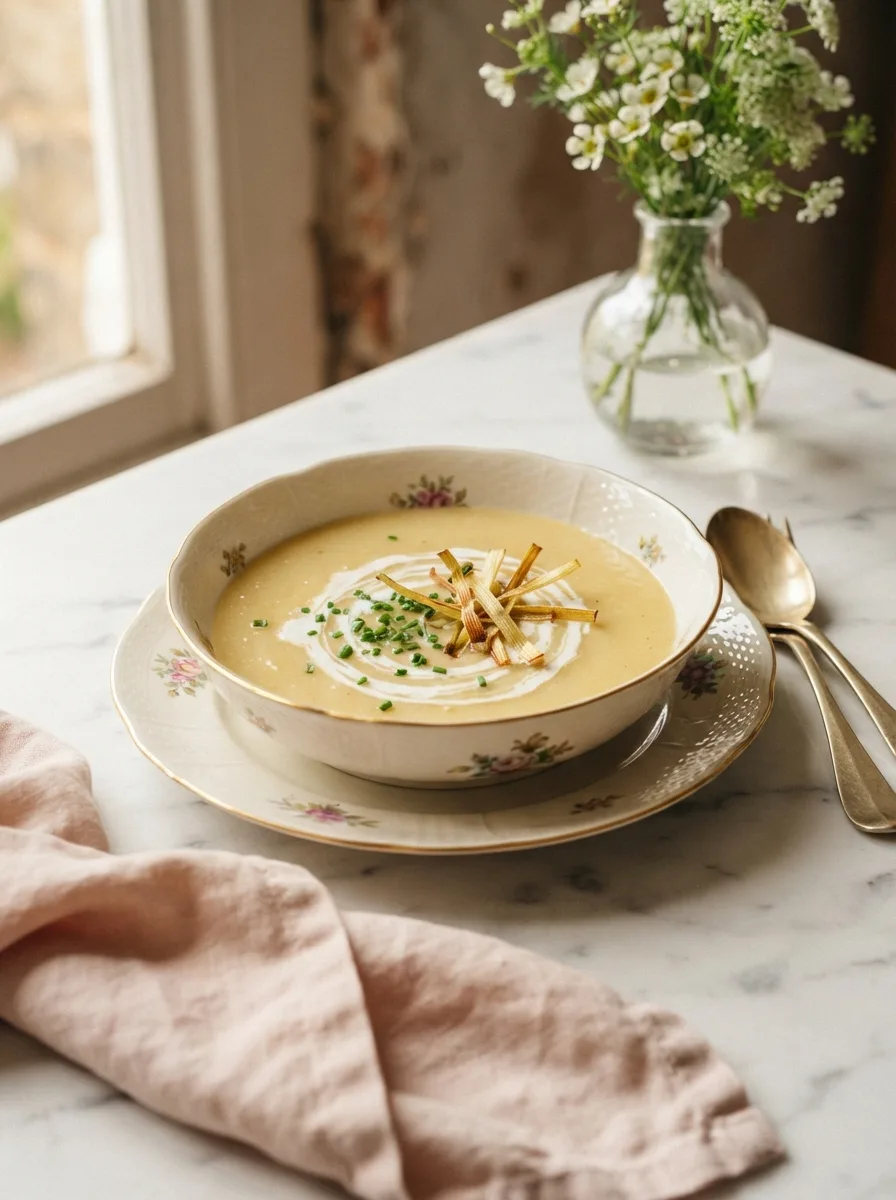
What makes this version different is restraint. Most parsnip and leek soup recipes lean on a full cup of heavy cream to get a rich mouthfeel, but that mutes the parsnip’s natural sweetness instead of highlighting it. Here, the vegetables themselves build the body — the cream is a finishing touch, not a crutch.
The result is a soup that tastes like parsnips and leeks, not like cream with vegetables floating in it.
★★★★★ “I’ve made a dozen leek and parsnip soup recipes over the years and this is the first one that didn’t taste like baby food. The lemon at the end is doing something magic.” — Priya R., recipe tester (pre-launch)
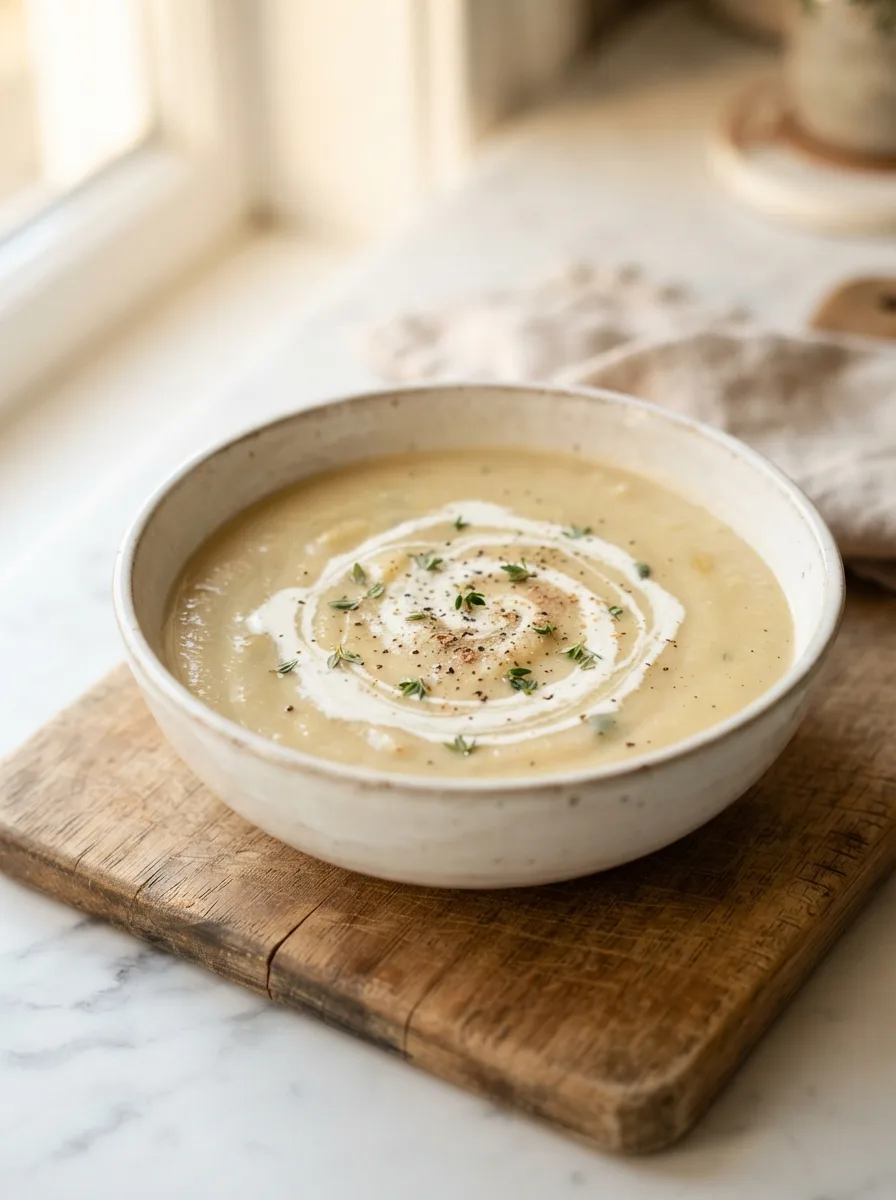
Why You’ll Love This Leek and Parsnip Soup
- Naturally sweet, no added sugar: Parsnips caramelize slightly as they cook, which means the soup gets its sweetness from the vegetable itself, not from anything added to the pot.
- One pot, minimal cleanup: Everything happens in a single Dutch oven, from softening the leeks to blending the finished soup with an immersion blender.
- Tested for texture, not just flavor: I ran three separate batches specifically to solve the gumminess problem that plagues a lot of root vegetable soups. The fix is below.
- Freezer-friendly: This soup holds its texture well after freezing, which is more than I can say for most cream-based soups.
Key Ingredients
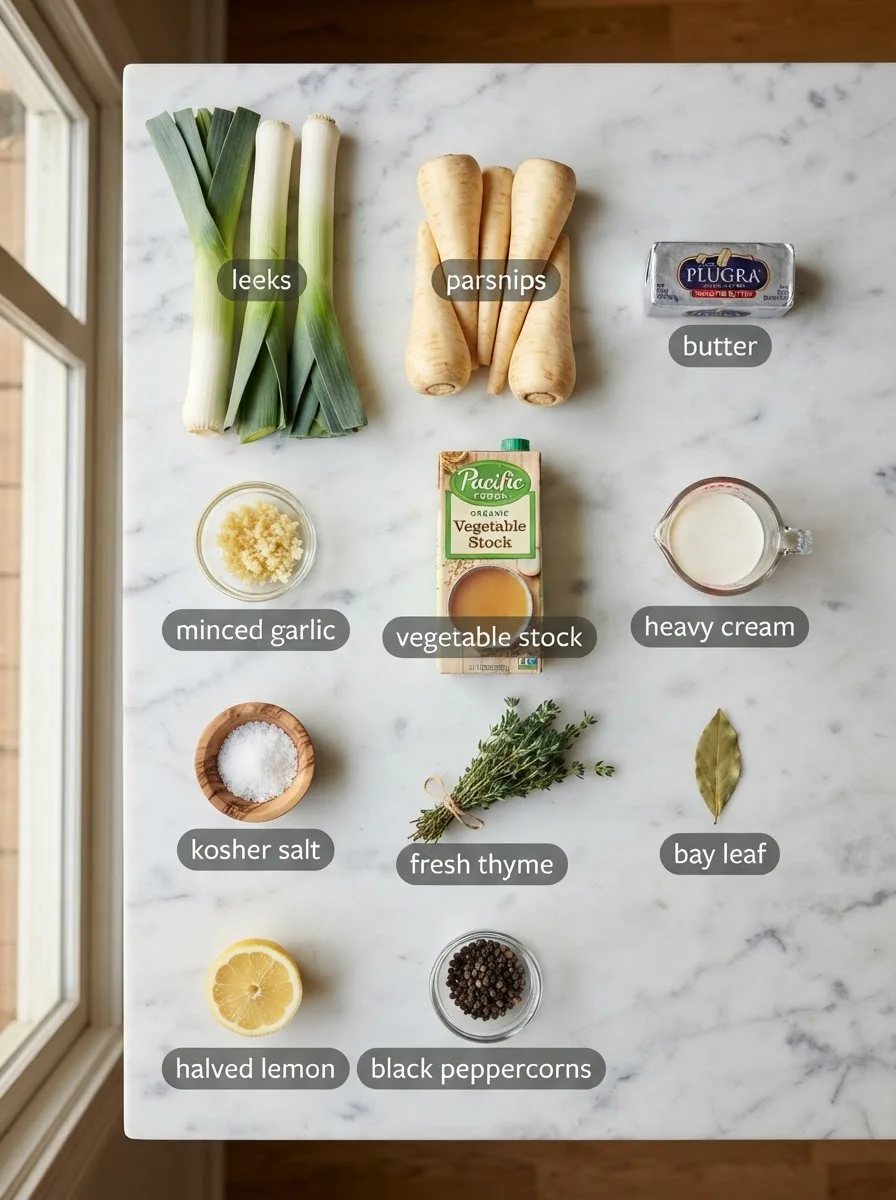
Parsnips (2 pounds). This is the ingredient doing most of the work in this soup with parsnips and leeks. Look for firm, unblemished parsnips — the smaller-to-medium ones are sweeter and less woody in the core than the giant ones. If the core looks fibrous when you slice into it, cut it out before cooking.
Leeks (3 large). Leeks bring a milder, sweeter version of onion flavor without the sharpness. Use the white and light green parts only — the dark green tops are tough and better saved for stock. Rinse well between the layers; leeks hide grit in a way onions don’t.
Butter and olive oil. The combination gives you butter’s flavor and olive oil’s higher smoke point, so the leeks soften without browning too fast or burning.
Garlic (3 cloves). Added after the leeks have softened, not before — raw garlic added too early burns and turns bitter before the vegetables have had a chance to cook down.
Vegetable or chicken stock (4 cups). Chicken stock adds more savory depth; vegetable stock keeps the soup fully vegetarian. Either works — just use one you’d be happy drinking on its own, since the flavor concentrates as the soup reduces.
Heavy cream (½ cup), added at the end. This is where most parsnip soup with leeks recipes overdo it. A half cup added right before serving gives you richness without drowning the vegetable flavor. Full-fat coconut milk is a genuinely good dairy-free swap here — see Variations below.
Fresh thyme and a bay leaf. These simmer with the soup and get fished out before blending. Dried thyme works in a pinch at one-third the amount.
Lemon juice (1 tablespoon), added at the very end. This is the ingredient home cooks skip most often, and it’s the one I’d fight for. A little acid at the finish brightens the whole pot and keeps the soup from tasting flat.
Ingredient Note: Don’t peel your parsnips too aggressively. A thin vegetable peeler pass is enough — parsnip skin isn’t bitter, and over-peeling wastes a surprising amount of the vegetable.
Equipment You’ll Need
- Large Dutch oven or heavy-bottomed pot — you want enough surface area for the leeks to soften evenly without steaming. Any large stockpot works as an alternative.
- Immersion blender — my preference, since you can blend directly in the pot. No immersion blender? A stand blender works too; just blend in batches and never fill it more than halfway with hot liquid.
- Sharp chef’s knife and cutting board — parsnips are dense enough that a dull knife will slip more than cut.
- Ladle — for serving, obviously, but also useful for transferring hot soup into a stand blender safely.
Controlling the Texture: Silky vs. Gluey (A Controlled Test)
Parsnips, like potatoes, contain starch that can turn gummy if you overwork it. I tested three batches of this leek parsnip soup, changing only the blending time and method, to figure out exactly where the line is.
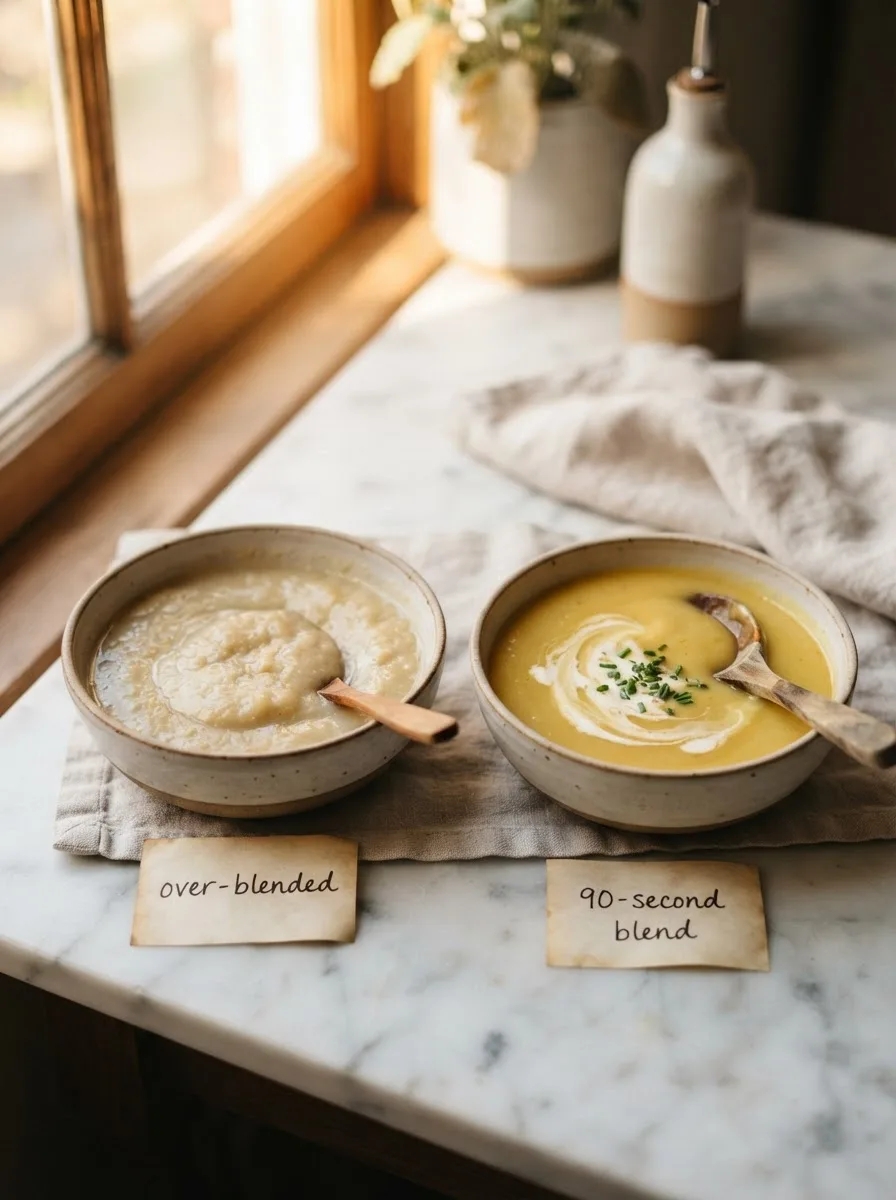
Batch 1 — blended for 3 minutes straight: The soup turned dense and slightly gluey, almost paste-like. The starch in the parsnip had broken down too far and the texture never fully recovered, even after adding more stock.
Batch 2 — blended in short 15-second pulses over 90 seconds total: This was the winner. Smooth, glossy, spoon-coating texture with none of the gumminess from Batch 1.
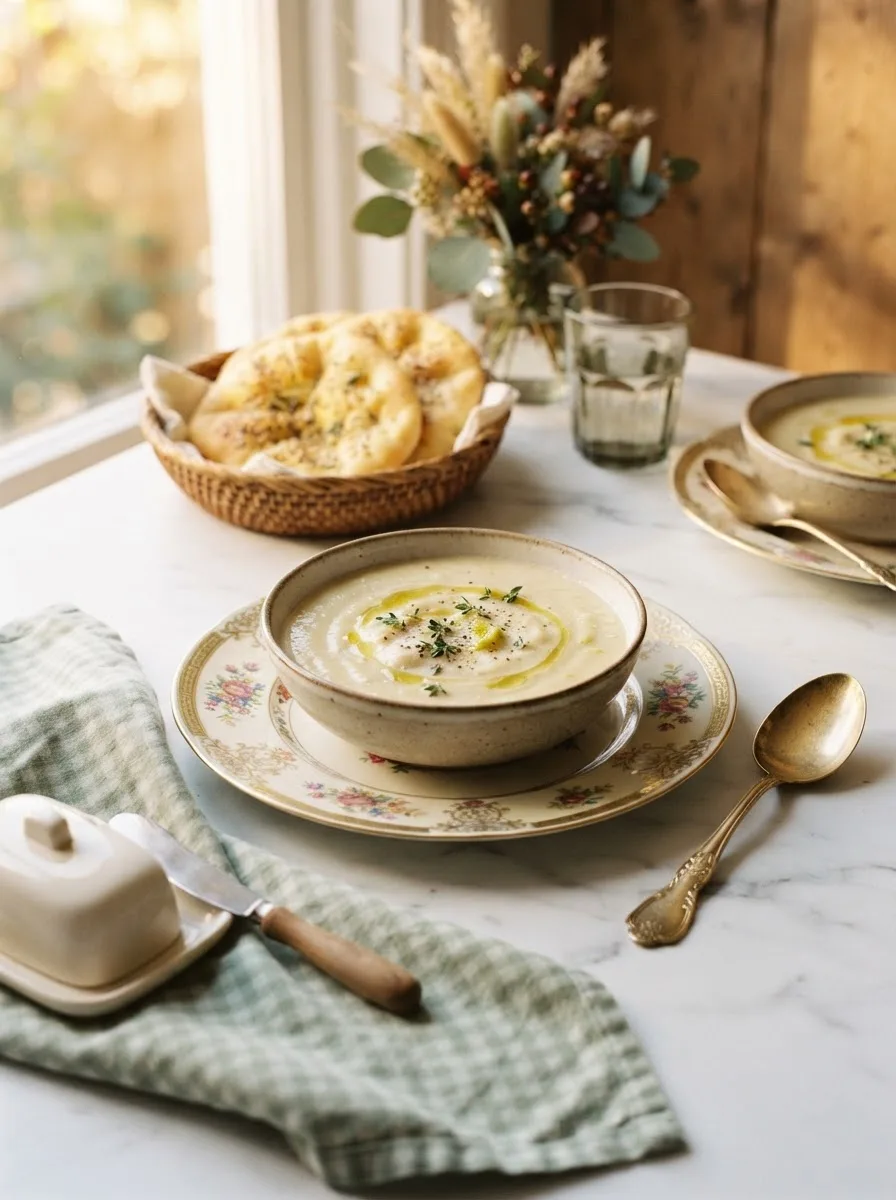
Batch 3 — left chunky, barely blended: Some readers will genuinely prefer this rustic version, and it’s a valid choice — just don’t expect the velvety texture the photos show.
The takeaway: blend in short pulses, stop once the soup looks glossy and smooth, and resist the urge to keep going “just to be safe.” More blending is not more smooth past a certain point — it’s gluey.
How to Make Parsnip and Leek Soup
Before you start: Have your leeks sliced and rinsed and your parsnips peeled and chopped into roughly even 1-inch pieces before you turn on the heat. Uneven pieces cook unevenly, and you’ll end up mashing the small ones while the big ones are still firm.
Step 1 — Soften the leeks
Melt the butter with the olive oil in your Dutch oven over medium heat. Add the sliced leeks with a pinch of salt and cook, stirring occasionally, for 8 to 10 minutes. You’re looking for soft, translucent leeks with no browning — if they start to color, turn the heat down. Browning here adds a bitterness you don’t want in the final soup.
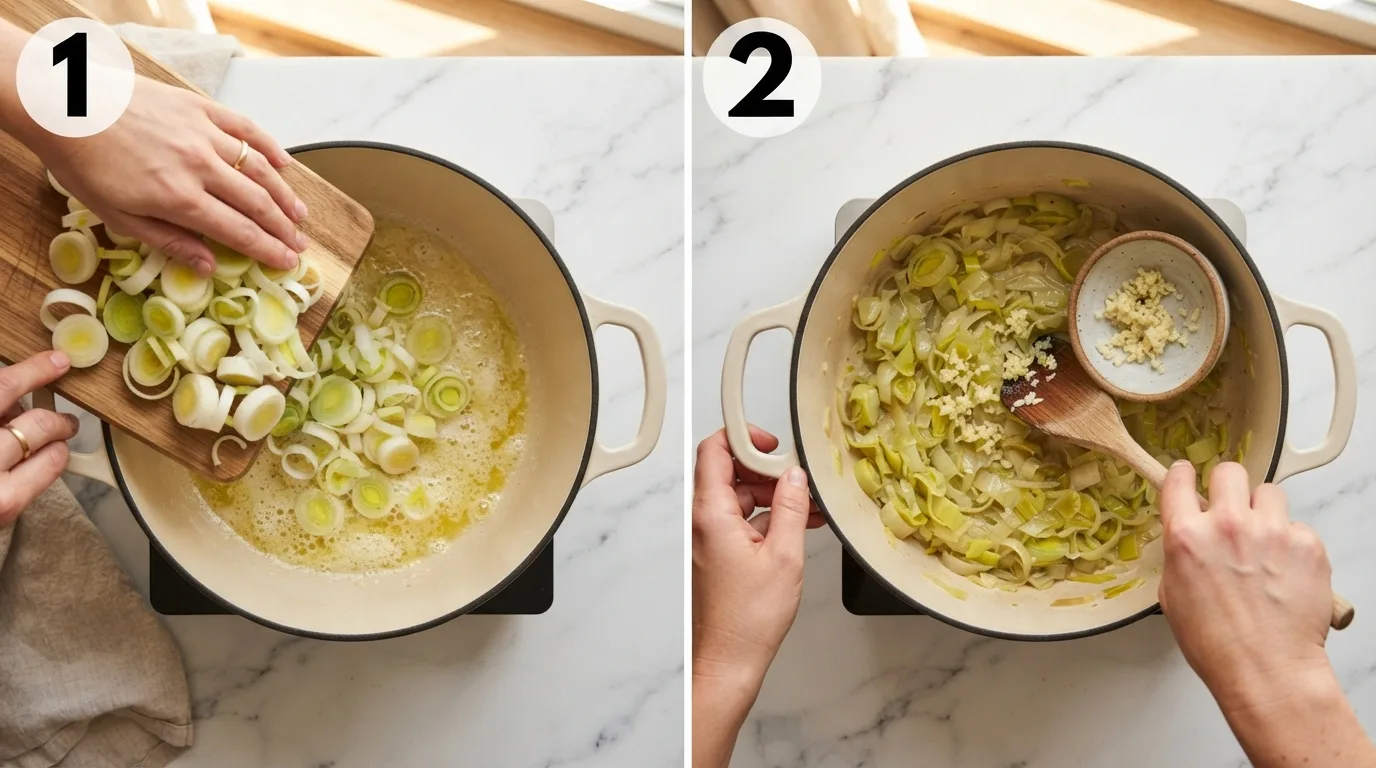
Step 2 — Add the garlic
Stir in the minced garlic and cook for 60 seconds, just until fragrant. This is a short step on purpose — garlic added too early or cooked too long turns bitter, and there’s no fixing that later in the pot.
Step 3 — Add the parsnips, stock, and herbs
Add the chopped parsnips, stock, bay leaf, and thyme sprigs. Season with 1 teaspoon of salt and the black pepper. Bring the pot to a boil, then reduce to a gentle simmer.
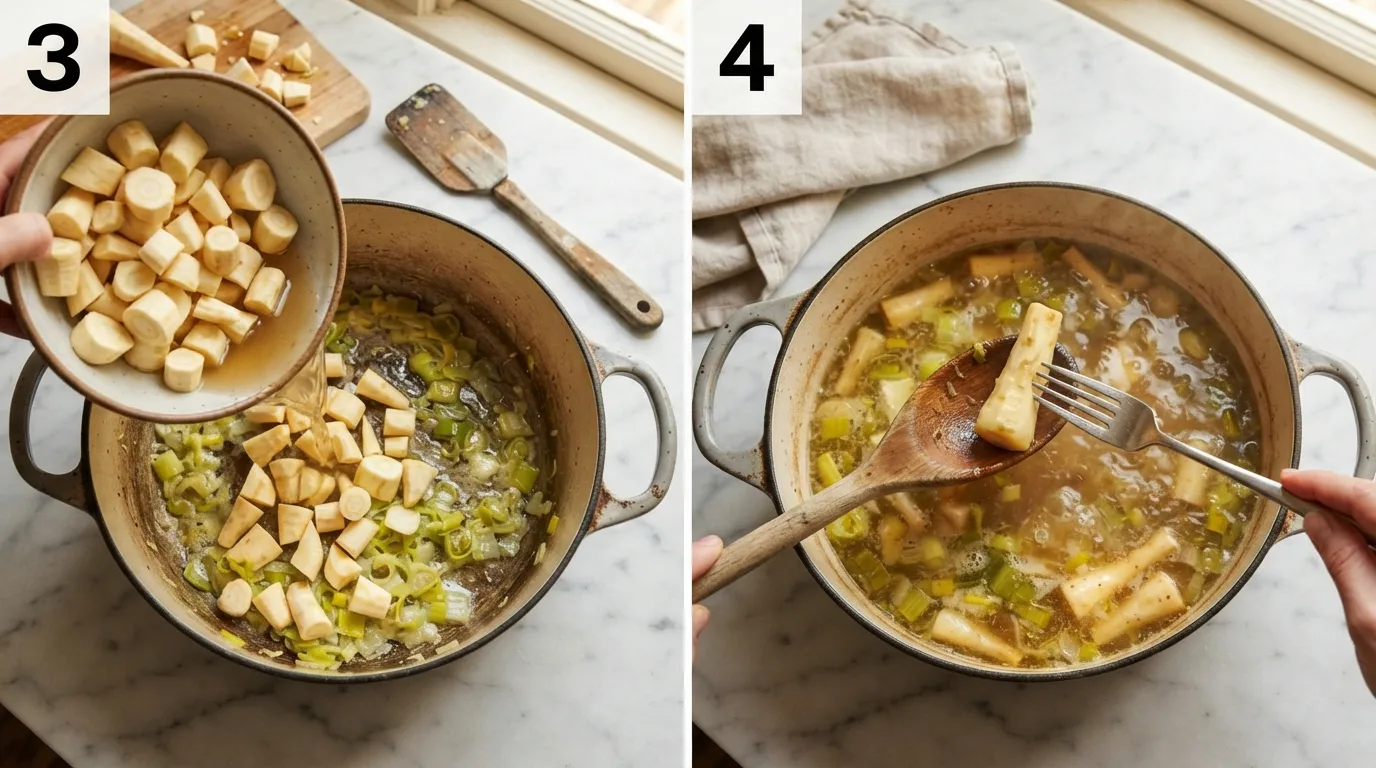
Step 4 — Simmer until fork-tender
Let the soup simmer uncovered for 20 to 25 minutes, until the parsnips are completely fork-tender — they should offer no resistance at all when pierced. Undercooked parsnips will blend into a slightly grainy soup no amount of extra blending time will fix.
Step 5 — Remove the herbs and blend
Fish out the bay leaf and thyme stems. Using an immersion blender, blend the soup directly in the pot in short 15-second pulses, checking the texture between pulses. Stop at around 90 seconds total, once the soup looks glossy and smooth. Refer back to the Controlled Test above if you’re unsure where to stop.
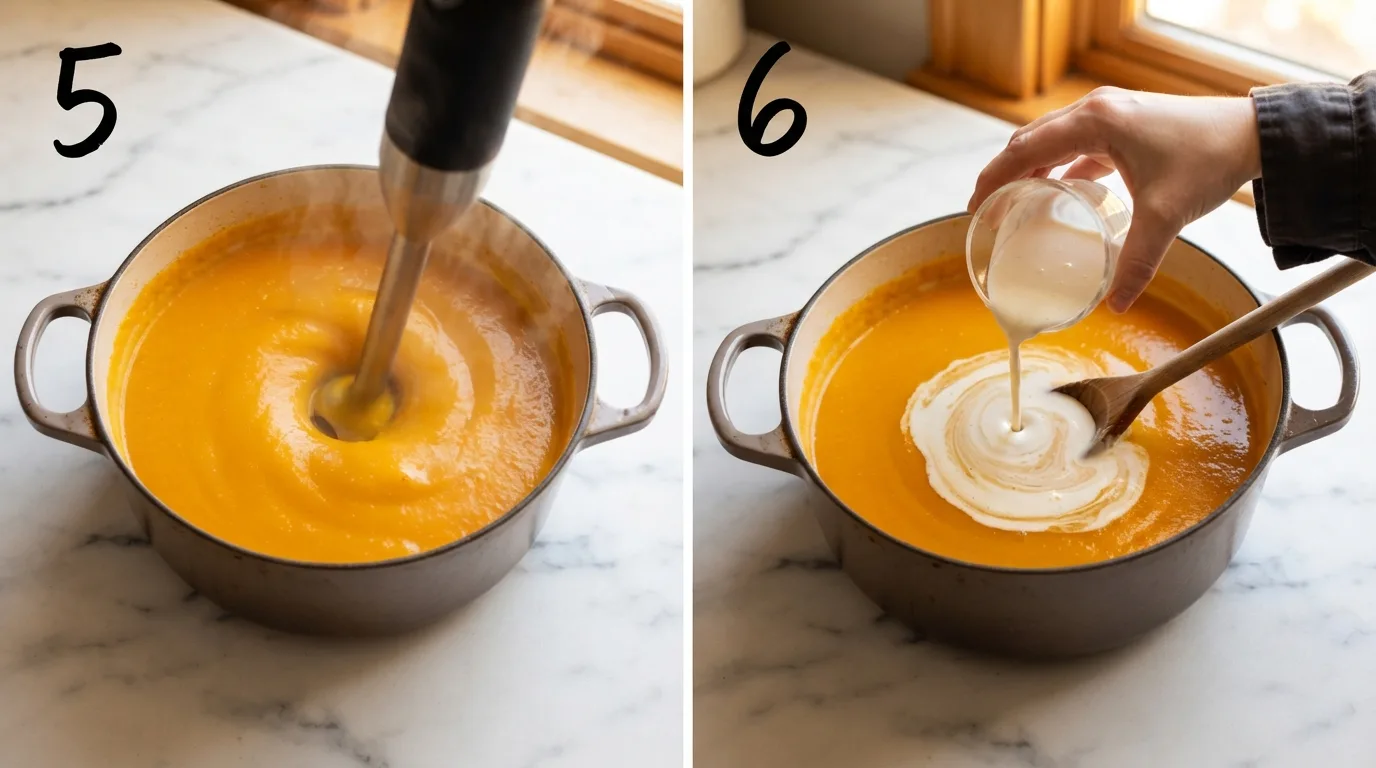
Step 6 — Finish with cream and lemon
Stir in the cream and lemon juice. Taste and adjust the salt — parsnips vary in sweetness, and you may need slightly more salt than you’d expect to balance it. Ladle into bowls and top with chives, crispy leek strips, or a swirl of extra cream.
Pro Tips for Perfect Parsnip and Leek Soup
Tip 1: Cut your parsnips evenly. Aim for roughly 1-inch pieces across the board. Uneven sizing means some pieces turn to mush while others stay underdone, and that unevenness shows up in the blended texture.
Tip 2: Salt in stages, not all at once. Add a base amount while the leeks cook, more when the parsnips go in, and a final adjustment after blending. Salt added only at the start can taste flat by the time the soup reduces.
Tip 3: Storing parsnip leek soup? Cool it fully before sealing. Trapping steam in a sealed container while the soup is still warm encourages condensation, which waters down the texture over a few days in the fridge.
Tip 4: Warm your cream slightly before adding it. Cold cream straight from the fridge can shock the hot soup and separate slightly at the edges of the pot. A few seconds in the microwave first keeps it smooth.
Variations and Substitutions
Dietary Variations:
- Dairy-free: Swap the heavy cream for full-fat coconut milk in the same amount. The flavor gains a very faint coconut note that mostly disappears once the soup cools slightly, and the texture stays just as silky.
- Vegan: Use the coconut milk swap above and olive oil in place of butter. The final soup will taste slightly less rich, but the leeks and parsnips still carry plenty of flavor on their own.
Flavor Variations:
- Curried parsnip and leek soup: Stir in a tablespoon of my tikka paste along with the garlic in Step 2. It adds warmth and a gentle curry note without overpowering the parsnip.
- Caribbean-spiced twist: For something bolder, stir a teaspoon of my jamaican jerk seasoning in with the stock. The allspice and heat play surprisingly well against the parsnip’s sweetness.
Ingredient Substitutions:
- No leeks on hand? One large yellow onion works, though you’ll lose some of the delicate sweetness leeks bring.
- Swap up to half the parsnips for carrots if you want a slightly sweeter, more orange-toned soup.
Looking for something to serve alongside? Warm jamaican roti is excellent for dipping, and if you want to turn this into a full meal, my jamaican stew pork recipe makes a hearty pairing on a cold night.
Troubleshooting
Why is my soup with parsnips and leeks gluey instead of silky?
This almost always comes from over-blending. Once parsnip starch breaks down too far, the texture turns paste-like and there’s no fixing it by adding more stock — the damage is structural, not just a dilution problem. Next time, blend in short pulses and stop the moment it looks glossy, per the Controlled Test above.
My soup tastes flat — what happened?
Flat flavor is almost always an under-seasoning or acid problem, not a technique problem. Taste after blending, add salt in small increments, and don’t skip the lemon juice at the end — it does more for balance than an extra pinch of salt will.
The soup separated slightly after adding cream — why?
Cold cream added straight from the fridge to a very hot pot can shock and slightly separate at the surface. Warm the cream briefly before adding it, and stir gently rather than whisking vigorously once it’s in.
Storage and Make-Ahead
Counter: Safe for up to 2 hours at room temperature before it should go in the fridge.
Refrigerator: Store in an airtight container for up to 4 days. Cool the soup fully before sealing to avoid trapped condensation thinning the texture.
Freeze: This parsnip and leek soup freezes well for up to 3 months. Freeze in individual portions for easy reheating, and leave an inch of headspace in the container since the soup expands slightly as it freezes.
Reheating: Reheat gently on the stovetop over medium-low heat, stirring occasionally, until warmed through. If the texture seems thick after freezing, whisk in a splash of stock to loosen it back up.
Make-Ahead: You can make the soup base through Step 5 up to 2 days ahead and refrigerate it unblended-cream. Reheat, blend if needed, and stir in the cream and lemon just before serving for the freshest finish.
Frequently Asked Questions
Q: Can I make this leek and parsnip soup without a blender? A: Yes — mash the cooked vegetables with a potato masher or the back of a wooden spoon for a chunkier, more rustic texture. It won’t be silky, but it will still taste great.
Q: Is parsnip and leek soup good for freezing? A: Very good, actually — better than most cream-based soups. Freeze it before or after adding the cream; both hold up well for up to 3 months.
Q: Can I use frozen parsnips for this parsnip soup with leeks? A: Yes, though fresh gives a sweeter, less watery result. If using frozen, reduce the added stock slightly since frozen vegetables release extra liquid as they cook.
Q: What can I serve with leek parsnip soup? A: Warm bread is the classic pairing — my jamaican roti works surprisingly well for dipping. A simple green salad also balances the richness nicely.
Q: How do I make this soup thicker? A: Simmer it uncovered for an extra 5 to 10 minutes before blending to reduce some of the liquid, or add one small peeled potato along with the parsnips for extra body.
Q: Why did my parsnips taste bitter? A: Bitterness usually comes from a woody, fibrous core in older parsnips. Slice into one before cooking — if the core looks tough or discolored, cut it out and discard it.
Q: Can I double this recipe? A: Yes, this scales well. Use a larger pot to keep the vegetables from steaming instead of softening properly, and expect the simmer time to run a few minutes longer.
More Soup Recipes You’ll Love
- Jamaican Stew Pork Recipe — a hearty, slow-simmered pairing if you want to turn this soup into a full dinner spread
- Jamaican Jerk Seasoning — stir a spoonful into this soup for a warm, spiced variation
- Tikka Paste — use it to build a curried version of this parsnip and leek soup
- Jamaican Roti — the bread I reach for whenever this soup is on the stove

Foolproof Parsnip and Leek Soup
Ingredients
For the soup base:
- 2 tablespoon unsalted butter
- 1 tablespoon olive oil
- 3 large leeks, white and light green parts, sliced (about 4 cups)
- 3 clove garlic, minced
- 2 pound parsnips, peeled and chopped into 1-inch pieces
- 4 cup vegetable or chicken stock
- 1 bay leaf
- 4 sprigs fresh thyme
- 1 teaspoon salt, plus more to taste
- 1/2 teaspoon black pepper
For finishing:
- 1/2 cup heavy cream
- 1 tablespoon fresh lemon juice
- Chopped chives, for garnish
- Crispy leek strips or extra cream, for garnish (optional)
Instructions
- Melt the butter with the olive oil in a large Dutch oven over medium heat. Add the sliced leeks with a pinch of salt and cook, stirring occasionally, for 8 to 10 minutes, until soft and translucent but not browned.
- Stir in the minced garlic and cook for 60 seconds, just until fragrant.
- Add the chopped parsnips, stock, bay leaf, thyme sprigs, 1 teaspoon salt, and black pepper. Bring to a boil, then reduce to a gentle simmer.
- Simmer uncovered for 20 to 25 minutes, until the parsnips are completely fork-tender.
- Remove the bay leaf and thyme stems. Using an immersion blender, blend the soup directly in the pot in short 15-second pulses over about 90 seconds total, until glossy and smooth.
- Stir in the cream and lemon juice. Taste and adjust salt as needed. Ladle into bowls and garnish with chives and crispy leeks or extra cream.
Notes
- Blend in short pulses and stop once the texture looks glossy — over-blending breaks down parsnip starch and turns the soup gluey rather than silky.
- For a dairy-free version, swap the heavy cream for full-fat coconut milk in the same amount; texture stays smooth with only a faint coconut note.
- The soup base (through Step 5) can be made up to 2 days ahead and refrigerated before blending in the cream and lemon just before serving.
- Freezes well for up to 3 months; leave headspace in the container since the soup expands slightly as it freezes.