Foolproof Chicken Alfredo Bread Bowl (No Soggy Crust)

My first three chicken alfredo bread bowl attempts looked perfect when they left the oven. Ten minutes later, the bread had collapsed into a soggy bowl around the chicken and sauce. I separated those early failures from my formal test: I tested three toast times side by side to find the fix.
The problem was not the alfredo sauce. It was the bread’s porous interior absorbing moisture before it had time to crisp. Toast time is the most important variable here because heat dries the crumb and garlic butter coats it before the creamy filling arrives. That same little barrier helps an alfredo garlic bread bowl hold together.
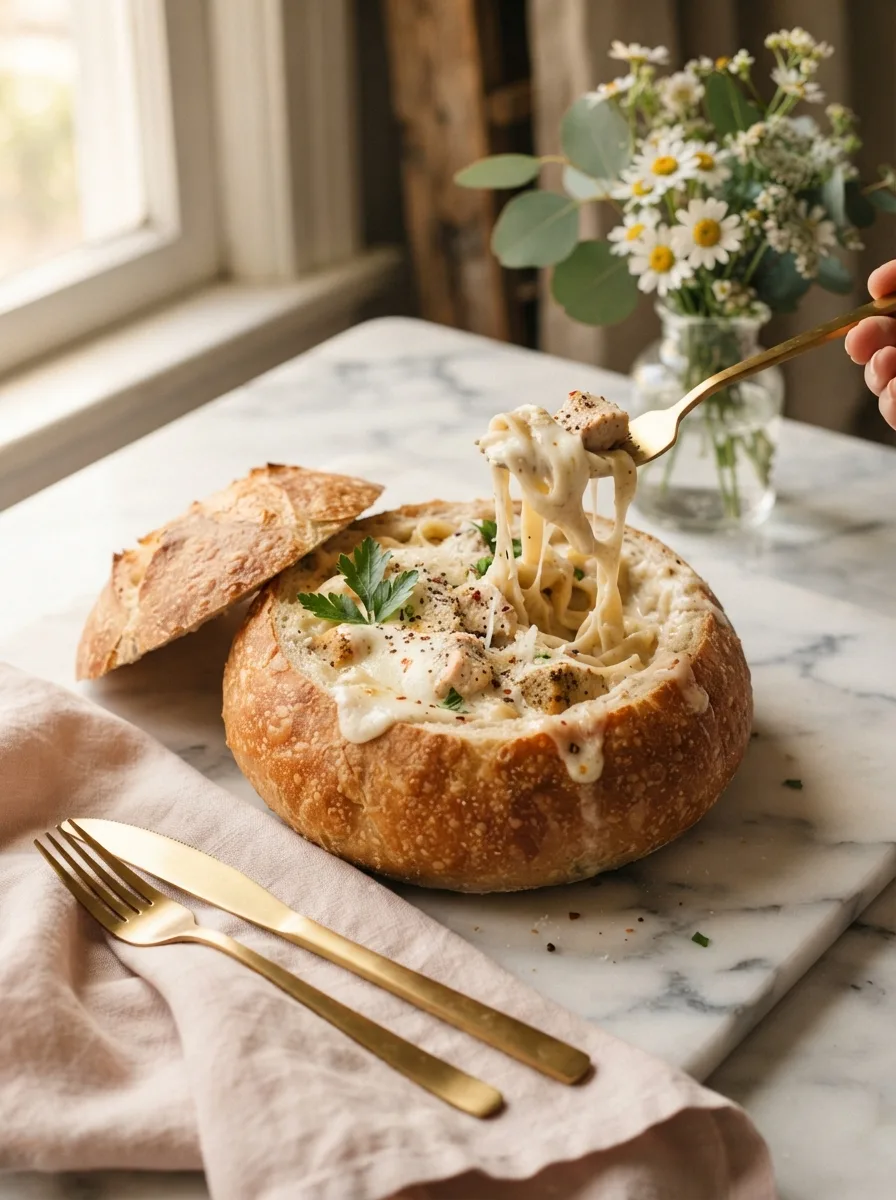
Here is the scary moment: when hot chicken alfredo garlic filling first goes into the toasted bread, the bowl may look too delicate to survive. It will hold, though, because the crisp lining slows absorption. The trade-off is simple: longer toasting gives you a sturdier bowl, but a slightly drier bite at the edges.
★★★★★ “This disappeared in ten minutes at our test dinner — no soggy bites even after it sat out for photos for twenty minutes first.” — Danielle, recipe tester (pre-launch)
Why You’ll Love This Chicken Alfredo Bread Bowl
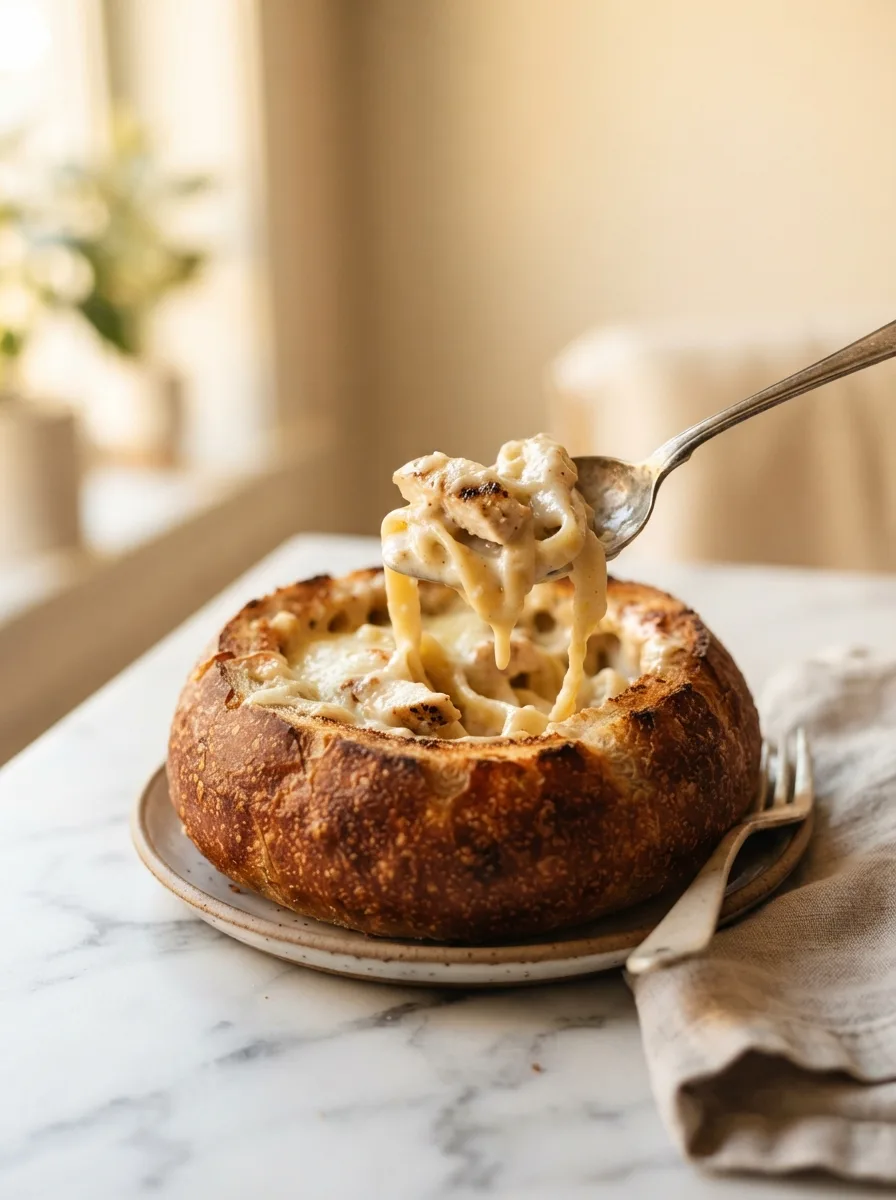
- The bread resists sogginess: Garlic butter and oven heat dry the crumb, so the bread bowl holds the chicken and alfredo sauce beyond the first bite.
- The filling uses one skillet: The chicken and sauce cook together, while the bowls toast separately on a baking sheet.
- It feels special without fussy work: The hands-on time stays under 20 minutes, with the oven doing the bread work.
- The texture has contrast: Crisp bread surrounds tender chicken, creamy sauce, and melted cheese.
Key Ingredients for Chicken Alfredo Bread Bowl
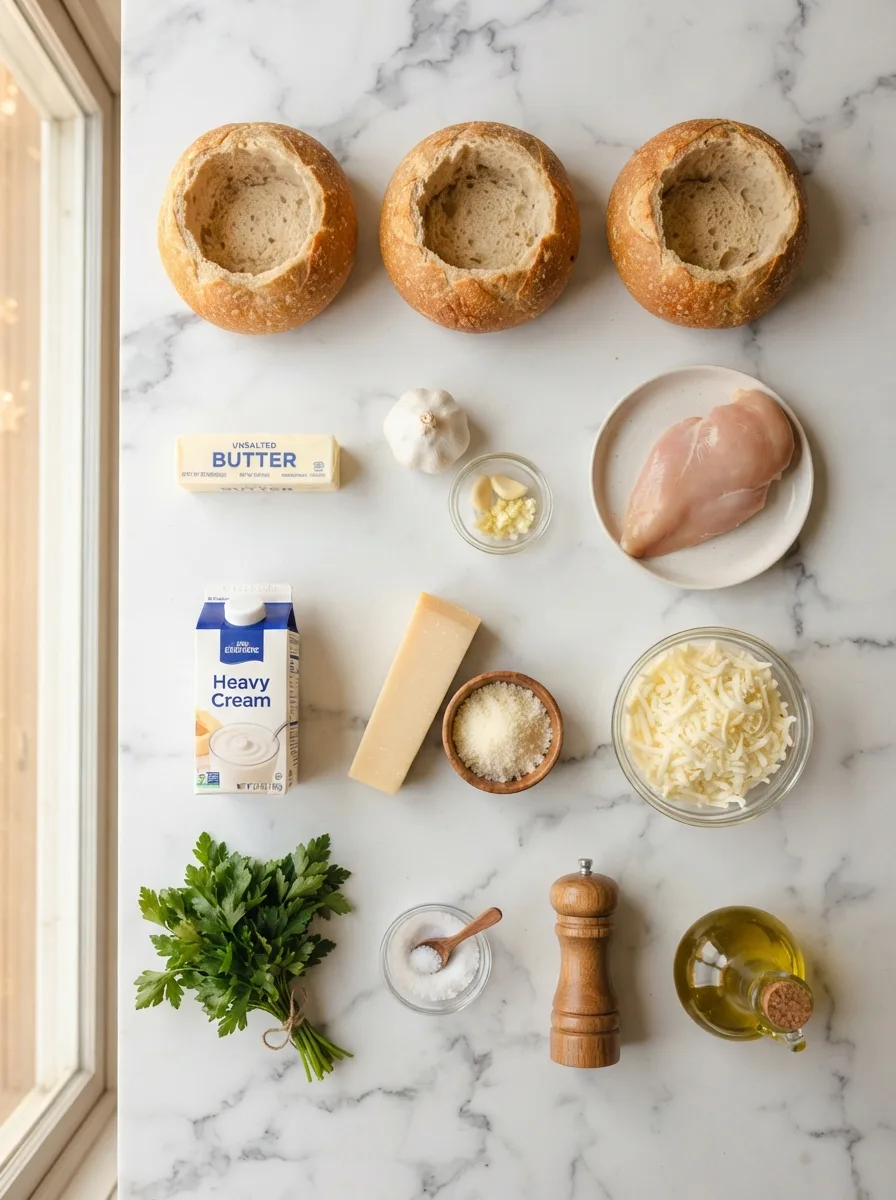
Sourdough bread bowls (4, about 6–8 inches). A thick crust resists moisture better than soft bread, giving the filling a sturdier container.
Unsalted butter (½ cup, divided). Butter carries the garlic’s flavor into the bread and gives the alfredo sauce a rich base.
Chicken breast (1½ lbs, cut into bite-size pieces). Small pieces brown quickly and cook evenly.
Heavy cream (2 cups). Gentle simmering removes some water, concentrating the cream into a thicker sauce.
Parmesan, freshly grated (1½ cups). Freshly grated parmesan melts smoothly; packaged parmesan cheese can contain a powdery coating that leaves grainy bits.
Garlic (6 cloves total, divided). Two cloves flavor the butter and four deepen the sauce.
Mozzarella, shredded (1 cup, for topping). Low-moisture mozzarella melts evenly and browns under the broiler.
Ingredient Note: Freshly grated parmesan made the smoother sauce in my side-by-side test. Add it gradually over low heat so the cheese emulsifies instead of clumping.
The technique also borrows from my Cheesecake Factory Alfredo Sauce copycat, especially its gentle reduction.
Equipment You’ll Need
- Large oven-safe skillet or saucepan — for searing the chicken and building the sauce.
- Sharp serrated bread knife — for cutting the lid and hollowing each loaf.
- Rimmed baking sheet — for toasting and broiling the bread bowls.
- Pastry brush — for spreading the garlic butter into the corners.
- Instant-read thermometer (optional) — chicken is safe at 165°F.
Controlling Sogginess: The Bread Bowl Toast Test
The tested variable was toast time: how long the hollowed bread sat in the oven before filling. I used three bowls with the same bread, garlic butter, temperature, salt, pepper, and chicken alfredo bread bowl filling. The three conditions were no toast, 8 minutes, and 15 minutes, followed by a 15-minute holding period. Heat drives moisture from the crumb, while oil and butter coat the surface and slow sauce absorption.
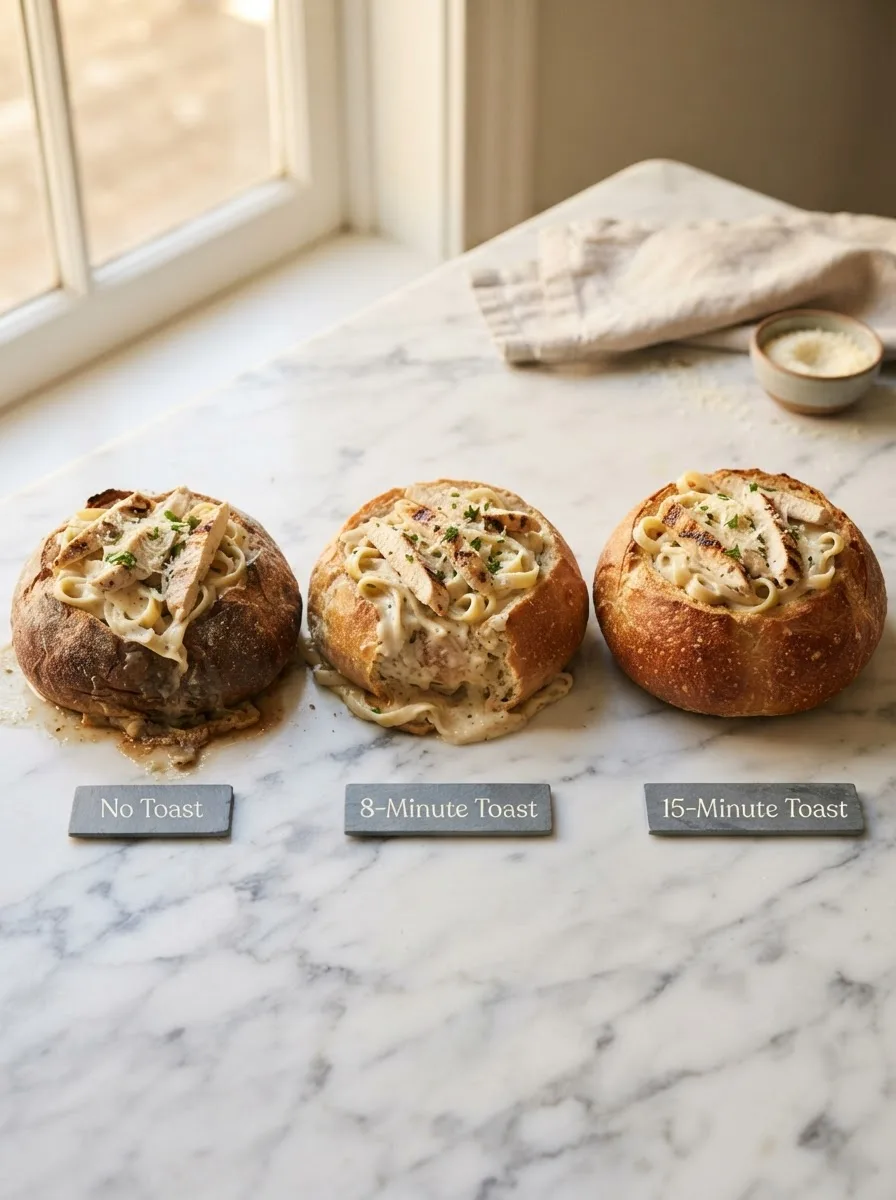
No toast: The bread started weeping liquid into the filling within 5 minutes. By minute 15, the bottom of the bowl hNo toast: The bread began weeping liquid into the filling within 5 minutes, and the base was paste by minute 15.
8-minute toast: The alfredo bread held briefly, but its bottom softened during the 15-minute wait.
15-minute toast with garlic butter: The garlic bread lining stayed dry, crisp, and intact at 15 minutes.
The takeaway: Use 15 minutes for the most reliable texture. A shorter toast can work when you serve immediately, but this longer bake gives the chicken alfredo bread bowl time to reach the table without collapsing.
How to Make Chicken Alfredo Bread Bowl
Before you start: Take the chicken out of the fridge 15 minutes before cooking and preheat your oven to 375°F. Set a rimmed baking sheet aside for the bread bowls and final broil.
Step 1 — Hollow out the bread bowls
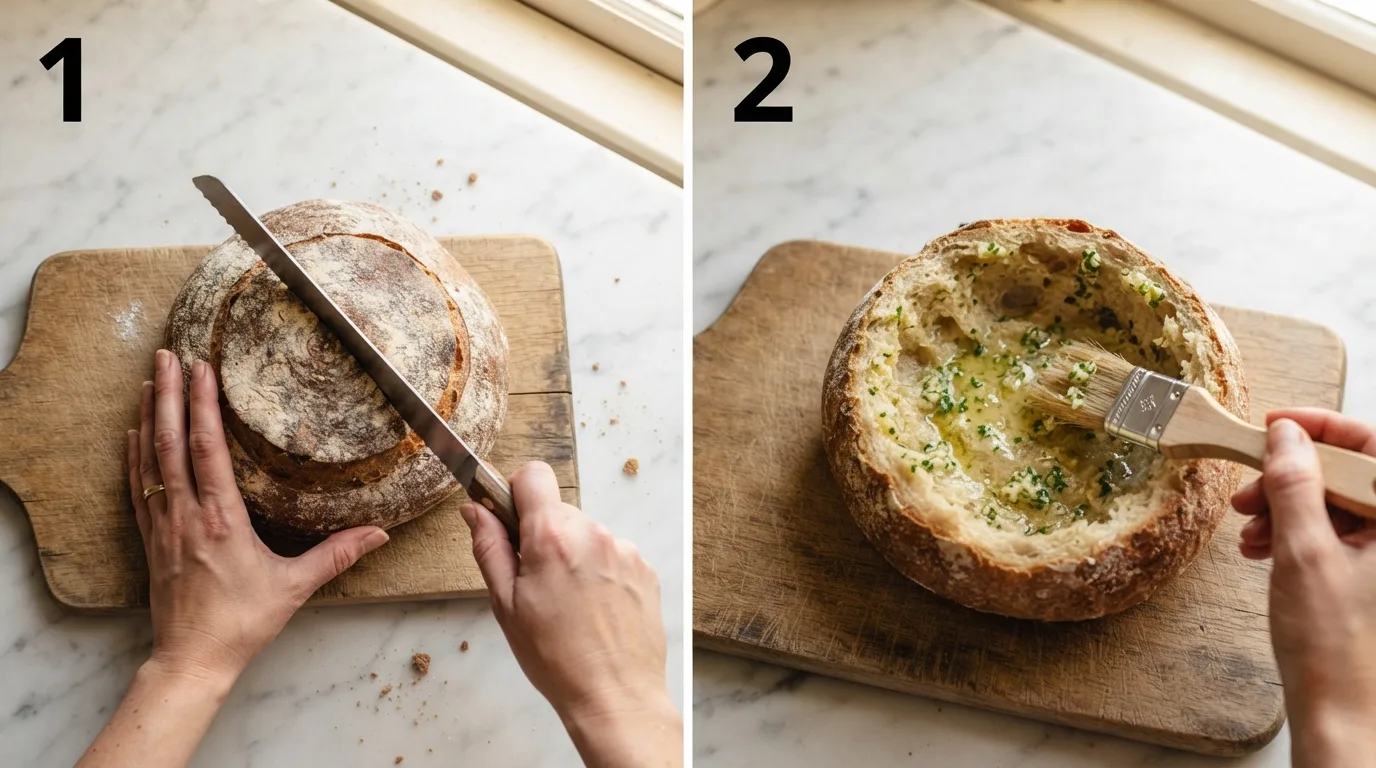
Use a serrated knife to cut a circle into the top of each loaf, angling the blade slightly inward so each lid comes away in one piece. Pull out the soft bread with your hands or a spoon, leaving about ¾ inch of bread and crust along the walls and bottom. Save the torn pieces for dipping into the finished sauce.
Step 2 — Brush with garlic butter and toast
Melt 4 tablespoons of butter with 2 minced garlic cloves. Brush the garlic butter over every part of the inside, especially the bottom corners where the cream sauce will collect. Arrange the bowls on a baking sheet and toast at 375°F for 15 minutes, until the interior is visibly golden and dry to the touch. The heat removes water from the crumb while the butter coats its surface.
Step 3 — Sear the chicken
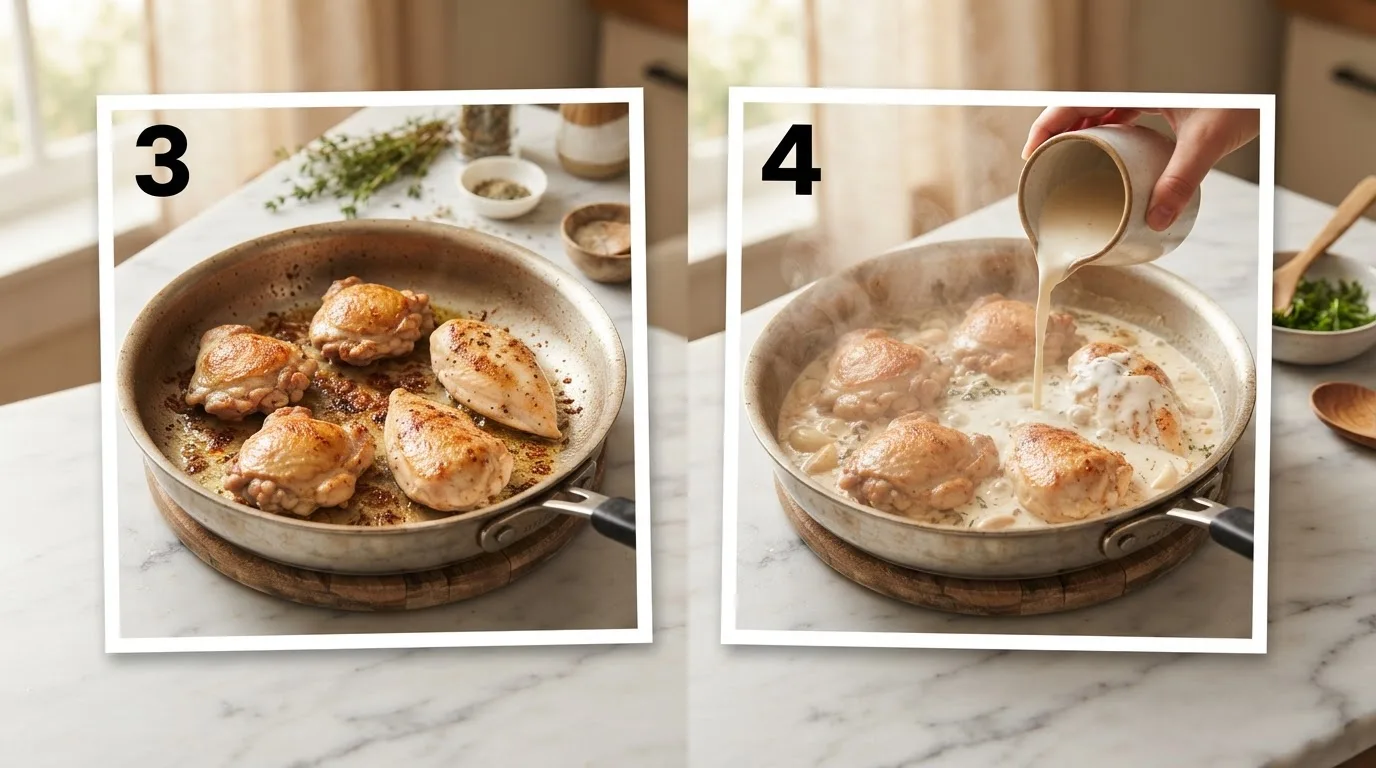
While the bread toasts, season the chicken pieces with salt, pepper, and black pepper if you want a sharper bite. Heat olive oil in a large skillet over medium-high heat and sear the chicken in a single layer for 4–5 minutes per side, checking that the thickest piece reaches 165°F. Transfer the chicken to a plate. Removing it now keeps the meat from overcooking while the sauce reduces.
Step 4 — Build the alfredo base
Lower the skillet to medium and melt the remaining 4 tablespoons of butter. Add the remaining 4 minced garlic cloves and cook for 30 seconds, just until fragrant. Pour in the heavy cream and bring it to a gentle simmer, scraping up the browned bits from the chicken. Those bits dissolve into the sauce and add savory flavor without extra ingredients.
Step 5 — Whisk in the parmesan and return the chicken
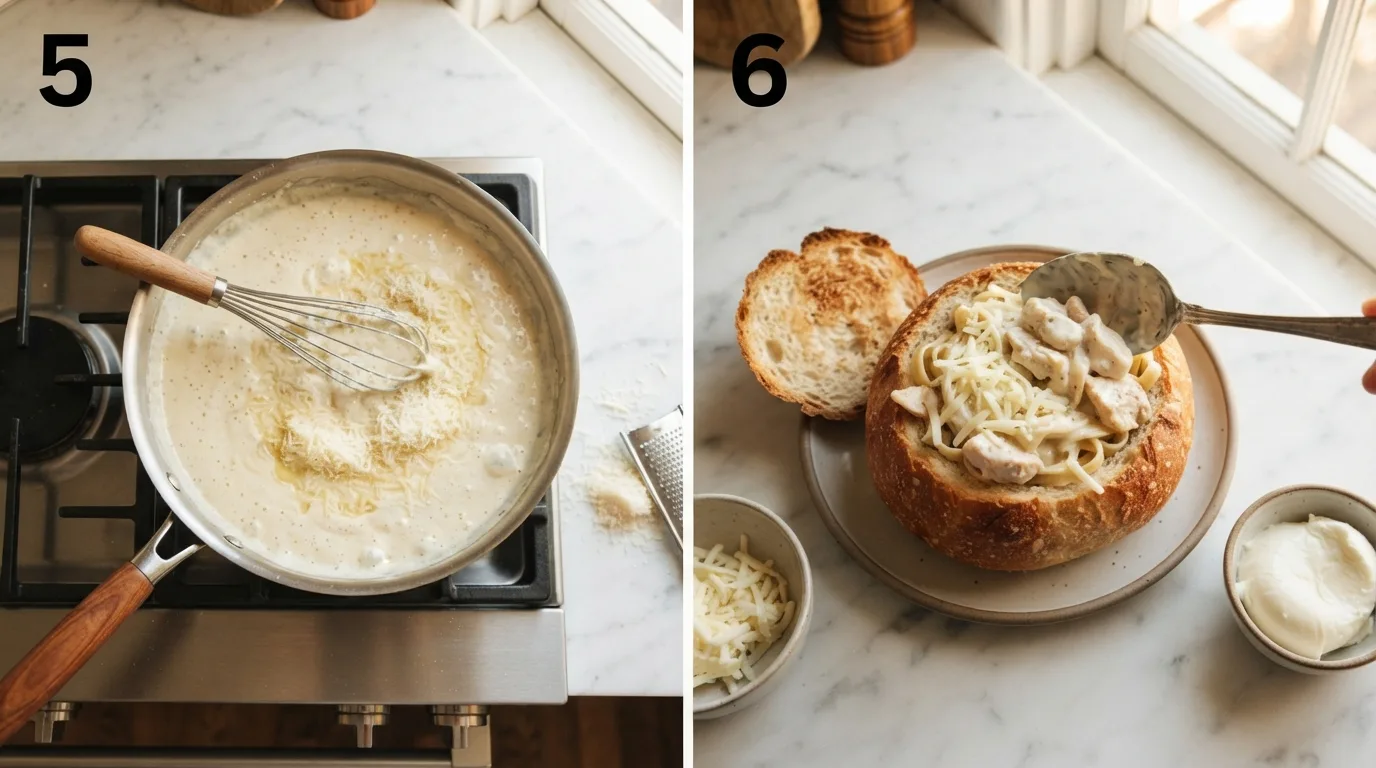
Reduce the heat to low and whisk in the freshly grated parmesan a handful at a time, allowing each addition to melt before adding more. High heat can make the dairy separate and leave the cheese grainy. Simmer for 3–4 minutes, until the sauce coats the back of a spoon and holds a line when stirred. Return the chicken to the pan and stir to coat.
Step 6 — Fill the bread bowls and broil
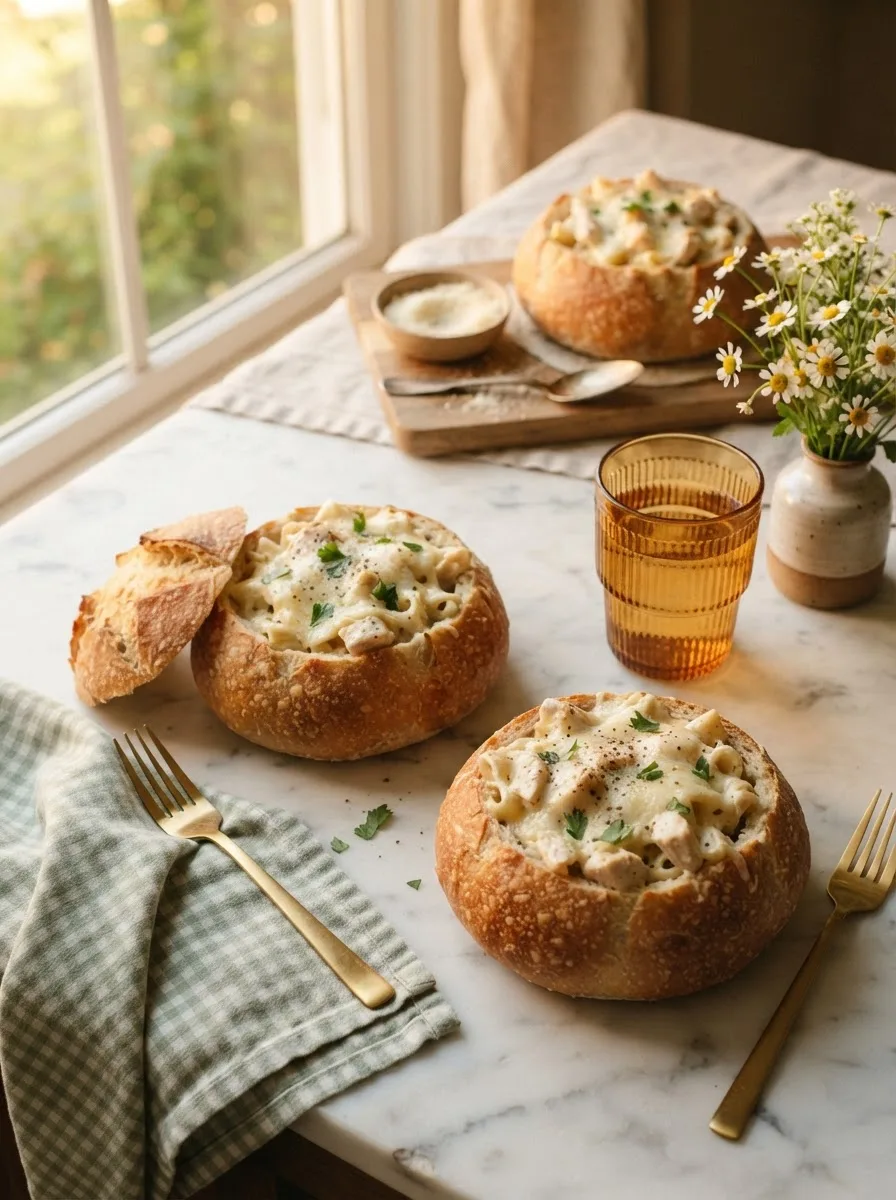
The filled bowl may look soft when the hot chicken alfredo goes in, but the toasted lining is the moisture-resistant layer that keeps it standing. Divide the filling among the bowls, top each with shredded mozzarella, and place them on the baking sheet. Broil on high for 2–3 minutes, watching closely, until the cheese is melted and lightly golden. Garnish with parsley and serve immediately.
Pro Tips for Chicken Alfredo Bread Bowl
Tip 1: Toast the inside fully. Give the hollowed bread 15 minutes at 375°F so the crumb dries before the sauce goes in.
Tip 2: Add parmesan slowly. Freshly grated cheese melts more smoothly when whisked into the warm sauce a handful at a time over low heat.
Tip 3: Check the sauce texture. Simmer it for 3–4 minutes, until it coats a spoon. A loose sauce can soak through even a well-toasted bread bowl.
Variations and Substitutions
Dietary Variations:
- Gluten-free: Use gluten-free boules or sturdy rolls with a thick crust. Check every packaged ingredient, since seasonings and cheese products can vary. A thin gluten-free bread may soften under the filling.
- Lighter version: Replace the heavy cream with half-and-half and reduce the parmesan to 1 cup. The sauce will be thinner and less rich, so the bread may soften sooner.
Flavor Variations:
- Chicken Alfredo Garlic Bread Bowls: Double the garlic in the butter and add 1 teaspoon of garlic powder to the sauce for a stronger chicken alfredo garlic bread flavor.
- Cajun kick: Season the chicken with 1 tablespoon of Cajun seasoning instead of plain salt and pepper. For another creamy, spicy dish, try my Buffalo Mac and Cheese (Buffalo Wild Wings Copycat).
Ingredient Substitutions:
- Rotisserie chicken → shred 3 cups and stir it into the sauce during Step 5. This skips the searing step.
- Half-and-half → heavy cream, 1:1, but simmer the sauce 2 extra minutes for a thicker texture.
- Gruyère → mozzarella for the topping. The flavor will be milder, but the cheese will still melt well.
For the sauce technique, this recipe follows the same gentle reduction used in my Classic Chicken Alfredo.
Troubleshooting
Why is my bread bowl soggy or falling apart?
If the base softens quickly, the interior probably needed more drying or the garlic butter did not reach the corners. The 15-minute toast at 375°F creates a less porous surface before the filling goes in. A slightly soft base after filling does not mean the whole bowl has failed; serve it promptly and use the full toast time next round.
Why did my alfredo sauce turn grainy instead of smooth?
Graininess usually comes from high heat or cheese added too quickly. Rapid heating can disturb the cream and cheese mixture, while packaged parmesan may contain a coating that resists melting. Lower the heat, whisk in freshly grated parmesan in small handfuls, and let each addition melt before adding more.
My bread bowl alfredo tastes bland — what happened?
Cream and bread soften the seasoning, so the sauce should taste well-seasoned before it fills the bowl. Taste it after the chicken returns, then add salt, black pepper, or a small pinch of garlic powder if needed. That final check keeps the alfredo garlic flavor from getting lost.
Storage and Make-Ahead
Counter: The assembled chicken alfredo bread bowls have their best texture within 20 minutes of broiling, but food-safety guidance is separate from texture: refrigerate this perishable dish within 2 hours, or within 1 hour if the room is above 90°F.
Refrigerator: Store the chicken and sauce filling separately from the bread in an airtight container for up to 3 days. Keeping them apart prevents the bread from absorbing water and turning soft.
Freeze: The alfredo filling can be frozen for up to 2 months in a freezer-safe container. The cream-and-cheese sauce may separate slightly after thawing, but gentle reheating and whisking can bring it back together.
Reheating: Reheat the filling gently in a skillet over low heat with a splash of cream or milk, stirring until hot. Reheat fresh bread bowls separately for 5 minutes at 350°F, then fill them. Heating the bread apart keeps the crust from absorbing extra sauce.
Make-Ahead: Hollow out and toast the bread bowls up to 4 hours ahead, then keep them covered at room temperature. The chicken and sauce can be made up to 2 days ahead and reheated gently before assembly.
Frequently Asked Questions
Q: Can I make chicken alfredo in a bread bowl ahead of time? A: Yes. Prepare the bread and filling separately, then assemble and broil just before serving for the best texture.
Q: What kind of bread works best for bread bowl chicken alfredo? A: A round sourdough boule with a thick crust holds the filling better than soft sandwich bread.
Q: What’s the difference between bread bowl alfredo and regular chicken alfredo? A: The chicken and sauce are the same; the serving vessel changes from pasta to toasted bread.
Q: Can I use rotisserie chicken instead of raw chicken breast? A: Yes. Stir 3 cups of shredded rotisserie chicken into the finished sauce and warm it for 2–3 minutes before filling the bowls.
Q: How do I keep the bread bowl from getting soggy? A: Toast the hollowed interior with garlic butter for 15 minutes, reduce the sauce until it coats a spoon, and fill the bowl just before serving.
Q: Can I freeze alfredo bread bowl filling? A: Yes. Freeze the filling for up to 2 months, thaw it overnight in the refrigerator, and reheat it gently with a splash of cream.
Q: Can I make chicken alfredo garlic bread bowls for a crowd? A: Yes. Double the ingredients and toast the bread bowls in batches. If one skillet cannot hold all the chicken and sauce, cook the filling in separate batches.
More Comfort Food Recipes You’ll Love
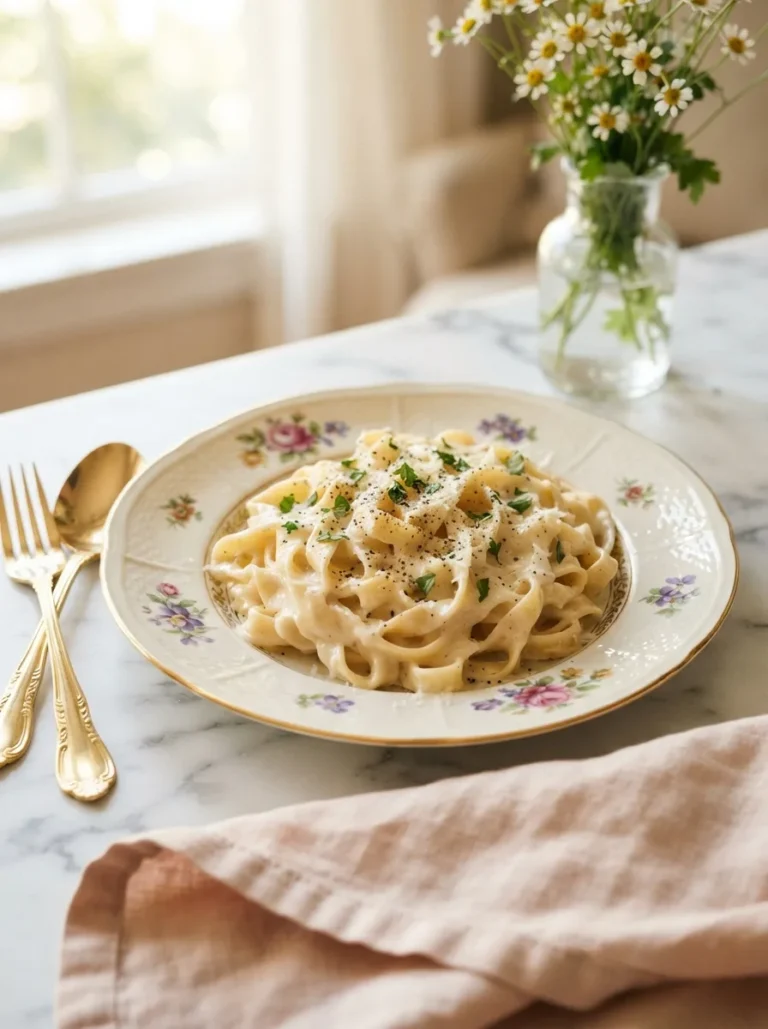
- Cheesecake Factory Alfredo Sauce — a creamy Alfredo sauce recipe to serve over pasta when you want the classic dish instead of a bread bowl
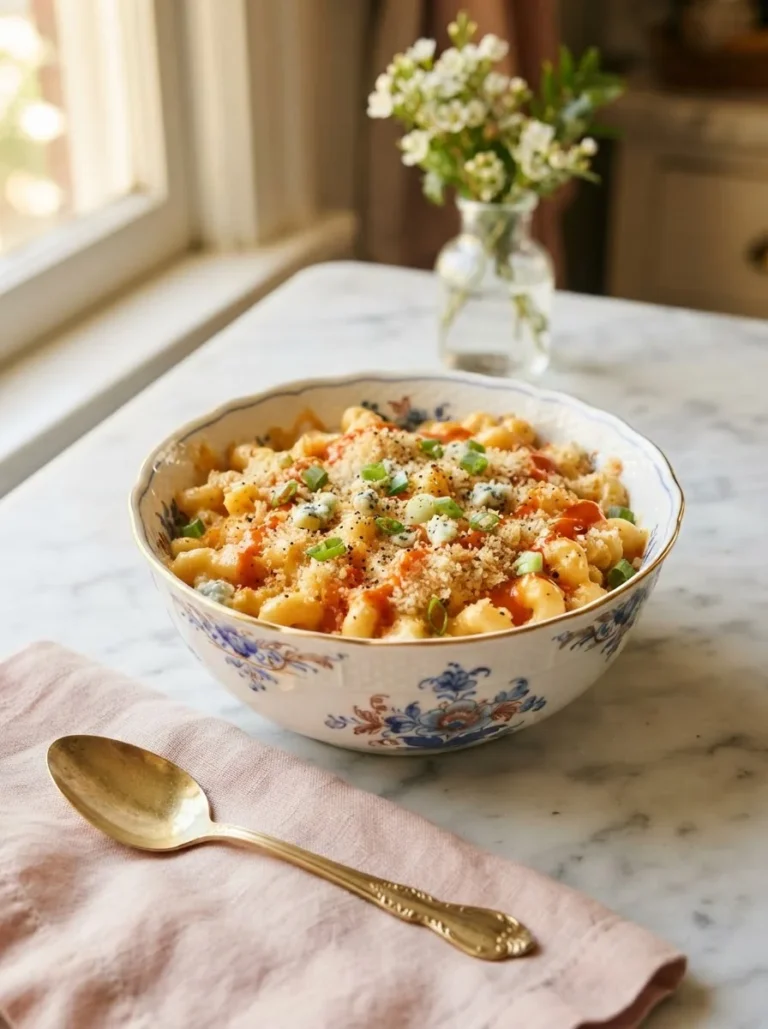
- Buffalo Mac and Cheese (Buffalo Wild Wings Copycat) — a cheesy recipe with a peppery kick for another comforting meal
- Mission BBQ Mac and Cheese Recipe — a baked cheese dish for fans of rich, creamy comfort food
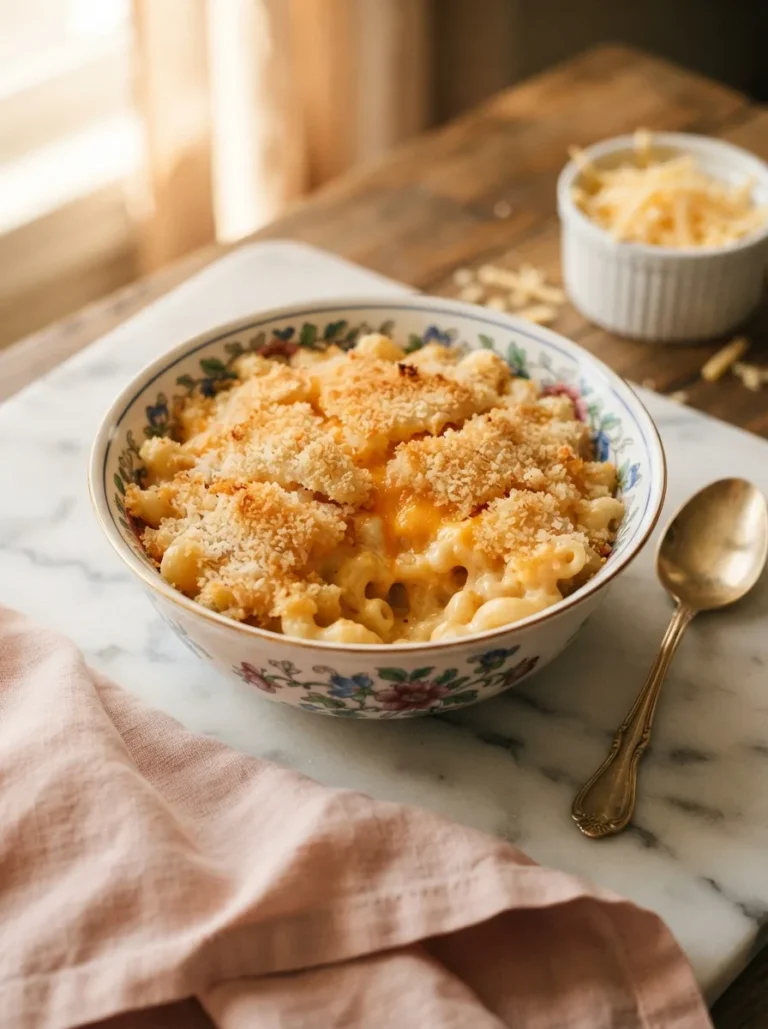
- Saltgrass Macaroni and Cheese — another hearty pasta recipe to try after this chicken alfredo bread bowl

Foolproof Chicken Alfredo Bread Bowl (No Soggy Crust)
Ingredients
For the bread bowls:
- 4 round sourdough bread bowls (6–8 inches)
- 4 tablespoon unsalted butter, melted
- 2 clove garlic, minced
For the chicken alfredo filling:
- 11/2 lb boneless, skinless chicken breast, cut into bite-size pieces
- 2 tablespoon olive oil
- Salt and pepper, to taste
- 4 tablespoon unsalted butter
- 4 clove garlic, minced
- 2 cup heavy cream
- 11/2 cup parmesan cheese, freshly grated
- 1 cup mozzarella cheese, shredded (for topping)
- 2 tablespoon fresh parsley, chopped, for garnish
Instructions
- Preheat the oven to 375°F. Using a serrated knife, cut a circle into the top of each bread loaf and hollow out the interior, leaving about ¾ inch of bread lining the walls and bottom.
- Melt 4 tablespoons butter with 2 minced garlic cloves. Brush generously inside each hollowed bread bowl, including the bottom corners.
- Arrange bread bowls on a baking sheet and toast at 375°F for 15 minutes, until the interior is golden and dry to the touch.
- Season the chicken with salt and pepper. Heat olive oil in a large skillet over medium-high heat and sear the chicken 4–5 minutes per side, until golden and cooked through to 165°F. Remove to a plate.
- In the same skillet over medium heat, melt the remaining 4 tablespoons butter. Add the remaining 4 cloves minced garlic and cook 30 seconds, until fragrant.
- Pour in the heavy cream, bring to a gentle simmer, and scrape up any browned bits from the bottom of the pan.
- Reduce heat to low. Whisk in the parmesan a handful at a time, letting each addition melt before adding more. Simmer 3–4 minutes, until the sauce coats the back of a spoon.
- Return the chicken to the skillet and stir to coat in the sauce.
- Divide the chicken alfredo filling evenly among the toasted bread bowls. Top with shredded mozzarella and broil on high for 2–3 minutes, until melted and lightly golden. Garnish with parsley and serve immediately.
Notes
- Grate the parmesan yourself — pre-shredded bagged cheese contains anti-clumping starch that prevents a smooth melt and leaves the sauce grainy.
- The 15-minute toast step is not optional. Skipping it is the most common cause of a collapsed, soggy bread bowl.
- Sauce should coat the back of a spoon before filling the bowls — a thin sauce will soak through even a well-toasted crust.
- Rotisserie chicken works as a shortcut: shred 3 cups and stir into the finished sauce instead of searing raw chicken.
- Half-and-half can replace heavy cream for a lighter version, but simmer 2 extra minutes to compensate for the thinner base.
- Leftover filling keeps in the fridge for up to 3 days in an airtight container, stored separately from the bread.
- Filling freezes well on its own for up to 2 months; thaw overnight in the fridge before reheating.
- Reheat filling gently over low heat with a splash of cream or milk to loosen the sauce before serving.
- This recipe scales easily for a crowd — double the chicken and sauce and toast as many bread bowls as needed.