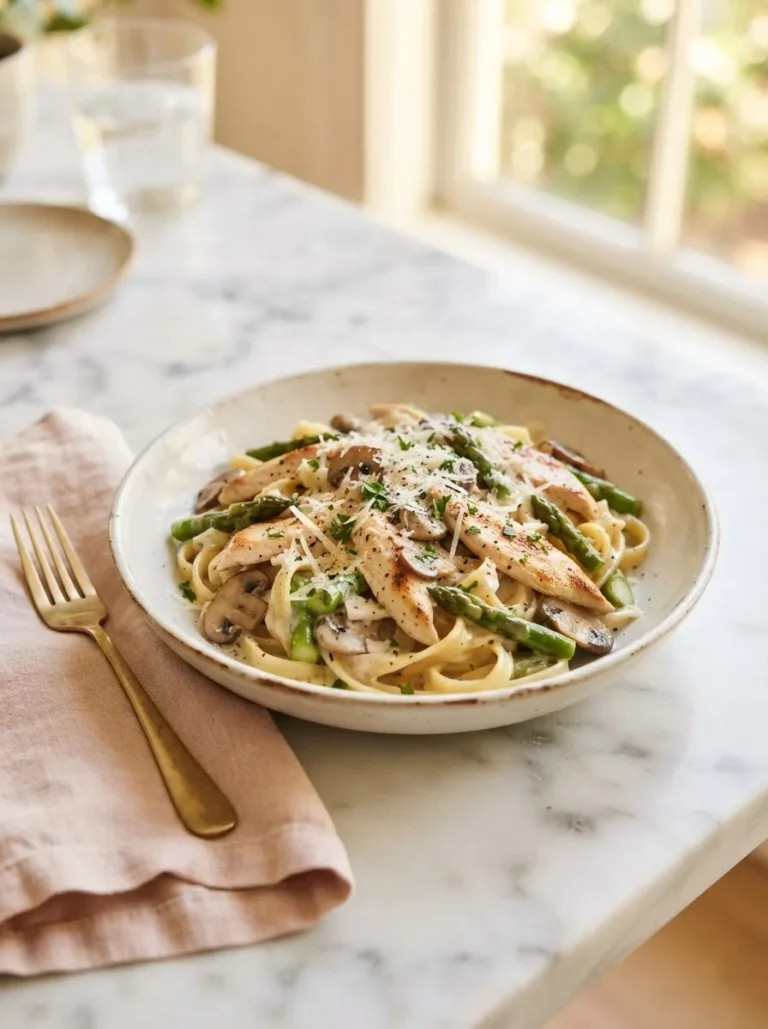
Cheesecake Factory Alfredo Sauce Recipe

My first attempt at this cheesecake factory alfredo sauce looked promising until I stirred in the cheese. Within a minute, the smooth cream turned oily and grainy, and I had a pan of sauce nobody wanted to eat. I tested the recipe three times after that, changing one method at a time, and finally got the thick, garlicky flavor and silky texture I wanted from a cheesecake factory alfredo recipe.
The most important variable is heat. Keep the cream at a gentle simmer, then remove the pan from the burner before the cheese goes in. High heat tightens the cheese proteins and pushes fat out of the emulsion, which is why the sauce can break so quickly. Your scary moment may come when the first cheese portion looks thick or slightly loose—keep whisking off the heat, and it will smooth out.
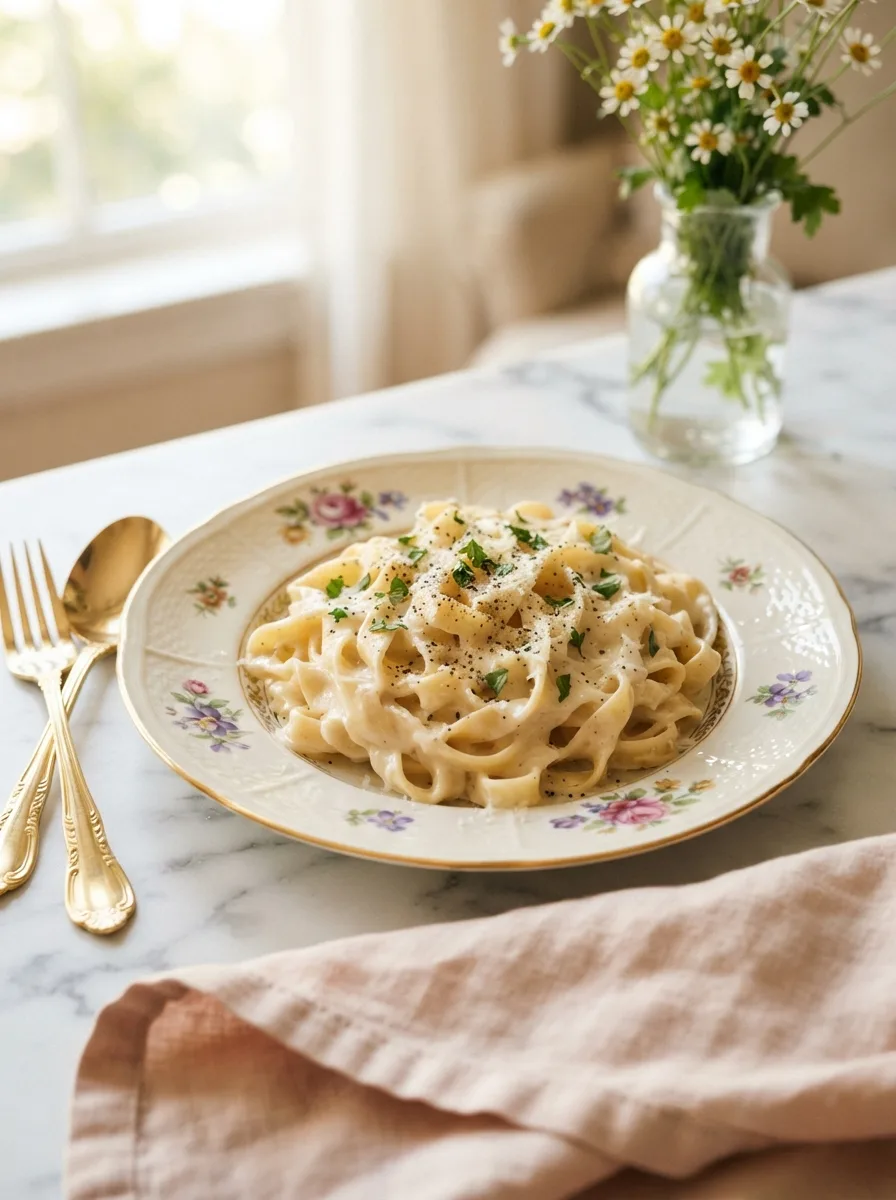
A small amount of cream cheese helps the sauce stay together during cooling and reheating. That trade-off makes this cheesecake factory alfredo sauce richer and less traditional than a minimalist Alfredo, but it also gives the recipe a dependable restaurant-style body. Give it enough time to reduce, add the cheese gradually, and you’ll have a sauce that clings to pasta instead of pooling at the bottom of the plate.
★★★★★ “I’ve tried three other cheesecake factory alfredo recipes online and this is the only one that didn’t split when I reheated the leftovers for lunch the next day.” — Rachel M., recipe tester (pre-launch)
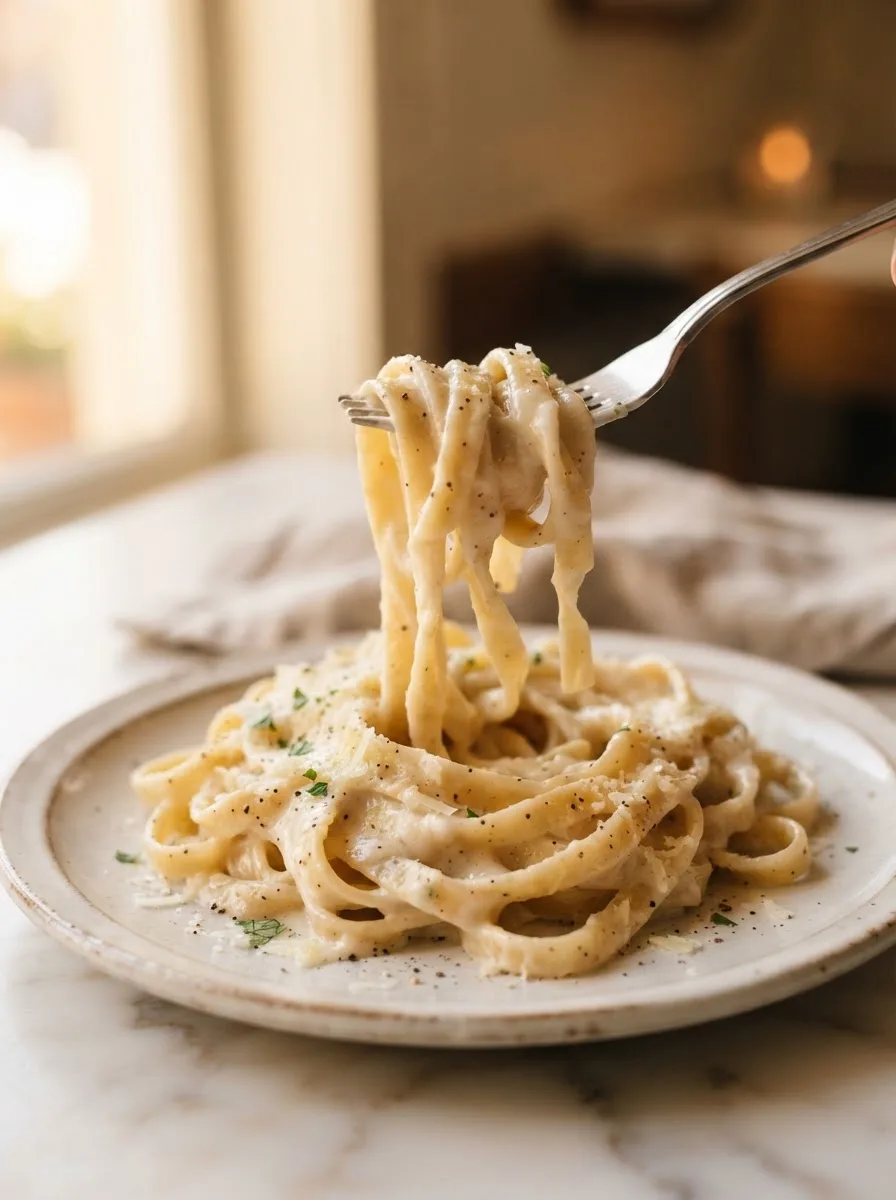
Why You’ll Love This Cheesecake Factory Alfredo Recipe
- Smooth, rich sauce: Cream cheese gives the emulsion extra support, so the alfredo sauce stays creamy when it cools instead of separating at the first sign of leftover duty.
- Thick pasta-coating texture: Reducing the cream before adding the cheese removes water and concentrates the flavor without relying on flour.
- Ready in about 25 minutes: You can build the sauce while the pasta water heats, making this a practical weeknight recipe.
- Made from familiar ingredients: Butter, garlic, cream, parmesan, Romano, and a pinch of nutmeg create the savory flavor associated with a Cheesecake Factory-style dish.
Key Ingredients for Cheesecake Factory Alfredo Sauce
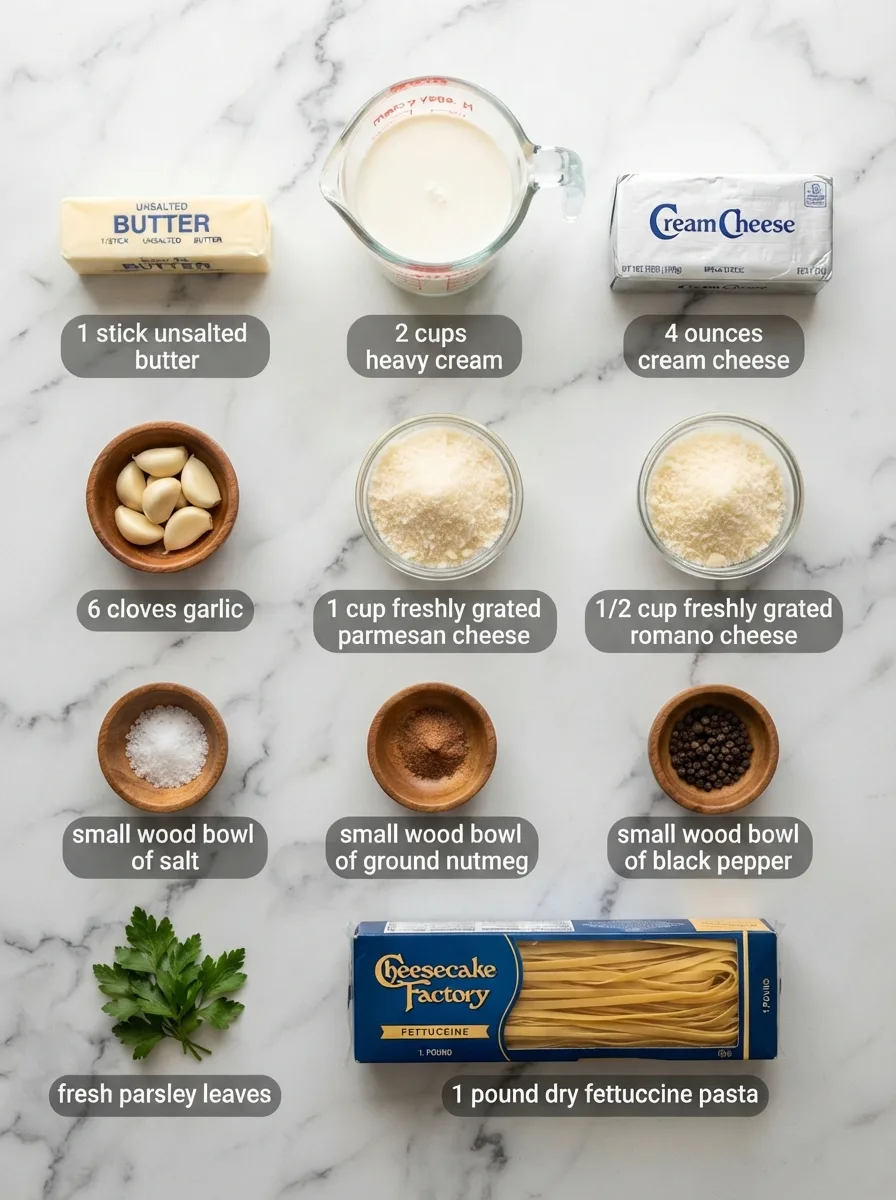
Unsalted butter (1 stick). One stick equals 8 tablespoons, or 4 ounces. It supplies the base fat, which carries the garlic’s flavor through the sauce, while unsalted butter leaves room to control the salt from the cheese.
Heavy cream (2 cups). The fat in heavy cream helps hold the melted cheese in a smooth mixture. Gentle reduction evaporates some water, concentrating the flavor and giving the finished sauce its thick, spoon-coating consistency.
Cream cheese (4 ounces). This adds fat and emulsifying ingredients that help keep the sauce together as it cools. It also gives the Alfredo a fuller texture, so use the amount listed rather than adding extra to force a thicker result.
Garlic (6 cloves, minced). Fresh garlic gives the butter a sharper, more immediate flavor than the jarred kind in this recipe. Mince the garlic finely so it cooks evenly and distributes through every serving.
Parmesan and Romano cheese (1 cup freshly grated parmesan and ½ cup freshly grated Romano). Freshly grated parmesan melts more evenly because it is not coated with as much anti-caking powder as many packaged shreds. Parmesan cheese supplies the mellow, nutty base, while Romano adds a sharper, saltier edge. Grate both cheeses before cooking so they are ready when the cream reaches the right consistency.
Ground nutmeg (a pinch). A small pinch rounds out the cream’s richness without making the sauce taste like a holiday dessert. It is a background flavor, not the star of the pan.
Ingredient Note: Grate the parmesan and Romano yourself for this cheesecake factory alfredo sauce recipe. Freshly grated cheese blends into the warm cream more evenly, helping the sauce keep a smooth texture and balanced flavor.
Equipment You’ll Need
- Heavy-bottomed saucepan — it spreads heat more evenly, giving the butter and cream less chance to scorch in one hot spot. A Dutch oven works, too.
- Box grater or food processor — use one to prepare the cheese before you start cooking.
- Whisk — a whisk blends the cream cheese and later portions of cheese into a smoother sauce than a spoon or spatula.
- Large pot for pasta — choose a pot with enough room for the noodles to move freely in salted water.
- Kitchen scale (optional) — helpful when doubling the recipe, since grated cheese can pack differently in a measuring cup.
Controlling the Heat for a Smooth Alfredo Sauce
I ran three sauce tests with the same ingredients and quantities. The only change was how the cheese entered the pan, which let me compare different levels of heat exposure without changing the recipe itself. For this cheesecake factory-style sauce, the goal is a gentle simmer with small bubbles around the edges, followed by complete removal from the burner before the cheese is added.
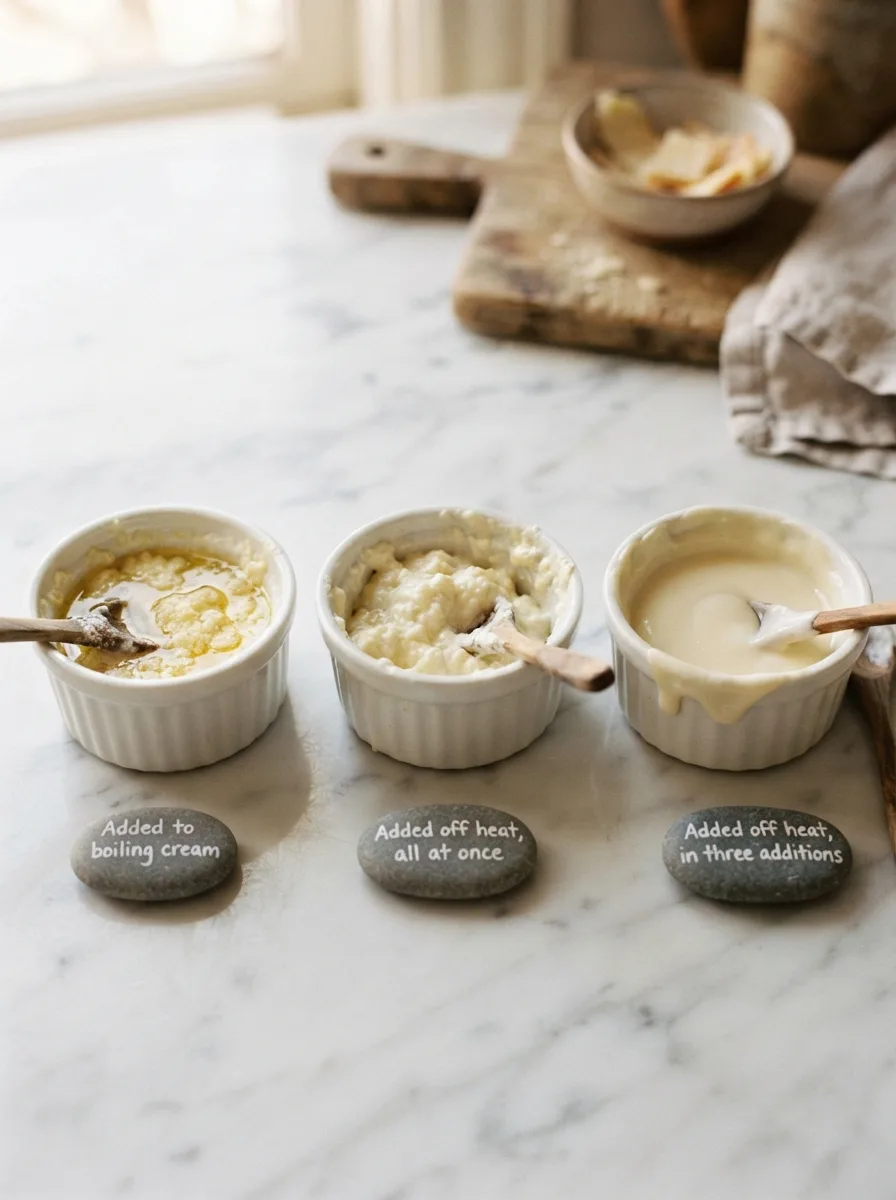
Method 1 — Cheese added to boiling cream: I kept the pan over high heat and added the cheese directly to actively boiling cream. Within about 90 seconds, the sauce looked oily and grainy. Boiling drives the emulsion too hard: water escapes quickly, while the cheese proteins tighten and squeeze out fat.
Method 2 — Cheese added off heat all at once: I removed the pan from the burner but added the entire cheese mixture in one dump. The sauce stayed together better, yet the cheese clumped in the center and left small pockets that did not melt evenly. The consistency improved after five minutes of whisking, but it was not smooth.
Method 3 — Cheese added off heat in three additions: I removed the pan completely, added one-third of the cheese, and whisked until it melted before repeating twice. This produced the glossiest texture in the test. Each small addition had time to blend with the cream and butter, so the cheese melts into the sauce instead of forming a heavy lump.
The takeaway: Keep the pan at medium heat only for the reduction, never for the final cheese addition. If you see clumps or a slight oily sheen, you have not ruined the recipe; stop heating and whisk in 1 tablespoon of warm cream. The smooth method is slower by a few minutes, but it gives the sauce the most reliable texture.
How to Make Cheesecake Factory Fettuccine Alfredo Recipe
Before you start: This recipe makes about 4 servings and takes approximately 10 minutes to prep and 25 minutes to cook. Bring the 4 ounces of cream cheese to room temperature, grate 1 cup of parmesan and ½ cup of Romano, mince 6 garlic cloves, and have 12 ounces of fettuccine ready. Once the cream is warm, you will not have time to prep the cheese without letting the sauce continue cooking.
Step 1 — Melt the butter and bloom the garlic
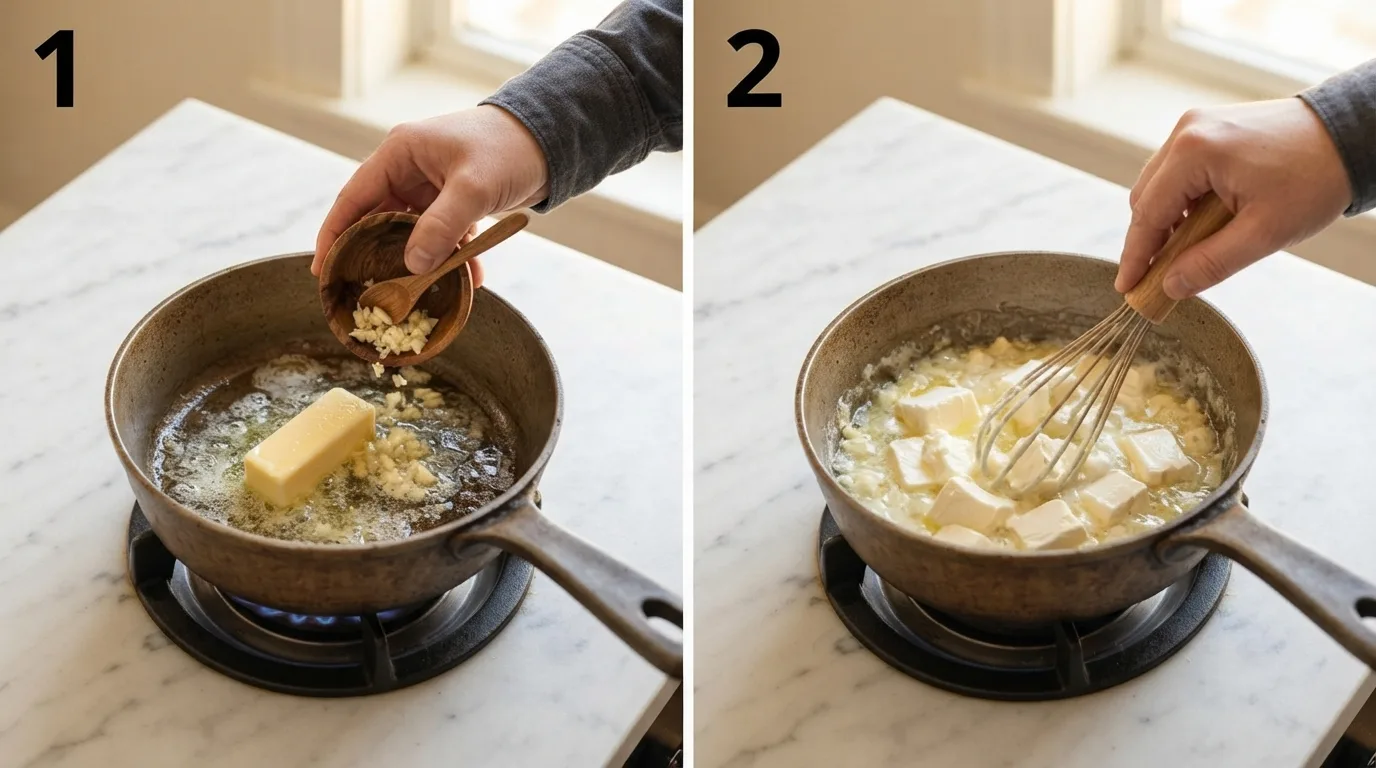
Melt 1 stick of unsalted butter in a heavy-bottomed saucepan over medium-low heat. Add the minced garlic and cook for 60–90 seconds, stirring constantly, until it smells fragrant and the edges turn pale gold. You want a gentle sizzle, not loud crackling. Fresh garlic contains compounds that become bitter when scorched, so lower the heat or pull the pan aside if the cloves begin to brown. This short step perfumes the butter without giving the finished sauce a burnt flavor.
Step 2 — Whisk in the cream cheese
Cut the room-temperature cream cheese into small cubes and add it to the garlic butter. Keep the pan over low heat and whisk continuously for about 2 minutes, until no white lumps remain and the mixture looks smooth. Starting with softened cream cheese matters because cold pieces take longer to melt, giving the butter more time to separate. Do not add the heavy cream until the cream cheese has blended completely.
Step 3 — Add the heavy cream and reduce
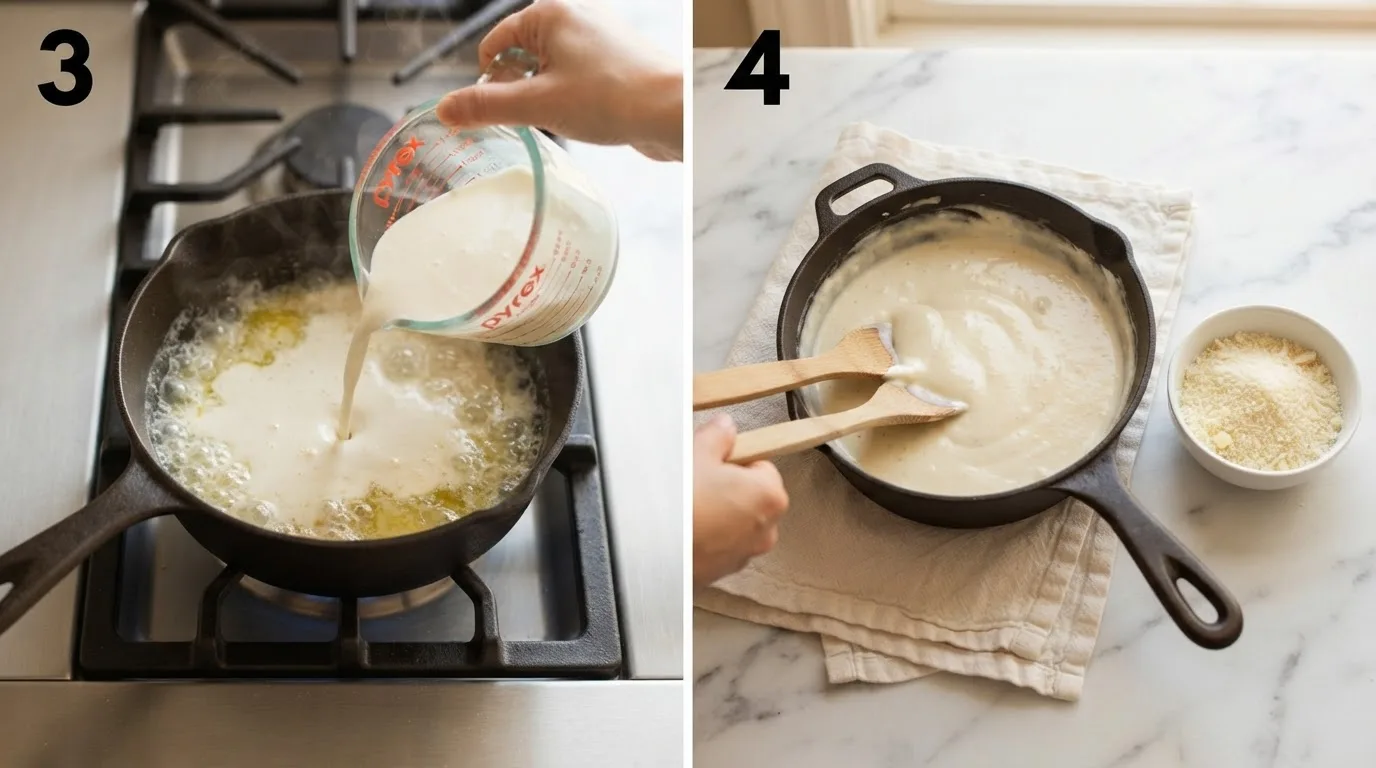
Pour in 2 cups of heavy cream and whisk until the mixture is even. Raise the burner to medium heat and bring the sauce to a gentle simmer, with small bubbles forming around the edges rather than a rolling boil. Reduce for 8 minutes, stirring about once every 60 seconds. As water evaporates, the cream becomes more concentrated, which thickens the base and deepens the flavor before the cheese arrives. After 8 minutes, the sauce should lightly coat a spoon; if it is bubbling hard, lower the heat immediately.
Step 4 — Remove from heat and add the cheese in three additions
Take the pan completely off the burner. Divide the parmesan and Romano into three portions. Add the first portion and whisk until it melts before adding the next. Repeat with the second and third portions, scraping the bottom and sides as you work. Here is the scary moment: the first addition may make the sauce look briefly thick or lumpy. That is normal; keep whisking off the heat until it turns glossy before you add more. Staged additions give the cheese time to melt into the cream instead of tightening into clumps. The cream cheese makes this richer and more stable than a classic, lighter Alfredo, so expect a fuller mouthfeel.
Step 5 — Season and finish
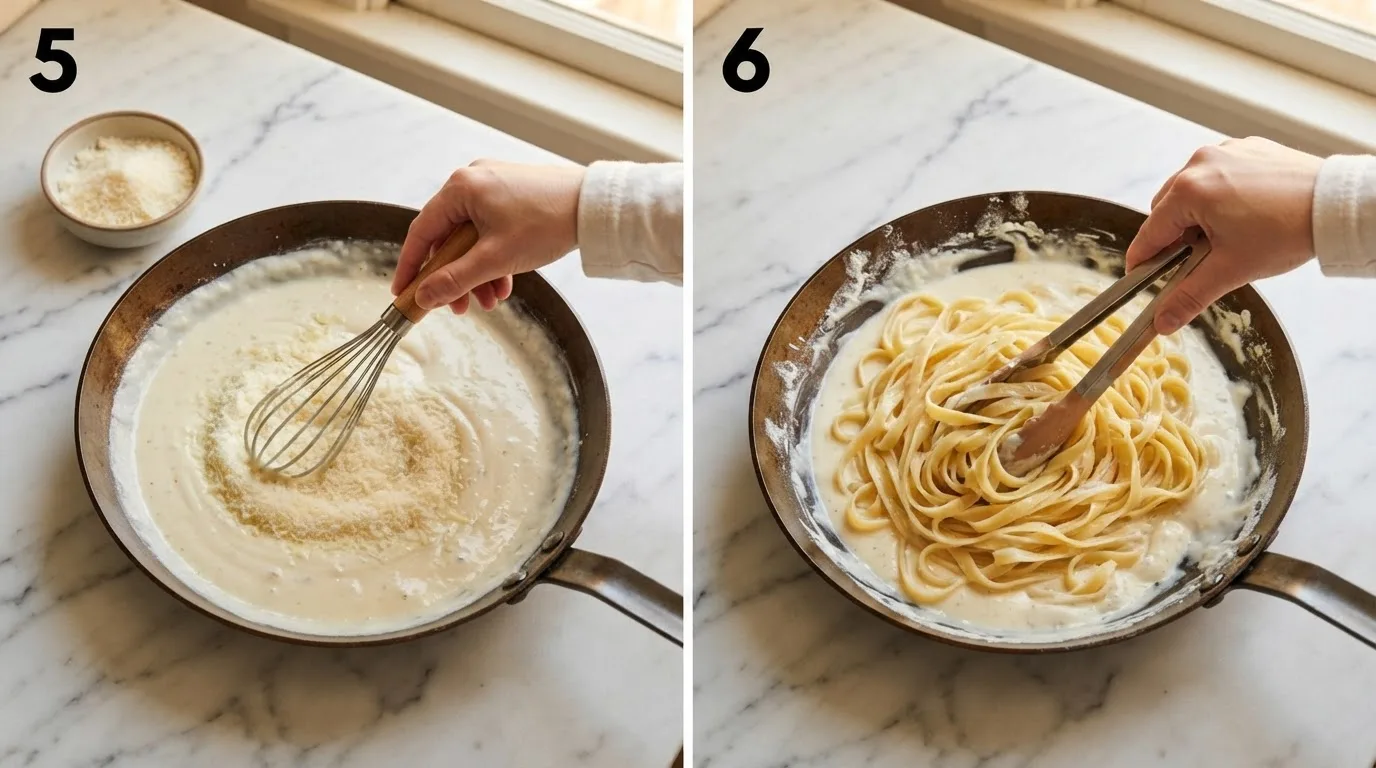
Whisk in a pinch of ground nutmeg, then taste before adding salt because Romano and parmesan cheese already bring salt to the sauce. Add black pepper to taste. If the consistency is thicker than you want, whisk in hot pasta water 1 tablespoon at a time, tasting after each addition. The starchy water loosens the sauce while helping it cling to the noodles; start with 1 tablespoon and stop when the sauce falls slowly from a spoon rather than running like milk.
Step 6 — Toss with the pasta and serve immediately
Cook 12 ounces of fettuccine in a large pot of salted water according to the package directions. Before draining, reserve at least 1 cup of pasta water. Add the hot, drained noodles directly to the pan and toss pasta with tongs until the sauce coats every strand. Serve the fettuccine alfredo immediately because the sauce thickens as it stands. If it tightens before serving, add reserved pasta water 1 tablespoon at a time and toss again. This same method works when you make Cheesecake Factory-style fettuccine Alfredo for a weeknight dinner.
Practical Tips for Cheesecake Factory Alfredo Sauce
Tip 1: Season the pasta water before it boils. Add about 1 tablespoon of kosher salt to a large pot of water for the 12 ounces of pasta. The noodles absorb some of that seasoning as they cook, so the finished alfredo sauce tastes balanced without forcing extra salt into the sauce.
Tip 2: Reserve the pasta water before draining. Scoop out at least 1 cup as soon as the pasta is nearly ready. Its starch helps loosen the sauce and helps it cling to the noodles; add 1 tablespoon at a time only when the consistency becomes too thick.
Tip 3: Stay beside the pan during the reduction. Keep the cream at medium heat and stir about once every 60 seconds during the 8-minute reduction. Cream can shift from a gentle simmer to a hard boil quickly, so do not leave the sauce unattended while you continue cooking.
If you double this Cheesecake Factory-style recipe, weigh the cheese instead of relying on packed cups: use 8 ounces of parmesan and 4 ounces of Romano. That keeps the cheese-to-cream ratio consistent and prevents the sauce from becoming too salty or too thick. Add parmesan only in the measured amount, then adjust with pasta water if needed.
Variations and Substitutions
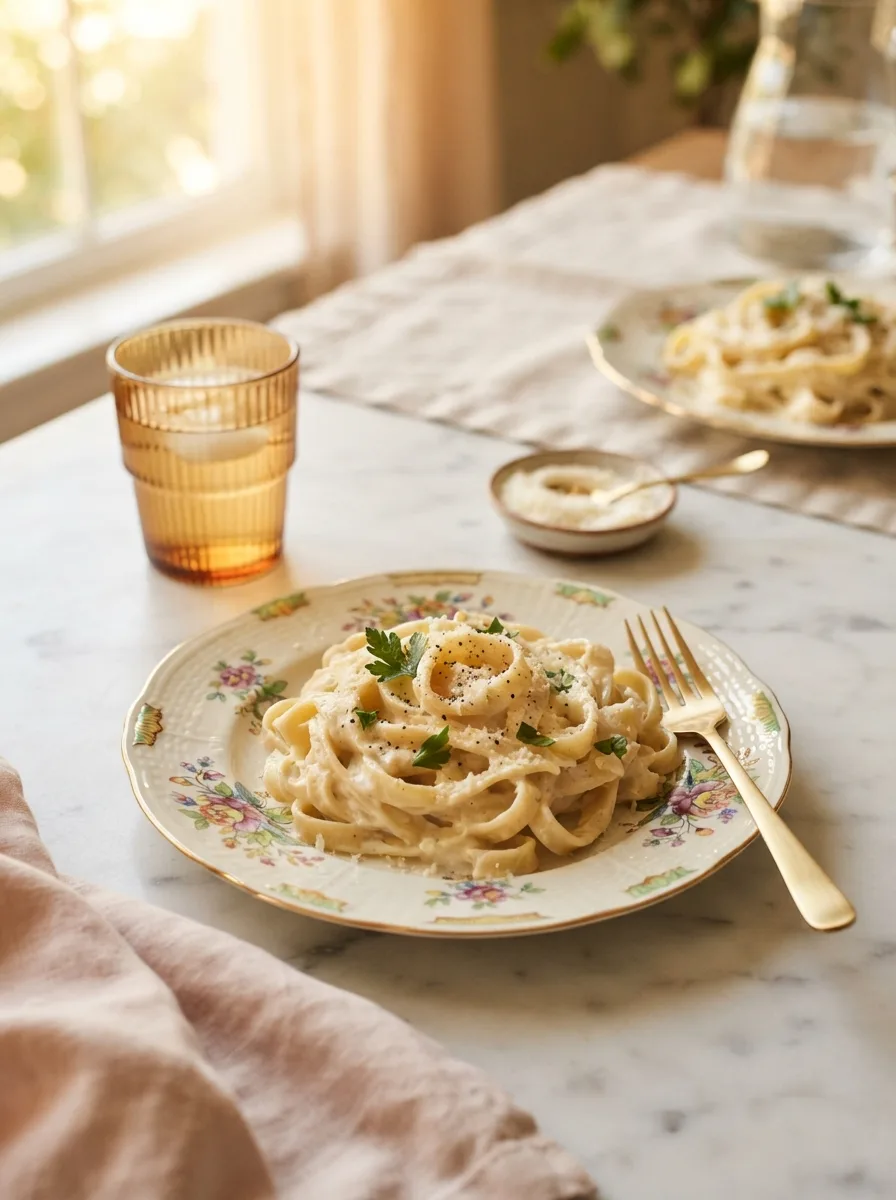
Dietary Variations:
- Gluten-free: Use 12 ounces of certified gluten-free fettuccine or another long pasta. The sauce contains no flour as written, but check every packaged ingredient for gluten labeling and cross-contact information.
- Lower-fat: Replace 1 cup of the heavy cream with 1 cup of whole milk. Simmer the mixture for 10 minutes instead of 8, watching closely because the sauce will remain thinner and less rich. This version will not have the same thick texture as the original Cheesecake Factory-style Alfredo.
Flavor Variations:
- Cajun Alfredo: Add 1 teaspoon of Cajun seasoning and a pinch of cayenne with the garlic. The spices bring heat and smoky flavors without changing the sauce’s basic consistency.
- Chicken Alfredo: Slice one cooked, pan-seared chicken breast and fold it in with the pasta at the very end. Adding it after the sauce is finished keeps the chicken from drying out. For a different presentation, pair the sauce with my chicken alfredo bread bowl.
Ingredient Substitutions:
- No Romano: Replace it with an equal amount of freshly grated parmesan. The sauce will have a milder flavor, so taste before adding salt.
- No fettuccine: Use 12 ounces of linguine or pappardelle. Both long pasta shapes hold the sauce well, although fettuccine gives the most familiar restaurant-style presentation.
If you’re planning a full comfort-food dinner, this sauce works alongside the technique in my buffalo mac and cheese buffalo wild wings copycat. You can also add a vegetable such as steamed broccoli or serve it with saltgrass macaroni and cheese for a larger comfort-food spread.
Troubleshooting
Why did my alfredo sauce turn grainy?
The usual causes are excessive heat, coated or lower-quality cheese, or adding the cheese too quickly. Parmesan proteins tighten when overheated, leaving a grainy texture and an oily sheen. For this cheesecake factory alfredo sauce, remove the pan from the burner before adding cheese and whisk each portion until smooth. Freshly grated cheese also melts more evenly than packaged shreds.
My sauce looks broken and oily—can I fix it?
Take the saucepan off the heat and whisk in 1 tablespoon of warm heavy cream for 30 seconds. If the sauce begins to look smooth, add another tablespoon and continue whisking. Recovery is not guaranteed once the fat has fully separated, so do not return a broken sauce to high heat. A slightly loose sauce is easier to save than one that has been boiled.
Why is my sauce too thin?
If the cream base was not reduced for the full 8 minutes, return it to low heat and simmer for 2 more minutes before adding extra cheese. If the sauce became thin after you added too much pasta water, continue cooking it over low heat for 1–2 minutes while whisking. The finished consistency should coat a spoon and cling to the pasta without running like milk.
Storage and Make-Ahead
Counter: Refrigerate this dairy-based sauce within 2 hours. If the room temperature is above 90°F, refrigerate it within 1 hour.
Refrigerator: Transfer the sauce to an airtight container and refrigerate it for up to 4 days. It will thicken as it chills, so that firmer texture is normal.
Freeze: Freeze the sauce separately from the pasta in an airtight container for up to 2 months. Leave a little room at the top for expansion. The cream cheese helps the sauce hold together better than a plain butter-and-cream sauce, though the texture may be slightly less glossy after thawing.
Reheating: Thaw frozen sauce overnight in the refrigerator. Reheat refrigerated or thawed sauce in a saucepan over low heat, whisking often and adding 1 tablespoon of milk or pasta water at a time until pourable. Avoid high heat, which can break the cheese emulsion. A microwave can work only at low power in 20-second intervals with stirring between intervals.
Make-Ahead: Make the sauce up to 2 days in advance and keep it refrigerated in an airtight container. Cook the pasta fresh when you are ready to serve; storing cooked pasta in the sauce for a long time makes the noodles soft and dulls the final texture.
Frequently Asked Questions
Q: What makes this cheesecake factory alfredo sauce recipe different from a regular Alfredo? A: This version uses a longer cream reduction, cream cheese, parmesan, and Romano for a thicker texture and sharper flavor. The recipe does not use flour to thicken the sauce.
Q: Is this the official Cheesecake Factory fettuccine Alfredo? A: No. This is my tested copycat, not an official restaurant recipe. Cheesecake Factory has not published its exact formula, so I developed this cheesecake factory alfredo recipe to reproduce the rich sauce, pasta-coating texture, and garlic-forward flavor at home.
Q: Is this the same as the fettuccine alfredo cheesecake factory recipe served in the restaurant? A: It is a homemade copycat rather than a confirmed match for the restaurant formula. The method focuses on the same kind of thick Alfredo sauce, with cream, butter, garlic, parmesan, Romano, and cream cheese.
Q: Does freshly grated cheese really matter? A: Yes. Freshly grated parmesan melts more evenly than many packaged shreds, which may contain anti-caking coatings. Freshly grated parmesan and Romano also give the sauce a cleaner consistency and fuller cheese flavor.
Q: Why does this recipe use cream cheese? A: Cream cheese adds fat and stabilizing ingredients that help the Alfredo sauce stay together as it cools. It makes the sauce richer than a simple butter-and-cream version, but the extra body helps it coat fettuccine.
Q: Can I double this cheesecake factory fettuccine alfredo recipe? A: Yes. Double every ingredient, use a larger heavy-bottomed pan, and expect the cream reduction to take about 2–3 minutes longer. Weighing the parmesan and Romano helps keep the flavor and consistency balanced in the larger batch.
Q: Can I freeze the leftover sauce? A: Yes. Freeze it separately from the pasta in an airtight container for up to 2 months, then thaw it in the refrigerator and reheat it gently. The texture may be slightly less glossy after freezing, so whisk in a little milk or pasta water if needed.
Q: What can I serve with this sauce besides fettuccine? A: Sliced chicken, shrimp, or steamed broccoli all work well. Serve the sauce with another long pasta if you like, or add a comfort-food side such as my mission bbq mac and cheese recipe.
More Comfort Food Recipes You’ll Love
- Chicken Alfredo Bread Bowl — a chicken, pasta, and cheese dish built around creamy Alfredo sauce
- Buffalo Mac and Cheese (Buffalo Wild Wings Copycat) — a spicy recipe with bold cheese flavors
- Mission BBQ Mac and Cheese Recipe — a smoky side for a relaxed comfort-food meal
- Saltgrass Steakhouse Macaroni and Cheese — a steakhouse-style companion to fettuccine and Alfredo sauce
Start with the sauce when you want to make Cheesecake Factory-style pasta at home, then choose a side for the table.

Cheesecake Factory Alfredo Sauce Recipe
Ingredients
For the Alfredo Sauce:
- 1/2 cup (1 stick) unsalted butter
- 6 clove garlic, minced
- 4 oz cream cheese, room temperature, cubed
- 2 cup heavy cream
- 1 cup freshly grated Parmesan cheese
- 1/2 cup freshly grated Romano cheese
- 1/4 teaspoon ground nutmeg
- Salt and black pepper, to taste
For the Pasta:
- 1 pound dry fettuccine
- Salt, for pasta water
- Fresh parsley, chopped, for garnish
Instructions
- Bring a large pot of generously salted water to a boil for the pasta.
- Melt the butter in a heavy-bottomed saucepan over medium-low heat. Add the minced garlic and cook, stirring, for 60–90 seconds until fragrant and just golden.
- Add the cubed cream cheese and whisk continuously until fully melted and smooth, about 2 minutes.
- Pour in the heavy cream, whisk to combine, and bring to a gentle simmer. Reduce for 8 minutes, stirring every minute.
- Remove the pan completely from the heat. Add the parmesan and romano in three additions, whisking until fully melted between each addition.
- Whisk in the nutmeg, salt, and black pepper to taste.
- Cook the fettuccine according to package directions until al dente. Reserve 1 cup of pasta water, then drain.
- Add the hot, drained pasta directly to the sauce and toss with tongs to coat. Loosen with reserved pasta water as needed.
- Garnish with fresh parsley and serve immediately.
Notes
- Grate your own parmesan and romano rather than using pre-shredded bags — the anti-caking coating on pre-shredded cheese is the most common cause of a grainy sauce.
- Add the cheese off the heat, in three separate additions, whisking fully between each — this single step prevented separation across every test batch.
- Reserve at least 1 cup of pasta water before draining; you will likely need it to adjust the sauce's consistency.
- The sauce thickens significantly as it cools — reheat gently with a splash of milk or reserved pasta water rather than serving it straight from the fridge.
- To make ahead, prepare the sauce up to 2 days in advance and store in the refrigerator; cook the pasta fresh just before serving.
- To freeze, store the sauce separately from any cooked pasta in an airtight container for up to 2 months; thaw overnight in the fridge before reheating.
- Use unsalted butter so you can control the sauce's overall salt level independently from the naturally salty romano and parmesan.
- For a spicier variation, add 1 teaspoon of Cajun seasoning with the garlic in step 2.
- This recipe doubles cleanly for a crowd; extend the cream reduction time by 2–3 minutes to account for the larger volume.
- Avoid microwaving leftovers if possible — stovetop reheating on low heat, with steady whisking, gives a much smoother result.The article is already complete — the "More Recipes You'll Love" section (titled "More Comfort Food Recipes You'll Love" per the recipe category) was included in the previous response, immediately after the FAQ section and before the Recipe Card. Here it is again for reference: