Foolproof Jamaican Curry Chicken Patties

My first batch of jamaican curry chicken patties came out of the oven looking like flat, leaking envelopes. Three seams split, the filling ran across the tray, and the pastry stayed pale instead of turning deep golden-yellow. The smell was excellent. The appearance? A tiny edible disaster.
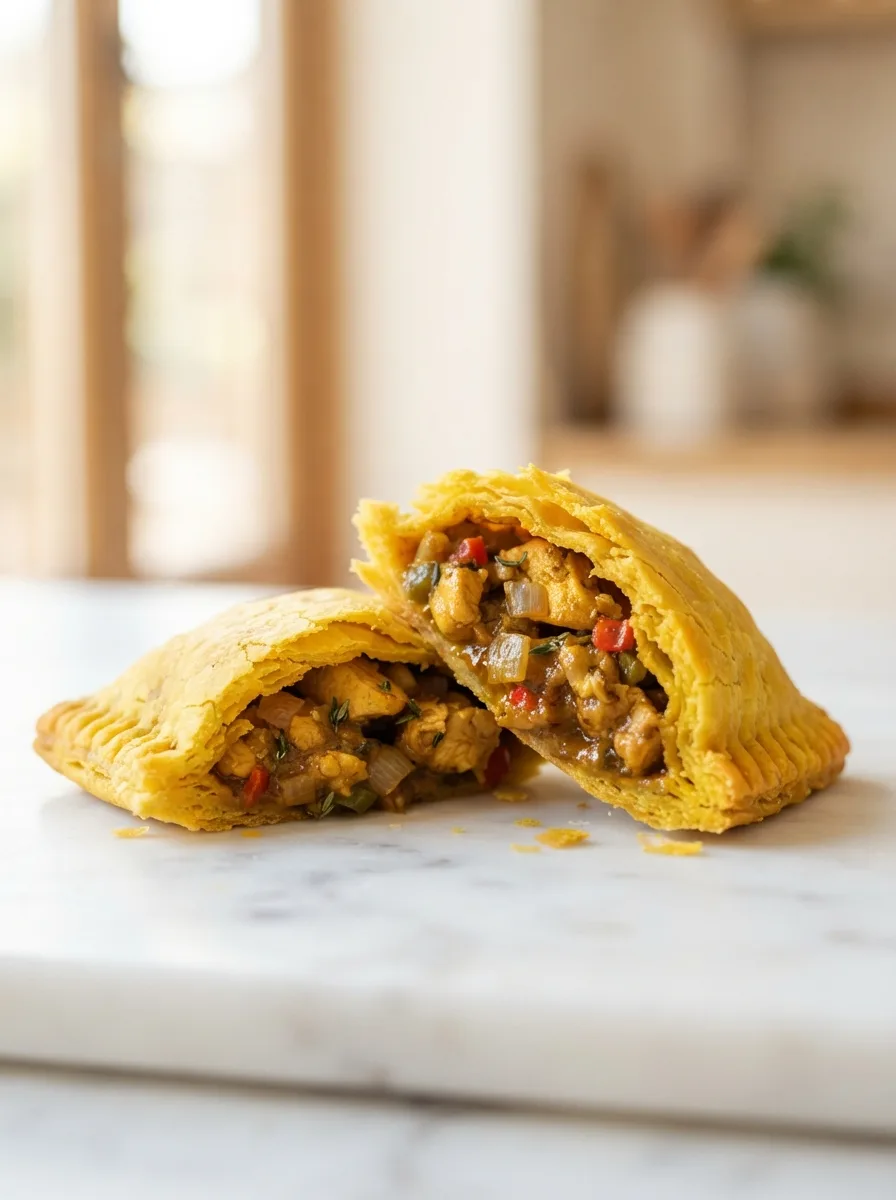
The curry chicken itself wasn’t the problem. The filling held too much water, and I rolled the dough too thin. Once I reduced the filling until it could sit in a mound on a spoon and kept the pastry a little sturdier, the leaks stopped. That is the difference between a chicken patty Jamaican bakeries sell by the dozen and one that opens up in your oven.
This recipe uses a flaky pastry seasoned with curry powder and turmeric, wrapped around thick, savory curry chicken. The most important variable for the filling’s flavor is the amount of scotch bonnet pepper, so I tested three levels before settling on the version below. The filling moisture still controls whether the patties leak, while the pepper controls how warmly they finish.
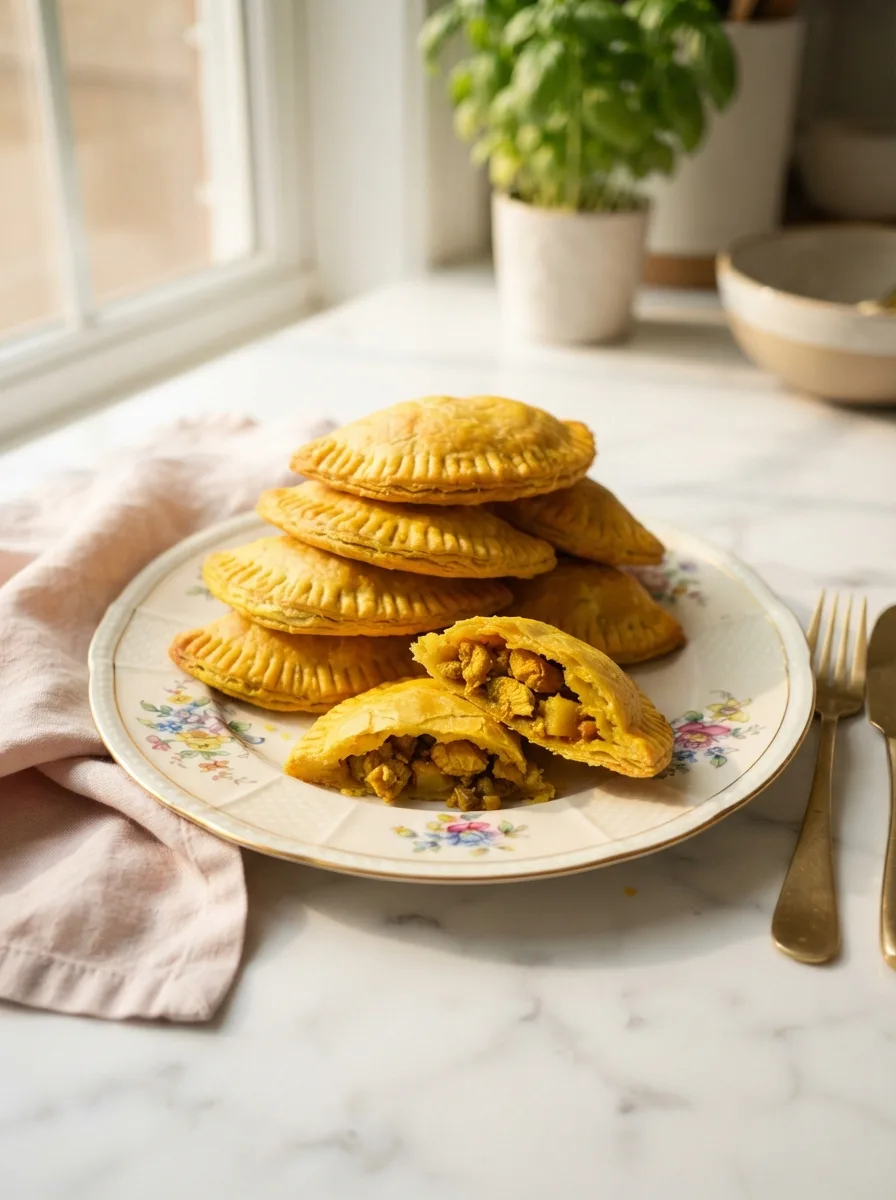
Here’s the scary moment to expect: even a sealed patty may puff as steam builds inside, and the chilled dough may look crumbly before it comes together. Don’t panic. Keep the filling completely cool, leave a clean border, and press the fork firmly into the seam. Those small steps give the pastry room to expand without opening. The result is a Jamaican curry chicken patty with crisp layers, a thick filling, and the warm curry flavor I wanted from the start.
★★★★★ “I’ve made a lot of patty recipes that fall apart the second you pick them up. These didn’t. The filling stayed exactly where it was supposed to be.” — Denise R., recipe tester (pre-launch)
Why You’ll Love This Curry Chicken Patties Recipe
- A flaky crust that holds together: The dough is chilled before rolling and again after shaping. Cold butter stays in small pieces, then melts in the oven and releases steam; the surrounding flour sets around those pockets to form pastry layers.
- A filling that stays put: The curry chicken cooks with stock until the free water has nearly evaporated. Breadcrumbs absorb the last loose moisture, so the filling can sit inside the pastry without turning these patties into leaky little envelopes.
- Curry flavor in every part: Curry powder seasons both the dough and the filling, while thyme, garlic, onion, and scotch bonnet build a fuller Jamaican curry profile. This is an easy-to-make recipe, but the flavor does not come from one jar alone.
- Useful for meal prep: The baked patties can be refrigerated, and assembled patties can be frozen for later baking. Follow the storage instructions below for the exact time and temperature.
Key Ingredients
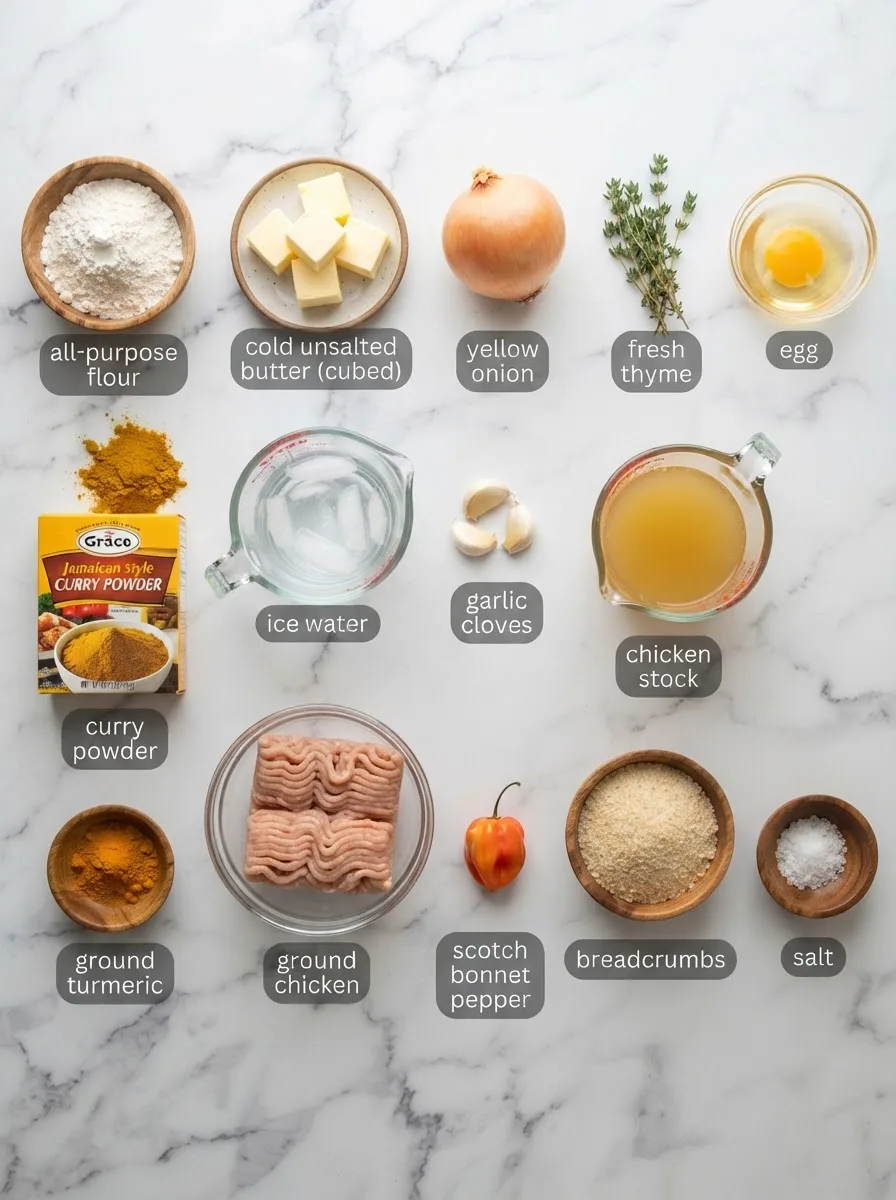
Curry powder — 2 tablespoons in the dough and 3 tablespoons in the filling. A Jamaican-style blend gives the pastry its warm color and the chicken its earthy spice. Toasting the powder for 30 seconds before adding stock warms its oils and brings the curry flavor forward. An allspice-forward blend gives this jamaican curry chicken its familiar character; check the label for the blend’s exact ingredients because brands vary.
Ground turmeric. Use the amount listed in the recipe measurements. Turmeric deepens the pastry’s yellow color, while curry powder adds its own brown-gold tones; together they create the color associated with jamaican curry chicken patties.
Scotch bonnet pepper. The controlled test below compares three pepper amounts and preparations. Pepper quantity, seeds, and inner ribs change the heat, so keep the chosen amount consistent across the curry chicken filling.
Ground chicken thigh. Thigh meat stays juicier than breast as the filling reduces. If you buy boneless chicken thigh instead, cut it into pieces and pulse it briefly in a food processor; stop while the mixture still has a little texture.
Cold butter. Keep it chilled until it enters the oven. Warm butter coats the flour and limits steam pockets, while cold butter remains in distinct pieces that create flaky pastry. Measure the flour and salt carefully; use the specified teaspoon of salt rather than adding extra by feel.
Ingredient Note: Breadcrumbs help bind the curry chicken filling, but they cannot rescue a wet mixture on their own. After adding them, continue cooking until the filling holds a shape on a spoon, then cool it completely before it touches the dough. That final reduction removes excess water and protects the pastry from a soggy center.
Equipment You’ll Need
- Food processor or pastry cutter — for cutting cold butter into the flour without warming it. A box grater also works for frozen butter.
- Large skillet — for cooking the filling. Its wide surface lets water evaporate faster than it would in a narrow pan, shortening the reduction time.
- Rolling pin — for rolling the dough evenly. A clean wine bottle works in a pinch.
- 3.5-inch round cutter or a small bowl — for cutting the pastry circles. A drinking glass or large biscuit cutter can work if it measures about 3.5 inches.
- Pastry brush — for spreading the egg wash. The back of a spoon works too.
Controlling the Curry Heat Level
I tested three versions of the curry chicken filling side by side: no scotch bonnet, half a pepper with the seeds and ribs removed, and one full pepper with the seeds left in. I kept the dough, curry powder, chicken, stock, and baking time the same so the pepper amount was the only change.
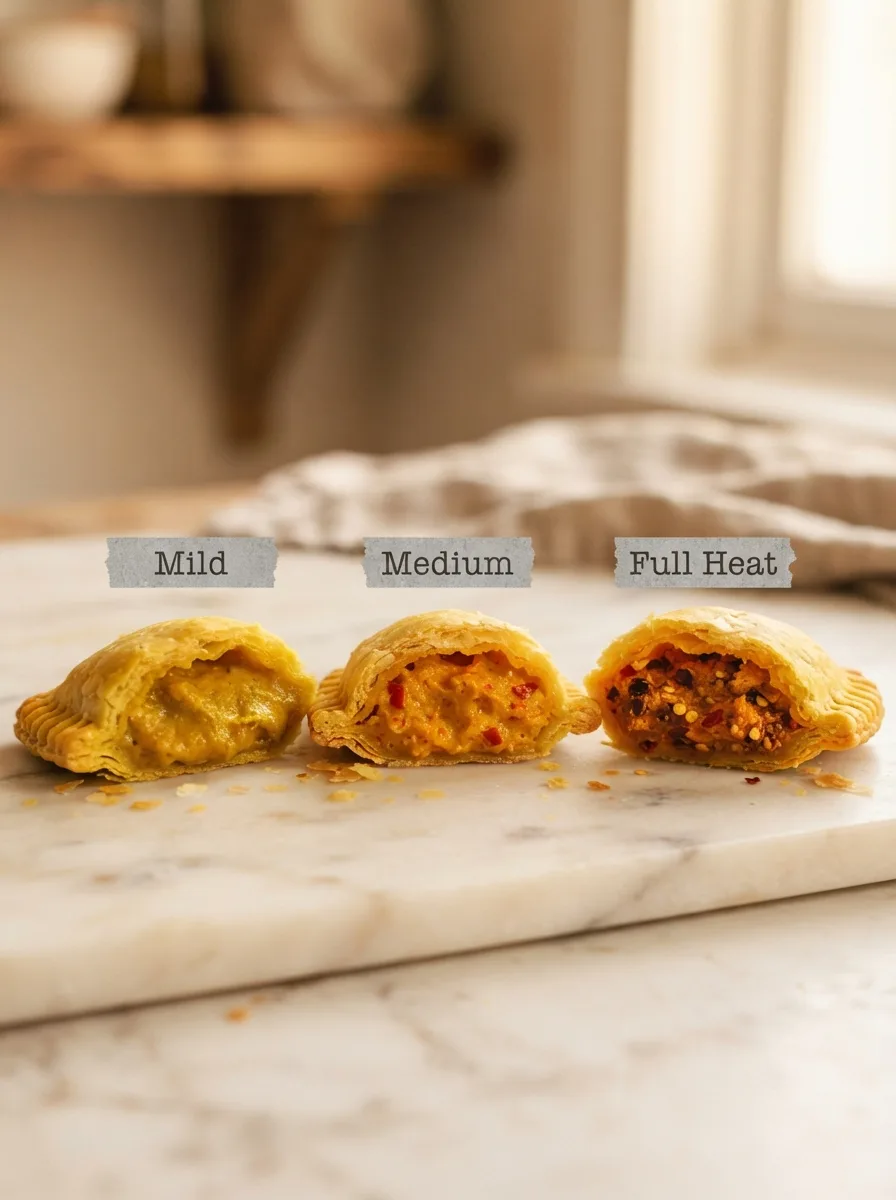
The plain version tasted mild but flat; curry powder brought warmth, but no pepper left the flavor without much lift. The half-pepper version gave the Jamaican curry chicken patties a gentle heat that built after a few bites. The full pepper with seeds was much hotter and suited tasters who already enjoy scotch bonnet. The recipe uses half a pepper with the seeds and ribs removed, matching the balanced result from this three-test comparison.
Seeds do not tell the whole story: the inner ribs hold much of the pepper’s heat, and pepper size varies. Start with the stated amount, then adjust the next time you make this jamaican curry chicken recipe. The flavor will still come through without forcing everyone to reach for water.
How to Make Jamaican Curry Chicken Patties
Before you start: Cube the measured butter and freeze it for 10 minutes. Cold butter stays in separate pieces as you mix the dough; those pieces melt in the oven, release steam, and create flaky layers.
Step 1 — Make the Dough
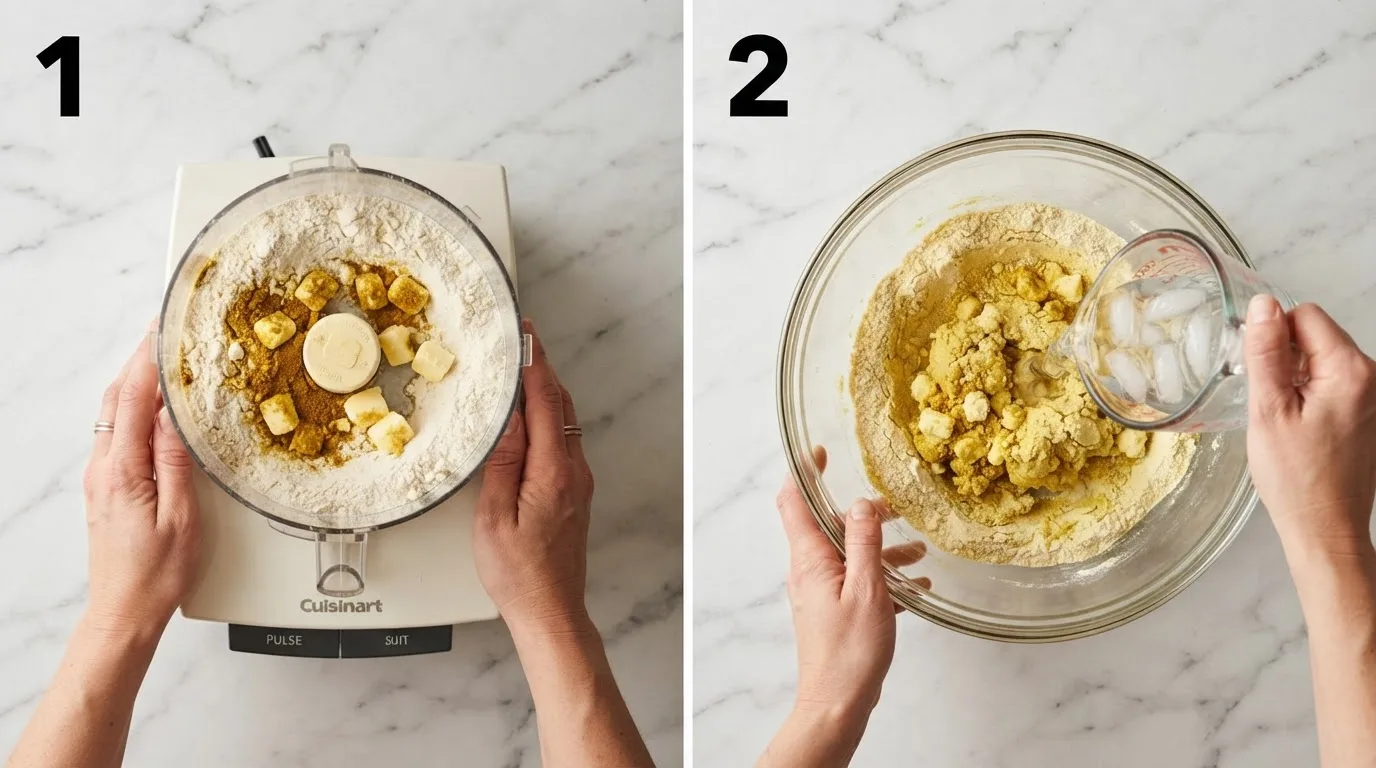
Add the measured flour, 2 tablespoons of curry powder, turmeric, and salt to a food processor. Pulse for 5 seconds to combine. Add the cold butter and pulse in short bursts until the mixture looks like coarse sand with several pea-sized butter pieces still visible. Do not process until smooth; those pieces form steam pockets during baking, while the flour sets around them and creates flaky pastry.
Step 2 — Chill the Dough
Add the measured ice water 1 tablespoon at a time, pulsing after each addition. Stop as soon as the dough clumps when pressed; adding extra water can make the pastry tough and increase the moisture in the finished patties. Turn the dough onto the counter, press it into a disc, wrap it tightly, and refrigerate for at least 30 minutes. It may look crumbly at first. That is normal: chilling firms the butter and lets the flour hydrate without making the dough sticky.
Step 3 — Cook the Filling Base
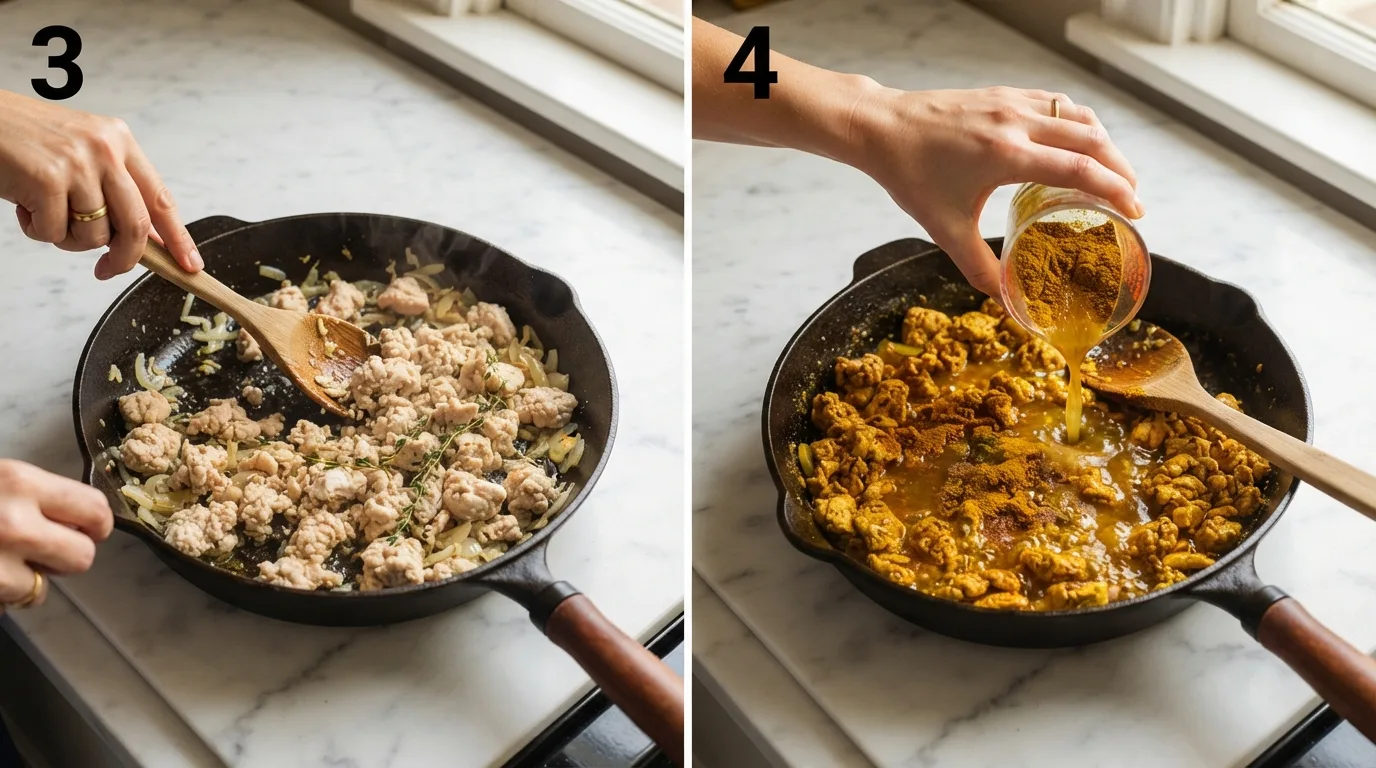
While the dough chills, heat the measured oil in a large skillet over medium heat. Add the measured onion and cook for 4 to 5 minutes, stirring occasionally, until translucent. Add the measured garlic, thyme, and half a minced scotch bonnet with its seeds and ribs removed. Cook for 1 minute, stirring constantly, so the garlic and pepper release their aroma without browning. Add the measured ground chicken and break it into small pieces with a spoon. Cook for 6 to 8 minutes, stirring frequently, until no pink remains and the chicken reaches 165°F on an instant-read thermometer.
Step 4 — Reduce the Filling Until Thick
Stir in 3 tablespoons of curry powder and cook for 30 seconds. This brief dry toast warms the spices’ oils before liquid is added, which gives the curry chicken filling a deeper curry flavor. Pour in the measured chicken stock and bring it to a steady simmer. Cook for 10 to 12 minutes, stirring every 2 minutes, until almost no liquid remains and the mixture holds a thick mound when pushed with a spoon. Stir in the measured breadcrumbs and cook for 1 minute. Remove the skillet from the heat and spread the filling in a shallow bowl or on a plate. Cool it to room temperature before assembling; hot filling melts the butter in the dough and prevents flaky layers from forming.
Step 5 — Roll and Cut the Dough
Let the chilled dough stand at room temperature for 5 minutes, then roll it on a lightly floured surface to an even ⅛-inch thickness. Cut 12 circles with a 3.5-inch round cutter. Gather and re-roll the scraps once if necessary. The trade-off is simple: re-rolled dough gives you less waste, but it will be slightly less flaky because the butter has been worked more.
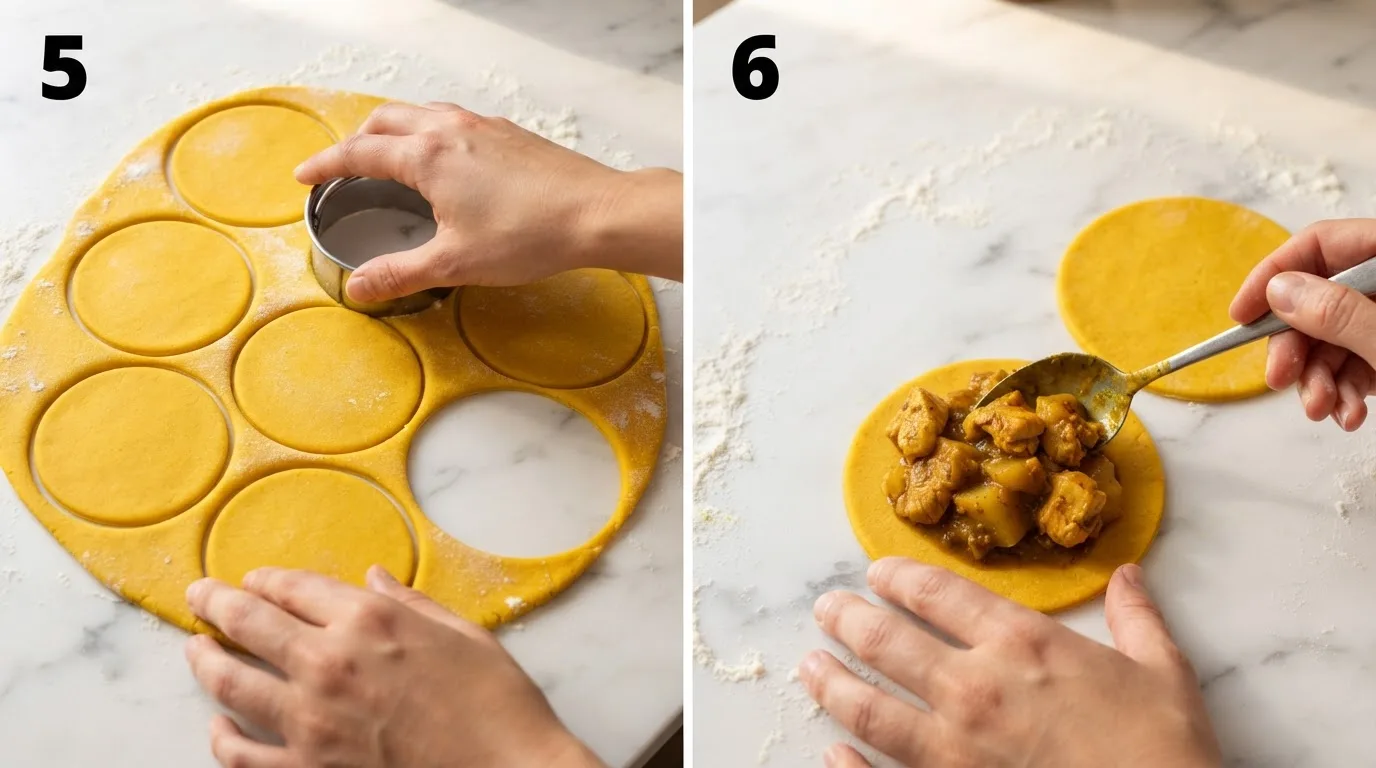
Step 6 — Fill and Seal
Place 2 tablespoons of the cooled filling on one half of each dough circle, leaving a ½-inch clean border. Fold the pastry over into a half-moon and press the edges together with your fingers. Crimp the entire seam firmly with a fork until the ridges are clearly indented on both sides. This is the scary moment: steam will expand inside the patty during baking, but a complete seal gives it no easy escape route. If filling touches the border, wipe it away before crimping because even a small smear can keep the pastry from sticking.
Step 7 — Egg Wash and Bake
Arrange the 12 patties on a parchment-lined baking sheet, leaving about 1 inch between them. Brush each with the measured beaten egg wash. Refrigerate the assembled patties for 10 minutes while the oven heats to 400°F; this firms the butter again so it melts after the pastry has started setting. Bake for 25 to 28 minutes, rotating the sheet halfway through, until the crust is deep golden and firm, with slightly puffed edges. Check one patty with an instant-read thermometer; the center should reach 165°F. Let the chicken patties rest for 5 minutes before serving so the hot filling can settle and the crust can finish crisping.
Pro Tips for Perfect Jamaican Curry Chicken Patties
Tip 1: Cool the filling before assembling. Spread the curry chicken mixture in a shallow layer on a plate and refrigerate it until cool. Warm filling softens the butter in the dough, so the pastry loses some of the separation that makes it flaky.
Tip 2: Keep the pastry cold. The method already includes a 10-minute chill after shaping. Do not skip it: cold butter takes longer to melt in the oven, giving the dough time to set around the steam and form crisp layers.
Tip 3: Crimp the edges firmly. Press the fork across the entire seam until the ridges are clear on both sides. A shallow crimp can open when steam expands inside the patties; a firm seal keeps the curry chicken filling where it belongs.
Tip 4: Measure the flour carefully. Spoon it into a measuring cup and level it, or weigh the amount listed in the recipe. Too much flour makes the dough dry and more likely to crack. That small bit of care pays off in these Jamaican curry chicken patties.
Variations and Substitutions
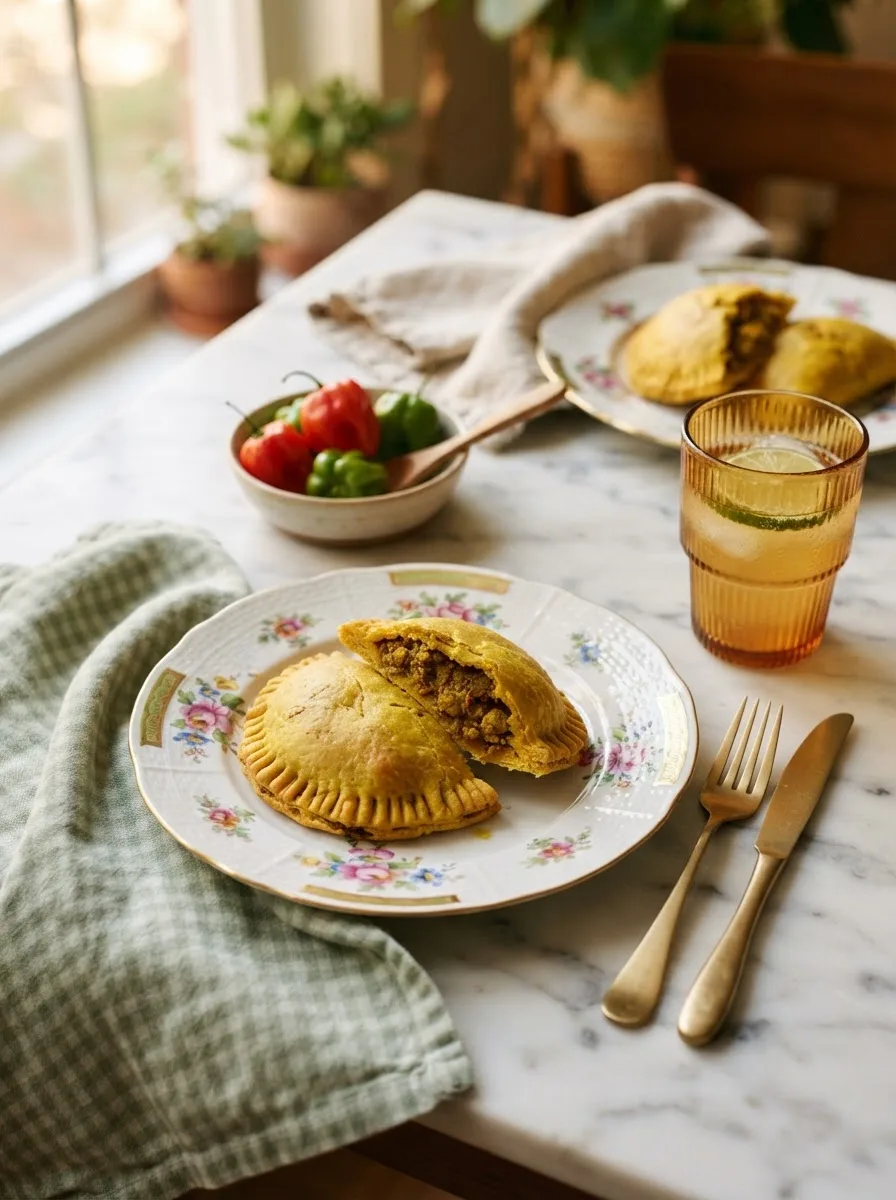
Dietary Variations:
- Dairy-free: Replace the butter with an equal weight of cold, solid coconut oil. The honest trade-off is a slightly less flaky crust, plus a faint coconut flavor that works with the curry.
- Gluten-free: Use a 1:1 gluten-free flour blend that contains xanthan gum. Chill the dough for 1 hour and roll it slightly thicker because this pastry is more delicate and can tear more easily.
Flavor Variations:
- Jerk chicken patties: Replace the curry powder in the filling with a spoonful of my jamaican jerk seasoning. Omit the turmeric from the dough for a paler crust; the flavor becomes smoky and peppery rather than warm and earthy.
- Curry paste shortcut: Stir 2 tablespoons of tikka paste into the filling instead of the curry powder. It saves time, but the finished curry chicken patties will taste more Indian than Jamaican.
Ingredient Substitutions:
- Ground turkey can replace ground chicken in an equal amount. It is a little leaner, so avoid extending the cooking time after the filling reaches 165°F.
- Beef stock can replace chicken stock in an equal amount. It gives the filling a richer flavor without changing the curry seasoning.
Troubleshooting
Why is my chicken patty jamaican filling leaking out during baking?
A weak seal or watery chicken filling usually causes the leak. Steam expands inside the patty during baking and pushes against the weakest seam, so press the fork firmly across the entire edge and leave a ½-inch border around the filling. If the filling still pours from a spoon, return it to the skillet over medium heat for 2 to 4 minutes, stirring often, until it holds a mound. Cool it completely before assembling.
Why is my dough cracking when I try to roll it?
The dough may be too cold, or excess flour may have reduced its hydration. Let it rest at room temperature for exactly 5 minutes, then roll from the center outward in short strokes. If dry cracks remain, press them together with your fingers rather than adding water, which can make the pastry tough. Use only a light dusting of flour on the counter.
Why does my filling taste flat or my crust stay pale?
Flat curry flavor often comes from old curry powder or skipping the 30-second toast before adding stock. Fresh powder releases more aroma when warmed briefly in the skillet. A pale crust usually means the oven was not fully preheated or the egg wash was too thin; bake at 400°F and brush the surface evenly before the tray goes in.
Storage and Make-Ahead
Counter: Refrigerate baked patties within 2 hours. In very hot conditions, above 90°F, refrigerate them within 1 hour.
Refrigerator: Store baked patties in an airtight container for up to 4 days. Reheat them in the oven rather than eating them cold if you want the crust to firm again.
Freeze (unbaked): Arrange assembled patties on a tray without touching and freeze for about 2 hours, until solid. Transfer them to a freezer bag and bake from frozen, adding 8 to 10 minutes to the recipe’s baking time. Check the center reaches 165°F.
Freeze (baked): Cool the chicken patties completely, freeze them in a single layer, then transfer them to a freezer bag. Use within 3 months for the best texture.
Reheating: Heat baked patties in a 350°F oven for 12 to 15 minutes. The oven restores crisp pastry; a microwave warms the filling faster but leaves the crust soft.
Make-Ahead: Prepare the chicken filling up to 3 days ahead and refrigerate it promptly in a covered container. Cool it quickly in a shallow container before chilling so it reaches refrigerator temperature safely.
Frequently Asked Questions
Q: Are curry chicken jamaican patties spicy? A: The recipe uses half a scotch bonnet with the seeds and ribs removed, so the heat is mild to medium. That amount gives the Jamaican curry chicken filling a warm finish without taking over. For other heat levels, use the three-test comparison above rather than changing the curry powder.
Q: What’s the difference between a Jamaican curry chicken patty and a beef patty? A: The pastry is similar, with turmeric and curry powder providing the golden color. Beef patties have a beef filling and a different seasoning balance, while this recipe uses ground chicken, Jamaican curry, and a reduced filling for a savory, spiced center.
Q: Can I make these ahead for a party? A: Yes. Assemble the chicken patties and refrigerate them for up to 1 day before baking. You can also bake them earlier that day and reheat them in a 350°F oven for 10 minutes before serving. For longer storage, use the instructions in Storage and Make-Ahead.
Q: Can I air fry these instead of baking? A: Yes. Brush the assembled patties with egg wash and air fry them at 375°F for about 15 minutes, turning them halfway through. Cook in a single layer and check that the chicken filling reaches 165°F; smaller air fryers may need two batches.
Q: Why is my filling watery? A: The filling needs more reduction time. Return it to a skillet over medium heat for 2 to 4 minutes, stirring often, until it holds a mound on a spoon. Cool it before assembling; adding hot filling to the dough can soften the butter and weaken the pastry.
Q: Why is my dough cracking, and can I freeze the patties? A: Cracking usually means the dough is too cold or has picked up too much flour. Let it rest for 5 minutes, then roll it with short strokes. Yes, these chicken patties can be frozen unbaked or baked; use the exact freezing and reheating directions in the storage section.
Q: Can I use rotisserie chicken, and what should I serve alongside this patty recipe? A: Yes. Pulse shredded rotisserie chicken briefly in a food processor, then reduce the filling for less time because the chicken is already cooked. A bowl of parsnip and leek soup makes a good cooler-day pairing, while jamaican roti makes the meal more filling.
More Jamaican Recipes You’ll Love
- Jamaican Roti — a soft partner for curry filling
- Parsnip and Leek Soup — a warm side for these chicken patties
- Tikka Paste — a shortcut curry base
- Jamaican Jerk Seasoning — a smoky alternative to curry powder
Foolproof Jamaican Curry Chicken Patties
Ingredients
For the Dough:
- 3 cup all-purpose flour
- 2 tablespoon curry powder
- 1 tablespoon ground turmeric
- 1 teaspoon salt
- 1 cup cold unsalted butter, cubed
- 3/4 cup ice water
- 1 egg, beaten (for egg wash)
For the Curry Chicken Filling:
- 2 tablespoon oil
- 1 medium yellow onion, diced
- 3 clove garlic, minced
- 1 scotch bonnet pepper, seeds removed and minced
- 2 teaspoon fresh thyme leaves
- 1 pound ground chicken
- 3 tablespoon curry powder
- 1 cup chicken stock
- 1/3 cup plain breadcrumbs
- Salt and black pepper, to taste
Instructions
- In a food processor, pulse the flour, curry powder, turmeric, and salt together. Add the cold cubed butter and pulse until the mixture resembles coarse sand with pea-sized butter pieces remaining.
- Drizzle in the ice water a tablespoon at a time, pulsing between additions, until the dough clumps when pressed. Shape into a disc, wrap tightly, and refrigerate for at least 30 minutes.
- Heat oil in a large skillet over medium heat. Cook the onion for 4 to 5 minutes until translucent, then add garlic, thyme, and scotch bonnet and cook 1 minute more.
- Add the ground chicken and cook, breaking it up, until no longer pink. Stir in the curry powder and toast for 30 seconds.
- Pour in the chicken stock, bring to a simmer, and cook for 10 to 12 minutes, stirring occasionally, until the liquid reduces and the mixture holds together in a thick mound. Stir in the breadcrumbs and season to taste. Cool to room temperature.
- Roll the chilled dough to ⅛-inch thickness and cut into 3.5-inch circles, re-rolling scraps once if needed.
- Place 2 tablespoons of cooled filling on one half of each circle. Fold into a half-moon and press the edges together, then crimp firmly with a fork.
- Arrange on a parchment-lined baking sheet, chill for 10 minutes, then brush with beaten egg.
- Bake at 400°F for 25 to 28 minutes, until deep golden and firm. Rest for 5 minutes before serving.
Notes
- The filling can be made up to 3 days ahead and refrigerated, which cuts a significant amount of hands-on time out of assembly day.
- Unbaked assembled patties freeze well for up to 3 months — freeze flat on a tray before transferring to a bag, and bake straight from frozen with 8 to 10 extra minutes.
- Weighing the flour (about 130g per cup) gives more consistent dough than scooping, especially if the dough has cracked on previous attempts.
- Old curry powder (more than 6 months open) loses potency fast — a fresh jar makes a noticeable flavor difference in the filling.
- If doubling the recipe, cook the filling in two batches rather than one large batch — crowding the pan slows down the liquid reduction significantly.
- A 3.5-inch round cutter yields 12 patties from one batch of dough; a smaller cutter yields more, smaller patties with a shorter bake time.
- For a lighter version, brush with milk instead of egg wash — the crust will be slightly less glossy but still golden.
- Leftover filling on its own (without the dough) reheats well over rice for a quick lunch if you have extra after assembling patties.