Foolproof African Beans (Tested 4 Times)

The first time I made African beans, I rushed the sauce. I blended the tomatoes, peppers, and onion, poured them into hot palm oil, added the cooked beans, and called the meal finished in twenty minutes. It tasted like thin tomato soup, not the rich bean stew I wanted.
I tested this recipe four times, changing only the fry-down time and mash ratio. The ONE most important variable is fry-down time: cooking the pepper sauce until water evaporates, the raw tomato flavor softens, and the oil rises creates the deep base of this African bean stew.
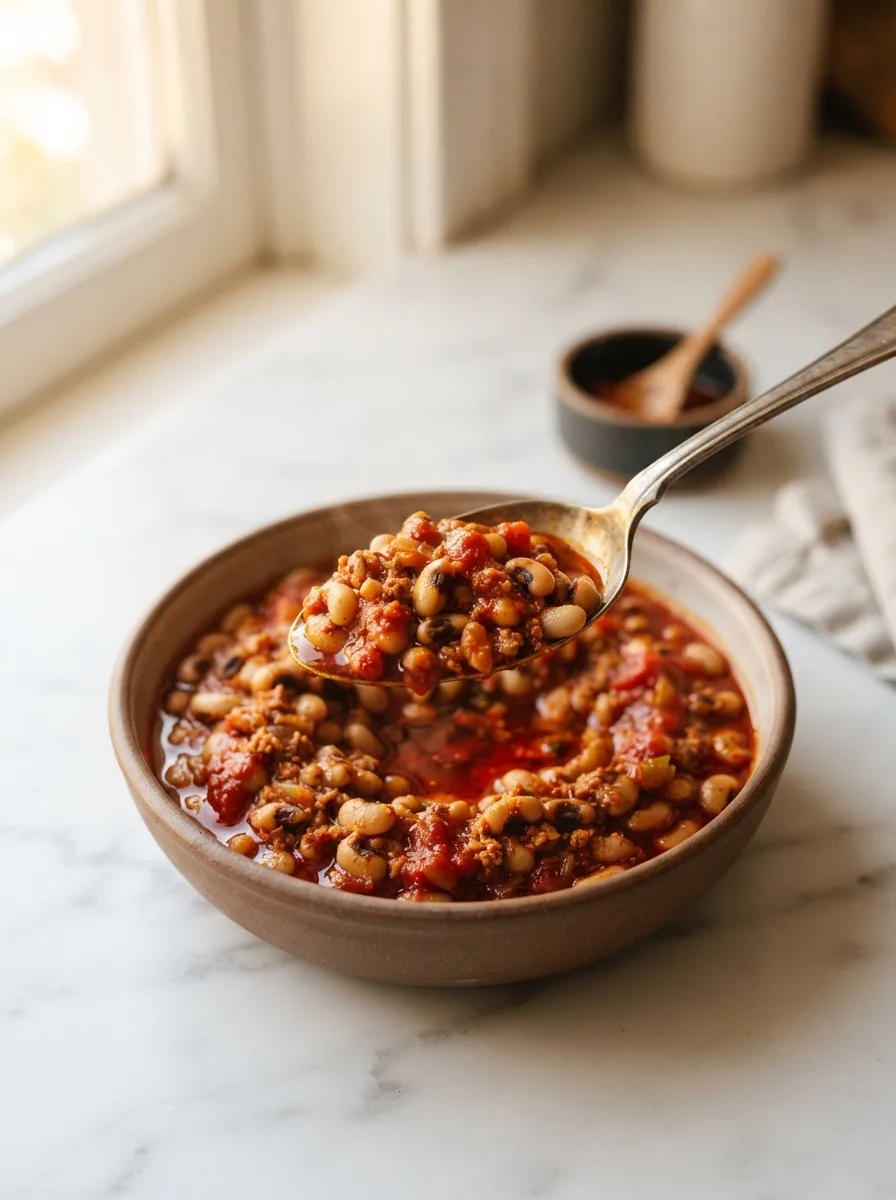
Here’s the scary moment: around 10 minutes, the sauce may look separated or slightly curdled. Don’t panic—it’s normal. Keep cooking until it turns darker and glossy. Mash about one-third of the beans for body while keeping the rest whole. That balance is what makes this Nigerian beans stew spoonable instead of paste.
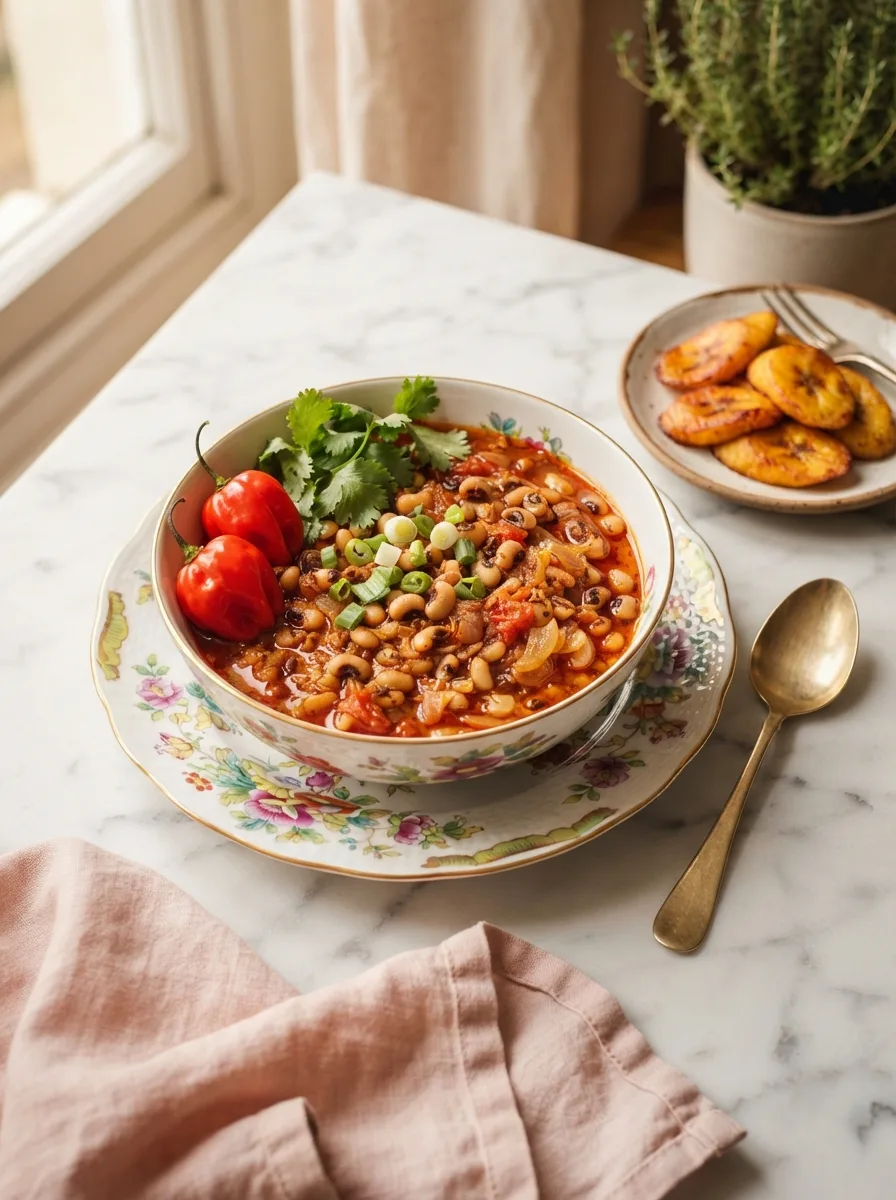
Palm oil gives this African bean its traditional color and flavor; neutral oil works, but the result tastes more like a standard bean stew. Serve it with rice or fried plantains when you want to make African beans part of a weeknight spread.
After four consistent batches, this is the version I trust for a 90-minute dinner: a practical recipe with the cooked-down flavor I was chasing.
★★★★★ “I’ve made West African beans a dozen times and always felt like something was missing from mine. The fry-down step was the missing piece. My sauce actually looked like the restaurant version this time.” — Adaeze, recipe tester (pre-launch)
Why You’ll Love This African Beans Recipe
- Cooked down sauce: Frying the tomato and pepper mixture removes water and concentrates flavor instead of leaving you with thin bean stew.
- Balanced texture: Mashing one-third of the beans releases starch for body while the remaining beans keep their shape.
- Practical ingredients: This recipe uses pantry friendly beans, oil, fresh vegetables, and everyday spices in one pot.
- Make-ahead friendly: The stew keeps well, and its flavor settles after chilling.
Key Ingredients
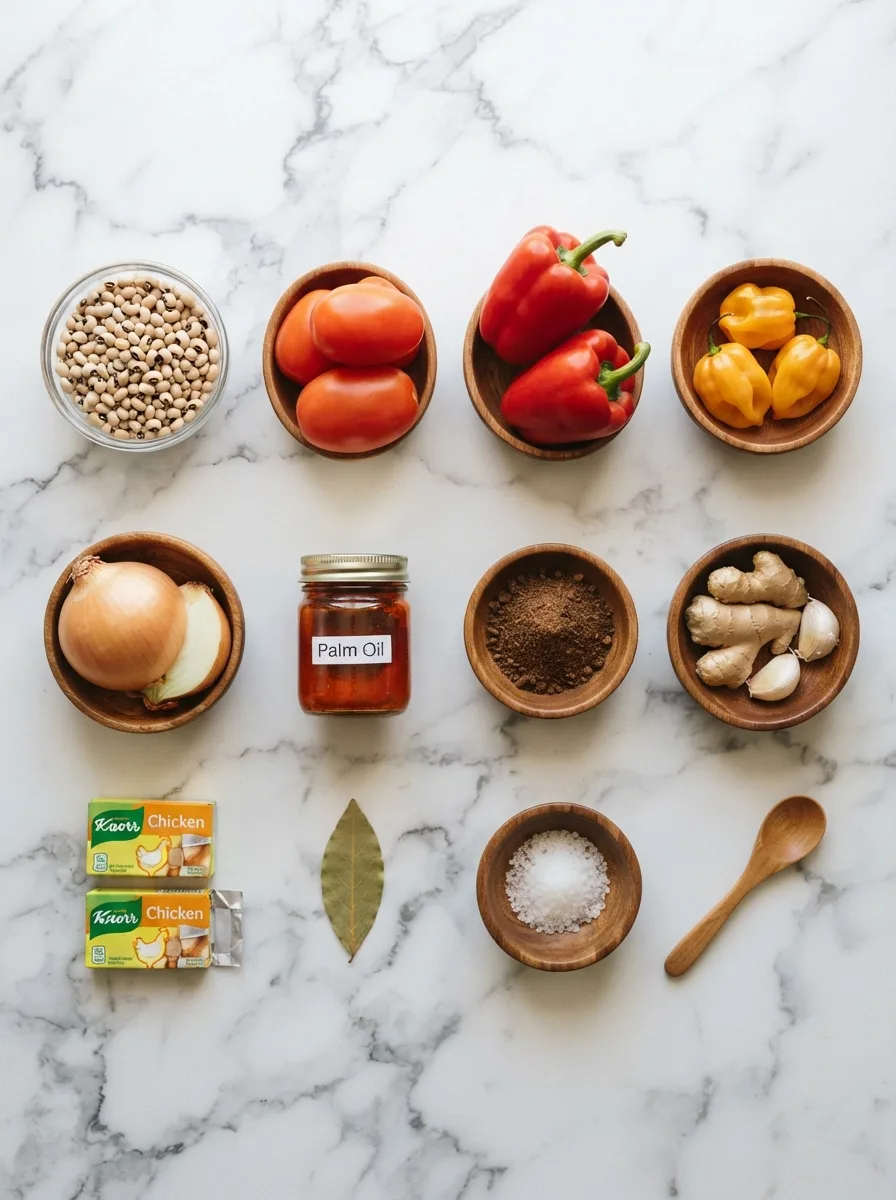
Dried black-eyed peas (2 cups). These beans soften while keeping enough structure for partial mashing. Brown or honey beans also work, but may need 30–40 extra minutes. Canned beans, kidney beans, or other cooked beans change the texture and skip the soaking step.
Red palm oil (⅓ cup). Palm oil supplies the color and distinctive flavor of this african bean stew. Neutral vegetable oil is a workable substitute, but it has less aroma and a different fat profile; use it when palm oil is unavailable.
Roma tomatoes and red bell pepper. Their sweetness and lower moisture help the sauce fry down efficiently. As the water cooks away, tomato flavor becomes deeper. Fresh peppers also give the recipe body without relying on tomato paste.
Scotch bonnet peppers (2–3). This is the main heat variable. Use one for a gentler stew and three for a serious burn. Start low; salt or extra chili can be added later, but heat cannot be removed.
Ground crayfish (2 tablespoons, optional). It adds savory depth and a light briny note. Omit it for a plant-based protein option.
Ginger and garlic paste (1 tablespoon). Fresh paste blends into the sauce as it cooks; powdered versions give a flatter result. The remaining salt, onion, and spices can be adjusted at the end.
Ingredient Note: Fresh tomatoes give this african bean a cleaner sauce than canned tomatoes. Canned tomatoes contain more liquid and can lengthen the fry-down, so use them only when fresh tomatoes are unavailable. Serve with fried plantains if you like.
Equipment You’ll Need
- Heavy-bottomed pot or Dutch oven — steady heat helps prevent scorching during cooking.
- Blender — for a textured pepper sauce; no high-powered model is needed.
- Flat-edged wooden spoon — for stirring and mashing beans.
- Colander — for draining the soaked beans. A pressure cooker is optional for the bean-cooking stage.
Controlling Texture: Whole vs. Mashed Beans (A Controlled Test)
I tested three versions of this bean stew, changing only how much of the cooked beans I mashed in the pot.
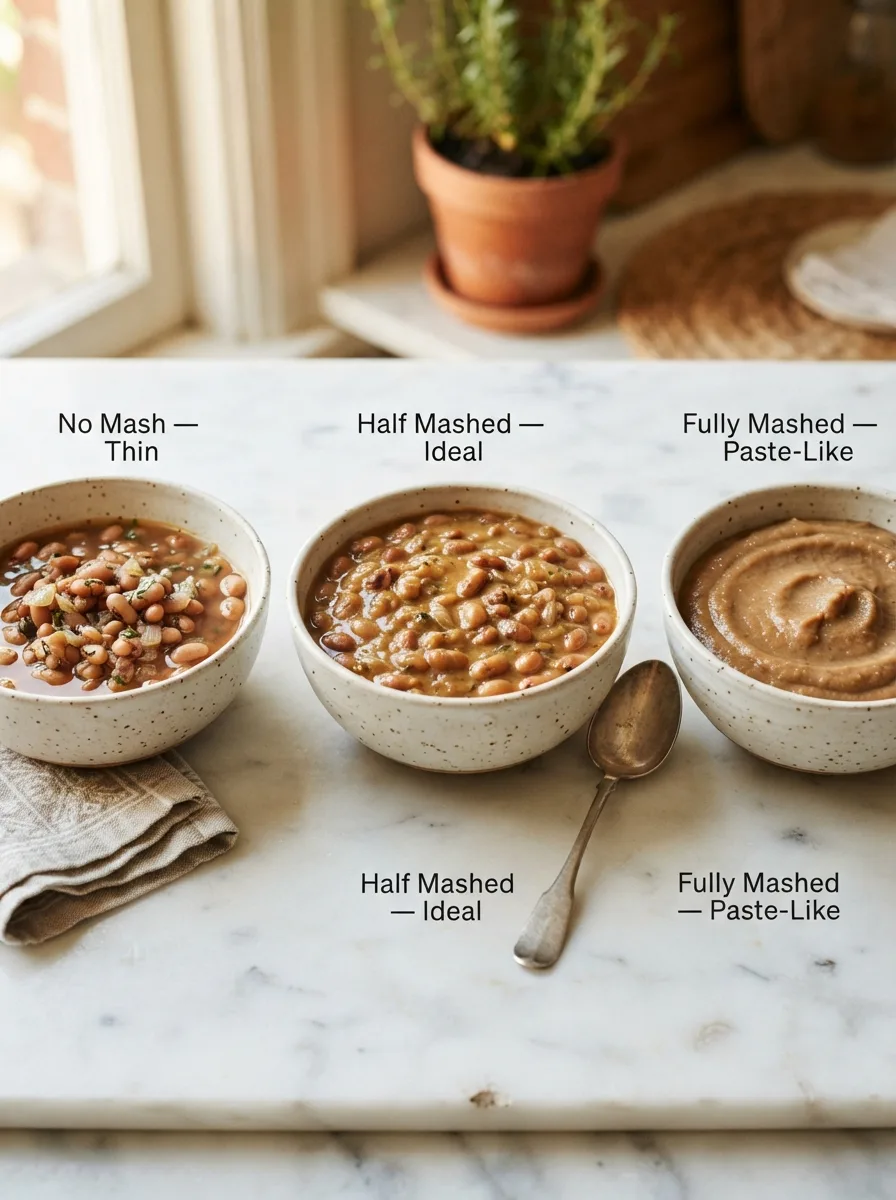
No mash: The sauce stayed loose because no bean starch entered the liquid.
One-third mashed: This was the winner. The released starch thickened the stew while whole beans kept their bite and protein-rich texture.
Fully mashed: The result was closer to porridge than a spoonable stew.
The takeaway: The most important texture variable is mashing one-third of the beans against the pot during the final 10 minutes. This cooking step works because bean starch binds the sauce without adding water, oil, or protein powder.
How to Make African Beans
Before you start: Soak 2 cups of dried beans in cold water for at least 6 hours or overnight. Soaking hydrates the centers, helping the beans cook more evenly and reducing the total simmer time.
Step 1 — Cook the beans
Drain the beans and add beans to a large pot with fresh water covering them by 2 inches. Bring the water to a boil, then reduce to medium heat and simmer uncovered for 45–60 minutes. Skim foam during the first 10 minutes. The beans are ready when tender enough to mash but still whole.
Step 2 — Blend the pepper sauce
While the beans cook, blend the tomatoes, red bell pepper, Scotch bonnet peppers, and half the onion until mostly smooth. Leave a little texture; a thick blend contains less water, so it fries down faster and gives this african bean stew a fuller flavor.
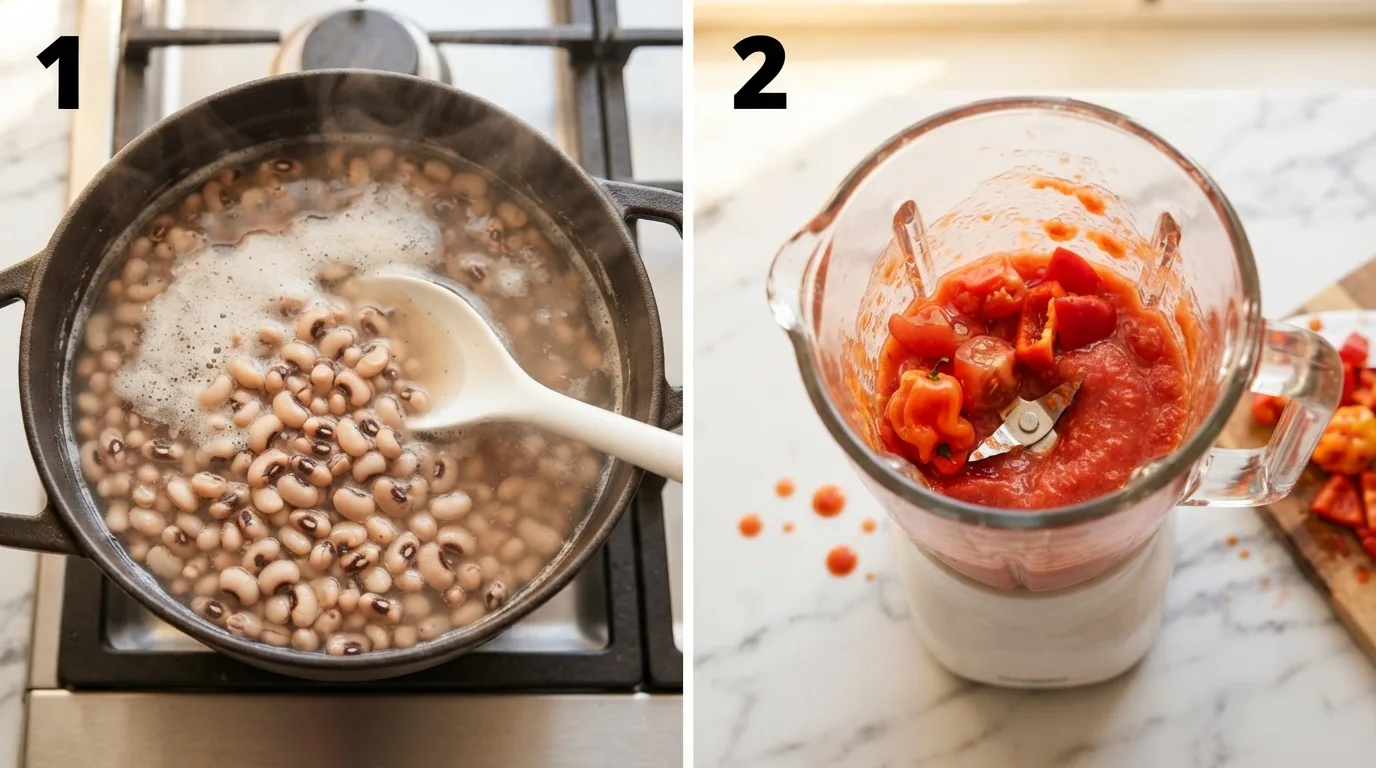
Step 3 — Fry the remaining onion, ginger, and garlic
In a separate heavy-bottomed pot or Dutch oven, warm the red palm oil over medium heat until liquid and lightly shimmering, never smoking. Add the remaining diced onion, 1 tbsp ginger and garlic paste, and cook for 2–3 minutes. Gentle heat softens the onion and releases the aromatics without burning them.
Step 4 — Fry down the pepper sauce
Add the blended mixture and cook over medium heat for 15–20 minutes, stirring occasionally. Around 10 minutes, the sauce may look separated or curdled—this is the scary moment, but it is normal as water cooks away from the oil. Keep going. When the sauce turns brick-red, glossy, and the oil rises, the raw tomato edge has cooked off. That visual cue matters more than the clock.
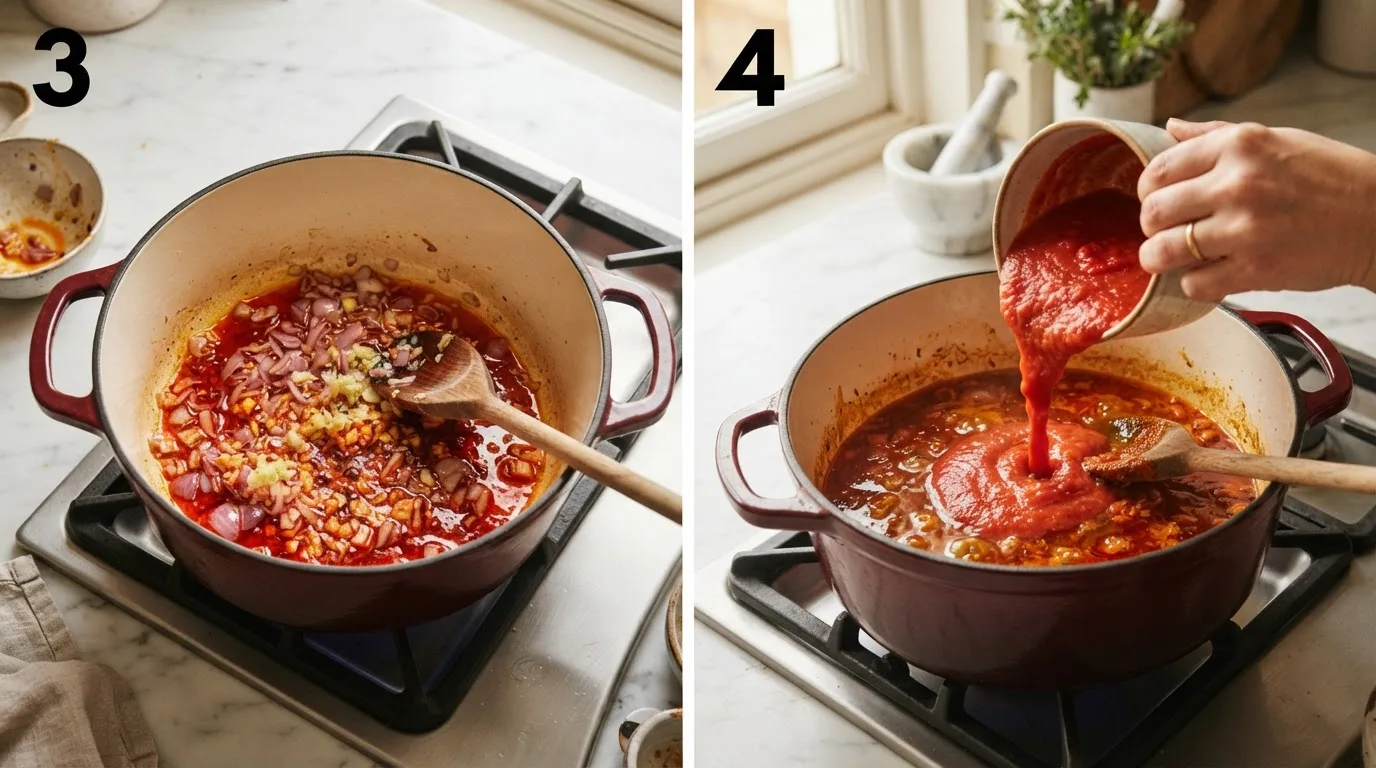
Step 5 — Combine beans and sauce
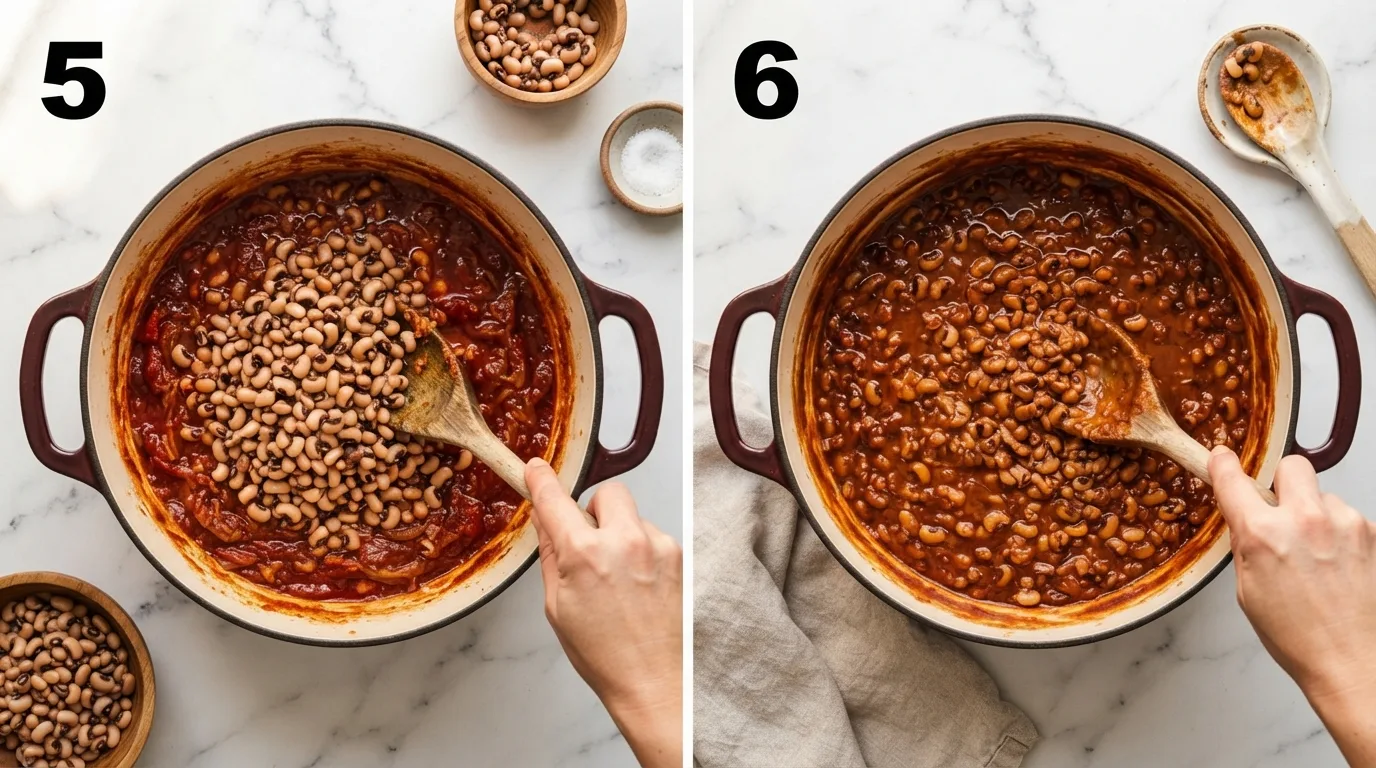
Drain the cooked beans, reserving 1 cup of bean water. Add beans to the sauce with the crayfish, stock cubes, and bay leaf. Stir gently over medium heat. Add a splash of the reserved water only if the pot feels too thick to stir.
Step 6 — Mash a portion and finish simmering
Mash one-third of the beans against the pot with a flat wooden spoon. Simmer uncovered for 10–15 minutes, stirring occasionally, until the stew thickens and coats the spoon. Taste and add salt or 1 tsp chili if needed.
Pro Tips for Perfect African Beans
Tip 1: Save the bean water. Its starch loosens the stew while keeping more flavor than plain water. Use it sparingly because the sauce thickens as it cools.
Tip 2: Season after simmering. Taste after 10 minutes of cooking, then adjust salt. This gives the stock cubes and crayfish time to contribute their own saltiness.
Tip 3: For canned beans, skip Step 1. Their softer texture needs less time, so add them in Step 5 and simmer gently until hot.
Variations and Substitutions
Dietary Variations:
- Lower heat: Use one Scotch bonnet or a mild chili. The sauce keeps its color and body, with less burn.
- Vegan version: African beans are vegan only when the crayfish and stock cubes contain no animal ingredients. Omit crayfish, and check the label on any cubes.
Flavor Variations:
- Smoky version: Add smoked fish, turkey, chicken, or beef in Step 5. This changes the protein and makes a heartier stew.
Ingredient Substitutions:
- Black-eyed peas → brown beans, kidney beans, or canned beans; adjust the cooking time for softer beans.
- Red palm oil → vegetable or canola oil. The color and flavor will be lighter, so the result is a different bean stew rather than this west african beans and palm oil profile.
- Ground crayfish → omit it, or use a little fish sauce for savory depth.
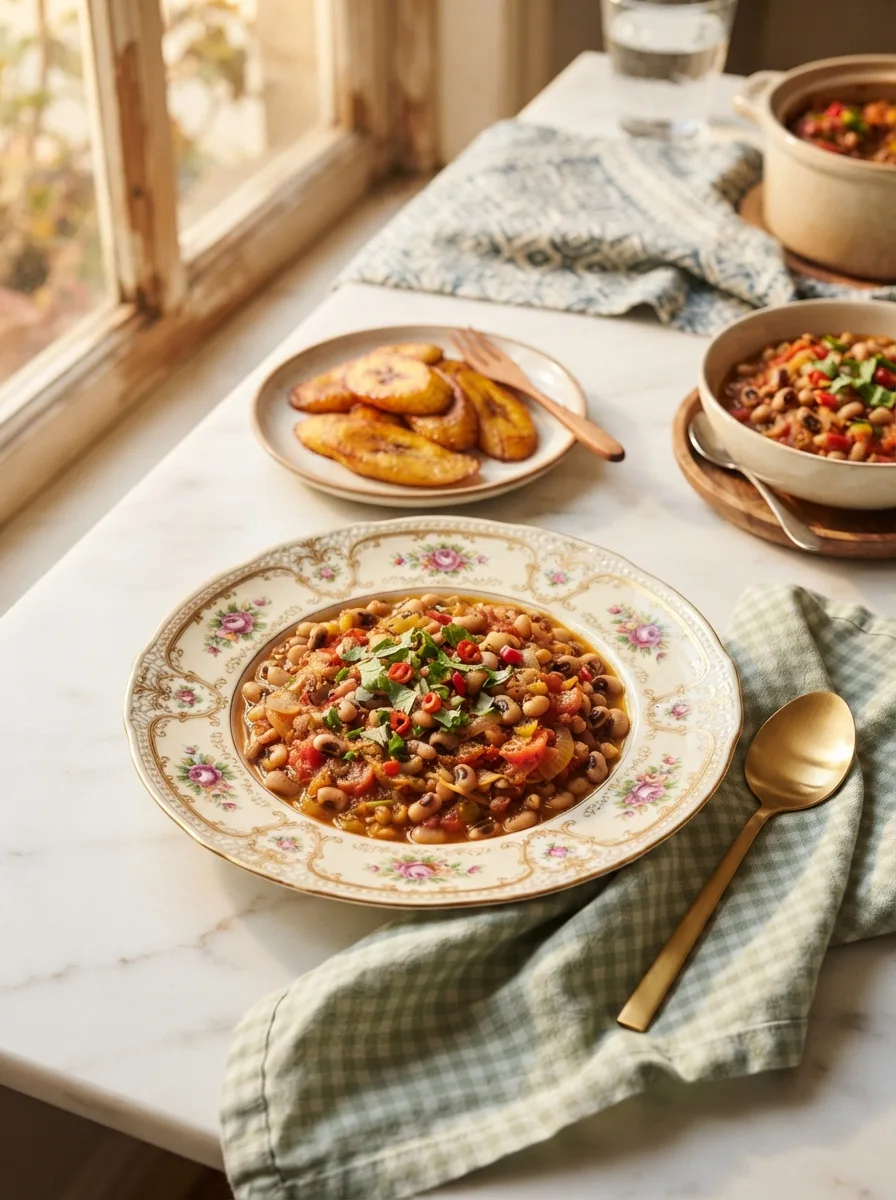
Serve this african bean stew with rice or fried plantains. My jamaican jerk seasoning explores a similar pepper profile, while jamaican roti makes a practical scoop for this meal.
Troubleshooting
Why is my sauce thin and watery?
The pepper mixture likely needed more time. Return it to medium heat for 5–10 minutes; a darker color, visible oil, and a thicker texture show that excess water has cooked off. Tomato paste will change the flavor, so don’t use it as a shortcut.
Why are my beans still hard after an hour?
Old dried beans or a short soak are usually responsible. Keep cooking with enough water to cover the beans, checking every 15 minutes until tender. Don’t add them to the sauce while firm; the acidic tomato base can slow softening.
Why does my spicy black-eyed peas stew taste flat?
The root cause is usually undercooked sauce, not too little salt. Simmer the African bean stew for 5–10 extra minutes, then adjust salt and spices. A Nigerian beans stew needs that cooking time for the raw tomato flavor to soften.
Storage and Make-Ahead
Counter: Refrigerate this bean stew within 2 hours rather than leaving it at room temperature.
Refrigerator: Store in an airtight container for up to 5 days. The flavor and texture settle after the first day.
Freeze: Cool completely, portion into airtight containers, and freeze for up to 3 months. Thaw overnight in the refrigerator.
Reheating: Warm gently on the stovetop over low heat, adding a splash of water or reserved bean liquid if needed. Microwave in 1-minute intervals, stirring between each.
Make-Ahead: Prepare the sauce up to 3 days ahead and refrigerate it separately from the cooked beans. Combine and simmer just before serving.
Frequently Asked Questions
Q: What is this African bean stew recipe served with? A: Serve African beans with white rice, fried plantains, or agege bread. Warm roti also works well for scooping up the sauce.
Q: Can I cook the beans in a pressure cooker or Instant Pot? A: Yes. Cook soaked beans under high pressure for about 25 minutes, then allow a natural release. Continue with the pepper sauce and combine everything in the pot.
Q: Is African beans the same as ewa riro? A: They’re closely related. Ewa riro is a Nigerian beans dish built around a fried pepper sauce, while household recipes vary in their tomatoes, onion, oil, spices, and cooking proportions.
Q: How spicy is this Nigerian beans stew? A: With 2 Scotch bonnet peppers, it has noticeable heat. Use 1 pepper for a milder pot, or omit the chili for a sweet pepper base. Add salt only after tasting.
Q: Can I use canned beans instead of dried? A: Yes. Use 3 drained cans of black-eyed peas, skip the soaking and boiling, and add the cooked beans in Step 5. They soften faster, so mash gently and watch the texture.
Q: Why does palm oil look orange but the finished stew looks red? A: The color change is normal. During the fry-down, palm oil combines with the tomato and pepper pigments as water evaporates, creating a deeper red sauce. Tomato paste is not needed.
Q: Can I add kidney beans, chicken, beef, or protein powder? A: Kidney beans can replace the black-eyed peas, though the texture changes. Chicken or beef makes a different version; protein powder does not belong in this stew. Start with 1 tsp of extra seasoning only after tasting.
More Recipes You’ll Love
- Jamaican Roti — a soft, flaky flatbread for scooping this bean stew
- Parsnip and Leek Soup — a mild, cozy option when you want less pepper
- Tikka Paste — a useful blend for curries and marinades
- Jamaican Jerk Seasoning — another Scotch bonnet-forward pantry staple
Save this recipe for your next weeknight meal, or make African beans ahead and reheat it gently when you’re ready.

Foolproof African Beans (Tested 4 Times)
Ingredients
For the Beans:
- 2 cup dried black-eyed peas, soaked 6+ hours
- Water, enough to cover by 2 inches
For the Pepper Sauce:
- 3 Roma tomatoes
- 2 red bell peppers
- 2 –3 scotch bonnet peppers (adjust to taste)
- 1 yellow onion, divided
- 1/3 cup red palm oil
- 1 tablespoon ginger-garlic paste
- 2 tablespoon ground crayfish (optional)
- 2 seasoning/stock cubes
- 1 bay leaf
- Salt, to taste
Instructions
- Drain the soaked beans and add to a large pot with water to cover by 2 inches. Bring to a boil, reduce to a simmer, and cook uncovered for 45–60 minutes until tender but still holding shape. Skim foam during the first 10 minutes.
- While beans cook, blend the tomatoes, bell peppers, scotch bonnet peppers, and half the onion until mostly smooth with a little texture remaining.
- In a separate heavy-bottomed pot, heat the red palm oil over medium heat until liquid and shimmering. Add the remaining diced onion, ginger, and garlic paste; cook 2–3 minutes until fragrant.
- Add the blended pepper mixture and cook over medium heat, stirring occasionally, for 15–20 minutes, until the sauce darkens to a deep brick-red and the oil rises back to the surface.
- Drain most of the liquid from the cooked beans, reserving 1 cup. Add the beans to the pepper sauce along with the crayfish, stock cubes, and bay leaf. Stir to combine, adding reserved bean liquid as needed to loosen.
- Mash about a third of the beans against the side of the pot to thicken. Simmer uncovered for 10–15 minutes, stirring occasionally, until the stew coats the back of a spoon. Taste and adjust salt before serving.
Notes
- Reserve the bean cooking liquid before draining — it's the best thing to loosen the stew later without diluting the flavor.
- Palm oil solidifies at room temperature; warm the jar in hot water for a few minutes before measuring if needed.
- The pepper sauce can be made up to 3 days ahead and refrigerated separately from the cooked beans; combine and finish simmering just before serving.
- Leftovers keep in the refrigerator for up to 5 days and freeze well for up to 3 months in individual portions.