Crispy Banana Tempura (Tested 4 Times)

The first time I made banana tempura, I pulled the pieces out of the oil looking perfect — golden, blistered, gorgeous. Five minutes later, sitting on a paper towel, every single one had gone limp and greasy. That’s the exact problem most home versions of tempura banana run into: a batter that looks right the second it leaves the oil, then collapses before it hits the plate.
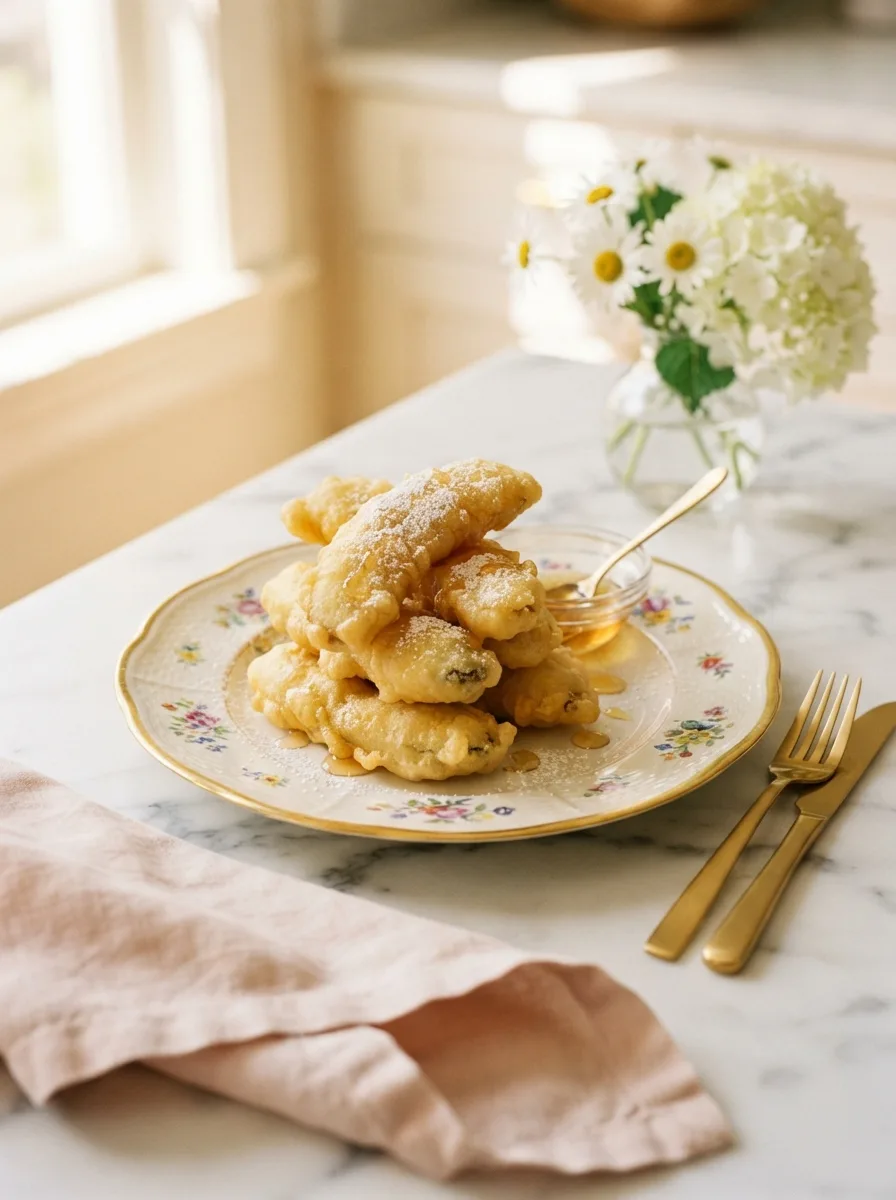
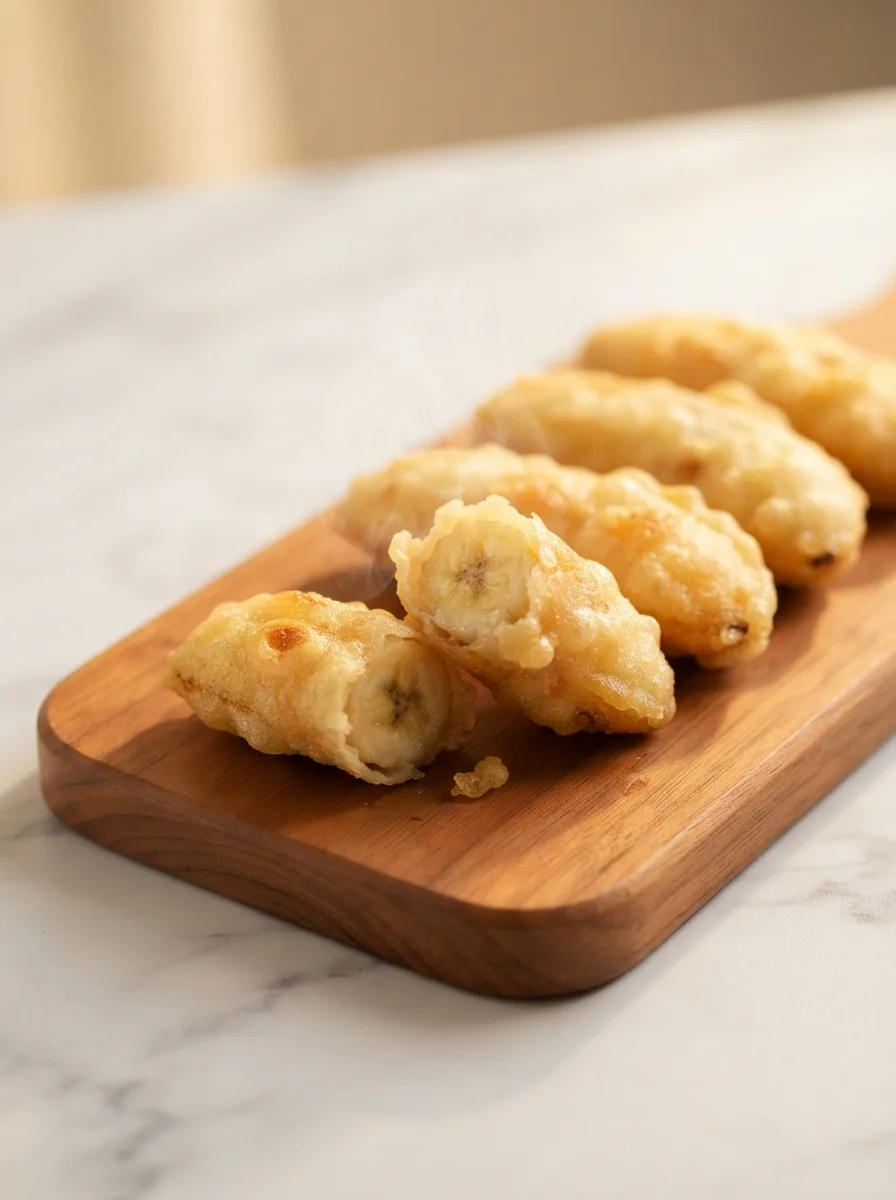
I tested this recipe four times, changing one thing each round — oil temperature, batter thickness, resting time, and the fizzy-water trick — until I found the combination that actually holds its crunch for more than a few minutes. The banana stays warm and soft in the middle. The shell around it stays crackly, not chewy, even after it cools slightly on the plate.
What changed everything was the batter itself. Most tempura banana recipes use plain cold water, which makes a batter that’s fine right out of the fryer and sad ten minutes later. Swapping in ice-cold sparkling water and holding back on the mixing — just barely combined, still lumpy — is what keeps the shell light enough to stay crisp instead of turning into a soft, oily wrapper.
★★★★★ “I’ve tried banana tempura at restaurants that didn’t crunch like this. Mine actually held up for the whole time we ate dinner.” — Priya R., recipe tester (pre-launch)
Why You’ll Love This Banana Tempura
- Genuinely crisp, not just crisp-looking: The batter is built to hold its crunch after it cools slightly, not just in the first sixty seconds out of the fryer.
- Ready in 25 minutes: No resting the batter overnight, no special equipment — just cold ingredients and hot oil.
- Only 6 ingredients for the batter: Flour, cornstarch, sparkling water, a pinch of salt and sugar, and the bananas themselves.
- Works with slightly underripe bananas: This recipe is built for the bananas that are too firm to eat plain — the ones that usually get skipped for banana bread.
Key Ingredients
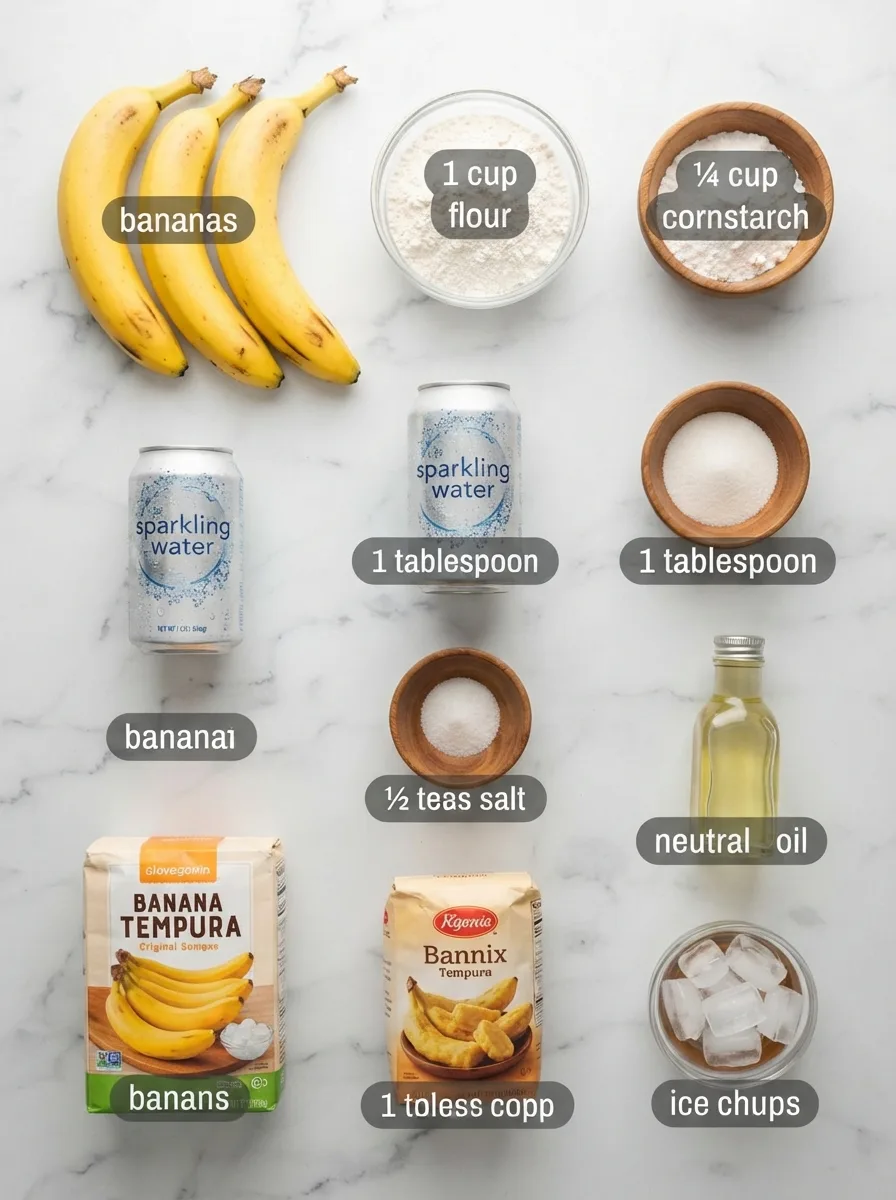
Firm, slightly underripe bananas. This is the most important variable in the whole recipe. Bananas with just a few brown spots — not solid yellow, not soft — hold their shape in hot oil. Overripe bananas turn to mush inside the batter before the shell even sets.
Cornstarch, not just flour. A blend of flour and cornstarch is what gives tempura its signature light, almost lacy crunch instead of a heavier, bread-like coating. If you only have flour on hand, the batter will still fry up fine, but the shell will be noticeably denser.
Ice-cold sparkling water. The carbonation and the cold temperature both matter here — the bubbles create tiny air pockets in the batter, and the cold keeps gluten from developing while you mix. Plain cold water works as a substitute, but the shell will be slightly less airy.
Neutral frying oil. Vegetable, canola, or peanut oil all work. Skip olive oil — its lower smoke point means it’ll scorch before the tempura banana pieces are done frying.
Ingredient Note: Keep the sparkling water in the fridge (or on ice) until the exact moment you mix the batter. A batter that warms up even slightly will develop more gluten and fry up chewy instead of crisp.
Equipment You’ll Need
- Deep, heavy-bottomed pot or wok — holds oil temperature steadier than a shallow skillet; a Dutch oven works great as an alternative.
- Instant-read or candy thermometer — the single biggest predictor of crisp vs. soggy tempura. A cube of bread dropped into the oil is a rough backup if you don’t own one — it should brown in about 60 seconds.
- Spider strainer or slotted spoon — for lifting pieces out without dragging extra oil back into the pot.
- Wire rack set over a sheet pan — draining on paper towels traps steam underneath and softens the bottom of the tempura within minutes. A wire rack lets air circulate on all sides.
Controlling the Crunch: Oil Temperature (A Controlled Test)
I fried four batches of the same batter, changing only the oil temperature each time: 325°F, 350°F, 375°F, and 400°F. Everything else — banana size, batter thickness, frying time — stayed the same.
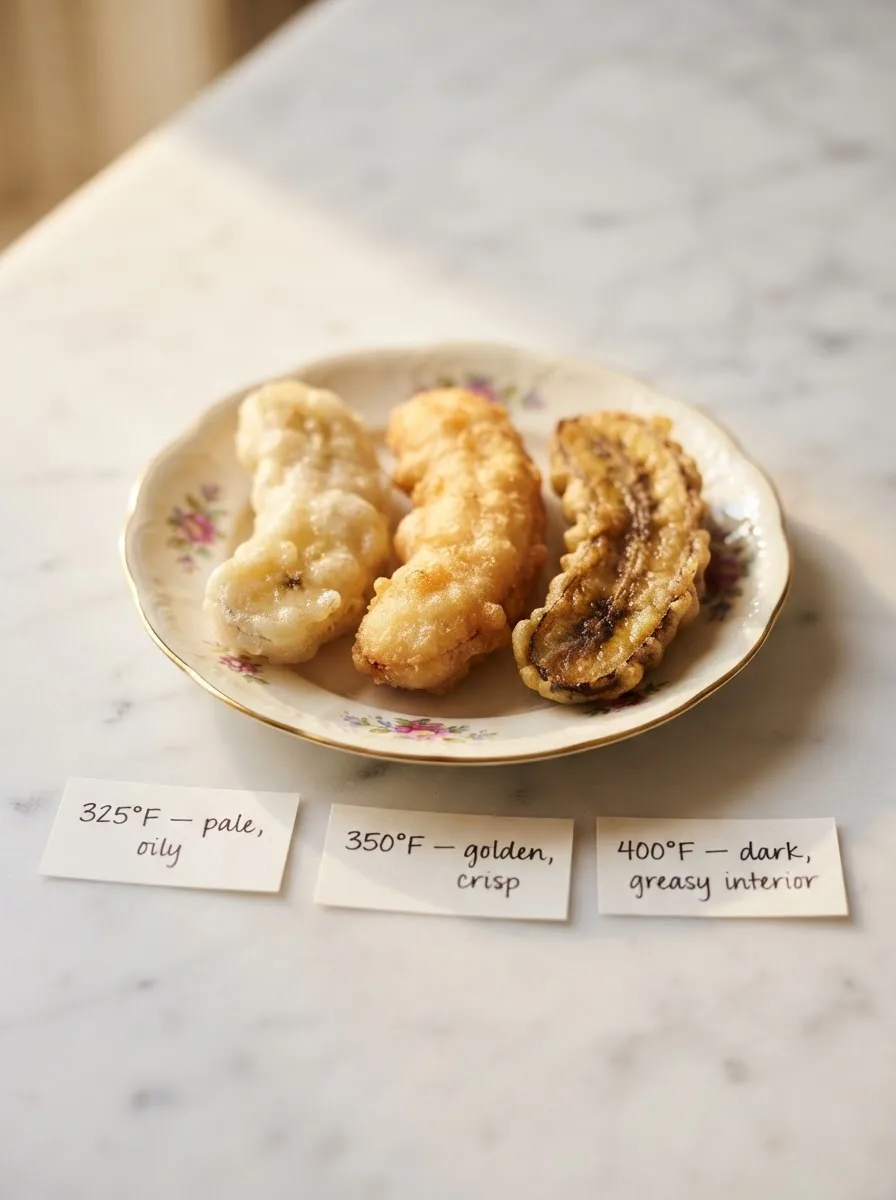
325°F: Pale, soft, and greasy. The batter never fully set before the banana inside started to steam, so oil soaked into the shell instead of crisping it.
350°F — the winner: Deep golden color, audibly crackly when tapped with a spoon, and the banana inside stayed warm without turning mushy. This is the temperature in the recipe card below.
400°F: Beautifully dark and crisp within seconds — but the outside browned so fast that the banana inside barely warmed through, and a few pieces scorched before I could pull them.
The takeaway: 350°F gives the batter enough time to fully set into a crisp shell before the banana overcooks. Anything lower and the shell absorbs oil; anything higher and you’re racing the clock.
How to Make Banana Tempura
Before you start: Keep the sparkling water in the fridge until you’re ready to mix, and slice the bananas right before frying — they brown quickly once cut.
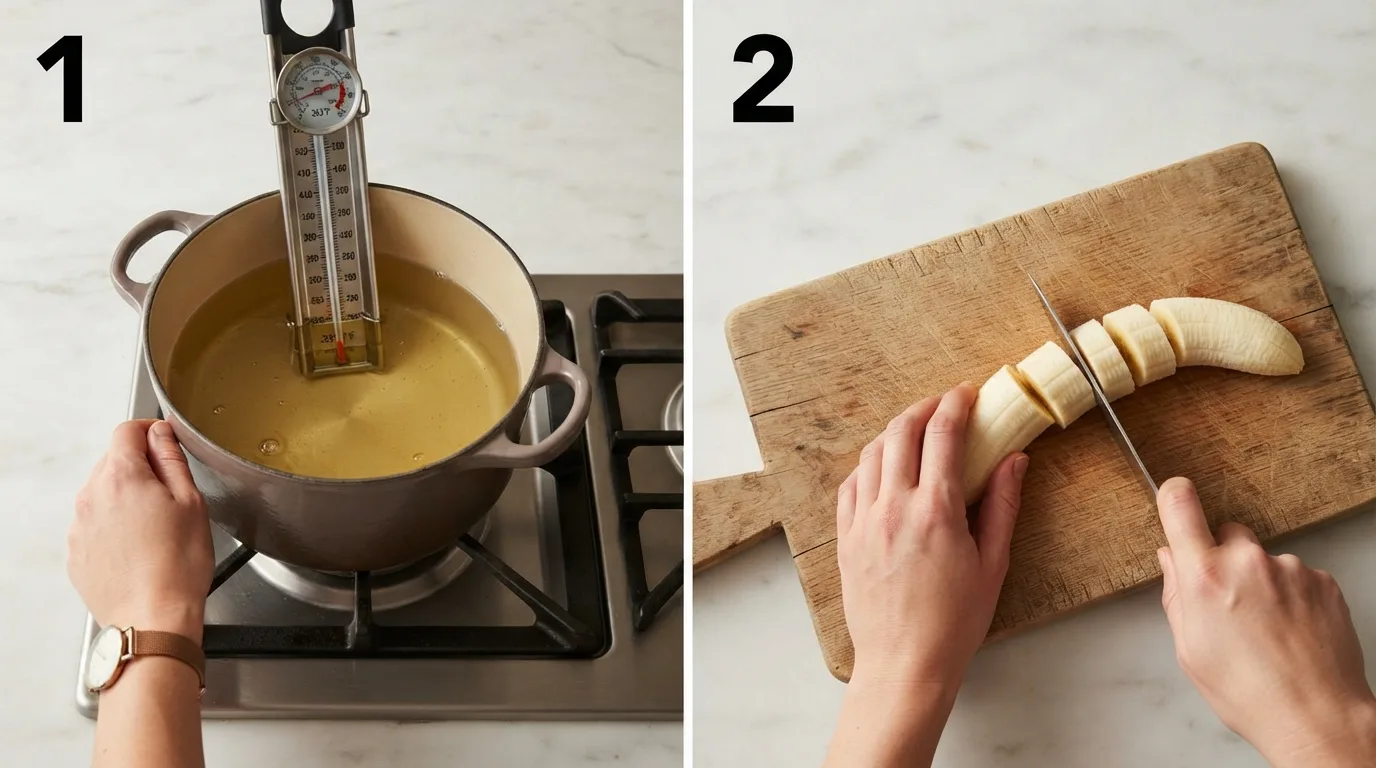
Step 1 — Heat the oil
Pour 2–3 inches of neutral oil into a deep, heavy pot and heat over medium until it reaches 350°F on an instant-read thermometer. Start heating the oil before you mix the batter — it takes longer than you’d expect, and a cold batter waiting on hot oil beats hot batter waiting on cold oil every time.
Step 2 — Cut the bananas
Peel the bananas and slice each one on a diagonal into 3–4 thick pieces, about ¾ inch each. Thinner pieces cook through faster but give you less of that warm, jammy center.
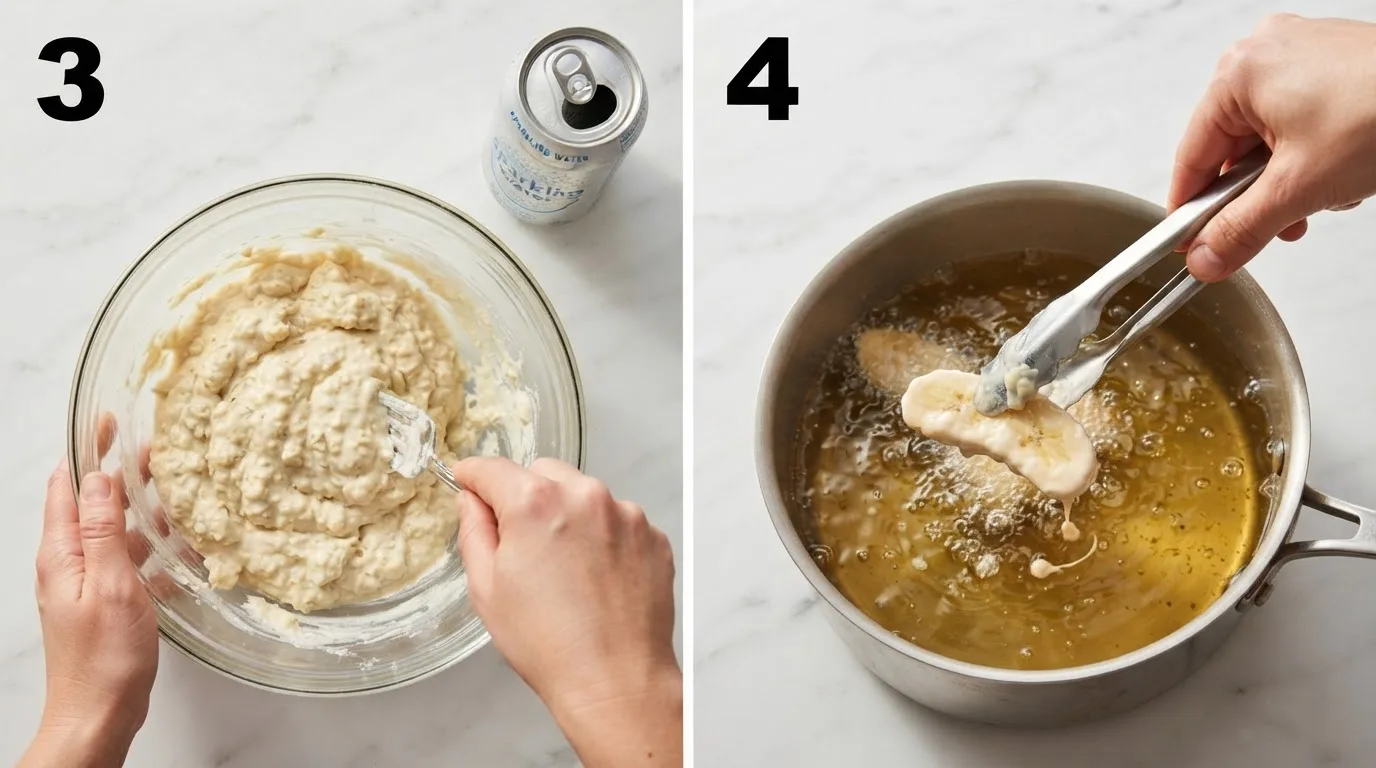
Step 3 — Mix the batter (barely)
In a bowl, whisk together the flour, cornstarch, sugar, and salt. Pour in the ice-cold sparkling water all at once and stir with a fork just until combined — 5 or 6 strokes. The batter should still look lumpy and a little uneven, almost like pancake batter that hasn’t finished mixing. Overmixing develops gluten, and that’s what turns a crisp tempura banana into a chewy one.
Step 4 — Coat and fry
Working in small batches of 3–4 pieces, dip each banana piece into the batter, let the excess drip off for a second, and lower it gently into the hot oil. Fry for 2–3 minutes, turning once, until deep golden and the batter sounds crisp when tapped.
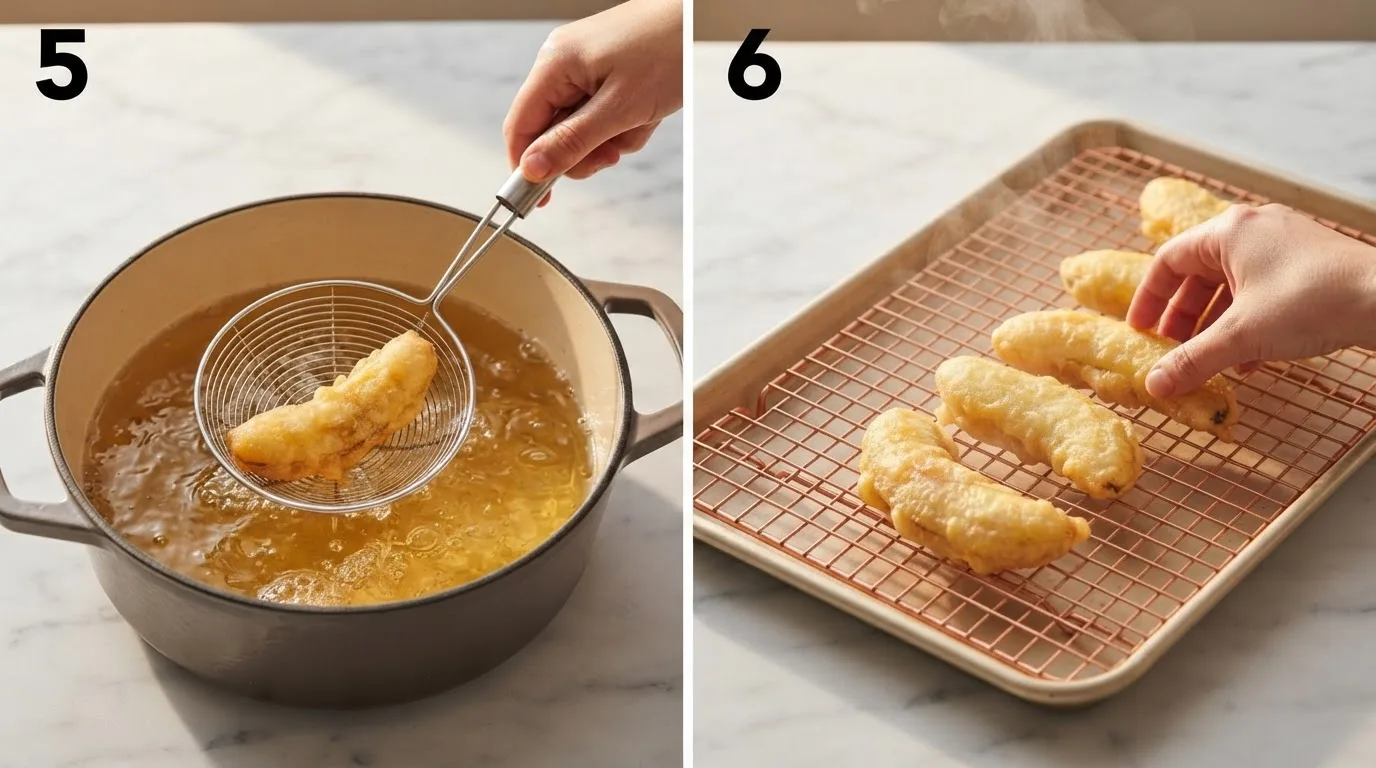
Step 5 — Drain and serve immediately
Lift each piece out with a spider strainer and set it on a wire rack over a sheet pan — not directly on paper towels, which trap steam underneath and soften the bottom. Let excess oil drip off for about 30 seconds, then serve right away while the shell is at its crispest.
Pro Tips for Perfect Banana Tempura
Tip 1: Fry in small batches. Crowding the pot drops the oil temperature fast, and that’s exactly the “325°F” result from the test above — pale and greasy. Four pieces at a time is the max for a standard pot.
Tip 2: Don’t batter the bananas until the oil is already at temperature. A batter that sits and waits starts losing its bubbles, which means a heavier shell by the time it hits the oil.
Tip 3: Tap, don’t guess. The audible crackle when you tap a piece with the back of a spoon is a more reliable doneness cue than color alone — pale batter can still be crisp, and dark batter can still be soft if it fried too fast.
Tip 4: Serve within 10 minutes. This tempura banana recipe is built to hold its crunch far longer than most, but it’s still a fried food — plan to fry it close to serving time rather than holding it warm for an hour.
Variations and Substitutions
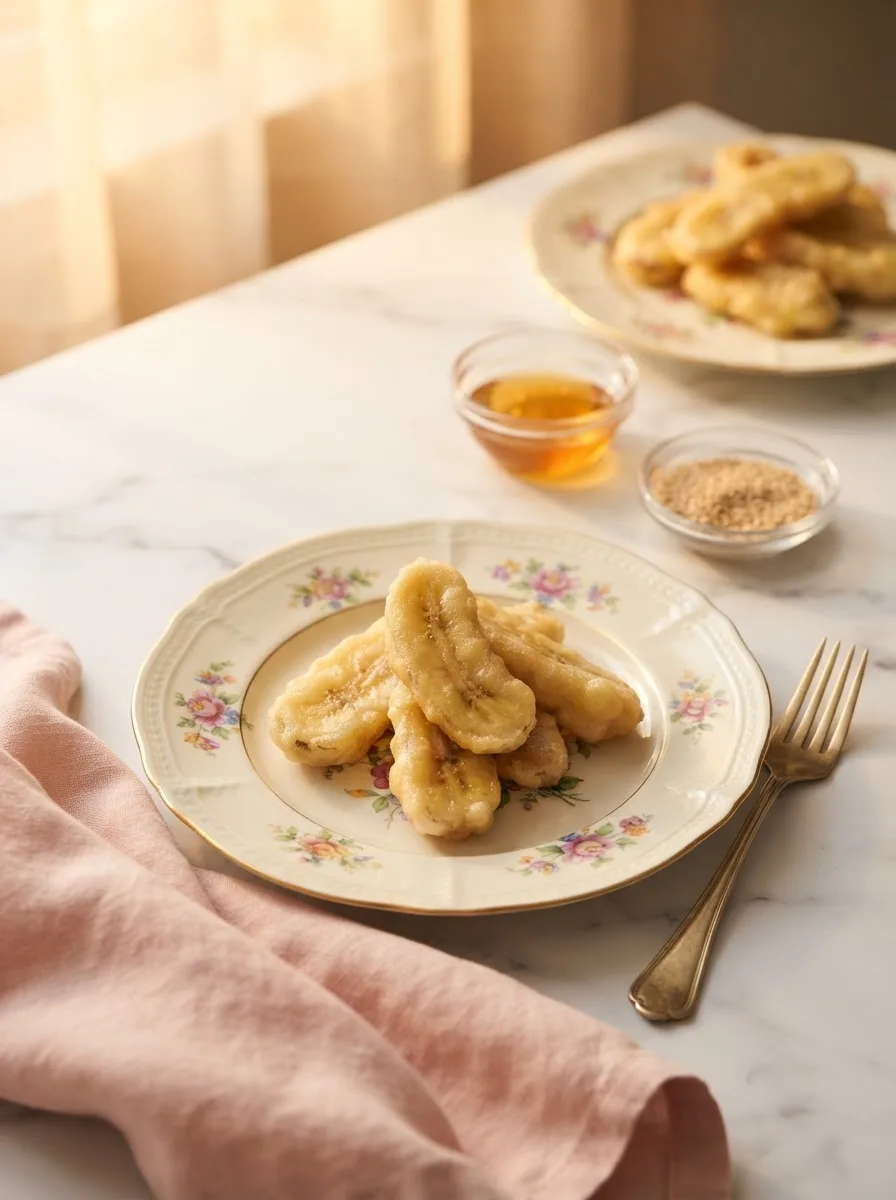
Dietary Variations:
- Gluten-free: Swap the all-purpose flour for a 1:1 gluten-free baking blend and keep the cornstarch as-is. The shell will be slightly more delicate, so handle the pieces gently when flipping.
- Dairy-free: This recipe has no dairy in the batter to begin with — it’s naturally dairy-free as written.
Flavor Variations:
- Cinnamon-sugar tempura banana: Toss the hot pieces in a mix of cinnamon and sugar the moment they come off the rack, while the shell is still warm enough for it to stick.
- Coconut-crusted: Add 2 tablespoons of finely shredded unsweetened coconut into the dry batter mix for a subtle toasted-coconut edge.
Ingredient Substitutions:
- Sparkling water → plain ice-cold water (shell will be slightly less airy, still crisp)
- Neutral oil → any high smoke point oil (avocado, peanut, canola)
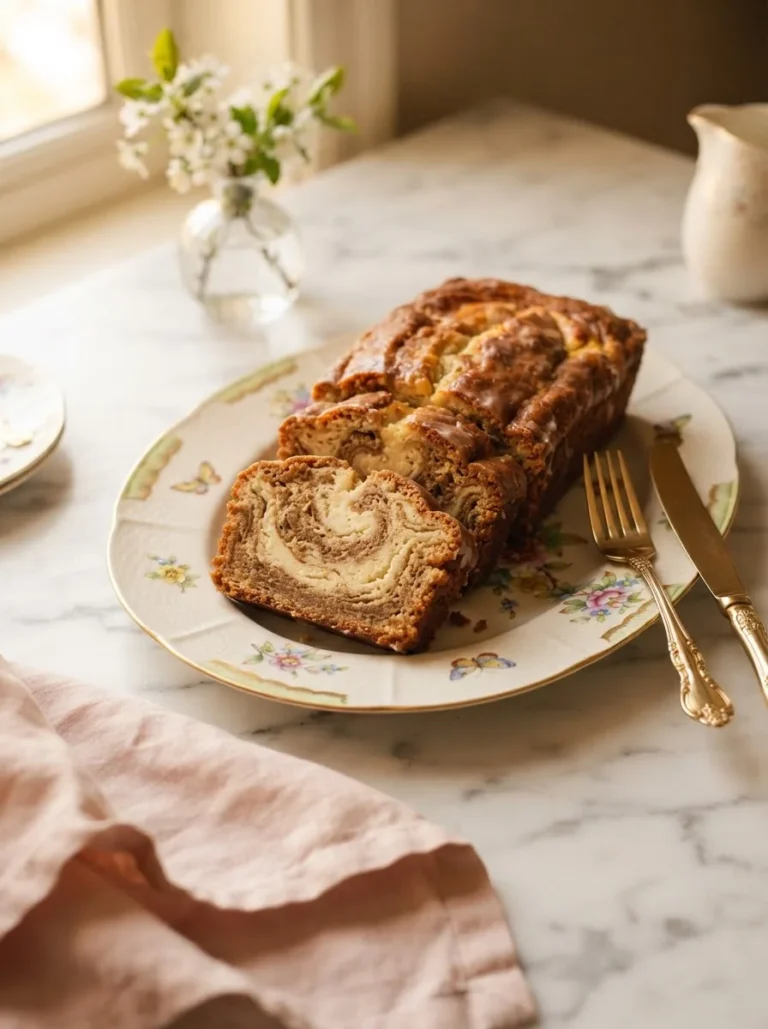
If you’re in the mood for another dessert with a built-in testing story behind it, my cheesecake bread went through its own multi-round trial before I landed on the right bake time — same philosophy, different pan.
Troubleshooting
Why is my tempura banana soggy right after frying?
Most likely the oil temperature dropped below 325°F, either from overcrowding the pot or not giving it enough time to come back up to temp between batches. Check your thermometer between every batch and let the oil recover before adding the next round.
Why did my batter slide off the banana instead of coating it?
This usually means the banana surface was wet or the batter was too thin. Pat banana slices dry with a paper towel before dipping, and if the batter looks runny, whisk in another tablespoon of flour.
Why does my banana tempura turn mushy inside?
Overripe bananas are almost always the cause — they break down fast in hot oil before the shell has time to set. Stick with bananas that have just a few brown spots, not bananas that are soft to the touch.
Storage and Make-Ahead
Counter: Best eaten within 10 minutes of frying. If you must hold it, leave pieces uncovered on a wire rack — covering traps steam and softens the shell almost immediately.
Refrigerator: Leftovers keep in an airtight container for up to 2 days, though the shell will soften significantly. Reheat rather than eating cold.
Freeze: Not recommended. The banana’s texture turns watery and grainy once frozen and thawed, and the shell won’t recrisp properly.
Reheating: A 400°F oven or air fryer for 4–5 minutes restores most of the crunch. Avoid the microwave — it steams the shell soft.
Make-Ahead: The dry batter mix (flour, cornstarch, sugar, salt) can be combined up to 3 days ahead and stored in an airtight container. Add the cold sparkling water only right before frying.
Frequently Asked Questions
Q: What is banana tempura? A: Banana tempura is banana slices dipped in a light, airy batter and deep-fried until the outside is crisp and the inside stays warm and soft — a Japanese-style fried dessert often served with honey or a scoop of ice cream.
Q: Can I bake banana tempura instead of frying it? A: Baking won’t produce the same shatter-crisp shell, since the batter needs full submersion in hot oil to set properly. An air fryer at 400°F for 8–10 minutes gets closer, though the coating will be thinner than deep-fried.
Q: What bananas work best for tempura banana? A: Firm, slightly underripe bananas with just a few brown spots hold their shape best. Very ripe, soft bananas turn to mush inside the batter.
Q: Can I make the batter ahead of time? A: Mix the dry ingredients ahead, but always add the sparkling water fresh, right before frying — batter that sits loses its air bubbles and fries up denser.
Q: What oil is best for frying banana tempura? A: Any neutral, high smoke point oil — vegetable, canola, or peanut all work well. Avoid olive oil, which scorches before the tempura is done.
Q: How do I keep banana tempura from getting greasy? A: Drain on a wire rack instead of paper towels, and don’t overcrowd the pot — both keep the oil temperature stable and prevent excess oil from soaking into the shell.
Q: Is banana tempura the same as banana fritters? A: They’re related but not identical. Banana fritters typically use a thicker, denser batter, while tempura batter is deliberately light and lumpy for a crisper, more delicate shell.
More Dessert Recipes You’ll Love
- Cheesecake Bread — a swirled dessert bread with a cheesecake filling baked right through the center
- Dolly’s Chicken and Stuffing Casserole — a cozy weeknight main if you’re planning a full menu around this dessert
- Cheesy Ranch Potatoes and Sausage — a hearty, savory side dish that pairs well before something sweet
- Stalekracker Pastalaya Recipe — a one-pot Cajun-inspired pasta dish worth trying next
Crispy Banana Tempura (Tested 4 Times)
Ingredients
For the bananas:
- 4 firm, slightly underripe bananas
- 2 –3 cups neutral oil (vegetable, canola, or peanut), for frying
For the tempura batter:
- 1 cup all-purpose flour
- 1/4 cup cornstarch
- 1 tablespoon granulated sugar
- 1/2 teaspoon fine salt
- 1 cup ice-cold sparkling water
Instructions
- Pour 2–3 inches of neutral oil into a deep, heavy pot and heat over medium heat until it reaches 350°F on an instant-read thermometer.
- Peel the bananas and slice each one on a diagonal into 3–4 thick pieces, about ¾ inch each.
- In a bowl, whisk together the flour, cornstarch, sugar, and salt. Pour in the ice-cold sparkling water all at once and stir just until combined, 5–6 strokes — the batter should stay lumpy.
- Working in batches of 3–4 pieces, dip each banana piece in the batter, let excess drip off, and lower gently into the hot oil.
- Fry for 2–3 minutes, turning once, until deep golden and crackly. Check the oil temperature between batches and let it recover to 350°F before adding more pieces.
- Lift pieces out with a spider strainer and set on a wire rack over a sheet pan. Let drain for 30 seconds.
- Serve immediately, plain or with honey, cinnamon-sugar, or a scoop of vanilla ice cream.
Notes
- Use bananas with just a few brown spots, not fully ripe ones — overripe bananas turn mushy inside the batter before the shell sets.
- Mix the batter in small batches if doubling the recipe; a large batch of batter sitting out loses its air bubbles and fries up denser.
- Drain on a wire rack, not paper towels — paper towels trap steam underneath and soften the bottom of the tempura within minutes.
- Leftovers keep in the fridge for up to 2 days but will lose most of their crunch; reheat in a 400°F oven or air fryer for 4–5 minutes to recrisp.
- This batter is not suitable for freezing — the banana’s texture turns watery once thawed.