No Egg Baked Mac and Cheese (No Roux)

If you’ve ever pulled a baked mac and cheese out of the oven only to find it scrambled, grainy, or weeping a thin layer of orange liquid, you already know the usual suspect: the egg custard base most Southern-style baked mac and cheese recipes rely on. It sets beautifully in some ovens and curdles into little flecks in others, and there’s no way to tell which one you’ll get until it’s too late.
This is my no egg baked mac and cheese — a baked mac and cheese recipe with no roux, either. Instead of cooking butter and flour together (easy to burn, easy to leave lumpy) or baking an egg custard (easy to scramble), I thicken the sauce with a simple cornstarch slurry stirred right into cold milk. I tested this three times, comparing cornstarch amounts side by side, until I landed on the ratio that gives a sauce thick enough to cling to every noodle but still pours smoothly off a spoon.
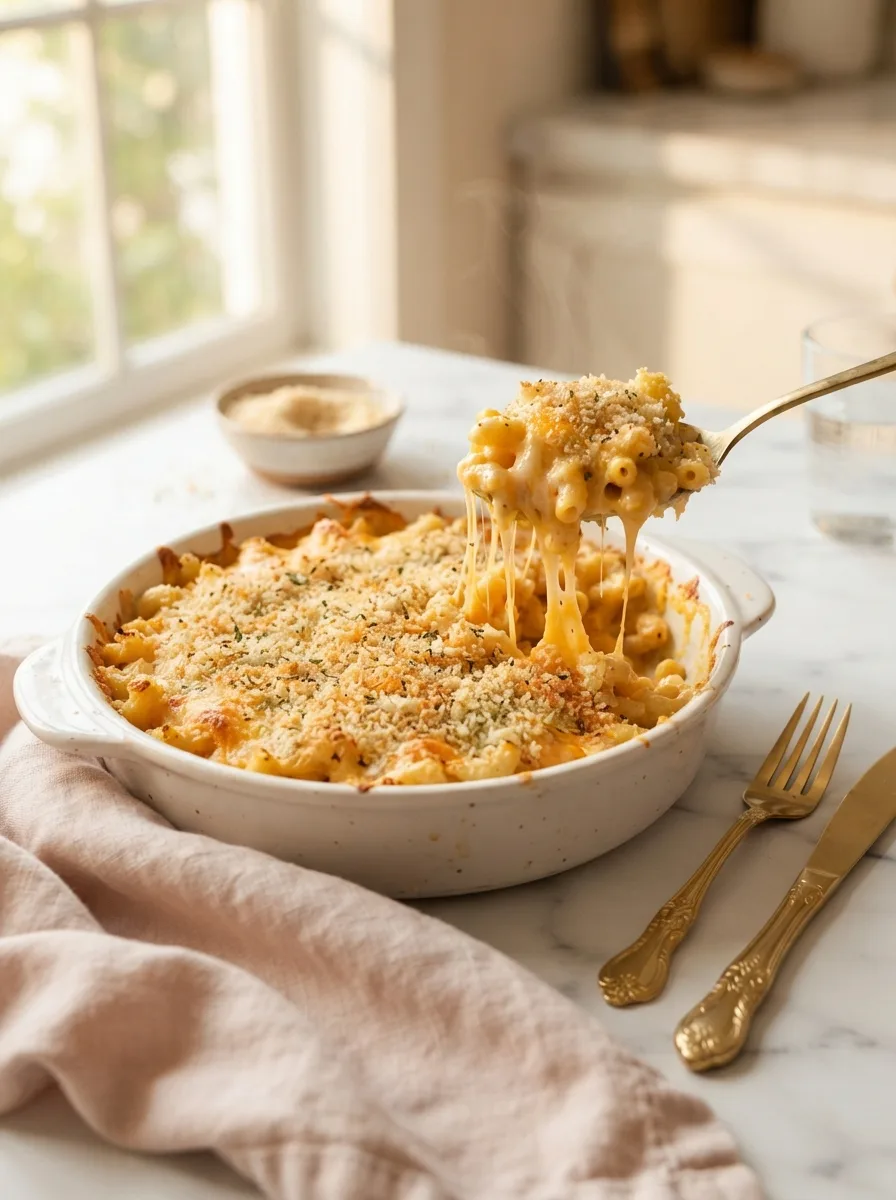
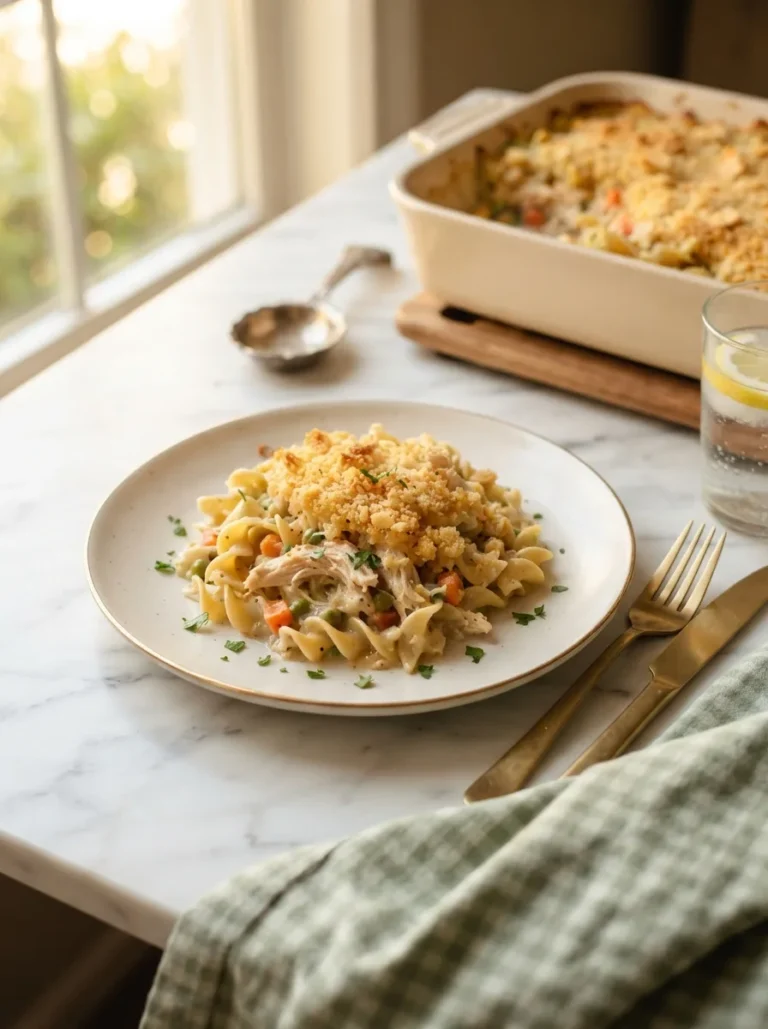
What you get is a mac and cheese that bakes up creamy all the way through, with a crisp golden top and zero risk of little scrambled bits in the sauce. It’s the version I make when I’m cooking for someone with an egg allergy, and the version I keep making for everyone else because, honestly, it’s just easier.
★★★★★ “I’ve made baked mac and cheese with the egg method for years and always held my breath opening the oven. This one came out smooth every single time I tested it — no more guessing.” — Dana R., recipe tester (pre-launch)
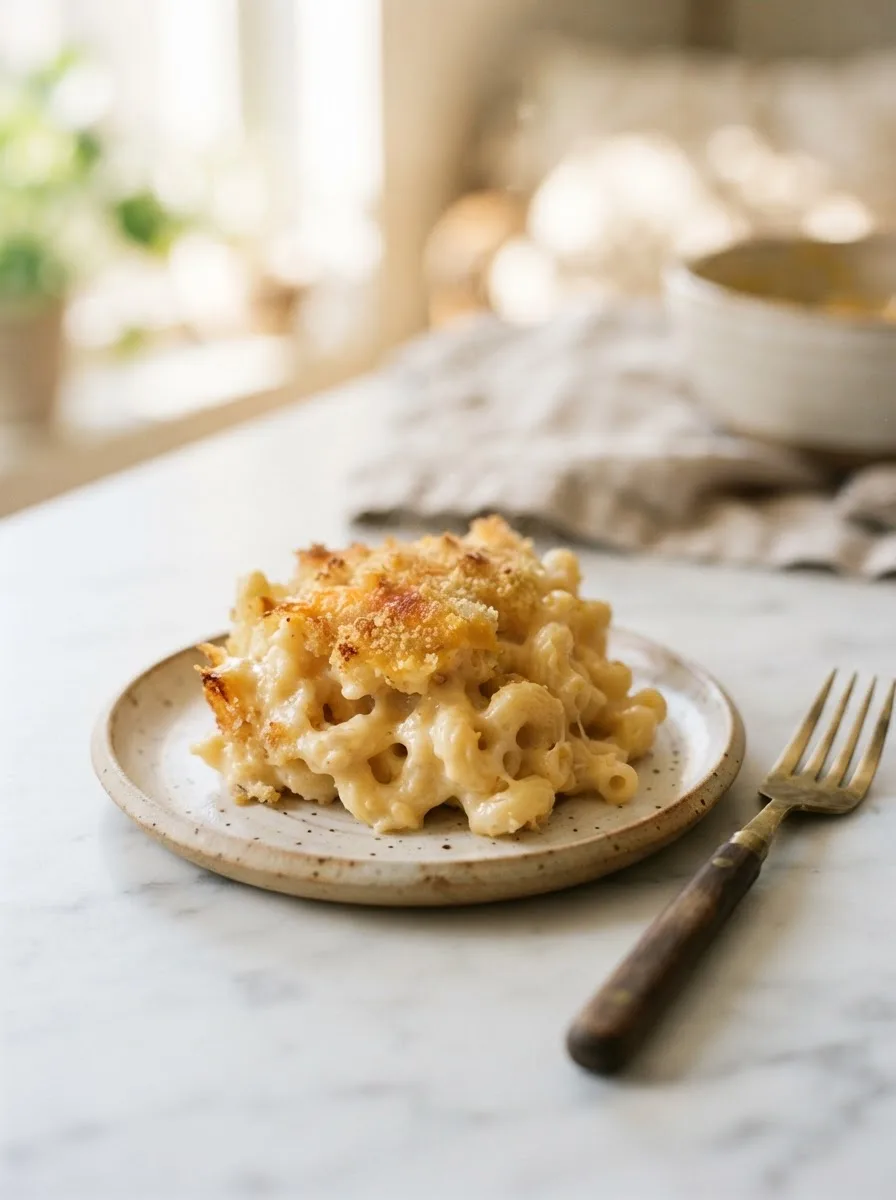
Why You’ll Love This No Egg Baked Mac and Cheese
- No curdling risk: Without eggs in the sauce, there’s nothing to scramble in a too-hot oven — the texture stays smooth from edge to center.
- No roux to mess up: The cornstarch slurry method skips the butter-and-flour cooking step entirely, so there’s no risk of a lumpy, undercooked roux.
- Genuinely creamy, not gloppy: Evaporated milk adds richness without the heaviness of a full cream sauce.
- Great for egg allergies: This is the baked mac and cheese I make for anyone who can’t have eggs, without sacrificing the baked, golden-top texture people expect.
Key Ingredients
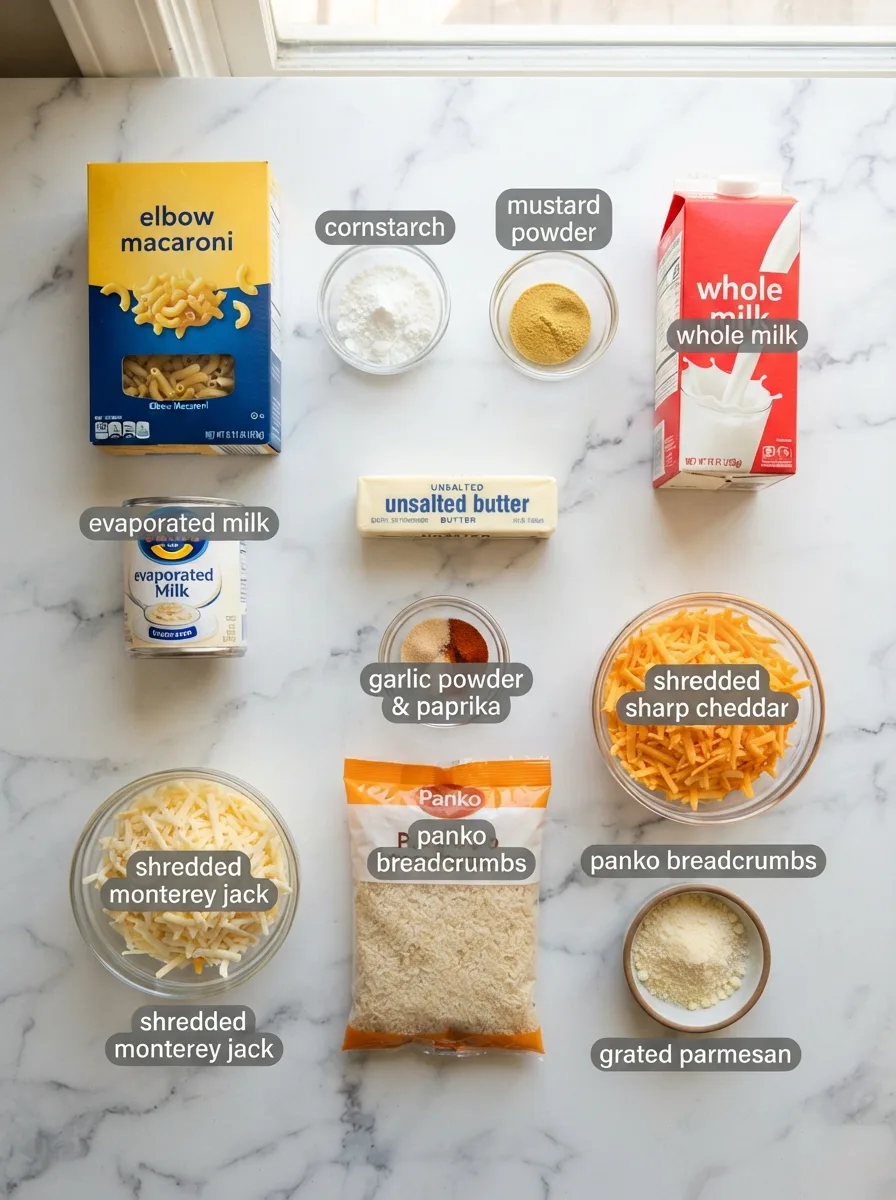
Elbow macaroni (1 pound / 450g). Small, ridged shapes like elbows or cavatappi hold onto sauce better than long noodles. Cook it to just shy of al dente — it finishes softening in the oven, and overcooked pasta going in means mushy pasta coming out.
Cornstarch (3 tablespoons). This is the “no roux” part of the recipe. Whisked into cold milk before it hits any heat, cornstarch thickens the sauce without the butter-and-flour cooking step a traditional roux requires. It’s also more forgiving — there’s no risk of the flour tasting raw because it never gets the chance to undercook.
Whole milk and evaporated milk. Whole milk keeps the sauce from tasting thin; evaporated milk adds a concentrated dairy richness without needing heavy cream. Together they replace the egg-and-milk custard most baked mac and cheese recipes lean on.
Sharp cheddar and Monterey Jack. Cheddar brings the sharp, familiar flavor; Monterey Jack melts smoother and helps prevent the sauce from turning greasy or separating in the oven. Pre-shredded bagged cheese works, but block cheese you shred yourself melts more evenly because it isn’t coated in anti-clumping starch.
Mustard powder, garlic powder, paprika. Small amounts of each round out the cheese flavor without announcing themselves. Mustard powder in particular is the ingredient people can never quite name — it just makes the cheese taste more like cheese.
Ingredient Note: Shred your own cheese if you can. Pre-shredded bags are coated with cellulose to keep the shreds from sticking together, and that same coating can make a baked cheese sauce turn slightly grainy. It’s a small step that makes a real difference here.
Equipment You’ll Need
- Large pot — for boiling the pasta; any 4-quart or larger pot works.
- Medium saucepan — for the cornstarch sauce; nonstick makes cleanup easier but isn’t required.
- Whisk — essential for dissolving the cornstarch with no lumps.
- 9×13-inch baking dish — ceramic or glass both work fine; metal pans can make the edges cook faster, so watch them closely if that’s what you have.
- Box grater — for shredding your own cheese, if using block cheese.
Controlling Sauce Thickness (A Controlled Test)
The most important variable in this recipe is the cornstarch amount. Too little, and the sauce is soupy and pools at the bottom of the dish after baking. Too much, and it turns pasty and stiff once it cools slightly. I tested three versions side by side, changing only the cornstarch — 2 tablespoons, 3 tablespoons, and 4 tablespoons — while keeping every other ingredient identical.
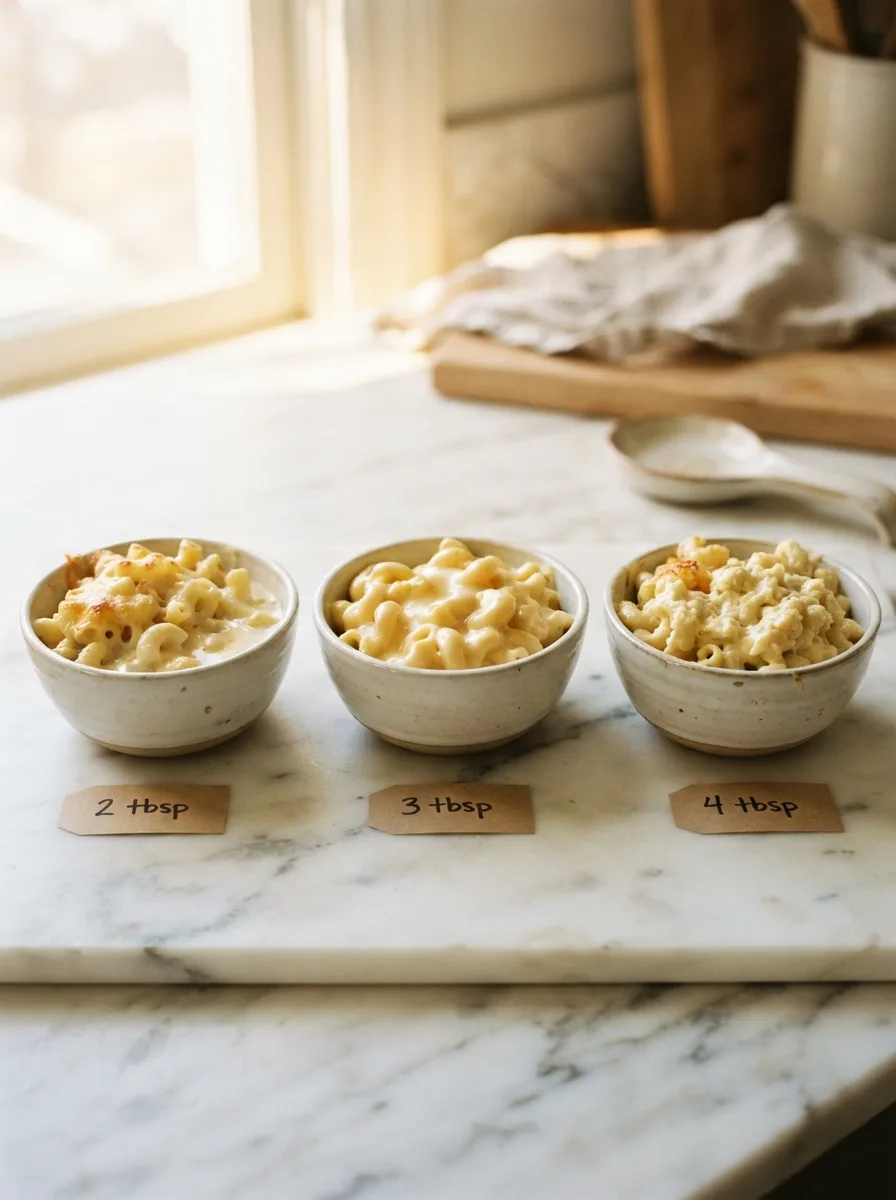
2 tablespoons cornstarch: The sauce looked glossy going into the oven but separated slightly during baking, leaving a thin pool of liquid at the bottom of the dish.
3 tablespoons cornstarch: This is the one that won. The sauce clung to every noodle, baked up creamy with no separation, and sliced into clean servings instead of running.
4 tablespoons cornstarch: Technically “worked,” but the texture edged toward pasty rather than creamy, and it thickened even further as it cooled — leftovers were noticeably stiffer the next day.
The takeaway: 3 tablespoons of cornstarch per 4 cups of combined milk is the ratio that holds up through baking without turning gluey. If you’re scaling this recipe up or down, keep that ratio and you’ll get the same result.
How to Make No Egg Baked Mac and Cheese
Before you start: Preheat your oven to 375°F (190°C) and pull your cheese out of the fridge about 20 minutes ahead — cold cheese takes longer to melt smoothly into a hot sauce.
Step 1 — Boil the pasta
Bring a large pot of salted water to a boil and cook the macaroni 1–2 minutes short of the package’s al dente time. It will finish cooking in the oven, and pasta that’s fully cooked at this stage turns mushy by the time the bake is done. Drain and set aside — don’t rinse, since a little starch on the surface helps the sauce cling.
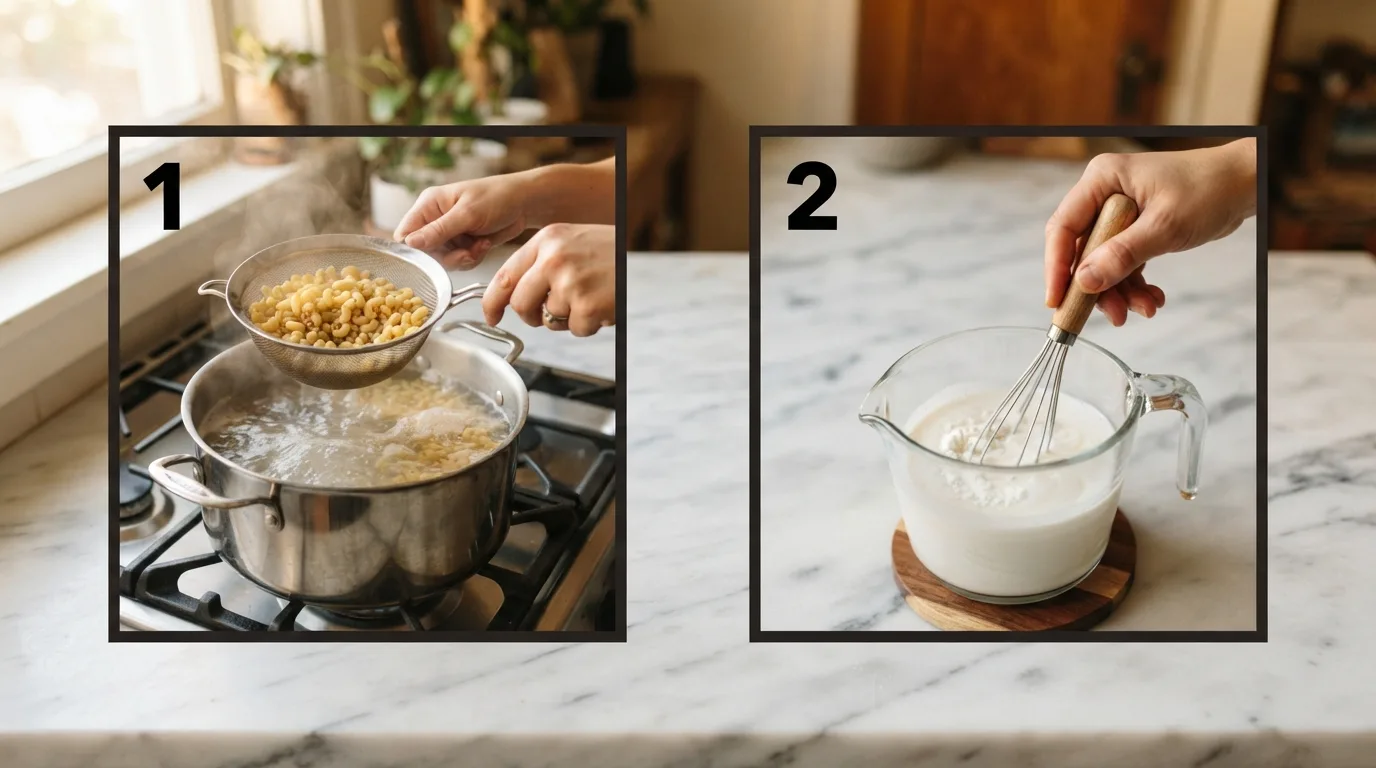
Step 2 — Whisk the cornstarch slurry
In a liquid measuring cup, whisk the cornstarch into 1 cup of the cold whole milk until it’s completely dissolved with no clumps. This step matters more than it looks — cornstarch added directly to a hot pan will clump instantly, while dissolving it in cold liquid first lets it thicken smoothly.
Step 3 — Build the sauce
In your saucepan, melt the butter over medium heat, then pour in the remaining milk and the evaporated milk. Once it’s warm (not boiling), whisk in the cornstarch slurry. Keep whisking over medium heat for 3–4 minutes, until the sauce visibly thickens and coats the back of a spoon instead of running off it.
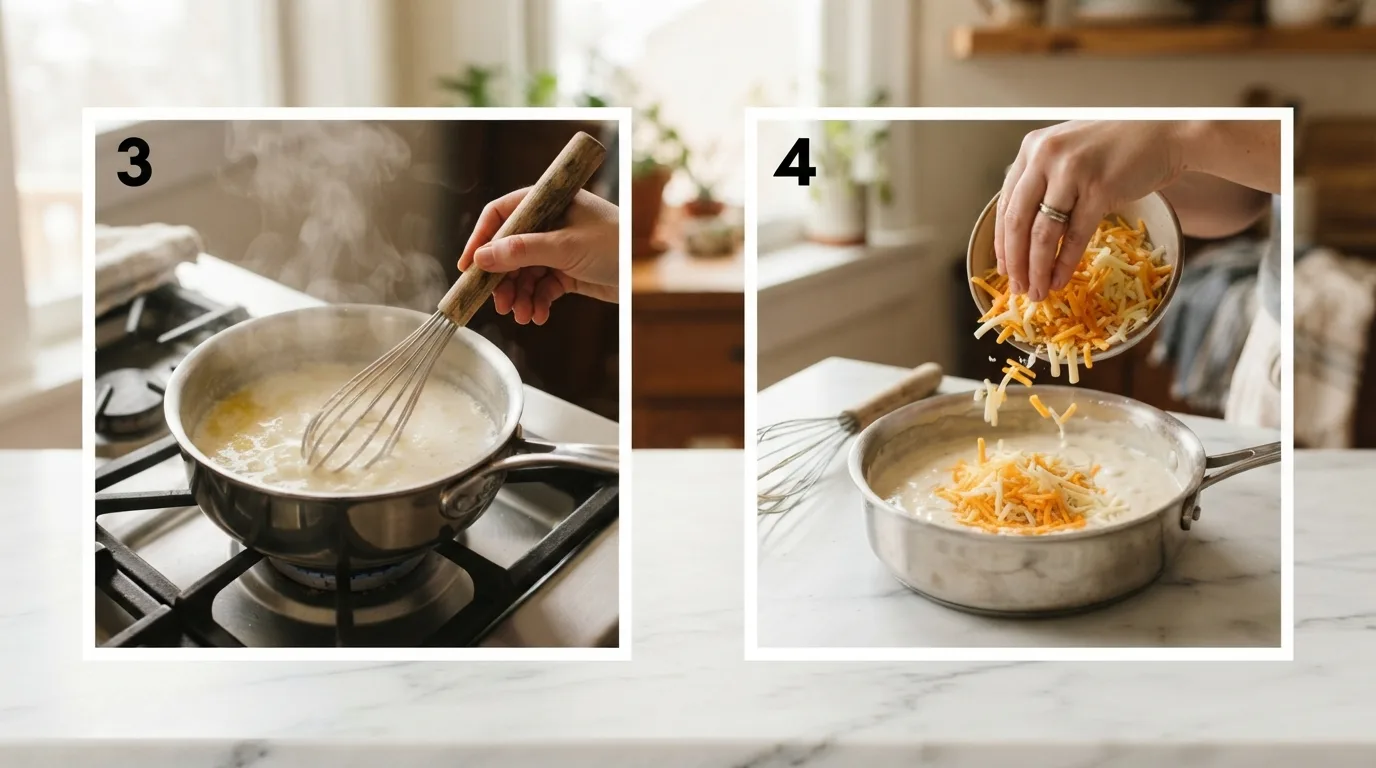
Step 4 — Melt in the cheese
Take the saucepan off the heat. This is the most important thing to remember: adding cheese to a sauce that’s still directly over the burner is the fastest way to make it turn oily and grainy. Off the heat, stir in the mustard powder, garlic powder, paprika, a good pinch of salt, and about two-thirds of your cheese, a handful at a time, until it’s fully melted and smooth.
Step 5 — Combine and assemble
Add the drained pasta to the sauce and stir until every piece is coated. Pour the whole mixture into your greased 9×13 baking dish, spreading it into an even layer. Top with the remaining cheese, then scatter the panko breadcrumbs evenly over the top.
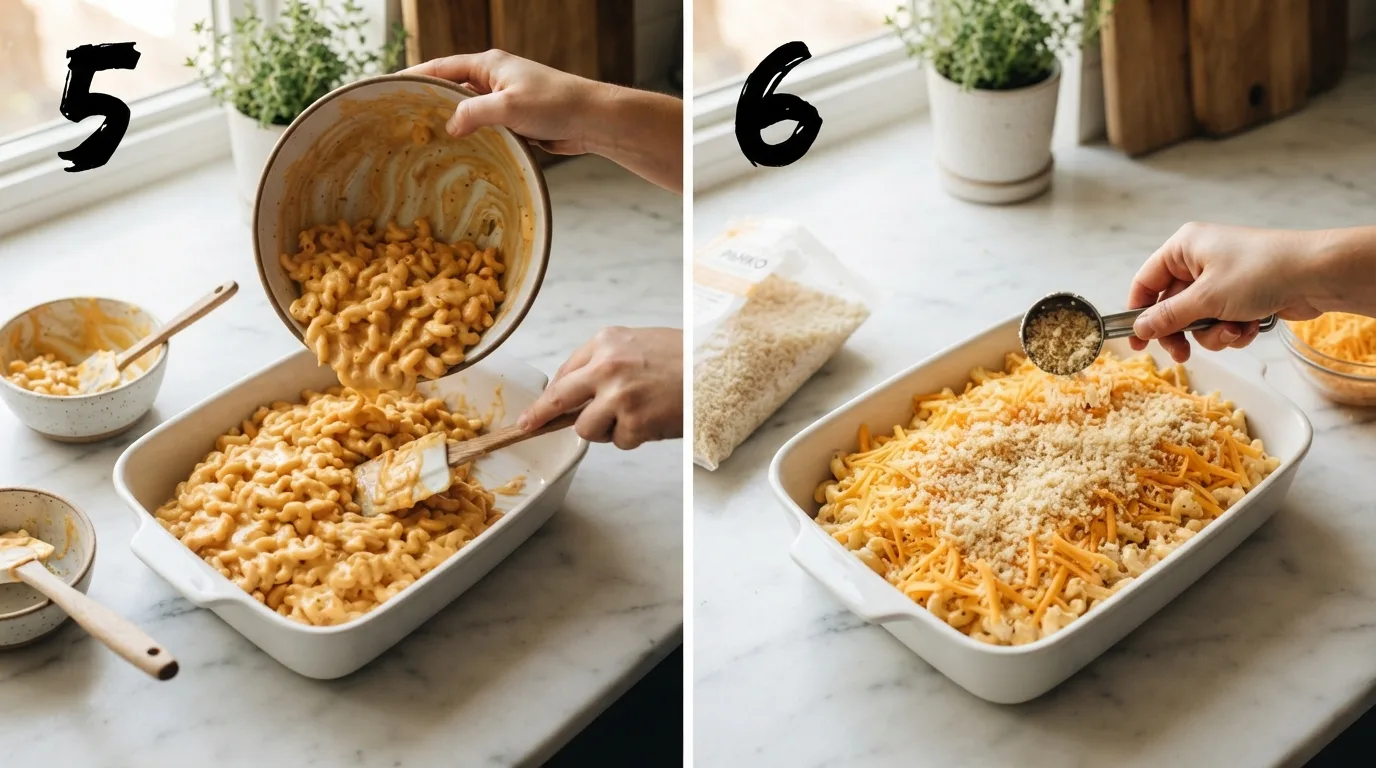
Step 6 — Bake until golden
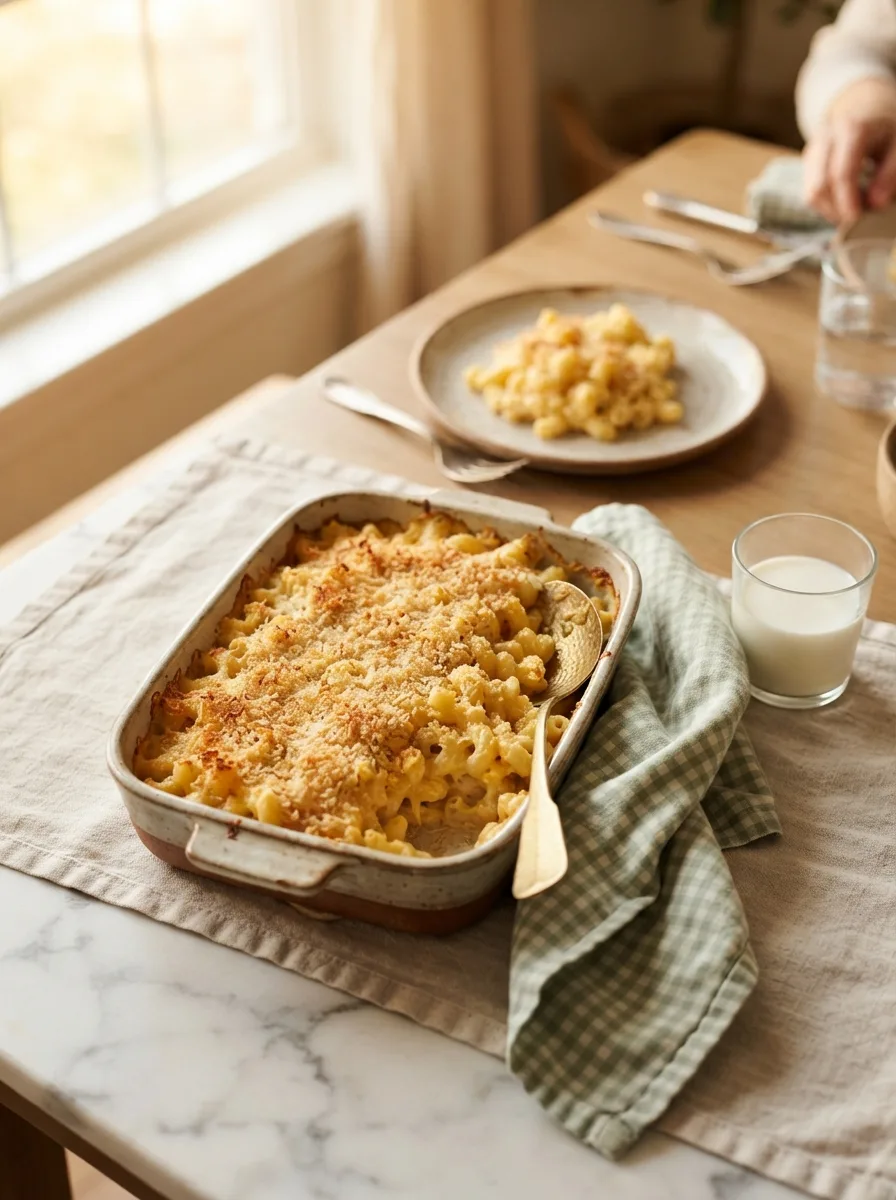
Bake uncovered for 20–25 minutes, until the top is golden and the edges are visibly bubbling. If the panko is browning faster than the center is heating through, tent it loosely with foil for the last 5 minutes. Let it sit for 5 minutes before serving — the sauce firms up slightly as it rests, which makes for cleaner scoops.
Pro Tips for Perfect No Egg Baked Mac and Cheese
Tip 1: Undercook the pasta on purpose. Pulling it 1–2 minutes early keeps it from turning mushy after 20+ minutes in the oven.
Tip 2: Take the sauce off heat before adding cheese. Direct heat is what makes cheese sauces split and turn oily — melting the cheese off the burner keeps it smooth.
Tip 3: Shred your own cheese when you can. The anti-clumping coating on pre-shredded cheese can leave a slightly grainy texture in a baked sauce.
Tip 4: Don’t skip the resting time. Five minutes out of the oven lets the sauce set up just enough to hold its shape when you serve it, instead of pooling on the plate.
Variations and Substitutions
Dietary Variations:
- Gluten-free: Use a gluten-free elbow macaroni and swap the cornstarch for the same amount of arrowroot starch or GF-blend cornstarch substitute — the sauce thickens the same way.
- Lighter version: Swap the evaporated milk for 2% milk and use one cup less total cheese. The sauce will be slightly thinner but still creamy.
Flavor Variations:
- Smoky and spicy: Add a diced chipotle in adobo or a teaspoon of smoked paprika to the sauce for a smokier, spicier version.
Ingredient Substitutions:
- Gruyère or smoked Gouda can replace up to half the cheddar for a more complex, nutty flavor.
- Crushed buttery crackers work as a panko substitute for the topping if that’s what you have on hand.
If you’re planning a full comfort-food dinner around this, my parsnip and leek soup makes an easy, hands-off starter you can have simmering while the mac and cheese bakes.
Troubleshooting
Why is my sauce grainy instead of smooth?
Most likely the cheese was added while the sauce was still directly on the heat, or pre-shredded cheese with anti-clumping coating was used. Take the pan off the burner before adding cheese, and shred your own block cheese if grainy texture keeps showing up.
Why did my mac and cheese turn out watery at the bottom?
This usually means the cornstarch measurement was light, or the sauce wasn’t cooked long enough to fully thicken before it went into the oven. It should visibly coat the back of a spoon before you take it off the heat — if it still runs off thin, give it another minute or two of whisking.
Why is the top burning before the center is hot?
Ovens run hotter than their dial in some spots, especially near the top rack. Move the dish to the middle rack, and tent loosely with foil for the last 5–10 minutes if the panko is browning too quickly.
Storage and Make-Ahead
Counter: Safe for up to 2 hours at room temperature before it should go into the fridge.
Refrigerator: Store covered for up to 4 days. The sauce firms up when cold — that’s normal and it loosens again on reheating.
Freeze: Freeze in an airtight container for up to 2 months. Baked pasta dishes freeze better after baking than before, since the raw sauce can separate when frozen unbaked.
Reheating: Add a splash of milk before reheating in the microwave or in a 325°F oven, covered, for about 15 minutes. The milk brings the sauce back to its original creaminess.
Make-Ahead: Assemble the full dish (unbaked) up to 1 day ahead, cover, and refrigerate. Add 5–10 minutes to the bake time since it’s starting cold.
Frequently Asked Questions
Q: Can I make baked mac and cheese without eggs and without a roux? A: Yes — that’s exactly what this recipe does. The sauce is thickened with a cornstarch slurry stirred into cold milk instead of a butter-and-flour roux, and there’s no egg custard base at all.
Q: Why do some baked mac and cheese recipes use eggs? A: Traditional Southern-style versions use eggs mixed with evaporated milk to create a custard that helps the dish set firm when sliced. It works well when baked carefully, but it’s the most common cause of a grainy or scrambled texture if the oven runs hot.
Q: Can I use a different pasta shape? A: Any small, sturdy shape works — cavatappi, shells, or penne all hold sauce well. Avoid very thin noodles like spaghetti; they don’t hold the sauce the same way.
Q: Can I double this recipe for a crowd? A: Yes. Double all the ingredients and use a 9×13-inch dish plus a second smaller dish, or one large deep roasting pan. Add 5–10 minutes to the bake time since the dish will be deeper.
Q: Is this recipe safe for egg allergies? A: Yes, there are no eggs anywhere in this recipe, which is the whole reason I developed it this way. Always double-check your specific cheese and breadcrumb brands for cross-contamination if the allergy is severe.
Q: My sauce thickened too much overnight in the fridge — is that normal? A: Yes, cornstarch-thickened sauces continue to set as they cool. A splash of milk stirred in while reheating brings it right back to a creamy consistency.
More Comfort Food Recipes You’ll Love
- Jamaican Roti — a soft, flaky flatbread that’s perfect for scooping up any saucy leftovers.
- Parsnip and Leek Soup — a simple, creamy soup that pairs well as a starter before something as rich as baked mac and cheese.
- Tikka Paste — a bold, homemade spice paste if you want to branch into a completely different flavor direction next.
- Jamaican Jerk Seasoning — my go-to blend for adding smoky heat to grilled chicken or vegetables.
No Egg Baked Mac and Cheese (No Roux)
Ingredients
For the Pasta:
- 1 pound elbow macaroni
- Salt, for the pasta water
For the Sauce:
- 3 tablespoon cornstarch
- 4 cup whole milk, divided
- 1 can (12 oz) evaporated milk
- 4 tablespoon unsalted butter
- 1 teaspoon mustard powder
- 1/2 teaspoon garlic powder
- 1/2 teaspoon paprika
- 1 teaspoon salt, plus more to taste
- 1/4 teaspoon black pepper
- 3 cup shredded sharp cheddar, divided
- 2 cup shredded Monterey Jack
For the Topping:
- 1 cup panko breadcrumbs
- 1/4 cup grated Parmesan
- 2 tablespoon melted butter
Instructions
- Preheat the oven to 375°F (190°C) and grease a 9×13-inch baking dish.
- Bring a large pot of salted water to a boil. Cook the macaroni 1–2 minutes short of package al dente time. Drain and set aside.
- Whisk the cornstarch into 1 cup of cold whole milk until fully dissolved with no lumps.
- In a medium saucepan over medium heat, melt the butter, then add the remaining 3 cups of milk and the evaporated milk. Once warm, whisk in the cornstarch slurry.
- Cook, whisking constantly, for 3–4 minutes, until the sauce thickens and coats the back of a spoon.
- Remove the saucepan from the heat. Stir in the mustard powder, garlic powder, paprika, salt, and pepper.
- Add 2 cups of the cheddar and all of the Monterey Jack, a handful at a time, stirring until fully melted and smooth.
- Add the drained pasta to the sauce and stir until evenly coated.
- Pour the mixture into the prepared baking dish and spread into an even layer. Top with the remaining 1 cup of cheddar.
- In a small bowl, toss the panko with the Parmesan and melted butter, then scatter evenly over the top.
- Bake uncovered for 20–25 minutes, until golden on top and bubbling at the edges.
- Let rest 5 minutes before serving.
Notes
- Shred your own block cheese instead of using pre-shredded bags for the smoothest sauce — the anti-clumping coating on bagged cheese can leave a slightly grainy texture when baked.
- Undercook the pasta by 1–2 minutes; it finishes softening in the oven and stays from turning mushy.
- If freezing, freeze after baking rather than before — the sauce holds up better through the freeze-thaw cycle once it’s been baked.
- For a make-ahead dinner, assemble fully (unbaked), refrigerate up to 1 day, and add 5–10 minutes to the bake time since it starts cold.
- If doubling the recipe, keep the 3-tablespoon cornstarch to 4-cup milk ratio consistent per batch to avoid a pasty or thin sauce.