Foolproof Christmas Vegetable Sides Recipes

My first Christmas vegetable side went wrong in the most predictable way: I packed every carrot, potato, and Brussels sprout onto one pan, then pulled out a soft, gray winter dish beside the turkey. So I tested this honey-butter roasted recipe four times over two holiday seasons. The controlled comparison used three pan setups, with a repeat of the spaced arrangement to check the result.
The main variable was spacing. Crowded vegetables release more moisture than a hot oven can evaporate, so their surfaces steam instead of browning. Give the pieces room on two pans, and hot, dry air can reach them; the edges caramelize while the centers soften.
The result is one recipe for carrots, parsnips, Brussels sprouts, and baby potatoes, finished with honey butter after roasting. That late glaze keeps the sugar from burning and gives this Christmas vegetable sides recipes favorite a glossy finish without a puddle of sauce.
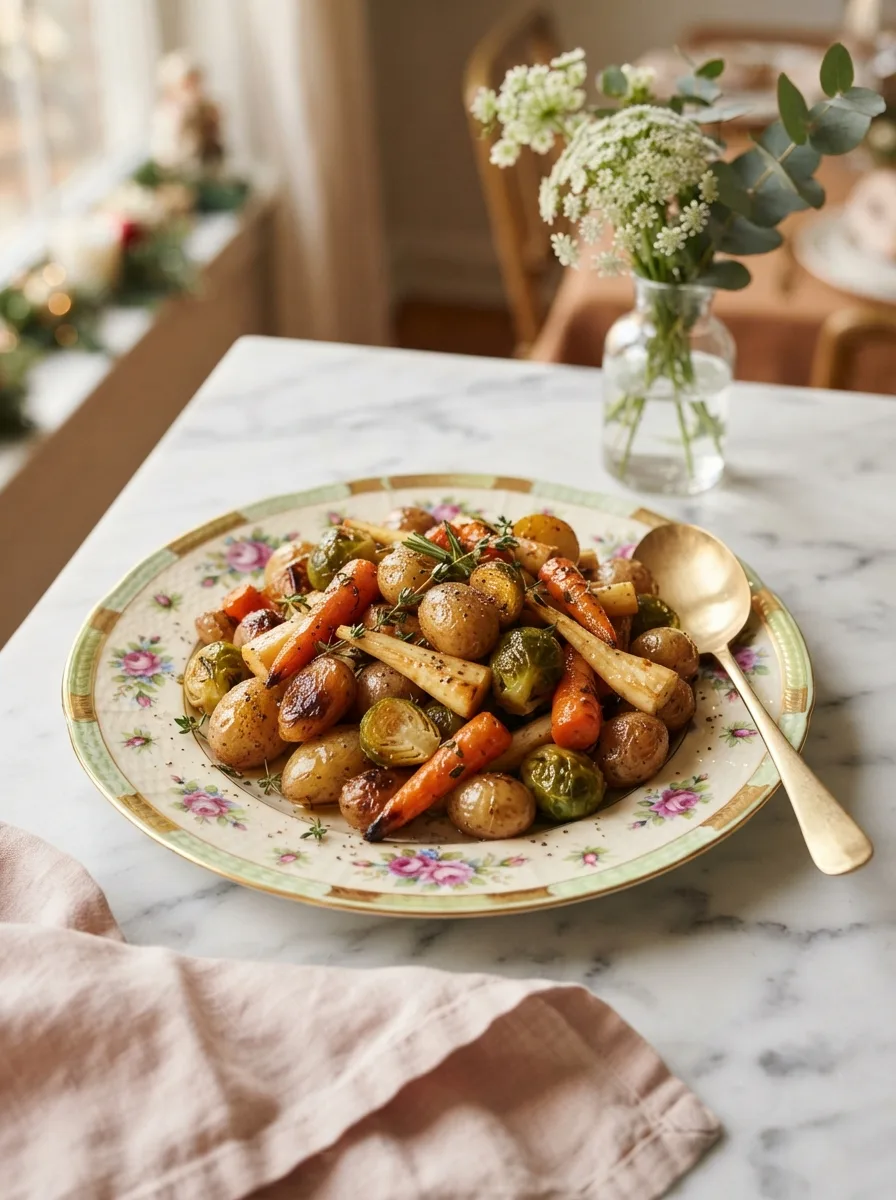
The roots may look pale after parboiling, and you may wonder whether two pans will fit. Dry them thoroughly, leave space between pieces, and they will brown at 425°F. The trade-off is one extra pot to wash, but it prevents chalky centers and makes this side practical for a holiday dinner or a larger meal.
For Christmas side dishes, this is one of my best Christmas side ideas: prep the roots ahead, roast them fresh, and glaze them at the end. It is a simple side dish with enough color and flavor for the holiday table.
★★★★★ “I made a double batch for Christmas dinner and there wasn’t a single carrot left — even my picky nephew went back for seconds.” — Rachel T., recipe tester (pre-launch)
Why You’ll Love These Christmas Vegetable Sides Recipes
- Browned, not steamed: Spaced vegetables let moisture escape, so the carrots, potatoes, and sprouts develop crisp edges instead of turning soft and gray. That gives this side more texture than a plain salad or boiled vegetable dish.
- One glaze for the whole pan: Honey, butter, garlic, and thyme bring sweet, savory flavor to every vegetable without making a separate sauce for each dish. You can skip extra cheese, including parmesan, because the glaze supplies plenty of richness.
- Useful make-ahead prep: Cut and parboil the root vegetables up to two days ahead. Parboiling partly cooks the dense centers, especially in the potatoes, while drying them afterward keeps surface water from creating steam in the oven.
- Enough for a crowd: The recipe fills two sheet pans and serves 12–16 as a side. It doubles cleanly when you keep the pans uncrowded, making it practical for a holiday table with other vegetables, green beans, or a main dish.
Key Ingredients
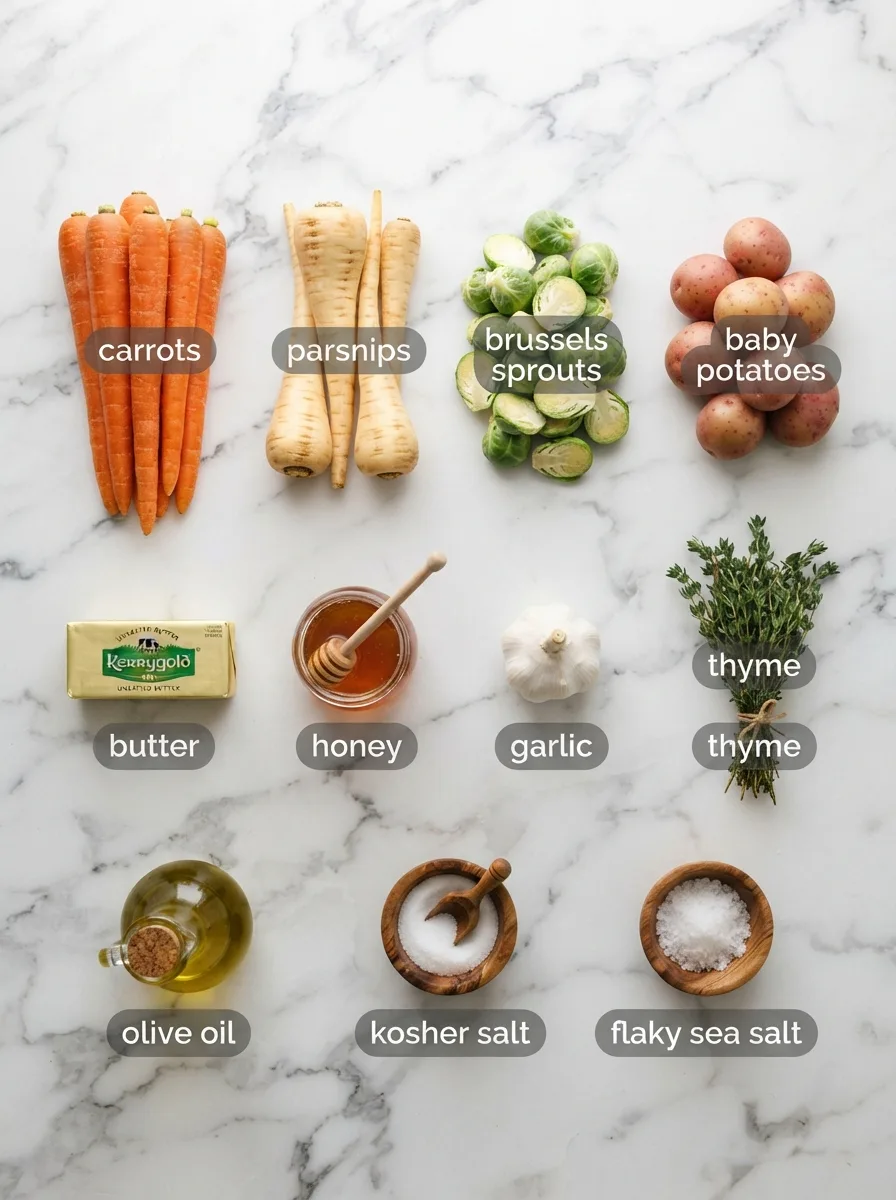
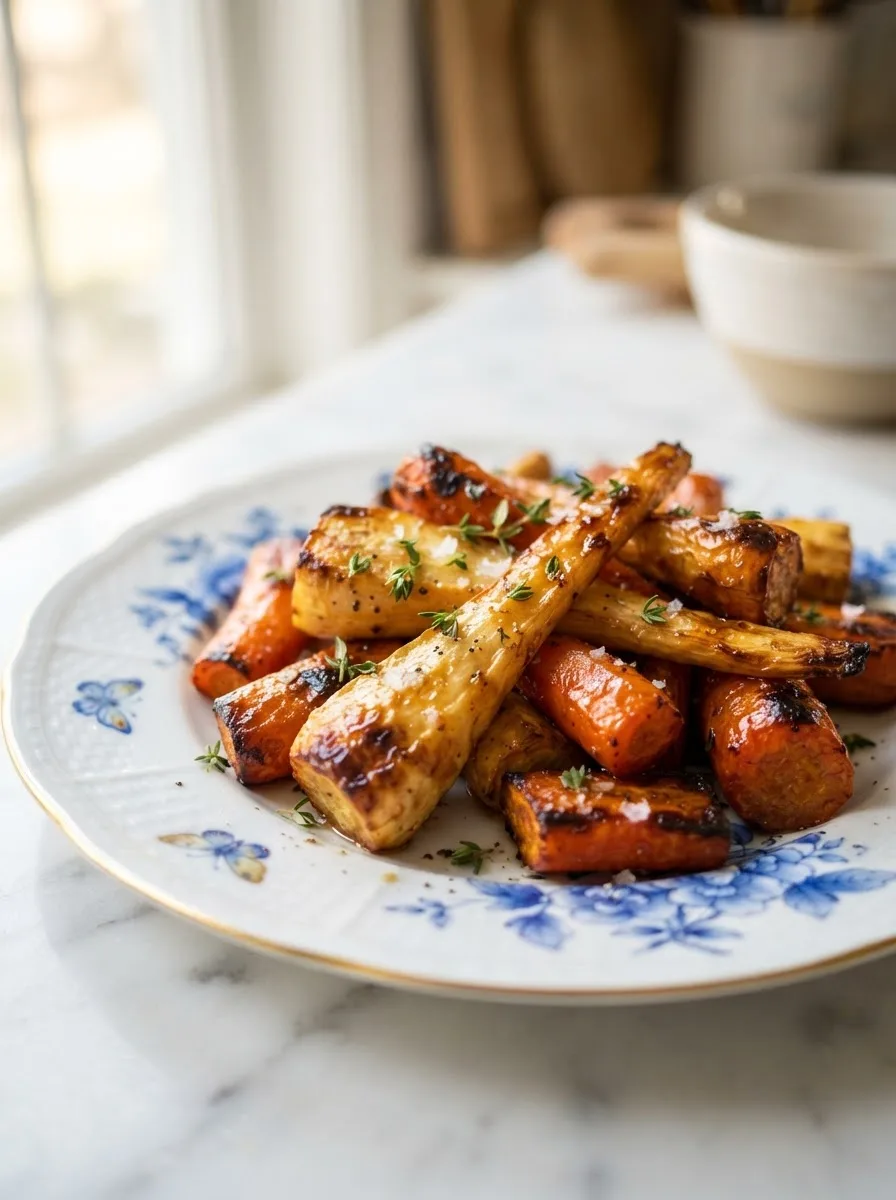
CaCarrots and parsnips (1½ lbs each). Cut both into ¾-inch batons. Their similar size and density help the carrots and parsnips soften at nearly the same rate, while the parboil takes the raw bite out of the root vegetables before roasting.
Brussels sprouts (1 lb, halved). Add the sprouts after the roots have roasted for 20 minutes. Their cut faces brown quickly, so this timing gives the Brussels sprouts charred edges without burning the leaves. If using frozen sprouts, thaw and pat them completely dry first.
Baby potatoes (1½ lbs, halved). Leave the skins on. The potatoes’ skins crisp in the oven and give the glaze something to cling to; the four-minute parboil softens their centers before the final roast.
Unsalted butter (4 tbsp) and honey (3 tbsp). Butter adds body, while honey creates a glossy finish and gentle sweetness. Use unsalted butter so the glaze stays balanced when you season the vegetables separately.
Fresh garlic and thyme. Garlic seasons the roasting oil, while fresh thyme goes in after cooking. Adding thyme at the end preserves its clean herbal flavor instead of letting it darken in the heat.
Olive oil, kosher salt, flaky sea salt. Olive oil helps the vegetables brown; kosher salt seasons them before roasting; flaky sea salt adds a crisp finish just before serving. Cut every piece to roughly ¾ inch so no vegetable finishes early.
Ingredient Note: The Brussels sprouts need room around their cut sides, just like the carrots and potatoes. If the veggies touch, trapped moisture softens the browned surfaces.
Equipment You’ll Need
- Two rimmed sheet pans — they give each vegetable room for hot air to circulate, which is how this roasted side browns instead of steaming.
- A large stockpot — use it to parboil the carrots, parsnips, and potatoes before they go into the oven.
- Tongs — they make it easier to turn the vegetables and swap the hot pans between oven racks.
- A small saucepan — use it to simmer the honey-butter glaze for 2–3 minutes.
- A large mixing bowl — transfer the roasted vegetables here before tossing them with the warm glaze.
Controlling Caramelization: Pan Density (A Controlled Test)
Spacing was the tested variable. I ran four tests with the same vegetables, 425°F oven, oil, salt, and 35–38-minute total roasting time: one crowded pan, one spaced pan, and two spaced pans, with the spaced setup repeated.
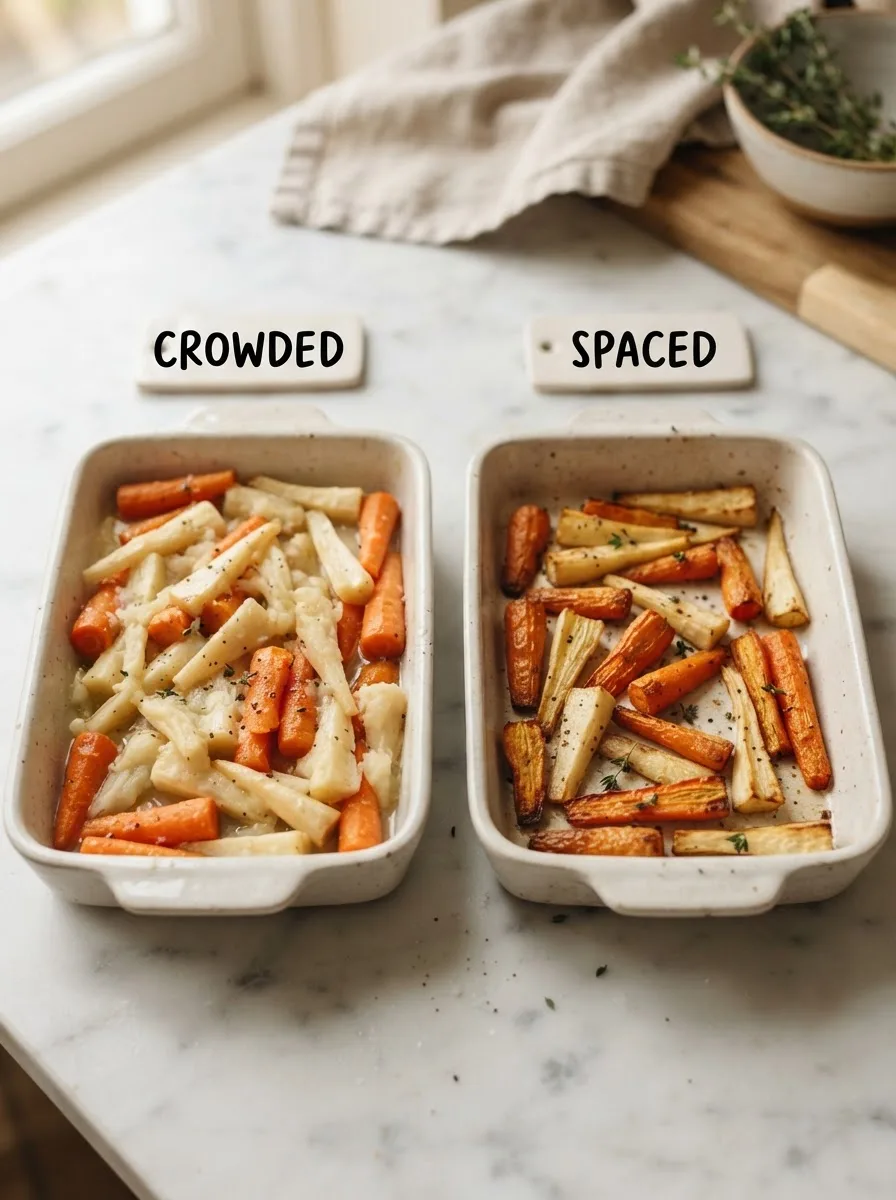
OneOne crowded pan: the vegetables released moisture faster than the oven could evaporate it. Steam collected between the pieces, leaving most surfaces pale and soft.
One spaced pan: browning improved, but pieces still touched in a few places. Those contact points stayed tender rather than crisp.
Two spaced pans: the vegetables browned on at least two sides because moisture could escape. Dry surfaces heat more quickly, allowing the browning reactions that create deep color and roasted flavor.
The takeaway: use two pans for this Christmas side. If you have only one, roast in two batches; that takes more time, but it gives the vegetables the breathing room this dish needs for a properly caramelized finish.
How to Make Christmas Vegetable Sides
Before you start: Preheat your oven to 425°F and set two racks to the upper-middle and lower-middle positions. Bring a large pot of salted water to a boil before you start cutting the vegetables. Keep oven mitts nearby, and use them whenever you move the hot pans.
Step 1 — Cut the vegetables into even pieces
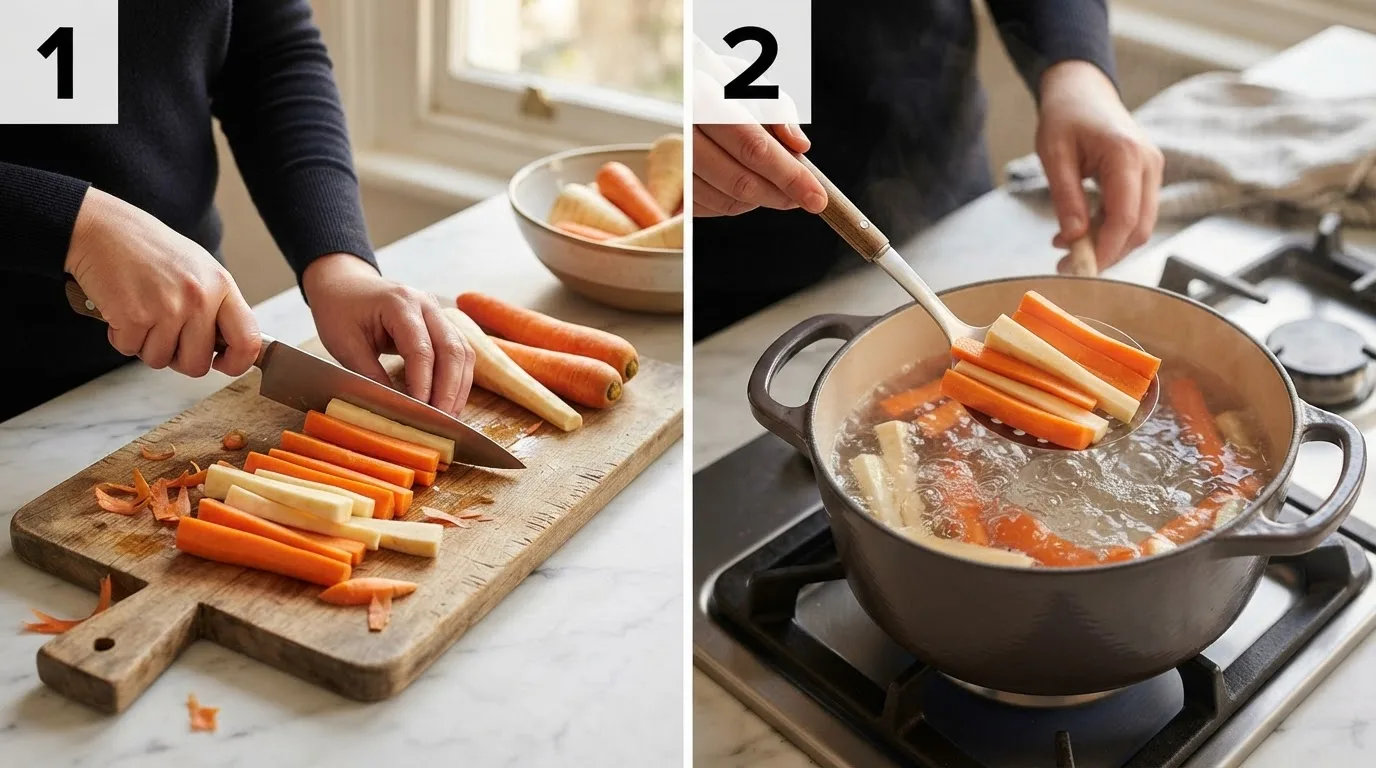
Peel the carrots and parsnips, then cut them into batons roughly ¾ inch thick. Halve the potatoes and the Brussels sprouts. Keep the sprouts separate from the roots because they need less oven time. Even pieces cook at the same rate, so you do not end up with a soft carrot beside a firm potato. This recipe relies on the natural flavor of the vegetables rather than cream, bacon, or a heavy sauce.
Step 2 — Parboil the carrots, parsnips, and potatoes
Drop the carrots, parsnips, and potatoes into the boiling water and cook for exactly 4 minutes. Parboiling softens the dense centers and partly gelatinizes the starch in the potatoes, giving the oven less work to do. Drain carefully, then pat everything completely dry with a clean towel. The pieces may look pale and damp at this point; that is normal. Dry surfaces brown, while leftover water turns to steam and delays caramelization.
Step 3 — Toss with oil and garlic, then spread across two pans
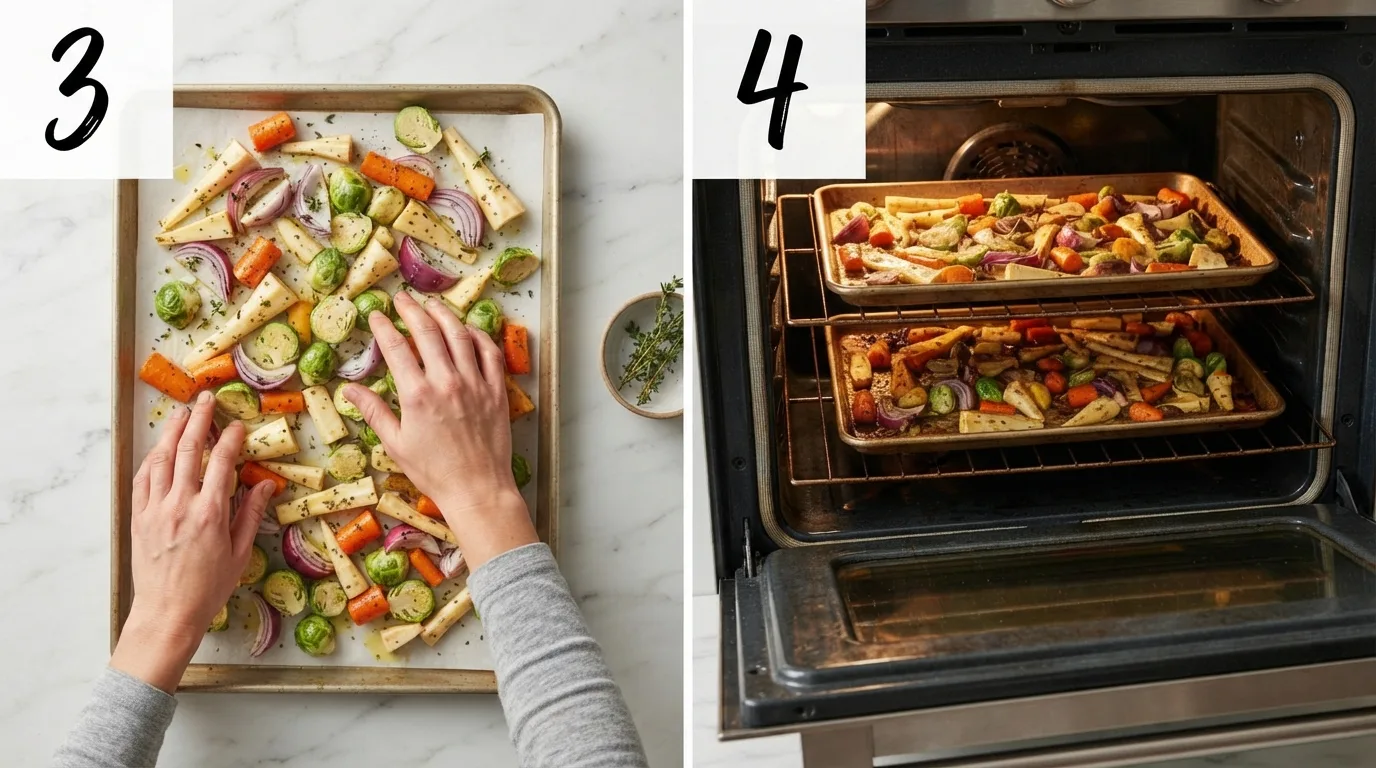
In a large bowl, toss the parboiled vegetables with 3 tablespoons of olive oil, the minced garlic, and 1½ teaspoons of kosher salt. Divide them evenly between two rimmed sheet pans. Arrange the pieces in a single layer with space between them, not in a pile. This is the point where the pale vegetables start to look questionable, but do not add the honey yet; thorough drying and open spacing give this side its roasted finish.
Step 4 — Roast the first pass
Roast for 20 minutes, swapping the pans between racks halfway through so both receive even heat. Use oven mitts when moving the hot pans, and keep your hands away from the escaping steam. At the 20-minute mark, the bottoms should show golden-brown edges. The vegetables are not finished yet, but this first roast builds the browned base for the final side dish.
Step 5 — Add the Brussels sprouts
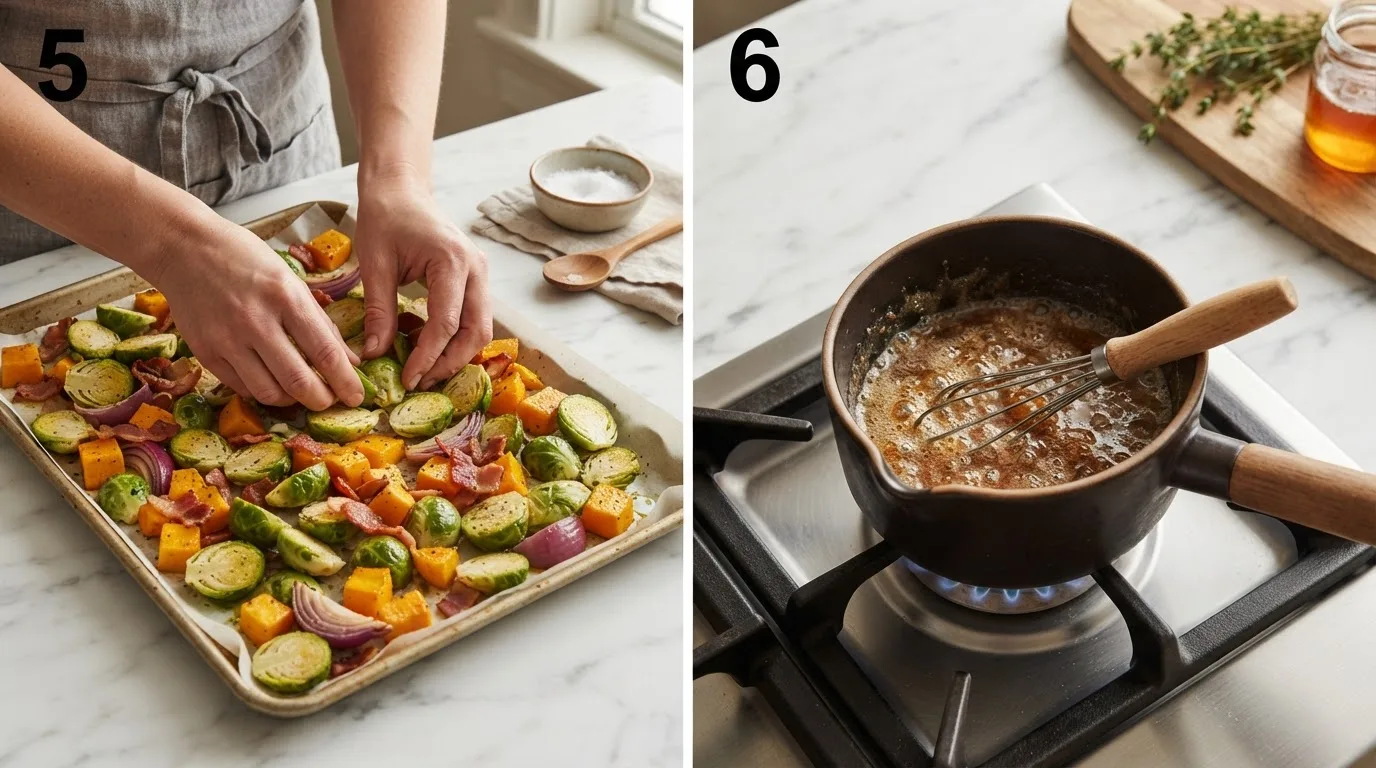
Toss the halved Brussels sprouts with 1 tablespoon of olive oil and a pinch of salt. Tuck them into the open spaces on both pans, keeping the cut sides exposed. Continue roasting for another 15–18 minutes. The sprouts should have charred cut edges, while the carrots, parsnips, and potatoes should be deeply golden. Adding sprouts later protects their thinner leaves from burning while the roots finish cooking.
Step 6 — Make the honey-butter glaze
While the vegetables finish roasting, melt the butter in a small saucepan over medium-low heat. Stir in the honey and a pinch of salt, then simmer for 2–3 minutes. The glaze should thicken slightly and smell toasted, not sharp or burnt. Remove it from the heat as soon as it reaches that texture; residual heat will keep it warm while the vegetables finish. This short reduction gives the recipe a glossy flavor without turning the honey bitter.
Step 7 — Glaze and finish
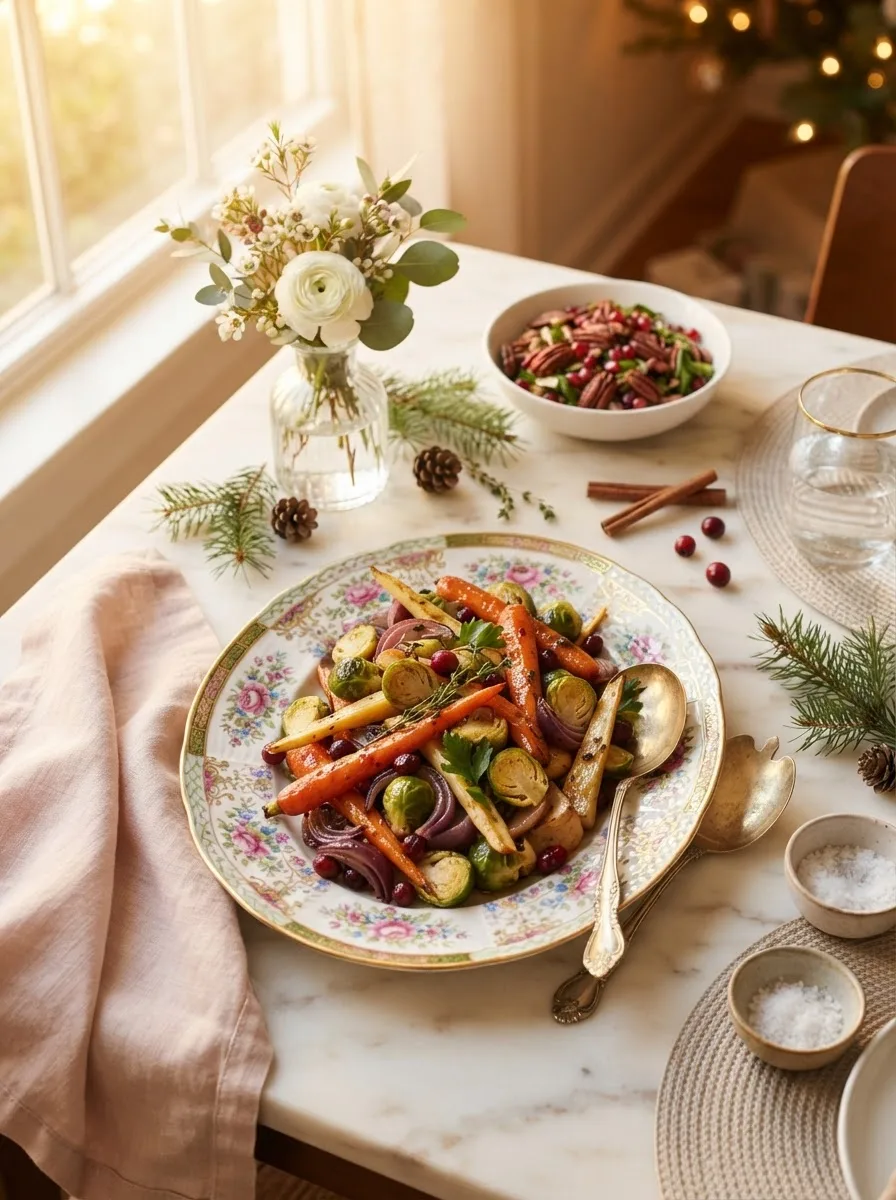
Transfer all the roasted vegetables to a large bowl and let them stand for 1–2 minutes so active steam can escape. Pour the warm honey-butter glaze over them and toss gently until every piece is coated. Stir in the fresh thyme leaves, then finish with flaky sea salt right before serving. That timing keeps the glaze clinging instead of pooling and gives this Christmas dinner recipe the polished finish expected from Christmas side dishes.
Pro Tips for Perfect Christmas Vegetable Sides
Tip 1: Dry the vegetables completely. After parboiling, pat the potatoes, carrots, and parsnips dry. Surface water becomes steam, which keeps this side pale instead of caramelized.
Tip 2: Glaze at the end. Honey burns before the vegetables finish roasting, so add the glaze off the heat. This keeps the sauce glossy rather than bitter.
Tip 3: Stagger the Brussels sprouts. Add them after the roots have roasted for 20 minutes. Their thinner leaves brown faster, while the carrots and potatoes need the extra time.
Variations and Substitutions
Dietary Variations:
- Vegan: Replace the butter with refined coconut oil or plant-based butter, and use maple syrup instead of honey. The glaze tastes less floral but still coats the vegetables well.
- Dairy-free: Use coconut oil or a dairy-free butter alternative. No cheese, cream, or parmesan is needed.
Flavor Variations:
- Jerk-spiced vegetables: Toss the roasted vegetables with 2 tablespoons of my Jamaican jerk seasoning. This gives the side a smoky flavor that works with a holiday meal, salad, or winter spread.
- Curry-spiced vegetables: Stir 2 tablespoons of my tikka paste into the melted butter instead of honey.
Ingredient Substitutions:
- Swap the baby potatoes for a sweet potato, cut to the same size.
- Swap parsnips for turnips; add 3–5 extra minutes to the first roast.
- Use leftover raw parsnip trimmings in my parsnip and leek soup. These changes leave room for other holiday dishes with pomegranate, onions, or green beans.
Troubleshooting
Why did my roasted vegetables turn out soggy instead of caramelized?
A crowded pan or damp vegetables traps steam against the surface. Steam prevents browning, so spread the pieces across two pans and pat the potatoes and roots dry before roasting.
My Brussels sprouts turned bitter and almost black — what happened?
The sprouts roasted too long. Add them after the roots have cooked for 20 minutes, then check the cut edges during the final 5 minutes.
The glaze didn’t stick — the vegetables looked wet, not glazed?
Freshly roasted vegetables release active steam, which can thin the sauce and make it pool. Let them rest for 1–2 minutes off the heat before tossing with the warm glaze.
Storage and Make-Ahead
Counter: Serve within 2 hours of roasting for the best texture.
Refrigerator: Store in an airtight container for up to 4 days.
Freeze: Do not freeze the glazed dish. Plain roasted vegetables can be frozen for up to 2 months; prepare fresh glaze when reheating.
Reheating: Spread leftovers on a sheet pan and heat at 400°F for 8–10 minutes.
Make-Ahead: Up to 2 days in advance, cut and parboil the carrots, parsnips, and potatoes. Dry, cover, and refrigerate them. On Christmas dinner day, roast and glaze them fresh. This plan makes reliable make-ahead vegetable sides without sacrificing the roasted texture.
Frequently Asked Questions
Q: Can I make this recipe with one sheet pan? A: Yes. Roast in two batches so the pieces have room to brown.
Q: Can I use frozen vegetables? A: Frozen Brussels sprouts work after thawing and thorough drying. Fresh roots give this side better texture.
Q: Which Christmas vegetable side dishes pair with it? A: Serve it with a crisp salad, green beans, or a main meal. Avoid adding vinegar until serving so the glaze stays balanced.
Q: Can I add cheese or bacon? A: You can, but this recipe does not need either. The honey-butter finish supplies enough richness.
Q: Can I double the recipe? A: Yes. Use four pans rather than crowding two.
Q: What should I serve with this Christmas side? A: It pairs well with roasted meats and warm flatbread like my Jamaican roti.
More Christmas Side Dishes You’ll Love
- Jamaican Jerk Seasoning — a smoky way to change the flavor of these roasted vegetables
- Tikka Paste — a warm curry base for a holiday side dish with carrots, potatoes, or sprouts
- Parsnip and Leek Soup — a practical way to use root trimmings before Christmas dinner
- Jamaican Roti — soft flatbread for a mixed holiday table; choose two sheet pans and start your make-ahead prep in advance
Foolproof Christmas Vegetable Sides Recipes
Ingredients
For the Vegetables:
- 11/2 lb carrots, peeled and cut into ¾-inch batons
- 11/2 lb parsnips, peeled and cut into ¾-inch batons
- 11/2 lb baby potatoes, halved
- 1 lb Brussels sprouts, halved
- 4 tbsp olive oil, divided
- 3 clove garlic, minced
- 2 tsp kosher salt, divided
For the Honey-Butter Glaze:
- 4 tbsp unsalted butter
- 3 tbsp honey
- 1 tbsp fresh thyme leaves
- Flaky sea salt, for finishing
Instructions
- Preheat the oven to 425°F. Bring a large pot of salted water to a boil.
- Cut the carrots and parsnips into ¾-inch batons. Halve the potatoes and Brussels sprouts, keeping the sprouts separate.
- Boil the carrots, parsnips, and potatoes for exactly 4 minutes. Drain and pat completely dry.
- Toss the parboiled vegetables with 3 tablespoons olive oil, the garlic, and 1½ teaspoons kosher salt. Spread evenly across two rimmed sheet pans, spacing every piece so it isn’t touching another.
- Roast for 20 minutes, swapping the pans between oven racks halfway through.
- Toss the Brussels sprouts with the remaining 1 tablespoon olive oil and remaining ½ teaspoon salt. Tuck into the gaps on both pans and roast another 15–18 minutes, until roots are deeply golden and sprouts are charred at the edges.
- While the vegetables finish, melt the butter in a small saucepan over medium-low heat. Stir in the honey and a pinch of salt, and simmer 2–3 minutes until slightly thickened.
- Transfer the roasted vegetables to a large bowl. Pour the warm glaze over them and toss gently to coat.
- Stir in the fresh thyme and finish with a sprinkle of flaky sea salt just before serving.
Notes
- Cut all root vegetables to the same thickness (about ¾ inch) — uneven cuts are the most common cause of unevenly cooked vegetables.
- Do not skip parboiling the carrots, parsnips, and potatoes — this is what keeps the centers tender while the outsides caramelize.
- Dry the vegetables thoroughly after parboiling; leftover surface moisture steams instead of roasts.
- Use two sheet pans, not one — crowding is the single biggest cause of soft, pale vegetables.
- Add the Brussels sprouts partway through roasting, not at the start, to prevent bitter, over-charred sprouts.
- Glaze the vegetables off the heat, after roasting — glazing too early burns the honey before the vegetables finish cooking.
- For a vegan version, substitute coconut oil for butter and maple syrup for honey in the glaze.
- Leftovers keep in the refrigerator for up to 4 days in an airtight container.
- Reheat on a sheet pan at 400°F for 8–10 minutes to recrisp the edges; microwaving will soften them.
- Freeze only the unglazed roasted vegetables, for up to 2 months — glazed vegetables separate and turn mushy after freezing.
- To make ahead, parboil and refrigerate the cut root vegetables (dried, covered) up to 2 days before roasting.
- This recipe doubles cleanly for a crowd — use four sheet pans rather than crowding fewer pans when doubling.