Foolproof Belizean Flour Tortilla Recipe

My first batch of this belizean flour tortilla recipe came out tough enough to bounce off the counter. I had followed the short ingredient list, but the tortillas cracked when I folded them, and the dough felt far too dry to rescue. That failure sent me back to the bowl with a scale, a timer, and considerably less confidence than I started with.
I made three identical batches, changing only the fat: cold butter, vegetable shortening, or neutral oil. The most important variable is the fat choice because solid fat coats some flour particles and limits gluten development, which keeps the finished tortilla tender. Butter brings more flavor; shortening gives a slightly more neutral texture. That is the honest trade-off.
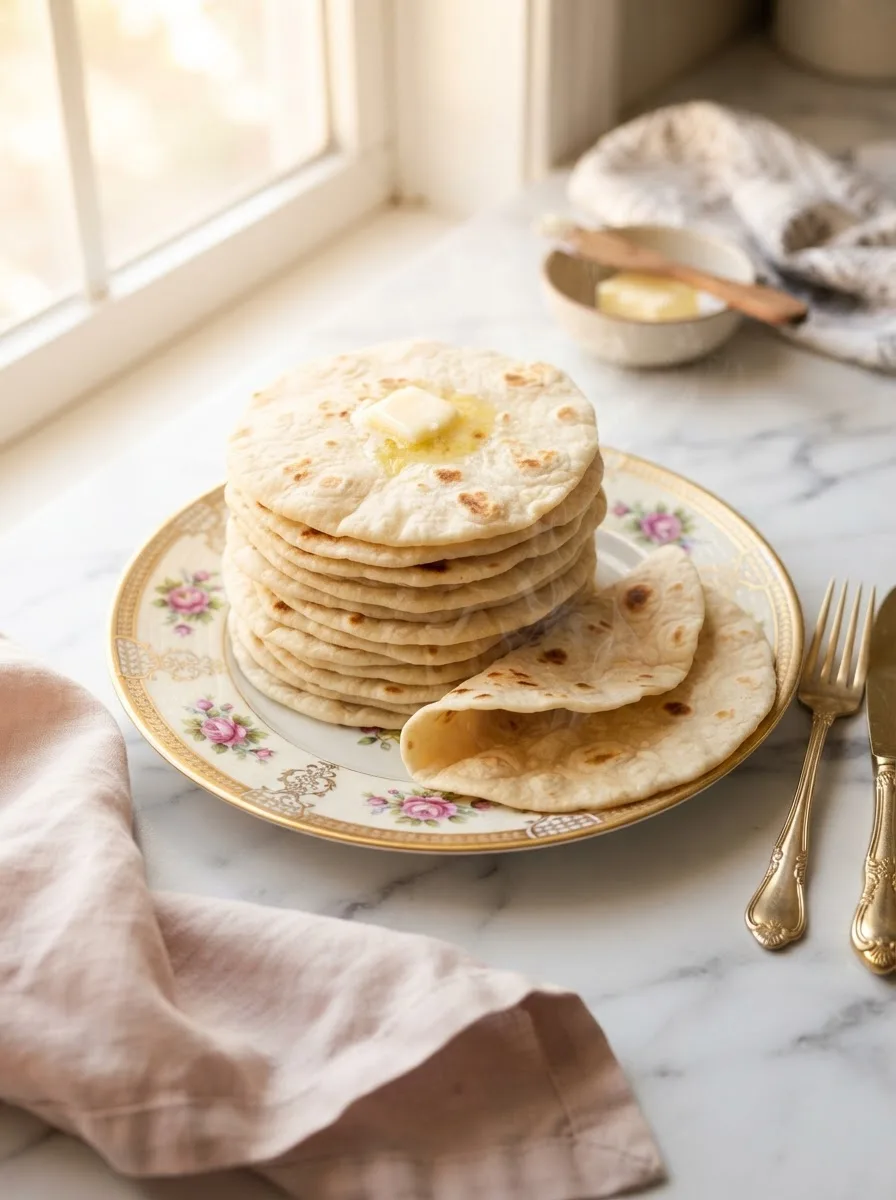
Here is the moment that makes people reach for extra flour: the mixed dough may feel slightly tacky before it rests. Leave it alone. After 15–20 minutes, the flour absorbs more water and the gluten relaxes, so the dough becomes smoother and easier to roll. These Belizean tortillas are thicker than many grocery-store flour tortillas, with enough structure for stew, beans, or a filling held in your hand. The recipe uses simple ingredients—flour, water, butter, baking powder, and salt—measured in cups and tablespoons, then shaped into small dough balls on a lightly floured surface.
★★★★★ “I made these for a Belizean-inspired dinner and they didn’t crack once — even after I folded them like street tacos and reheated the leftovers the next day.” — Alyssa R., recipe tester (pre-launch)
Why You’ll Love This Belizean Flour Tortilla Recipe
- Simple pantry ingredients: Flour, water, butter, baking powder, and salt make tender tortillas without lard.
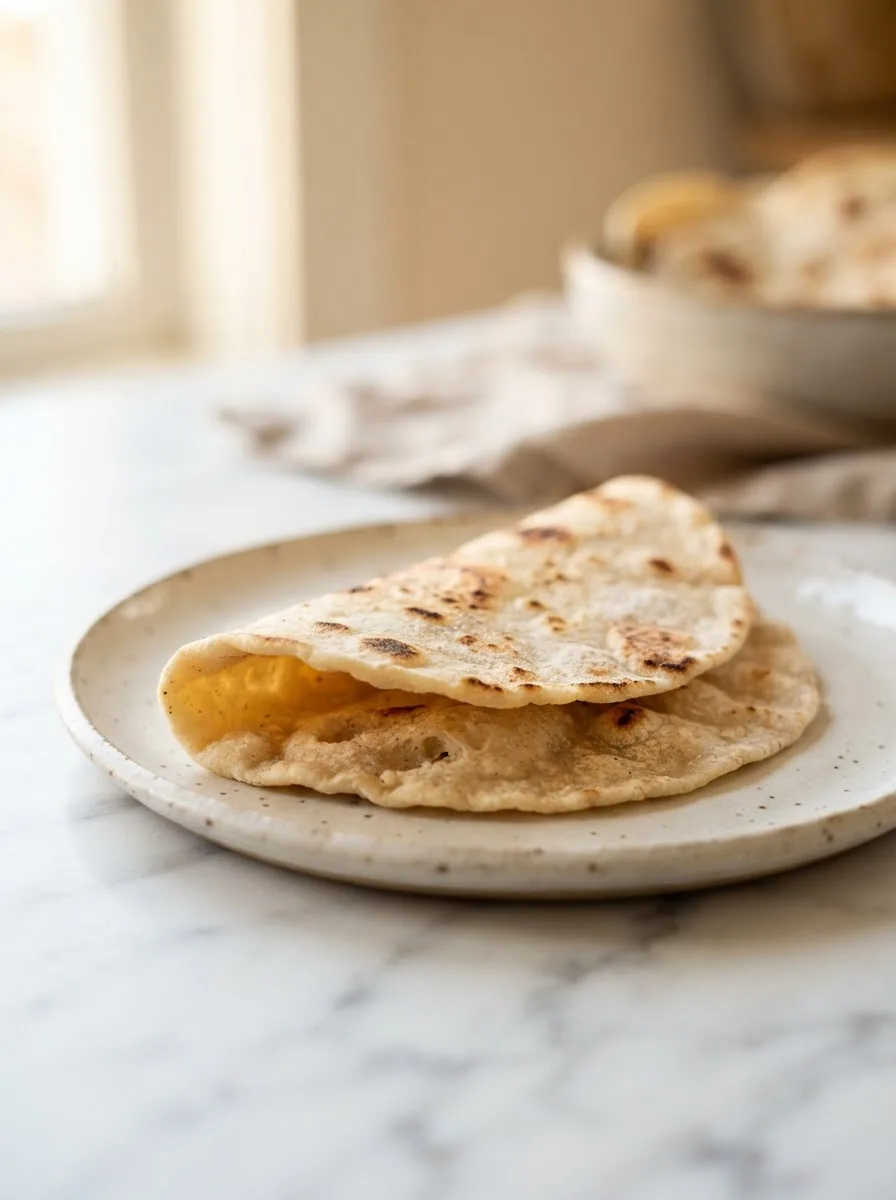
- Thick but flexible: Each tortilla has enough structure for stew, beans, or scrambled eggs without tearing.
- Easy shaping: A lightly floured surface and rolling pin are all you need; no tortilla press is required.
- Soft texture: Resting the dough lets the flour hydrate and the gluten relax before rolling.
Key Ingredients for This Belizean Tortilla Recipe
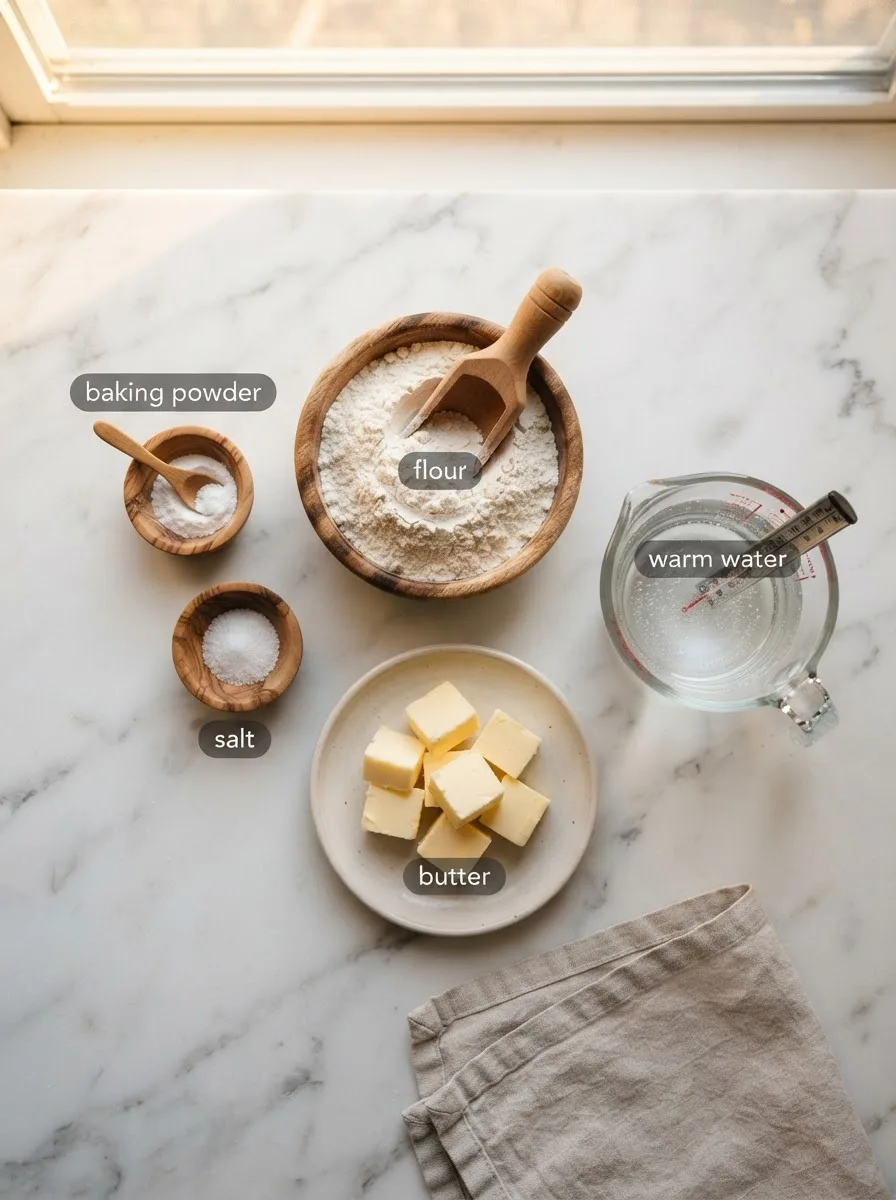
All-purpose flour (2 cups / 250g). Spoon and level it for a consistent dough; too much flour makes the tortilla stiff.
Baking powder (1 teaspoon). Fresh baking powder releases gas with heat, creating small pockets that help the tortillas puff slightly on the skillet, comal, or cast-iron surface.
Salt (½ teaspoon). It rounds out the flour’s flavor.
Cold butter or shortening (3 tablespoons / 42g), cubed. Cutting solid fat into the flour coats some particles and limits gluten development, which keeps the dough tender.
Warm water (¾ cup / 180ml), plus more as needed. Add it gradually so the dough reaches the right consistency without becoming wet. Baking powder, water, and fat work together as the tortilla cooks over medium heat.
Ingredient Note: Measure the flour by weight when possible, and let the dough rest for 15–20 minutes before dividing it into balls. This short rest gives the flour time to absorb the water.
Equipment You’ll Need
- Rolling pin — either style works for shaping the dough. A tortilla press is optional, but the pin gives better control over the thicker round.
- Cast-iron skillet or comal — use a dry pan for the best golden speckles. A regular skillet works too.
- Bench scraper or butter knife — for dividing the dough into equal balls.
- Clean kitchen towel — for holding the cooked tortillas and trapping steam.
Controlling Softness: Which Fat Makes the Most Pliable Tortillas?
I made three batches with the same flour, baking powder, salt, water, dough consistency, 15-minute rest, thickness, pan, heat, and cooking time. I changed only the fat: cold cubed butter, vegetable shortening, or neutral oil. I shaped each ball with a rolling pin rather than a tortilla press so the comparison stayed consistent.
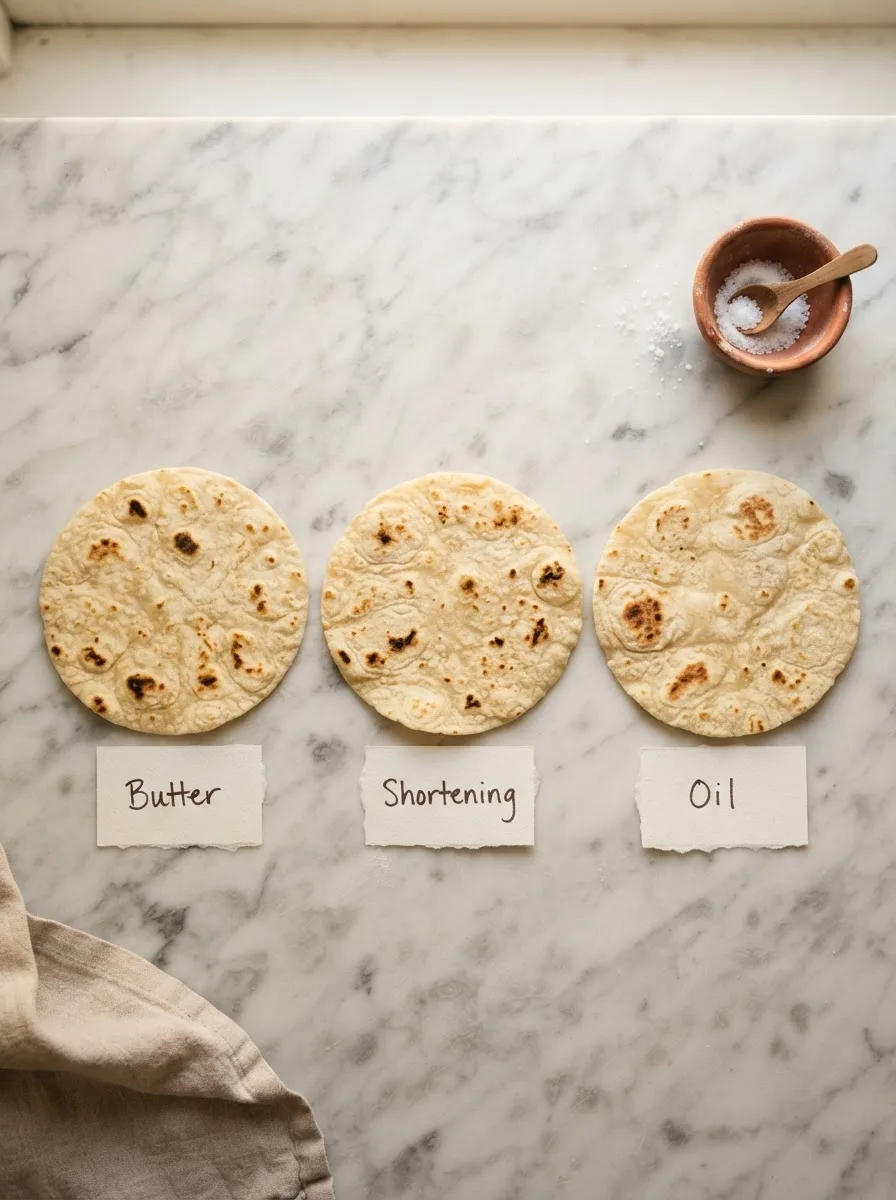
BButter: Tender and lightly rich, with good foldability after reheating.
Shortening: Slightly more neutral and a little softer straight from the skillet.
Oil: Usable, but harder to roll evenly and more likely to tear. Roll those tortillas slightly thicker.
The takeaway: Butter gives more flavor, while shortening gives a neutral, soft result. Both solid fats performed better for this flour tortilla than oil.
How to Make Belizean Flour Tortillas
Before you start: Keep the butter cold, warm the water—not hot—and preheat the skillet for 10 minutes. The dough may look slightly tacky after mixing; do not add flour yet. Resting will smooth it out.
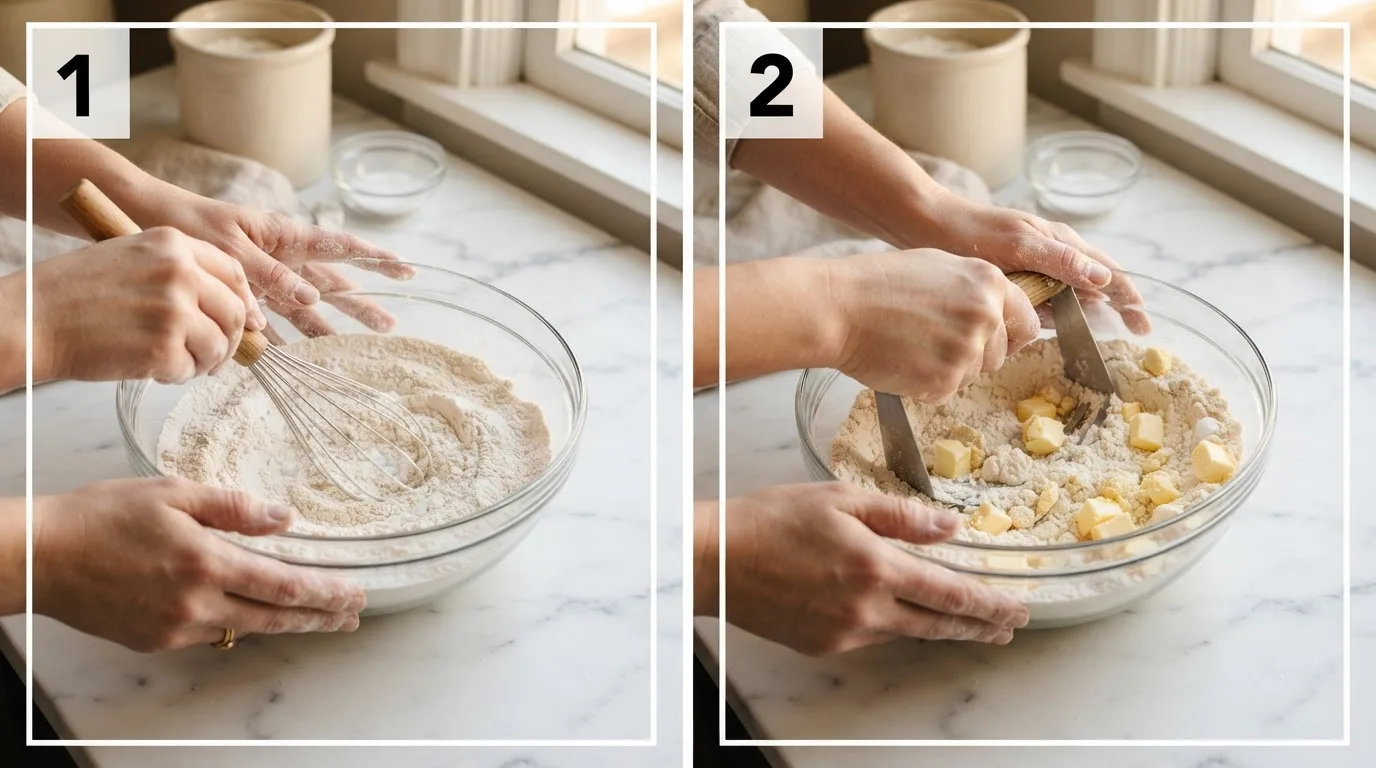
Step 1 — Whisk the dry ingredients
Whisk the flour, baking powder, and salt in a large bowl for 20 seconds. Even mixing spreads the baking powder through the flour, so the tortillas puff evenly.
Step 2 — Cut in the cold fat
Add the cubed butter and rub it into the flour with your fingers until coarse crumbs form, leaving pea-size pieces. Those pieces melt in the skillet and help keep the dough tender.
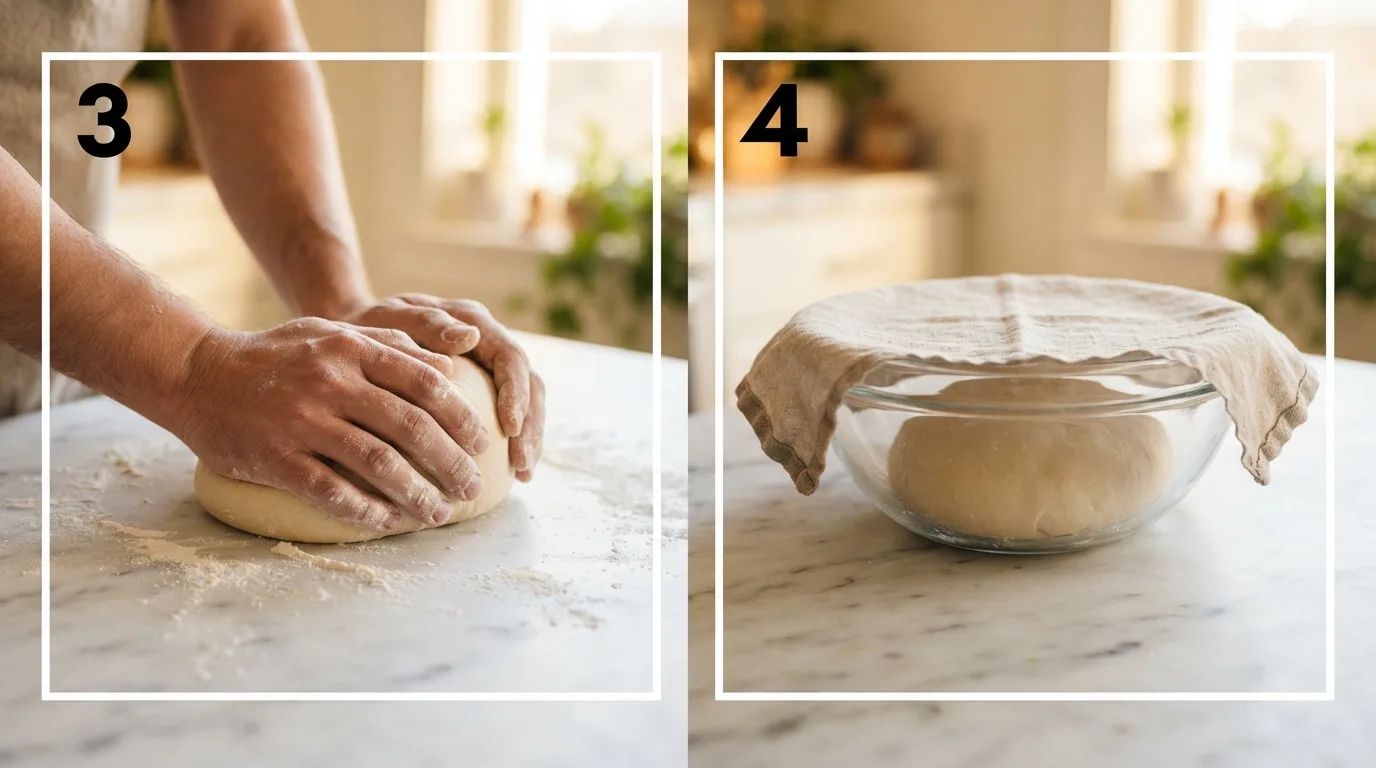
Step 3 — Add the warm water and bring the dough together
Stir in the water gradually, then knead by hand for 3–4 minutes. Stop when the dough is smooth and slightly tacky. If it stays dry, add water 1 tablespoon at a time.
Step 4 — Rest the dough
Cover and rest at room temperature for 15–20 minutes. This lets the flour absorb water and relaxes gluten, making the dough easier to roll without springing back.
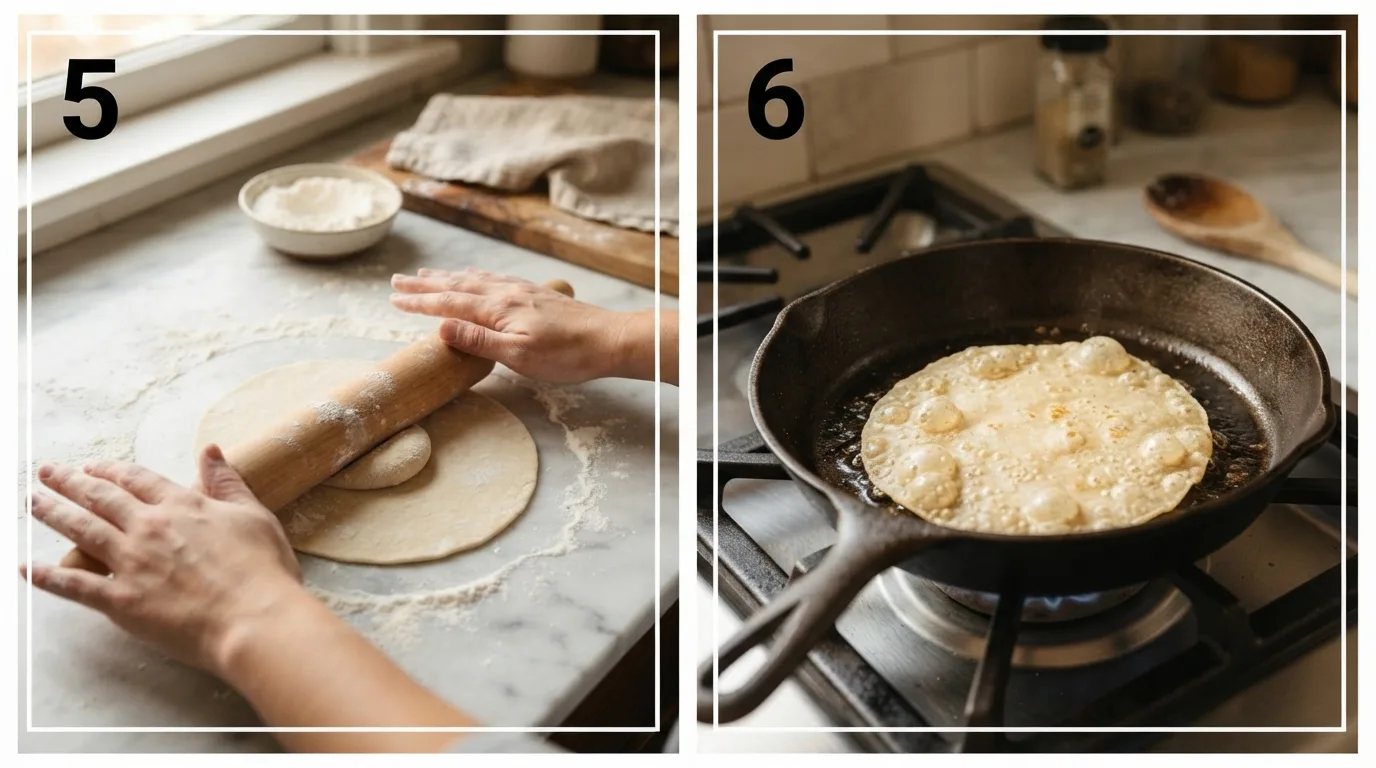
Step 5 — Divide and roll
Divide into 8–10 pieces and roll each into a ball. On a lightly floured surface, use a rolling pin to make each one about ⅛ inch thick, turning it often.
Step 6 — Cook on a hot, dry skillet
Heat a cast-iron skillet or comal over medium-high heat. Cook each tortilla for 30–45 seconds, until bubbles and golden spots appear. Flip and cook 20–30 seconds more. Stack them in a clean towel; trapped steam keeps the tortillas pliable.
Pro Tips for Perfect Belizean Flour Tortillas
Tip 1: Let the dough rest. Give it 15 minutes so the flour absorbs water and the gluten relaxes. That short pause improves consistency and makes rolling easier.
Tip 2: Heat the pan properly. Use medium heat to medium-high heat until a drop of water sizzles on the surface. The dough should make a light sizzle when it lands.
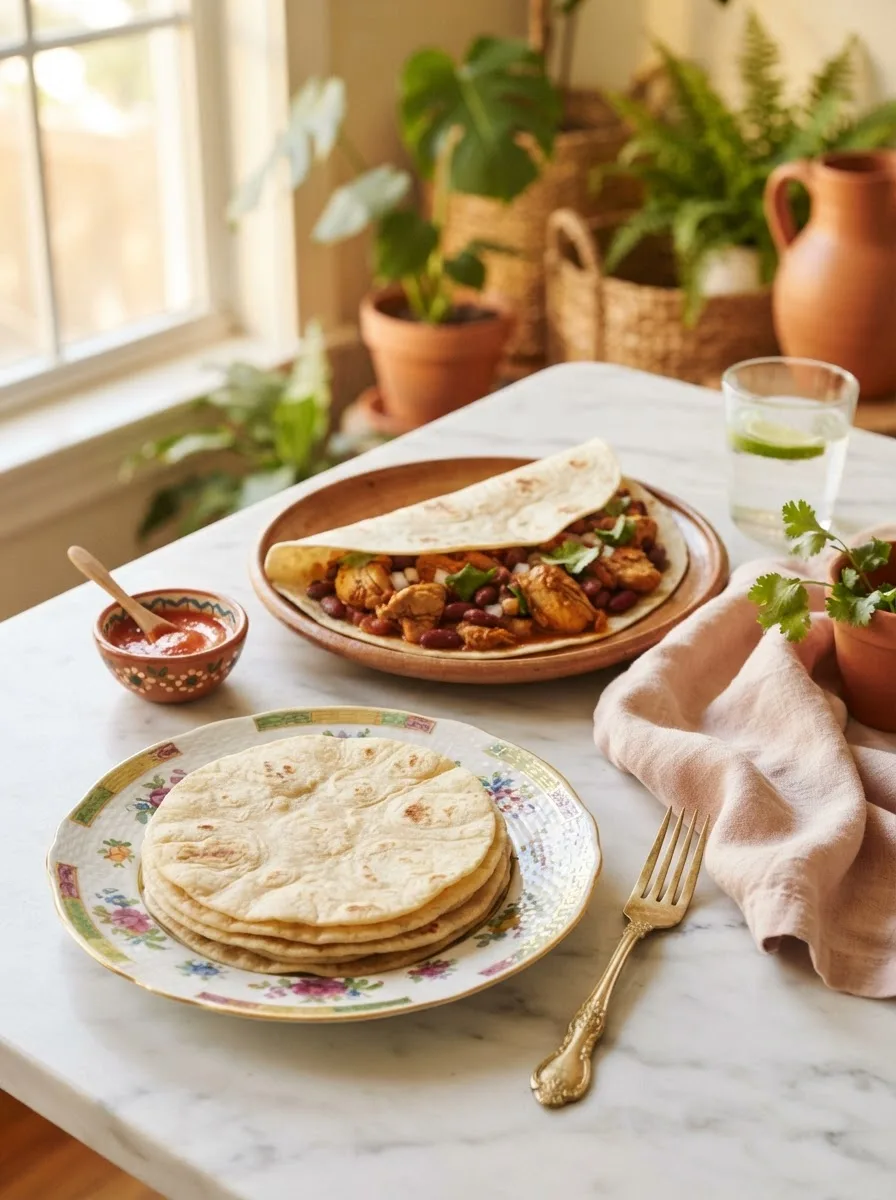
Tip 3: Use steam to keep them soft. Stack the tortillas in a clean towel for 10 minutes after cooking. Steam keeps them pliable for beans, coconut milk-based dishes, or a filling.
If you use a tortilla press instead of a rolling pin, press gently and finish shaping by hand so each tortilla stays thick enough to fold.
Variations and Substitutions
Dietary Variations:
- Gluten-free: Use a 1:1 flour blend that contains xanthan gum. The dough will be more fragile, so roll the tortilla slightly thicker and transfer it carefully.
- Dairy-free: Replace the butter with vegetable shortening or a solid dairy-free alternative. The flavor will change, so test the texture before serving.
Flavor Variations:
- Coconut version: Replace half the water with coconut milk for a lightly sweet tortilla that pairs well with stewed beans.
Ingredient Substitutions:
- No baking powder? Leave it out; the tortillas will be flatter and chewier.
- No butter or shortening? Use neutral oil, but roll the flour tortilla slightly thicker to reduce tearing.
If you enjoy flatbreads, my Jamaican roti is worth trying next — it uses a different fat and folding technique.
Troubleshooting Your Belize Tortilla Recipe
My tortillas turned out tough instead of soft?
Too much flour or overworked dough can tighten gluten and make the tortilla stiff. Slightly tacky dough is normal before resting; add flour only if it remains wet afterward. Knead briefly, then wait 15 minutes.
My tortillas won’t bubble or puff on the skillet?
Give the skillet or comal 2–3 more minutes over medium-high heat. A hot cast-iron surface creates steam and browning; listen for a light sizzle when the dough lands.
My dough keeps tearing when I roll it thin?
Rest it longer, then roll slightly thicker with a rolling pin. A tortilla press can help, but transfer gently and keep finished tortillas covered with a towel, not paper.
Storage and Make-Ahead
Counter: Keep cooled tortillas in an airtight bag for up to 1 day.
Refrigerator: Store them sealed for up to 5 days. Warm briefly before serving.
Freeze: Place parchment between the tortillas and freeze them in a zip-top bag for up to 3 months.
Reheating: Warm in a dry skillet over medium heat for 15–20 seconds per side, or microwave a stack wrapped in a damp paper towel for 20–30 seconds.
Make-Ahead: Refrigerate the tightly wrapped dough for up to 24 hours. Let it sit at room temperature for 15 minutes before rolling.
Frequently Asked Questions
Q: What makes a belizean flour tortilla recipe different? A: Belizean tortillas are usually thicker and sturdy enough for stews and beans.
Q: Can I make this belizean tortilla recipe without a comal? A: Yes. Use a cast-iron skillet or regular pan.
Q: Why did my tortillas not puff? A: The pan may need more heat, or the baking powder may be old.
Q: Can I freeze the dough? A: Cooked tortillas freeze more reliably.
Q: Which flour works best? A: Spoon-and-level all-purpose flour.
Q: Can I use coconut milk? A: Replace half the water for a lightly sweet flavor.
Q: How do I keep them soft? A: Stack them in a clean towel after cooking.
Q: Are Belizean flour tortillas like Jamaican roti? A: They are similar flatbreads, but the dough and cooking method differ.
More Caribbean Recipes You’ll Love
- Jamaican roti — a soft Caribbean flatbread to serve with stewed beans or a coconut-rich filling.
- Parsnip and leek soup — a creamy soup for dipping warm flour tortillas.
- Tikka paste — a savory filling starter for your next tortilla recipe.
- Jamaican jerk seasoning — a smoky blend for stewed chicken, beans, or another filling.
Try these tortillas while the dough is fresh; no tortilla press or rolling pin required.
Foolproof Belizean Flour Tortilla Recipe
Ingredients
For the dough:
- 2 cup all-purpose flour
- 1 teaspoon baking powder
- 1/2 teaspoon salt
- 3 tablespoon cold butter or shortening, cubed
- 3/4 cup (180ml) warm water, plus more as needed
Instructions
- In a large bowl, whisk together the flour, baking powder, and salt until evenly combined.
- Add the cold cubed butter and work it into the flour with your fingers until the mixture resembles coarse crumbs with pea-sized pieces of fat throughout.
- Pour in the warm water gradually, stirring with a fork until a shaggy dough forms, then knead by hand directly in the bowl for 3–4 minutes until smooth and slightly tacky.
- Cover the bowl and let the dough rest at room temperature for 15–20 minutes.
- Divide the dough into 10 equal pieces and roll each into a smooth ball.
- On a lightly floured surface, roll each ball into a round about ⅛ inch thick, rotating a quarter turn every few rolls to keep the shape even.
- Heat a cast-iron skillet or comal over medium-high heat with no oil. Cook each tortilla for 30–45 seconds per side, until light golden bubbles form and the tortilla puffs slightly.
- Stack finished tortillas in a clean kitchen towel to keep warm and soft while you cook the remaining dough.
Notes
- Keep the butter cold until the moment it's cut into the flour — softened butter blends in rather than staying in distinct pieces, which reduces tenderness.
- Don't skip the 15–20 minute rest; it relaxes the gluten and prevents tearing when rolling thin.
- For a coastal twist, substitute half the water with coconut milk.
- Dough can be made up to 24 hours ahead and refrigerated, tightly wrapped; bring to room temperature before dividing and rolling.
- Cooked tortillas freeze well for up to 3 months when stacked with parchment between each one.