Foolproof longhorn white balsamic vinaigrette recipe

I have ordered the wedge salad at Longhorn more times than I’d like to admit, and every single time, the dressing is the reason. It’s not just balsamic — it’s lighter than that, sweeter than a standard vinaigrette, and it clings to lettuce instead of pooling at the bottom of the bowl. I wanted that exact dressing at home, so I bought a bottle of white balsamic vinegar and started testing.
My first attempt was too sharp. My second was too sweet, in the way bottled dressings get sweet — flat, not bright. It took four batches, changing one ratio at a time, before I landed on the version below. The sugar-to-vinegar ratio turned out to be the whole game, and once I got that right, everything else fell into place.
This is that version — a longhorn white balsamic vinaigrette recipe that emulsifies into something creamy enough to coat a wedge of iceberg without sliding off, with the same tangy-sweet balance I kept going back to the restaurant for.
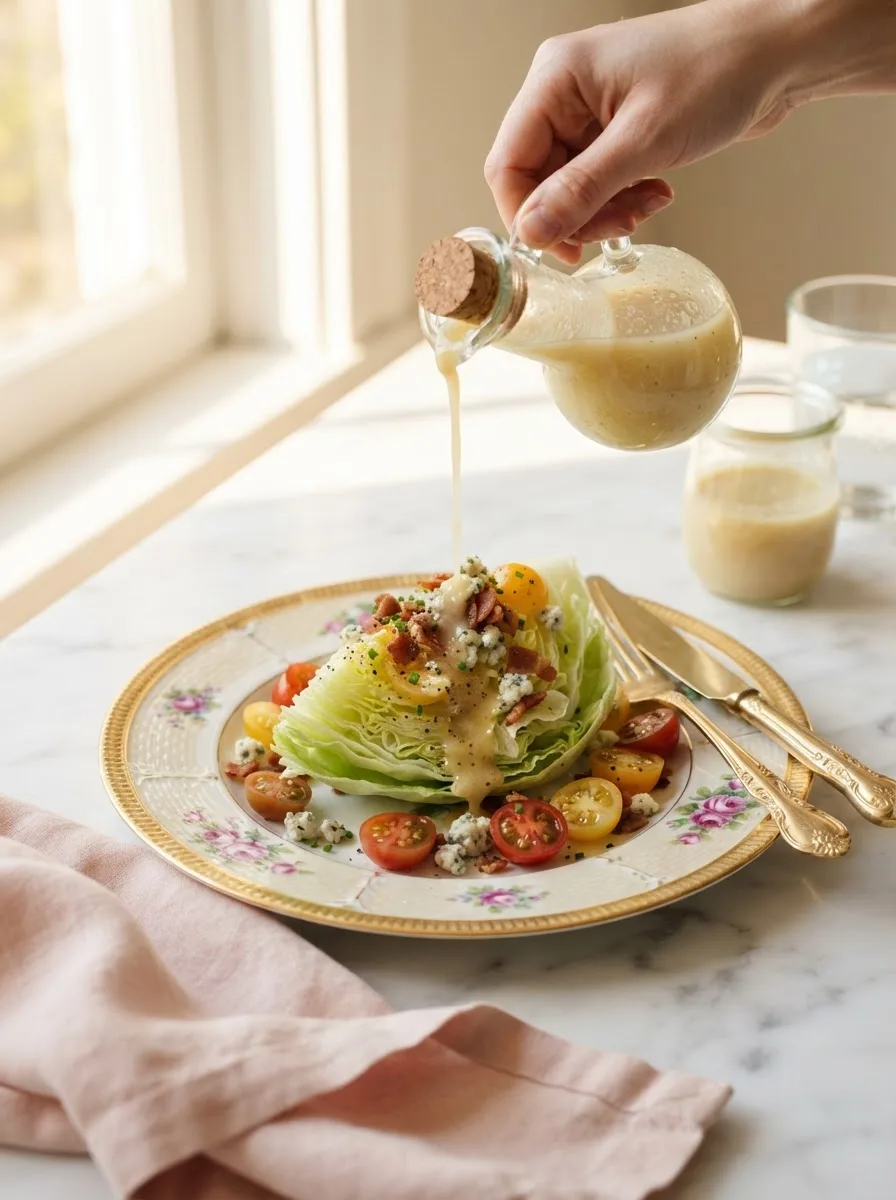
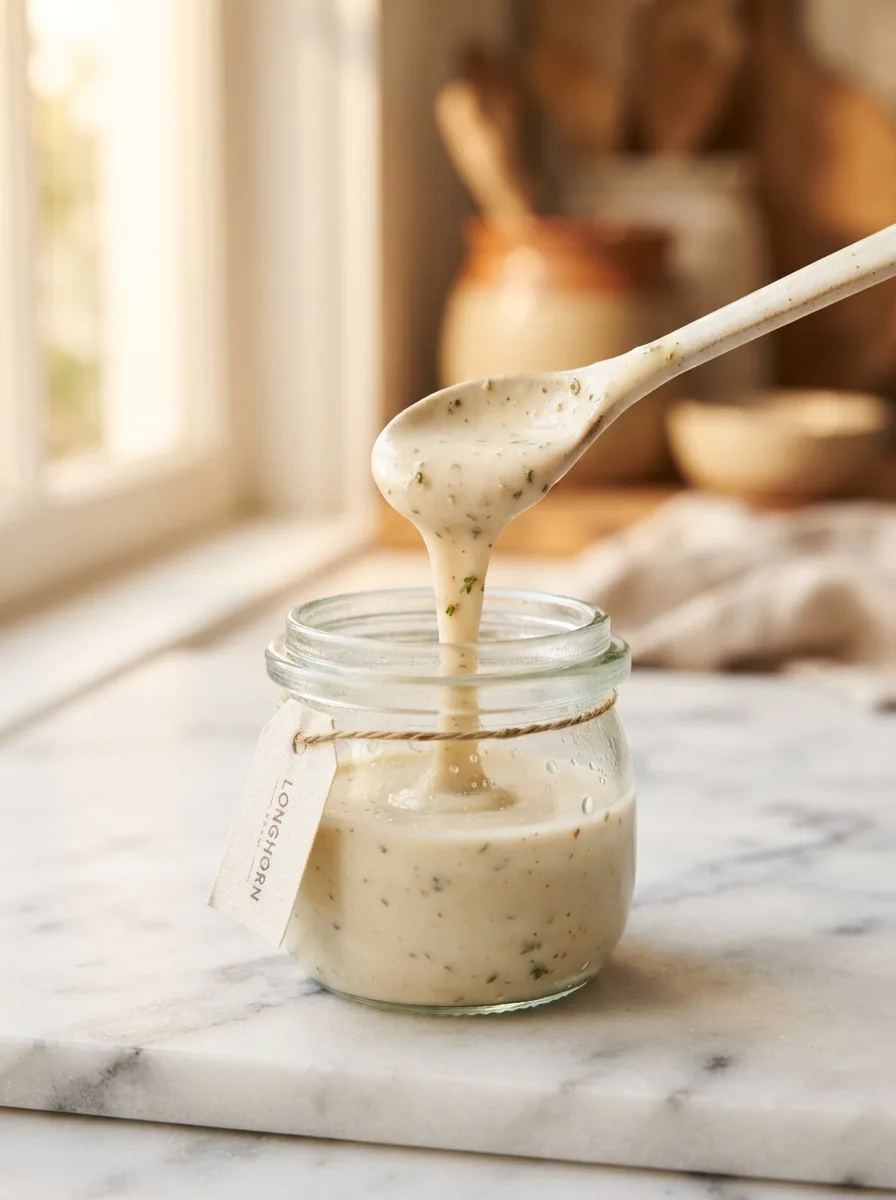
The texture is what surprised me most once I got the ratio right. Real emulsified vinaigrette — the kind restaurants make in a blender, not shaken in a jar — looks almost creamy, pale gold instead of clear amber. That’s the visual tell that you’ve done it correctly.
What makes this version worth keeping on hand is that it doesn’t separate the moment it hits the fridge. A basic shaken vinaigrette breaks within an hour. This one holds its emulsion for days, which means you can make a batch on Sunday and have dressed salads ready all week.
★★★★★ “I made this for a dinner party and three people asked where I bought it. Told them the truth — made it in my kitchen in ten minutes.” — Renee, recipe tester (pre-launch)
Why You’ll Love This Longhorn White Balsamic Vinaigrette
- Tastes like the restaurant version: The sugar and mustard ratio is what gives Longhorn’s dressing its signature tangy-sweet balance — not just plain balsamic with oil.
- Emulsifies properly, so it doesn’t separate: Blending instead of shaking creates a stable emulsion that holds for over a week in the fridge.
- Ready in 10 minutes: No cooking, no special equipment required beyond a blender or a steady whisking arm.
- Works on more than salad: Use it as a marinade for chicken, a drizzle over roasted vegetables, or a dip for crusty bread.
Key Ingredients
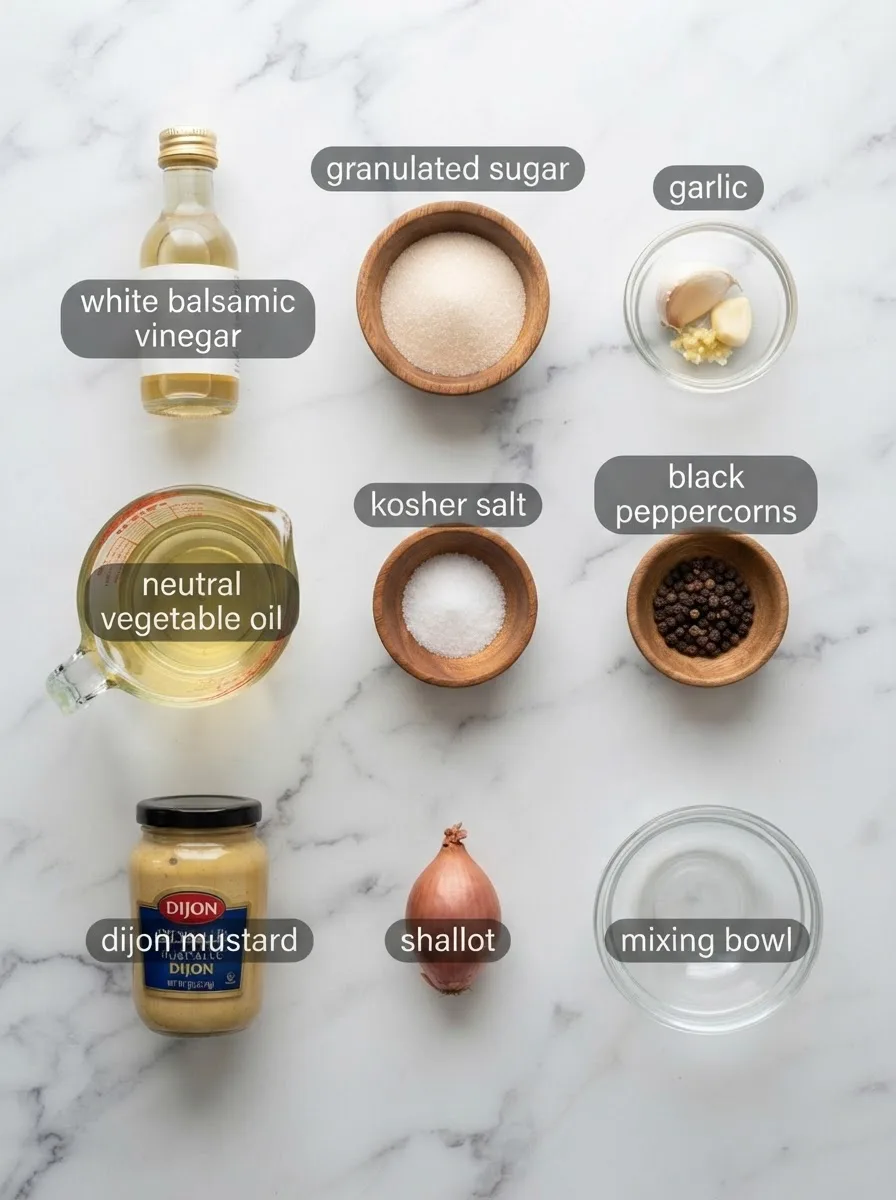
White balsamic vinegar (⅓ cup). This is the ingredient the whole recipe hinges on. White balsamic is aged in stainless steel instead of wood barrels, so it stays pale and tastes lighter and sweeter than regular dark balsamic. Regular balsamic will work in a pinch, but the dressing will turn brown and taste noticeably more assertive — not the flavor you’re after here.
Granulated sugar (¼ cup). This is the single most important variable in the whole recipe. Too little and the dressing tastes like plain vinegar; too much and it tips into bottled-dressing territory. I tested this at 3 tablespoons, ¼ cup, and ⅓ cup — ¼ cup was the amount that matched the restaurant’s balance without tasting like syrup.
Dijon mustard (1 tablespoon). Mustard does double duty here: it adds a little sharpness, and the compounds in it act as an emulsifier, helping the oil and vinegar bind into that creamy texture instead of separating. Yellow mustard works as a substitute, though the flavor turns milder.
Garlic (1 small clove, minced). Fresh garlic gives a rounder, more mellow flavor than powder. If you only have garlic powder on hand, ½ teaspoon is the equivalent — the flavor will be flatter, but it’s a fine substitute in a pinch.
Neutral oil (¾ cup). Vegetable oil or a light olive oil keeps the flavor clean so the vinegar and sugar stay front and center. A robust extra-virgin olive oil will fight with the sweetness and taste bitter once emulsified — save that one for other dressings.
Ingredient Note: Don’t substitute regular balsamic vinegar unless you’re comfortable with a darker, more intense dressing. White balsamic is what keeps this pale gold and matches the actual Longhorn flavor.
Equipment You’ll Need
- Blender or food processor — This is how you get the creamy, stable emulsion. A stick blender works too if that’s what you own.
- Whisk and mixing bowl — If you don’t have a blender, whisking while slowly streaming in the oil gets you 90% of the way there; the emulsion just won’t hold quite as long.
- Liquid measuring cup — Oil measured by volume, not eyeballed, is what keeps the ratio consistent every time.
- Airtight jar or bottle with a lid — For storing the finished dressing in the fridge.
Controlling the Emulsion (A Controlled Test)
I made this dressing three ways to see which method actually mattered: hand-whisked while slowly streaming in the oil, shaken hard in a mason jar, and blended on low speed for 30 seconds. The goal was the same pale, creamy texture every time — but only one method delivered it consistently.
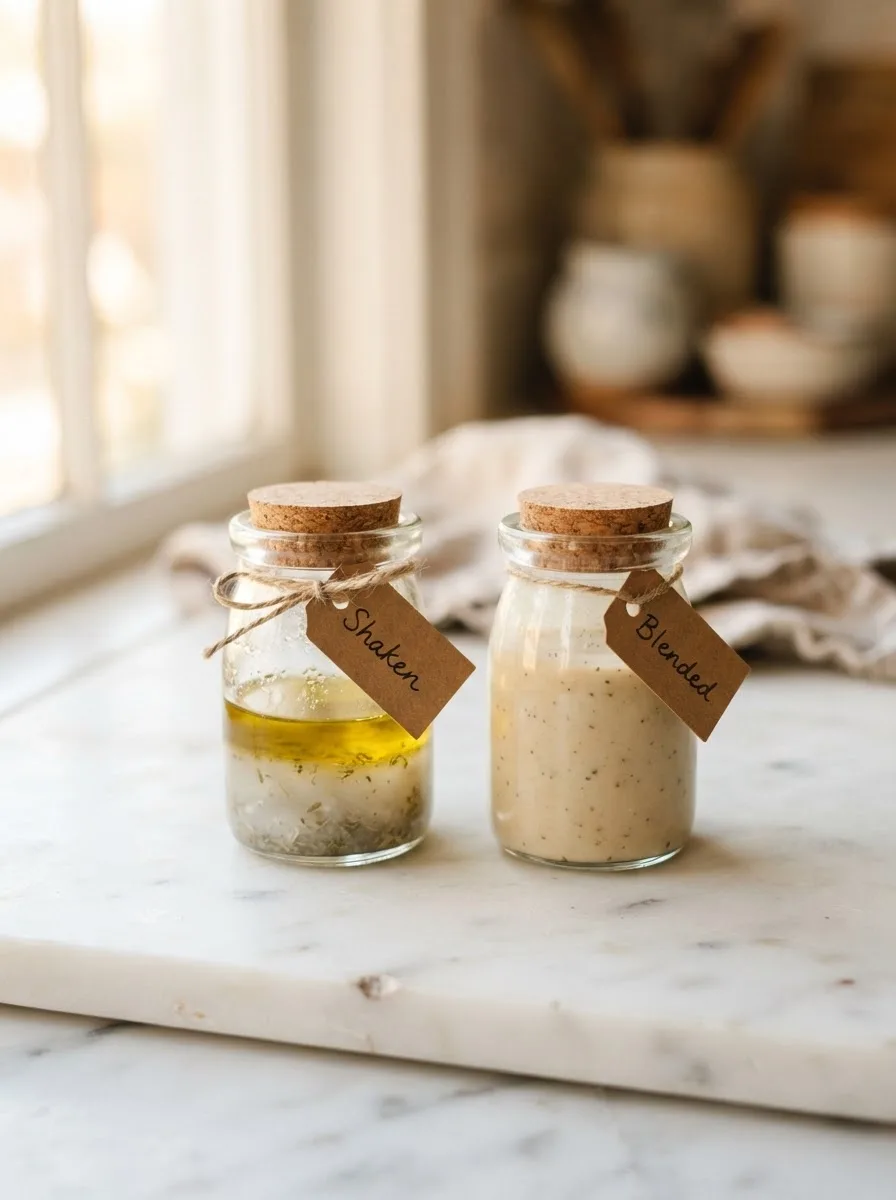
Shaken: Separated within 20 minutes, back to an oil slick on top by the next day. This is what happens with most homemade vinaigrettes, and it’s the version that never quite tastes like the restaurant’s.
Hand-whisked while streaming oil: Held together for about 4 hours before showing the first signs of separation. Good enough if you’re using the dressing the same day.
Blended for 30 seconds: Stayed fully emulsified for over a week in the fridge, with just a light shake needed to bring it back to smooth. This is the method in the recipe below, and it’s the one that actually matches the texture I remembered from the restaurant.
The takeaway: if you want a dressing that pours creamy instead of separating in the bottle, the blender step isn’t optional — it’s the whole point.
How to Make Longhorn White Balsamic Vinaigrette
Before you start: Have your oil measured out and ready to go — once you start blending, everything moves fast.
Step 1 — Combine the base ingredients
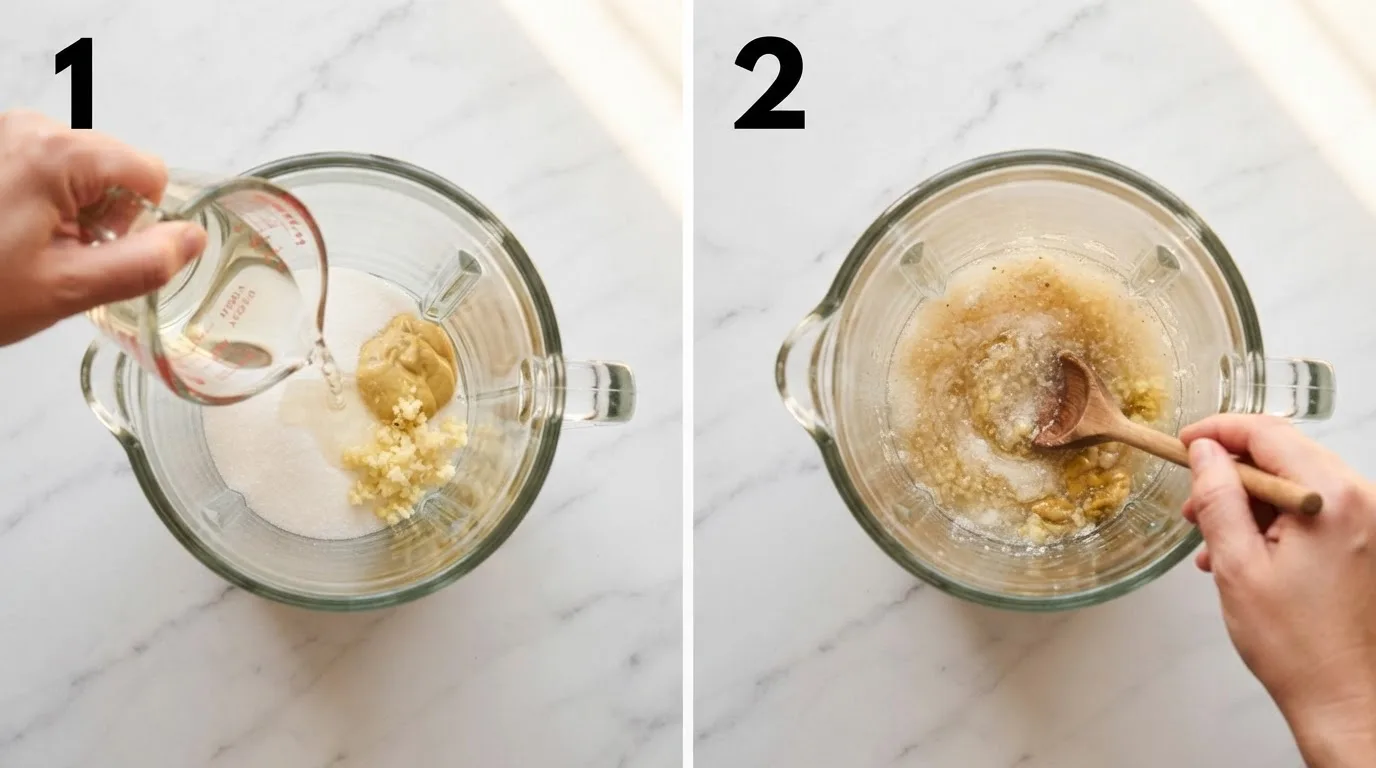
Add the white balsamic vinegar, sugar, Dijon mustard, minced garlic, salt, and pepper to your blender.
Step 2 — Let the sugar start to dissolve
Pulse briefly or give it a quick stir by hand. You’ll see the sugar start to break down into the vinegar — it doesn’t need to fully dissolve yet, just get a head start before the oil goes in.
Step 3 — Start blending on low speed
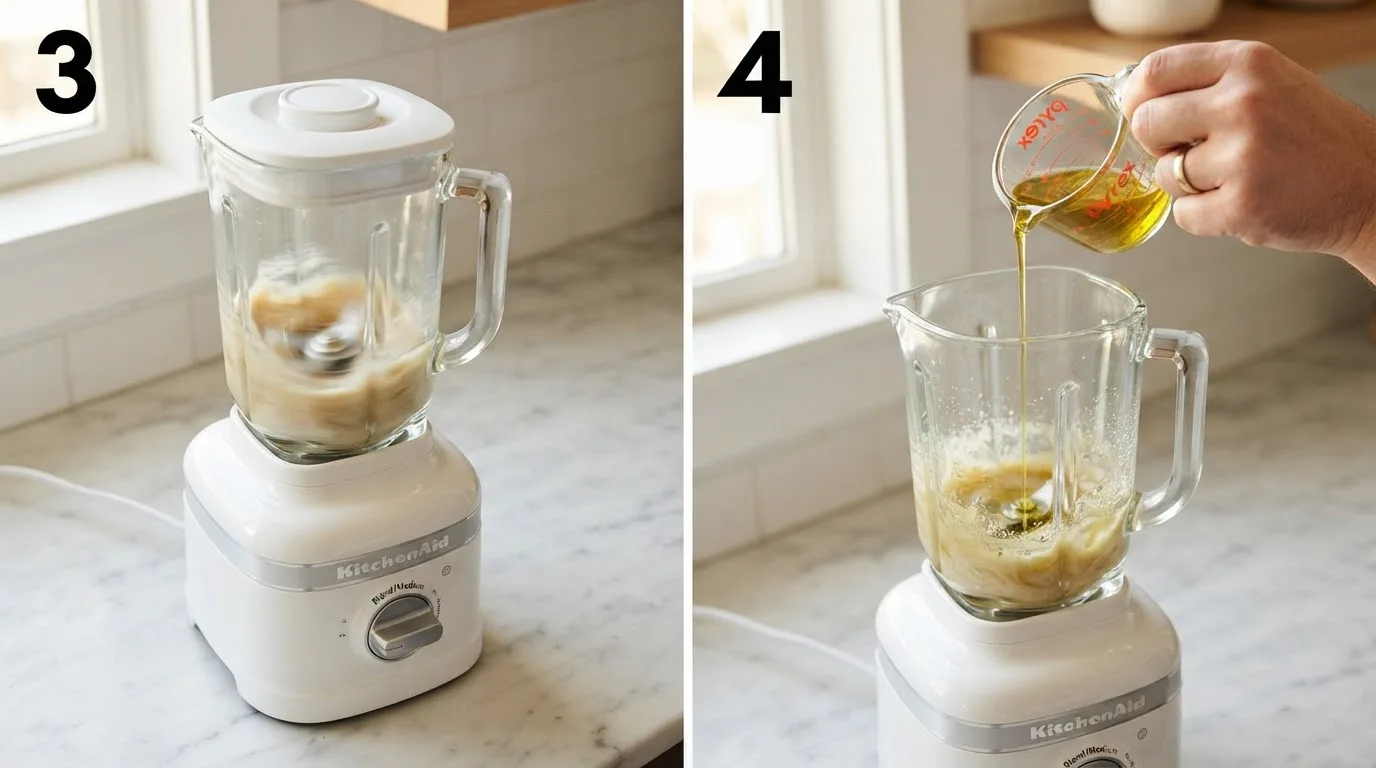
Turn the blender on low and let it run for about 10 seconds to fully combine the base ingredients.
Step 4 — Stream in the oil slowly
With the blender still running on low, pour the oil in a thin, steady stream through the lid opening. This is the step that builds the emulsion — adding the oil too fast is the single most common reason a vinaigrette separates.
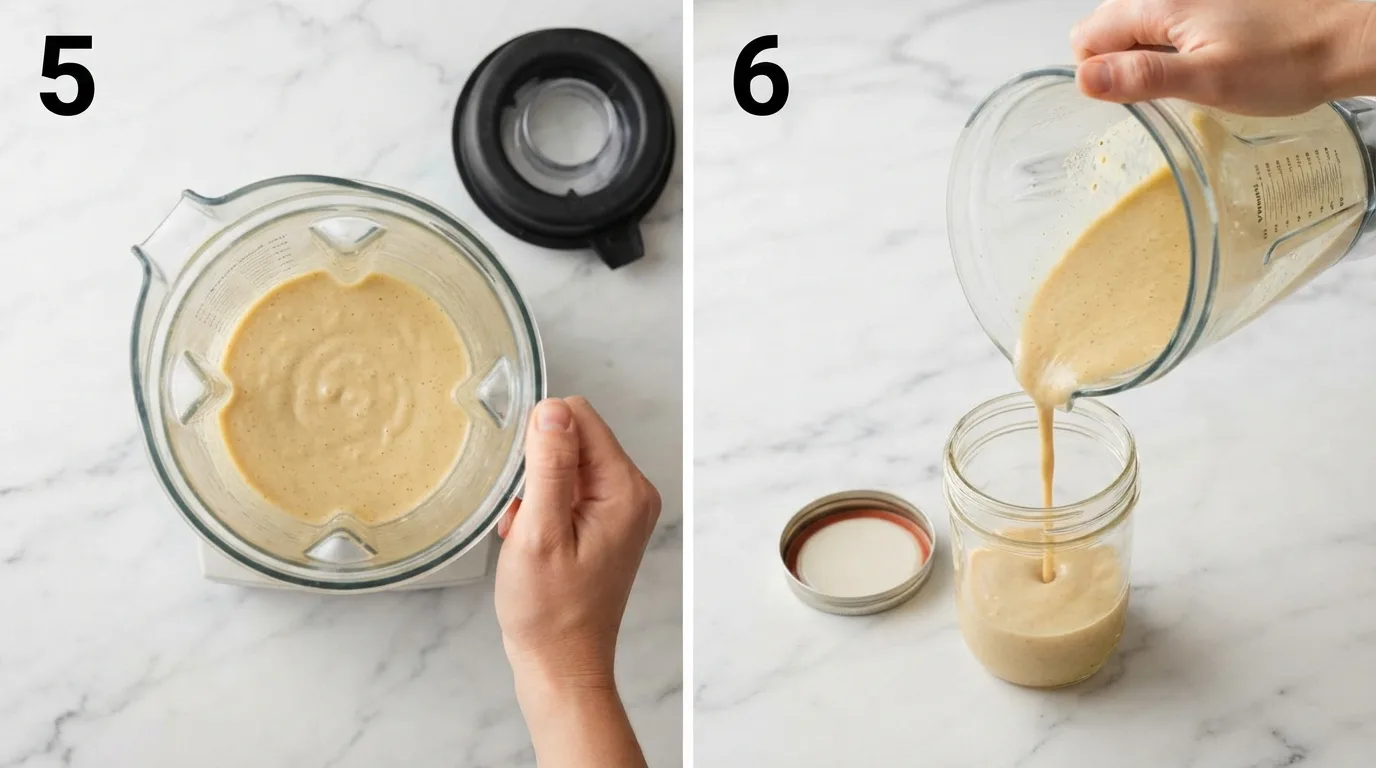
Step 5 — Blend until pale and creamy
Continue blending for another 20 seconds after the oil is fully in. The dressing will visibly change color — it goes from a clear amber to a pale, opaque gold. That color change is your doneness cue; it means the emulsion has actually formed instead of just combined.
Step 6 — Taste, adjust, and chill
Taste the dressing before you call it finished. If it’s too sharp, a teaspoon more sugar smooths it out. If it’s too sweet, a splash more vinegar balances it back. Transfer to a jar and chill for at least 30 minutes — this dressing tastes noticeably better cold than at room temperature.
Pro Tips for Perfect Longhorn White Balsamic Vinaigrette
Tip 1: Pour the oil slowly, every time. The biggest reason home vinaigrettes separate is rushing this step. A thin, steady stream over 20–30 seconds gives the oil molecules time to bind with the mustard and vinegar instead of just floating on top.
Tip 2: Chill before serving, not right after blending. The flavors round out and the tanginess mellows slightly after a rest in the fridge. Serving it warm from the blender tastes sharper than it should.
Tip 3: Shake, don’t stir, if it separates in storage. Even a well-emulsified dressing can loosen slightly after a few days. A firm shake in a sealed jar brings it right back — no need to re-blend.
Tip 4: Taste before you salt the salad. This dressing already carries salt and sweetness, so hold off on seasoning your greens separately until after it’s tossed on.
Variations and Substitutions
Dietary Variations:
- Sugar-free: Swap the granulated sugar for an equal amount of a granulated sugar substitute like allulose. The texture emulsifies the same way; the flavor is slightly less rounded but very close.
- Vegan-friendly: This recipe is already dairy-free and egg-free as written — just double-check your Dijon mustard’s label, since a few brands add honey.
Flavor Variations:
- Shallot version: Add 1 tablespoon minced shallot to the blender with the base ingredients for a sharper, slightly oniony depth — closer to a classic French vinaigrette.
Ingredient Substitutions:
- White wine vinegar can replace the white balsamic in a pinch, though the dressing loses some of its sweetness and needs an extra teaspoon of sugar to compensate.
- Honey can replace the granulated sugar 1:1 by volume for a rounder, less sharp sweetness.
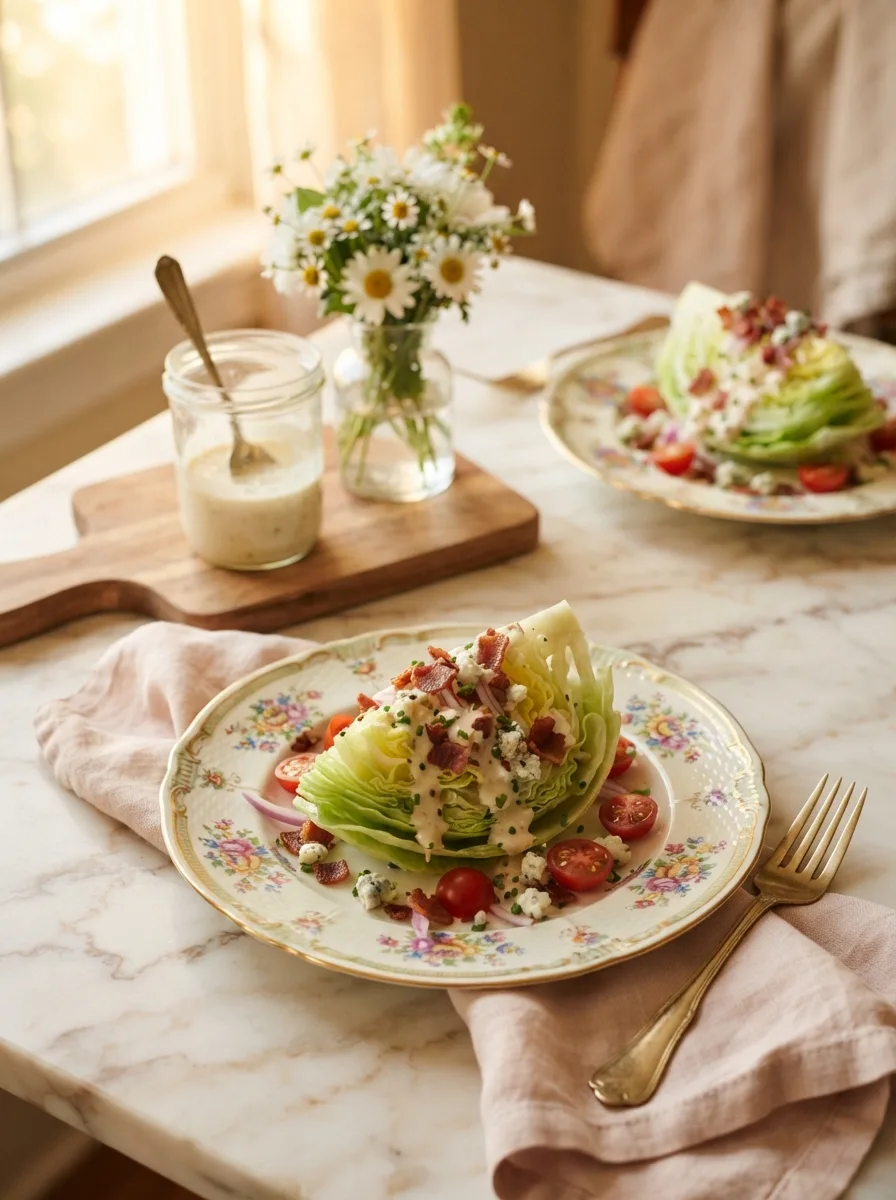
This vinaigrette is bright enough to cut through something rich, which is exactly why I keep a jar of it on hand whenever I make my cheesy ranch potatoes and sausage — a simple dressed salad on the side balances the whole plate.
Troubleshooting
Why did my vinaigrette separate right away?
Most likely the oil was added too quickly, or you shook it in a jar instead of blending it. Shaking combines ingredients but doesn’t actually emulsify them — you need the mechanical action of a blender (or a slow whisked stream) to bind the oil and vinegar together.
My dressing tastes too sharp — what happened?
This usually means the sugar wasn’t fully incorporated, or your white balsamic vinegar is a more acidic brand than average. Add sugar a teaspoon at a time, blending briefly between additions, until the sharpness mellows.
The color turned out darker than expected — did I do something wrong?
Check your vinegar. Regular balsamic vinegar will turn this dressing amber-brown instead of pale gold. If the flavor tastes right but the color is off, you likely grabbed dark balsamic instead of white.
Storage and Make-Ahead
Counter: Not recommended — this dressing contains fresh garlic and should be kept cold once made.
Refrigerator: Store in an airtight jar for up to 10 days. The emulsion may loosen slightly after a few days; a firm shake brings it back to smooth.
Freeze: Not recommended. Freezing breaks the emulsion permanently, and it won’t re-blend back to a creamy texture after thawing.
Reheating: Not applicable — this dressing is served cold or at room temperature.
Make-Ahead: This dressing is actually better made a day ahead. The flavors mellow and and can I use regular balsamic instead?** A: White balsamic is aged in stainless steel rather than wood barrels, which keeps it pale and gives it a lighter, sweeter flavor than dark balsamic. Regular balsamic works in a pinch, but the dressing will turn brown and taste noticeably more intense.
Q: Why does my homemade vinaigrette separate but the restaurant’s doesn’t? A: Restaurant vinaigrettes are blended, not shaken, which creates a true emulsion. Shaking combines the ingredients temporarily but they separate again within minutes.
Q: Can I make this without a blender? A: Yes — whisk the base ingredients together, then slowly stream in the oil while whisking constantly. It won’t hold its emulsion quite as long as the blended version, but it will still taste right.
Q: How long does this vinaigrette last in the fridge? A: Up to 10 days in an airtight jar. Give it a shake before each use if it’s loosened slightly.
Q: Is this recipe gluten-free? A: Yes, as written, all the ingredients are naturally gluten-free. Just double-check your Dijon mustard’s label if you have a strict sensitivity.
Q: Can I use this as a marinade, not just a salad dressing? A: Yes — it works well as a quick marinade for chicken or shrimp. Marinate for 30 minutes to 2 hours; any longer and the sugar content can make the surface of the meat brown too quickly on the grill.
Q: Why is my dressing too thin compared to the restaurant version? A: You likely need a few more seconds of blending time. The emulsion thickens as more air incorporates and the oil fully binds — give it a full 20–30 seconds after the oil goes in.
More Salad and Side Recipes You’ll Love
- Cheesy Ranch Potatoes and Sausage — a rich, comforting side that pairs perfectly with a bright vinaigrette-dressed salad
- Dolly’s Chicken and Stuffing Casserole — a cozy dinner that’s balanced out nicely by a tangy side salad
- Cheesecake Bread — for when the meal calls for something sweet to finish
- Banana Tempura — a crispy, unexpected dessert worth trying alongside any main course

Foolproof Longhorn White Balsamic Vinaigrette
Ingredients
For the vinaigrette:
- 1/3 cup white balsamic vinegar
- 1/4 cup granulated sugar
- 1 tablespoon Dijon mustard
- 1 small clove garlic, minced (about ½ teaspoon)
- 1/2 teaspoon kosher salt
- 1/4 teaspoon black pepper
- 3/4 cup neutral oil (vegetable or light olive oil)
Instructions
- Add the white balsamic vinegar, sugar, Dijon mustard, minced garlic, salt, and pepper to a blender.
- Pulse briefly or stir by hand to begin dissolving the sugar into the vinegar.
- Blend on low speed for about 10 seconds to fully combine the base ingredients.
- With the blender still running on low, pour the oil in a thin, steady stream through the lid opening.
- Continue blending for 20 seconds after the oil is fully incorporated, until the dressing turns pale gold and creamy.
- Taste and adjust with a little extra sugar or vinegar as needed, then transfer to a jar and chill for at least 30 minutes before serving.
Notes
- Use white balsamic vinegar, not regular dark balsamic — the color and flavor depend on it.
- Store in an airtight jar in the fridge for up to 10 days; shake before each use if the emulsion loosens.
- For a thicker, more stable emulsion, blend for the full 30 seconds rather than switching to a quick whisk.
- This dressing tastes best after resting overnight, so it's a good one to make a day ahead of serving.and deepen slightly overnight, so making a batch the day before you need it is actually the better plan, not just a convenience.