Foolproof Chicken Carciofi

My first chicken carciofi recipe ended with oily sauce and chicken that had gone from tender to stubborn in the time it took me to find a clean serving spoon. I had reduced the wine and broth too far, then let the cream sit over heat while I tried to rescue dinner. Not my finest pan moment.
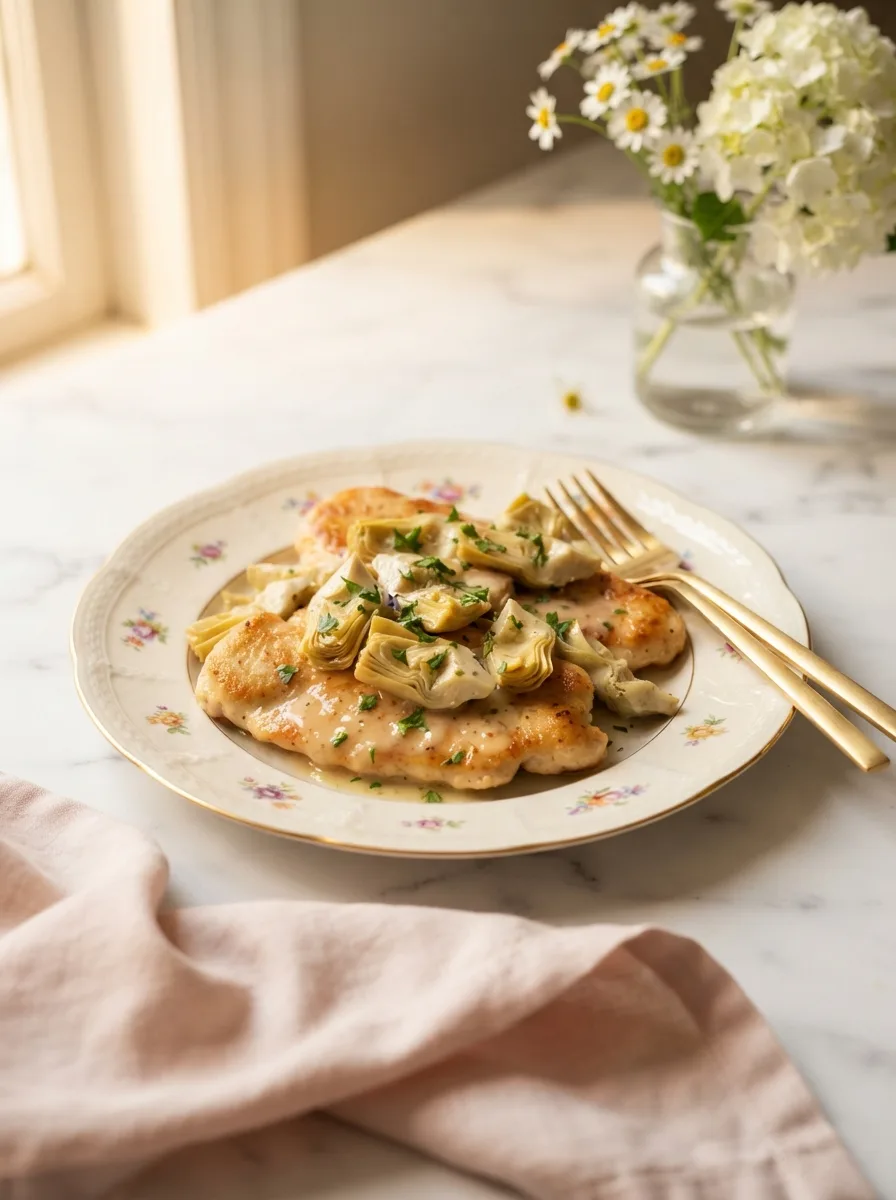
I ran three controlled tests, changing only the reduction time, and ten minutes gave me the glossy sauce I wanted. That is the most important variable here: evaporation concentrates the wine and broth, while stopping at the right point leaves enough liquid for the cream and parmesan to blend smoothly. If the sauce looks a little delicate when the chicken returns, don’t panic; keep the pan off direct heat while the cheese goes in, then finish with lemon.
This creamy artichoke chicken has thin cutlets, tender artichokes, and a bright sauce that clings instead of sliding away. It is an Italian chicken and artichoke skillet dinner that comes together in one pan in under 40 minutes, with the same method I use for a weeknight chicken with artichokes or a relaxed dinner with friends.
★★★★★ “I’ve ordered chicken carciofi at restaurants for years and never thought to try making it. The sauce instructions were so specific about timing that I actually got it right on the first try — no broken sauce, no watery mess.” — Renata M., recipe tester (pre-launch)
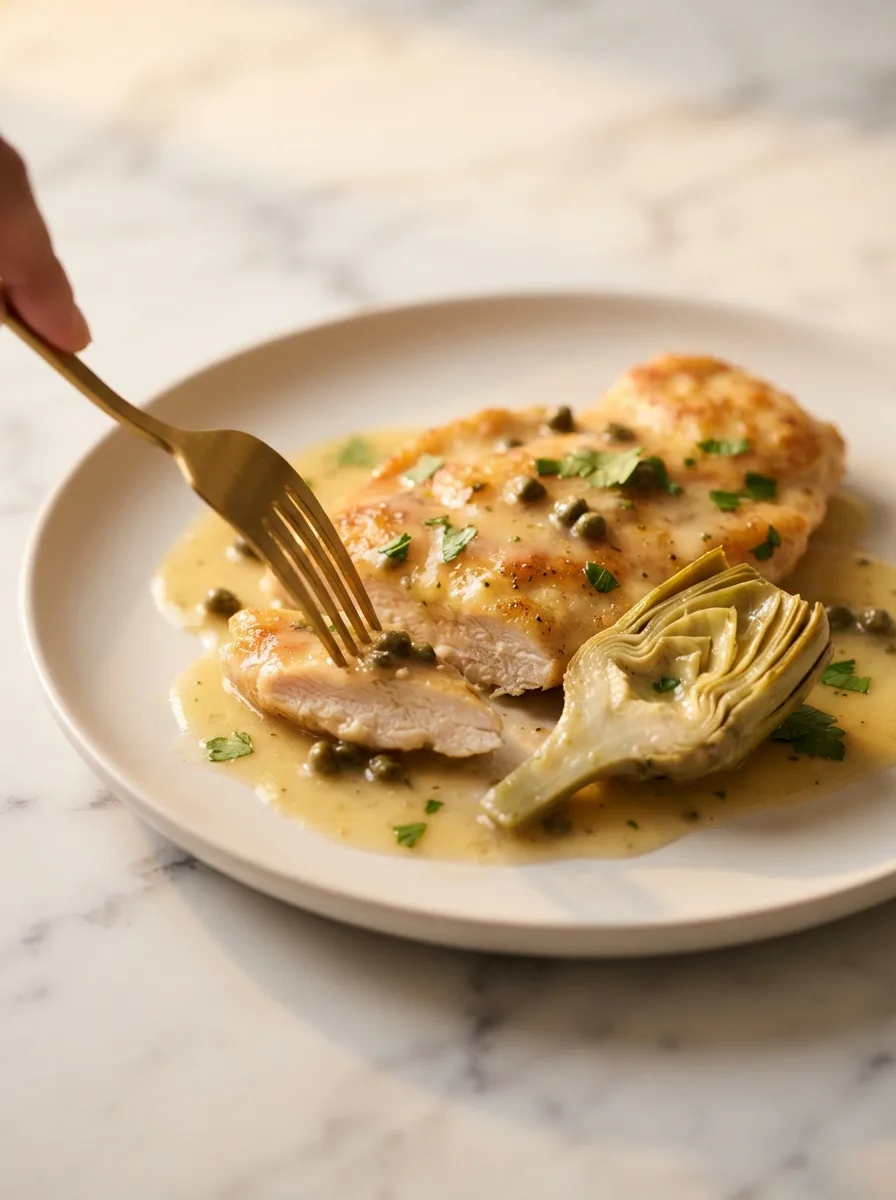
Why You’ll Love This Chicken Carciofi
- One skillet: The chicken sears, the artichoke sauce builds, and dinner finishes in the same pan, so cleanup stays manageable.
- Silky sauce: A timed reduction concentrates the wine and broth before the cream and parmesan go in, helping the sauce cling to each cutlet.
- Weeknight timing: This chicken dinner takes about 40 minutes and uses ingredients available at an ordinary grocery store.
- Tender leftovers: Thin-pounded chicken cooks quickly and reheats more gently than a thick breast.
Key Ingredients
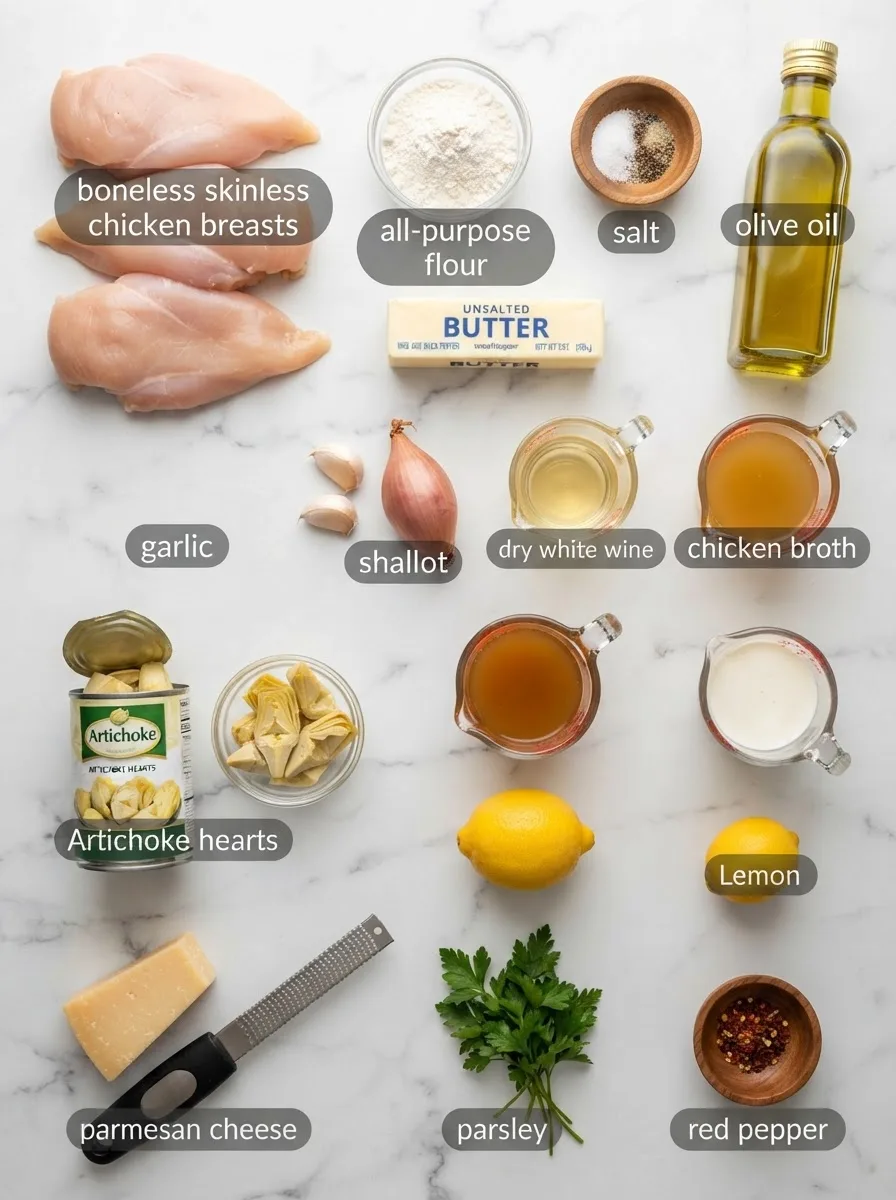
Chicken breasts (4, about 6 oz each). Pound them to an even ½-inch thickness so heat reaches the center before the thinner edges dry out. Season with salt and pepper, then coat lightly with flour for a browned crust and a little body in the sauce.
Artichoke hearts. Use canned hearts packed in water, drain them well, and quarter them. They keep their shape in the simmering sauce better than the softer marinated artichokes I tested, whose oil and vinegar can also shift the balance.
Dry white wine. Pinot Grigio or Sauvignon Blanc deglazes the pan, dissolving the browned bits left by the chicken. Those bits bring concentrated savory flavor to the sauce.
Heavy cream. Full-fat cream gives the sauce enough fat to stay smooth when lemon and wine bring acidity. Lower-fat dairy is more likely to split when heated.
Lemon (zest and juice). Zest rounds out the cream, while lemon juice adds brightness at the end. Keeping the juice off heat protects its fresh flavor and reduces the chance of a broken sauce.
Parmesan, freshly grated. Grate it from a wedge so it melts into the cream instead of forming stubborn clumps. The fine shreds disperse more evenly when stirred in gradually.
Ingredient Note: Here is the scary moment: do not add parmesan and lemon juice to a boiling sauce. Hot cream, acid, and cheese can overwhelm the emulsion and make it separate. Pull the pan off the heat, stir in the cream and parmesan gradually, then add the lemon juice at the end.
Equipment You’ll Need
- Large skillet (12-inch, stainless steel or heavy nonstick) — wide enough for 4 cutlets without crowding. A 10-inch pan works if you sear in two batches.
- Meat mallet or rolling pin — for pounding the chicken evenly. A heavy skillet works in a pinch.
- Microplane or fine grater — for the lemon zest and parmesan. A box grater’s finest side works too.
- Tongs — for turning the chicken without piercing it and losing juices.
Controlling the Sauce Consistency (A Controlled Test)
I tested three reduction windows, changing only the simmer time for the wine-and-broth mixture before adding the cream. Evaporation concentrates flavor, but the pan must retain enough liquid for the dairy and cheese to disperse.
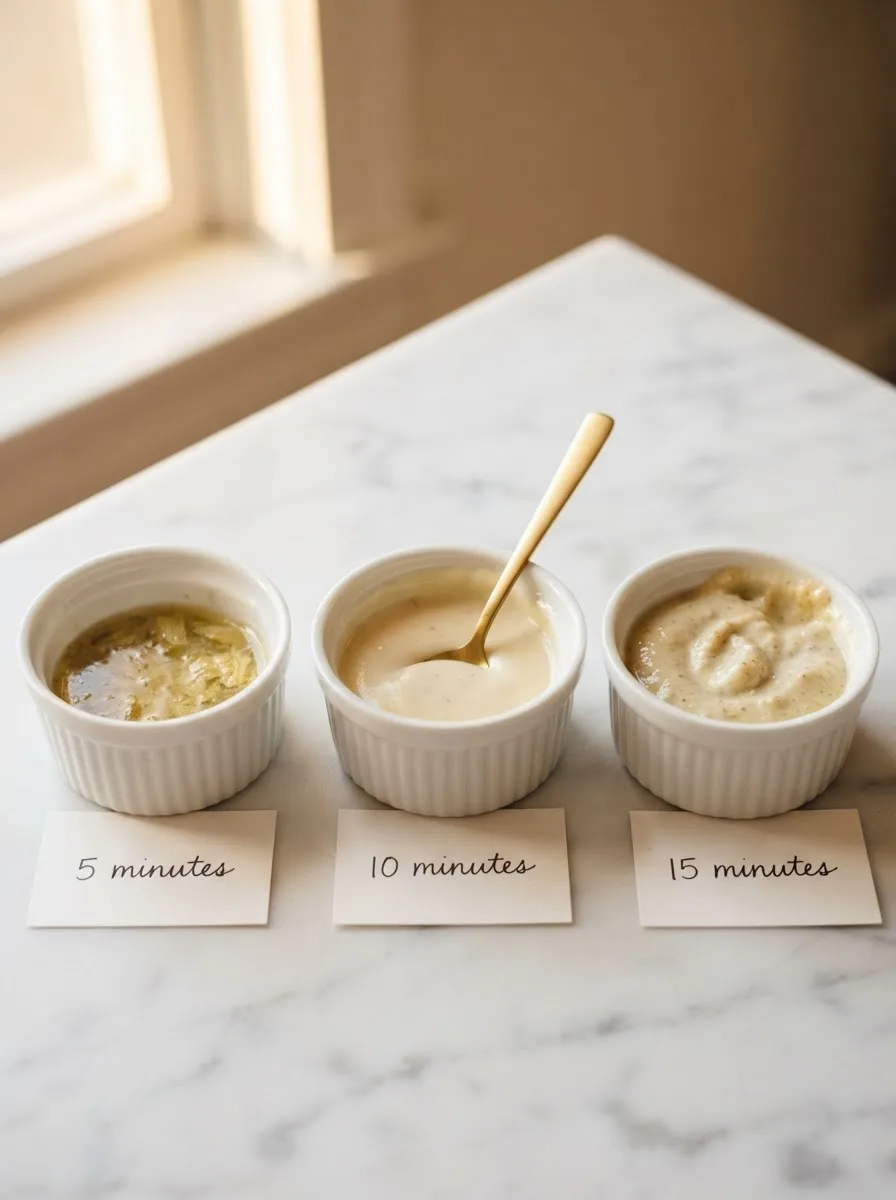
5-minute reduction: Too thin. The white wine and broth had not concentrated enough, so the sauce slid off the c5-minute reduction: Too thin. The white wine and broth had not concentrated enough, so the sauce slid off the chicken.
10-minute reduction: The liquid fell by about half and became slightly syrupy. The finished sauce coated a spoon with a glossy, even layer.
15-minute reduction: Too far. There was too little liquid left to loosen the cream, so the sauce became pasty and the parmesan clumped.
The takeaway: Set a timer for 10 minutes during this step. Do not rely on a visual guess.
How to Make Chicken Carciofi
Before you start: Take the chicken out of the fridge about 15 minutes before cooking. Grate the parmesan and zest the lemon now because the final sauce steps move quickly.
Step 1 — Pound and Dredge the Chicken
Place each chicken breast between two sheets of plastic wrap and pound it to an even ½-inch thickness. Even thickness lets heat reach the center at the same rate, so the edges do not dry out while the middle cooks. Season both sides with salt and pepper, then dredge each cutlet in flour and shake off the excess. That light coating browns in the oil and butter and gives the sauce a little body later.
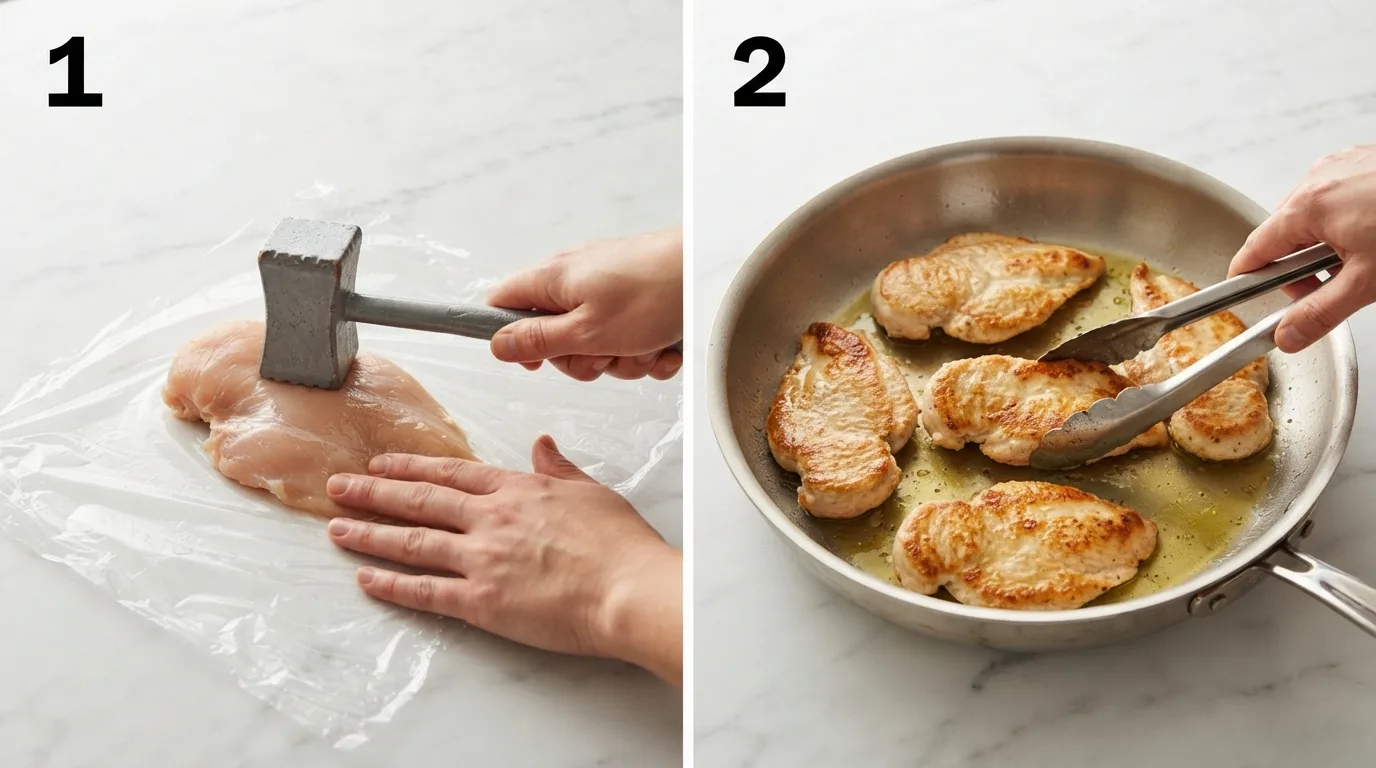
Step 2 — Sear the Chicken
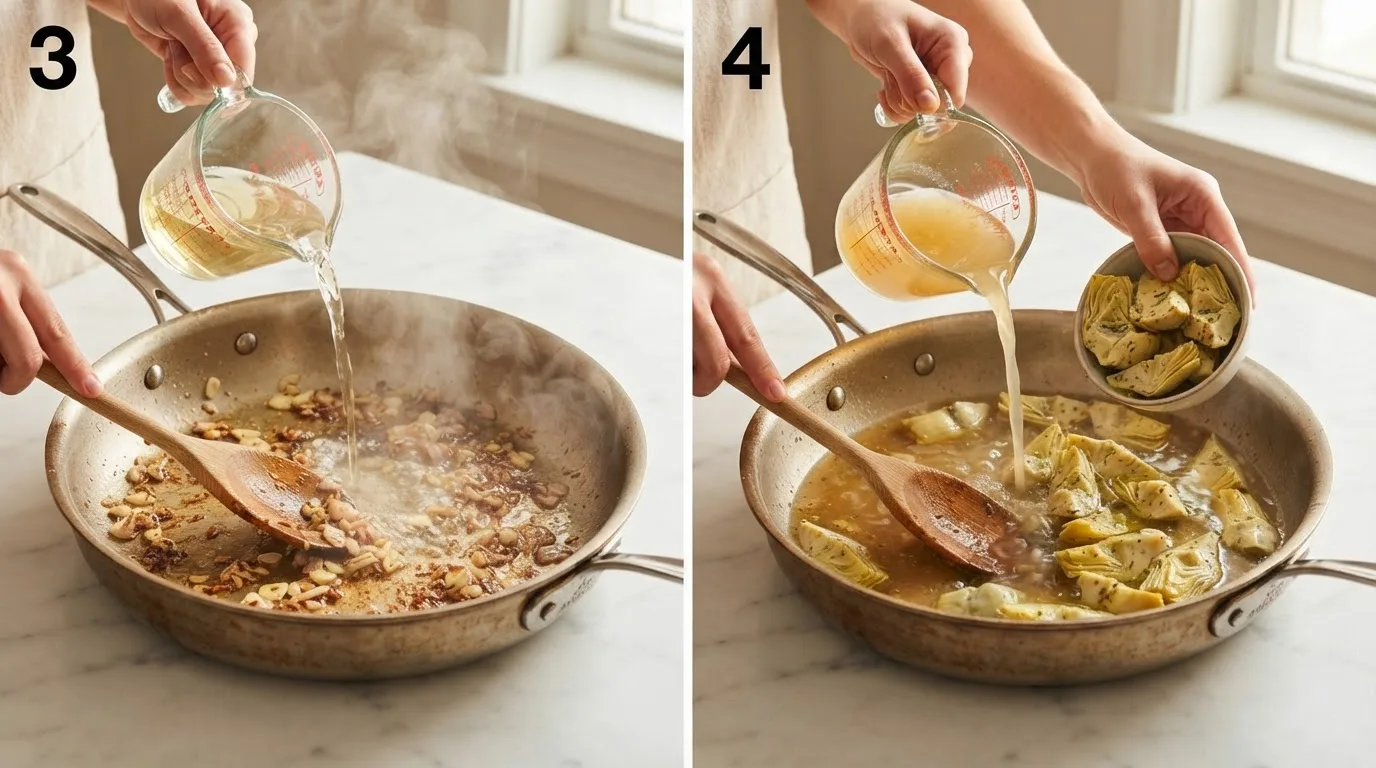
Heat the olive oil and 1 tablespoon of butter in the skillet over medium-high heat until shimmering. Add chicken in a single layer and sear for 3–4 minutes per side, until golden and 165°F at the thickest point. Transfer it to a plate and tent loosely with foil while the sauce comes together.
Step 3 — Sauté the Garlic and Shallot, Then Deglaze
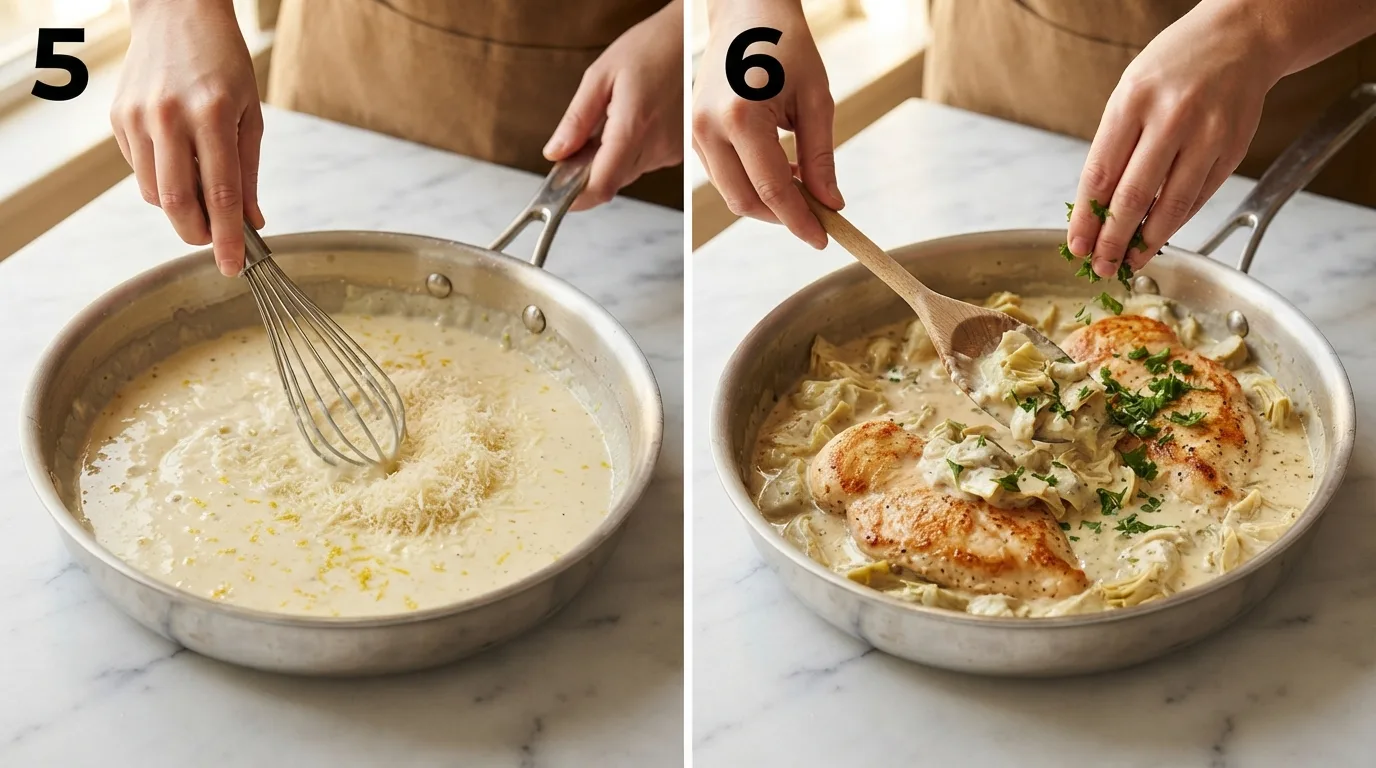
Lower the heat to medium. Add the remaining tablespoon of butter, garlic, and shallot to the same skillet. Cook for 1 minute, just until fragrant; garlic can burn quickly. Pour in the white wine and scrape the bottom of the pan with a wooden spoon. The wine dissolves the browned fond, carrying that savory flavor into the sauce.
Step 4 — Add Broth and Artichokes, Reduce for 10 Minutes
Pour in the chicken broth and add the artichoke hearts. Bring the mixture to a gentle simmer and reduce it uncovered for exactly 10 minutes. The liquid should fall by about half and look slightly syrupy; evaporation concentrates its flavor before the cream goes in.
Step 5 — Stir in Cream, Lemon Zest, and Parmesan; Return the Chicken
Here is the scary moment: pull the skillet off the heat before adding the heavy cream and lemon zest. Whisk in the parmesan a little at a time so it disperses instead of clumping. Return the chicken to low heat and spoon the artichokes and sauce over it. Warm for 2–3 minutes, no longer; extended heat will reduce the sauce and dry the chicken.
Step 6 — Finish and Serve
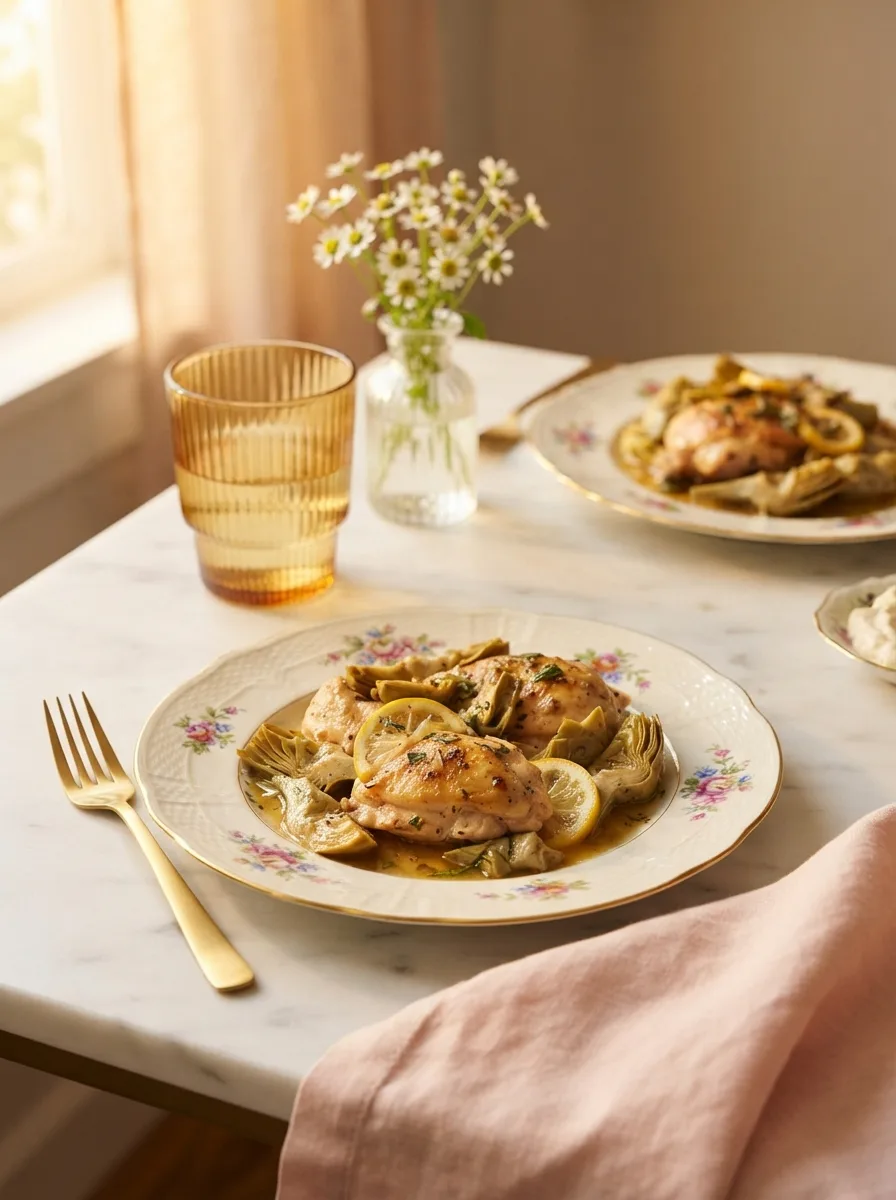
Turn off the heat and stir in the lemon juice, chopped parsley, and red pepper flakes, if using. Taste before adding more salt or pepper because parmesan and broth already contribute seasoning. Serve immediately, spooning extra sauce and artichokes over each cutlet.
Pro Tips for Perfect Chicken Carciofi
Tip 1: Pound the chicken evenly. Aim for a consistent ½-inch thickness so the center cooks before the thinner edges dry out. This gives every cutlet the same short searing window.
Tip 2: Rest the seared chicken. Let it sit loosely covered for 8–10 minutes while the sauce finishes. The brief rest helps the juices settle instead of running into the pan and thinning the sauce.
Tip 3: Add parmesan off heat. Stir it in a little at a time rather than dumping it into a hot sauce. Gentle mixing gives the cheese time to disperse and keeps the finish smooth.
Variations and Substitutions
Dietary Variations:
- Gluten-free: Use a 1:1 gluten-free flour blend for dredging. The crust may be slightly less crisp, while the sauce remains naturally gluten-free if the broth and other packaged ingredients are labeled gluten-free.
- Dairy-free: Replace the heavy cream with full-fat canned coconut cream and use a dairy-free parmesan alternative. The sauce should hold together, but it may have a coconut note and a softer finish.
Flavor Variations:
- Mushroom carciofi: Add 8 oz sliced cremini mushrooms with the garlic and shallot in Step 3. Cook for about 5 minutes, until they release their liquid and begin to brown, then add the wine.
Ingredient Substitutions:
- No white wine? Replace it with an extra ½ cup chicken broth plus 1 teaspoon lemon juice. The sauce will lose some depth, but the acidity will still balance the cream.
- Boneless, skinless chicken thighs can replace breasts. Pound them to ½-inch thickness and sear for about 3 minutes per side, checking the center before removing them from the oil.
For another comfort-food chicken recipe to keep on the busy-weeknight side of your rotation, try my dolly’s chicken and stuffing casserole.
Troubleshooting
Why did my sauce break?
The cream, parmesan, and lemon likely met direct heat together. Remove the pan from the burner, stir gently, and set aside the lemon juice until the end.
Why did my chicken turn dry?
Uneven cutlets or more than 2–3 minutes in the sauce can overcook it. Check the thickest piece, then move the chicken to a plate once it reaches 165°F.
Why did the artichokes fall apart?
They may have been too soft before cooking or simmered too vigorously. Drain the artichoke hearts well and keep the sauce at a gentle simmer.
Storage and Make-Ahead
Counter: Refrigerate within 2 hours.
Refrigerator: Store airtight for up to 3 days. The sauce will thicken as it cools.
Freeze: I don’t recommend it; the cream sauce may separate and turn grainy after thawing.
Reheating: Warm slowly in a skillet with a splash of chicken broth or water until the center reaches 165°F.
Make-Ahead: Pound and dredge the chicken up to 1 day ahead; make the sauce fresh for the smoothest texture.
Frequently Asked Questions
Q: Which artichokes should I use? A: Use the artichoke hearts specified in the Variations and Substitutions section. Drain them well so extra liquid does not thin the sauce.
Q: Can I make chicken carciofi with thighs? A: Yes. Follow the thigh instructions in the substitution section, then add chicken back to the skillet only long enough to heat through.
Q: What can I use instead of white wine? A: See the substitution note for the tested broth and lemon juice option. It keeps acidity in the creamy artichoke chicken, though the sauce will have less depth than one made with dry white wine.
Q: Is this recipe gluten-free? A: Not as written because of the flour. Use a labeled gluten-free blend, and check the chicken broth and parmesan labels as well.
Q: Can I prepare it ahead? A: Pound and dredge the chicken up to 1 day ahead, then set aside the sauce until cooking time. Storage and reheating details are listed above.
Q: Why is my sauce too thick? A: The reduction probably cooked longer than 10 minutes. Loosen it with a splash of broth or cream, then taste for salt and pepper.
Q: What should I serve with chicken carciofi? A: Choose a starchy side such as pasta or mashed potatoes to catch the sauce. My cheesy ranch potatoes and sausage also makes a hearty addition to the plate.
Q: Can I double the recipe? A: Yes. Sear the chicken in batches so the pan stays uncrowded; keep the sauce in one batch and allow an extra minute for it to return to a simmer.
More Chicken Recipes You’ll Love
- Dolly’s Chicken and Stuffing Casserole — a cozy make-ahead chicken recipe for another busy night.
- Cheesy Ranch Potatoes and Sausage — a hearty side dish for catching every bit of sauce.
- Cheesecake Bread — a sweet, tangy finish after dinner. Please verify that this URL matches the linked recipe before publishing.
- Banana Tempura — a warm, crisp dessert to end the meal. Make the chicken, spoon on the artichoke sauce, and enjoy.

Foolproof Chicken Carciofi
Ingredients
For the Chicken:
- 4 boneless, skinless chicken breasts (about 6 oz each), pounded to ½-inch thickness
- 3/4 cup all-purpose flour
- 1/2 tsp salt
- 1/4 tsp black pepper
- 3 tbsp olive oil
- 2 tbsp unsalted butter, divided
For the Artichoke Cream Sauce:
- 2 clove garlic, minced
- 1 medium shallot, minced
- 1/2 cup dry white wine (Pinot Grigio or Sauvignon Blanc)
- 1 cup low-sodium chicken broth
- 1 (14 oz) can artichoke hearts, drained and quartered
- 3/4 cup heavy cream
- 1 lemon, zested and juiced (2 tbsp juice)
- 1/2 cup freshly grated parmesan
- 1/4 cup chopped fresh parsley
- 1/4 tsp red pepper flakes (optional)
- Salt and pepper, to taste
Instructions
- Place each chicken breast between two sheets of plastic wrap and pound to an even ½-inch thickness. Season both sides with salt and pepper, then dredge in flour, shaking off the excess.
- Heat olive oil and 1 tablespoon butter in a large skillet over medium-high heat. Sear the chicken 3–4 minutes per side until golden and cooked through (165°F internal). Transfer to a plate and tent with foil.
- Lower heat to medium. Add the remaining butter, garlic, and shallot to the skillet; cook 1 minute until fragrant. Pour in the wine, scraping up the browned bits from the pan.
- Add the chicken broth and artichoke hearts. Simmer uncovered for exactly 10 minutes, until the liquid reduces by about half and looks slightly syrupy.
- Remove the skillet from the heat. Stir in the heavy cream and lemon zest, then whisk in the parmesan a little at a time until smooth. Return to low heat, nestle the chicken back into the sauce, and warm through for 2–3 minutes.
- Off the heat, stir in the lemon juice, parsley, and red pepper flakes if using. Season to taste with salt and pepper. Serve immediately with extra sauce and artichokes spooned over each piece.
Notes
- Use canned artichoke hearts packed in water, not marinated — marinated artichokes carry too much oil and vinegar and soften too much in the simmer.
- Store leftovers in an airtight container in the fridge for up to 3 days. Reheat gently on the stovetop with a splash of broth to loosen the sauce.
- Full-fat heavy cream is required here — lower-fat substitutes will separate under the sauce’s acidity and heat.
- If the sauce reduces past a spoon-coating consistency, whisk in a tablespoon or two of extra broth or cream to bring it back.