Foolproof El Pastor Burrito

The problem with most homemade el pastor is timing. Marinate the pork for two hours and it tastes like seasoned meat with no depth. Marinate it for two days and the vinegar and citrus start to break the pork down until it’s mushy, not tender. I ran into both versions before I landed on the one below.
I tested this el pastor burrito recipe four times, changing only the marinade time between batches — 2 hours, 8 hours, 24 hours, and 48 hours. One of those times produced pork that was smoky, slightly sweet, and held its texture after a hard sear. The rest either tasted flat or fell apart.
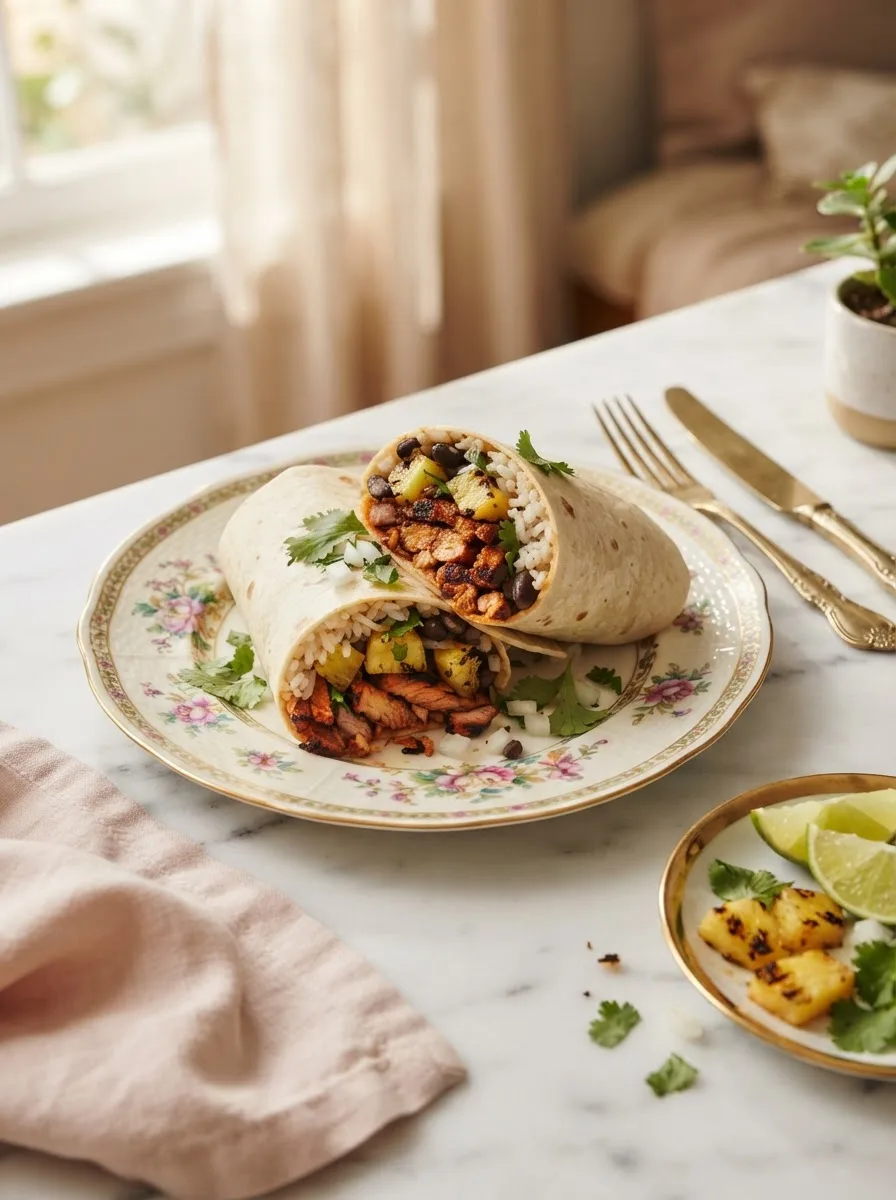
The 8-hour batch won by a wide margin. The pork stays juicy under a hard sear, the achiote flavor actually penetrates the meat instead of sitting on the surface, and the pineapple char cuts right through the richness.
This version skips the vertical trompo entirely. It’s built for a stovetop cast iron pan or a hot grill pan, which means you get the same charred, smoky edges without a rotisserie spit in your kitchen.
★★★★★ “I’ve made al pastor tacos a dozen times and always avoided burritos because I figured the filling would go soggy. It didn’t. The 8-hour marinade note saved me — I would’ve done 24 out of habit.” — Marisol T., recipe tester (pre-launch)
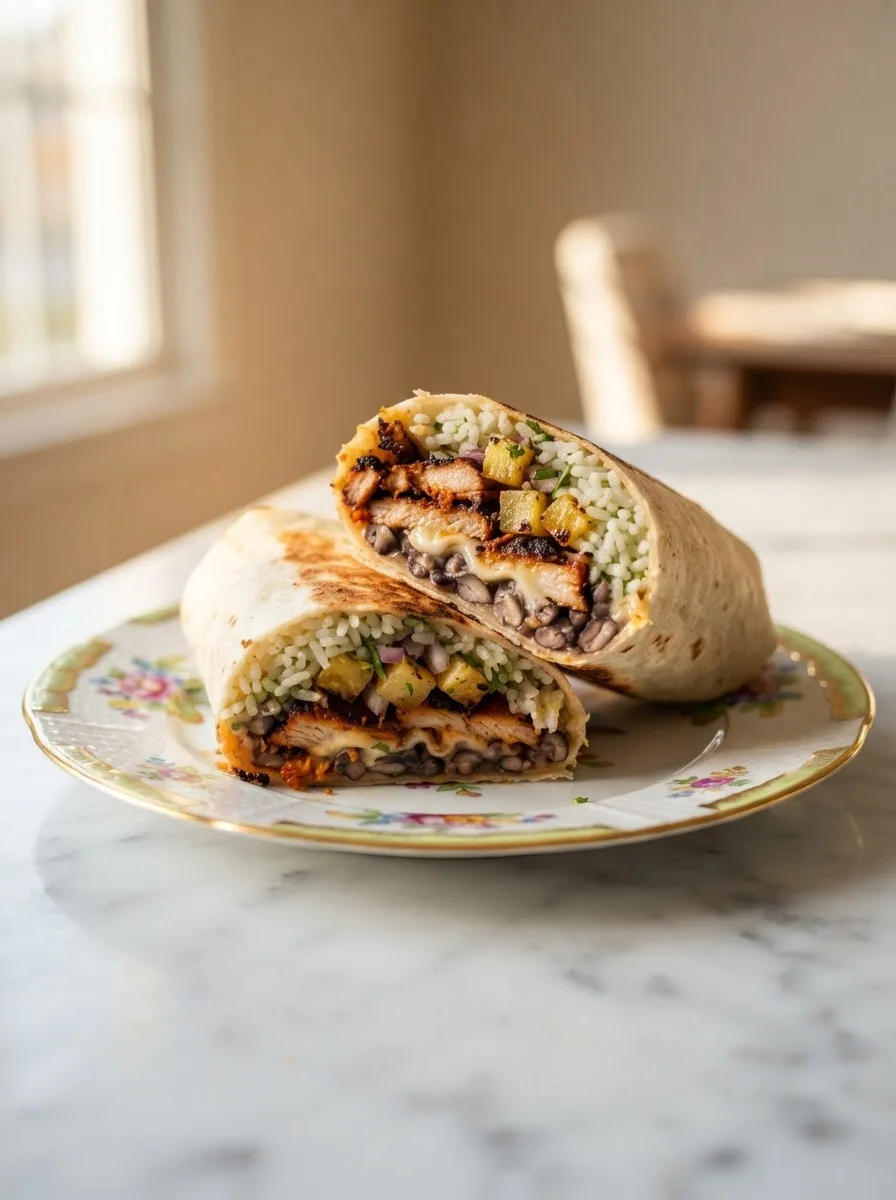
Why You’ll Love This El Pastor Burrito
- The marinade actually penetrates the meat: Thin-sliced pork plus an 8-hour rest in the achiote marinade means the smoky, slightly sweet flavor goes all the way through — not just on the surface.
- No trompo, no rotisserie, no problem: A screaming-hot cast iron pan gets you the same charred, crispy edges you’d get off a vertical spit.
- Built for a real burrito, not shrunk-down tacos: The rice-to-meat-to-bean ratio is calibrated so the burrito holds together when you bite it, instead of falling apart in your hands.
- The pineapple isn’t just garnish: Charring it in the same hot pan as the pork gives you caramelized edges and a tart-sweet bite that balances the richness of the meat.
Key Ingredients
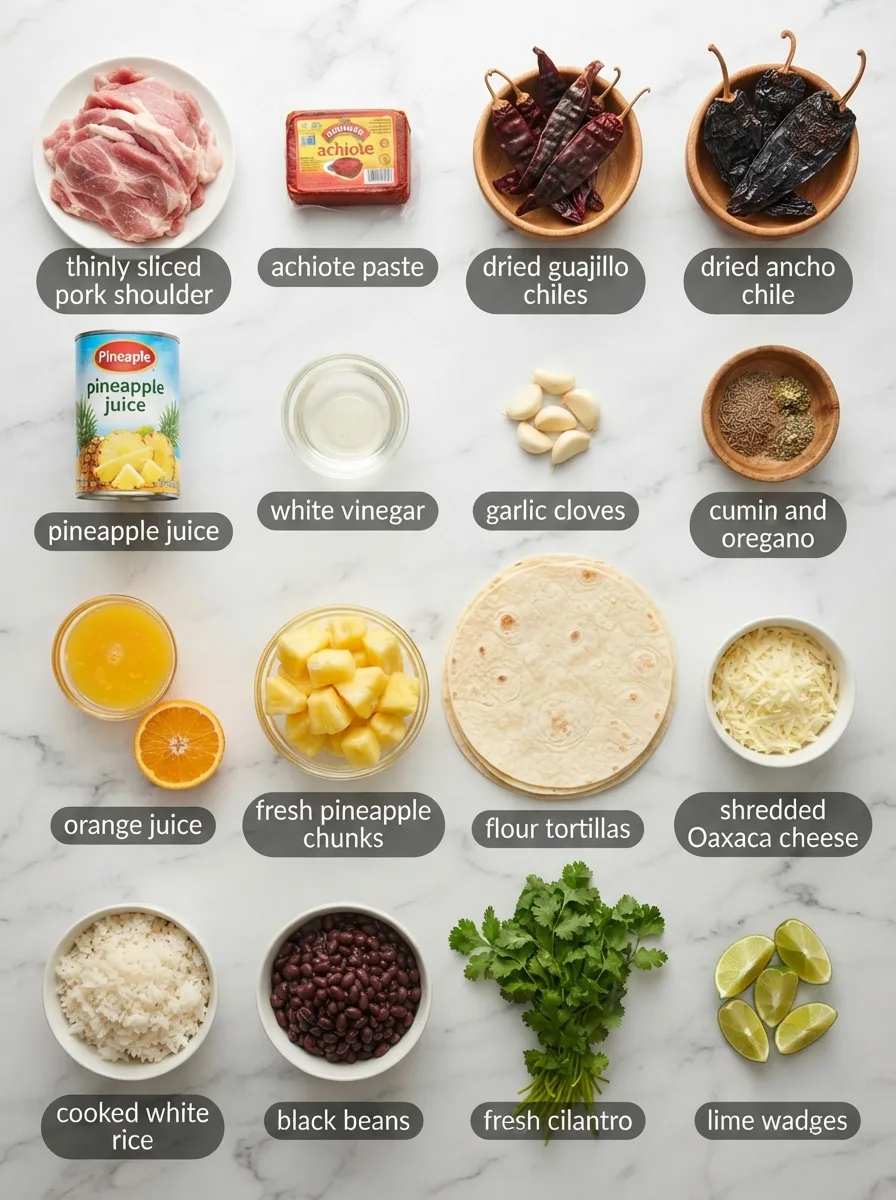
Pork shoulder (2 lbs, thin-sliced). Skip pork loin — it dries out under a hard sear. Shoulder (sometimes labeled Boston butt) has enough fat marbled through it to stay juicy even after 6–8 minutes in a screaming-hot pan. Ask your butcher to slice it ¼-inch thick, or freeze it for 30 minutes and slice it yourself — it’s much easier to cut thin when it’s slightly firm.
Achiote paste (3 tablespoons). This is the ingredient that makes al pastor taste like al pastor — earthy, slightly tangy, and responsible for that brick-red color. It’s sold in a small block near the Mexican spices at most grocery stores. If you truly can’t find it, 2 tablespoons of sweet paprika plus ½ teaspoon of ground annatto gets you close, though the flavor will be milder.
Dried guajillo and ancho chiles (2 guajillo, 1 ancho). Toasted briefly and rehydrated, these give the marinade real depth instead of relying on chili powder alone. Guajillo brings mild fruitiness; ancho adds a touch of raisin-like sweetness.
Pineapple juice (½ cup) and fresh pineapple (1 cup, chopped). The juice tenderizes the pork slightly and adds sweetness to balance the chiles. The fresh chunks get charred alongside the pork at the end — don’t skip these, they’re doing real work in the final flavor, not just decoration.
White vinegar (2 tablespoons). This is what gives al pastor its signature tang. Apple cider vinegar works as a 1:1 substitute if that’s what you have.
Ingredient Note: Achiote paste can vary in salt content by brand. Taste your marinade before adding the 1 teaspoon of added salt in the recipe card — if your paste already tastes salty, cut that amount in half.
Equipment You’ll Need
- Cast iron skillet or grill pan — this is what gives you the charred edges without a rotisserie. A stainless steel pan works too, but cast iron holds heat better for a longer, more even sear.
- Blender or food processor — for the marinade. A stick blender in a tall cup also works fine.
- Sharp knife or kitchen shears — for thin-slicing the pork if your butcher didn’t do it for you.
- Large mixing bowl — for marinating. Glass or plastic; avoid reactive metal bowls with this much vinegar and citrus.
Controlling the Marinade Time (A Controlled Test)
The single biggest variable in this recipe isn’t the sear — it’s how long the pork sits in the marinade. I tested four marinade times on the same cut of pork shoulder, sliced the same thickness, seared in the same pan at the same heat.
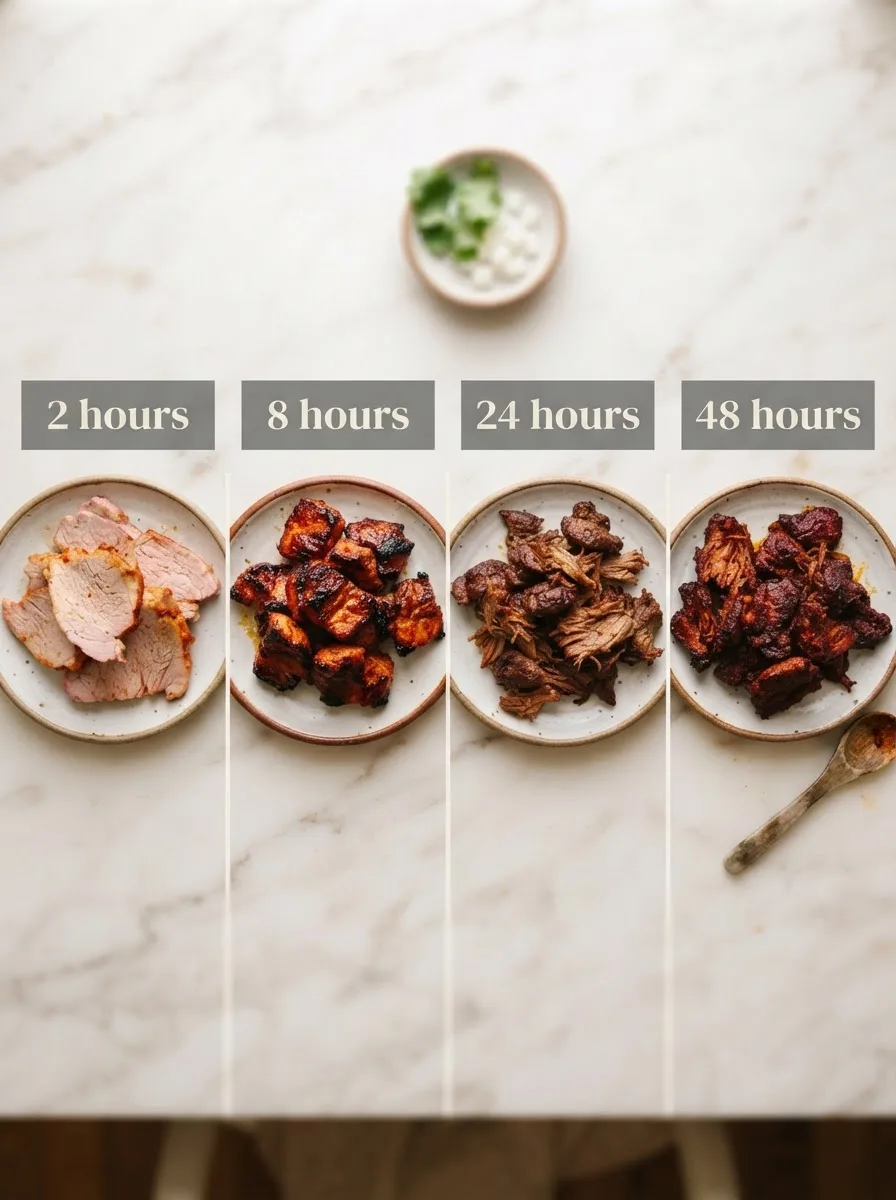
2 hours: The marinade barely made it past the surface. The pork tasted seasoned, not marinated — like something was missing. Color stayed pale.
8 hours: This is the winner. Deep brick-red color all the way through the slices, pronounced achiote and citrus flavor, and the pork still held together as distinct pieces after searing.
24 hours: The vinegar and citrus started breaking down the muscle fibers. The pork was noticeably softer, almost shredded at the edges before it even hit the pan, and the flavor tipped from “tangy” to “sour.”
48 hours: Mushy. The texture was closer to confit than seared pork, and the sourness overwhelmed the achiote entirely. Not worth it.
The takeaway: 8 hours is the sweet spot. If you’re in a real time crunch, 4 hours still gets you decent flavor — just don’t push past 12.
How to Make an El Pastor Burrito
Before you start: Slice your pork shoulder thin (¼ inch) and have it ready to go into the marinade first thing — the 8-hour window starts the moment it goes in, so plan backward from when you want to eat.
Step 1 — Toast and rehydrate the chiles
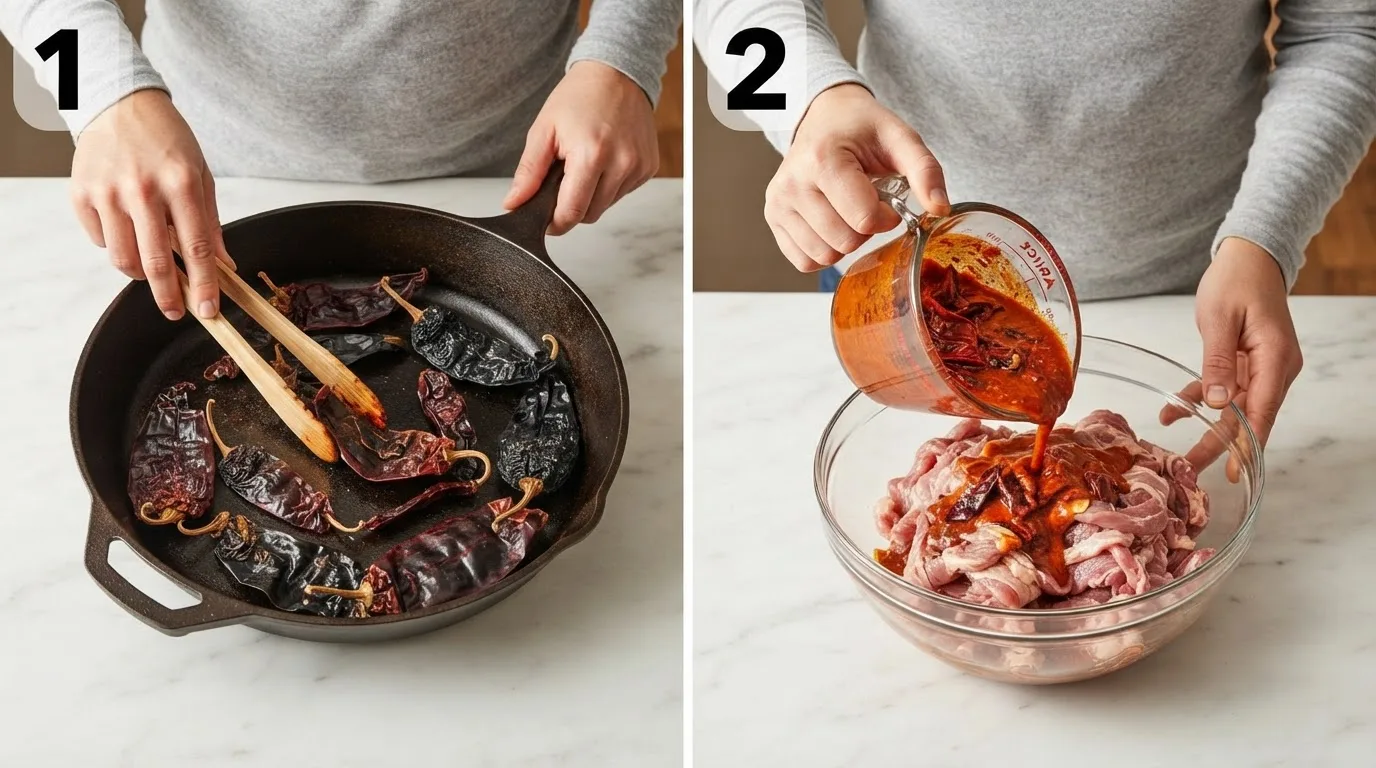
Remove the stems and seeds from the guajillo and ancho chiles. Toast them in a dry skillet over medium heat for about 45 seconds per side, just until fragrant — you’re not trying to blacken them, just wake up the oils. Cover with hot water and let them soften for 10 minutes.
Step 2 — Blend the marinade
Drain the softened chiles and add them to a blender with the achiote paste, garlic, pineapple juice, vinegar, orange juice, cumin, oregano, and salt. Blend until completely smooth — about 60 seconds. It should look like a thick, brick-red paste, not a watery sauce. If it’s too thick to pour, add a splash more pineapple juice, not water — water dilutes the flavor.
Step 3 — Marinate the pork
Pour the marinade over the sliced pork in a large bowl and toss until every piece is coated. Cover and refrigerate for 8 hours (see the Controlled Test above — this is the number that matters most in this whole recipe).
Step 4 — Sear the pork hard and fast
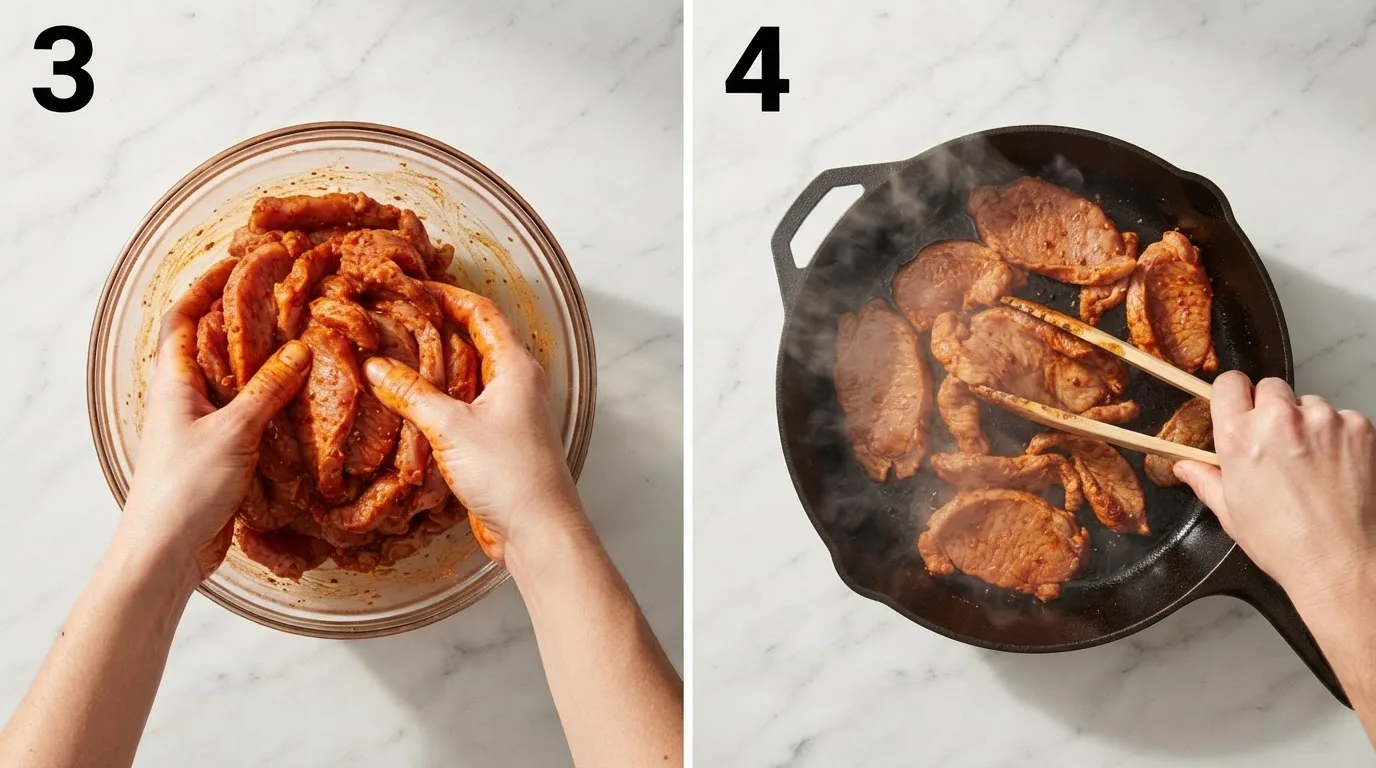
Heat your cast iron skillet over high heat until it’s genuinely smoking-hot — this isn’t a step to rush. Add the pork in a single layer (work in batches if needed; don’t crowd the pan) and let it sit without moving it for 2–3 minutes per side. You want charred, almost blackened edges in spots. That char is where most of the flavor lives. Pull the pork when it’s cooked through but still juicy — an internal temp of 145°F is your target.
Step 5 — Char the pineapple in the same pan
Add the fresh pineapple chunks to the same hot pan (the rendered fat and browned bits left behind are doing you a favor here). Let them sit for 90 seconds per side until you get real caramelized, golden-brown edges. Remove and roughly chop the pork into smaller bite-sized pieces if the slices are still long.
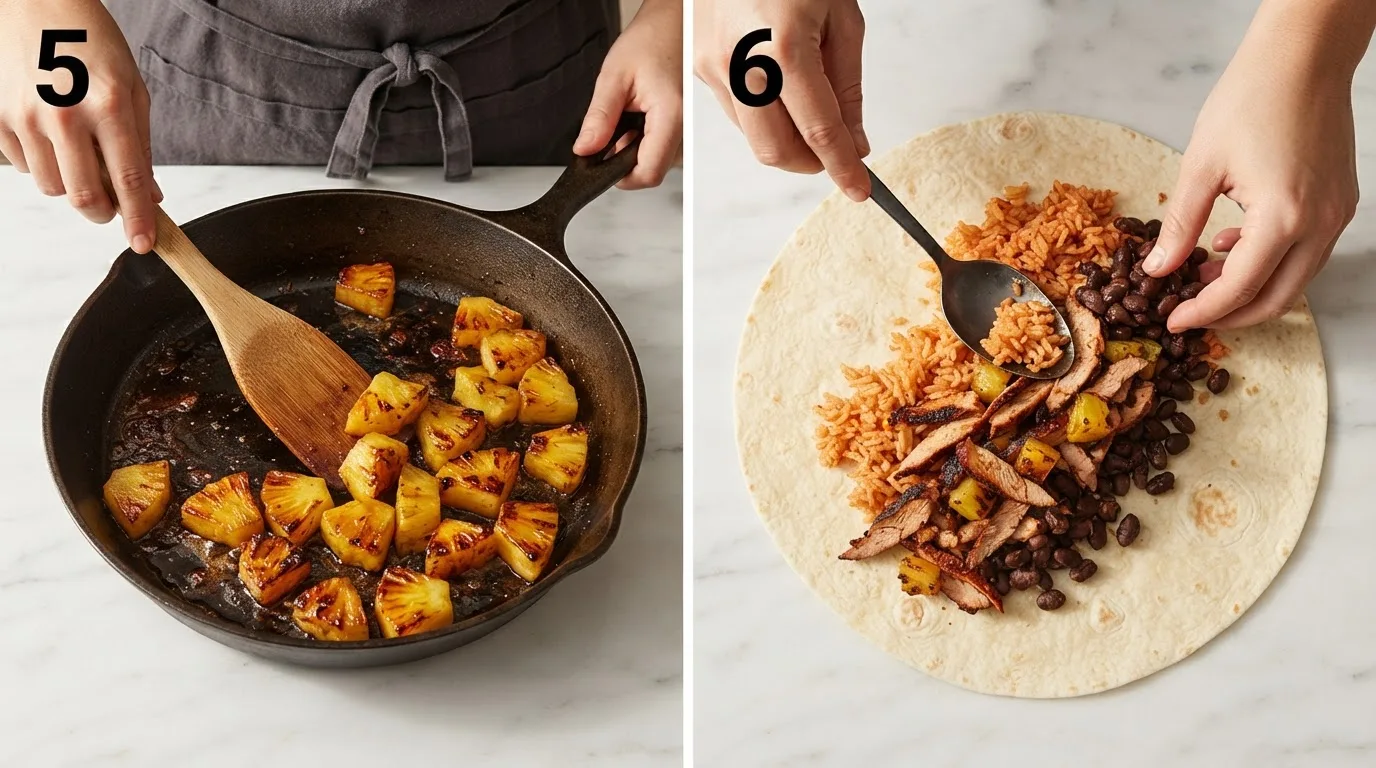
Step 6 — Build and wrap the burrito
Warm each tortilla for about 20 seconds per side in a dry skillet — this makes it pliable and less likely to tear. Layer rice first (it acts as a moisture barrier against the tortilla), then beans, then the pork, cheese, charred pineapple, and cilantro. Fold the bottom up over the filling, tuck in both sides, and roll tightly away from you. If your tortilla is cold or dry, it will crack instead of fold — that’s the most common reason burritos fall apart.
Pro Tips for Perfect El Pastor Burrito
Tip 1: Don’t skip the rendered fat. After searing the pork, there’s a thin layer of flavorful fat and browned bits left in the pan. Char the pineapple directly in that fat instead of wiping the pan clean — it’s free flavor you’d otherwise throw away.
Tip 2: Rice goes in first, every time. Rice against the tortilla (not the beans or meat) creates a barrier that keeps the tortilla from getting soggy from the wetter ingredients. This one placement decision affects how the burrito holds up for the next hour.
Tip 3: Slice the pork after searing, not before. Searing the pork in slightly larger pieces (versus tiny bits) means more surface area stays in direct contact with the hot pan per piece, giving you better char. Chop it down to bite-size right before assembling.
Tip 4: Warm tortillas are non-negotiable. A cold tortilla straight from the fridge will crack the moment you try to fold it. Twenty seconds per side in a dry pan is all it takes to make it pliable.
Variations and Substitutions
Dietary Variations:
- Gluten-free: Use certified gluten-free corn tortillas instead of flour, and build it as a burrito bowl if you want to skip the wrap entirely — the achiote pork and charred pineapple are the real stars regardless of the wrapper.
- Dairy-free: Skip the cheese or use a dairy-free shredded cheese blend. The flavor holds up fine without it — the marinade doesn’t depend on dairy for richness.
Flavor Variations:
- Chicken al pastor: Swap the pork shoulder for boneless chicken thighs, same marinade, same 8-hour window. Sear time drops to about 5 minutes per side since chicken thighs are thinner.
Ingredient Substitutions:
- No achiote paste → 2 tablespoons sweet paprika + ½ teaspoon ground annatto (milder color and flavor, but workable)
- No fresh pineapple → canned pineapple chunks, drained well and patted dry before charring (fresh is better, but canned works in a pinch)
If you’re building out a whole marinated-protein rotation, my chicken modiga uses a similar long-marinate, hard-sear approach with a completely different flavor profile — worth a look if this method clicked for you.
Troubleshooting
Why is my pork dry after searing?
Most likely the pan wasn’t hot enough, which meant the pork spent too long cooking instead of getting a fast char. A properly hot cast iron skillet should sear the outside in 2–3 minutes per side without needing much longer. If your pork keeps coming out dry, check your slices too — anything thicker than ¼ inch will take longer to cook through and dry out in the process.
My burrito fell apart when I tried to eat it — what happened?
This is almost always a cold or under-warmed tortilla. A tortilla straight from the fridge is stiff and will crack along the fold lines the moment you bite into it. Warm it for a full 20 seconds per side in a dry skillet before filling it, and don’t overfill — a burrito stuffed past capacity will burst no matter how warm the tortilla is.
The marinade tastes sour instead of smoky — did I do something wrong?
Probably not a mistake, just too much marinating time. Vinegar and citrus continue breaking down the meat and intensifying the sour notes the longer it sits. If you marinated past 12 hours, that’s your answer — pull back to the tested 8-hour window next time.
Storage and Make-Ahead
Counter: Assembled burritos shouldn’t sit out longer than 2 hours — the rice and beans are the limiting factor here for food safety.
Refrigerator: Store cooked, unwrapped pork and pineapple separately from assembled burritos for up to 4 days. If you’ve already assembled full burritos, wrap tightly in foil and refrigerate for up to 3 days.
Freeze: Wrap assembled burritos individually in foil, then place in a freezer bag. They’ll keep well for up to 3 months. Skip freezing fresh pineapple in the filling if you can — it gets watery on thaw; add it fresh after reheating instead.
Reheating: From the fridge, unwrap and microwave for 90 seconds, or wrap in foil and reheat in a 350°F oven for 15 minutes for a crispier tortilla. From frozen, thaw overnight in the fridge first, then reheat the same way.
Make-Ahead: The marinade and the marinating step can be done up to a day ahead — that’s actually the whole point of the 8-hour window. You can also sear the pork and pineapple a day ahead and just reheat and assemble when you’re ready to eat.
Frequently Asked Questions
Q: What does “al pastor” actually mean? A: It translates to “shepherd style,” referring to the original method of stacking marinated pork on a vertical spit, similar to Middle Eastern shawarma, which is where the technique originated in Mexico through Lebanese immigrants in the early 20th century.
Q: Can I make this in a slow cooker instead of searing it? A: You can, but you’ll lose the charred edges that give al pastor its signature flavor. If you want hands-off cooking, slow cook the marinated pork on low for 6 hours, then finish it under a broiler for 3–4 minutes to char the top before chopping and assembling.
Q: Is achiote paste the same as annatto? A: Not exactly. Annatto seeds are one ingredient in achiote paste, which also includes spices like cumin, oregano, garlic, and vinegar already blended in. You can’t swap plain annatto powder 1:1 for achiote paste without adding those other seasonings yourself.
Q: Why did my burrito turn out soggy? A: Check your layering order — rice should go directly against the tortilla, not the beans or juicy pork. Wet ingredients touching the tortilla directly is the most common cause of a soggy burrito.
Q: Can I use a different cut of pork? A: Pork shoulder (Boston butt) is ideal because of the fat content. Pork loin will work but dries out much more easily under the hard sear — if you use it, reduce sear time to 90 seconds per side and pull it slightly earlier.
Q: How spicy is this recipe? A: Mild to medium. Guajillo and ancho chiles are both low on the heat scale and mostly contribute flavor, not heat. Add a diced jalapeño to the marinade if you want more kick.
Q: Can I grill the pork instead of using a cast iron skillet? A: Yes — a hot grill actually mimics the vertical trompo char even better than a stovetop pan. Grill over direct high heat for 2–3 minutes per side.
More Recipes You’ll Love
- Wes Canfield Smoked Salmon Recipe — a slow-cure, cold-smoked salmon method with the same patience-rewards-flavor payoff as this 8-hour marinade.
- Chicken Modiga — a bold, marinated chicken dish with prosciutto and a rich pan sauce.
- Buona Beef Tuna Genovese Copycat Recipe — a Chicago-style Italian beef sandwich riff for anyone who loves a well-tested regional copycat.
- Ground Chicken Chips — a crispy, high-protein snack that pairs well as a side if you want something crunchy alongside your burrito.

Foolproof El Pastor Burrito
Ingredients
For the Achiote Marinade:
- 2 dried guajillo chiles, stemmed and seeded
- 1 dried ancho chile, stemmed and seeded
- 3 tablespoon achiote paste
- 4 clove garlic
- 1/2 cup pineapple juice
- 2 tablespoon white vinegar
- 1/4 cup orange juice
- 1 teaspoon ground cumin
- 1 teaspoon dried oregano
- 1 teaspoon salt (adjust to taste based on achiote paste brand)
For the Pork:
- 2 lb pork shoulder, thinly sliced (¼ inch)
For the Charred Pineapple:
- 1 cup fresh pineapple, chopped into ½-inch chunks
For the Burrito:
- 6 large flour tortillas (burrito-size)
- 3 cup cooked white rice
- 2 cup black beans, warmed
- 11/2 cup shredded Oaxaca cheese (or Monterey Jack)
- 1/2 cup fresh cilantro, chopped
- Lime wedges, for serving
Instructions
- Toast the guajillo and ancho chiles in a dry skillet over medium heat, about 45 seconds per side, until fragrant. Cover with hot water and let soften for 10 minutes, then drain.
- Blend the softened chiles with achiote paste, garlic, pineapple juice, vinegar, orange juice, cumin, oregano, and salt until completely smooth.
- Pour the marinade over the sliced pork in a large bowl, toss to coat completely, cover, and refrigerate for 8 hours.
- Heat a cast iron skillet over high heat until smoking-hot. Sear the marinated pork in a single layer, 2–3 minutes per side, until charred at the edges and cooked through (145°F internal). Work in batches if needed.
- Add the fresh pineapple chunks to the same hot pan and char for 90 seconds per side. Chop the pork into bite-sized pieces.
- Warm each tortilla for 20 seconds per side in a dry skillet. Layer rice, beans, pork, cheese, charred pineapple, and cilantro. Fold the bottom up, tuck in the sides, and roll tightly. Serve with lime wedges.
Notes
- The 8-hour marinade time is the most important variable in this recipe — see the Controlled Test section above before adjusting it.
- To make ahead, marinate the pork up to 24 hours in advance if needed for scheduling, but expect a slightly softer texture and tangier flavor than the tested 8-hour window.
- Assembled burritos freeze well for up to 3 months when wrapped individually in foil and sealed in a freezer bag.
- For a gluten-free version, use corn tortillas or serve as a burrito bowl over rice.
- To halve this recipe, use 1 lb of pork and cut all marinade ingredients by half — sear time stays the same.
- To double for a crowd, sear the pork in multiple batches rather than crowding the pan, which will steam the meat instead of charring it.
- No cast iron skillet? A heavy stainless steel pan works, though it may need an extra minute of preheating to reach the same searing temperature.
- Leftover pork and charred pineapple make excellent taco or rice bowl filling beyond just burritos.
- If your achiote paste is very salty, start with half the added salt in the marinade and adjust to taste before adding the pork.
- Pat canned pineapple dry before charring if substituting for fresh — excess moisture will steam instead of caramelize.