Wes Canfield Smoked Salmon Recipe

My neighbor wes canfield smoked salmon recipe every summer for the Fourth of July, and every summer someone asks him for the recipe. He wrote it down for me on the back of a grocery receipt three years ago, and my first attempt turned out salty enough to cure a ham. My second attempt was dry by the time it hit 145°F.
The problem wasn’t Wes’s recipe — it was my smoker temperature and how long I left the fish in the dry brine. This is the version I landed on after testing the brine time and smoke temperature three separate ways, side by side, until the texture matched what Wes actually serves off his own smoker.
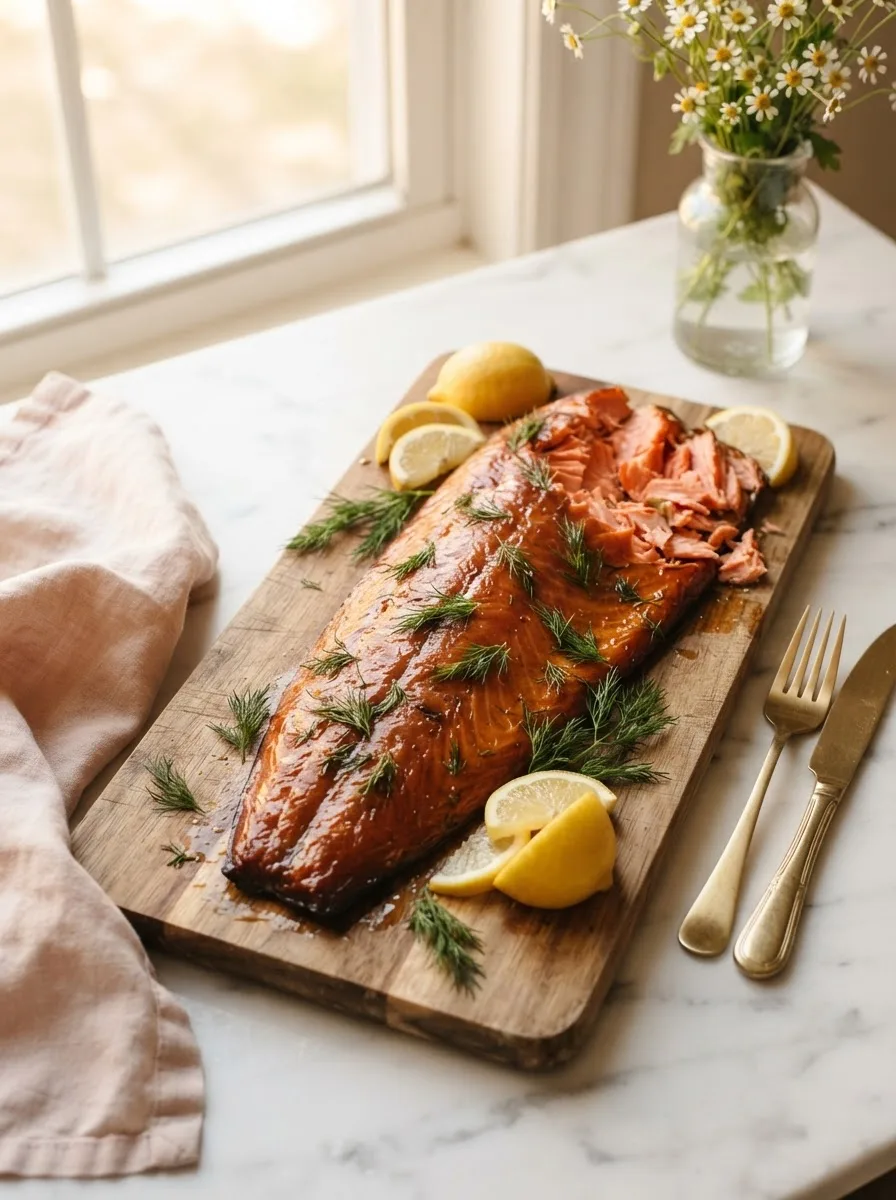
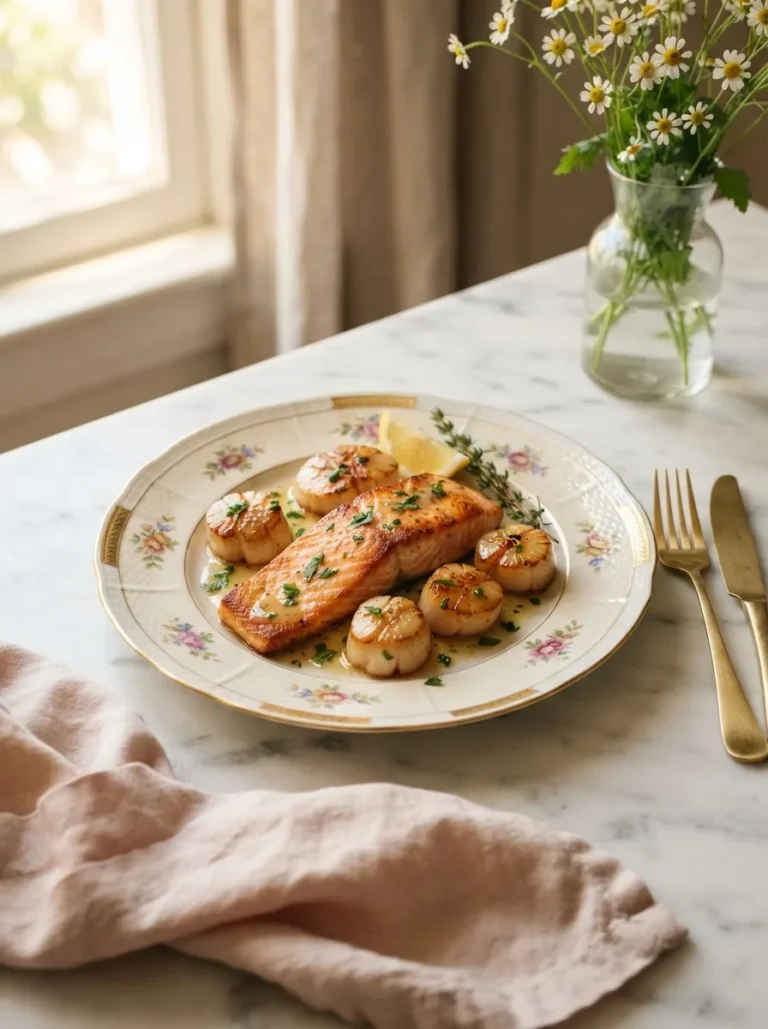
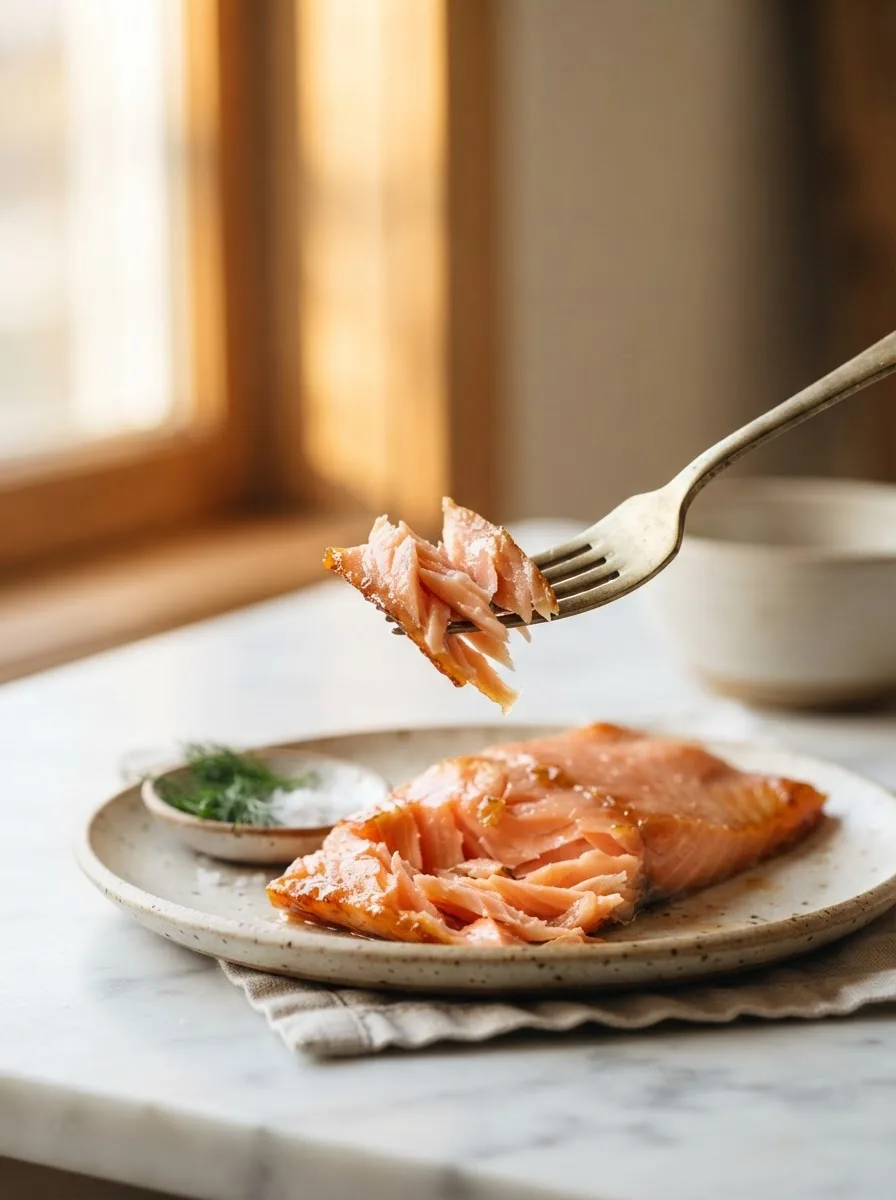
The result is flaky at the thickest part, slightly firmer at the edges where the glaze caramelizes, and seasoned all the way through instead of just on the surface. It holds together well enough to serve on a platter without falling apart when you lift a piece.
★★★★★ “I’ve made a lot of smoked salmon that turned out like jerky. This one actually stayed moist in the center. My husband asked if I bought it from a fish market.” — Danielle R., recipe tester (pre-launch)
Why You’ll Love This Wes Canfield Smoked Salmon Recipe
- No smoker skills required: The dry brine does most of the seasoning work before the fish ever touches smoke, so you’re not relying on timing alone to get flavor all the way through.
- Stays moist, not jerky-dry: Smoking low and pulling it at the right internal temperature — not a guessed time — is what keeps the center flaky instead of leathery.
- Make-ahead friendly: The brine happens the day before, so the day you actually smoke it is mostly hands-off.
- Scales easily: Works with a single fillet for a weeknight dinner or a full side for a cookout — same brine ratio either way.
Key Ingredients
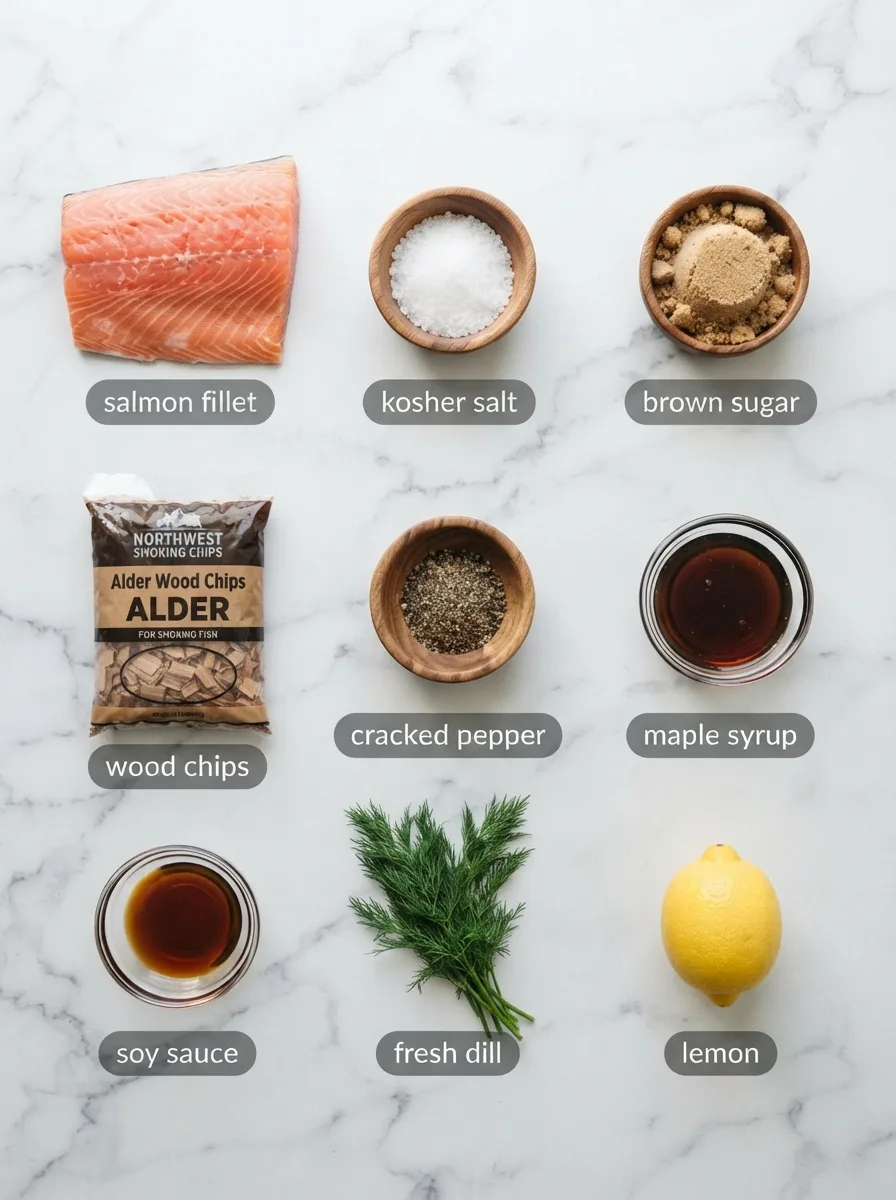
Skin-on salmon fillet (2 lbs). The skin holds the fillet together on the smoker grates and gives you something to hold onto when you flip or move it. Skinless works, but plan on a fish spatula and gentler handling.
Kosher salt and brown sugar (dry brine, 3:1 ratio). The salt pulls moisture to the surface, which the sugar then helps convert into a tacky, glossy layer called the pellicle. That layer is what actually catches the smoke — without it, the smoke flavor sits on top instead of clinging to the fish.
Black pepper and fresh dill. These go into the dry brine itself, not just on top as garnish, so the flavor is seasoned into the fish rather than dusted onto the surface.
Maple syrup and soy sauce (glaze). Brushed on during the last 30 minutes of smoking. The sugar in the maple syrup caramelizes into that amber crust; the soy sauce keeps the glaze from tasting flat and one-note sweet.
Alder or applewood chips. Both are mild enough not to overpower the fish. Hickory and mesquite are too aggressive here — they’ll taste bitter on something as delicate as salmon.
Ingredient Note: Don’t skip the air-drying step after rinsing the brine off. That’s what forms the pellicle, and the pellicle is the single most important variable in this whole recipe — more important than wood type, more important than smoker brand.
Equipment You’ll Need
- Smoker (electric, pellet, or charcoal with a water pan) — Any smoker that holds a steady 175°F works. A pellet grill is the most forgiving for beginners since it self-regulates temperature.
- Instant-read thermometer — Non-negotiable. This recipe is built around pulling the fish at a specific internal temperature, not a specific time.
- Wire rack — Used for air-drying the brined fillet before it goes on the smoker. A baking sheet works if you don’t have one.
- Fish spatula or two spatulas — Salmon flakes apart easily once cooked; a wide, thin spatula keeps it in one piece when you move it.
Controlling Texture: Brine Time and Smoke Temperature (A Controlled Test)
I tested this recipe three times, changing only the brine time and smoke temperature each round, to find the combination that matched the texture Wes actually serves.
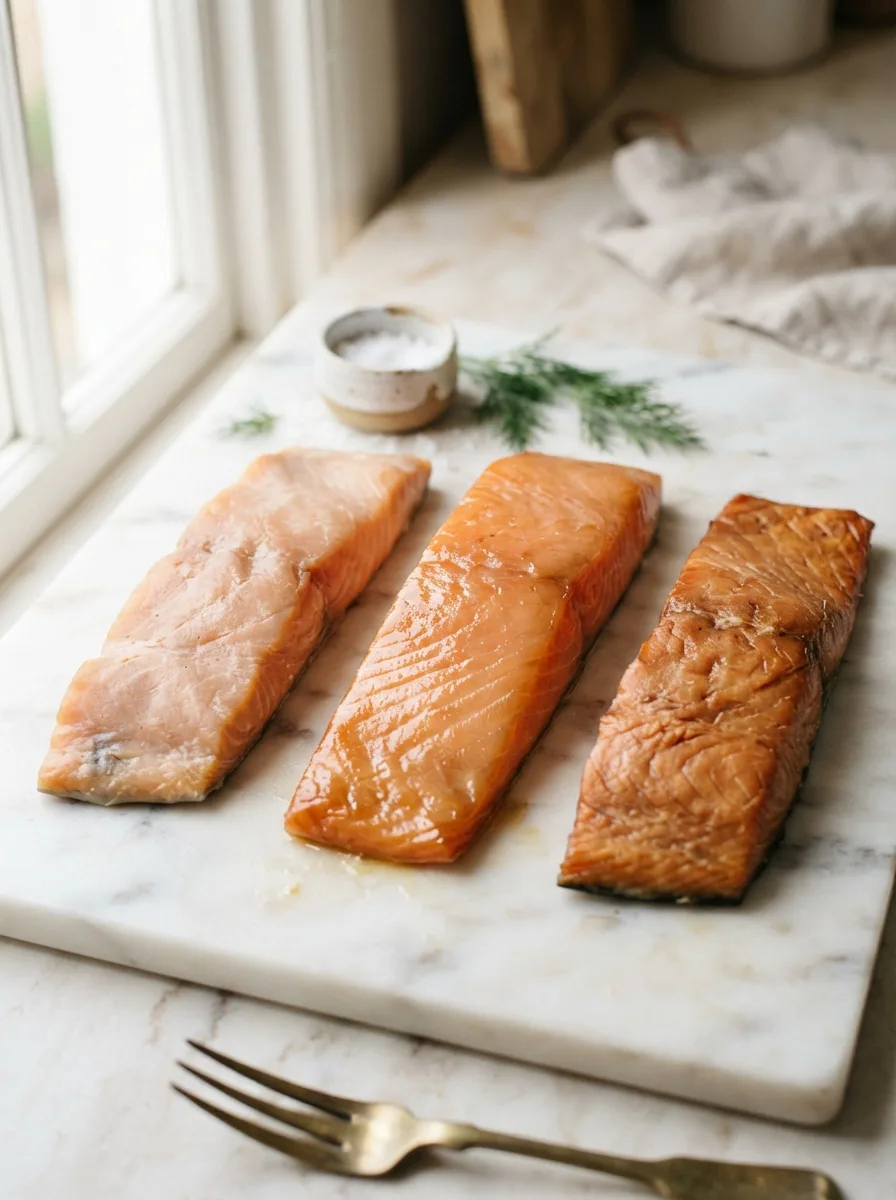
6-hour brine, smoked at 175°F: Under-seasoned. The salt and sugar hadn’t had enough time to penetrate past the surface, so the center tasted like plain baked salmon.
12-hour brine, smoked at 175°F: This is the version below. Fully seasoned through, moist center, glossy pellicle that held the smoke flavor without tasting acrid.
12-hour brine, smoked at 225°F: Cooked faster, but the higher heat pushed out too much moisture before the smoke could really do its job. Edges turned leathery well before the center was even done.
The takeaway: time in the brine matters for flavor, but smoker temperature is what determines whether you end up with something flaky or something dried out. Low and slow wins here.
How to Make Wes Canfield Smoked Salmon
Before you start: Pull the salmon out of the fridge, but keep it cold until you’re ready to brine it — the fish should be cold when the dry brine goes on.
Step 1 — Mix and apply the dry brine
Combine the kosher salt, brown sugar, black pepper, and chopped dill in a bowl. Pat the salmon dry with paper towels, then pack the brine mixture evenly over the flesh side, pressing it in slightly so it sticks. Place the fillet skin-side down in a dish or on a wire rack set inside a rimmed pan.
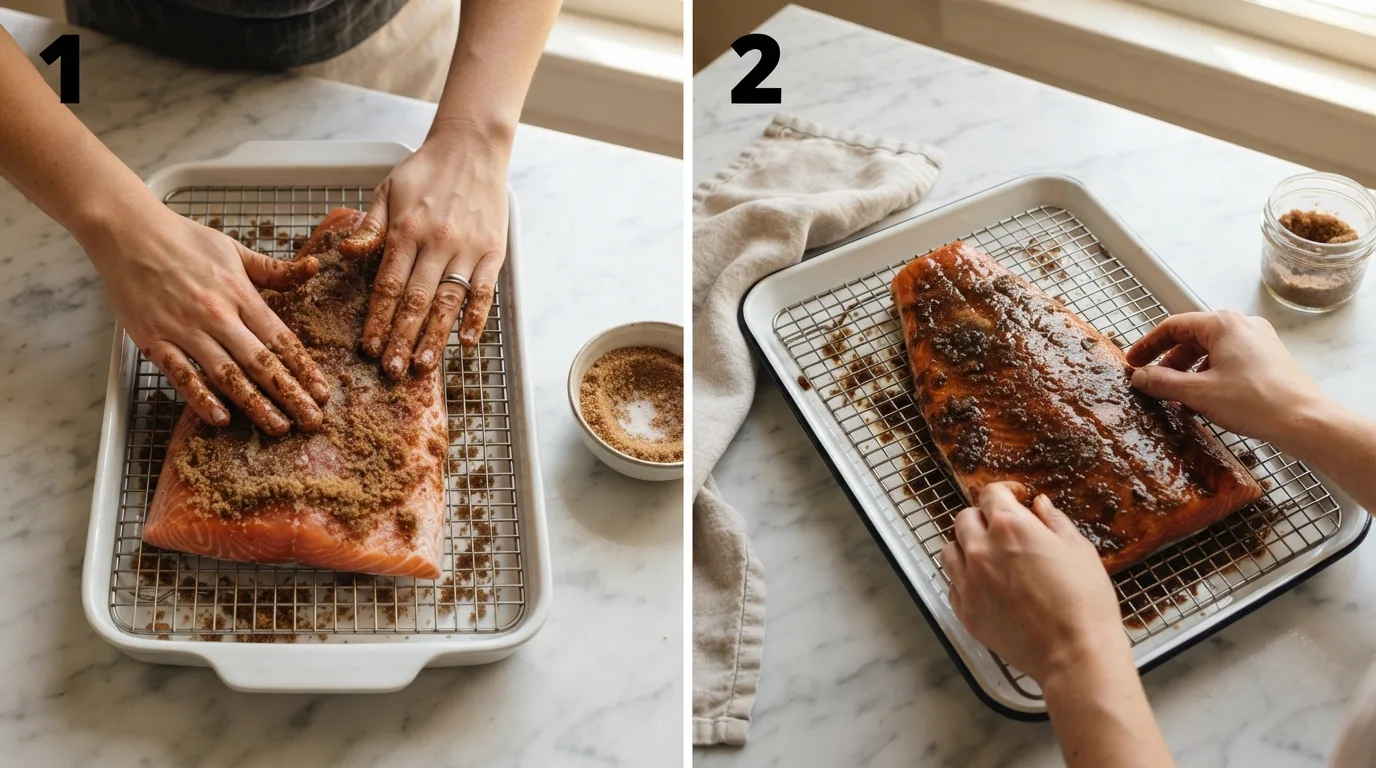
Step 2 — Refrigerate 8 to 12 hours
Cover loosely and refrigerate for 8 to 12 hours. You’ll see liquid pool in the pan below the rack — that’s the salt pulling moisture out, which is exactly what should happen. Don’t skip past the 8-hour mark; this is where the seasoning actually gets into the fish, not just onto it.
Step 3 — Rinse, dry, and air-dry to form the pellicle
Rinse the brine off under cold water, then pat the fillet completely dry. Set it back on the wire rack, uncovered, in the fridge for 1 to 2 hours. The surface will go from wet and shiny to tacky and slightly matte — that tackiness is the pellicle, and it’s what the smoke actually clings to.
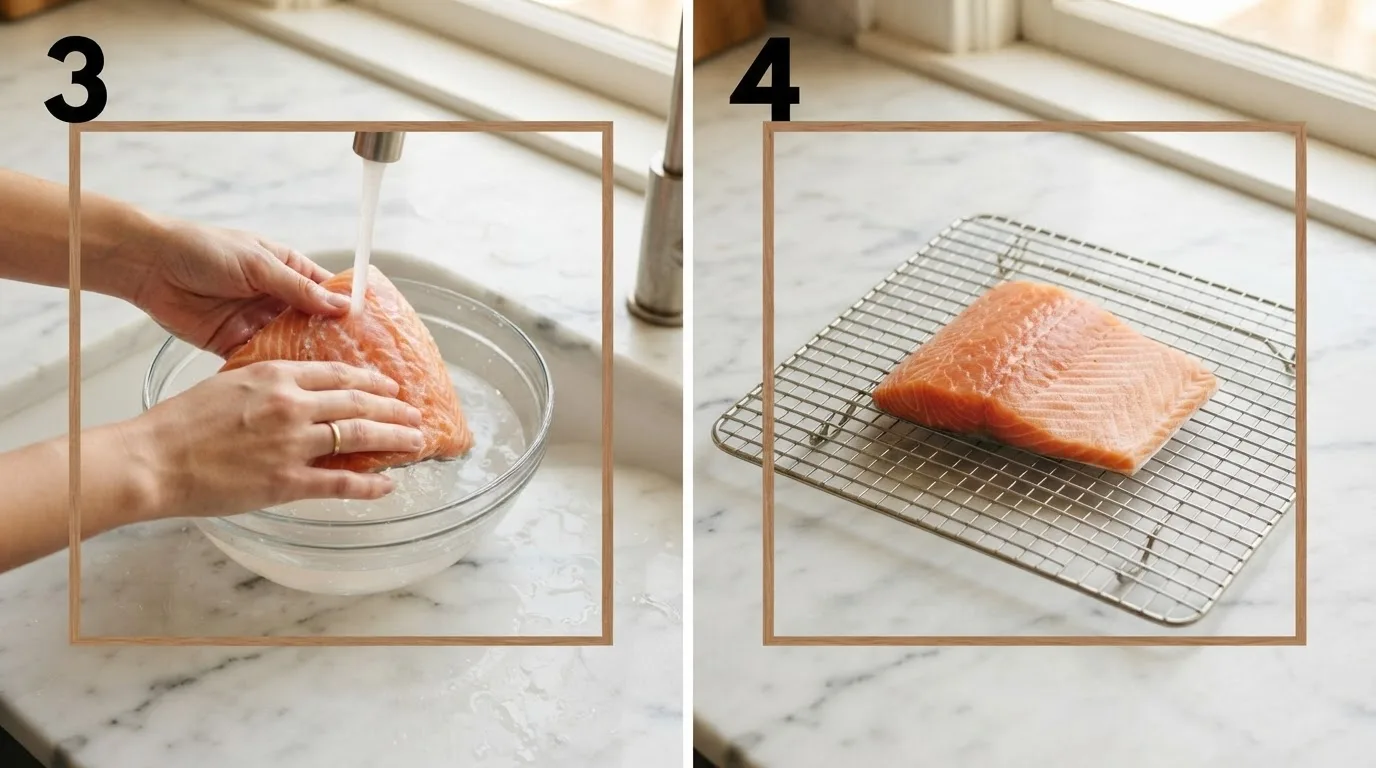
Step 4 — Smoke at 175°F until it reaches 140°F internal
Preheat the smoker to 175°F with alder or applewood chips. Place the salmon skin-side down directly on the grates or on a piece of foil with holes poked through it. Smoke until the thickest part of the fillet reaches 140°F on an instant-read thermometer — usually 2.5 to 3 hours, but the thermometer is the real timer here, not the clock.
Step 5 — Glaze during the last 30 minutes
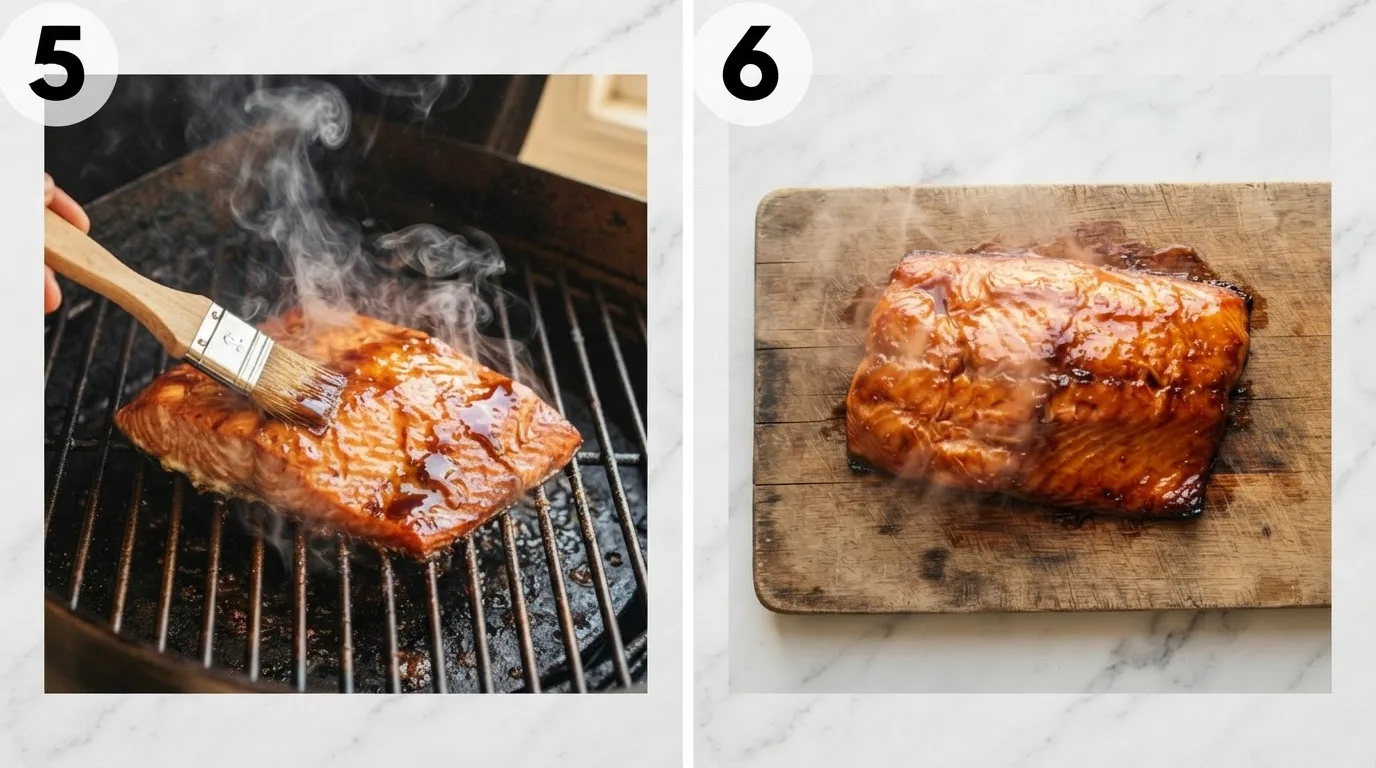
Whisk together the maple syrup and soy sauce. Brush a thin layer over the salmon at the 30-minute mark, then again about 15 minutes later. This gives the glaze time to tack up into a glossy, slightly caramelized surface instead of just running off.
Step 6 — Rest and serve
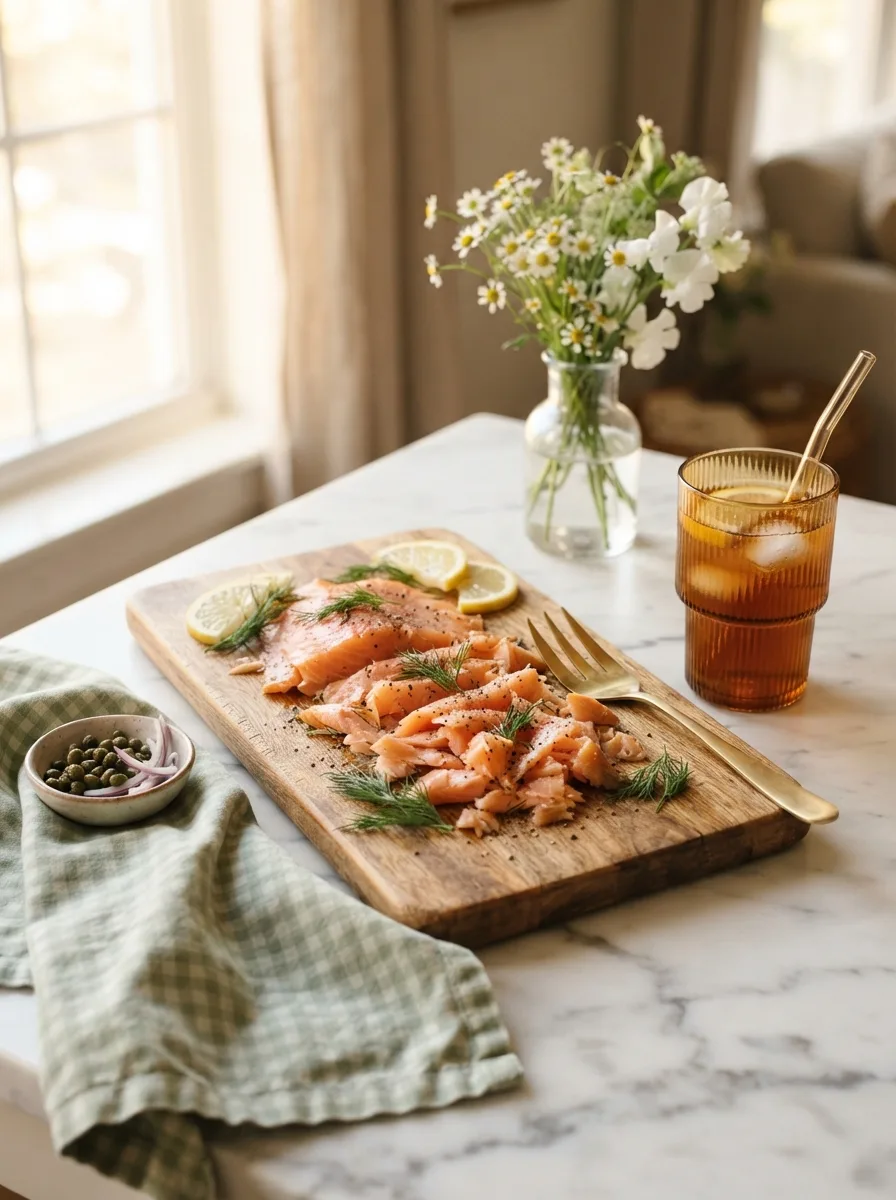
Let the salmon rest for 10 minutes off the smoker before slicing or flaking. It firms up slightly as it rests, which makes it much easier to serve in clean pieces instead of falling apart.
Pro Tips for Perfect Wes Canfield Smoked Salmon
Tip 1: Don’t skip the pellicle. If you smoke the fish while it’s still wet from rinsing, the smoke flavor sits on the surface instead of soaking in. The extra 1-2 hours of air-drying is what separates good smoked salmon from great smoked salmon.
Tip 2: Trust the thermometer over the clock. Smoker temperature swings by 10-15 degrees are normal, which means smoke time can vary by 30+ minutes between batches. Pull at 140°F every time, regardless of how long it took to get there.
Tip 3: Keep the wood mild. Alder and applewood are both forgiving. Hickory and mesquite are strong enough to taste bitter against something as delicate as salmon.
Tip 4: Buy the thickest fillet you can find. Thin tail-end pieces cook unevenly and dry out at the edges before the center is done. A thicker center-cut fillet gives you more margin for error.
Variations and Substitutions
Dietary Variations:
- Gluten-free: Swap the soy sauce for tamari in the glaze — same ratio, same result, no gluten.
- Lower sodium: Reduce the kosher salt in the dry brine to a 4:1 sugar-to-salt ratio instead of 3:1. The pellicle still forms, but the seasoning is milder throughout.
Flavor Variations:
- Caribbean-spiced glaze: Swap the maple-soy glaze for a thinned mix of Pickapeppa sauce and a spoonful of brown sugar. It adds a sweet-tangy heat that works especially well if you’re serving the salmon alongside something rich, like chicken modiga, for a bigger spread.
Ingredient Substitutions:
- Steelhead trout works in place of salmon with no changes to the brine or smoke time.
- No smoker? A charcoal grill set up for indirect heat with a foil packet of soaked wood chips gets you most of the way there, though the flavor will be slightly less smoky.
Troubleshooting
Why is my smoked salmon too salty?
Most likely the brine sat too long, or the salt-to-sugar ratio was off. Stick to the 3:1 sugar-to-salt ratio and don’t exceed 12 hours in the brine — beyond that, the salt keeps working without much added benefit.
Why did my salmon turn out dry and leathery?
This almost always means the smoker ran too hot, or the fish was pulled past 140°F internal. Check your smoker’s actual temperature with a separate probe if the built-in gauge seems off, and always pull by temperature, not time.
What’s the white stuff that oozes out during smoking?
That’s albumin, a protein that naturally rises to the surface when fish is cooked. It’s harmless and common, especially at higher smoker temperatures. Smoking low and slow at 175°F minimizes it, but a small amount is normal.
Storage and Make-Ahead
Counter: Don’t leave smoked salmon at room temperature for more than 2 hours — it’s cooked, but still a perishable protein.
Refrigerator: Wrap tightly and store for up to 4-5 days. It’s excellent cold, straight out of the fridge, on crackers or in a salad.
Freeze: Vacuum-seal or wrap very tightly in plastic and foil, then freeze for up to 2-3 months. Thaw overnight in the fridge before serving.
Reheating: Best served cold or at room temperature. If you want it warm, cover loosely and warm in a 275°F oven for 10 minutes — anything hotter will dry it out further.
Make-Ahead: The dry brine step happens the day before, which means the actual smoking day only requires the air-dry and smoke time — no last-minute prep.
Frequently Asked Questions
Q: What internal temperature is safe for smoked salmon? A: Pull the salmon at 140°F internal for the flakiest texture. The USDA minimum safe temperature for fish is 145°F, so if you prefer a firmer, well-done texture, carry it to 145°F instead — just know it will be slightly drier.
Q: Is this hot-smoked or cold-smoked salmon? A: This is hot-smoked, meaning the fish fully cooks at 175°F on the smoker. Cold-smoking (the method used for lox-style salmon) keeps temperatures under 90°F and requires specialized equipment — this recipe doesn’t use that method.
Q: Can I use frozen salmon? A: Yes. Thaw it fully in the refrigerator first and pat it very dry before applying the dry brine — extra moisture from thawing can dilute the brine’s effect.
Q: What wood is best for smoking salmon? A: Alder is the traditional choice and the mildest option. Applewood is a good second choice if alder isn’t available. Avoid hickory and mesquite; they’re too strong for fish.
Q: How long does smoked salmon last in the fridge? A: 4-5 days tightly wrapped. If you’re not going to use it within that window, freeze it instead.
More Recipes You’ll Love
- Chicken Modiga — a creamy, mushroom-forward chicken dish that pairs well with smoked salmon on a summer spread
- Buona Beef Tuna Genovese Copycat Recipe — another tested copycat recipe for fans of bold, savory flavors
- Ground Chicken Chips — a crispy, snackable side that works well alongside smoked fish
- Pickapeppa Sauce Recipe — the glaze swap referenced above, also excellent on grilled meats
Wes Canfield Smoked Salmon Recipe
Ingredients
For the Dry Brine:
- 2 lb skin-on salmon fillet, center-cut
- 3/4 cup brown sugar
- 1/4 cup kosher salt
- 1 tablespoon coarsely cracked black pepper
- 2 tablespoon fresh dill, chopped
For the Glaze:
- 3 tablespoon maple syrup
- 1 tablespoon soy sauce
Other:
- Alder or applewood chips, for smoking
Instructions
- Combine the brown sugar, kosher salt, black pepper, and dill in a bowl. Pat the salmon dry and pack the mixture evenly over the flesh side. Place skin-side down on a wire rack set over a rimmed pan.
- Cover loosely and refrigerate for 8 to 12 hours.
- Rinse the brine off under cold water and pat completely dry. Return to the wire rack, uncovered, and refrigerate 1 to 2 hours until the surface looks tacky rather than wet.
- Preheat the smoker to 175°F using alder or applewood chips. Place the salmon skin-side down on the grates.
- Smoke until the thickest part reaches 140°F internal, about 2.5 to 3 hours.
- Whisk the maple syrup and soy sauce. Brush over the salmon at the 30-minute mark before it’s done, then again 15 minutes later.
- Rest for 10 minutes before slicing or flaking to serve.
Notes
- This recipe requires an 8-12 hour dry brine and a 1-2 hour air-dry period before smoking, which is not included in the Total time above — plan accordingly.
- Double the brine ratios (keep the 3:1 sugar-to-salt proportion) for a full 4-6 lb side of salmon; smoke time will run slightly longer.
- Swap soy sauce for tamari in the glaze to make this recipe gluten-free.
- Steelhead trout works as a 1:1 substitute for salmon with no other changes.
- Always pull the fish by internal temperature, not by the clock — smoker temperature swings are normal and will change actual smoke time.
- Leftover smoked salmon flakes beautifully into scrambled eggs, pasta, or a simple salad.
- If you don't own a dedicated smoker, a charcoal grill set up for indirect heat with a foil packet of soaked wood chips will work, though the smoke flavor will be milder.
- Store tightly wrapped in the refrigerator for 4-5 days, or vacuum-seal and freeze for up to 2-3 months.