Foolproof buona beef tuna genovese copycat recipe

The first time someone described “buona beef tuna genovese copycat recipe” to me, I assumed there was tuna fish involved. There isn’t. It’s a Chicago-area Italian beef thing — a slow-braised beef and onion sauce so deeply caramelized it turns almost sweet, tossed with pasta and a hard grating cheese. The name has nothing to do with the ocean, and honestly, nobody at Buona Beef seems totally sure why it’s called that either.
I tested this four times over about three weeks. The first batch was fine — good, even — but it was missing the specific melted-down, jammy onion texture that makes the real thing taste the way it does. The second batch got there. The third batch, I pushed the onions too far and they turned bitter at the edges.
The version below is the one that got it right: beef that shreds with a fork, onions cooked down until they basically disappear into the sauce, and just enough tomato to hold the color without turning it into a red sauce.
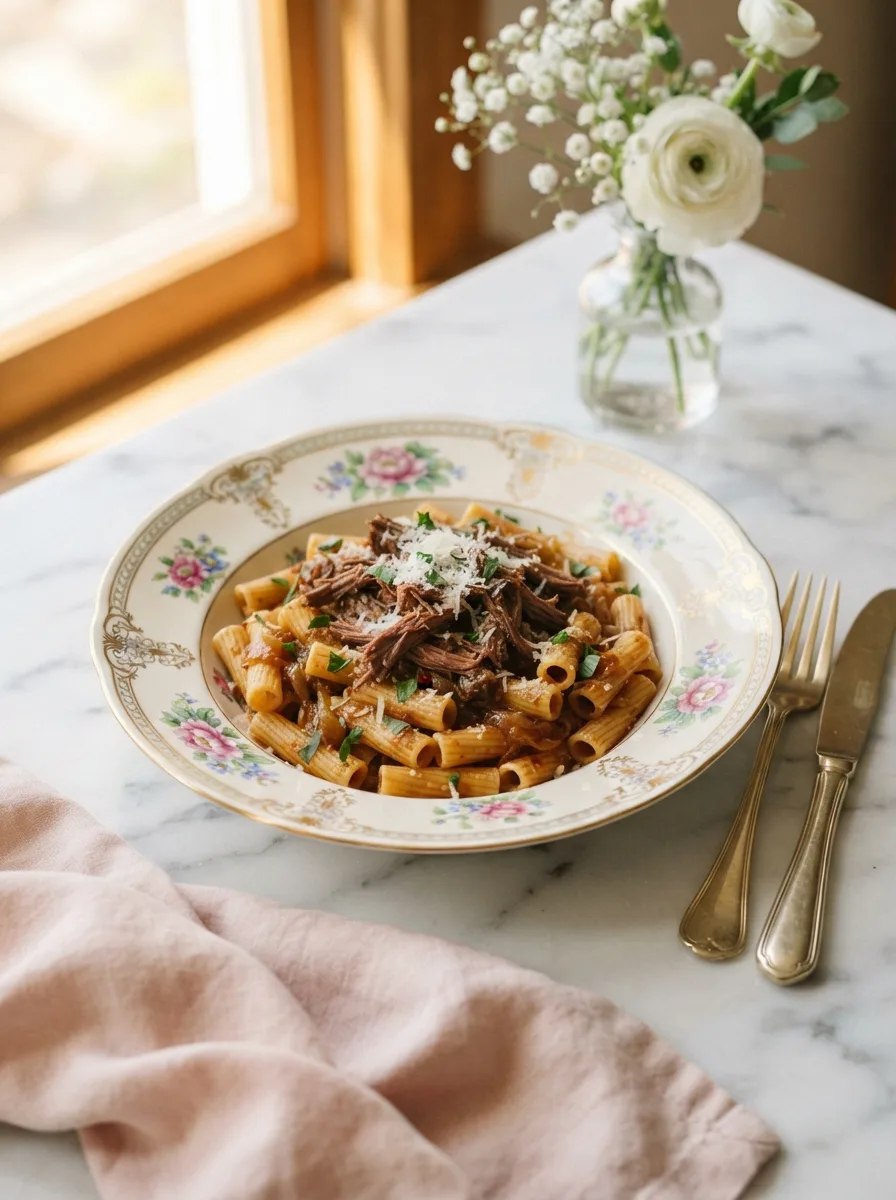
What makes this version work is patience, not skill. The onions need close to an hour on low heat before they even start to break down, and most home versions I found online rush that step. The beef needs a real braise — not a quick simmer — until it falls apart with a spoon. Once both of those are right, the sauce comes together almost on its own.
★★★★★ “I grew up two blocks from a Buona Beef and this is the closest anyone’s gotten in a home kitchen. The onions are exactly right — that melted, almost caramel texture.” — Denise R., recipe tester (pre-launch)
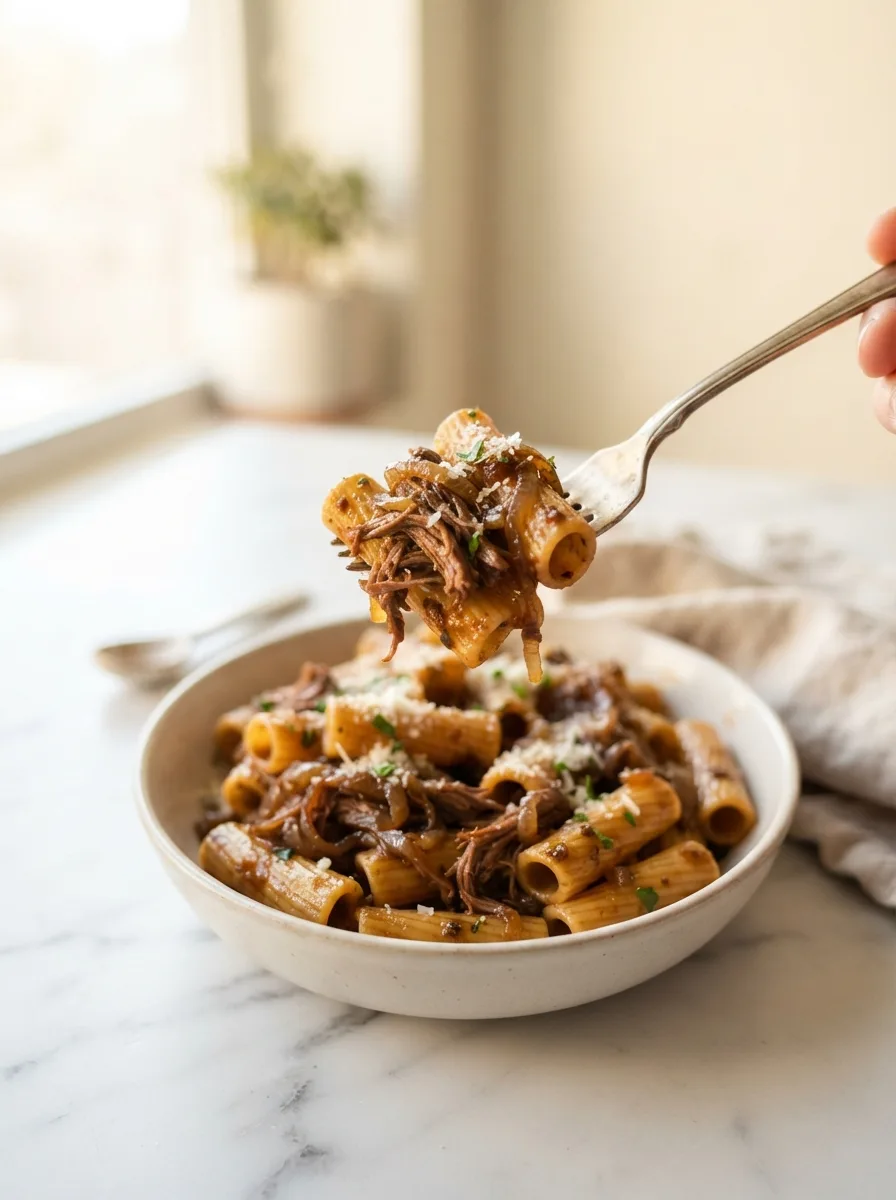
Why You’ll Love This Buona Beef Tuna Genovese Copycat Recipe
- It actually tastes like the original: The long onion cook and real beef braise are the two things most copycat versions skip, and they’re the two things that matter most.
- It’s a low-effort, high-reward braise: Active time is maybe 30 minutes. The rest is the oven or stovetop doing the work while you do something else.
- It reheats better than it starts: Like most braises, this tastes even better on day two once the flavors settle.
- One pot, minimal cleanup: Everything — sear, sauté, braise — happens in the same Dutch oven.
Key Ingredients
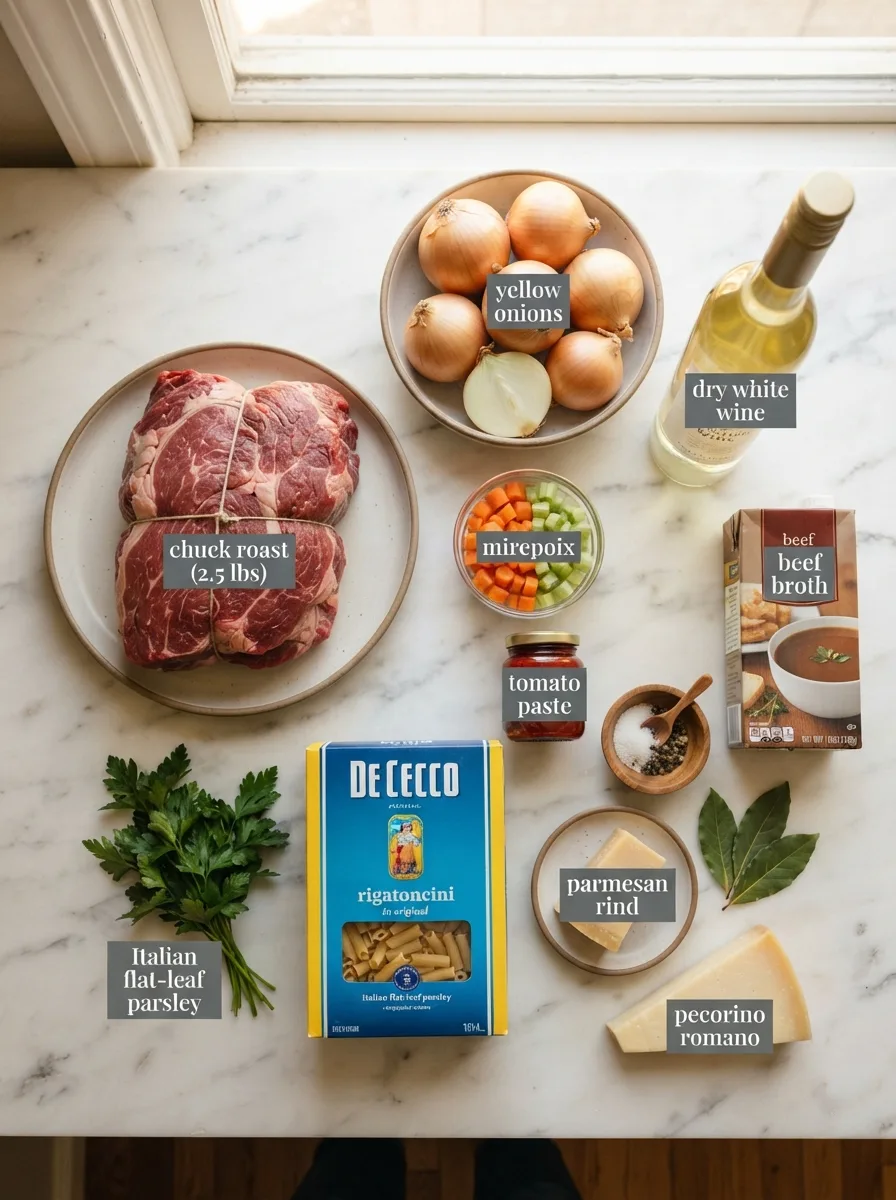
Beef chuck roast (3 lbs). Chuck is the only cut worth using here — it has enough connective tissue to break down into shreds over a long braise. Leaner cuts like sirloin will dry out and never get that fall-apart texture.
Yellow onions (4 lbs, about 6–7 large). This is the actual heart of a genovese sauce. Yellow onions have the right sugar content to caramelize into something almost jammy. Sweet onions work in a pinch but turn watery faster, so watch your cook time.
Tomato paste (3 tablespoons). Just enough to deepen the color and add a little acidity — this is not a tomato sauce. If you add more, you’ll end up with something closer to a beef ragu than a genovese.
Dry white wine (1 cup). Deglazes the pot and adds brightness that cuts through all that caramelized sweetness. A dry vermouth works as a substitute if you don’t have wine open.
Parmesan rind (optional but worth it). Simmered in the braise, it melts into the sauce and adds a savory backbone you can’t fully replace. If you don’t have one, add an extra ¼ cup of grated parmesan at the end instead.
Ingredient Note: Don’t rush the onions by cutting them thick to save chopping time. Thin, even slices break down evenly — thick chunks stay firm in the center even after an hour of cooking, and you’ll get an inconsistent texture in the final sauce.
Equipment You’ll Need
- Dutch oven (5–6 quart) — Needed for searing, sautéing, and braising in one pot. A heavy stockpot works if you don’t have one, just watch for scorching on the bottom.
- Sharp chef’s knife — You’re slicing close to 4 pounds of onions; a dull knife makes this twice as long and twice as annoying.
- Two forks or tongs — For shredding the beef once it’s braised.
- Fine grater or zester — For the pecorino romano topping; pre-shredded cheese won’t melt into the sauce the same way.
Controlling the Onion Texture (A Controlled Test)
The single most important variable in this recipe is how long the onions cook before the beef ever goes back into the pot. I tested three cook times on the same batch of sliced onions to see exactly where the texture and flavor payoff was.
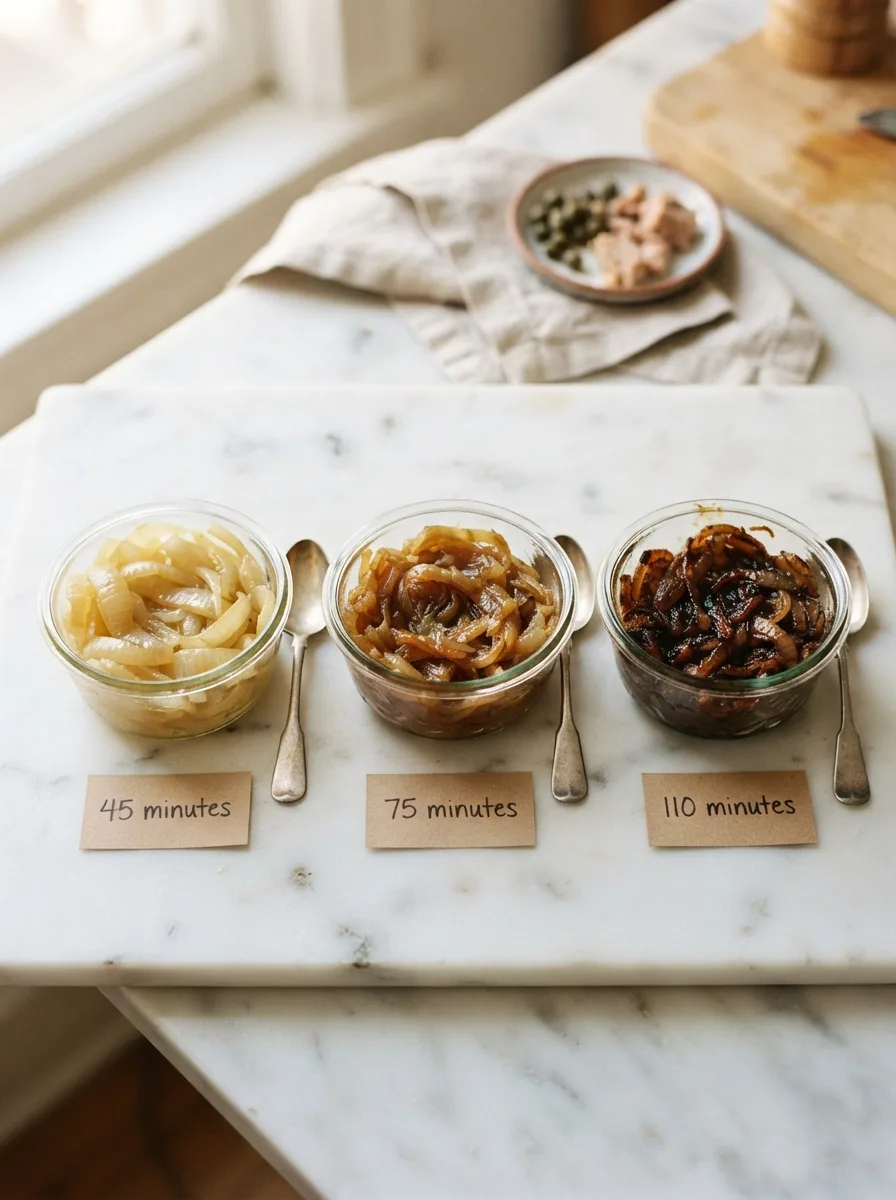
45 minutes: Onions were golden but still held some structure — you could still identify individual strands. The sauce ended up thinner and noticeably less sweet.
75 minutes: This is the sweet spot. The onions had almost fully broken down into a soft, jammy mass, with just enough texture left to give the sauce body instead of turning it into a purée.
110 minutes: Past a certain point, the onions started to catch on the bottom of the pot and turn slightly bitter, even on low heat. The extra time didn’t add flavor — it just risked scorching.
The takeaway: 75 minutes on low heat, stirring occasionally, is the target. Less than that and the sauce tastes thin. More than that and you’re just gambling with your pot.
How to Make Buona Beef Tuna Genovese Copycat Recipe
Before you start: Pull the beef out of the fridge 20 minutes before searing so it browns evenly, and have your onions sliced before you start — once the beef is seared, everything moves quickly.
Step 1 — Sear the beef
Pat the beef chunks dry and season generously with salt and pepper. Heat 2 tablespoons of olive oil in the Dutch oven over medium-high until it shimmers, then sear the beef in batches, about 3 minutes per side, until deeply browned. Don’t crowd the pot — steam instead of a crust is the most common mistake here. Remove the beef and set aside.
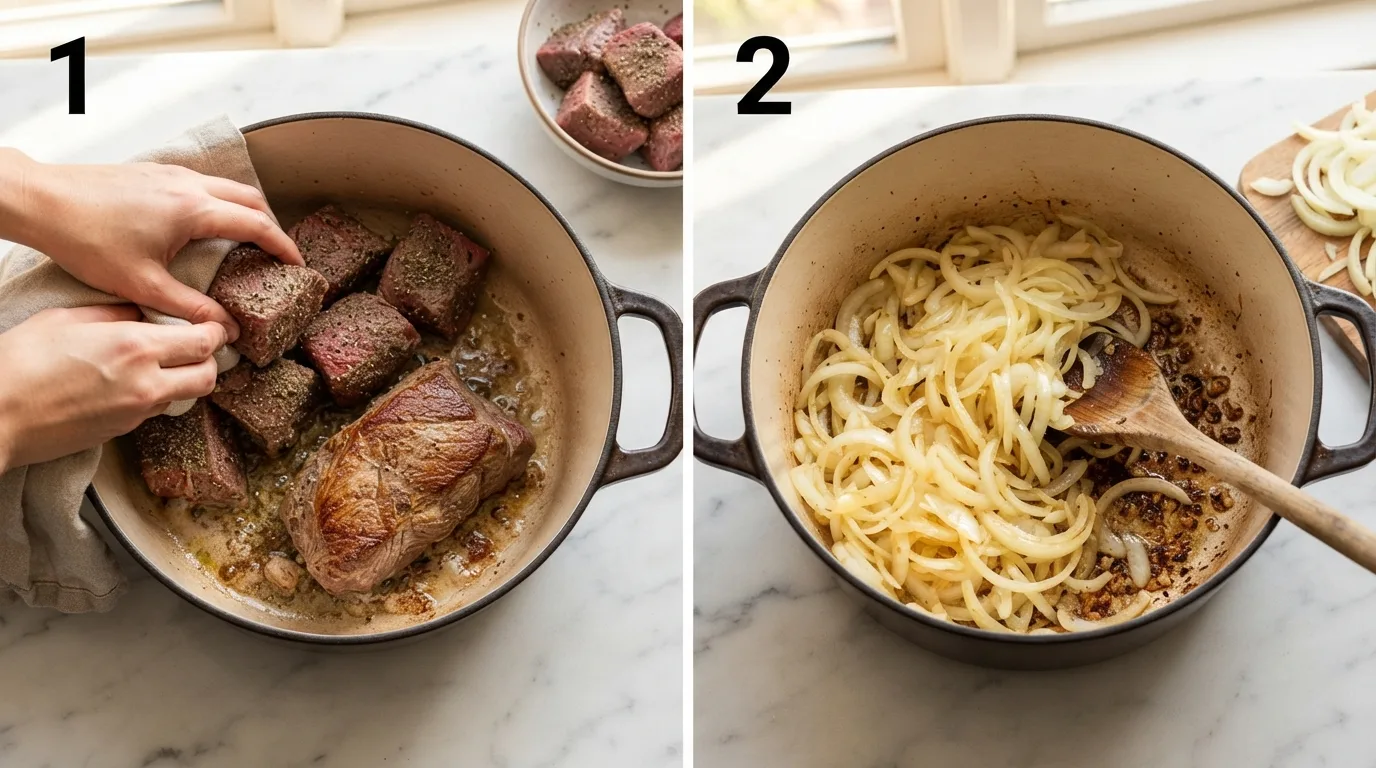
Step 2 — Cook the onions down
Add the remaining tablespoon of oil to the same pot along with all the sliced onions, carrots, and celery. Cook over low heat, stirring every 10 minutes or so, for about 75 minutes, until the onions have collapsed into a soft, deep amber mass. Resist the urge to raise the heat to speed this up — low and slow is what builds the sweetness.
Step 3 — Add the tomato paste and garlic
Stir in the tomato paste and minced garlic and cook for 2 minutes, until the paste darkens slightly and smells toasted rather than raw. This short step matters more than it looks — raw tomato paste tastes sharp and metallic in the finished sauce.
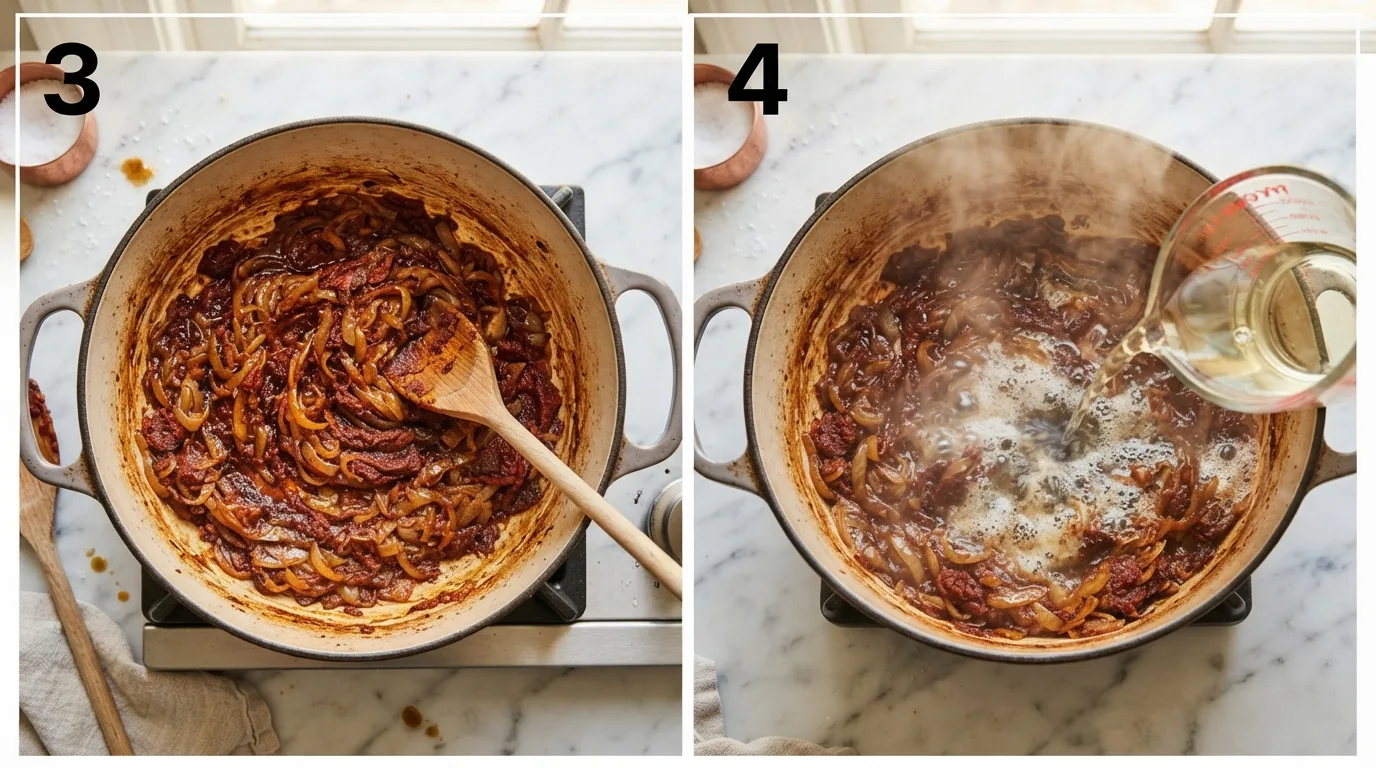
Step 4 — Deglaze and build the braise
Pour in the white wine, scraping up any browned bits from the bottom of the pot, and let it simmer for 2–3 minutes until slightly reduced. Return the seared beef to the pot along with the beef broth, parmesan rind, and bay leaves. Bring to a gentle simmer.
Step 5 — Braise until the beef shreds easily
Cover the pot and either transfer to a 325°F (163°C) oven or keep it on the stovetop over the lowest heat. Braise for 3 to 3½ hours, until the beef falls apart at the touch of a fork. You’ll know it’s ready when the sauce has thickened slightly and the beef offers no resistance at all when you press a fork into it.
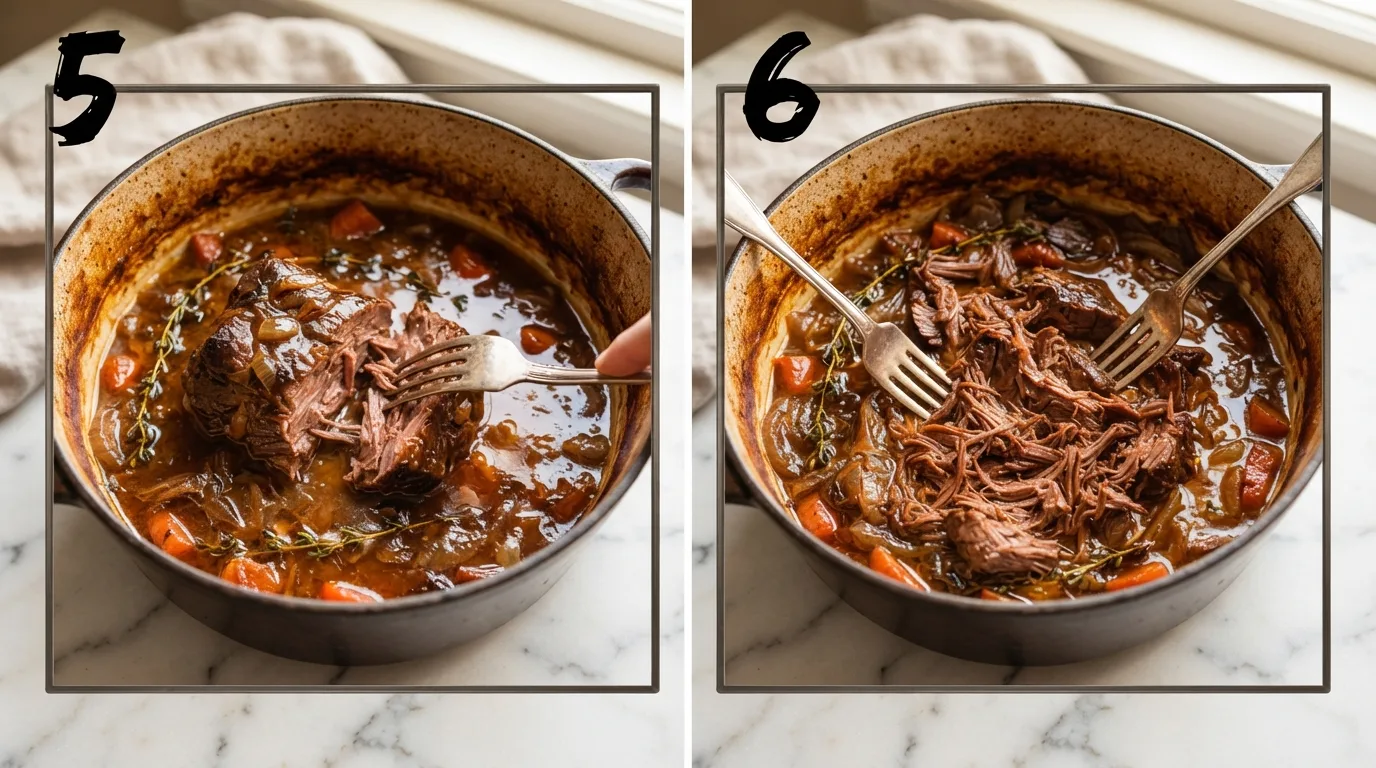
Step 6 — Shred and finish
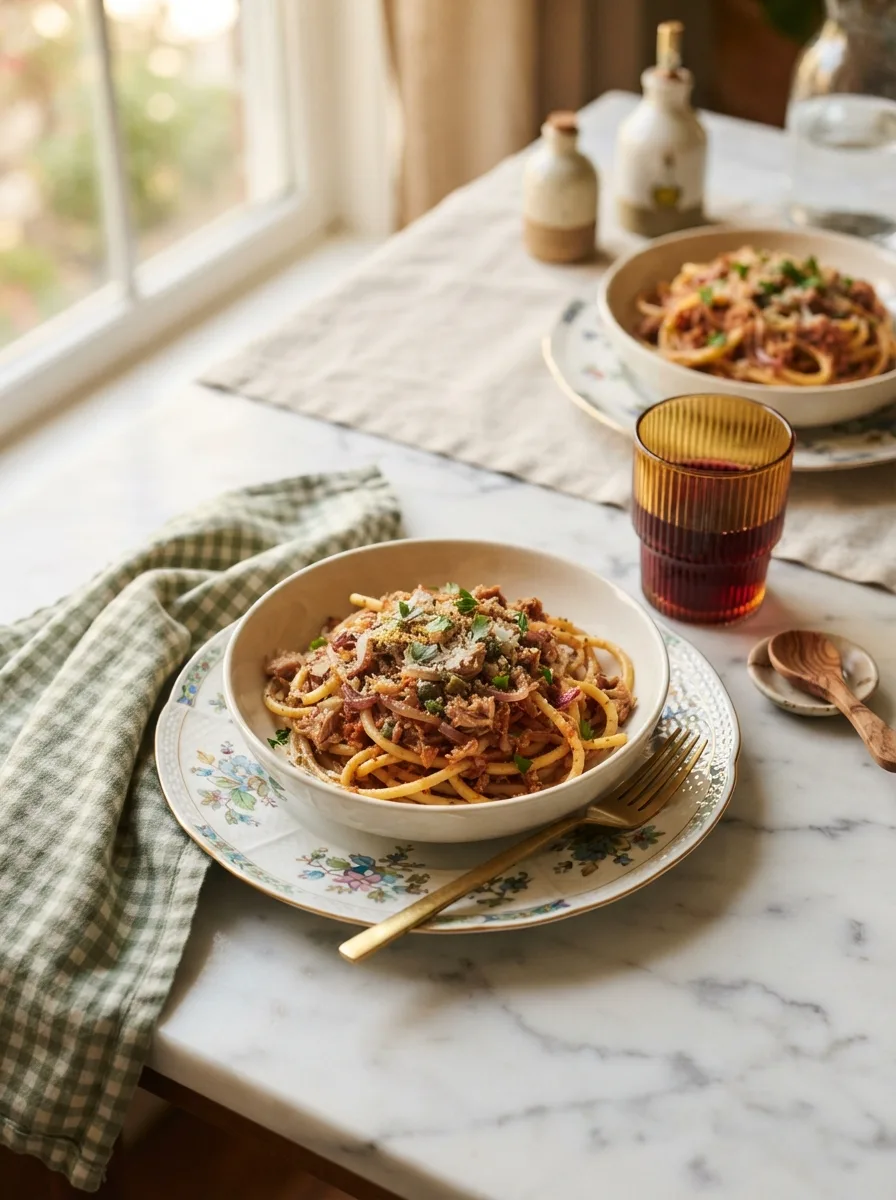
Remove the parmesan rind and bay leaves. Shred the beef directly in the pot using two forks, stirring it back into the sauce. Taste and adjust salt — the sauce should taste rich, slightly sweet, and savory, not tomato-forward. Cook your pasta separately, toss it with the sauce, and finish with grated pecorino romano and fresh parsley.
Pro Tips for Perfect Buona Beef Tuna Genovese
Tip 1: Slice the onions thin and even. Uneven pieces cook unevenly — thin, consistent slices are what get you that melted texture in 75 minutes instead of 2 hours.
Tip 2: Don’t skip the sear. It’s tempting to skip straight to the onions, but the browned bits left in the pot from searing the beef are what give the sauce its depth. A sauce made without searing tastes noticeably flatter.
Tip 3: Save some pasta water. A splash of starchy pasta water when tossing the pasta with the sauce helps everything cling together instead of pooling at the bottom of the bowl.
Tip 4: Make it a day ahead if you can. The flavors round out significantly overnight in the fridge — this is one of those recipes where “day two” is genuinely the better version.
Variations and Substitutions
Dietary Variations:
- Gluten-free: Swap in your favorite gluten-free rigatoni or ziti — the sauce itself has no flour or gluten in it, so no other changes are needed.
- Lower-fat version: Trim more visible fat from the chuck roast before searing, and skim excess fat from the surface of the braise before shredding the beef.
Flavor Variations:
- Spicier version: Add a pinch of red pepper flakes with the garlic and tomato paste for background heat that doesn’t overpower the onions.
Ingredient Substitutions:
- Chuck roast → boneless short ribs (same braise time, slightly richer result)
- White wine → dry vermouth or an extra ½ cup beef broth with a splash of white wine vinegar
- Rigatoncini → ziti, penne, or rigatoni
If you’re building out a whole Italian-American dinner rotation, this one pairs well with a side of johnny carino’s spicy romano chicken if you’re feeding a crowd that wants two mains on the table.
Troubleshooting
My sauce tastes thin and watery instead of rich?
This almost always means the onions didn’t cook long enough. If they still hold visible shape and haven’t turned deep amber, they haven’t released enough of their sugar yet. Give them another 20–30 minutes on low heat next time.
My beef isn’t shredding, it’s just tough?
It needs more time, not more heat. Chuck roast needs a low, slow braise to break down its connective tissue — if it’s still firm after 3 hours, cover and keep going in 30-minute increments until a fork slides through with no resistance.
My onions caught on the bottom of the pot?
Your heat is too high, or you’re not stirring often enough. Onions release moisture as they cook, but once that moisture evaporates in a hot spot, they’ll scorch fast. Drop the heat and stir every 8–10 minutes, scraping the bottom each time.
Storage and Make-Ahead
Counter: Not recommended beyond 2 hours — this is a meat-and-onion braise, so treat it like any cooked beef dish for food safety.
Refrigerator: Store the sauce (separate from cooked pasta, if possible) in an airtight container for up to 4 days. The flavor genuinely improves by day two.
Freeze: The sauce freezes well for up to 3 months. Freeze in portions, cool completely first, and leave a little headroom in the container for expansion.
Reheating: Reheat gently on the stovetop over low heat with a splash of beef broth or water to loosen the sauce, stirring occasionally. Microwave works too, in 1-minute bursts, stirred between each.
Make-Ahead: The sauce can be made up to 2 days ahead in full. Cook the pasta fresh right before serving and toss together — the pasta doesn’t hold up well pre-tossed and refrigerated.
Frequently Asked Questions
Q: Why is it called “tuna genovese” if there’s no tuna in it? A: Nobody seems to have a definitive answer, honestly — it’s a Chicago-area Italian beef term, and “genovese” itself is a slow-cooked onion-and-beef sauce style with roots in Naples, not Genoa. The “tuna” part appears to be regional slang rather than a literal ingredient.
Q: Can I make this in a slow cooker? A: Yes. Sear the beef and cook down the onions on the stovetop first (those steps don’t translate well to a slow cooker), then transfer everything to the slow cooker and cook on low for 6–7 hours.
Q: Can I use a different cut of beef? A: Chuck roast is ideal, but boneless short ribs or even a brisket work well too. Avoid lean cuts like sirloin or round — they won’t shred properly after braising.
Q: Do I have to use a parmesan rind? A: No, it’s optional. It adds a savory depth that’s hard to replicate, but if you don’t have one, stir in an extra ¼ cup of grated parmesan at the very end instead.
Q: How do I know when the onions are done cooking down? A: They should be deep amber, soft enough to mash easily with a spoon, and mostly collapsed rather than holding their original shape. This typically takes about 75 minutes on low heat.
Q: Can I double this recipe? A: Yes, though you’ll need a larger pot — an 8-quart Dutch oven or bigger. The onion cook time may run slightly longer since you’re working with more volume in the pot.
More Italian-American Recipes You’ll Love
- Ground Chicken Chips — a crispy, protein-forward snack that’s become a go-to in my kitchen for the same reason this braise is: minimal ingredients, maximum payoff.
- Pickapeppa Sauce Recipe — a tangy, slightly sweet condiment that’s a great finishing drizzle over leftover shredded beef.
- Blue Runner Red Beans Recipe — another low-and-slow copycat built on the same “patience over effort” principle.
- Johnny Carino’s Spicy Romano Chicken — if you loved the pecorino finish here, this one leans into the same cheesy, savory direction.
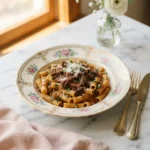
Foolproof Buona Beef Tuna Genovese Copycat
Ingredients
For the Genovese Beef Sauce:
- 3 lb (1.4 kg) boneless beef chuck roast, cut into 3-inch chunks
- 3 tablespoon olive oil, divided
- 4 lb (1.8 kg) yellow onions (about 6–7 large), thinly sliced
- 2 large carrots, finely diced
- 2 celery stalks, finely diced
- 4 clove garlic, minced
- 3 tablespoon tomato paste
- 1 cup (240 ml) dry white wine
- 3 cup (720 ml) low-sodium beef broth
- 1 parmesan rind (optional)
- 2 bay leaves
- 1 teaspoon kosher salt, plus more to taste
- 1/2 teaspoon black pepper
- Pinch of red pepper flakes (optional)
For Serving:
- 1 lb (450 g) rigatoncini or ziti pasta
- 1 cup (100 g) freshly grated pecorino romano, plus more for topping
- 1/4 cup fresh chopped parsley
Instructions
- Pat the beef dry and season with salt and pepper. Heat 2 tablespoons olive oil in a Dutch oven over medium-high heat and sear the beef in batches, about 3 minutes per side, until deeply browned. Remove and set aside.
- Add the remaining tablespoon of oil, sliced onions, carrots, and celery to the pot. Cook over low heat, stirring every 10 minutes, for about 75 minutes, until the onions are deep amber and mostly collapsed.
- Stir in the tomato paste and garlic and cook for 2 minutes, until the paste darkens slightly.
- Pour in the white wine, scraping up any browned bits, and simmer 2–3 minutes until slightly reduced.
- Return the beef to the pot along with the beef broth, parmesan rind, and bay leaves. Bring to a gentle simmer.
- Cover and braise in a 325°F (163°C) oven, or over the lowest stovetop heat, for 3 to 3½ hours, until the beef shreds easily with a fork.
- Remove the parmesan rind and bay leaves. Shred the beef directly in the pot with two forks, stirring it back into the sauce. Taste and adjust salt.
- Cook the pasta according to package directions, reserving ½ cup of pasta water. Toss the pasta with the sauce, adding a splash of pasta water if needed to loosen it.
- Serve topped with grated pecorino romano and fresh parsley.
Notes
- The sauce tastes noticeably better after a day in the fridge — make it a day ahead if your schedule allows.
- If the onions start catching on the bottom of the pot before they've fully broken down, lower the heat and stir more frequently rather than adding liquid.
- Skim visible fat from the surface of the braise before shredding the beef if you prefer a lighter sauce.
- Leftover sauce freezes well for up to 3 months in an airtight container; toss with freshly cooked pasta after reheating rather than freezing the pasta with it.## More Recipes You'll Love