Authentic Jerk Chicken (Real Jamaican Recipe)

The first time I made authentic jerk chicken, I used a bottled marinade and a gas grill. It tasted like sweet barbecue sauce with cayenne dumped in, which was a rough introduction to one of Jamaica’s great food traditions. Real jerk gets its flavor from scotch bonnet peppers, allspice, thyme, and a fresh wet marinade, then picks up its smoky character from wood or pimento wood—not a squeeze bottle. The heat should taste fruity and layered, not like plain pepper punishment.
I made this recipe four times over three months, changing only the marinade time while keeping the ingredients and chicken cut the same. The final version reminded me of jerk chicken from a roadside stand in Boston Bay, Jamaica, a place widely recognized for its jerk tradition. If your previous jerk chicken recipe turned out sweeter than spicy or smoky in a liquid-smoke sort of way, this method fixes the balance with real scotch bonnet peppers, proper seasoning, and controlled cooking.
The marinade takes about 10 minutes to blend, but the chicken needs real time: at least 4 hours, with 12 hours giving the best result in my tests. That wait lets salt and aromatic compounds move gradually into the meat instead of leaving the surface heavily seasoned and the center bland. Here is the scary moment to expect: the raw marinade will smell intensely hot, and the brown sugar can make the chicken darken quickly on the grill. Don’t panic; indirect heat finishes the chicken safely. Charcoal and pimento wood give deeper smoke, while an oven or gas grill is easier but less smoky.
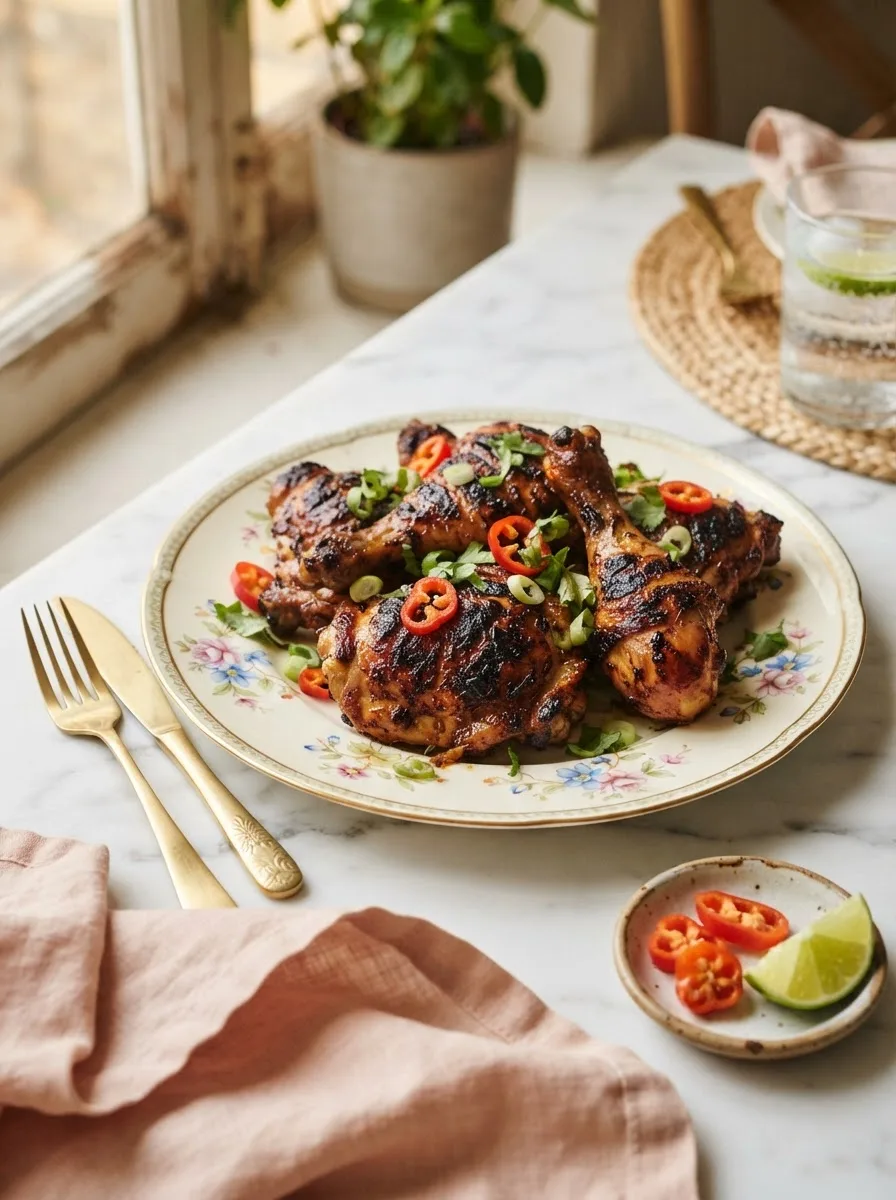
This authentic jerk uses enough scotch bonnet to bring real heat, balanced with brown sugar and allspice so the flavor develops before the burn arrives. The fresh ingredients make the sauce taste bright and aromatic rather than flat or metallic. It is properly spicy, but the pepper does not erase the thyme, ginger, garlic, and warm seasoning underneath.
★★★★★ “I’ve made a lot of ‘jerk chicken’ recipes that tasted like barbecue sauce with hot sauce mixed in. This is the first one that actually tasted like the jerk chicken I had in Negril. The scotch bonnet ratio is exactly right.” — Marcus T., recipe tester (pre-launch)
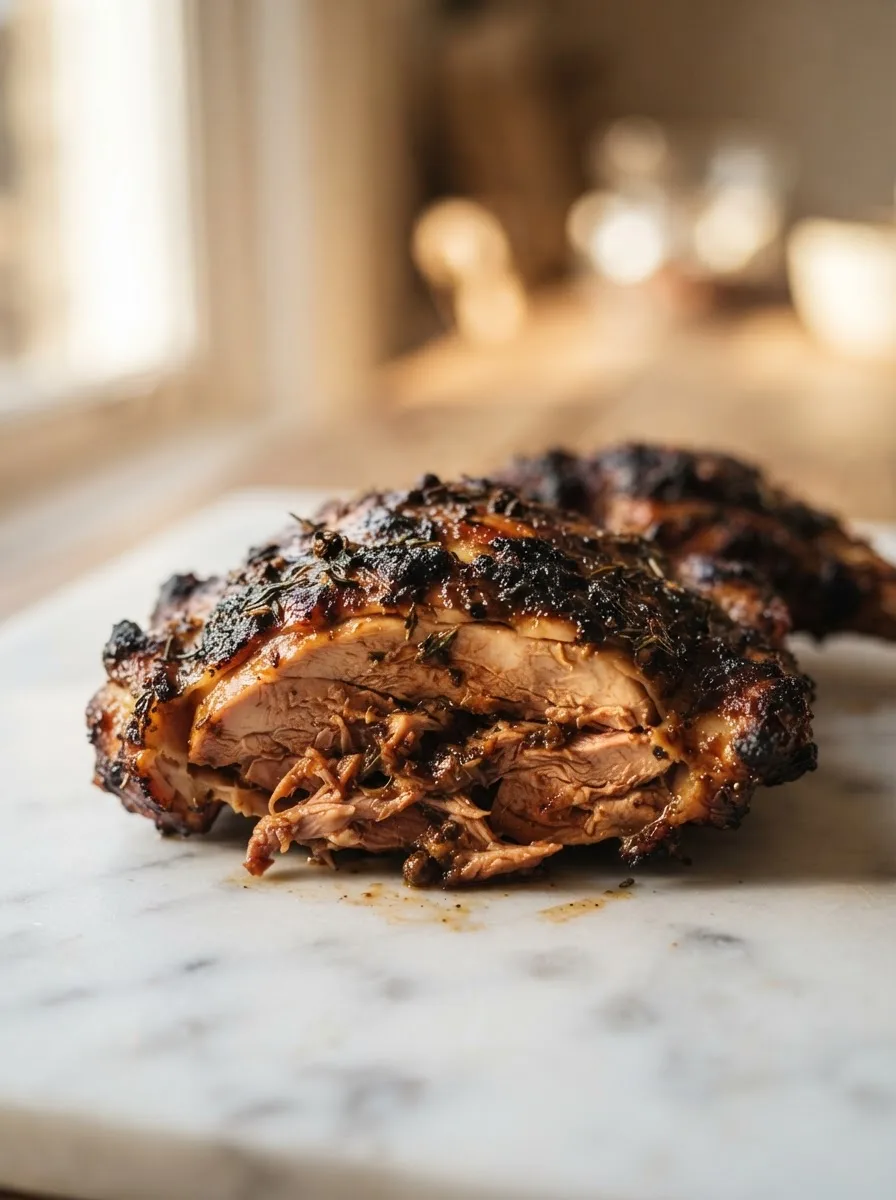
Why You’ll Love This Jamaican Jerk Chicken Recipe
- Fresh heat with layered flavor: Scotch bonnet peppers bring fruity heat that builds gradually, while allspice, thyme, garlic, and ginger keep the sauce from tasting like plain hot pepper.
- A marinade tested for real results: The 12-hour seasoning time gives the chicken deeper flavor without leaving the outer meat soft from too much lime juice.
- Char with either cooking setup: A grill gives the chicken its strongest smoky character, while an oven can still brown the sugar and spices properly.
- Traditional ingredients, clear purpose: This recipe uses a fresh marinade, pimento, allspice, thyme, and wood smoke instead of bottled smoke flavor.
Key Ingredients
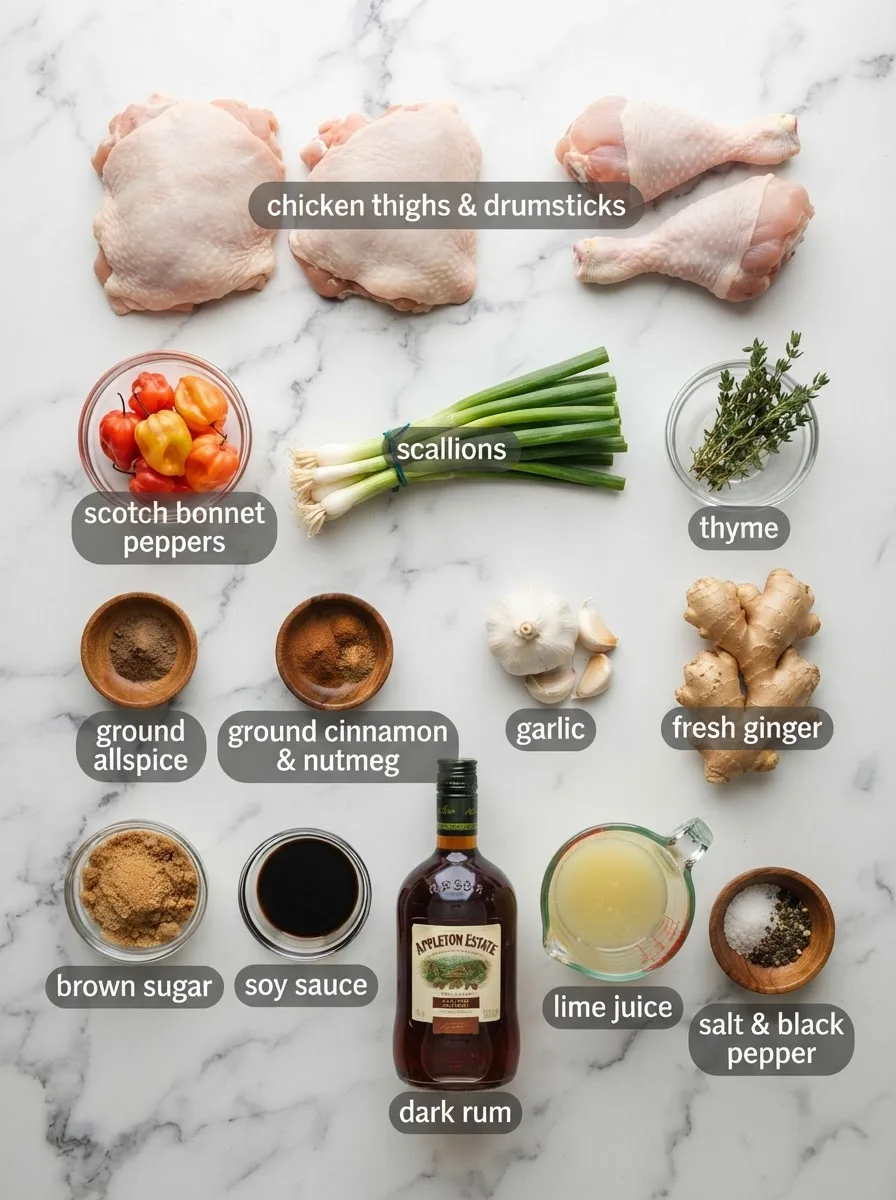
Scotch bonnet peppers (4–6). These peppers supply the fruity heat that defines authentic jerk. Their heat varies from pepper to pepper, so the final intensity will not be identical every time. Wear gloves while handling them, and keep your hands away from your eyes.
Allspice, also called pimento (2 tablespoons ground, plus berries if smoking). Allspice gives jerk its warm, clove-like seasoning and ties the marinade together. Freshly ground berries have a stronger aroma, while pimento wood adds a related smoky note when used on the grill.
Fresh thyme (¼ cup leaves, or 2 tablespoons dried). Thyme contributes a peppery, herbal edge. Fresh leaves keep more of their aroma; dried thyme needs time in the marinade to rehydrate and release its seasoning.
Scallions (6, roughly chopped). Scallions provide a mild onion flavor and blend smoothly in a food processor or blender.
Brown sugar (1 tablespoon). Sugar balances the pepper heat and browns quickly over the grill. Its caramelization and Maillard browning create the dark crust, so watch the chicken closely once it hits direct heat.
Soy sauce and lime juice. Soy sauce adds salt and savory depth; salt moves gradually into the chicken through diffusion. Lime juice changes the surface proteins and brightens the sauce, but too much time in acid can make the exterior soft. The oil helps spread fat-soluble aromas from the spices through the marinade.
Ingredient Note: Wash your hands and tools thoroughly after handling scotch bonnet peppers, and do not touch your face or eyes until you have cleaned them. I learned this the hard way during an early test batch.
Equipment You’ll Need
- Food processor or blender — for turning the scotch bonnet peppers, allspice, herbs, and other marinade ingredients into a smooth paste in about 10 minutes.
- Charcoal grill or cast-iron skillet — a grill provides the strongest smoke, especially with pimento wood, while a skillet works for the oven method.
- Meat thermometer — check the chicken in the thickest part without touching the bone, and remove it at 165°F.
- Large resealable bags or a big bowl — for coating every piece evenly and keeping the marinade contained.
Controlling the Heat and Smoke (A Controlled Test)
For this authentic jerk recipe, I tested one variable directly: marinade time. I kept the chicken cut, scotch bonnet peppers, ground allspice, salt, and every other ingredient the same in all four tests.
I compared batches marinated for 4, 12, and 24 hours, then repeated the 12-hour batch to make sure the result held up. The 4-hour chicken had good surface seasoning but tasted noticeably flatter near the bone. Both 12-hour batches had deeper flavor throughout and a juicy texture. The 24-hour chicken was not more seasoned than the 12-hour batch, but the outer layer was softer.
The takeaway: 12 hours is the sweet spot. Salt and seasoning move gradually into the meat, while lime juice changes the surface proteins. More time does not automatically mean better chicken; extended exposure to acid can make the exterior soft before it adds useful flavor. Plan for at least 4 hours when you can, but use 12 hours for the most consistent result.
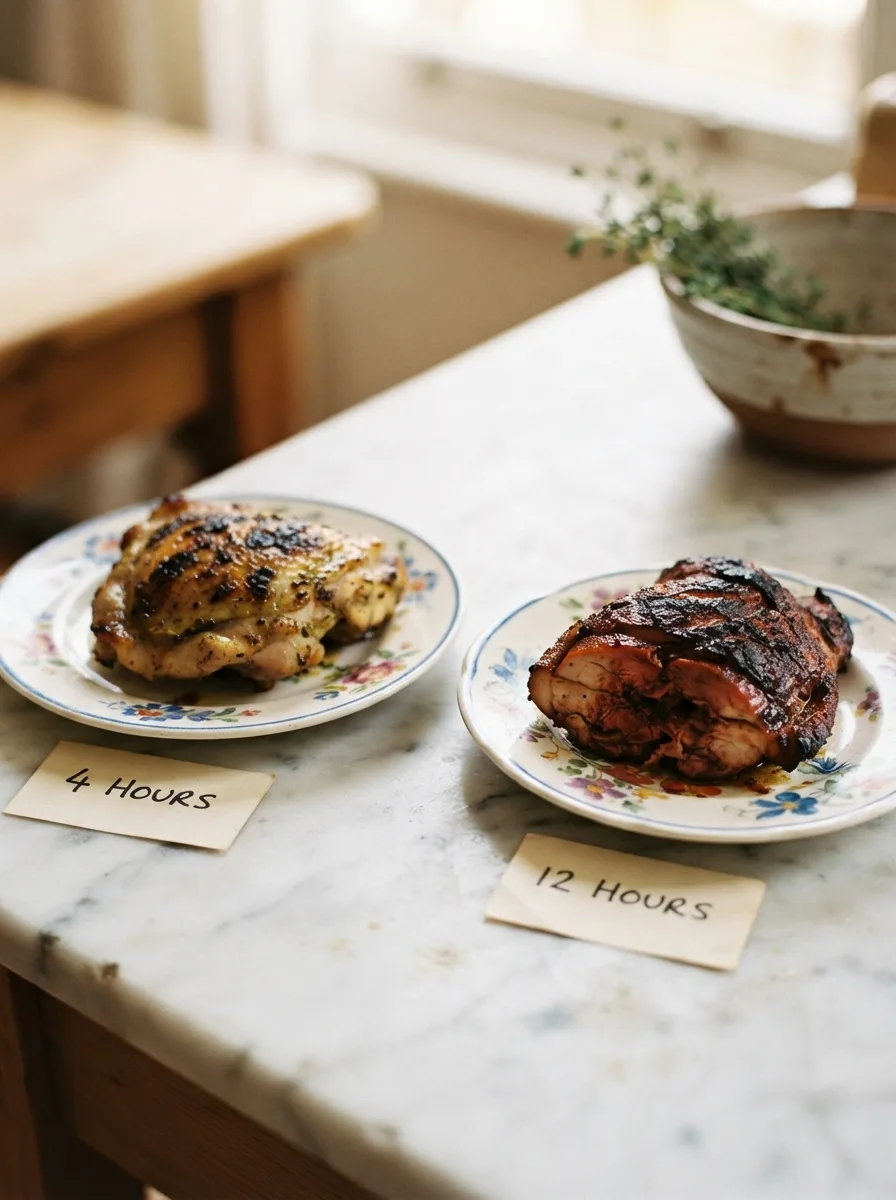
The grill choice is a practical trade-off, not part of the controlled test. Charcoal with pimento wood gives deeper smoke than a skillet-and-oven method, while the oven is easier to control. For either cooking method, use a two-zone grill setup when grilling, and check the chicken after the stated cooking time rather than relying on color alone.
How to Make Authentic Jerk Chicken
Before you start: Keep the chicken refrigerated while you prepare the marinade, and put on gloves before handling the scotch bonnet. The raw sauce may smell startlingly hot; that is normal, and the finished jerk chicken will taste more rounded after marinating and cooking.
Step 1 — Blend the Marinade
Combine 6 roughly chopped scallions, 4–6 scotch bonnet peppers, 4 garlic cloves, a 1-inch piece of ginger, ¼ cup fresh thyme leaves, 2 tablespoons ground allspice, 1 teaspoon cinnamon, ½ teaspoon nutmeg, ¼ teaspoon ground cloves, 1 tablespoon brown sugar, ¼ cup soy sauce, 2 tablespoons lime juice, 2 tablespoons oil, 1 teaspoon salt, and ½ teaspoon black pepper in a food processor or blender. Blend for 1–2 minutes, until the ingredients form a thick sauce with only a few fine flecks left. Blending breaks down the aromatics and disperses the oil through the marinade, so the seasoning coats the chicken evenly.
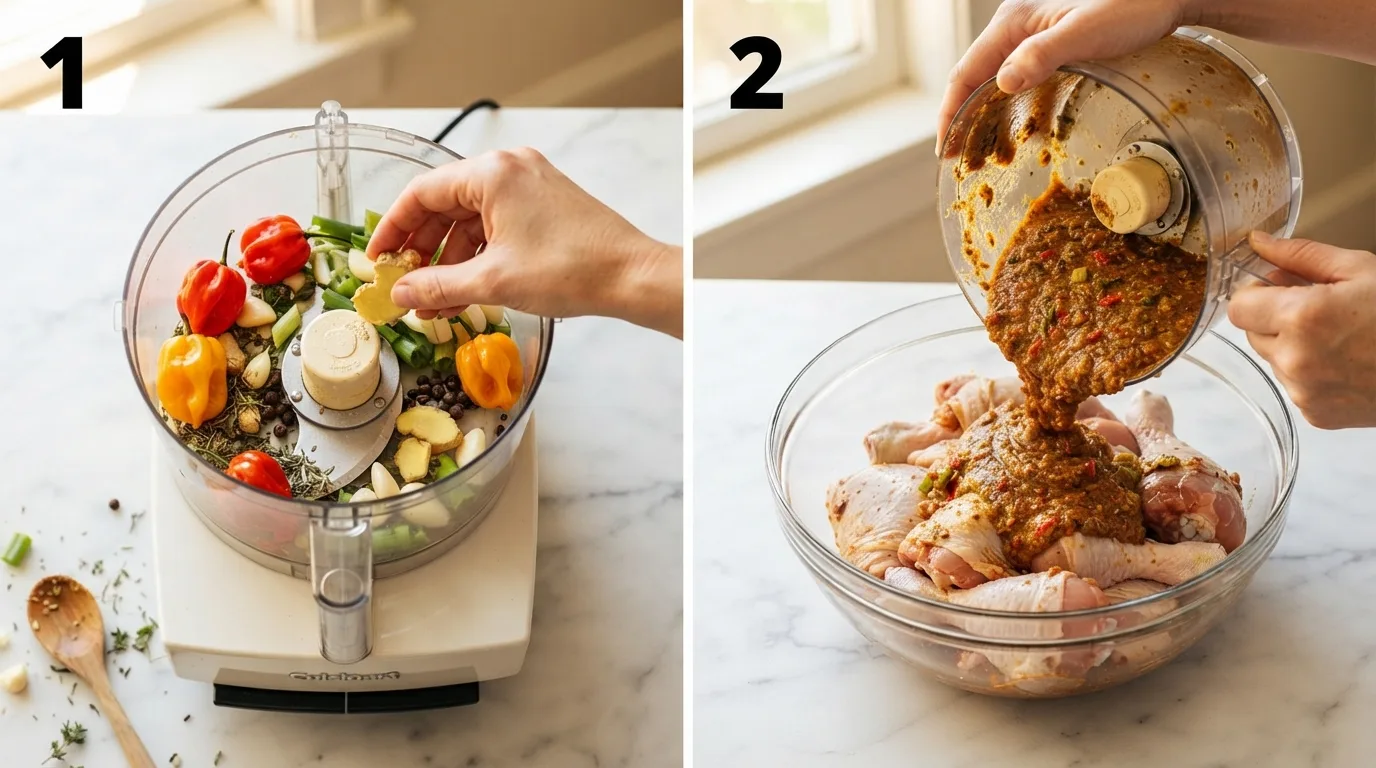
Step 2 — Marinate the Chicken
Use bone-in, skin-on chicken thighs and drumsticks. Score each piece three times with a sharp knife, making shallow cuts through the skin and just into the meat. These channels let the marinade reach beyond the skin instead of staying on the surface. Coat the chicken thoroughly, including inside the cuts, then cover and refrigerate for 12 hours. Keep the chicken cold throughout the marinating time.
Step 3 — Prep the Grill
Light the charcoal grill and let the coals burn until they are covered with visible white ash, about 20–30 minutes. Arrange the coals on one side to create a hot zone and leave the other side cooler. If your grill manufacturer allows wood chips, add soaked pimento wood chips to the coals; a few allspice berries can add aroma too, but they are optional. The hot side should reach medium heat, roughly 400–450°F at the grate.
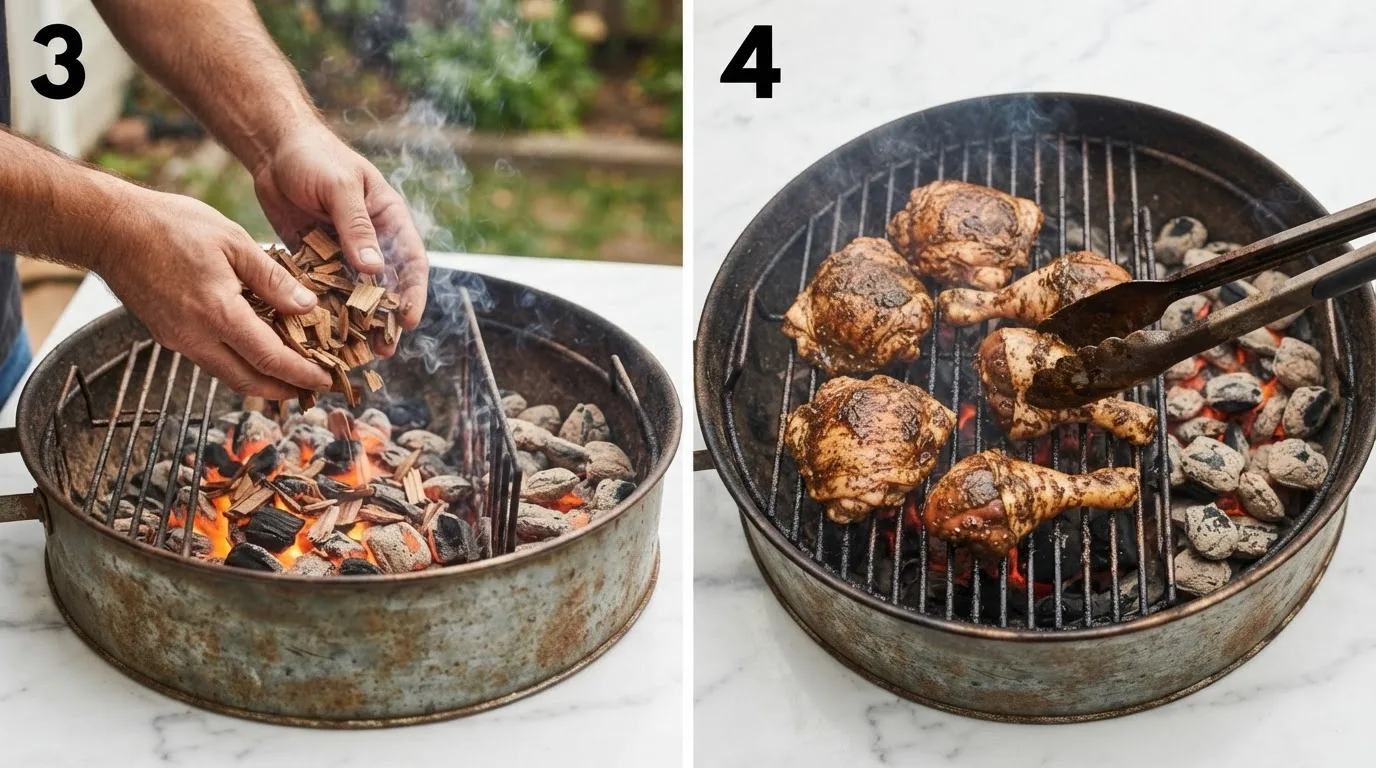
Step 4 — Sear Over Direct Heat
Remove excess marinade from the chicken without scraping the surface bare, then place the pieces skin-side down over the hot side of the grill. Sear for 4–5 minutes per side. The sugar may darken quickly, and flare-ups can happen when fat drips onto the coals; this is the scary part, but do not chase black char. You want mahogany-brown skin and visible grill marks. If the chicken begins to burn, move it to the cooler side immediately—the indirect finish is the fix.
Step 5 — Finish Over Indirect Heat
Move the chicken to the cooler side of the grill, close the lid, and cook for 25–30 minutes, turning once halfway through. Indirect heat cooks the bone-in pieces more evenly while the smoke seasons the surface without burning the sugar. Check the thickest part of each piece with a meat thermometer, keeping the probe away from the bone. If you are using the oven method, sear the chicken in a hot cast-iron skillet, then finish it in a 375°F oven for 25–30 minutes.
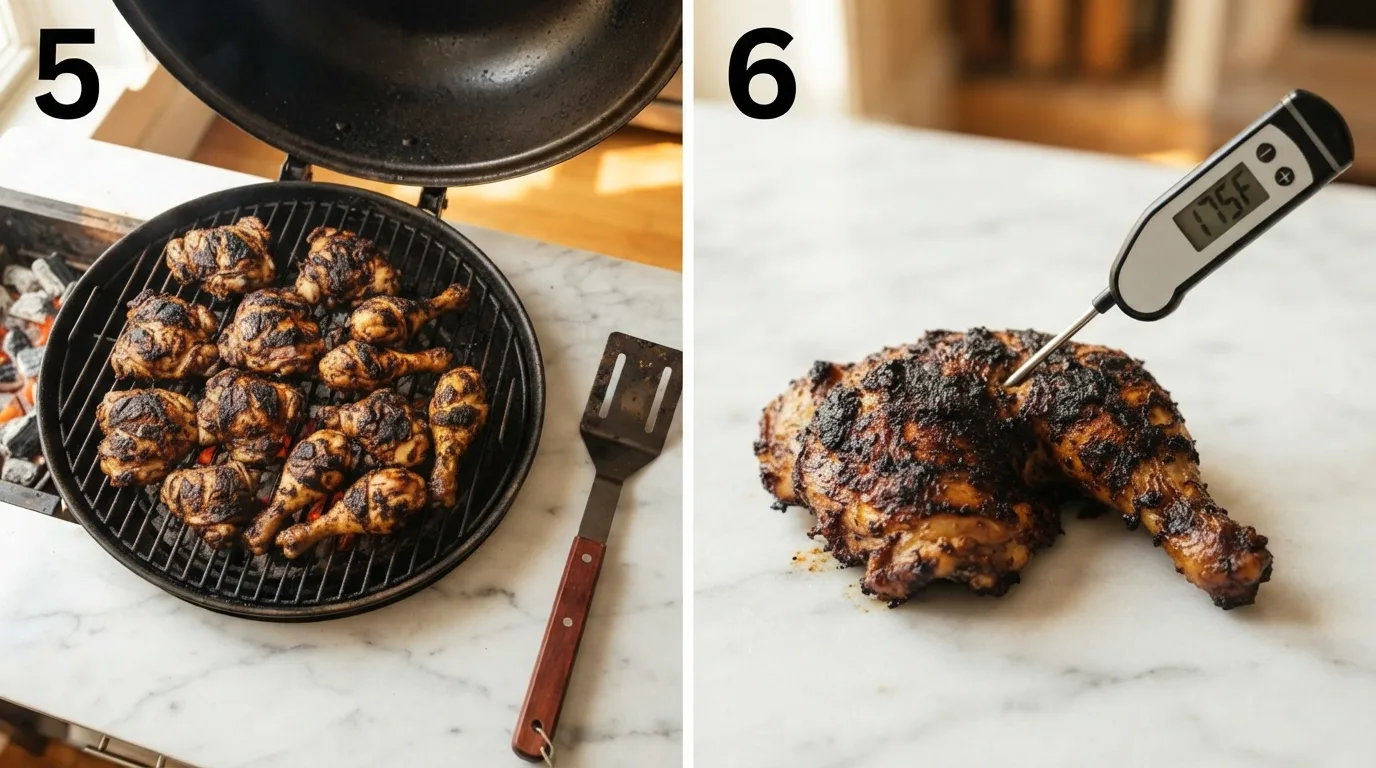
Step 6 — Rest and Serve
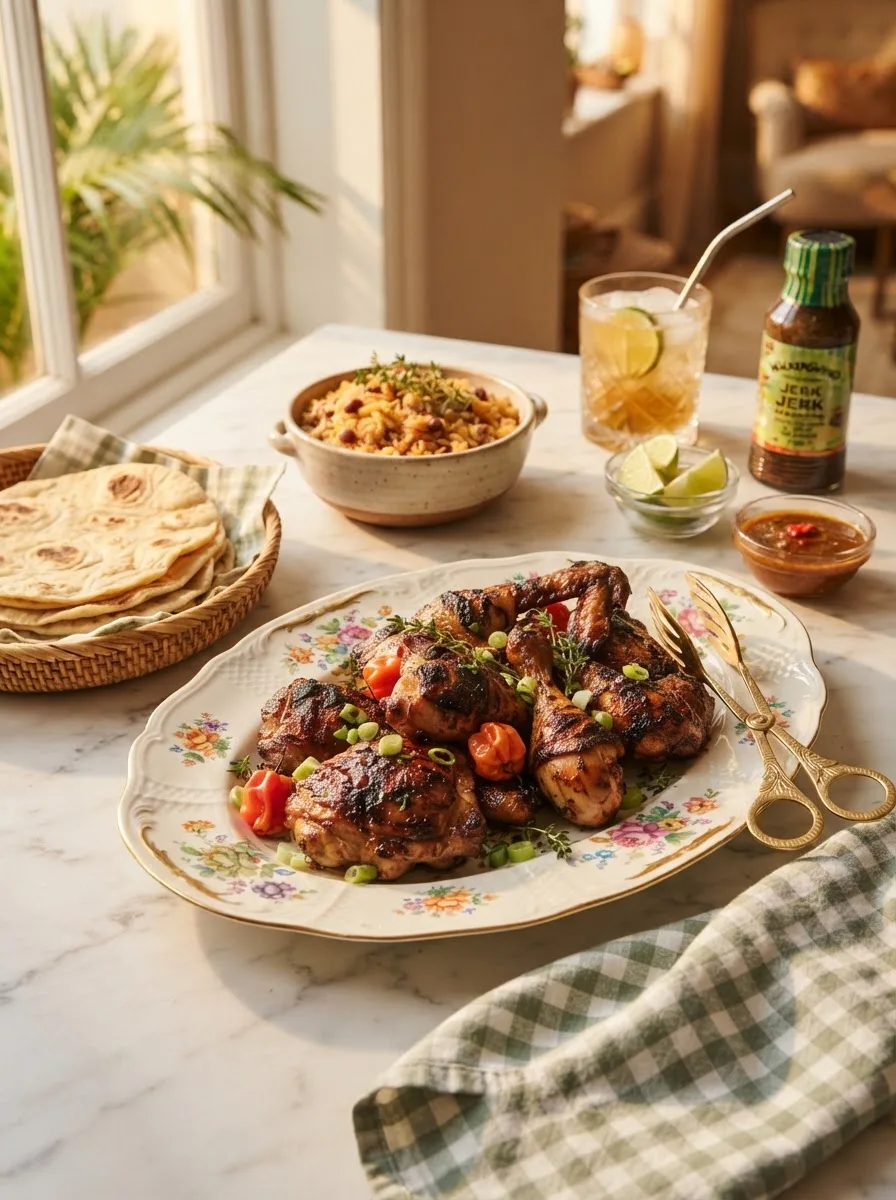
Remove the chicken when the thickest part reaches 165°F, measured away from the bone, then rest it for 5–10 minutes. Resting gives the hot juices time to redistribute instead of spilling onto the cutting board. Serve the jerk chicken with lime wedges and extra scotch bonnet on the side for anyone who wants more heat.
Pro Tips for Authentic Jerk Chicken
Tip 1: Taste the sauce before it touches the chicken. It should taste intensely seasoned, salty, sharp, and hotter than you want the finished dish. The chicken and cooking time will soften that first impact.
Tip 2: Watch the sugar near the grill. Brown sugar darkens fast over direct heat, so move the chicken away from the coals if the skin turns black before the meat is cooked. Charcoal and wood give better smoke, but the indirect stage protects the chicken from burning.
Tip 3: Adjust for the peppers you have. Scotch bonnet heat varies from pepper to pepper. Start with four, then use six when you want a hotter jerk, keeping the same amount of the other ingredients.
Variations and Substitutions
Dietary Variations:
- Boneless version: Use boneless, skinless chicken thighs and reduce the indirect cooking time to 12–15 minutes. Check the thickest piece early because boneless meat cooks faster and dries out sooner.
- Lower-sodium version: Use 2 tablespoons soy sauce and add 1 extra tablespoon lime juice. The sauce will taste less savory, but the lime keeps its sharp balance.
Flavor Variations:
- Rum marinade: Replace 2 tablespoons of the soy sauce with dark rum for a deeper, slightly sweeter note. For a dry version of this seasoning, see jamaican jerk seasoning.
Ingredient Substitutions:
- No charcoal grill: Sear the chicken in a very hot cast-iron skillet, then finish it in a 375°F oven for 25–30 minutes. This method gives you browned skin and good flavor, but it cannot reproduce the smoke from charcoal and pimento wood.
- No scotch bonnet: Use habanero peppers in the same quantity. They provide a similar level of heat and a closer flavor than a mild pepper, though the result will not be identical.
For sides, my parsnip and leek soup makes a good starter, while jamaican roti works well with the chicken and its sauce.
Troubleshooting
My jerk chicken tastes seasoned on the outside but bland near the bone — what happened?
The chicken either marinated for too little time or was not scored before the marinade went on. Give bone-in pieces 12 hours when possible; the cuts create channels, while salt and other seasoning move gradually into the meat. Keep raw chicken refrigerated, and never leave it sitting out while the marinade works.
My chicken skin burned before the inside finished cooking — how do I fix it?
The sugar browns quickly over direct heat, especially when fat drips onto a hot grill. Move the chicken to the cooler side of a two-zone fire so indirect cooking can finish the center without turning the skin bitter. If the outside is already black, scrape off loose burnt sauce before serving.
My jerk chicken isn’t spicy enough — what should I do next time?
Scotch bonnet heat changes from pepper to pepper. Use six scotch bonnet peppers instead of four next time, or add one extra scotch bonnet pepper after tasting the uncooked marinade. Garlic, ginger, salt, and the other ingredients should remain unchanged so you increase heat without throwing off the sauce.
Storage and Make-Ahead
Counter: Refrigerate cooked jerk chicken within 2 hours. In temperatures above 90°F, use a 1-hour limit because bacteria multiply faster in warm food.
Refrigerator: Store cooked chicken in a sealed container for up to 4 days. Refrigerate leftovers promptly, and keep raw chicken separate from ready-to-eat food.
Freeze (cooked): Freeze cooked chicken in a freezer bag or airtight container for up to 3 months. Press out excess air to protect the texture, then thaw it overnight in the refrigerator.
Freeze (marinating, uncooked): Freeze the chicken in its marinade for up to 3 months, then thaw it fully in the refrigerator before cooking. Do not reuse marinade that has touched raw chicken unless you bring it to a full boil first.
Reheating: Reheat the chicken in a 300°F oven for 10–12 minutes, covered loosely with foil, until the center reaches 165°F. The gentle heat helps prevent the meat from drying out.
Make-Ahead: Blend the marinade up to 3 days ahead and store it in a clean, covered container in the refrigerator. Marinate the chicken only in the refrigerator, then discard the used marinade unless it is boiled separately.
Frequently Asked Questions
Q: What makes this an authentic jerk chicken recipe instead of simply spicy grilled chicken? A: The character comes from scotch bonnet peppers, allspice, thyme, a wet seasoning paste, and smoke from pimento wood or other cooking wood. The combination gives the chicken a layered flavor rather than heat alone.
Q: Is this a jamaican jerk chicken recipe authentic to how it’s made in Jamaica? A: It follows the home-cooking method as closely as I can outside Jamaica: a fresh marinade, scored chicken, a hot sear, and a slower finish. A backyard grill cannot fully reproduce the equipment or smoke of a traditional jerk pit, but the seasoning profile is in the right family.
Q: Why does the controlled test use 12 hours? A: The 4-hour batch tasted seasoned mostly on the surface, while the 12-hour batch had fuller flavor through the meat. The 24-hour batch was not more flavorful, and its outer texture was softer because the lime had more time to affect the surface proteins.
Q: How should I handle leftover marinade? A: Treat it as a raw chicken sauce. Discard it after marinating unless you boil it thoroughly in a separate saucepan before serving, and keep the chicken refrigerated during the entire marinating time.
Q: How hot is this jerk chicken? A: It is genuinely hot, with fruity heat from the scotch bonnet peppers. Individual peppers vary, so four may be moderate for one batch and six may be fiery for another. For less heat, remove the seeds and membranes, knowing that this changes the traditional result.
Q: Can I use a different cut of chicken for this jamaican jerk chicken recipe? A: Bone-in, skin-on thighs and drumsticks are the most forgiving because they stay juicy during longer cooking. Breasts and boneless pieces cook faster, so check them earlier rather than relying on the same cooking time.
Q: What should I serve with jerk chicken? A: Rice and peas, fried plantain, cabbage slaw, and jamaican roti all make good sides. The mild, starchy options balance the pepper heat without competing with the thyme, ginger, nutmeg, and allspice.
Q: Do I need pimento wood specifically, or will regular wood chips work? A: Regular wood chips add smoke, but pimento wood gives the most traditional aroma. If you use allspice berries, use only food-safe material approved for your grill; never burn treated or painted wood.
Q: Is this recipe part of a broader collection of Jamaican food recipes, jerk chicken and otherwise? A: Yes.jamaican jerk seasoning covers the dry-rub version, while tikka paste offers another spice-forward wet marinade. If you are searching for a jamaican jerk chicken recipe authentic in spirit, start with the pepper, allspice, and smoke rather than chasing a single fixed ingredient list.
More Jamaican Recipes You’ll Love
- Jamaican Jerk Seasoning — the dry-rub version for quick meals when you do not have marinating time
- Jamaican Roti — a soft flatbread pairing for soaking up the sauce
- Parsnip and Leek Soup — a light starter before the smoky chicken
- Tikka Paste — another spice-forward wet marinade for comparing techniques
Make the recipe with the number of scotch bonnets that suits your table, then let me know how the heat turned out.

Authentic Jerk Chicken (Real Jamaican Recipe)
Ingredients
For the Marinade:
- 6 scallions, roughly chopped
- 4 –6 scotch bonnet peppers, stems removed
- 1 medium yellow onion, roughly chopped
- 8 clove garlic
- 2 -inch piece fresh ginger, peeled
- 1/4 cup fresh thyme leaves (or 2 tbsp dried)
- 2 tablespoon ground allspice
- 1 tablespoon brown sugar
- 2 teaspoon ground cinnamon
- 1 teaspoon ground nutmeg
- 1 teaspoon ground cloves
- 1/4 cup soy sauce
- 1/4 cup fresh lime juice
- 2 tablespoon vegetable oil
- 1 tablespoon salt
- 1 teaspoon black pepper
For the Chicken:
- 4 lb bone-in, skin-on chicken thighs and drumsticks
- Pimento wood chips or allspice berries, for smoking (optional but recommended)
- Lime wedges, for serving
Instructions
- Combine scallions, scotch bonnet peppers, onion, garlic, ginger, thyme, allspice, brown sugar, cinnamon, nutmeg, cloves, soy sauce, lime juice, oil, salt, and pepper in a food processor. Blend until mostly smooth.
- Score the chicken pieces with shallow cuts through the skin. Toss thoroughly with the marinade, coating every piece completely.
- Cover and refrigerate for 12 hours (minimum 4 hours, maximum 24 hours).
- Light a charcoal grill and let coals burn to medium heat with a two-zone fire (hot side and cool side). Add pimento wood chips to the coals if using.
- Sear chicken skin-side down over the hot side for 4–5 minutes per side, until deep mahogany-brown with char marks.
- Move chicken to the cool side, close the lid, and cook for 25–30 minutes, flipping once, until internal temperature reaches 165°F at the thickest part.
- Rest for 5–10 minutes before serving with lime wedges and extra scotch bonnet on the side.
Notes
- Marinade can be blended up to 3 days ahead and refrigerated in an airtight jar.
- Chicken can be frozen raw in the marinade for up to 3 months — it thaws and marinates simultaneously.
- No grill? Sear in a hot cast-iron skillet, then finish in a 375°F oven for 25–30 minutes.
- Habanero peppers are the closest substitute for scotch bonnet at the same quantity.
- Leftovers keep in the refrigerator for up to 4 days, and the flavor deepens by day two.
- For a milder version, use 2–3 peppers with seeds and membranes removed.
- Internal temperature of 165°F at the thickest part, away from the bone, is the food-safety benchmark — don’t rely on color alone.
- Reheat covered in a 300°F oven for 10–12 minutes rather than the microwave to keep the skin from turning rubbery.