Pecan Caramel Cinnamon Roll Pound Cake

I burned three batches of caramel trying to get this cake right. The first attempt had a cinnamon swirl that sank straight to the bottom of the pan. The second one turned soggy the second I poured caramel over a cake that was still hot from the oven.
This pecan caramel cinnamon roll pound cake fixes both problems. A dense cream cheese batter holds the cinnamon swirl exactly where you put it, and the caramel gets poured at a specific cake temperature so it soaks in just enough without drowning the crumb.
I tested this four times, changing one thing each round — swirl technique, bake temperature, and the exact minute I poured the caramel. The version below is the one that worked every single time after that.
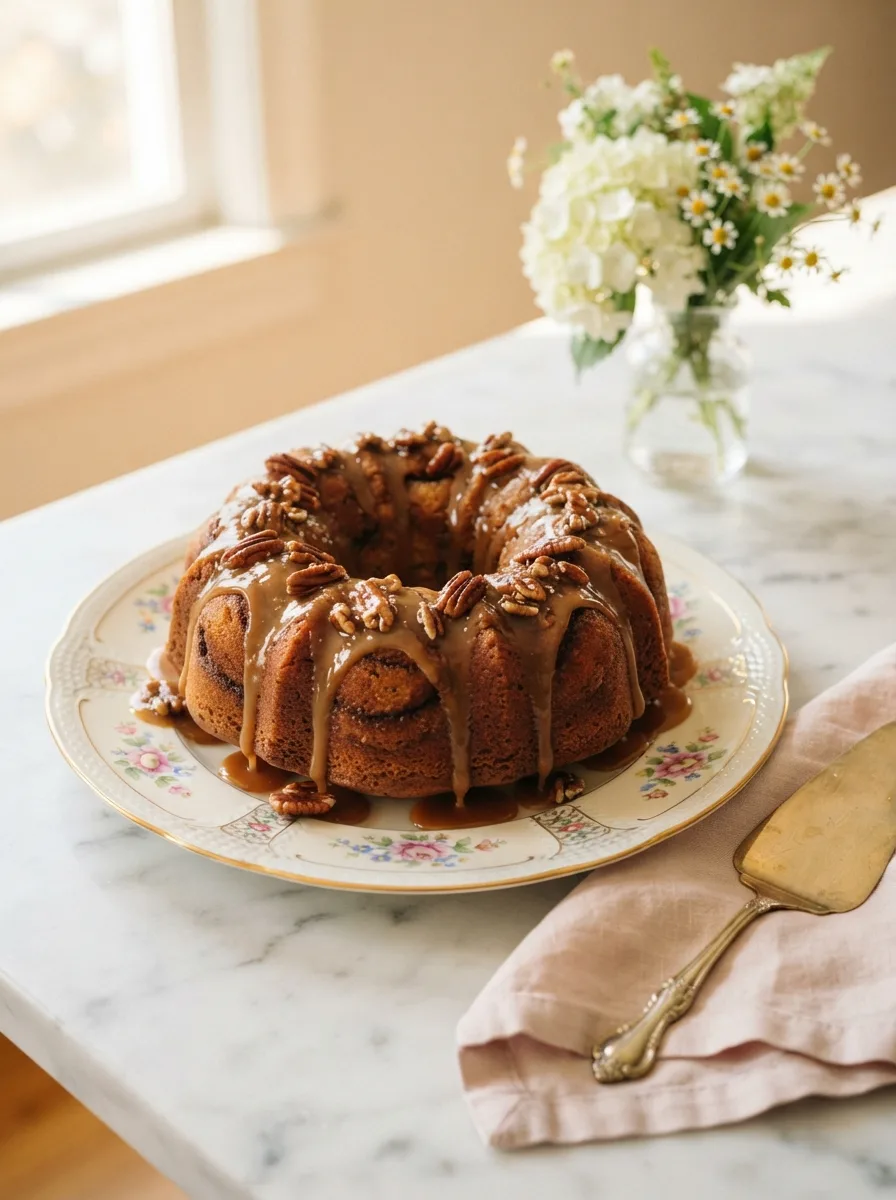
What you get is a bundt cake with a tender, tangy crumb from the cream cheese, ribbons of cinnamon sugar running through the center, and a blanket of warm pecan caramel that sets into a sticky, praline-like topping as it cools. It tastes like a cinnamon roll and a pecan praline had a very good idea together.
★★★★★ “I brought this to Sunday brunch and it was gone before the coffee finished brewing. The caramel on top set up like a praline — nobody could figure out how I got it to do that.” — Danielle R., recipe tester (pre-launch)
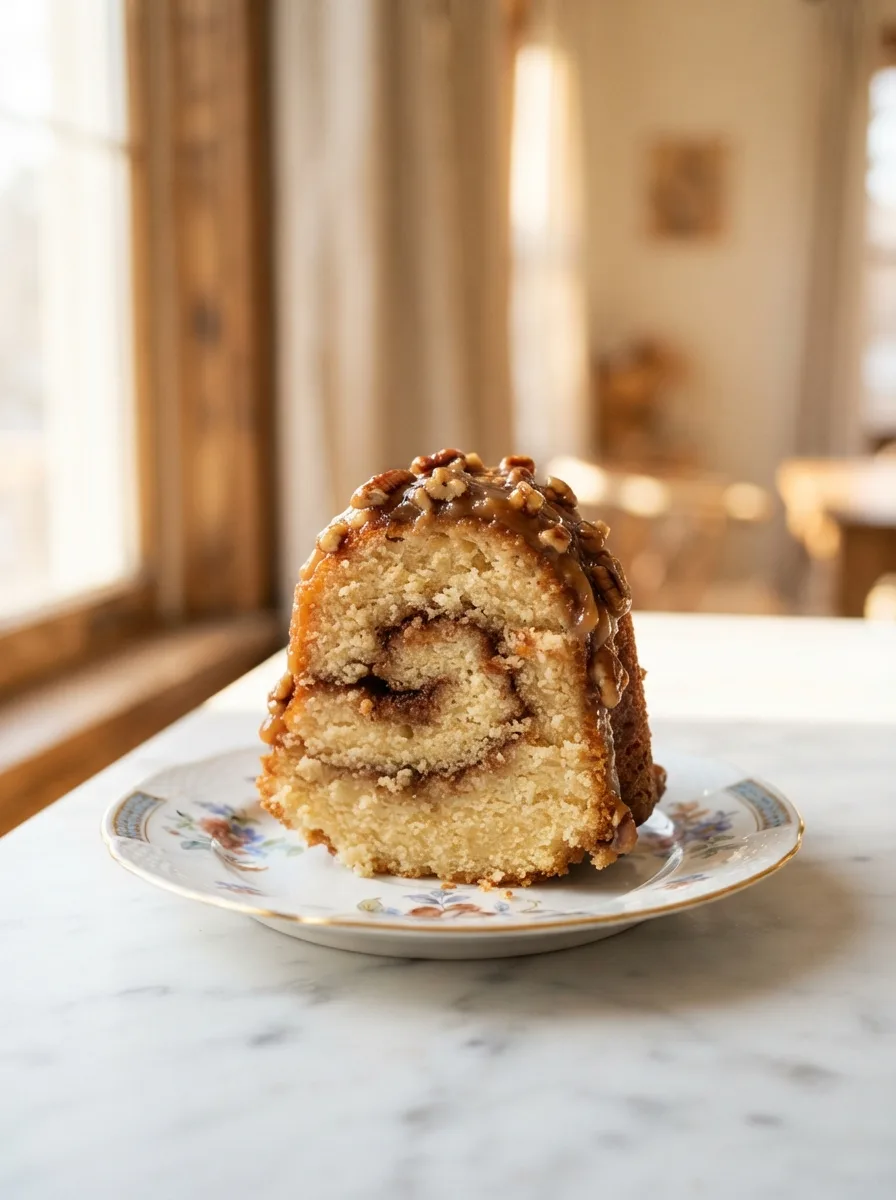
Why You’ll Love This Pecan Caramel Cinnamon Roll Pound Cake
- The caramel sets, it doesn’t puddle: I tested the exact minute to pour it so you get a sticky, sliceable pecan caramel top instead of a soggy bottom.
- The crumb stays moist for days: Cream cheese in the batter keeps this cake tender through day three — no dry pound cake here.
- The swirl actually stays swirled: A small trick keeps the cinnamon sugar from sinking to the bottom of the pan, which is the most common failure with this style of cake.
- It’s genuinely make-ahead: Bake the cake a day early and pour the caramel the morning you’re serving it — the timing works in your favor.
Key Ingredients
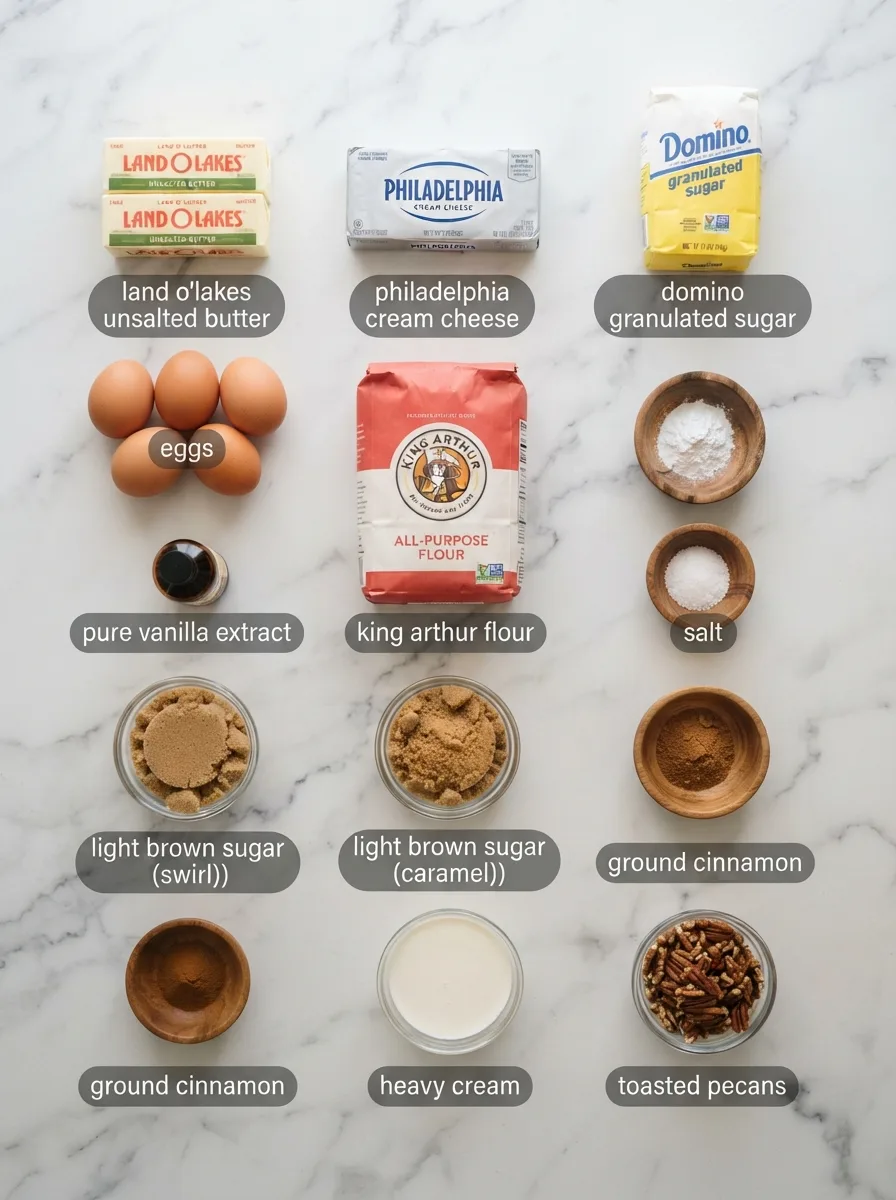
Cream cheese (8 oz, full-fat, room temperature). This is what separates a pound cake from a plain butter cake. The cream cheese adds fat and a slight tang that tenderizes the crumb, so the cake stays moist for days instead of drying out by day two. Reduced-fat cream cheese works, but the crumb turns slightly gummier — I don’t recommend fat-free.
Unsalted butter (room temperature, not melted). Room-temperature butter traps air when you cream it with the sugar, which is what gives this dense batter any lift at all. Cold butter won’t cream properly, and melted butter deflates the structure before it ever hits the oven.
Eggs (5 large, room temperature). Cold eggs can cause the batter to look curdled when they’re added, and a curdled batter traps less air. Let them sit out for 30 minutes before you start, or set them in warm water for 5 minutes if you forgot.
Brown sugar, split two ways. Half goes into the cinnamon swirl, half into the pecan caramel. Brown sugar’s molasses content is what gives both the swirl and the caramel their deep, almost butterscotch flavor — white sugar in either spot would taste one-dimensional.
Ground cinnamon (2 tablespoons). That’s more than most swirl recipes call for, and that’s intentional. A thin cinnamon flavor gets lost once it’s baked inside a dense batter and topped with caramel. This amount actually reads as “cinnamon roll” in the finished slice.
Pecans, toasted and chopped (1½ cups). Toasting the pecans for 6–8 minutes before you chop them deepens their flavor and keeps them from turning soft and soggy once they’re sitting in warm caramel. Walnuts work as a substitute; skip the pre-toast if you’re short on time, but the caramel will taste noticeably flatter.
Heavy cream (⅓ cup). This is what turns melted butter and brown sugar into an actual pourable caramel instead of a grainy syrup. Half-and-half works in a pinch, but the caramel sets up thinner and less glossy.
Ingredient Note: Toss the cinnamon-sugar swirl mixture with 2 tablespoons of flour before you layer it into the batter. That small amount of flour keeps the swirl suspended in the batter instead of sinking to the bottom of the pan — this one step solved the sinking-swirl problem in every retest.
Equipment You’ll Need
- 12-cup bundt pan — The ridges in a bundt pan are what let the caramel cling and drip down the sides instead of just sitting flat on top. A 10-inch tube pan works as an alternative, though the caramel won’t grip the same way.
- Stand mixer or hand mixer — You need real creaming power for the butter, cream cheese, and sugar. A hand mixer works fine; it just takes a minute or two longer.
- Heavy-bottomed saucepan — For the caramel. A thin pan scorches the sugar before it fully melts.
- Wire cooling rack — Non-negotiable. The cake needs airflow underneath it while it cools, or the bottom turns damp.
- Offset spatula or butter knife — For swirling the cinnamon layer through the batter without dragging it all the way to the bottom.
Controlling How Much Caramel Soaks Into the Cake (A Controlled Test)
The single biggest variable in this recipe isn’t an ingredient — it’s timing. Pour the caramel over a cake that’s too hot, and it soaks all the way through, leaving you with a dense, wet bottom layer. Wait until the cake is fully cool, and the caramel just sits on top like a glaze, never soaking in at all.
I tested three pour times on the same cake recipe: straight out of the oven, after a 15-minute rest, and after 2 hours fully cooled.
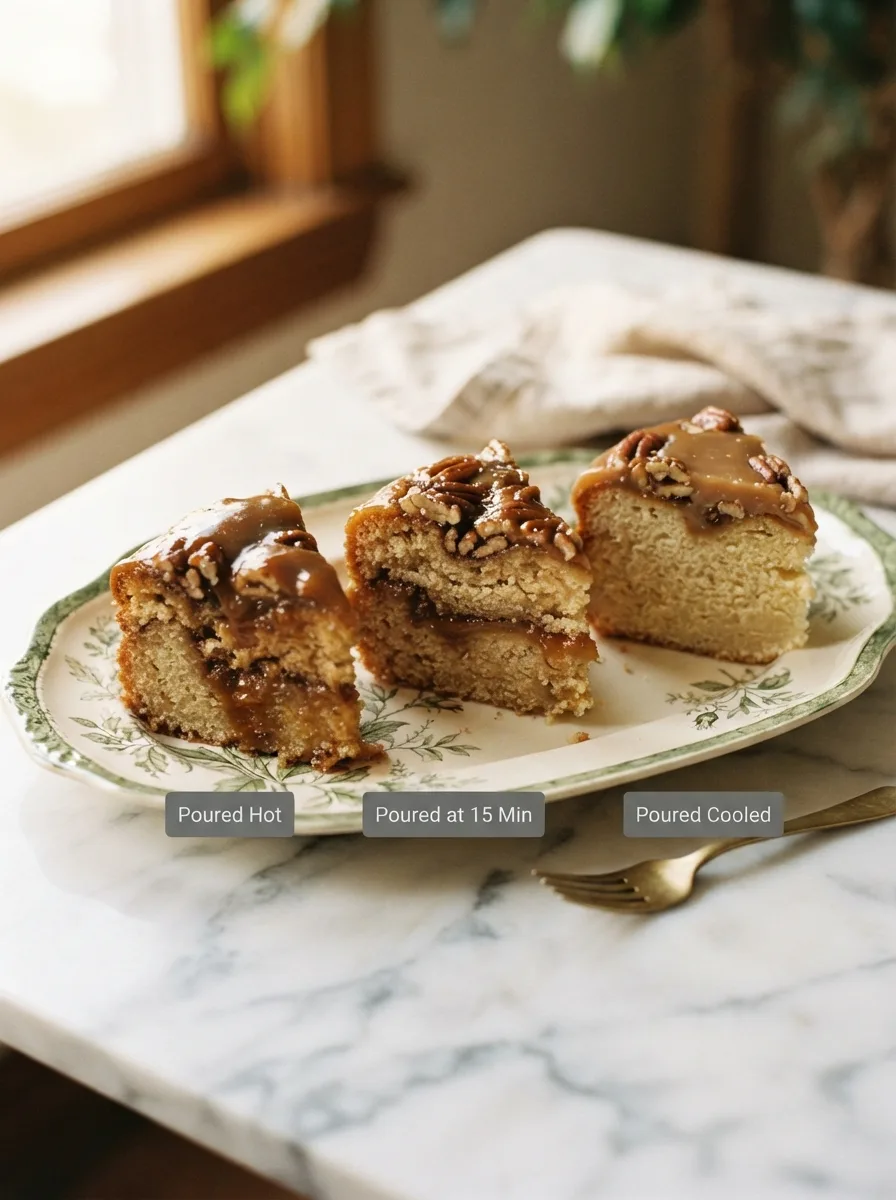
Poured straight from the oven: the caramel soaked more than halfway down the cake. The bottom two inches turned dense and slightly gummy — not bad exactly, but it lost the contrast between cake and topping.
Poured after a 15-minute rest: this was the winner. The cake was warm enough that the top layer absorbed just a little caramel, while the rest pooled and set into a sticky, sliceable layer on top with visible pecans suspended in it.
Poured after 2 hours, fully cooled: the caramel sat entirely on the surface. It looked glossy and pretty but slid right off in slices instead of clinging to the cake — and the crumb underneath tasted noticeably drier without any caramel soaking in at all.
The takeaway: 15 minutes of cooling is the number. Set a timer the second the cake comes out of the oven.
How to Make Pecan Caramel Cinnamon Roll Pound Cake
Before you start: Set the butter, cream cheese, and eggs out at least 30 minutes ahead so they’re genuinely room temperature. Preheat the oven to 325°F and generously grease every ridge of the bundt pan — this cake is dense and sticky, and a poorly greased pan is the fastest way to lose half of it on release.
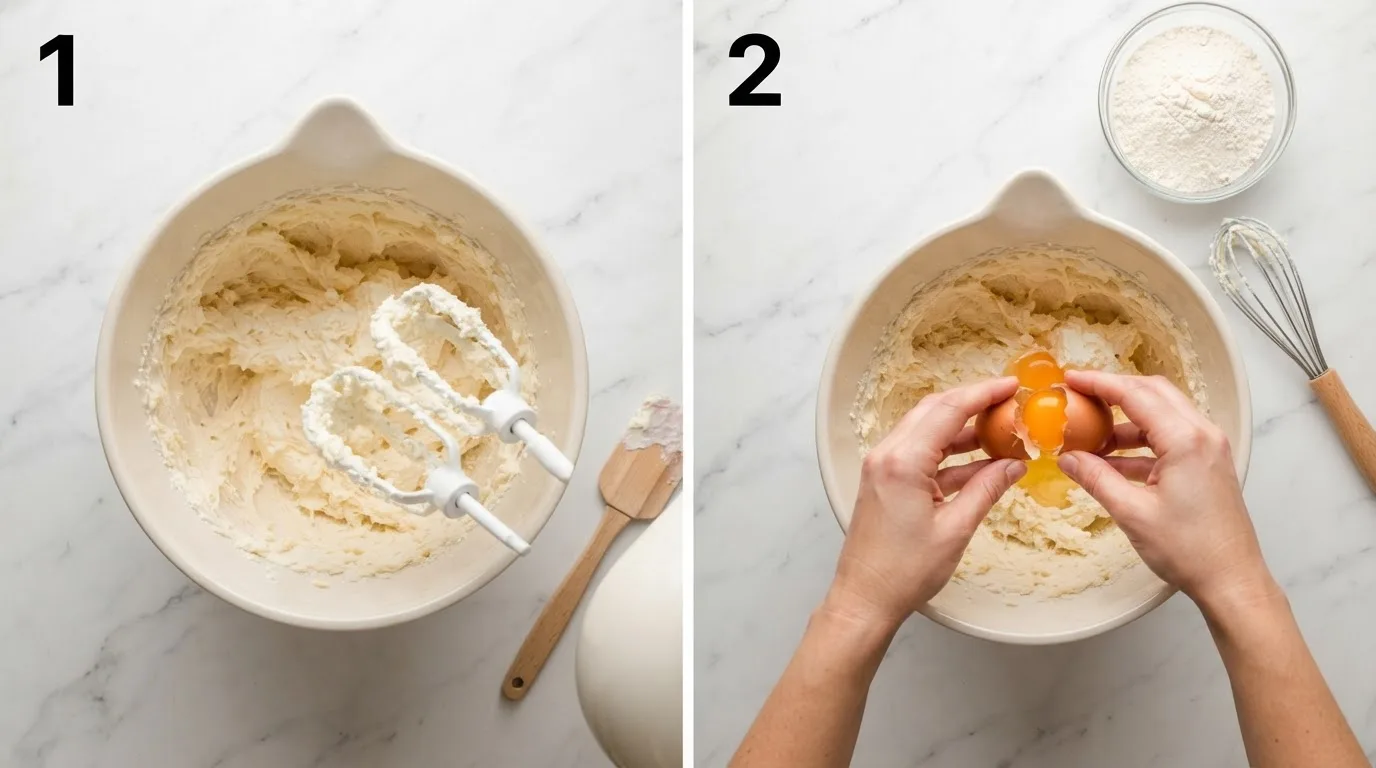
Step 1 — Cream the butter, cream cheese, and sugar
Beat the butter and cream cheese together on medium speed for 2 minutes until completely smooth, then add the sugar and beat for another 3 minutes, until the mixture is noticeably lighter in color and texture. This step is what gives the cake its lift, since there’s no baking soda doing the heavy work here — don’t rush it.
Step 2 — Add the eggs, vanilla, and dry ingredients
Add the eggs one at a time, beating just until each one disappears into the batter before adding the next. Mix in the vanilla. Whisk the flour, baking powder, and salt together separately, then add it to the batter in three additions on low speed, mixing just until no streaks of flour remain.
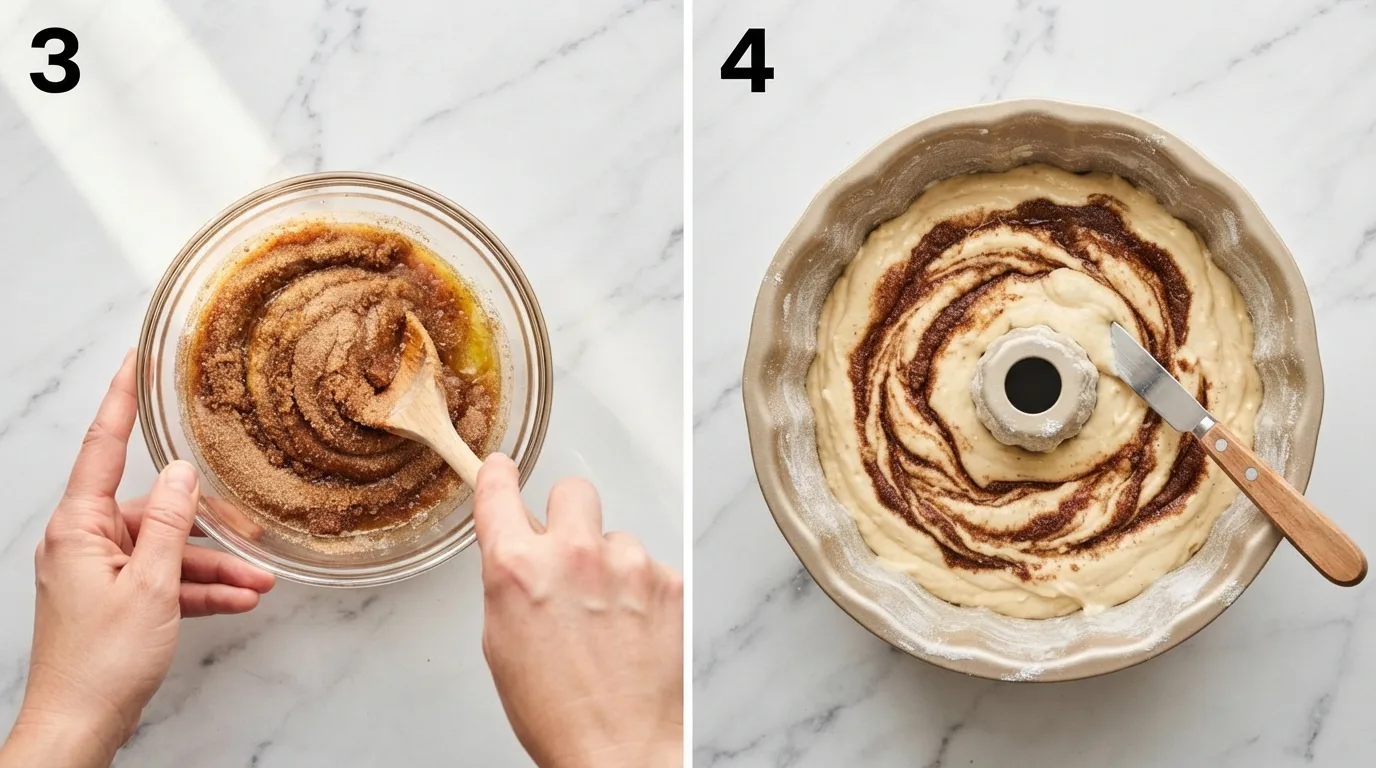
Step 3 — Mix the cinnamon swirl
In a small bowl, stir together the brown sugar, cinnamon, and the 2 tablespoons of flour, then stir in the melted butter until it forms a thick, sandy paste. This flour addition is what keeps the swirl from sinking — don’t skip it even though it feels like an unusual step.
Step 4 — Layer the batter and swirl in the pan
Spoon half the batter into the prepared bundt pan and smooth it out. Sprinkle the cinnamon swirl mixture evenly over the top, then spoon the remaining batter over it. Drag a butter knife through the layers in a gentle zigzag — just once around the pan is enough. Overmixing at this stage drags the swirl straight down to the bottom.
Step 5 — Bake until deep golden and set
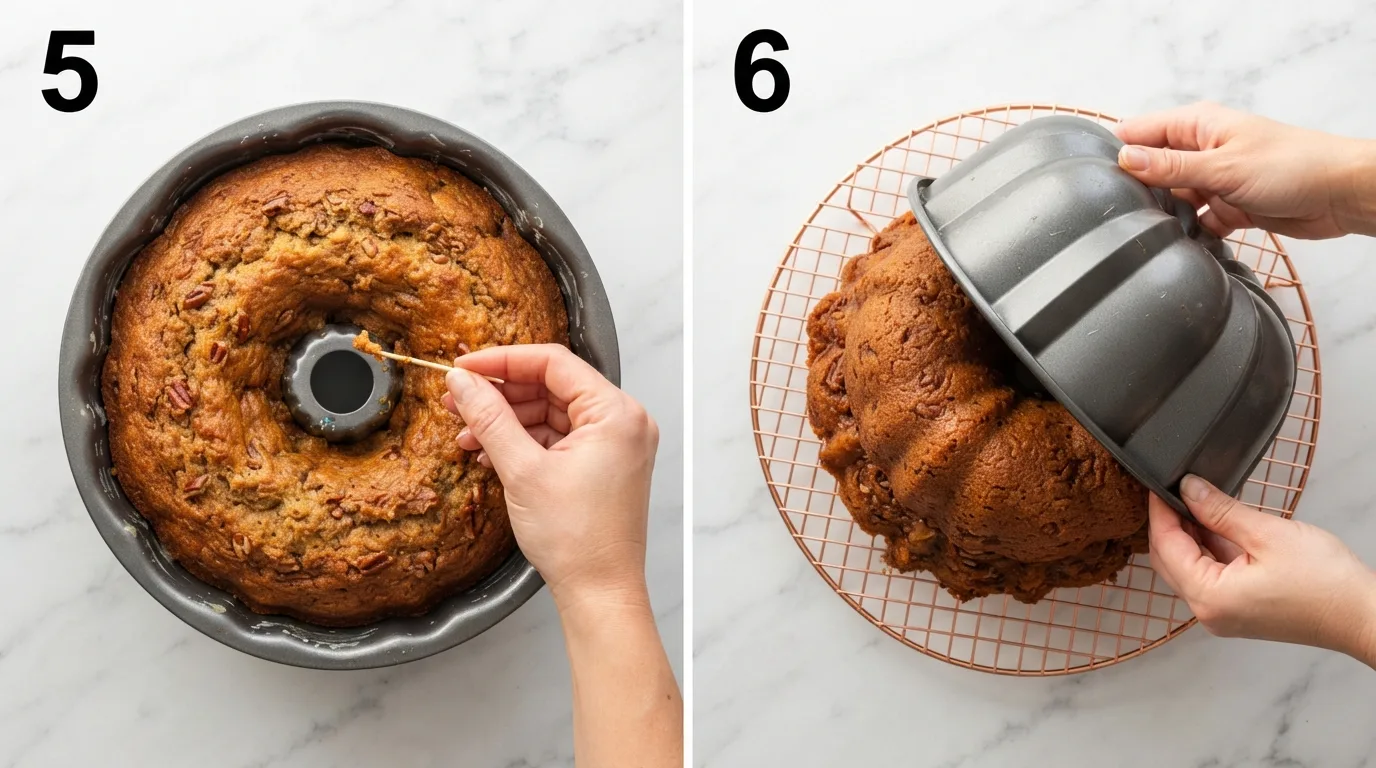
Bake for 60–70 minutes. The top will be deep golden brown and spring back lightly when pressed, and a toothpick inserted into the thickest part should come out with a few moist crumbs, not wet batter. If the top is browning too fast before the center sets, loosely tent it with foil around the 45-minute mark.
Step 6 — Cool for exactly 15 minutes, then invert
Set the pan on a wire rack and start a timer for 15 minutes — this is the exact rest time from the controlled test above. After 15 minutes, run a thin knife around the edges, invert the cake onto the rack, and lift the pan away.
Step 7 — Make the pecan caramel
While the cake bakes or cools, melt the butter in a heavy-bottomed saucepan over medium heat. Whisk in the brown sugar and cook, whisking constantly, for 2 minutes until it starts to bubble. Slowly whisk in the heavy cream — the mixture may look like it’s separating for a second here, that’s normal, just keep whisking and it comes back together smooth. Simmer for 2–3 minutes until it coats the back of a spoon, then stir in the salt, vanilla, and toasted pecans.
Step 8 — Pour the warm caramel over the cake
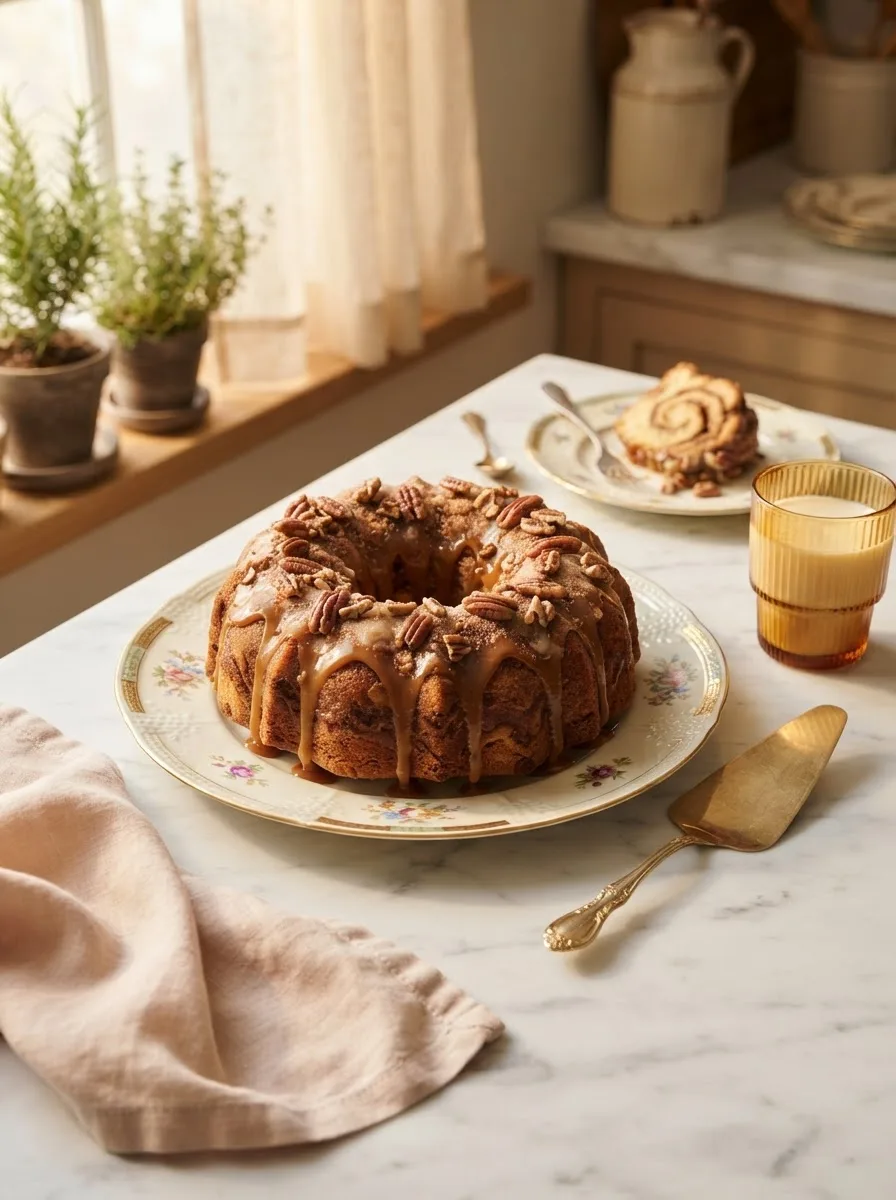
With the cake still resting on the rack at the 15-minute mark, pour the warm (not hot) pecan caramel evenly over the top, letting it drip down the ridges and pool slightly at the base. Let it sit for at least 20 minutes so the caramel can set before slicing.
Pro Tips for Perfect Pecan Caramel Cinnamon Roll Pound Cake
Tip 1: Toss the swirl in flour. The 2 tablespoons of flour in the cinnamon mixture isn’t optional — it’s the mechanical fix that keeps the swirl suspended instead of sinking through the dense batter to the bottom of the pan.
Tip 2: Set a timer for the caramel pour. Fifteen minutes of cooling is the number from the controlled test above. Pour any earlier and the caramel soaks through; any later and it just sits on the surface without clinging to the cake.
Tip 3: Toast the pecans before you chop them. Six to eight minutes in a dry skillet over medium heat deepens their flavor and keeps them from going soft once they’re sitting in warm caramel for a few hours.
Tip 4: Grease every ridge of the bundt pan, not just a light coating. This is a dense, sticky batter. A butter-and-flour combination, or a baking spray with flour built in, works better than butter alone for a clean release.
Variations and Substitutions
Dietary Variations:
- Gluten-free: Swap the flour 1:1 for a cup-for-cup gluten-free blend in both the batter and the swirl. The crumb turns slightly denser and a touch more crumbly, but the flavor holds up well.
- Dairy-free: Use a full-fat dairy-free cream cheese and plant-based butter in the batter, and coconut cream in place of the heavy cream in the caramel. The caramel sets slightly softer, so give it extra time before slicing.
Flavor Variations:
- Bourbon pecan caramel: Stir 1 tablespoon of bourbon into the caramel right at the end, after it’s off the heat. It adds warmth without making the caramel taste boozy.
Ingredient Substitutions:
- Walnuts or pistachios work in place of pecans — toast them the same way.
- Half-and-half can replace the heavy cream in the caramel, though it sets thinner and less glossy.
If you like rich, dense cakes like this one, my sol agave butter cake recipe uses the same room-temperature creaming method with a completely different flavor profile — agave instead of brown sugar, and no swirl at all.
Troubleshooting
Why did my cinnamon swirl sink to the bottom of the cake?
This happens when the swirl mixture is too wet or the batter gets overmixed while you’re dragging the knife through it. Make sure you tossed the cinnamon sugar with the 2 tablespoons of flour, and only drag the knife through once — a light zigzag, not a full stir.
Why is my caramel thin and runny instead of thick?
Most likely you didn’t simmer it long enough after adding the cream. It needs 2–3 full minutes of a gentle bubble until it coats the back of a spoon and a line drawn through it with your finger holds for a second or two. If it’s still thin after that, give it another minute — brown sugar caramel takes a little patience.
My cake is dense and slightly gummy in the center — what happened?
This usually means the center wasn’t fully baked, even if the edges looked done. Bundt pans bake unevenly, so always test the thickest part of the ring, not just the top. If your oven runs cool, add 5–10 minutes and tent the top with foil if it’s browning too fast.
Storage and Make-Ahead
Counter: Covered with a cake dome or wrapped loosely in foil, this cake keeps for 2 days at room temperature. The caramel stays glossy and doesn’t dry out thanks to the cream cheese in the batter.
Refrigerator: Store covered for up to 5 days. Bring slices to room temperature before serving, or warm them for 10–15 seconds in the microwave to soften the caramel again.
Freeze: Freeze the baked cake without the caramel for up to 3 months, wrapped tightly in plastic then foil. Thaw overnight in the fridge, then make the caramel fresh and pour it over the thawed cake.
Reheating: A few seconds in the microwave per slice brings the caramel back to a soft, sticky texture without drying out the crumb.
Make-Ahead: Bake the cake up to a day ahead and leave it wrapped at room temperature. Make the caramel and pour it the morning you’re serving, following the same 15-minute rest timing if you rewarm the cake slightly first.
Frequently Asked Questions
Q: Can I make this cake ahead of time? A: Yes. Bake it up to a day in advance and store it wrapped at room temperature. Make the pecan caramel fresh and pour it the day you’re serving for the best texture.
Q: Can I freeze this pound cake? A: Yes, but freeze the plain baked cake without the caramel. Wrap it tightly and freeze for up to 3 months, then thaw and add fresh caramel before serving.
Q: Why did my cinnamon swirl sink? A: The swirl mixture was likely too wet, or the batter was overmixed while swirling. Tossing the cinnamon sugar with a small amount of flour before layering it in fixes this in almost every case.
Q: Can I use a loaf pan instead of a bundt pan? A: Yes, though you’ll lose the caramel-catching ridges. Split the batter between two 9×5-inch loaf pans and reduce the bake time to 50–55 minutes, checking doneness with a toothpick.
Q: Do I really need to toast the pecans first? A: You can skip it if you’re short on time, but the caramel will taste noticeably flatter. Toasting for 6–8 minutes deepens the flavor and keeps the pecans from turning soft in the warm caramel.
Q: Can I use store-bought caramel sauce instead of making my own? A: You can, but warm it slightly before pouring so it’s thin enough to soak into the ridges the same way homemade caramel does. The pecans won’t be toasted unless you toast and add them separately.
Q: How do I know the cake is fully baked? A: The top should be deep golden and spring back when pressed lightly. A toothpick inserted into the thickest part of the ring should come out with a few moist crumbs, not wet batter.
More Pound Cake and Bundt Recipes You’ll Love
- Sol Agave Butter Cake Recipe — a dense, buttery cake using the same room-temperature creaming method, sweetened with agave instead of brown sugar
- Chinese Pineapple Cake — a lighter, fruit-forward cake if you want something less rich for the same table
- Choco Chips Cup Cake — for when you want the chocolate version in individual portions
- Crown Cake — another showstopping bundt-style bake for special occasions
Pecan Caramel Cinnamon Roll Pound Cake
Ingredients
For the Cream Cheese Pound Cake Batter:
- 1 cup unsalted butter, room temperature
- 8 oz cream cheese, room temperature
- 2 cup granulated sugar
- 5 large eggs, room temperature
- 1 tablespoon vanilla extract
- 3 cup all-purpose flour, spooned and leveled
- 1 teaspoon baking powder
- 1/2 teaspoon salt
For the Cinnamon Swirl:
- 1/2 cup packed light brown sugar
- 2 tablespoon ground cinnamon
- 2 tablespoon all-purpose flour
- 2 tablespoon unsalted butter, melted
For the Pecan Caramel Topping:
- 1/2 cup unsalted butter
- 1 cup packed brown sugar
- 1/3 cup (80ml) heavy cream
- 11/2 cup pecans, toasted and chopped
- 1/2 teaspoon salt
- 1 teaspoon vanilla extract
Instructions
- Preheat the oven to 325°F. Grease every ridge of a 12-cup bundt pan thoroughly with a butter-and-flour combination or baking spray with flour.
- Beat the butter and cream cheese together on medium speed for 2 minutes until smooth. Add the sugar and beat for 3 minutes until light and fluffy.
- Add the eggs one at a time, beating just until incorporated after each. Mix in the vanilla extract.
- Whisk the flour, baking powder, and salt together in a separate bowl. Add to the batter in three additions on low speed, mixing just until no streaks of flour remain.
- In a small bowl, stir together the brown sugar, cinnamon, and flour for the swirl. Stir in the melted butter to form a thick paste.
- Spoon half the batter into the prepared pan. Sprinkle the cinnamon swirl mixture evenly over the top. Spoon the remaining batter over the swirl and drag a knife through the layers once in a gentle zigzag.
- Bake for 60–70 minutes, until deep golden and a toothpick inserted into the thickest part comes out with a few moist crumbs.
- Cool the cake in the pan on a wire rack for exactly 15 minutes, then invert onto the rack and remove the pan.
- While the cake bakes or cools, melt the butter for the caramel in a heavy-bottomed saucepan over medium heat. Whisk in the brown sugar and cook for 2 minutes until bubbling.
- Slowly whisk in the heavy cream (the mixture may look separated briefly — keep whisking) and simmer for 2–3 minutes until it coats the back of a spoon. Stir in the salt, vanilla, and toasted pecans.
- Pour the warm caramel evenly over the cake while it’s still resting at the 15-minute mark, letting it drip down the ridges. Let set for 20 minutes before slicing.
Notes
- **Make-ahead:** Bake the cake up to 1 day ahead and store wrapped at room temperature. Make the caramel fresh and pour it just before serving.
- **Freezing:** Freeze the baked cake without caramel for up to 3 months, wrapped tightly. Thaw overnight in the fridge and add fresh caramel before serving.
- **Preventing a sunken swirl:** Don't skip tossing the cinnamon-sugar mixture with flour — it's what keeps the swirl suspended in the batter instead of sinking.
- **Pan alternative:** Two 9×5-inch loaf pans work in place of a bundt pan; reduce bake time to 50–55 minutes and check with a toothpick.
- **Toasting pecans:** Toast in a dry skillet over medium heat for 6–8 minutes, stirring often, until fragrant. Cool slightly before chopping.
- **Gluten-free swap:** Substitute a 1:1 cup-for-cup gluten-free flour blend in both the batter and swirl for a slightly denser but still moist crumb.
- **Doubling:** This recipe can be baked in two bundt pans for a double batch, but make the caramel in two separate batches rather than doubling it — a doubled caramel batch takes noticeably longer to reach the right consistency.
- **Storage:** Store covered at room temperature for 2 days or in the fridge for up to 5 days; bring to room temperature or microwave briefly before serving.## More Recipes You'll Love