Jamaican Curry Goat (Fall-Off-Bone)

The first time I made curry goat, I treated it like chicken curry and took the pot off the stove after 45 minutes. The goat meat was tough enough to bounce off the plate, and the gravy tasted like raw curry powder. I had learned the hard way: goat needs a long, gentle cook, and the powder needs a proper bloom in oil before the meat goes into the pot.
I tested this curry goat recipe in three batches, changing only the covered simmer time. That is the most important variable here because connective tissue needs sustained moist heat to soften. The scary moment comes around 90 minutes, when the goat may still feel chewy. Don’t panic; it needs more time. At 2½ hours, the meat pulled from the bone with a fork and the gravy had real depth. The trade-off is simple: this goat curry Jamaican recipe is hands-off once it simmers, but it is not a last-minute meal.
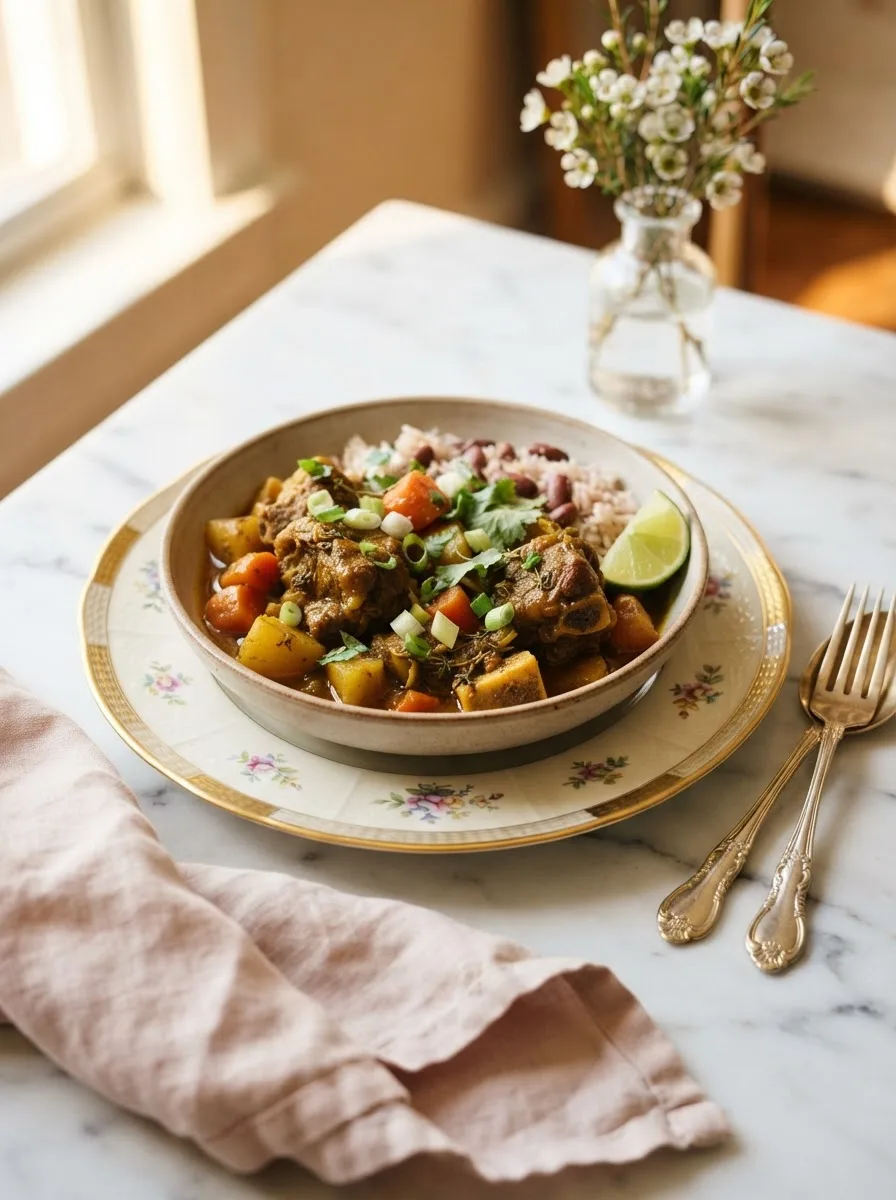
This Jamaican curry goat recipe gives you a thick gravy that clings to the meat instead of pooling thinly on the plate. Browning the curry powder first builds deeper flavor than stirring it in at the end, and the whole pepper perfumes the sauce without automatically making every bite fiery.
★★★★★ “I’ve been intimidated by goat for years. This was the first time it came out tender all the way through — not just the outside pieces.” — Marisol T., recipe tester (pre-launch)
Why You’ll Love This Curry Goat
- Tender goat meat: The tested cooking time gives tougher cuts enough heat and moisture to soften.
- Deep curry flavor: Blooming the powder in oil cooks away its dusty raw taste.
- One-pot cooking: After the active prep, the covered pot simmers mostly unattended.
- Make-ahead friendly: The gravy thickens and the flavor settles overnight.
Key Ingredients
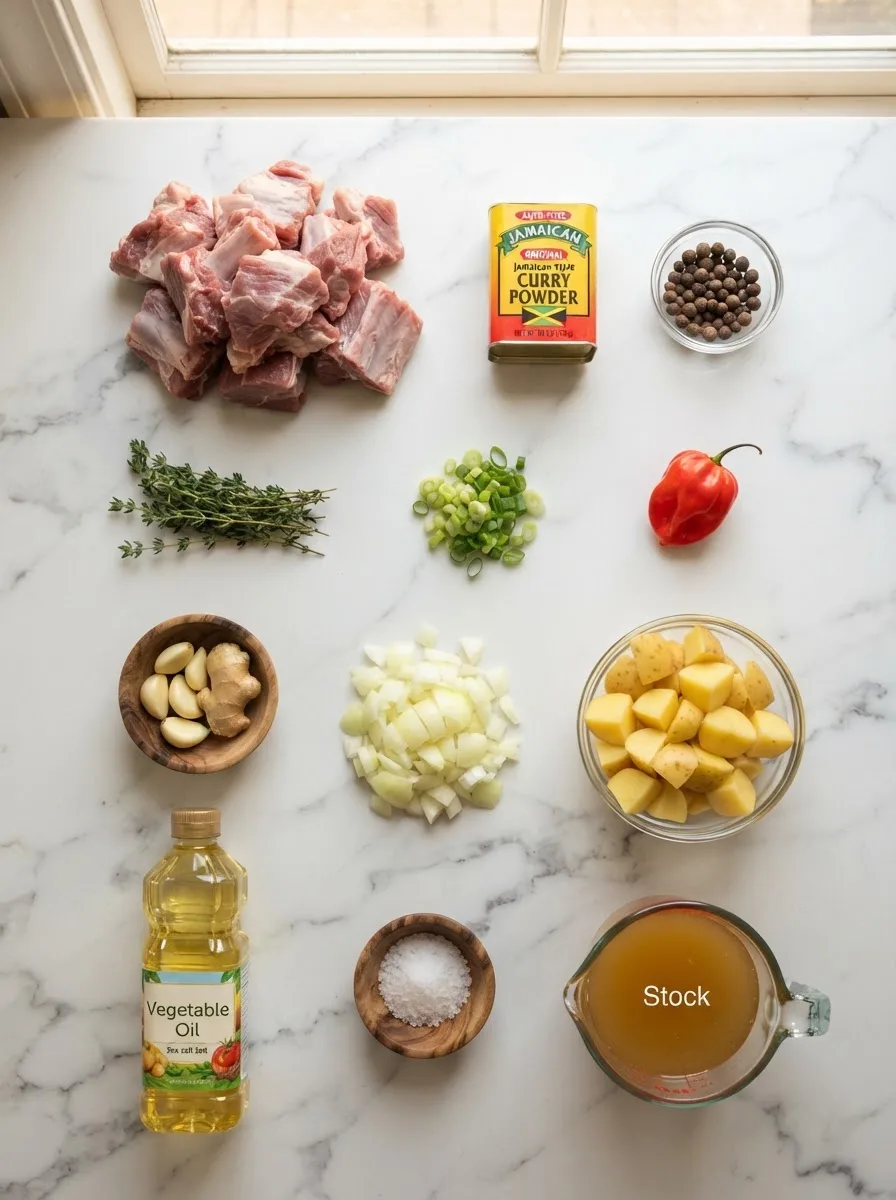
Bone-in goat meat (3 lbs, cut into 1.5–2-inch pieces). These pieces give the curry time to become tender without drying out. Long, moist cooking softens collagen into gelatin; the bone contributes body, but the slow braise and reduced liquid thicken the gravy too. If only boneless goat is available, ask for a few bones.
Jamaican curry powder (3 tablespoons). Jamaican curry powder usually contains prominent turmeric and allspice, giving this dish its warm, rounded flavor. Use a Jamaican blend rather than assuming any curry powder will taste the same.
Scotch bonnet pepper (1, left whole). A whole scotch bonnet seasons the pot with fruity heat without releasing as much heat as a chopped pepper. If it splits, remove it promptly; a bonnet pepper can make the gravy much hotter.
Fresh thyme, scallion, garlic, and ginger. These aromatics form the savory base beneath the curry spices. Fresh thyme has the clearest flavor, but dried thyme can replace it at one-third the amount.
Allspice berries (½ teaspoon, whole). This small amount gives Jamaican curry its familiar warm, peppery character. If using ground allspice, use ¼ teaspoon so the flavor does not take over the meat.
Potatoes (2 medium, cubed). Add the potatoes near the end of cooking so they keep their shape. Their starch also helps the gravy thicken as the cubes soften.
Ingredient Note: Marinate the goat in the curry powder, garlic, ginger, and scallion for at least 4 hours; overnight gives the seasonings more time to move into the surface of the meat. Plan this prep before you start cooking.
Equipment You’ll Need
- Heavy-bottomed Dutch oven or large pot with a lid — steady heat protects the curry from scorching during the long simmer.
- Wooden spoon — scrape up browned bits while the aromatics cook.
- Tongs — turn and remove the goat without crowding the pot.
Controlling the Tenderness of Curry Goat
I ran three side-by-side batches of this curry goat recipe, keeping the goat meat, liquid, pot, heat, and piece size the same while changing only the covered simmer time. Collagen needs steady moist cooking to soften into gelatin, so goat can be cooked through long before it becomes tender. The animal’s age, the cut, and the size of each piece can shift the timing, too.
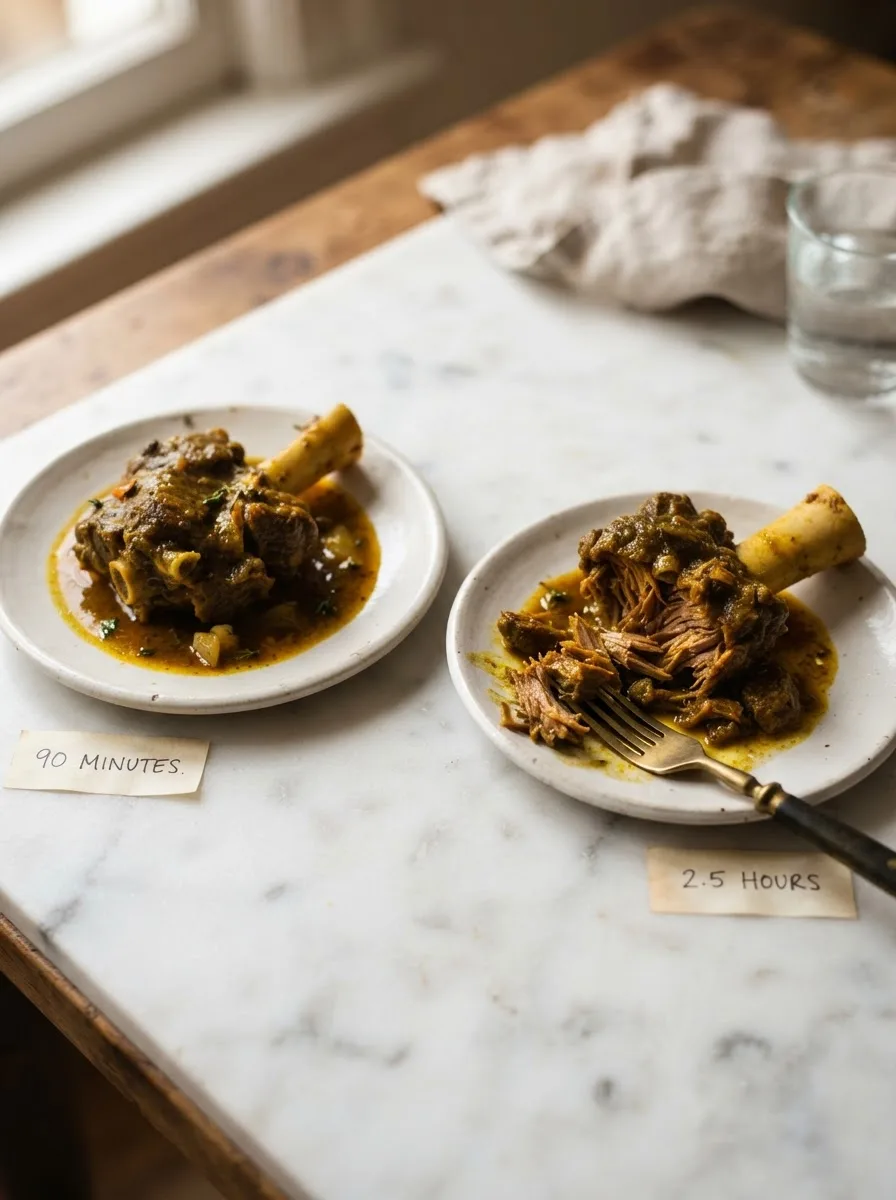
90 minutes: The goat was cooked through, but the meat stayed tight against the bone and needed a knife. If yours looks like this, don’t worry; the pot is not finished yet.
2 hours: The meat pulled away with light fork pressure, but larger pieces still had a chewy center.
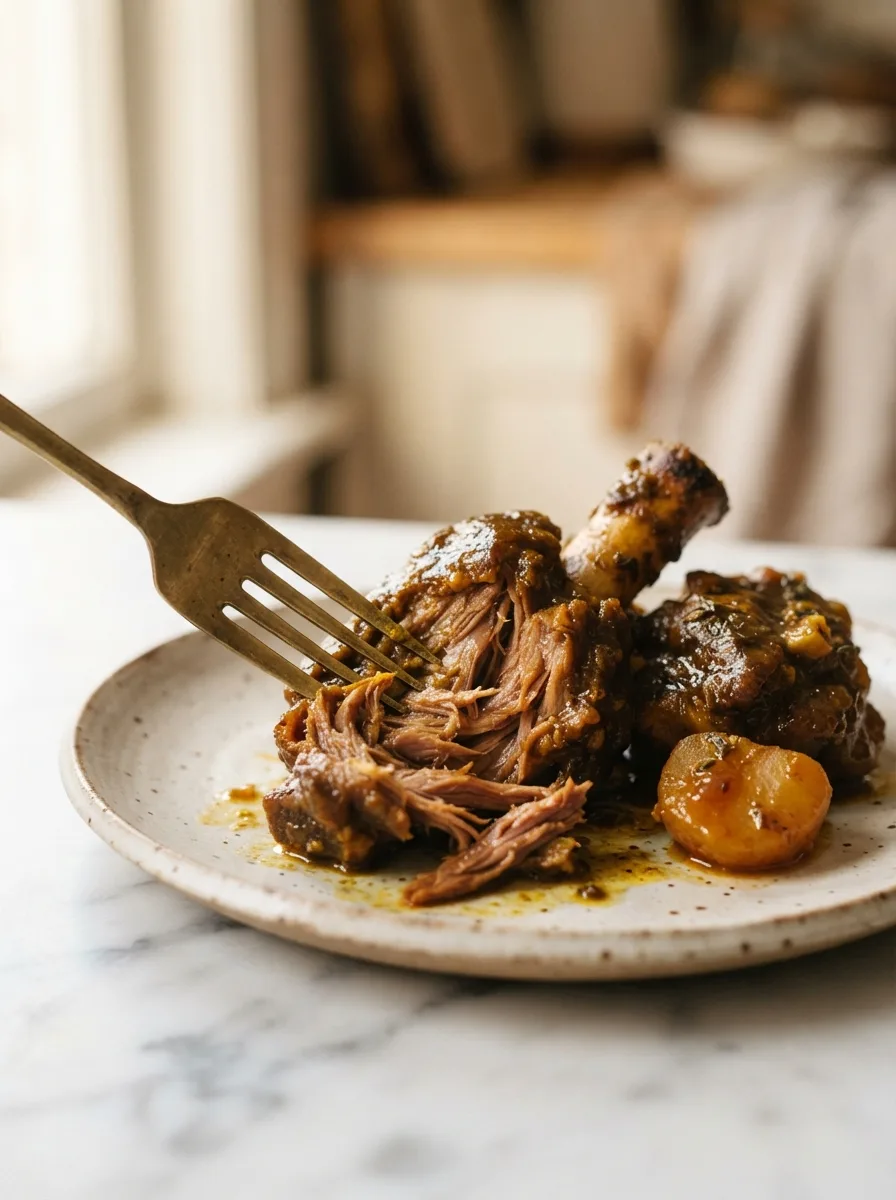
2½ hours: The goat separated from the bone with very little resistance. The connective tissue had softened into the gravy, giving it fuller body and deeper flavor.
The takeaway: Use 2½ hours as the starting point for 1½- to 2-inch pieces. If your goat pieces are larger, continue cooking in 15-minute increments with enough liquid to keep the braise moist. Leg pieces may soften sooner than shoulder.
How to Make Jamaican Curry Goat Recipe
Before you start: Take the goat out of the refrigerator 15 minutes before cooking. Pat the pieces lightly dry so surface moisture does not make the hot oil sputter or steam the meat.
Step 1 — Marinate the goat
In a large bowl, toss 3 pounds of goat meat with 2 tablespoons of curry powder, half the garlic, half the ginger, the scallion, and a generous pinch of salt. Cover and refrigerate for at least 4 hours or overnight. The salt and aromatics season the surface while the curry powder gives the meat time to take on deeper flavor.
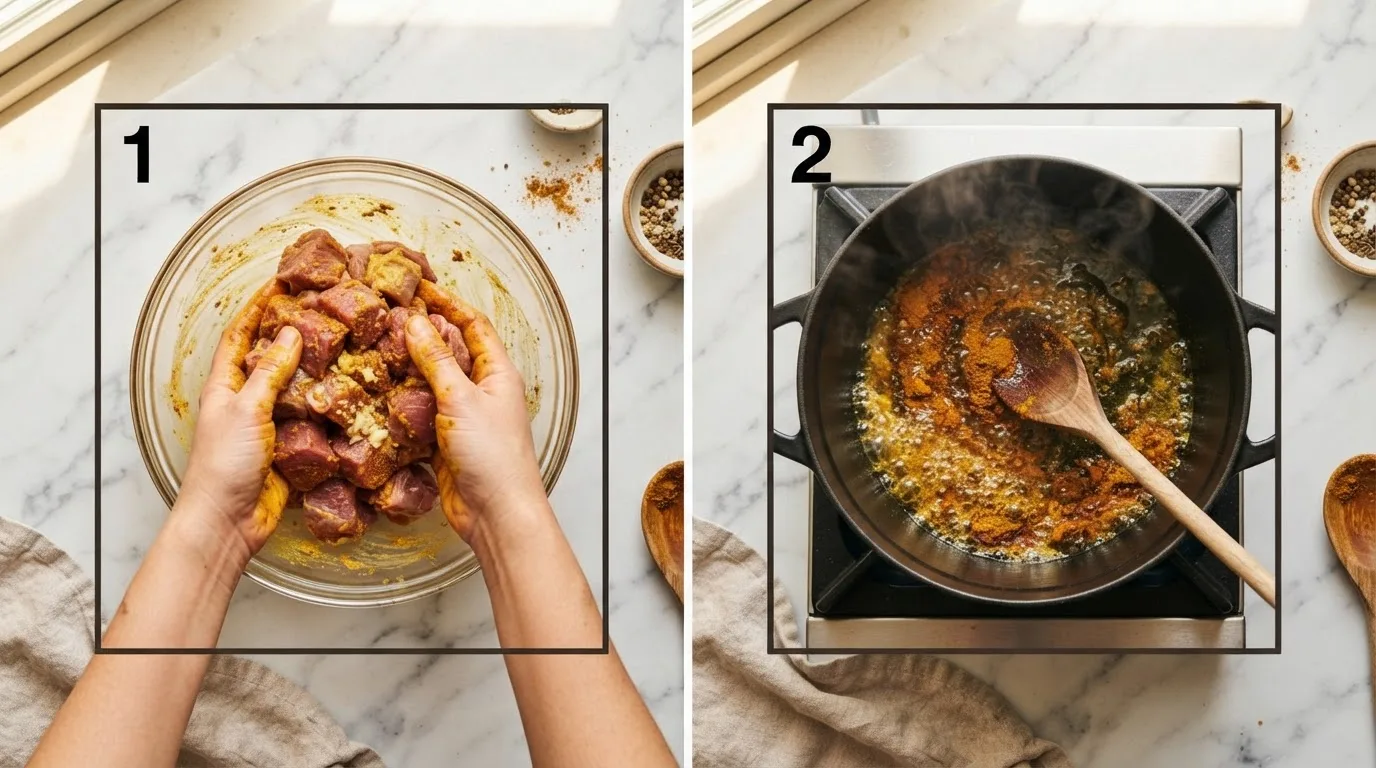
Step 2 — Bloom the curry powder
Heat 2 tablespoons of oil in a Dutch oven over medium heat until it shimmers. Add the remaining 1 tablespoon of curry powder and stir constantly for 60–90 seconds. Stop when it smells toasted and darkens slightly, before it turns brown or bitter. Oil draws out fat-soluble aromatic compounds, which is why blooming gives this Jamaican curry a rounder flavor than adding dry powder to liquid.
Step 3 — Brown the goat
Brown the goat in batches, turning the pieces every 3–4 minutes so each side develops color. Leave space between pieces; a crowded pot traps steam instead of creating the browned Maillard compounds that add savory flavor. The goat will not be cooked through yet. Transfer each batch to a plate.
Step 4 — Build the aromatic base
Add the chopped onion, remaining garlic, and remaining ginger to the same pot. Cook for 3–4 minutes, stirring and scraping up the browned bits, until the onion softens. Lower the heat if the curry powder starts darkening too quickly.
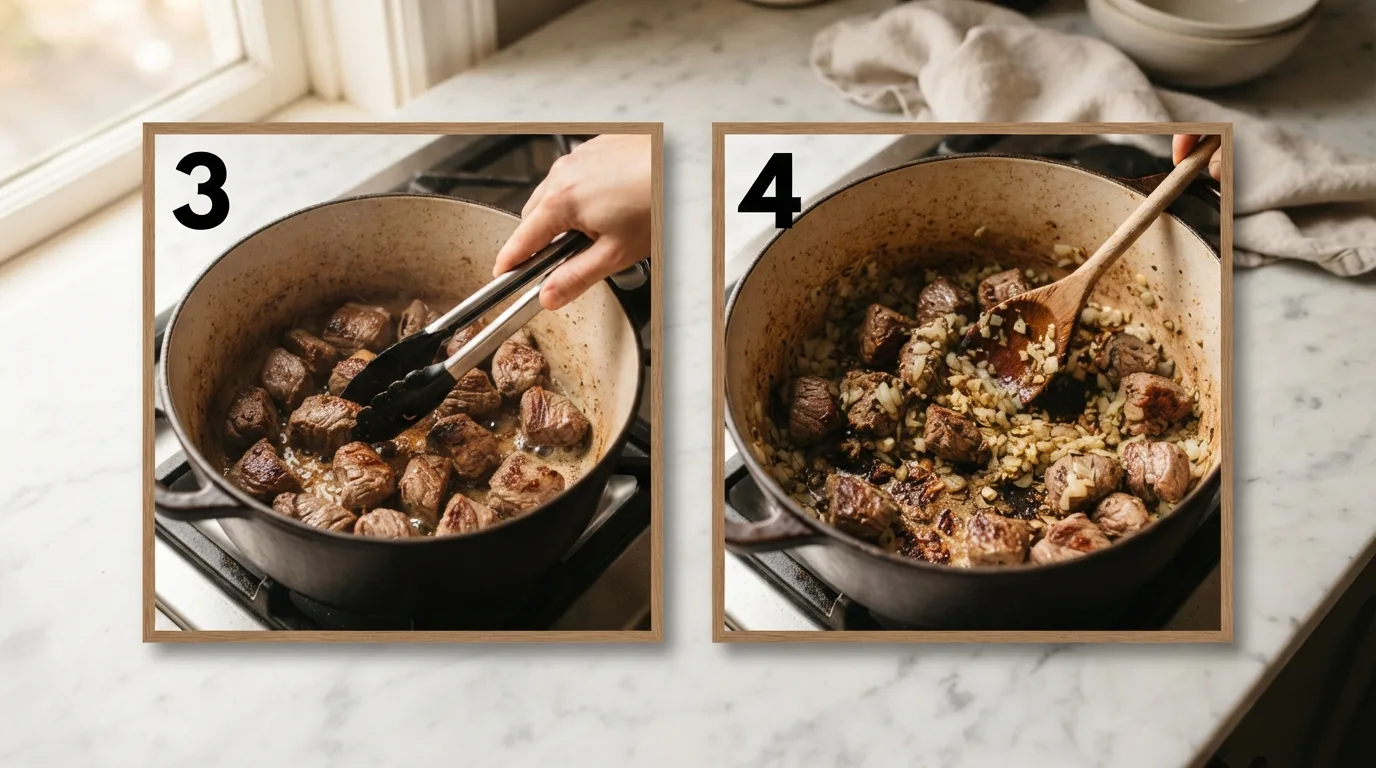
Step 5 — Return the goat and add liquid
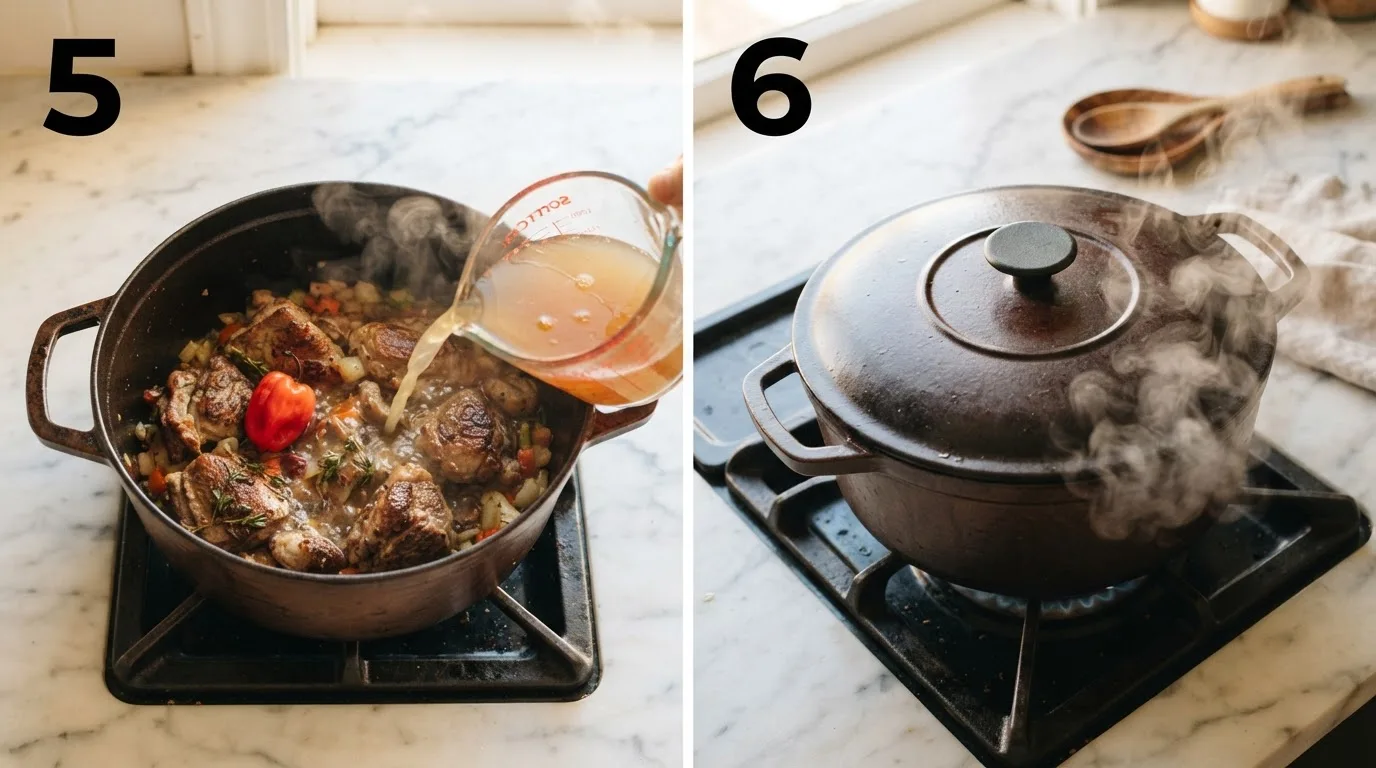
Return the browned goat to the pot with 1 whole Scotch bonnet pepper, the thyme sprigs, and allspice berries. Pour in about 3 cups of stock, or enough to just cover the meat. Bring the liquid to a boil, then reduce it to a gentle simmer and cover. This is the scary part: the goat will still be firm after browning and may remain chewy after the first hour. That is normal.
Step 6 — Simmer low and slow
Simmer the covered pot for 2–2½ hours, keeping the liquid at a gentle bubble rather than a hard boil. Stir every 30 minutes and add ¼ cup water or stock if the liquid drops below the meat. The long cooking time softens collagen and gives the gravy body. The trade-off is that this Jamaican curry goat needs planning; it is not a quick weeknight recipe.
Step 7 — Add the potatoes and finish
With 30 minutes of simmering left, add the cubed potatoes and cover the pot again. Cook for 30 minutes, then check that the potatoes are tender and the goat separates from the bone with a fork. Remove the lid and simmer for 10 minutes to reduce the gravy. Taste and adjust the salt before serving.
Pro Tips for Curry Goat
Tip 1: Skim excess fat. After the pot simmers, spoon off any thick layer of fat you do not want in the gravy. Leave a little behind for flavor; goat meat can release more fat than the sauce needs.
Tip 2: Check the liquid level. Peek under the lid every 30 minutes. The curry should stay moist while the goat cooks, so add ¼ cup water or stock if the liquid falls below the meat. A dry pot can scorch the powder and leave the goat tough.
Tip 3: Rest before serving. Let the curry goat stand for 20 minutes off the heat. The bubbling settles, the gravy cools slightly, and its texture thickens as the liquid redistributes. Serve it warm, not scorching hot, so the flavor comes through.
Variations and Substitutions
Dietary Variations:
- Lower heat: Leave out the Scotch bonnet and use a pinch of black pepper. The curry stays savory, but loses the pepper’s fruity warmth.
- Dairy-free: This Jamaican curry goat is dairy-free as written. Check packaged stock and curry powder labels if you need to avoid dairy strictly.
Flavor Variations:
- With coconut milk: Replace 1 cup of stock with coconut milk during the final 30 minutes. It makes a sweeter, richer gravy, but reduces less readily than the original curry.
Ingredient Substitutions:
- Bone-in lamb shoulder can replace goat meat. Start checking it at 2 hours because the cooking time can vary.
- For a homemade curry powder blend, use my jamaican jerk seasoning base with turmeric and extra allspice. The flavor will not match Jamaican curry powder exactly.
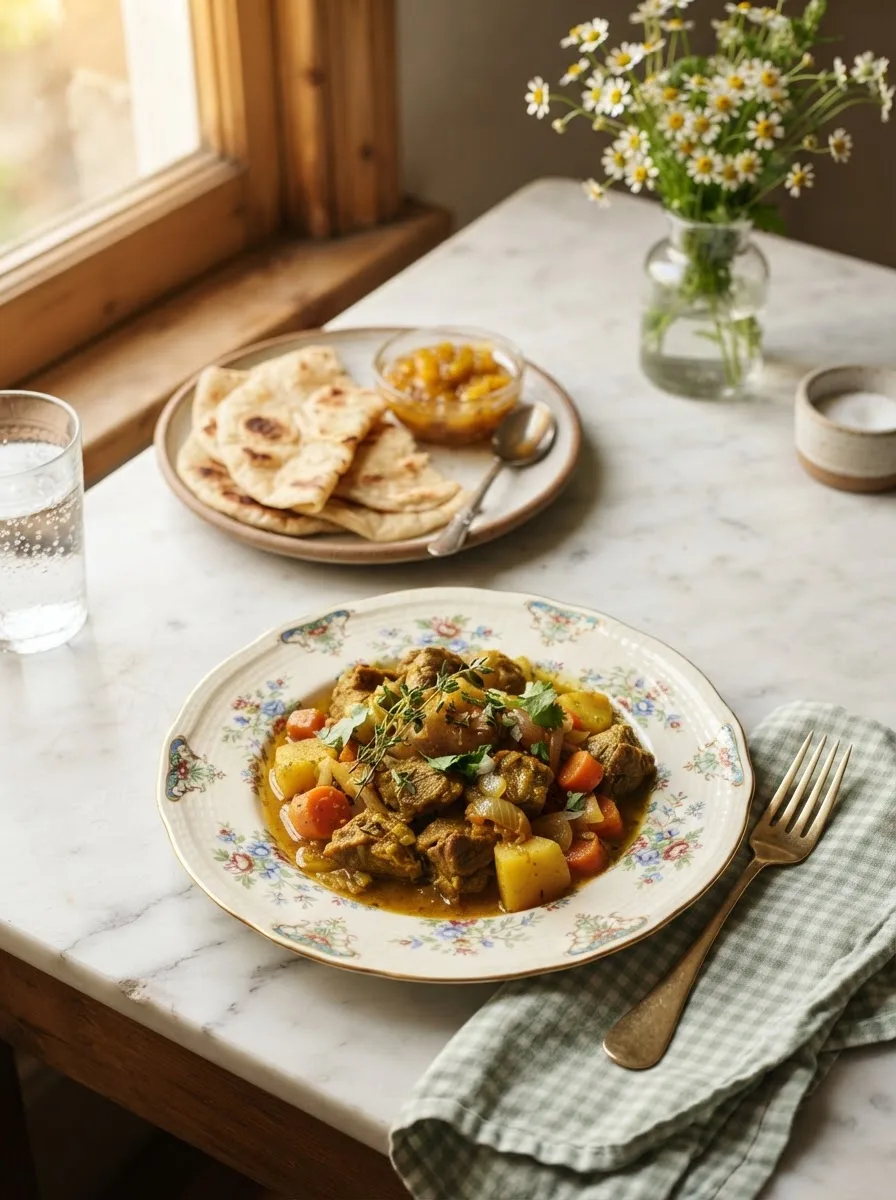
Serve this Jamaican curry goat with jamaican roti, rice and peas, or fried plantains. Potatoes already add substance, so you do not need another heavy side.
Troubleshooting
My curry goat is still tough after 2 hours — what happened?
The pieces may be larger than 2 inches, or the simmer may have been too strong and reduced the liquid too quickly. Add ½ cup stock or water, cover the pot, and cook for another 30–45 minutes at a gentle simmer. Collagen in the goat meat needs moist heat and time to soften, so a chewy center does not mean the recipe has failed. If the potatoes are already tender, lift them out first so they do not break apart.
The gravy tastes bitter or dusty — why?
The curry powder probably burned during blooming, or it went into the pot without enough oil and cooking time. Extra stock and a small pinch of sugar may soften mild bitterness, but badly burnt powder will continue to taste harsh; dilution cannot remove it completely. Next time, bloom the powder for 60–90 seconds over medium heat and stop as soon as it smells toasted. If the flavor is flat rather than bitter, adjust the salt only after the goat finishes cooking.
The dish is too spicy or the gravy is too thin — can I fix it?
If the scotch bonnet pepper has burst, remove the scotch bonnet and stir in ½ cup stock to spread the heat through more gravy. A bonnet pepper releases far more heat when cut or split, so do not mash it into the sauce. For thin gravy, remove the lid and simmer for 10–15 minutes; evaporation concentrates the curry without adding more powder. Taste after reducing and adjust the salt.
Storage and Make-Ahead
Counter: Refrigerate the meat within 2 hours. In a very hot room, chill it within 1 hour.
Refrigerator: Divide the curry into shallow containers, cool it promptly, cover, and store it for up to 4 days. The flavor settles and deepens by the second day.
Freeze: Freeze the curry in airtight, freezer-safe containers for up to 3 months, leaving extra gravy for expansion and thawing.
Reheating: Thaw it in the refrigerator, then reheat gently on the stovetop with a splash of water or stock. Stir occasionally and heat to 165°F, about 10–15 minutes.
Make-Ahead: Cook this Jamaican curry goat 1 day ahead, chill it in shallow containers, and reheat it gently before serving. The sauce thickens as it cools.
Frequently Asked Questions
Q: What cut of goat is best for curry goat? A: Bone-in shoulder or leg pieces have enough connective tissue to become tender during the long cooking time.
Q: Is this close to a restaurant-style Jamaican curry goat recipe? A: Yes. The browned meat, bloomed curry powder, aromatics, and covered braise follow the same general method, though brands and simmer times vary.
Q: Can I make this Jamaican curry goat in a slow cooker? A: Brown the goat and cook the curry powder first, then transfer everything to the slow cooker. Cook on low for 6–7 hours, until the meat separates easily from the bone.
Q: Can I use a pressure cooker? A: Yes. Cook under pressure for about 45 minutes, then simmer uncovered until the gravy reaches the desired thickness.
Q: Why is my gravy thin? A: Simmer the pot uncovered for 10–15 minutes. Evaporation removes water and concentrates the curry.
Q: Can I make this curry goat recipe less spicy? A: Leave out the Scotch bonnet pepper. A whole pepper still carries heat, so removing it is more reliable than using a smaller piece.
Q: Can I use chicken instead of goat meat? A: You can, but chicken cooks much faster and will not need the same long braising time.
More Caribbean Recipes You’ll Love
- Jamaican Roti — soft, flaky flatbread for scooping up the curry gravy.
- Jamaican Jerk Seasoning — a useful spice blend for grilled goat, chicken, and other meats.
- Tikka Paste — another curry base to compare with Jamaican curry powder.
- Parsnip and Leek Soup — a low-effort recipe for a night when you do not want to watch a pot.

Jamaican Curry Goat (Fall-Off-Bone)
Ingredients
For the Marinade:
- 3 lb bone-in goat meat, cut into 1.5–2 inch pieces
- 3 tablespoon Jamaican curry powder, divided
- 4 clove garlic, minced, divided
- 1 -inch piece fresh ginger, grated, divided
- 3 scallions, chopped
- 1 teaspoon salt
For the Curry:
- 3 tablespoon vegetable oil
- 1 medium yellow onion, chopped
- 1 whole Scotch bonnet pepper
- 4 sprigs fresh thyme
- 1/2 teaspoon whole allspice berries
- 3 cup chicken or goat stock
- 2 medium potatoes, cubed
- Salt to taste
Instructions
- In a large bowl, toss the goat with 2 tablespoons curry powder, half the garlic, half the ginger, the scallion, and salt. Cover and refrigerate 4 hours to overnight.
- Heat oil in a Dutch oven over medium heat. Add remaining 1 tablespoon curry powder and stir constantly for 60–90 seconds until darkened and fragrant.
- Working in batches, brown the marinated goat on all sides, about 3–4 minutes per batch. Remove to a plate.
- Add onion, remaining garlic, and remaining ginger to the pot. Cook 3–4 minutes, scraping up browned bits, until onion softens.
- Return the goat to the pot with the Scotch bonnet, thyme, and allspice. Add stock until the meat is just covered. Bring to a boil, then reduce to a low simmer and cover.
- Simmer covered for 2 to 2.5 hours, stirring occasionally and adding more stock if needed, until the meat is very tender.
- Add the potatoes in the last 30 minutes of simmering. Once tender, uncover and simmer 10 more minutes to thicken the gravy. Season with salt to taste before serving.
Notes
- Marinating overnight makes a noticeable difference in flavor — don’t skip below the 4-hour minimum if you can help it.
- Leftovers keep in the fridge for up to 4 days and taste even better on day two.
- Freezes well for up to 3 months; leave slightly more gravy than you think you need, since it thickens further after freezing.
- If the Scotch bonnet bursts during simmering, remove it immediately to control the heat level.
- Bone-in lamb shoulder is the closest substitute if goat isn’t available, using the same method and timing.