Buona Beef Tuna Genovese Recipe

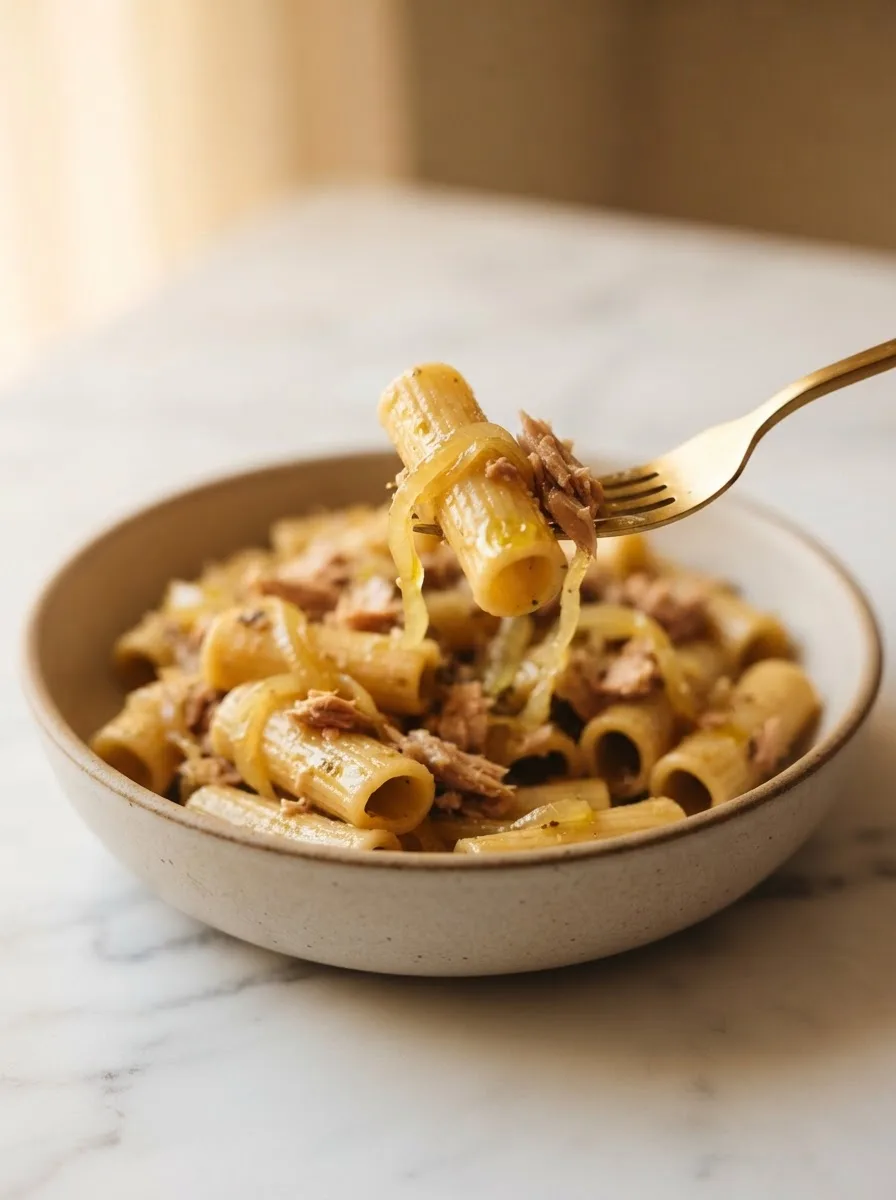
If you’ve ever had Buona Beef Tuna Genovese Recipe on a Friday during Lent, you know it’s not like any other tuna dish you’ve made at home. It’s not a tuna salad, and it’s not a quick weeknight tomato sauce with tuna dumped in. It’s onions — a mountain of them — melted down for the better part of an hour until they practically disappear into a sauce, with tuna folded in at the end so it stays tender instead of turning into gray crumbles.
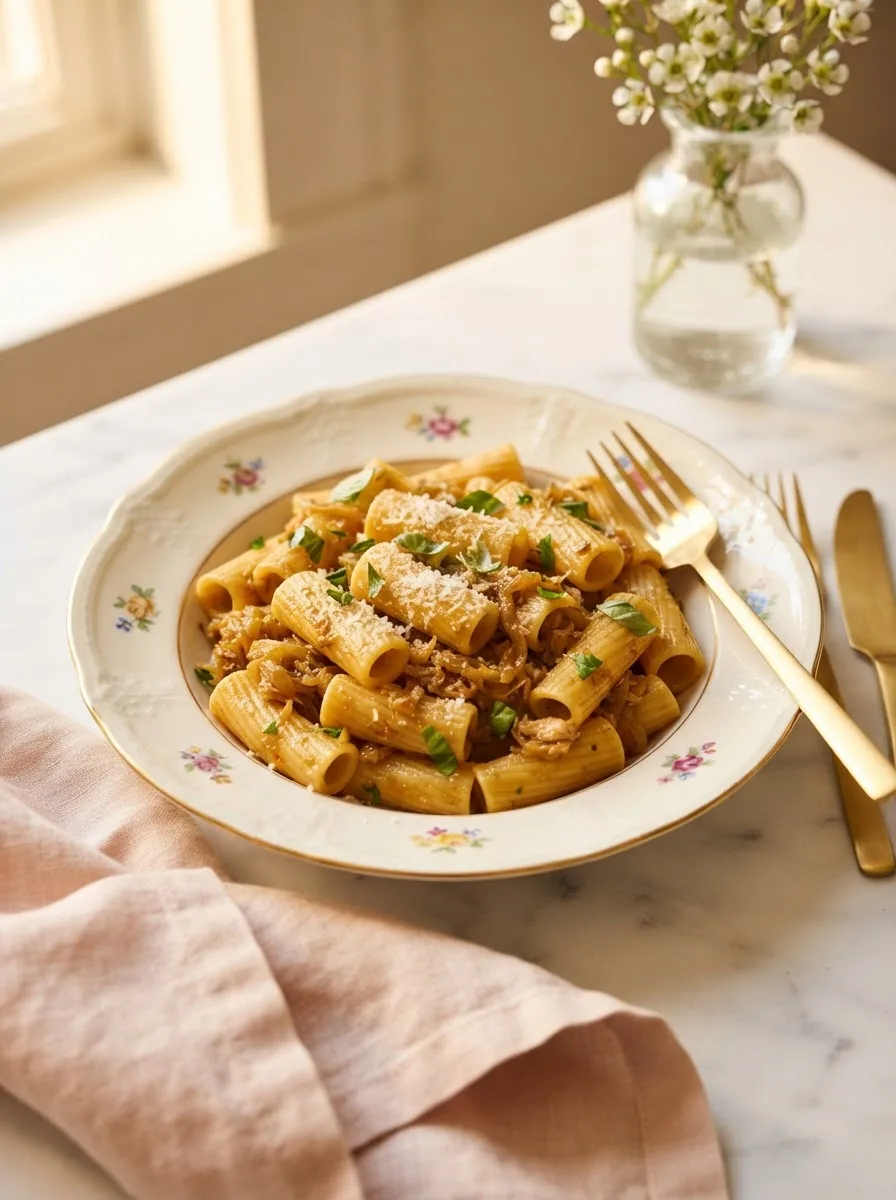
I tested this recipe three times before I got the onions right. My first attempt rushed them at too high a heat, and the sauce tasted sharp and a little bitter instead of sweet and jammy. The second attempt was closer. The third is the version below.
The promise here is simple: melt the onions low and slow, use oil-packed tuna instead of water-packed, and you’ll get a sauce that tastes like it simmered all afternoon — even though most of that time is hands-off.
What makes this version worth making at home isn’t just nostalgia for a specific restaurant. It’s that the technique — melting onions down into a jammy, almost caramelized base — works for a whole category of Italian-American sauces, and once you’ve done it once, you’ll understand why the texture matters more than any single ingredient.
I’m genuinely proud of this one. It took longer to dial in than I expected, mostly because it’s so easy to rush the one step that can’t be rushed.
★★★★★ “I made this for my in-laws, who grew up going to Buona Beef every Friday during Lent. My mother-in-law asked twice if I’d secretly bought it.” — Denise R., recipe tester (pre-launch)
Why You’ll Love This Buona Beef Tuna Genovese Recipe
- It tastes like the original, not a shortcut version: the onions are melted low and slow the same way the restaurant does it, so the sauce has real depth instead of tasting like a tomato sauce with tuna added.
- It’s a genuine Lenten Friday solution: if you’re looking for a meatless main that doesn’t feel like a compromise, this sauce is rich enough that nobody at the table will miss the beef.
- It’s mostly hands-off: after the first 15 minutes of chopping, the onions do their thing on low heat while you do something else.
- It reheats better than it starts: like most slow-melted onion sauces, this one tastes even better the next day.
Key Ingredients
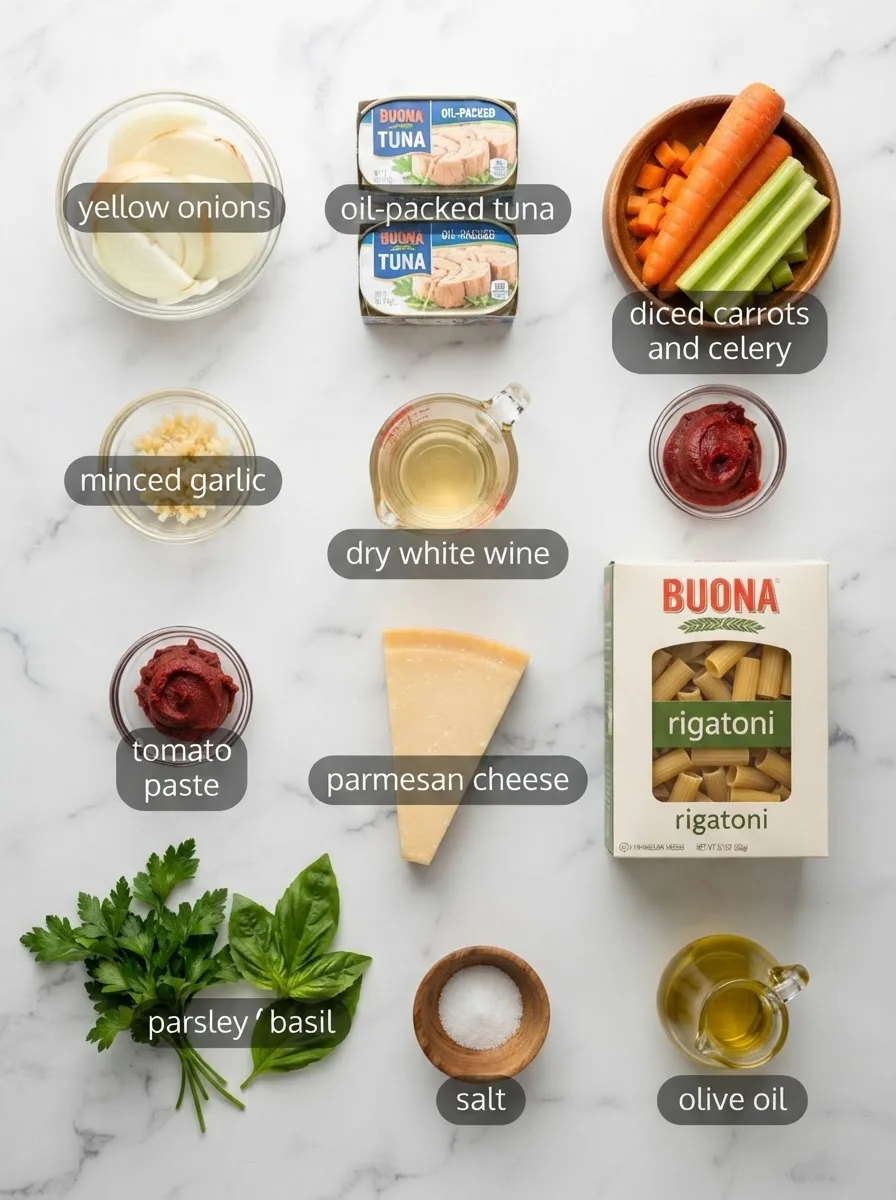
Yellow onions (2 pounds, about 6 large). This is the entire soul of a genovese sauce. Yellow onions have enough natural sugar to caramelize into something sweet and jammy, but enough structure to hold together through a long simmer. Sweet onions work too, but red onions turn the sauce an odd color and taste sharper.
Oil-packed solid white tuna (two 5-ounce cans). Oil-packed tuna stays tender when it simmers in the sauce; water-packed tuna tends to dry out and turn stringy. If you can only find water-packed, add an extra tablespoon of olive oil when you fold it in at the end.
Carrots and celery. This is the soffritto base underneath the onions — it adds a savory backbone so the sauce doesn’t taste like onions alone. Dice them small so they melt in rather than staying crunchy.
Dry white wine. A half cup deglazes the pot and adds acidity that balances the sweetness of the melted onions. If you don’t cook with wine, a tablespoon of white wine vinegar stirred into the stock does a similar job.
Tomato paste. Just enough to give the sauce color and body without turning it into a tomato sauce. This is a genovese, not a marinara — the tomato is a supporting player.
Ingredient Note: Don’t substitute fresh tuna steak unless you sear and flake it yourself first — raw fresh tuna added directly to a simmering sauce turns tough and chalky in a way canned oil-packed tuna never does.
Equipment You’ll Need
- A wide, heavy-bottomed pot or Dutch oven — the wide surface area helps the onions cook evenly instead of steaming in a pile. A large deep skillet with a lid works as an alternative.
- A sharp knife and a stable cutting board — you’re slicing six onions, so a dull knife turns this into a chore.
- A large pasta pot — any pot big enough to boil a pound of pasta with room to move.
Controlling the Onion Texture (A Controlled Test)
The single most important variable in this recipe is how long — and how gently — you cook the onions. I tested three cook times on the same batch of sliced onions to see exactly how much it mattered.
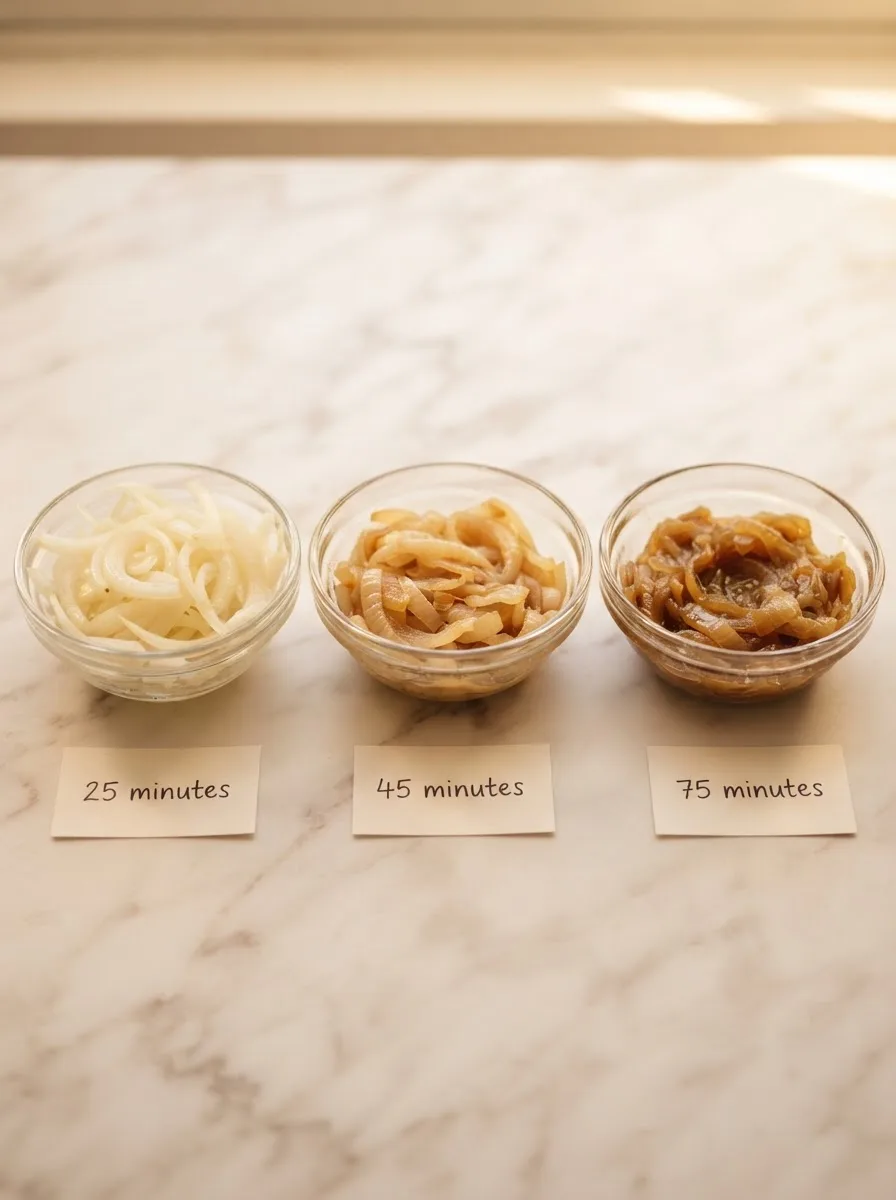
25 minutes on medium heat: the onions softened but stayed pale and slightly crisp at the edges. The sauce tasted sharp and a little bitter — this was my first attempt, and it’s the mistake most home cooks make by trying to speed things up.
45 minutes on low heat: better. The onions turned golden and mostly soft, but you could still see distinct slices in the finished sauce.
75 minutes on low heat, stirring occasionally: this is the one. The onions fully collapsed into a jammy, amber-brown mass with no bitterness at all — sweet, deep, and almost indistinguishable from the sauce itself. This is the texture Buona Beef’s version has, and it’s non-negotiable if you want the real thing.
The trade-off is real: 75 minutes is a long time to babysit a pot of onions. But most of that time only needs a stir every 10 minutes or so, and the payoff in flavor is worth far more than the shortcut.
How to Make Buona Beef Tuna Genovese
Before you start: slice all the onions before you turn on the heat — trying to slice the second half while the first half is already cooking leads to uneven timing.
Step 1 — Build the soffritto
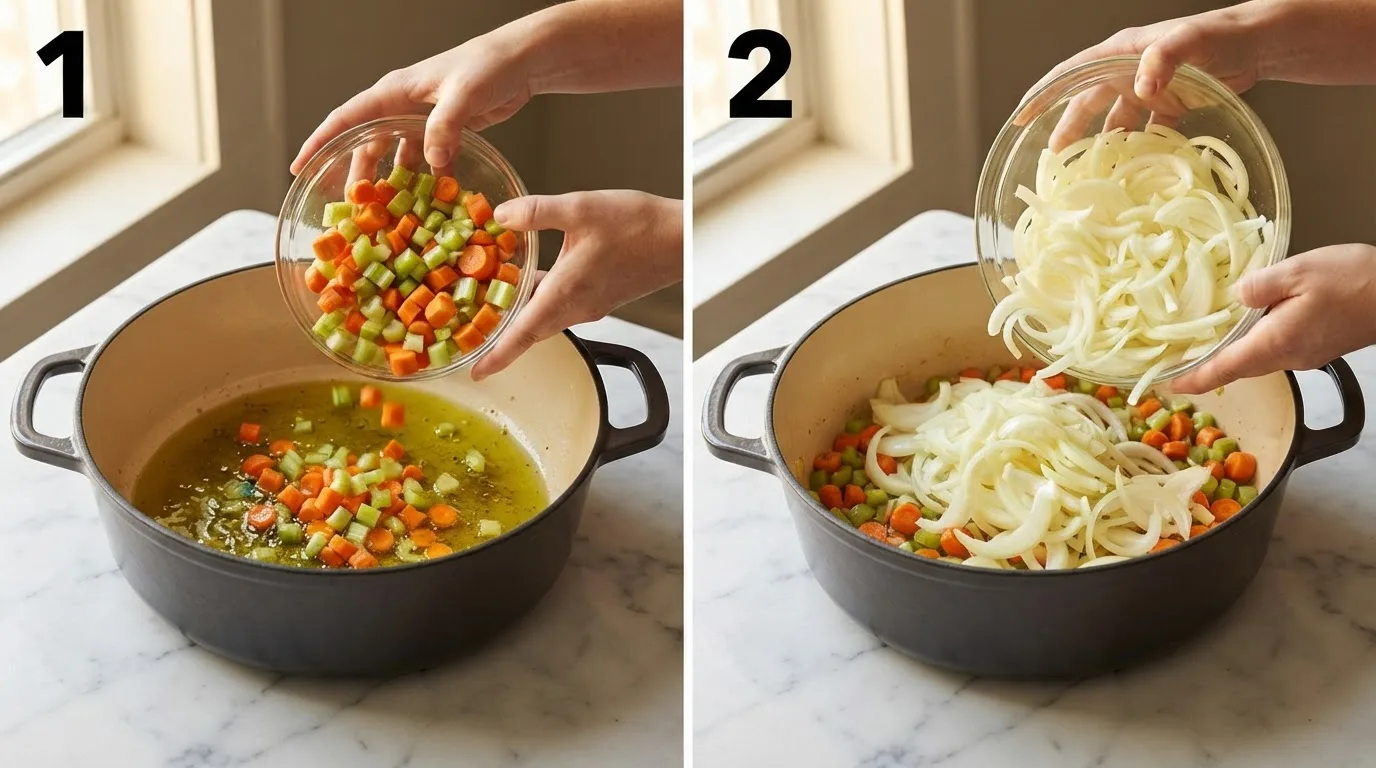
Heat the olive oil in a wide, heavy-bottomed pot over medium-low heat. Add the diced carrots and celery, and cook for 5 minutes, stirring occasionally, until they start to soften and smell fragrant. Add the minced garlic and cook for 30 seconds more, just until it smells toasty but not browned.
Step 2 — Add the onions and melt them down
Add all the sliced onions to the pot along with a generous pinch of salt. Stir to coat them in the oil, then reduce the heat to low and cover. Cook for 70–75 minutes, stirring every 10 minutes, until the onions have collapsed into a soft, deeply golden, jammy mass. This is the step from the Controlled Test above — don’t rush it.
Step 3 — Deglaze and add the tomato paste
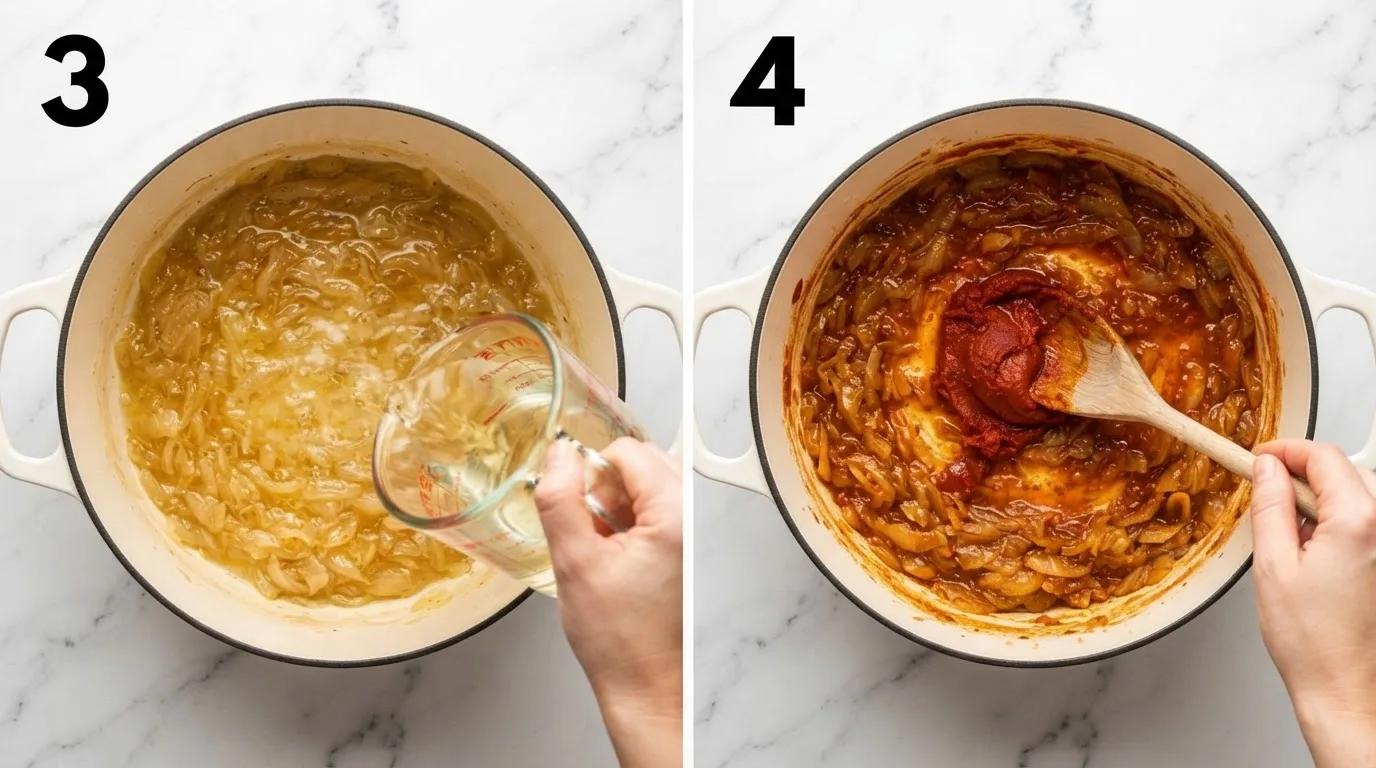
Raise the heat to medium, pour in the white wine, and scrape the bottom of the pot to release any browned bits. Let it bubble for 2 minutes until the sharp smell of alcohol fades. Stir in the tomato paste and cook for another minute, until it darkens slightly and smells toasty rather than raw.
Step 4 — Simmer with stock and bay leaf
Add the stock, bay leaf, and red pepper flakes if using. Simmer uncovered over low heat for 25–30 minutes, until the sauce has thickened slightly and coats the back of a spoon. Taste and adjust salt and pepper.
Step 5 — Fold in the tuna and pasta
While the sauce simmers, cook the rigatoni in well-salted boiling water until just shy of al dente — it will finish cooking in the sauce. Drain, reserving a cup of pasta water. Remove the bay leaf from the sauce, then gently fold in the drained tuna, breaking it into large flakes with a spoon rather than stirring vigorously. Add the pasta directly to the pot and toss, adding a splash of reserved pasta water if the sauce needs loosening.
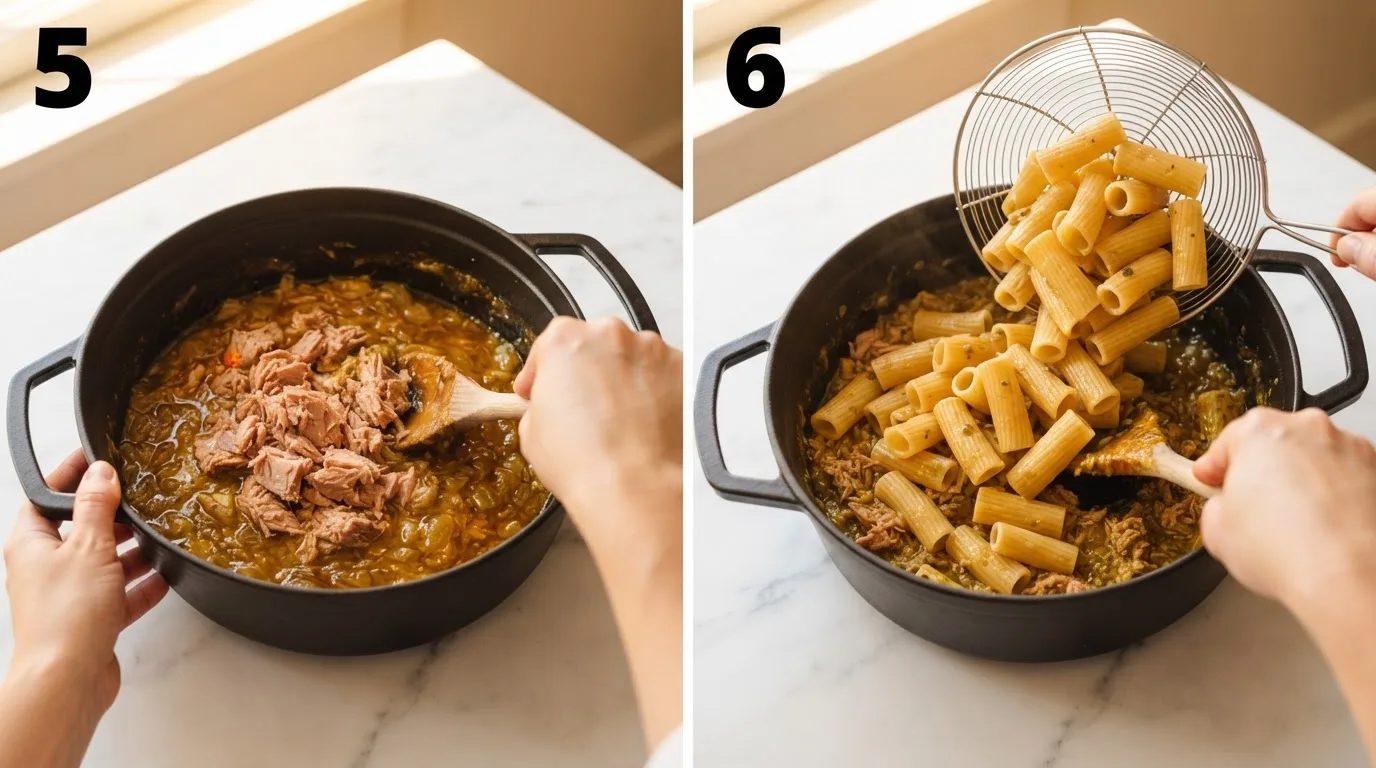
Step 6 — Finish and serve
Stir in the chopped parsley and basil, and finish with a drizzle of good olive oil. Serve immediately with grated Parmesan or Pecorino on top.
Pro Tips for Perfect Buona Beef Tuna Genovese
Tip 1: Salt the onions early. Salting the onions right when they go into the pot draws out moisture faster, which speeds up the melting process without needing higher heat.
Tip 2: Keep the heat genuinely low during the onion stage. If you hear sizzling instead of a gentle simmer-sweat, the heat is too high — this is what causes the sharp, slightly bitter version from my first test.
Tip 3: Don’t skip the pasta water. The starchy water helps the sauce cling to the rigatoni instead of pooling at the bottom of the bowl.
Tip 4: Make the sauce a day ahead if you can. Like most onion-based sauces, the flavor actually improves overnight in the fridge — the sweetness settles and rounds out.
Variations and Substitutions
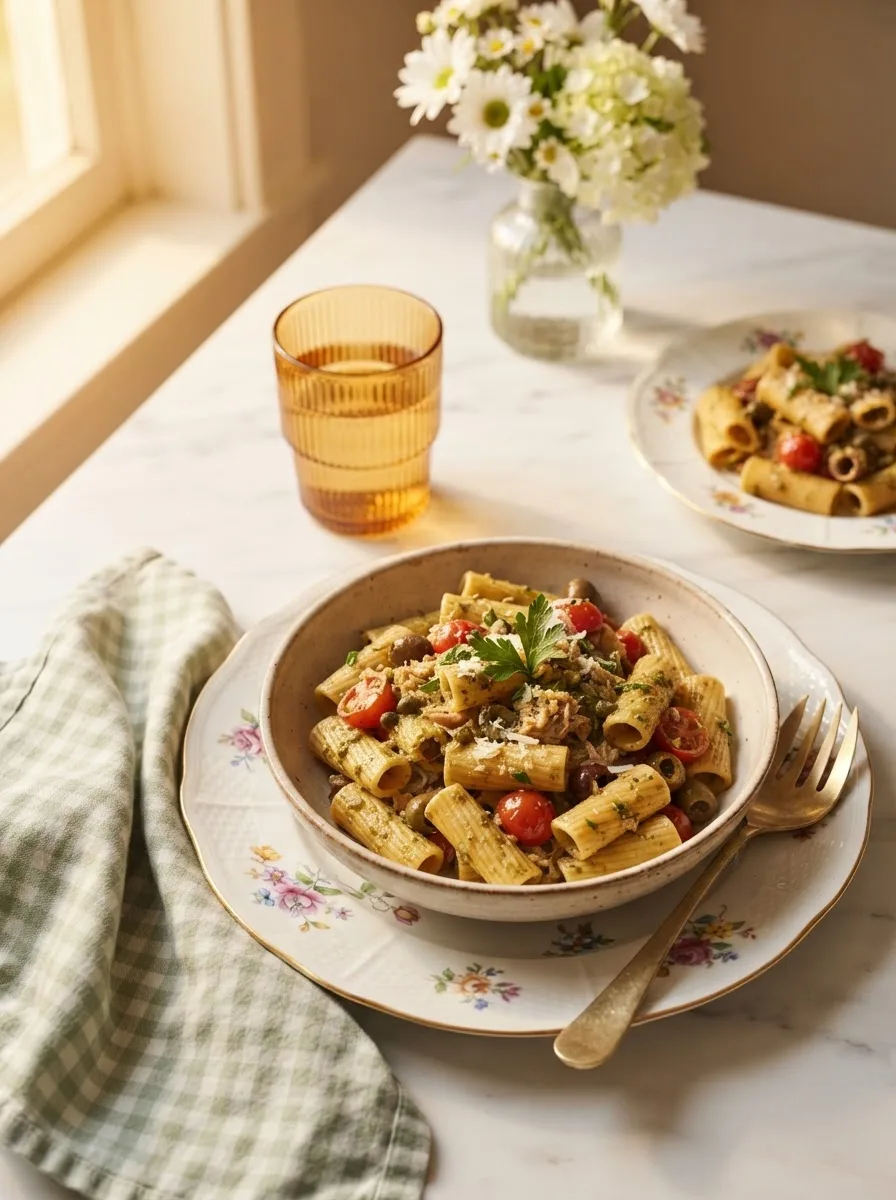
Dietary Variations:
- Gluten-free: swap in your favorite gluten-free rigatoni or ziti. The sauce itself is naturally gluten-free — just double-check your stock’s label.
- Dairy-free: simply skip the Parmesan finish, or use a dairy-free hard cheese alternative. The sauce doesn’t rely on dairy for its body.
Flavor Variations:
- Add anchovy paste: stir half a teaspoon into the soffritto for extra savory depth — a common addition in southern Italian genovese sauces.
Ingredient Substitutions:
- Yellow onions → sweet onions (Vidalia or similar) work as a 1:1 swap with a slightly milder flavor
- White wine → 1 tablespoon white wine vinegar stirred into the stock
If you’re building a full Friday spread, this pairs well alongside cheesy ranch potatoes and sausage for anyone at the table who isn’t observing a meatless meal, and cheesecake bread makes an easy dessert that doesn’t require turning the oven back on.
Troubleshooting
Why does my sauce taste bitter or sharp instead of sweet?
This almost always means the onions were cooked too hot and too fast. If you rush the melting stage past 45 minutes on anything higher than low heat, the onions can scorch slightly at the edges before they fully break down, and that translates into bitterness. Next time, drop the heat and give them the full 70–75 minutes.
My tuna turned stringy and dry — what happened?
Either water-packed tuna was used instead of oil-packed, or the tuna was stirred too aggressively and for too long once it hit the hot sauce. Fold it in gently at the very end, off the highest heat, and it will stay tender.
The sauce is too thick and clumpy once it cools — how do I fix it?
Onion-based sauces thicken significantly as they cool. When reheating, add a splash of water, stock, or reserved pasta water and stir over low heat until it loosens back to the right consistency.
Storage and Make-Ahead
Counter: Do not leave this dish out longer than 2 hours — it contains tuna and should be refrigerated promptly.
Refrigerator: Store in an airtight container for up to 4 days. The flavor genuinely improves after the first day.
Freeze: The sauce alone (without pasta) freezes well for up to 3 months. Freeze it in a flat, sealed container or bag so it thaws faster.
Reheating: Warm gently in a saucepan over low heat with a splash of water or stock, stirring until loosened. Avoid the microwave on high, which can make the tuna rubbery.
Make-Ahead: Make the sauce up to 2 days ahead and refrigerate. Cook the pasta fresh and toss the two together right before serving for the best texture.
Frequently Asked Questions
Q: What is genovese sauce, and why does it have tuna in it? A: Traditional Neapolitan genovese sauce is a slow-melted onion sauce usually made with beef. Restaurants like Buona Beef make a tuna version for Fridays during Lent, when many customers avoid meat but still want something hearty.
Q: Can I make this recipe without wine? A: Yes. Replace the white wine with a tablespoon of white wine vinegar stirred into the stock, or simply use extra stock and skip the deglazing step.
Q: Can I use fresh tuna instead of canned? A: You can, but sear it briefly first and flake it by hand before adding it to the sauce. Raw fresh tuna added directly to a simmering pot tends to turn tough.
Q: How do I store buona beef tuna genovese leftovers? A: Refrigerate in an airtight container for up to 4 days. The sauce reheats best with a small splash of water or stock to loosen it.
Q: Can I freeze buona beef tuna genovese? A: Yes — freeze the sauce (without pasta) for up to 3 months. Cook fresh pasta when you’re ready to serve it.
Q: Why do the onions take so long to cook? A: Slow cooking breaks down the onions’ cell walls gradually, releasing their natural sugars without scorching them. Rushing this step at higher heat is the number one cause of a bitter-tasting sauce.
More Recipes You’ll Love
- Dolly’s Chicken and Stuffing Casserole — a cozy, make-ahead casserole for the nights you want comfort food with minimal effort
- Cheesy Ranch Potatoes and Sausage — a hearty sheet-pan dinner that pairs well alongside a meatless Friday spread
- Banana Tempura — a quick, crispy dessert if you want something different from the usual after-dinner sweet
Buona Beef Tuna Genovese Recipe
Ingredients
For the Genovese Sauce:
- 3 tablespoon olive oil
- 2 pound yellow onions, thinly sliced (about 6 large onions)
- 2 medium carrots, finely diced
- 2 celery stalks, finely diced
- 4 clove garlic, minced
- 2 (5-ounce) cans oil-packed solid white tuna, drained
- 1/2 cup dry white wine
- 3 tablespoon tomato paste
- 1 cup low-sodium vegetable or fish stock
- 1 bay leaf
- 1/2 teaspoon red pepper flakes (optional)
- Salt and black pepper, to taste
- 1/4 cup chopped fresh parsley
- 1/4 cup chopped fresh basil
For Serving:
- 1 pound rigatoni or ziti
- 1/2 cup grated Parmesan or Pecorino Romano
- Extra virgin olive oil, for finishing
Instructions
- Heat the olive oil in a wide, heavy-bottomed pot over medium-low heat. Add the carrots and celery and cook for 5 minutes, stirring occasionally, until fragrant. Add the garlic and cook 30 seconds more.
- Add the sliced onions and a generous pinch of salt. Stir to coat, reduce heat to low, cover, and cook for 70–75 minutes, stirring every 10 minutes, until the onions are fully melted and deeply golden.
- Raise heat to medium, pour in the white wine, and scrape the bottom of the pot. Simmer 2 minutes until the alcohol smell fades. Stir in the tomato paste and cook 1 minute more.
- Add the stock, bay leaf, and red pepper flakes if using. Simmer uncovered over low heat for 25–30 minutes, until thickened. Season with salt and pepper.
- Meanwhile, cook the rigatoni in well-salted boiling water until just shy of al dente. Drain, reserving 1 cup of pasta water.
- Remove the bay leaf from the sauce. Gently fold in the drained tuna, breaking it into large flakes. Add the pasta and toss, loosening with reserved pasta water as needed.
- Stir in the parsley and basil, and finish with a drizzle of olive oil. Serve immediately with grated Parmesan or Pecorino.
Notes
- Use oil-packed tuna, not water-packed — it stays tender through the simmer instead of drying out and turning stringy.
- Do not rush the onion stage. Anything faster than 70 minutes on low heat risks a sharp, slightly bitter sauce instead of a sweet, jammy one.
- The sauce (without pasta) freezes well for up to 3 months in a flat, sealed container.
- This sauce tastes noticeably better the day after it's made — the onion sweetness rounds out overnight in the fridge.
- If doubling the recipe, use two pots for the onion stage rather than one — overcrowding the pot slows the melting process significantly.