Cava Rice Recipe (Saffron Basmati)

My first batch was flat: perfectly edible rice with none of the warm, floral saffron flavor I wanted. The second looked golden but tasted like turmeric with a rice problem. After three tests, I changed one variable—the saffron blooming method—and this cava rice recipe finally became the close home-kitchen copycat I was chasing.
For this cava saffron rice recipe, I bloom the threads in 3 tablespoons of warm water before they touch the pan. Warm water draws out and spreads saffron’s color and aromatic compounds more evenly than adding the dry threads straight to the rice. Turmeric gives the grains a deeper gold, but it cannot replace saffron’s floral flavor—that is the trade-off.
Here’s the scary moment: when the liquid first goes in, the rice may look streaky or uneven. Don’t panic. Covered simmering distributes the saffron through the pot, giving you fluffy saffron rice with a clean, earthy flavor profile. It takes about 20 minutes of mostly hands-off cooking, making it an easy rice bowl base for chicken, roasted toppings, or a simple meal at home.
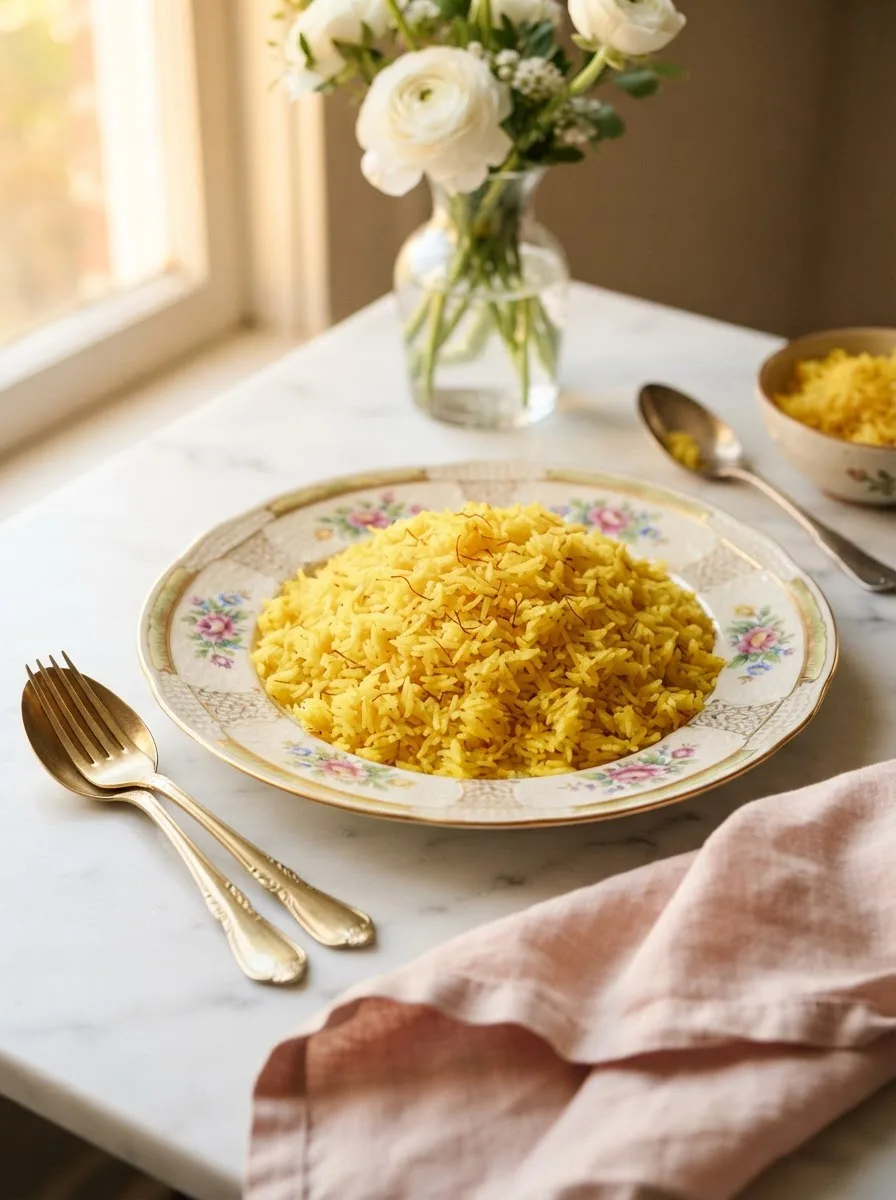
The result is the cava saffron rice I make for bowl nights: fluffy grains, even color, and enough lemon to keep the flavor fresh. I serve it with my cava sweet potato recipe when I want the full restaurant-style spread at home.
★★★★★ “I’ve made this three times now and it tastes almost identical to the rice at CAVA. The saffron bloom trick actually works — my rice used to look yellow but taste like nothing.” — Priya, recipe tester (pre-launch)
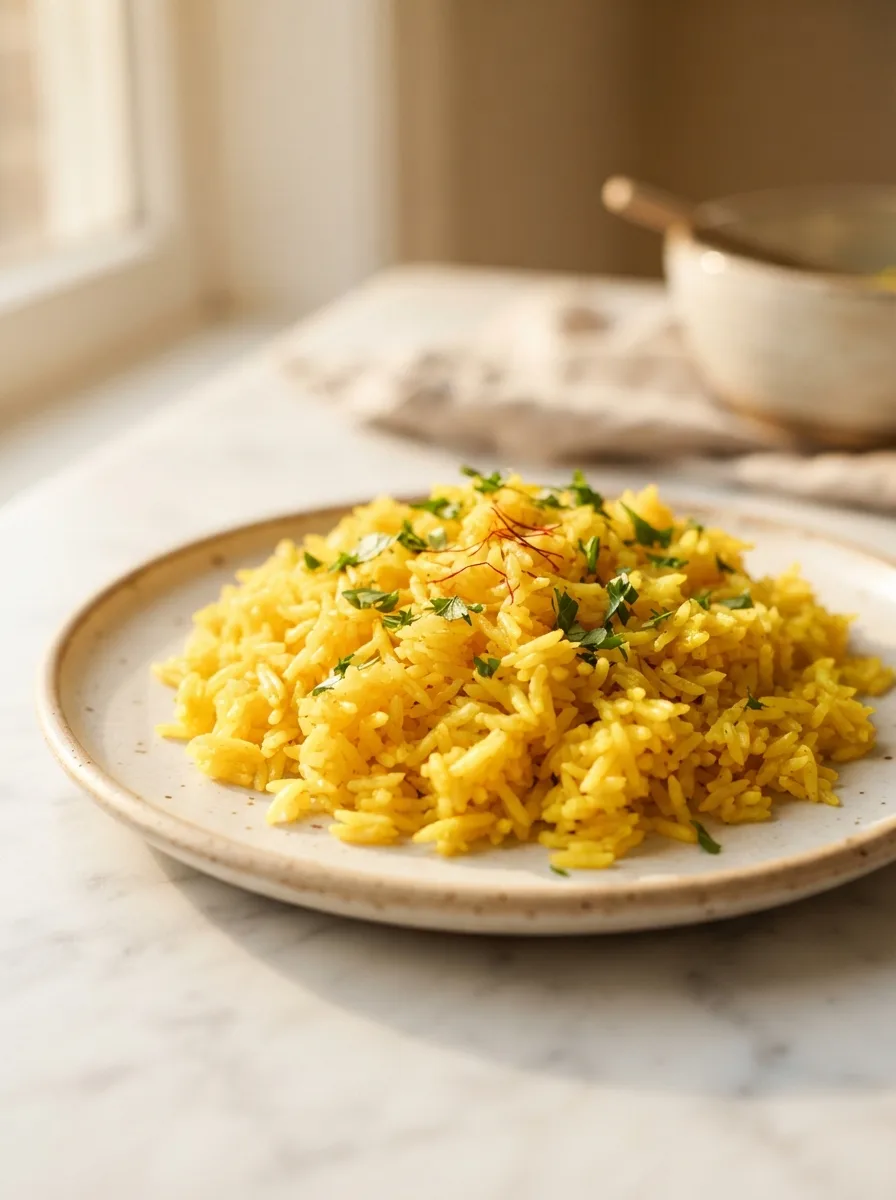
Why You’ll Love This Cava Saffron Basmati Rice
- Warm golden color: Real saffron brings the floral flavor, while ¼ teaspoon of turmeric adds extra color without artificial dye.
- Separate, fluffy grains: Rinsing the basmati rice removes loose surface starch, which helps limit clumping as the rice cooks.
- One-pot cooking: After the onion, garlic, and rice are toasted, the pot simmers for 15–18 minutes while you prepare the rest of your bowl.
- Vegan and dairy-free: Olive oil replaces butter, and vegetable broth gives the rice a savory base.
Key Ingredients for Cava Saffron Rice
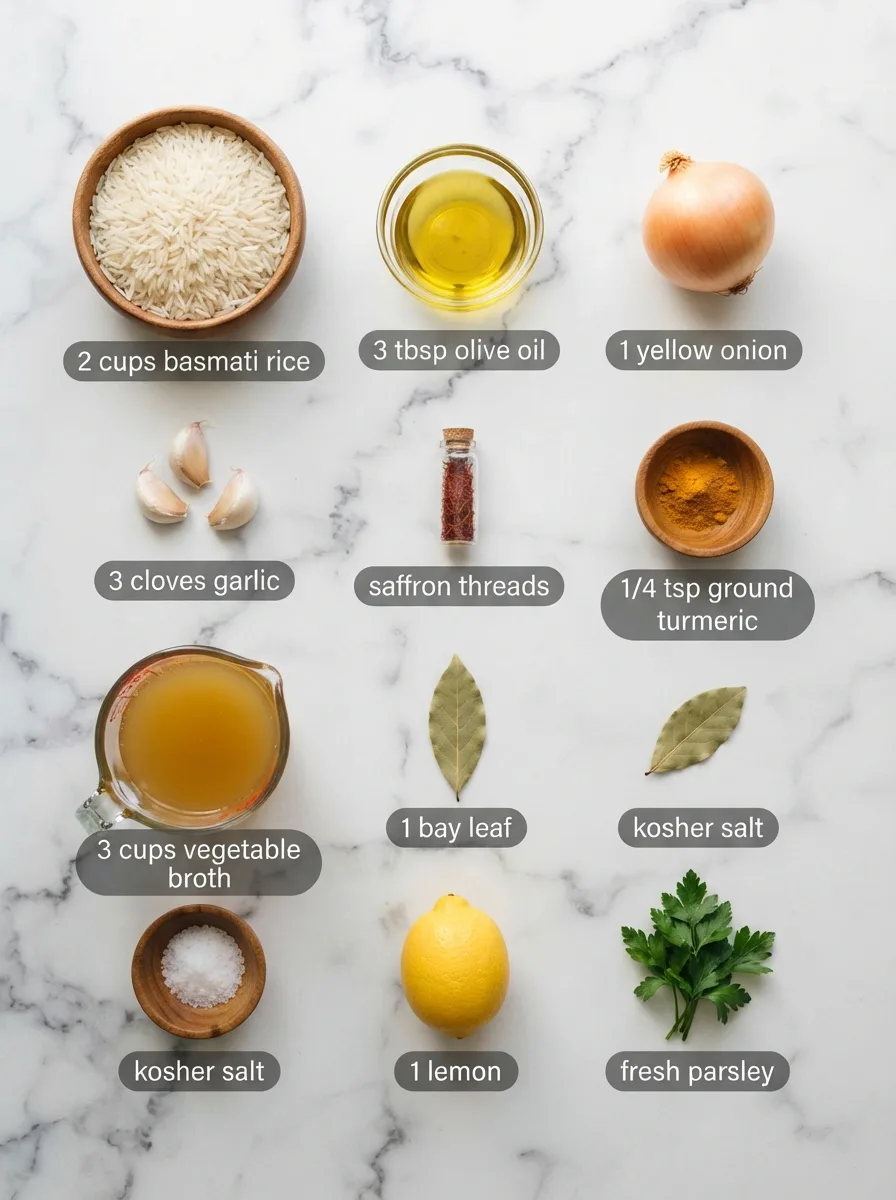
Basmati rice (2 cups) — This is the rice CAVA actually uses, and it matters. Basmati’s long, slender grains stays Basmati rice (2 cups) — Long, slender basmati grains stay separate more easily than short-grain varieties, giving this cava saffron rice its light texture. Rinsing under cold water removes loose starch from the surface, so the grains are less likely to stick together. Jasmine rice has a slightly stickier, sweeter result, so basmati is the closer choice for this rice recipe.
Saffron threads (½ teaspoon) — These provide the floral aroma and earthy flavor that turmeric cannot supply. When the threads sit in warm water, their color and aromatic compounds spread through the liquid before the rice absorbs it. That gives the finished saffron rice a more even flavor than adding dry threads directly to the pot.
Ground turmeric (¼ teaspoon) — Turmeric adds golden color, but it is not a replacement for saffron. Use the measured amount so it supports the color without taking over the flavor profile.
Olive oil (3 tablespoons) — Olive oil coats the grains and helps soften the onion and garlic before cooking. It also keeps the cava saffron rice dairy-free.
Vegetable broth (3 cups) — Broth gives the rice a savory foundation instead of leaving it tasting like plain cooked grains. Use a labeled gluten-free broth when needed. Chicken broth adds a deeper savory note, but it changes the recipe from vegetarian.
Bay leaf (1) — One bay leaf adds a quiet herbal note while the ingredients cook together. Remove it before fluffing the rice.
Ingredient Note: Place the saffron threads in 3 tablespoons of warm, not boiling, water for at least 10 minutes before cooking. The water should turn amber-gold before you add the saffron mixture to the pot.
Equipment You’ll Need
- Medium saucepan with a tight-fitting lid — A well-sealed lid keeps steam inside, which helps the rice cook evenly. If your lid fits loosely, cover the pan with foil and press the lid over it to reduce steam loss.
- Fine mesh strainer — Use it to rinse the rice until the water runs mostly clear. The small mesh keeps the grains from slipping through.
- Small bowl — This holds the saffron threads and warm water while they bloom before cooking.
- Fork — Fluff the finished rice gently with a fork. A spoon can press the grains together and make the texture heavier.
Controlling the Saffron Blooming Method
I tested three batches of this cava saffron rice to compare one variable: the saffron blooming method. I kept the rice brand, rice quantity, broth, saucepan, heat, and cooking time the same in every batch.
Batch 1: I added the saffron threads dry, directly to the pot with the rice. Batch 2: I soaked the saffron in 3 tablespoons of warm water for 10 minutes before adding it. Batch 3: I used the same 10-minute bloom, but soaked the threads in warm broth instead of water.
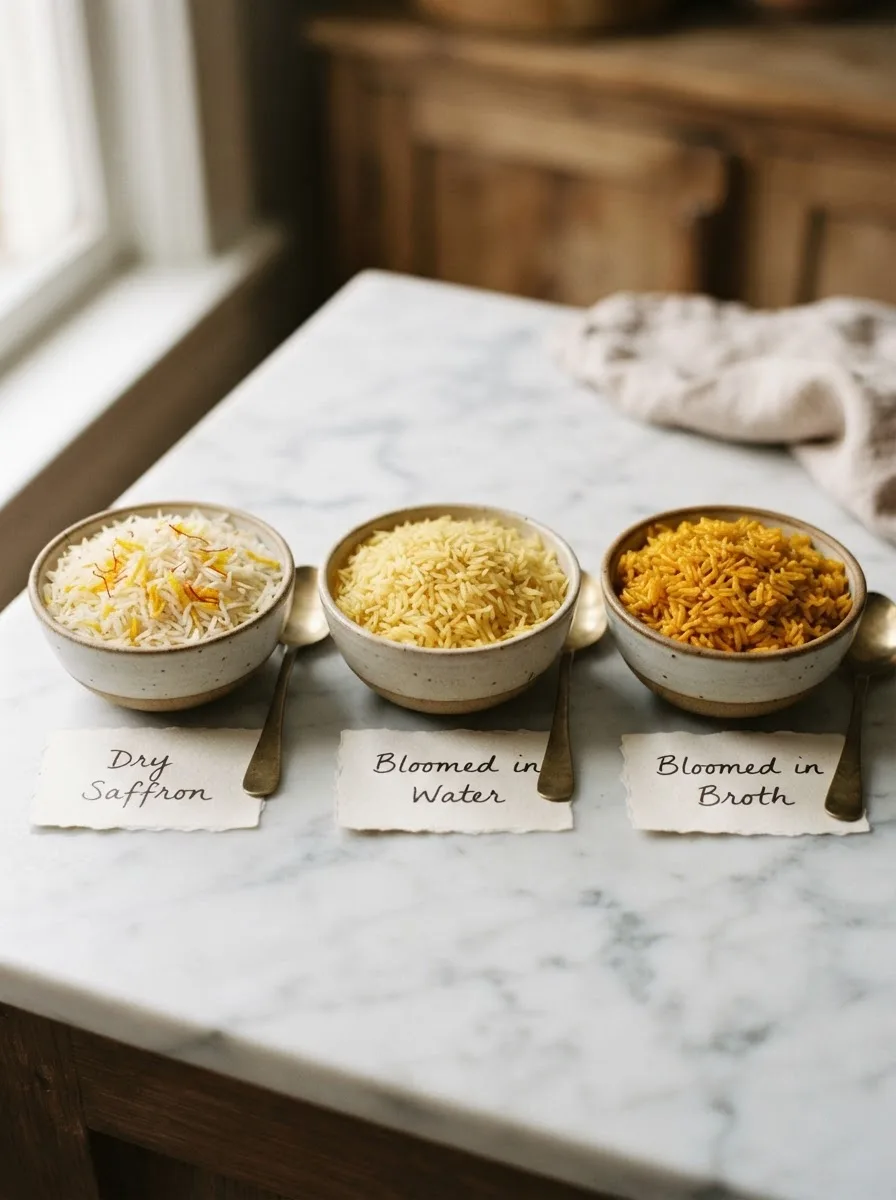
Batch 1 (dry saffron) had streaky color because the rice absorbed moisture before the threads could distribute their pigments evenly.
Batch 2 (bloomed in water) had consistent gold color and the clearest floral flavor. Warm water gives the saffron’s pigments and volatile aroma compounds time to spread through the liquid before the rice absorbs it.
Batch 3 (bloomed in broth) had nearly the same color, but its flavor profile was less distinct. The broth added savory flavor, yet that extra saltiness seemed to mask some of saffron’s delicate aroma.
The takeaway: For this cava saffron rice, bloom the saffron in plain warm water for at least 10 minutes. It is a small step, but it gives the rice more even color and a cleaner saffron flavor.
How to Make This Cava Rice Recipe
Before you start: Rinse 2 cups of basmati rice in a fine mesh strainer under cold water until the water runs mostly clear, usually after 3–4 rinses. This removes loose surface starch, which helps the grains stay separate. Let the rice drain fully before it goes into the pan; extra water can change the cooking ratio.
Step 1 — Bloom the Saffron
Add ½ teaspoon of saffron threads to 3 tablespoons of warm water in a small bowl. Let the mixture sit for at least 10 minutes while you prepare the other ingredients. The water should turn amber-gold. This time allows the saffron’s color and aroma to spread through the liquid before the rice absorbs it, so the finished grains taste seasoned instead of carrying a few random saffron streaks.
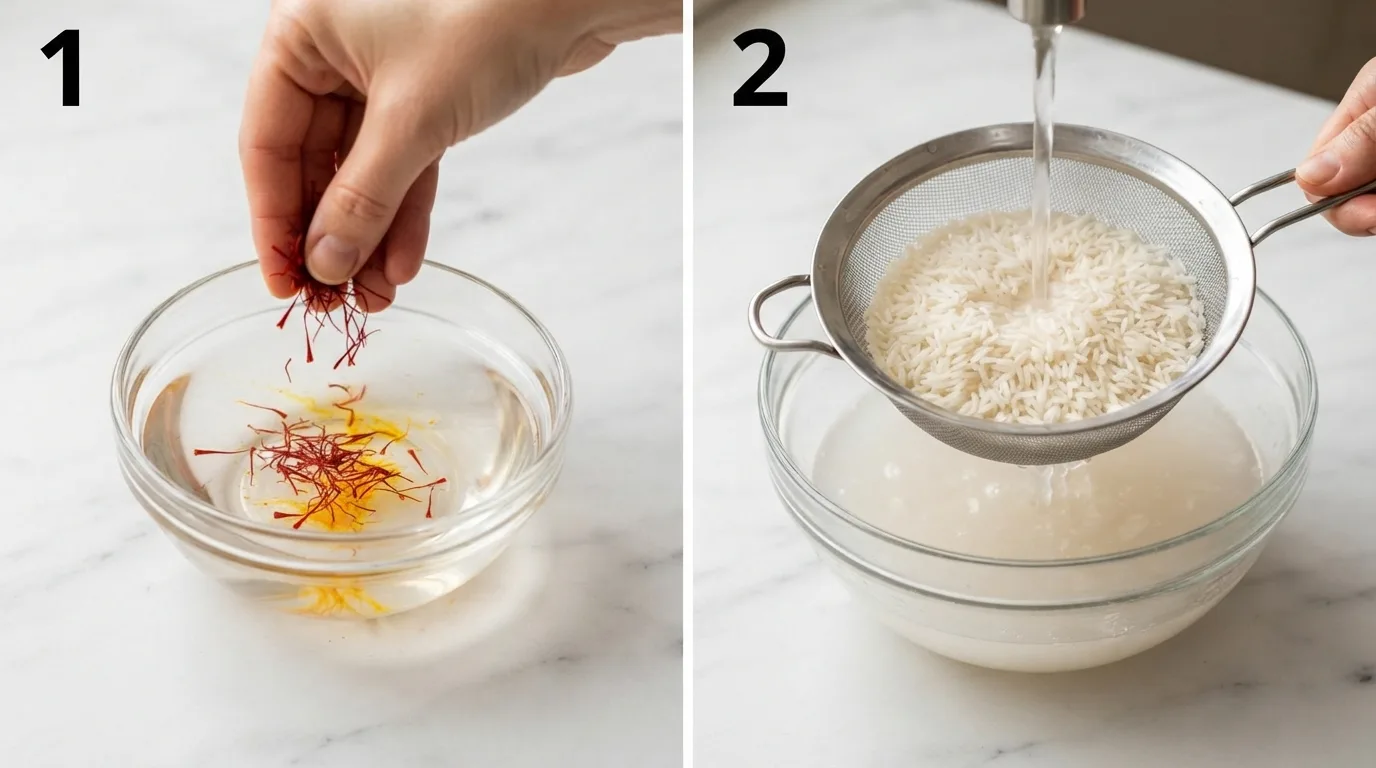
Step 2 — Rinse the Rice
While the saffron blooms, rinse the basmati rice under cold water until the water runs mostly clear. Swirl the grains gently with your fingers between rinses rather than rubbing them hard. Set the rice aside in the strainer and let it drain for at least 2 minutes. Draining matters because water clinging to the grains becomes part of the pot’s liquid, and too much moisture can make the rice soft or clumpy.
Step 3 — Toast the Onion, Garlic, and Rice
Heat 3 tablespoons of olive oil in your saucepan over medium heat. Add 1 small diced onion and cook for 4–5 minutes, stirring occasionally, until it softens and the edges turn lightly golden. Add 3 minced garlic cloves and cook for 30 seconds, just until fragrant. Garlic burns quickly, so keep it moving.
Add the drained rice and toast it in the oil for 1–2 minutes, stirring constantly. The grains should look slightly translucent around the edges and smell faintly nutty, but they should not turn brown. Toasting coats the rice with oil and develops a deeper flavor through gentle surface browning before the broth goes in.
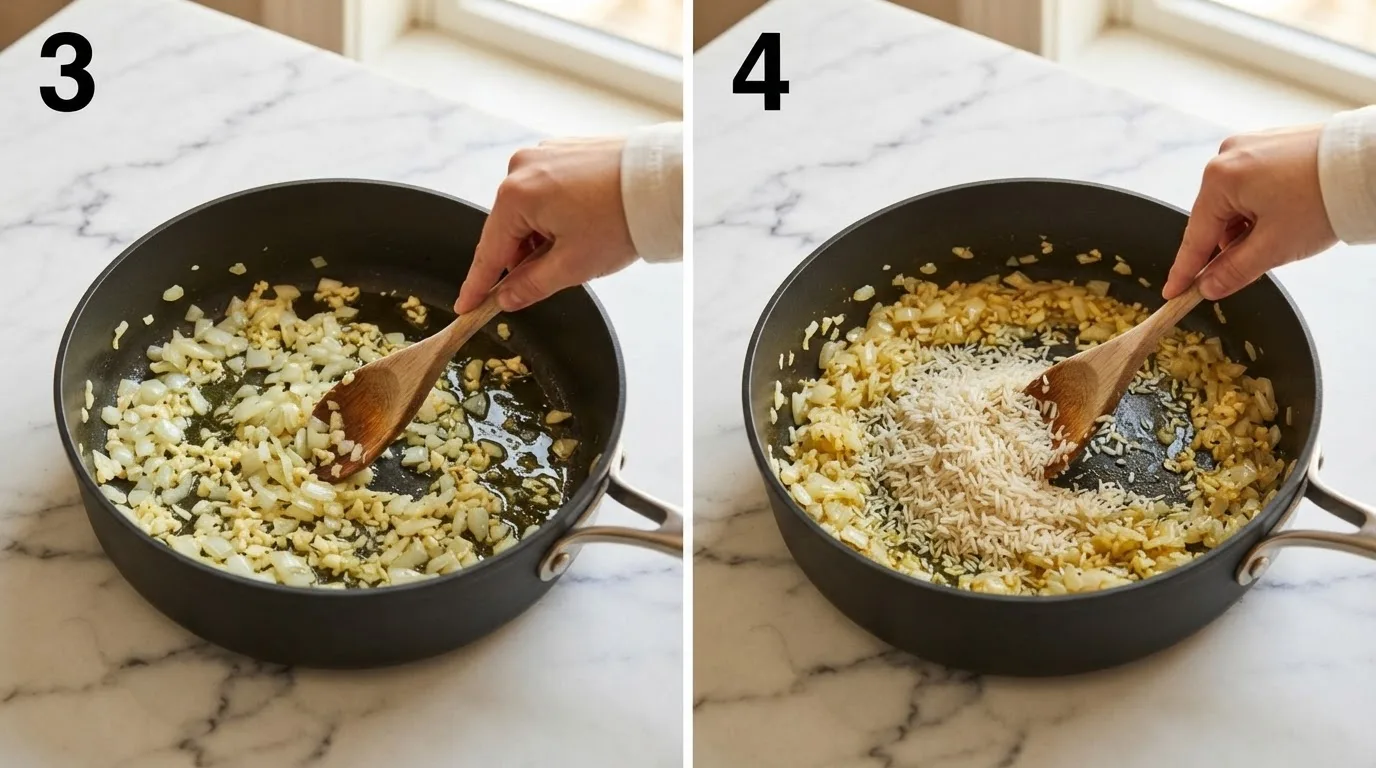
Step 4 — Add the Broth, Saffron, and Turmeric
Pour in 3 cups of vegetable broth and add the bloomed saffron along with all of its water. Stir in ¼ teaspoon of ground turmeric, 1 bay leaf, and 1 teaspoon of salt. Stir once to combine, then raise the heat and bring the pot to a full boil. You should see steady bubbles across the surface, not just a few around the edges.
Step 5 — Simmer, Covered, Undisturbed
As soon as the broth reaches a full boil, reduce heat low, cover the saucepan with its tight-fitting lid, and set a timer for 15 minutes. This is the scary-looking part: the pot may seem very liquid-heavy before the lid goes on. That is expected. The rice absorbs the broth as it cooks, while the trapped steam helps soften the grains from above.
Keep the lid closed for the full 15 minutes. Each time you lift it, steam escapes and the temperature inside the pan drops, which can leave the rice unevenly cooked. At 15 minutes, remove the lid briefly and test one grain from the center. It should be tender with no hard center. If it is still slightly firm, cover the pot again and cook for 2–3 additional minutes. Do not stir the rice during this step; stirring can break the grains and release more starch.
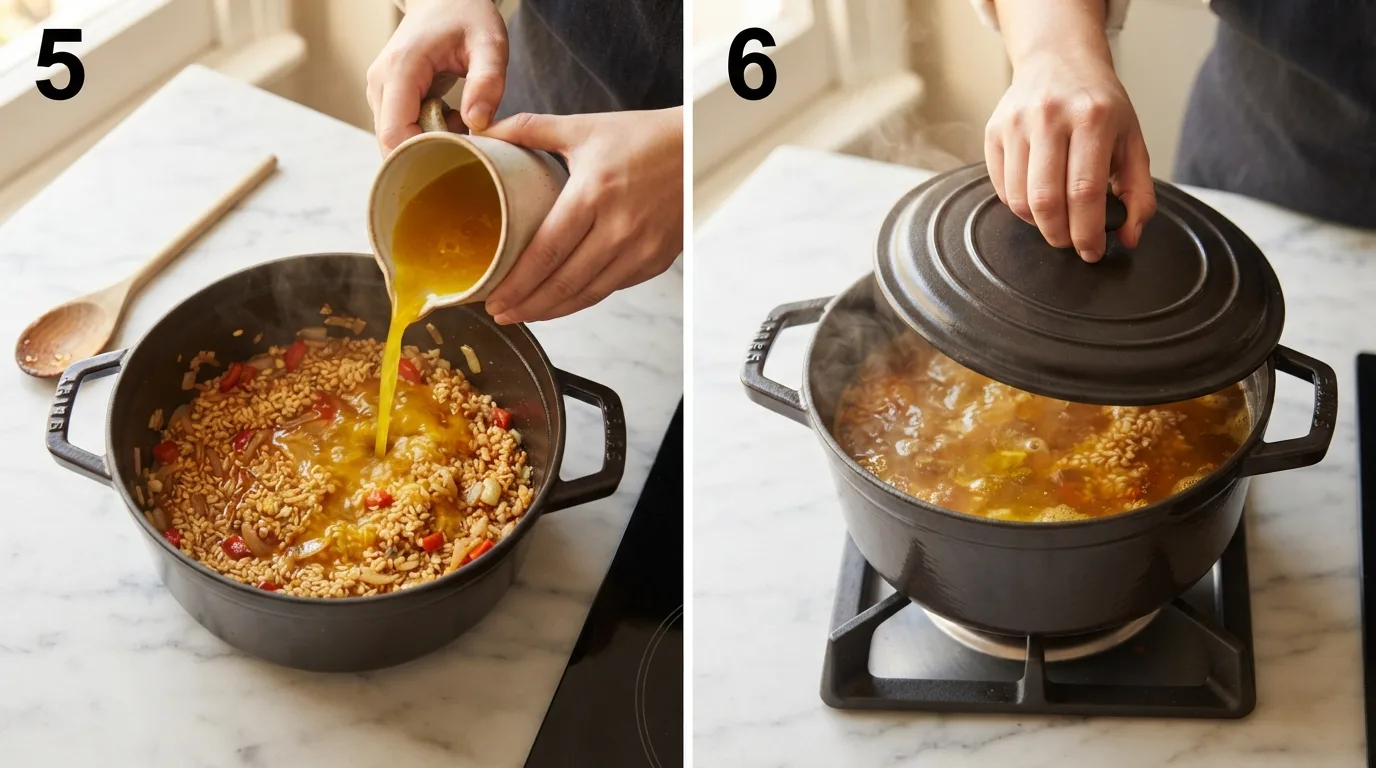
Step 6 — Rest, Then Fluff
Turn off the heat and let the pot sit, still covered, for 10 minutes. The remaining steam finishes the upper layer of rice and lets the moisture settle, so the bottom grains do not stay wetter than the top ones. Skipping this rest can leave the surface slightly firm even when the rice underneath is tender.
Remove the bay leaf. Add 2 tablespoons of fresh lemon juice, then fluff the rice gently with a fork from the edges toward the center. Taste and add up to ¼ teaspoon more salt if needed. Finish with 2 tablespoons of chopped fresh parsley and serve the rice warm.
Pro Tips for Fluffy Cava Rice
Tip 1: Rinse and drain well. Rinsing basmati removes loose surface starch, while draining keeps extra water from changing the rice-to-broth ratio.
Tip 2: Give the saffron time to bloom. Let the threads sit in warm water for 10 minutes so their color and aroma spread through the liquid before it reaches the rice.
Tip 3: Keep the lid on. Each peek releases steam, and that steam helps the rice cook evenly during the covered simmer. Trust the timer instead of checking the pot repeatedly.
Tip 4: Add lemon juice after cooking. Stir in the fresh lemon juice off the heat for a sharper, fresher finish. The trade-off is that the rice keeps a cleaner texture than it would if the juice simmered with the broth.
Variations and Substitutions
Dietary Variations:
- Gluten-free: This cava saffron rice is naturally gluten-free as written, but check the broth label for wheat-based flavorings. For a vegan bowl, keep the vegetable broth and olive oil.
- No saffron on hand: Use ¼ teaspoon of ground turmeric plus a small pinch of paprika for color. This is a color workaround, not a flavor equivalent; the finished rice will not have saffron’s floral aroma.
Flavor Variations:
- Herb-forward version: Stir 2 tablespoons of fresh dill into the parsley at the end. The brighter flavor works with roasted vegetables, lemon, or chicken in a rice bowl.
Ingredient Substitutions:
- Basmati rice → Jasmine rice (1:1): Jasmine releases more starch, so expect a softer, slightly stickier texture and watch the rice closely during the final cooking minutes.
- Vegetable broth → Chicken broth (1:1): Chicken broth adds savory depth but makes the dish unsuitable for vegetarian or vegan meal prep.
- Olive oil → Melted butter (1:1): Butter gives the cava saffron rice a richer finish, but it removes the dairy-free and vegan qualities.
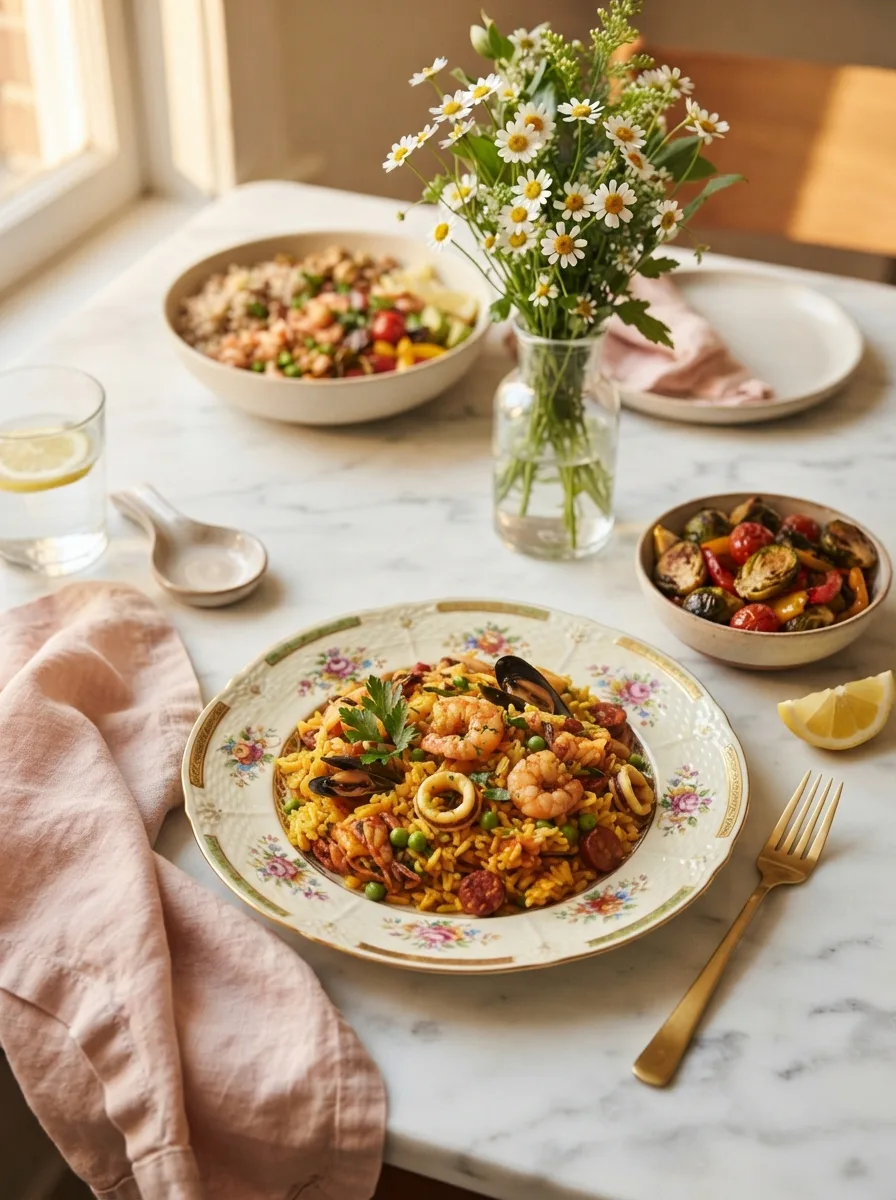
Use this rice as a practical base for copycat bowls at home. Add roasted veggies, chicken, and your favorite toppings, or pair it with my cava sweet potato recipe for an easy restaurant-style meal.
Troubleshooting
Why is my saffron rice cava-style pale instead of golden?
The saffron may not have bloomed for the full 10 minutes, or the ¼ teaspoon of turmeric may have been left out. Bloom the threads in warm water before cooking so the color spreads through the liquid, and use the measured turmeric for the deeper gold. Uneven color should settle as the rice steams.
Why is my rice mushy, clumpy, or still firm?
For mushy rice, rinse until the water runs mostly clear, drain it well, and measure the broth carefully. Keep the lid closed for the full 15 minutes; escaping steam can leave some grains undercooked while excess moisture softens others. If the rice looks underdone at 15 minutes, don’t panic: cover it again and give it 2–3 more minutes over low heat. The trapped steam finishes the recipe without adding more liquid.
Why did the bottom of my rice burn?
The heat was too high during the simmer. Once the pot boils, reduce heat low enough for gentle bubbling, then keep it covered. A heavy-bottomed saucepan helps spread heat. If the bottom burns, move the unburned rice to a clean pan without scraping the scorched layer into it. Taste before adding more salt; a burnt flavor will not disappear in this cava saffron rice.
Storage and Make-Ahead
Counter: Refrigerate cooked rice within 2 hours. If the room temperature is above 90°F, chill it within 1 hour. Spread the rice in a shallow container so it cools faster before sealing it.
Refrigerator: Store the rice in an airtight container for up to 4 days. This makes it useful for meal prep, especially when you want to assemble a quick bowl during the week.
Freeze: Cool the rice completely, then freeze it in a flat layer in a freezer bag for up to 2 months. A thin layer reheats more evenly and takes less time to thaw.
Reheating: Add 1 tablespoon of water per cup of rice, cover, and microwave in 30-second bursts, fluffing between each burst. The water creates steam, which softens the grains without drying them out. Reheat only the portion you plan to eat.
Make-Ahead: Bloom the saffron and rinse the rice up to 1 day ahead. Keep the saffron water covered in the refrigerator, and store the rinsed rice in a covered container or strainer in the refrigerator. Do not leave a cup of rinsed basmati at room temperature. This shortcut makes it easier to make rice for meal prep when cooking time is tight.
Frequently Asked Questions
Q: Is this the same rice CAVA actually serves? A: This cava rice recipe is a tested home-kitchen recreation based on the restaurant rice’s appearance and flavor. It is not CAVA’s exact formula.
Q: Can I make this cava saffron rice recipe in a rice cooker? A: Yes. Toast the onion, garlic, and rice in a pan first, then transfer them to the cooker with the broth, bloomed saffron, turmeric, bay leaf, and salt. Use the white-rice setting, and do not fill the cooker above its marked limit.
Q: Why does my saffron rice taste bitter? A: Too much saffron or water that is too hot can create bitterness. Measure ½ teaspoon of saffron threads and bloom them in warm, not boiling, water.
Q: Can I double this recipe for a crowd? A: Yes. Double the ingredients and use a wider pot rather than a deeper one. The thinner layer helps the rice cook more evenly.
Q: Is cava saffron basmati rice vegan? A: Yes, as written. Olive oil and labeled vegetable broth keep this rice vegan. Chicken broth would change that.
Q: Can I use water instead of broth? A: Yes, but the flavor will be lighter and less savory. Use the same amount of water as broth and season to taste after cooking.
Q: How long does the saffron need to bloom? A: Give it at least 10 minutes. Up to 20 minutes can deepen the color and aroma, but the extra time is optional when you need to get the recipe on the table.
More Copycat Recipes You’ll Love
- Texas Roadhouse Onion Blossom — a crisp copycat appetizer for adding another texture to your meal.
- Cheesecake Factory Gumbo Recipe — a rich, spiced recipe for a slower, heartier dinner.
- Cava Sweet Potato Recipe — an easy match for this cava saffron rice in a rice bowl with roasted vegetables and your favorite toppings.
- Squash Alabama Recipe — a Southern-style side for more copycat bowl ideas at home.

Cava Rice Recipe (Saffron Basmati)
Ingredients
For the Saffron Bloom:
- 1/2 teaspoon saffron threads
- 3 tablespoon warm water
For the Rice:
- 2 cup basmati rice, rinsed until water runs mostly clear
- 3 tablespoon olive oil
- 1 small yellow onion, finely diced
- 3 clove garlic, minced
- 3 cup vegetable broth
- 1/4 teaspoon ground turmeric
- 1 bay leaf
- 1 teaspoon kosher salt
- 1 tablespoon fresh lemon juice
- 2 tablespoon fresh parsley, chopped
Instructions
- Add the saffron threads to 3 tablespoons of warm water in a small bowl. Let bloom for at least 10 minutes.
- Rinse the basmati rice in a fine mesh strainer under cold water until the water runs mostly clear. Drain well and set aside.
- Heat the olive oil in a medium saucepan over medium heat. Add the diced onion and cook 4–5 minutes, until soft and golden at the edges.
- Add the minced garlic and cook 30 seconds, until fragrant.
- Add the rinsed rice and toast for 1–2 minutes, stirring constantly, until the edges look slightly translucent.
- Pour in the vegetable broth and the bloomed saffron (including the water). Add the turmeric, bay leaf, and salt. Stir once and bring to a boil.
- Reduce heat to low, cover with a tight-fitting lid, and simmer undisturbed for 15 minutes.
- Check one grain for tenderness. If needed, cover and cook 2–3 minutes more.
- Turn off the heat and let rest, covered, for 10 minutes.
- Remove the bay leaf, stir in the lemon juice, and fluff gently with a fork. Top with chopped parsley and serve.
Notes
- Bloom the saffron in plain warm water, not broth — broth slightly muddies the more delicate saffron notes, based on side-by-side testing.
- Store leftovers in an airtight container in the fridge for up to 4 days, or freeze in a flat layer for up to 2 months.
- If doubling the recipe, use a wider pot rather than a deeper one so the rice steams in an even, thin layer.
- No saffron on hand? Substitute ¼ teaspoon ground turmeric plus a small pinch of paprika for color — flavor will differ from the original but color will be close.