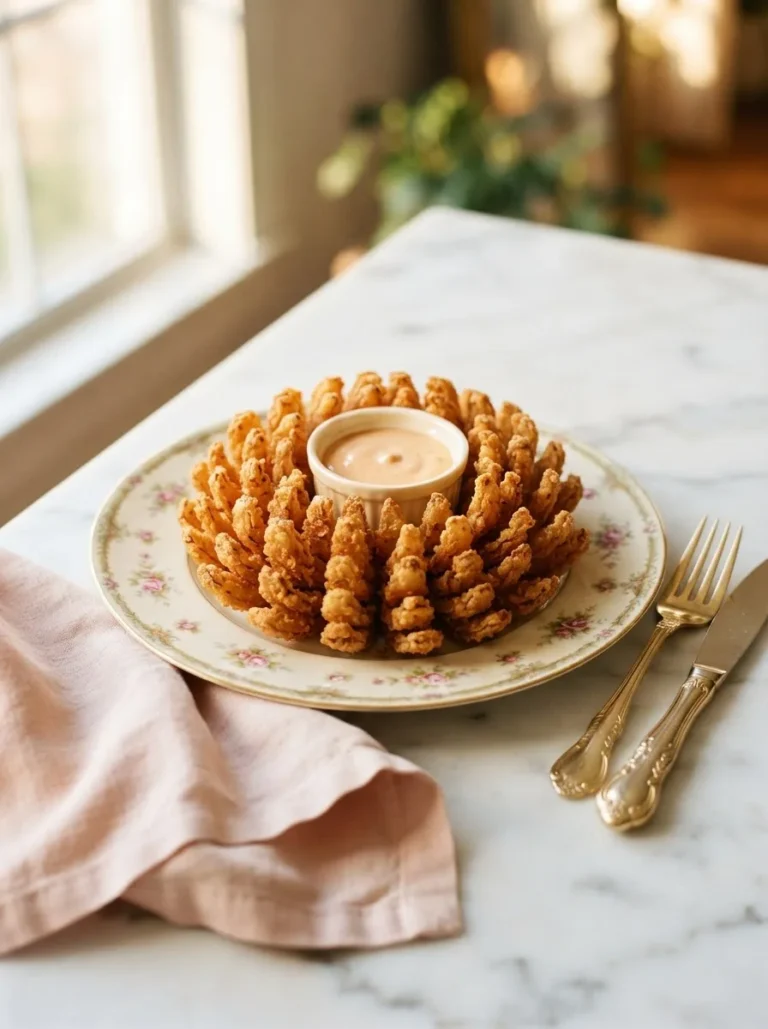
Texas Roadhouse Onion Blossom (Tested Copycat)

The first time I tried to recreate a texas roadhouse onion blossom at home, the batter slid straight off the onion and pooled in the bottom of my fryer. The second attempt held together but tasted like plain flour with a whisper of pepper. It took four full attempts — and one memorable batch that came apart petal by petal in the oil — before I landed on a version that actually behaves like the one you get at the restaurant: batter that clings, petals that fan out and stay crisp, and that instantly recognizable spicy dip.
Officially, it’s on the menu as the Texas Roadhouse Cactus Blossom appetizer, though almost everyone I know just calls it the onion blossom, the blooming onion, or — in my house — “the texas blossom thing.” Whatever you call it, the appeal is the same: one giant sweet onion, cut into dozens of petals, dredged twice, and fried until the outer edges go deep golden and shatter-crisp while the inside stays soft and a little sweet.
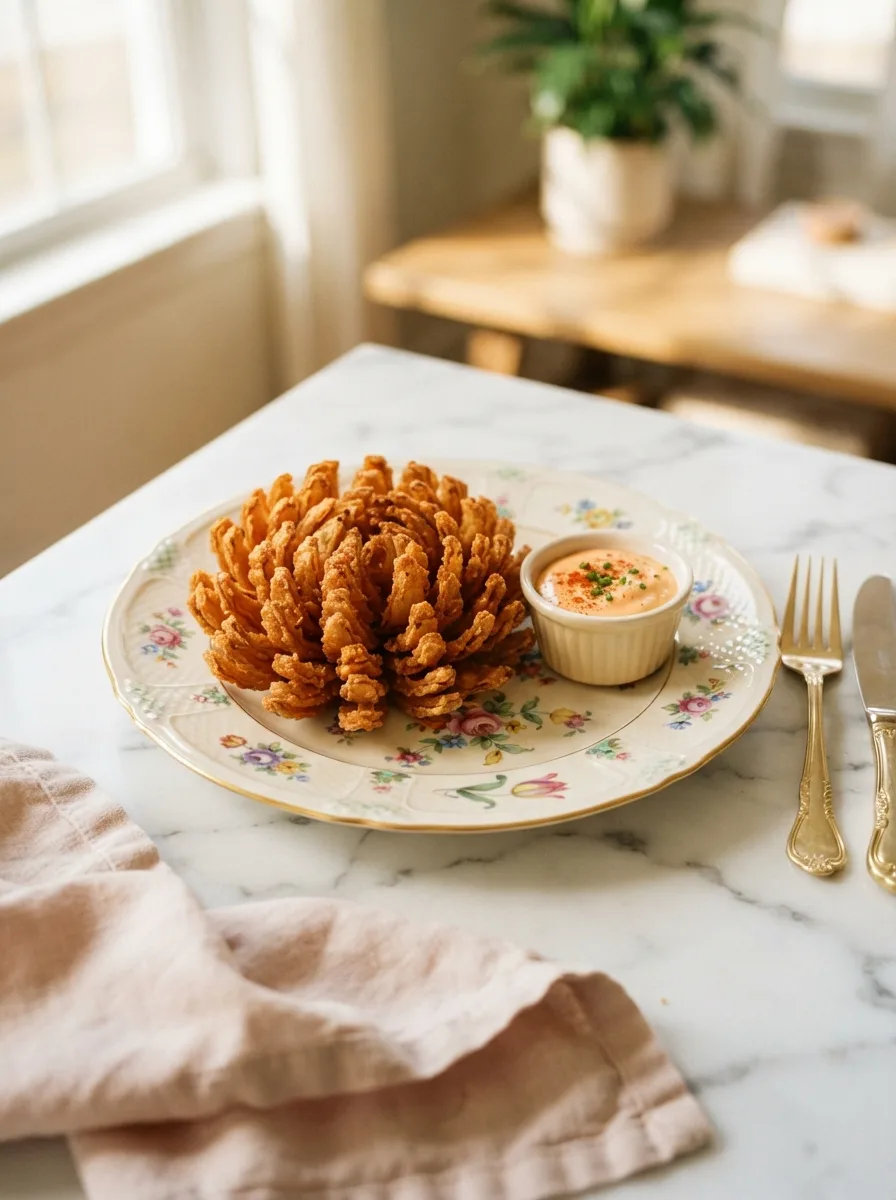
What makes this version worth bookmarking is the double-dredge method. Most copycat recipes skip straight to a single batter dunk, which is exactly why the coating flakes off in the oil. I tested a single dredge against a double dredge side by side, and the difference was not subtle — one held its crust through the whole fry, and one didn’t survive past the first flip.
★★★★★ “I’ve ordered the onion blossom every single time I’ve gone to Texas Roadhouse, and this is closer than I expected from a home version. The sauce alone is worth making.” — Danielle R., recipe tester (pre-launch)
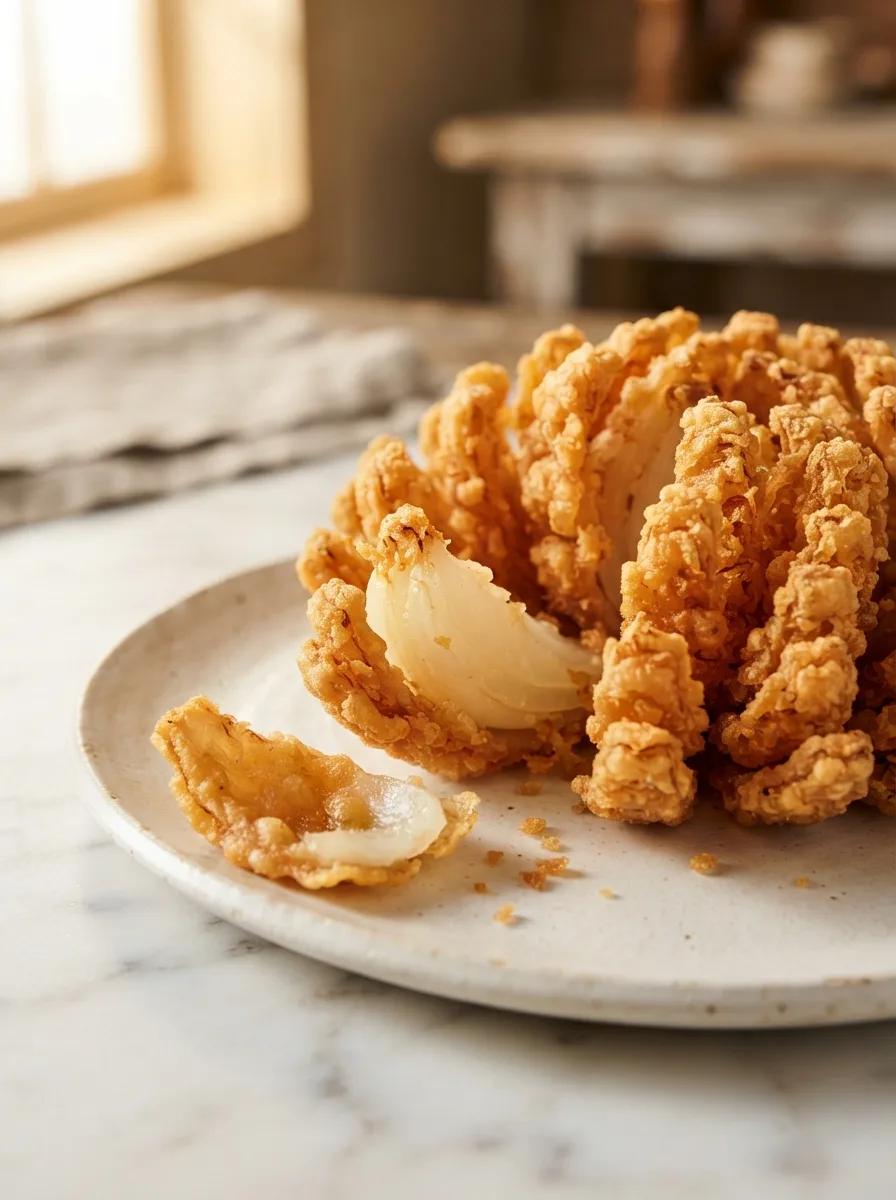
Why You’ll Love This Texas Roadhouse Onion Blossom
- The batter actually stays on: The double-dredge method (flour, buttermilk wash, flour again) is the fix for the single biggest failure point in every blooming onion texas roadhouse copycat I tried before this one.
- No deep fryer required: A deep pot, a thermometer, and 3 inches of oil get you the same result — I tested this on a regular stovetop, not a countertop fryer.
- The sauce is not an afterthought: Most of the flavor memory of this appetizer lives in the dip. This one is a near-exact match — creamy, tangy, and just spicy enough to notice.
- Petals fan out on their own: The cutting technique below (cutting almost, but not all the way, through the root) is what makes the onion open into a flower shape instead of falling apart into loose rings.
Key Ingredients for This Blooming Onion Texas Roadhouse Copycat
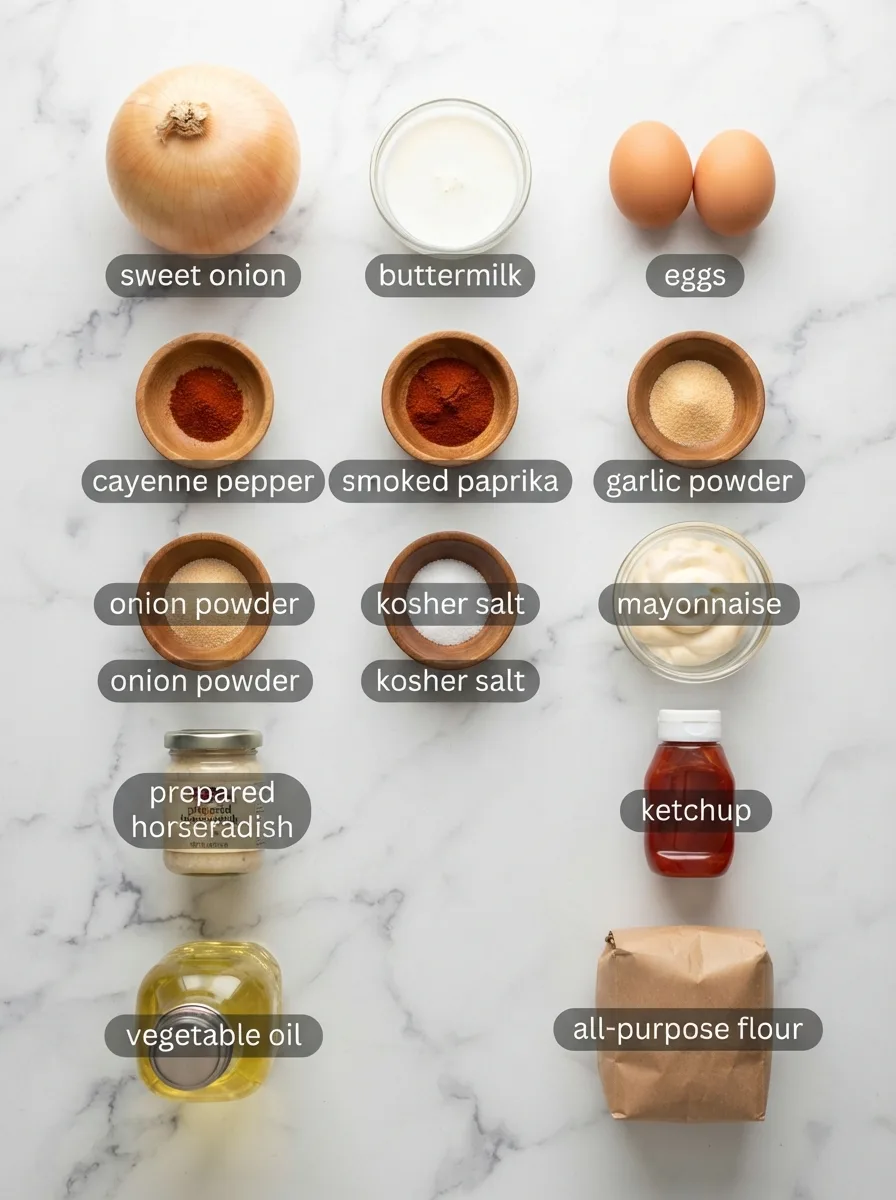
Sweet onion (1 large, about 4 inches across). A Vidalia or other sweet onion is non-negotiable here — a regular yellow onion is sharper and doesn’t caramelize the same way at the edges. Size matters too: an onion smaller than 4 inches won’t open into a full “blossom” shape once cut.
All-purpose flour (2½ cups, divided). This does double duty as the dry dredge and the base of the batter. Weighing it (300g) keeps the coating from turning gummy, which happens when flour is packed into the cup.
Buttermilk (2 cups). The acidity here does two things: it tenderizes the onion slightly during the soak, and it’s what makes the second dredge cling to the first. Regular milk with a tablespoon of lemon juice stirred in works as a substitute, though the coating is a touch less crisp.
Cayenne pepper, smoked paprika, garlic powder, onion powder, black pepper, salt. This is the seasoning blend that gives the batter its signature warmth — not screaming hot, just noticeably peppery. I tested it with and without smoked paprika, and the smoked version was the closer match to the restaurant flavor.
Vegetable or peanut oil (enough for a 3-inch depth). Peanut oil has a higher smoke point and a cleaner fry, but vegetable oil works fine if that’s what you have. Avoid olive oil — the smoke point is too low for this.
Mayonnaise, ketchup, prepared horseradish, cayenne (for the dip). This four-ingredient sauce is the one thing you cannot skip. It’s what turns a fried onion into the specific appetizer people are craving.
Ingredient Note: Don’t skip the buttermilk soak, even if you’re short on time. Ten minutes minimum — it’s the step that keeps the onion from tasting raw and sharp in the center after frying.
Equipment You’ll Need
- Large, heavy pot or Dutch oven — for frying. A countertop deep fryer works too, but a 5–6 quart pot with 3 inches of oil does the same job.
- Instant-read or clip-on candy thermometer — this recipe lives or dies on oil temperature. Guessing “medium-high” heat is the fastest way to end up with a greasy, pale blossom.
- Sharp paring knife — for cutting the petals. A dull knife tears the onion layers instead of slicing clean petals, which affects how well it fans open.
- Wide, shallow bowls — one for the dry dredge, one for the buttermilk wash. A pie dish works well for either.
- Spider strainer or slotted spoon — for lowering the onion into the oil and lifting it back out without losing petals.
- Wire rack set over a baking sheet — draining on paper towels traps steam against the crust and softens it; a wire rack keeps air moving underneath.
Controlling the Crunch: Oil Temperature (A Controlled Test)
The single biggest variable in this recipe isn’t the batter — it’s oil temperature. I fried the same onion, same batter, same everything, at three different oil temperatures to see exactly what changes.
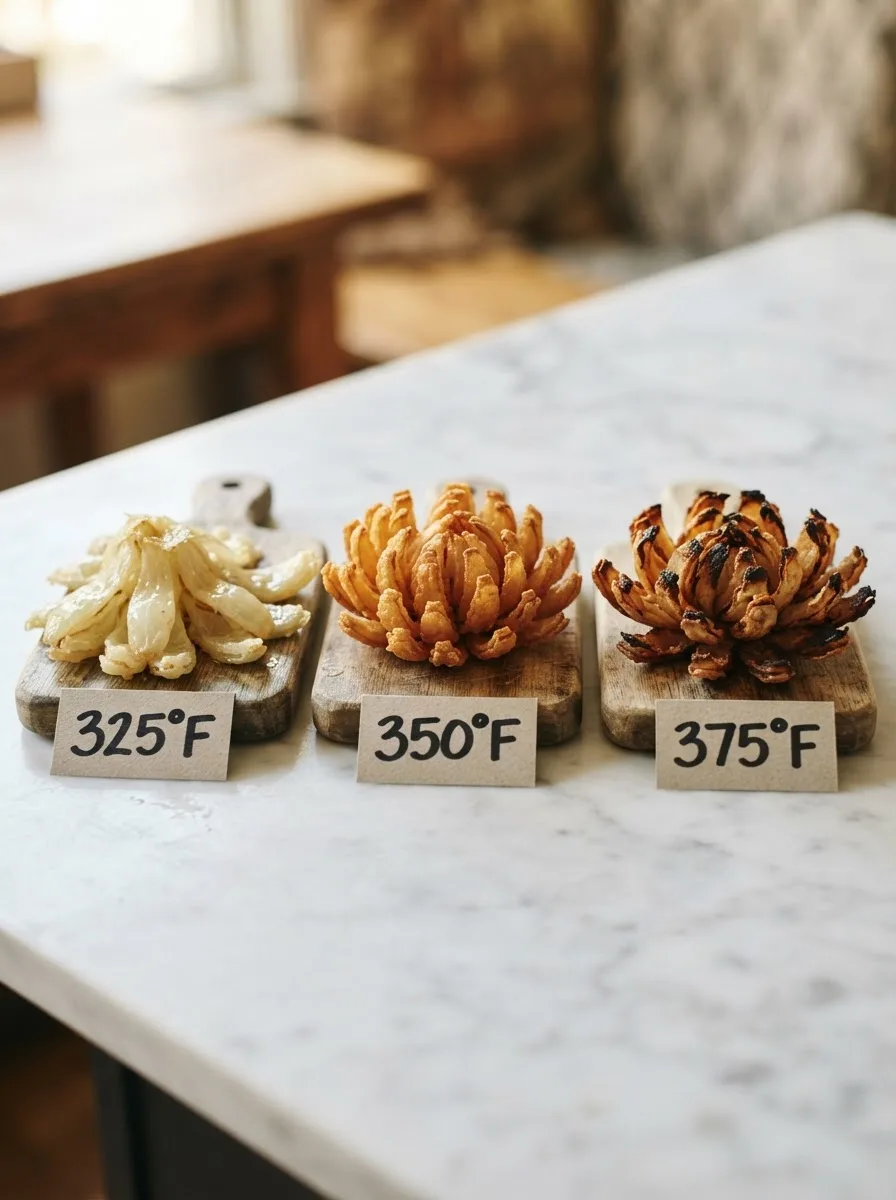
325°F: The batter never fully crisped. It absorbed extra oil and came out pale and slightly soggy by the time the center of the onion cooked through.
350°F: This is the sweet spot. The outer petals turned deep golden in about 90 seconds, the coating stayed crisp for a full 15 minutes after frying, and the onion center was tender without going mushy.
375°F: The outside browned almost too fast — some edges tipped into burnt-tasting territory before the inner petals had softened at all.
The takeaway: Hold the oil at 350°F the entire time you’re frying, and don’t crowd the pot with other food that could drop the temperature. A thermometer isn’t optional here — it’s the one piece of equipment that separates a good onion blossom from a greasy one.
How to Make Texas Roadhouse Onion Blossom
Before you start: Take the onion out and let it come close to room temperature — a cold onion straight from the fridge slows the oil down and can cause uneven browning. Also set up your dredge and buttermilk stations before you turn on the oil, since once frying starts, you’ll move fast.
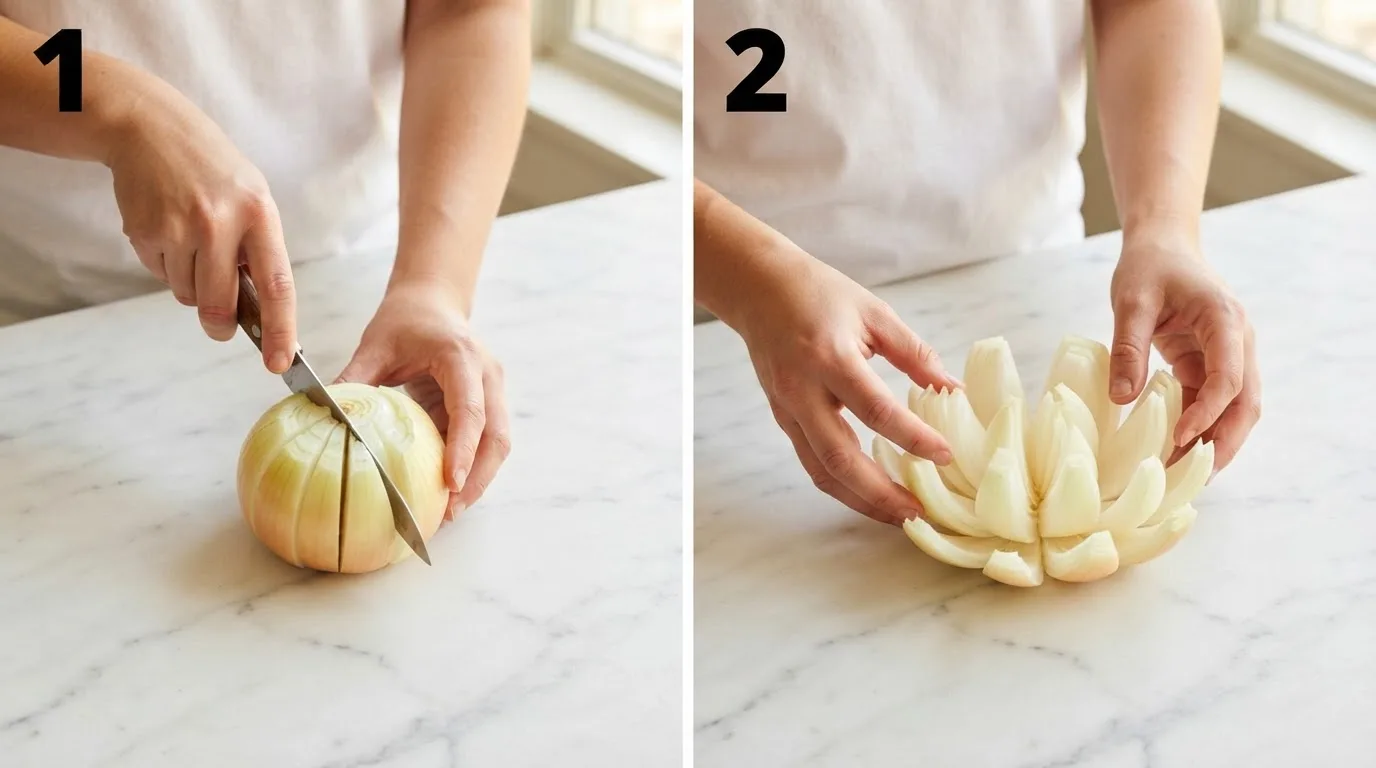
Step 1 — Cut the onion into petals
Slice about ½ inch off the top of the onion (the stem end), leaving the root end intact — that’s what holds the petals together. Set the onion root-side down and, starting about ½ inch from the root, slice straight down through the onion, all the way to the cutting board, working around the onion in a circle to create 12–16 wedges. The root should still be holding everything together at the base.
Step 2 — Open the petals and soak
Gently turn the onion cut-side up and use your fingers to spread the wedges outward into a flower shape — this is the step that determines whether you get a “blossom” or just a pile of onion strips, so take your time. Submerge the opened onion in a bowl of ice water for at least 10 minutes (up to 1 hour in the fridge). This crisps the layers and mellows the sharpness.
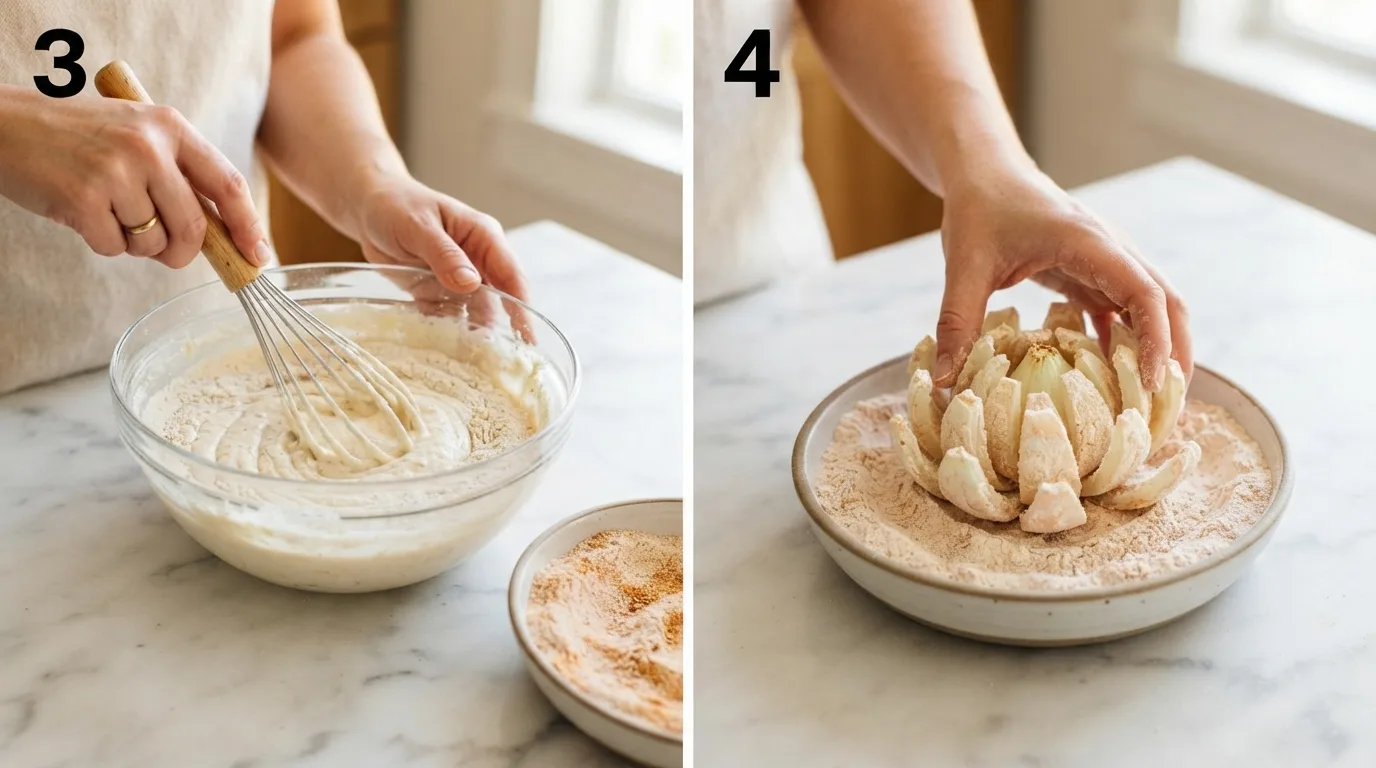
Step 3 — Mix the dry dredge and the wet batter
In one wide bowl, whisk together 2 cups of the flour with the cayenne, smoked paprika, garlic powder, onion powder, black pepper, and salt. In a second bowl, whisk the buttermilk with 2 eggs and the remaining ½ cup flour until smooth — this is your wet batter, and it should be thick enough to coat the back of a spoon without running off immediately.
Step 4 — Double-dredge the onion
Lift the drained onion and dredge it in the seasoned flour first, working the flour down between every petal with your fingers. Shake off the excess, then dunk the entire onion into the buttermilk batter, again working it between the petals. Let the excess batter drip off for a few seconds, then dredge once more in the seasoned flour. This second flour coat is the step most copycat recipes skip — it’s the reason the crust holds together in the oil instead of sliding off in sheets.
Step 5 — Fry until deep golden
Heat 3 inches of oil in a large pot to 350°F, checking with a thermometer. Using a spider strainer, lower the onion in cut-side down. Fry for 3–4 minutes, then carefully flip it root-side down and fry another 3–4 minutes, until every petal is a deep golden brown and the batter has stopped sizzling loudly (a sign most of the moisture has cooked out).
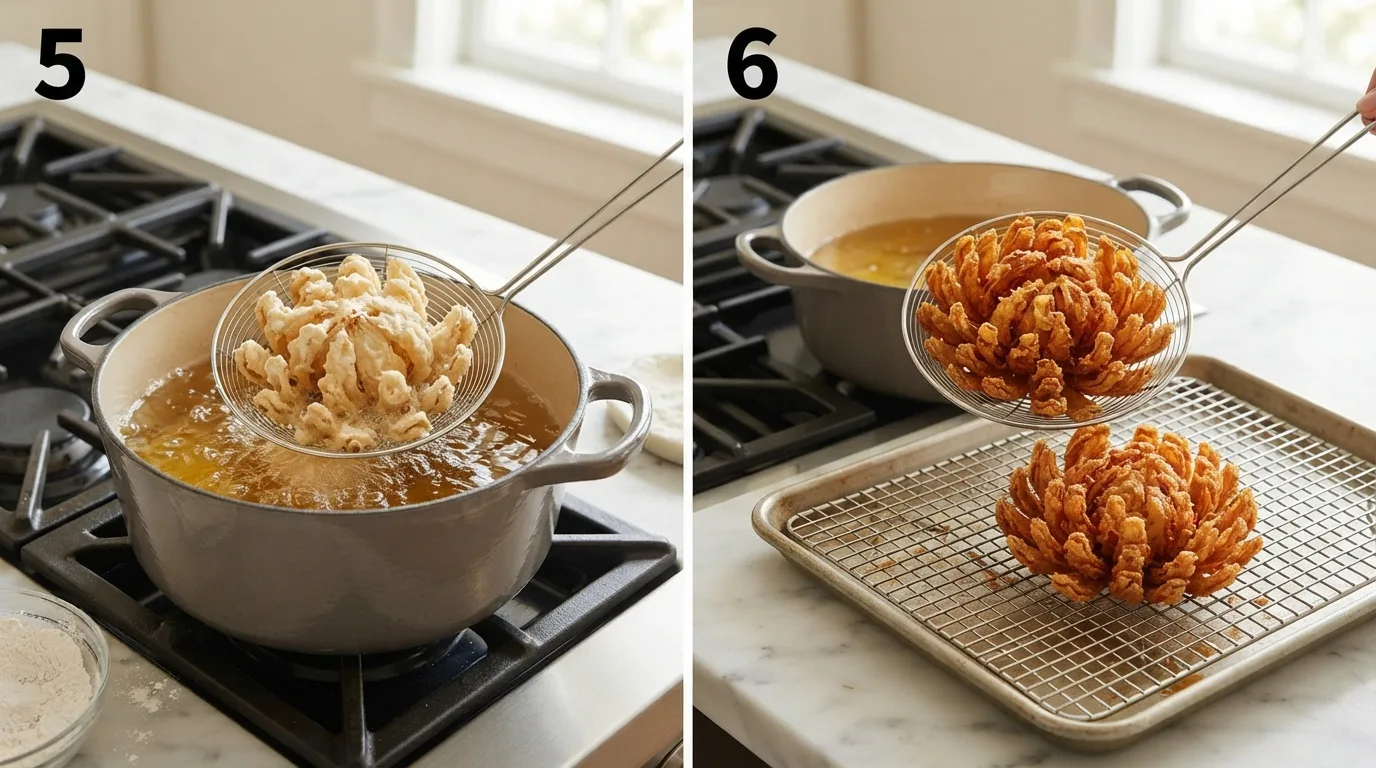
Step 6 — Drain and make the sauce
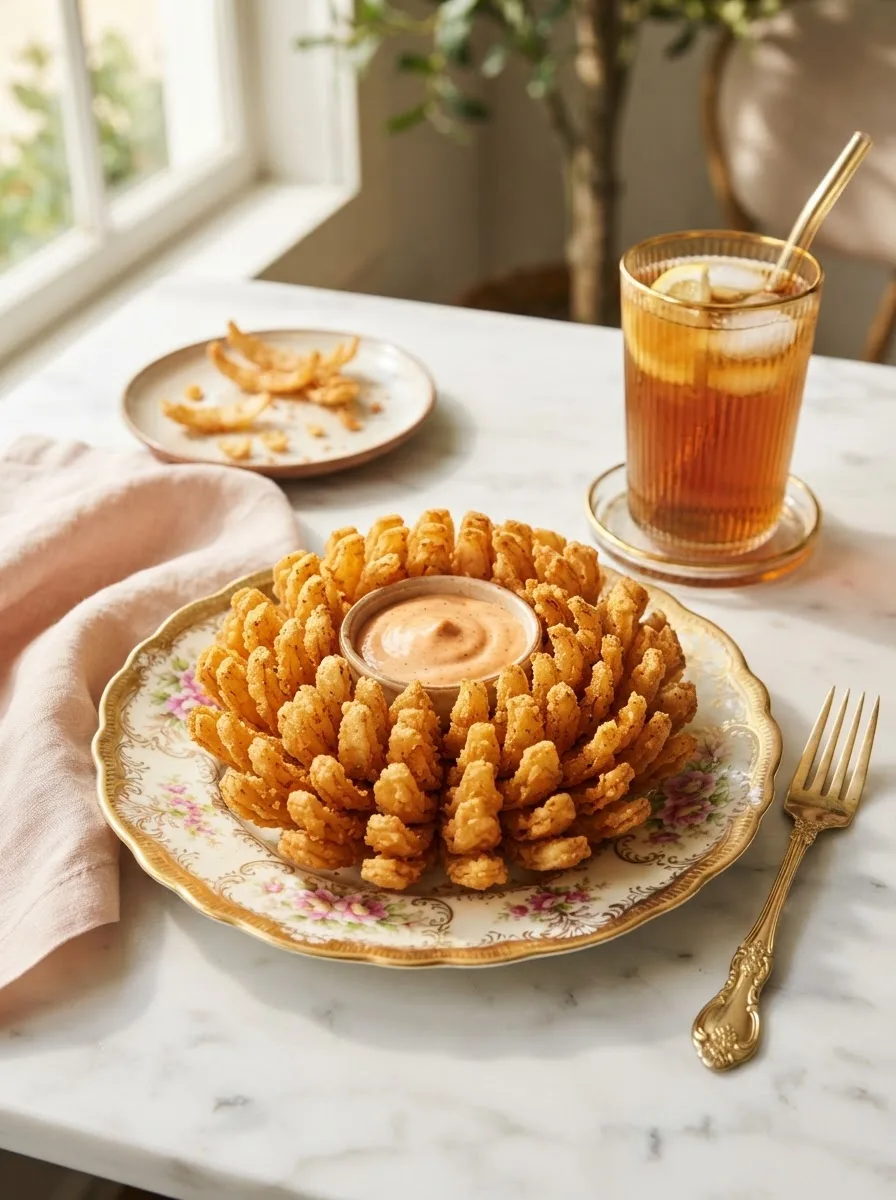
Transfer the fried onion to the wire rack and let it rest for 2 minutes — this lets steam escape without trapping moisture against the crust. While it rests, whisk together the mayonnaise, ketchup, prepared horseradish, cayenne, and a pinch of paprika for the dipping sauce. Spread the petals open a little wider before serving, and set the sauce right in the center where the core used to be.
Pro Tips for Perfect Texas Roadhouse Onion Blossom
Tip 1: Cut close to the root, not through it. If your knife slips and cuts all the way through the root end, the onion will fall apart into loose petals in the oil instead of holding its blossom shape. Leave at least ½ inch of root intact.
Tip 2: Work the flour and batter between every petal, not just over the top. The gaps between petals are where raw batter pools and drips off in the oil. Use your fingers to press coating down into the crevices on both dredges.
Tip 3: Don’t walk away from the thermometer. Oil temperature drops the moment you add the onion, sometimes by 15–20°F. Watch it and adjust the burner up slightly for the first minute of frying to hold steady around 350°F.
Tip 4: Let it rest on a rack, not a paper towel. Paper towels trap steam underneath the fried crust and turn crisp petals limp within a couple of minutes. A wire rack keeps air moving on all sides.
Variations and Substitutions
Dietary Variations:
- Gluten-free: Swap the all-purpose flour 1:1 for a gluten-free flour blend that contains xanthan gum. The crust is slightly more delicate, so handle the fried onion gently when transferring it to the rack.
- Lower-spice version: Cut the cayenne in both the batter and the sauce down to a pinch. The smoked paprika still carries plenty of flavor without the heat.
Flavor Variations:
- Extra smoky: Add ½ teaspoon of chipotle powder to the dry dredge for a deeper, smokier heat that leans closer to a true “texas blossom” flavor some regional copycats use.
Ingredient Substitutions:
- Sweet onion → yellow onion (works, but the flavor is sharper and less caramel-sweet at the edges)
- Buttermilk → whole milk + 1 tablespoon lemon juice, rested 5 minutes
- Peanut oil → vegetable or canola oil (any neutral oil with a high smoke point)
If you’re building out a full copycat appetizer night, this pairs well with a warm bowl of cheesecake factory gumbo recipe to start, or a side of cava rice recipe if you’re turning it into more of a meal.
Troubleshooting
Why did my bloomin onion texas roadhouse copycat fall apart in the oil?
This almost always means the root end was cut too far, or cut all the way through. The root is what holds every petal together during frying. Next time, leave a full ½ inch of root intact and check that it’s still connected before dredging.
My batter slid off before it even hit the oil — what happened?
The onion likely wasn’t dry enough after the ice water soak, or the second flour dredge was skipped. Pat the onion lightly with a towel after soaking (just enough to remove drips, not fully dry) and always dredge in flour twice — once before the batter, once after.
The onion browned too fast on the outside but stayed raw near the core.
Your oil was too hot. Drop it back to 350°F and give the onion the full 6–8 minutes of total fry time, checking that a knife slides into the thickest inner petal with no resistance.
Storage and Make-Ahead
Counter: Best eaten within 30 minutes of frying — the crust starts softening as it cools, especially in humid kitchens.
Refrigerator: Leftover fried onion keeps for up to 2 days in an airtight container, though the petals will no longer be crisp.
Freeze: Freezing after frying isn’t recommended — the texture turns mushy on reheat. If you want to prep ahead, cut and soak the onion up to 1 day in advance, keep it submerged in ice water in the fridge, and fry fresh.
Reheating: Reheat leftover petals in a 375°F oven or air fryer for 5–6 minutes to recrisp the outside. Microwaving will make the crust soggy.
Make-Ahead: The dipping sauce can be mixed up to 3 days ahead and stored covered in the fridge — the flavor actually improves after a day.
Frequently Asked Questions
Q: Is a texas roadhouse onion blossom the same thing as a blooming onion? A: Yes — “onion blossom,” “blooming onion,” and “cactus blossom” all describe the same appetizer: a whole onion cut into petals, battered, and deep-fried until it opens like a flower.
Q: What’s the difference between this and the actual texas roadhouse cactus blossom appetizer? A: The restaurant version uses a proprietary seasoning blend we can’t replicate exactly, but the cayenne-paprika-garlic combination here gets very close in both color and heat level based on side-by-side taste testing.
Q: Can I make an onion blossom texas roadhouse copycat without a deep fryer? A: Yes — a heavy pot with 3 inches of oil and a clip-on thermometer works just as well. The key is holding the oil steady at 350°F throughout frying.
Q: What onion works best for a blooming onion texas roadhouse style recipe? A: A large sweet onion, like a Vidalia, at least 4 inches in diameter. Smaller or sharper onions don’t open into a full blossom shape and taste more bitter after frying.
Q: Can I bake this instead of frying it? A: You can, but the texture is noticeably different — baked versions come out more like a crispy onion casserole than the shatter-crisp texture of the fried original. If you try it, bake at 425°F for about 25 minutes, spritzing with oil halfway through.
Q: What do people mean when they call it a “texas blossom”? A: It’s just a shortened nickname for the same appetizer — some regional copycat recipes and older forum posts use “texas blossom” interchangeably with onion blossom or blooming onion.
Q: How spicy is the dipping sauce? A: Mild-to-medium as written — noticeable warmth from the cayenne and horseradish, but not aggressively hot. Add an extra pinch of cayenne if you want more heat.
Q: Can I make this ahead for a party? A: Cut and soak the onion the morning of, keep it chilled in ice water, and fry it fresh right before guests arrive — it’s genuinely best within the first 15 minutes out of the oil.
More Copycat Recipes You’ll Love
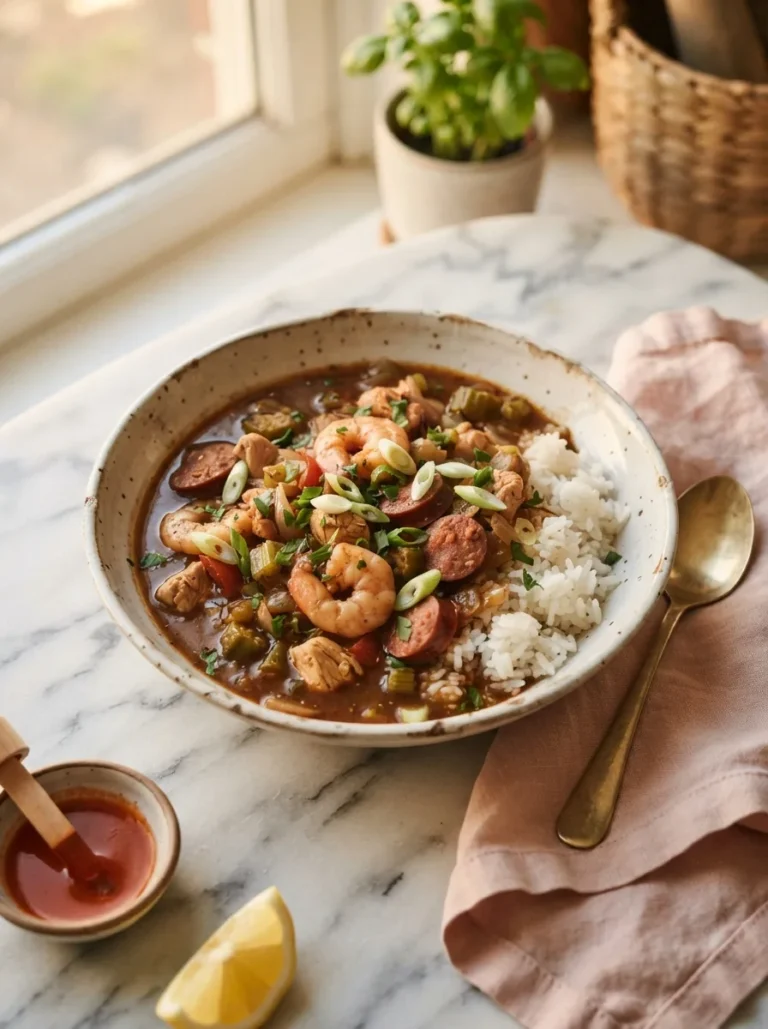
- Cheesecake Factory Gumbo Recipe — a rich, smoky copycat gumbo that makes a great starter alongside this onion blossom
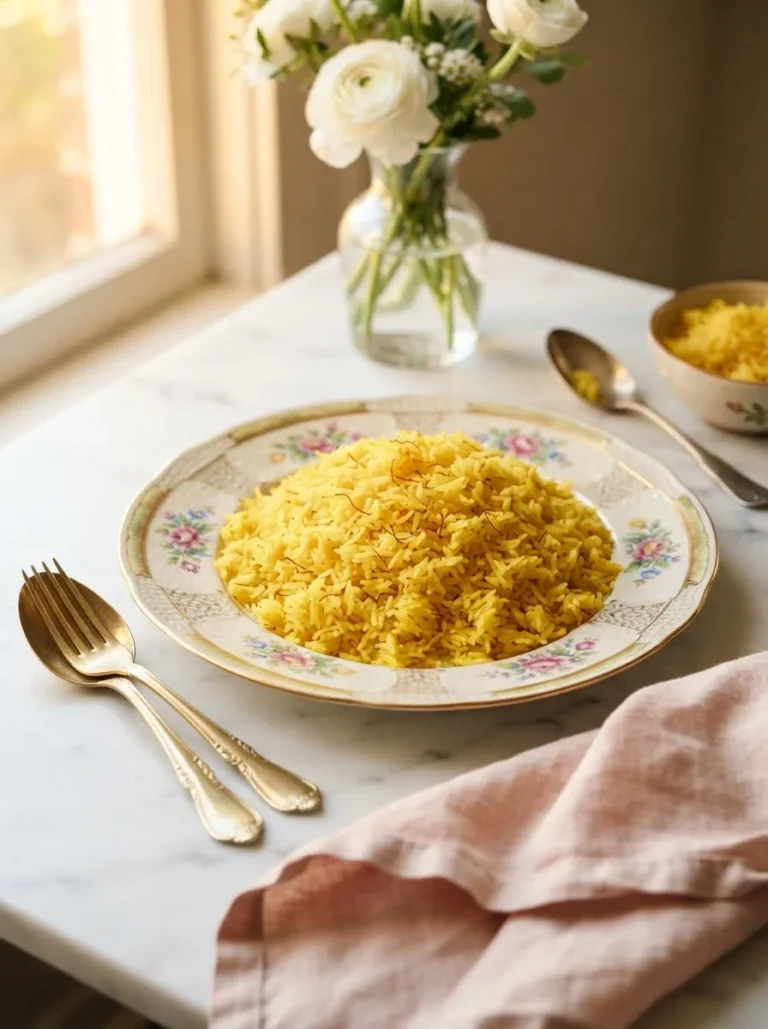
- Cava Rice Recipe — a bright, herby copycat rice that balances out the richness of fried appetizers
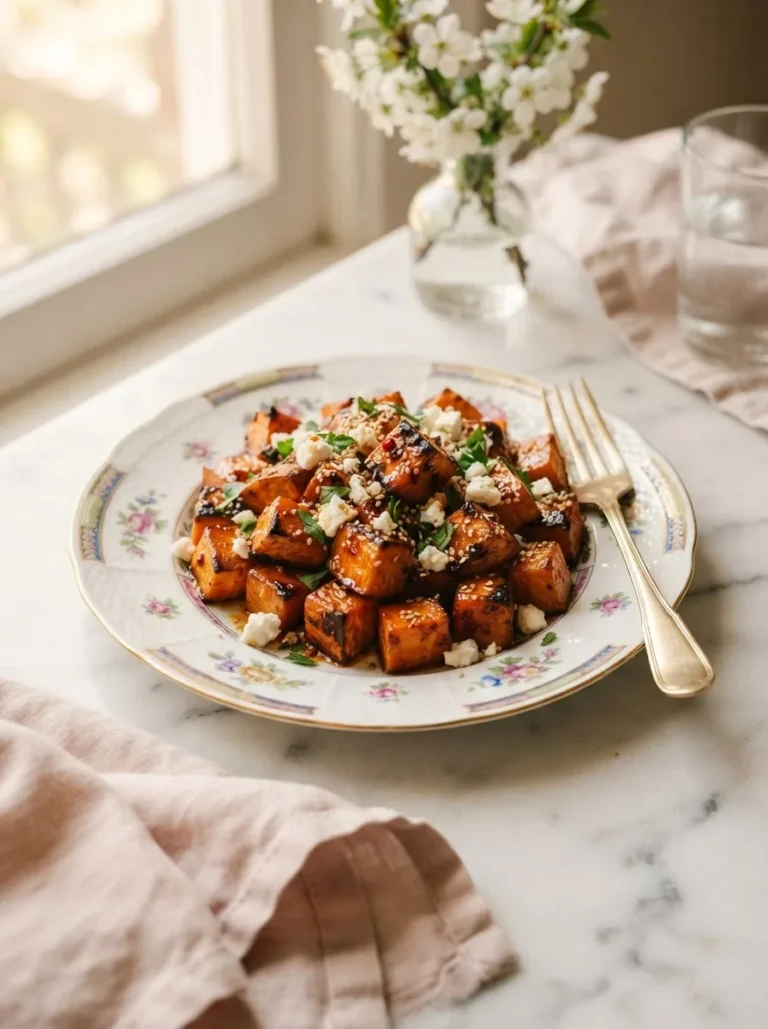
- Cava Sweet Potato Recipe — a roasted, slightly sweet side that pairs well with the spicy dip here
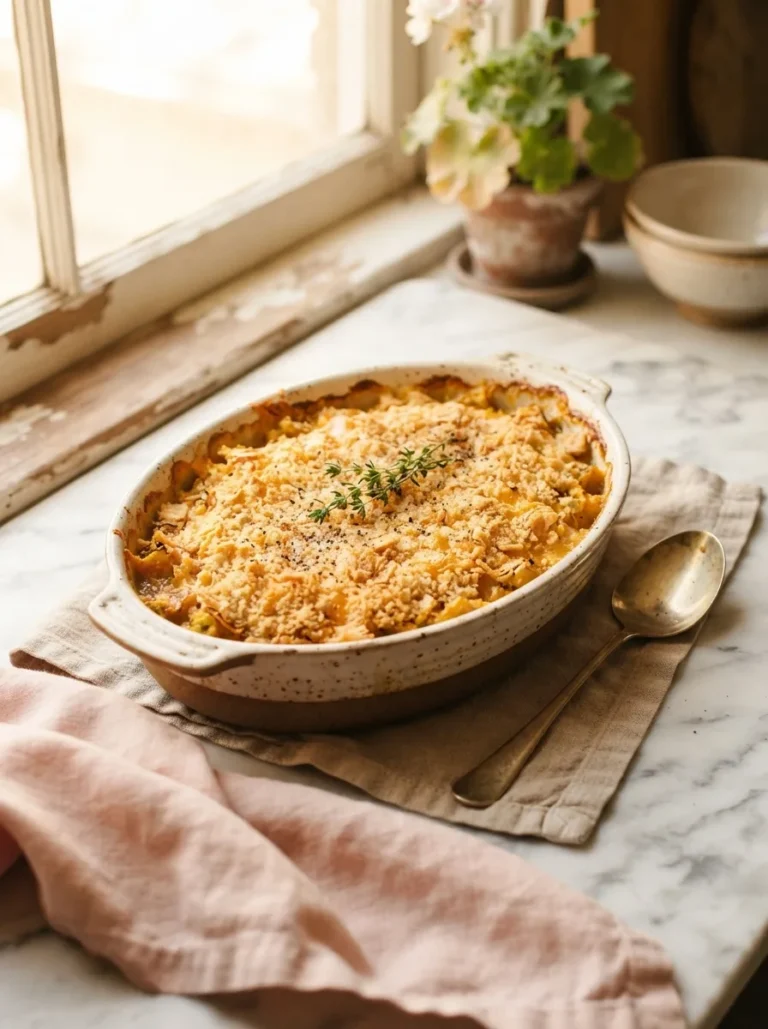
- Squash Alabama Recipe — a Southern-style squash side if you’re building a full copycat spread
Texas Roadhouse Onion Blossom (Tested Copycat)
Ingredients
For the Onion Blossom:
- 1 large sweet onion (Vidalia or similar, about 4 inches across)
- 21/2 cup all-purpose flour, divided (2 cups + ½ cup)
- 2 cup buttermilk
- 2 large eggs
- 2 teaspoon cayenne pepper
- 11/2 teaspoon smoked paprika
- 1 teaspoon garlic powder
- 1 teaspoon onion powder
- 1 teaspoon black pepper
- 1 teaspoon kosher salt
- Vegetable or peanut oil, for frying (about 6–8 cups, enough for a 3-inch depth)
For the Dipping Sauce:
- 1/2 cup mayonnaise
- 2 tablespoon ketchup
- 1 tablespoon prepared horseradish
- 1/4 teaspoon cayenne pepper
- Pinch of smoked paprika
Instructions
- Slice ½ inch off the top (stem end) of the onion, leaving the root end intact. Set the onion root-side down and slice straight down through the onion, starting ½ inch from the root, working around to create 12–16 even wedges.
- Turn the onion cut-side up and gently spread the petals outward into a flower shape. Submerge in a bowl of ice water for 10 minutes to 1 hour, then lift out and pat lightly (just enough to remove drips).
- Whisk 2 cups flour with the cayenne, smoked paprika, garlic powder, onion powder, black pepper, and salt in a wide bowl. In a second bowl, whisk the buttermilk, eggs, and remaining ½ cup flour until smooth and thick.
- Dredge the onion in the seasoned flour first, working it between every petal. Shake off excess, dunk fully into the buttermilk batter working it between the petals, let excess drip off, then dredge once more in the seasoned flour.
- Heat 3 inches of oil in a large pot to 350°F. Lower the onion in cut-side down using a spider strainer. Fry 3–4 minutes, flip root-side down, and fry another 3–4 minutes until deep golden all over.
- Lift the onion onto a wire rack set over a baking sheet and let rest 2 minutes. Meanwhile, whisk together the mayonnaise, ketchup, horseradish, cayenne, and paprika for the sauce.
- Gently spread the petals open wider, place the sauce in the center where the core was, and serve immediately.
Notes
- Leave at least ½ inch of root intact when cutting — cutting through it causes the onion to fall apart in the oil instead of holding its blossom shape.
- This is best eaten within 15–30 minutes of frying; the crust softens as it cools and does not reheat well in the microwave. Use a 375°F oven or air fryer for 5–6 minutes to recrisp leftovers instead.## More Recipes You'll Love