Cheesecake Factory Gumbo Recipe

The first time I tried to make a Cheesecake Factory gumbo recipe at home, I rushed the roux. After fifteen minutes, it was the color of peanut butter, and the finished pot tasted like watery chicken soup with sausage floating in it. That was not the rich bowl I wanted from a shrimp chicken gumbo cheesecake factory copycat.
I tested this recipe three times, changing only the roux color while keeping the chicken, sausage, shrimp, vegetables, broth, and seasonings consistent. The most important variable is roux color: a dark, toasted roux gives the broth its nutty depth, while a pale one leaves the gumbo thin and one-note. If you search for shrimp and chicken gumbo cheesecake factory recipes, this is the part to watch.
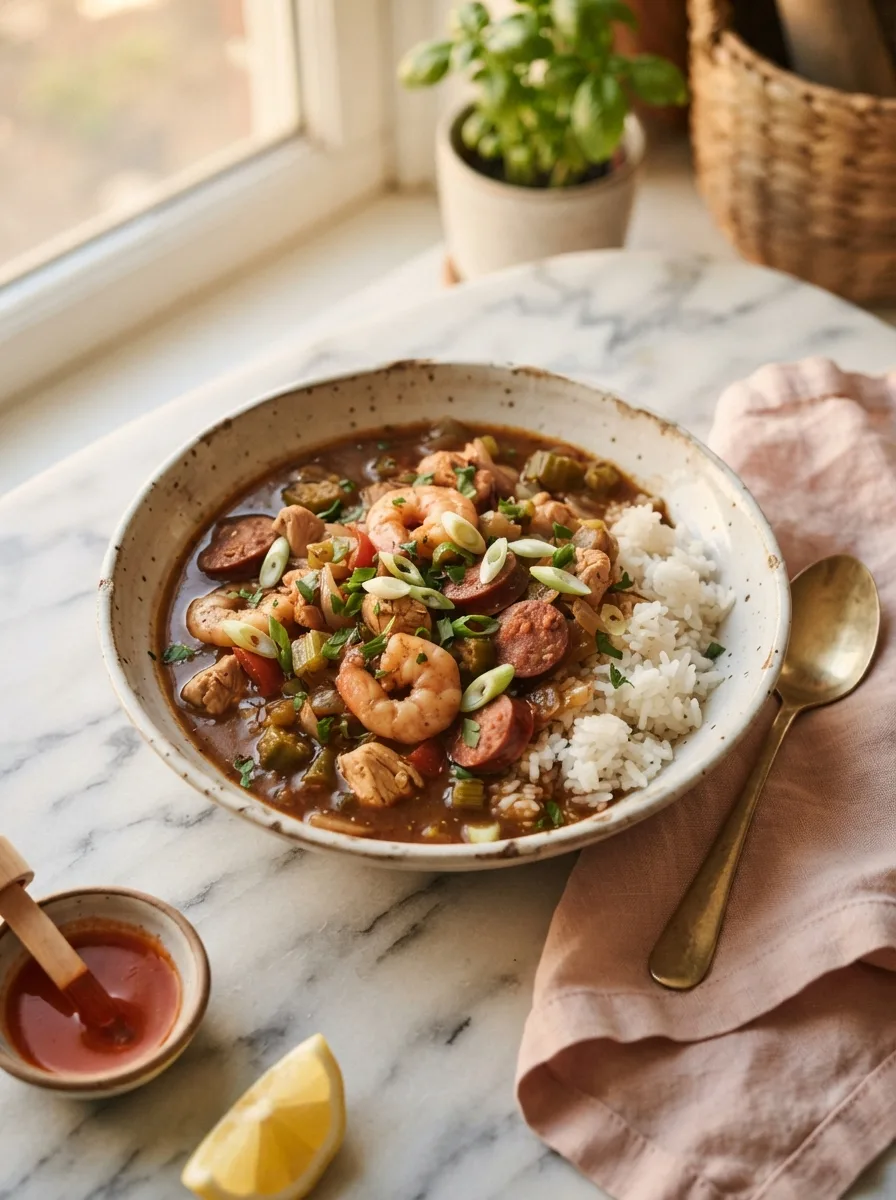
Here is the scary moment: the roux may look almost too dark just before you add the vegetables. Keep stirring and trust your nose. It should smell toasted and nutty, never acrid or burnt. The Cheesecake Factory-inspired result comes from that careful browning, plus the onion, celery, bell pepper, broth, and staged cooking that lets each ingredient keep its flavor.
★★★★★ “I’ve ordered gumbo at restaurants for years and always assumed it was too fussy to make at home. This proved me wrong — the roux instructions were so specific I couldn’t mess it up.” — Danielle R., recipe tester (pre-launch)
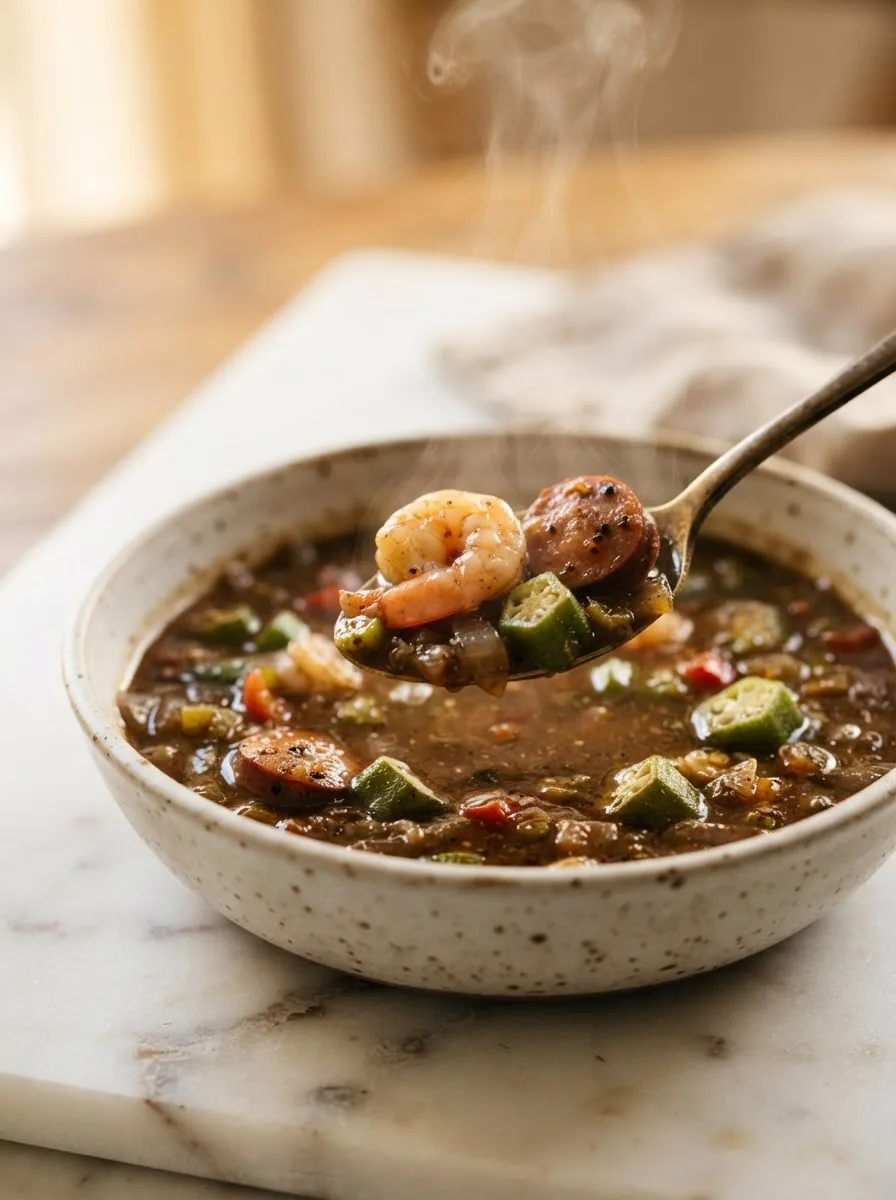
Why You’ll Love This Cheesecake Factory Gumbo Recipe
- The roux has clear color cues: You’ll see how the mixture changes from pale to peanut-butter brown and then to deep reddish-brown. That color change comes from browning the flour, which adds toasted flavor while the oil keeps the mixture smooth.
- Three proteins build a fuller pot: Andouille sausage brings smoke, chicken thighs add savory richness, and shrimp finish the dish with a tender bite. Cooking them in stages keeps the gumbo from tasting flat or overcooked.
- The base works for a planned meal: Once cooled promptly and stored properly, the gumbo base can be prepared ahead, then finished with shrimp when you are ready to serve.
- The ingredient list stays focused: Onion, celery, green bell pepper, garlic, broth, Cajun seasoning, and okra give this Cheesecake Factory-inspired gumbo its layered flavor without relying on a canned roux or a quick flour slurry.
Key Ingredients
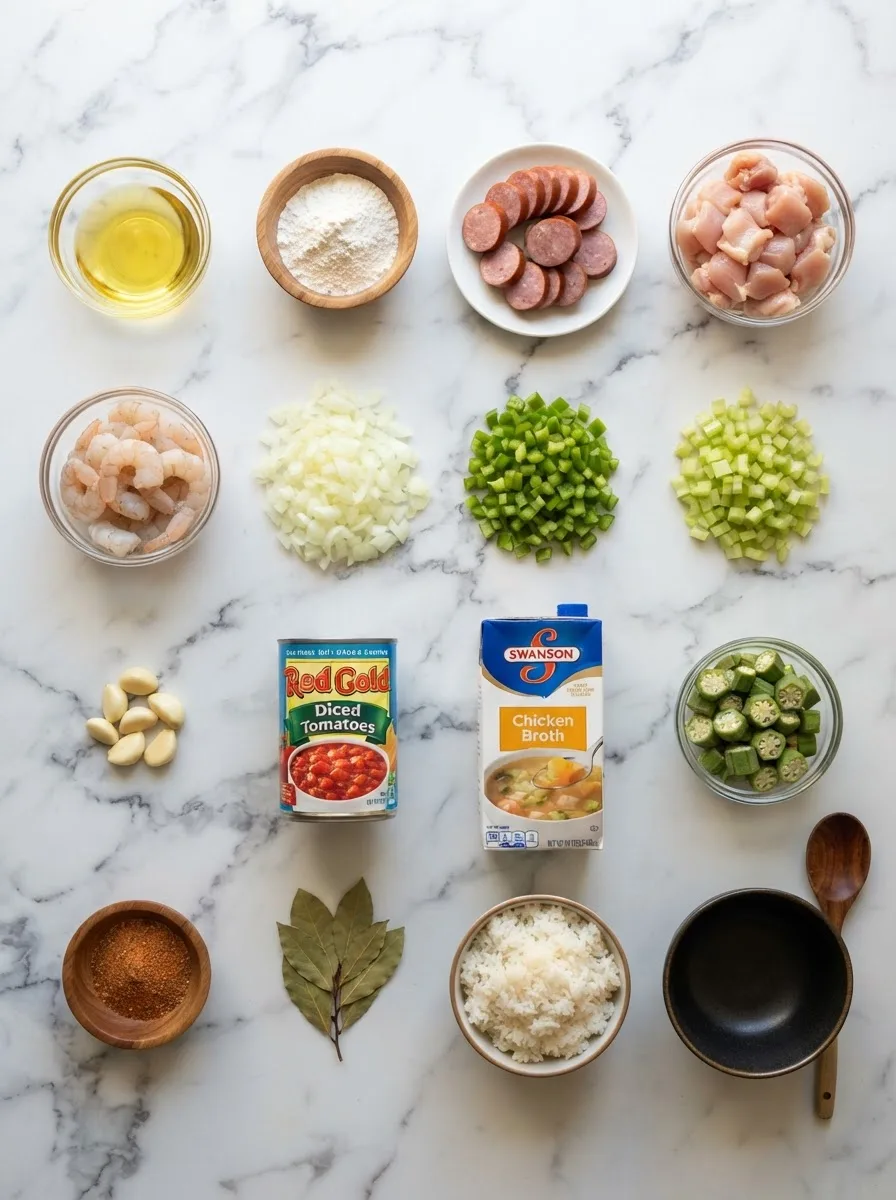
Vegetable oil and all-purpose flour (½ cup each). These make the roux. Equal parts oil and flour give it enough fat to stay smooth as it cooks, while the flour browns and develops the deep color and toasted flavor this gumbo needs. A neutral oil is the safer choice here because butter’s milk solids can scorch before the roux reaches that dark shade.
Andouille sausage. Use the amount listed in the recipe, sliced into even pieces. Its smoky seasoning gives the broth a savory backbone and helps this Cheesecake Factory-style gumbo taste more substantial than a plain chicken soup.
Chicken thighs. Cut boneless, skinless thighs into even cubes so they cook at the same rate. Dark meat contains more fat and connective tissue than chicken breast, so it stays juicy during the simmer instead of turning dry and stringy.
Deveined shrimp. Add the shrimp near the end because their small size lets them cook in minutes. They should turn opaque and pink without tightening into a firm ring; adding them late protects their texture and keeps the gumbo balanced.
Onion, celery, and green bell pepper. This three-part vegetable base supplies sweetness, savory depth, and a light vegetal bite. Celery matters because its clean, slightly bitter note keeps the onions and bell pepper from making the broth taste heavy.
Okra. Fresh or frozen okra works in this recipe. When heated, its natural mucilage gives the broth gentle body and a traditional gumbo texture. Use the amount specified rather than adding extra, since too much can make the liquid noticeably slippery.
Ingredient Note: Use a light-colored neutral oil for the roux so you can judge its color as it cooks. Butter can work in lighter sauces, but its milk solids are more likely to brown or scorch during the long cooking time required here.
Equipment You’ll Need
- Heavy-bottomed Dutch oven or cast iron pot — A thick base spreads heat more evenly, giving the roux time to brown instead of scorching in hot spots.
- Flat-edged wooden spoon or heat-safe whisk — Use it to stir continuously and scrape across the bottom so no flour settles and burns.
- Sharp chef’s knife and cutting board — You’ll need them for evenly dicing the vegetables and cutting the chicken.
- Ladle — It makes serving the gumbo over rice easier without breaking up the sausage or shrimp.
Controlling the Roux Color (A Controlled Test)
I tested this recipe three times, changing only the roux color: light blonde, medium peanut-butter brown, and dark reddish-brown. The broth amount, vegetables, chicken, seasoning, and cooking method stayed the same in each test. That kept the comparison focused on one change instead of letting several variables muddy the result.
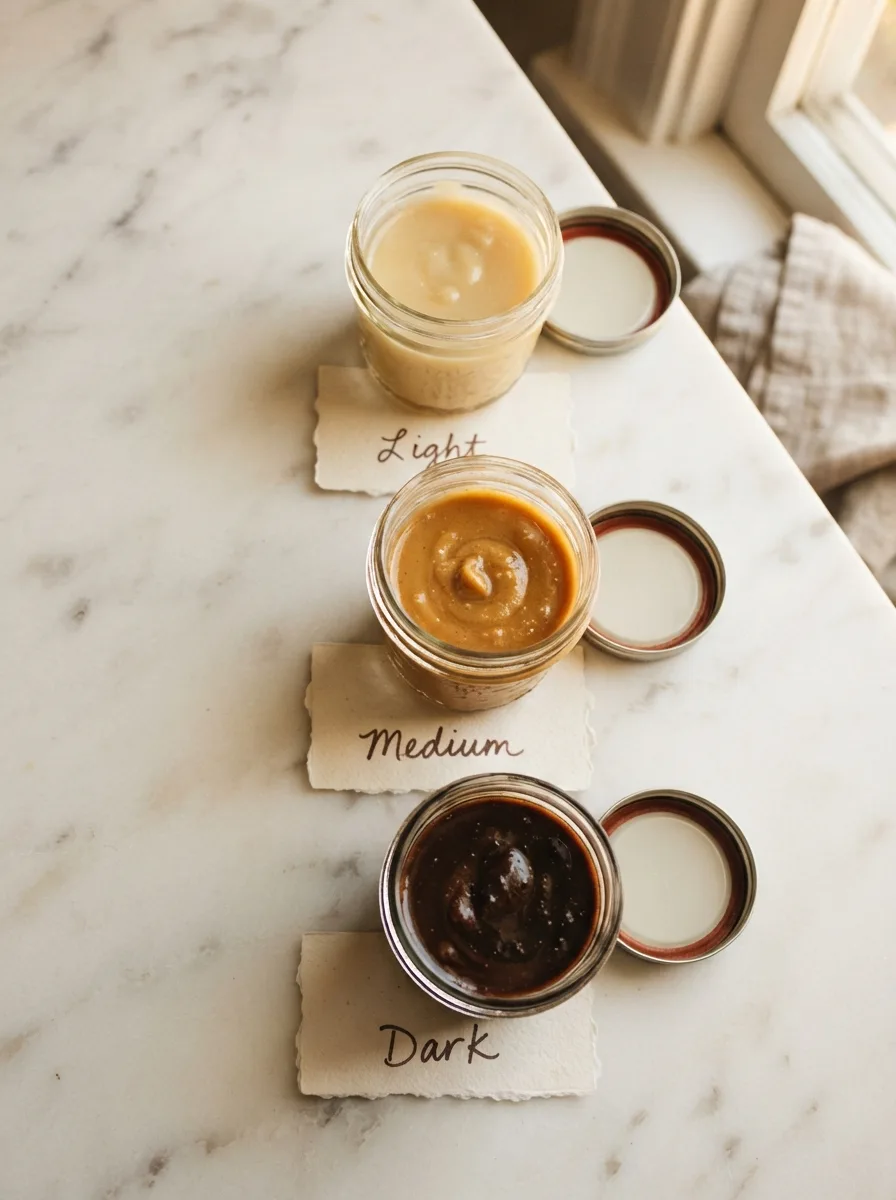
Light roux: At about 8 minutes, the flour had lost its raw smell but had not browned much. The gumbo tasted thin, with a broth closer to seasoned chicken soup than the deeper flavor I wanted.
Medium roux: After about 20 minutes, the color and flavor improved. The broth had more body, but it still tasted closer to a hearty stew than the dark, toasted profile associated with this Cheesecake Factory-style gumbo.
Dark roux: At 35–40 minutes, the mixture became deep reddish-brown and smelled nutty and toasted. Flour browns through Maillard reactions as it cooks, creating darker color and more developed flavor. The trade-off is that a dark roux thickens less than a pale one, so the finished gumbo relies on the full simmer and okra for additional body.
That deeper flavor requires roughly 35–40 minutes of active stirring. Keep the heat at medium-low, scrape the pot continuously, and stop when the roux smells toasted rather than burnt. If it smells acrid or shows black flecks, discard it and start again; butter or flour cannot hide scorched bitterness once it reaches the broth.
How to Make Cheesecake Factory Gumbo
Before you start: Dice the onions, celery, bell peppers, and garlic before you heat the pot. Cut the chicken and sausage, measure the flour and seasonings, and keep the broth nearby. Once the roux begins, you need to stir it continuously, so this is not the moment to hunt for a missing ingredient.
Step 1 — Make the Dark Roux
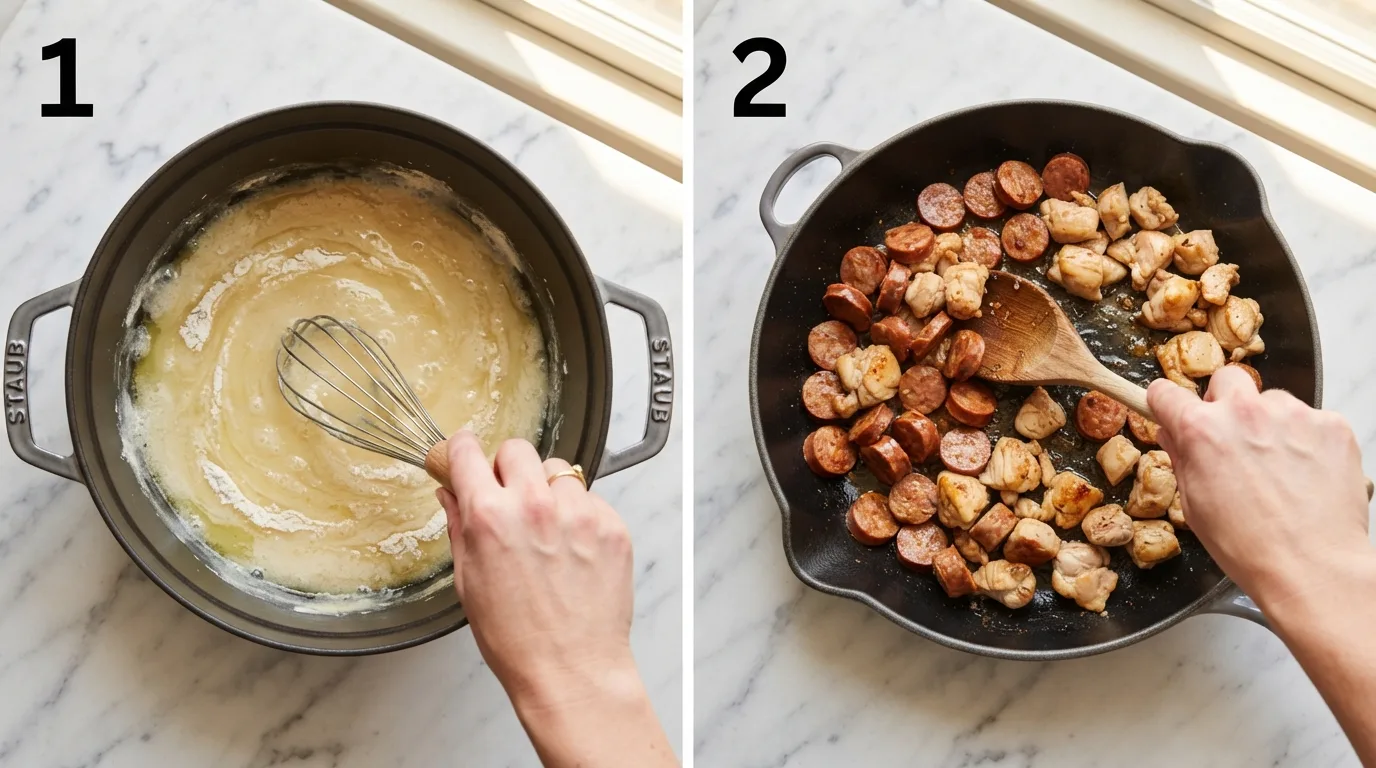
Heat the oil in your Dutch oven over medium heat. Whisk in the flour until the mixture is smooth, then lower the heat to medium-low. Stir constantly with a wooden spoon or heat-safe whisk, scraping the bottom and corners of the pot for 35–40 minutes. The roux will change from blonde to peanut-butter brown and then to deep reddish-brown. Stop when it smells nutty and toasted and looks like dark chocolate. If it smells acrid or shows black flecks, it has scorched and must be discarded.
Step 2 — Brown the Sausage and Chicken
While the roux cooks, brown the sliced andouille sausage and cubed chicken thighs in a separate skillet over medium heat. Cook for about 6–8 minutes, turning the pieces so the sausage develops browned edges and the chicken picks up color on several sides. A thermometer inserted into the thickest chicken piece should read 165°F before serving. Set both aside; the chicken and sausage will continue cooking in the broth later. If you are working alone, use the separate skillet so the roux never sits unattended.
Step 3 — Sauté the Trinity and Garlic
When the roux reaches its dark color, add the diced onion, celery, and bell pepper straight into the pot. They will sizzle and may release a burst of steam, so add them carefully and stir immediately. Their moisture cools the roux, stopping further browning while the vegetables soften and absorb its toasted flavor. Cook the onions, celery, and bell peppers for about 5 minutes, then add the minced garlic for the final 1 minute. The short garlic step keeps its flavor savory rather than bitter.
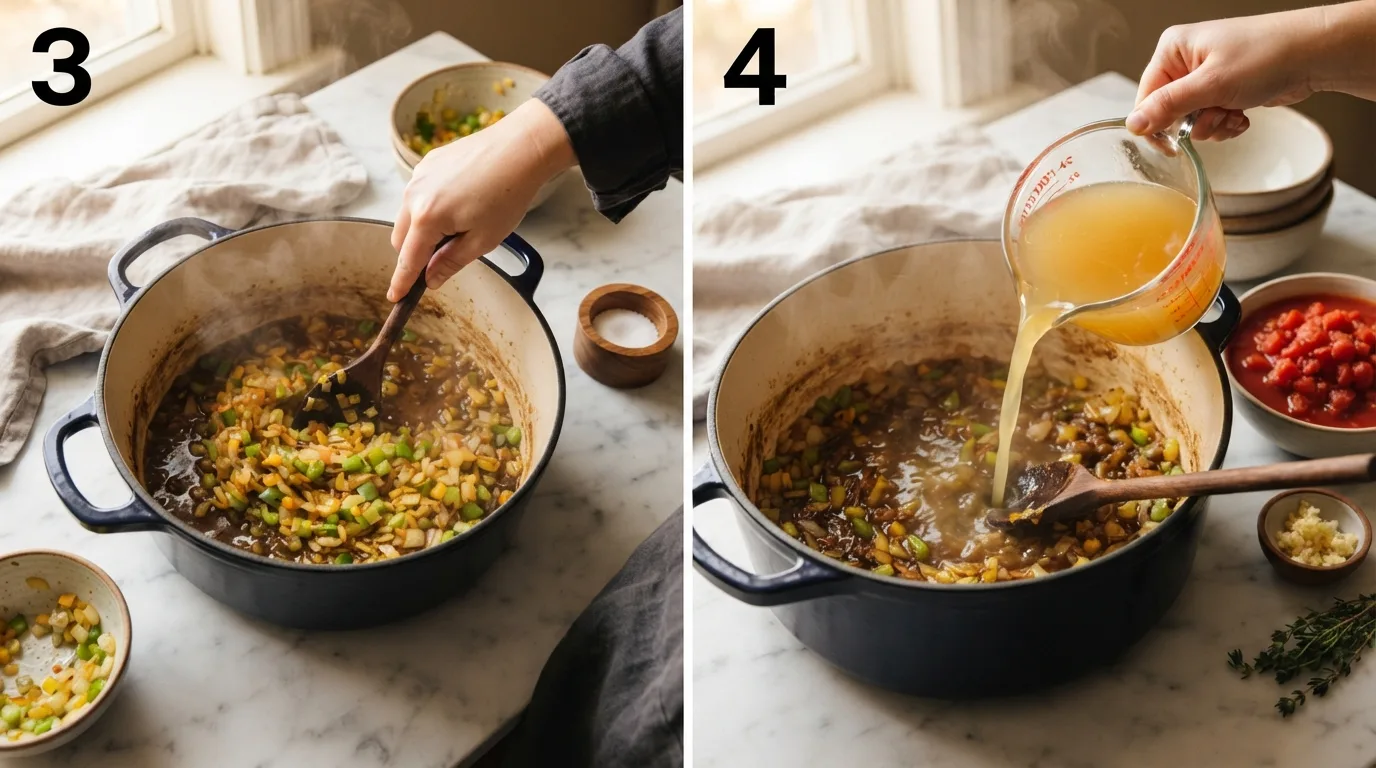
Step 4 — Build the Broth
Lower the heat and slowly whisk the measured chicken broth into the roux, adding a little at a time. Each addition should blend smoothly before you add more; this disperses the flour and prevents stubborn lumps. Stir in the diced tomatoes, bay leaves, thyme, smoked paprika, cayenne, and Cajun spices. Bring the gumbo to a gentle simmer, then return the browned sausage and chicken to the pot so they can finish cooking in the seasoned broth.
Step 5 — Simmer and Add the Okra
Simmer the gumbo uncovered for 30–35 minutes, stirring occasionally so the roux does not settle on the bottom. Add the sliced okra when 10 minutes remain, giving it time to soften and release its natural thickening mucilage. By the end of the 30–35 minutes, the broth should look darker and lightly coat the spoon, while the chicken should reach 165°F in its thickest piece.
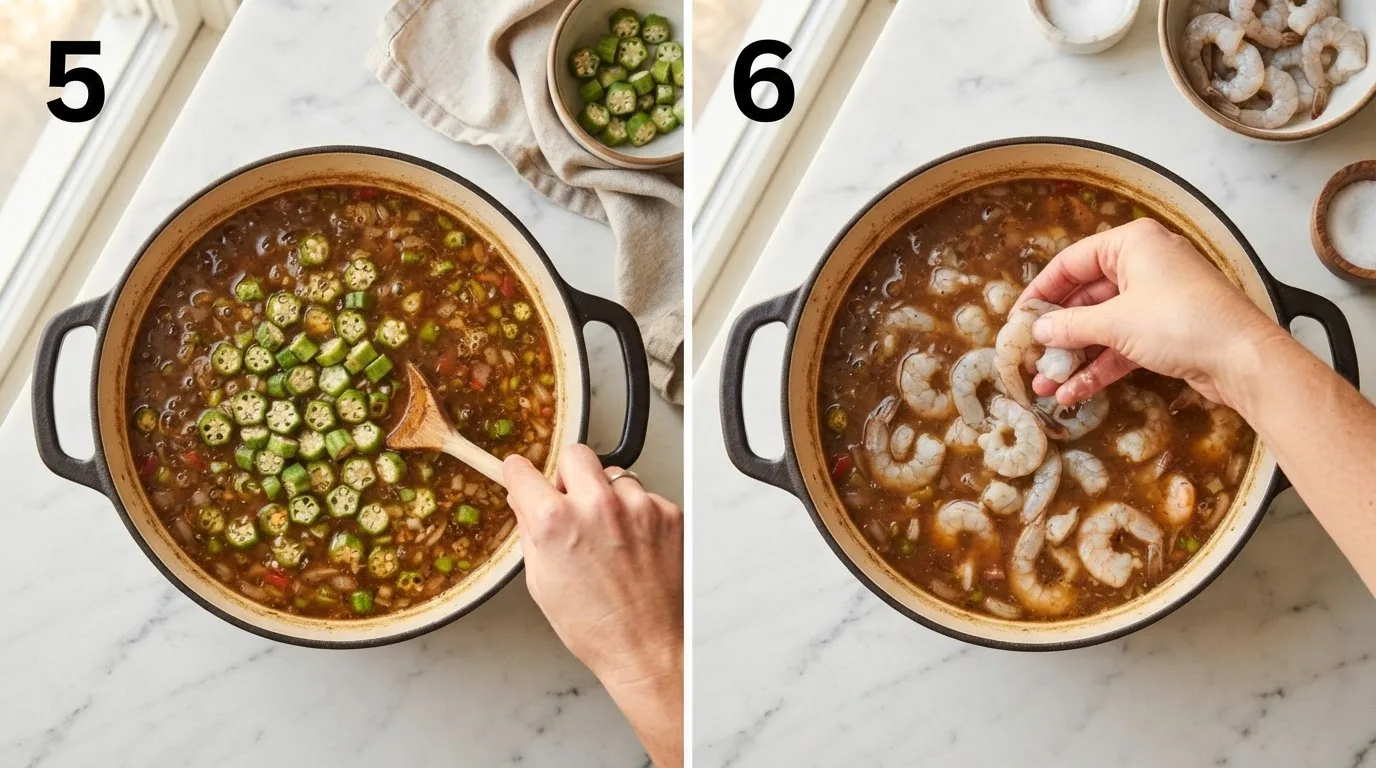
Step 6 — Add the Shrimp and Finish
Stir in the shrimp for the final 5–6 minutes. They should turn opaque pink and curl into a loose “C” shape; if you use a thermometer, the thickest shrimp should reach 145°F. Here is the last scary moment: they may look slightly undercooked when you remove the pot from the heat, but carryover cooking will finish them. Do not leave the gumbo boiling, or the shrimp can turn rubbery. Taste and adjust the salt, pepper, and cayenne. Serve the gumbo over separately cooked white rice and garnish with green onions and parsley.
Pro Tips for Perfect Cheesecake Factory Gumbo
Tip 1: Prep before you heat the pot. Dice the onions, celery, and bell peppers, measure the broth and Cajun spices, and cut the chicken and sausage before cooking. The roux and vegetables move quickly once they meet, and having everything ready keeps the flavor balanced.
Tip 2: Rest the gumbo for 10 minutes. Let the pot sit off the heat before serving. The broth thickens slightly as it cools, and the flavors settle into the sausage, chicken, and shrimp without continuing to cook aggressively.
Tip 3: Taste after the base simmers. Andouille, broth, Cajun seasoning, and hot sauce can all bring salt and heat, so adjust the pepper, cayenne, and hot sauce only after the gumbo has cooked. This keeps the finished recipe from becoming too spicy or salty.
Variations and Substitutions
Dietary Variations:
- Gluten-free: Use a certified gluten-free 1:1 flour blend in the roux, and check the labels on the sausage, broth, Cajun seasoning, and filé powder. Different blends brown at different rates, so judge the roux by its color and toasted smell rather than using the original cooking time.
- Lower-spice version: Reduce the cayenne to a pinch and leave out the extra hot sauce. Andouille still contributes heat, so this changes the intensity without making the gumbo completely mild.
Flavor Variations:
- No okra: Leave it out and stir in ½ teaspoon of filé powder off the heat just before serving. Filé adds traditional flavor and some thickening, but the broth will have a slightly different texture.
Ingredient Substitutions:
- Replace andouille with smoked kielbasa for a milder sausage flavor. The gumbo will still taste smoky, but it will have less heat.
- Replace the chicken thighs with shredded rotisserie chicken for a faster version. Stir it in during the final 10 minutes so it warms through without drying out.
For a change from plain white rice, my cava rice recipe makes a sturdy base for the gumbo and adds a different flavor to each serving.
Troubleshooting
My roux tastes bitter or burnt — what happened?
The roux cooked past deep reddish-brown into scorched territory, usually because the heat was too high or stirring paused. A burnt roux cannot be rescued; its bitterness spreads through the entire gumbo. Start again over medium-low heat and stir continuously. If the roux is lumpy, whisk it smooth before it darkens. If it smells toasted but the surface looks greasy, keep stirring as the flour and oil emulsify; do not add broth until the mixture is smooth.
My gumbo is too thin — how do I fix it?
A pale roux, excess broth, or an incomplete simmer can leave the gumbo watery. Simmer it uncovered for an additional 10–15 minutes, then allow it to rest before serving so the liquid can reduce and the okra can release its natural thickening mucilage. If the broth tastes too salty, add a little unsalted broth or water and simmer briefly; do not add more seasoning. If the gumbo is too spicy, dilute it with unsalted broth and serve it with extra rice. Tough chicken usually means the pieces were too small or cooked at a hard boil, so keep the pot at a gentle simmer next time.
My shrimp turned rubbery — what went wrong?
The shrimp stayed in the hot gumbo too long. Add them for only the final 5–6 minutes, remove the pot from the heat when they turn opaque pink and form a loose “C,” and let carryover cooking finish the center. Do not leave shrimp in a simmering pot while you prepare the rest of the meal.
Storage and Make-Ahead
Counter: Refrigerate gumbo within 2 hours of cooking, or within 1 hour if the room temperature is above 90°F. Divide it into shallow containers so it cools promptly instead of staying warm in the center.
Refrigerator: Store the gumbo in an airtight container for up to 4 days. The flavors may seem more integrated after a day because the broth and seasonings have had time to mingle, but check the food before serving.
Freeze: Freeze the base without shrimp in an airtight container for up to 3 months. Leave room for expansion, thaw it overnight in the refrigerator, and add fresh shrimp during reheating for better texture.
Reheating: Warm the gumbo gently on the stovetop over medium-low heat, stirring occasionally, until it reaches 165°F. Avoid a hard boil, which can toughen the chicken and shrimp and make the roux separate.
Make-Ahead: Prepare the gumbo base without shrimp up to 2 days ahead. Cool it promptly, refrigerate it, then reheat gently and stir in fresh shrimp during the final 5–6 minutes before serving.
Frequently Asked Questions
Q: Does The Cheesecake Factory actually serve shrimp and chicken gumbo? A: Menu items can change by location and season, so check the current Cheesecake Factory menu if you want to confirm availability. This copycat recipe recreates the style many home cooks associate with a dark roux, chicken, sausage, shrimp, and Cajun seasoning.
Q: What makes this taste like a Cheesecake Factory shrimp and chicken gumbo? A: The flavor comes from three parts working together: a properly browned roux, the onion, celery, and green bell pepper base, and staged cooking. Browning the sausage and chicken first builds savory flavor, while adding the shrimp near the end protects its texture.
Q: Can I make this gumbo without okra? A: Yes. Leave out the okra and stir in ½ teaspoon of filé powder after removing the pot from the heat. It adds a traditional flavor and some thickening, although the broth will have a different texture.
Q: Why did my roux turn out grainy or burnt? A: Graininess usually means the flour was not whisked smoothly into the oil at the beginning. A burnt smell means the heat was too high or stirring stopped for too long. Start the roux over rather than adding it to the gumbo, because scorched bitterness will spread through the broth.
Q: Can I make this gumbo ahead of time? A: Yes. Prepare the base without the shrimp up to 2 days ahead, cool it promptly, and refrigerate it. Add fresh shrimp during reheating so it cooks for only the final 5–6 minutes instead of becoming tough.
Q: Is this cheesecake factory gumbo recipe very spicy? A: It has moderate heat from the cayenne, Cajun seasoning, and andouille sausage. For less heat, reduce the cayenne to a pinch and skip the hot sauce. For more, add hot sauce at the table so each person can adjust the bowl.
Q: Can I use frozen shrimp in this recipe? A: Yes. Thaw the shrimp in the refrigerator, remove excess moisture, and add them during the final 5–6 minutes. Frozen shrimp may release a little water, so keep the gumbo at a gentle simmer and check that the thickest shrimp reaches 145°F.
More Cajun Recipes You’ll Love
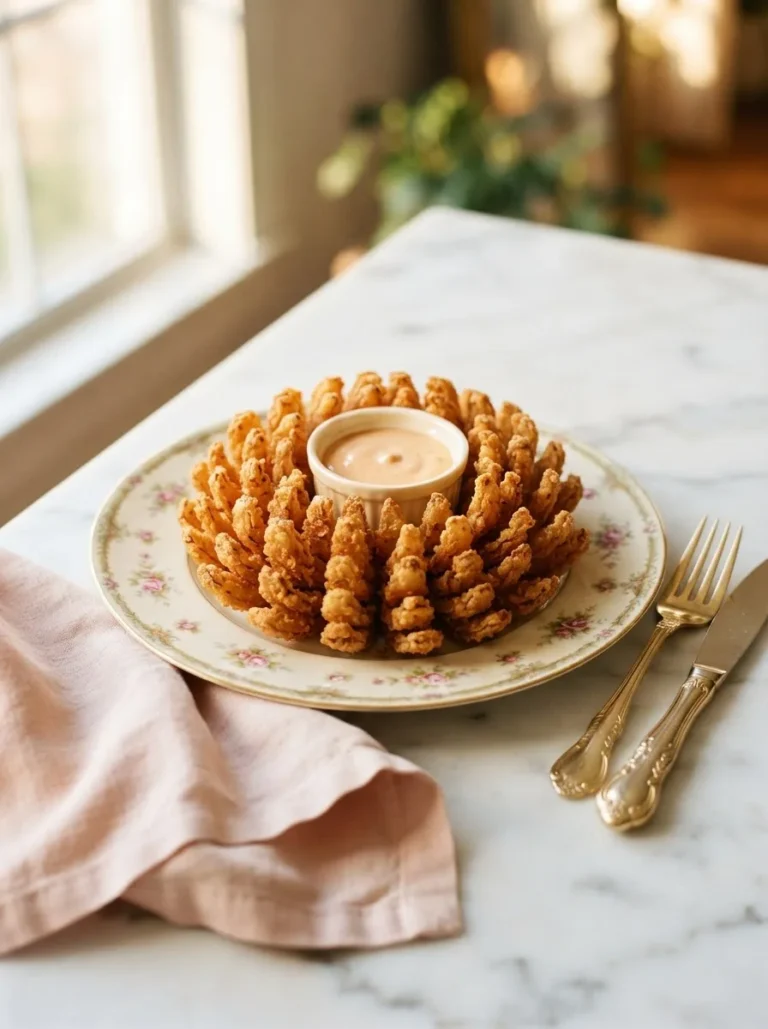
- Texas Roadhouse Onion Blossom — a crispy starter to serve before the gumbo, especially with a little garlic bread
- Cava Rice Recipe — a flavorful rice base that holds up under the thick broth
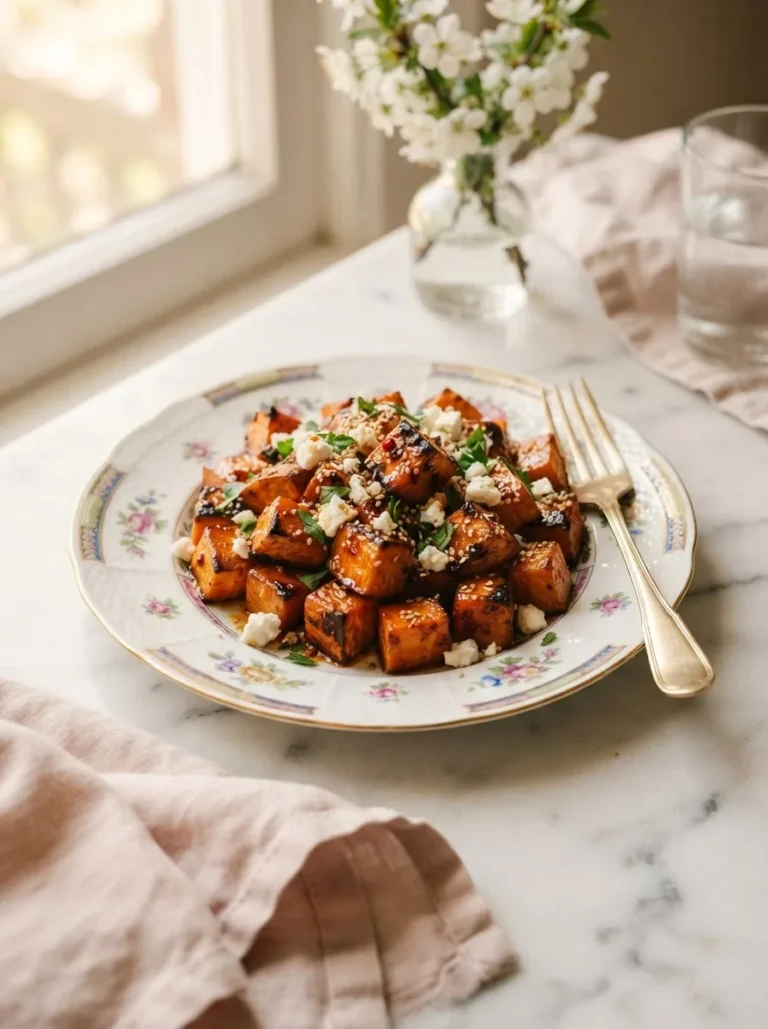
- Cava Sweet Potato Recipe — a slightly sweet side that balances the Cajun spice
- Squash Alabama Recipe — a simple Southern-style side dish for a full dinner table
This Cheesecake Factory gumbo recipe takes patience, but the payoff is a deep roux, tender chicken, and shrimp with layered flavors over rice. In my three tests, the dark roux produced the fullest gumbo, though it required 35–40 minutes of steady stirring. Serve it with garlic bread, or enjoy the bowl on its own while the broth is hot.
Cheesecake Factory Gumbo Recipe
Ingredients
For the Roux:
- 1/2 cup vegetable oil
- 1/2 cup all-purpose flour
For the Gumbo:
- 12 oz andouille sausage, sliced into rounds
- 1 lb boneless, skinless chicken thighs, cut into 1-inch pieces
- 1 medium yellow onion, diced
- 1 green bell pepper, diced
- 2 celery stalks, diced
- 4 clove garlic, minced
- 1 (14.5 oz) can diced tomatoes, drained (optional)
- 6 cup chicken broth
- 2 bay leaves
- 1 tsp dried thyme
- 1 tsp smoked paprika
- 1/2 tsp cayenne pepper (more to taste)
- 1 tsp Cajun seasoning blend
- 2 cup sliced okra, fresh or frozen
- 1 lb large shrimp, peeled and deveined
- Salt and black pepper, to taste
- 2 green onions, sliced, for garnish
- 2 tbsp chopped fresh parsley, for garnish
- Cooked white rice, for serving
Instructions
- Heat the oil in a Dutch oven over medium heat. Whisk in the flour and reduce heat to medium-low. Stir constantly for 35–40 minutes until the roux is a deep chocolate-brown.
- While the roux cooks (or in a separate pan), brown the andouille sausage and chicken thigh pieces until golden on all sides, about 6–8 minutes. Set aside.
- Once the roux is dark and ready, immediately stir in the onion, celery, and bell pepper. Cook 5 minutes, then add the garlic for 1 more minute.
- Slowly whisk in the chicken broth. Add the diced tomatoes, bay leaves, thyme, smoked paprika, cayenne, and Cajun seasoning. Bring to a simmer, then return the sausage and chicken to the pot.
- Simmer uncovered for 30–35 minutes, stirring occasionally. Stir in the sliced okra during the last 10 minutes.
- Add the shrimp and cook 5–6 minutes, just until pink and curled. Remove from heat immediately. Taste and adjust seasoning.
- Let rest 10 minutes, then serve hot over white rice, garnished with green onions and parsley.
Notes
- The roux cannot be rushed — cooking it on higher heat to save time results in a scorched, bitter base with no fix.
- For gluten-free, use a 1:1 gluten-free flour blend in the roux; it darkens faster, so check color starting around 25 minutes.
- The gumbo base (without shrimp) can be made up to 2 days ahead and refrigerated; add fresh shrimp when reheating.
- Freeze the base only for up to 3 months; shrimp texture suffers after freezing and reheating.
- No okra on hand? Substitute ½ teaspoon of filé powder stirred in off the heat right before serving.
- Andouille sausage can be swapped for smoked kielbasa if unavailable, though the heat level will be milder.
- To halve this recipe, use a smaller pot and reduce roux cooking time slightly, watching color closely rather than timing.
- Leftovers taste noticeably better on day two as the spices continue to meld into the broth.
- Reheat gently over medium-low heat; a hard boil will toughen the shrimp and chicken.