Foolproof Sticky Cilantro Lime Chicken Thighs

If you’ve ever made a “sticky cilantro lime chicken thighs” that turned out thin and watery — more of a chicken soup with citrus notes than an actual glaze — you already know the problem I set out to fix. A good glaze needs to cling. It needs to lacquer the skin, not slide off it onto the plate.
I tested this recipe three times, changing only how long I reduced the glaze after the chicken came out of the pan. Two minutes wasn’t enough. Eight minutes tipped into bitter, scorched sugar. Five minutes, pulled the second the bubbles turned slow and syrupy, was the exact window that gave me a glossy, sticky coating without any burnt edge.
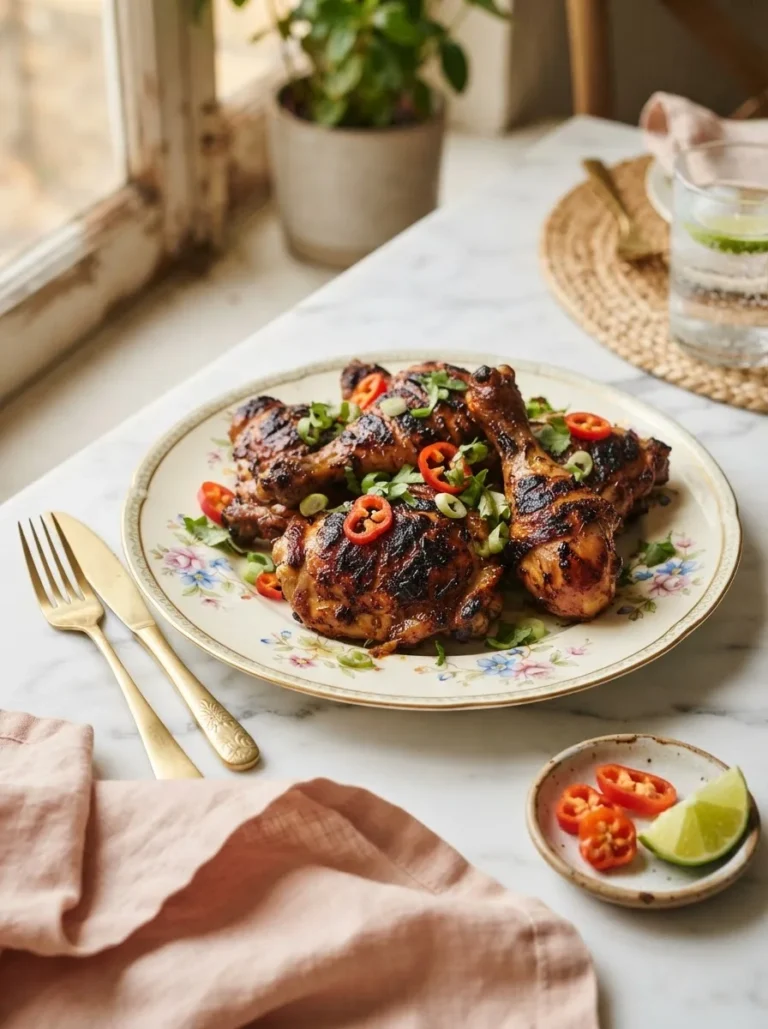
The result is chicken thighs with genuinely crispy skin underneath a glaze that’s tart from fresh lime, bright from a full cup of cilantro, and just sweet enough to balance it. On your first try — no guesswork required.
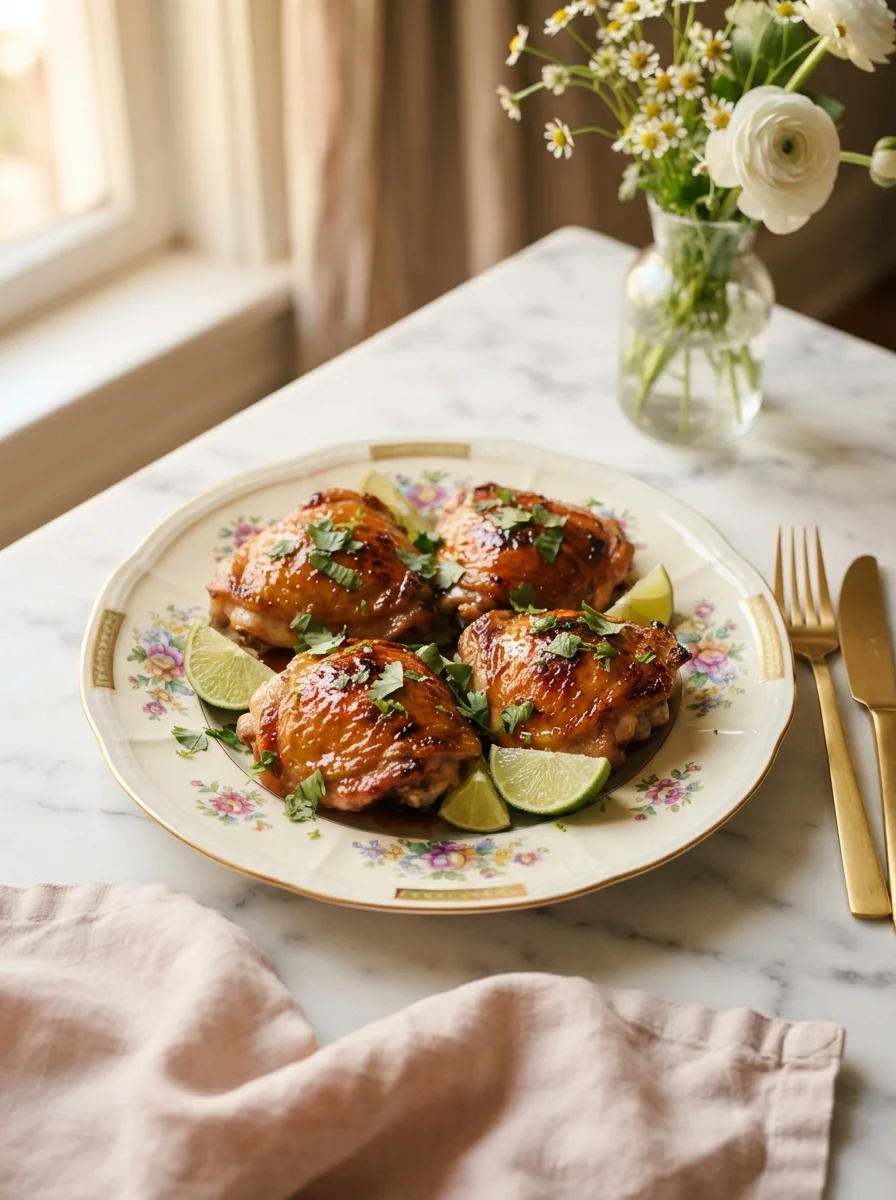
The skin stays crispy even under the glaze — that was the second thing I refused to compromise on. The trick is searing the thighs skin-side down until the fat has fully rendered and the skin is deeply golden before any glaze touches the pan. Everything after that point is fast: flip, glaze, reduce, done.
This isn’t a slow-cooker “sticky chicken” that’s really just braised chicken in a sweet sauce. It’s a real pan-seared, glaze-lacquered dinner that takes about 40 minutes start to finish, and it holds up just as well reheated the next day for lunch.
★★★★★ “I’ve made a dozen versions of cilantro lime chicken and this is the first one where the glaze actually stayed on the chicken instead of pooling in the pan. The skin was still crispy the next day too.” — Priya M., recipe tester (pre-launch)
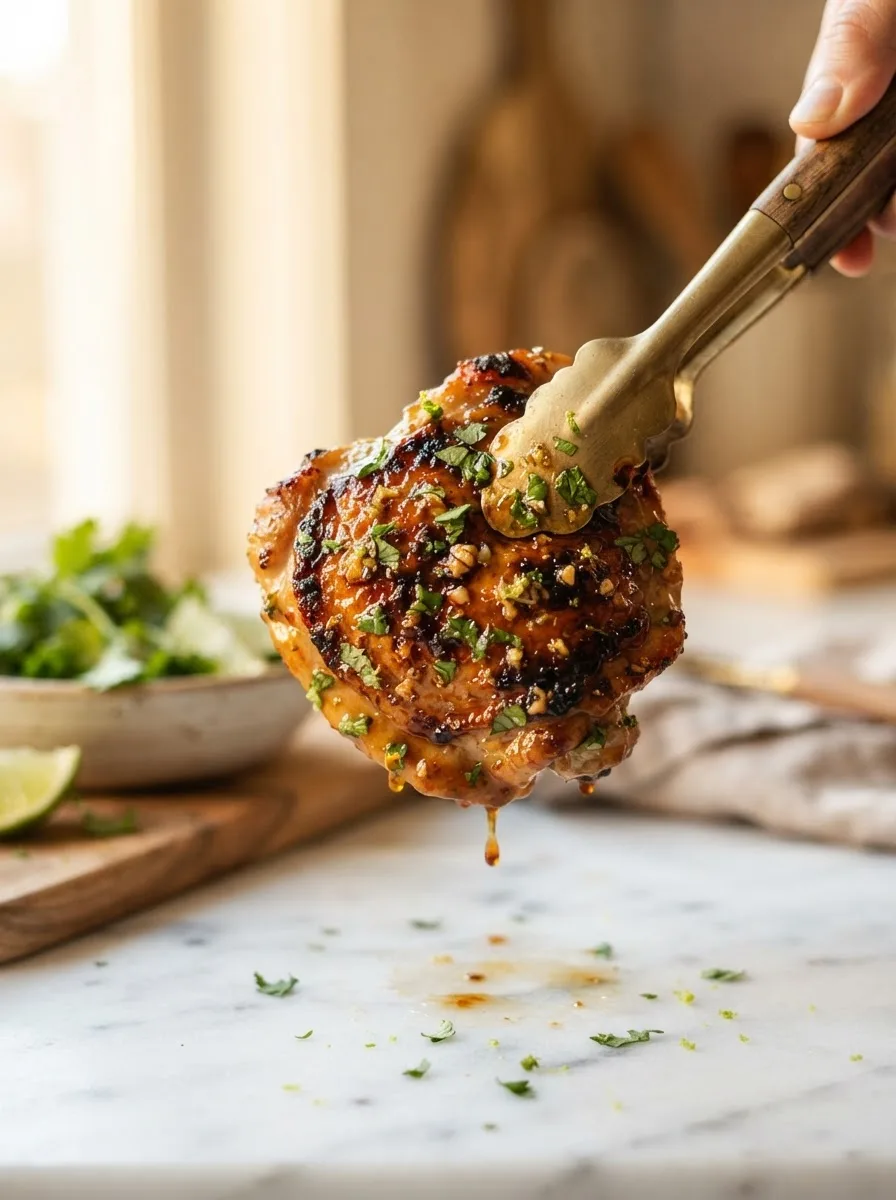
Why You’ll Love This Sticky Cilantro Lime Chicken
- Real crispy skin, even under the glaze: Searing the fat all the way out before glazing means the skin stays crackly instead of turning soggy under the sauce.
- The glaze actually sticks: A short, controlled reduction turns thin pan juices into a glossy coating that clings to every bite instead of running onto the plate.
- One pan, 40 minutes: No marinating overnight, no oven finish required — this is a genuine weeknight dinner.
- Bright, not one-note sweet: A full cup of fresh cilantro and two limes keep this from tasting like a sugar glaze with chicken as an afterthought.
Key Ingredients
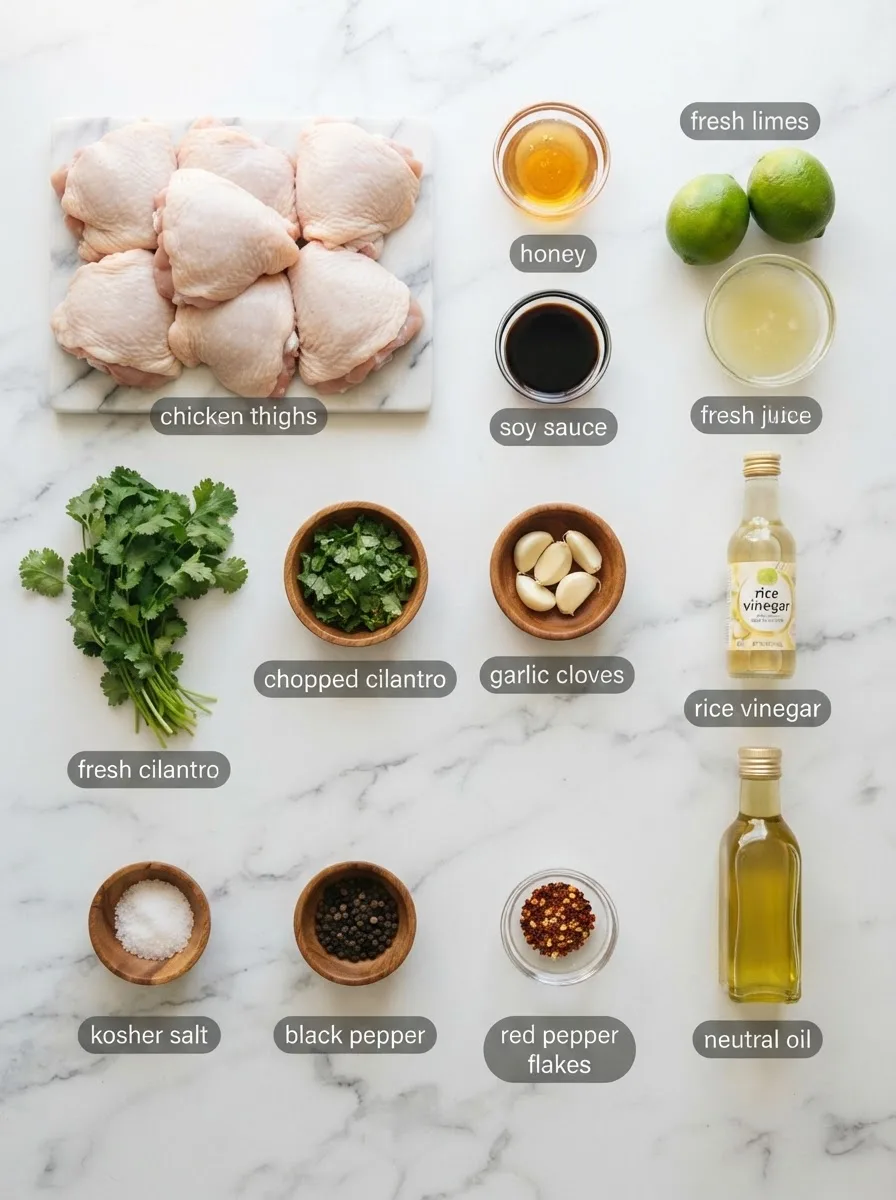
Bone-in, skin-on chicken thighs (6, about 2 ½ lbs). Bone-in thighs stay juicy through the hard sear this recipe needs, and the skin renders into something genuinely crispy — boneless thighs cook faster but the skin never crisps the same way. Skinless will work in a pinch, but you’ll lose the textural contrast that makes this recipe worth making twice.
Fresh lime juice and zest (2 limes). Bottled lime juice tastes flat and slightly metallic once it hits the hot pan — fresh is worth the extra minute of squeezing. The zest goes into the glaze at the very end, off heat, so the essential oils don’t cook off.
Fresh cilantro (1 cup, chopped). Half goes into the glaze while it reduces, half gets stirred in raw at the end. Cooking all of it mutes the flavor into something grassy instead of bright. If you’re one of the people who finds cilantro soapy-tasting (it’s genetic, not you being picky), swap in flat-leaf parsley with a squeeze of extra lime.
Honey (3 tablespoons). Honey caramelizes faster and browns more evenly than granulated sugar, which is exactly what you want for a quick pan glaze. Maple syrup works as a substitute, though the glaze will taste slightly less floral.
Soy sauce (2 tablespoons). This is doing more work than people expect — it adds salt, umami depth, and a slight caramel color to the glaze so it doesn’t look pale next to the lime and honey. Tamari works for a gluten-free version with no other changes needed.
Garlic (4 cloves, minced). Added to the pan after the chicken comes out, so it softens in the rendered fat instead of burning during the long sear.
Ingredient Note: Buy your chicken thighs a similar size to each other. Wildly uneven thighs mean some finish searing before others, and that throws off the timing for the glaze step that follows.
Equipment You’ll Need
- 12-inch stainless steel or cast iron skillet — you need a pan that can go from a hard sear to a glaze reduction without warping; nonstick pans don’t brown the skin as deeply. Cast iron holds heat longest and gives the crispiest skin.
- Tongs — for flipping thighs without tearing the skin. A fish spatula works if that’s what you have.
- Instant-read thermometer — the fastest, most reliable way to know the chicken is actually done (165°F) without guessing by color.
- Fine grater or zester — for the lime zest. A box grater’s smallest holes work if you don’t have a proper zester.
Controlling the Stickiness: Glaze Reduction Time
The entire difference between “sticky, lacquered glaze” and “thin, watery sauce” or “burnt, bitter mess” comes down to one variable: how long you let the glaze reduce after the chicken comes out of the pan. I tested three timings, changing nothing else — same heat level, same pan, same ingredient amounts.
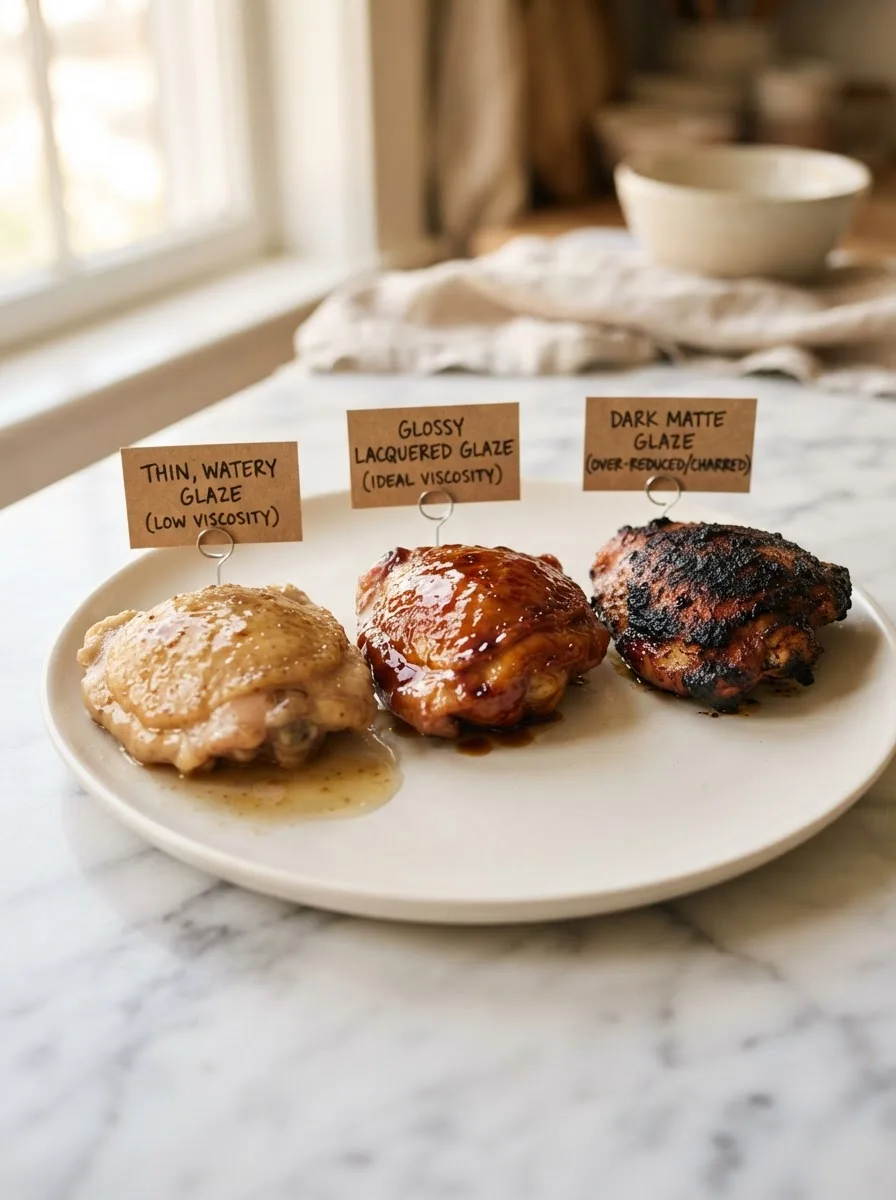
2 minutes — Thin and watery: The glaze was still mostly liquid, more like a pan sauce than a coating. It ran off the chicken the moment I lifted a piece with tongs. Good flavor, wrong texture.
5 minutes — Glossy and lacquered: This is the one. The bubbles slow down and get bigger right around the 5-minute mark, and the glaze coats the back of a spoon instead of running off it. This is your visual cue — watch the bubbles, not the clock.
8 minutes — Dark and bitter: The honey scorched before the 8-minute mark hit, and the glaze turned matte instead of glossy — a telltale sign sugar has gone past caramelization into burnt. It tasted noticeably bitter, and no amount of extra lime juice fixed it.
The takeaway: pull the glaze the moment it turns from a fast, thin bubble to a slower, thicker one — usually 4–5 minutes on medium heat. If you wait for a visual “it looks done” cue instead of a timer, you’ll get it right even if your stove runs hotter or cooler than mine.
How to Make Sticky Cilantro Lime Chicken Thighs
Before you start: Pat the chicken thighs completely dry with paper towels. Wet skin steams instead of crisping, and that’s the single most common reason this recipe goes wrong on the first try.
Step 1 — Season and sear
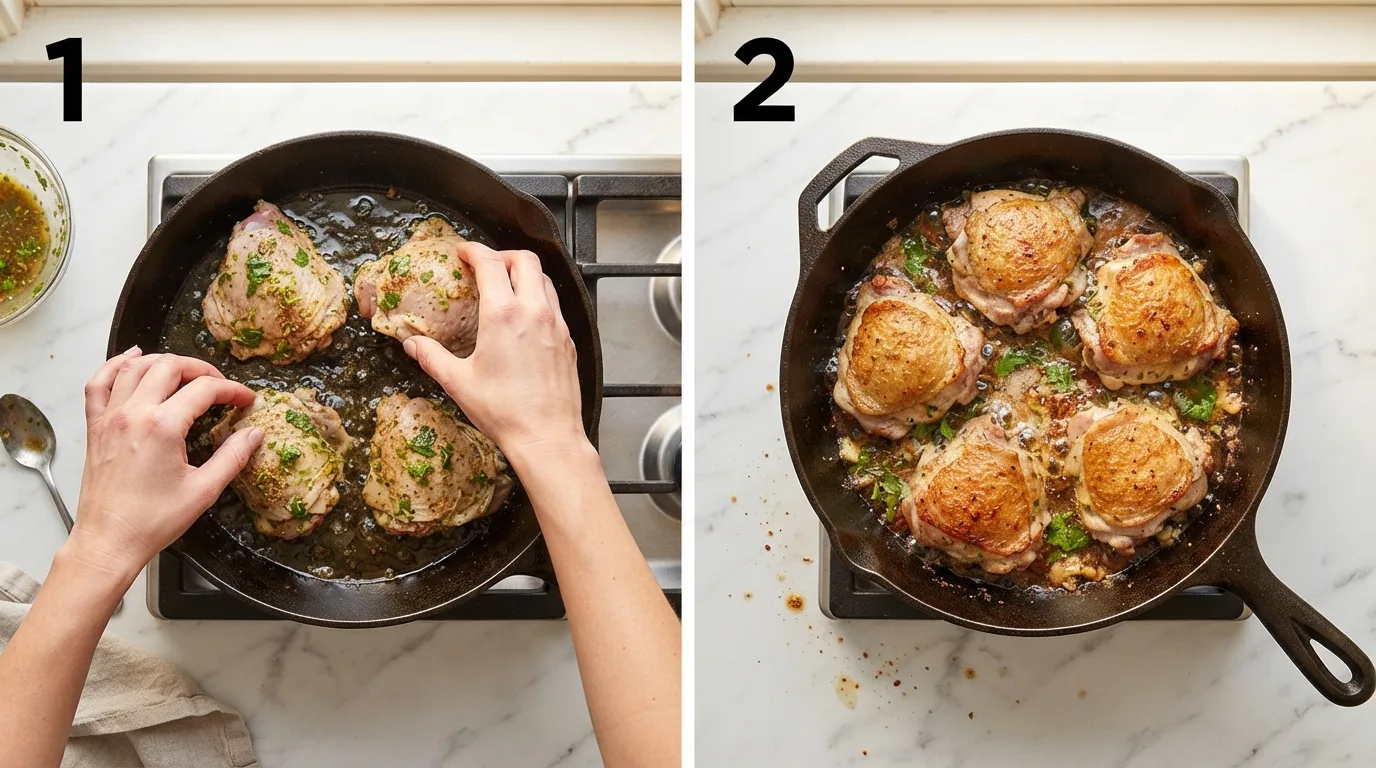
Season both sides of the chicken thighs generously with salt and pepper. Heat the oil in your skillet over medium-high until it shimmers, then lay the thighs skin-side down. Don’t move them. Let them sear undisturbed for 7–8 minutes, until the skin is deeply golden and the fat has visibly rendered out into the pan.
Step 2 — Flip and finish cooking through
Flip the thighs and cook 6–7 minutes more, until an instant-read thermometer reads 165°F at the thickest part. The skin side should now look crispy and deep amber, not pale. Transfer the chicken to a plate and set aside — don’t wipe out the pan, that rendered fat and browned bits are the base of your glaze.
Step 3 — Build the glaze base
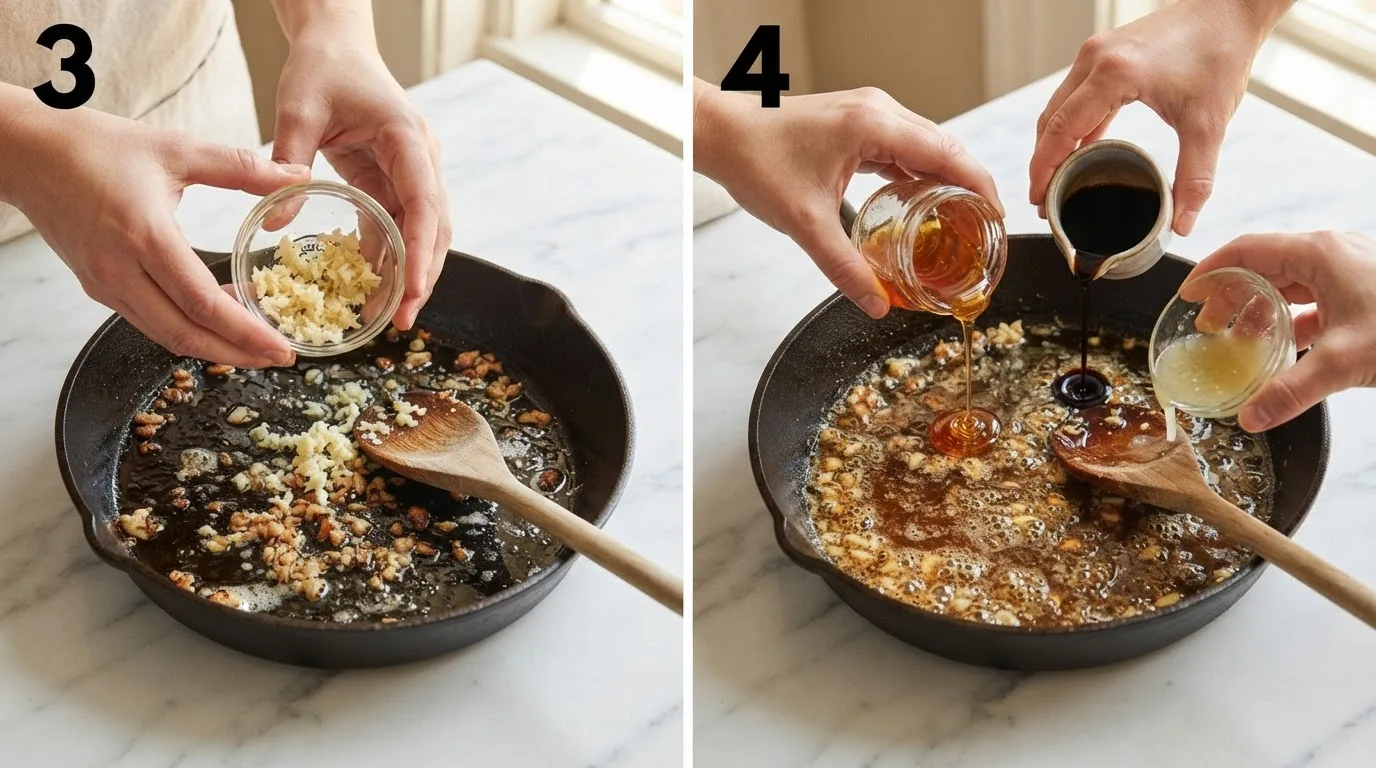
Reduce the heat to medium and add the minced garlic directly to the fat left in the pan. Cook for 30 seconds, just until fragrant — garlic burns fast in hot fat, so don’t walk away. Add the honey, soy sauce, half the lime juice, and half the chopped cilantro, scraping up any browned bits from the bottom of the pan as you stir.
Step 4 — Reduce until glossy and lacquered
Bring the mixture to a simmer and let it bubble steadily, stirring occasionally. Watch the bubbles: they’ll start fast and thin, then slow down and get bigger as the liquid reduces — that shift usually happens around the 4–5 minute mark. The moment the glaze coats the back of a spoon and looks glossy rather than watery, it’s ready. Don’t wait for it to look thick like syrup off the heat; it will continue to thicken slightly as it cools.
Step 5 — Return the chicken and coat
Nestle the chicken thighs back into the skillet, skin-side up, and spoon the glaze over each piece to coat. Let everything sit in the warm glaze for 1–2 minutes so the chicken can soak in some of that flavor without softening the crispy skin.
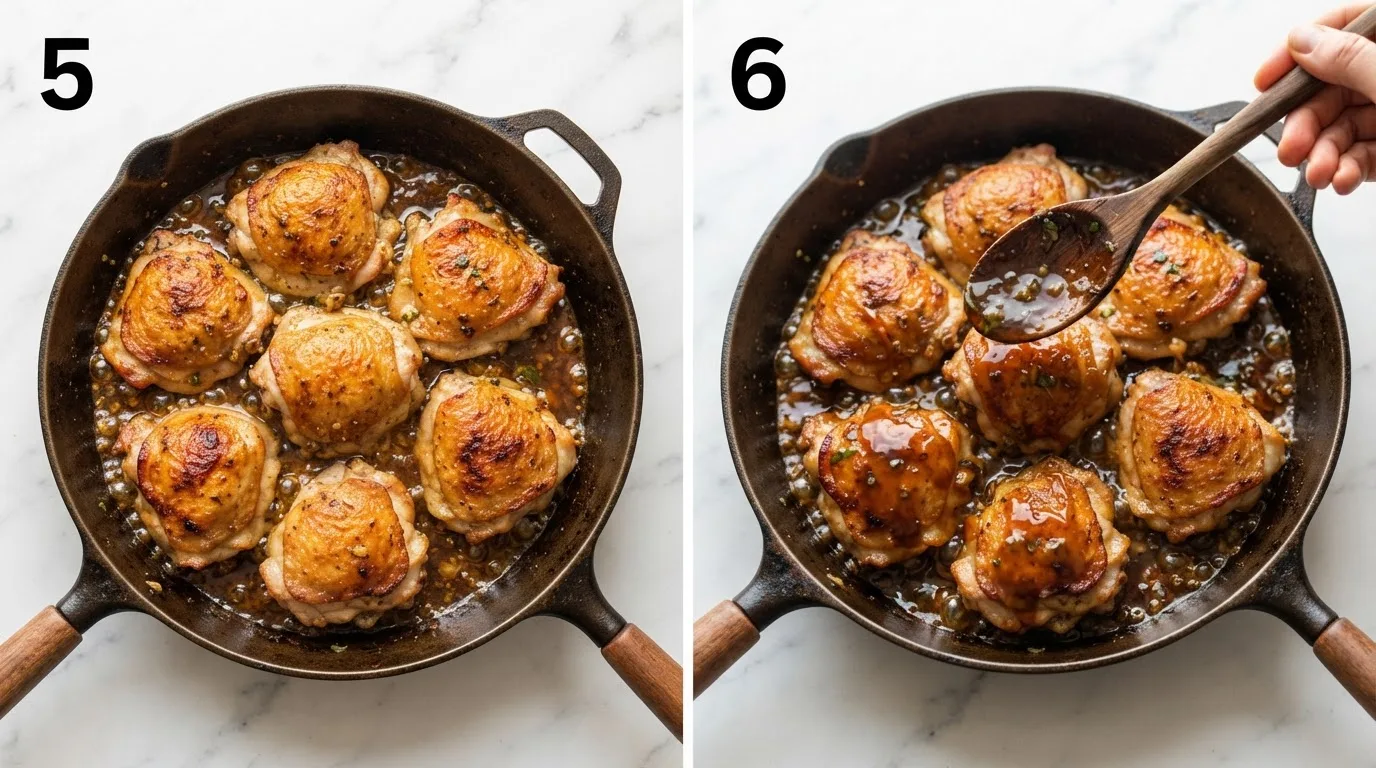
Step 6 — Finish with fresh lime and cilantro
Turn off the heat. Stir in the remaining lime juice, the fresh lime zest, and the remaining chopped cilantro directly into the glaze pooled around the chicken — adding these off heat keeps the flavor sharp and bright instead of cooked-down and muted. Serve immediately, spooning extra glaze from the pan over each piece.
Pro Tips for Perfect Sticky Cilantro Lime Chicken
Tip 1: Dry the chicken skin twice. Once when you unpack it, and again right before it hits the pan. Skin that’s even slightly damp won’t crisp — it’ll steam under the glaze instead.
Tip 2: Don’t crowd the pan. If your skillet is on the smaller side, sear the thighs in two batches. Overcrowded thighs release moisture that keeps the skin from browning properly.
Tip 3: Reserve half the cilantro and lime juice for the very end. Cooking all of it into the glaze mutes the bright, sharp flavor that makes this recipe stand out. The raw addition at the end is what keeps it tasting fresh instead of one-note sweet.
Tip 4: Use a spoon test, not a timer, for the glaze. Every stove runs a little differently. Drag a spoon through the glaze — if it leaves a clean trail that closes slowly, it’s ready. If it closes instantly, keep reducing.
Variations and Substitutions
Dietary Variations:
- Gluten-free: Swap the soy sauce for tamari or coconut aminos in an equal amount. The glaze color and thickness stay identical; the flavor is very slightly sweeter with coconut aminos.
- Lower sugar: Reduce the honey to 2 tablespoons and add an extra tablespoon of lime juice to compensate for lost body in the glaze. It reduces slightly faster this way, so start checking the spoon test a minute early.
Flavor Variations:
- Spicy version: Add ½ teaspoon crushed red pepper flakes to the glaze along with the garlic in Step 3. The heat builds slowly and doesn’t overpower the lime.
- Smoky version: Stir in ½ teaspoon of my homemade Jamaican jerk seasoning along with the salt and pepper before searing — it adds a warm, smoky backbone that pairs surprisingly well with the bright lime glaze.
Ingredient Substitutions:
- Boneless, skin-on thighs → cook 2–3 minutes less per side; watch closely since they cook faster than bone-in.
- Chicken drumsticks → work well with the same method; increase total cook time by about 5 minutes and check with a thermometer since bone placement varies.
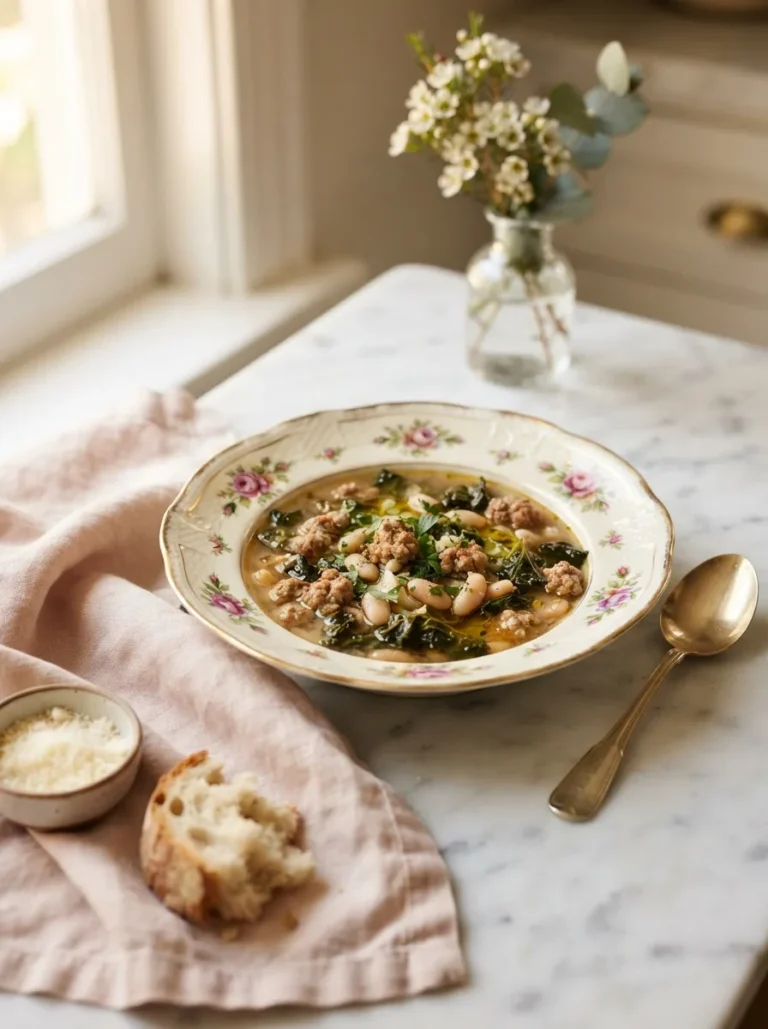
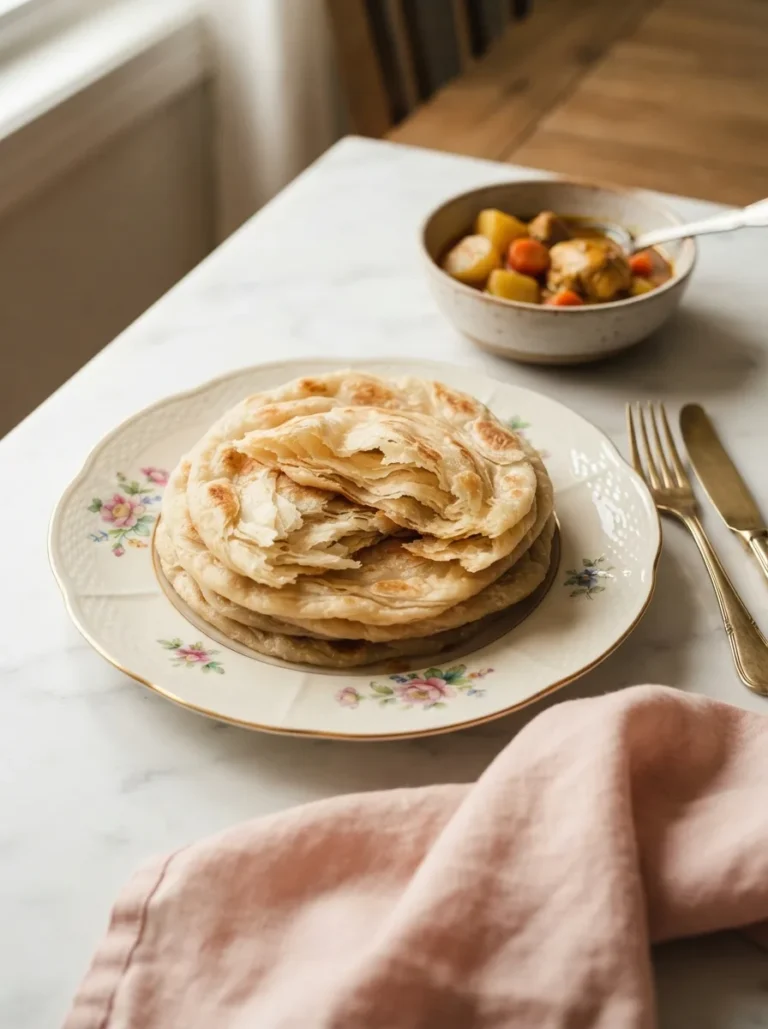
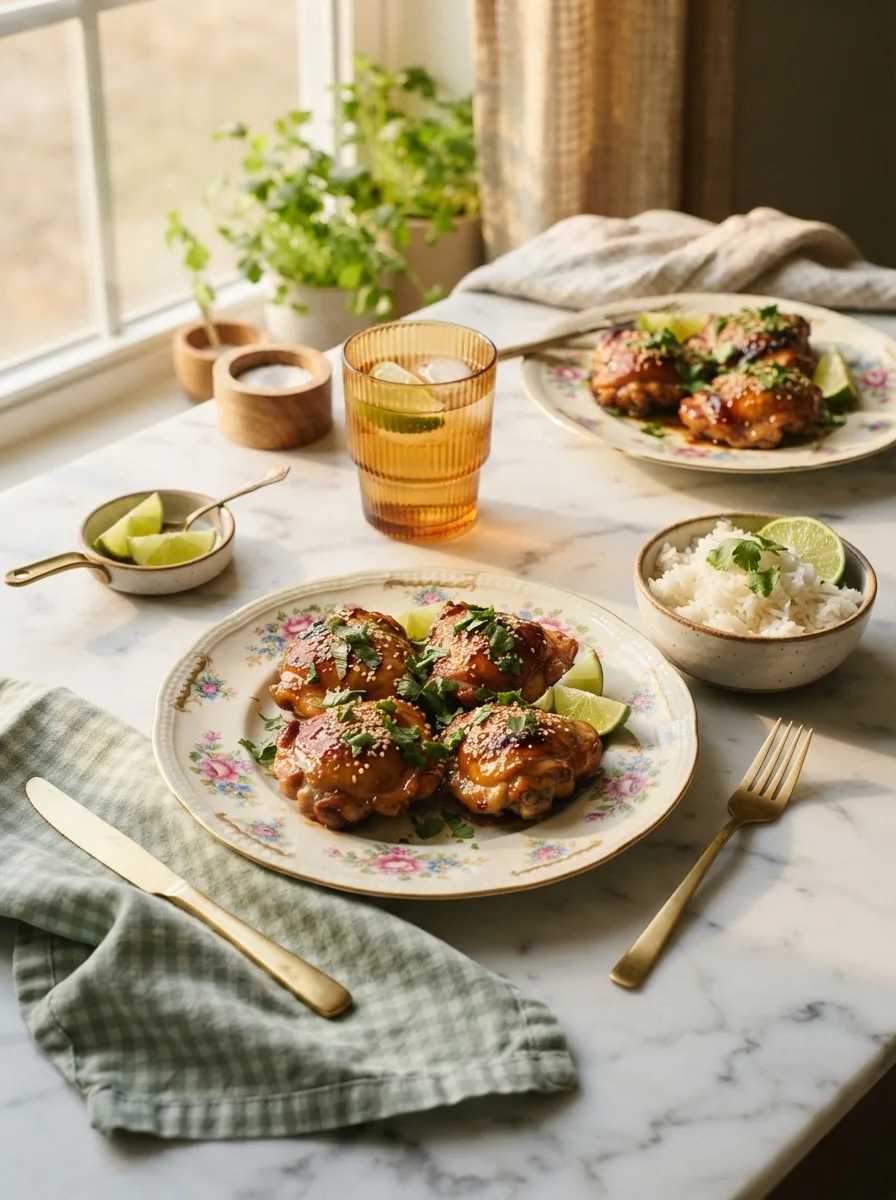
Serve this alongside something to soak up the extra glaze — a batch of soft Jamaican roti is my go-to, or a simple bowl of parsnip and leek soup if you want to round out the meal with something warm on the side.
Troubleshooting
My glaze turned out thin and watery instead of sticky?
It likely didn’t reduce long enough. Look for the bubble change described in the Controlled Test above — fast and thin bubbles need more time; slow and thick bubbles mean it’s ready. If you already plated it, you can return everything to the pan and simmer a few more minutes.
My chicken skin isn’t crispy?
Two likely causes: the skin wasn’t fully dry before it hit the pan, or the pan wasn’t hot enough at the start of the sear. Both cause the skin to steam instead of render. Next time, pat the skin dry twice and wait until the oil visibly shimmers before adding the chicken.
My glaze tastes bitter or burnt?
The honey scorched — this happens fast once the glaze passes the glossy stage, especially on a hotter stove. Pull it earlier next time, right when the bubbles slow down, and lower your heat slightly if this keeps happening.
Storage and Make-Ahead
Counter: Not recommended beyond 2 hours — this is a poultry dish and should be refrigerated promptly.
Refrigerator: Store in an airtight container for up to 4 days. The glaze will thicken further as it chills; that’s normal.
Freeze: Freeze the cooked, glazed chicken (without the fresh garnish) for up to 2 months in a freezer-safe container. The skin won’t stay crispy through freezing, but the flavor holds up well.
Reheating: Reheat in a 375°F oven for about 12 minutes, uncovered, to help re-crisp the skin slightly. Microwaving works in a pinch but the skin will stay soft.
Make-Ahead: You can season the chicken and mince the garlic up to a day ahead — store separately in the fridge. The glaze itself is fastest made fresh, right in the same pan you seared the chicken in.
Frequently Asked Questions
Q: Can I make this with chicken breasts instead of thighs? A: You can, but the texture changes — breasts don’t render the same crispy skin, and they dry out faster during the sear. If you do use breasts, pull them at 165°F and reduce the sear time by a couple of minutes per side.
Q: Is this recipe spicy? A: Not as written — it’s bright and tangy rather than hot. Add crushed red pepper flakes to the glaze if you want heat; see the Flavor Variations section above.
Q: Can I make this ahead for meal prep? A: Yes. It reheats well for up to 4 days in the fridge. The skin softens slightly on reheat, but the glaze flavor actually deepens overnight.
Q: Why did my glaze separate instead of staying glossy? A: This usually means the heat was too high during reduction, causing the fat and liquid to break apart instead of emulsifying. Lower the heat slightly and stir more frequently next time.
Q: Can I double this recipe? A: Yes, but sear the chicken in batches — a crowded pan won’t brown the skin properly. The glaze quantities double cleanly with no other adjustments needed.
Q: What should I serve with sticky cilantro lime chicken thighs? A: Steamed rice is the simplest option since it soaks up the glaze well. For something more filling, my tikka paste makes a great curry to serve alongside a smaller portion of the chicken, or pair it with soft Jamaican roti for scooping.
Q: Do I need bone-in chicken specifically? A: Bone-in gives the juiciest result and holds up best through the hard sear this recipe needs, but boneless works — just reduce the cook time as noted in the Ingredient Substitutions section.
More Chicken Recipes You’ll Love
- Homemade Jamaican jerk seasoning — the smoky, spicy blend that works beautifully rubbed onto chicken thighs before searing
- Tikka paste — a warmly spiced curry base that pairs well with a smaller portion of this glazed chicken on the side
- Soft Jamaican roti — the perfect vehicle for scooping up every last bit of glaze
- Parsnip and leek soup — a warm, simple side that rounds out the meal on a cooler night

Foolproof Sticky Cilantro Lime Chicken Thighs
Ingredients
For the chicken:
- 6 bone-in, skin-on chicken thighs (about 2½ lbs)
- 1 teaspoon kosher salt
- 1/2 teaspoon black pepper
- 1 tablespoon neutral oil
For the glaze:
- 4 clove garlic, minced
- 3 tablespoon honey
- 2 tablespoon soy sauce
- 2 limes (juice and zest, divided)
- 1 cup fresh cilantro, chopped, divided
- 1/4 teaspoon crushed red pepper flakes (optional)
Instructions
- Pat the chicken thighs completely dry with paper towels. Season both sides generously with salt and pepper.
- Heat the oil in a 12-inch skillet over medium-high heat until shimmering. Place the thighs skin-side down and sear undisturbed for 7–8 minutes, until deeply golden.
- Flip the thighs and cook 6–7 minutes more, until an instant-read thermometer reads 165°F at the thickest part. Transfer chicken to a plate; do not wipe out the pan.
- Reduce heat to medium. Add the minced garlic to the rendered fat and cook 30 seconds, until fragrant.
- Add the honey, soy sauce, half the lime juice, and half the chopped cilantro to the pan, scraping up any browned bits.
- Bring to a simmer and reduce, stirring occasionally, until the glaze coats the back of a spoon and looks glossy rather than watery — about 4–5 minutes.
- Nestle the chicken back into the skillet skin-side up and spoon the glaze over each piece. Let sit in the glaze 1–2 minutes.
- Turn off the heat. Stir in the remaining lime juice, lime zest, and remaining cilantro directly into the glaze pooled around the chicken. Serve immediately.
Notes
- Watch the glaze bubbles, not the clock — fast, thin bubbles mean it needs more time; slower, thicker bubbles mean it’s ready to pull from the heat.
- For a gluten-free version, substitute tamari or coconut aminos for the soy sauce in an equal amount.
- Leftovers keep in the refrigerator for up to 4 days; reheat in a 375°F oven for about 12 minutes to help re-crisp the skin.
- This recipe freezes well for up to 2 months, though the skin will not stay crispy after freezing.
- If doubling the recipe, sear the chicken in batches to avoid overcrowding the pan and losing the crispy skin.
- Boneless, skin-on thighs can be used — reduce the sear time by 2–3 minutes per side and check for doneness with a thermometer.
- Buy chicken thighs of similar size so they finish searing at the same time.
- Adding the second half of the lime juice and cilantro off the heat is what keeps the flavor bright instead of muted.