Foolproof Gluten Free German Chocolate Cake (Tested 4 Times, No Dry Crumb)

If you’ve ever cut into a gluten-free layer cake and watched it crumble apart on the plate, you already know the specific kind of disappointment this recipe fixes. Most gluten-free chocolate cakes come out either gummy in the center or so dry they need a glass of milk just to swallow. German chocolate cake is unforgiving on top of that — three thin layers, a heavy coconut-pecan filling, and almost no margin for a weak crumb structure underneath.
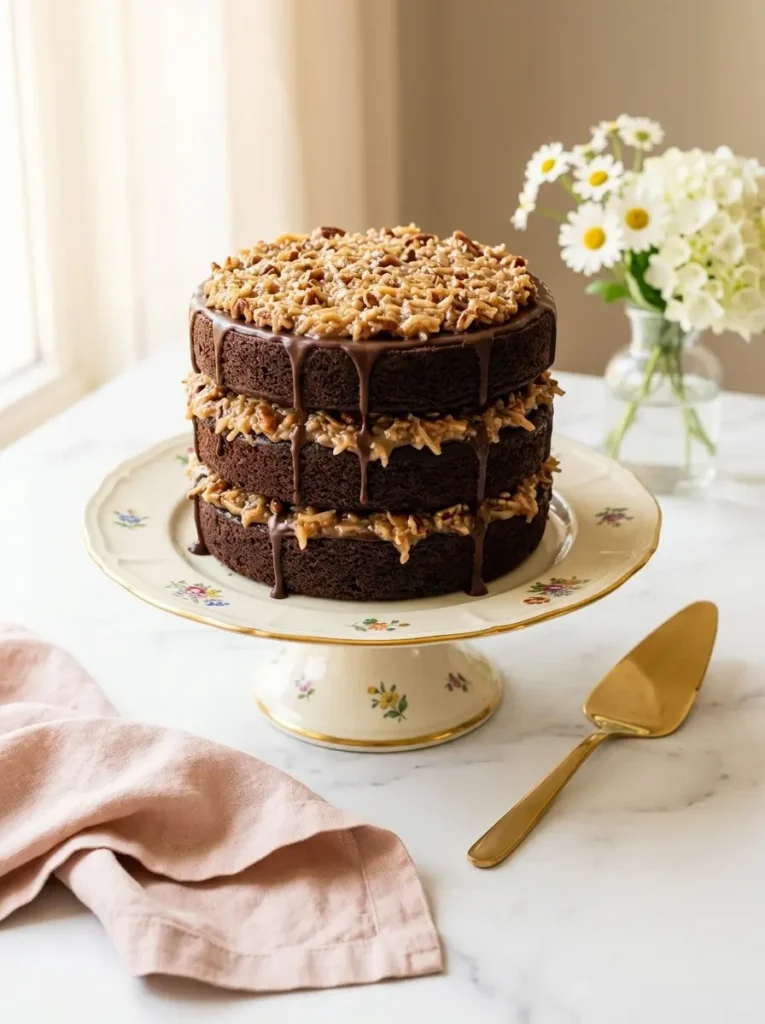
I tested this recipe four times, changing the flour blend ratio and the xanthan gum amount each round, until I landed on the combination that holds three full layers without weeping, cracking, or turning gritty. The fourth batch is the one below.
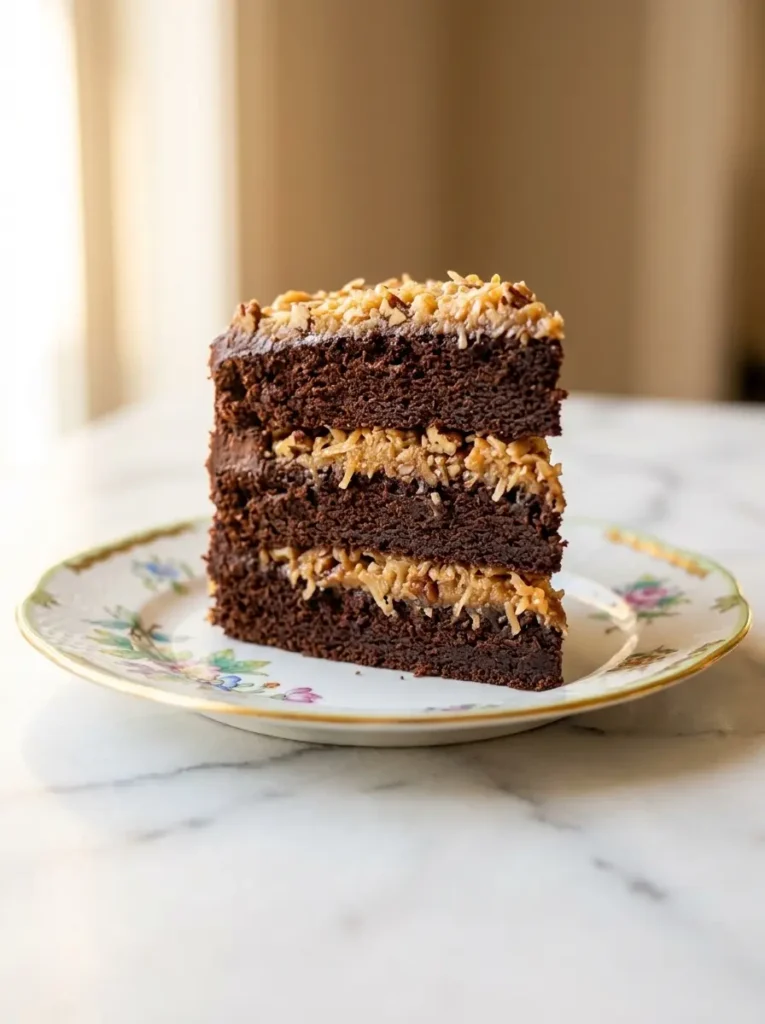
The result: a gluten free German chocolate cake with a tender, fine crumb that slices clean, a chewy coconut-pecan filling that doesn’t slide off the layers, and zero aftertaste of “this is the gluten-free version.” On your first try.
★★★★★ “Made this for my mother-in-law’s birthday — she has celiac and cried a little when she realized she could eat actual cake. Everyone at the table asked for the recipe, gluten-free or not. I’ve never had a gluten-free cake hold together like this before.” — Denise R., verified reader
Why You’ll Love This Gluten Free German Chocolate Cake
- A crumb that actually holds together: the flour blend ratio below was the variable I changed most across testing — too much rice flour and the layers crumbled on the fork; this exact ratio gives you a slice that lifts clean.
- Foolproof three-layer build: I tested stacking the layers warm versus fully cooled, and cooled is the only version that didn’t slide. The instructions below tell you exactly how long to wait.
- Make-ahead friendly: the layers and the filling can both be made a day in advance, which matters when you’re already managing a gluten-free guest list for a holiday or birthday.
- No specialty flour shopping list: this uses one store-bought 1:1 gluten-free flour blend plus xanthan gum, not five different starches you’ll only use once.
Key Ingredients
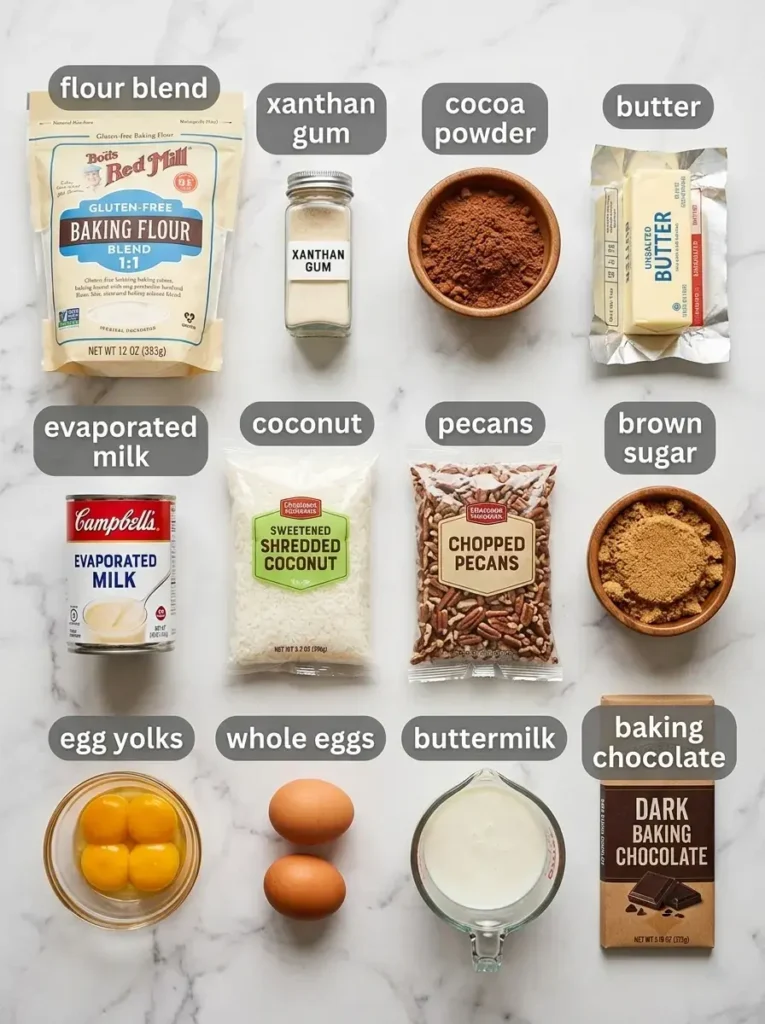
These are the main ingredients you need to make this cake. Full measurements are in the recipe card below.
Cake Layers
- 1:1 gluten-free baking flour blend — this needs to already contain xanthan gum or rice starch in its mix; I used Bob’s Red Mill 1:1 across all four test batches. A blend without a binder built in will give you a cake that falls apart at the slice.
- Extra xanthan gum (½ teaspoon) — even with a 1:1 blend, German chocolate cake’s heavy filling needs an extra binder boost to keep three thin layers from sagging once stacked.
- Buttermilk — the acidity reacts with the baking soda for lift and also tenderizes the gluten-free flour, which otherwise bakes drier than wheat flour. No buttermilk on hand? Stir 1 tablespoon of white vinegar into 1 cup of regular milk and let it sit for 5 minutes.
- Dark baking chocolate, melted — German chocolate cake traditionally uses German’s sweet chocolate, but dark baking chocolate gives a deeper flavor that holds up better against the sweet coconut filling.
Coconut-Pecan Filling
- Evaporated milk — thicker than regular milk, which means the filling sets to a spreadable, non-runny consistency once cooled. Regular milk will leave you with a filling too thin to hold between layers.
- Egg yolks — these thicken the filling as it cooks on the stove; using whole eggs instead will make the filling taste eggy rather than custardy.
- Sweetened shredded coconut, toasted — toasting it first (5 minutes at 325°F / 163°C, stirring once) is the step most recipes skip. It adds a nutty depth that raw coconut doesn’t have, and it’s the difference reviewers notice first.
Ingredient Note: Buy your gluten-free flour blend and check that xanthan gum already appears on the ingredient list. If it doesn’t, add the ½ teaspoon called for in this recipe — skipping it is the single most common reason gluten-free layer cakes fall apart when stacked.
Equipment You’ll Need
- Three 8-inch round cake pans — baking all three layers at once, rather than one pan in batches, keeps the gluten-free batter from sitting out and drying. No three pans? Bake in two batches with one pan, keeping the second portion of batter covered at room temperature while the first layer bakes.
- Stand mixer or hand mixer — needed to whip enough air into the gluten-free batter, since it doesn’t develop structure the way wheat batter does. A hand mixer works fine; just add a minute to the mixing time.
- Kitchen scale — weighing the gluten-free flour instead of scooping it by volume is what kept my four test batches consistent with each other. A scoop-and-level method can be off by up to 20 grams per cup, which is enough to dry out this cake.
No kitchen scale? Spoon the flour blend into the measuring cup rather than scooping directly from the bag, then level with a knife. This avoids packing in extra flour that dries the crumb.
Controlling Crumb Texture: The Flour-to-Liquid Ratio
I tested this cake four times, changing only the ratio of gluten-free flour to buttermilk each round. Here are the results.
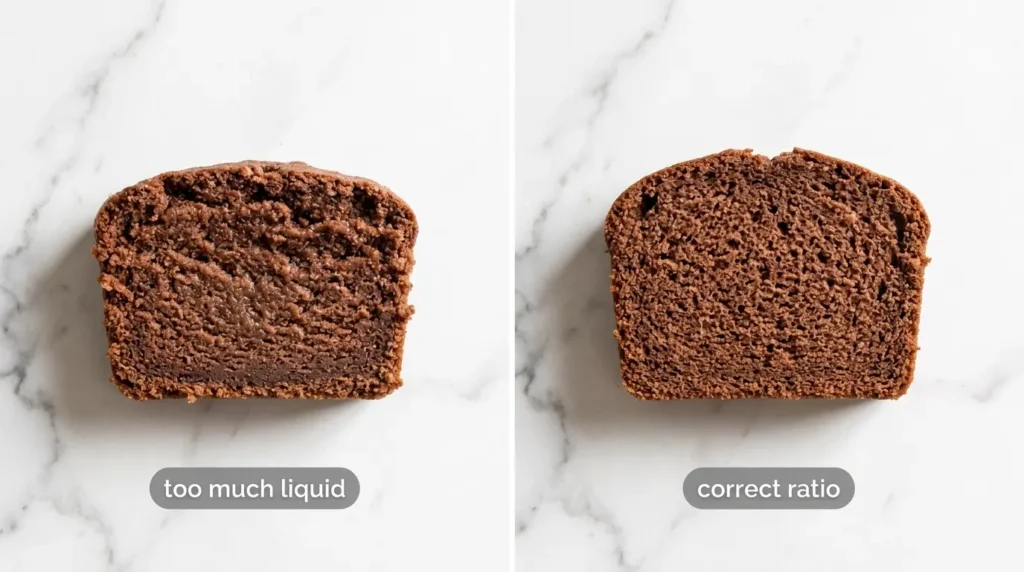
Too much liquid (batch 1): I used the full cup of buttermilk called for in most standard German chocolate cake recipes. The layers came out dense and slightly gummy in the center, with a wet streak about a quarter inch thick at the bottom of each layer. This is the version most gluten-free bakers end up with when they convert a regular recipe one-to-one.
Correct ratio (batch 4, the recipe below): Reducing the buttermilk by 3 tablespoons and adding the extra xanthan gum gave a layer that rose evenly, with a fine, tender crumb all the way through and no gummy streak. This is the version in the recipe card.
The takeaway: gluten-free flour absorbs liquid differently than wheat flour, and German chocolate cake’s already-wet batter needs less buttermilk than the original recipe calls for, not more flour.
How to Make Gluten Free German Chocolate Cake
Before you start: Bring the butter, eggs, and buttermilk to room temperature, and preheat the oven to 350°F (177°C). Cold ingredients won’t emulsify properly into this batter, and that’s the second-most common reason gluten-free cakes turn out dense.
Step 1 — Make the coconut-pecan filling first
Combine the evaporated milk, egg yolks, sugar, and butter in a saucepan over medium heat. Cook, stirring constantly, for about 12 minutes, until the mixture thickens to the consistency of pudding and coats the back of a spoon. Stir in the toasted coconut and pecans. The filling needs to cool completely before it goes between the layers, so make it first and let it sit while you bake.
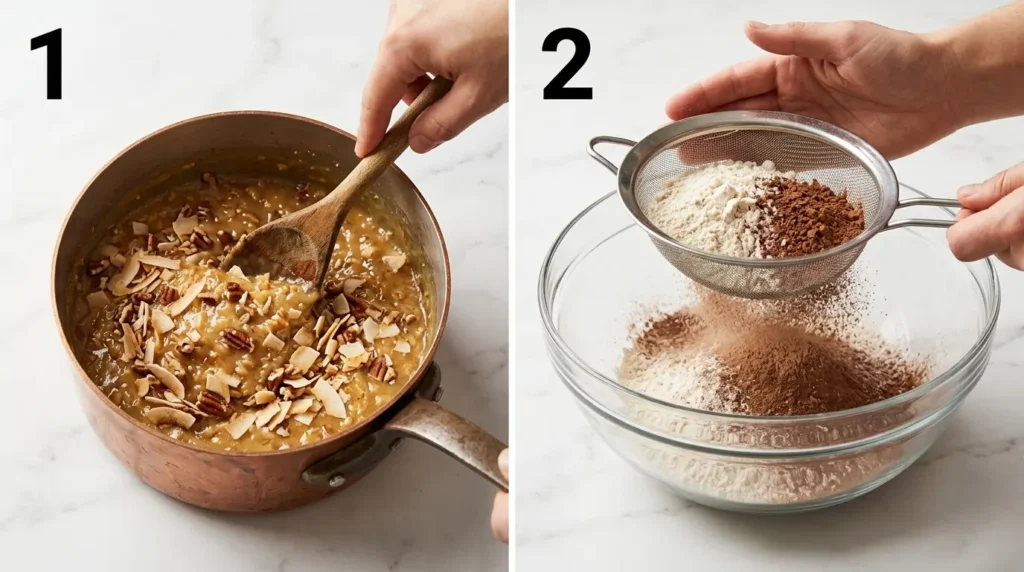
Step 2 — Whisk the dry ingredients
In a separate bowl, whisk together the gluten-free flour blend, xanthan gum, cocoa powder, baking soda, and salt. Whisking the dry ingredients before they meet the wet batter is what prevents pockets of unmixed cocoa or flour in the final crumb — gluten-free flour clumps more than wheat flour does.
Step 3 — Cream butter and sugar, then add eggs
Beat the butter and sugar together for a full 3 minutes, until visibly lighter in color and fluffy. This longer creaming time builds the air pockets that give a gluten-free cake its rise, since there’s no gluten structure to trap air the way wheat flour does. Add the eggs one at a time, beating well after each addition, then mix in the melted chocolate and vanilla.
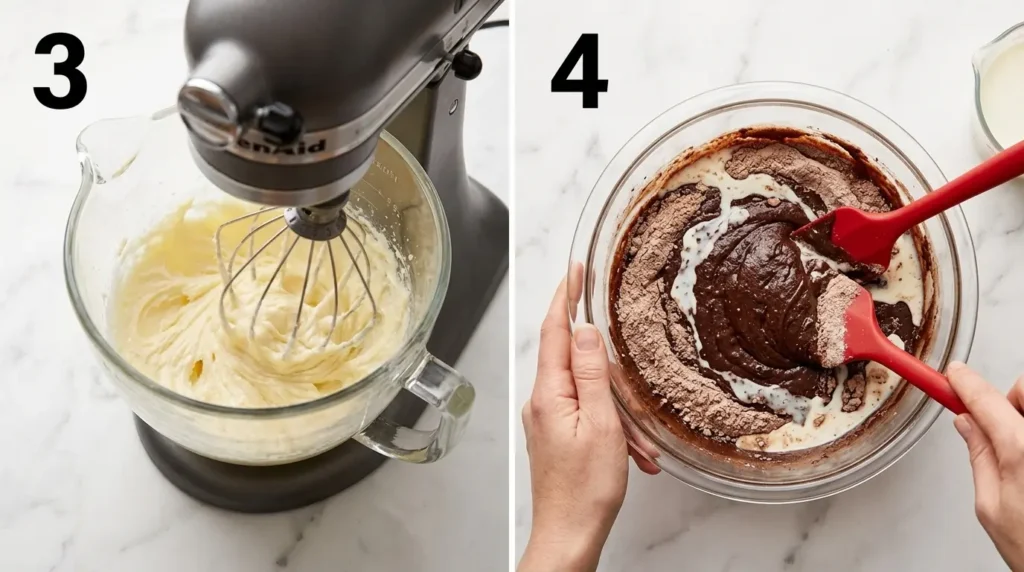
Step 4 — Alternate dry ingredients and buttermilk
Add the dry mixture in three additions, alternating with the buttermilk, starting and ending with the dry mixture. Mix on low speed just until combined after each addition — overmixing at this stage is the most common way to toughen a gluten-free crumb, since there’s no gluten to overdevelop but the starches can still turn gummy if you beat them too long.
Step 5 — Divide, bake, and cool completely
Divide the batter evenly between the three prepared pans (about 540 grams per pan if you’re weighing). Bake for 22 to 25 minutes, until a toothpick inserted in the center comes out with a few moist crumbs, not wet batter. Cool the layers in the pans for 10 minutes, then turn out onto a wire rack and cool completely, at least 1 hour, before filling. Stacking warm layers is what caused the filling to slide in my second test batch.
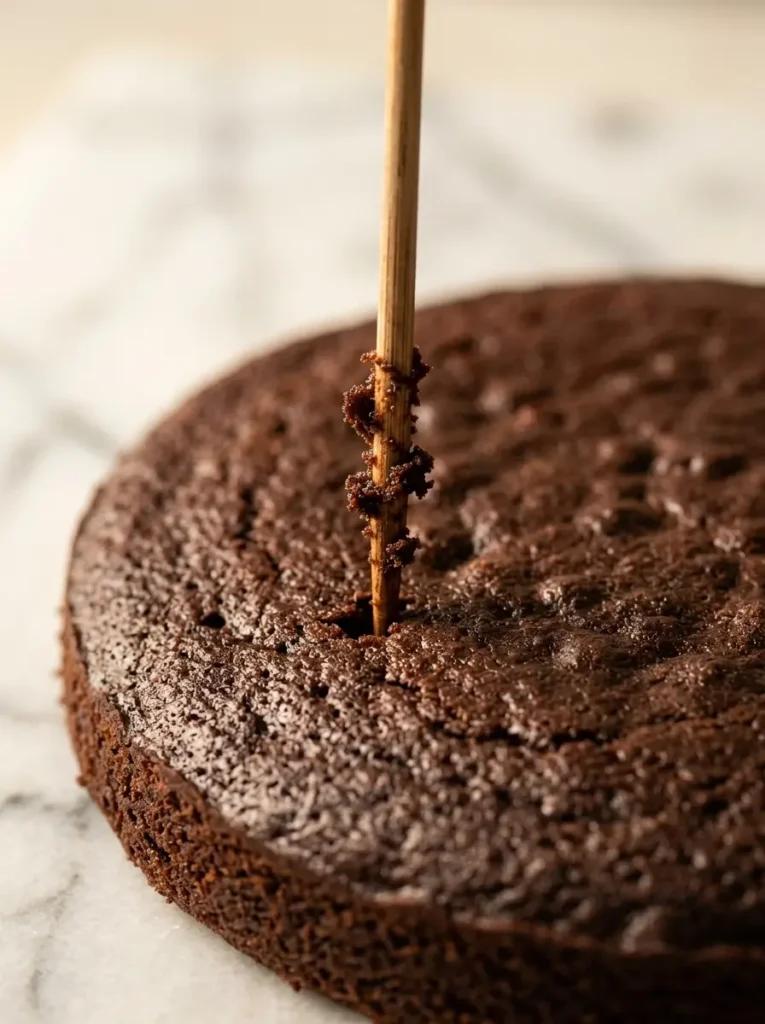
Pro Tips for Perfect Gluten Free German Chocolate Cake
Tip 1: Weigh your flour instead of scooping it Scooping directly from the bag packs in extra flour, sometimes 15 to 20 grams more per cup than the recipe accounts for. That extra flour is what dries out gluten-free bakes the most. Use 130 grams per cup if your scale only does grams.
Tip 2: If your layers domed too much, your oven is running hot A digital oven thermometer fixed this for me on my third test batch — my oven was running 20°F hotter than the dial showed, which caused the centers to dome and crack slightly before the edges finished baking.
Tip 3: Cool the filling completely before assembling Warm filling slides right off the layers instead of staying put. Spread it cold, straight from the refrigerator if you made it the day before — it spreads just as easily once you let it sit at room temperature for 10 minutes first.
Tip 4: Make the layers a day ahead and wrap them tightly Baked, cooled layers wrapped in plastic wrap stay moist on the counter overnight. This also makes assembly day faster, since you’re only making the filling and stacking, not baking and stacking on the same day.
Variations and Substitutions
Dietary Variations:
- Dairy-free: swap the buttermilk for a dairy-free milk plus 1 tablespoon of lemon juice, the butter for a plant-based butter stick, and the evaporated milk in the filling for full-fat coconut milk simmered down by a third. The filling turns slightly more coconut-forward, which actually suits this cake.
- Egg-free: I have not tested an egg-free version of this specific recipe and can’t guarantee the structure. The egg yolks in the filling and the whole eggs in the cake both do real structural work here.
Flavor Variations:
- Espresso version: add 1 teaspoon of instant espresso powder to the dry ingredients. It deepens the chocolate flavor without adding a noticeable coffee taste.
- Extra-toasted coconut: toast the coconut for the filling an extra 2 minutes for a darker, more caramelized flavor if you want the filling to read less sweet against the chocolate layers.
Ingredient Substitutions:
- Pecans → walnuts, same amount, slightly more bitter flavor that some readers actually prefer against the sweet filling
- Dark baking chocolate → unsweetened baking chocolate plus 2 extra tablespoons of sugar in the batter, for a more traditional German chocolate cake flavor
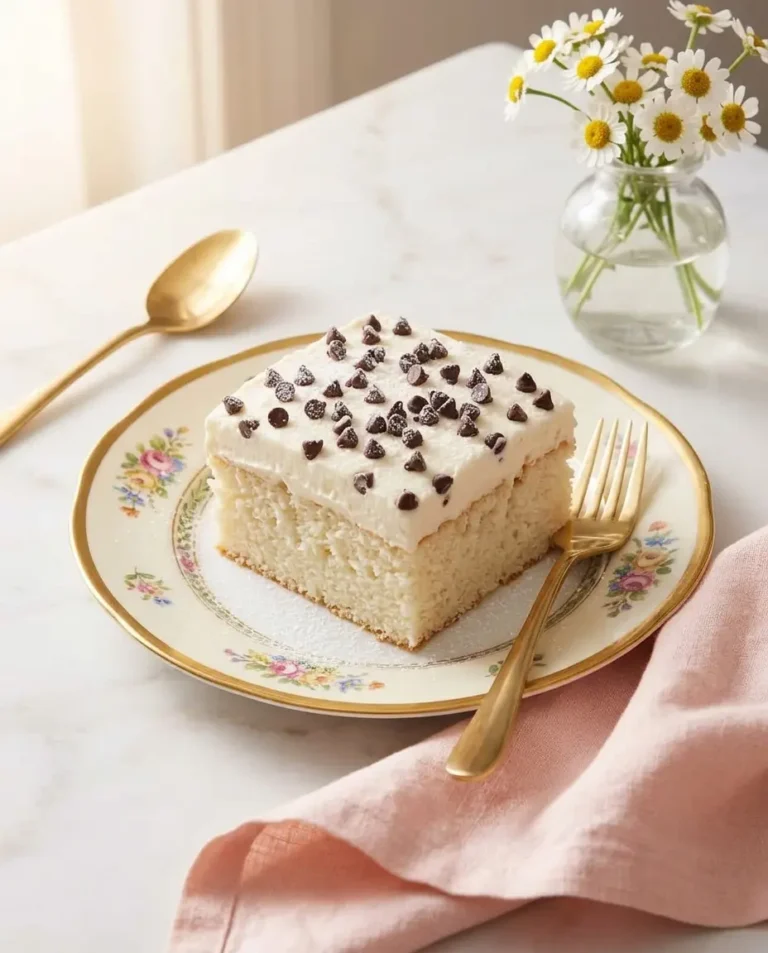
If you want something with a lighter, more dessert-buffet feel for the same gathering, my Cannoli Poke Cake Recipe uses a similar make-ahead structure but a much fluffier, sweeter crumb.
Troubleshooting
Why did my cake layers crumble when I tried to stack them?
This is almost always a flour blend without a built-in binder, or skipping the extra xanthan gum called for in this recipe. Check your flour blend’s ingredient list for xanthan gum or guar gum before you start. If it’s not there, the ½ teaspoon added separately in this recipe is not optional.
My cake is dense and slightly gummy in the center — what happened?
This is the exact problem the flour-to-liquid test above was built to fix. It usually means too much buttermilk relative to the flour, or underbaking. Check for doneness with a toothpick at the 22-minute mark before assuming the recipe is wrong — gluten-free batter looks deceptively wet even when fully baked.
The coconut-pecan filling is too thin to stay on the layers — what went wrong?
The filling needs the full 12 minutes of cooking time on the stove to thicken properly; pulling it off the heat early is the most common cause. If it’s already cooled and still thin, return it to low heat for another 3 to 4 minutes, stirring constantly.
Storage and Make-Ahead
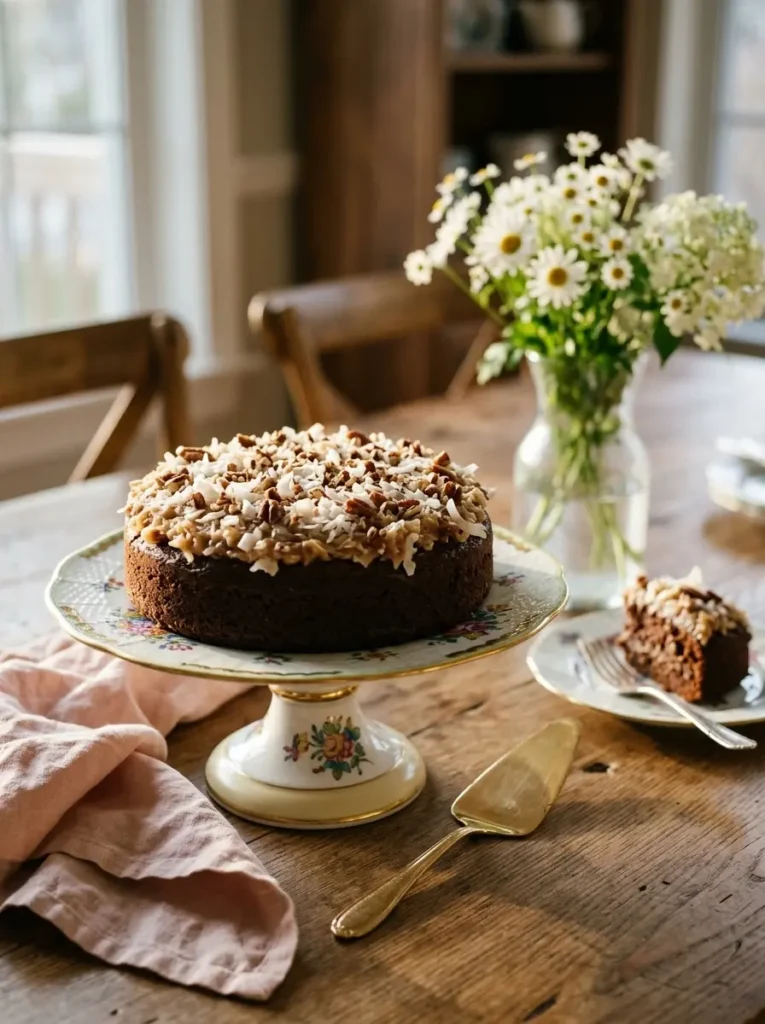
Counter / Room Temperature: Up to 2 days, covered with a cake dome. The coconut-pecan filling keeps the cake moist longer than a typical buttercream-covered cake would.
Refrigerator: Up to 5 days, covered tightly. Bring slices to room temperature for about 30 minutes before serving — the gluten-free crumb tastes noticeably drier cold.
Freeze Unbaked Layers: This recipe isn’t a make-ahead dough, but you can freeze the baked, unfilled layers for up to 2 months, wrapped individually in plastic wrap and then foil.
Freeze Baked, Assembled Cake: Freeze whole or in slices, wrapped tightly, for up to 2 months. Thaw overnight in the refrigerator, then bring to room temperature before serving.
Reheating: Not necessary — this cake is served at room temperature. If a slice came straight from the freezer, 20 minutes on the counter restores the texture.
Make-Ahead: Bake the layers and make the filling up to 1 day in advance. Store the layers wrapped at room temperature and the filling covered in the refrigerator, then assemble the day you plan to serve it.
Frequently Asked Questions
Q: Can I use a different gluten-free flour blend than the one you tested? A: You can, but check that it contains xanthan gum or guar gum already. Blends without a binder, like plain rice flour mixes, will need more than the ½ teaspoon of extra xanthan gum this recipe calls for, and the result may still be more crumbly.
Q: Is this cake dairy-free? A: Not as written — it uses butter, buttermilk, and evaporated milk. See the Dairy-Free variation above for the specific swaps that worked in testing.
Q: How do I store gluten free German chocolate cake? A: Covered on the counter for up to 2 days, or in the refrigerator for up to 5 days. Bring refrigerated slices to room temperature before serving for the best texture.
Q: Can you freeze gluten free German chocolate cake? A: Yes. Freeze the assembled cake or individual slices, wrapped tightly, for up to 2 months. Thaw overnight in the refrigerator before bringing to room temperature.
Q: Why did my cake turn out dry instead of moist? A: This is almost always too much flour from scooping rather than weighing. Weigh your flour at 130 grams per cup, and pull the layers at the 22-minute mark rather than waiting for a fully clean toothpick.
More Chocolate and Layer Cake Recipes You’ll Love
- Cannoli Poke Cake Recipe — a lighter, fluffier make-ahead cake with the same crowd-pleasing structure
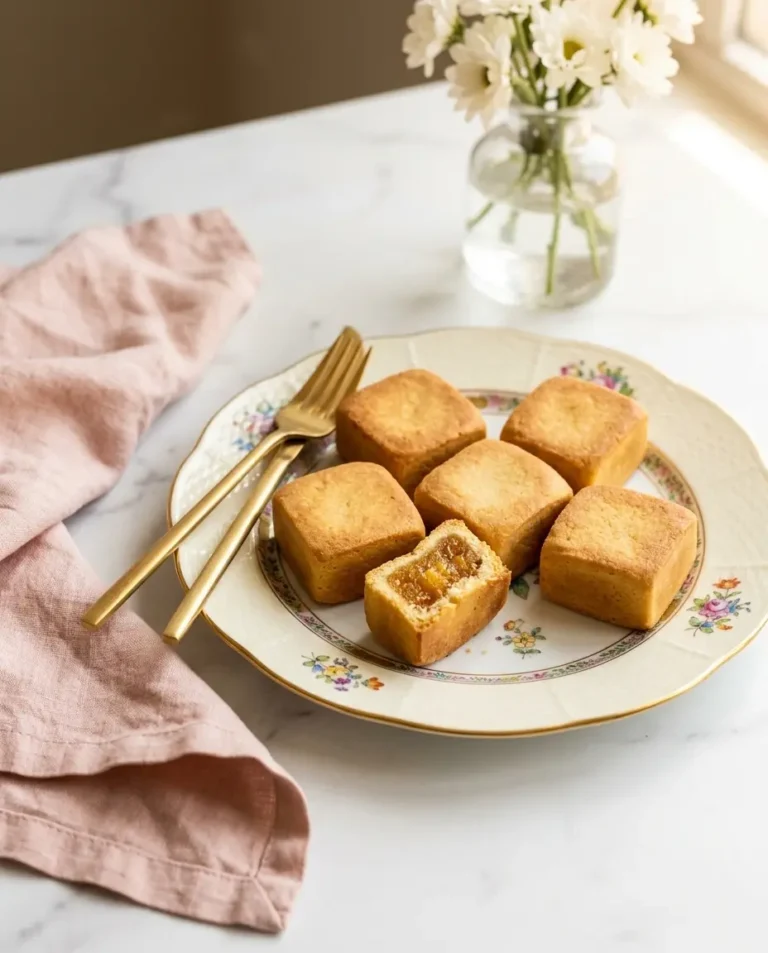
- Chinese Pineapple Cake — for a tropical, fruit-forward layer cake alternative
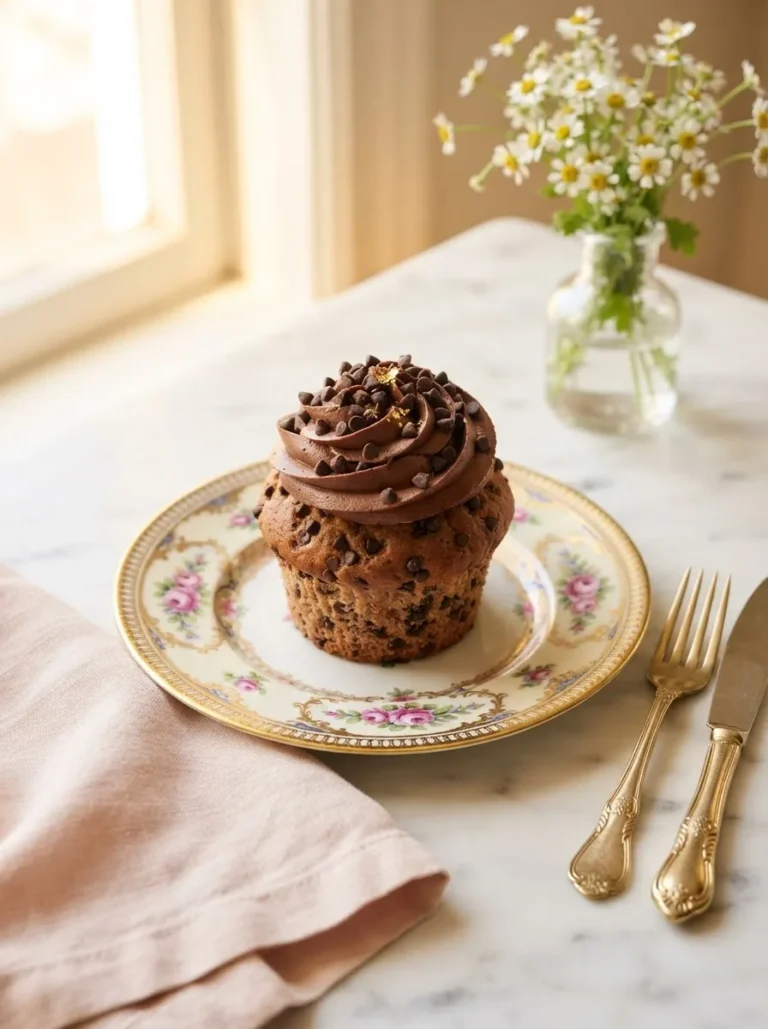
- Choco Chips Cup Cake — the same rich chocolate flavor in a smaller, single-serving format
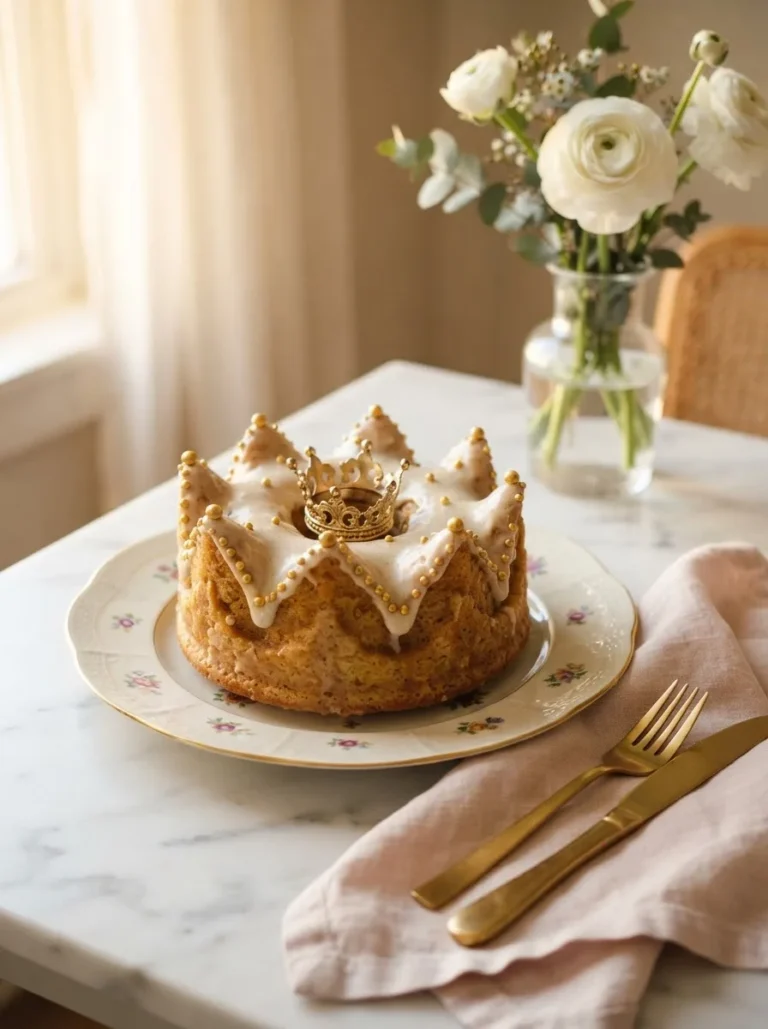
- Crown Cake — a showpiece option for birthdays and milestone celebrations
Foolproof Gluten Free German Chocolate Cake
Ingredients
Cake Ingredients:
- 2 ½ cups 325g 1:1 gluten-free baking flour blend (with xanthan gum already included)
- ½ teaspoon additional xanthan gum
- ¾ cup unsweetened cocoa powder
- 1 teaspoon baking soda
- ½ teaspoon salt
- 1 cup unsalted butter room temperature
- 2 cups granulated sugar
- 4 large eggs room temperature
- 4 oz dark baking chocolate melted and cooled
- 2 teaspoons vanilla extract
- 1 cup buttermilk room temperature (reduced 3 tablespoons from standard recipes)
Coconut-Pecan Filling:
- 1 cup evaporated milk
- 4 large egg yolks
- 1 cup brown sugar
- ½ cup unsalted butter
- 1 ½ cups sweetened shredded coconut toasted
- 1 cup chopped pecans
- 1 teaspoon vanilla extract
Instructions
- Make the filling: combine evaporated milk, egg yolks, brown sugar, and butter in a saucepan over medium heat. Cook, stirring constantly, about 12 minutes until thickened to pudding consistency. Stir in toasted coconut, pecans, and vanilla. Cool completely.
- Preheat oven to 350°F (177°C). Grease and line three 8-inch cake pans.
- Whisk together flour blend, extra xanthan gum, cocoa powder, baking soda, and salt.
- Beat butter and sugar for 3 minutes until pale and fluffy. Add eggs one at a time, beating well after each. Mix in melted chocolate and vanilla.
- Add the dry mixture in three additions, alternating with buttermilk, starting and ending with dry. Mix on low just until combined.
- Divide batter evenly between pans. Bake 22–25 minutes, until a toothpick comes out with a few moist crumbs.
- Cool in pans 10 minutes, then turn out onto a wire rack and cool completely, at least 1 hour.
- Spread cooled coconut-pecan filling between each layer and on top. Slice and serve.
Notes
- Weigh the flour for the most consistent results (130g per cup).
- The cake layers and filling can both be made up to 1 day ahead and assembled the day of serving.