Crispy Potato Olés Recipe

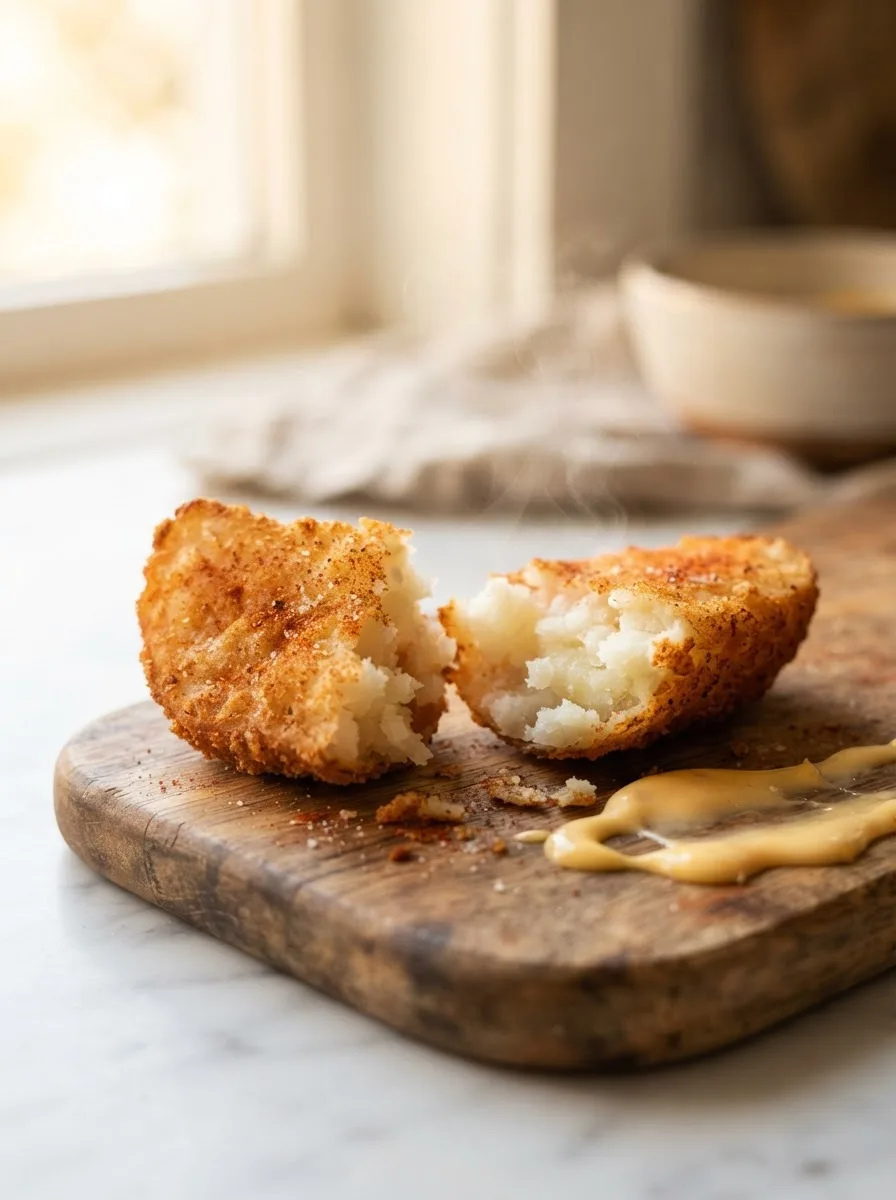
If you’ve ever ordered potato olés at a drive-through and then tried to recreate them at home, you already know the problem: the outside turns soft instead of crackly, and the cheese sauce breaks into a greasy puddle. I tested this recipe three times, changing only the cornstarch ratio, until I landed on the exact coating that stays crisp even after it sits in the cheese sauce for a minute.
The fix turned out to be smaller than I expected. It wasn’t the oil temperature or the potato variety — it was how much cornstarch went into the seasoned coating, and whether the wedges got fried once or twice.
This version gives you a shatter-crisp shell, a tender potato center, and a smooth queso that doesn’t separate as it cools.
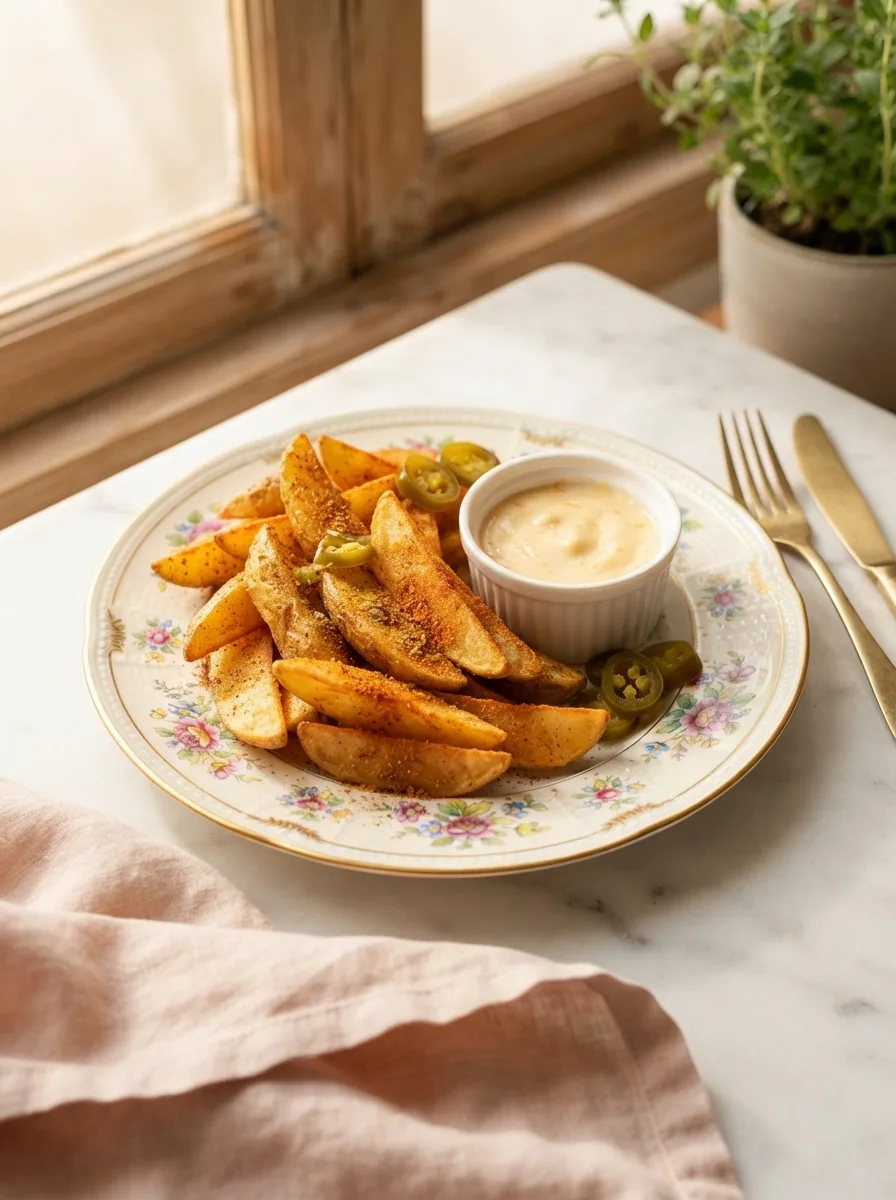
The result is a wedge that sounds crunchy the second you bite into it — not the muffled crunch of a slightly soggy fry, but a real, audible crack. The cheese sauce underneath stays glossy and pourable instead of clumping, which is the detail most copycat versions get wrong.
What makes this version different is the double-fry method borrowed from classic steak fries, paired with a cornstarch-heavy coating instead of flour. That combination is what gets you the crunch without a thick, batter-fried shell.
★★★★★ “I’ve tried three other potato olés recipes online and this is the first one where the coating didn’t fall off in the fryer. The cheese sauce recipe alone is worth bookmarking.” — Rachel M., recipe tester (pre-launch)
Why You’ll Love This Potato Olés Recipe
- Real crunch, not soggy crunch: The double-fry method locks in a crisp shell that holds up even after a few minutes in the cheese sauce.
- Better cheese sauce than the drive-through version: Made with real melting cheese and a touch of milk, it stays smooth instead of separating into an oily layer.
- No deep-fry thermometer required, but it helps: I’ll tell you the exact visual cues so you can judge oil temperature by sight if you don’t own one.
- Freezer-friendly: The coated, uncooked wedges freeze well, so you can fry a fresh batch anytime the craving hits.
Key Ingredients
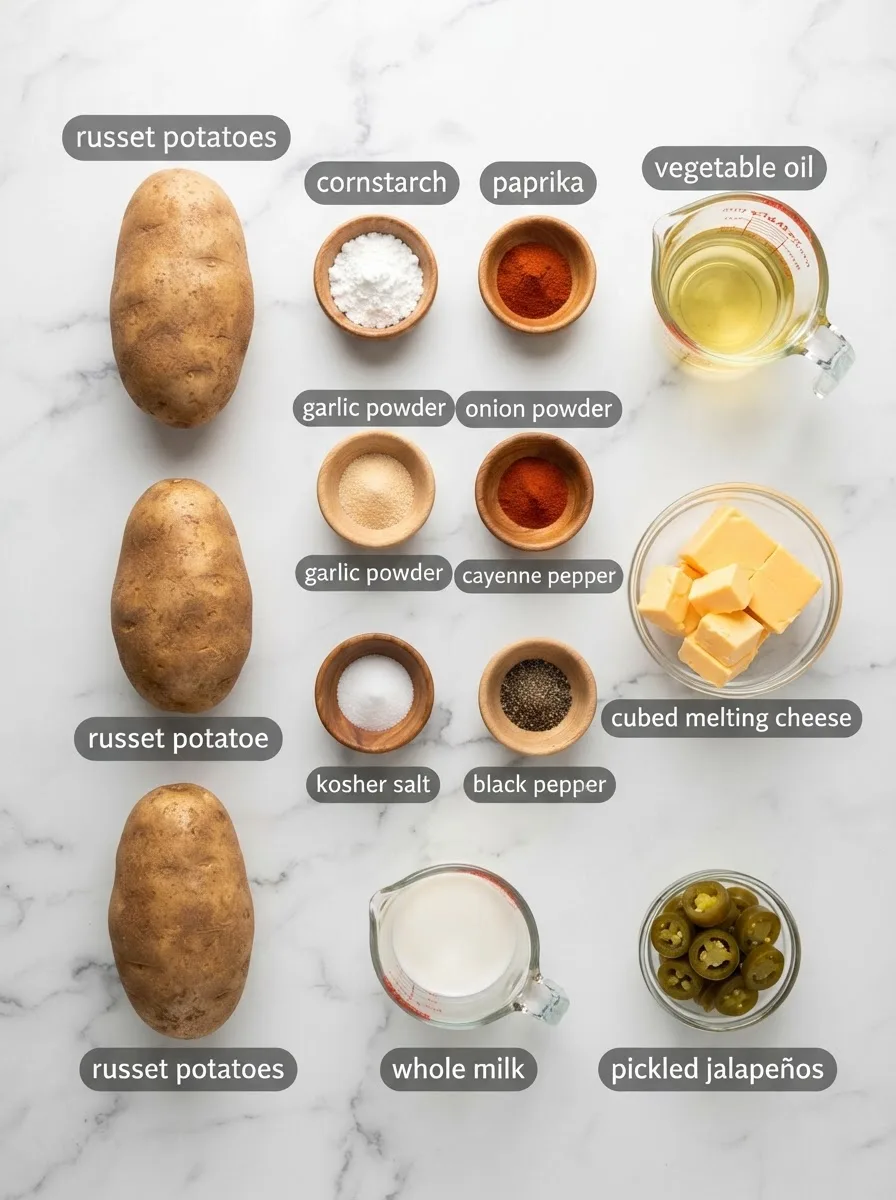
Russet potatoes (3 large, about 2 lbs). Russets have the starch content that fries up fluffy inside and crisp outside — waxy potatoes like red or Yukon gold won’t get the same texture. Cut into thick wedges, not thin fries; the wedge shape is what gives potato olés their signature bite.
Cornstarch (3 tablespoons). This is the ingredient that separates a crackly coating from a soft, floury one. Cornstarch fries up glassy and crisp, where all-purpose flour alone fries up softer and browns unevenly. Potato starch works as a 1:1 swap if that’s what you have.
Paprika, garlic powder, onion powder, cayenne. This is the seasoning blend that gives potato olés their reddish color and slight kick, closer to a fast-food seasoning salt than a plain fry seasoning. Adjust the cayenne up or down depending on how much heat you want.
Vegetable or peanut oil (for frying). Use a neutral oil with a high smoke point. Peanut oil fries slightly crisper and holds heat more evenly than vegetable oil, but either works.
Velveeta or American cheese (8 oz, cubed). Processed melting cheese is what keeps the sauce smooth as it cools — natural cheddar alone will seize into a grainy mess once it hits room temperature. If you want a more “real cheese” flavor, see the Variations section for a stabilized cheddar version.
Ingredient Note: Don’t skip patting the cut potatoes fully dry before coating them. Any surface moisture turns the cornstarch coating into a paste instead of a crisp shell, and that’s the single most common reason this recipe goes soft instead of crunchy.
Equipment You’ll Need
- Large pot or Dutch oven — for frying; a deep, heavy pot holds oil temperature more evenly than a shallow skillet.
- Instant-read or candy thermometer — helpful for hitting 325°F and 375°F precisely, though I’ll give you a visual cue if you don’t have one.
- Wire rack set over a sheet pan — for draining fried wedges without them turning soggy on paper towels.
- Large bowl — for tossing the potato wedges in the seasoned cornstarch coating.
Controlling the Crunch (A Controlled Test)
I tested this recipe three times, changing only the amount of cornstarch in the coating each round, to find the exact ratio that produces a shell you can hear crack.
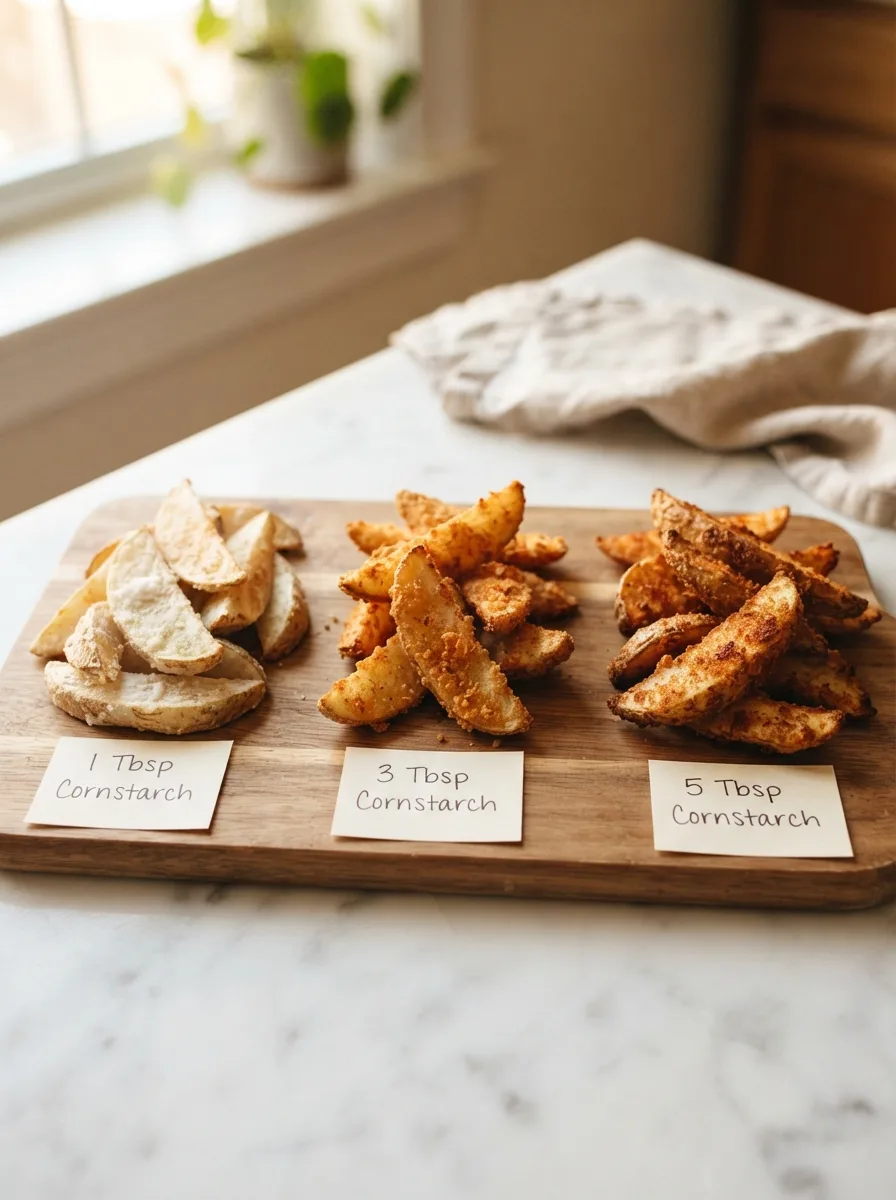
1 tablespoon cornstarch: The coating was nearly invisible after frying. The wedges browned unevenly and had almost no textural difference from a plain fried potato — disappointing given the whole point of this recipe.
5 tablespoons cornstarch: The coating went the other direction — thick, slightly pasty in spots where it clumped, and it browned darker than intended before the inside potato had fully cooked through.
3 tablespoons cornstarch (the winner): This is the amount in the recipe below. It coats the wedges in a thin, even layer that fries up glassy and crackly, without masking the potato underneath or browning too fast. The takeaway: more coating is not automatically more crunch — it’s about a thin, even layer plus the double fry.
How to Make Potato Olés
Before you start: Cut your potatoes into wedges of a similar size so they cook evenly, and make sure you have at least 30 minutes for the cold water soak — it’s what keeps the fries from turning gummy.
Step 1 — Cut and soak the potatoes
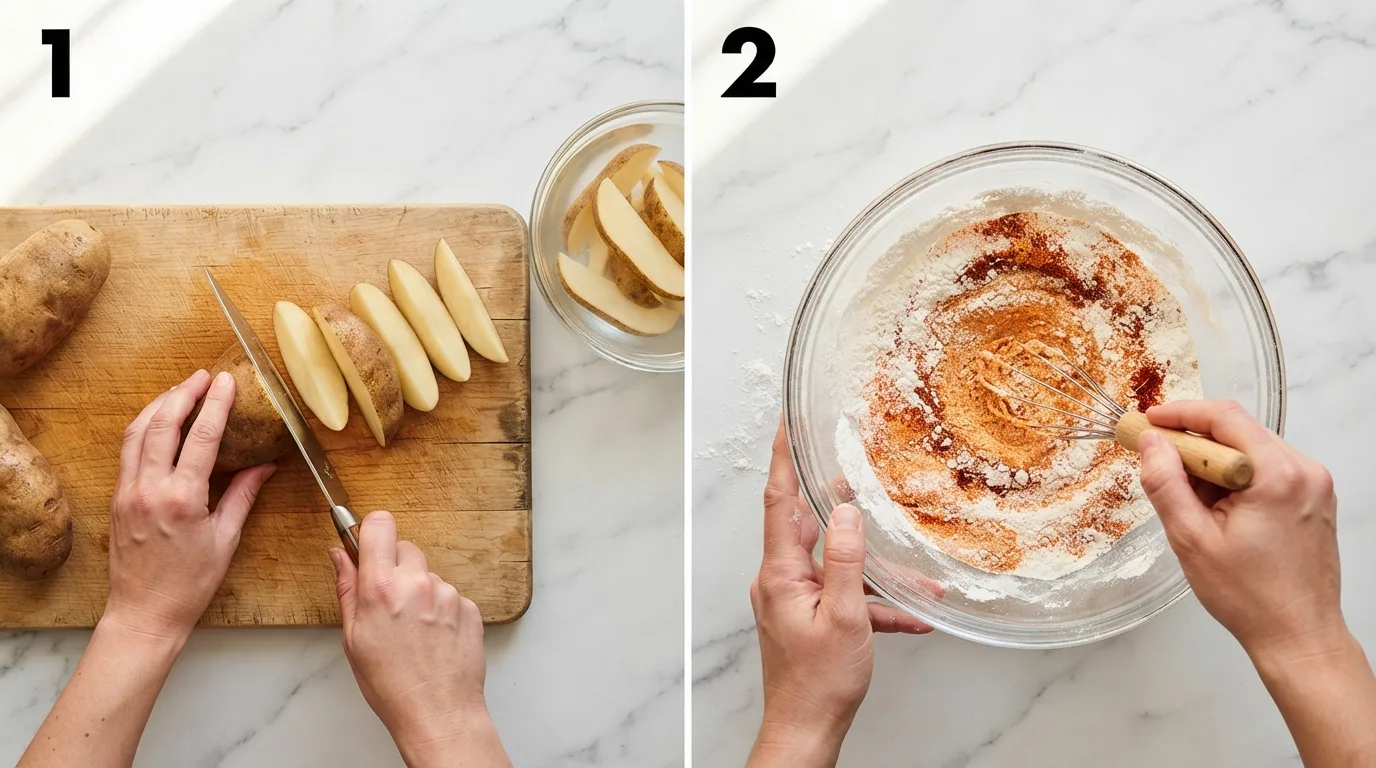
Scrub the russets and cut each one lengthwise into 6–8 thick wedges, about ¾ inch across at the widest point. Submerge the wedges in a bowl of cold water for at least 30 minutes (up to overnight in the fridge). This pulls out excess surface starch, which is part of what gives you a crisper exterior instead of a gummy one.
Step 2 — Mix the seasoned coating
While the potatoes soak, whisk together the cornstarch, paprika, garlic powder, onion powder, cayenne, salt, and pepper in a large bowl. The mixture should look like a fine, even reddish-orange powder with no clumps.
Step 3 — Dry and coat the wedges
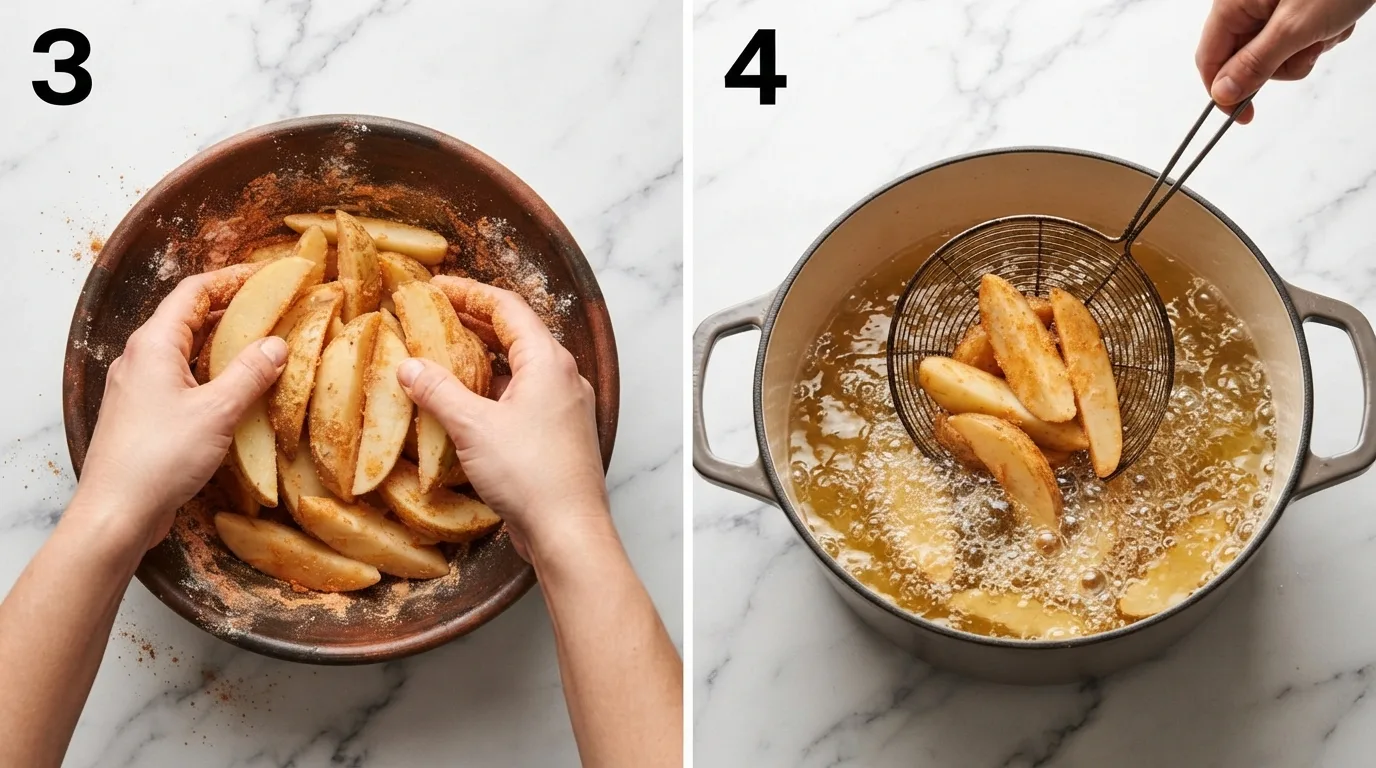
Drain the potatoes and pat them completely dry with a clean towel — this step matters more than any other in the recipe. Toss the dry wedges directly in the seasoned cornstarch mixture until every side is evenly coated, shaking off any excess.
Step 4 — First fry at a lower temperature
Heat about 3 inches of oil in a large pot to 325°F. Fry the coated wedges in batches for 4–5 minutes, until they’re pale gold and just barely set on the outside — they will not look finished yet, and that’s correct. Remove to the wire rack.
Step 5 — Second fry at a higher temperature
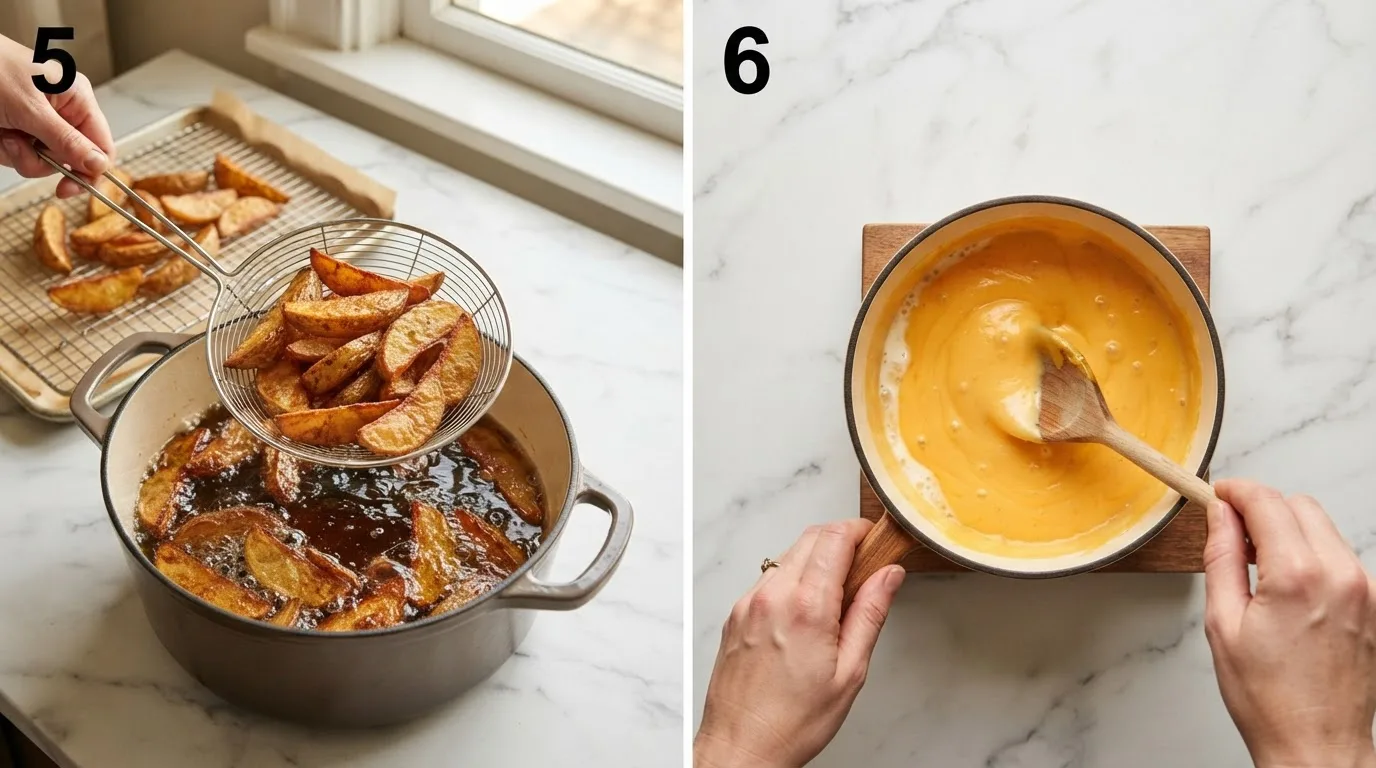
Let the oil come up to 375°F. Fry the wedges a second time for 2–3 minutes, until they’re deep golden brown and you can hear a faint crackle when you tap the pot with a metal spoon near them. This second fry is what actually creates the shatter-crisp shell — skipping it gives you a cooked-through but soft-shelled wedge.
Step 6 — Make the cheese sauce
While the second fry batches finish, melt the cubed cheese and milk together in a small saucepan over low heat, stirring constantly until smooth and glossy. Stir in the diced pickled jalapeños if using. Keep it on the lowest heat setting until ready to serve — it will thicken slightly as it sits.
Step 7 — Season and serve immediately
Sprinkle the hot wedges with a pinch more salt right off the fryer — this is when seasoning sticks best. Pour the warm cheese sauce over the top or serve it on the side for dipping. Serve right away; potato olés are at their crunchiest in the first 5–10 minutes.
Pro Tips for Perfect Potato Olés
Tip 1: Don’t skip the cold water soak. Soaking pulls surface starch out of the potato, which is a big part of why these fry up crisp instead of gummy. Thirty minutes is the minimum; overnight in the fridge works even better.
Tip 2: Fry in small batches. Overcrowding the pot drops the oil temperature fast, and the wedges end up steaming instead of frying — that’s the difference between crisp and soggy.
Tip 3: Season immediately after frying, not before. Salt sticks to hot, oily surfaces far better than it does after the wedges have cooled and the surface has set.
Tip 4: Keep the cheese sauce on low heat, not off entirely. If it sits off the heat too long, it starts to firm up and separate slightly. A very low simmer keeps it pourable the whole time you’re serving.
Variations and Substitutions

Dietary Variations:
- Gluten-free: This recipe is already gluten-free as written, since cornstarch replaces flour entirely. Double-check your cheese product’s label, as some processed cheeses use trace additives that vary by brand.
- Dairy-free: Swap the cheese sauce for a dairy-free cheddar-style shred melted with a splash of unsweetened dairy-free milk and a pinch of cornstarch to help it stay smooth.
Flavor Variations:
- Extra spicy: Double the cayenne and stir extra diced pickled jalapeños or a spoonful of the jalapeño brine directly into the cheese sauce.
- Smoky version: Swap the paprika for smoked paprika and add ¼ teaspoon of chili powder to the coating.
Ingredient Substitutions:
- Velveeta → sharp cheddar whisked with 1 teaspoon cornstarch and the milk over low heat, for a more “real cheese” flavor that still stays smooth
- Vegetable oil → peanut oil or avocado oil, both work well for high-heat frying
If you love potatoes done a totally different way, my cheesy ranch potatoes and sausage is a one-pan dinner version that uses a similar seasoning profile without any frying involved.
Troubleshooting
Why did my potato olés turn out soggy instead of crispy?
This almost always comes down to one of two things: the potatoes weren’t dried thoroughly before coating, or the oil temperature dropped too low because too many wedges went in at once. Fry in smaller batches and give the oil time to come back up to temperature between rounds.
Why is my cheese sauce grainy or separated?
Natural cheddar cheese melted on its own will seize and separate as it cools — that’s a property of the cheese, not a mistake in your technique. Stick with a processed melting cheese like Velveeta, or stabilize natural cheese with a small amount of cornstarch as described in the Variations section.
Why did the coating fall off some of my wedges in the fryer?
This usually means the potatoes were still a little wet when you tossed them in the cornstarch mixture, which turns the coating into clumps that slide off in hot oil instead of adhering evenly. Pat the wedges fully dry — surface-dry, not just drained — before coating.
Storage and Make-Ahead
Counter: Potato olés are best eaten fresh within 10–15 minutes of frying; they lose their crunch quickly at room temperature.
Refrigerator: Store leftover fried wedges in an airtight container for up to 3 days. Store the cheese sauce separately in its own container for up to 4 days.
Freeze (uncooked, coated wedges): Freeze the coated but unfried wedges in a single layer on a sheet pan until solid, then transfer to a freezer bag for up to 2 months. Fry straight from frozen, adding 1–2 extra minutes to each fry stage.
Reheating: Reheat leftover fried wedges in a 400°F oven or air fryer for 6–8 minutes to restore crispness. Microwaving will make them soft.
Make-Ahead: The cheese sauce can be made up to 2 days ahead and reheated gently over low heat with a splash of milk to loosen it back up.
Frequently Asked Questions
Q: What are potato olés? A: Potato olés are seasoned, crispy potato wedges — popularized by fast-food chains like Taco Bueno and Sonic — typically served with a warm nacho-style cheese sauce for dipping.
Q: Can I bake these instead of frying? A: Yes, though the texture will be less crisp. Toss the coated wedges in a thin layer of oil and bake at 425°F for 25–30 minutes, flipping halfway, for the closest oven result.
Q: Can I make potato olés in an air fryer? A: Yes. Air fry the coated wedges at 400°F for 16–20 minutes, shaking the basket halfway through. They won’t be quite as crackly as the double-fried version, but they’re close.
Q: What cheese is used for the dipping sauce? A: Most copycat versions use Velveeta or American cheese because it melts smoothly and doesn’t separate as it cools, unlike natural cheddar melted on its own.
Q: Can I make the wedges ahead of time? A: You can prep and coat the wedges up to a day ahead and refrigerate them uncooked, or freeze them per the Storage section. Fry them fresh right before serving for the best crunch.
Q: Are potato olés gluten-free? A: As written, yes — the coating uses cornstarch instead of flour. Just confirm your specific cheese product doesn’t contain gluten-based additives.
Q: Why do you fry the wedges twice? A: The first fry at a lower temperature cooks the potato through without over-browning the coating. The second fry at a higher temperature is what creates the deep golden color and audible crunch.
Q: Can I use a different potato variety? A: Russets work best because of their starch content. Waxy potatoes like red or Yukon gold will fry up softer and less fluffy on the inside.
More Potato and Comfort Food Recipes You’ll Love
- Cheesy Ranch Potatoes and Sausage — a one-pan potato dinner with the same warm, savory seasoning profile
- Dolly’s Chicken and Stuffing Casserole — a cozy, make-ahead-friendly comfort dinner
- Cheesecake Bread — a sweet swirled loaf if you want something to bake after dinner
- Banana Tempura — another crispy-fried favorite, if you loved the double-fry crunch here

Crispy Potato Olés Recipe
Ingredients
For the Potato Wedges:
- 3 large russet potatoes (about 2 lbs), cut into thick wedges
- 3 tablespoon cornstarch
- 1 teaspoon paprika
- 1 teaspoon garlic powder
- 1/2 teaspoon onion powder
- 1/4 teaspoon cayenne pepper
- 1 teaspoon kosher salt, plus more for finishing
- 1/2 teaspoon black pepper
- 4 cup vegetable or peanut oil, for frying
For the Cheese Sauce:
- 8 oz Velveeta or American cheese, cubed
- 1/4 cup whole milk
- 2 tablespoon diced pickled jalapeños (optional)
- Pinch of ground cumin (optional)
Instructions
- Cut the potatoes into thick wedges and submerge in cold water for at least 30 minutes.
- Whisk the cornstarch, paprika, garlic powder, onion powder, cayenne, salt, and pepper together in a large bowl.
- Drain the potatoes and pat completely dry, then toss in the seasoned cornstarch mixture until evenly coated.
- Heat oil to 325°F in a large pot and fry the wedges in batches for 4–5 minutes, until pale gold. Transfer to a wire rack.
- Increase the oil to 375°F and fry the wedges a second time for 2–3 minutes, until deep golden brown and audibly crisp.
- While the second fry finishes, melt the cheese and milk together in a small saucepan over low heat, stirring until smooth. Stir in jalapeños if using.
- Sprinkle the hot wedges with extra salt immediately after frying, then serve with the warm cheese sauce for dipping.
Notes
- Pat the potatoes fully dry before coating — surface moisture is the number one cause of a coating that doesn’t crisp up.
- Fry in small batches; overcrowding drops the oil temperature and results in soggy wedges.
- Freeze uncooked, coated wedges on a sheet pan, then transfer to a freezer bag for up to 2 months; fry straight from frozen.
- Natural cheddar will separate as it cools — stick with a processed melting cheese for the smoothest sauce.
- Reheat leftovers in the oven or air fryer, not the microwave, to bring back the crunch.
- Cornstarch can be swapped 1:1 with potato starch if that’s what you have on hand.
- The cheese sauce can be made up to 2 days ahead and gently reheated with a splash of milk.
- For a milder version, omit the cayenne and jalapeños entirely — the seasoning blend still works without the heat.