Foolproof Ika Sansai (Ika Salad)

If you’ve only ever had ika sansai at a sushi counter, you’ve probably assumed it belongs there — that the squid stays impossibly tender because of some restaurant trick you don’t have at home. I thought the same thing until my first batch turned into little rubber bands. The fix wasn’t a trick. It was timing.
I tested this three times, changing only how long the squid stayed in boiling water. One batch went in a full minute too long and turned chewy in a bad way. The version below is the one that came out tender every single time — the same texture you get when you order ika salad at an izakaya.
If you like this, you might also like my cheesecake bread for something sweeter after dinner.
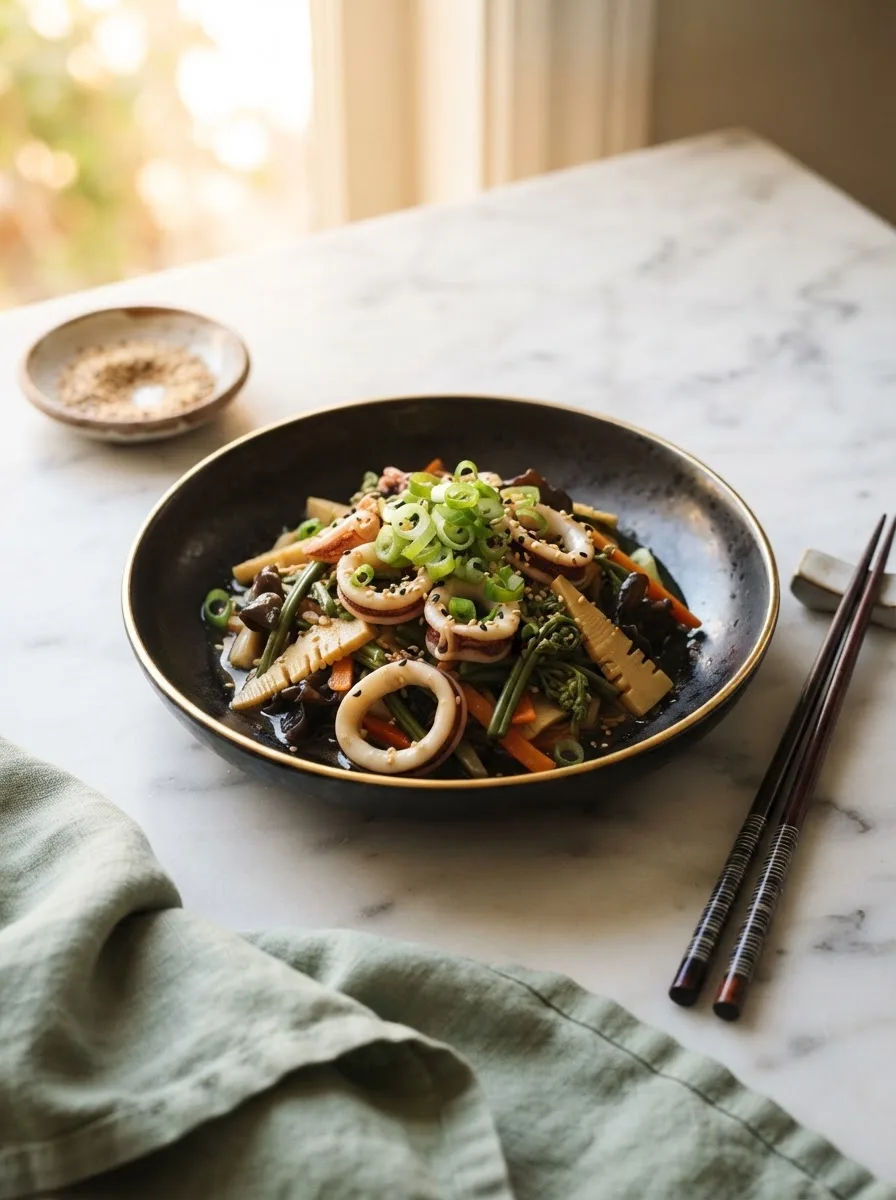
What makes this version different is the dressing ratio — most recipes lean too sweet, which drowns out the mountain vegetables. This one keeps the soy sauce front and center, with just enough sugar and mirin to round out the edges. The result tastes closer to what you’d get at a real izakaya than anything I’ve made from a bottled dressing packet.
★★★★★ “I’ve ordered ika sansai at Japanese restaurants for years and always assumed the squid texture was impossible to replicate at home. This recipe proved me wrong on the first try.” — Michael R., recipe tester (pre-launch)
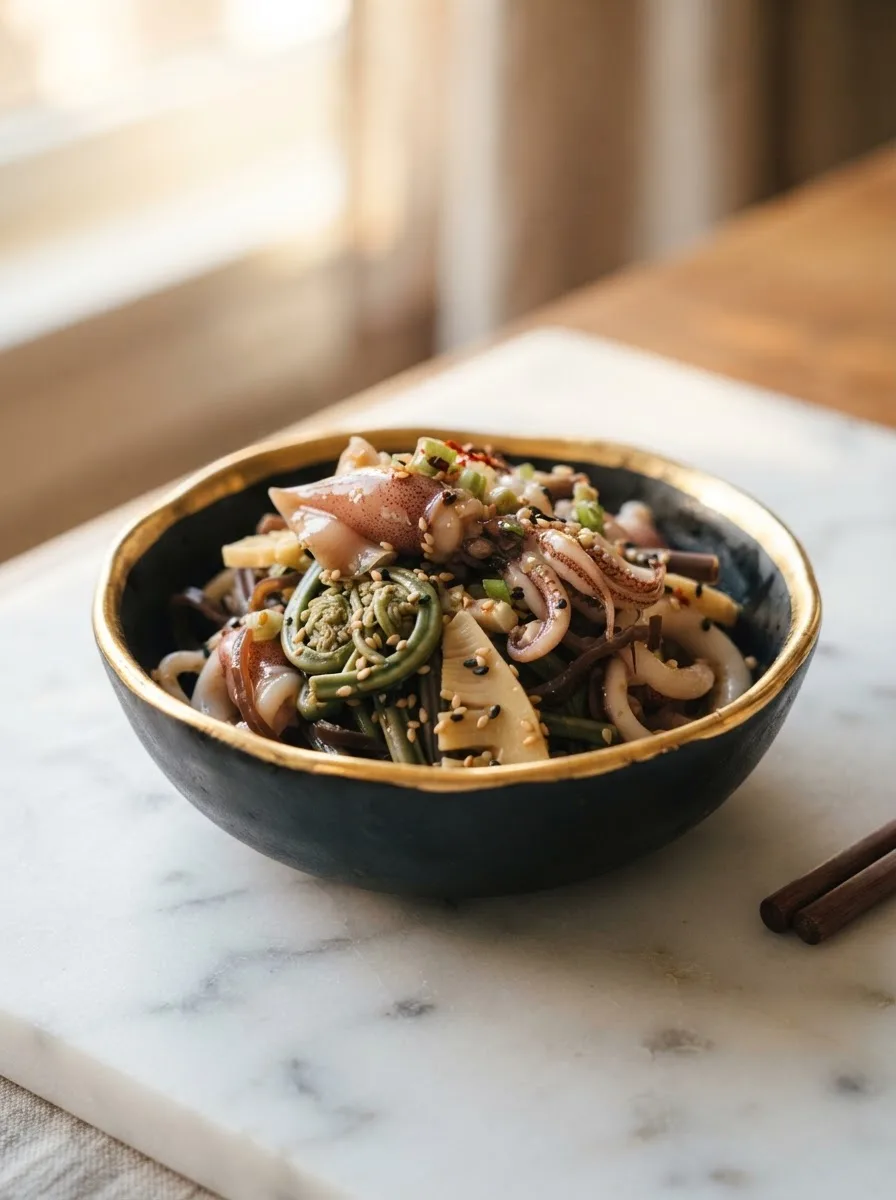
Why You’ll Love This Ika Sansai (Ika Salad)
- Tender squid, every time: The boil time below is the exact window I tested — long enough to cook through, short enough to stay tender instead of rubbery.
- Real izakaya flavor: The dressing is soy-forward with just a touch of sweetness, not the overly sugary version bottled dressings often push.
- Ready in 20 minutes: Most of the work is boiling squid and whisking a dressing — no special technique required.
- Naturally light: This is a cold, protein-forward salad with no heavy oil or mayo, which makes it a good contrast to richer dishes like cheesy ranch potatoes and sausage.
Key Ingredients
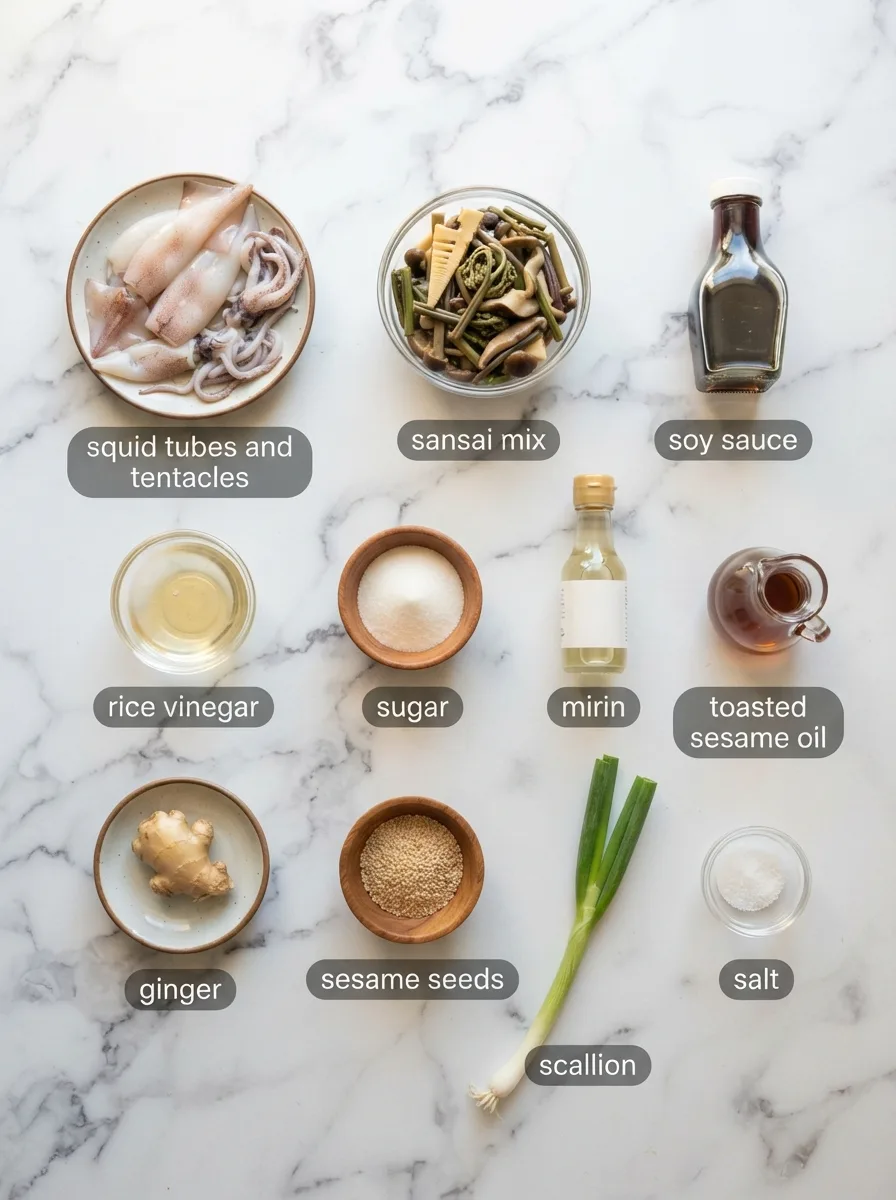
Squid (1 lb / 450g, cleaned). Fresh or thawed frozen squid both work. Look for tubes that are firm and pearly white, not gray or slimy. Frozen squid, thawed overnight in the fridge, is what I used for all three test batches — it’s more consistent than “fresh” squid that’s often been previously frozen anyway.
Sansai mix (1 cup / 150g). This is the mountain vegetable blend that gives ika sansai its name — usually a mix of bamboo shoots, fern shoots (zenmai), and mushrooms like nameko. Look for it in the refrigerated or frozen section of a Japanese grocery store, often labeled simply “sansai.” If you can’t find it, substitute a mix of sliced bamboo shoots and enoki mushrooms — the texture is close enough that most people won’t notice.
Rice vinegar. Used twice here — once in the boiling water (it keeps the squid from toughening as fast) and once in the dressing. Don’t substitute white vinegar; it’s sharper and will throw off the balance.
Mirin. This is what rounds out the dressing without making it taste like straight sugar. If you don’t have it, use 1 teaspoon sugar dissolved in 1 teaspoon water instead — it’s not identical, but it’s close.
Toasted sesame oil. A little goes a long way. Regular (untoasted) sesame oil doesn’t have the same nutty depth and will leave the dressing tasting flat.
Ingredient Note: Do not use squid that’s already been cooked (like pre-cooked squid rings from the freezer aisle) — it will overcook again the moment it hits boiling water and turn tough no matter how carefully you time it.
Equipment You’ll Need
- Medium pot — for boiling the squid. Any pot big enough to submerge the pieces works.
- Ice bath (bowl of ice water) — stops the cooking the instant the squid comes out. Skipping this is the single biggest cause of rubbery squid.
- Fine mesh strainer — for draining the squid and sansai mix quickly.
- Small whisk or fork — for the dressing. No special tools needed.
Controlling Squid Texture (A Controlled Test)
The one variable that determines whether ika sansai turns out tender or rubbery is boil time. I ran this test three times, changing only the number of seconds the squid stayed in boiling water.
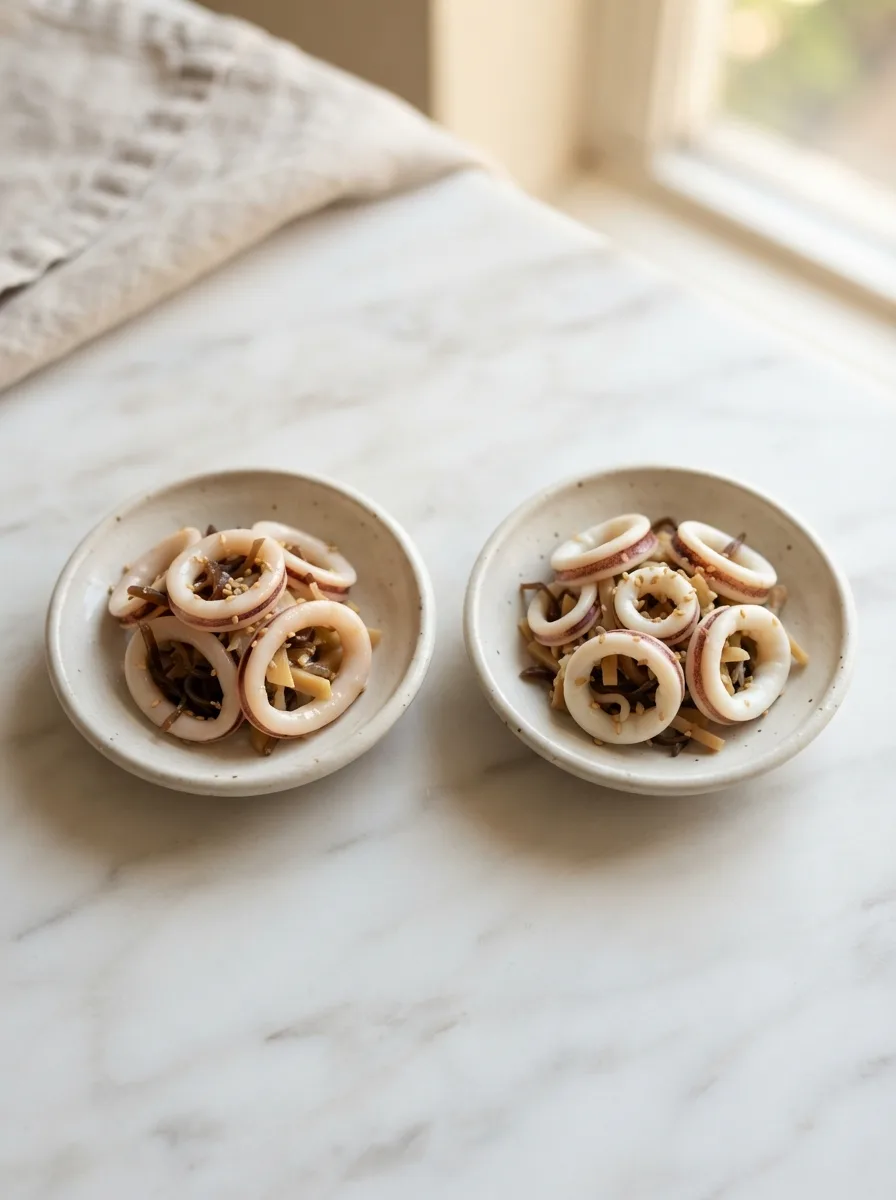
1 minute (undercooked): The squid was still slightly translucent in the thickest part of the tube and had a soft, almost raw bite. Not unsafe, just not fully cooked through.
1.5–2 minutes (the sweet spot): Squid turned fully opaque, curled slightly at the edges, and had a clean, tender bite — this is the window used in the recipe below.
2.5 minutes (overcooked): The squid tightened up noticeably, turning chewy and slightly rubbery. This is the mistake I made on my first attempt, and it’s the most common reason people say they don’t like squid texture at all.
The takeaway: Set a timer. 90 seconds to 2 minutes, then straight into the ice bath. Squid keeps cooking from residual heat for a few seconds even after it’s out of the pot, so the ice bath isn’t optional — it’s what locks in the tender texture.
How to Make Ika Sansai
Before you start: Have your ice bath ready in a bowl before you even start boiling water. You’ll need it within seconds of pulling the squid out.
Step 1 — Prep the squid
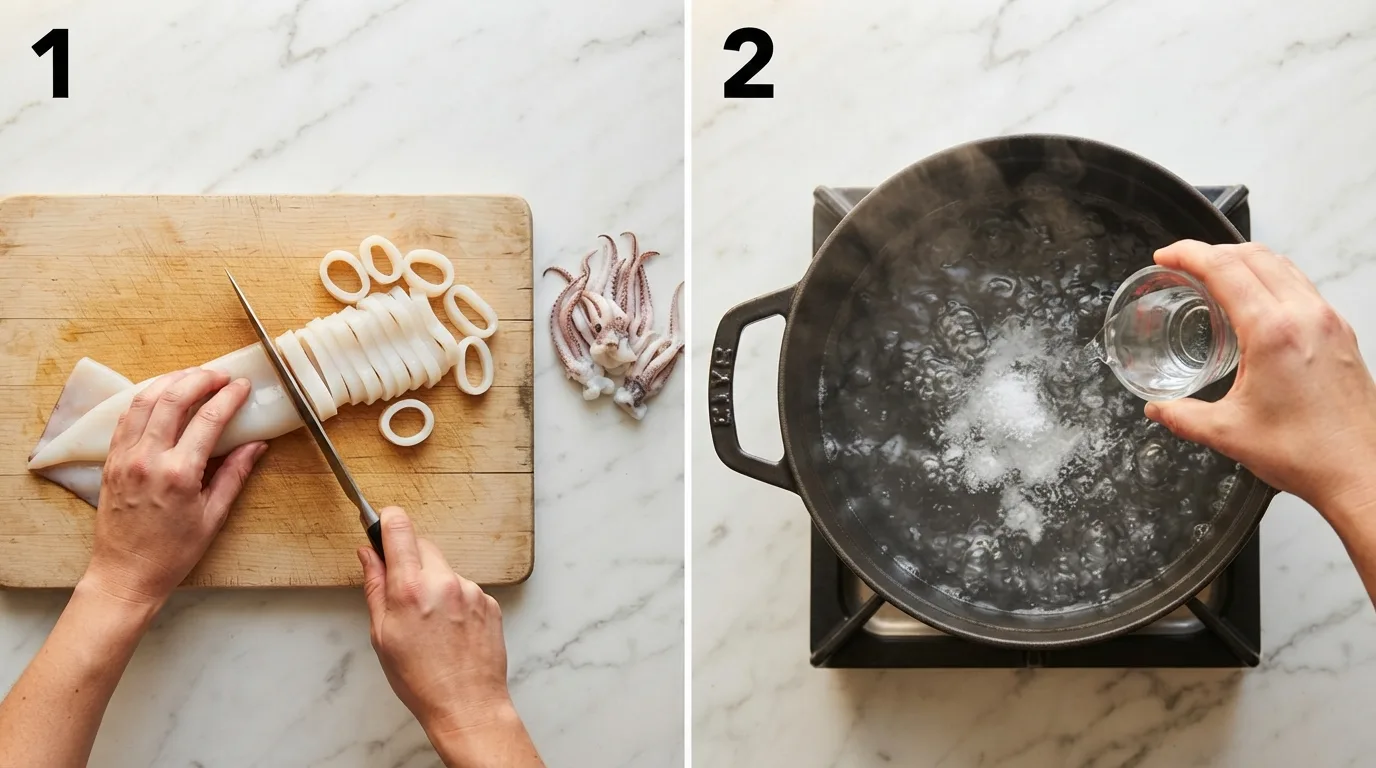
Rinse the squid tubes and tentacles under cold water and pat dry. If the tubes aren’t already cut, slice them into rings about ½ inch thick. Leave the tentacles whole or cut them into smaller clusters if they’re large.
Step 2 — Boil the squid
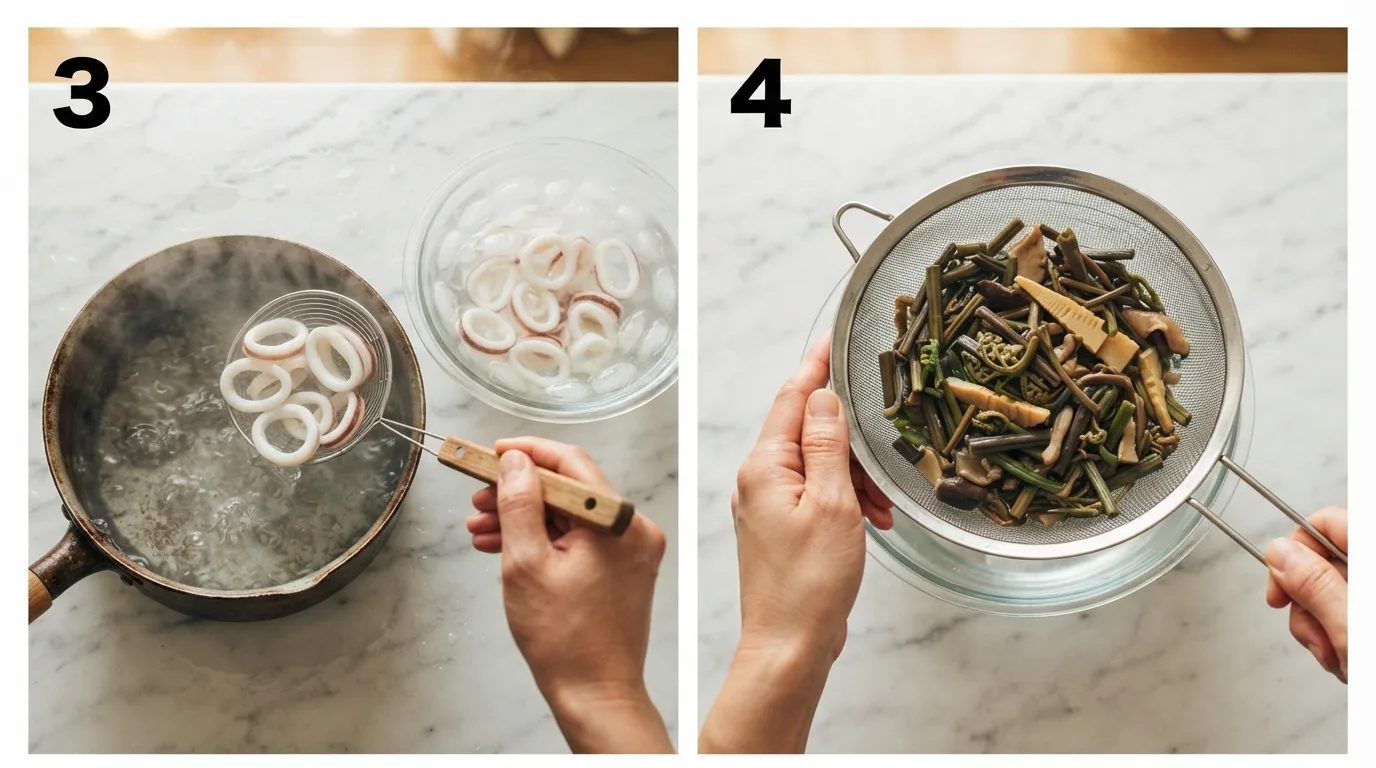
Bring a pot of water to a rolling boil with 1 teaspoon salt and 1 teaspoon rice vinegar. Drop in the squid rings and tentacles and boil for 90 seconds to 2 minutes, until fully opaque and just curled at the edges. Don’t walk away — this window is short.
Step 3 — Shock in ice water
Immediately transfer the squid to your ice bath using a slotted spoon or strainer. Let it sit for 1–2 minutes until fully cooled, then drain well. This step stops the cooking and is what keeps the texture tender instead of tightening up.
Step 4 — Drain the sansai mix
While the squid cools, drain the sansai mix through a fine mesh strainer and pat it dry with paper towels. Excess liquid here will water down your dressing, so don’t skip drying it.
Step 5 — Make the dressing
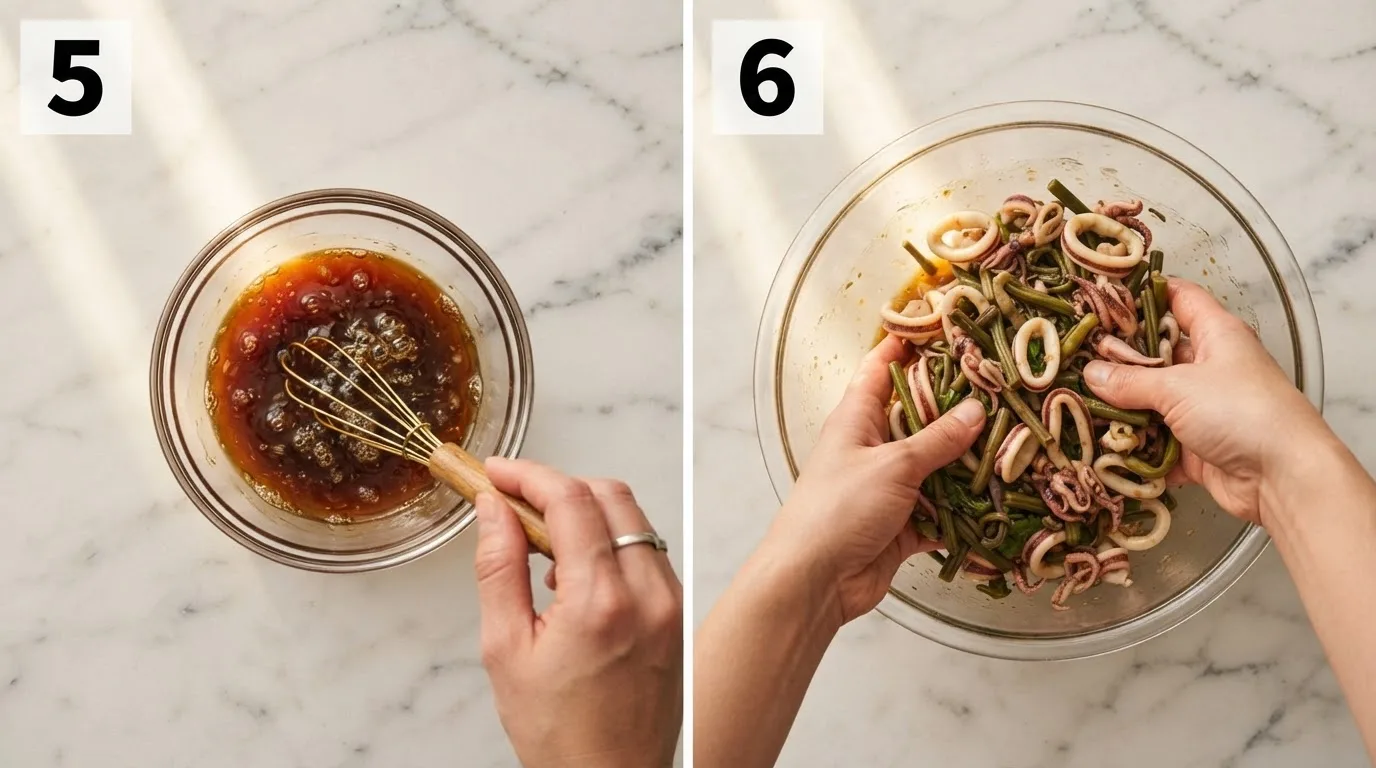
In a small bowl, whisk together the soy sauce, rice vinegar, sugar, mirin, toasted sesame oil, and grated ginger until the sugar dissolves.
Step 6 — Toss and chill
Combine the drained squid, sansai mix, and dressing in a large bowl and toss gently until everything is coated. Chill for at least 15 minutes — this gives the flavors time to settle into the squid.
Step 7 — Garnish and serve
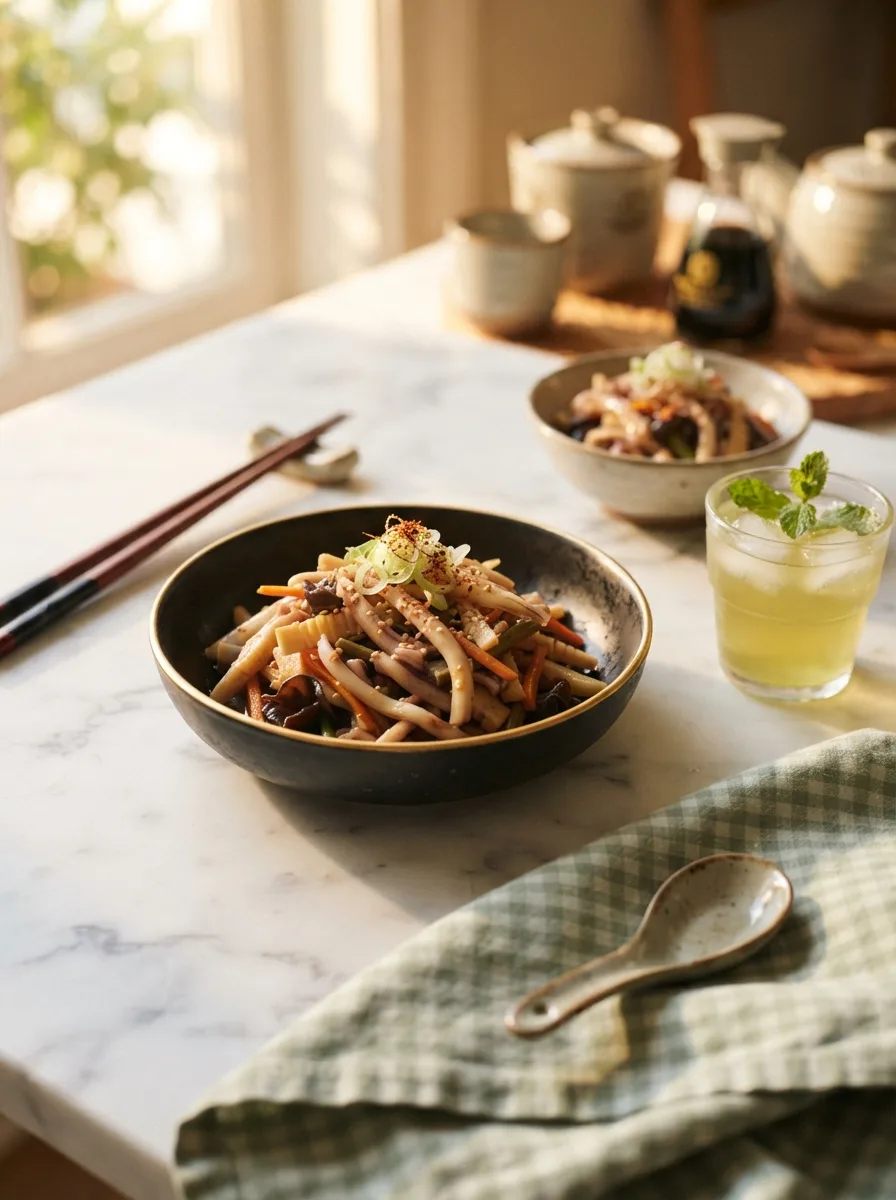
Just before serving, top with sliced scallion and a sprinkle of toasted sesame seeds. Serve cold, straight from the fridge.
Pro Tips for Perfect Ika Sansai
Tip 1: Time the boil, don’t eyeball it. Squid goes from tender to rubbery in about 30 seconds of overcooking. Use a timer, not a guess.
Tip 2: Dry every component before mixing. Wet squid and wet sansai mix both dilute the dressing. Pat everything dry with paper towels before tossing.
Tip 3: Chill before serving, not right after mixing. The dressing needs at least 15 minutes to soak into the squid. Serving immediately tastes noticeably flatter.
Tip 4: Taste your sansai mix before dressing. Some brands come pre-seasoned with a light broth. If yours does, cut the soy sauce in the dressing by about a third so the salad doesn’t end up too salty.
Variations and Substitutions
Dietary Variations:
- Gluten-free: Swap the soy sauce for tamari or a certified gluten-free soy sauce — the flavor stays nearly identical.
- Lower sodium: Cut the soy sauce by a third and add a splash more rice vinegar to keep the balance.
Flavor Variations:
- Spicy version: Add ½ teaspoon of chili oil or a pinch of shichimi togarashi to the dressing for heat.
Ingredient Substitutions:
- No sansai mix available? Use sliced bamboo shoots plus enoki or shiitake mushrooms in similar proportions.
- No mirin? Use 1 teaspoon sugar dissolved in 1 teaspoon water.
If you’re building out a full Japanese-inspired spread, banana tempura makes a fun, unexpected dessert pairing after a cold, savory salad like this one.
Troubleshooting
Why is my squid rubbery?
Most likely it boiled too long. Squid goes from tender to tough in a narrow window — stick to 90 seconds to 2 minutes, and get it into an ice bath the second it comes out.
Why does my dressing taste flat?
This usually means the squid or sansai mix wasn’t dried well before mixing. Excess water dilutes the dressing. Pat both dry with paper towels before combining.
Why is my salad too salty?
Some brands of sansai mix come pre-seasoned. If yours does, reduce the soy sauce in the dressing by about a third next time, or rinse the sansai mix briefly before draining.
Storage and Make-Ahead
Counter: Do not leave ika sansai at room temperature for more than 30 minutes — this is a cold seafood salad and should stay chilled.
Refrigerator: Store in an airtight container for up to 2 days. The flavor actually improves slightly on day 1 as the dressing settles in further.
Freeze: Not recommended. Freezing after cooking changes the squid’s texture significantly and it will turn mushy once thawed.
Reheating: This is a cold dish and isn’t meant to be reheated. Serve straight from the fridge.
Make-Ahead: You can boil and chill the squid up to a day ahead, then store it separately from the dressed sansai mix. Toss everything together with the dressing no more than a few hours before serving for the best texture.
Frequently Asked Questions
Q: Is ika sansai the same as ika salad? A: Yes — “ika sansai” refers specifically to squid (ika) tossed with sansai mountain vegetables, while “ika salad” is often used as a general English term for the same dish at sushi restaurants and izakayas.
Q: Can I use frozen squid? A: Yes, and I actually prefer it. Thaw it overnight in the fridge, pat it very dry, and it works exactly the same as fresh squid in this recipe.
Q: What is sansai exactly? A: Sansai means “mountain vegetables” in Japanese — typically a mix of bamboo shoots, fern shoots (zenmai), and mushrooms, usually sold pre-seasoned in a light broth in the refrigerated section of Japanese grocery stores.
Q: Can I make this ahead for a party? A: Yes. Boil and chill the squid up to a day ahead, then toss with the dressing and sansai mix a few hours before serving so the texture stays at its best.
Q: Is ika sansai served warm or cold? A: Always cold. It’s meant to be a chilled appetizer or side dish, similar to how you’d serve a cold pasta salad.
Q: Can I substitute octopus for squid? A: Yes, though octopus needs a longer cook time to become tender — typically 20–30 minutes of simmering rather than the 90 seconds to 2 minutes used for squid here.
Q: Why did my squid curl up so tightly? A: Tight curling is a sign of slightly overcooked squid. It’s still safe to eat, but next time pull it a few seconds earlier.
More Recipes You’ll Love
- Cheesecake Bread — a sweet, dessert-style bread that makes a nice contrast after a savory, cold salad like this one.
- Dolly’s Chicken and Stuffing Casserole — a warm, comforting main if you want to round out a full meal.
- Cheesy Ranch Potatoes and Sausage — a hearty, rich side that pairs well with something light like ika sansai.
- Banana Tempura — a fun, crispy dessert to close out a Japanese-inspired dinner.

Foolproof Ika Sansai (Ika Salad)
Ingredients
For the Squid:
- 1 lb squid, cleaned, tubes sliced into ½-inch rings, tentacles separated
- 1 tsp salt (for boiling water)
- 1 tsp rice vinegar (for boiling water)
For the Salad:
- 1 cup prepared sansai mountain vegetable mix, drained and patted dry
For the Dressing:
- 2 tbsp soy sauce
- 1 tbsp rice vinegar
- 1 tsp sugar
- 1 tsp mirin
- 1 tsp toasted sesame oil
- 1/2 tsp grated fresh ginger
For Garnish:
- 1 scallion, thinly sliced
- 1 tsp toasted white sesame seeds
Instructions
- Rinse the squid and pat dry. Slice tubes into ½-inch rings; leave tentacles whole or cut into smaller clusters.
- Bring a pot of water to a rolling boil with 1 teaspoon salt and 1 teaspoon rice vinegar.
- Drop in the squid and boil for 90 seconds to 2 minutes, until opaque and just curled at the edges.
- Immediately transfer the squid to an ice bath using a slotted spoon. Let it cool for 1–2 minutes, then drain well.
- Drain the sansai mix through a fine mesh strainer and pat dry with paper towels.
- In a small bowl, whisk together the soy sauce, rice vinegar, sugar, mirin, toasted sesame oil, and ginger until the sugar dissolves.
- Combine the drained squid and sansai mix in a large bowl. Pour over the dressing and toss gently to coat.
- Chill for at least 15 minutes before serving.
- Garnish with sliced scallion and toasted sesame seeds just before serving.
Notes
- Squid overcooks quickly — stick to the 90-second to 2-minute boil window and shock it in ice water immediately for the most tender texture.
- Store leftovers in an airtight container in the refrigerator for up to 2 days; this salad is not freezer-friendly, as the squid texture breaks down after thawing.