Drunken Shrimp Cooper’s Hawk Copycat (Tested)

If you’ve ever ordered the drunken shrimp cooper’s hawk at the restaurant and then spent the next week trying to figure out what was actually in that sauce, you’re not alone. It looks simple — shrimp, some garlic, a little wine — but the sauce has a richness that doesn’t come from just tossing things in a pan. I ordered it three separate times before I started taking notes on my phone between bites, which is a strange thing to admit but is exactly how this recipe started.
I tested this at home four times. The first batch was too thin and tasted mostly like wine. The second batch broke — the butter separated into greasy pools instead of clinging to the shrimp. The third batch got it right, and the fourth confirmed it wasn’t a fluke. The fix that mattered most was reducing the wine before the butter ever goes in, which sounds obvious once you know it and is very easy to skip when you’re rushing.
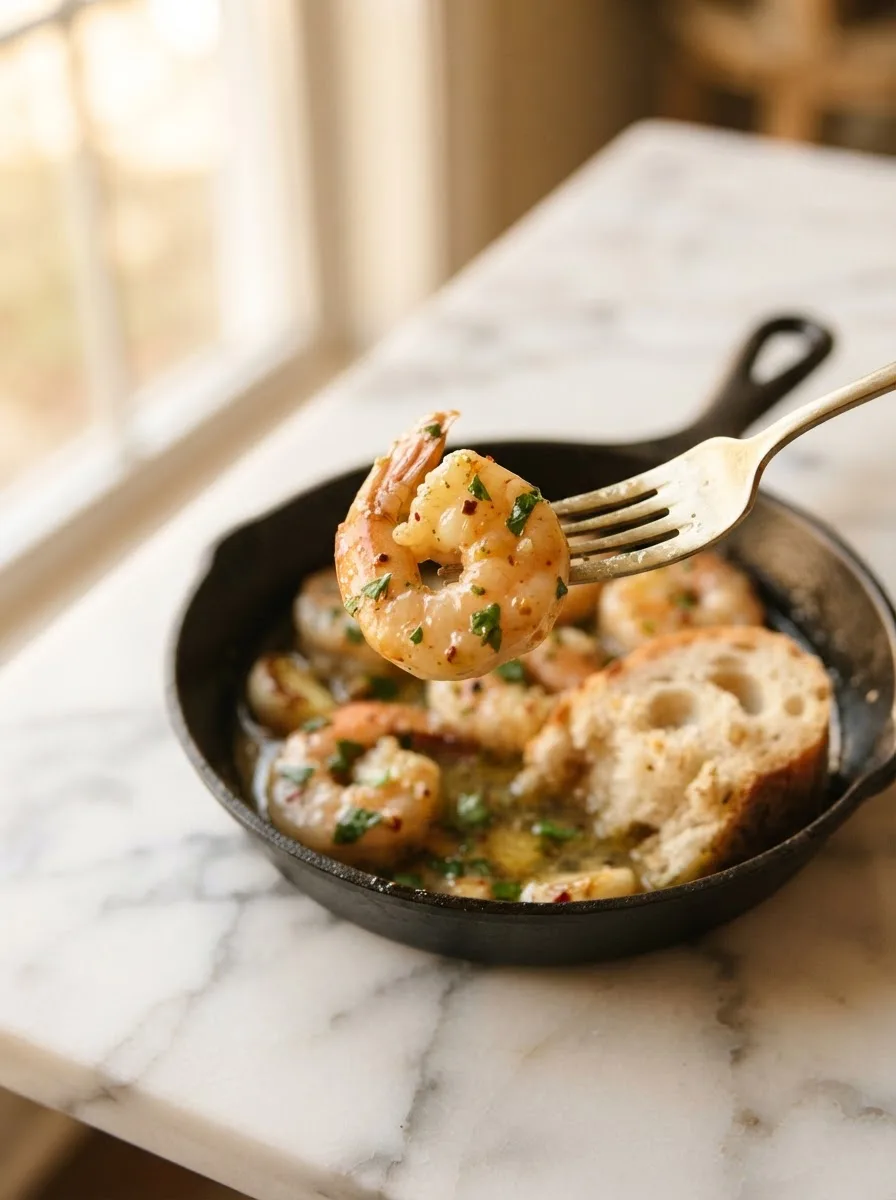
What you get from this version is a glossy, savory sauce that coats the shrimp instead of pooling under them, with just enough garlic and crushed red pepper to make you reach for another piece of bread. Speaking of bread — you’ll want a full loaf on hand, because the sauce disappears fast.
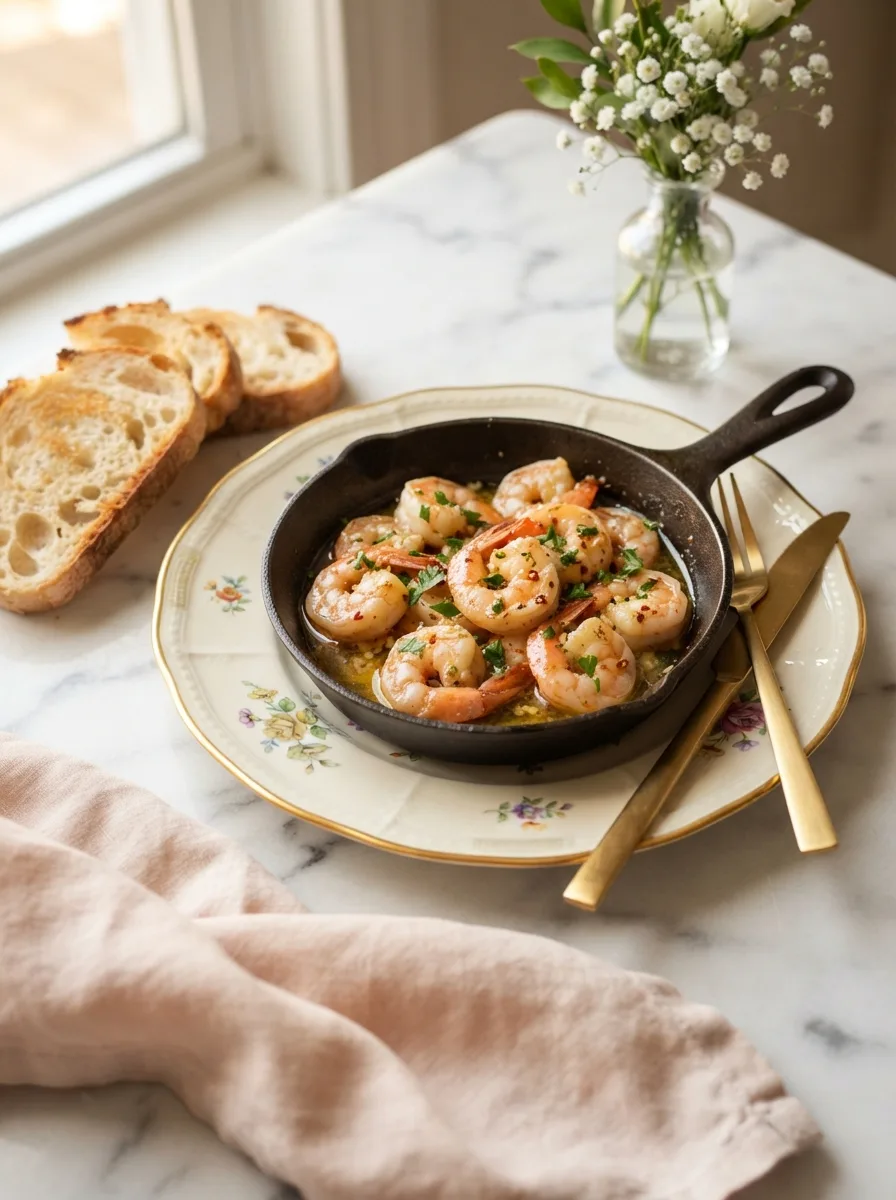
The version below skips nothing from the original — the shallot, the wine, the lemon at the very end to brighten it back up — but it’s scaled for a home stovetop and a single 12-inch skillet, so you’re not juggling multiple pans to get restaurant results.
★★★★★ “I made this for my husband’s birthday dinner as a starter and he asked if I’d gotten it from Cooper’s Hawk. The sauce is the whole point — don’t skip the bread.” — Renata M., recipe tester (pre-launch)
Why You’ll Love This Drunken Shrimp Cooper’s Hawk Copycat
- One skillet, twenty-five minutes: From cold shrimp to the table, this doesn’t take longer than it takes to toast the bread and set the table.
- The sauce is the real star: This isn’t a shrimp recipe with sauce on the side — it’s a sauce recipe that happens to have shrimp in it. Every step protects that sauce.
- Tested until it stopped breaking: I ruined two batches figuring out why the butter separated. You get the fix already built in.
- Restaurant flavor without restaurant tools: No sous vide, no clarified butter, no reduction that takes an hour. Just a hot pan and a little patience with the wine.
Key Ingredients
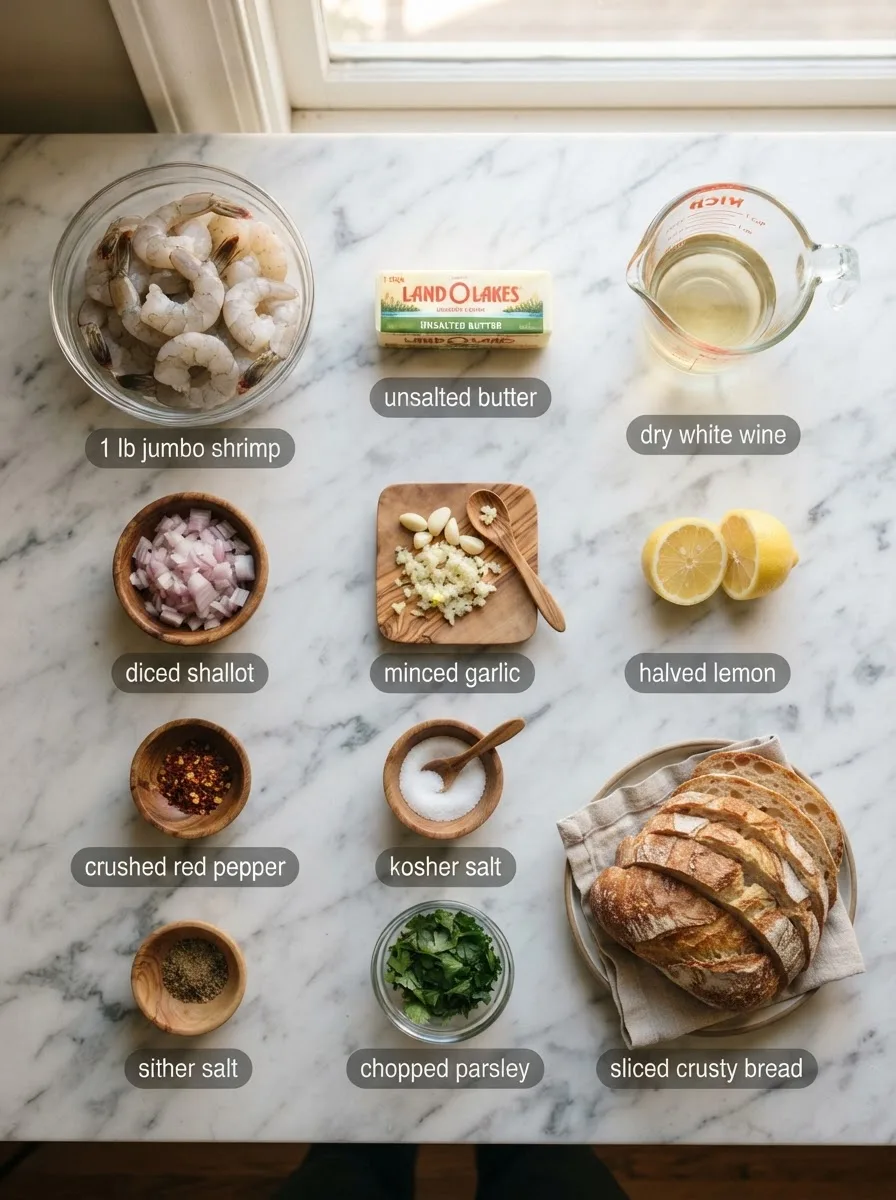
Jumbo shrimp (1 pound, peeled, deveined, tails on). Bigger shrimp hold up better in the hot sauce without turning rubbery, and the tail gives you something to hold onto for dipping. If you can only find smaller shrimp, that’s fine — just cut the cook time by a minute or so.
Dry white wine (1 cup). This is the “drunken” in drunken shrimp. Use something you’d actually drink — a Sauvignon Blanc or Pinot Grigio works well. Skip cooking wine entirely; it’s too salty and flattens the sauce. No wine on hand? Low-sodium chicken broth with a splash of white wine vinegar gets you close.
Unsalted butter (½ cup / 1 stick). This is what turns the reduced wine into an actual sauce instead of a thin broth. Unsalted lets you control the seasoning yourself, which matters once the wine has reduced and concentrated.
Shallot (1, finely diced). Milder and sweeter than a full onion, and it dissolves into the sauce rather than leaving crunchy bits behind. A small amount of yellow onion works if that’s what you have.
Garlic (6 cloves, minced). Yes, six. This sauce is built around garlic, and Cooper’s Hawk doesn’t skimp on it either. Add it after the shallot has softened so it doesn’t scorch.
Fresh lemon juice. Added at the very end, off the heat. This is the ingredient most home versions forget, and it’s the reason the restaurant sauce tastes bright instead of just rich.
Crusty bread, for serving. Not technically part of the recipe, but functionally essential. A baguette or ciabatta, sliced and toasted, is what turns this from a shrimp dish into an experience.
Ingredient Note: Don’t substitute cooking wine for the dry white wine. Cooking wine is loaded with added salt, and once it reduces by half, that salt concentrates into something closer to brine. Use a wine you’d pour into a glass — you only need a cup, so the rest of the bottle is yours.
Equipment You’ll Need
- 12-inch skillet — Wide enough that the shrimp cook in a single layer instead of steaming each other. A stainless or cast iron skillet works; nonstick will not reduce the wine as evenly.
- Fine-mesh strainer or fish spatula — For pulling shrimp out of the sauce without dragging bits of shallot along with them, if you want a cleaner presentation.
- Instant-read thermometer (optional) — Not required, but useful the first time you make this if you’re nervous about overcooking the shrimp.
Controlling the Sauce: How Far to Reduce the Wine
The single biggest difference between a thin, wine-forward sauce and a rich, clingy one is how long you let the wine reduce before the butter goes in. I tested this three separate ways, changing only the reduction time.
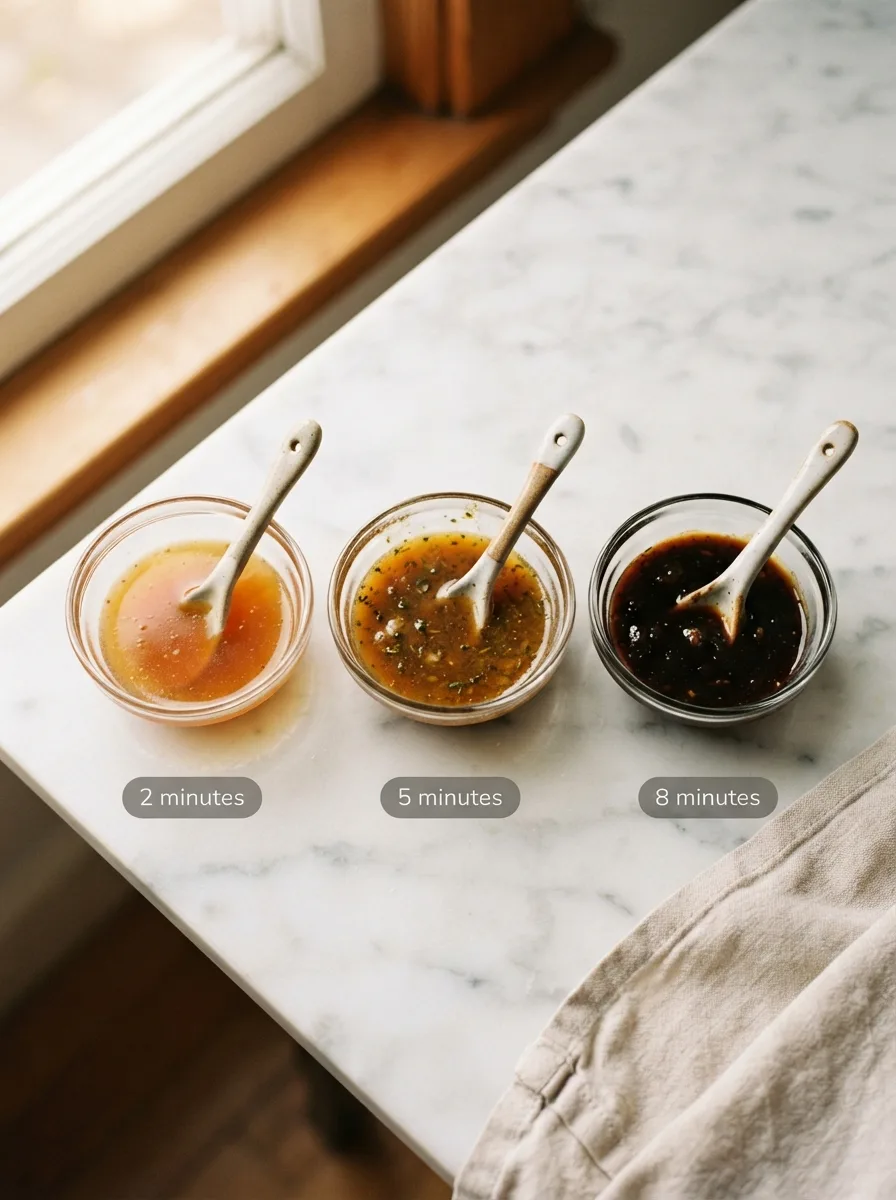
2 minutes of reduction: The sauce stayed thin and mostly tasted like warm wine. It coated nothing — it just pooled under the shrimp like broth.
5 minutes of reduction: Noticeably better. The alcohol smell cooked off and the sauce started to thicken slightly, but it still separated a little once the butter melted in.
8 minutes of reduction: This is the one. The wine reduced by roughly half, concentrating the flavor before the butter ever hit the pan. When the butter went in, it emulsified smoothly instead of pooling into grease. This is the version in the recipe card below.
The takeaway: Reduce the wine until it’s visibly thickened and coats the back of a spoon — about 8 minutes at a steady simmer. Rushing this step is the single most common reason the sauce breaks.
How to Make Drunken Shrimp Cooper’s Hawk
Before you start: Pat the shrimp completely dry with paper towels. Wet shrimp release water into the pan and dilute the sauce right when you need it concentrated.
Step 1 — Sear the shrimp first, then set aside
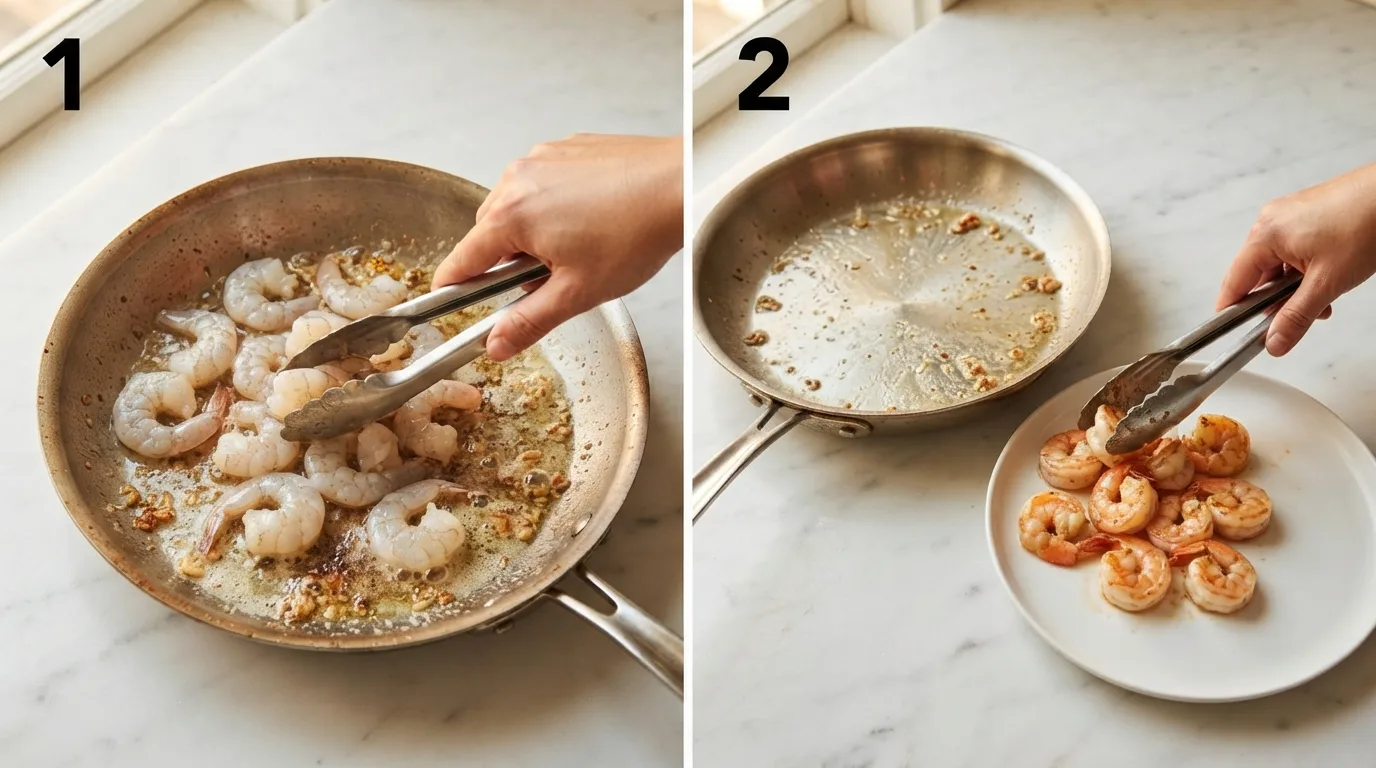
Melt 2 tablespoons of the butter in the skillet over medium-high heat. Add the shrimp in a single layer — don’t crowd the pan, work in two batches if needed — and cook for about 90 seconds per side, until they turn pink and opaque with light golden edges. Remove them to a plate immediately. They’ll finish cooking later in the sauce, so slightly underdone here is exactly right.
Step 2 — Soften the shallot and garlic
In the same skillet, melt another tablespoon of butter over medium heat. Add the diced shallot and cook for 2 minutes, stirring occasionally, until it turns translucent and smells sweet rather than sharp. Add the minced garlic and cook for another 30 seconds — just until fragrant. Garlic burns fast at this stage, so don’t walk away.
Step 3 — Add the wine and reduce
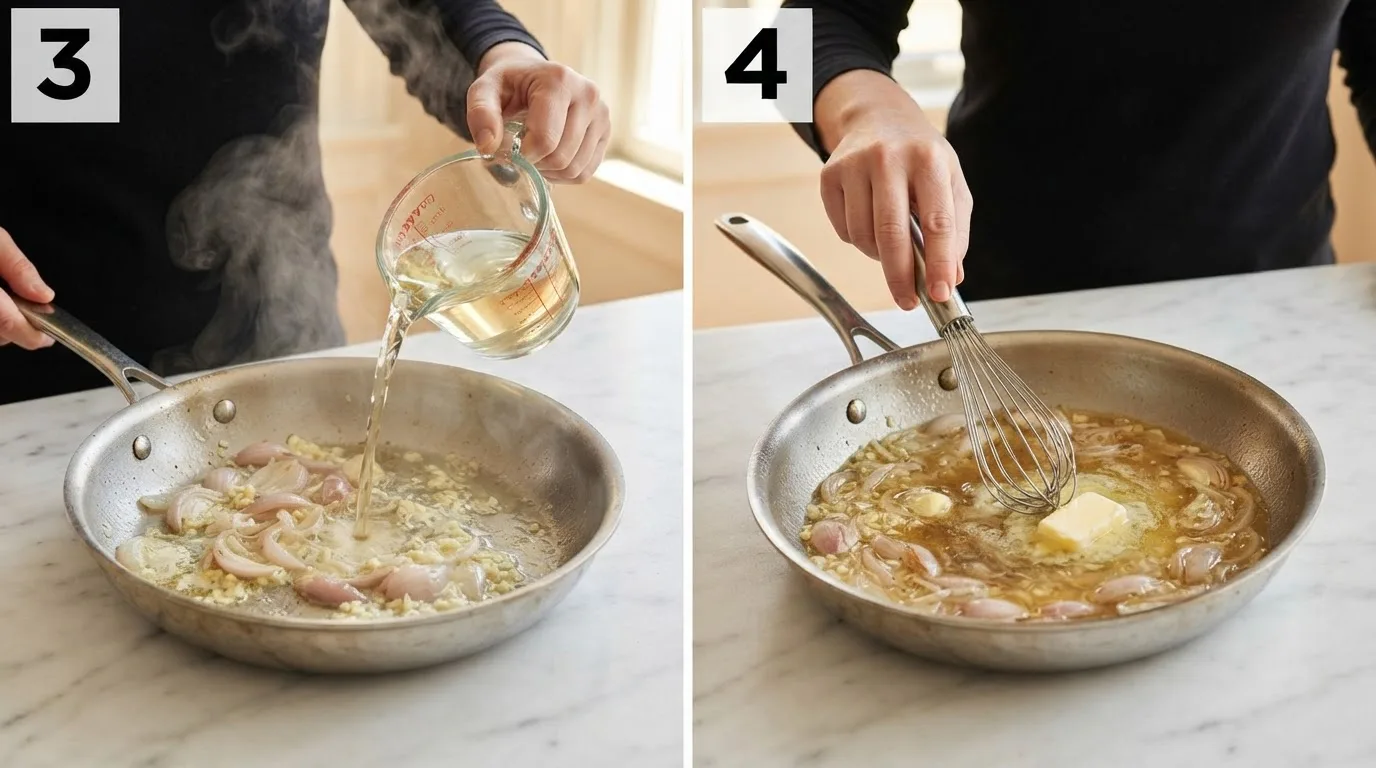
Pour in the white wine and crushed red pepper flakes, then raise the heat to bring it to a steady simmer. Let it reduce for about 8 minutes, until the liquid has visibly thickened and coats the back of a spoon (see the Controlling the Sauce section above for exactly what this should look like). This is the step that makes or breaks the final texture — don’t rush it.
Step 4 — Whisk in the remaining butter
Lower the heat to medium-low and add the remaining butter, a tablespoon or two at a time, whisking constantly as each piece melts before adding the next. This slow addition is what emulsifies the sauce instead of letting it split into oily pools. You’ll know it’s right when the sauce looks glossy and coats a spoon evenly, with no visible separation.
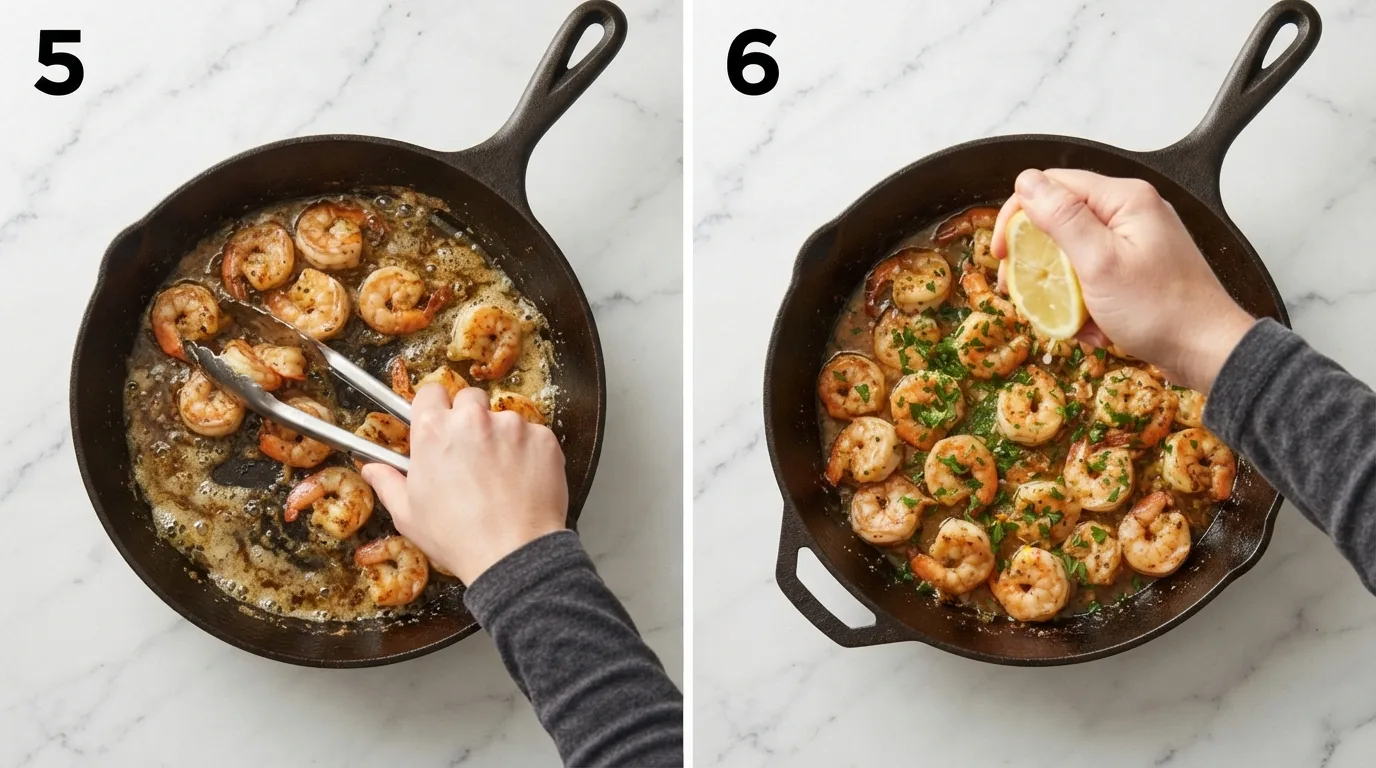
Step 5 — Return the shrimp and finish with lemon
Add the seared shrimp back into the skillet along with any juices from the plate. Toss gently to coat, and cook for another 1–2 minutes, just until the shrimp are heated through and opaque all the way to the center. Remove from heat and stir in the fresh lemon juice and chopped parsley. Taste and adjust salt — the lemon brightens everything else, so add it last.
Pro Tips for Perfect Drunken Shrimp Cooper’s Hawk
Tip 1: Sear the shrimp in batches, not all at once. Overcrowding the pan drops the temperature and the shrimp release water instead of getting golden edges. Two batches take an extra two minutes and are worth it.
Tip 2: Pull the shrimp before you think they’re done. They finish cooking again in Step 5, so if they look fully opaque and firm in Step 1, they’ll be rubbery by the time you serve them. Slightly translucent centers at that stage are correct.
Tip 3: Add the butter off direct high heat. Whisking cold butter into a sauce that’s still at a hard simmer is the fastest way to break it. Drop the heat to medium-low first, then whisk.
Tip 4: Warm the bread while the sauce reduces. A 350°F oven for 5 minutes gets the bread crisp enough to hold up to the sauce without going soggy on the first dip.
Variations and Substitutions
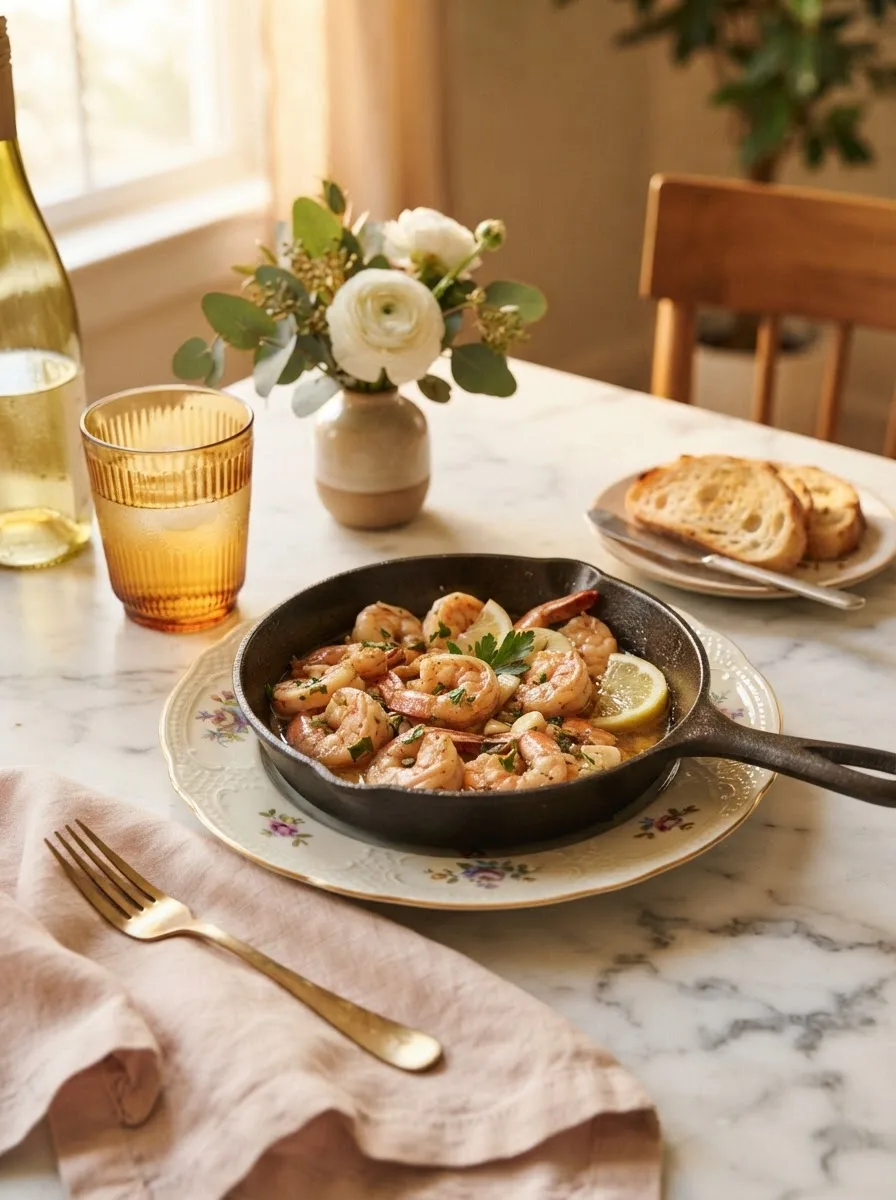
Dietary Variations:
- Gluten-free: The recipe itself is naturally gluten-free — just swap the crusty bread for a gluten-free baguette or serve the shrimp and sauce over rice instead.
- Alcohol-free: Substitute the white wine with an equal amount of low-sodium chicken broth plus 1 tablespoon of white wine vinegar for acidity. The sauce will be slightly less complex but still glossy and rich.
Flavor Variations:
- Tequila-lime version: Swap the white wine for ¼ cup tequila plus ¾ cup chicken broth, and use lime juice instead of lemon at the end. This is closer to the spicier variation Cooper’s Hawk occasionally runs as a special.
Ingredient Substitutions:
- Shallot → ¼ cup finely diced yellow onion (slightly sharper, still works)
- Fresh garlic → 1½ teaspoons jarred minced garlic (convenient, slightly less bright)
- Crusty bread → cooked rice or a bed of pasta, if you want this to stretch into a full dinner
If you’re building this into a bigger spread, it pairs well with something heartier on the side — my cheesy ranch potatoes and sausage is a good match for soaking up any extra sauce that doesn’t make it onto the bread.
Troubleshooting
Why did my sauce break instead of staying glossy?
This almost always means the butter was added too fast, or the pan was too hot when it went in. Drop the heat to medium-low before whisking in the butter, and add it gradually — a tablespoon or two at a time, letting each piece melt fully before adding the next.
My shrimp turned rubbery — what happened?
Shrimp cook fast, and they cook twice in this recipe: once in Step 1, and again in Step 5. If they were fully cooked through in Step 1, they’ll overcook by the time they finish in the sauce. Pull them from the pan while the centers still look slightly translucent.
The sauce tastes too winey — how do I fix it?
This means the wine wasn’t reduced long enough before the butter went in. Reducing for a full 8 minutes, until the liquid coats the back of a spoon, cooks off the sharp alcohol taste and concentrates the flavor into something rounder. If it’s already too far along, a squeeze of extra lemon at the end helps balance it.
Storage and Make-Ahead
Counter: Not recommended beyond serving — shrimp shouldn’t sit out longer than 2 hours.
Refrigerator: Store in an airtight container for up to 2 days. The sauce will solidify slightly as the butter chills; that’s normal.
Freeze: Freezing isn’t recommended. The sauce separates when thawed and the shrimp texture suffers noticeably.
Reheating: Warm gently in a skillet over low heat, stirring often, just until heated through. Avoid the microwave — it tends to overcook the shrimp and can cause the sauce to split.
Make-Ahead: You can dice the shallot and garlic, and measure out the wine, butter, and lemon juice up to a day ahead. Keep them separate and cold until you’re ready to cook — the actual cooking process only takes about 15 minutes once everything’s prepped.
Frequently Asked Questions
Q: What wine is closest to what Cooper’s Hawk uses? A: A dry Sauvignon Blanc or Pinot Grigio gets you very close. Avoid anything sweet like a Riesling — it throws off the balance of the sauce.
Q: Can I make this without wine? A: Yes. Substitute low-sodium chicken broth plus a tablespoon of white wine vinegar for the acidity. The flavor will be a bit less complex, but the sauce texture stays the same.
Q: Can I use frozen shrimp? A: Yes — just thaw completely and pat very dry before searing. Wet shrimp will steam instead of sear and can water down the sauce.
Q: Is this the same as the tequila-lime version served at the restaurant sometimes? A: Close, but slightly different. See the Flavor Variations section above for the tequila-lime swap if that’s the version you’re after.
Q: How spicy is this? A: Mild as written — the crushed red pepper adds warmth, not real heat. Double it if you want more of a kick.
Q: Can I double this recipe for a party? A: Yes, but cook the shrimp in batches rather than doubling everything in one skillet at once — overcrowding the pan is the fastest way to steam the shrimp instead of searing them.
Q: What should I serve with this besides bread? A: Rice, a simple green salad, or something heartier like my dolly’s chicken and stuffing casserole if you want to turn this appetizer into part of a full dinner spread.
More Appetizer Recipes You’ll Love
- Cheesy Ranch Potatoes and Sausage — a hearty, garlicky side that soaks up extra sauce beautifully
- Cheesecake Bread — a sweet finish if you’re building out a full menu
- Dolly’s Chicken and Stuffing Casserole — a comforting main to pair with this as a starter
- Banana Tempura — a warm, crispy dessert to close out the meal
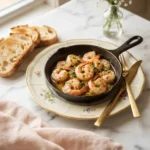
Drunken Shrimp Cooper’s Hawk Copycat (Tested)
Ingredients
For the Shrimp:
- 1 pound jumbo shrimp, peeled and deveined, tails on
- 1/2 cup (1 stick) unsalted butter, divided
- Kosher salt, to taste
For the Sauce:
- 1 shallot, finely diced
- 6 clove garlic, minced
- 1 cup dry white wine
- 1/4 teaspoon crushed red pepper flakes
- 1 tablespoon fresh lemon juice
- 2 tablespoon fresh parsley, chopped
- Crusty bread, sliced and toasted, for serving
Instructions
- Pat the shrimp completely dry with paper towels.
- Melt 2 tablespoons of the butter in a 12-inch skillet over medium-high heat. Sear the shrimp in a single layer, working in batches if needed, about 90 seconds per side, until pink with slightly translucent centers. Remove to a plate.
- In the same skillet, melt 1 tablespoon of butter over medium heat. Add the shallot and cook 2 minutes until translucent. Add the garlic and cook 30 seconds until fragrant.
- Add the white wine and crushed red pepper flakes. Raise heat and simmer for about 8 minutes, until the liquid has reduced by half and coats the back of a spoon.
- Lower heat to medium-low. Whisk in the remaining butter, a tablespoon or two at a time, letting each piece melt before adding the next, until the sauce is glossy and emulsified.
- Return the shrimp to the skillet along with any juices. Toss gently and cook 1–2 minutes, until heated through and fully opaque.
- Remove from heat. Stir in the lemon juice and parsley. Season with salt to taste. Serve immediately with toasted crusty bread.
Notes
- Reduce the wine until it visibly coats the back of a spoon — rushing this step is the most common reason the sauce separates.
- Store leftovers in an airtight container in the fridge for up to 2 days; reheat gently on the stovetop rather than in the microwave to keep the sauce from splitting.
- For a tequila-lime variation, substitute ¼ cup tequila plus ¾ cup chicken broth for the wine, and use lime juice in place of lemon.
- The sauce is naturally gluten-free — swap in gluten-free bread or serve over rice for a GF-friendly presentation.