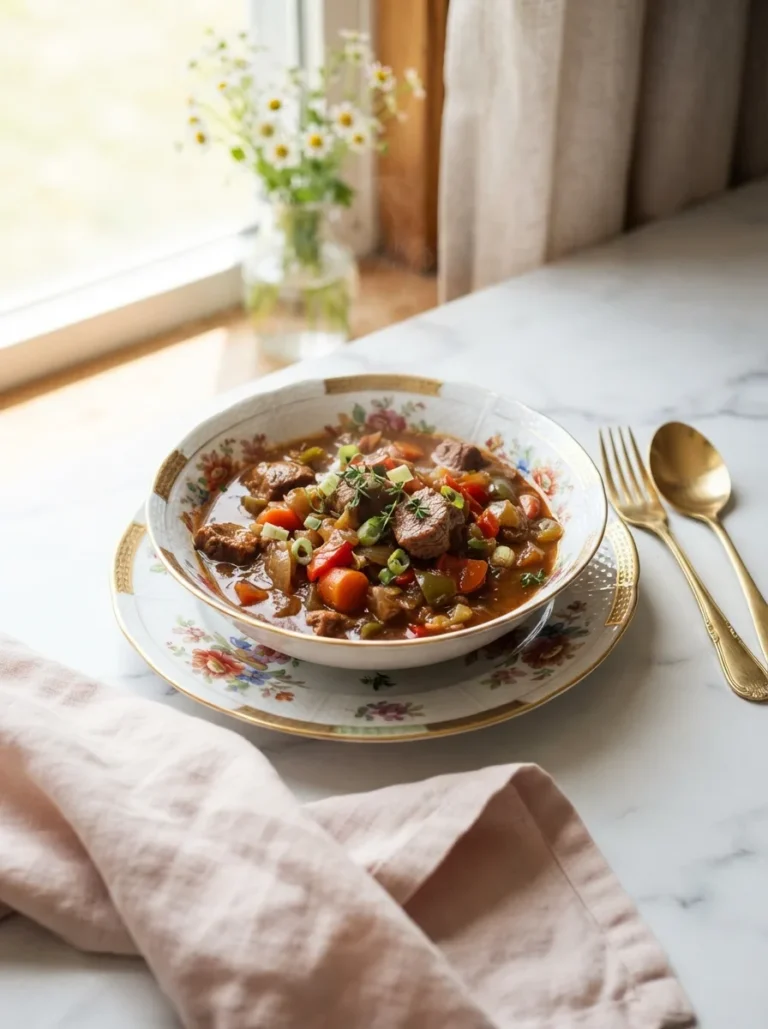
Jamaican Curry Goat (Fall-Off-Bone)

The first time I made curry goat, I used the same low heat I use for chicken curry and pulled it off the stove after 45 minutes because it smelled done. It wasn’t. The meat was tough enough to bounce off the plate, and the gravy tasted like raw curry powder. Goat is not chicken — it needs time, and it needs the curry powder cooked properly before the meat ever goes in the pot.
I tested this curry goat recipe four times, changing one thing each round: how long I browned the curry powder, how long I marinated the goat, and how long I let the whole pot simmer. The version below is the one that gave me meat that pulled apart with a spoon and a gravy dark enough to look like it had been on the stove for a full day — because, in a way, it had.
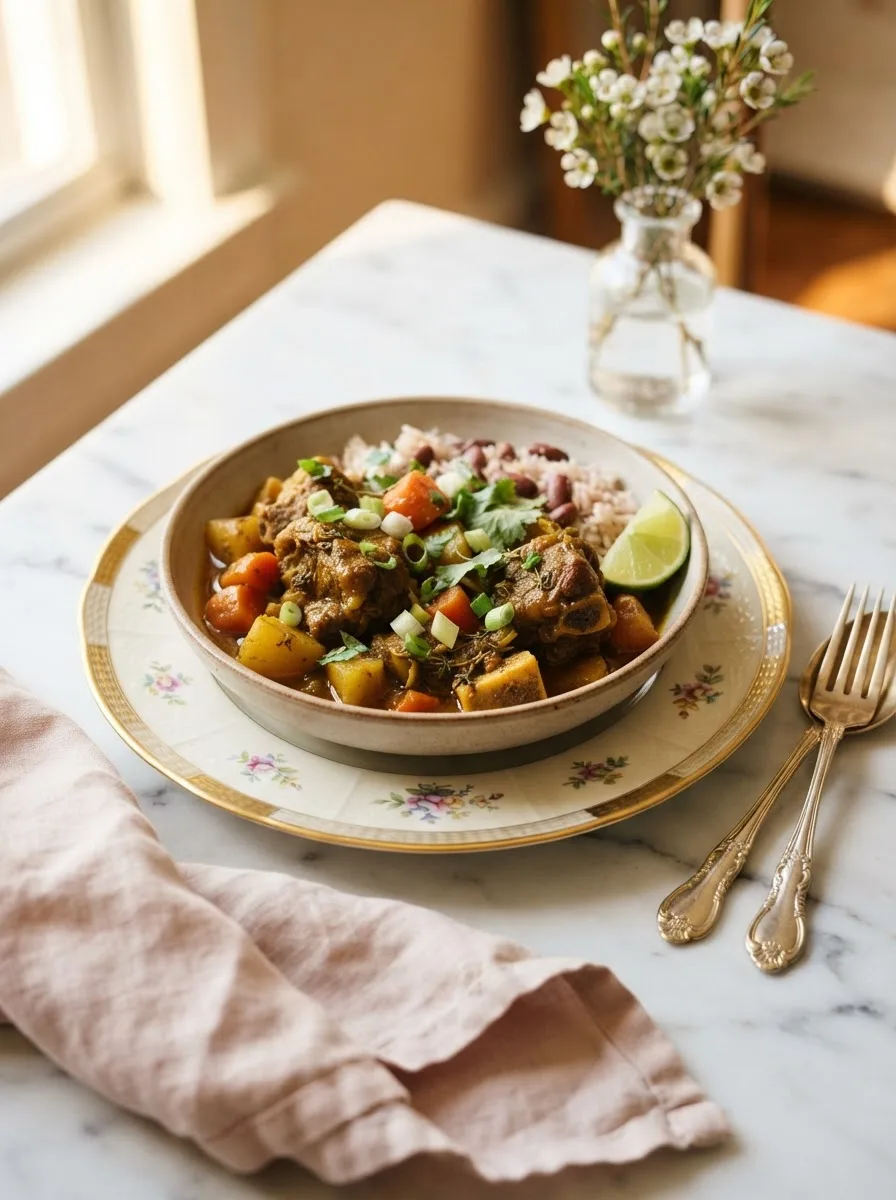
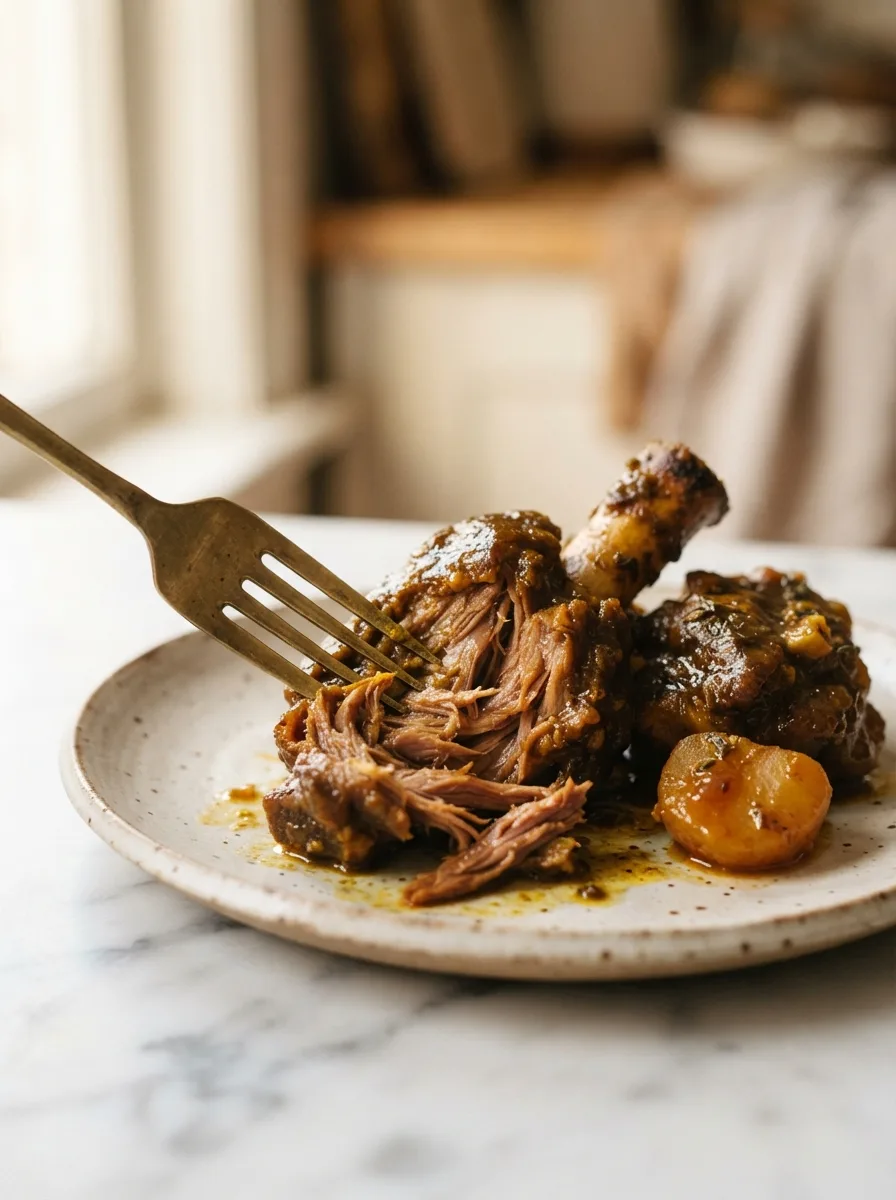
This is the goat curry jamaican recipe I make when I want the version that actually tastes like it came from a Jamaican kitchen, not a shortcut version with curry powder stirred into coconut milk at the last minute. The gravy clings to the meat instead of sitting thin and watery on top, and the goat itself falls apart at the bone the moment your fork touches it.
★★★★★ “I’ve been intimidated by goat for years. This was the first time it came out tender all the way through — not just the outside pieces.” — Marisol T., recipe tester (pre-launch)
Why You’ll Love This Curry Goat
- Fall-off-bone tender, guaranteed: The simmer time below was tested specifically so the meat is never chewy — even the tougher shoulder cuts soften completely.
- Real curry flavor, not powder taste: Browning the curry powder in oil before anything else goes in the pot removes the raw, dusty flavor most quick versions have.
- One pot, hands-off simmer: After the first 20 minutes of active cooking, this jamaican curry goat recipe mostly takes care of itself on low heat.
- Make-ahead friendly: Curry goat tastes better the next day — the gravy thickens and the flavor deepens overnight in the fridge.
Key Ingredients
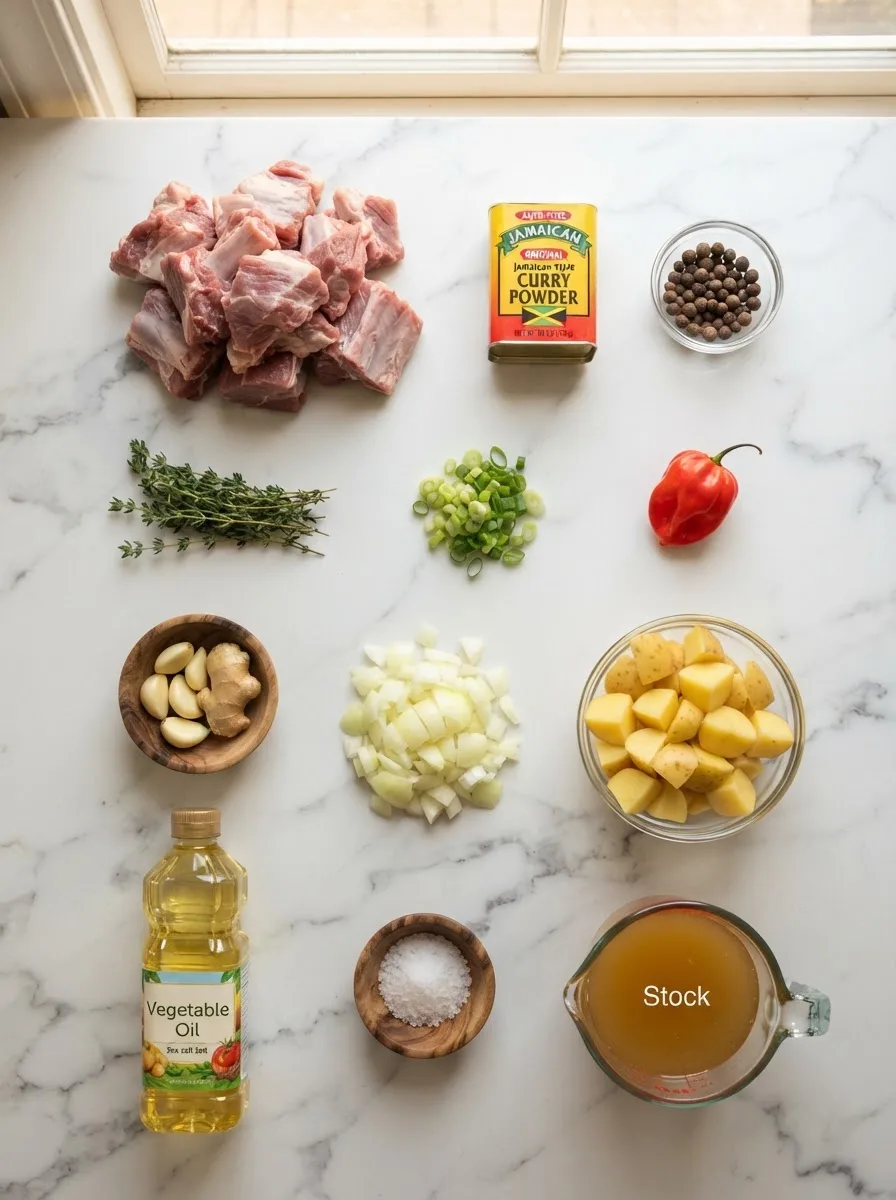
Bone-in goat meat (3 lbs, cut into 1.5–2 inch pieces). Bone-in is not optional here — the bone is what releases the gelatin that thickens the gravy over the long simmer. If your butcher only has boneless, ask for a few extra bones to throw in the pot anyway.
Jamaican curry powder (3 tablespoons). This is not the same as Indian curry powder — Jamaican blends are heavier on allspice and turmeric, with a rounder, less sharp flavor. Grace and Blue Mountain are the two brands I’ve tested this with; both work well.
Scotch bonnet pepper (1, left whole). Left whole and simmered rather than chopped, it perfumes the whole pot with fruity heat without turning the gravy blisteringly hot. If it breaks open during cooking, the heat jumps — fish it out immediately if you want it milder.
Fresh thyme, scallion, garlic, and ginger. These four together are the backbone of the aromatic base under the curry. Dried thyme works in a pinch at one-third the amount, but fresh is worth it here.
Allspice berries (½ teaspoon, whole). This is the ingredient most non-Jamaican curry goat recipes skip, and it’s the one that makes the dish taste unmistakably Jamaican rather than generic curry. Ground allspice works if that’s what you have — use ¼ teaspoon instead.
Potatoes (2 medium, cubed). Added partway through so they don’t turn to mush by the time the meat is tender. Yukon gold holds its shape best.
Ingredient Note: Marinate the goat in the curry powder, garlic, ginger, and scallion for at least 4 hours — overnight is better. The curry powder needs time to actually penetrate the meat, not just coat the outside.
Equipment You’ll Need
- Heavy-bottomed Dutch oven or large pot with a lid — this is where the long, slow simmer happens; a thin pot will scorch the bottom before the meat is tender.
- Wooden spoon — for scraping the browned bits off the bottom of the pot when you deglaze.
- Tongs — for browning the goat pieces in batches without overcrowding the pot.
Controlling Tenderness (A Controlled Test)
The single biggest variable in any curry goat recipe is simmer time — and it’s the one most recipes get vague about. I ran three side-by-side batches, changing only the covered simmer time, to find the point where the meat actually falls off the bone instead of just being cooked through.
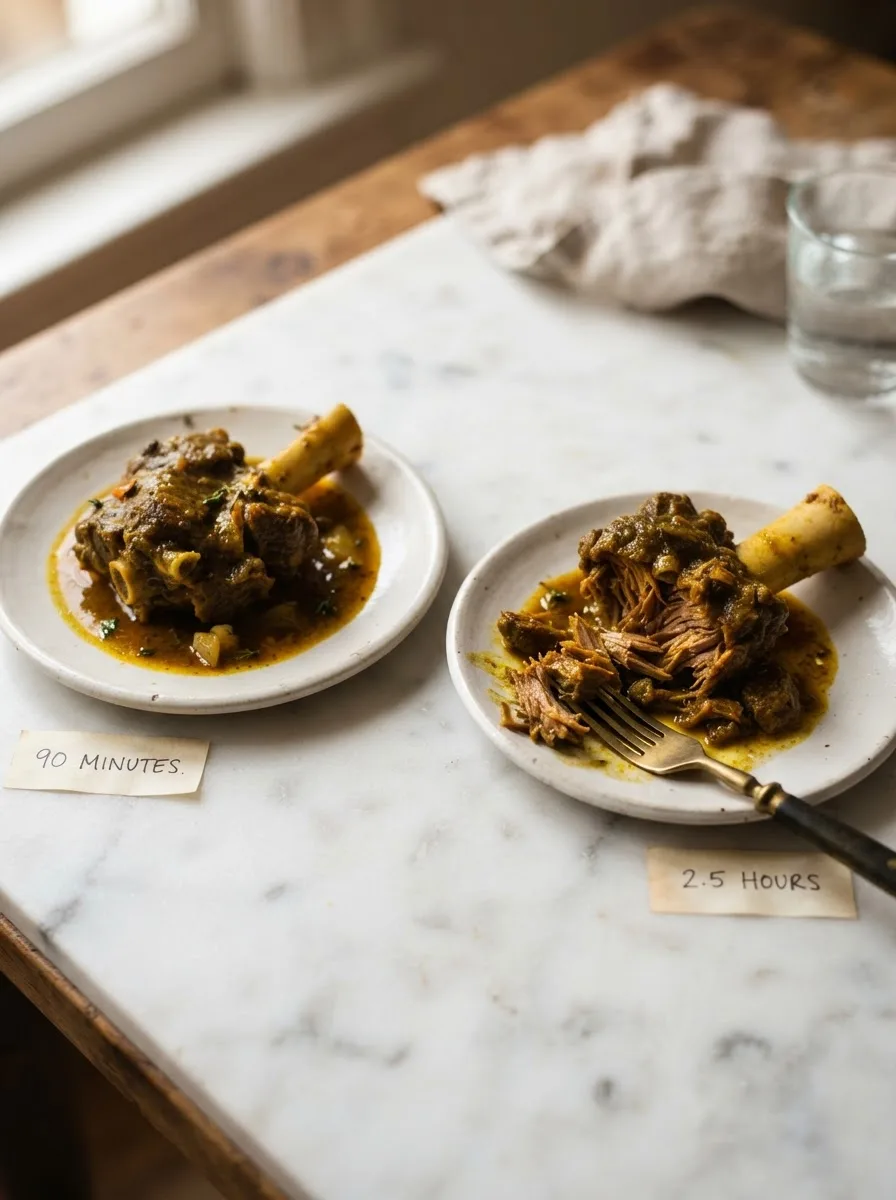
90 minutes: The meat was cooked through and safe to eat, but it stayed clamped to the bone and needed a knife to cut. Not what you want from curry goat.
2 hours: Noticeably better — meat pulled away with light pressure from a fork, but the very center of the larger pieces still had a slight chew.
2.5 hours: This is the one. The meat separated from the bone with almost no resistance, and the connective tissue had fully broken down into the gravy, which is part of what makes the sauce so rich by the end.
The takeaway: Don’t rush this. If your goat pieces are larger than 2 inches, add another 15–20 minutes. Smaller cuts from the leg cook slightly faster than shoulder.
How to Make Jamaican Curry Goat Recipe
Before you start: Pull the goat out of the marinade about 15 minutes before cooking so it’s not ice-cold when it hits the hot oil — cold meat straight from the fridge will steam instead of brown.
Step 1 — Marinate the goat
In a large bowl, toss the goat pieces with 2 tablespoons of the curry powder, half the garlic, half the ginger, the scallion, and a generous pinch of salt. Cover and refrigerate for at least 4 hours, ideally overnight. This is the step that actually gets flavor into the meat rather than just around it.
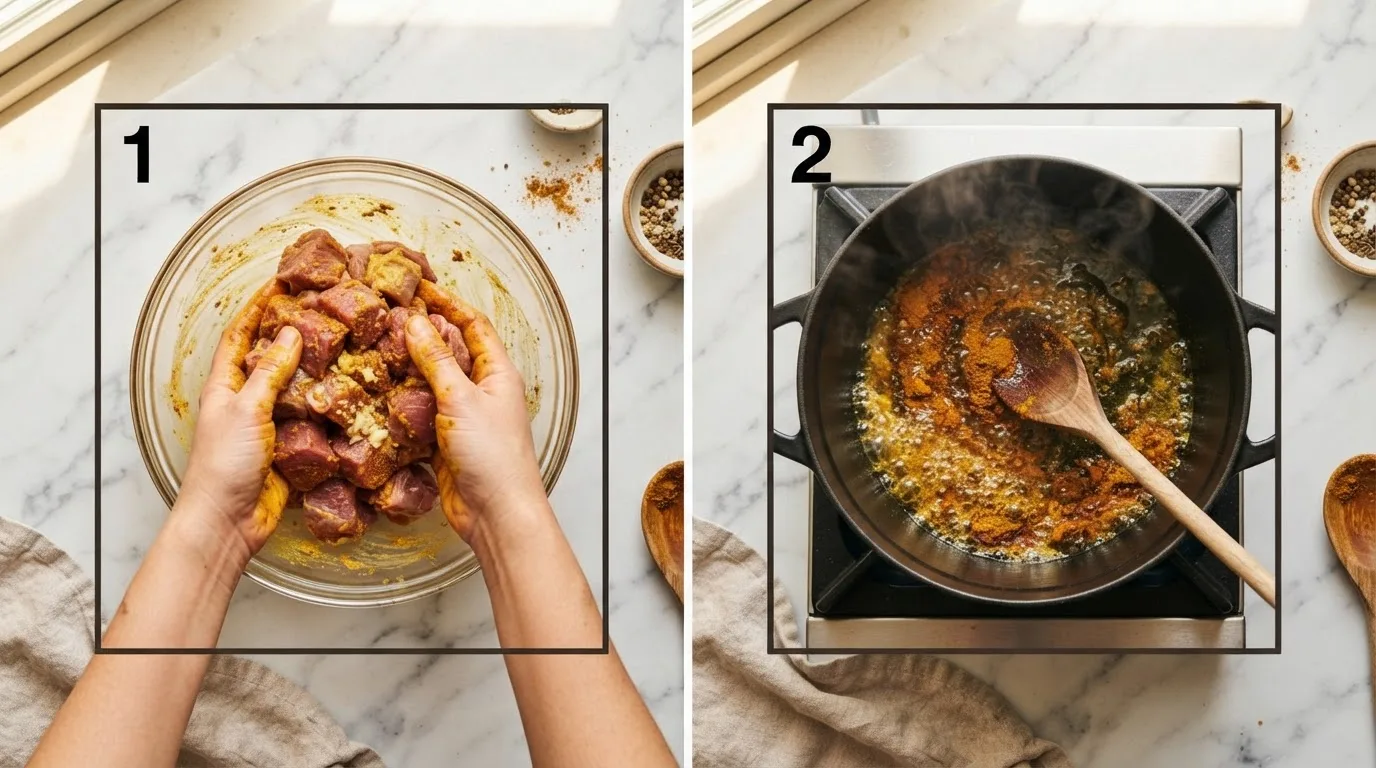
Step 2 — Bloom the curry powder
Heat the oil in your Dutch oven over medium heat until it shimmers. Add the remaining tablespoon of curry powder directly to the oil and stir constantly for about 60–90 seconds, until it darkens slightly and smells toasted rather than raw. This single step is the difference between a gravy that tastes dusty and one that tastes deep and layered — don’t skip it, and don’t let it burn.
Step 3 — Brown the goat
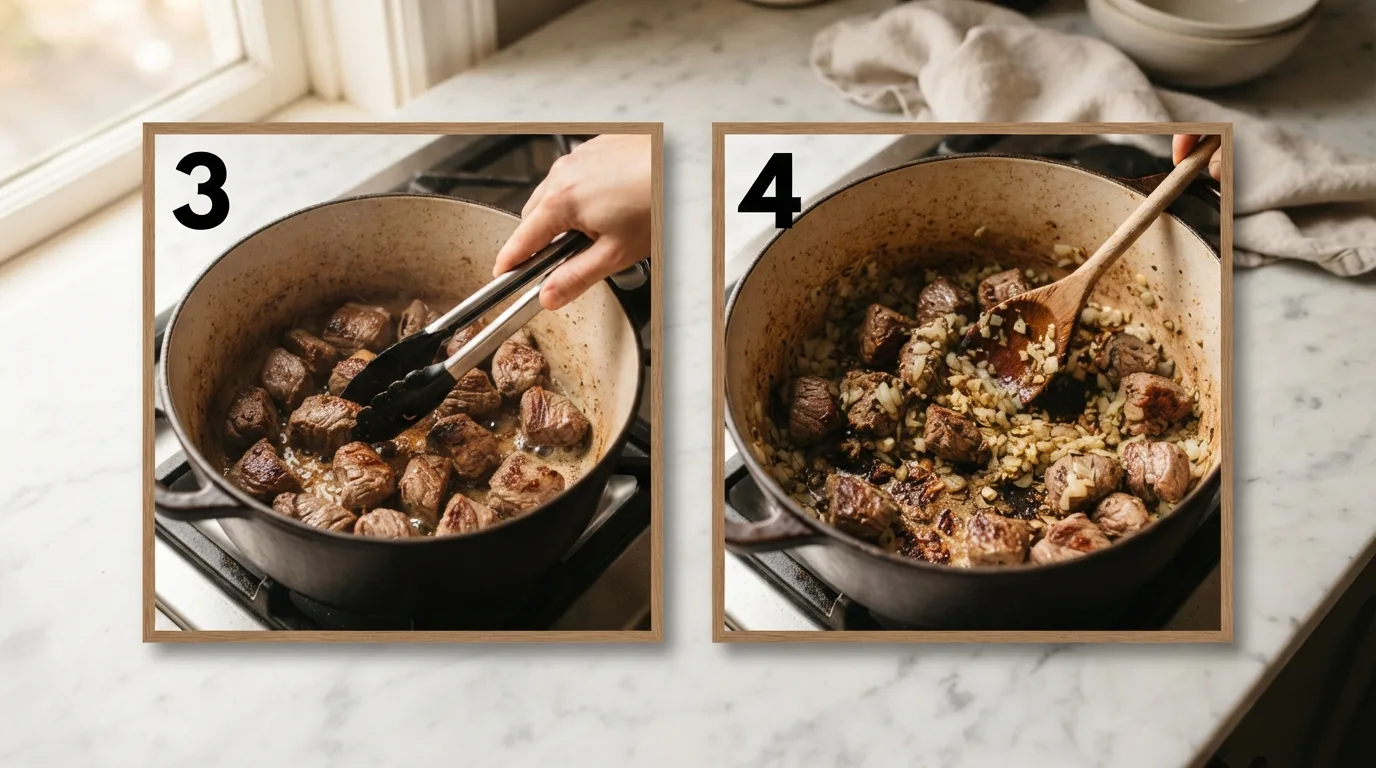
Working in batches so you don’t crowd the pot, add the marinated goat and brown on all sides, about 3–4 minutes per batch. The goal isn’t to cook it through — it’s to build a browned crust that adds flavor to the gravy. Remove each batch to a plate as it browns.
Step 4 — Build the aromatic base
Once all the goat is browned and out of the pot, add the chopped onion, remaining garlic, and remaining ginger to the same pot. Scrape up any browned bits stuck to the bottom as you stir — that’s flavor you don’t want to lose. Cook for 3–4 minutes, until the onion softens.
Step 5 — Return the goat and add liquid
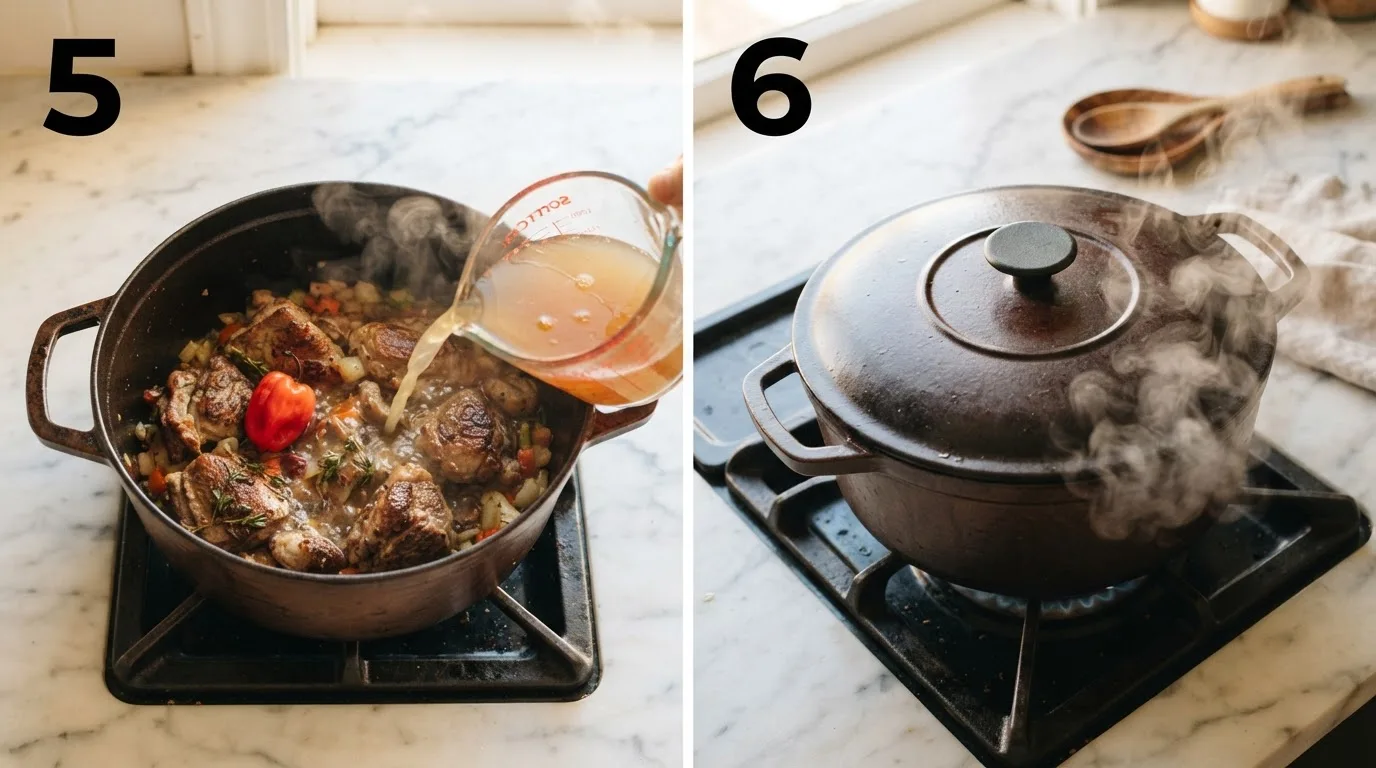
Return the browned goat to the pot along with the whole Scotch bonnet, thyme sprigs, and allspice berries. Pour in enough stock to just cover the meat — usually around 3 cups. Bring to a boil, then reduce to a low simmer and cover.
Step 6 — Simmer low and slow
Let the pot simmer, covered, for 2 to 2.5 hours, stirring occasionally and checking the liquid level. If it looks like it’s reducing too fast, add a splash more stock. This is the stretch that turns tough goat into fall-off-bone goat — refer back to the Controlled Test above if you’re tempted to shorten it.
Step 7 — Add the potatoes and finish
With about 30 minutes of simmer time left, add the cubed potatoes and re-cover. Once the potatoes are tender and the meat is falling off the bone, remove the lid and let the gravy simmer uncovered for the final 10 minutes to thicken. Taste and adjust salt before serving.
Pro Tips for Perfect Curry Goat
Tip 1: Bloom the curry powder in oil, every time. This single step removes the raw, powdery taste that separates a good curry goat recipe from a mediocre one.
Tip 2: Don’t chop the Scotch bonnet. A whole pepper flavors the gravy with heat and fruitiness without the risk of an unpleasantly hot bite. Remove it before serving if you want less heat in the final dish.
Tip 3: Brown in batches, not all at once. A crowded pot steams the meat instead of browning it, and you lose the flavor that browning builds.
Tip 4: Let it rest before serving if you can. Curry goat, like most braises, actually tastes better 20 minutes after it comes off the heat, once the gravy settles and thickens slightly.
Variations and Substitutions
Dietary Variations:
- Lower heat version: Remove the Scotch bonnet entirely and add a pinch of black pepper instead — the dish loses its signature warmth but stays flavorful.
- Dairy-free: This recipe is naturally dairy-free as written; no changes needed.
Flavor Variations:
- With coconut milk: Swap one cup of the stock for coconut milk in the last 30 minutes for a slightly richer, sweeter gravy — common in some island households, though it moves away from the traditional dry-style curry.
Ingredient Substitutions:
- No goat available? Bone-in lamb shoulder works with the same method and timing.
- No Jamaican curry powder on hand? A homemade blend using my jamaican jerk seasoning base plus turmeric and extra allspice gets close, though the flavor won’t be identical.
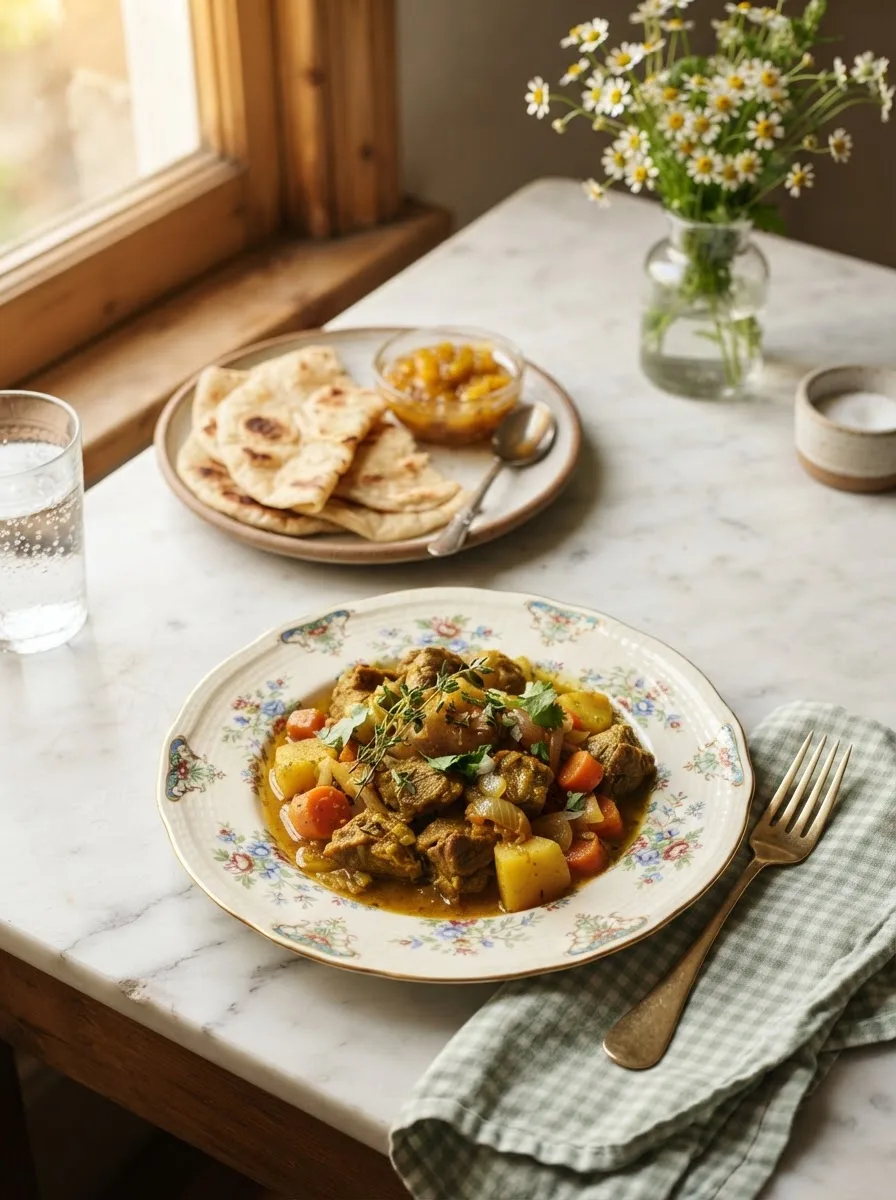
Serve this alongside jamaican roti for scooping up the gravy, or over rice and peas for the more traditional plate.
Troubleshooting
My curry goat is still tough after 2 hours — what happened?
Most likely the pieces were larger than 2 inches, or the simmer wasn’t low enough and the liquid reduced too fast, leaving the meat to cook unevenly. Add more stock, re-cover, and give it another 30–45 minutes on a gentler simmer.
The gravy tastes bitter or dusty — why?
This usually means the curry powder either burned while blooming in step 2, or wasn’t bloomed in oil at all before the meat went in. If it’s already happened, a pinch of sugar and extra stock can help balance it out, but it’s easier to catch this at the blooming stage next time.
The dish is too spicy — can I fix it?
If the Scotch bonnet burst open during simmering, remove it immediately and stir in a splash of coconut milk or an extra cup of stock to dilute the heat. Removing the pepper whole before it breaks is the best prevention.
Storage and Make-Ahead
Counter: Not recommended beyond 2 hours — this is a meat dish and should be refrigerated promptly.
Refrigerator: Store in an airtight container for up to 4 days. The flavor genuinely improves by day two.
Freeze: Freezes well for up to 3 months in a freezer-safe container. Leave a little extra gravy when freezing, since the sauce thickens further as it freezes and thaws.
Reheating: Reheat gently on the stovetop over low heat with a splash of water or stock to loosen the gravy, stirring occasionally, about 10 minutes.
Make-Ahead: This is an excellent make-ahead dish for entertaining — cook it a day ahead, refrigerate, and reheat gently before serving.
Frequently Asked Questions
Q: What cut of goat is best for curry goat? A: Bone-in shoulder or leg pieces work best. The bone adds body to the gravy, and both cuts have enough connective tissue to turn tender after a long simmer.
Q: Is this the same as a goat curry jamaican recipe you’d find at a Jamaican restaurant? A: Very close. Restaurant versions often use the same bloom-then-braise method — the main differences come down to the specific curry powder brand and how long each kitchen simmers it.
Q: Can I make this jamaican curry goat recipe in a slow cooker? A: Yes. Brown the goat and bloom the curry powder on the stovetop first, then transfer everything to a slow cooker on low for 6–7 hours.
Q: Can I use a pressure cooker to speed this up? A: You can cut the simmer time to about 45 minutes under pressure, though the gravy won’t reduce as much — plan to simmer it uncovered afterward to thicken.
Q: What should I serve with curry goat? A: Rice and peas is the classic pairing, but jamaican roti for scooping up the gravy is just as traditional and arguably more fun to eat.
Q: Why is my gravy thin? A: Either the pot wasn’t uncovered long enough at the end to reduce, or too much stock was added at the start. Simmer uncovered for an extra 10–15 minutes to thicken.
Q: Can I make this curry goat recipe less spicy for kids? A: Yes — leave the Scotch bonnet out entirely rather than reducing it, since even a small amount of the pepper can carry real heat into the gravy.
More Caribbean Recipes You’ll Love
- Jamaican Roti — soft, flaky flatbread perfect for scooping up curry gravy
- Jamaican Jerk Seasoning — the spice blend I reach for on grilled meats all summer
- Tikka Paste — a different curry base worth comparing against Jamaican-style curry powder
- Parsnip and Leek Soup — a cozy, low-effort recipe for the nights you don’t want a long simmer

Jamaican Curry Goat (Fall-Off-Bone)
Ingredients
For the Marinade:
- 3 lb bone-in goat meat, cut into 1.5–2 inch pieces
- 3 tablespoon Jamaican curry powder, divided
- 4 clove garlic, minced, divided
- 1 -inch piece fresh ginger, grated, divided
- 3 scallions, chopped
- 1 teaspoon salt
For the Curry:
- 3 tablespoon vegetable oil
- 1 medium yellow onion, chopped
- 1 whole Scotch bonnet pepper
- 4 sprigs fresh thyme
- 1/2 teaspoon whole allspice berries
- 3 cup chicken or goat stock
- 2 medium potatoes, cubed
- Salt to taste
Instructions
- In a large bowl, toss the goat with 2 tablespoons curry powder, half the garlic, half the ginger, the scallion, and salt. Cover and refrigerate 4 hours to overnight.
- Heat oil in a Dutch oven over medium heat. Add remaining 1 tablespoon curry powder and stir constantly for 60–90 seconds until darkened and fragrant.
- Working in batches, brown the marinated goat on all sides, about 3–4 minutes per batch. Remove to a plate.
- Add onion, remaining garlic, and remaining ginger to the pot. Cook 3–4 minutes, scraping up browned bits, until onion softens.
- Return the goat to the pot with the Scotch bonnet, thyme, and allspice. Add stock until the meat is just covered. Bring to a boil, then reduce to a low simmer and cover.
- Simmer covered for 2 to 2.5 hours, stirring occasionally and adding more stock if needed, until the meat is very tender.
- Add the potatoes in the last 30 minutes of simmering. Once tender, uncover and simmer 10 more minutes to thicken the gravy. Season with salt to taste before serving.
Notes
- Marinating overnight makes a noticeable difference in flavor — don’t skip below the 4-hour minimum if you can help it.
- Leftovers keep in the fridge for up to 4 days and taste even better on day two.
- Freezes well for up to 3 months; leave slightly more gravy than you think you need, since it thickens further after freezing.
- If the Scotch bonnet bursts during simmering, remove it immediately to control the heat level.
- Bone-in lamb shoulder is the closest substitute if goat isn’t available, using the same method and timing.