Foolproof Jamaican Stew Pork Recipe

If you’ve ever ordered brown stew pork at a Jamaican restaurant and then tried to recreate that deep mahogany gravy at home, you already know how far most attempts miss the mark. Thin sauce. Flat heat. Meat that fights the fork instead of falling off it. I tested this jamaican stew pork recipe four times before I figured out the one step almost every home version skips.
The difference is the sugar. Most recipes lean entirely on bottled browning sauce for color, but a real jamaican brown stew pork recipe starts by caramelizing brown sugar directly in the pot, then searing the pork right in it. That’s what gives you the bitter-sweet, almost smoky base flavor that restaurant versions have and thin, watery home versions don’t.
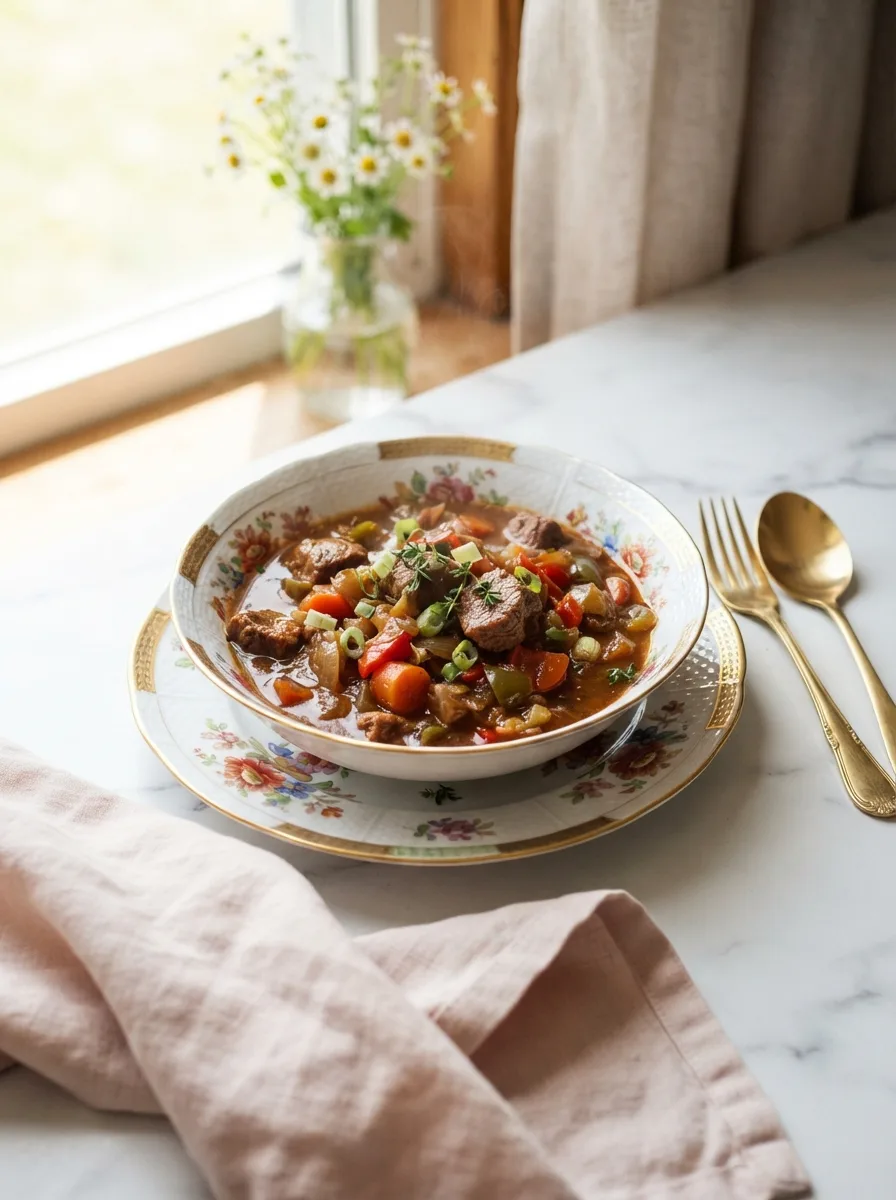
After four rounds of testing — one batch where the sugar nearly burned, one where it came out too sweet — this version lands right in the middle: dark, glossy gravy, meat that shreds under a fork, and enough scotch bonnet heat to actually feel it without torching your mouth. This is the pork stew, Jamaican style, I now make on repeat, and it’s the one I’m handing to you below.
★★★★★ “I’ve made brown stew pork a dozen times and this is the first version where the gravy actually looked like the restaurant’s. The sugar-browning trick is real.” — Danielle R., recipe tester (pre-launch)
Why You’ll Love This Jamaican Brown Stew Pork Recipe
- Real restaurant color, no shortcuts: The caramelized sugar base gives you that deep mahogany gravy without relying on browning sauce alone.
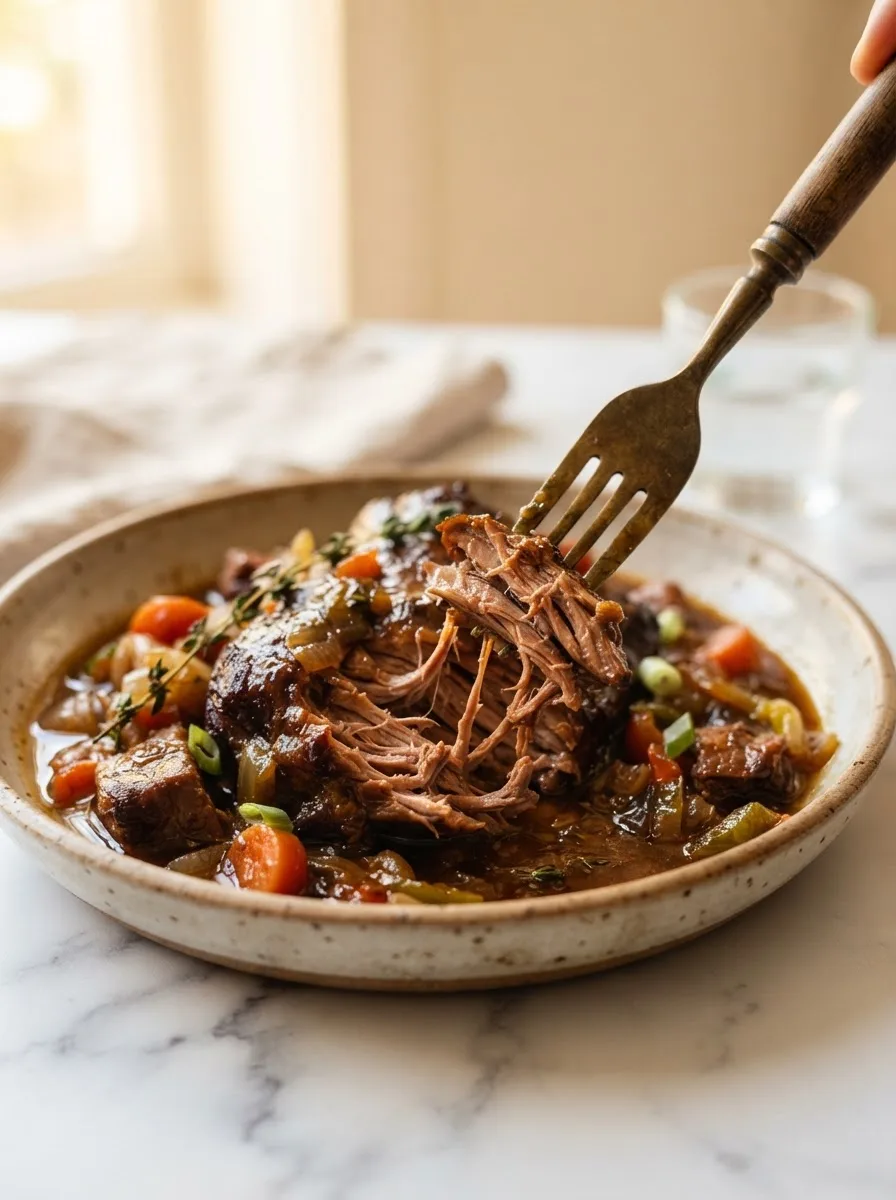
- Fall-apart tender, guaranteed: A low, slow simmer breaks down the pork shoulder until it shreds with a spoon — no chewy bites.
- Built-in heat control: The scotch bonnet goes in whole, so you get the fruity heat without accidentally turning the whole pot into fire.
- One pot, weeknight-doable: Everything happens in a single Dutch oven, and most of the cook time is hands-off simmering.
Key Ingredients for This Jamaican Stewed Pork Recipe
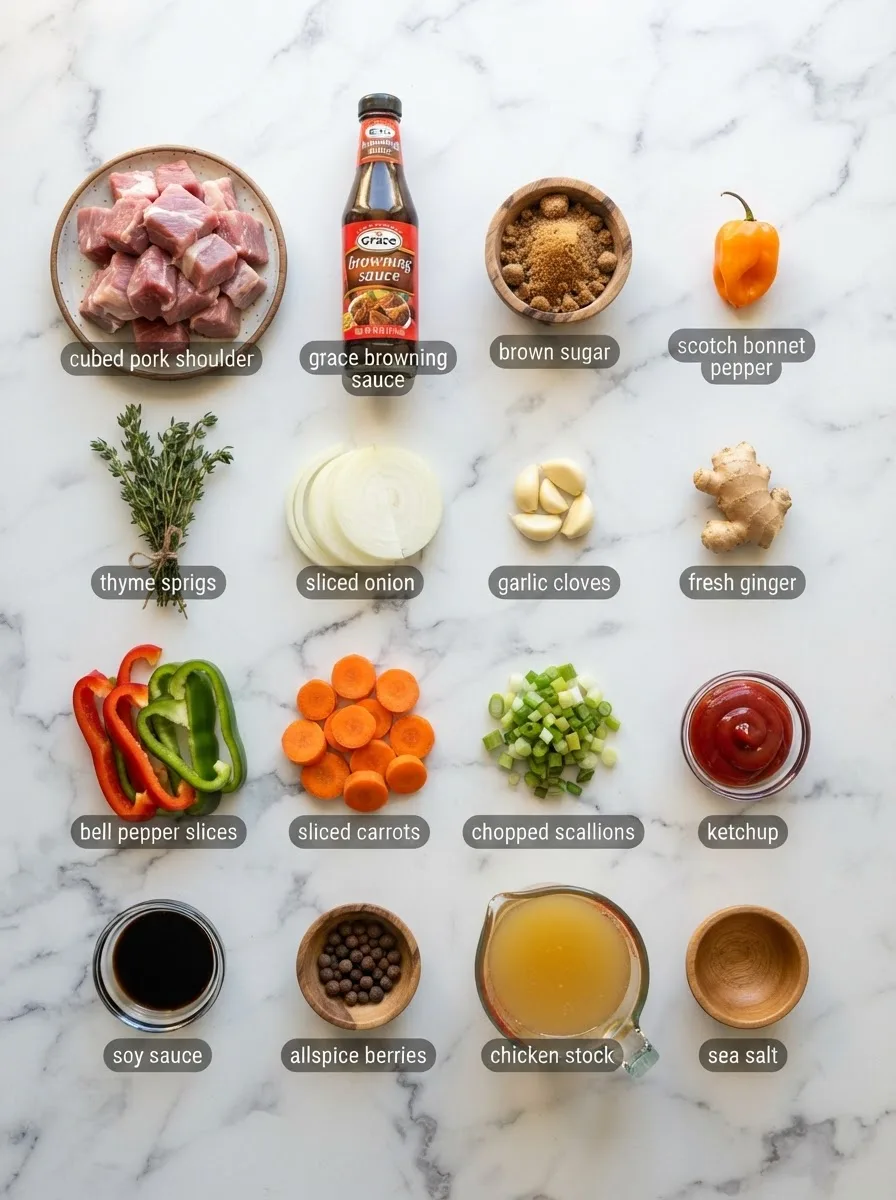
Pork shoulder (bone-in or boneless, 2.5 lbs). Shoulder has enough fat marbling to stay moist through a long simmer. Loin or tenderloin will dry out and turn stringy — don’t substitute those here.
Browning sauce (2 tablespoons). This is the shortcut color booster, but on its own it tastes bitter and one-dimensional. Paired with real caramelized sugar, it deepens the gravy without tasting artificial. Grace brand is the standard; any dark browning sauce works.
Brown sugar (2 tablespoons). The actual engine of the flavor. Melted slowly in oil until it goes from golden to deep amber, it’s what gives this jamaican brown stew pork recipe its signature bitter-sweet backbone. White sugar burns faster and lacks the molasses depth — stick with brown.
Scotch bonnet pepper (1, whole). Fruity, floral heat that’s distinct from a plain chili burn. Keeping it whole and piercing the skin once lets the flavor into the gravy without dumping all the seeds and full heat into the pot. Habanero is the closest substitute if you can’t find scotch bonnet.
Allspice berries / pimento (1 teaspoon). The other non-negotiable Jamaican spice. It smells almost like a mix of clove, cinnamon, and pepper, and it’s what makes this stew taste distinctly Jamaican rather than generic. Ground allspice works in a pinch, but whole berries strained out at the end give a cleaner flavor.
Ketchup (3 tablespoons). Adds sweetness, acidity, and body to the gravy — it’s a common Jamaican pantry shortcut, not a garnish. Tomato paste plus a pinch of sugar works if you’re out of ketchup.
Ingredient Note: Don’t skip searing the pork directly in the caramelized sugar and oil. This single step is the difference between a flat, thin brown stew pork and one with real depth — it’s doing the work a dozen “seasoning packets” try to fake.
Equipment You’ll Need
- Dutch oven or heavy-bottomed pot — Even heat distribution keeps the sugar from scorching in one spot. A regular deep pot with a tight lid works if that’s what you have.
- Tongs — For turning the pork pieces in the hot sugar without splashing yourself.
- Wooden spoon — Metal utensils can scrape and thin the caramelized sugar coating too aggressively.
- Sharp knife and cutting board — For trimming the pork shoulder into even 1.5-inch cubes so everything cooks at the same rate.
Controlling the Gravy Color (A Controlled Test)
I ran this recipe four separate times to isolate exactly what makes the gravy dark versus muddy versus thin. The variable I changed each time: how the color and flavor base was built — browning sauce only, burnt sugar only, or both together.
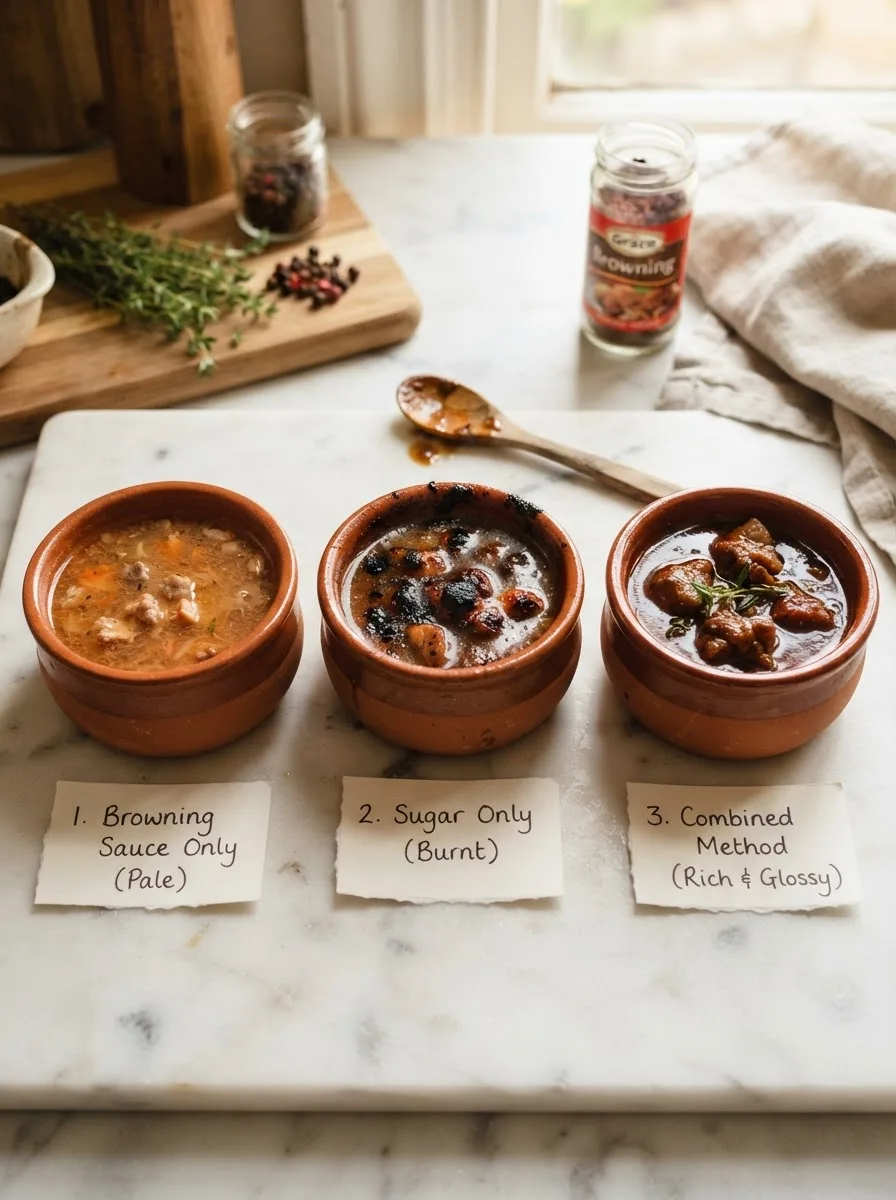
Browning sauce only: The gravy stayed thin and slightly orange-brown instead of deep mahogany. Flavor was flat — one-note bitter with none of the caramel depth.
Burnt sugar only: Without the browning sauce as a backup, one batch went from amber to nearly black in under 20 seconds and turned bitter all the way through. Sugar-only is the riskiest method and the least forgiving.
Both combined (the winner): Caramelizing the sugar to a medium amber, then adding the browning sauce right as the pork goes in, gave the deepest, most even color with zero bitterness. This is the method used below — and it’s the most important variable in this entire jamaican stewed pork recipe.
How to Make This Jamaican Stew Pork Recipe
Before you start: Trim excess silverskin from the pork shoulder and cut it into even 1.5-inch cubes so every piece cooks at the same rate. Have your browning sauce open and within reach — the sugar step moves fast.
Step 1 — Marinate the pork
Toss the pork cubes with vinegar (or lime juice), minced garlic, grated ginger, the white parts of the scallions, half the thyme, allspice, salt, and black pepper. Cover and refrigerate for at least 30 minutes, or overnight if you have the time. The acid and aromatics penetrate the meat while it sits — the longer marinade gives a noticeably deeper flavor, but even 30 minutes makes a real difference over skipping it entirely.
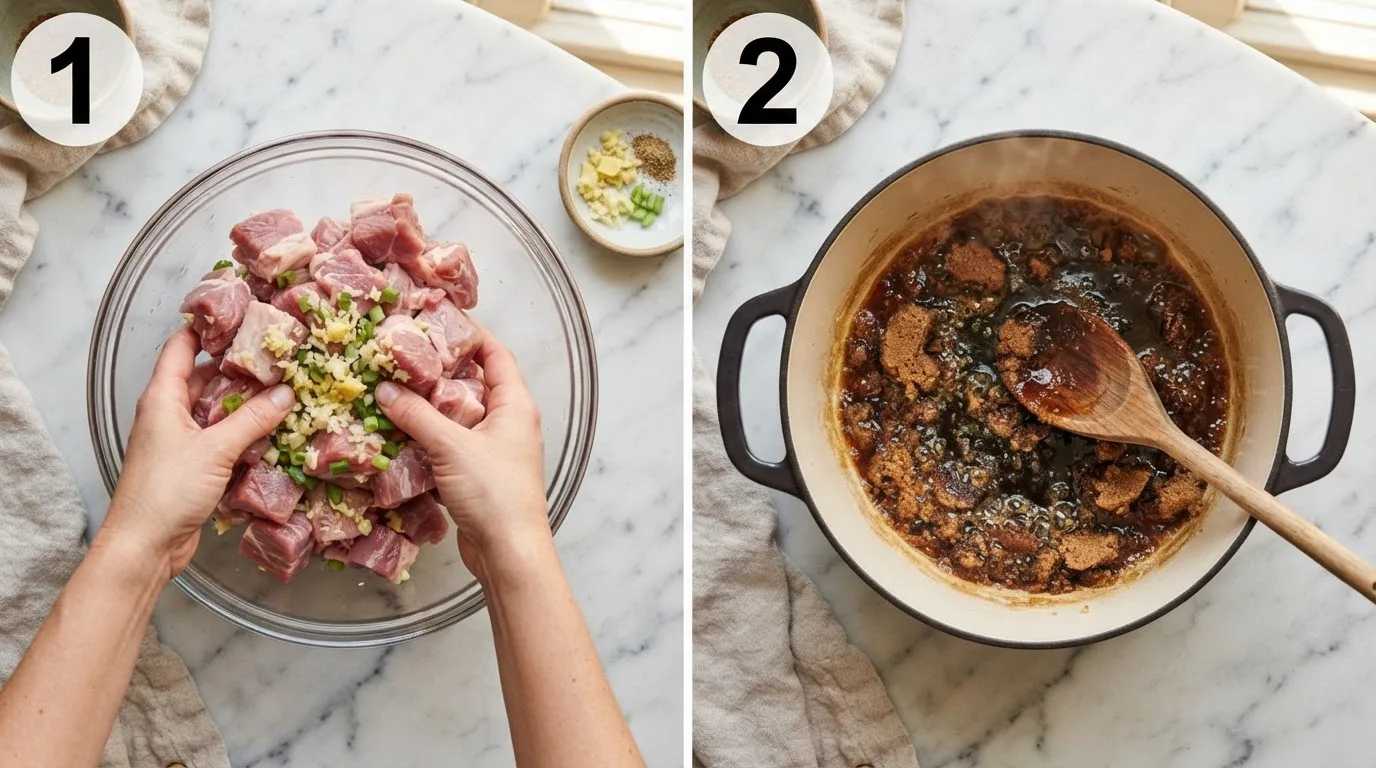
Step 2 — Caramelize the sugar
Heat the oil in a Dutch oven over medium heat. Add the brown sugar and stir constantly as it melts. Watch closely — it will go from grainy, to liquid, to a light amber within 2–3 minutes, and from light amber to burnt in another 30 seconds if you look away. Pull it off the heat the moment it hits a deep, glossy amber, like a copper penny.
Step 3 — Sear the pork
Immediately add the browning sauce and the marinated pork to the caramelized sugar, working in batches if needed so the pieces don’t overcrowd and steam. Sear for 3–4 minutes per side until each piece is coated in a deep mahogany crust. You’ll hear an aggressive sizzle the moment the pork hits the pot — that’s the sugar doing its job, not burning.
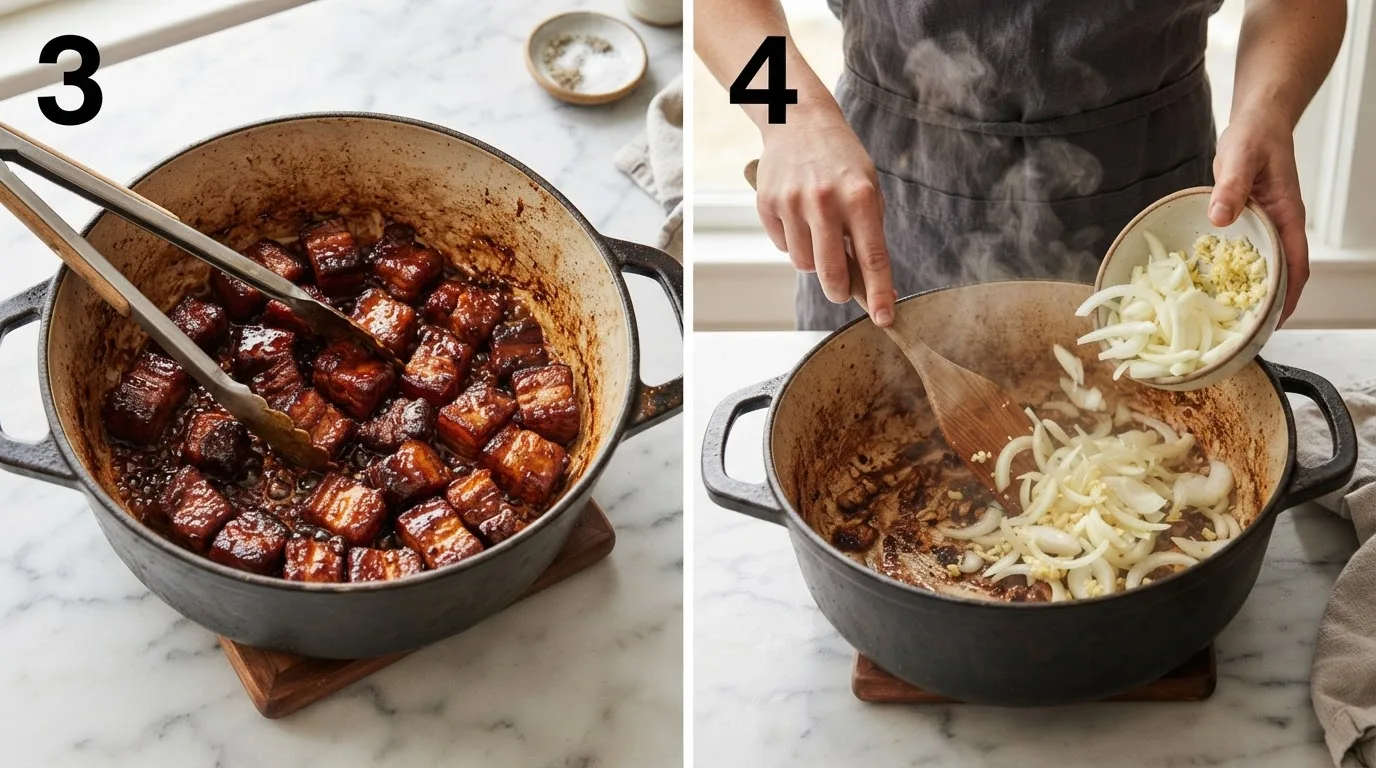
Step 4 — Build the gravy base
Remove the seared pork and set aside. In the same pot, add the sliced onion and cook for 2–3 minutes until softened, scraping up any browned bits stuck to the bottom — that’s flavor, not mess. Stir in the remaining thyme, ketchup, and soy sauce, then return the pork to the pot.
Step 5 — Simmer until fork-tender
Add the chicken stock, whole scotch bonnet (pierced once with a knife), and bouillon cube if using. Bring to a boil, then immediately drop to a low simmer and cover. Cook for 1.5 to 2 hours, checking every 30 minutes to make sure the liquid hasn’t dropped too low. The pork is ready when it shreds easily with the side of a fork and the gravy has reduced to coat the back of a spoon.
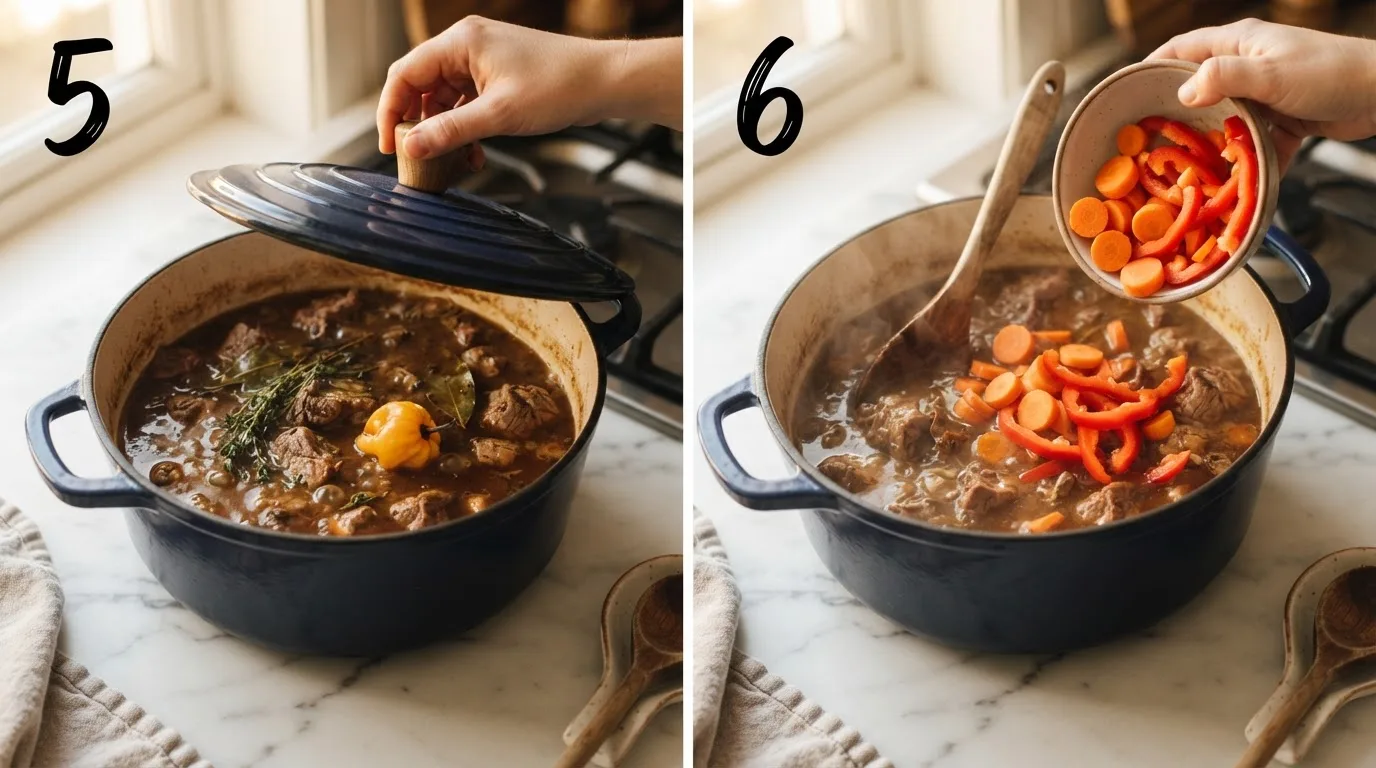
Step 6 — Add the vegetables and finish
In the last 15–20 minutes of cooking, stir in the carrots, bell peppers, and the green parts of the scallions. Simmer uncovered if the gravy needs to reduce further, or covered if it’s already thick. Taste and adjust salt. Remove the scotch bonnet before serving unless your table wants the extra heat left floating in the pot.
Pro Tips for Perfect Jamaican Stew Pork
Tip 1: Don’t walk away during the sugar step. Caramelizing sugar has a very narrow window between “perfect amber” and “bitter and ruined.” Stay at the stove for those 2–3 minutes — it’s the single highest-leverage moment in the whole recipe.
Tip 2: Sear in batches. Crowding the pot drops the temperature and the pork steams instead of browning. A pale, gray piece of pork won’t develop the same crust, and that crust is where a lot of the stew’s flavor lives.
Tip 3: Keep the scotch bonnet whole. Piercing it once lets flavor and controlled heat escape into the gravy. Chopping it finely dumps all the capsaicin in at once, and there’s no walking that back once it’s in the pot.
Tip 4: Resist the boil. A hard boil toughens the connective tissue in the pork shoulder before it has time to break down. A gentle, barely-bubbling simmer for the full 1.5–2 hours is what actually gets you fall-apart meat.
Variations and Substitutions
Dietary Variations:
- Lower-sodium version: Skip the bouillon cube entirely and cut the soy sauce to 1 teaspoon. The gravy will be slightly less salty but still full-flavored from the sugar and browning base.
- Chicken swap: Substitute bone-in chicken thighs for the pork and reduce the simmer time to 40–45 minutes. You’ll get a lighter but still deeply colored brown stew chicken using the exact same method.
Flavor Variations:
- Add pimento dumplings or potato: Drop in peeled, cubed potato or small spinner dumplings during the last 25 minutes for a heartier, one-pot meal.
Ingredient Substitutions:
- No scotch bonnet? Habanero is the closest substitute in both flavor and heat.
- No browning sauce on hand? A double batch of caramelized sugar plus a splash of dark soy sauce gets close.
- No fresh thyme? Use ½ teaspoon dried thyme, added at the same points in the recipe.
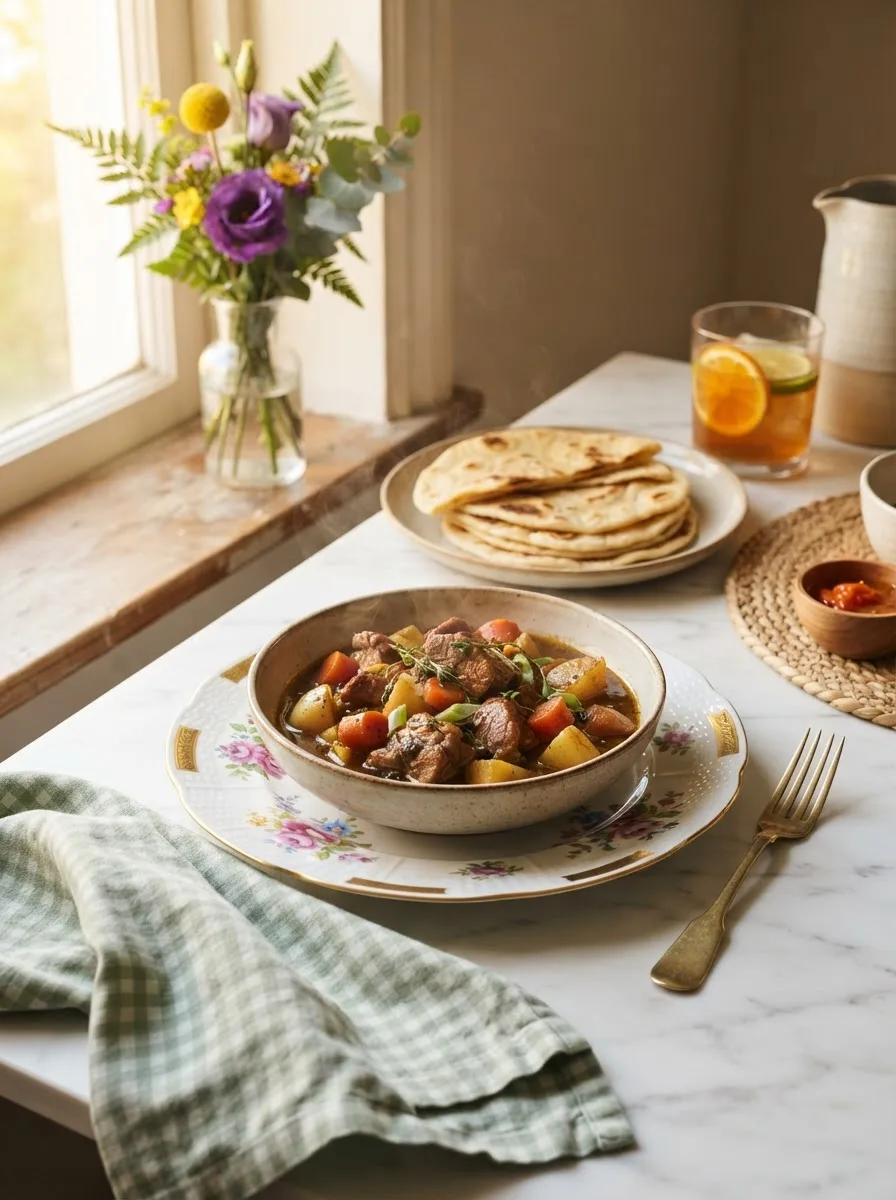
This pork stew, Jamaican style, is meant for scooping — serve it over rice and peas, or alongside a warm jamaican roti for mopping up every bit of that mahogany gravy.
Troubleshooting
Why is my brown stew pork tough instead of falling-apart tender?
Most likely the pot was simmering too hard, or the pork didn’t get the full 1.5–2 hours it needs. Pork shoulder has connective tissue that only breaks down with slow, gentle heat over time — a rolling boil actually tightens the muscle fibers before they have a chance to soften. Drop the heat and give it more time; there’s no rushing this cut.
My pork stew, Jamaican style, tastes flat — what happened?
This usually means the sugar-caramelization step was skipped or rushed, or the allspice was left out. Those two ingredients are doing the real flavor work here — browning sauce alone can’t replace them. If the pot is already simmering, stir in a pinch more allspice and a small spoonful of ketchup to rebuild some depth before serving.
Can I fix pork brown stew that’s too sweet or too salty?
If it’s too sweet, a splash of white vinegar or fresh lime juice right before serving cuts through it. If it’s too salty, stir in a peeled, quartered potato and simmer for 15 more minutes — the potato absorbs some of the excess salt, then remove it before serving if you don’t want it in the final dish.
Storage and Make-Ahead
Counter: Do not leave the stew at room temperature for more than 2 hours — pork is not safe to hold at room temp longer than that.
Refrigerator: Store in an airtight container for up to 4 days. The flavor actually deepens by day two as the gravy continues to absorb into the meat.
Freeze: Cool completely, then freeze in a freezer-safe container for up to 3 months. Leave a little headroom in the container since the gravy expands slightly as it freezes.
Reheating: Reheat gently on the stovetop over low heat with a splash of water or stock to loosen the gravy, stirring occasionally. Microwaving works in a pinch but can dry out the edges of the pork.
Make-Ahead: This jamaican stewed pork recipe is genuinely better the next day. Make it up to 2 days ahead, refrigerate, and reheat gently before serving — ideal for feeding a crowd without last-minute stress.
Frequently Asked Questions
Q: What’s the difference between brown stew pork and jerk pork? A: Brown stew pork is braised low and slow in a caramelized, gravy-based sauce, while jerk pork is dry-rubbed or marinated in a spice paste and grilled or smoked. If you want the jerk route instead, my jamaican jerk seasoning works well as a dry rub or marinade base.
Q: Can I make this jamaican brown stew pork recipe in a slow cooker? A: Yes. Complete the sugar-caramelizing and searing steps on the stovetop first — that flavor base doesn’t develop the same way in a slow cooker — then transfer everything to the slow cooker and cook on low for 6–7 hours.
Q: What cut of pork works best for pork stew, Jamaican style? A: Bone-in or boneless pork shoulder (sometimes labeled pork butt) is the standard choice. It has enough fat and connective tissue to stay moist and turn tender through the long simmer. Leaner cuts like loin will dry out.
Q: How spicy is this recipe? A: Keeping the scotch bonnet whole and removing it before serving gives you fruity background heat without intense spice. If you want it hotter, pierce the pepper in a few more spots or slice it and leave it in.
Q: Is jamaican stew pork recipe gluten-free? A: Mostly, with one swap: use a gluten-free soy sauce (tamari) in place of regular soy sauce, and double-check your browning sauce brand’s label, as some contain trace gluten.
Q: Can I use pork brown stew for meal prep? A: Yes — it holds up exceptionally well in the fridge for up to 4 days and reheats cleanly, making it one of the better make-ahead proteins for weekly meal prep.
Q: What should I serve alongside this pork stew? A: Rice and peas is the traditional pairing, but it’s equally good over plain white rice, with fried plantain, or scooped up with warm jamaican roti.
More Caribbean Recipes You’ll Love
- Jamaican Roti — soft, flaky flatbread that’s the perfect vehicle for scooping up stew gravy
- Jamaican Jerk Seasoning — the dry rub and marinade base for classic grilled or smoked jerk pork and chicken
- Parsnip and Leek Soup — a cozy, low-effort soup for when you want something lighter
- Tikka Paste — another bold, warmly spiced marinade base if you’re building out your spice pantry

Foolproof Jamaican Stew Pork Recipe
Ingredients
For the Marinade:
- 2.5 lb (1.1 kg) boneless pork shoulder, cut into 1.5-inch cubes
- 1 tbsp white vinegar or fresh lime juice
- 4 garlic cloves, minced
- 1 tbsp fresh ginger, grated
- 1 tsp allspice berries (or ½ tsp ground allspice)
- Salt and black pepper, to taste
For the Stew:
- 2 tbsp vegetable oil
- 2 tbsp brown sugar
- 2 tbsp browning sauce (such as Grace Browning)
- 1 large onion, sliced
- 2 sprigs fresh thyme
- 3 tbsp ketchup
- 1 tbsp soy sauce
- 2 cup (480 ml) chicken stock
- 1 beef or chicken bouillon cube (optional)
- 1 whole scotch bonnet pepper, pierced once
- 4 scallions, white and green parts separated, chopped
- 1 red bell pepper, sliced
- 1 green bell pepper, sliced
- 2 carrots, sliced diagonally
Instructions
- Toss the pork with vinegar, garlic, ginger, allspice, scallion whites, salt, and pepper. Cover and marinate in the fridge for at least 30 minutes, or overnight.
- Heat the oil in a Dutch oven over medium heat. Add the brown sugar and stir constantly until it melts into a deep amber color, about 2–3 minutes. Watch closely — it can burn quickly.
- Immediately stir in the browning sauce, then add the marinated pork in batches. Sear for 3–4 minutes per side until deeply browned. Remove and set aside.
- In the same pot, add the sliced onion and cook 2–3 minutes until softened, scraping up any browned bits. Stir in the remaining thyme, ketchup, and soy sauce.
- Return the pork to the pot. Add the chicken stock, bouillon cube, and scotch bonnet pepper. Bring to a boil, then reduce to a low simmer and cover.
- Simmer for 1.5 to 2 hours, checking occasionally, until the pork shreds easily with a fork and the gravy has thickened.
- Stir in the carrots, bell peppers, and scallion greens. Simmer uncovered for 15–20 minutes more, until the vegetables are tender and the gravy coats the back of a spoon.
- Taste and adjust salt. Remove the scotch bonnet before serving unless you want extra heat left in the dish.
Notes
- The gravy thickens further as it cools — if reheating leftovers, loosen with a splash of water or stock.
- For a milder dish, remove the scotch bonnet after the first 30 minutes of simmering instead of leaving it in the full cook time.
- This recipe can be made up to 2 days ahead and reheated gently — the flavor deepens overnight.
- Freeze in a freezer-safe container for up to 3 months; thaw overnight in the fridge before reheating.
- If the gravy is thinner than you’d like at the end, simmer uncovered for an extra 5–10 minutes to reduce, rather than adding cornstarch.