Cheesecake Factory Gumbo Recipe

The first time I tried to recreate a Cheesecake Factory gumbo recipe at home, I made the classic beginner mistake: I rushed the roux. Fifteen minutes of stirring, a roux the color of peanut butter, and a gumbo that tasted more like watery chicken soup with sausage floating in it. Not exactly what you’re picturing when you think of a rich, dark bowl of shrimp chicken gumbo cheesecake factory fans keep asking about online.
I tested this recipe four times before I got it right, changing one thing each round — mostly the roux color and the exact moment the shrimp goes in. What finally worked is below: a proper dark roux, the holy trinity of onion, celery, and bell pepper, and a broth that actually tastes like it simmered for hours. This is the shrimp and chicken gumbo cheesecake factory copycat I now make on repeat, and it’s not complicated — it just takes patience at one specific step.
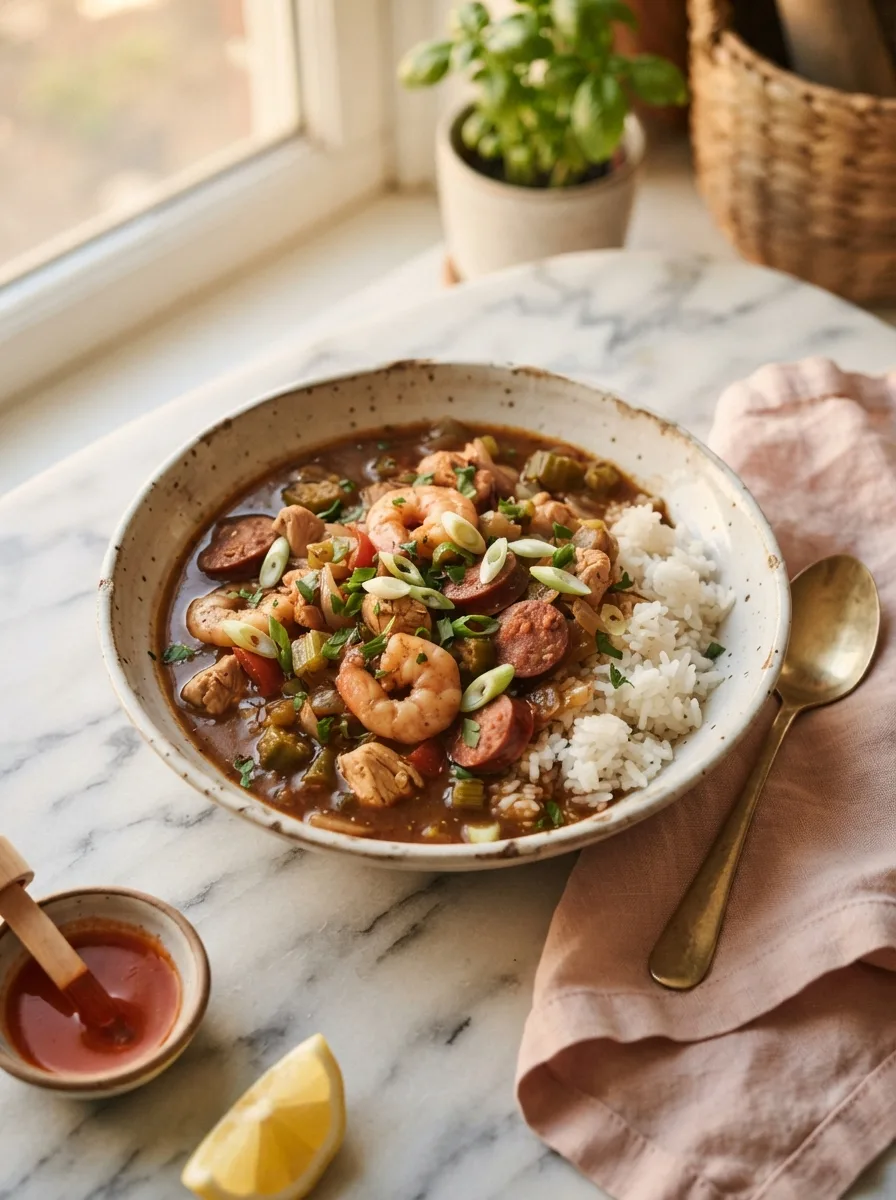
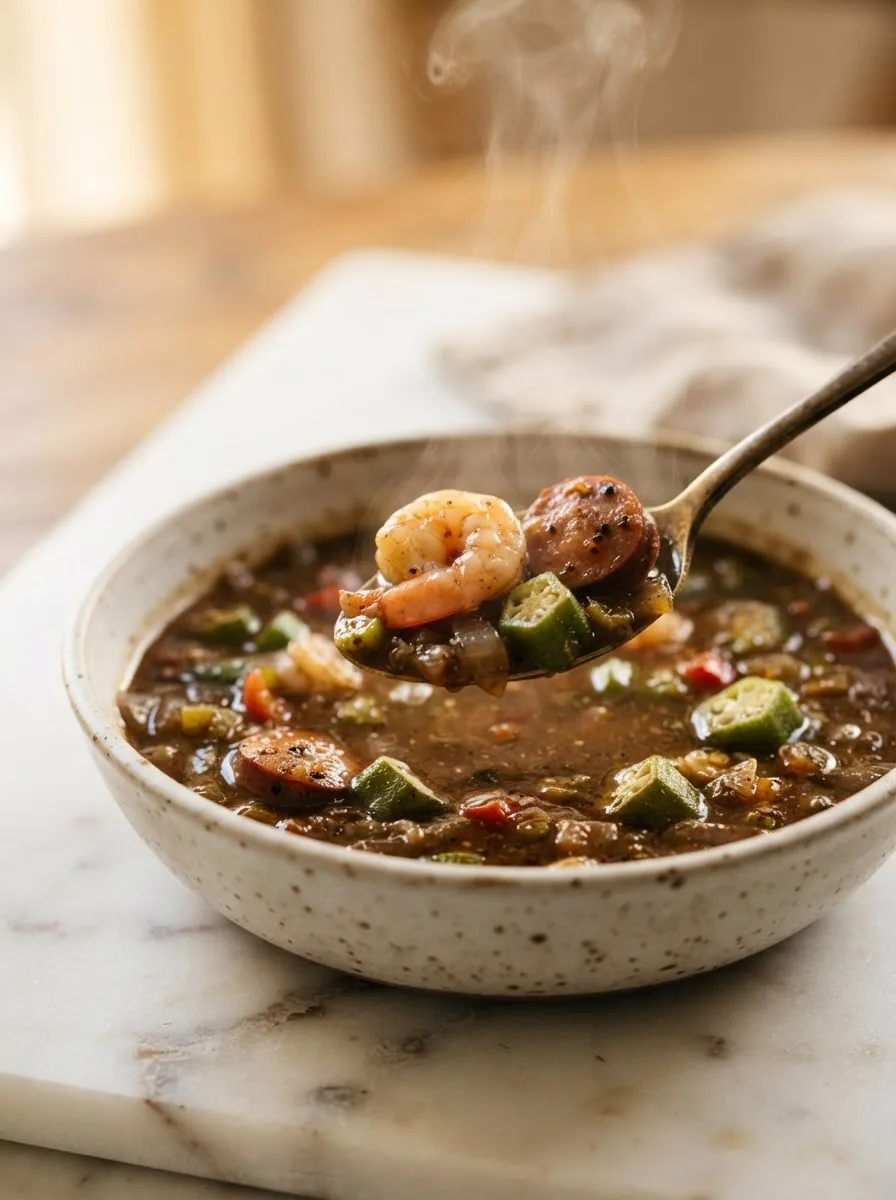
What makes this version work isn’t a secret ingredient — it’s the roux. A dark roux, cooked slowly until it’s the color of melted chocolate, is what gives real gumbo its deep, almost smoky backbone. Skip that step or rush it, and you end up with the same thin, one-note pot I made on my first attempt.
★★★★★ “I’ve ordered gumbo at restaurants for years and always assumed it was too fussy to make at home. This proved me wrong — the roux instructions were so specific I couldn’t mess it up.” — Danielle R., recipe tester (pre-launch)
Why You’ll Love This Cheesecake Factory Gumbo Recipe
- A real dark roux, explained step by step: Most home versions skip this or rush it. Here, the roux gets its own section with exact color cues, so you know precisely when to stop stirring.
- Restaurant depth without a restaurant budget: Andouille sausage, chicken thighs, and shrimp layered in one pot costs a fraction of what you’d pay for a bowl at the restaurant.
- Make-ahead friendly: The gumbo base actually tastes better the next day, which makes this a genuinely good weeknight-to-weekend recipe.
- Built for real Cajun flavor, not a shortcut version: No canned roux, no flour-and-water slurry substitutes — just the technique that actually gives gumbo its character.
Key Ingredients
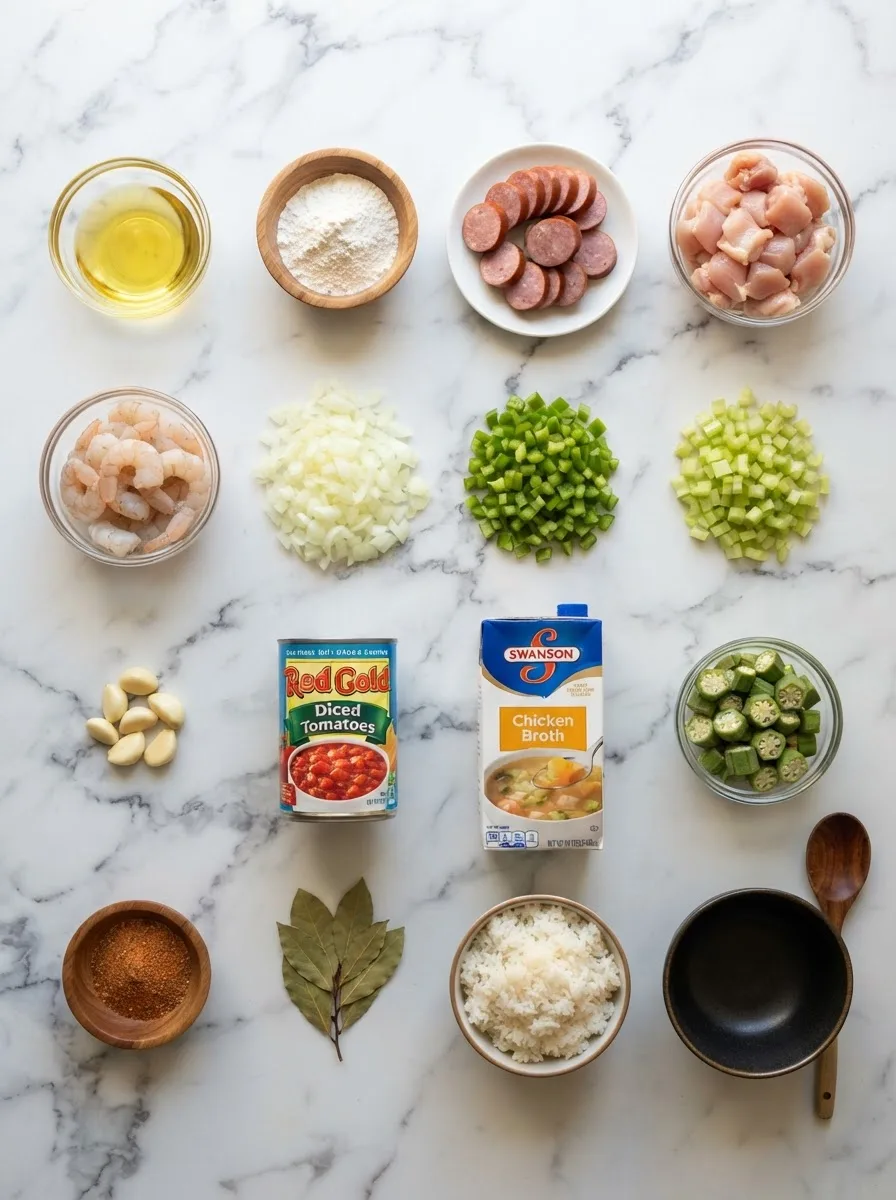
Vegetable oil and all-purpose flour (½ cup each). This is the roux, and it’s the entire soul of the dish. Equal parts oil and flour, cooked low and slow until it turns a deep reddish-brown, is what separates real gumbo from seasoned soup. Butter burns before it gets dark enough, so stick with a neutral oil.
Andouille sausage. Smoky and slightly spicy, andouille is what gives this the flavor people associate with a shrimp chicken gumbo cheesecake factory copycat. If you can’t find andouille, a smoked kielbasa works, though the heat level drops.
Chicken thighs, not breasts. Thighs stay tender through the full simmer time. Breasts dry out and turn stringy by the time the gumbo is ready.
Shrimp, added last. Shrimp cook in minutes. Adding them too early is the single most common way to ruin gumbo — more on that in the troubleshooting section.
The holy trinity: onion, celery, and green bell pepper. This is the flavor base of almost every Cajun and Creole dish. Don’t skip the celery even if you’re tempted — it rounds out the sweetness of the onion and pepper.
Okra. Fresh or frozen both work. Okra thickens the gumbo slightly and adds a texture that’s traditional to the dish. If you’re not a fan of okra, filé powder is the classic substitute (see Variations below).
Ingredient Note: Use a light-colored oil, not butter, for the roux — butter’s milk solids scorch long before the roux reaches the deep, dark color this recipe depends on.
Equipment You’ll Need
- Heavy-bottomed Dutch oven or cast iron pot — Even heat distribution matters enormously for the roux step. A thin pot will scorch flour before it darkens properly.
- Flat-edged wooden spoon or heat-safe whisk — For constant roux stirring; you need to be able to scrape the bottom of the pot continuously.
- Sharp chef’s knife and cutting board — For dicing the trinity and cutting the chicken.
- Ladle — For serving over rice without breaking up the sausage and shrimp.
Controlling the Roux Color (A Controlled Test)
I tested this recipe four times, changing only the roux color each round: a light blonde roux, a medium peanut-butter roux, and a dark, almost-chocolate roux. Everything else — the trinity, the broth ratio, the seasoning — stayed identical across all three tests.
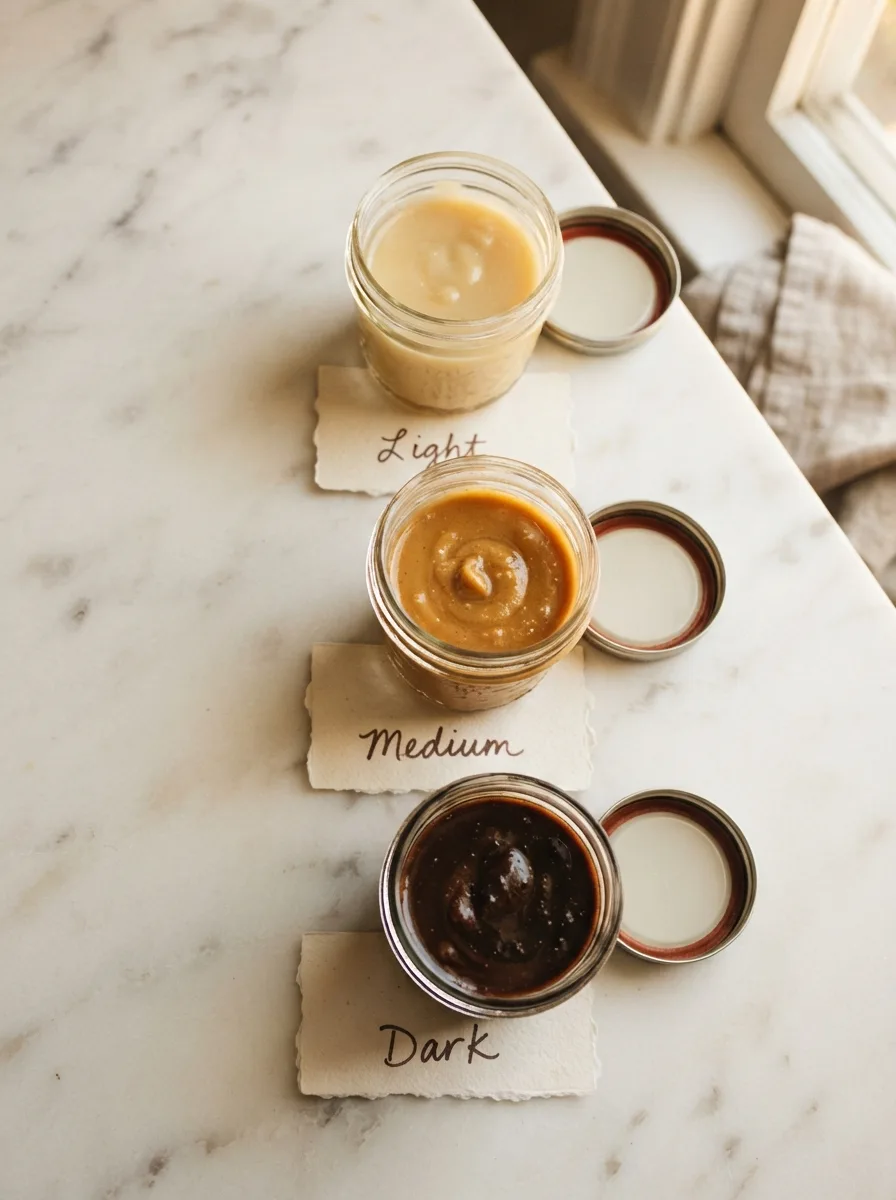
Light roux: Ready in about 8 minutes. The gumbo tasted thin and more like a spiced chicken soup — almost no depth.
Medium roux: About 20 minutes of stirring. Better, but the flavor still leaned more toward “hearty stew” than “gumbo.”
Dark roux: 35–40 minutes of continuous, unhurried stirring. This is the one. It smells nutty and slightly toasted right before it’s ready, and the gumbo built from it had the deep, almost smoky backbone that actually tastes like a real Cajun kitchen made it.
The trade-off is real: a dark roux takes almost 40 minutes of attention, and you cannot walk away from the pot. But it’s the single biggest factor in whether this tastes like restaurant gumbo or seasoned chicken soup, so it’s worth the time.
How to Make Cheesecake Factory Gumbo
Before you start: Have all your vegetables diced and your chicken and sausage cut before you start the roux. Once the roux begins, you need to stir it continuously — there’s no time to chop an onion mid-step.
Step 1 — Make the Dark Roux
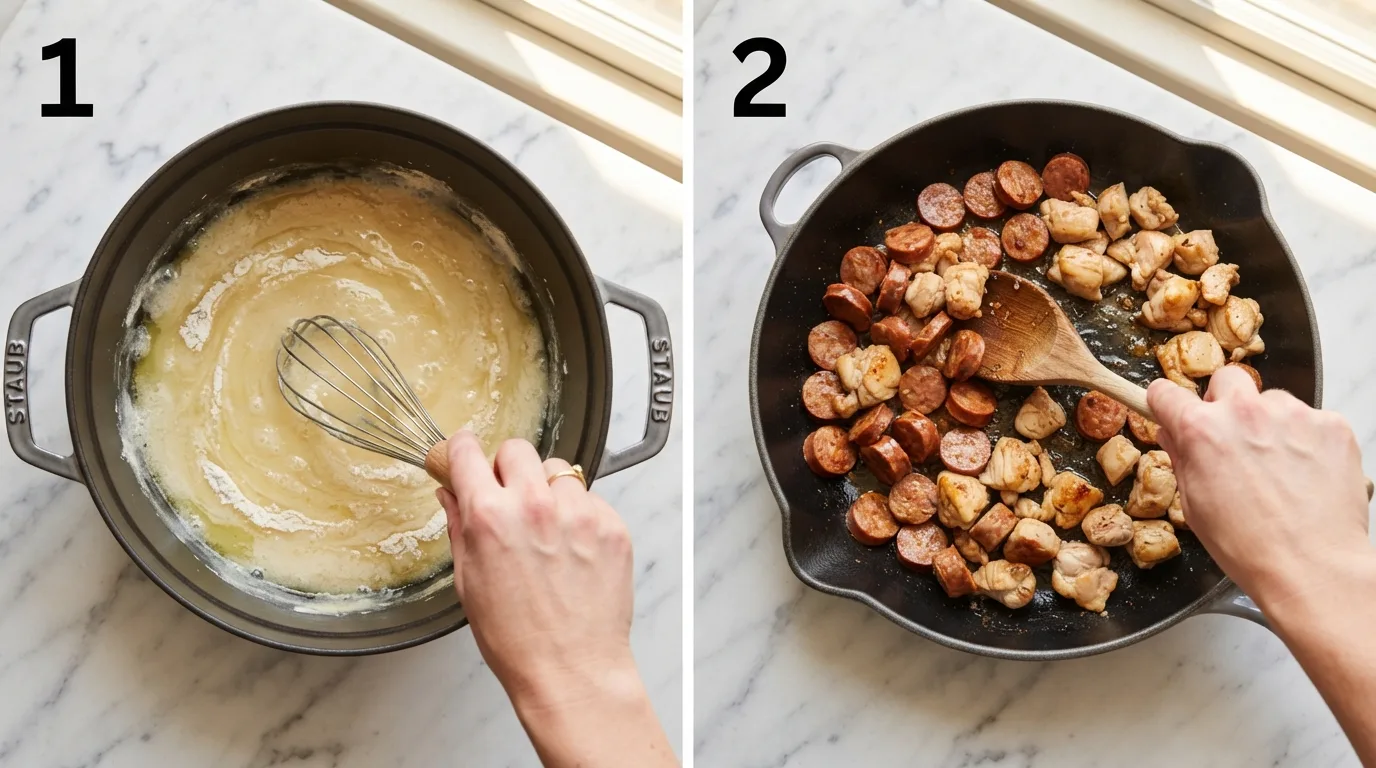
Heat the oil in your Dutch oven over medium heat. Whisk in the flour until smooth, then reduce the heat to medium-low. Stir constantly, scraping the bottom of the pot, for 35–40 minutes. The roux will move through blonde, then peanut-butter, then a deep reddish-brown. Pull it right as it hits that dark chocolate color — a few seconds too long and it scorches, which means starting over.
Step 2 — Brown the Sausage and Chicken
While the roux is still going (or in a separate pan if you’re working solo), brown the sliced andouille sausage and cubed chicken thighs until they pick up good color on all sides, about 6–8 minutes. Set aside; they’ll finish cooking in the broth later.
Step 3 — Sauté the Trinity and Garlic
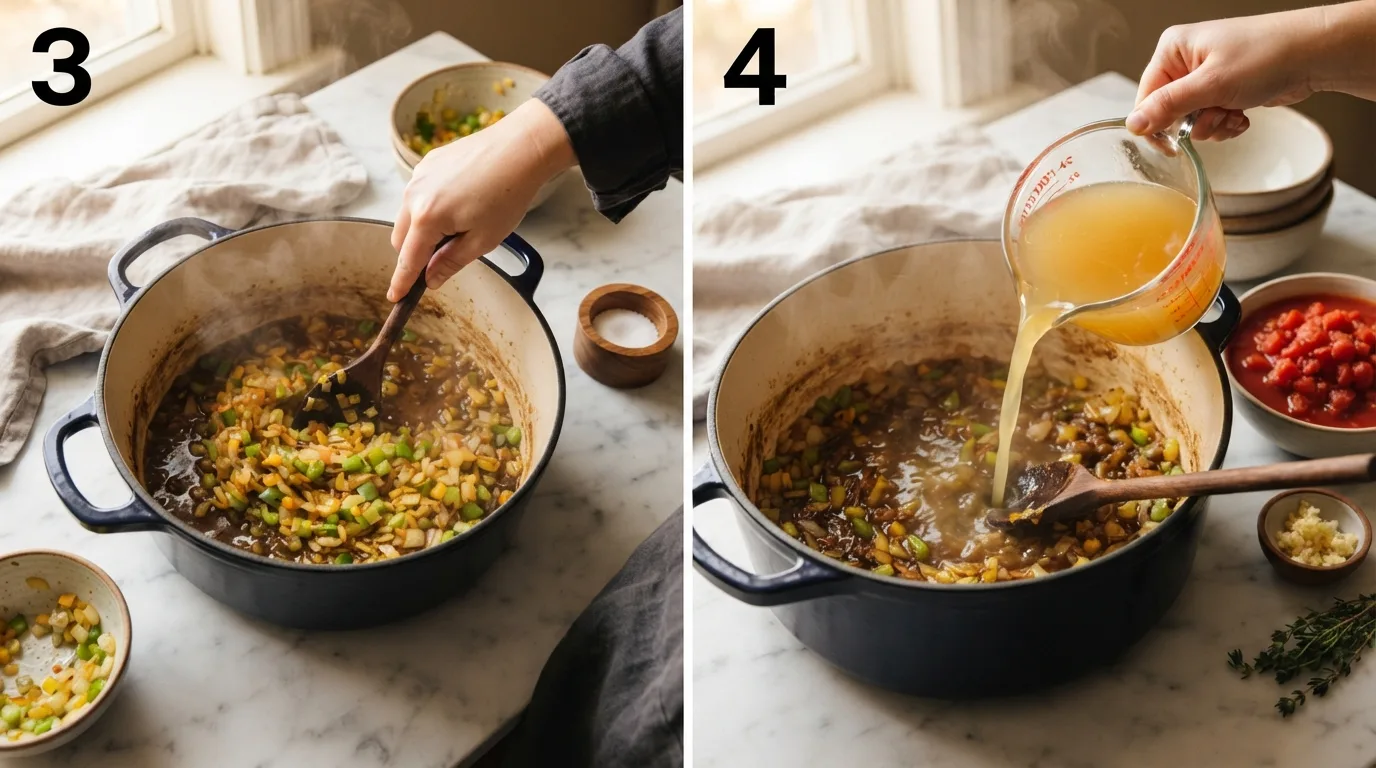
Once your roux is dark and ready, immediately add the diced onion, celery, and bell pepper directly into the roux. The vegetables will sizzle and start to soften almost instantly — stir them in for about 5 minutes, then add the minced garlic for the last minute.
Step 4 — Build the Broth
Slowly whisk in the chicken broth, a little at a time, to avoid lumps. Add the diced tomatoes, bay leaves, thyme, smoked paprika, cayenne, and Cajun seasoning. Bring to a gentle simmer, then return the browned sausage and chicken to the pot.
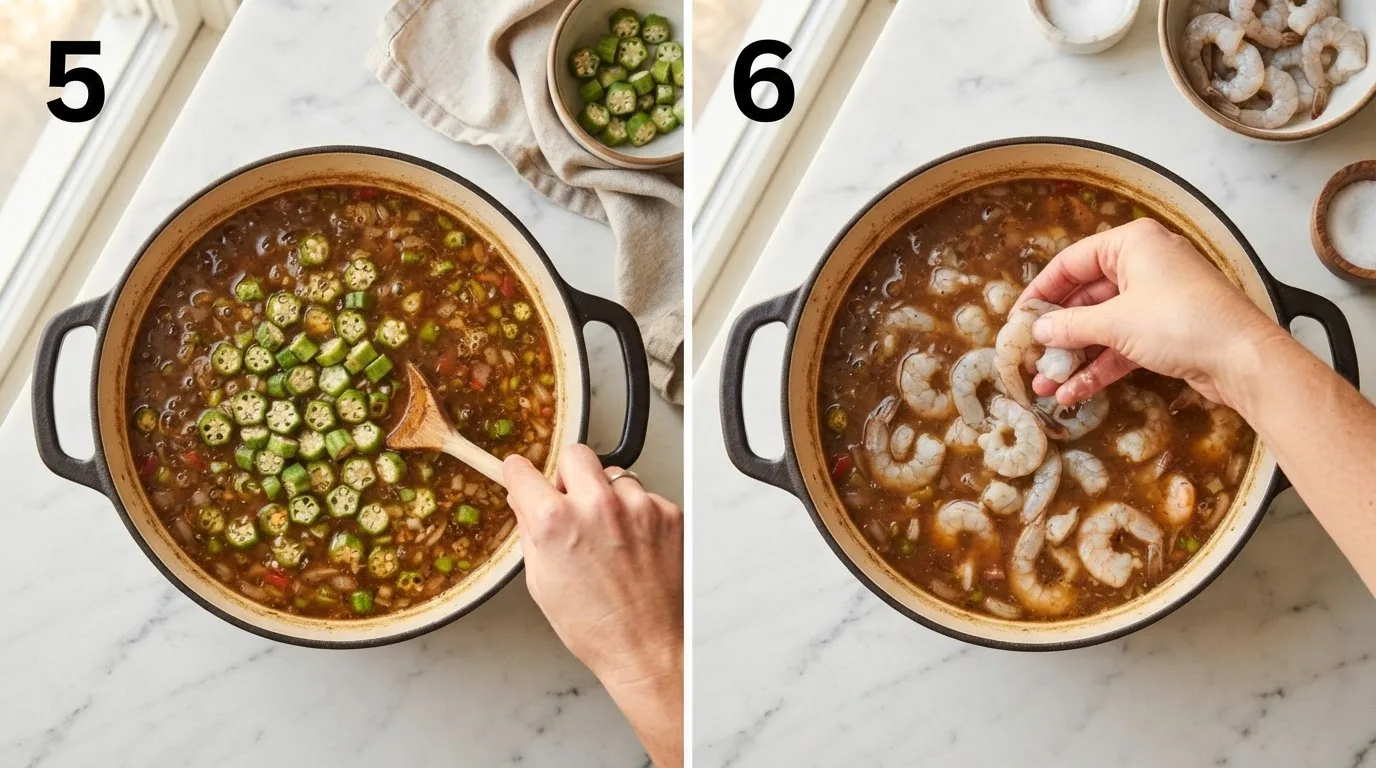
Step 5 — Simmer and Add the Okra
Let the gumbo simmer, uncovered, for 30–35 minutes, stirring occasionally. About 10 minutes before it’s done simmering, stir in the sliced okra. This is also when the broth will visibly thicken and deepen in color.
Step 6 — Add the Shrimp and Finish
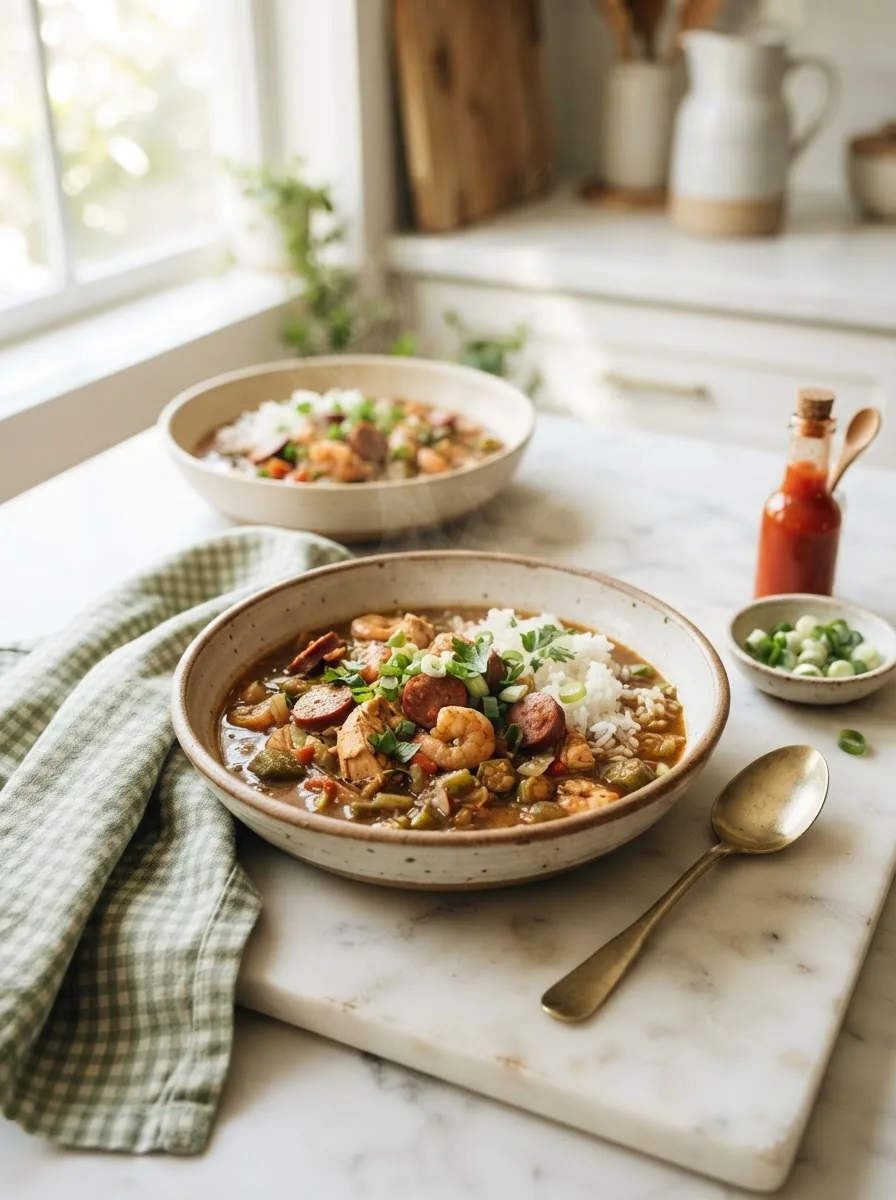
Stir in the shrimp during the last 5–6 minutes of cooking. They’re done the moment they turn pink and curl into a loose “C” shape — pull the pot off the heat right then. Taste and adjust salt, pepper, and cayenne. Serve hot over white rice, garnished with green onion and parsley.
Pro Tips for Perfect Cheesecake Factory Gumbo
Tip 1: Don’t walk away from the roux. Even a 30-second distraction can scorch it past the point of use. If you smell burning, start over rather than trying to salvage it — a scorched roux tastes bitter through the entire pot.
Tip 2: Add the shrimp last, always. Shrimp go from perfectly tender to rubbery in about 90 seconds of overcooking. Pull the pot off the heat the instant they curl.
Tip 3: Let it rest 10 minutes before serving. The gumbo continues to thicken slightly as it sits, and the flavors settle. This short rest is what makes it taste like it simmered longer than it actually did.
Variations and Substitutions
Dietary Variations:
- Gluten-free: Swap the all-purpose flour for a 1:1 gluten-free blend in the roux. It darkens slightly faster, so start checking color at the 25-minute mark instead of 35.
- Lower-spice version: Cut the cayenne to a pinch and skip the extra hot sauce at the table. The andouille still carries some heat, but this brings it down significantly.
Flavor Variations:
- No okra: Leave it out and stir in ½ teaspoon of filé powder off the heat right before serving. It’s the traditional Cajun thickener when okra isn’t available.
Ingredient Substitutions:
- Swap the andouille for smoked kielbasa if andouille isn’t available locally — expect less heat, still good smoky flavor.
- Swap chicken thighs for a rotisserie chicken, shredded and added in the last 10 minutes, for a faster version.
If you want a change from plain white rice, my cava rice recipe makes a great swap underneath the gumbo — it holds up well against the thick broth.
Troubleshooting
My roux tastes bitter or burnt — what happened?
The roux went past dark chocolate into scorched territory, usually from a moment of stirring too slowly or the heat being slightly too high. There’s no fixing a scorched roux — the bitterness spreads through the whole pot. Start over with the heat at medium-low and stir without pausing.
My gumbo is too thin — how do I fix it?
This usually means the roux wasn’t cooked long enough to build real body, or too much broth was added at once. Simmer uncovered for an additional 10–15 minutes to reduce, and make sure the okra had time to release its natural thickening starch.
My shrimp turned rubbery — what went wrong?
The shrimp cooked too long. Once they curl into a tight “C” shape and turn opaque pink, pull the pot off the heat immediately — even a residual simmer for a few extra minutes overcooks them.
Storage and Make-Ahead
Counter: Don’t leave gumbo out longer than 2 hours — it contains shrimp and chicken, both of which need refrigeration promptly.
Refrigerator: Store in an airtight container for up to 4 days. The flavor actually improves by day two as the roux and spices continue to meld.
Freeze: The base (without shrimp) freezes well for up to 3 months. Freeze in portions, thaw overnight in the fridge, and add fresh shrimp when reheating.
Reheating: Warm gently on the stovetop over medium-low heat, stirring occasionally, until just heated through. Avoid a hard boil, which can toughen the shrimp and chicken.
Make-Ahead: Make the full gumbo base (everything except the shrimp) up to 2 days ahead. Reheat gently and stir in fresh shrimp during the last 5–6 minutes before serving.
Frequently Asked Questions
Q: Does The Cheesecake Factory actually serve a shrimp chicken gumbo? A: Gumbo-style dishes have appeared on Cheesecake Factory’s Cajun-inspired menu items over the years, which is exactly why so many home cooks search for a copycat version. This recipe is built to capture that same rich, dark-roux flavor at home.
Q: What makes this taste like the shrimp and chicken gumbo from The Cheesecake Factory? A: It comes down to three things: a properly dark roux, the classic holy trinity of onion, celery, and bell pepper, and layering the andouille sausage, chicken, and shrimp in stages so nothing overcooks.
Q: Can I make this gumbo without okra? A: Yes. Leave it out and stir in ½ teaspoon of filé powder off the heat right before serving for similar thickening and traditional flavor.
Q: Why did my roux turn out grainy or burnt? A: Grainy usually means the flour wasn’t fully whisked in at the start. Burnt means the heat was too high or the stirring paused too long. Both require starting the roux over — there’s no fixing it mid-process.
Q: Can I make this gumbo ahead of time? A: Yes, and it’s actually better the next day. Make the full base without the shrimp up to 2 days ahead, then add fresh shrimp during reheating.
Q: Is this cheesecake factory gumbo recipe very spicy? A: As written, it has moderate heat from the cayenne and andouille. Reduce the cayenne to a pinch for a milder version, or add hot sauce at the table for more.
Q: Can I freeze gumbo that already has shrimp in it? A: You can, but the shrimp texture suffers after freezing and reheating. For best results, freeze the base only and add fresh shrimp when you reheat.
More Cajun Recipes You’ll Love
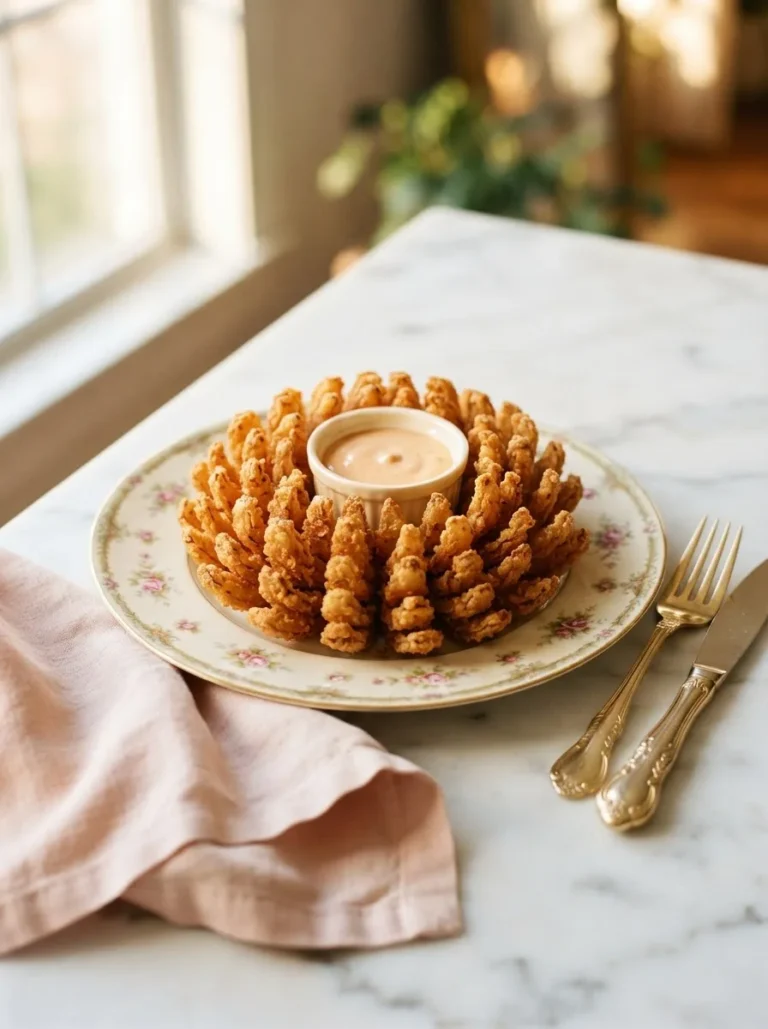
- Texas Roadhouse Onion Blossom — a crispy, shareable starter to serve before the gumbo
- Cava Rice Recipe — a flavorful rice base that holds up under a thick, dark broth
- Cava Sweet Potato Recipe — a slightly sweet side that balances the Cajun spice
- Squash Alabama Recipe — a simple Southern-style side dish that rounds out the table
Cheesecake Factory Gumbo Recipe
Ingredients
For the Roux:
- 1/2 cup vegetable oil
- 1/2 cup all-purpose flour
For the Gumbo:
- 12 oz andouille sausage, sliced into rounds
- 1 lb boneless, skinless chicken thighs, cut into 1-inch pieces
- 1 medium yellow onion, diced
- 1 green bell pepper, diced
- 2 celery stalks, diced
- 4 clove garlic, minced
- 1 (14.5 oz) can diced tomatoes, drained (optional)
- 6 cup chicken broth
- 2 bay leaves
- 1 tsp dried thyme
- 1 tsp smoked paprika
- 1/2 tsp cayenne pepper (more to taste)
- 1 tsp Cajun seasoning blend
- 2 cup sliced okra, fresh or frozen
- 1 lb large shrimp, peeled and deveined
- Salt and black pepper, to taste
- 2 green onions, sliced, for garnish
- 2 tbsp chopped fresh parsley, for garnish
- Cooked white rice, for serving
Instructions
- Heat the oil in a Dutch oven over medium heat. Whisk in the flour and reduce heat to medium-low. Stir constantly for 35–40 minutes until the roux is a deep chocolate-brown.
- While the roux cooks (or in a separate pan), brown the andouille sausage and chicken thigh pieces until golden on all sides, about 6–8 minutes. Set aside.
- Once the roux is dark and ready, immediately stir in the onion, celery, and bell pepper. Cook 5 minutes, then add the garlic for 1 more minute.
- Slowly whisk in the chicken broth. Add the diced tomatoes, bay leaves, thyme, smoked paprika, cayenne, and Cajun seasoning. Bring to a simmer, then return the sausage and chicken to the pot.
- Simmer uncovered for 30–35 minutes, stirring occasionally. Stir in the sliced okra during the last 10 minutes.
- Add the shrimp and cook 5–6 minutes, just until pink and curled. Remove from heat immediately. Taste and adjust seasoning.
- Let rest 10 minutes, then serve hot over white rice, garnished with green onions and parsley.
Notes
- The roux cannot be rushed — cooking it on higher heat to save time results in a scorched, bitter base with no fix.
- For gluten-free, use a 1:1 gluten-free flour blend in the roux; it darkens faster, so check color starting around 25 minutes.
- The gumbo base (without shrimp) can be made up to 2 days ahead and refrigerated; add fresh shrimp when reheating.
- Freeze the base only for up to 3 months; shrimp texture suffers after freezing and reheating.
- No okra on hand? Substitute ½ teaspoon of filé powder stirred in off the heat right before serving.
- Andouille sausage can be swapped for smoked kielbasa if unavailable, though the heat level will be milder.
- To halve this recipe, use a smaller pot and reduce roux cooking time slightly, watching color closely rather than timing.
- Leftovers taste noticeably better on day two as the spices continue to meld into the broth.
- Reheat gently over medium-low heat; a hard boil will toughen the shrimp and chicken.