Foolproof Fritar Tomate (Pan-Fried Tomatoes)

If you’ve only ever eaten tomatoes raw in a salad, fritar tomate is going to change your mind about what a tomato can do. The name is just Portuguese for “to fry tomato,” and that’s exactly what happens here — thick slices get a light dusting of flour, then hit a hot skillet until the edges turn deep golden and the inside collapses into something closer to jam than salad.
I tested this three times, mostly chasing the right heat level. The first batch, I kept the pan too low because I was nervous about burning the flour — the tomatoes just steamed and fell apart into mush. Second batch, too hot, and the flour scorched before the tomato had time to soften. The version below is the one that got both right: a hard sear on medium-high, flipped once, no fussing in between.
This isn’t a fancy dish. It’s the kind of thing you throw together when tomatoes are cheap and ripe and you want something warm on the table in fifteen minutes.
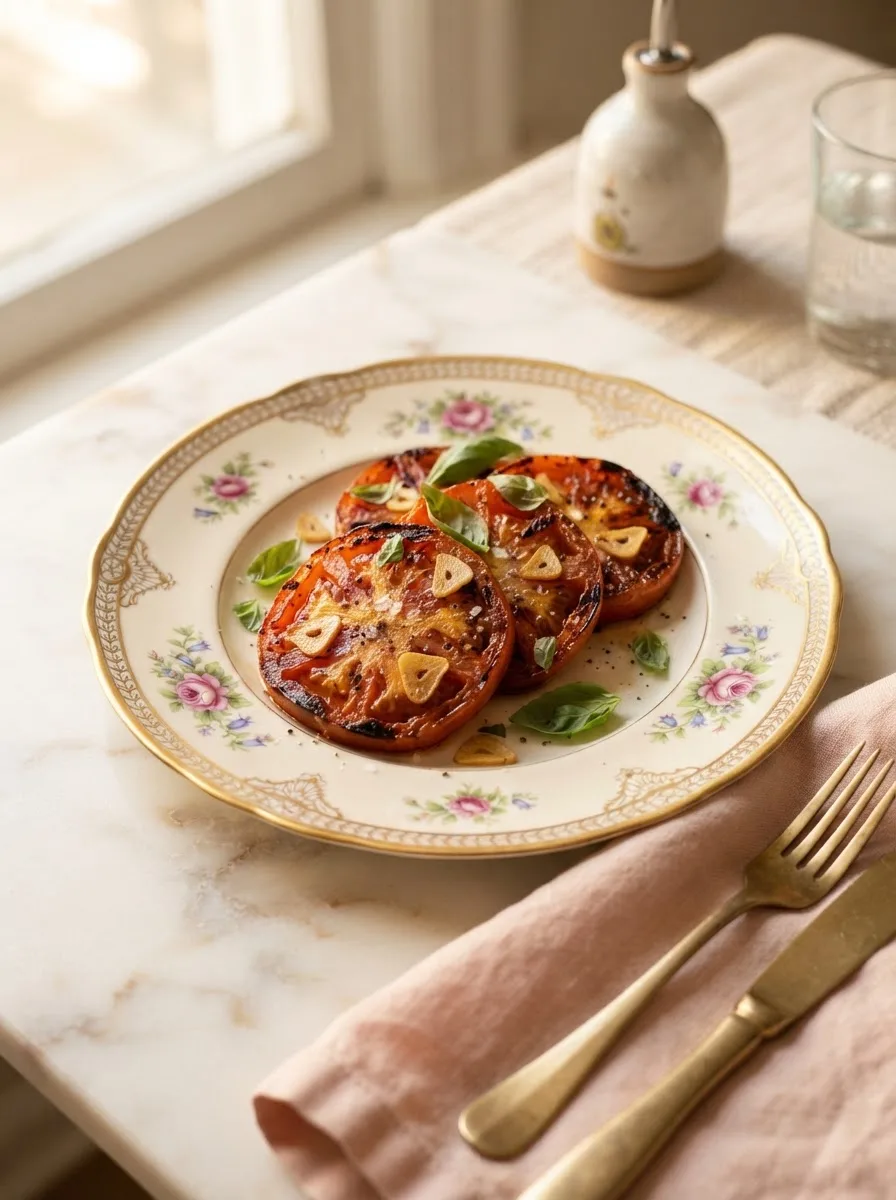
What makes this version worth bookmarking is the flour. Most quick versions skip it, but that thin coating is what gives you a crisp, caramelized crust instead of just softened tomato. It also thickens the juices that leak out as they cook, so you end up with a light pan sauce instead of a puddle.
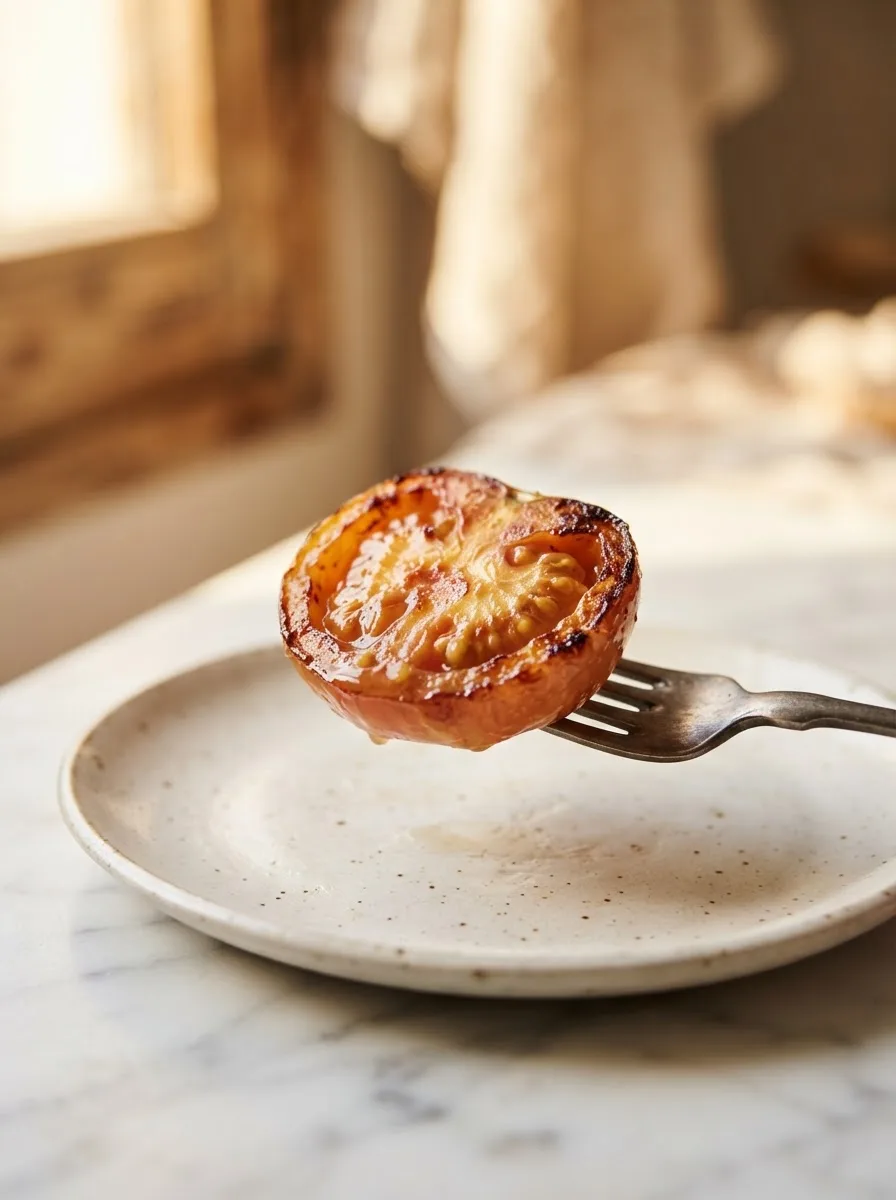
The texture inside stays soft and almost sweet — the sugars in the tomato caramelize fast once the surface sears — while the outside holds its shape enough to pick up with a fork.
★★★★★ “I made this as a side with grilled chicken and my husband asked why I’d never made fried tomatoes before. The edges get so caramelized. This is going in the regular rotation.” — Priya M., recipe tester (pre-launch)
Why You’ll Love This Fritar Tomate
- Fifteen-minute side dish: Slice, dust, fry — there’s no marinating or resting required, so it fits into a weeknight without planning ahead.
- Uses up ripe tomatoes fast: If your tomatoes are a day past their prime for a salad, frying them is the best possible use of that extra ripeness.
- Crisp edges, jammy center: The flour coating gives you a real textural contrast that raw or roasted tomatoes can’t match.
- Works with almost anything: It’s a side for grilled meat, a topping for rice, or even a bed for a fried egg at breakfast.
Key Ingredients
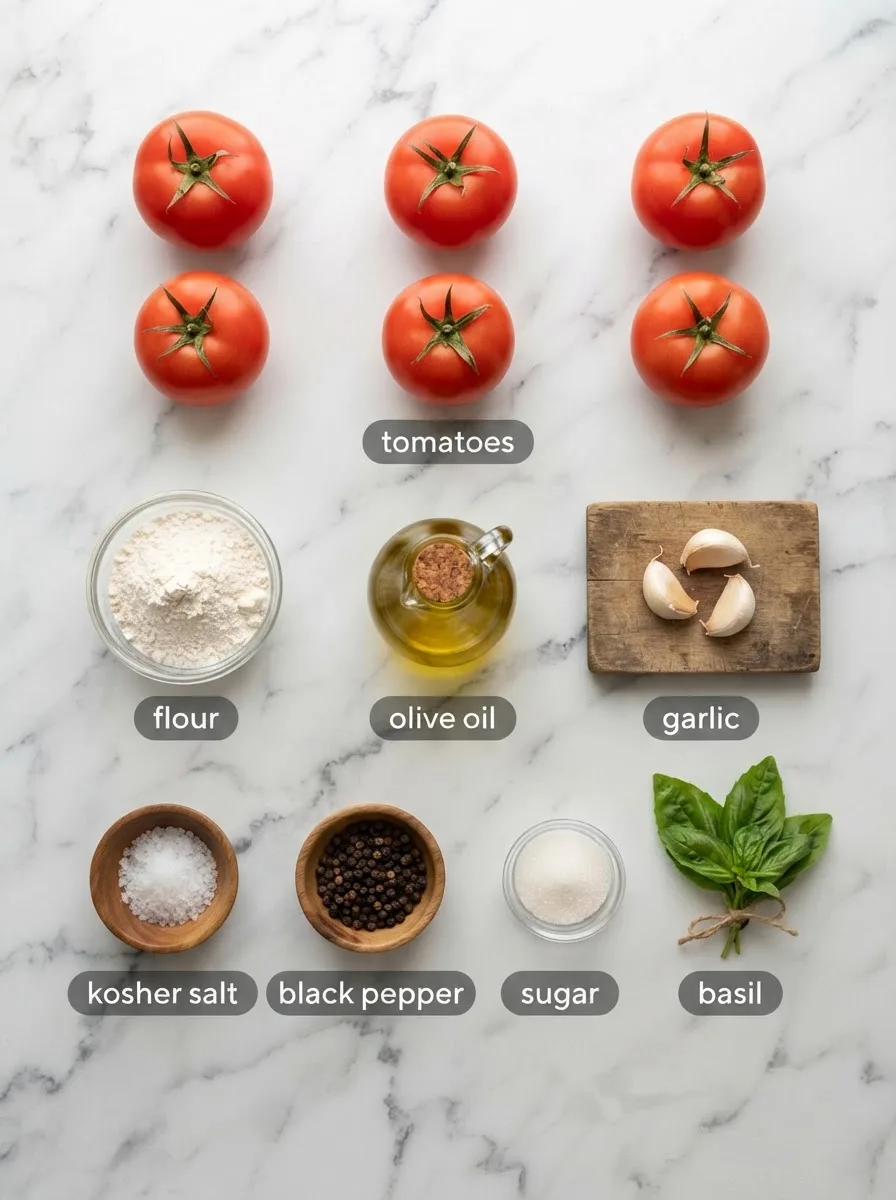
Ripe but firm tomatoes (6 medium). You want tomatoes that give slightly under pressure but aren’t mushy — overripe ones fall apart in the pan before the crust has time to form. Roma or vine tomatoes hold their shape best.
All-purpose flour (½ cup). A thin dusting is what creates the crisp golden crust and thickens the juices into a light sauce. Don’t skip it or swap in a heavier coating — cornmeal or breadcrumbs change the texture into something closer to fried green tomatoes.
Olive oil (⅓ cup). You need enough to properly sear, not just coat, the tomato slices. A neutral oil works too, but olive oil adds a flavor that fits the dish.
Garlic (3 cloves, thinly sliced). Added partway through so it softens and flavors the oil without burning.
A pinch of sugar. This isn’t for sweetness you’ll notice — it balances the tomato’s acidity and helps the edges caramelize a shade faster.
Ingredient Note: Salt the tomato slices right before they go in the flour, not earlier. Salting ahead pulls out moisture and makes the flour clump instead of coating evenly.
Equipment You’ll Need
- Heavy skillet (cast iron or stainless steel) — even heat retention is what gives you consistent caramelization; a thin nonstick pan runs hotter in spots and burns the flour unevenly.
- Tongs — for flipping slices without tearing the crust. A thin spatula works if you don’t have tongs.
- Paper towel–lined plate — for draining excess oil right after frying.
- Sharp knife — a dull blade crushes the tomato instead of slicing it cleanly, which affects how evenly the slices cook.
Controlling the Sear (A Controlled Test)
The one variable that decides whether this dish works or falls apart is pan temperature. I ran three tests, changing only the heat level each time, to find the exact point where the crust forms before the tomato collapses.
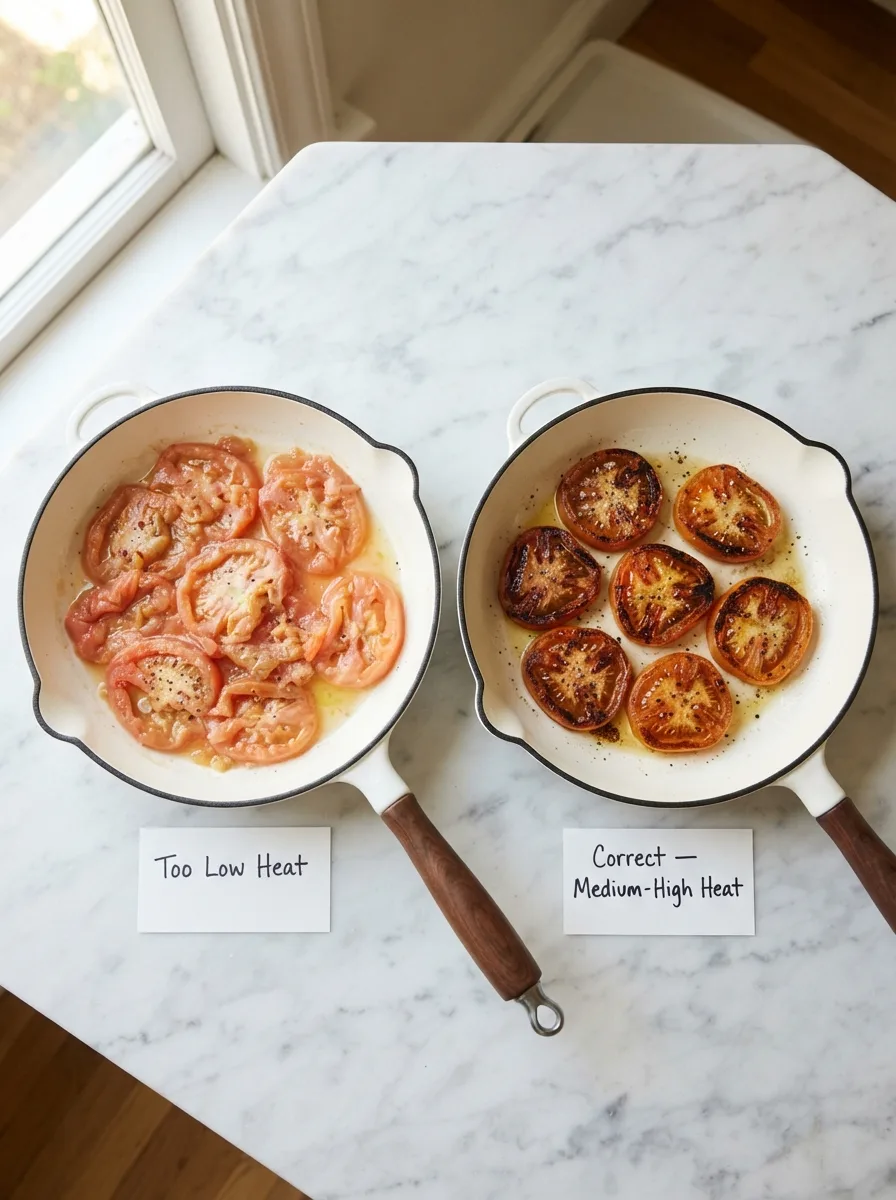
Low heat (medium): The flour never crisps. The tomatoes release their liquid slowly and essentially steam in it, turning soft and pale instead of browned. Skip this setting entirely.
Too high (high heat): The flour scorches within 90 seconds, leaving bitter dark spots, while the tomato inside is barely warmed through.
Medium-high — the winner: The flour turns deep gold in about 2 minutes per side, and by the time both sides are browned, the tomato has softened into that jammy center. This is the heat level in the recipe below — don’t be tempted to turn it down if things look like they’re browning fast. That’s the point.
How to Make Fritar Tomate
Before you start: Slice your tomatoes about ½-inch thick — thinner slices fall apart, and thicker ones don’t cook through before the crust burns. Have your flour, salt, and pepper set up on a plate right next to the stove.
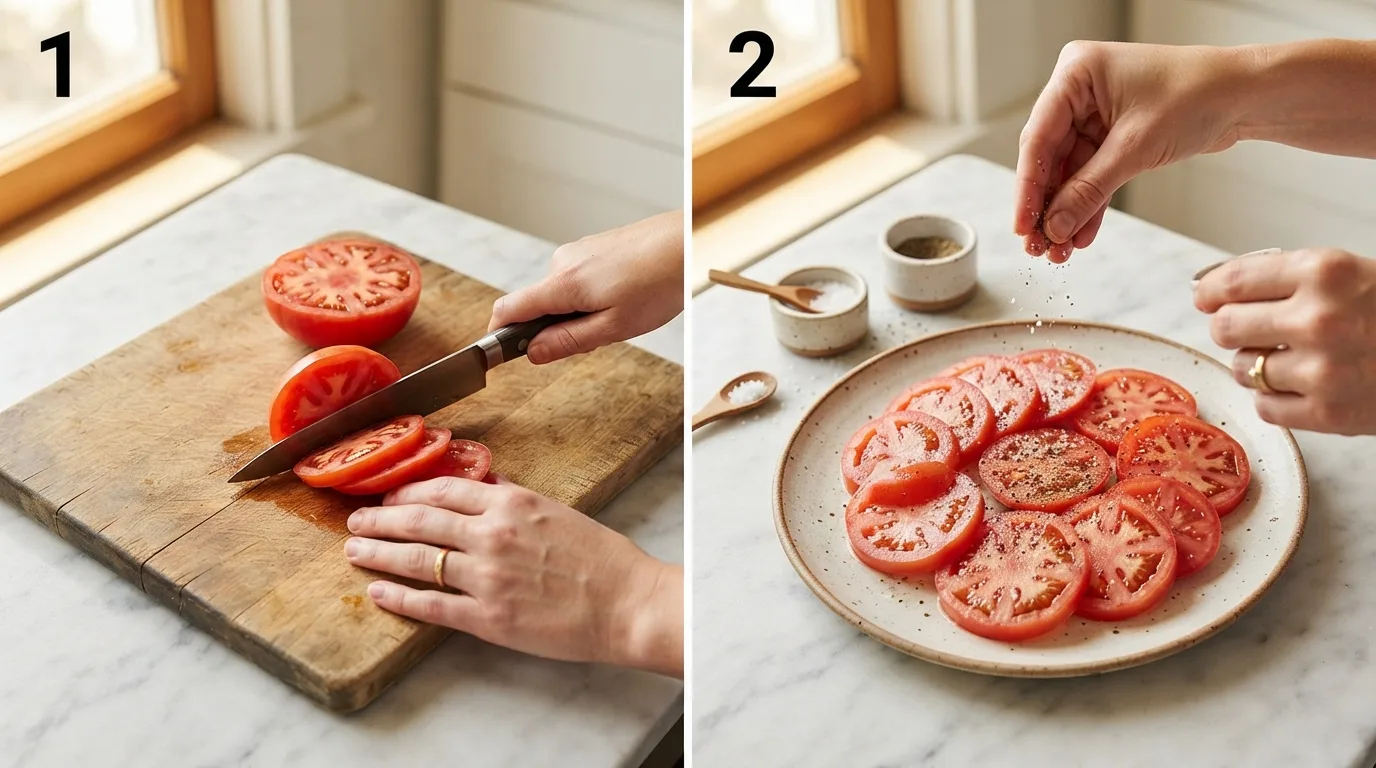
Step 1 — Slice and season the tomatoes
Cut the tomatoes into even ½-inch rounds. Lay them on a paper towel for a minute to pull off excess surface moisture, then season both sides with salt and pepper right before dredging — not earlier.
Step 2 — Dredge in flour
Press each tomato slice into the flour on both sides, shaking off the excess. You want a thin, even coating — a thick clump of flour will taste raw and pasty once fried.
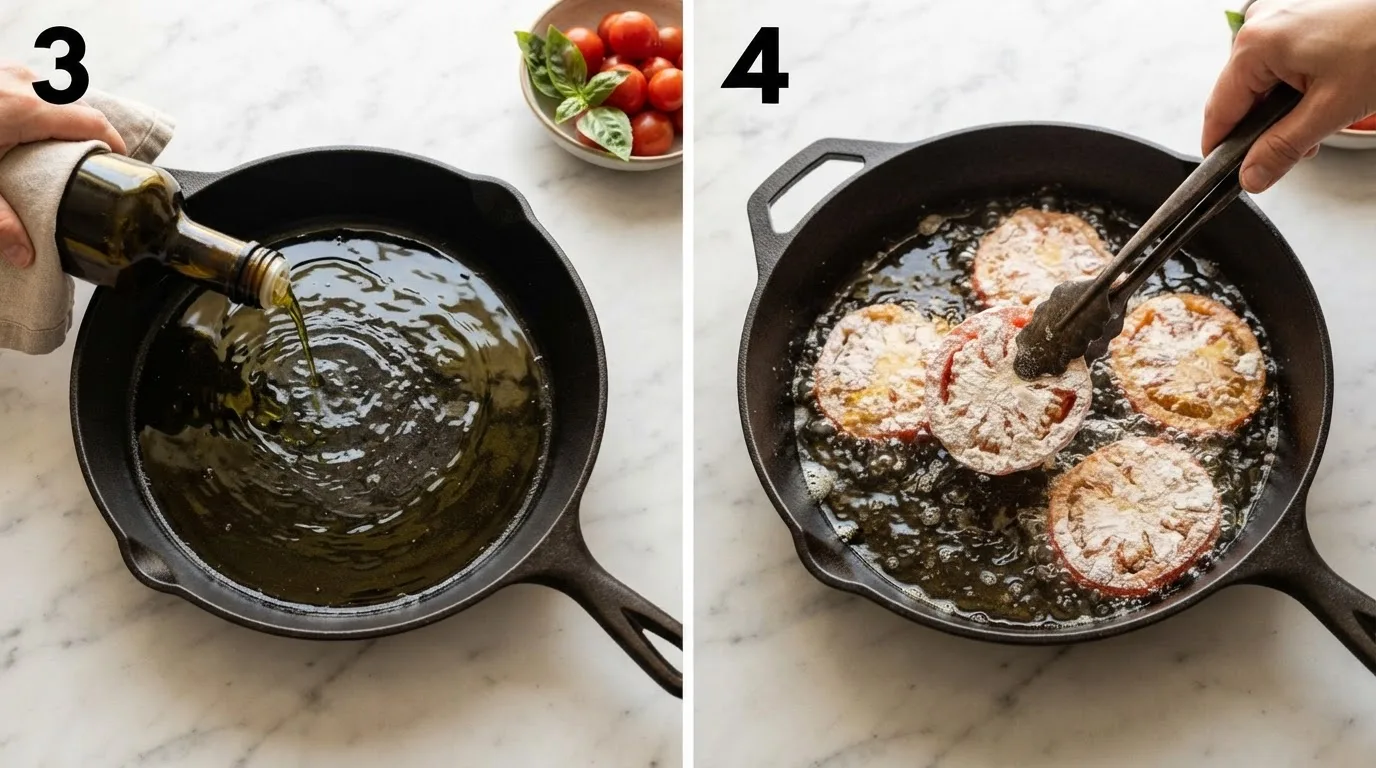
Step 3 — Heat the oil
Add the olive oil to your skillet and set it over medium-high heat. Let it heat for a full 2 minutes before adding anything — a properly hot pan is what gives you the sear from the controlled test above. Test it with the edge of a tomato slice; it should sizzle immediately on contact.
Step 4 — Fry until deep gold
Lay the tomato slices into the hot oil in a single layer, without crowding — cook in batches if needed. Fry for about 2 minutes per side, until the flour turns a deep golden brown. Add the sliced garlic to the oil during the last minute of the second side so it softens without burning.
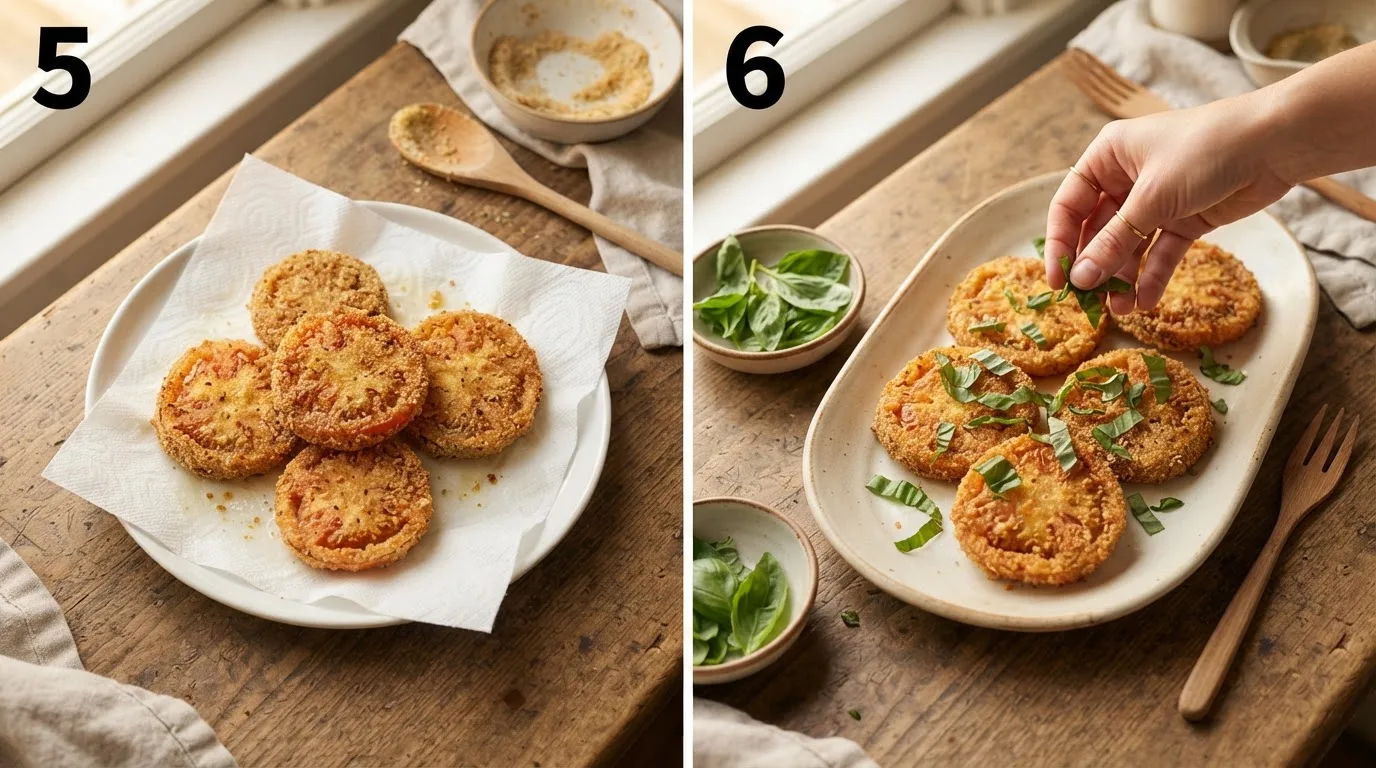
Step 5 — Drain and finish
Transfer the fried tomatoes to a paper towel–lined plate for a minute to shed excess oil, then move them to your serving plate. Scatter the softened garlic and torn fresh basil over the top while they’re still warm.
Pro Tips for Perfect Fritar Tomate
Tip 1: Don’t crowd the pan. Slices touching each other steam instead of sear, which softens the flour coating instead of crisping it. Fry in batches if your skillet is small.
Tip 2: Flip only once. Every flip disturbs the crust before it’s fully set. Wait for the full 2 minutes, then turn — resist poking at it in between.
Tip 3: Use the ripest tomatoes you have, within reason. Slightly softer tomatoes (not mushy) actually fry up jammier and sweeter than rock-hard ones.
Tip 4: Season again at the end. A little extra salt right before serving wakes up the flavor after frying, which mutes seasoning slightly.
Variations and Substitutions
Dietary Variations:
- Gluten-free: Swap the all-purpose flour for a 1:1 gluten-free blend or rice flour. Rice flour actually crisps up slightly more, so watch the timing closely — it can go from golden to dark in seconds.
- Dairy-free: This recipe is naturally dairy-free as written — no changes needed.
Flavor Variations:
- Add a splash of vinegar: A light drizzle of red wine vinegar right before serving brightens the whole dish and cuts through the richness of the fried crust.
Ingredient Substitutions:
- No fresh basil? Fresh parsley or oregano both work as a garnish, though the flavor shifts slightly earthier.
- Out of olive oil? Any neutral high-heat oil works, though you’ll lose some of the flavor olive oil adds to the crust.
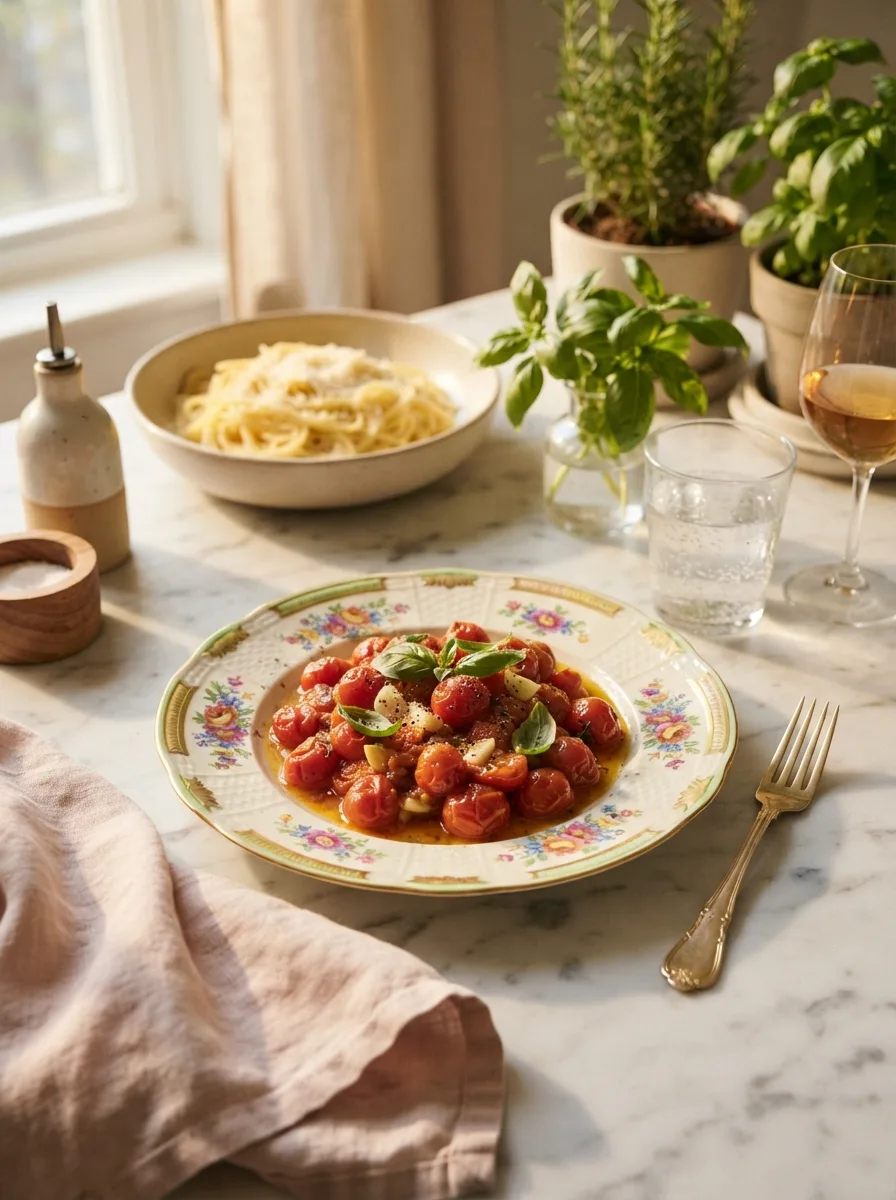
If you’re building out a full plate, fritar tomate pairs beautifully alongside a bowl of zehnder’s buttered noodles recipe — the richness of the noodles balances the acidity of the tomato.
Troubleshooting
Why did my tomatoes fall apart instead of holding their shape?
Most likely your tomatoes were overripe, or the pan wasn’t hot enough when they went in. Choose firmer tomatoes next time and make sure the oil is sizzling before the first slice touches the pan.
Why is my flour coating gummy instead of crisp?
This usually means the tomatoes were salted too far in advance, which drew out moisture that turned the flour into paste. Salt right before dredging, not ahead of time.
Why did the flour burn before the tomato cooked through?
Your heat was too high. Drop it to a true medium-high and give the oil a full 2 minutes to heat evenly before adding the tomatoes — a pan that’s too hot at the start scorches the coating in under a minute.
Storage and Make-Ahead
Counter: Best eaten within 30 minutes of frying, while the crust is still crisp. It softens quickly at room temperature.
Refrigerator: Store leftovers in an airtight container for up to 2 days. The crust will soften, but the flavor holds up well.
Freeze: Not recommended — the texture turns watery and mushy once thawed.
Reheating: Reheat in a hot, dry skillet for 2–3 minutes per side to re-crisp the edges. Avoid the microwave, which makes them soggy.
Make-Ahead: You can slice and season the tomatoes up to 2 hours ahead, but don’t dredge them in flour until right before frying, or the coating will clump.
Frequently Asked Questions
Q: What does “fritar tomate” mean? A: It’s Portuguese for “to fry tomato.” The dish is exactly that — tomato slices, lightly floured, pan-fried until golden.
Q: Can I use green tomatoes instead? A: Yes, though the texture and flavor shift closer to classic fried green tomatoes — firmer, tangier, less jammy in the center.
Q: Do I have to use flour? A: The flour is what gives you the crisp caramelized crust and thickens the pan juices. Skipping it works, but you’ll get softer, more stewed-tasting tomatoes instead.
Q: What can I serve fritar tomate with? A: It works as a side with almost any main — grilled meats, rice, eggs, or alongside a hearty stew like smithfields brunswick stew recipe.
Q: Can I make this ahead for a dinner party? A: You can prep the tomatoes ahead, but fry them close to serving time — the crisp texture doesn’t hold for more than about 30 minutes.
Q: Why did my garlic burn? A: Garlic burns fast in hot oil. Add it only in the last minute of frying, not at the start.
Q: Is this the same as fried green tomatoes? A: No — fried green tomatoes use underripe, firm tomatoes and often a heavier cornmeal coating. Fritar tomate uses ripe tomatoes and a light flour dusting for a softer, jammier result.
More Recipes You’ll Love
- Smithfield’s Brunswick Stew Recipe — a hearty, slow-simmered stew that pairs perfectly with a side of fritar tomate.
- Zehnder’s Buttered Noodles Recipe — simple buttered noodles that balance the tangy richness of fried tomatoes.
- Big Hunk Recipe — a nostalgic homemade candy bar, if you’re rounding out the meal with something sweet.
- Dirty Crackers — a crunchy, savory snack for the table while everything else is frying up.

Foolproof Fritar Tomate (Pan-Fried Tomatoes)
Ingredients
For the tomatoes:
- 6 medium ripe but firm tomatoes, sliced into ½-inch rounds
- 1/2 cup all-purpose flour
- 1 teaspoon kosher salt
- 1/2 teaspoon black pepper
- pinch of sugar
For frying:
- 1/3 cup (80ml) olive oil
- 3 clove garlic, thinly sliced
- fresh basil leaves, torn, for garnish
Instructions
- Slice the tomatoes into even ½-inch rounds. Lay on a paper towel for 1 minute to remove excess surface moisture.
- Season both sides of each slice with salt, pepper, and a pinch of sugar.
- Dredge each slice in the flour, coating both sides evenly, and shake off the excess.
- Heat the olive oil in a heavy skillet over medium-high heat for 2 minutes, until shimmering and hot.
- Add the tomato slices in a single layer without crowding the pan; work in batches if needed.
- Fry for 2 minutes per side, until the flour turns deep golden brown, flipping only once.
- Add the sliced garlic to the oil during the last minute of cooking so it softens without burning.
- Transfer the fried tomatoes to a paper towel–lined plate to drain for 1 minute.
- Move to a serving plate, scatter with the softened garlic and torn fresh basil, and serve warm.
Notes
- Salt the tomato slices right before dredging, not in advance — early salting draws out moisture and makes the flour coating clump instead of crisping.
- For a gluten-free version, substitute rice flour 1:1; it crisps slightly faster, so reduce frying time by about 15 seconds per side.
- Leftovers keep in the refrigerator for up to 2 days; re-crisp in a hot dry skillet for 2–3 minutes per side rather than microwaving.