Original Caesar Salad Dressing Recipe

If you’ve only ever had Caesar dressing out of a bottle, or the mayo-thickened version most restaurants serve now, this original Caesar salad dressing recipe is going to surprise you. There’s no mayonnaise in it at all. The real version — the one Caesar Cardini reportedly tossed together in his Tijuana restaurant kitchen in 1924 — gets its creaminess from an egg yolk whisked with oil into a proper emulsion, the same way you’d make a mayonnaise from scratch, except you stop before it turns into mayonnaise.
I made this four times before I got the emulsion to hold reliably. The first batch broke halfway through — the oil pooled on top and the whole thing looked curdled instead of creamy. The second batch was better but tasted flat, because I’d used too little lemon and too much raw garlic. By the fourth try I had the exact ratio and the exact pace of adding the oil that gives you a thick, glossy dressing every time, with real anchovy depth instead of the vague fishiness bottled versions often have.
This is not a mayo-based Caesar dressing recipe dressed up to look old-fashioned. It’s the original caesar dressing recipe technique — raw egg yolk, garlic, anchovy, lemon, and Parmesan, whisked into an emulsion by hand. It takes about ten minutes and a little patience with a whisk, and it tastes like the dressing you get at the good Italian restaurant that clearly isn’t using a squeeze bottle.
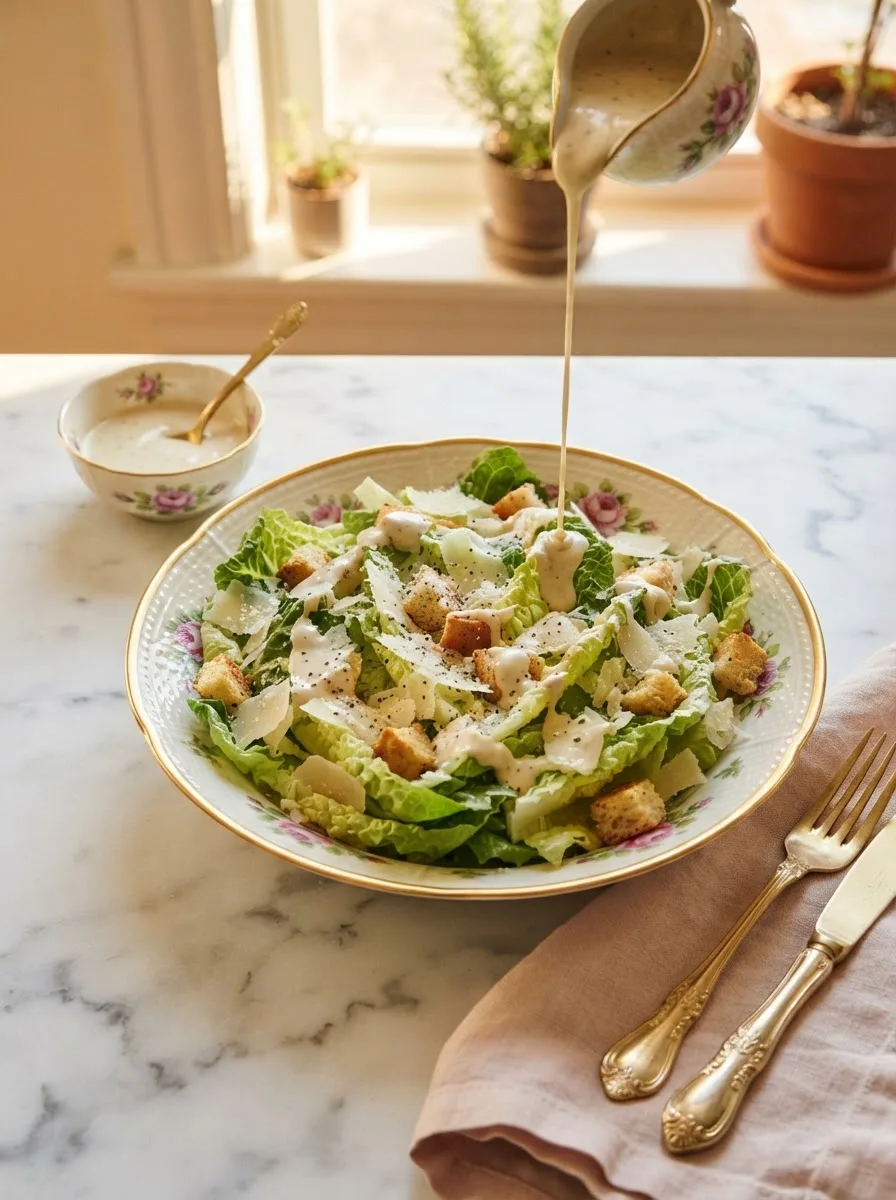
What makes this version worth the extra whisking is the anchovy. Most bottled Caesar dressings hide the anchovy behind a wall of sugar and stabilizers, so you get a vague savory note and not much else. Here, the anchovy is mashed straight into the base with garlic, so it dissolves completely and just reads as deep, salty umami — nobody at your table will identify it as fish unless you tell them.
The texture is the other thing that changes everything. Because it’s an egg-yolk emulsion instead of a mayo base, this dressing clings to romaine in a thin, glossy coat instead of gluing the leaves together in a thick paste. It’s the difference between a salad that tastes like dressing and a salad that tastes like lettuce with dressing on it.
★★★★★ “I’ve made Caesar dressing from a dozen different recipes over the years and this is the first one that actually tasted like the dressing at the steakhouse near my old office. The anchovy paste trick made it so much less intimidating.” — Renata, recipe tester (pre-launch)
Why You’ll Love This Original Caesar Salad Dressing Recipe
- No mayo, no shortcuts: This is the real emulsion technique, not a doctored jar of mayonnaise. The texture and flavor are noticeably different from every bottled version.
- The anchovy actually disappears: Mashed into a paste with garlic before anything else goes in, so you get depth, not fish flavor.
- Ten minutes, one bowl: No blender required, though I’ll tell you exactly when one helps.
- Tested for a break-proof emulsion: I ruined one batch so you don’t have to. The method below is the one that held every single time in testing.
Key Ingredients for This Original Caesar Dressing Recipe
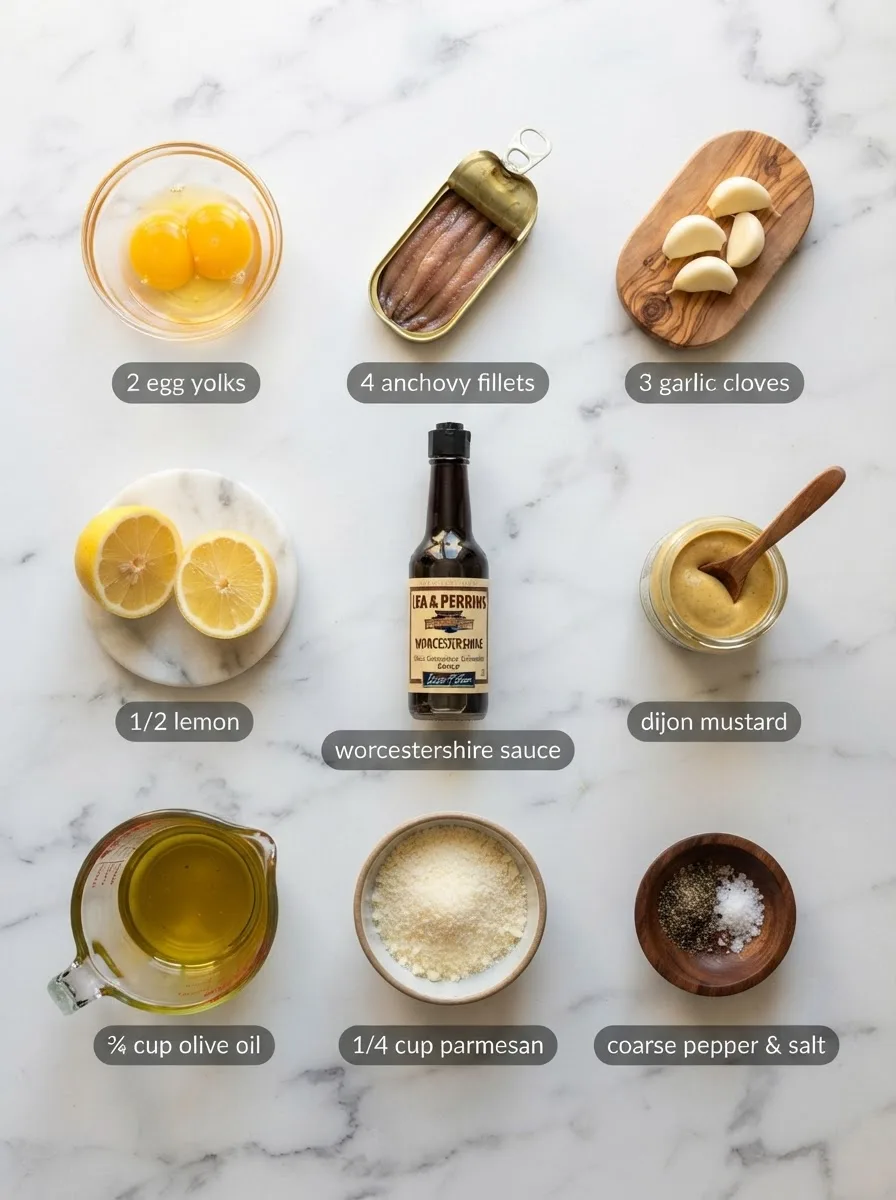
Egg yolks (2 large). This is what makes the dressing an emulsion instead of a vinaigrette. The yolk’s fat and lecithin bind the oil into a stable, creamy suspension instead of letting it separate. Use the freshest eggs you can find, since they’re not cooked. If you’re serving this to anyone pregnant, elderly, or immunocompromised, use pasteurized eggs — the flavor and texture are identical.
Anchovy fillets (4, or 2 teaspoons anchovy paste). The backbone of the “original” flavor. Oil-packed fillets mashed into a paste give a cleaner, less metallic taste than the paste in a tube, though the paste works fine in a pinch and saves you a step.
Garlic (3 cloves). Mashed with the anchovy into a paste rather than left in chunks. Raw minced garlic left whole gives sharp, lingering bites; mashing it with a pinch of salt breaks down the cell walls and mellows the bite considerably.
Dijon mustard (1 tablespoon). Not in Cardini’s 1924 version, but it earns its place here as an emulsifier — it helps the oil and egg yolk bind faster and hold longer, which is exactly the problem that broke my first test batch. Purists can leave it out; the emulsion is just slightly less forgiving without it.
Fresh lemon juice (2 tablespoons). Bottled juice tastes flat and slightly bitter against the anchovy. Fresh is non-negotiable here — it’s doing a lot of the brightening work that keeps this from tasting heavy.
Worcestershire sauce (1 tablespoon). Adds a second layer of umami and a faint smokiness that plain anchovy alone doesn’t give you.
Olive oil (½ cup) + neutral oil (¼ cup, such as avocado or grapeseed). Straight extra-virgin olive oil can turn bitter once it’s fully emulsified and whisked hard. Cutting it with a neutral oil keeps the flavor rounder and the color paler, closer to the original.
Parmesan (½ cup, finely grated). Buy a block and grate it yourself on the small holes of a box grater. Pre-shredded Parmesan is coated in anti-clumping starch that keeps it from dissolving smoothly into the dressing.
Ingredient Note: If raw egg makes you nervous, you can substitute 1 whole pasteurized egg for the 2 yolks — the emulsion is slightly less rich but just as stable, and it’s the safer choice for anyone in a high-risk group.
Equipment You’ll Need
- A medium mixing bowl — glass or metal both work; you want to be able to whisk vigorously without the bowl sliding.
- A whisk — the traditional tool, and what gives you the most control over how fast the oil goes in.
- An immersion blender (optional) — speeds up the process and makes the emulsion nearly foolproof, though the texture comes out slightly thicker and whiter than a hand-whisked version.
- A box grater or garlic press — for the Parmesan and garlic. A mortar and pestle works well for mashing the anchovy-garlic paste if you have one.
- A damp towel — wrap it around the base of your bowl so it doesn’t spin while you’re whisking one-handed and pouring oil with the other.
Controlling the Emulsion: Creamy vs. Broken Caesar Dressing
The single most important variable in this recipe isn’t an ingredient — it’s how fast you add the oil. I tested three versions side by side, changing only the pace of the oil addition, to see exactly where the line between “creamy” and “broken” actually falls.
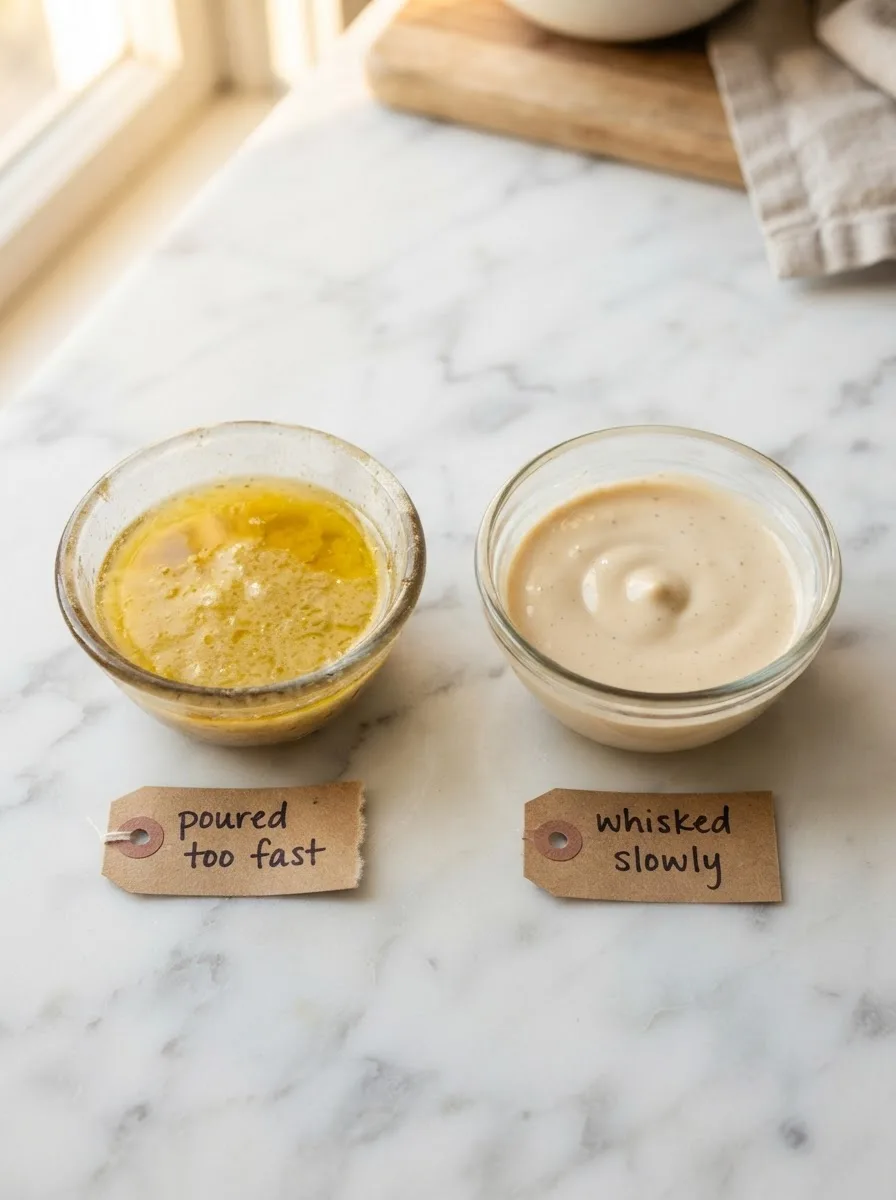
Poured too fast (all at once): The oil never gets a chance to combine into the yolk molecule by molecule. Within seconds it separates back out, and the dressing looks thin, yellow, and greasy no matter how hard you whisk after the fact.
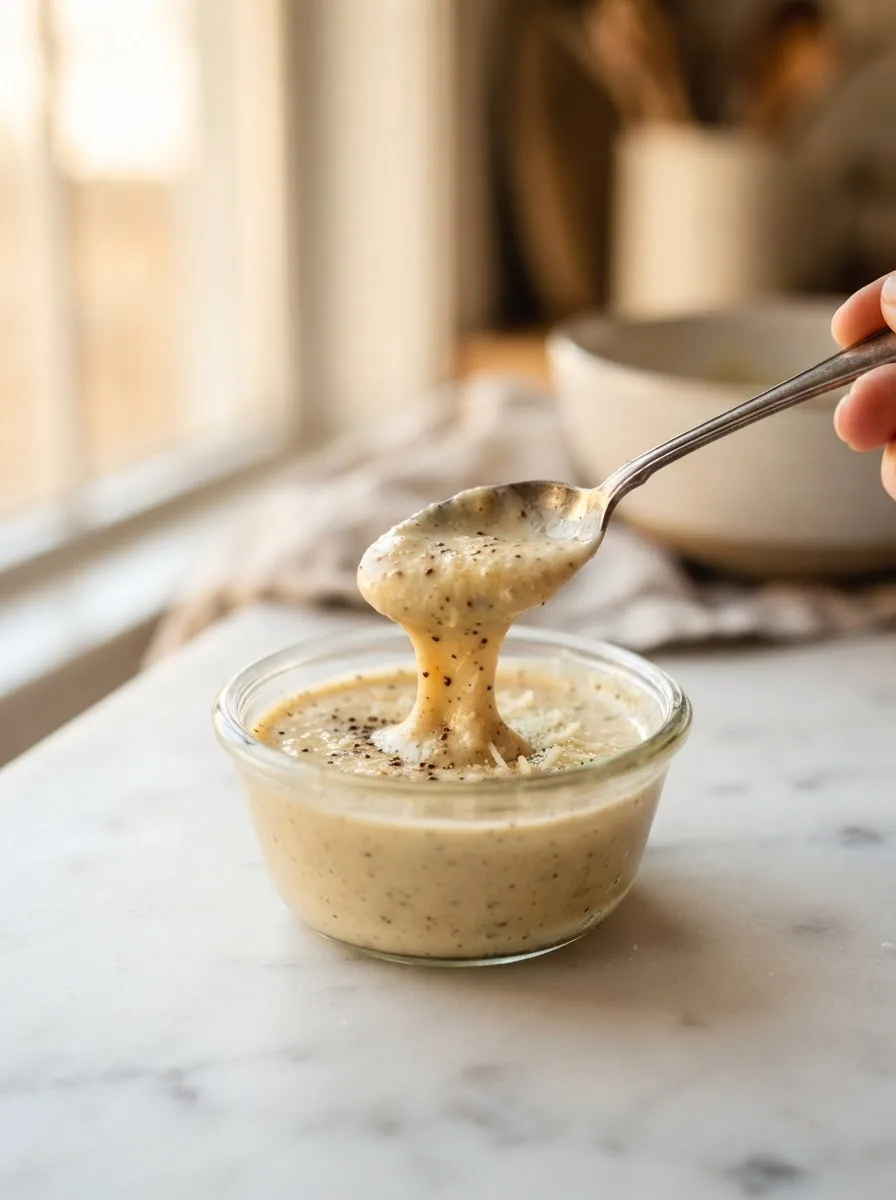
Poured in a thin, steady stream: This is the version that held every time. Adding the oil in a slow, continuous thread while whisking constantly gives the yolk time to absorb each addition before the next one arrives. The result is thick, pale, and glossy — the texture you’re actually after.
Poured with an immersion blender: Almost impossible to break, because the blender’s speed emulsifies faster than the oil can separate. The trade-off is a slightly stiffer, whiter dressing than the hand-whisked version, and you lose some of the visual glossiness. Worth it if this is your first attempt and you want a safety net.
The takeaway: if you’re whisking by hand, slow down more than feels necessary. The stream of oil should be thinner than you think — closer to a drizzle than a pour.
How to Make Original Caesar Salad Dressing
Before you start: Take your egg yolks out of the fridge about 15 minutes ahead of time. Cold yolks accept oil more slowly and are more prone to breaking, so a few minutes at room temperature makes the whole process easier.
Step 1 — Mash the anchovy-garlic paste
On a cutting board, mash the anchovy fillets and garlic together with the flat side of a knife, or use a mortar and pestle, until you have a rough paste. This step matters more than it looks — anchovy and garlic left in recognizable pieces will give you sharp, uneven bites of fish or raw garlic in the finished dressing. Mashed into a paste, both dissolve completely and just contribute background depth.
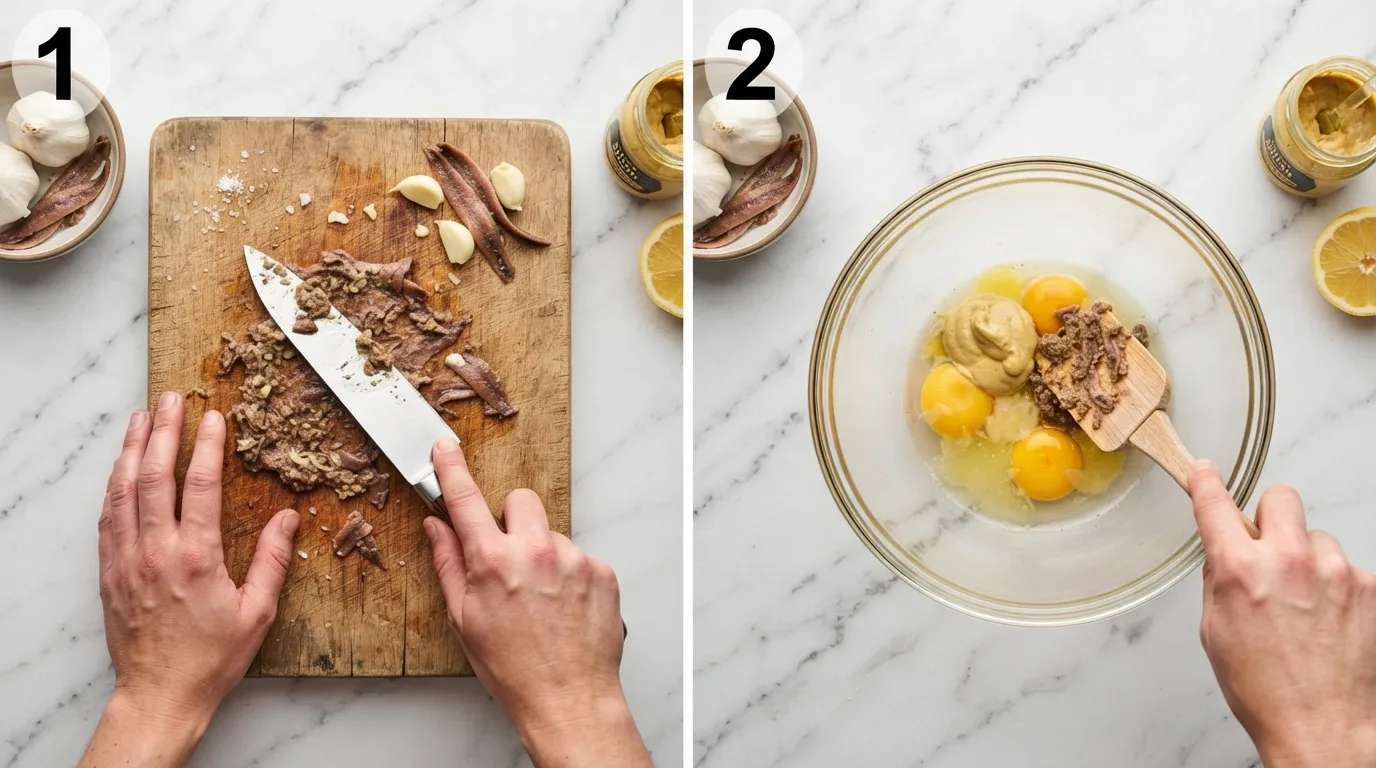
Step 2 — Whisk the egg yolk base
In your mixing bowl, whisk together the egg yolks, anchovy-garlic paste, Dijon mustard, lemon juice, and Worcestershire sauce until completely smooth and slightly pale. This is your emulsion base — everything from here is about slowly building fat into this mixture without breaking it.
Step 3 — Stream in the oil, slowly
Combine your olive oil and neutral oil in a measuring cup with a spout. Whisking the base constantly with one hand, add the oil in a very thin, steady stream with the other — start with just a few drops at a time for the first tablespoon or so, then gradually widen to a thin thread once the mixture starts to thicken and turn pale. You’ll feel the whisk get heavier as the emulsion builds. This is the step that breaks dressings, and it’s almost always because the oil went in too fast at the start.
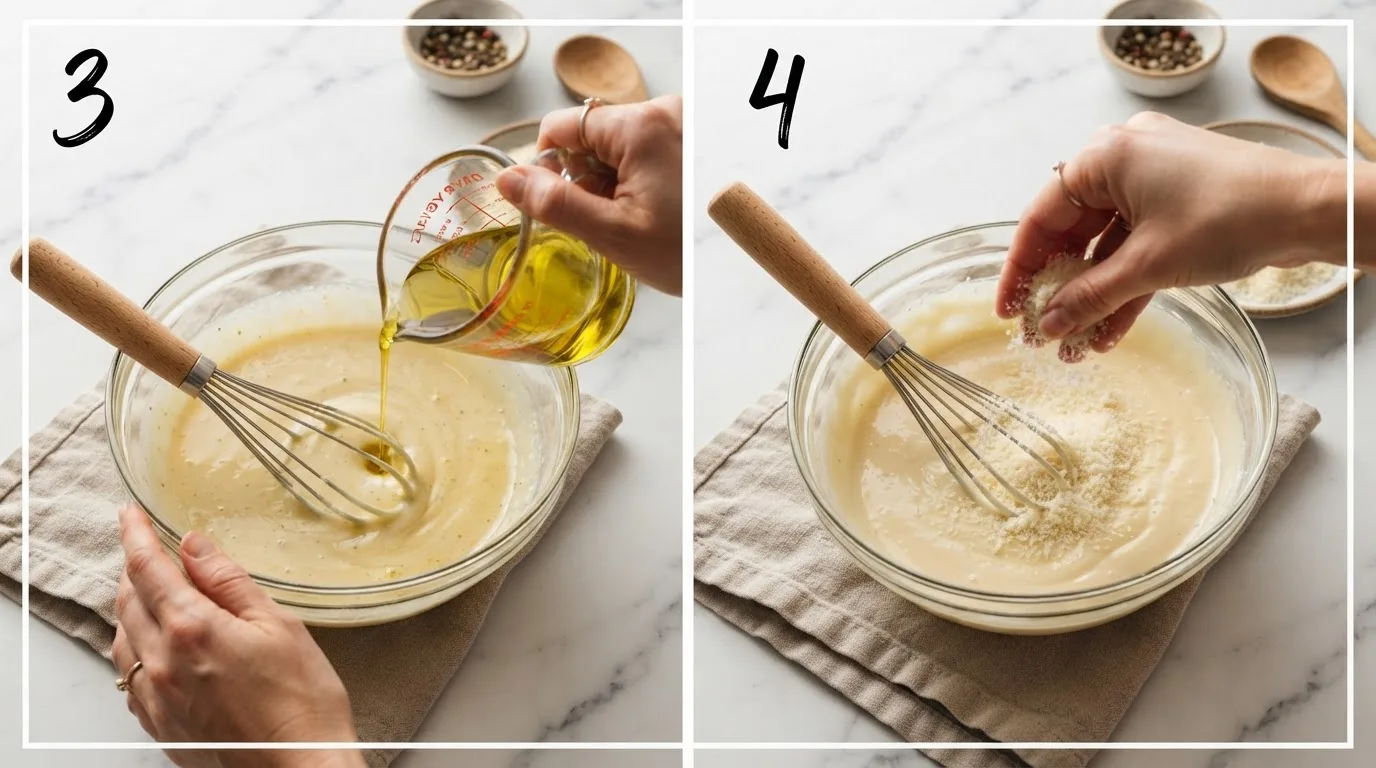
Step 4 — Stir in the Parmesan and season
Once all the oil is incorporated and the dressing is thick and glossy, whisk in the finely grated Parmesan. Taste and season with black pepper and a pinch of salt if needed — the anchovy and Parmesan both bring salt, so add it carefully. If the dressing feels too thick to pour, whisk in 1 to 2 teaspoons of warm water until it loosens to the consistency you want.
Step 5 — Prep the salad
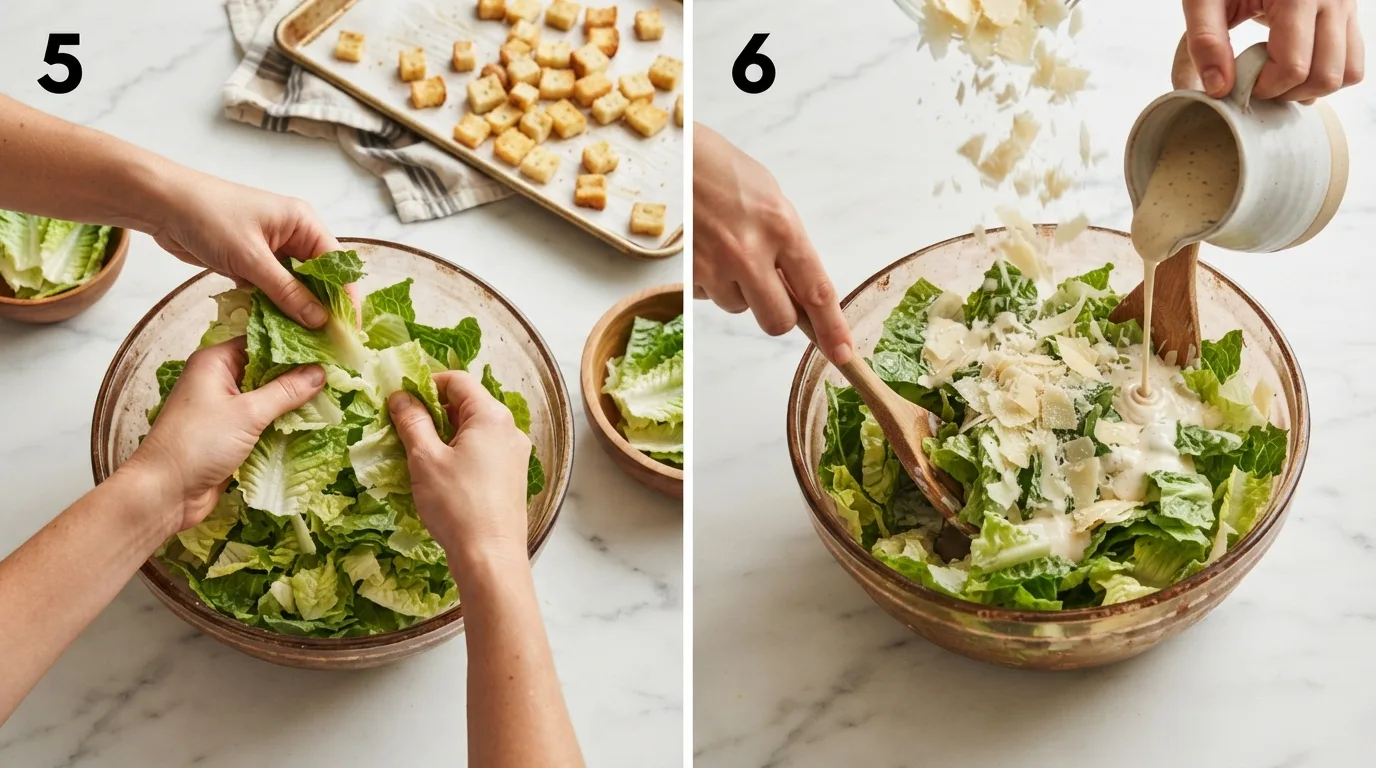
Wash and dry the romaine thoroughly — wet leaves repel the dressing and leave you with pooling at the bottom of the bowl instead of an even coat. Tear or chop the leaves into bite-sized pieces and toast your croutons if you’re making them fresh, until deeply golden and audibly crisp when you tap them together.
Step 6 — Toss and serve
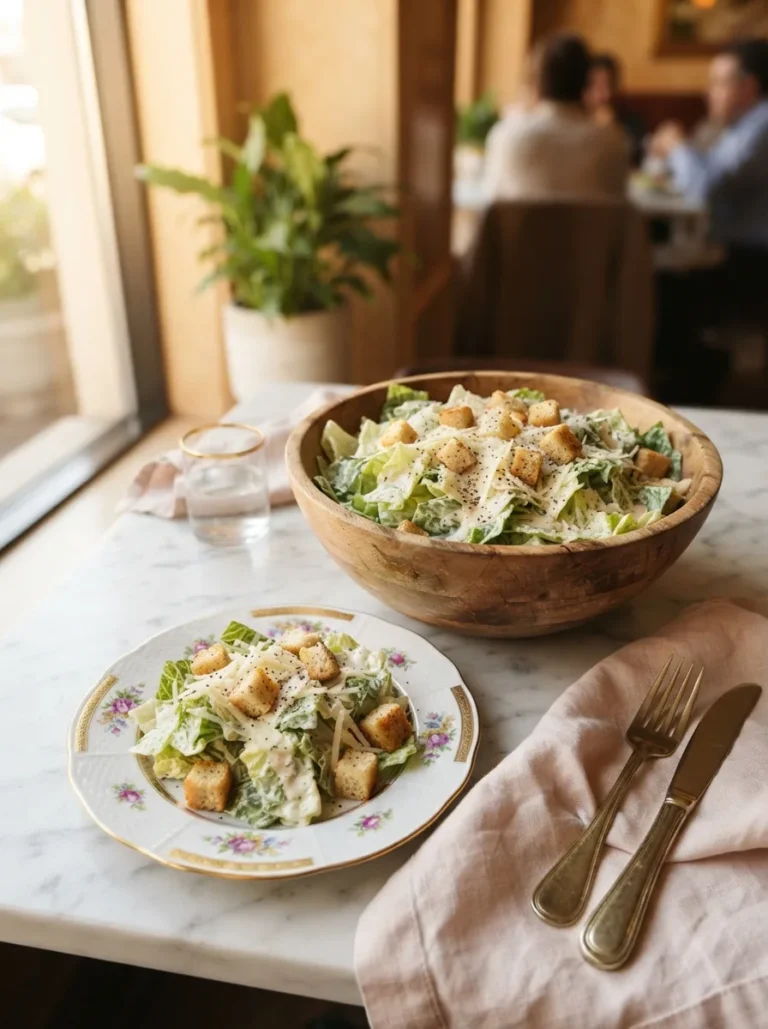
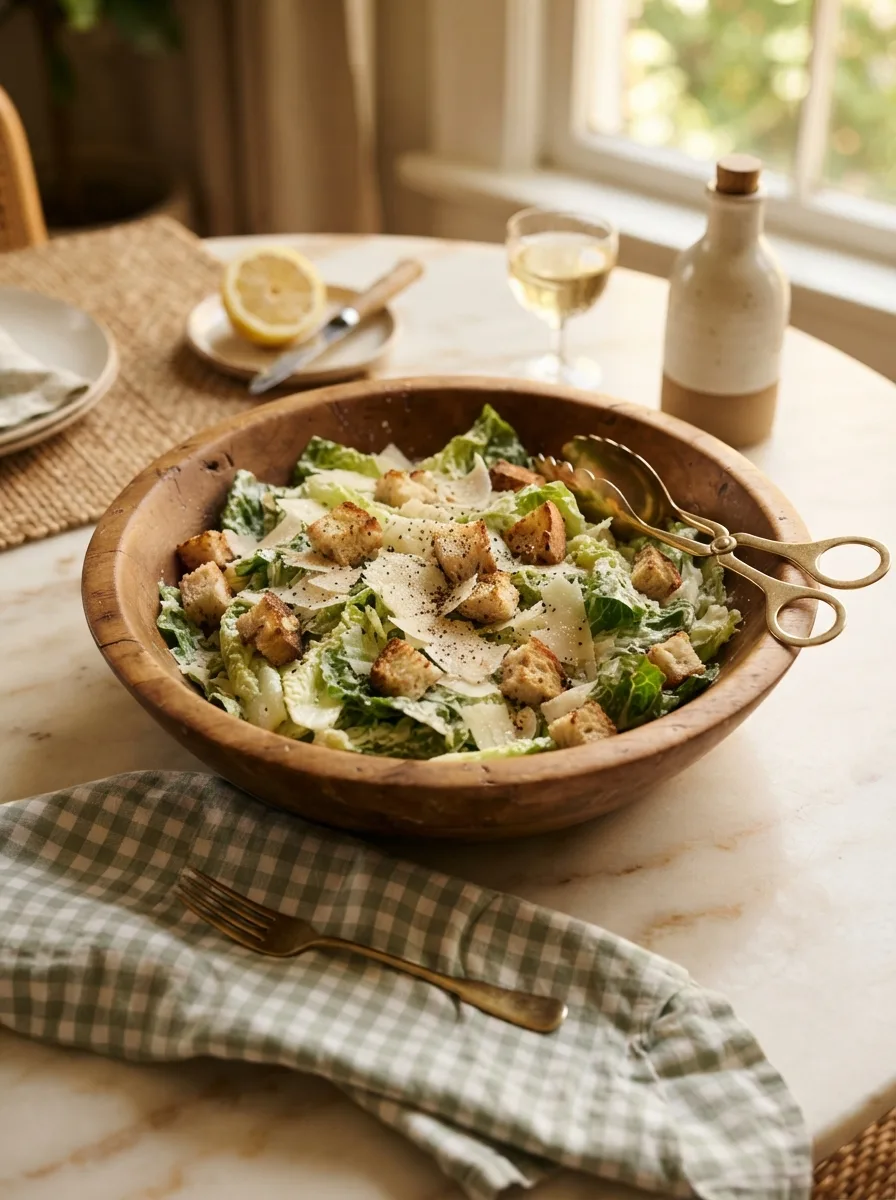
Pour about two-thirds of the dressing over the romaine and toss gently until every leaf has a thin, even coat. Add more dressing a little at a time until it looks right to you — it’s easier to add more than to fix an over-dressed salad. Finish with extra shaved Parmesan, more cracked black pepper, and the croutons on top so they stay crisp instead of going soft under the dressing.
Pro Tips for Perfect Original Caesar Salad Dressing
Tip 1: Room-temperature egg yolks emulsify faster. Cold yolks are thicker and slower to absorb oil, which makes the first minute of whisking feel like nothing is happening. Fifteen minutes on the counter solves this.
Tip 2: Slow down more than feels necessary when adding the oil. This is the single biggest cause of a broken dressing, and it’s almost always a pacing problem, not a ratio problem. If in doubt, go slower than you think you need to.
Tip 3: Grate your own Parmesan. Pre-shredded cheese is coated in cellulose to keep it from clumping in the bag, and that same coating keeps it from melting smoothly into the dressing. A block grated fresh dissolves completely.
Tip 4: Dress the salad right before serving, not ahead of time. Romaine wilts and turns watery fast once dressed. Keep the dressing and the salad separate until the last few minutes, even if you’ve made the dressing a day ahead.
Variations and Substitutions
Dietary Variations:
- Egg-free: Whisk ¼ cup good-quality store-bought mayonnaise with the anchovy-garlic paste, mustard, lemon, and Worcestershire, then thin with the oil to the consistency you want. It’s not technically the original method, but it’s a safe, reliable option if raw egg is off the table.
- Dairy-free: Skip the Parmesan and stir in 1 to 2 tablespoons of nutritional yeast for a similar savory edge. The texture stays the same since the Parmesan isn’t part of the emulsion itself.
Flavor Variations:
- Extra garlicky: Add one additional clove and skip mashing it quite as fine, so you get little flecks of real garlic bite throughout.
- Smoky version: Add a pinch of smoked paprika with the Worcestershire for a deeper, slightly barbecue-adjacent note that works well if you’re serving this alongside grilled chicken.
Ingredient Substitutions:
- Anchovy paste (2 teaspoons) in place of fillets — slightly less clean-tasting but a fine trade for convenience.
- Champagne vinegar (1 tablespoon) in place of half the lemon juice for a milder, rounder acidity.
If you want to turn this into a full dinner, my blackened chicken caesar salad uses this exact dressing under a cast-iron-seared, spice-crusted chicken breast. And if creamy, egg-based sauces are your thing, my classic French remoulade sauce uses a nearly identical emulsion technique with a completely different flavor profile — worth trying once you’ve got this method down.
Troubleshooting
Why did my dressing break or separate?
Almost always because the oil went in too fast, especially at the very beginning before the emulsion has started to form. If it breaks, don’t panic and don’t throw it out: start a fresh yolk in a clean bowl, whisk in a tablespoon of the broken mixture, and once that’s smooth, slowly whisk in the rest of the broken dressing the same way you added the oil originally. It usually saves the batch.
Why does my dressing taste too fishy?
Either the anchovy wasn’t fully mashed into a paste, or the fillets you used were lower quality with a stronger, more metallic flavor. Mash more thoroughly next time, and look for anchovies packed in olive oil rather than salt-cured whole fillets, which tend to taste cleaner.
Why is my dressing too thin to coat the lettuce?
Most likely the oil wasn’t fully incorporated before you stopped whisking, or you added the water-thinning step (Step 4) too generously. Whisk it vigorously for another 30 seconds — it will often thicken further on its own as the last bit of oil finishes emulsifying.
Storage and Make-Ahead
Counter: Don’t leave this dressing at room temperature for more than 2 hours total, since it contains raw egg yolk.
Refrigerator: Store in an airtight jar for up to 4 days. It will thicken further as it chills — thin it with a teaspoon of water or lemon juice before serving if needed.
Freeze: Not recommended. The emulsion breaks down when frozen and thawed, and no amount of re-whisking brings it fully back.
Reheating: This dressing is served cold or at room temperature — no reheating needed.
Make-Ahead: The dressing can be made up to 2 days ahead and stored in the fridge. Wait to dress the salad itself until just before serving, since dressed romaine turns soggy within about 30 minutes. If you’re planning a make-ahead lunch instead, my guide on can you freeze chicken salad covers similar make-ahead timing questions for a different kind of dressed dish.
Frequently Asked Questions
Q: Is this the original Caesar salad dressing recipe, or a modern version? A: It follows the original method — egg yolk emulsified with oil, rather than a mayonnaise base — which is closer to what Caesar Cardini is credited with creating in 1924. The Dijon mustard is a modern addition for stability; leave it out if you want to stay strictly traditional.
Q: Can I make this original Caesar dressing recipe without raw egg? A: Yes. Use a pasteurized whole egg in place of the two yolks, or substitute a small amount of good mayonnaise as described in the Variations section above. Both are safe alternatives with only minor texture differences.
Q: Do I need anchovies for an original Caesar salad recipe, or can I skip them? A: The anchovy is what gives this dressing its signature depth, and it’s genuinely hard to replicate without it. If you truly can’t have fish, a teaspoon of soy sauce or fish-free Worcestershire gets you partway there, though the flavor won’t be identical.
Q: Why did my dressing turn out thin and yellow instead of thick and pale? A: The oil was added too quickly, which prevents a proper emulsion from forming. See the Troubleshooting section above for how to rescue a broken batch.
Q: Can I make this dressing in a blender or food processor instead of by hand? A: Yes — an immersion blender or small food processor makes the emulsion nearly foolproof and is a great option if you’re nervous about whisking by hand. The texture comes out slightly thicker and whiter than the hand-whisked version.
Q: How long does homemade Caesar dressing last in the fridge? A: Up to 4 days in an airtight container, thanks to the acidity from the lemon juice and Worcestershire. Give it a good stir or quick re-whisk before each use.
Q: Can I double this recipe for a crowd? A: Yes, the ratios scale cleanly. The only change is patience — doubling the oil means doubling the time it takes to stream it in slowly, so budget closer to 15 minutes instead of 10.
More Salad Recipes You’ll Love
- Blackened chicken Caesar salad — this exact dressing paired with spice-crusted, cast-iron-seared chicken
- Cucumber lettuce and tomato salad — a lighter, no-cook salad for when you want something simpler on the side
- Classic French remoulade sauce — another egg-based emulsion, built for a completely different flavor direction
Original Caesar Salad Dressing Recipe
Ingredients
For the Caesar Dressing:
- 2 large egg yolks (or 1 whole pasteurized egg)
- 4 oil-packed anchovy fillets, or 2 teaspoons anchovy paste
- 3 clove garlic
- 1 tablespoon Dijon mustard
- 2 tablespoon fresh lemon juice
- 1 tablespoon Worcestershire sauce
- 1/2 cup olive oil
- 1/4 cup neutral oil (avocado or grapeseed)
- 1/2 cup Parmesan, finely grated
- Freshly cracked black pepper, to taste
- Salt, to taste
For the Salad:
- 2 heads romaine lettuce, washed, dried, and torn
- 1 cup croutons
- 1/4 cup Parmesan, shaved, for topping
Instructions
- Mash the anchovy fillets and garlic together into a rough paste using the flat side of a knife or a mortar and pestle.
- In a mixing bowl, whisk together the egg yolks, anchovy-garlic paste, Dijon mustard, lemon juice, and Worcestershire sauce until smooth and pale.
- Combine the olive oil and neutral oil in a measuring cup. Whisking the yolk mixture constantly, add the oil in a very thin, slow stream, widening only once the dressing begins to thicken.
- Whisk in the grated Parmesan. Taste and season with black pepper and salt as needed. Thin with 1–2 teaspoons of warm water if it feels too thick.
- Wash and thoroughly dry the romaine, then tear into bite-sized pieces. Toast croutons until deeply golden if making them fresh.
- Toss the romaine with two-thirds of the dressing, adding more to taste. Top with croutons, shaved Parmesan, and extra black pepper. Serve immediately.
Notes
- This dressing contains raw egg yolk. Use pasteurized eggs if serving anyone pregnant, elderly, or immunocompromised.
- The dressing keeps in the fridge for up to 4 days but will thicken as it chills — thin with a little water or lemon juice before serving.
- Dress the romaine just before serving. Dressed lettuce turns soggy within about 30 minutes.