Foolproof Blackened Chicken Caesar Salad

If you’ve ever made blackened chicken caesar salad and ended up with either a burnt, bitter crust or chicken so dry it needed the dressing just to go down, you’re not alone. I tested this recipe three times, changing the spice ratio and the skillet temperature each round, because the first batch tasted like scorched paprika and the second one was pale and steamed instead of blackened.
The fix ended up being smaller than I expected: a hot skillet, a thin layer of oil, and chicken that’s been patted completely dry before it touches the spice rub. That’s it. No blackening seasoning packet, no guessing at the heat.
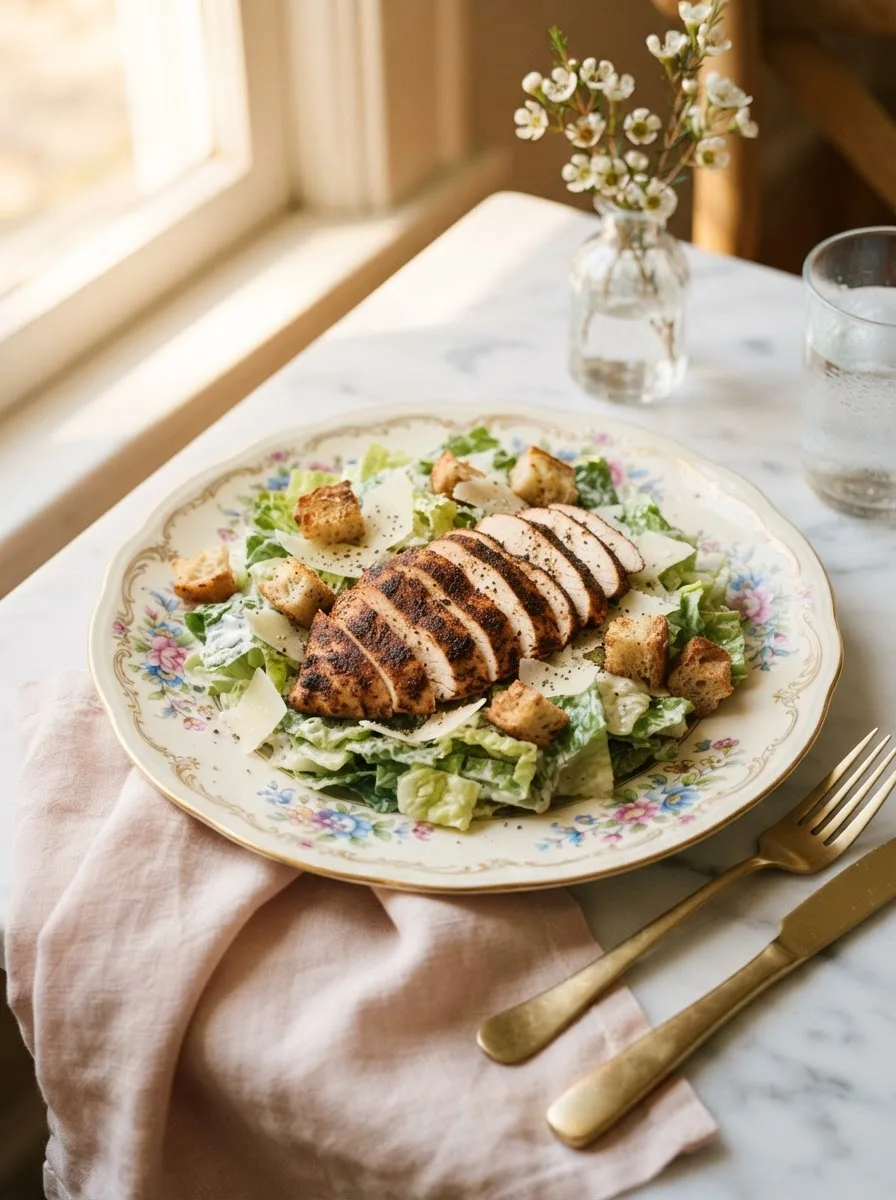
The result is a real blackened crust — dark, peppery, slightly spicy — over chicken that’s still juicy in the center, tossed with crisp romaine and a caesar dressing that doesn’t come from a bottle.
★★★★★ “I’ve made blackened chicken a dozen times and always ended up with either ash or a rubber chicken breast. This is the first time the crust actually looked like the restaurant version.” — Danielle R., recipe tester (pre-launch)
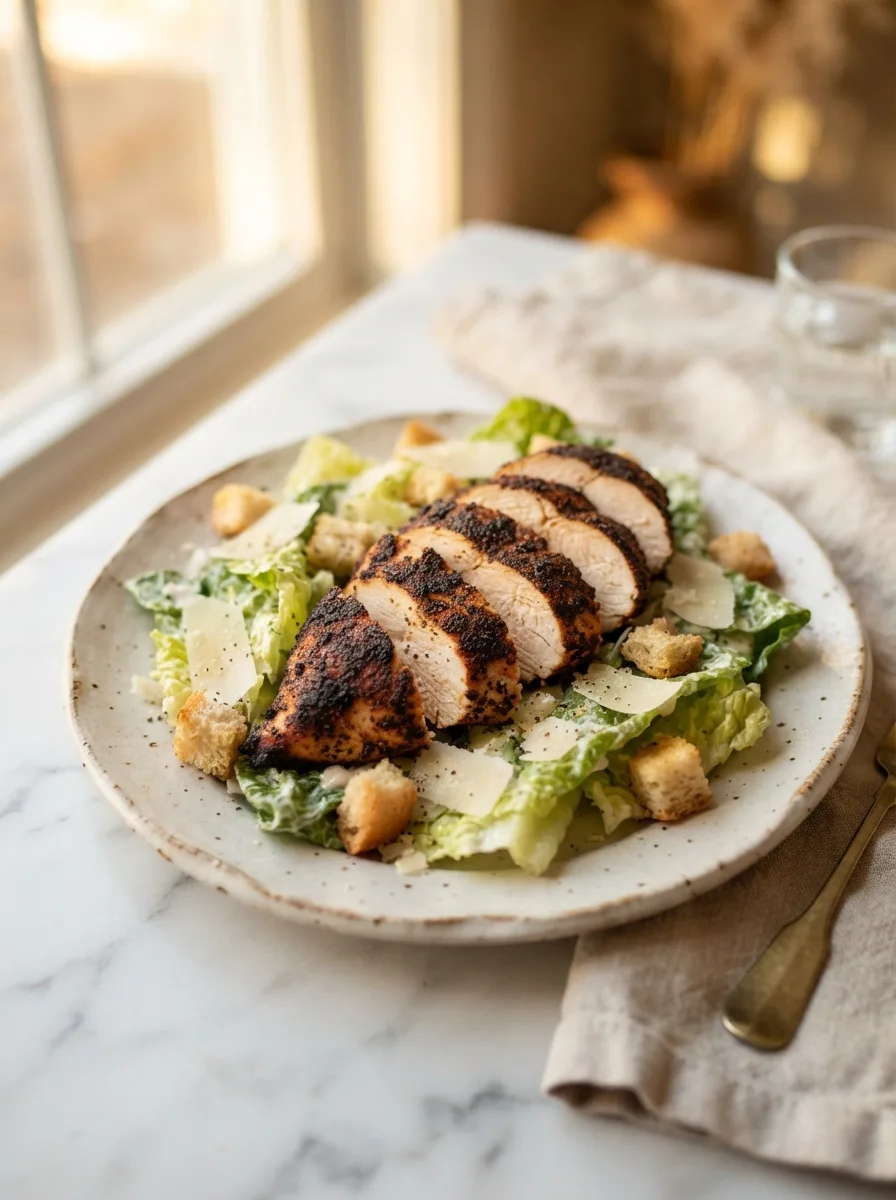
Why You’ll Love This Blackened Caesar Salad
- A real blackened crust, not a burnt one: The spice rub chars into a deep, peppery crust without turning bitter — the difference is heat control, which I walk through below.
- Chicken that stays juicy: Pounding the chicken to an even thickness means it cooks through at the same rate the crust forms, so you’re not stuck choosing between raw centers and ash.
- A dressing worth making from scratch: The caesar dressing here takes five minutes and tastes nothing like the bottled kind — full recipe and more detail in my original caesar salad dressing recipe.
- Ready in 30 minutes: This is a real weeknight dinner, not a project — the whole thing, chicken and salad, comes together while the croutons are already in the oven.
Key Ingredients
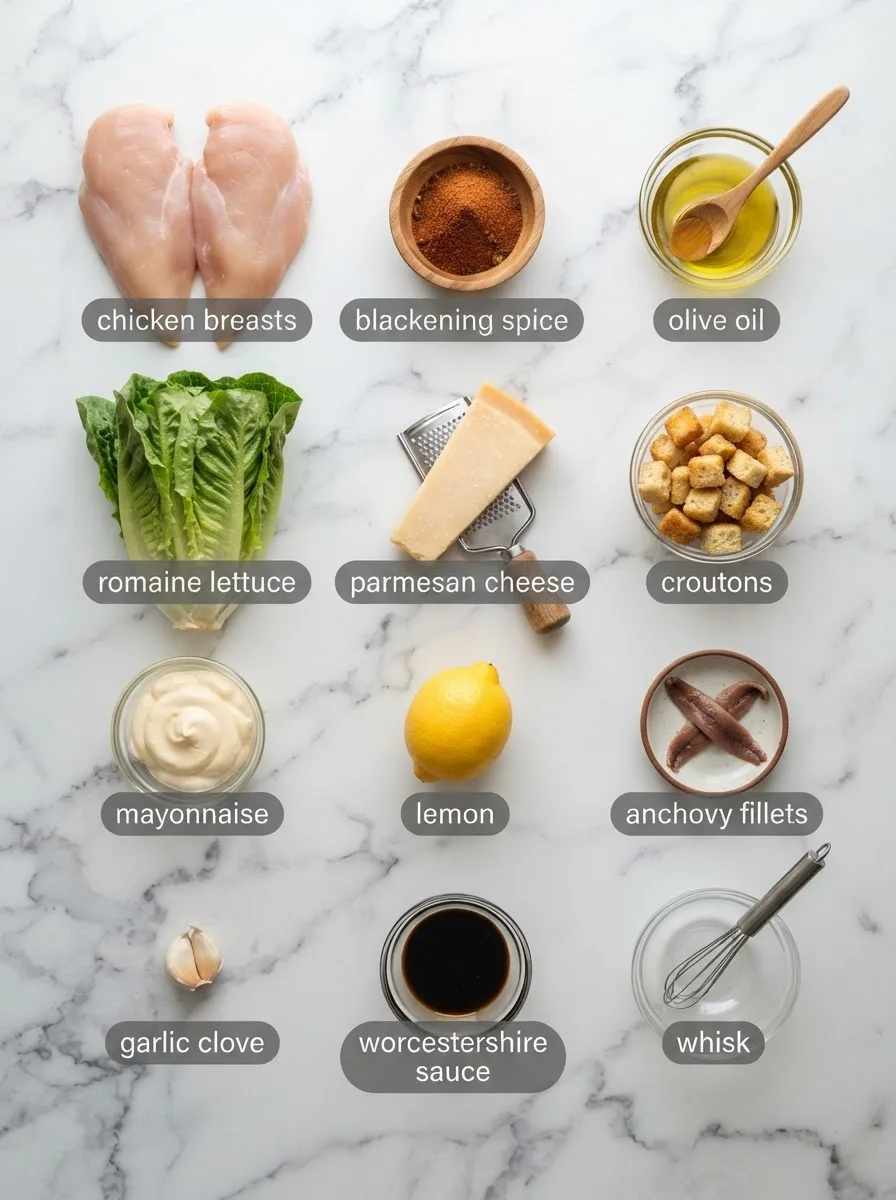
Chicken breasts (2, boneless, skinless). Pound these to an even ¾-inch thickness before seasoning. Uneven chicken is the #1 reason the crust burns on the thin end while the thick end stays raw in the middle.
Blackening spice blend. Paprika gives the crust its color and most of its char; cayenne brings the heat; garlic powder, onion powder, dried thyme, and oregano round it out. If you only have a store-bought blackening seasoning, it works, but taste it first — some brands are salt-forward and you’ll want to cut back on the added salt.
Romaine lettuce. Chopped, not torn. Torn romaine holds dressing unevenly and bruises faster. A sharp knife through the head of lettuce keeps the ribs crisp.
Parmesan. Shave it with a vegetable peeler rather than pre-shredding it. Pre-shredded parmesan is drier and doesn’t cling to the dressing the same way.
Caesar dressing (homemade). Egg yolk or mayonnaise base, garlic, lemon, anchovy, Worcestershire, and parmesan. This is the same base as my original caesar salad dressing recipe — I just make a slightly smaller batch here since the chicken is doing a lot of the flavor work.
Croutons. Store-bought is fine here, but if you have stale bread, torn croutons tossed in olive oil and baked at 375°F for 8–10 minutes taste noticeably better and cost nothing extra.
Ingredient Note: Pat the chicken completely dry with paper towels before applying the spice rub. Any surface moisture steams instead of chars, and that’s the single biggest reason home versions of blackened chicken end up gray instead of black.
Equipment You’ll Need
- Cast iron or heavy stainless skillet — Cast iron holds heat evenly and gets hotter than most nonstick pans, which matters for a real char. A heavy stainless skillet works almost as well; a thin nonstick pan will not get hot enough.
- Meat mallet or rolling pin — For pounding the chicken to an even thickness. A heavy skillet also works in a pinch.
- Instant-read thermometer — The most reliable way to know the chicken is done without cutting into it and losing juices.
- Salad spinner — Not required, but wet romaine waters down the dressing. If you don’t have one, pat the leaves dry with a towel after washing.
Controlling the Crust: Heat and Timing
This is the variable that makes or breaks blackened chicken. I tested three approaches: medium heat for a longer cook, high heat with butter added partway through, and high heat with oil only, added at the start.
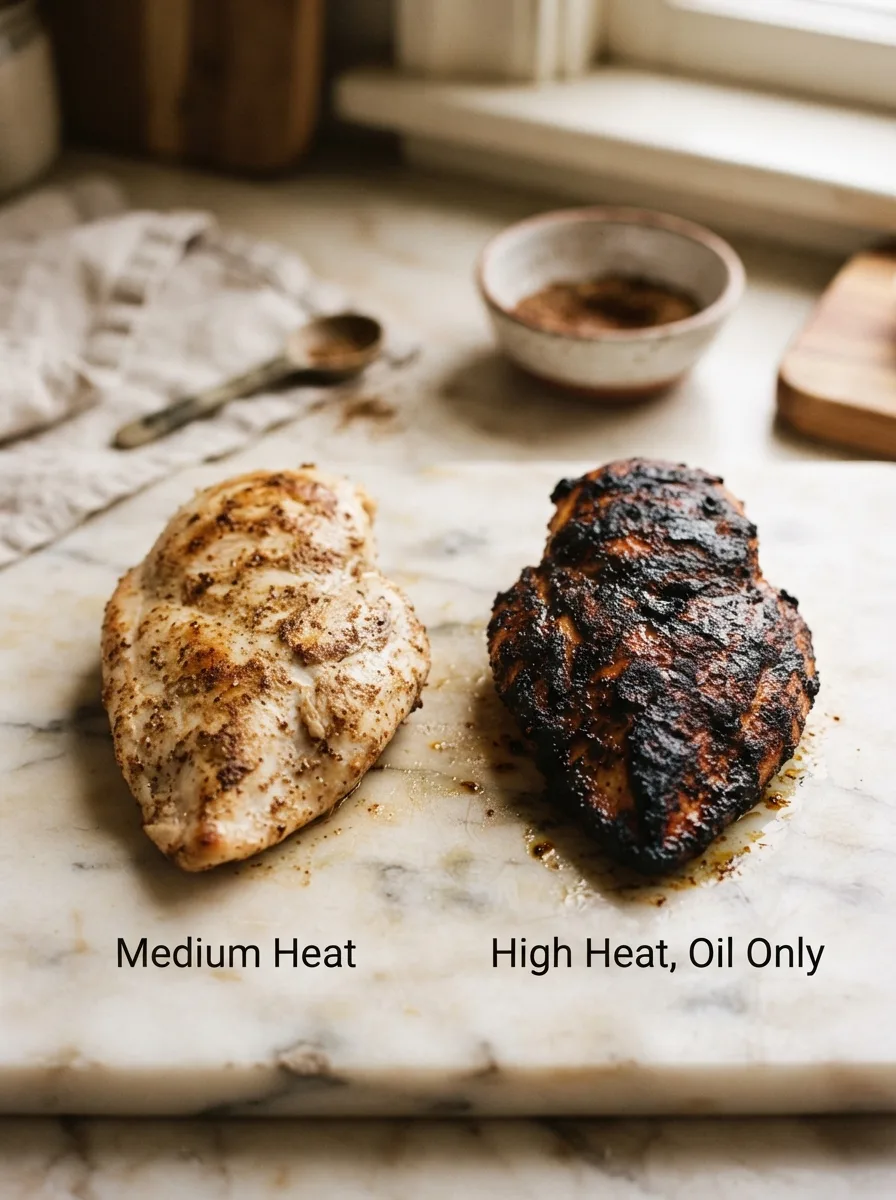
Medium heat, 6–7 minutes per side: The crust never fully blackened — it browned unevenly and the chicken took long enough that the interior dried out slightly before the outside caught color.
High heat with butter added at the halfway point: The butter helped the spices bloom, but it also lowered the pan temperature right when the crust needed to set, so the char was inconsistent.
High heat, oil only, added at the start, chicken added the moment the oil shimmers: This won clearly. The crust went dark and even in about 4 minutes per side, and because the total cook time was shorter, the chicken stayed juicier.
The takeaway: get the skillet ripping hot before the chicken goes in, use oil (not butter) for the sear, and don’t crowd the pan. Butter is great for finishing, terrible for blackening.
How to Make Blackened Chicken Caesar Salad
Before you start: Pound the chicken to an even thickness and let it sit out for 10 minutes while you mix the spice rub — cold chicken hitting a hot pan cools the pan down and slows the char.
Step 1 — Pound and season the chicken
Place the chicken breasts between two sheets of plastic wrap and pound to an even ¾-inch thickness. Pat both sides completely dry with paper towels, then coat evenly with the blackening spice blend, pressing gently so it adheres.
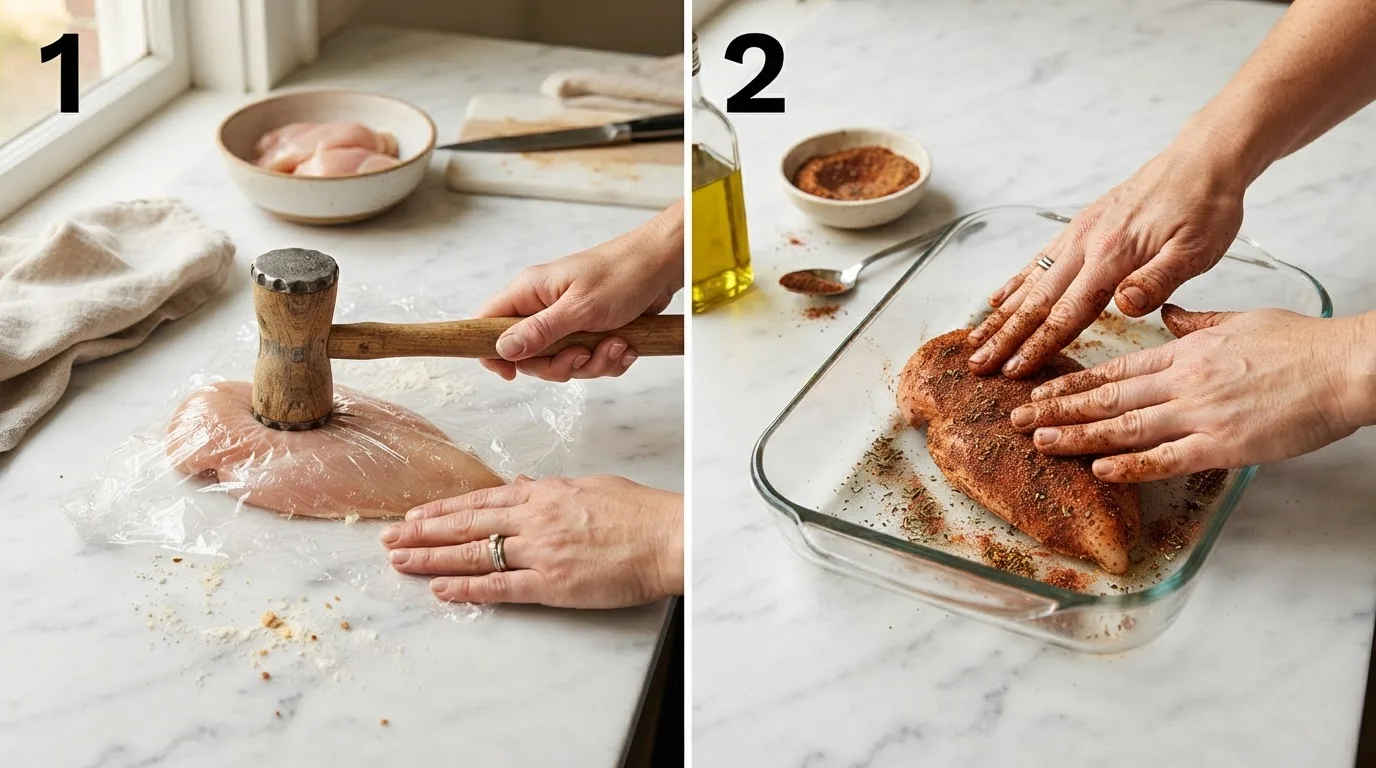
Step 2 — Heat the skillet
Heat 1 tablespoon of olive oil in a cast iron or heavy stainless skillet over high heat until it shimmers and just barely starts to smoke. This usually takes 2–3 minutes — don’t rush it, and don’t walk away from it either.
Step 3 — Sear the chicken
Lay the chicken in the skillet away from you to avoid splatter. Sear for 4 minutes without moving it, until a dark crust forms. Flip once and sear the second side for another 4 minutes.
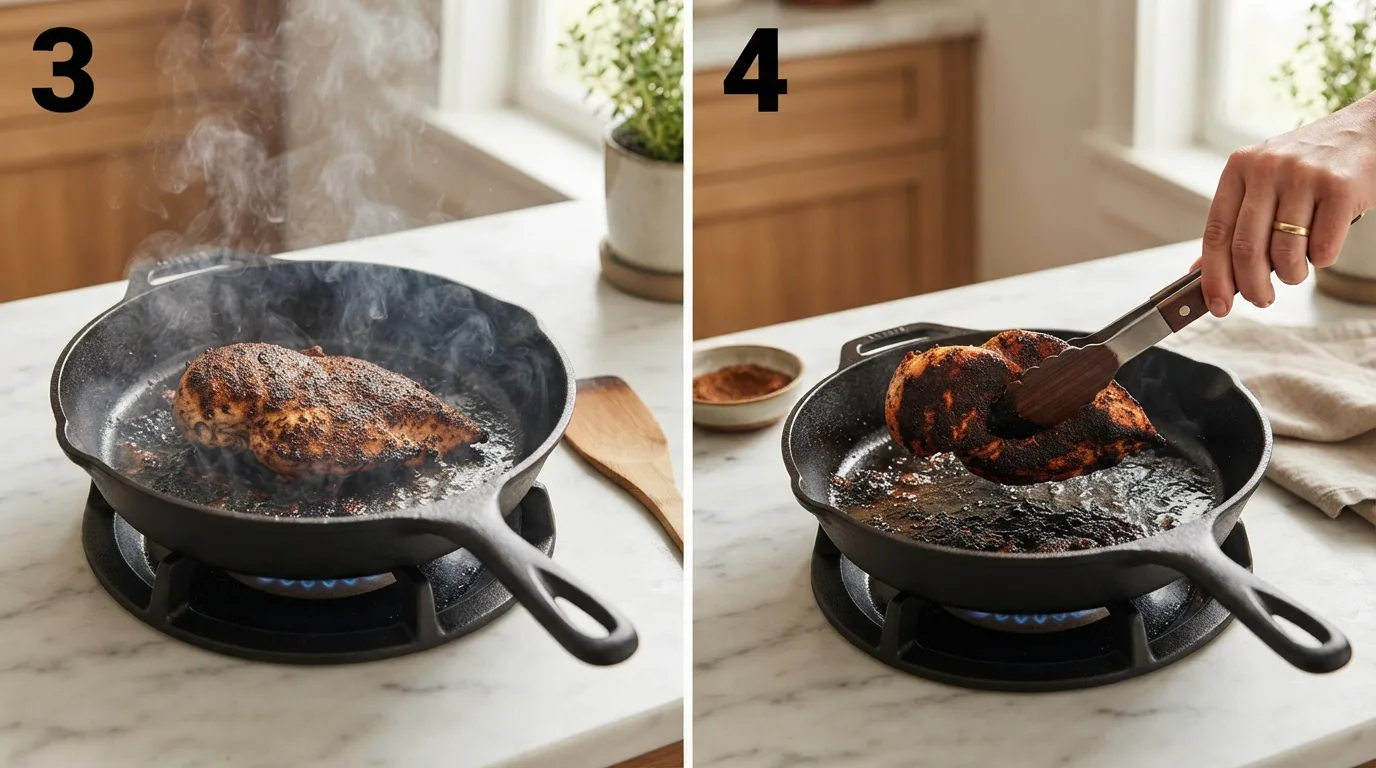
Step 4 — Check doneness and rest
Check the internal temperature at the thickest part — pull the chicken at 160°F, since it will continue cooking as it rests. Move it to a cutting board and let it rest for 5 minutes before slicing. The center should look opaque and firm, not pink, and the juices that pool on the board should run clear.
Step 5 — Make the dressing and assemble
While the chicken rests, whisk together the caesar dressing (mayonnaise, minced garlic, lemon juice, minced anchovy, Worcestershire, and grated parmesan) in a large bowl. Add the chopped romaine and toss until every leaf is coated. Slice the rested chicken against the grain into strips.
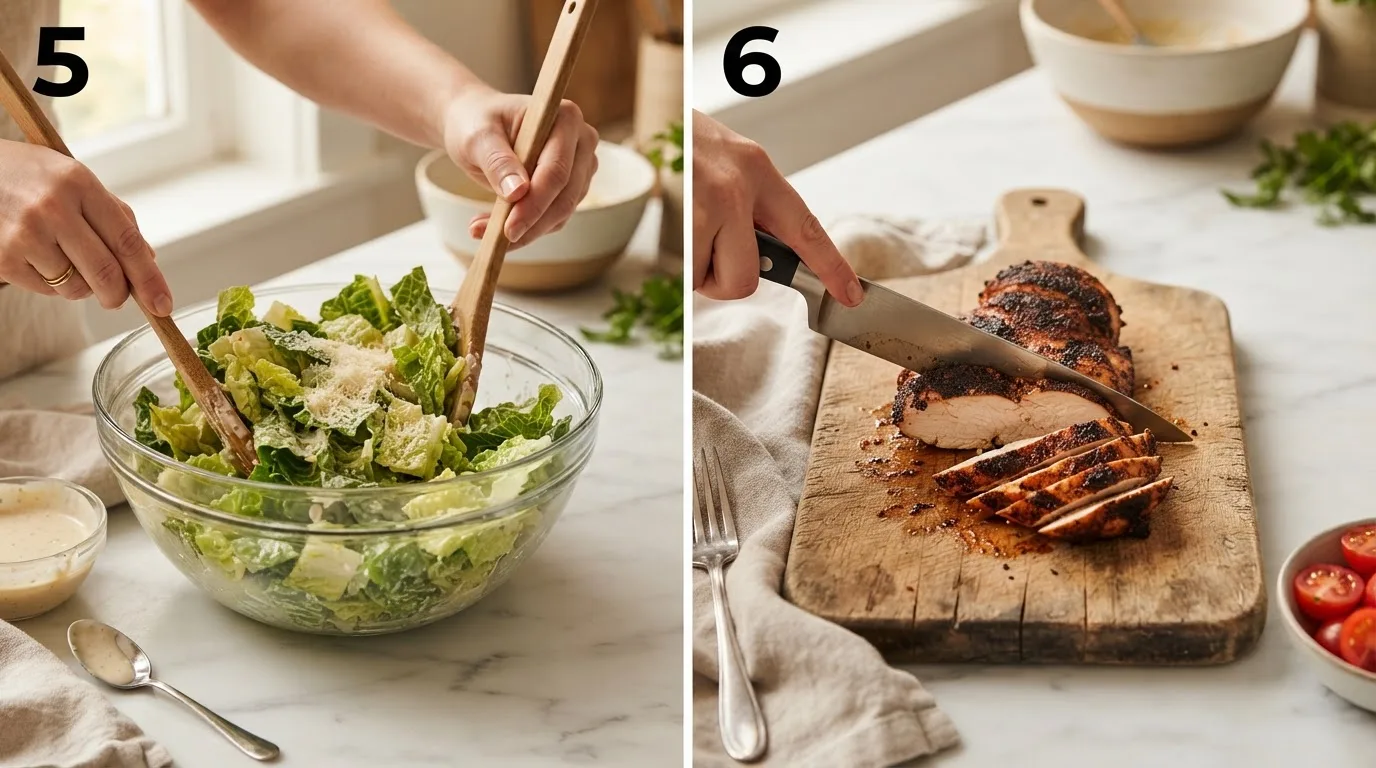
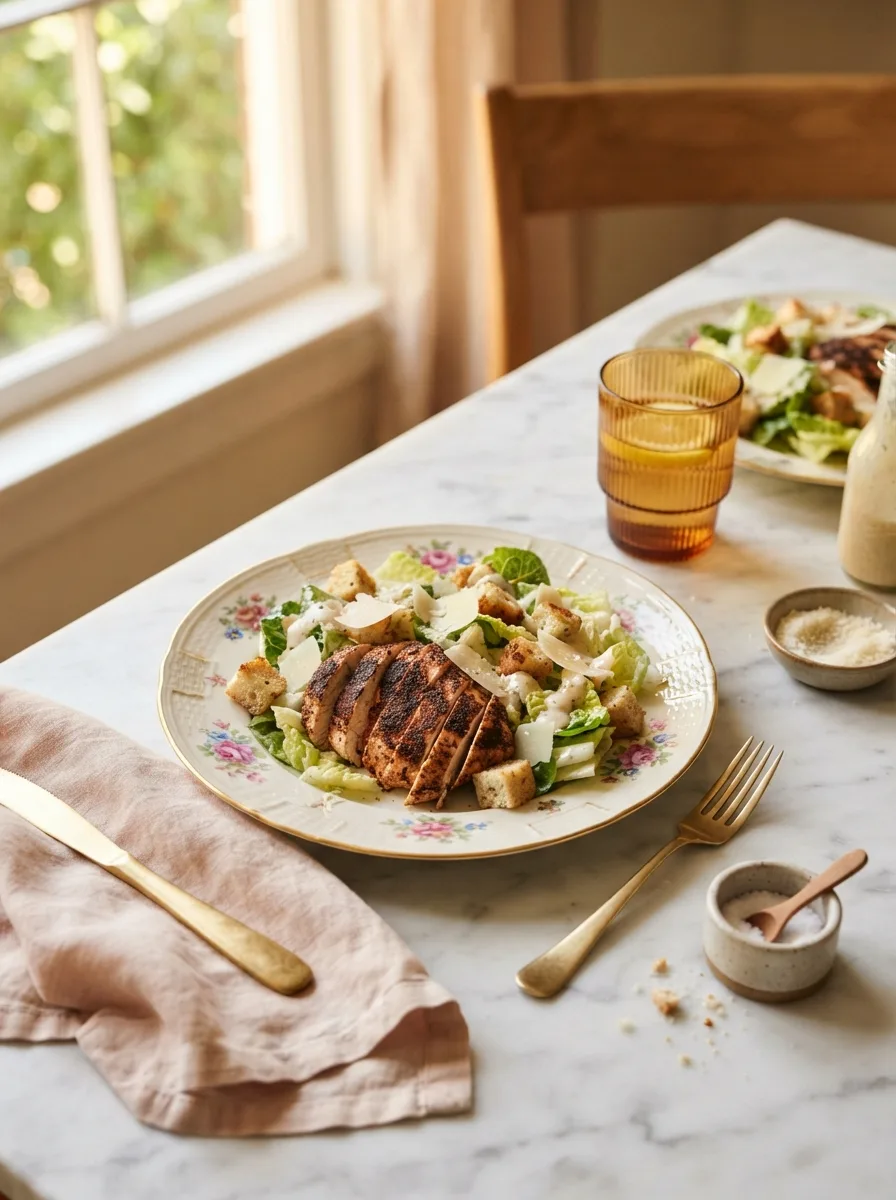
Top the dressed romaine with the sliced chicken, shaved parmesan, and croutons. Serve immediately, while the chicken is still warm and the croutons are still crisp.
Pro Tips for Perfect Blackened Chicken Caesar Salad
Tip 1: Let the skillet fully preheat. A skillet that isn’t hot enough gives you gray, steamed chicken instead of a real blackened crust — this is the single most common failure point, and it’s not covered anywhere in the steps above because it happens before you even touch the chicken.
Tip 2: Don’t skip the rest. Cutting into chicken right off the heat pushes out all the juice you just worked to keep in. Five minutes on the board makes a real difference in the final bite.
Tip 3: Dress the romaine right before serving. Caesar dressing wilts lettuce fast. If you’re prepping ahead, keep the dressing and romaine separate until you’re ready to eat.
Tip 4: Use a splatter guard if your smoke alarm is sensitive. Blackening seasoning at high heat produces some smoke — that’s part of the process, not a mistake, but crack a window or turn on the vent.
Variations and Substitutions
Dietary Variations:
- Dairy-free: Skip the parmesan in the dressing and use a dairy-free mayonnaise base. The dressing will be slightly less rich, but the anchovy and lemon still carry most of the flavor.
- Egg-free dressing: Use a store-bought egg-free mayonnaise as the dressing base instead of building it from raw egg yolk — the texture stays the same.
Flavor Variations:
- Blackened shrimp caesar: Swap the chicken for large shrimp, seasoned the same way, and sear for just 2 minutes per side — shrimp cooks much faster and turns rubbery quickly if left too long.
- Extra crunch: Add a chopped cucumber and diced tomato for a version closer to a classic garden salad — I use the same knife-cut approach in my cucumber lettuce and tomato salad if you want that texture in more of your salads.
Ingredient Substitutions:
- Chicken thighs work in place of breasts — pound them to an even thickness the same way, and expect a slightly shorter cook time since thighs are thinner.
- Anchovy paste (½ teaspoon) can replace whole anchovy fillets in the dressing with no noticeable difference in flavor.
Troubleshooting
Why is my blackened chicken gray instead of black?
This almost always means the skillet wasn’t hot enough before the chicken went in, or the chicken had surface moisture that steamed instead of charred. Next time, pat the chicken fully dry and let the oil shimmer and just barely smoke before adding the chicken.
My chicken came out dry — what happened?
Overcooking is the most common cause, usually from chicken breasts that weren’t pounded to an even thickness (the thin end overcooks while the thick end catches up) or from skipping the rest period. Pull the chicken at 160°F and let it rest 5 minutes — it will finish cooking as it sits.
The crust tastes bitter, not just spicy — why?
Bitterness usually means the paprika and spices burned rather than blackened, which happens if the heat is too high for too long or the pan has old oil residue that’s scorching. Wipe the skillet clean between batches and keep the sear to about 4 minutes per side.
Storage and Make-Ahead
Counter: Don’t leave dressed salad at room temperature longer than 2 hours — the romaine wilts and the mayonnaise-based dressing shouldn’t sit out.
Refrigerator: Store undressed romaine, sliced chicken, and dressing in separate containers for up to 3 days. Dressed leftovers keep for about 1 day before the lettuce turns limp.
Freeze: The cooked chicken freezes well on its own for up to 2 months — wrap it tightly and thaw overnight in the fridge. The dressed salad does not freeze; romaine turns watery and unpleasant once thawed. If you’re wondering whether the same rule applies to other chicken-based salads, I cover it in more detail in can you freeze chicken salad.
Reheating: Reheat sliced chicken gently in a covered skillet over low heat for 2–3 minutes, or serve it cold straight from the fridge over fresh romaine — both work well.
Make-Ahead: Cook the chicken and make the dressing up to 2 days ahead. Chop the romaine the day you plan to serve it, and toss everything together just before eating.
Frequently Asked Questions
Q: What makes chicken “blackened” instead of just seasoned? A: Blackening refers to a specific technique — a heavily spiced piece of meat seared in a very hot, dry or lightly oiled skillet until the spices char into a dark, almost black crust. It’s different from simply pan-searing seasoned chicken, which won’t develop that same deep color or peppery bite.
Q: Is this the same thing as a blackened chicken cesar salad? A: Yes — “cesar” is a common misspelling of “caesar,” and both spellings turn up in search for this exact dish. The recipe and technique are identical either way.
Q: Can I make this blackened caesar salad without a cast iron skillet? A: A heavy stainless steel skillet works nearly as well, since what matters most is how hot the pan gets and how evenly it holds that heat. A thin nonstick pan won’t reach the same temperature and will give you a paler, less charred crust.
Q: How spicy is the blackening seasoning? A: As written, it has a moderate kick from the cayenne, more peppery than fiery. Cut the cayenne in half for a milder version, or double it if you want real heat.
Q: Can I use rotisserie chicken instead of blackening my own? A: You can, but you’ll lose the signature charred crust that gives this salad its name and most of its flavor. If you’re short on time, toss shredded rotisserie chicken with a spoonful of the same blackening spice blend and a quick sear in a hot pan for 60–90 seconds per side to get some char without starting from raw chicken.
Q: Can I grill the chicken instead of pan-searing it? A: Yes — grill over high heat for about 4–5 minutes per side, watching closely since the spice rub can char faster on an open flame than in a skillet.
Q: What can I use instead of anchovies in the dressing? A: Anchovy paste is the easiest substitute, or a dash of fish sauce if that’s what you have on hand. Both give the dressing the same savory depth without needing whole fillets.
More Salad Recipes You’ll Love
- Remoulade Celeri — A tangy, mustardy shredded celery root salad that makes a great sharp, acidic side next to something as rich as blackened chicken.
- Cucumber Lettuce and Tomato Salad — A simple, crisp garden salad if you want something lighter to serve alongside the chicken instead of building it into a full caesar.
- Original Caesar Salad Dressing Recipe — The full, standalone version of the dressing used here, with more detail on the classic anchovy-and-egg-yolk method.
- Can You Freeze Chicken Salad — A deeper look at freezing cooked chicken for salads, if you want to batch-cook ahead of a busy week.

Foolproof Blackened Chicken Caesar Salad
Ingredients
For the Blackened Chicken:
- 2 boneless, skinless chicken breasts (about 1½ lbs total)
- 1 tablespoon paprika
- 1 teaspoon cayenne pepper
- 1 teaspoon garlic powder
- 1 teaspoon onion powder
- 1 teaspoon dried thyme
- 1 teaspoon dried oregano
- 1 teaspoon kosher salt
- 1/2 teaspoon black pepper
- 1 tablespoon olive oil
For the Caesar Salad:
- 1 large head romaine lettuce, chopped
- 1/2 cup parmesan cheese, shaved
- 1 cup croutons
- 1/2 cup mayonnaise
- 2 clove garlic, minced
- 2 tablespoon lemon juice
- 2 anchovy fillets, minced (or ½ tsp anchovy paste)
- 1 teaspoon Worcestershire sauce
- 1/4 cup grated parmesan (for the dressing)
Instructions
- Pound the chicken breasts between plastic wrap to an even ¾-inch thickness. Pat completely dry with paper towels.
- Mix the paprika, cayenne, garlic powder, onion powder, thyme, oregano, salt, and pepper in a small bowl. Press the spice blend evenly onto both sides of the chicken.
- Heat the olive oil in a cast iron or heavy stainless skillet over high heat until it shimmers and just starts to smoke, about 2–3 minutes.
- Sear the chicken for 4 minutes per side without moving it, until a dark crust forms and the internal temperature reaches 160°F.
- Transfer the chicken to a cutting board and rest for 5 minutes.
- Whisk together the mayonnaise, minced garlic, lemon juice, minced anchovy, Worcestershire sauce, and grated parmesan in a large bowl to make the dressing.
- Add the chopped romaine to the bowl and toss until evenly coated.
- Slice the rested chicken against the grain into strips.
- Divide the dressed romaine among plates, top with sliced chicken, shaved parmesan, and croutons. Serve immediately.
Notes
- Pat the chicken completely dry before seasoning — surface moisture prevents the crust from blackening properly.
- Pull the chicken at 160°F and let it rest 5 minutes; it will finish cooking to a safe temperature as it rests.
- Store leftover components separately: undressed romaine and dressing keep up to 3 days refrigerated; cooked chicken keeps up to 3 days refrigerated or 2 months frozen.
- Dress the salad just before serving — romaine wilts quickly once tossed with the caesar dressing.
- Store-bought blackening seasoning can replace the homemade spice blend; taste it first, since some brands are saltier than this recipe assumes.
- Chicken thighs can substitute for breasts; pound to an even thickness and expect a slightly shorter sear time.
- Anchovy paste (½ teaspoon) can replace the whole anchovy fillets in the dressing with no real difference in flavor.
- Double the chicken and spice rub for meal prep — sliced blackened chicken keeps well separately from the salad components.