Thai Chicken Salad Cheesecake Factory Copycat (Tested!)

This Thai Chicken Salad Cheesecake Factory copycat is the one I make when I want that peanut-lime dressing without leaving the house. It’s one of the most requested items on the menu, and most homemade versions I tried online tasted like a sad cabbage bowl with peanut butter dumped on top.
I tested this four times, changing the ratio of peanut butter to lime juice each round until the dressing actually tasted like the restaurant’s — not just peanut-flavored vinegar.
The result is crunchy, sweet-tangy, and just spicy enough, and it comes together in about 30 minutes with ingredients from a regular grocery store.
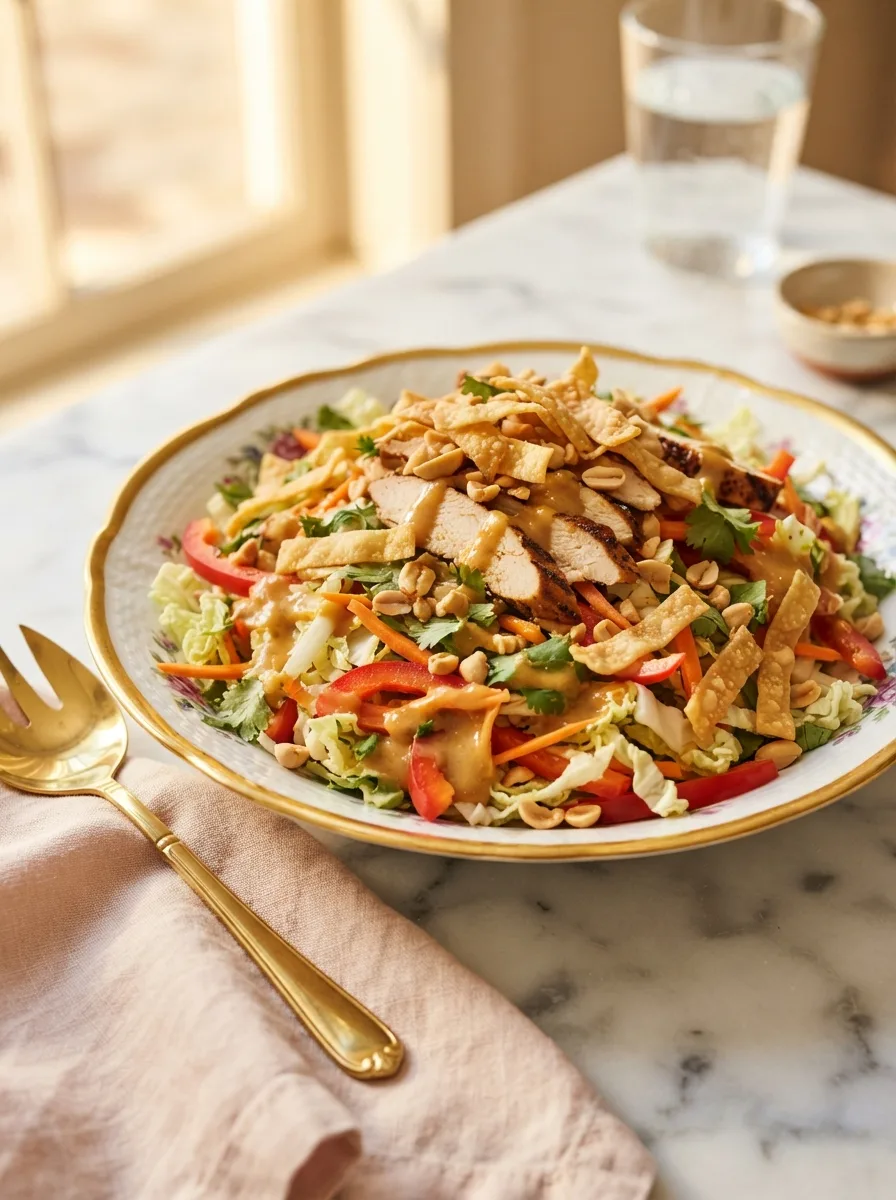
This version skips deep-frying the wontons for a quicker crispy-baked method, and the dressing keeps in the fridge for up to a week, so leftovers actually taste like leftovers you want to eat.
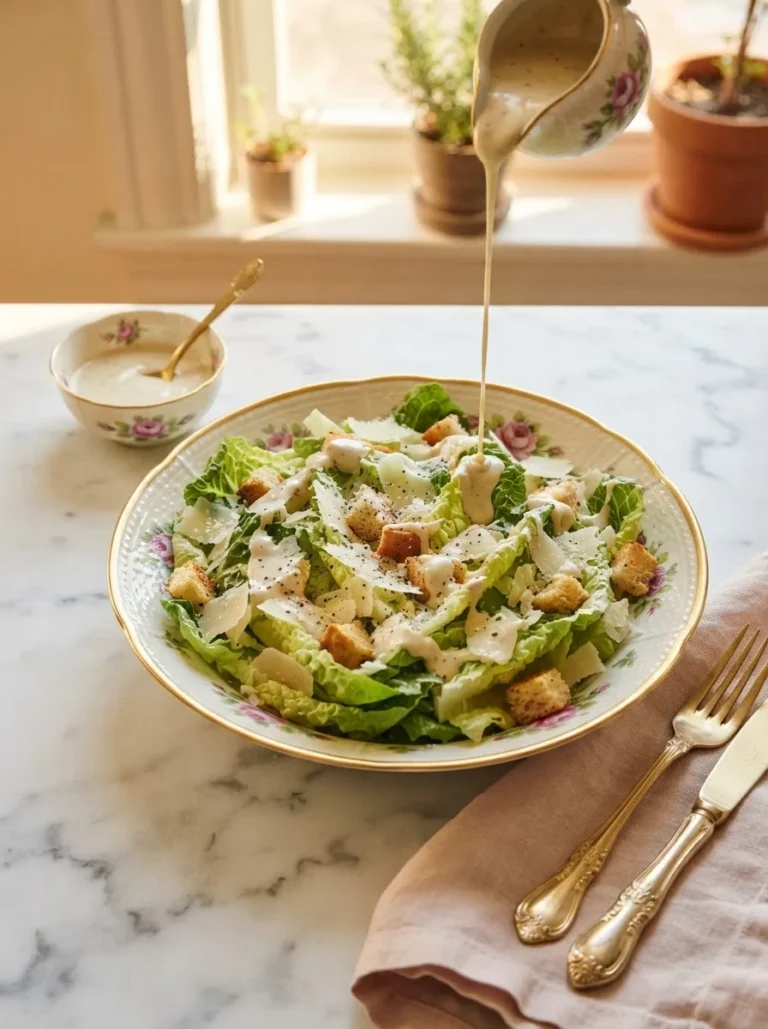
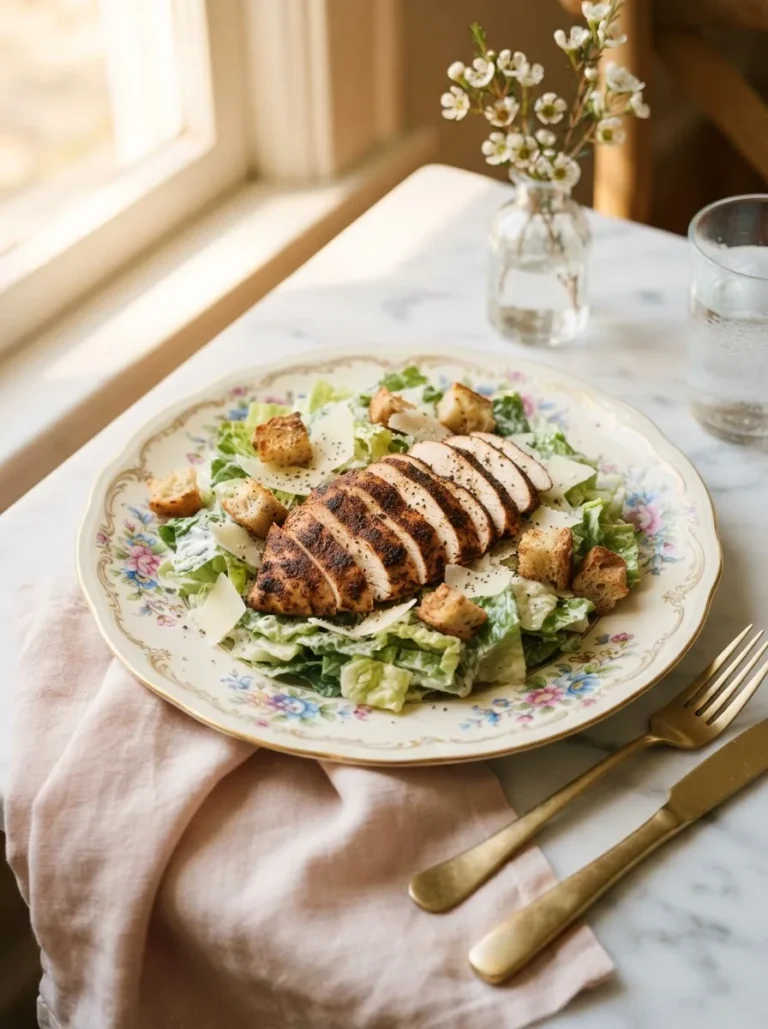
If you’re building a copycat dinner spread, this salad pairs well with my Cheesecake Factory Caesar Salad recipe — same “why did I ever think I needed to eat out for this” energy.
★★★★★ “This tasted EXACTLY like the one at Cheesecake Factory — my husband asked if I’d ordered takeout while he was on a work call in the other room.” — Marissa T., recipe tester (pre-launch)
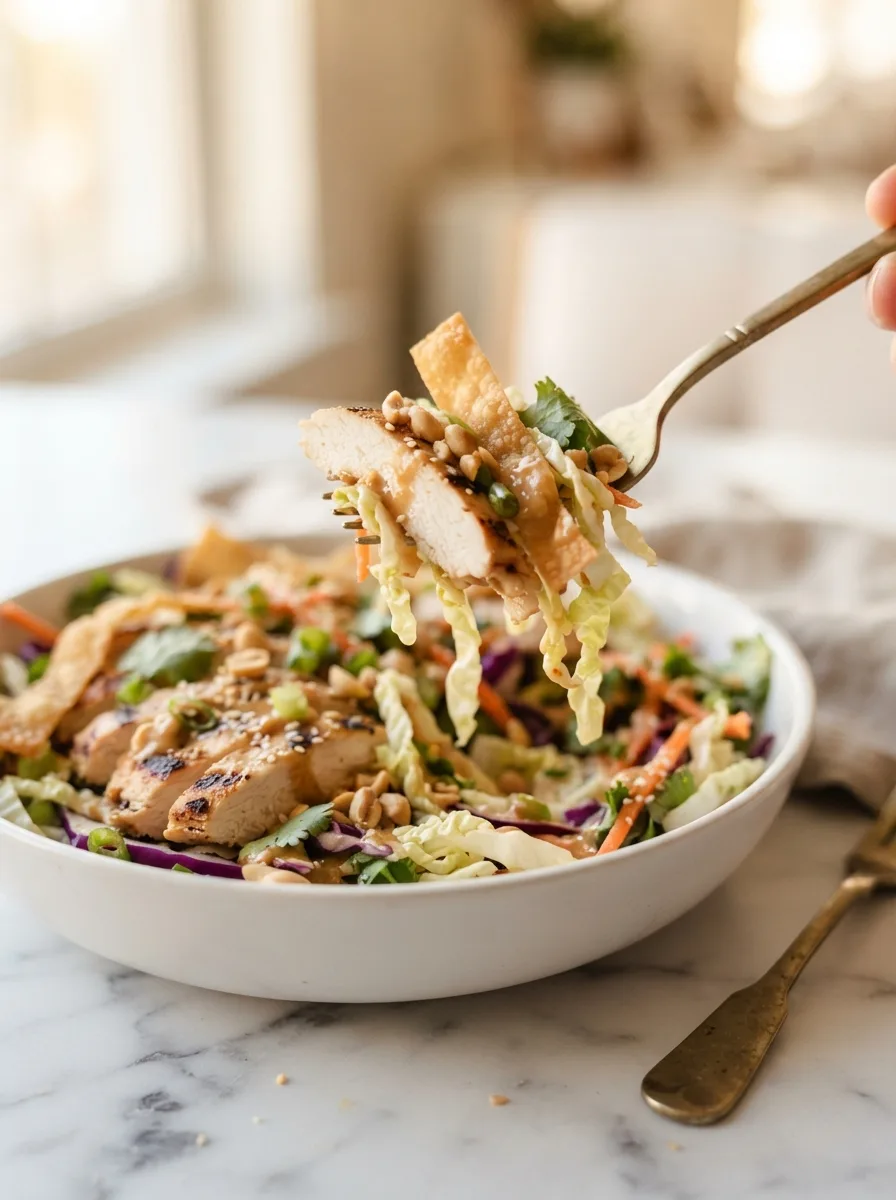
Why You’ll Love This Thai Chicken Salad Cheesecake Factory Copycat
- Tastes like the real thing: The dressing ratio took four rounds of testing to get right — peanut butter, lime, and soy in a balance that doesn’t taste like straight peanut butter.
- Actually crunchy: Napa cabbage and freshly baked wonton strips hold their texture instead of going limp under the dressing.
- Meal-prep friendly: Chop everything ahead, store the dressing separately, and this comes together in under 10 minutes on a weeknight.
- No deep fryer required: The wonton strips bake in the oven, so there’s no oil to deal with and no lingering fry smell in your kitchen.
Key Ingredients
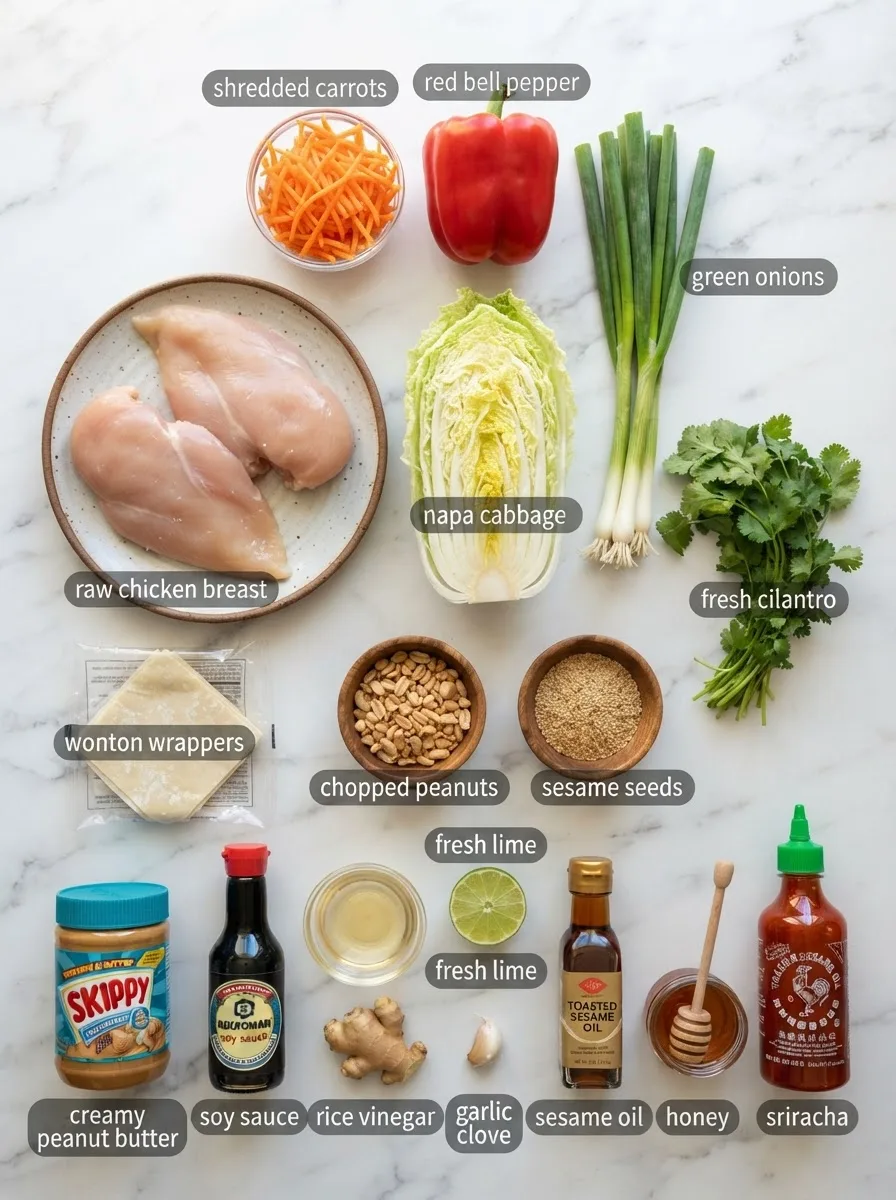
Napa cabbage is the base, and it matters more than people think — it’s lighter and more tender than green cabbage, so it holds dressing without turning watery. Green cabbage works in a pinch, but shred it thinner since it’s denser.
Creamy peanut butter (⅓ cup) is the backbone of the dressing. Natural peanut butter separates and turns the dressing grainy, so stick with a stabilized, no-stir kind here.
Rice vinegar gives the dressing its sharp edge without the harshness of white vinegar. If you only have apple cider vinegar, cut the amount by half and add a splash more lime juice.
Fresh ginger and garlic — this is a one-line ingredient, but don’t skip it. Powdered versions taste flat next to the fresh version’s sharpness.
Wonton wrappers, sliced into strips and baked, are what give this salad its signature crunch. Baking instead of frying means less mess and a wonton strip that stays crisp for a couple of days if stored separately from the salad.
Sriracha is the heat control. Start with ½ teaspoon and taste before adding more — the dressing mellows slightly once it hits the cold vegetables.
Ingredient Note: Measure the peanut butter before the liquids. Peanut butter that goes into the bowl first blends smoothly with warm water; added last, it clumps and takes twice as long to whisk out.
Equipment You’ll Need
- Large mixing bowl — for tossing the salad; a wide, shallow bowl works better than a deep one so the dressing coats evenly.
- Small whisk or fork — for the dressing. A blender works too if you want it perfectly smooth, but a whisk gets the job done.
- Rimmed baking sheet — for the wonton strips. No sheet? A cast-iron skillet on the stovetop with a thin layer of oil works as a fry-style alternative.
- Meat thermometer — the fastest way to know the chicken is done without guessing. A cheap $10 instant-read thermometer pays for itself the first time it saves you from dry chicken.
Controlling the Peanut Dressing Consistency (A Controlled Test)
The single biggest variable in this recipe isn’t the chicken — it’s the dressing. Too thick, and it clumps on the cabbage instead of coating it. Too thin, and it pools at the bottom of the bowl instead of clinging to every bite. I tested three versions side by side to find the version that actually stays on the salad.
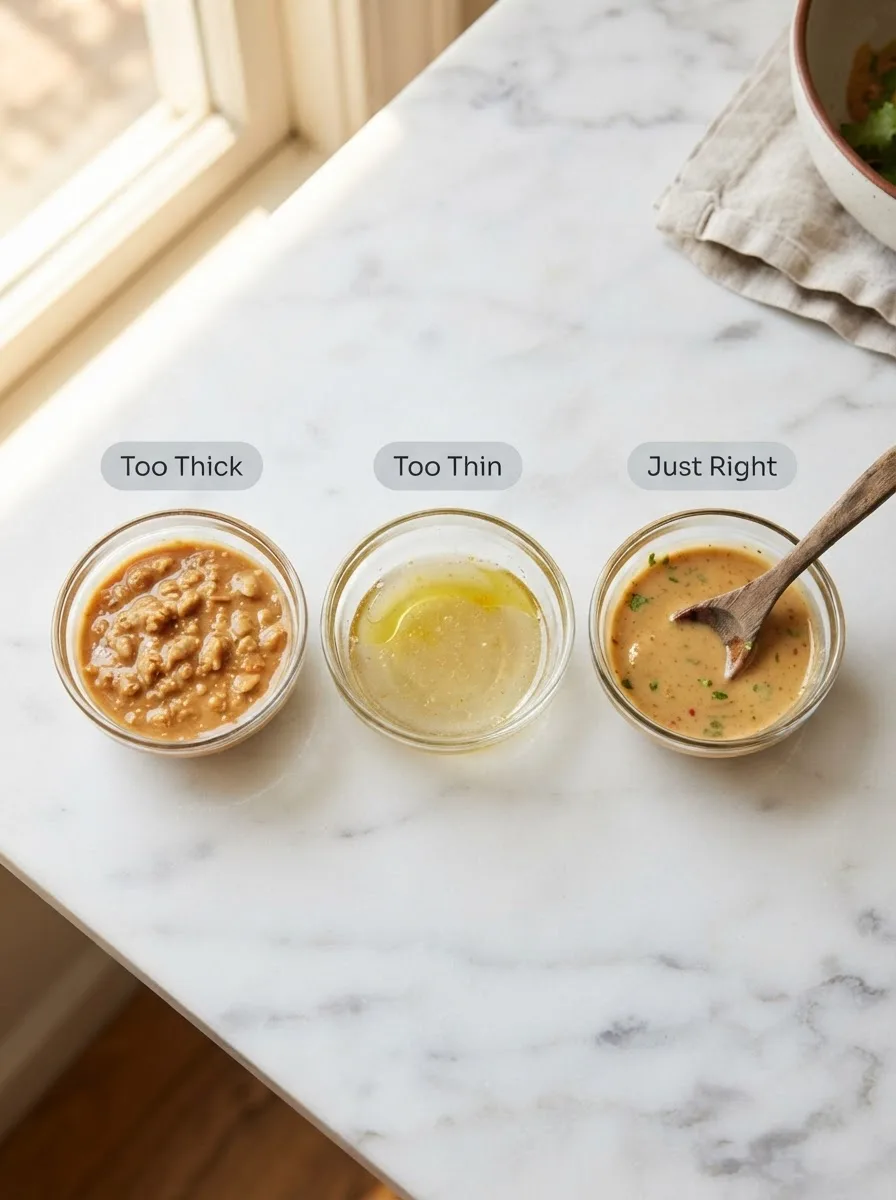
Too thick (straight peanut butter, no water): This version tasted the most like peanut butter and the least like the restaurant’s dressing. It sat in clumps on the cabbage instead of coating it.
Too thin (extra 3 tablespoons of water): This one poured beautifully but pooled at the bottom of the bowl within a minute, leaving the top layer of salad dry.
Just right (2 tablespoons of warm water, whisked in gradually): This version coated the back of a spoon in a thin, even layer and clung to the cabbage instead of sliding off. This is the ratio in the recipe card below — add the water one tablespoon at a time and stop as soon as it coats a spoon without running off in a stream.
How to Make Thai Chicken Salad Cheesecake Factory Copycat
Before you start: Pull the chicken out of the fridge 15 minutes before cooking so it cooks evenly, and preheat the oven to 400°F for the wonton strips.
Step 1 — Cook the chicken
Season the chicken breasts with salt and pepper, then cook in a lightly oiled skillet over medium-high heat for 6–7 minutes per side. You’re looking for an internal temperature of 165°F and juices that run clear, not pink. Let it rest for 5 minutes before slicing — cutting into it too early lets all that moisture run out onto the cutting board instead of staying in the meat.
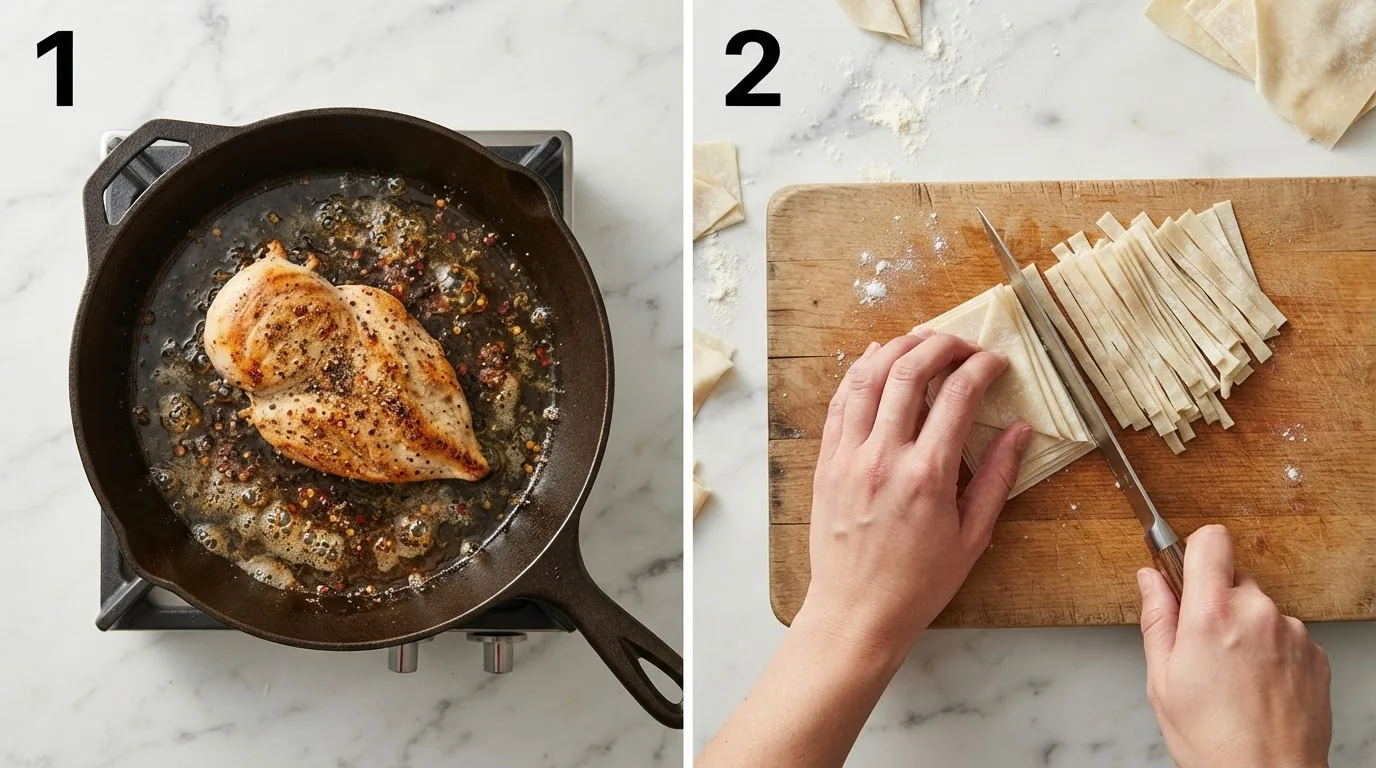
Step 2 — Make the wonton strips
Arrange the sliced wonton strips in a single layer on a baking sheet, brush lightly with oil, and bake at 400°F for 5–6 minutes, flipping once halfway through. They’re done when they’re deep golden and snap cleanly when bent — if they bend without snapping, they need another minute. Let them cool completely on the sheet; they’ll continue crisping as they cool.
Step 3 — Whisk the peanut-lime dressing
In a small bowl, whisk together the peanut butter, soy sauce, rice vinegar, honey, lime juice, sesame oil, garlic, ginger, and sriracha. The mixture will look thick and separated at first — that’s normal. Add warm water one tablespoon at a time, whisking after each addition, until the dressing coats the back of a spoon in a thin, even layer without running off in a stream.
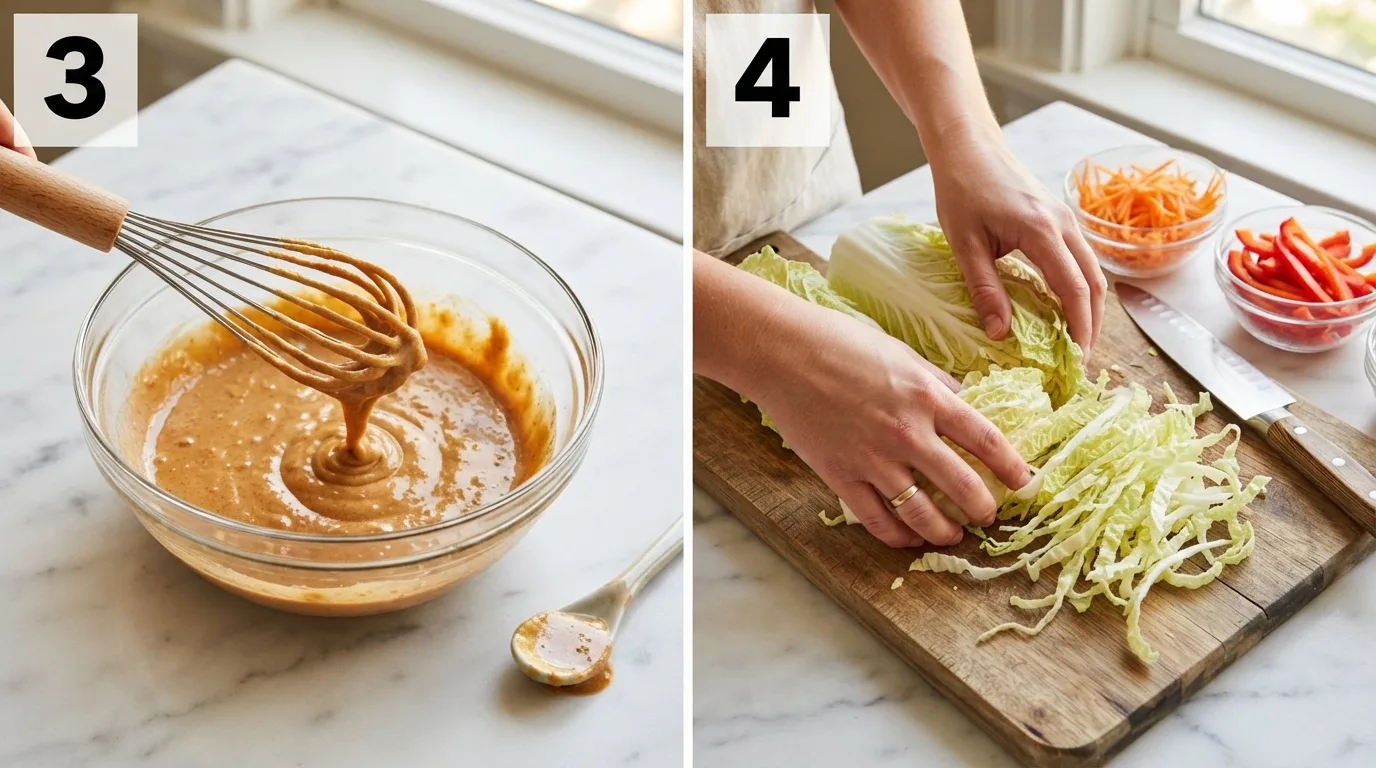
Step 4 — Prep and chop the vegetables
While the chicken rests and the wontons cool, shred the napa cabbage thin, julienne the carrots and bell pepper into matchstick-sized pieces (julienne just means cutting into thin, uniform strips — it helps the vegetables coat evenly and stay crunchy under the dressing), and slice the green onions. Add everything to your largest mixing bowl.
Step 5 — Toss the salad with dressing
Pour about three-quarters of the dressing over the vegetables and toss well, using tongs or your hands, until every piece is coated. Taste and add more dressing a little at a time — you can always add more, but you can’t take it back out once it’s in.
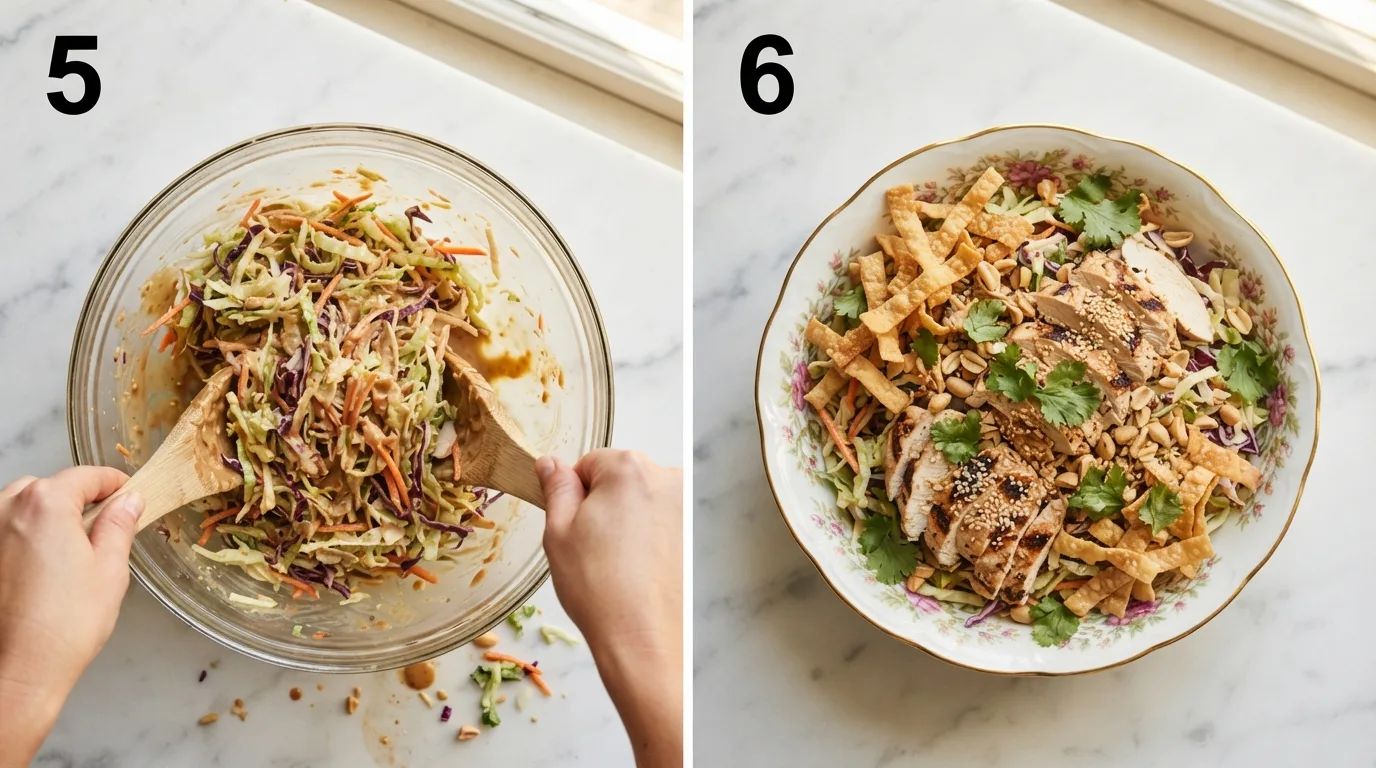
Step 6 — Add toppings and serve
Top the tossed salad with the sliced chicken, baked wonton strips, chopped peanuts, sesame seeds, and cilantro. Add the remaining dressing on top or serve it on the side if you’re not eating the whole batch right away. Serve immediately — this is not a salad that improves with time in the fridge once it’s dressed.
Pro Tips for Perfect Thai Chicken Salad Cheesecake Factory Copycat
Tip 1: Salt the cabbage lightly before dressing it. A pinch of salt tossed with the shredded cabbage 10 minutes before dressing draws out a little moisture, which keeps the finished salad from turning watery once it sits.
Tip 2: Slice the chicken against the grain. This shortens the muscle fibers, so each bite is easier to chew instead of stringy — it’s the difference between chicken that feels tender and chicken that feels like work.
Tip 3: Keep the wonton strips separate until serving. Even baked, they’ll soften if they sit in dressing for more than a few minutes. Store them in a container at room temperature and add them at the very last step.
Tip 4: Warm the peanut butter slightly before whisking. Fifteen seconds in the microwave loosens it enough to blend smoothly with the other dressing ingredients, instead of fighting clumps for five minutes with a cold spoon.
Variations and Substitutions
Dietary Variations:
- Gluten-free: Swap the soy sauce for tamari and check that your wonton wrappers are gluten-free, or skip them entirely and use crushed roasted cashews for crunch instead.
- Vegetarian: Swap the chicken for extra-firm tofu, pressed and pan-fried in cubes until golden on all sides. The dressing and crunch elements stay exactly the same.
Flavor Variations:
- Mango version: Add a cup of diced ripe mango on top for a sweeter, more tropical direction — it plays especially well against the sriracha.
Ingredient Substitutions:
- Peanut butter allergy → sunflower seed butter, 1:1, though the flavor will be milder and slightly earthier
- Napa cabbage unavailable → green cabbage, shredded extra thin
Craving a different crunch on top? Try my sumac slaw as the base instead of napa cabbage for a completely different but equally craveable direction.
Troubleshooting
Why is my dressing too thick to toss through the salad?
This happens when the peanut butter hasn’t been thinned with enough liquid, or when it went into the bowl cold and straight from the fridge. Add warm water one tablespoon at a time, whisking after each addition, until it coats the back of a spoon in a thin, even layer.
Why did my wonton strips go soft right after I added them?
Most likely they sat in the dressed salad for more than a few minutes before serving. Wonton strips — even baked ones — absorb moisture fast. Keep them in a separate container and add them at the very last step, right before the salad hits the table.
Why does my dressing taste too salty or slightly bitter?
This usually means too much soy sauce went in relative to the honey and lime, or the peanut butter was on the older side and had lost some of its natural sweetness. Add an extra teaspoon of honey and a squeeze more lime juice to rebalance before adding more soy sauce next time.
Storage and Make-Ahead
Counter: Once dressed, this salad is best eaten within the hour — the cabbage starts to wilt and the wonton strips soften as time passes.
Refrigerator: Store the chopped vegetables, sliced chicken, and dressing in separate airtight containers for up to 3 days. The dressing alone keeps well for up to a week.
Freeze: The cooked chicken freezes well on its own for up to 2 months. Do not freeze the dressed salad, raw vegetables, or wonton strips — all three lose their texture completely.
Reheating: The chicken can be served cold or gently warmed for 30 seconds in the microwave. If the wonton strips go soft in storage, a 3–5 minute pass in a 300°F oven brings the crunch right back.
Make-Ahead: Chop the vegetables, cook the chicken, and make the dressing up to 2 days ahead. Combine everything fresh right before serving — this is what keeps the salad from turning into a soggy mess by the time you eat it.
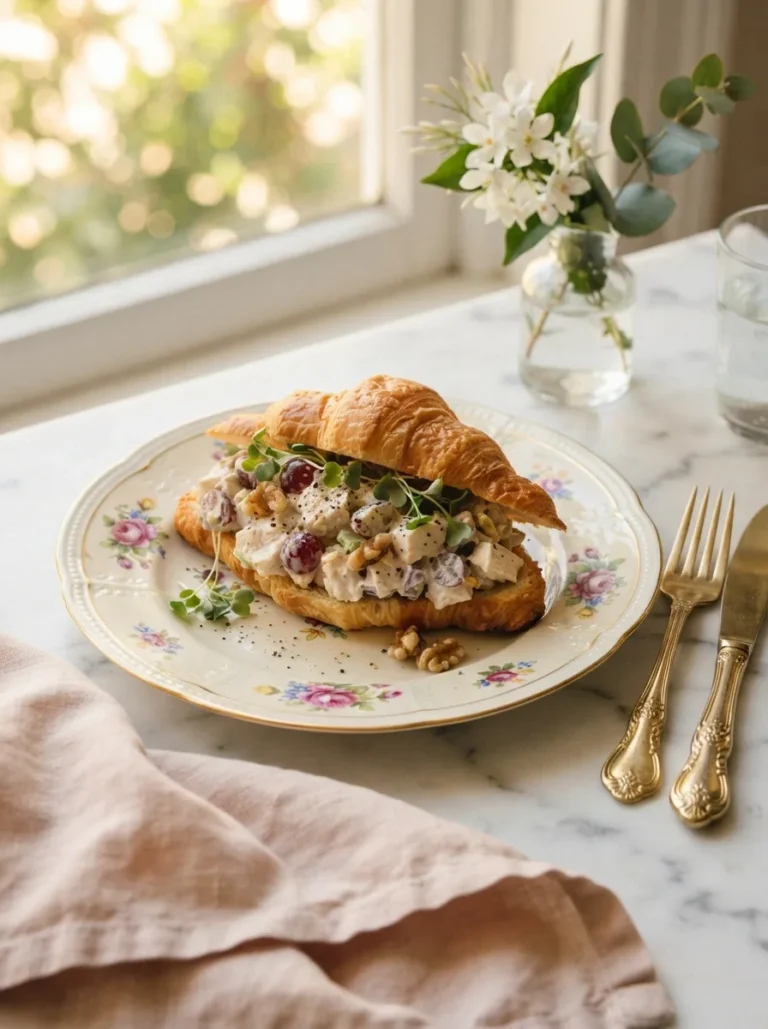
Got extra shredded chicken? It’s the same chicken I use in my Cheesecake Factory Chicken Salad Sandwich recipe — cook a double batch and turn the leftovers into lunch the next day.
Frequently Asked Questions
Q: What is the Cheesecake Factory Thai chicken salad dressing made of? A: The dressing is a peanut-lime vinaigrette built on creamy peanut butter, soy sauce, rice vinegar, honey, lime juice, sesame oil, garlic, ginger, and a small amount of sriracha for heat. Warm water thins it to a pourable, glossy consistency that coats vegetables without pooling.
Q: Can I use rotisserie chicken instead of cooking it from raw? A: Yes — shredded or sliced rotisserie chicken works well and saves about 15 minutes. The texture is slightly different (softer, more shredded) but the flavor holds up fine.
Q: How spicy is this salad? A: With ½ teaspoon of sriracha, it’s mild with just a hint of warmth. Add up to a full teaspoon if you want real heat, and taste as you go — the dressing mellows once it’s tossed with the cold vegetables.
Q: Can I make the dressing ahead of time? A: Yes, and it actually improves after a few hours in the fridge as the flavors meld. It will thicken slightly when cold, so whisk in a splash of warm water before using it.
Q: What can I use instead of wonton strips? A: Crushed roasted cashews, chow mein noodles, or crispy rice noodles all work as crunchy substitutes if you don’t have wonton wrappers on hand or need a gluten-free option.
Q: Is this recipe vegetarian-friendly? A: Not as written, since it includes chicken, but it converts easily — swap in pan-fried extra-firm tofu and the rest of the recipe stays exactly the same.
Q: Can I double this recipe for a crowd? A: Yes. Double every ingredient except the sriracha — add that to taste, since spice level doesn’t always scale evenly with volume.
More Salad Recipes You’ll Love
- Cheesecake Factory Caesar Salad Recipe — the other Cheesecake Factory copycat salad worth making at home, with a garlicky, anchovy-forward dressing.
- Cheesecake Factory Chicken Salad Sandwich Recipe — turns the same simple chicken into a creamy, grape-studded sandwich filling.
- Sumac Slaw — a bright, tangy slaw that makes a great swap for the napa cabbage base in this recipe.
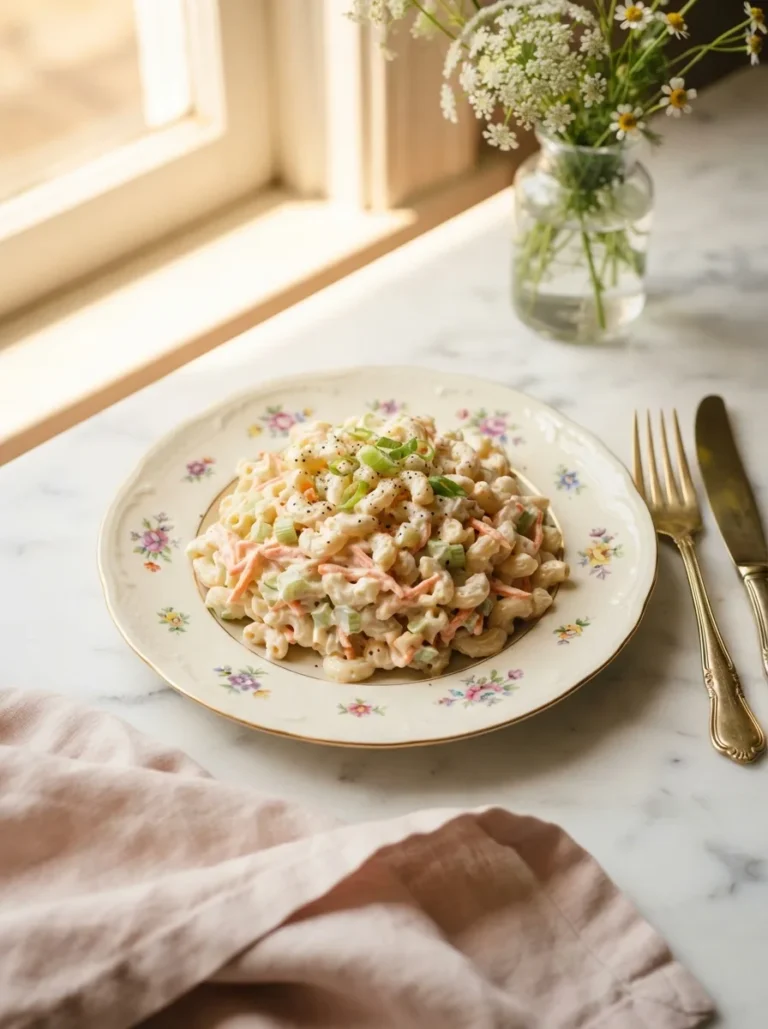
- Hawaiian Bros Pasta Salad Recipe — another copycat favorite if you’re building out a full potluck spread.
Thai Chicken Salad Cheesecake Factory Copycat (Tested!)
Ingredients
For the Chicken:
- 1 lb boneless, skinless chicken breasts
- 1 tbsp vegetable oil
- 1/2 tsp salt
- 1/4 tsp black pepper
For the Wonton Strips:
- 8 wonton wrappers, sliced into strips
- 1 tbsp vegetable oil, for brushing
For the Salad:
- 4 cup shredded napa cabbage
- 1 cup shredded carrots
- 1 red bell pepper, julienned
- 3 green onions, sliced
- 1/2 cup fresh cilantro, chopped
- 1/2 cup chopped peanuts
- 1 tbsp sesame seeds
For the Peanut-Lime Dressing:
- 1/3 cup creamy peanut butter
- 3 tbsp soy sauce
- 2 tbsp rice vinegar
- 2 tbsp honey
- 2 tbsp fresh lime juice
- 1 tbsp sesame oil
- 1 clove garlic, minced
- 1 tsp fresh grated ginger
- 1/2 –1 tsp sriracha, to taste
- 2 –4 tbsp warm water, as needed
Instructions
- Season the chicken breasts with salt and pepper. Cook in a lightly oiled skillet over medium-high heat for 6–7 minutes per side, until the internal temperature reaches 165°F. Rest for 5 minutes, then slice against the grain.
- Preheat the oven to 400°F. Arrange the wonton strips in a single layer on a baking sheet, brush lightly with oil, and bake for 5–6 minutes, flipping once, until deep golden and crisp. Let cool completely.
- Whisk together the peanut butter, soy sauce, rice vinegar, honey, lime juice, sesame oil, garlic, ginger, and sriracha. Add warm water one tablespoon at a time, whisking after each addition, until the dressing coats the back of a spoon in a thin, even layer.
- Shred the napa cabbage, julienne the carrots and bell pepper, and slice the green onions. Combine in a large mixing bowl.
- Pour about three-quarters of the dressing over the vegetables and toss until evenly coated. Taste and add more dressing as needed.
- Top with the sliced chicken, baked wonton strips, chopped peanuts, sesame seeds, and cilantro. Serve immediately.
Notes
- Measure the peanut butter into the bowl before the liquid ingredients — it blends smoothly with warm water, but clumps if added last.
- Store the dressing separately from the salad for up to 1 week in the refrigerator; it thickens when cold, so thin with warm water before using.
- Wonton strips stay crisp for up to 2 days if stored at room temperature in an airtight container, away from the dressed salad.
- For a lighter version, the wonton strips can be air-fried at 380°F for 3–4 minutes instead of oven-baked.