Crisp Cucumber Lettuce and Tomato Salad

If you’ve ever made a cucumber lettuce and tomato salad that looked great for the first five minutes and then turned into a puddle, you already know the problem isn’t your knife skills. It’s the vegetables themselves — cucumbers and tomatoes are both mostly water, and that water has to go somewhere. Usually it goes straight into your dressing.
I tested this three different ways — salting and draining the vegetables, skipping that step entirely, and oversalting them — before landing on the method below. The short version: ten minutes makes all the difference.
What you get is a lettuce and cucumber salad that actually stays crisp on the table, not just in the bowl.

The version below is the one that survives a potluck table for an hour without turning soupy — and it doesn’t require anything more specialized than a colander and ten spare minutes.
★★★★★ “I’ve made watery versions of this salad my whole life and just accepted it. The salting step is genuinely the answer. My cucumbers stayed crunchy for the entire dinner party.” — Marissa T., recipe tester (pre-launch)
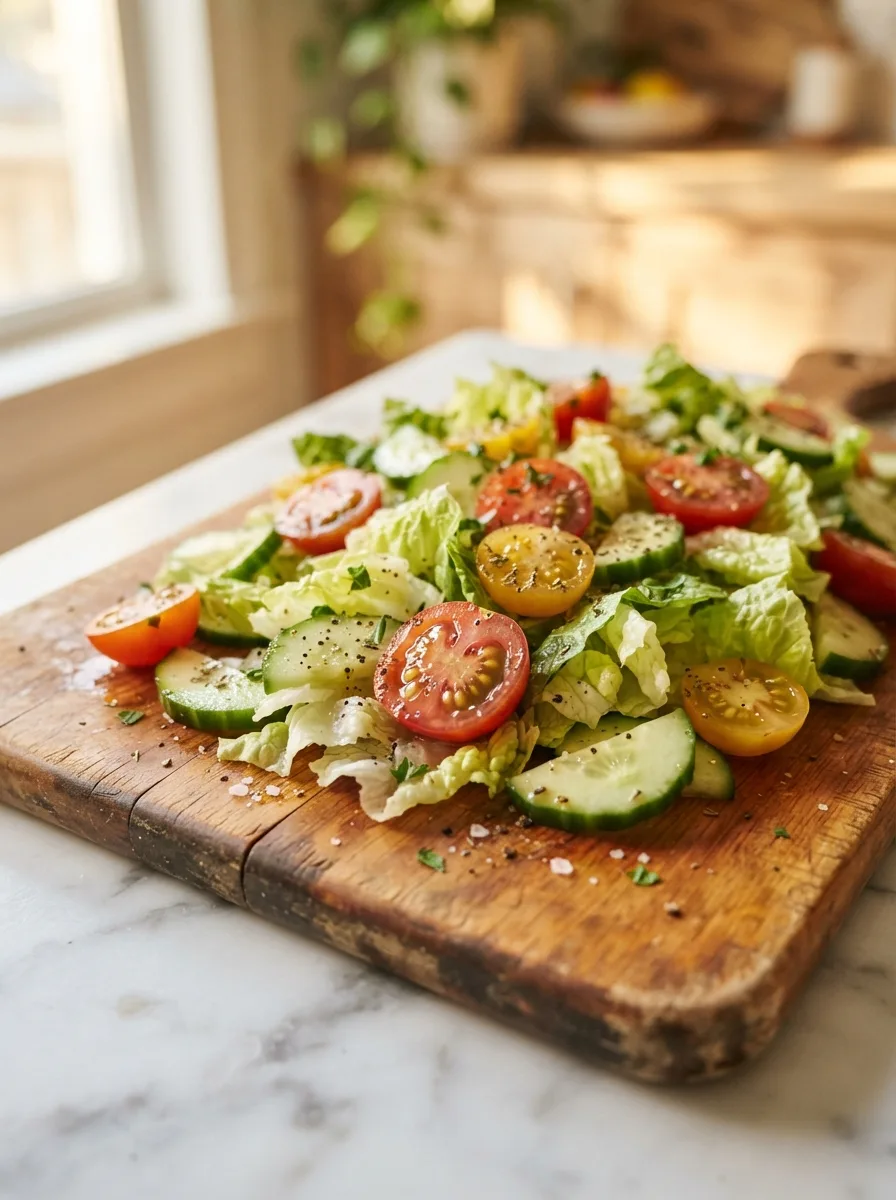
Why You’ll Love This Cucumber Lettuce and Tomato Salad
- Stays crisp for hours: The salting-and-draining step pulls out excess moisture before the vegetables ever meet the dressing, so this tomato lettuce and cucumber salad doesn’t turn into a puddle on the buffet table.
- Ready in 20 minutes: No cooking, no marinating overnight — just knife work and a quick rest.
- Built for a crowd: It doubles cleanly, which is more than I can say for most vinaigrette-based salads.
- Endlessly adaptable: Swap the cheese, skip the onion, add protein — the base holds up to almost anything you throw at it.
Key Ingredients for This Lettuce Cucumber Salad
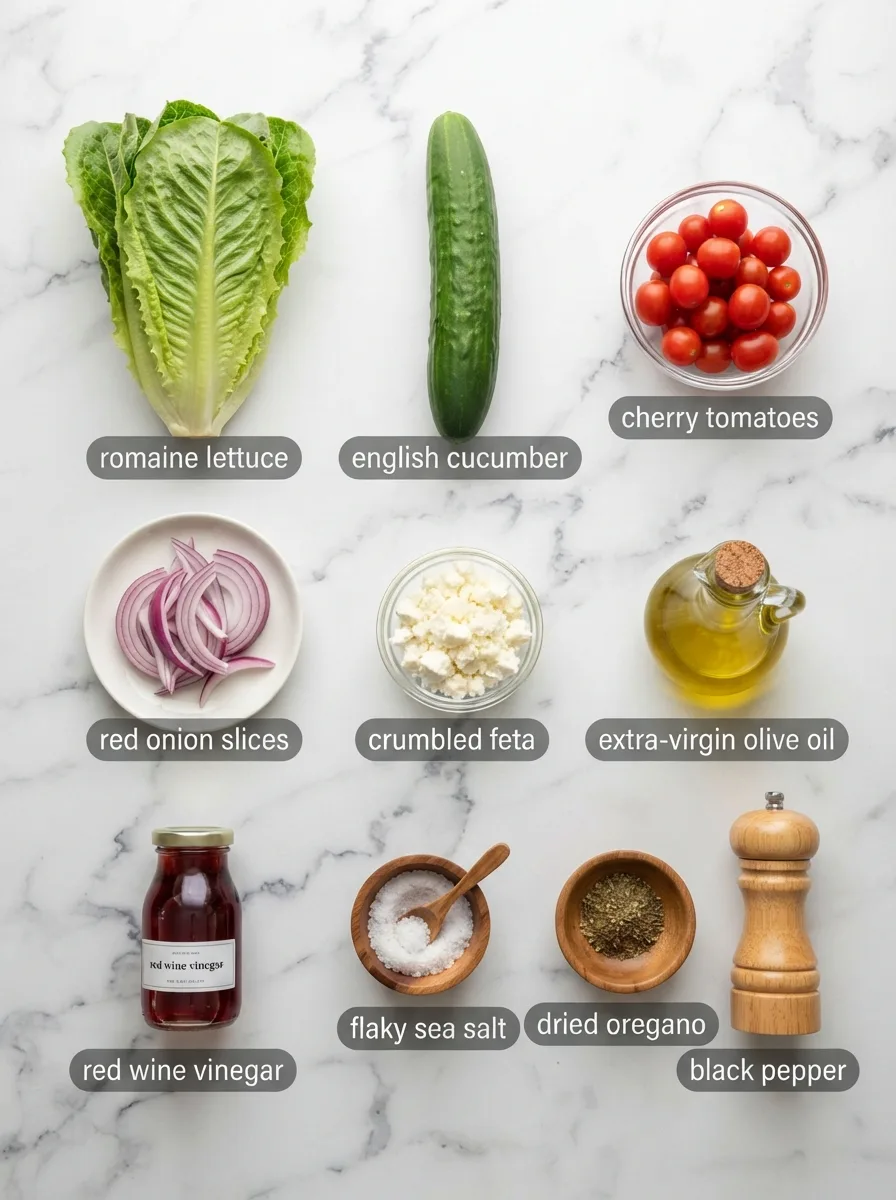
Romaine lettuce (1 large head). Romaine holds its structure and crunch far better than butter lettuce or spring mix, both of which wilt within minutes of touching dressing. If you only have iceberg on hand, it works — just expect a slightly less flavorful, more watery crunch. This is the backbone of any real lettuce and cucumber salad; the leaf you choose changes the whole texture of the dish.
English cucumber (1, about 12 oz). English cucumbers have thinner skin, fewer seeds, and less water content than the standard slicing cucumber — which matters enormously here, since water is the enemy of a crisp salad. If you’re using a regular cucumber, peel it and scoop out the seeds first.
Cherry or grape tomatoes (2 cups, halved). Small tomatoes hold their shape better than diced large tomatoes, which tend to release their juice the second you cut into them. If big tomatoes are what you have, seed them before dicing to cut down on the liquid they’ll release.
Red onion (¼, thinly sliced). Thin slicing matters — thick chunks of raw onion overpower everything else in the bowl. If raw onion is too sharp for you, soak the slices in cold water for 10 minutes first; it mellows the bite without losing the crunch.
Extra-virgin olive oil + red wine vinegar (3:1 ratio). This ratio is slightly more acidic than a classic vinaigrette, which is intentional — the extra vinegar balances the sweetness of the tomatoes and keeps the whole thing tasting bright instead of oily.
Ingredient Note: Salt is doing double duty in this recipe. It seasons the vegetables, but it’s also the mechanism that draws water out of the cucumber and tomato during the resting step below. Don’t skip it, and don’t substitute a coarser salt without adjusting quantity — coarse salt draws moisture more slowly.
Equipment You’ll Need
- Colander — for draining the salted cucumber and tomato. A fine-mesh strainer works too.
- Sharp chef’s knife or mandoline — a mandoline gives you uniform cucumber half-moons, which matters more for even texture than you’d think.
- Large salad bowl — leave room for tossing; a bowl that’s too shallow means dressing pools at the bottom instead of coating everything.
- Salad spinner (optional) — not required, but it gets lettuce drier than paper towels ever will, and dry lettuce holds dressing better.
- Small jar with a lid — for shaking the dressing together. A whisk and bowl work fine too.
Controlling the Sogginess (A Controlled Test)
The single biggest variable in whether this salad stays crisp or turns to soup is how much moisture is sitting in the cucumber and tomato before they meet the dressing. I ran three versions back to back to figure out exactly how much salting time actually helps.
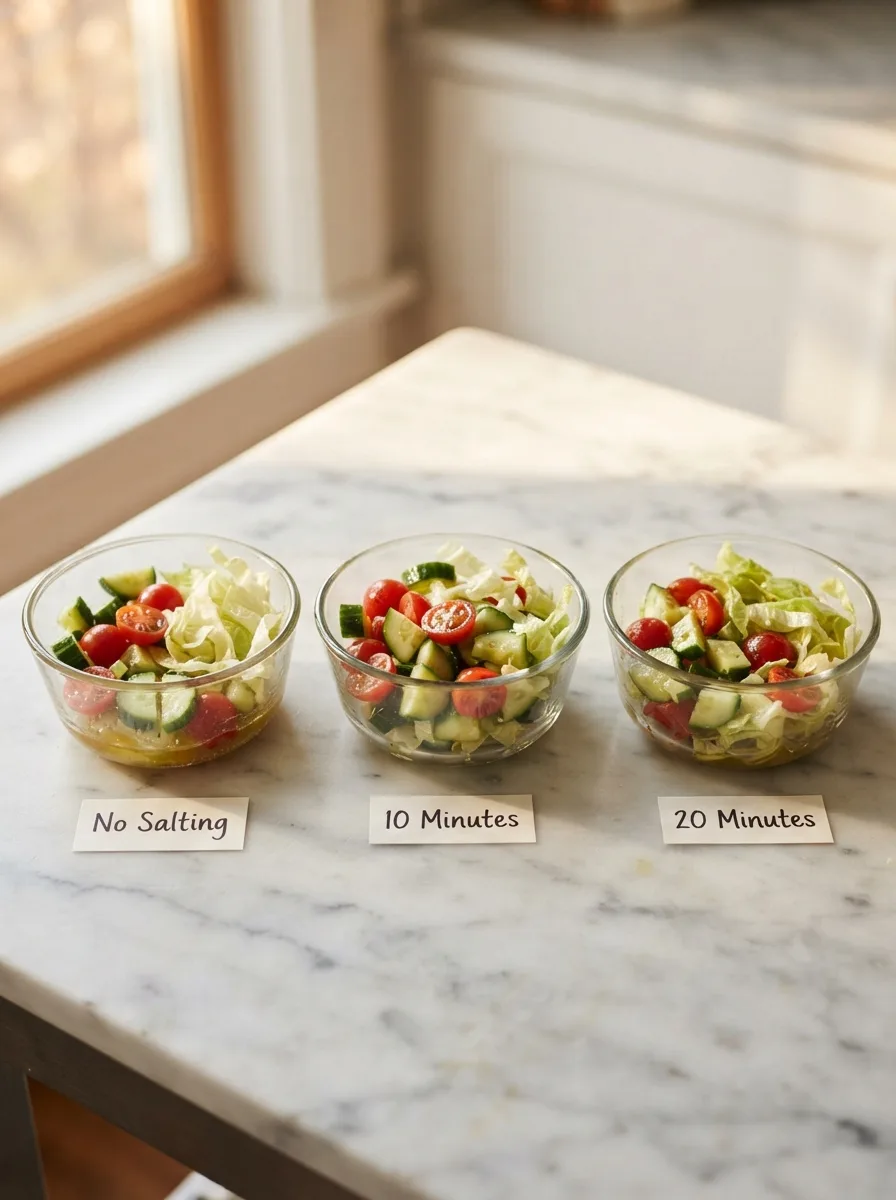
No salting (control): Dressed immediately, this batch looked identical to the others for the first ten minutes — then the tomatoes and cucumber released enough liquid to visibly dilute the vinaigrette. By the 45-minute mark, the bottom of the bowl had nearly a quarter-inch of watery dressing.
Salted and drained for 10 minutes: This is the winner. Salting draws out excess water through osmosis — salt pulls moisture across the cell walls of the cucumber and tomato, and a quick drain in the colander removes it before it ever touches the lettuce. The result stayed crisp for well over an hour, and the dressing kept its full flavor instead of getting watered down.
Salted and drained for 20 minutes: Too much of a good thing. By the 20-minute mark, the cucumber had started to lose its snap along with the water — it tasted slightly limp rather than crisp. Ten minutes is the sweet spot; past that, you’re trading crunch for dryness.
The takeaway: Salt the cucumber and tomato, drain for exactly 10 minutes, and you’ll get a lettuce tomato cucumber salad that holds its texture from the first bite to the last.
How to Make This Lettuce Tomato and Cucumber Salad
Before you start: Wash and thoroughly dry your lettuce ahead of time — wet lettuce is the second most common cause of a watery salad, right behind un-drained cucumber and tomato.
Step 1 — Salt and drain the cucumber and tomato
Halve the cherry tomatoes and slice the cucumber into thin half-moons. Toss both with ½ teaspoon of salt in a colander set over a bowl or the sink. Let them sit for exactly 10 minutes — you’ll see beads of liquid forming on the surface almost immediately, which is exactly what you want happening.
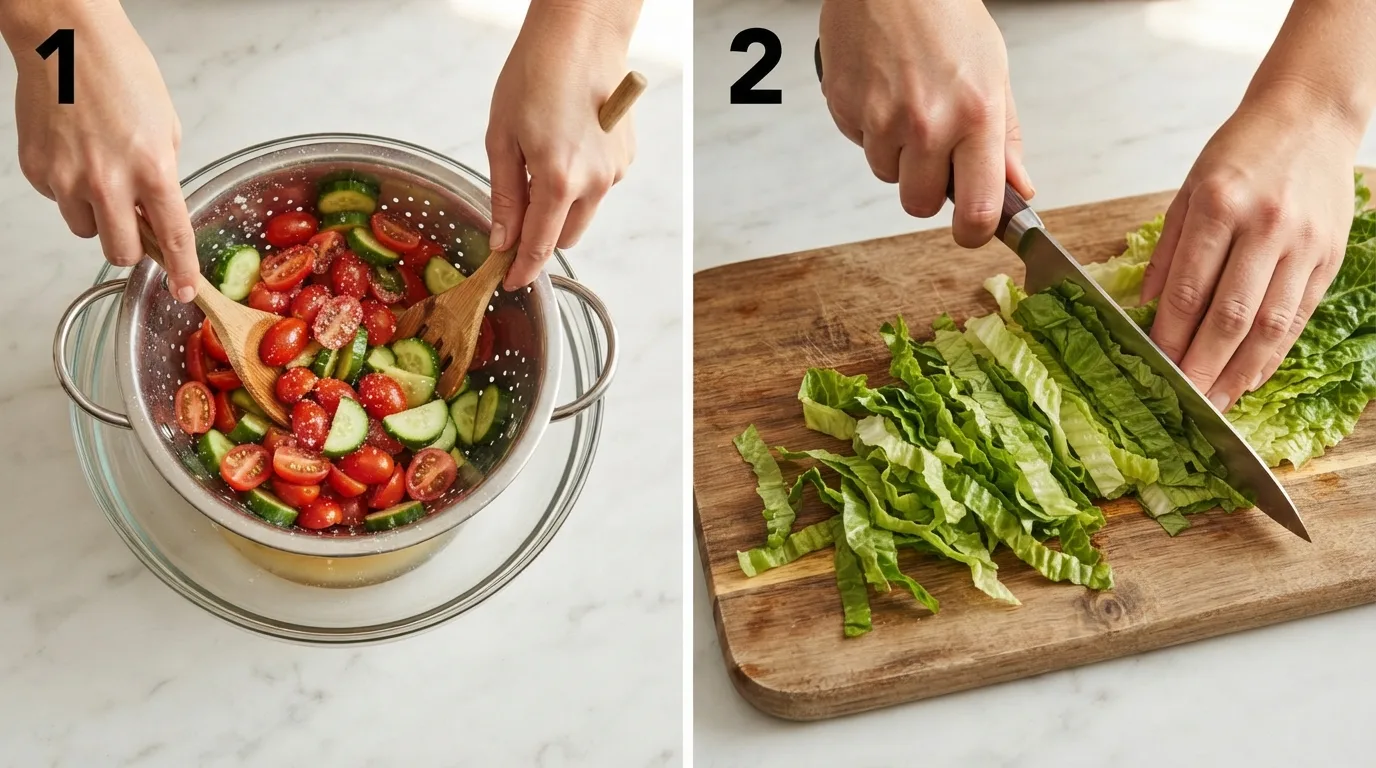
Step 2 — Chop the lettuce while the vegetables drain
Chop the romaine into bite-sized ribbons, about 1-inch wide. Wash if you haven’t already, and dry thoroughly — a salad spinner is worth owning just for this step. Set the lettuce aside in your large salad bowl.
Step 3 — Whisk the dressing
In a small jar or bowl, combine the olive oil, red wine vinegar, dried oregano, a pinch of salt, and a few cracks of black pepper. Shake or whisk until it looks slightly cloudy and emulsified — that cloudiness is a sign the oil and vinegar have actually combined instead of just sitting next to each other.
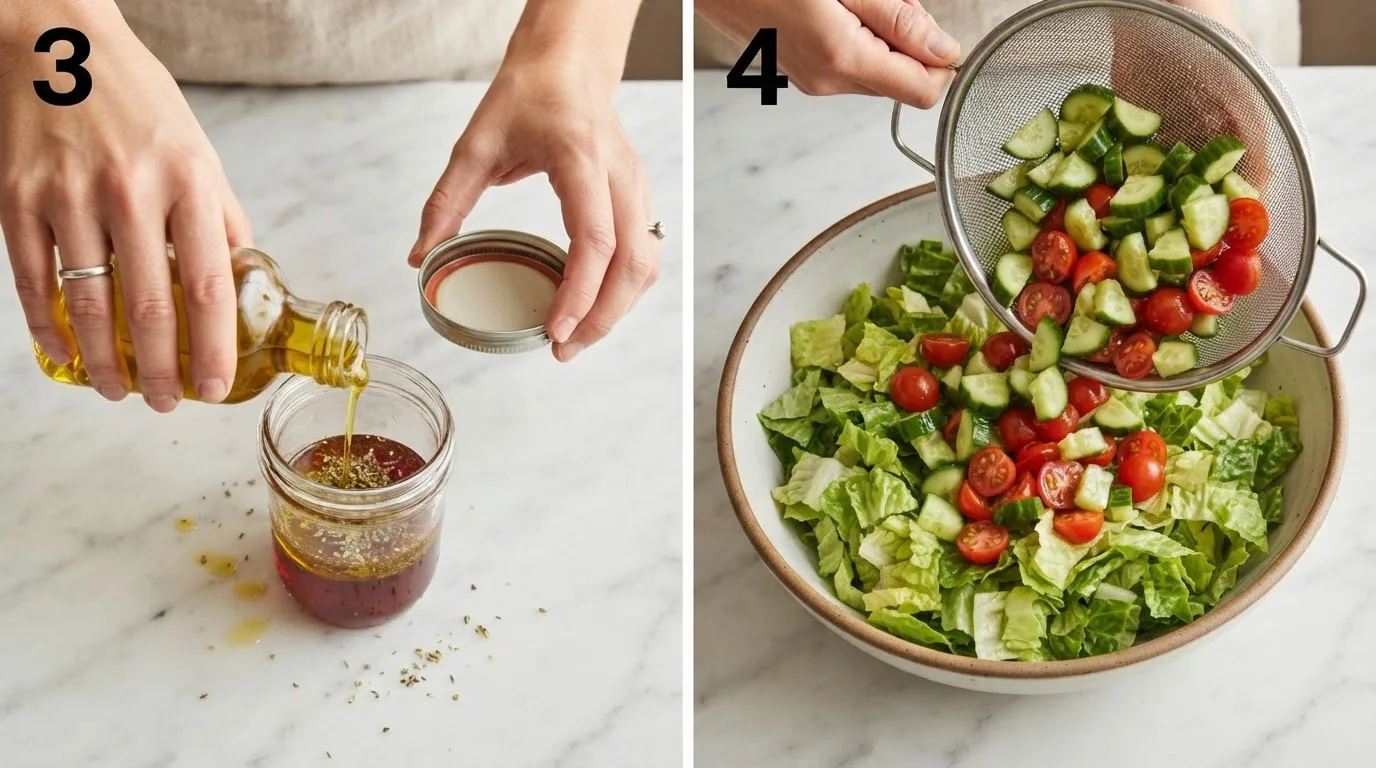
Step 4 — Combine the drained vegetables with the lettuce
Give the cucumber and tomato one more gentle shake in the colander to knock off any final drops of liquid, then add them to the bowl with the lettuce, along with the thinly sliced red onion.
Step 5 — Dress and toss
Pour the dressing over the top and toss gently but thoroughly — you want every leaf coated, but you don’t want to bruise the lettuce by overmixing. If you’re adding feta, sprinkle it in during this step so it doesn’t get crushed by tossing.
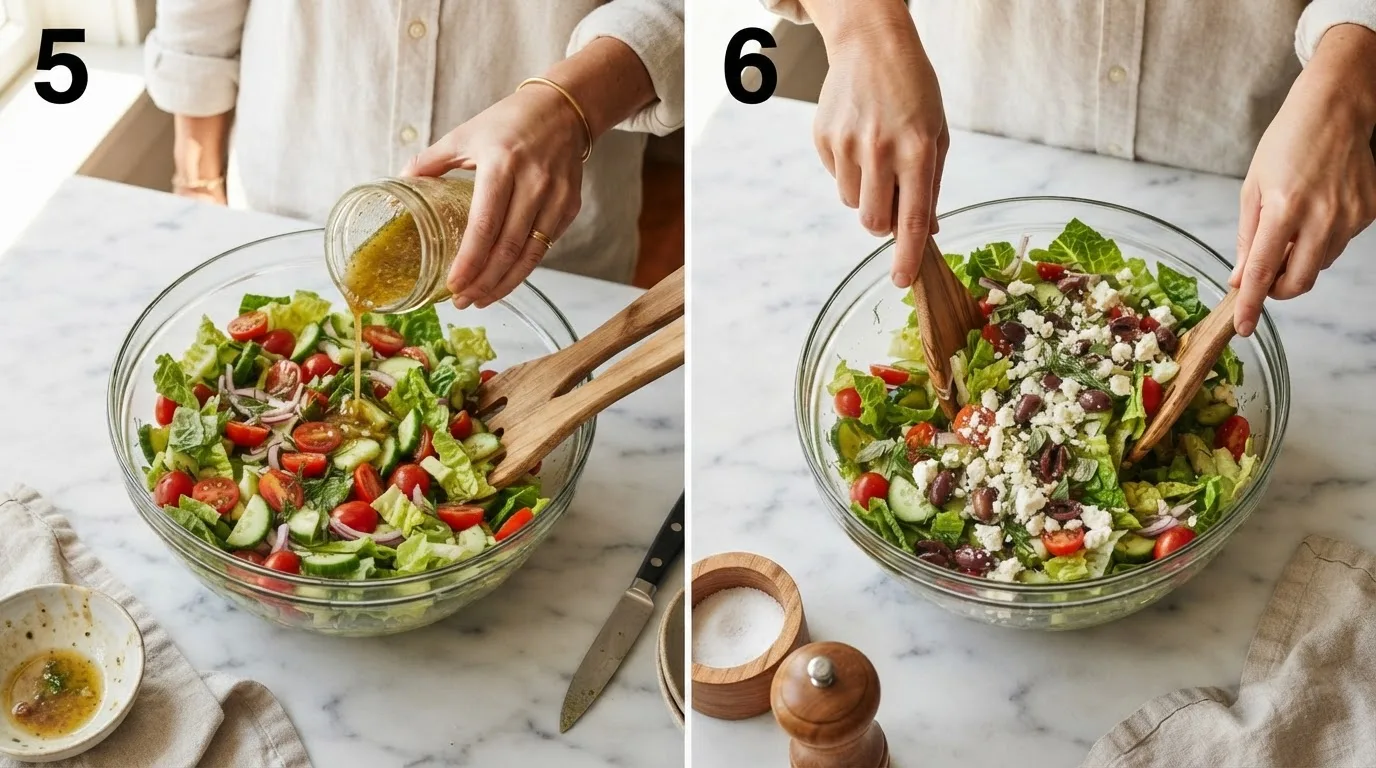
Step 6 — Serve immediately
This salad is best within the first hour of dressing. If you’re prepping ahead, keep the dressing separate until just before serving — see the Make-Ahead section below for the full timeline.
Pro Tips for Perfect Cucumber Lettuce and Tomato Salad
Tip 1: Salt, then drain, then dress — in that order. Skipping the drain step and just salting doesn’t help; the water has to actually leave the bowl, not sit at the bottom of it.
Tip 2: Dry your lettuce completely. Water clinging to lettuce leaves dilutes the dressing the same way un-drained cucumber does. A salad spinner solves this in under a minute.
Tip 3: Cut everything to a similar size. Uneven pieces mean uneven dressing distribution — some bites end up drenched, others bone dry. A mandoline for the cucumber keeps things consistent.
Tip 4: Dress right before serving, not at the start of the meal. Even properly drained vegetables will eventually release a little more liquid over time. Dressing at the last possible moment keeps every bite crisp.
Variations and Substitutions

Dietary Variations:
- Dairy-free: Skip the feta entirely, or swap in a few tablespoons of chopped kalamata olives for a similar salty punch without the dairy.
- Vegan: This recipe is already vegan aside from the optional feta — just leave it out or use a plant-based feta alternative.
Flavor Variations:
- Creamy version: If you’d rather have a rich, tangy dressing instead of the oregano vinaigrette, my original caesar salad dressing recipe works beautifully tossed with this exact combination of lettuce, tomato, and cucumber — it turns this into something closer to a lettuce and cucumber salad with a caesar twist.
- Add protein: Sliced grilled chicken turns this side into a full meal. My blackened chicken caesar salad uses the same vegetable base with a spicier profile, if you want to go that direction instead.
Ingredient Substitutions:
- Swap the red onion for thinly sliced shallot if you want a milder bite.
- No red wine vinegar? White wine vinegar or fresh lemon juice both work at the same ratio.
- If you’re craving something creamier and more classic, my remoulade celeri makes a great side-by-side pairing on the same plate — the crunch profiles complement each other nicely.
Troubleshooting
Why is my lettuce cucumber salad watery?
This almost always traces back to one of two things: the cucumber and tomato weren’t salted and drained before dressing, or the lettuce wasn’t fully dried after washing. Both release water over time, and that water has nowhere to go but into your dressing.
Why did my lettuce wilt so quickly?
Dressing too far in advance is the usual cause — the salt and acid in the vinaigrette start breaking down the lettuce’s cell structure almost immediately. Dress within 10–15 minutes of serving, not an hour ahead.
Why does my dressing taste too sharp or unbalanced?
The 3:1 oil-to-vinegar ratio is calibrated to balance the sweetness of ripe tomatoes. If your tomatoes are underripe or less sweet, add a small pinch of sugar or honey to the dressing to bring it back into balance.
Storage and Make-Ahead
Counter: Not recommended for more than the time it takes to serve — this salad is meant to be eaten fresh and cold.
Refrigerator: Dressed leftovers keep for about a day but will lose crispness noticeably. Undressed components (drained cucumber and tomato, dry lettuce, sliced onion) keep separately in airtight containers for up to 2 days.
Freeze: Not recommended. Freezing destroys the cell structure of lettuce, cucumber, and tomato, turning all three mushy and waterlogged upon thawing.
Reheating: This salad is served cold and isn’t reheated. If it’s been in the fridge, let it sit at room temperature for 5–10 minutes before serving to take the chill off.
Make-Ahead: Salt and drain the cucumber and tomato up to a day ahead, then store drained in a sealed container in the fridge. Chop the lettuce and store it wrapped in a paper towel inside a bag. Whisk the dressing and store it separately. Combine everything and toss just before serving.
Frequently Asked Questions
Q: Is this the same as a lettuce tomato cucumber salad? A: Yes — this recipe is a lettuce tomato cucumber salad by any name. The key difference in this version is the 10-minute salt-and-drain step, which most versions skip and which is the reason this one doesn’t turn watery.
Q: Can I make this into a tomato lettuce and cucumber salad without the onion? A: Absolutely. The onion adds sharpness, but the salad holds together fine as a straightforward tomato lettuce and cucumber salad without it — just add an extra pinch of salt to compensate for the flavor you’re removing.
Q: How do I keep this lettuce cucumber salad from getting watery? A: Salt the cucumber and tomato, let them drain in a colander for exactly 10 minutes, and dry your lettuce completely before combining. Skipping either step is the most common cause of a soggy result.
Q: Can I turn this into a lettuce and cucumber salad without tomatoes? A: Yes — if tomatoes aren’t in season or you’d rather skip them, this works fine as a lettuce and cucumber salad. Just double the cucumber to keep the volume the same, and expect a slightly less sweet overall flavor.
Q: What’s the best dressing for a lettuce tomato and cucumber salad? A: A simple oil-and-vinegar vinaigrette, like the one in this recipe, lets the vegetables’ natural flavor come through. If you want something richer, my original caesar salad dressing recipe also works well here.
Q: Can I make this salad ahead of time? A: Yes, but keep the components separate until right before serving. See the Make-Ahead section above for the full breakdown.
Q: What kind of lettuce works best? A: Romaine is my first choice for crunch and structure. Iceberg is a fine substitute; softer greens like butter lettuce or spring mix wilt too fast for this particular salad.
Q: Is this recipe gluten-free? A: Yes, every ingredient in this recipe is naturally gluten-free as written.
More Salad Recipes You’ll Love
- Remoulade Celeri — a crisp, tangy French celery root salad that makes a great companion on the same plate
- Blackened Chicken Caesar Salad — turns this same crunchy base into a full protein-packed meal
- Original Caesar Salad Dressing Recipe — my tested classic dressing, which also works beautifully tossed with this cucumber and tomato combination
- Can You Freeze Chicken Salad? — if you’re meal-prepping sides and mains together, this answers the freezer question for a different salad staple

Crisp Cucumber Lettuce and Tomato Salad
Ingredients
For the Salad:
- 1 large head romaine lettuce, chopped into 1-inch ribbons
- 1 English cucumber, sliced into thin half-moons
- 2 cup cherry or grape tomatoes, halved
- 1/4 red onion, thinly sliced
- 1/4 cup crumbled feta cheese (optional)
- 1/2 teaspoon salt (for salting the cucumber and tomato)
For the Dressing:
- 3 tablespoon extra-virgin olive oil
- 1 1/2 tablespoon red wine vinegar
- 1/2 teaspoon dried oregano
- Salt and black pepper, to taste
Instructions
- Halve the cherry tomatoes and slice the cucumber into thin half-moons. Toss both with ½ teaspoon salt in a colander set over a bowl or the sink. Let drain for exactly 10 minutes.
- While the vegetables drain, chop the romaine into 1-inch ribbons. Wash and dry thoroughly, then add to a large salad bowl.
- In a small jar or bowl, combine the olive oil, red wine vinegar, dried oregano, a pinch of salt, and a few cracks of pepper. Shake or whisk until emulsified.
- Give the drained cucumber and tomato a final shake to remove any remaining liquid, then add them to the bowl with the lettuce, along with the sliced red onion.
- Pour the dressing over the salad and toss gently but thoroughly, adding the feta during this step if using.
- Serve immediately for the crispest texture.
Notes
- The 10-minute salt-and-drain step is the most important variable in this recipe — skipping it or extending it past 15 minutes noticeably changes the texture.
- Store dressed leftovers in the fridge for up to 1 day, though texture will soften. Undressed components keep separately for up to 2 days.
- Swap red onion for shallot for a milder bite, or soak sliced onion in cold water for 10 minutes to mellow the flavor.
- Feta is optional — for a dairy-free version, swap in a few tablespoons of chopped kalamata olives instead.
- This recipe doubles cleanly for a crowd; just double every ingredient and use a large enough bowl that tossing doesn’t overflow.
- If your tomatoes are underripe, add a small pinch of sugar or honey to the dressing to restore balance.
- Do not freeze — freezing breaks down the cell structure of lettuce, cucumber, and tomato and results in a mushy texture on thawing.
- For make-ahead prep, keep all components separate and combine with the dressing no more than 15 minutes before serving.