Foolproof Remoulade Celeri (Classic Céleri Rémoulade)

The first time I made remoulade celeri, it turned into celery-root soup. I’d shredded the celeriac, tossed it straight with mayonnaise, and twenty minutes later the whole bowl was swimming in released water. Céleri rémoulade is supposed to be crisp, not soggy — and the fix turned out to be one step most recipes skip entirely: salting the celeriac first, on its own, before the dressing ever touches it.
I tested this three times, changing only how long the salted celeriac rested before draining. Fifteen minutes wasn’t enough. An hour was overkill and the texture went limp. Thirty minutes, patted dry, is the sweet spot — and it’s the difference between a salade celeri rave mayonnaise that stays crunchy on day two and one that’s a puddle by dinner.
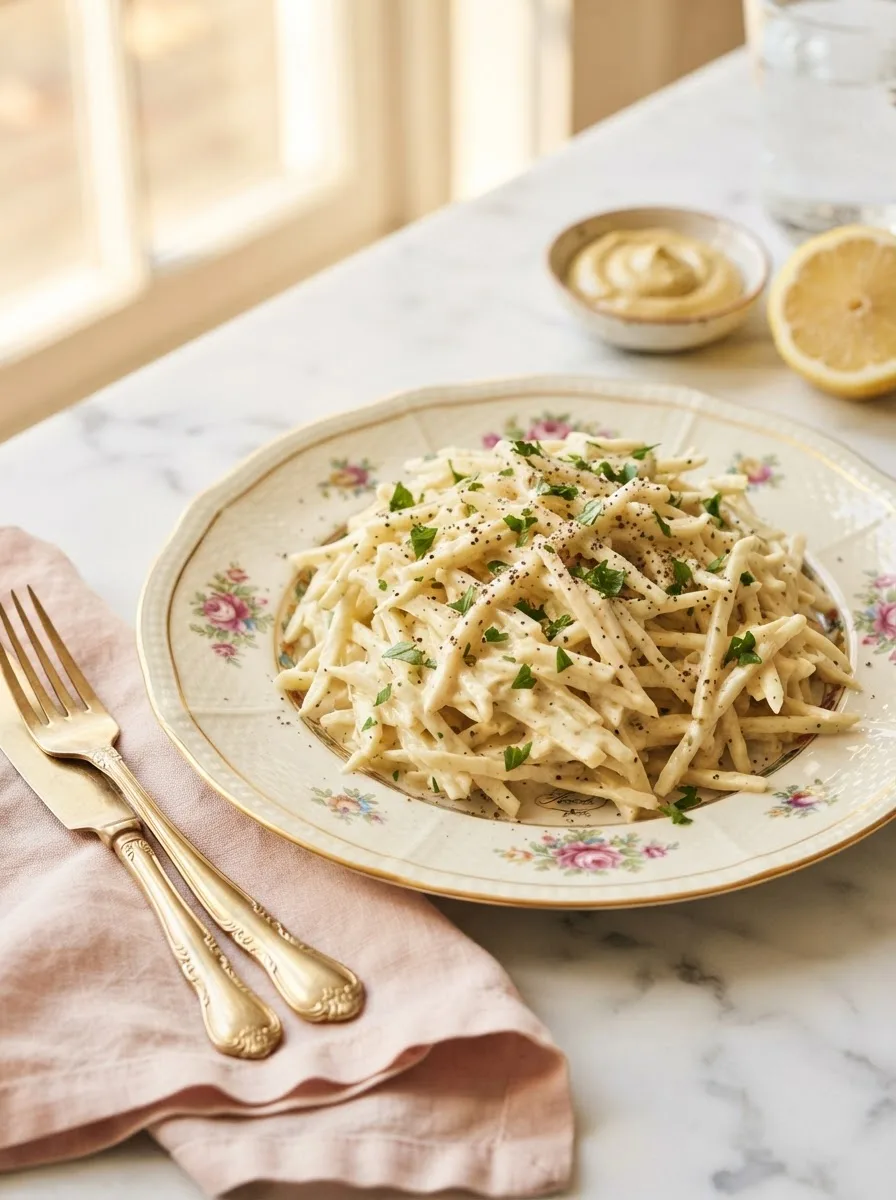
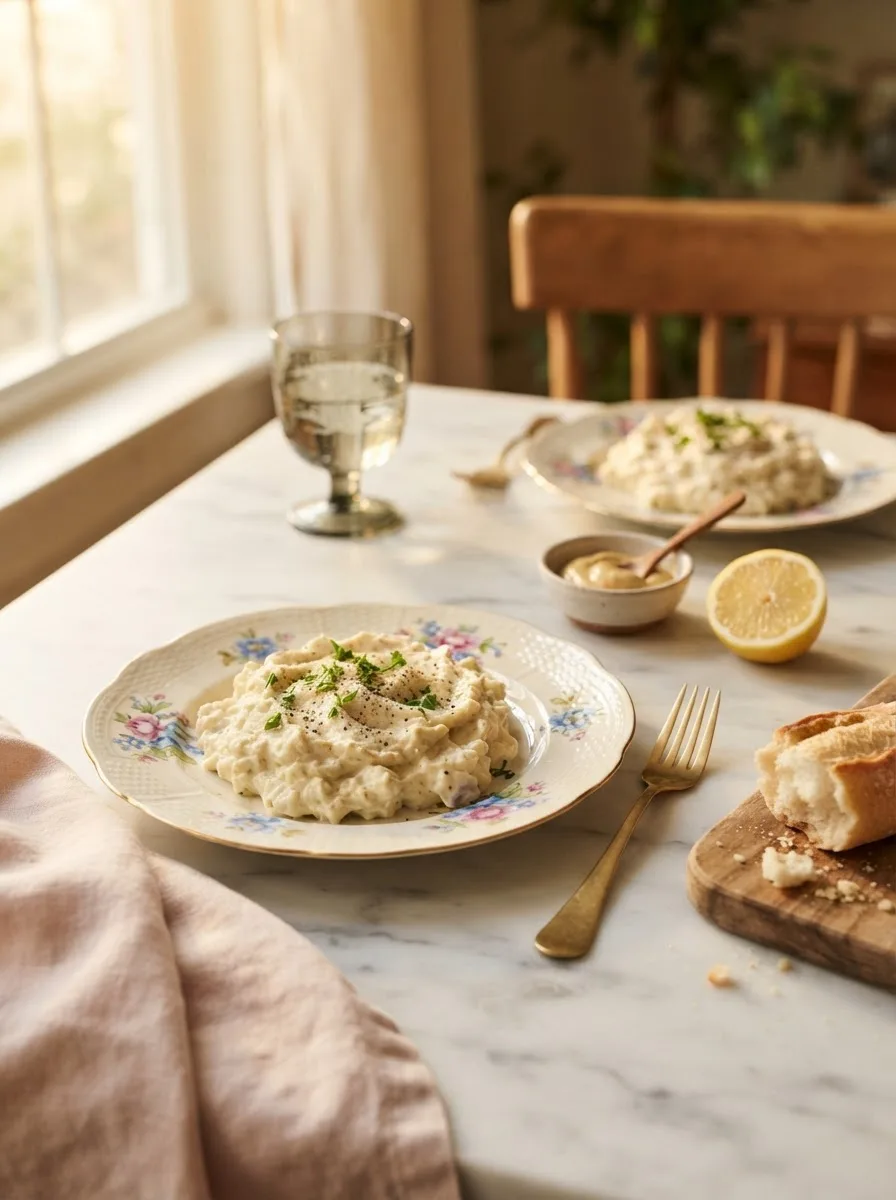
What you end up with is genuinely crunchy — thin strands of celeriac coated in a dressing that’s tangy from Dijon and lemon, rounded out with a spoonful of crème fraîche so it isn’t one-note sharp. It keeps in the fridge for days and somehow tastes even better on day two, once the flavors settle in.
★★★★★ “I’ve ordered céleri rémoulade at every French bistro I’ve ever been to and this is the first homemade version that actually had the right crunch. The salting trick is everything.” — Renée, recipe tester (pre-launch)
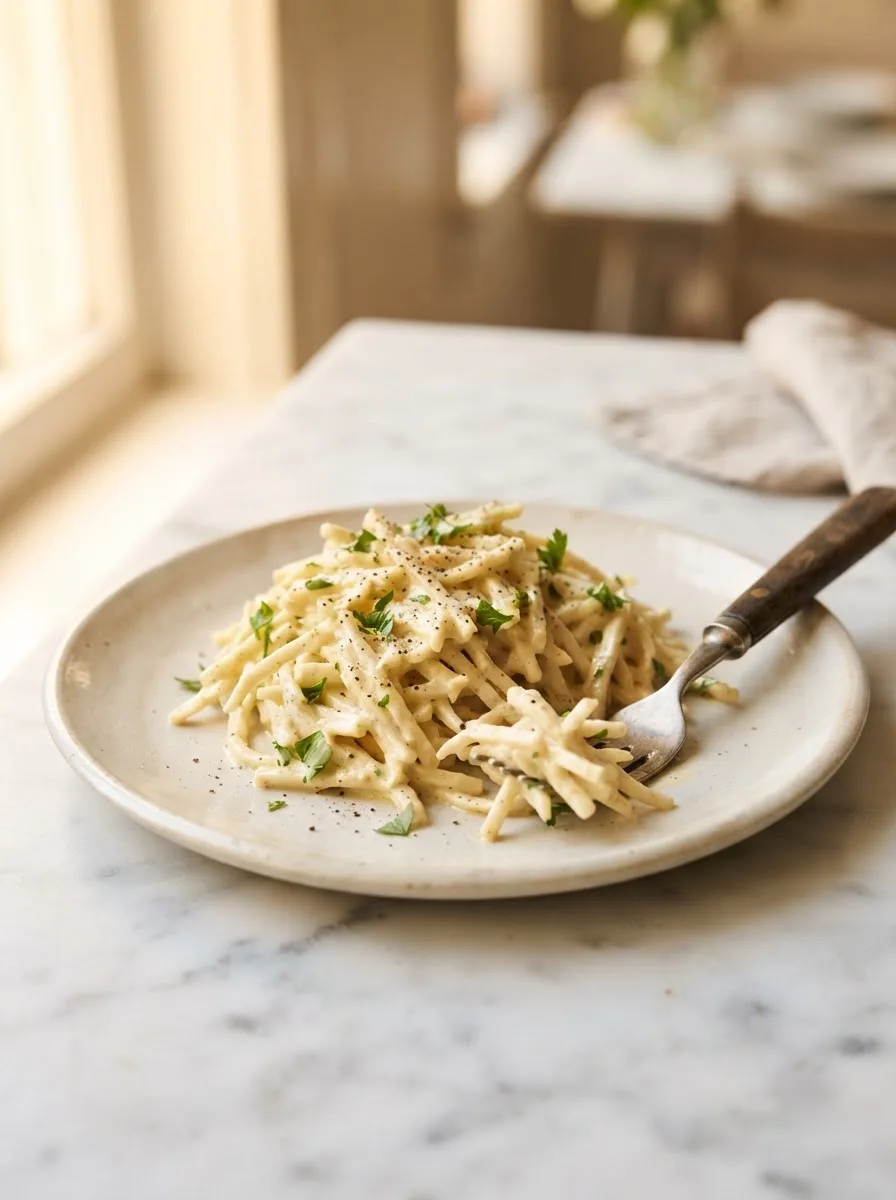
Why You’ll Love This Remoulade Celeri
- Actually crunchy: The pre-salting step pulls out excess water before the dressing goes on, so this remoulade celeri stays crisp instead of turning watery in the fridge.
- Tangy, not one-note: Dijon and lemon juice carry the sharpness, while a spoonful of crème fraîche softens it into something you can eat a full bowl of.
- Make-ahead friendly: This is one of those rare salads that’s better the day after you make it — the celeriac has time to fully absorb the dressing.
- Five ingredients, zero cooking: No stove, no oven. Just a knife (or a mandoline), a bowl, and about 15 minutes of hands-on time.
Key Ingredients for Celeri Remoulade
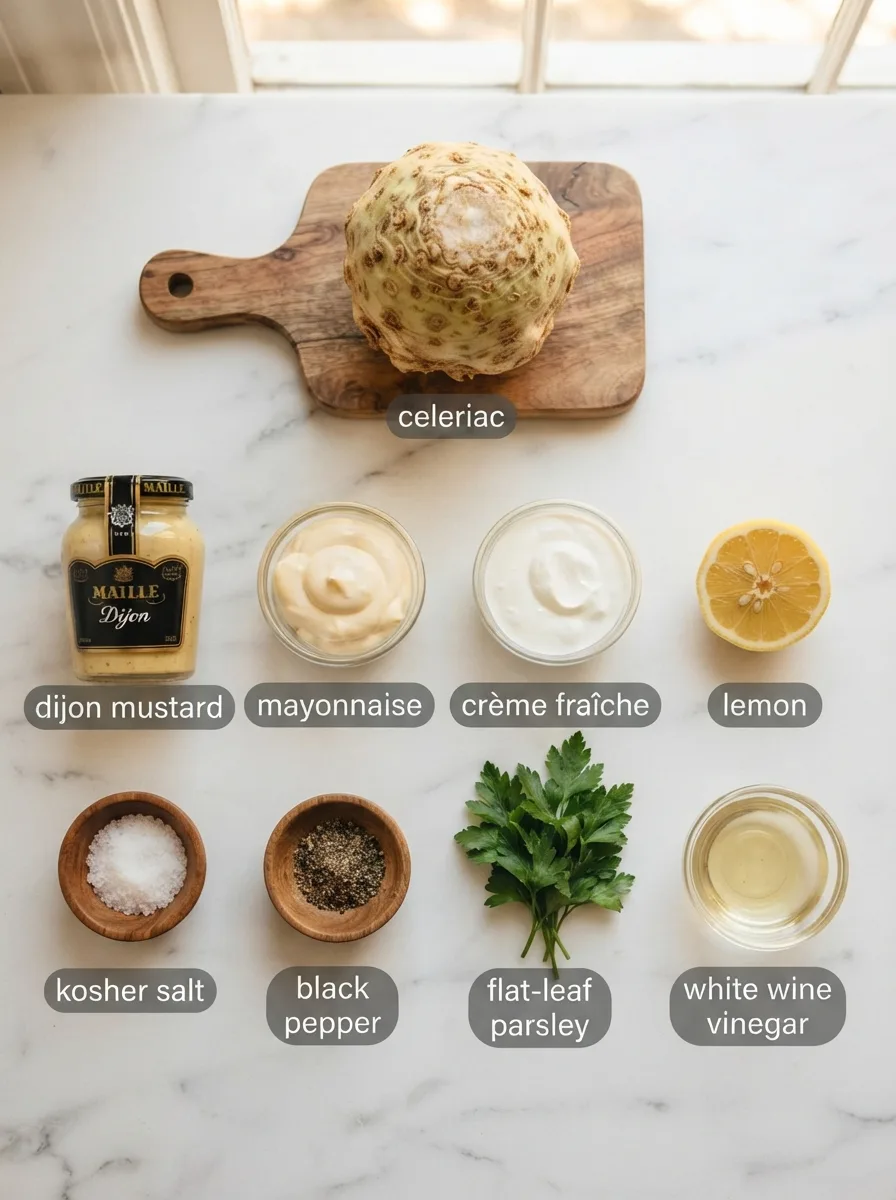
Celeriac (celery root) is the whole point of this celeri remoulade — look for a firm, heavy root with no soft spots. It oxidizes fast once peeled, which is why the lemon juice goes on immediately, not at the end.
Dijon mustard is what makes rémoulade taste like rémoulade rather than a plain coleslaw. Use a real French Dijon here — the sharper, more assertive kind — not a sweet yellow mustard, which won’t give you the same bite.
Mayonnaise forms the base of the dressing. A good full-fat mayo (homemade or a quality store-bought jar) coats the celeriac better than a light version, which tends to separate and go watery.
Crème fraîche rounds out the sharpness of the mustard and lemon so the dressing doesn’t taste purely acidic. Full-fat plain Greek yogurt works as a substitute, though the flavor is slightly tangier.
Lemon juice does double duty — it seasons the dressing and keeps the pale celeriac from browning while it rests.
Ingredient Note: Don’t skip salting the celeriac before dressing it. Salt draws water out of the vegetable through osmosis. Skip this step and that same water ends up diluting your dressing within the hour — this is the single most common reason homemade céleri rémoulade turns watery.
Equipment You’ll Need
- A mandoline with a julienne blade or a julienne peeler — this gives you the classic thin matchstick shreds. A box grater on the coarse side works if you don’t own either, though the texture will be slightly softer.
- A food processor with a shredding attachment — the fastest option if you’re making a large batch; the strands will be a bit shorter than hand-cut.
- A large mixing bowl — big enough to toss the celeriac without spilling.
- A fine-mesh colander — for draining the salted celeriac before dressing it.
Controlling the Crunch (A Controlled Test)
The texture of remoulade celeri lives or dies on one variable: how long the salted celeriac rests before you drain and dress it. Salt draws water out through osmosis, but rest it too long and the celeriac goes limp instead of staying crisp. I tested three rest times back to back, using the same batch of celeriac cut the same way, to find the actual sweet spot.
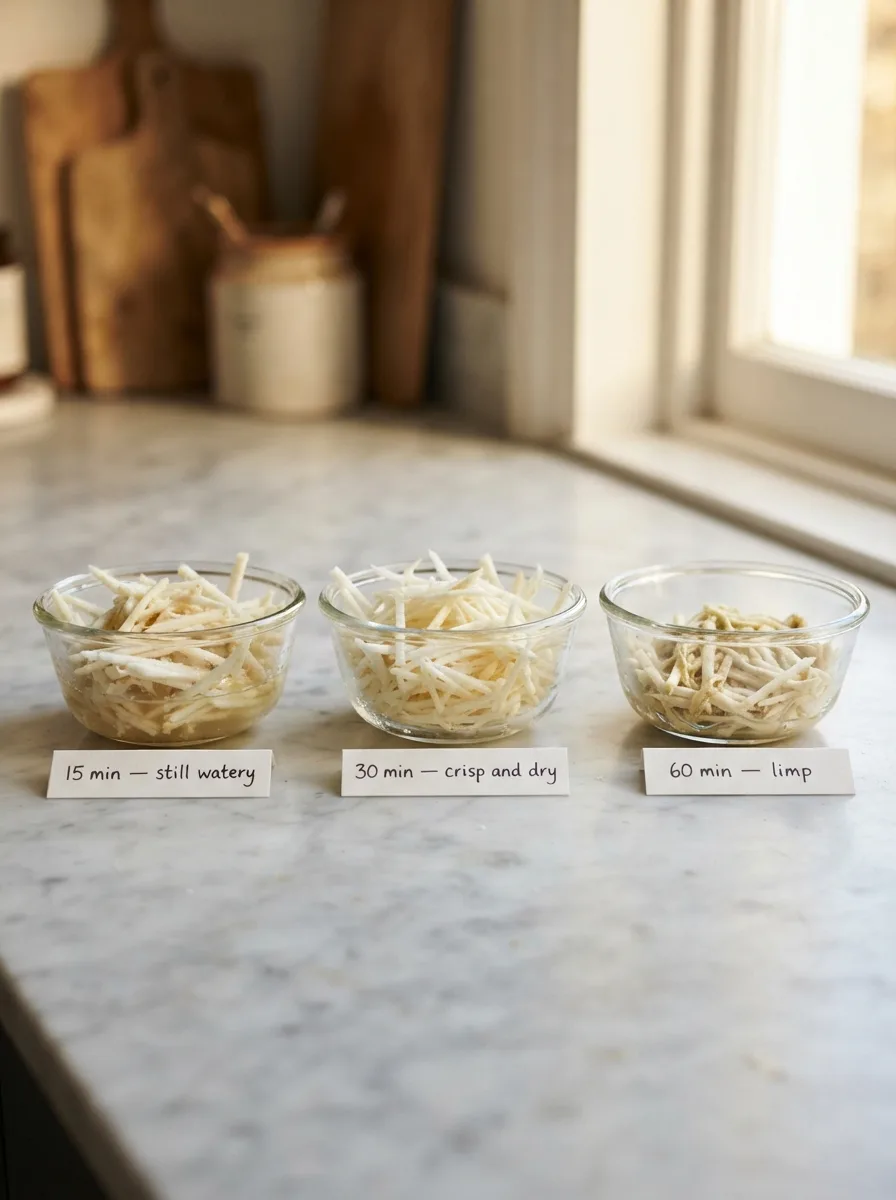
15 minutes: Not enough time. The celeriac released some water, but there was still visible liquid pooling in the bowl, and the finished remoulade celeri turned watery within an hour of dressing.
30 minutes: The winner. The celeriac released a noticeable amount of water — enough that patting it dry actually mattered — while the strands stayed firm and snappy.
60 minutes: Too long. The celeriac had gone soft at the edges, and while there was no excess water, the texture lost the crunch that makes this dish worth making.
The takeaway: Thirty minutes, with a firm pat-dry afterward, is the exact window where you get maximum water removal without losing crunch. This is the single biggest lever in the whole recipe.
How to Make Remoulade Celeri
Before you start: Have your lemon juiced and ready before you start peeling the celeriac — it browns within minutes of contact with air.
Step 1 — Peel and julienne the celeriac
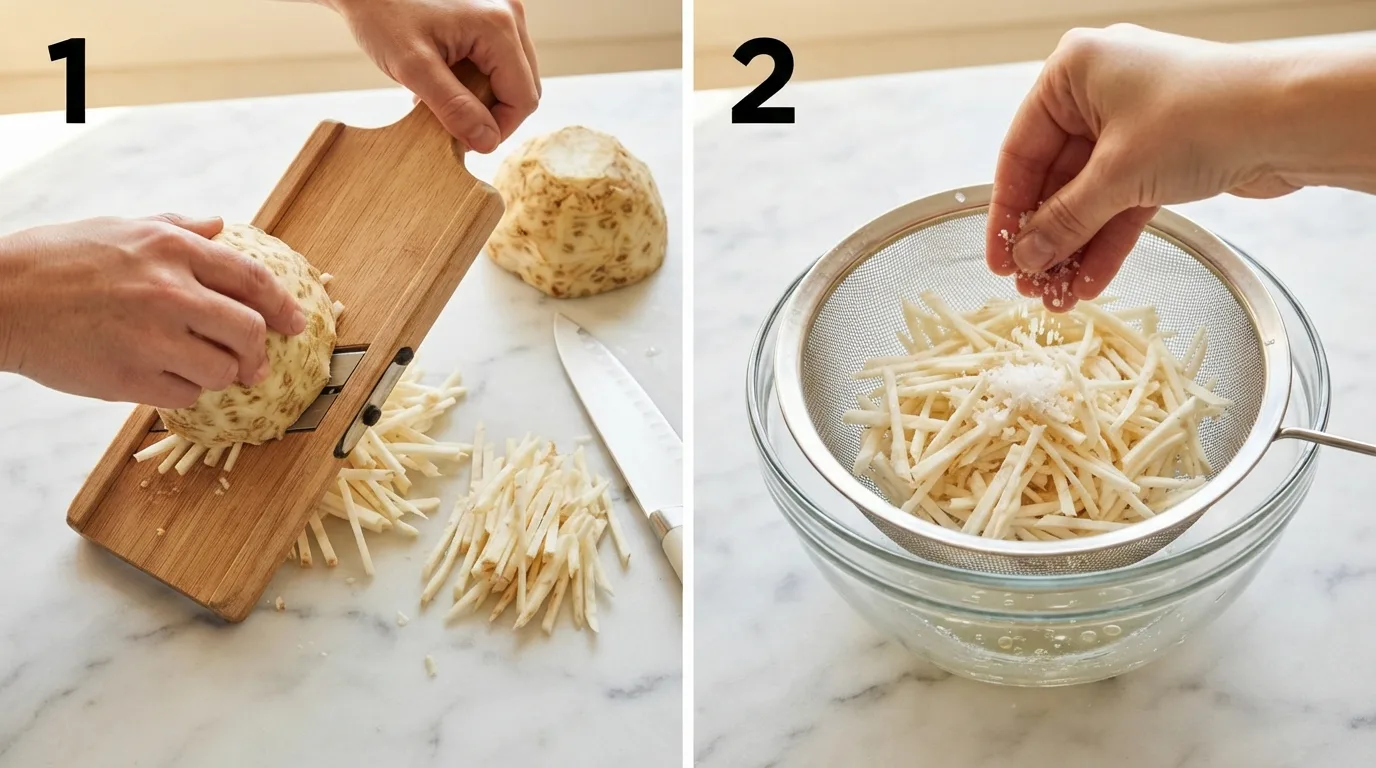
Cut off the top and bottom of the celeriac so it sits flat, then peel the rough outer skin with a sharp knife (a vegetable peeler struggles with the knobby surface). Julienne into thin matchsticks using a mandoline, julienne peeler, or the coarse side of a box grater. Toss immediately with half the lemon juice to stop browning.
Step 2 — Salt and rest
Sprinkle the julienned celeriac with 1½ teaspoons of kosher salt and toss thoroughly with your hands to distribute it. Let it sit in a colander set over a bowl for exactly 30 minutes — this is the variable from the test above, and it’s the step that determines whether your finished salad stays crisp.
Step 3 — Make the mustard mayonnaise dressing
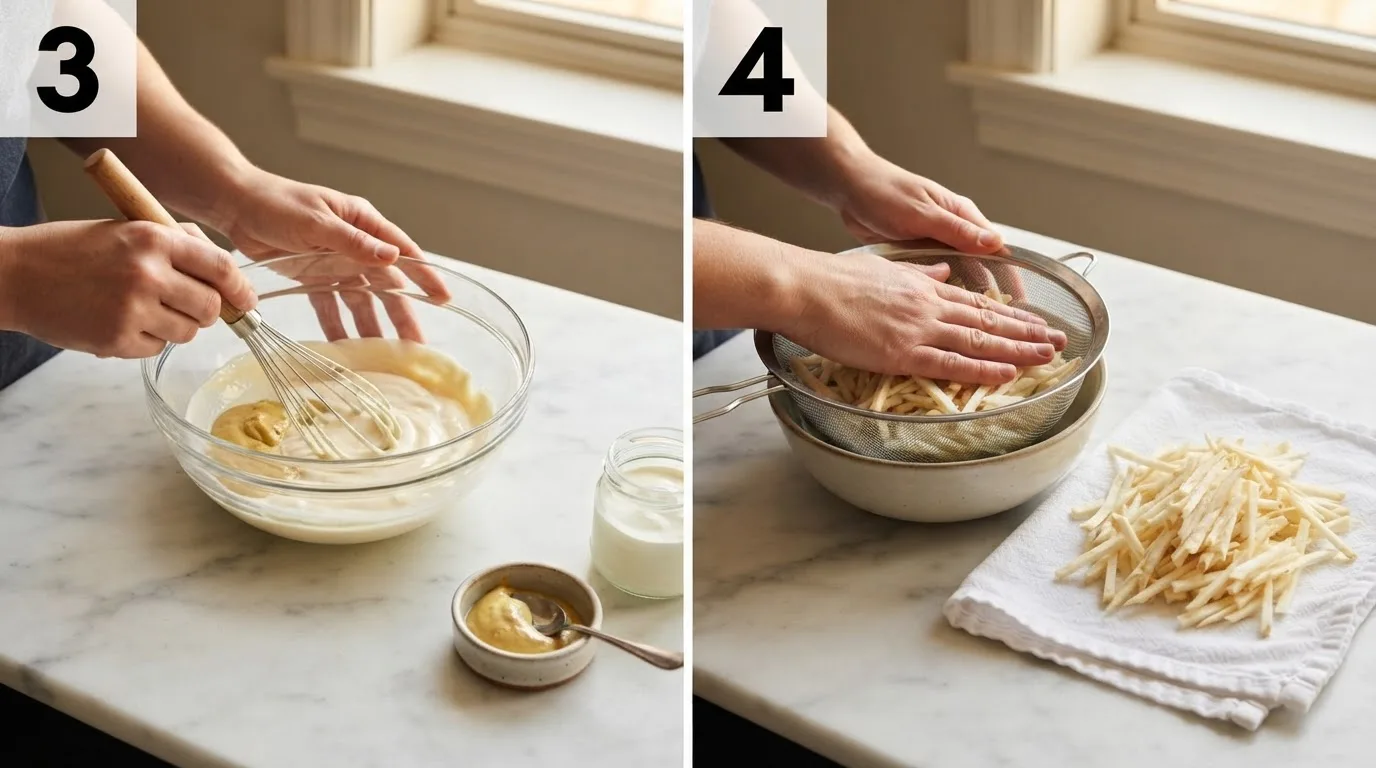
While the celeriac rests, whisk together the mayonnaise, Dijon mustard, crème fraîche, remaining lemon juice, and white wine vinegar in a large bowl until smooth. Season with black pepper — hold off on more salt until after the celeriac is mixed in, since the celeriac itself is already salted.
Step 4 — Drain and dry the celeriac
After the 30 minutes is up, press the celeriac firmly against the colander to squeeze out any remaining liquid, then transfer it to a clean kitchen towel and pat it thoroughly dry. This step matters as much as the salting itself — any leftover moisture will dilute the dressing.
Step 5 — Toss the celeriac with the dressing
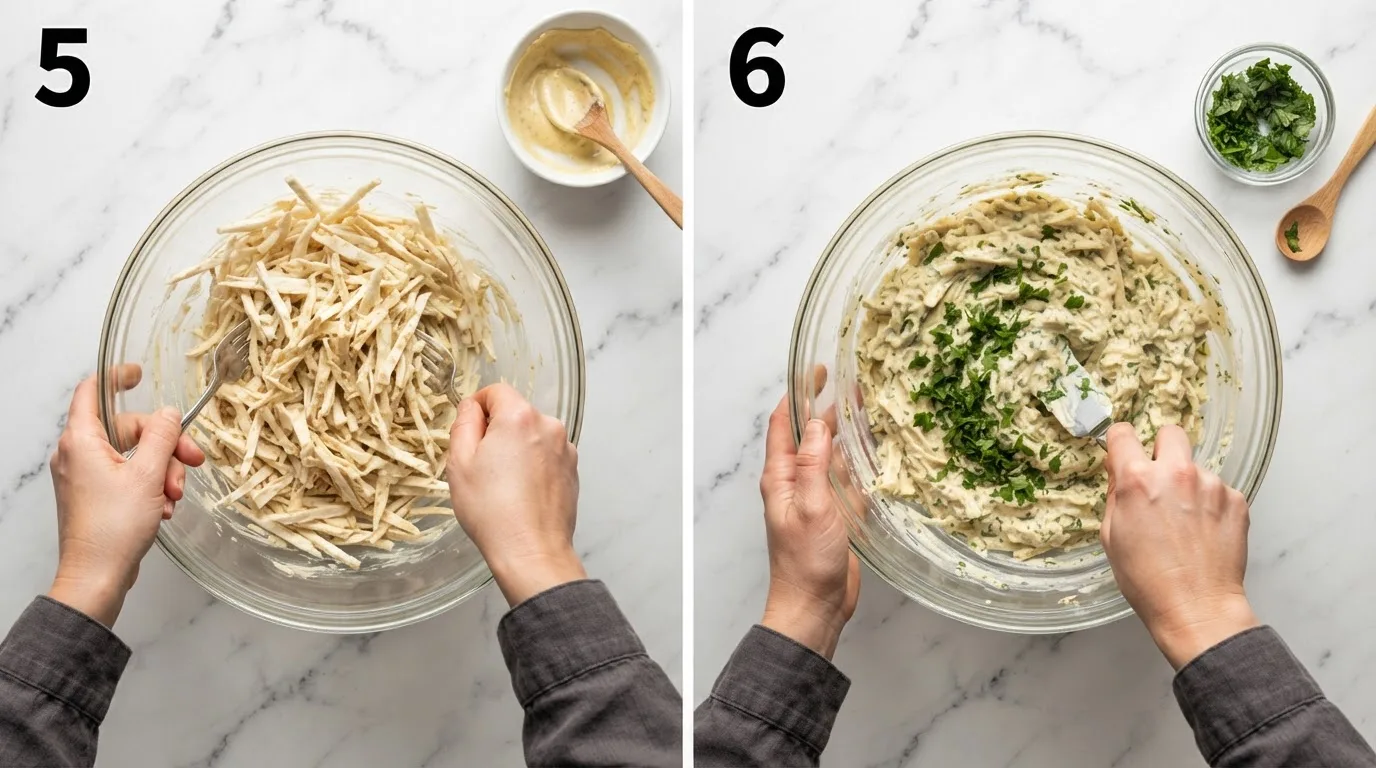
Add the dried celeriac to the bowl with the dressing and toss thoroughly with two forks or your hands, making sure every strand is coated. Taste and adjust with a little extra salt, pepper, or lemon juice if needed.
Step 6 — Chill and finish
Fold in the chopped parsley, then cover and refrigerate for at least 1 hour before serving — this gives the celeriac time to soften slightly and take on the flavor of the dressing without losing its crunch. Give it one more toss just before serving.
Pro Tips for Perfect Remoulade Celeri
Tip 1: Don’t skip the 30-minute salt rest. It’s tempting to go straight from grater to dressing, but that’s the exact mistake that turns this into celery-root soup. The salt rest is non-negotiable.
Tip 2: Cut the celeriac thin and even. Uneven pieces release water inconsistently — some strands stay crunchy while others turn mushy. A mandoline gives the most consistent julienne.
Tip 3: Dress it while it’s cold. Cold celeriac holds its texture better against the dressing than room-temperature celeriac, which softens faster.
Tip 4: Let it chill before serving, not right after mixing. The flavor needs at least an hour to settle into the celeriac. Serving it immediately after tossing tastes noticeably more one-note.
Variations and Substitutions
Dietary Variations:
- Egg-free / lighter version: Swap the mayonnaise for a plain full-fat Greek yogurt base. The dressing will taste noticeably tangier and a shade thinner, but it still coats the celeriac well.
- Vegan version: Use a good-quality vegan mayonnaise in place of both the mayonnaise and crème fraîche, and add an extra teaspoon of Dijon to keep the flavor from going flat.
Flavor Variations:
- Classic bistro add-in: Fold in a tablespoon of drained capers along with the parsley for a briny note that’s common in French bistro versions of celeri remoulade.
- Apple remoulade: Add one julienned green apple along with the celeriac for a sweeter, crisper version — reduce the salt slightly since the apple won’t need it.
Ingredient Substitutions:
- No crème fraîche? Use full-fat sour cream in equal amount — the flavor is slightly more tangy but works well.
- No fresh parsley? Chives or tarragon both work; use about half the amount since they’re more assertive.
This salad pairs beautifully with something bright and crisp on the side — my cucumber lettuce and tomato salad makes a good second dish for the same table if you’re serving a crowd.
Troubleshooting
Why is my remoulade celeri watery?
This almost always means the celeriac wasn’t salted and drained long enough before dressing, or it wasn’t patted fully dry. Fix it next time by salting for the full 30 minutes and pressing out every bit of moisture before mixing.
Why did my celeriac turn brown?
Celeriac oxidizes fast once peeled and cut. If you didn’t toss it with lemon juice immediately after julienning, it will start browning within 10–15 minutes. It’s still safe to eat, just less pretty — next time, have your lemon juiced and ready before you start peeling.
My dressing tastes too sharp — what happened?
This usually means too much Dijon or not enough crème fraîche to round it out. Whisk in another tablespoon of crème fraîche or mayonnaise to mellow it, and taste again before adding more mustard.
Storage and Make-Ahead
Counter: Not recommended — this is a mayonnaise-based salad and shouldn’t sit out longer than 2 hours.
Refrigerator: Keeps well for up to 4 days in an airtight container. The flavor actually improves on day two as the celeriac fully absorbs the dressing.
Freeze: Not recommended. Freezing breaks down the celeriac’s texture and causes the mayonnaise-based dressing to separate once thawed.
Reheating: None needed — this is served cold.
Make-Ahead: You can salt and drain the celeriac up to a day ahead and store it dry in the fridge, then whisk the dressing and toss everything together right before serving for the crispest result.
Frequently Asked Questions
Q: Is remoulade celeri the same as salade celeri rave mayonnaise? A: Yes — céleri rémoulade and salade celeri rave mayonnaise are two names for the same classic French dish: julienned celery root tossed in a mustard mayonnaise dressing. “Céleri rave” simply means celery root in French.
Q: What is rémoulade, exactly? A: Rémoulade is a French mayonnaise-based sauce, traditionally flavored with mustard, capers, and herbs. When it’s tossed with julienned celery root, the dish is called céleri rémoulade.
Q: Can I make celeri remoulade ahead for a dinner party? A: Yes — it’s actually better made the day before. The flavors have more time to settle, and it holds its texture well in the fridge for up to 4 days.
Q: Do I need to peel the celeriac? A: Yes. The outer skin is tough, knobby, and not pleasant to eat. A sharp knife works better than a vegetable peeler for the uneven surface.
Q: Can I use a food processor instead of a mandoline? A: Yes — a food processor with a shredding attachment works well for large batches. The strands will be a bit shorter than hand-julienned, but the texture is still good.
Q: Why does my recipe call for salting the celeriac before dressing it? A: Salting draws water out of the celeriac through osmosis. Skipping this step is the most common reason homemade remoulade celeri turns watery within an hour of mixing.
Q: Is celeriac the same as celery? A: No — celeriac (celery root) is a different part of the plant, grown for its bulbous root rather than its stalks. It has a milder, slightly nutty flavor compared to celery stalks.
More Salad Recipes You’ll Love
- Cucumber Lettuce and Tomato Salad — a bright, crisp side that pairs well with rich mayonnaise-based dishes like this one
- Blackened Chicken Caesar Salad — a heartier salad if you want to turn remoulade celeri into a full meal alongside it
- Original Caesar Salad Dressing Recipe — another mayonnaise-based dressing worth having in your back pocket
- Can You Freeze Chicken Salad? — useful reading if you’re meal-prepping multiple mayonnaise-based salads for the week

Foolproof Remoulade Celeri (Classic Céleri Rémoulade)
Ingredients
For the Celeriac:
- 1 large celeriac (celery root), about 1½ lbs
- 1 lemon, juiced and divided
- 11/2 teaspoon kosher salt
For the Mustard Mayonnaise Dressing:
- 3/4 cup mayonnaise
- 3 tablespoon Dijon mustard
- 2 tablespoon crème fraîche
- 1 tablespoon white wine vinegar
- 1/4 teaspoon black pepper, or to taste
- 2 tablespoon fresh parsley, chopped
Instructions
- Cut off the top and bottom of the celeriac, then peel the rough outer skin with a sharp knife. Julienne into thin matchsticks using a mandoline, julienne peeler, or box grater, tossing immediately with half the lemon juice to prevent browning.
- Sprinkle the julienned celeriac with the kosher salt and toss thoroughly. Transfer to a colander set over a bowl and let rest for exactly 30 minutes.
- While the celeriac rests, whisk together the mayonnaise, Dijon mustard, crème fraîche, remaining lemon juice, and white wine vinegar in a large bowl until smooth. Season with black pepper.
- After 30 minutes, press the celeriac firmly against the colander to remove excess liquid, then pat thoroughly dry with a clean kitchen towel.
- Add the dried celeriac to the dressing and toss until every strand is well coated. Taste and adjust seasoning as needed.
- Fold in the chopped parsley, cover, and refrigerate for at least 1 hour before serving. Toss once more just before serving.
Notes
- The 30-minute salt rest is the most important step in this recipe — salting draws out excess water and is what keeps the finished salad crisp instead of watery.
- This salad keeps in the fridge for up to 4 days and tastes even better on day two once the flavors have settled into the celeriac.