Homemade Pickapeppa Sauce Recipe

The first time I ran out of Pickapeppa sauce, I did what any reasonable person would do: I panicked, then I got curious. That little brown bottle with the red label is the kind of condiment you don’t notice until it’s gone — sweet, tangy, a little smoky, with a warmth that sneaks up after the second bite. I couldn’t find it at three different grocery stores, so I decided to just make it.
I tested this pickapeppa sauce recipe four times before it tasted right. The first batch was too vinegary. The second was too sweet and thick, more like ketchup than a pepper sauce. The third finally nailed the tamarind-mango balance, but the texture was grainy. The fourth batch — the one below — got strained smooth and rested for a few days, and it’s the closest I’ve come to the real thing without a two-year aging barrel.
This isn’t a fermented, barrel-aged replica. It’s a fast, weeknight-friendly version that captures the flavor profile: tomato and onion base, tamarind for tang, mango and raisins for sweetness, a hit of scotch bonnet for warmth, and a spice sachet of clove, allspice, and cinnamon that gives it that unmistakable depth.
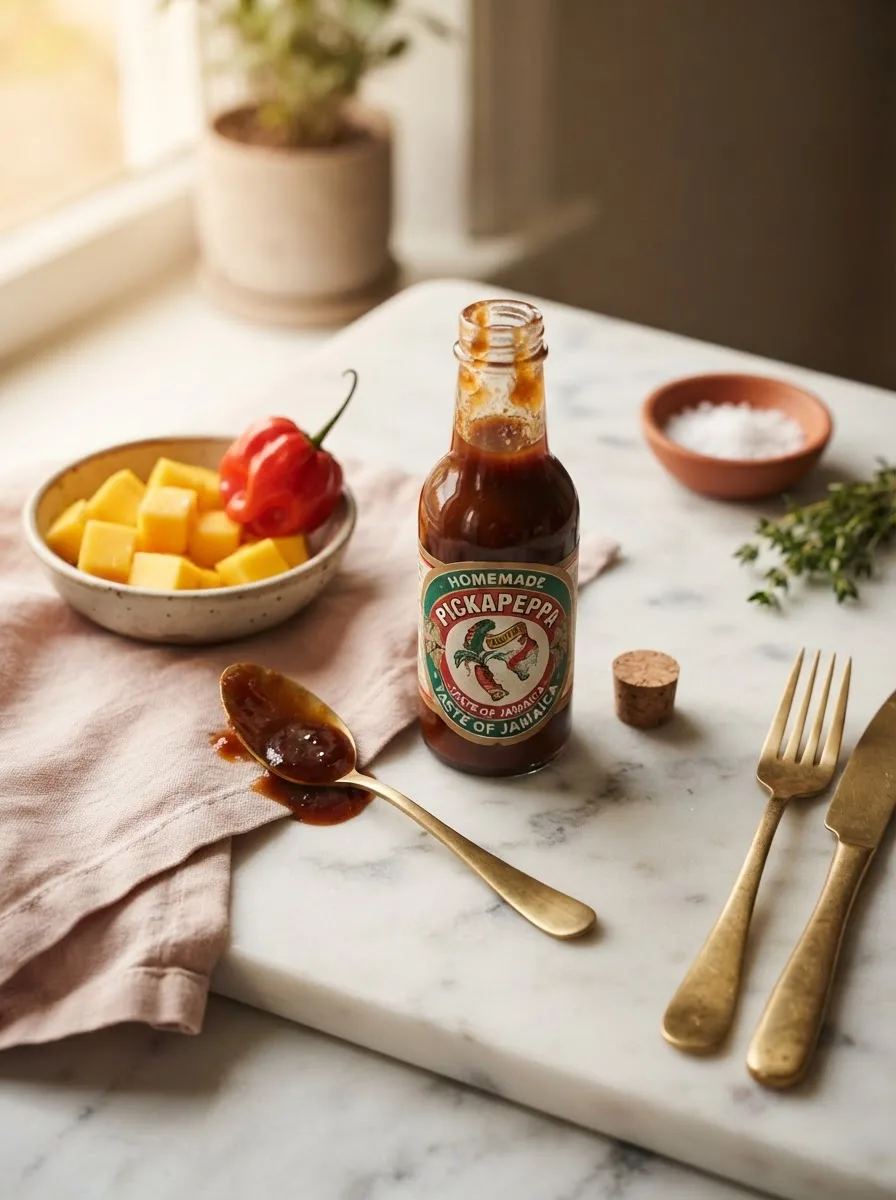
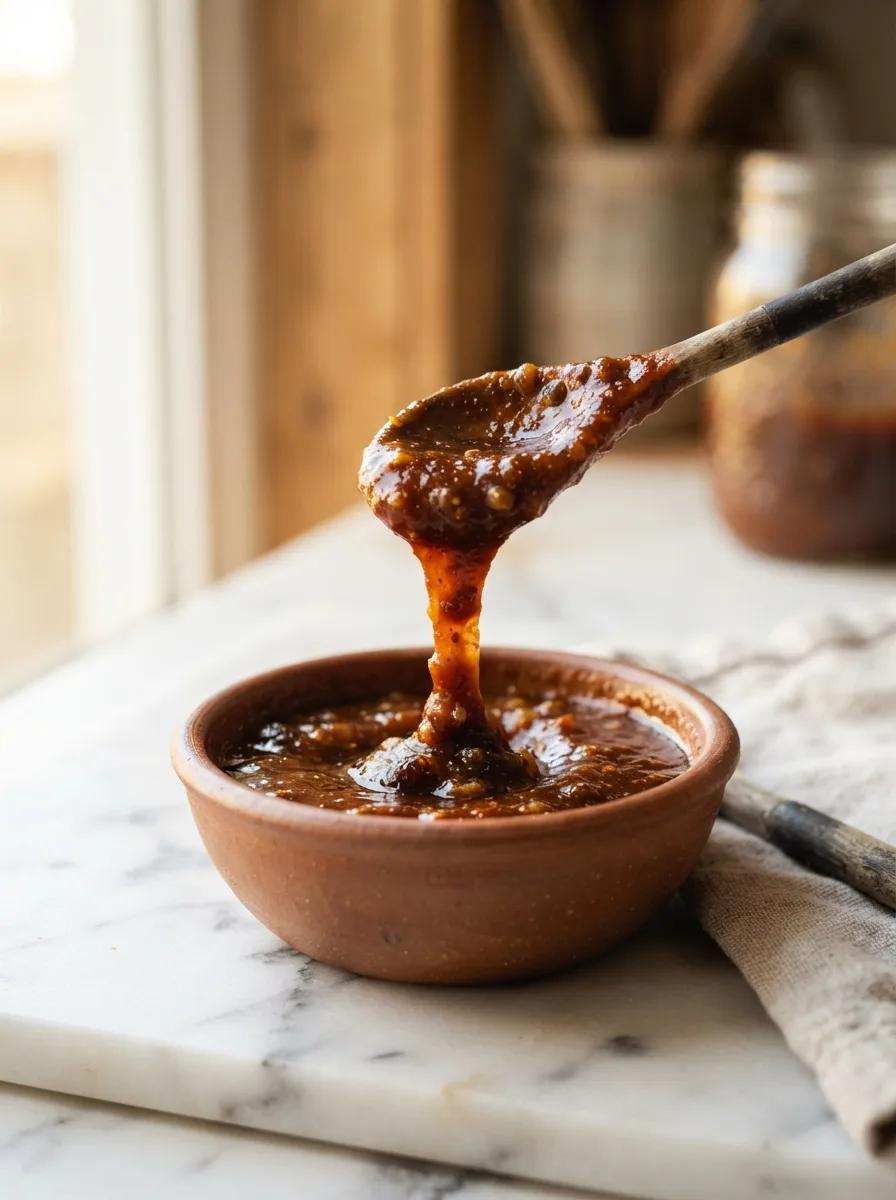
What surprised me most was how forgiving this sauce is once you understand what each ingredient is doing. The tamarind brings the sour backbone, the mango and raisins carry the sweetness, and the whole spices — simmered in a sachet, not ground into the sauce — give it warmth without turning it muddy or bitter. Strain it well and you get that glossy, pourable consistency that clings to a spoon instead of running off it.
I’m genuinely proud of this one. It took real trial and error, but the fourth batch disappeared off my counter in under two weeks — used on eggs, roasted chicken, and stirred into gravy — which told me it was worth writing down.
★★★★★ “I’ve bought the bottled kind for years and honestly wasn’t expecting this to come close. It’s tangier than I remembered, in a good way. My husband put it on everything for a week.” — Renata M., recipe tester (pre-launch)
Why You’ll Love This Pickapeppa Sauce Recipe
- It tastes like the bottled version, minus the two-year wait: The tamarind, mango, and warm spice combination hits the same sweet-tangy-smoky notes without any fermentation or aging.
- It’s genuinely versatile: This isn’t a one-note hot sauce — it works as a marinade, a glaze, a dipping sauce, and a splash-in for soups and stews.
- It keeps for months in the fridge: The vinegar and sugar content act as natural preservatives, so one batch lasts a long time.
- You control the heat: Scotch bonnet peppers vary wildly in intensity from pepper to pepper. Since you’re seeding and simmering just one, you can dial the burn up or down easily.
Key Ingredients
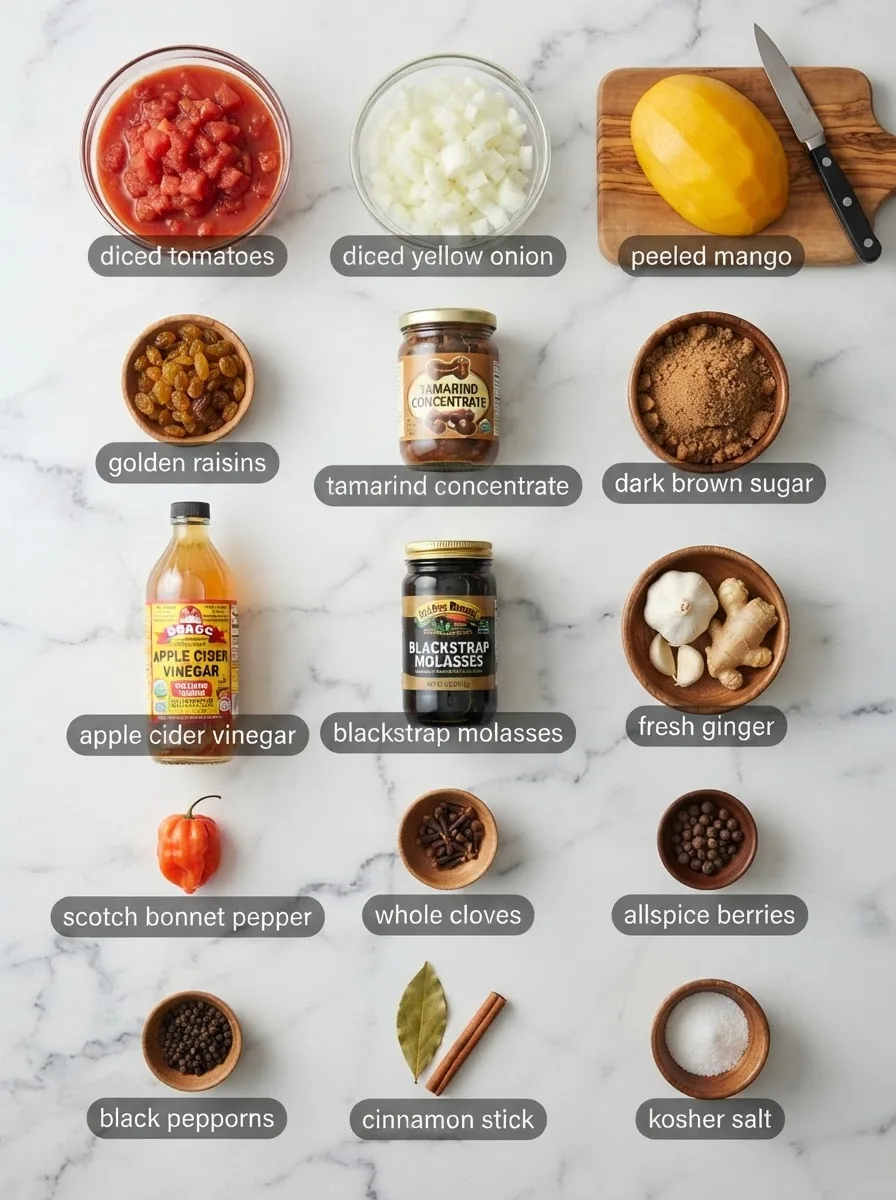
Tamarind concentrate (¼ cup). This is the tang backbone of the whole sauce. Tamarind concentrate is thick, dark, and intensely sour — a little goes a long way. If you can only find tamarind paste (the kind with seeds and fiber), dissolve 3 tablespoons of it in ¼ cup of warm water, then strain out the solids before using.
Ripe mango (1 cup diced). Mango adds sweetness and body without tasting like straight sugar. Use a mango that yields slightly to pressure — underripe mango stays fibrous even after 30 minutes of simmering, and you’ll taste the difference in the final texture.
Golden raisins (½ cup). Raisins break down completely during the simmer and thicken the sauce naturally while adding a deep, almost date-like sweetness. Dried apricots, chopped small, work as a substitute — the sauce will be slightly less sweet and a touch more tart.
Scotch bonnet pepper (1, seeded). This is the traditional Jamaican pepper, and it brings fruity heat rather than just sharp burn. Habanero is the closest substitute if scotch bonnet isn’t available near you — use the same amount, since they’re similar in heat level.
Whole spices — cloves, allspice, black peppercorns, cinnamon stick, bay leaf. These get tied into a sachet (or a mesh tea ball) rather than ground into the sauce. Simmering them whole extracts warmth and depth without leaving grit in the final texture, and it means you can fish the whole sachet out at once instead of straining twice.
Blackstrap molasses (2 tablespoons). Molasses deepens the color to that unmistakable dark brown and adds a slight bitterness that keeps the sauce from tasting like straight fruit syrup. Regular molasses works too, though the color will be a shade lighter.
Ingredient Note: Don’t skip the sachet step for the whole spices. I tested one batch with ground cloves and allspice stirred directly into the sauce, and the texture turned gritty even after straining — the ground spice never fully dissolved.
Equipment You’ll Need
- Medium saucepan — Nonreactive (stainless steel or enameled) is best since the vinegar and tamarind can react with aluminum and cause a metallic taste.
- Blender or immersion blender — Either works. An immersion blender lets you puree the sauce right in the saucepan, which means less cleanup.
- Fine mesh strainer — This is what gives the sauce its signature glossy, pourable texture instead of a chunky salsa consistency. A cheesecloth-lined strainer works if you don’t have a fine mesh one.
- Small square of cheesecloth or a mesh tea ball — For the whole spice sachet. A clean coffee filter tied with kitchen twine also works in a pinch.
- Glass bottles or jars with tight lids — Sterilized before filling. Small hot sauce bottles (5–6 oz) are ideal since this makes a condiment-sized batch.
Controlling the Tang-to-Sweet Balance (A Controlled Test)
The biggest variable in this recipe is the ratio of tamarind to mango-and-sugar. Too much tamarind and the sauce tastes like straight sour candy. Too little, and you lose the sharp tang that makes Pickapeppa distinctive from a generic barbecue sauce. I ran two side-by-side tests changing only this ratio, keeping everything else identical.
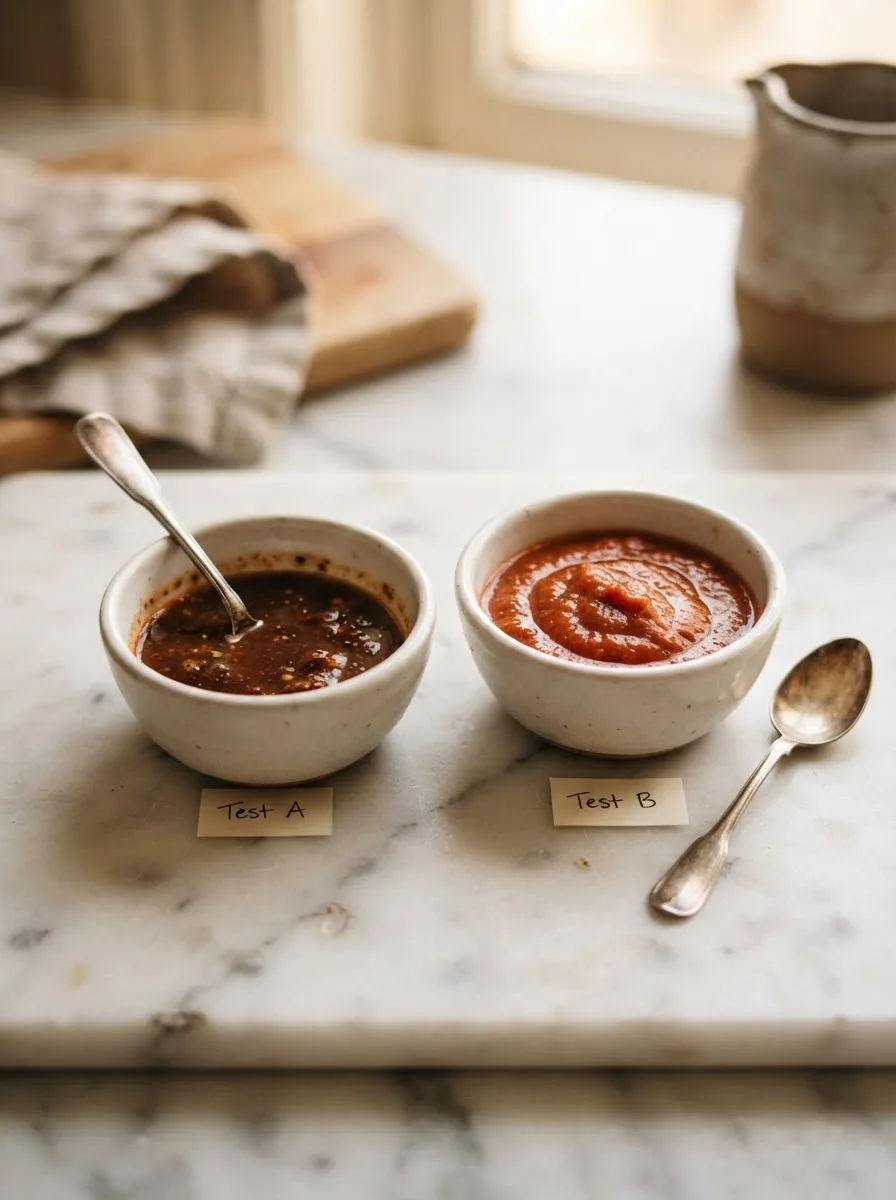
Test A — ⅓ cup tamarind, standard mango: This batch was noticeably sharper and thinner, closer to a vinegar-forward hot sauce than a rich condiment. Good for marinades where you want the tang to cut through fat, but it tasted incomplete on its own.
Test B — ¼ cup tamarind, standard mango: This is the ratio in the recipe card below. It’s balanced enough to eat straight off a spoon, thick enough to cling to grilled chicken, and the tamarind is present but doesn’t dominate.
The takeaway: ¼ cup tamarind concentrate is the sweet spot for an all-purpose sauce. If you’re specifically making a marinade for something fatty like pork shoulder, Test A’s sharper ratio actually works better — just know the sauce will taste more aggressive on its own.
How to Make Pickapeppa Sauce
Before you start: Dice the tomatoes, onion, and mango before you turn on the stove — this sauce moves fast once it starts simmering, and you don’t want to be chopping mango while onions scorch.
Step 1 — Combine the base ingredients
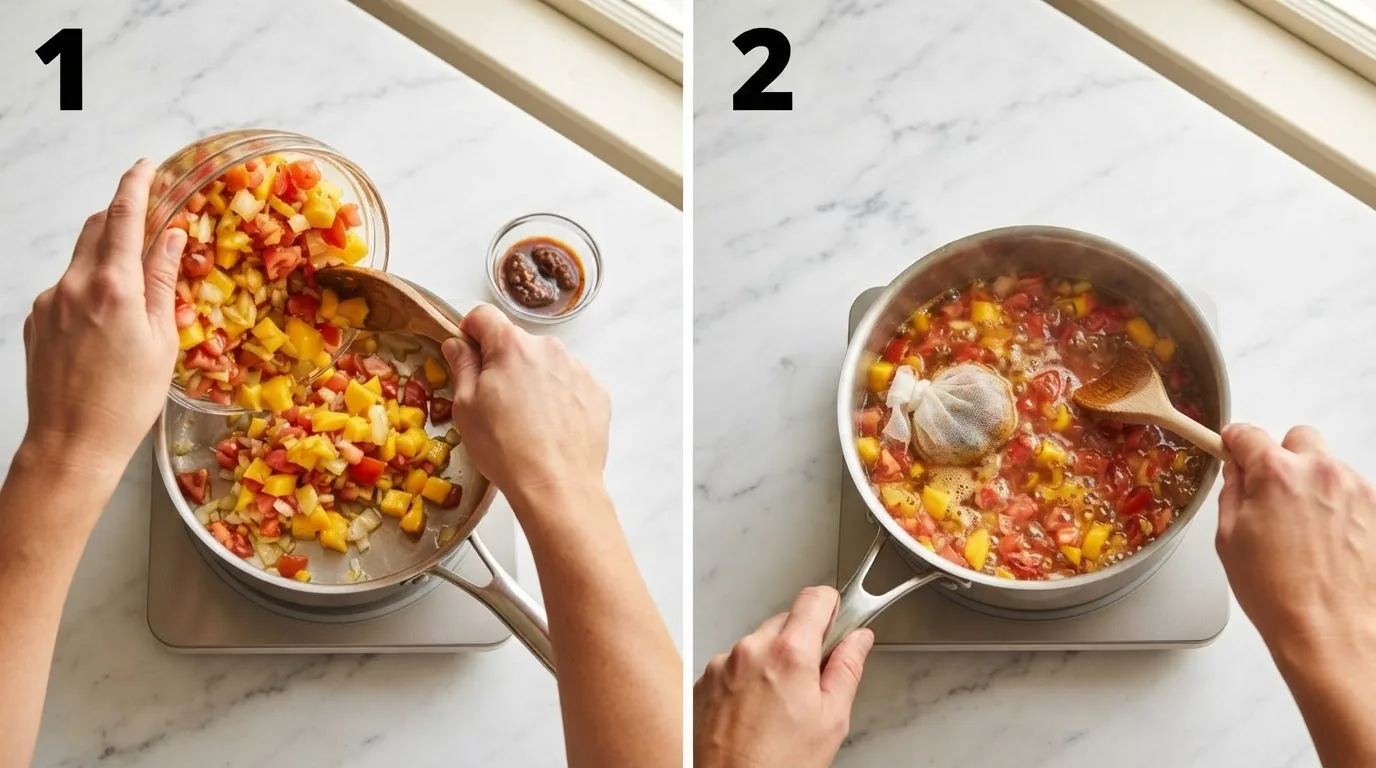
In a medium saucepan, combine the diced tomatoes, onion, mango, raisins, tamarind concentrate, brown sugar, apple cider vinegar, molasses, garlic, ginger, scotch bonnet pepper, salt, and water. Give it a stir so the tamarind and molasses distribute instead of clumping at the bottom.
Step 2 — Simmer until the fruit breaks down
Tie the cloves, allspice, peppercorns, cinnamon stick, and bay leaf into a cheesecloth sachet and drop it into the pot. Bring everything to a gentle simmer over medium heat, then reduce to low. Simmer, stirring occasionally, for 30–35 minutes. You’ll know it’s ready when the tomatoes have completely collapsed, the mango is soft enough to mash against the side of the pot, and the mixture has reduced by about a third.
Step 3 — Remove the sachet and the pepper
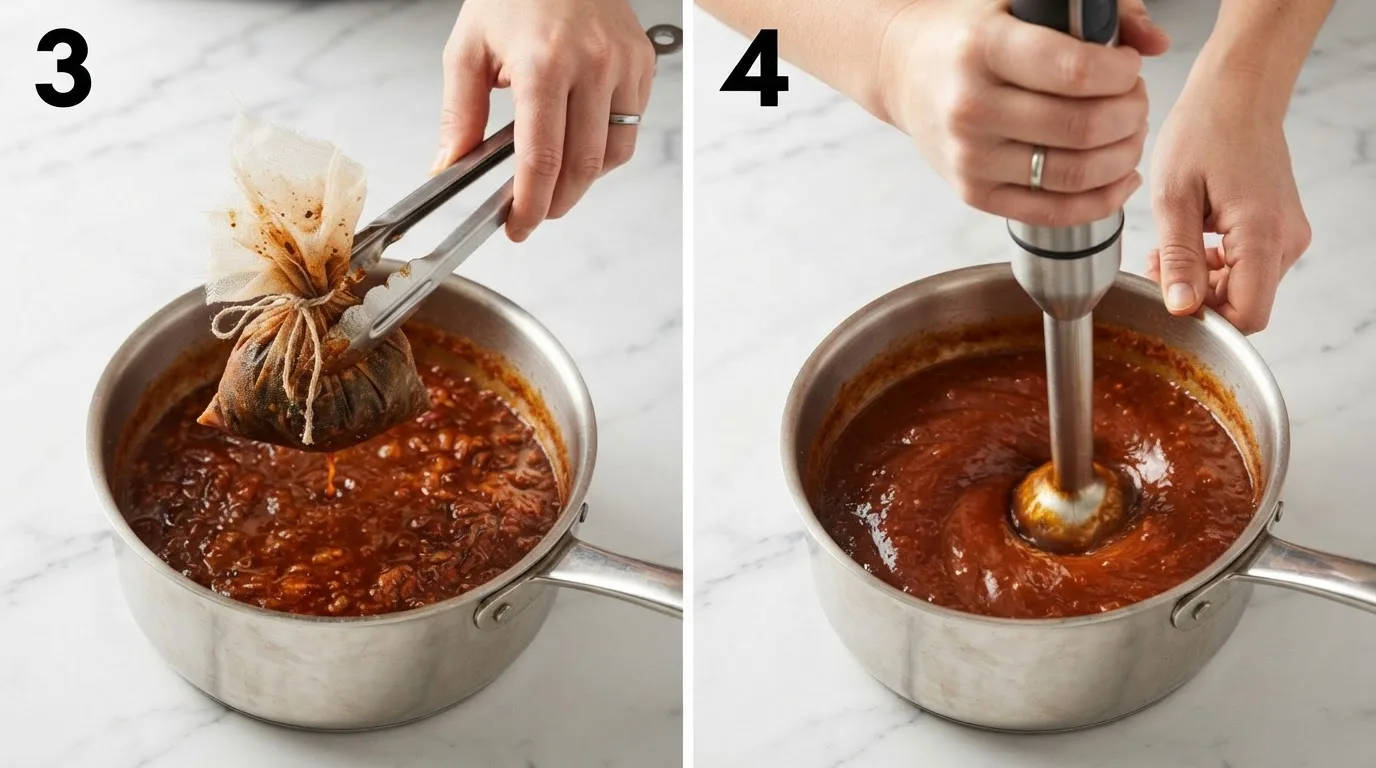
Once the mixture has broken down, fish out the spice sachet and discard it. If you want a milder sauce, remove the scotch bonnet pepper now too — it’s already released plenty of heat into the liquid by this point, and leaving it in longer only intensifies things.
Step 4 — Blend until smooth
Using an immersion blender directly in the pot, or transferring carefully to a countertop blender, puree the mixture until completely smooth. This takes about 1–2 minutes of blending. The sauce should look glossy and uniform, with no visible chunks of tomato or mango skin.
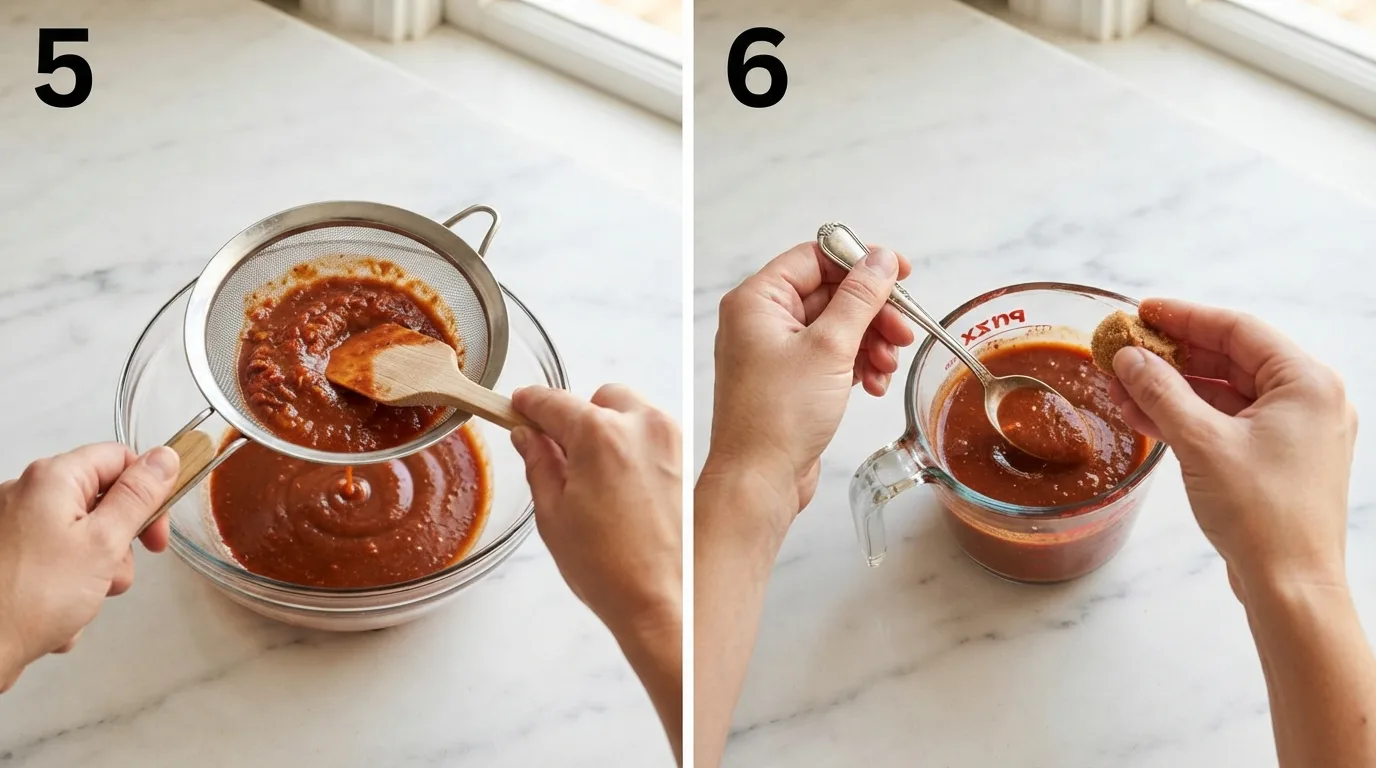
Step 5 — Strain for a silky texture
Pour the blended sauce through a fine mesh strainer into a clean bowl, pressing with the back of a spoon or spatula to push through as much liquid as possible. This step is what separates a smooth, pourable sauce from a chunky one — don’t skip it, even though it feels wasteful to discard the leftover pulp.
Step 6 — Taste and adjust
Taste the strained sauce. If it’s too sharp, whisk in another tablespoon of brown sugar. If it’s too sweet, add a splash more vinegar. If you want more heat, stir in a pinch of cayenne rather than reintroducing the scotch bonnet, which would also add more fruitiness than heat at this point.
Step 7 — Bottle and cool
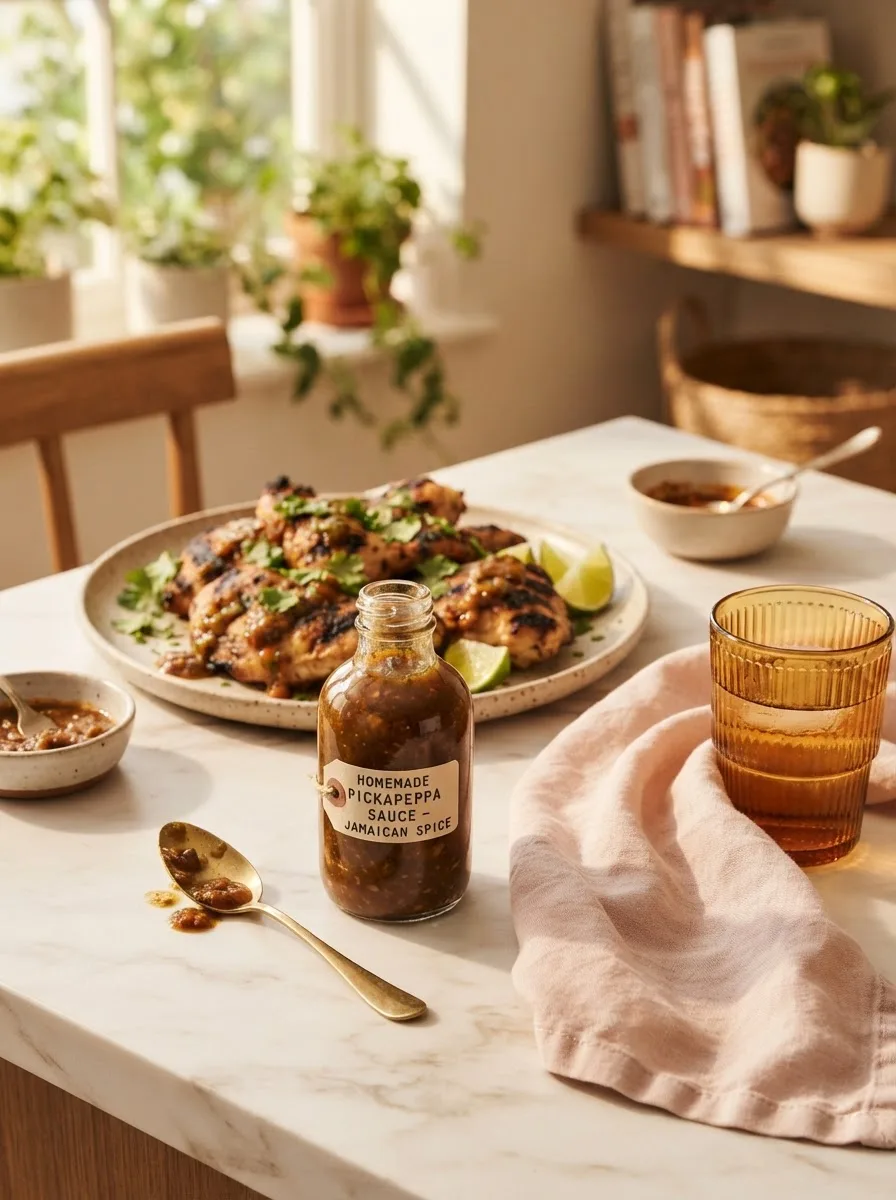
Pour the finished sauce into sterilized glass bottles or jars while it’s still warm — this helps it seal slightly as it cools and reduces the risk of bacterial growth. Let the bottles cool uncapped on the counter for about 20 minutes before sealing and refrigerating.
Pro Tips for Perfect Pickapeppa Sauce
Tip 1: Let it rest for three days before judging it. The flavor mellows and rounds out noticeably after a few days in the fridge — the sharp tamarind edge softens and the spices settle in. My first-day taste test and my third-day taste test were almost like two different sauces.
Tip 2: Wear gloves when handling the scotch bonnet. Scotch bonnets are significantly hotter than jalapeños, and the oils linger on your skin for hours. I learned this the hard way after rubbing my eye an hour after seeding one.
Tip 3: Don’t rush the simmer. If the tomatoes and mango haven’t fully collapsed by 30 minutes, give it another 5–10. Underdone fruit blends into a slightly gritty sauce even after straining, because the fibers haven’t broken down enough.
Tip 4: Double the batch if you’re making this for gifting. The recipe scales up cleanly — just use a larger pot and add 5–10 minutes to the simmer time to account for the greater volume.
Variations and Substitutions
Dietary Variations:
- Refined-sugar-free: Swap the brown sugar for an equal amount of coconut sugar. The color darkens slightly and the sweetness is a touch less intense, but the balance holds up well.
- Lower-sodium: Reduce the kosher salt to 1½ teaspoons and taste before adding more. The tamarind and vinegar carry a lot of flavor on their own, so you can pull back the salt more than you’d expect.
Flavor Variations:
- Smokier version: Add ½ teaspoon of smoked paprika along with the base ingredients in Step 1. It shifts the sauce toward a barbecue-glaze direction — especially good brushed on grilled meats.
Ingredient Substitutions:
- No tamarind concentrate? Substitute 2 tablespoons fresh lime juice plus 1 tablespoon extra molasses. You’ll lose some complexity but keep the sweet-tart balance.
- No scotch bonnet? Habanero at the same quantity, or a serrano pepper doubled, for a milder version.
This sauce earns its place on the table the same way a good hot sauce does — a splash goes a long way. I especially love it stirred into the pot liquor for my blue runner red beans recipe, where the tamarind tang cuts through the richness of the beans, and brushed onto salmon before roasting in my salmon and scallops recipe.
Troubleshooting
My sauce turned out too thin and watery?
This usually means the simmer was cut short. The tomatoes and mango need a full 30–35 minutes to break down and reduce properly. If it’s already blended and strained, return it to the saucepan and simmer uncovered for another 10–15 minutes to thicken.
My sauce tastes too sharp or vinegary?
This is a balance issue, not a mistake — it’s fixable at the tasting stage. Whisk in an extra tablespoon of brown sugar or a teaspoon of molasses, then taste again before adding more. The sharpness usually needs less correction than you’d think.
My sauce is much spicier than I expected?
Scotch bonnet peppers vary enormously in heat from pepper to pepper, even within the same batch from the store. If your finished sauce is hotter than intended, stir in a spoonful of mango puree or a touch more brown sugar to mellow it — heat dilutes more easily into a sweeter base.
Storage and Make-Ahead
Counter: Not recommended for long-term storage. This sauce needs refrigeration once cooled, since it doesn’t contain the same preservative concentration as the commercially aged, shelf-stable version.
Refrigerator: Up to 3 months in a sealed, sterilized bottle. The flavor actually improves over the first week as the spices continue to mellow into the sauce.
Freeze: Freeze in small portions (ice cube trays work well) for up to 6 months. Thaw overnight in the fridge before using — the texture stays smooth since there’s no dairy or eggs to separate.
Reheating: No reheating needed. If the sauce separates slightly in the fridge, just give the bottle a good shake before using.
Make-Ahead: This sauce is genuinely better made ahead. I recommend making it at least 3 days before you plan to use it for the best flavor.
Frequently Asked Questions
Q: What does pickapeppa sauce taste like? A: It’s a sweet, tangy, and mildly spicy condiment — often compared to a cross between Worcestershire sauce and a fruit-forward hot sauce. The tamarind provides the tang, mango and raisins bring sweetness, and warm spices like clove and allspice add depth.
Q: Is this the same as the bottled Jamaican brand? A: Not exactly. The commercial version is aged in oak barrels for up to two years, which develops a deeper, more mellow complexity. This recipe captures the core flavor profile in about an hour of active cooking, plus a few days of resting time.
Q: Can I make this without scotch bonnet pepper? A: Yes. Habanero works as a near-identical substitute at the same quantity. For a much milder sauce, use a single seeded jalapeño, though you’ll lose some of the fruity heat character that makes this sauce distinctive.
Q: How long does homemade pickapeppa sauce last? A: Up to 3 months in the refrigerator in a sealed, sterilized bottle. It can also be frozen in small portions for up to 6 months.
Q: Can I can this sauce for shelf-stable storage? A: I don’t recommend home-canning this recipe as written, since the acidity and sugar levels haven’t been tested for safe shelf-stable canning. Store it in the refrigerator or freezer instead.
Q: What do you put pickapeppa sauce on? A: Almost anything savory — grilled or roasted meats, scrambled eggs, cream cheese and crackers, stirred into gravies and stews, or as a glaze for salmon or chicken.
Q: Can I substitute the tamarind concentrate? A: Yes, though the flavor will shift slightly. Use 2 tablespoons of fresh lime juice plus 1 extra tablespoon of molasses as a substitute for the tang and depth tamarind provides.
Q: Is this sauce very spicy? A: As written, it has a mild-to-medium warmth rather than an aggressive burn, since only one seeded scotch bonnet is used and much of its heat gets diluted across the whole batch. You can dial it up with a pinch of cayenne at the tasting stage if you want more heat.
More Recipes You’ll Love
- Blue Runner Red Beans Recipe — A rich, slow-simmered pot of red beans that gets an extra layer of tang from a splash of this pickapeppa sauce stirred in at the end.
- Johnny Carino’s Spicy Romano Chicken — A creamy, spiced copycat chicken dish that pairs surprisingly well with a drizzle of this sauce for extra heat.
- Salmon and Scallops Recipe — A quick seafood dinner where this sauce doubles beautifully as a sweet-tangy glaze.
- Naomi Watts Pavlova Recipe — If you’re rounding out a dinner party menu, this light, fruit-topped pavlova is the dessert I make right after a savory recipe like this one.

Homemade Pickapeppa Sauce Recipe
Ingredients
For the Sauce Base:
- 2 cup diced tomatoes (about 4 medium)
- 1 cup diced yellow onion (about 1 medium)
- 1 cup diced ripe mango (about 1 mango)
- 1/2 cup golden raisins
- 1/4 cup tamarind concentrate
- 1/2 cup packed dark brown sugar
- 1/3 cup apple cider vinegar
- 2 tablespoon blackstrap molasses
- 3 clove garlic, minced
- 1 tablespoon fresh ginger, grated
- 1 scotch bonnet pepper, stemmed and seeded
- 1 tablespoon kosher salt
- 1 cup water
For the Spice Sachet:
- 1 teaspoon whole cloves
- 1 teaspoon whole allspice berries
- 1 teaspoon whole black peppercorns
- 1 small cinnamon stick (about 2 inches)
- 1 bay leaf
Instructions
- In a medium nonreactive saucepan, combine the diced tomatoes, onion, mango, raisins, tamarind concentrate, brown sugar, vinegar, molasses, garlic, ginger, scotch bonnet pepper, salt, and water. Stir well.
- Tie the cloves, allspice berries, peppercorns, cinnamon stick, and bay leaf into a cheesecloth sachet and add it to the pot. Bring to a simmer over medium heat, then reduce to low and simmer, stirring occasionally, for 30–35 minutes, until the fruit has fully broken down and the mixture has reduced by about a third.
- Remove and discard the spice sachet. Remove the scotch bonnet pepper now for a milder sauce, or leave it in a few minutes longer for more heat.
- Puree the mixture with an immersion blender (or transfer to a countertop blender) until completely smooth, about 1–2 minutes.
- Strain the sauce through a fine mesh strainer into a clean bowl, pressing with a spatula to extract as much liquid as possible. Discard the leftover pulp.
- Taste the sauce and adjust as needed — more brown sugar if too sharp, more vinegar if too sweet, a pinch of cayenne if you want more heat.
- Pour the warm sauce into sterilized glass bottles or jars. Let cool uncapped on the counter for 20 minutes, then seal and refrigerate.
Notes
- The flavor improves significantly after 3 days in the fridge — make this ahead if you can.
- No tamarind concentrate on hand? Substitute 2 tablespoons fresh lime juice plus 1 extra tablespoon molasses.
- Wear gloves when handling the scotch bonnet pepper to avoid skin and eye irritation.
- This recipe doubles cleanly for a larger batch; add 5–10 minutes to the simmer time to account for the increased volume.
- Shake the bottle before each use, as natural separation is normal and not a sign of spoilage.