Stalekracker Jambalaya Recipe (Tested 4 Times)

I first saw stalekracker jambalaya recipe in one of his videos — no tomatoes, no fuss, just a big Magnalite pot getting almost-too-dark on the bottom before the rice went in. That “almost too dark” part is the whole trick, and it’s also the part that scared me the first time I tried it at home.
I tested this recipe four times before I trusted myself to walk away from the stove at the right moment. The first batch was underdeveloped and tasted like plain chicken and rice. The third batch actually caught and turned bitter on one side of the pot. The fourth batch is the one below — dark, smoky, a little sticky on the bottom, and exactly what I was chasing.
This isn’t a copy of anyone’s exact recipe. It’s my home-kitchen version, built by watching the technique, testing it myself, and writing down what actually happened in my pot, on my stove, with ingredients from my regular grocery store.
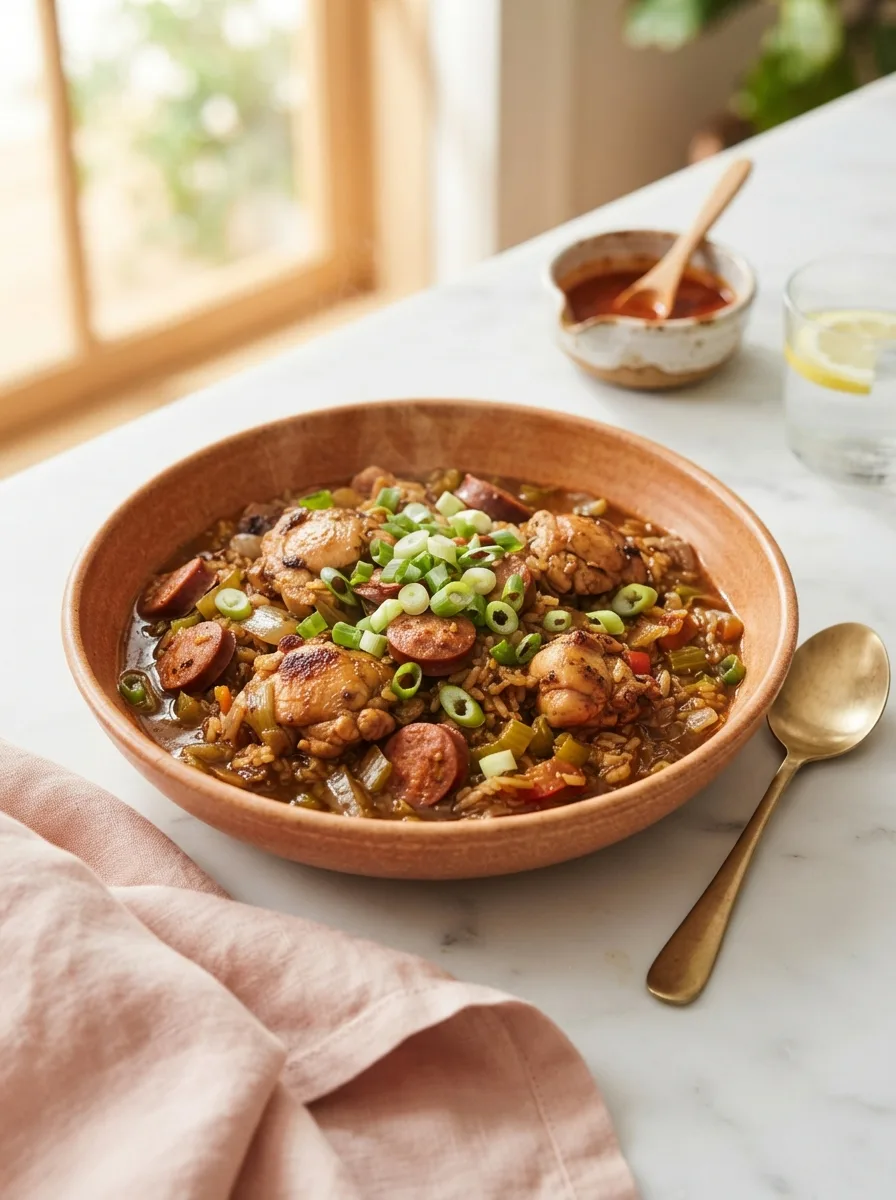
The color is really the whole point. Cajun jambalaya doesn’t get its depth from tomatoes or a spice packet — it gets it from browning meat hard enough to build a real fond on the bottom of the pot, then cooking the rice right in that flavor. It looks intimidating on video. It is not intimidating once you know what you’re watching for.
What makes this version worth bookmarking is that I wrote down exactly what “too far” looks like versus “just right” — something most jambalaya recipes skip entirely, probably because it’s hard to describe unless you’ve burned a batch yourself.
★★★★★ “I’ve been scared of jambalaya for years because every recipe just says ‘brown the meat’ with no detail. This one actually told me what burnt smells like versus what dark-and-good smells like. Huge difference.” — Marisol, recipe tester (pre-launch)
Why You’ll Love This Stalekracker Jambalaya Recipe
- One pot, real depth of flavor: There’s no separate stock simmer, no roux, no tomato base to reduce. The flavor comes entirely from browning and building fond — one pot from start to finish.
- No tomatoes, no debate: This is Cajun-style jambalaya, the kind cooked inland in Louisiana, not the tomato-based Creole version from New Orleans. If you grew up on the dark version, this is that.
- The exact color cues, written down: I tell you specifically what the pot should look and smell like at each stage, because “brown the meat” is not useful instruction on its own.
- Feeds a crowd without extra dishes: One Dutch oven feeds 6–8 people, and leftovers reheat better than almost anything else in my kitchen.
Key Ingredients
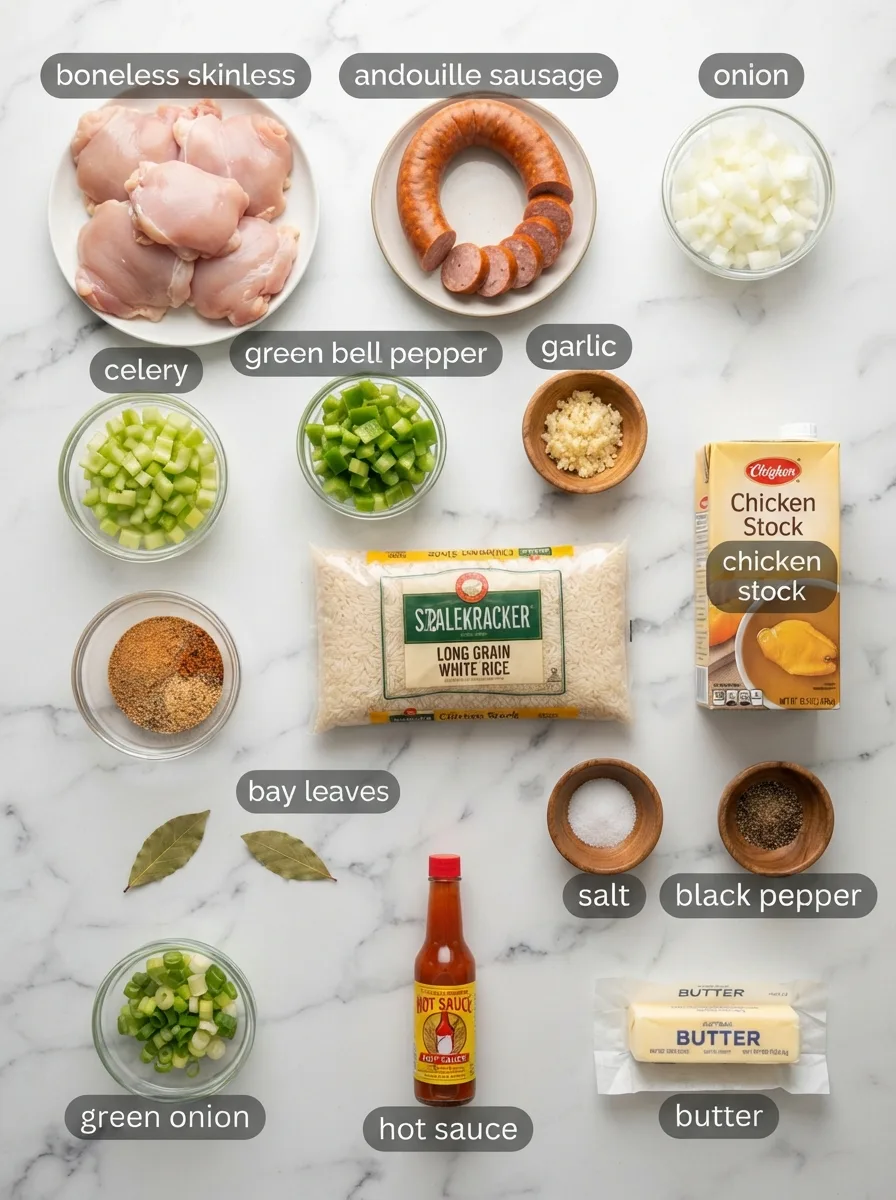
Andouille sausage. This is not a swap-in-anything ingredient. Andouille brings a coarse-ground, smoky, garlicky flavor that regular smoked sausage just doesn’t have. If you truly can’t find it, a good smoked kielbasa is the closest stand-in, but expect a milder result — you may want to add a pinch more cayenne to compensate.
Boneless chicken thighs. Thighs stay juicy through the full cooking time and the fat they release is part of what builds the fond on the bottom of the pot. Chicken breast works, but it dries out faster and gives up less fat, so the color-building step won’t be as deep.
The holy trinity — onion, celery, green bell pepper. This is non-negotiable in Cajun cooking. Dice it small and even, because it needs to nearly melt into the rice, not stay in distinct chunks.
Long grain white rice. Long grain holds its shape through the steam-cook and doesn’t turn to mush the way short grain or medium grain can. Do not rinse it before cooking — the starch on the surface helps it soak up the fond flavor from the bottom of the pot.
Chicken stock, not water. Water gets you rice and meat. Stock gets you jambalaya. Use low-sodium stock if you can, since the andouille and Cajun seasoning both bring plenty of salt on their own.
Ingredient Note: Do not use pre-cooked “jambalaya seasoning” packets that include tomato powder. Read the label — several grocery-store Cajun blends sneak tomato in, and it will change this from a dark jambalaya into a reddish one. Look for a straight Cajun/Creole seasoning blend with no tomato listed.
Equipment You’ll Need
- A heavy-bottomed pot with a tight lid — cast iron Dutch oven or a Magnalite-style aluminum pot if you have one. The heavy bottom is what lets you build color without scorching in one spot. A thin pot will burn before it browns evenly.
- A wooden spoon with a flat edge — for scraping the fond off the bottom of the pot as you build layers of flavor. A flat-edged spoon or spatula works better here than a rounded one.
- A sharp knife and cutting board — for dicing the trinity evenly, which matters more than people think.
Controlling the Color (A Controlled Test)
The single most important variable in this recipe is how dark you let the bottom of the pot get before adding the stock. I tested three stopping points on purpose, using the same batch of meat and vegetables each time, changing only how long I let the fond develop.
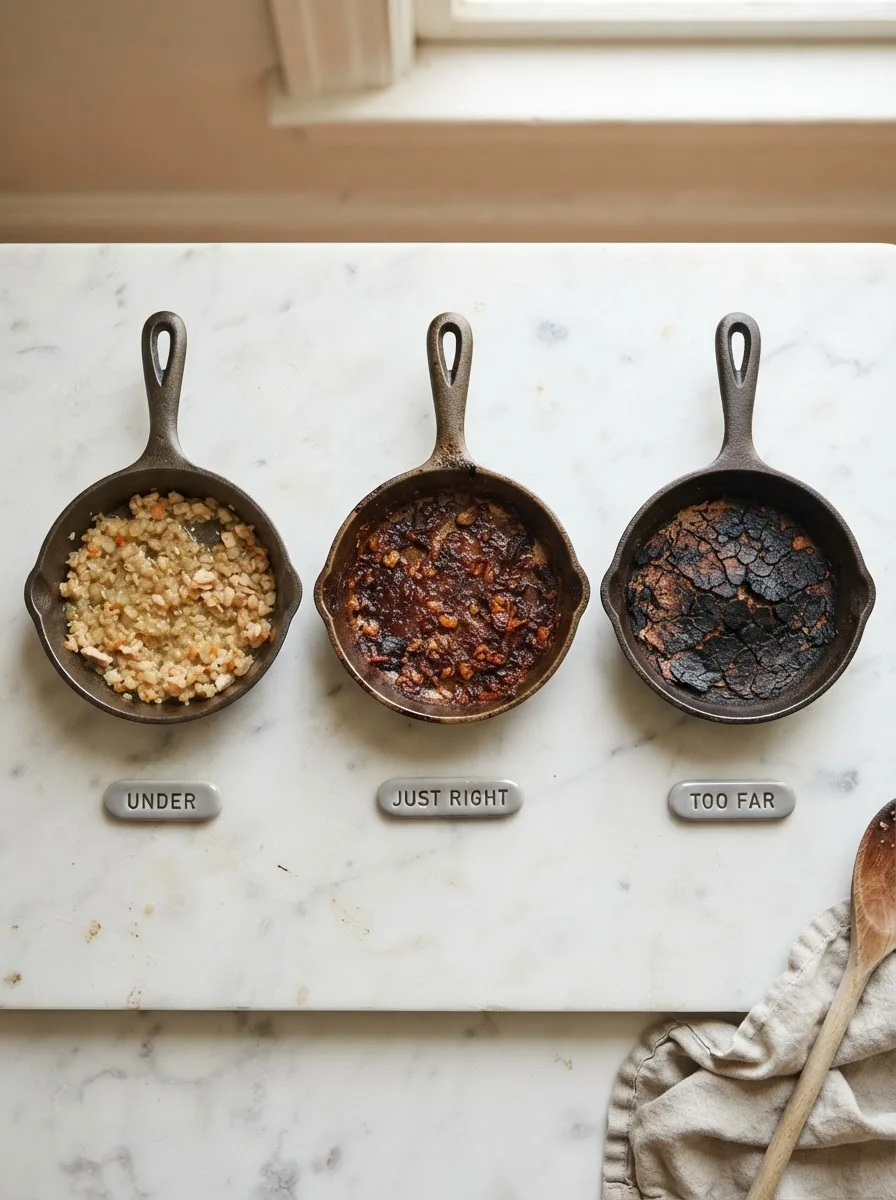
Under (about 6 minutes of browning): The bottom of the pot stayed pale golden-brown. The finished jambalaya tasted like seasoned chicken and rice — perfectly edible, but flat. No smokiness, no depth.
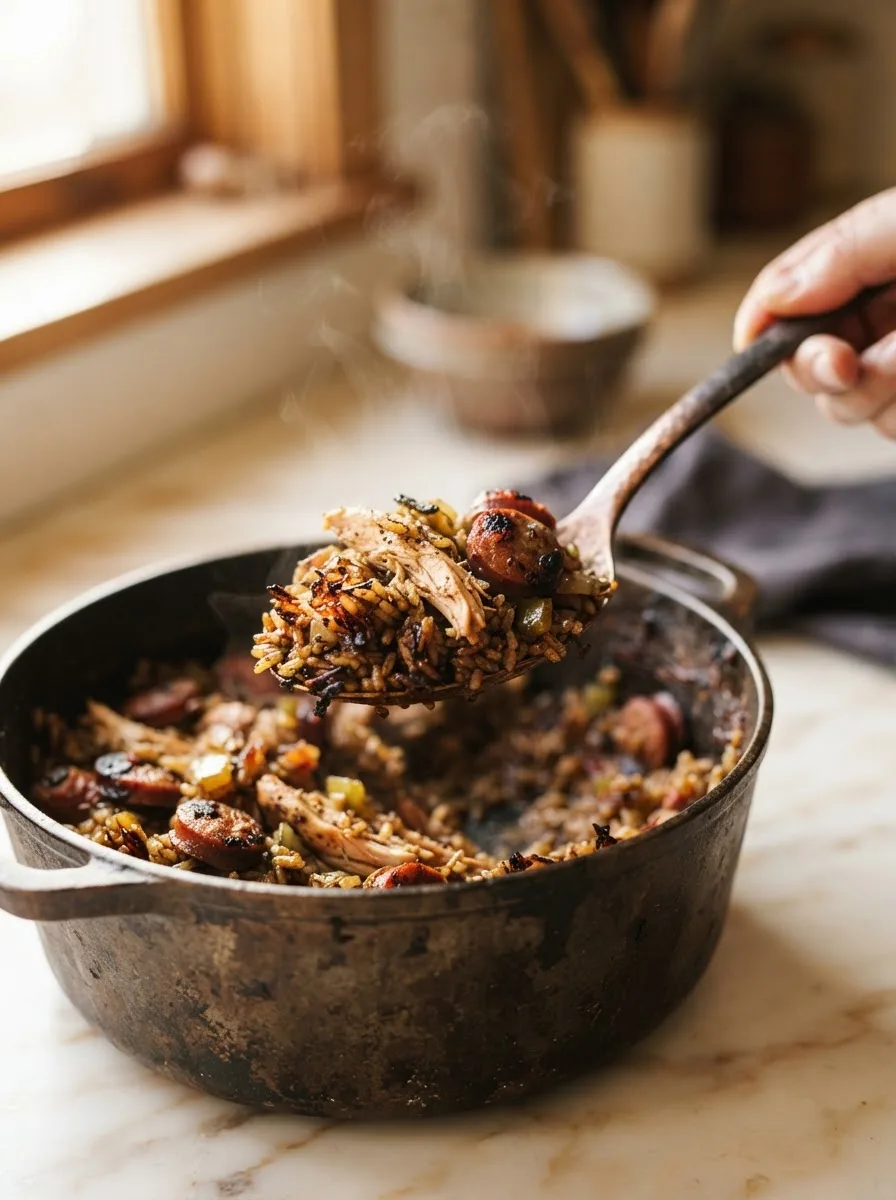
Just right (about 12–14 minutes of browning): The bottom of the pot turned a deep mahogany-brown, almost like the color of strong coffee, with small dark flecks stuck to the pot that scraped up easily with a wooden spoon. This is the batch pictured throughout this post. It smelled toasty and slightly sweet, not sharp or acrid.
Too far (about 18 minutes, and I walked away): The bottom went nearly black in spots and started smelling sharp, almost like burnt popcorn. When I added the stock, those black bits didn’t dissolve — they turned into bitter flecks throughout the finished rice.
The takeaway: you’re aiming for the smell to shift from “sizzling meat” to “toasted, slightly sweet, almost like coffee” — and you want to add the stock the moment that smell shows up, not five minutes after. If you start to smell anything sharp or acrid, that’s your signal to deglaze immediately.
How to Make Stalekracker Jambalaya
Before you start: Have your chicken stock warm (not cold from the fridge) and your trinity diced before you turn on the heat. Once the browning starts, you won’t have time to chop.
Step 1 — Render the sausage
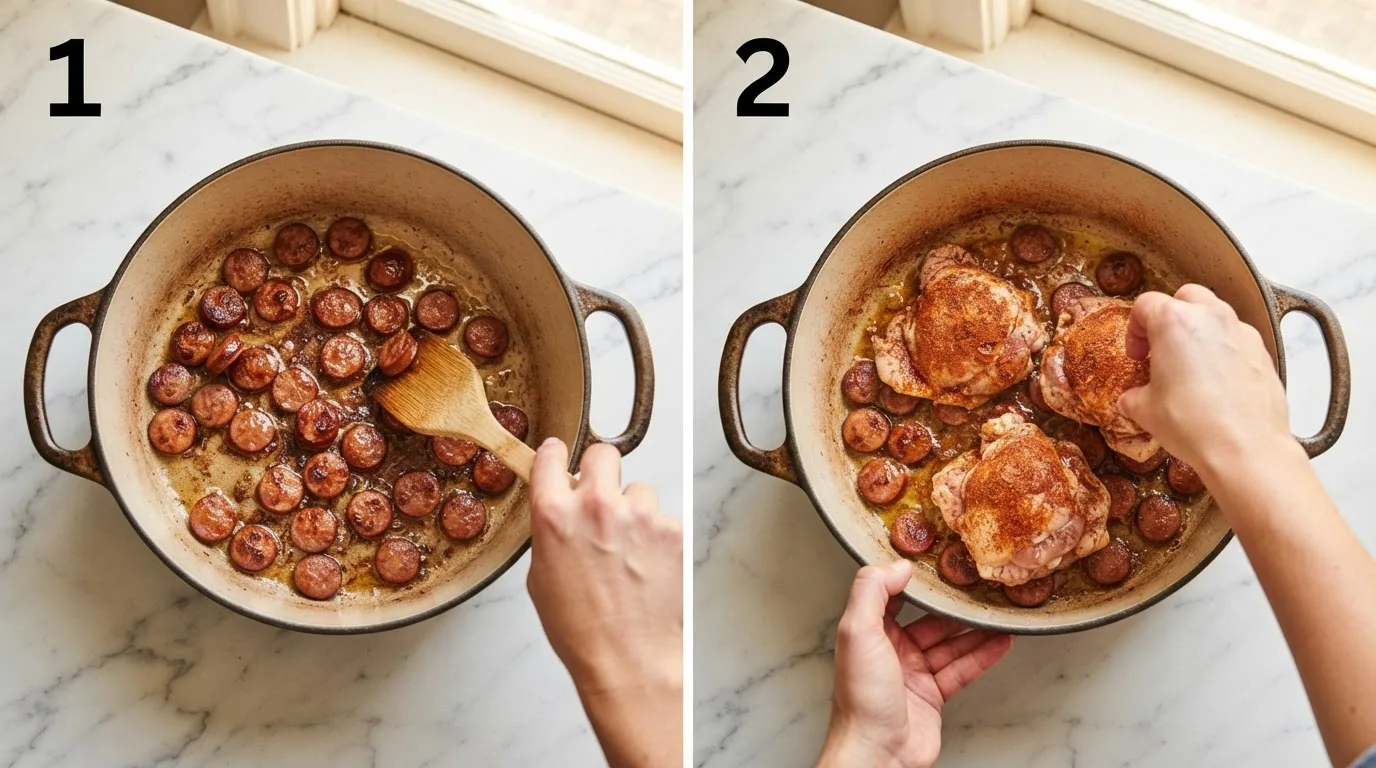
Heat your Dutch oven over medium-high heat with a tablespoon of butter. Add the sliced andouille and cook for 4–5 minutes, stirring occasionally, until the edges are blistered and deep brown and the fat has rendered into the bottom of the pot. Remove the sausage with a slotted spoon and set aside — you’ll add it back later. Leave every bit of that rendered fat in the pot; it’s the start of your fond.
Step 2 — Brown the chicken
Season the chicken thighs generously with Cajun seasoning, salt, and black pepper. Add them to the same pot in a single layer — don’t crowd them, work in two batches if needed. Brown for 3–4 minutes per side until deep golden-brown, then remove and set aside with the sausage. You’re building color in the pot, not fully cooking the chicken yet — it finishes later with the rice.
Step 3 — Sauté the trinity into the fond
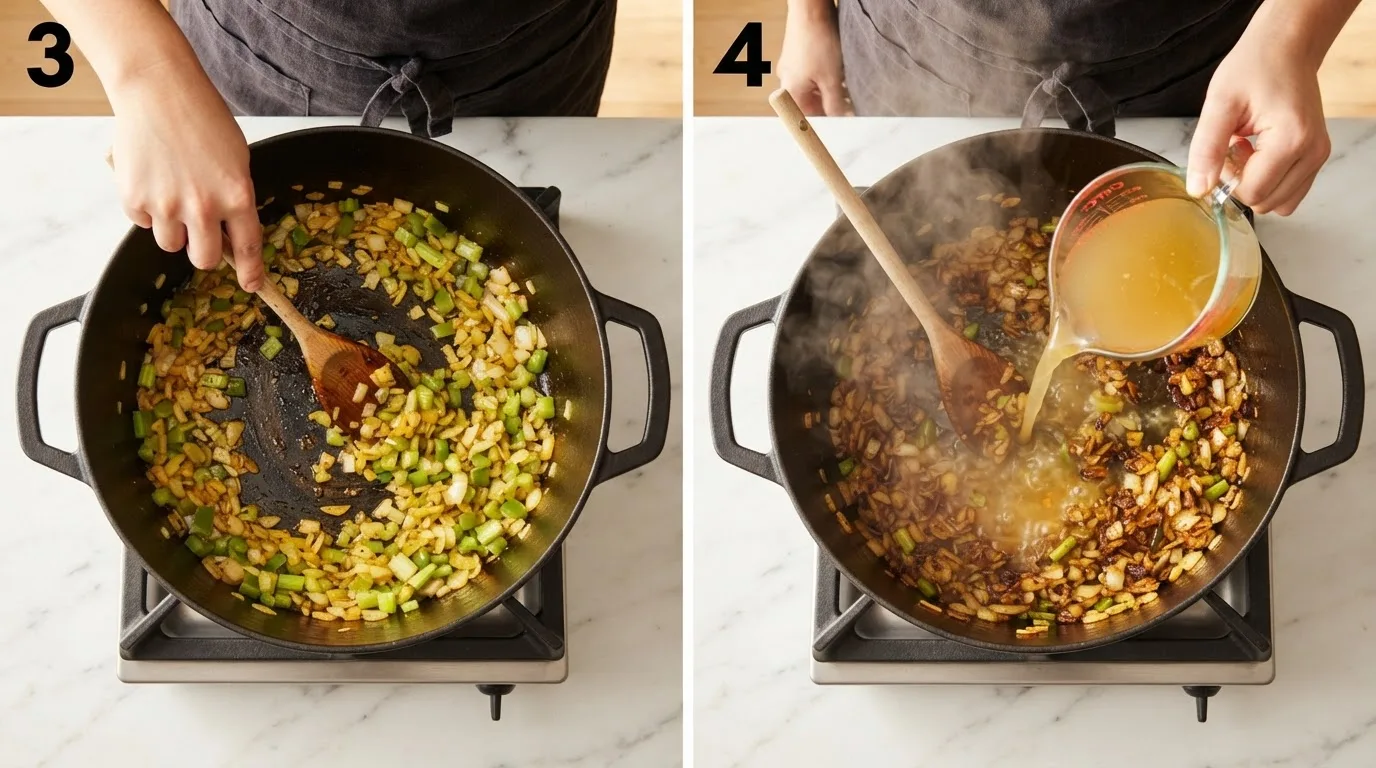
Add the diced onion, celery, and bell pepper directly into the same pot, along with the minced garlic. Stir constantly, scraping up any browned bits stuck to the bottom as you go. Cook for 8–10 minutes, until the vegetables soften completely and the bottom of the pot begins to darken from pale golden to a deeper brown. This is where the real color-building happens — don’t rush it, and don’t stop stirring for more than a few seconds at a time.
Step 4 — Deglaze with the stock
The moment the bottom of the pot smells toasty and slightly sweet (not sharp), pour in the warm chicken stock and scrape the bottom of the pot hard with your wooden spoon. All those dark, caramelized bits should lift off the bottom and dissolve into the stock, turning it a deep amber-brown. This liquid is now the entire flavor base of your jambalaya.
Step 5 — Add the meat back and simmer
Return the browned chicken and andouille to the pot along with the bay leaves. Bring the liquid to a gentle simmer, then let it cook uncovered for 8–10 minutes so the chicken finishes cooking through and the flavors concentrate slightly.
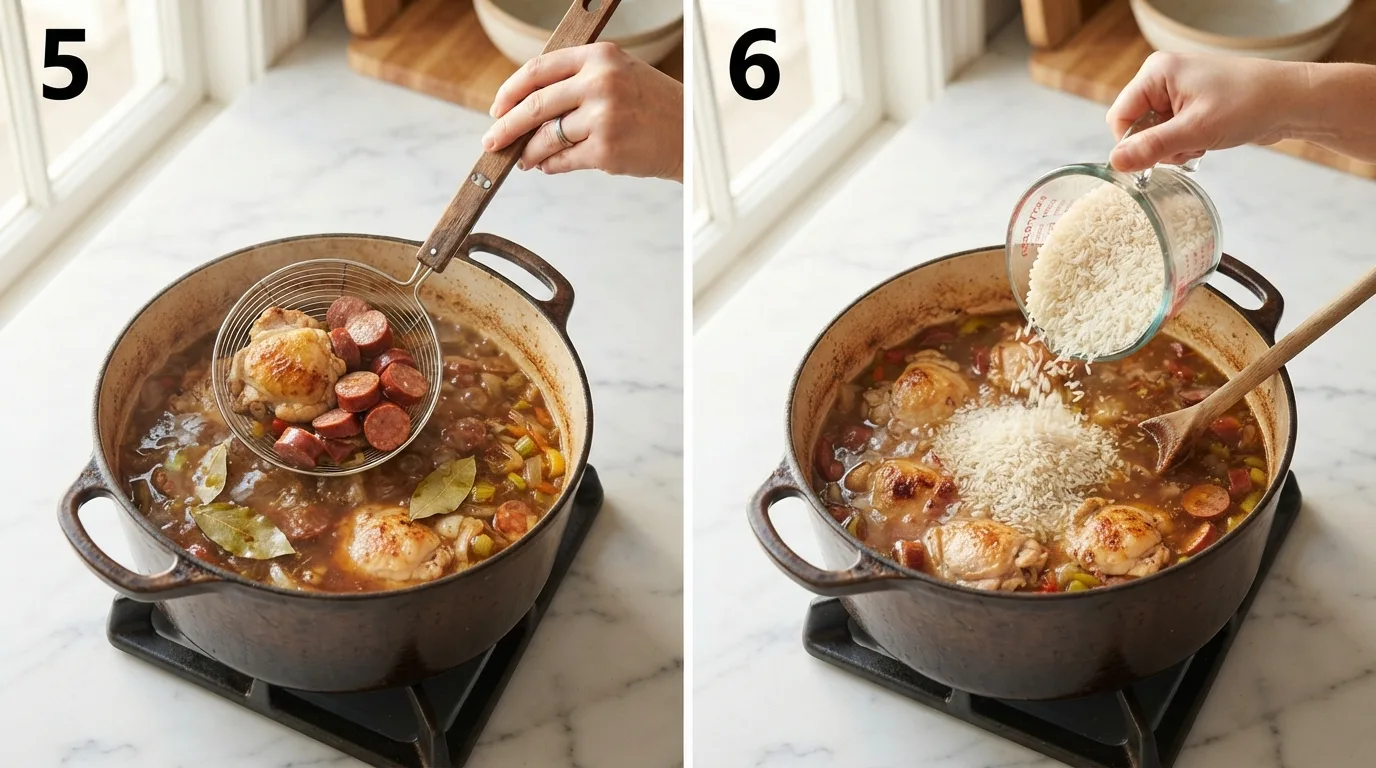
Step 6 — Stir in the rice and cover
Stir the rice directly into the pot, making sure it’s evenly distributed and mostly submerged in the liquid. Bring back to a gentle simmer, then cover tightly with a lid and reduce the heat to low. Do not stir again from this point forward — stirring releases starch and turns the rice gummy instead of distinct.
Step 7 — Steam and rest
Let the pot cook covered, undisturbed, on low heat for 20–25 minutes, until the liquid is fully absorbed. Turn off the heat and let the pot rest, still covered, for another 10 minutes. This rest is what lets the rice finish steaming through without turning mushy on the bottom.
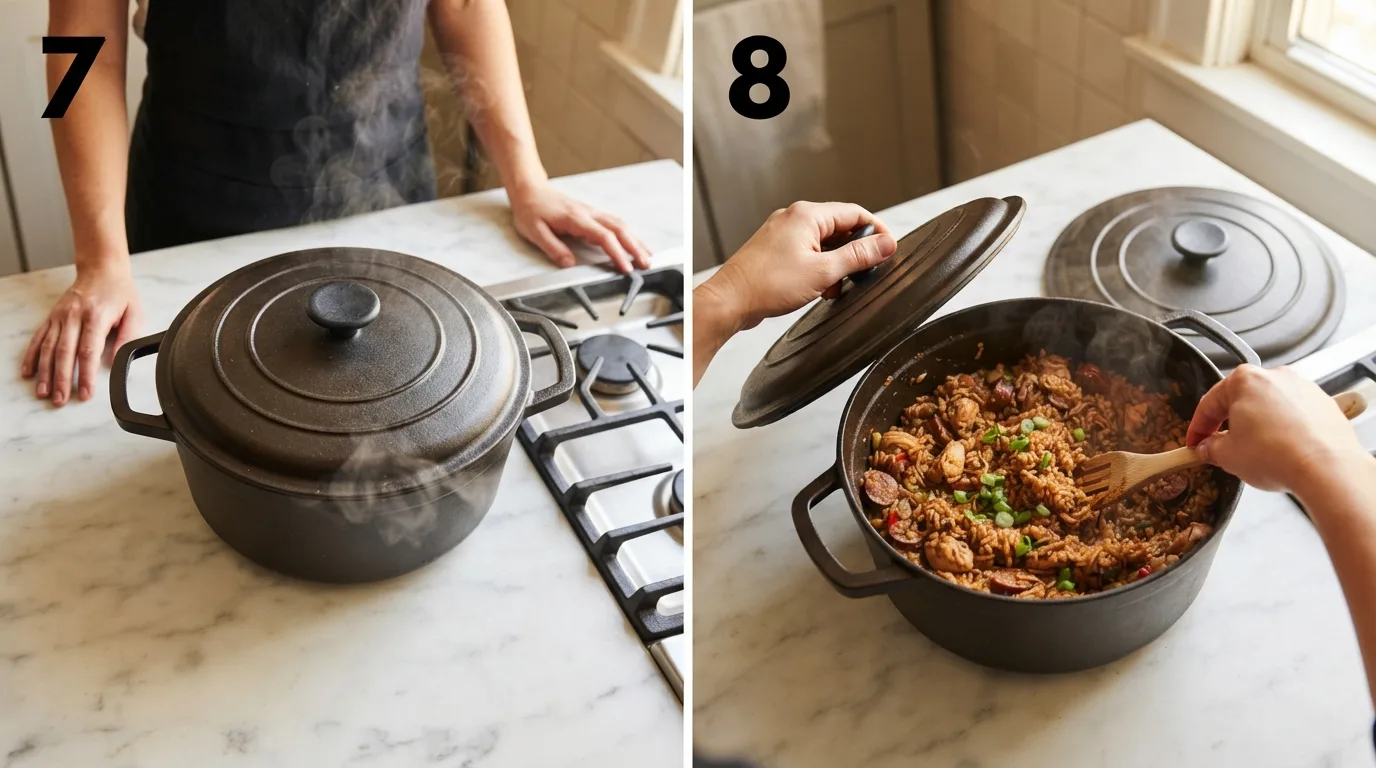
Step 8 — Fluff and finish
Remove the lid, discard the bay leaves, and fluff the jambalaya gently with a fork, breaking up any clumps without mashing the rice. Taste and adjust salt if needed, then top with sliced green onion and serve straight from the pot.
Pro Tips for Perfect Stalekracker Jambalaya
Tip 1: Use warm stock, not cold. Cold stock hitting a hot, deeply browned pot can shock the fond and make it seize slightly instead of dissolving smoothly. Warming the stock first (even just 30 seconds in the microwave) keeps the deglazing step clean.
Tip 2: Resist the urge to lift the lid early. Every time you lift the lid during the steam phase, you release trapped steam that the rice needs to cook through evenly. Trust the 20–25 minute window and use a timer instead of checking.
Tip 3: Salt in layers, not all at once. Andouille, Cajun seasoning, and chicken stock all bring their own salt. Season the chicken lightly, taste the liquid before adding rice, and do your final salt check only after the rice has fully absorbed the liquid.
Tip 4: Let the pot cool 10 minutes before you dig in. The rice on top looks done well before the rice at the very bottom has finished steaming. That final rest off the heat, lid still on, is doing real work — don’t skip it even when it smells incredible.
Variations and Substitutions
Dietary Variations:
- Gluten-free: This recipe is naturally gluten-free as written — just double-check your andouille sausage and Cajun seasoning blend, since some brands add wheat-based fillers or anti-caking agents that contain gluten.
- Lower sodium: Use a no-salt-added chicken stock and a Cajun seasoning blend labeled low-sodium, then salt to taste only at the very end. The andouille still brings plenty of saltiness on its own.
Flavor Variations:
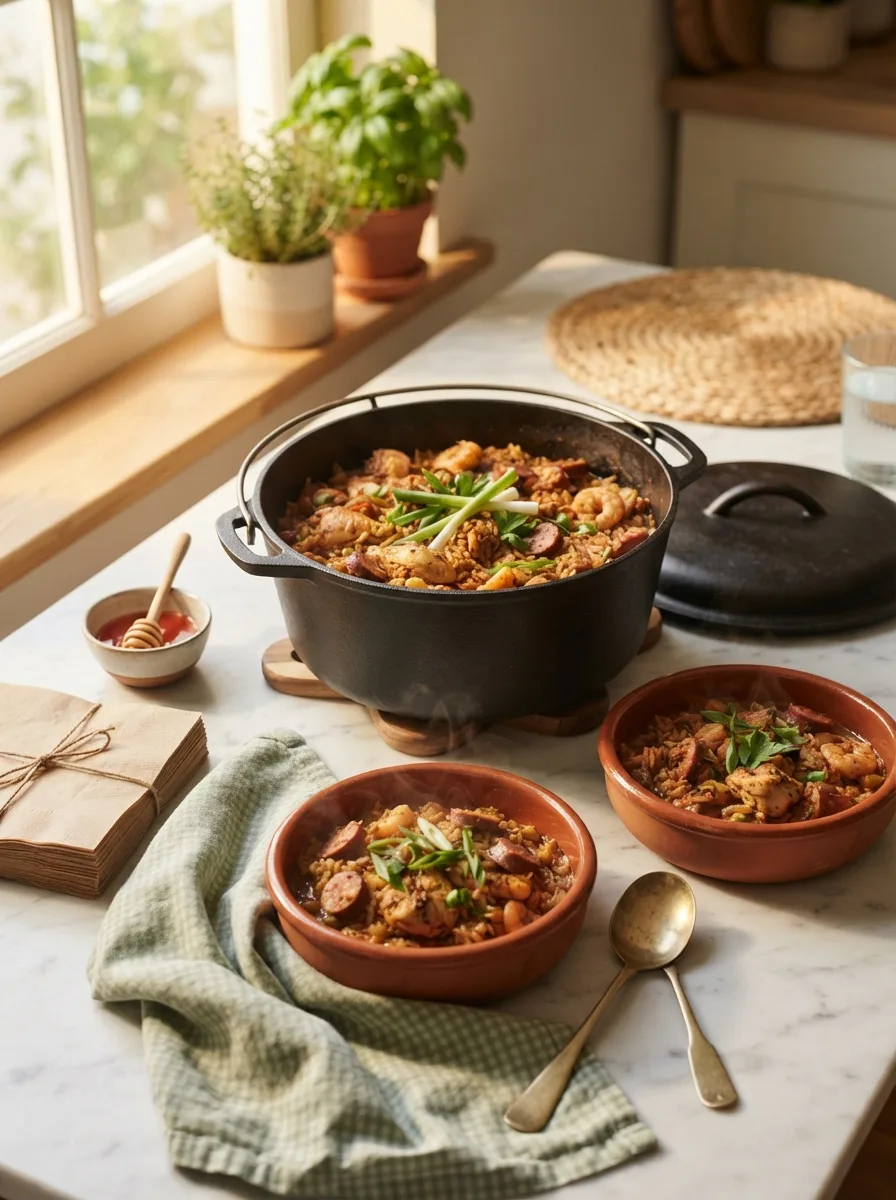
- Add shrimp: Stir in 1 pound of peeled, deveined shrimp during the last 5 minutes of the covered steam phase. Shrimp cooks fast and turns rubbery if added any earlier.
Ingredient Substitutions:
- Andouille sausage → smoked kielbasa (milder flavor; add an extra pinch of cayenne)
- Chicken thighs → bone-in chicken thighs (remove skin and bones after browning, before returning to the pot)
- Long grain white rice → parboiled rice (slightly firmer texture, less risk of gumminess if you’re nervous about the steam step)
If you’re building out a full Cajun-inspired dinner spread, my cheesy ranch potatoes and sausage makes an easy side dish that uses a similar smoked sausage flavor profile, and dolly’s chicken and stuffing casserole is a good comfort-food follow-up the next night if you have leftover chicken thighs to use up.
Troubleshooting
Why is my jambalaya mushy instead of distinct grains of rice?
Most likely, you stirred the pot after adding the rice, or lifted the lid to check on it partway through. Both actions release starch and steam that the rice needs to cook evenly without turning gummy. Cover it, walk away, and don’t touch it until the timer goes off.
My jambalaya tastes flat — what went wrong?
This almost always traces back to the browning step. If the bottom of the pot never developed real color (see the Controlled Test section above), the finished dish will taste like seasoned chicken and rice instead of jambalaya. Next time, let the trinity cook a few minutes longer than feels comfortable, watching for that deep mahogany-brown color.
The bottom of my pot burned and the whole dish tastes bitter — can I fix it?
Unfortunately, once burnt fond dissolves into the liquid, that bitterness spreads through the whole pot and can’t be removed. If you catch it early — before adding stock — you can sometimes salvage things by wiping out the worst of the black bits with a paper towel and starting the deglaze with slightly less scraping. If the bitterness is already in the finished dish, it’s best to start the next batch and watch your heat more closely.
Storage and Make-Ahead
Counter: Jambalaya shouldn’t sit out longer than 2 hours. Rice dishes cool quickly enough on the counter to fall into an unsafe temperature range.
Refrigerator: Store in an airtight container for up to 4 days. The flavor actually deepens a bit by day two.
Freeze: Cool completely, then freeze in individual portions for up to 3 months. Rice can turn slightly grainy after freezing, but the flavor holds up well.
Reheating: Reheat gently on the stovetop with a splash of chicken stock to loosen the rice, or microwave covered with a damp paper towel to keep it from drying out.
Make-Ahead: You can brown the sausage, chicken, and trinity a day ahead and refrigerate them together in their fond. When you’re ready to finish the dish, reheat the mixture in the pot, deglaze with warm stock, and continue from Step 5.
Frequently Asked Questions
Q: What makes this different from Creole jambalaya? A: Creole jambalaya (the New Orleans style) includes tomatoes and tends to be reddish in color. This is Cajun-style jambalaya, cooked further inland in Louisiana, which relies on browning and fond for its color and flavor instead of tomatoes.
Q: Do I need a Magnalite pot to make this? A: No — a heavy cast iron Dutch oven works just as well. Magnalite pots are traditional in Louisiana cooking because they distribute heat evenly, but any heavy-bottomed pot with a tight lid will get you the same result.
Q: Can I make this in a rice cooker or Instant Pot? A: You can finish the rice portion in a rice cooker after building the fond and browning the meat separately in a skillet, but you’ll lose some of the flavor transfer that happens when the rice cooks directly in the same pot as the fond. I haven’t tested an Instant Pot version of this specific recipe yet.
Q: My rice came out undercooked and crunchy — what happened? A: This usually means the liquid ratio was slightly off, or your lid wasn’t sealing tightly enough and too much steam escaped. Add a splash more warm stock, re-cover tightly, and give it another 5–8 minutes on low heat.
Q: Can I double this recipe? A: Yes, but use a larger pot — jambalaya needs room for the rice to steam evenly. If the pot is too crowded, the bottom layer can overcook while the top stays underdone. Doubling works best in an 8-quart or larger Dutch oven.
Q: Is this recipe spicy? A: As written, it has a mild-to-medium heat level from the Cajun seasoning and andouille. Add cayenne or a splash of hot sauce at the table if you want more kick — I prefer to season the pot mild and let people adjust their own bowl.
More Cajun & Comfort Food Recipes You’ll Love
- Cheesy Ranch Potatoes and Sausage — a smoky, cheesy sheet-pan side that pairs well with anything andouille-based
- Dolly’s Chicken and Stuffing Casserole — a cozy weeknight casserole that’s a good use for leftover cooked chicken
- Cheesecake Bread — if you’re planning a big Cajun-inspired spread, this sweet quick bread makes an easy dessert
- Banana Tempura — a fun, crispy fried dessert if you want something different to end the meal
Stalekracker Jambalaya Recipe (Tested 4 Times)
Ingredients
For the meat:
- 2 lb boneless, skinless chicken thighs, cut into large chunks
- 1 lb andouille sausage, sliced into ½-inch coins
- 2 tablespoon butter
For the trinity and seasoning:
- 1 large yellow onion, diced small
- 3 celery stalks, diced small
- 1 green bell pepper, diced small
- 4 garlic cloves, minced
- 2 tablespoon Cajun seasoning (no tomato added)
- 1 teaspoon salt, plus more to taste
- 1/2 teaspoon black pepper
For the rice:
- 4 cup chicken stock, warmed
- 2 cup long grain white rice, unrinsed
- 2 bay leaves
- 3 green onions, sliced, for garnish
Instructions
- Heat the butter in a heavy Dutch oven over medium-high heat. Add the andouille sausage and cook 4–5 minutes, stirring occasionally, until deeply browned. Remove with a slotted spoon and set aside, leaving the rendered fat in the pot.
- Season the chicken with Cajun seasoning, salt, and black pepper. Brown in the same pot in batches, 3–4 minutes per side, until deep golden-brown. Remove and set aside with the sausage.
- Add the onion, celery, bell pepper, and garlic to the pot. Cook 8–10 minutes, stirring constantly and scraping up browned bits, until the vegetables soften and the bottom of the pot turns deep mahogany-brown.
- Pour in the warm chicken stock and scrape the bottom of the pot firmly to dissolve all the browned fond into the liquid.
- Return the chicken and sausage to the pot along with the bay leaves. Bring to a gentle simmer and cook uncovered for 8–10 minutes.
- Stir in the rice, making sure it’s evenly distributed and mostly submerged. Bring back to a simmer, then cover tightly and reduce heat to low.
- Cook covered, undisturbed, for 20–25 minutes, until the liquid is fully absorbed. Turn off the heat and let rest, covered, for 10 minutes.
- Remove the lid, discard the bay leaves, and fluff gently with a fork. Taste and adjust salt, then top with sliced green onion and serve.
Notes
- Watch the color of the bottom of the pot in Step 3 closely — you’re aiming for deep mahogany-brown, not black. A toasty, slightly sweet smell means it’s ready; a sharp or acrid smell means it’s gone too far.
- Don’t stir the pot after the rice goes in and the lid goes on — this is what keeps the grains distinct instead of gummy.
- Leftovers keep in the refrigerator for up to 4 days and often taste even better on day two.
- This recipe freezes well in individual portions for up to 3 months; the texture is slightly softer after thawing but the flavor holds up.
- For a spicier version, add ¼ to ½ teaspoon of cayenne pepper along with the Cajun seasoning in Step 2.
- If doubling this recipe, use an 8-quart or larger pot so the rice has enough room to steam evenly.
- Bone-in chicken thighs can be used instead of boneless — remove the skin and bones after browning, before returning the meat to the pot in Step 5.
- If you don’t have a heavy Dutch oven, any thick-bottomed pot with a tight-fitting lid will work, though you may need to watch the heat more closely to avoid scorching.