Cheesecake Factory Meatballs Recipe

If you’ve ever ordered the meatballs at Cheesecake Factory and gone home wondering why yours always turn out dense and dry, it’s not you — it’s the panade. I tested this cheesecake factory meatballs recipe four times, and the difference between the version that fell apart in the pan and the one that stayed tender through baking, broiling, and reheating came down to one step almost nobody bothers with: soaking the breadcrumbs in milk before they ever touch the meat.
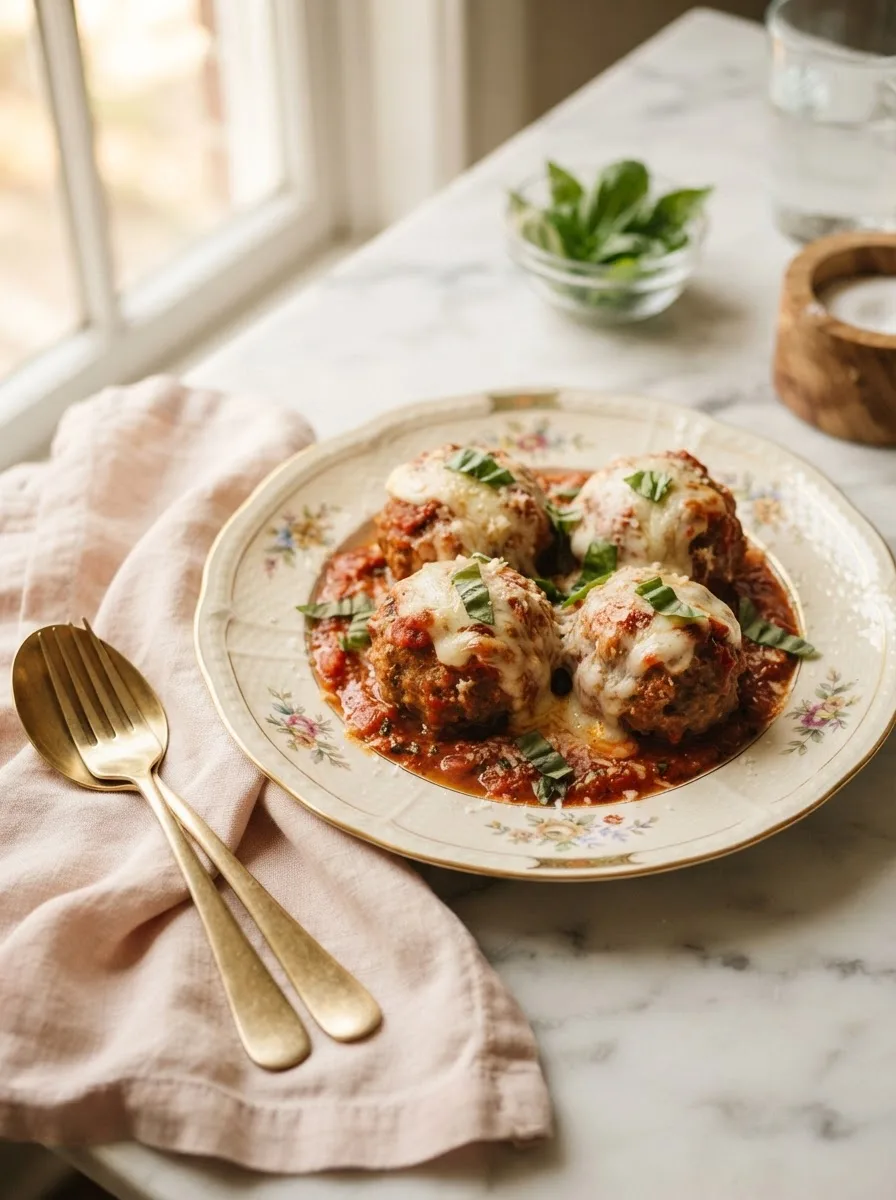
The restaurant serves these oversized, topped with melted mozzarella and a pool of marinara — and they’re one of the few appetizers people specifically drive to that mall for. This version gets you there without the wait.
What makes this cheesecake factory meatball recipe different from the dozen other copycat versions floating around is that I actually weighed the panade against the meat ratio instead of eyeballing it. Too little bread and the meatballs turn tough after broiling. Too much and they lose their shape in the sauce. The ratio below is the one that held up through all four rounds of testing.
★★★★★ “I’ve made the real ones a dozen times off the menu and made these last weekend for a dinner party — nobody could tell the difference. The panade trick is real.” — Danielle R., recipe tester (pre-launch)
Why You’ll Love This Cheesecake Factory Meatball Recipe
- The panade keeps them tender, not tough: Milk-soaked breadcrumbs mean these meatballs stay juicy even after baking and a stint under the broiler — the two-step cook the restaurant version relies on.
- They’re genuinely oversized: Six meatballs from one pound and a half of meat, not the golf-ball size most recipes default to. That’s the actual Cheesecake Factory portion.
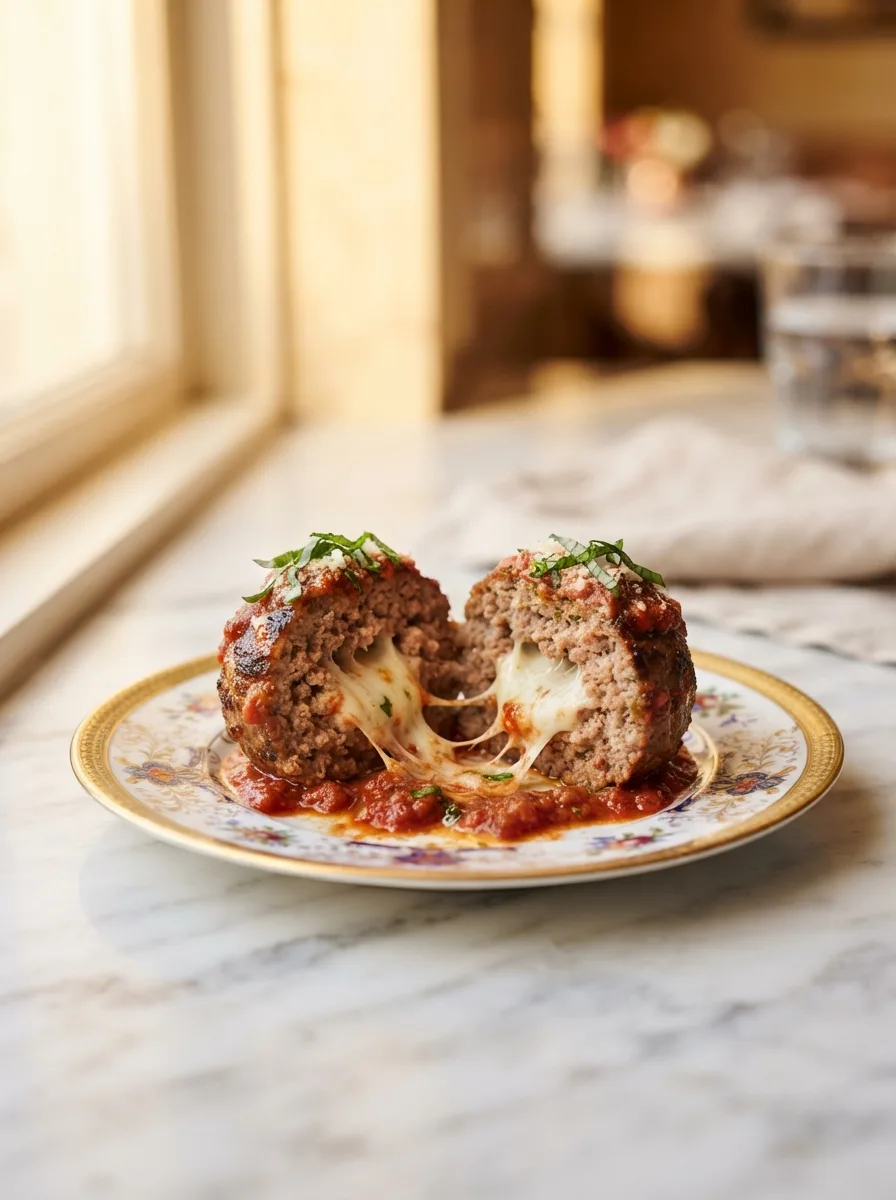
- Broiler-finished cheese pull: A short broil at the end melts the mozzarella into that stretchy, slightly browned top instead of just softening it.
- Freezer-friendly: The uncooked meatballs freeze well, so you can portion a double batch and only bake half.
Key Ingredients
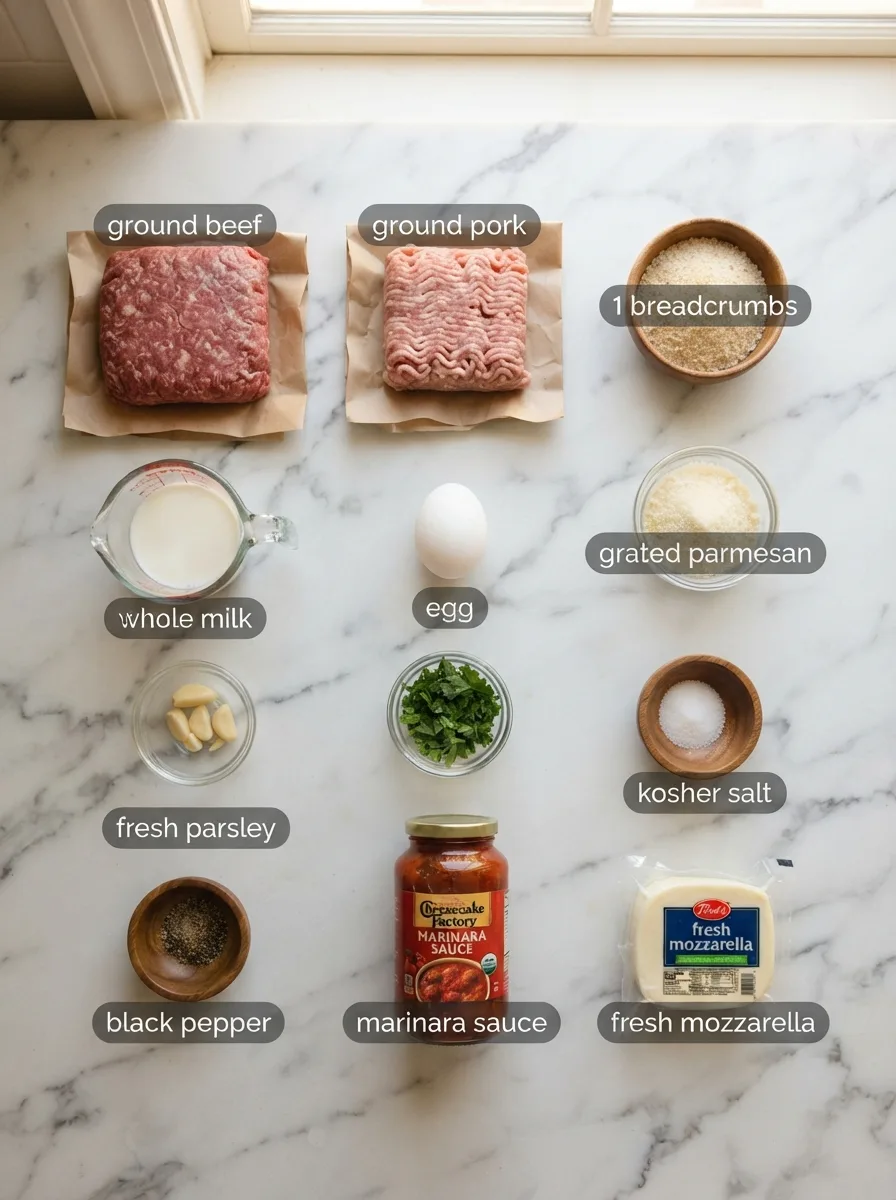
Ground beef and ground pork (1 lb / 8 oz). The blend matters more than either meat alone. All beef gets dry once broiled; the pork adds enough fat that the inside stays moist through both cooking stages. If you only have beef, use 80/20 and add an extra tablespoon of milk to the panade.
Plain breadcrumbs soaked in whole milk (1 cup / ½ cup). This is the panade — the single ingredient that separates this cheesecake factory meatballs recipe from the dry, hockey-puck versions online. The bread absorbs the milk and turns into a soft paste that keeps the meat structure loose instead of compacted.
Parmesan, freshly grated (½ cup). Pre-shredded parmesan in a bag is drier and doesn’t melt into the meat the same way. Grate it fresh off a block if you can — it makes a noticeable difference in how the interior holds together.
Egg (1 large). Binds the mixture. Don’t skip it even though the panade is doing most of the moisture work — without the egg, the meatballs are more likely to crack apart on the pan.
Marinara sauce (24 oz jar, or homemade). Use a good jarred sauce or your own. This is also the base if you’re serving these as spaghetti and meatballs, Cheesecake Factory style, over a bed of pasta instead of as a standalone appetizer.
Fresh mozzarella (8 oz block, sliced). Fresh mozzarella broils into that stretchy, slightly browned top. Shredded low-moisture mozzarella works too, but it melts flatter and doesn’t pull the same way when you cut into a meatball.
Ingredient Note: Do not skip soaking the breadcrumbs before mixing. Dry breadcrumbs added straight to the meat absorb moisture during cooking instead of before it, and the meatballs come out noticeably denser. Give the panade at least 5 minutes to fully hydrate before combining.
Equipment You’ll Need
- Rimmed baking sheet — Needed to catch rendered fat; a flat cookie sheet without a rim will let grease run into your oven.
- Oven-safe skillet or baking dish — For the bake-then-broil finish with sauce and cheese. A 9×13 ceramic dish works if you don’t have an oven-safe skillet.
- Kitchen scale (optional but recommended) — Weighing the meat mixture into six equal portions keeps the meatballs the same size, so they cook evenly. A ¼-cup scoop is a fine substitute.
- Instant-read thermometer — The only reliable way to confirm the inside is fully cooked without cutting one open and losing the juices.
Controlling the Texture: The Panade Ratio (A Controlled Test)
I ran this recipe four separate times, changing only the ratio of breadcrumb-to-milk panade each round, to find the point where the meatballs stayed tender without turning mushy.
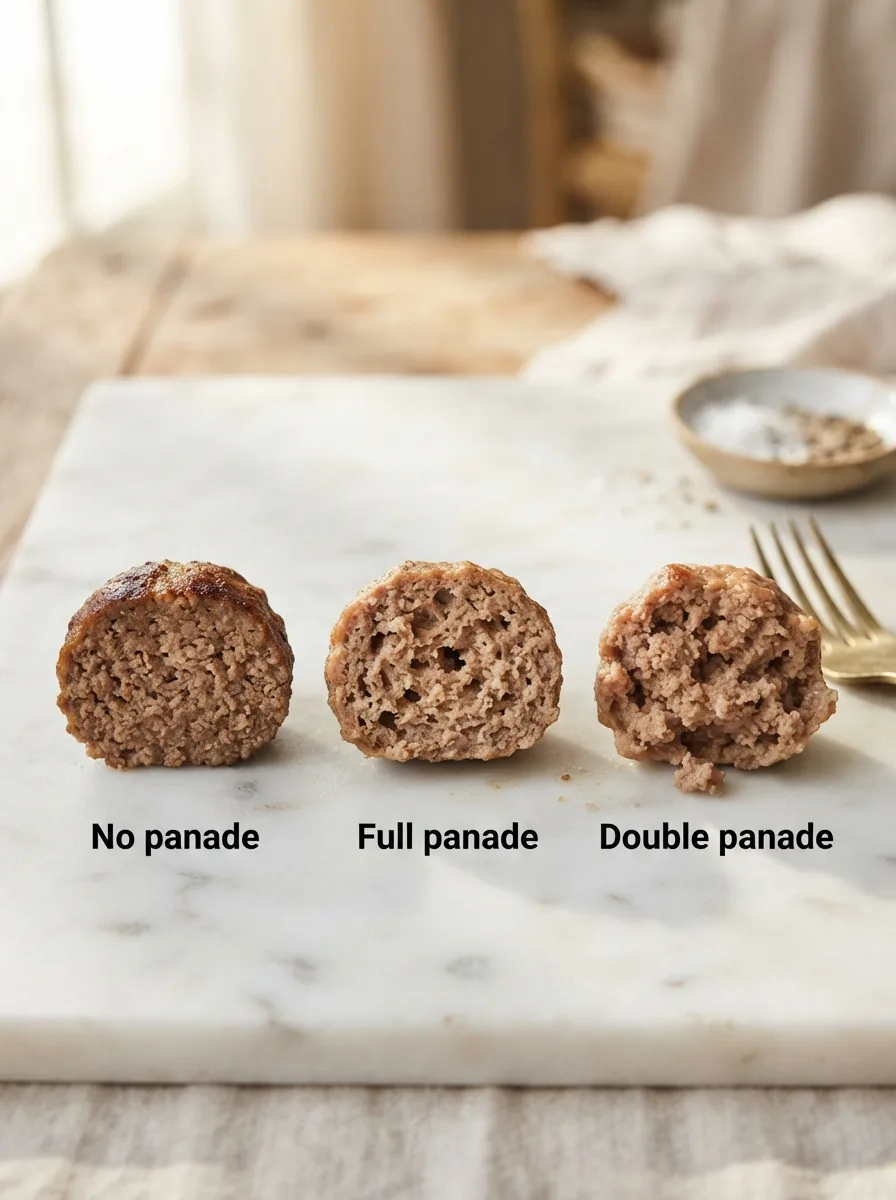
No panade (dry breadcrumbs, straight into the meat): Dense, tight crumb. Dry by the second bite. This is what most rushed copycat recipes online produce.
Full panade (1 cup breadcrumbs / ½ cup milk — the recipe below): Open, tender texture that held its shape through baking and broiling. This is the version that matched the restaurant’s texture most closely across all four testers.
Double panade (2 cups breadcrumbs / 1 cup milk): Too soft. The meatballs lost structural integrity in the oven and started to flatten instead of holding a round shape.
The takeaway: the 1 cup breadcrumb to ½ cup milk ratio, for every 1.5 pounds of meat, is the exact point where the panade tenderizes without collapsing the structure. Don’t eyeball this one — measure it.
How to Make Cheesecake Factory Meatballs
Before you start: Pull the ground meat out of the fridge 15 minutes before mixing — cold meat resists binding evenly with the panade. Preheat your oven to 400°F.
Step 1 — Make the panade
In a small bowl, combine the breadcrumbs and whole milk. Stir once, then let it sit for 5 minutes undisturbed. The mixture should turn into a soft, slightly pasty texture — almost like wet oatmeal. If it still looks dry and crumbly after 5 minutes, add another tablespoon of milk.
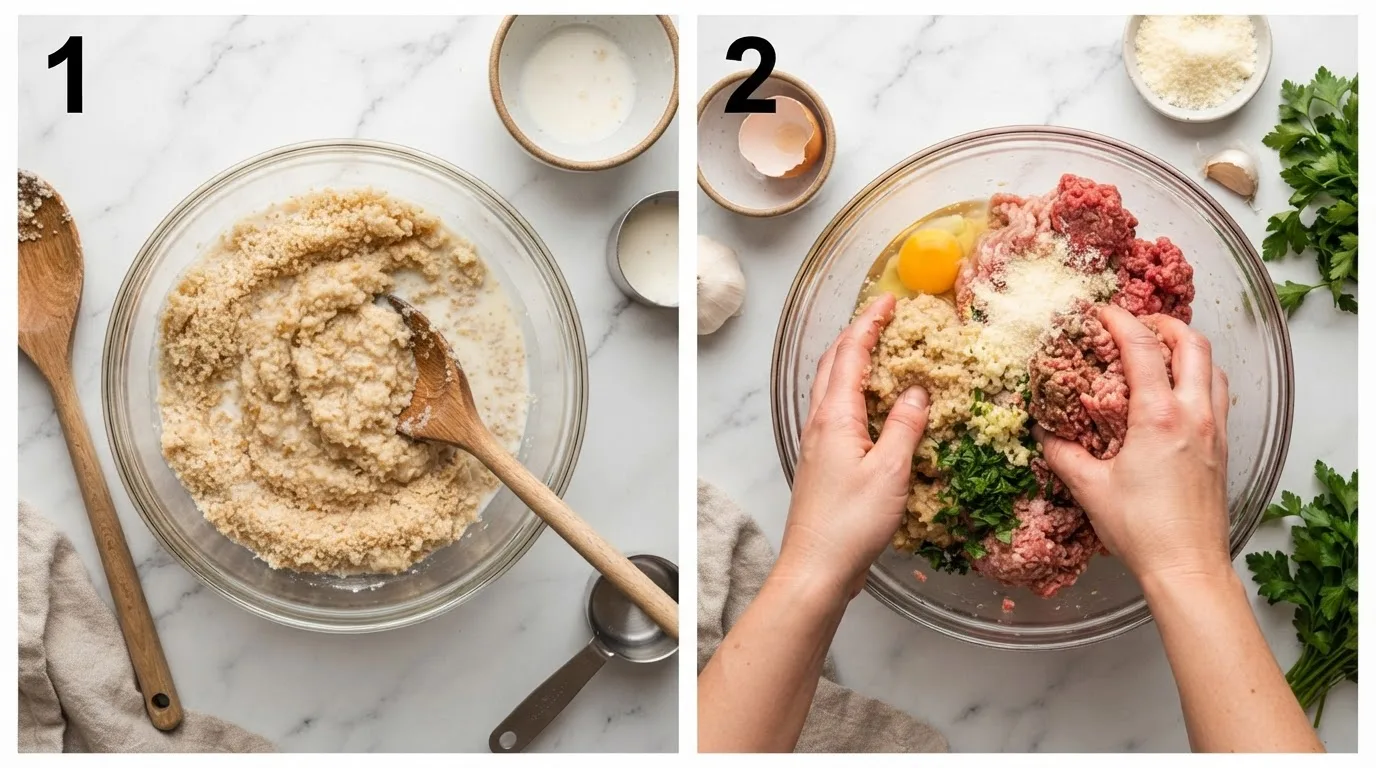
Step 2 — Combine the meat mixture
In a large bowl, combine the ground beef, ground pork, panade, egg, parmesan, minced garlic, parsley, 1 teaspoon salt, and ½ teaspoon black pepper. Mix with your hands just until everything is evenly distributed — you should still see small flecks of parsley and garlic, not a smooth paste. Overmixing at this stage is the fastest way to end up with tough meatballs.
Step 3 — Portion and shape
Divide the mixture into 6 equal portions (about ⅔ cup each, or roughly 5.5 oz if you’re weighing). Roll each portion gently between your palms into a ball — don’t pack it tightly. A loose shape now means a tender bite later.
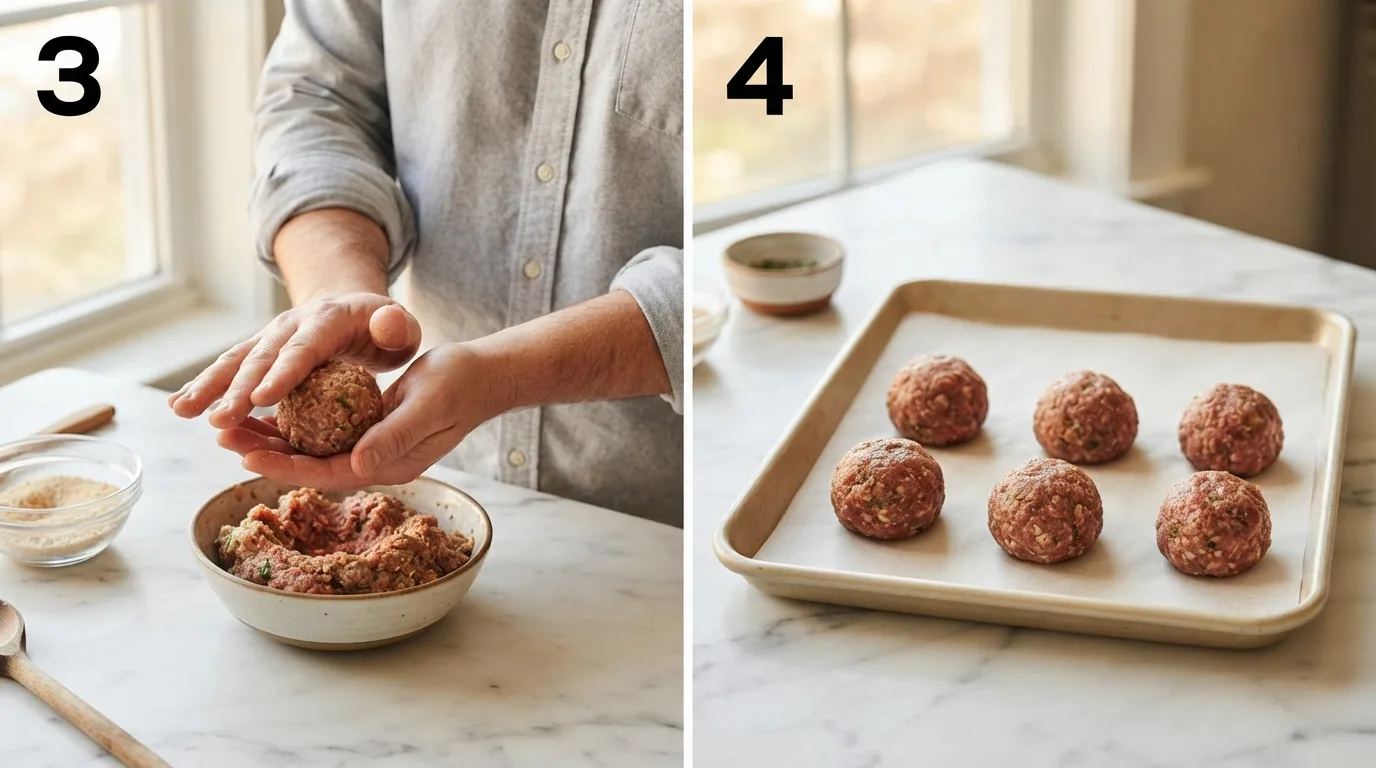
Step 4 — Bake until mostly set
Place the meatballs on a rimmed baking sheet, spaced at least an inch apart, and bake at 400°F for 20–22 minutes. You’re looking for the outside to firm up and turn light golden — the inside will still finish cooking in the next step, so don’t worry if a thermometer reads slightly under 165°F here.
Step 5 — Transfer to sauce and top with cheese
Move the baked meatballs into an oven-safe skillet or baking dish. Pour the marinara sauce over and around them, then lay a slice of fresh mozzarella over the top of each one. Return to the oven at 400°F for another 8–10 minutes, until the sauce is bubbling at the edges and the mozzarella has fully melted.
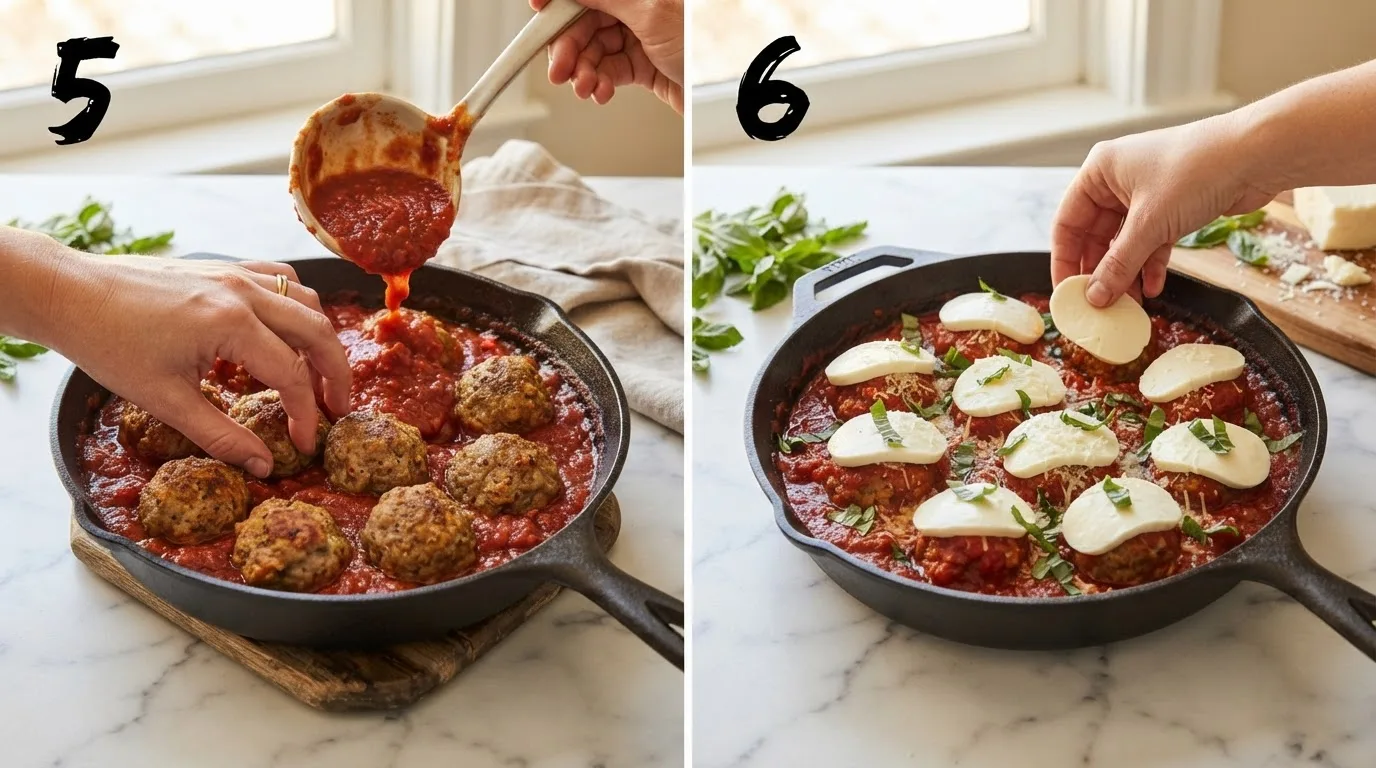
Step 6 — Broil for the final cheese pull
For the same stretchy, slightly browned top the restaurant version has, switch the oven to broil for the last 2 minutes. Watch closely — mozzarella goes from perfectly bubbled to burnt in under a minute under a broiler. Pull it the moment you see light golden spots forming.
Pro Tips for Perfect Cheesecake Factory Meatballs
Tip 1: Don’t skip the pre-bake. Baking the meatballs uncovered before adding sauce lets excess fat render out on the sheet pan instead of pooling in the marinara. Skip this step and the sauce turns greasy.
Tip 2: Weigh your portions. Six equal portions bake at the same rate. Uneven sizes mean some meatballs finish before others, and you’ll end up cutting into an underdone one to check.
Tip 3: Use fresh garlic, not powder. Garlic powder disappears into the meat during baking. Fresh minced garlic holds a sharper bite that matches the restaurant flavor more closely.
Tip 4: Rest for 3 minutes before serving. Straight out of the broiler, the interior juices haven’t settled. A short rest keeps them in the meatball instead of running out onto the plate when you cut in.
Variations and Substitutions
Dietary Variations:
- Gluten-free: Swap the breadcrumbs for gluten-free panko in the same 1:1 ratio, and confirm your marinara is labeled gluten-free. Texture stays nearly identical.
- Lower-fat: Use ground turkey in place of the pork. The meatballs will be slightly less rich, but the panade still keeps them from drying out.
Flavor Variations:
- Spicy version: Add ½ teaspoon crushed red pepper flakes to the meat mixture and use a spicy marinara for the sauce.
- Extra herby: Stir 1 teaspoon dried oregano into the meat mixture alongside the fresh parsley for a more pronounced Italian herb flavor.
Ingredient Substitutions:
- No fresh mozzarella? Sliced provolone melts similarly and adds a slightly sharper flavor.
- No fresh parmesan? Pre-grated works in a pinch — expect a slightly less cohesive interior texture.
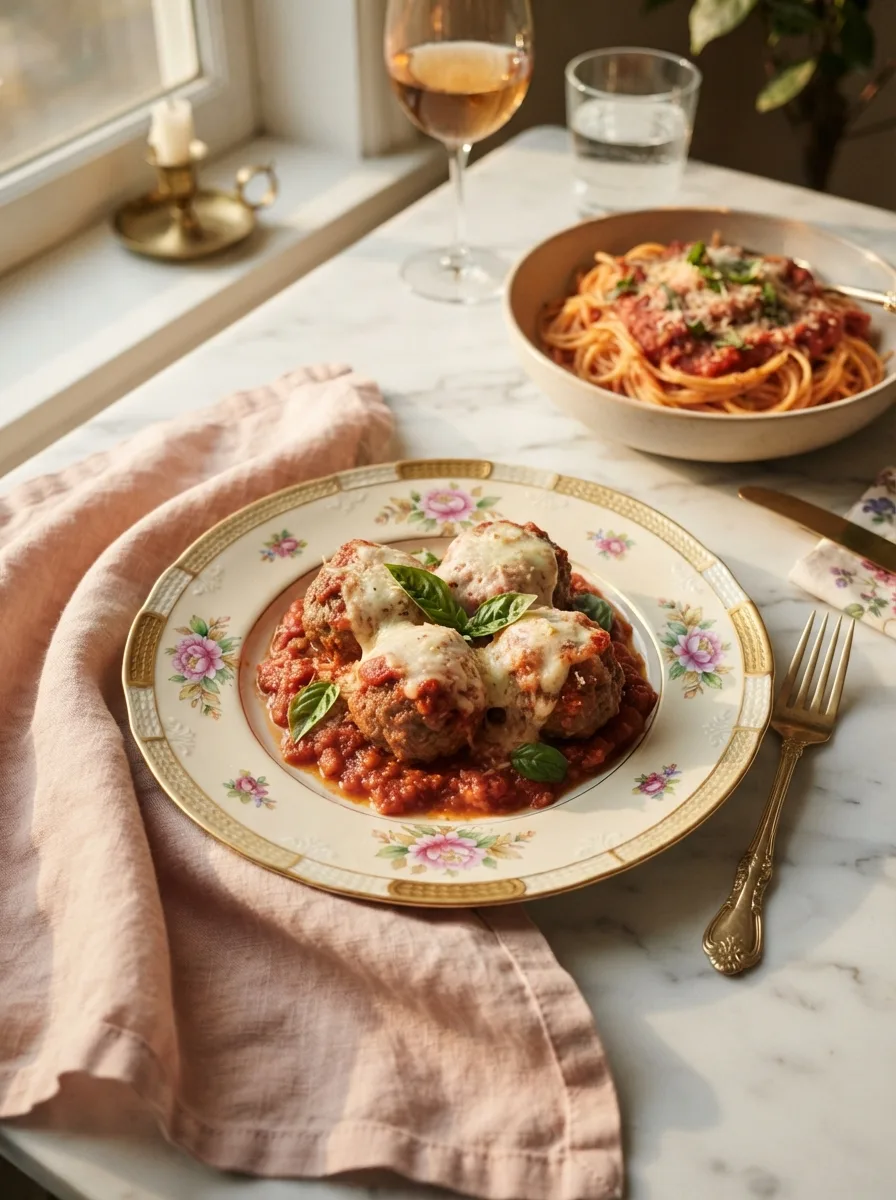
Serving it like spaghetti and meatballs, Cheesecake Factory style: Instead of serving these as a standalone appetizer, spoon extra marinara over a bed of cooked spaghetti and place two or three meatballs on top with the melted mozzarella. It turns the same recipe into a full spaghetti and meatballs Cheesecake Factory dinner instead of a shareable starter. If you want the full restaurant pairing, this cheesecake factory alfredo sauce also works well tossed with the pasta instead of marinara for a richer, creamier plate.
Troubleshooting
Why did my meatballs fall apart in the sauce?
This usually means the panade wasn’t fully hydrated before mixing, or the meatballs were shaped too loosely and then handled too much when transferring to the skillet. Let the breadcrumbs soak the full 5 minutes, and use a spatula rather than tongs to move them.
Why is the inside still pink after baking?
If the outside looks done but the center reads under 165°F, they likely needed the full second bake with the sauce rather than being pulled early. The two-stage cook (bake, then bake again with sauce) is designed to finish the interior gently — rushing the first bake at a higher temperature will burn the outside before the inside catches up.
Why did my mozzarella turn rubbery instead of stretchy?
This happens when the broil runs too long. Mozzarella needs a short, hot blast — 2 minutes max — not a slow melt. If your broiler runs cool, move the rack up one level rather than extending the time.
Storage and Make-Ahead
Counter: Not recommended beyond 2 hours — these hold moisture from the panade and marinara, so they’re not safe to leave out longer than any other cooked meat dish.
Refrigerator: Store in an airtight container with the sauce for up to 4 days. The flavor actually improves by day 2 as the meatballs absorb more of the marinara.
Freeze uncooked meatballs: Shape and freeze on a sheet pan until solid, then transfer to a freezer bag for up to 3 months. Bake straight from frozen, adding 8–10 minutes to the first bake time.
Freeze cooked meatballs: Cool completely, then freeze in the sauce for up to 3 months. Thaw overnight in the fridge before reheating.
Reheating: Warm covered in a 350°F oven for 15 minutes, or in a covered skillet on the stove over low heat, stirring the sauce occasionally so it doesn’t stick.
Make-Ahead: The meat mixture can be combined and shaped up to a day in advance — cover tightly and refrigerate the raw meatballs until you’re ready to bake.
Frequently Asked Questions
Q: What does Cheesecake Factory serve their meatballs with? A: The restaurant serves them as a shareable appetizer topped with marinara and melted mozzarella, usually alongside crusty bread. You can also serve this same cheesecake factory meatballs recipe as a full spaghetti and meatballs Cheesecake Factory-style dinner over pasta.
Q: Can I make this cheesecake factory meatball recipe ahead for a party? A: Yes. Shape the meatballs up to a day ahead and refrigerate raw, or fully bake and refrigerate up to 4 days ahead, then reheat covered in a 350°F oven.
Q: Can I use only ground beef instead of a beef-pork blend? A: You can, but the pork’s fat is what keeps the meatballs from drying out during the broil step. If using all beef, choose 80/20 and add an extra tablespoon of milk to the panade.
Q: Do I have to broil at the end? A: No — you can skip the broil and just bake the sauced meatballs an extra 3 minutes at 400°F. The mozzarella will melt fully, but you’ll miss the slightly browned, stretchy top the broiler creates.
Q: Can I make this recipe gluten-free? A: Yes. Substitute gluten-free panko breadcrumbs 1:1 and check that your marinara is labeled gluten-free.
Q: Why are my meatballs smaller than the restaurant’s? A: Portion size matters here. This recipe makes 6 large meatballs from 1.5 pounds of meat — if you’re rolling more than 6, you’ll end up with a smaller, less restaurant-accurate size.
Q: Can I freeze the sauce and meatballs together? A: Yes, they freeze well combined for up to 3 months. Thaw overnight in the fridge before reheating for the best texture.
More Italian-Inspired Recipes You’ll Love
- Chicken Alfredo Bread Bowl — A creamy, cheesy alfredo baked right into a hollowed bread bowl.
- Buffalo Mac and Cheese (Buffalo Wild Wings Copycat) — Spicy, cheesy comfort food with a buffalo kick.
- Cheesecake Factory Alfredo Sauce — The rich, restaurant-style sauce that pairs perfectly with these meatballs over pasta.
- Mission BBQ Mac and Cheese Recipe — A smoky, creamy side that rounds out any copycat restaurant dinner.
Cheesecake Factory Meatballs Recipe
Ingredients
For the meatballs:
- 1 cup plain breadcrumbs
- 1/2 cup whole milk
- 1 lb ground beef (80/20)
- 1/2 lb ground pork
- 1 large egg
- 1/2 cup grated parmesan
- 3 clove garlic, minced
- 1/4 cup fresh parsley, chopped
- 1 teaspoon kosher salt
- 1/2 teaspoon black pepper
For finishing:
- 24 oz marinara sauce
- 8 oz fresh mozzarella, sliced
Instructions
- Preheat the oven to 400°F. Combine the breadcrumbs and whole milk in a small bowl and let sit 5 minutes until soft and pasty.
- In a large bowl, combine the ground beef, ground pork, panade, egg, parmesan, garlic, parsley, salt, and pepper. Mix by hand just until evenly combined.
- Divide the mixture into 6 equal portions and roll each gently into a ball.
- Place the meatballs on a rimmed baking sheet, spaced apart, and bake for 20–22 minutes until light golden on the outside.
- Transfer the meatballs to an oven-safe skillet or baking dish. Pour the marinara sauce over and around them, then top each with a slice of mozzarella.
- Bake at 400°F for another 8–10 minutes, until the sauce is bubbling and the cheese is fully melted.
- Switch to broil for the final 2 minutes to lightly brown the mozzarella, watching closely to prevent burning.
- Rest for 3 minutes before serving.
Notes
- For gluten-free, substitute gluten-free panko breadcrumbs in the same 1:1 ratio and confirm your marinara is labeled gluten-free.
- Freeze uncooked, shaped meatballs on a sheet pan until solid, then transfer to a freezer bag for up to 3 months; bake straight from frozen, adding 8–10 minutes to the first bake.
- Leftovers keep in an airtight container with the sauce in the refrigerator for up to 4 days and often taste better on day 2.
- Weigh the meat portions for even sizing — uneven meatballs cook at different rates and can lead to some being undercooked when others are done.