Pasta Asciutta Recipe (Foolproof)

The first time I made pasta asciutta, I did what most of us do with tomato sauce — I made way too much of it, and the pasta drowned. “Asciutta” means dry in Italian, which sounds like a strange thing to want from a sauced pasta, but that’s the whole point of the dish. The sauce should coat the noodles, not pool underneath them.
I tested this three times, changing only how much pasta water I added at the end and when I added it. The first batch was soupy. The second was dry and clumped. The third one is the recipe below, and it’s the one I make now when I want something that tastes like it took longer than 35 minutes.
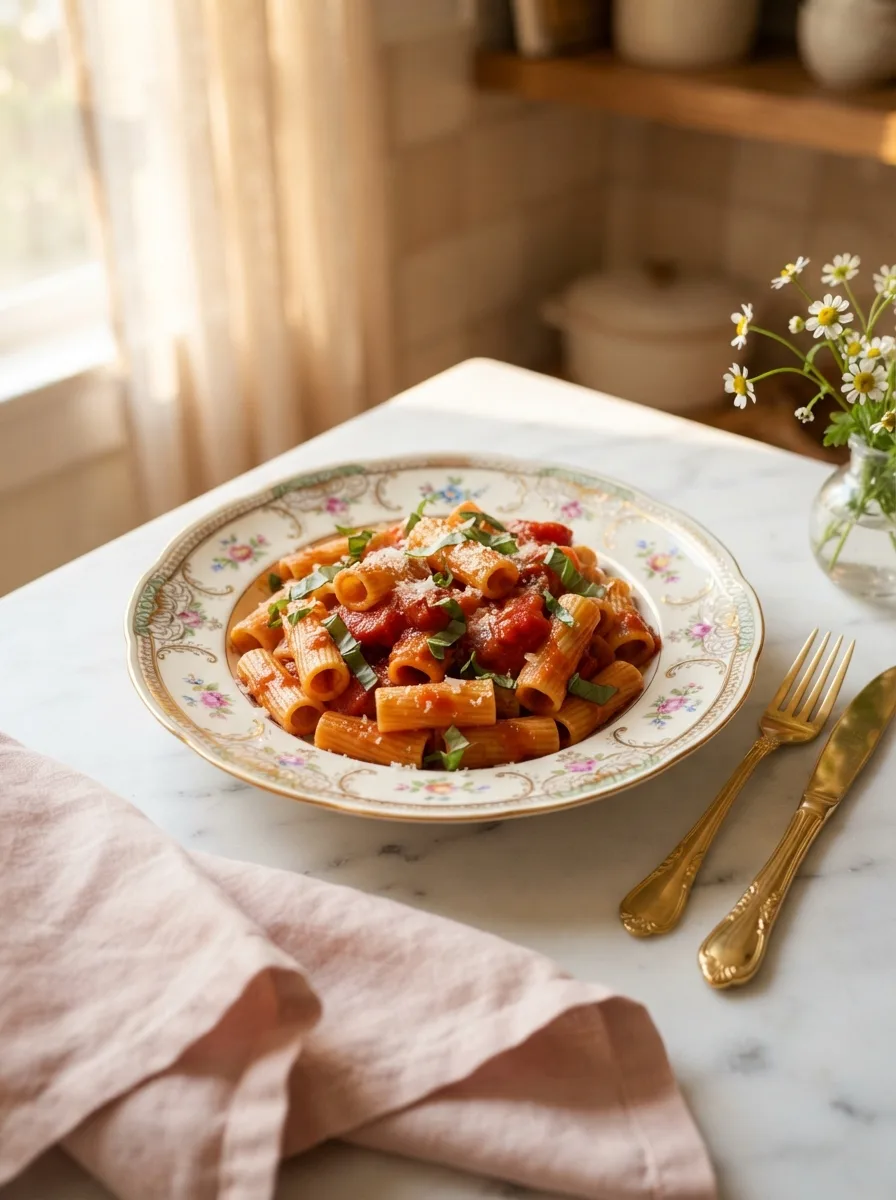
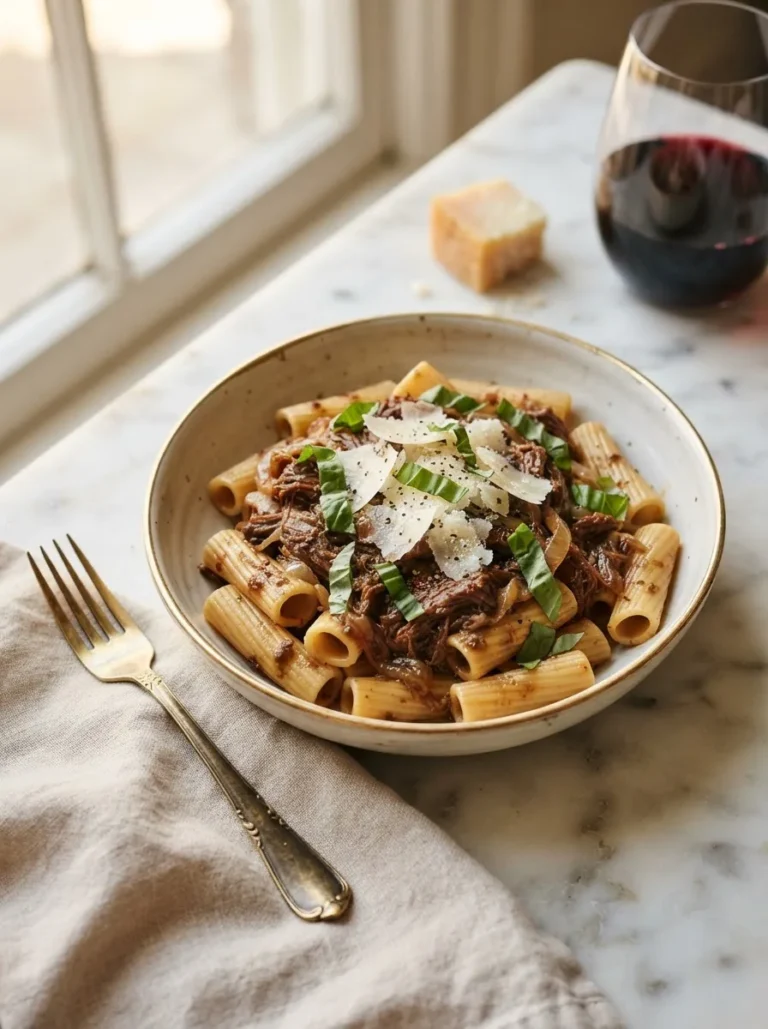
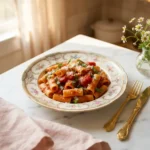
What makes this version different is the sauce-to-pasta ratio. It’s built to cling to every piece of rigatoni instead of collecting in the bottom of the bowl, which is the entire reason “asciutta” is in the name in the first place.
★★★★★ “I’ve made a hundred versions of tomato pasta and this is the first one where the sauce actually stayed ON the pasta instead of turning into soup by the time I sat down to eat it.” — Marissa T., recipe tester (pre-launch)
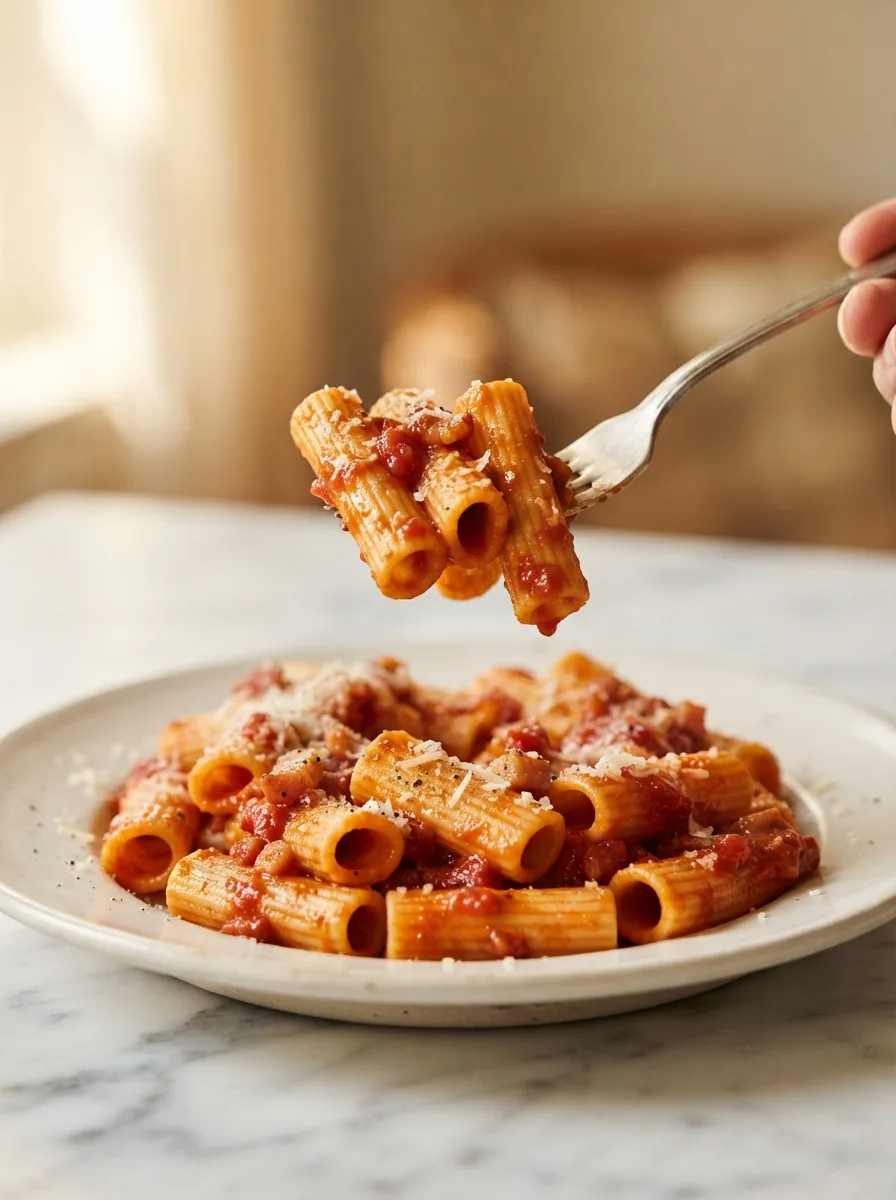
Why You’ll Love This Pasta Asciutta
- The sauce actually sticks: No watery puddle at the bottom of the bowl — every noodle gets coated, not soaked.
- One pot, one pan, done in 35 minutes: Boil the pasta while the sauce simmers, and dinner is on the table before you’ve finished setting it.
- Pantry-friendly: Canned tomatoes, garlic, and dried pasta — nothing you need to make a special trip for.
- Tested for the exact water ratio: I ran this three separate times specifically to nail the pasta-water measurement, so you don’t have to guess.
Key Ingredients
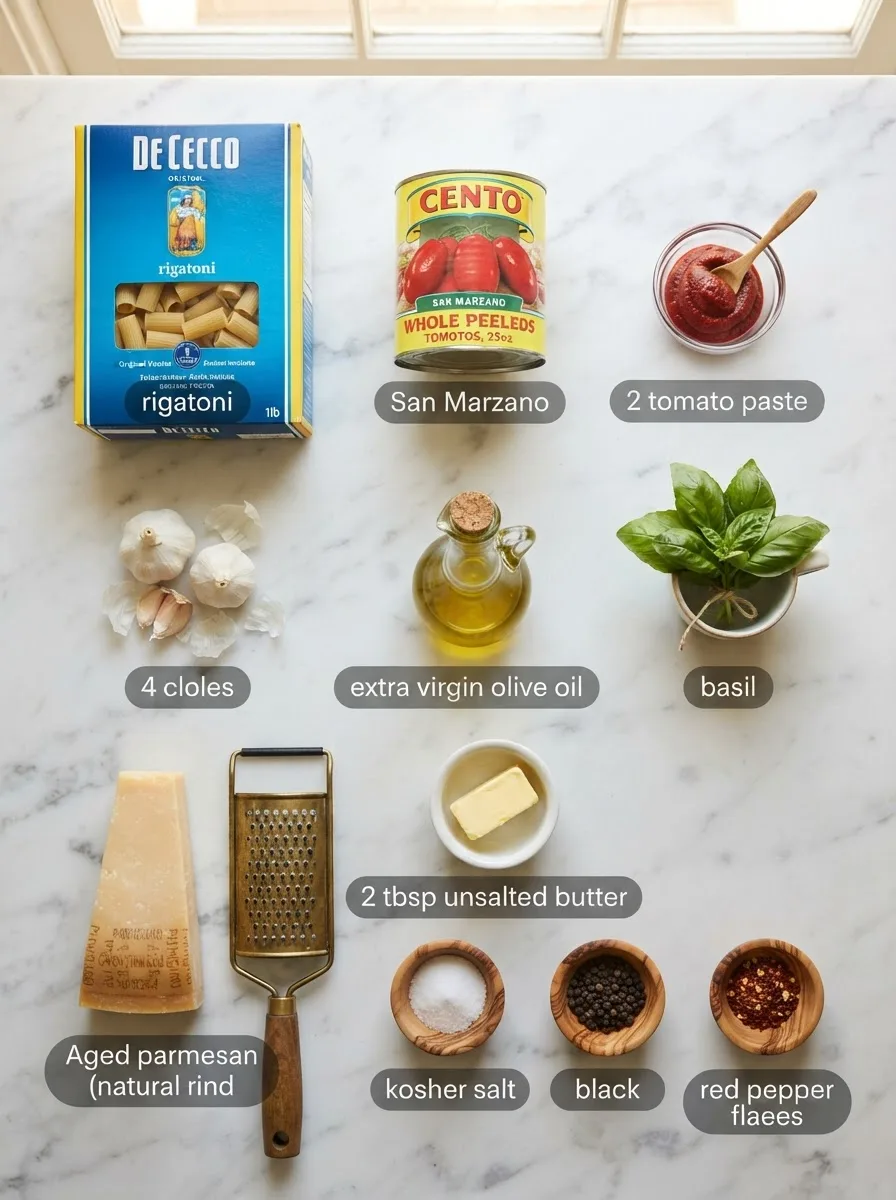
San Marzano tomatoes (28 oz can). These break down into a smoother, less acidic sauce than standard canned tomatoes. Regular whole peeled tomatoes work fine too — just add a pinch more sugar if the sauce tastes sharp.
Tomato paste (2 tablespoons). This is what gives the sauce body without adding liquid. Skip it and the sauce stays thinner, which makes it harder to hit that “asciutta” consistency without cooking it forever.
Garlic (4 cloves, thinly sliced). Sliced, not minced — it softens into the oil instead of burning, and you get little tender pieces of garlic throughout instead of a garlic-paste texture.
Unsalted butter (2 tablespoons, added at the end). This is the trick most people skip. Butter stirred in off the heat at the very end makes the sauce glossy and rounds out the acidity from the tomatoes.
Parmesan (freshly grated, not the shaker kind). Pre-shredded parmesan has anti-caking starches that make it clump instead of melt smoothly into the sauce. Grate it yourself — it takes 90 seconds and makes a real difference.
Reserved pasta water. This is the single most important variable in this recipe. Starchy pasta water is what lets the sauce cling to the noodles instead of sitting in a puddle underneath them.
Ingredient Note: Don’t skip salting the pasta water generously — it should taste like light seawater. Under-salted pasta water means under-seasoned pasta no matter how good the sauce is.
Equipment You’ll Need
- Large pot — for boiling the pasta. A Dutch oven works if you don’t have a dedicated pasta pot.
- Large skillet or sauté pan — wide enough to toss the pasta directly in the sauce at the end. A deep skillet works better than a saucepan here.
- Ladle or heatproof measuring cup — for scooping out pasta water before draining. This is easy to forget, so keep it near the stove.
- Box grater or microplane — for grating the parmesan fresh.
- Wooden spoon or tongs — tongs make tossing the pasta into the sauce much easier than a spoon.
Controlling the Sauce Consistency (A Controlled Test)
I tested this recipe three times, changing only the amount and timing of the reserved pasta water added at the end. This one variable is what separates a true pasta asciutta from a regular saucy pasta.
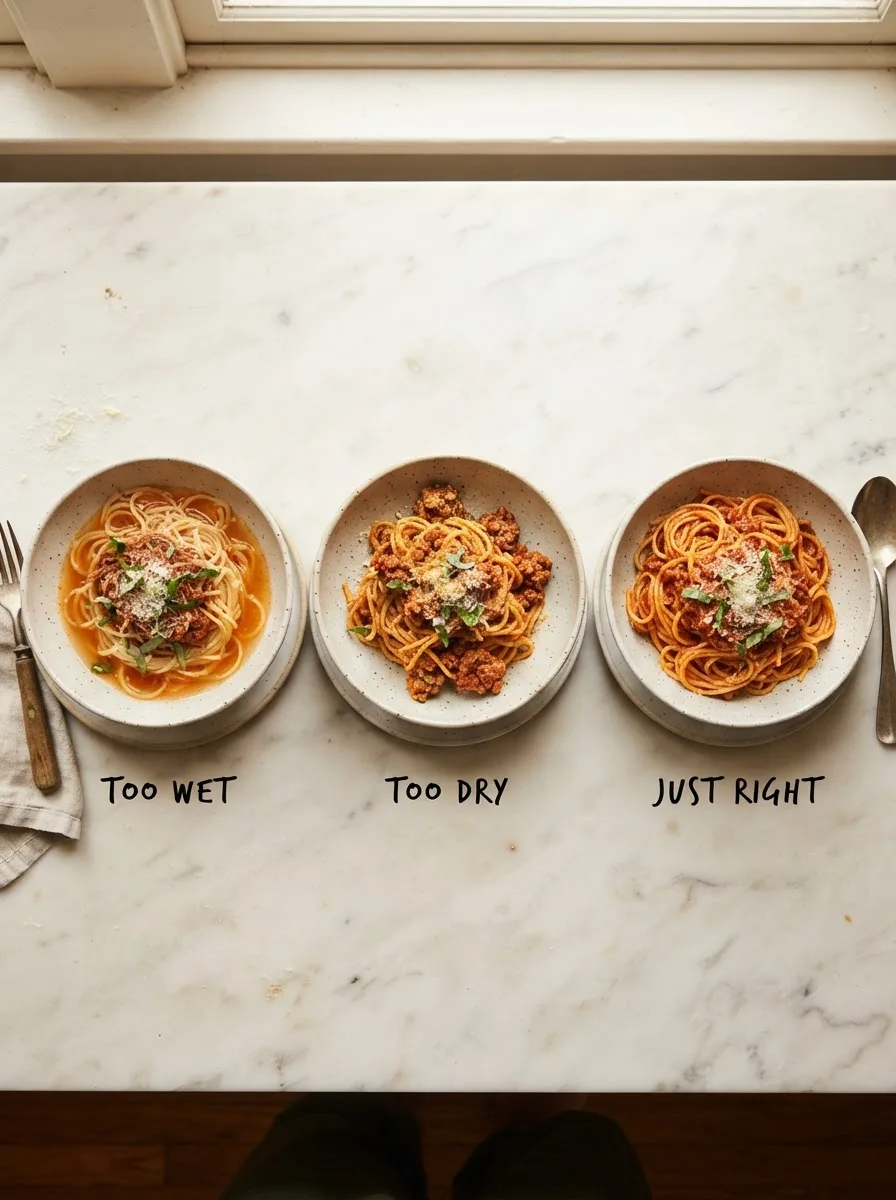
Too much pasta water (1 cup, added all at once): The sauce turned soupy and thin. It tasted fine but pooled at the bottom of the bowl within a minute — exactly what “asciutta” is supposed to avoid.
Too little pasta water (none added): The sauce seized up and turned pasty, clinging in thick clumps rather than coating evenly. The pasta stuck together as it cooled.
The right amount (¼ cup, added gradually while tossing): The starch in the water loosened the sauce just enough to coat every piece without thinning it. This is the version in the recipe below — add it a splash at a time, tossing constantly, and stop the moment the sauce looks glossy rather than shiny-wet.
How to Make Pasta Asciutta
Before you start: Set a large pot of water to boil and have your pasta water reserved before you drain — this is the step people forget, and there’s no going back once it’s down the drain.
Step 1 — Salt the water and cook the pasta
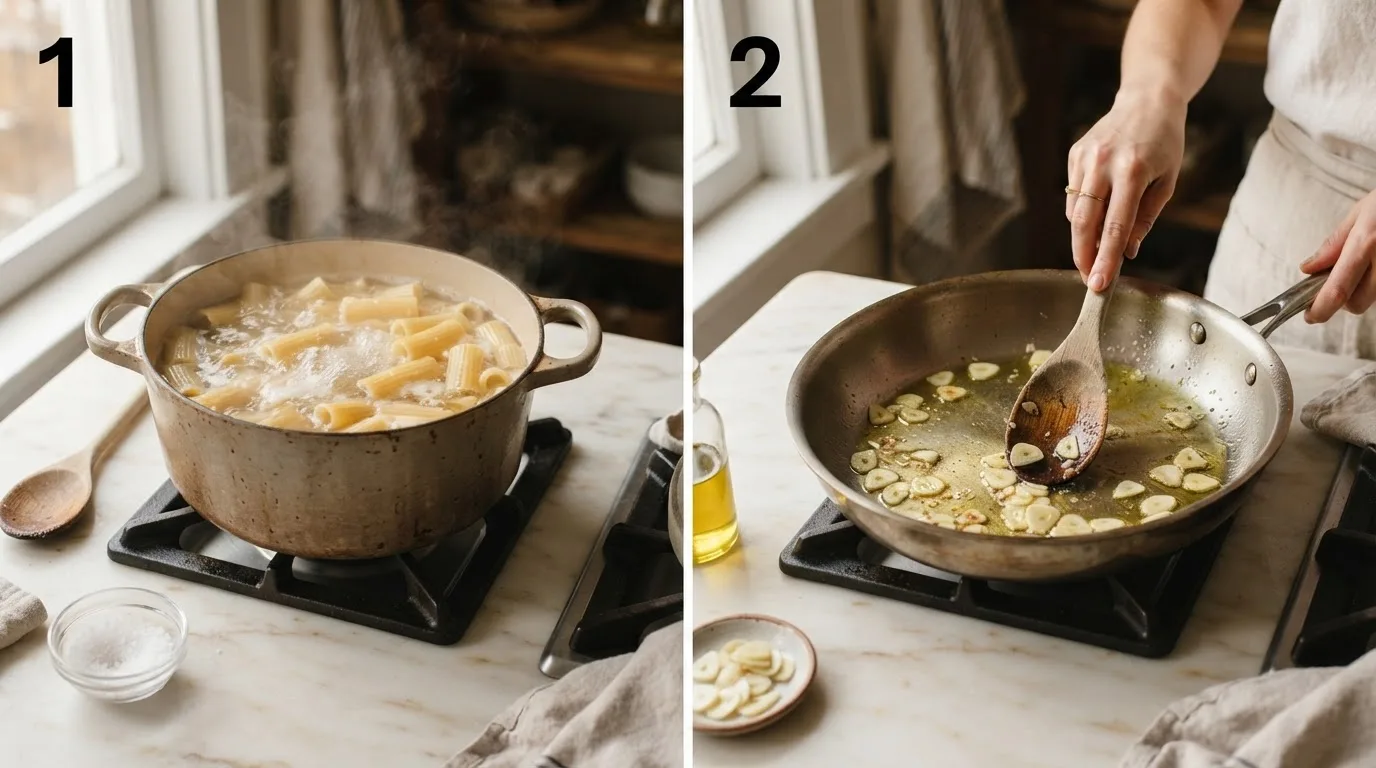
Bring a large pot of water to a boil and salt it generously — it should taste like the ocean. Add the rigatoni and cook until just shy of al dente, about 1–2 minutes less than the package says. Before draining, scoop out at least 1 cup of the starchy pasta water and set it aside.
Step 2 — Build the flavor base
While the pasta cooks, warm the olive oil in a large skillet over medium heat. Add the sliced garlic and a pinch of red pepper flakes if using. Cook for 60–90 seconds, just until the garlic turns golden at the edges and smells fragrant — pull it off the heat immediately if it starts to brown, since burnt garlic tastes bitter and can’t be fixed.
Step 3 — Add the tomatoes and tomato paste
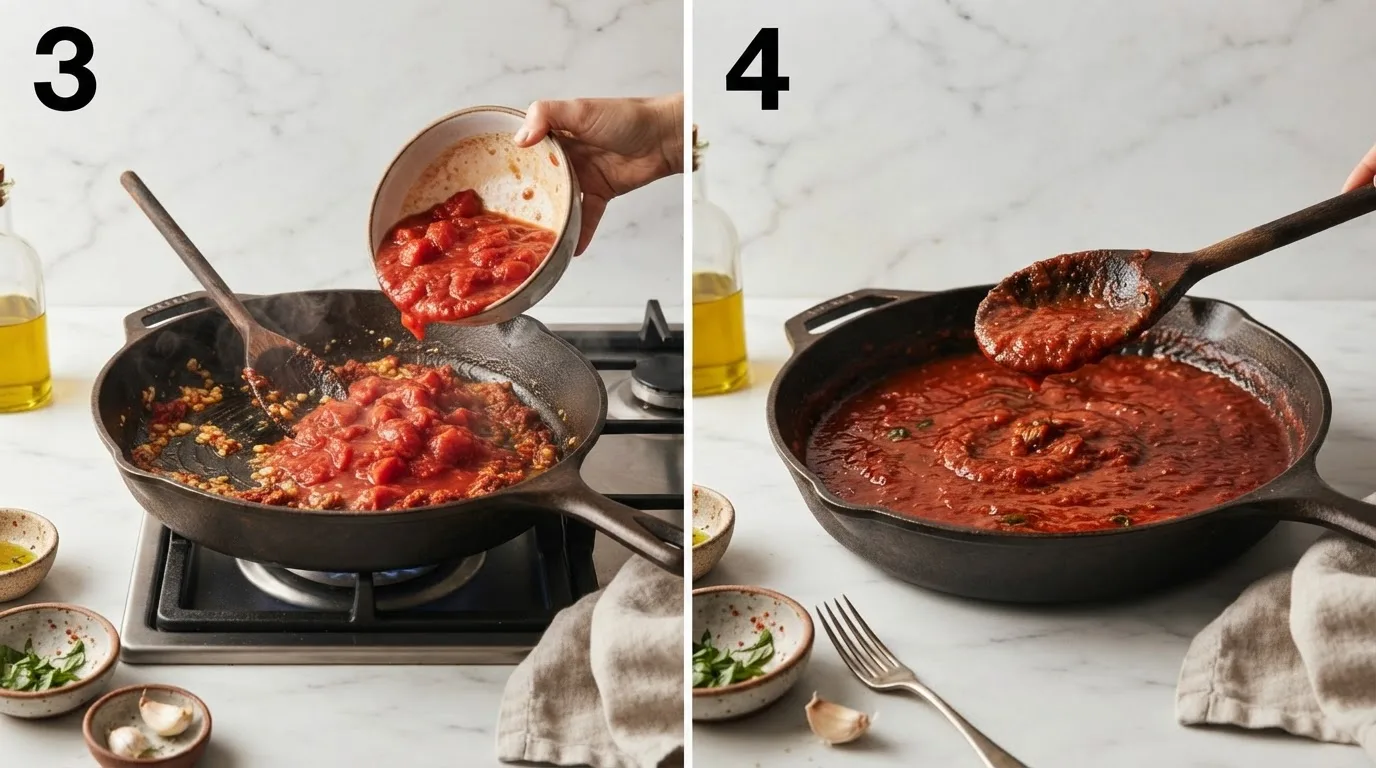
Stir the tomato paste into the garlic and oil, cooking for 30 seconds until it darkens slightly. Crush the San Marzano tomatoes by hand as you add them to the pan, then stir to combine. Simmer uncovered for 12–15 minutes, breaking up the tomatoes with the back of a spoon as they soften.
Step 4 — Season and thicken the sauce
Season the sauce with salt and black pepper to taste. Let it simmer until it thickens enough to coat the back of a spoon and no longer looks watery — this is what gives you the dry, clinging texture instead of a loose sauce.
Step 5 — Toss the pasta into the sauce
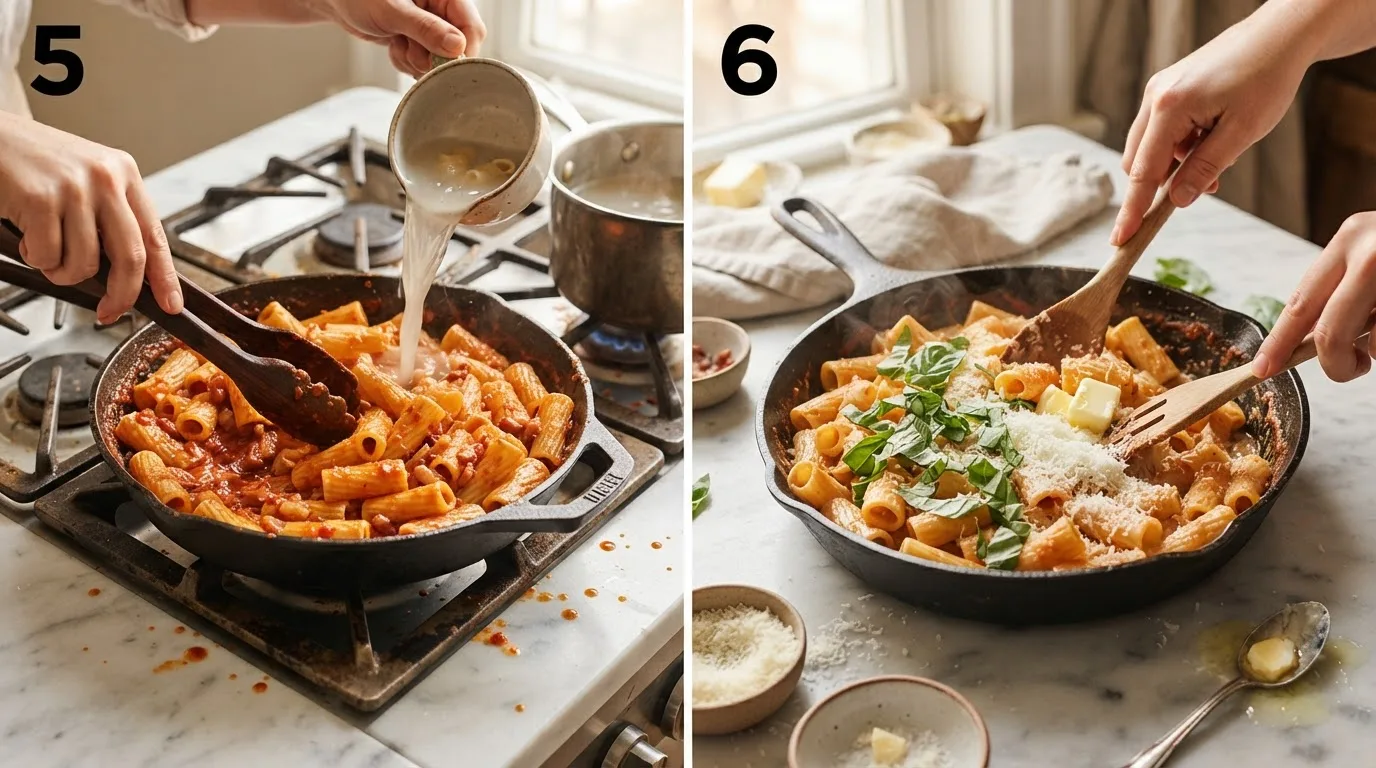
Add the drained pasta directly into the skillet with the sauce. Toss over low heat, adding the reserved pasta water a splash at a time, until the sauce clings evenly to every piece and no liquid pools at the bottom of the pan.
Step 6 — Finish with butter, parmesan, and basil
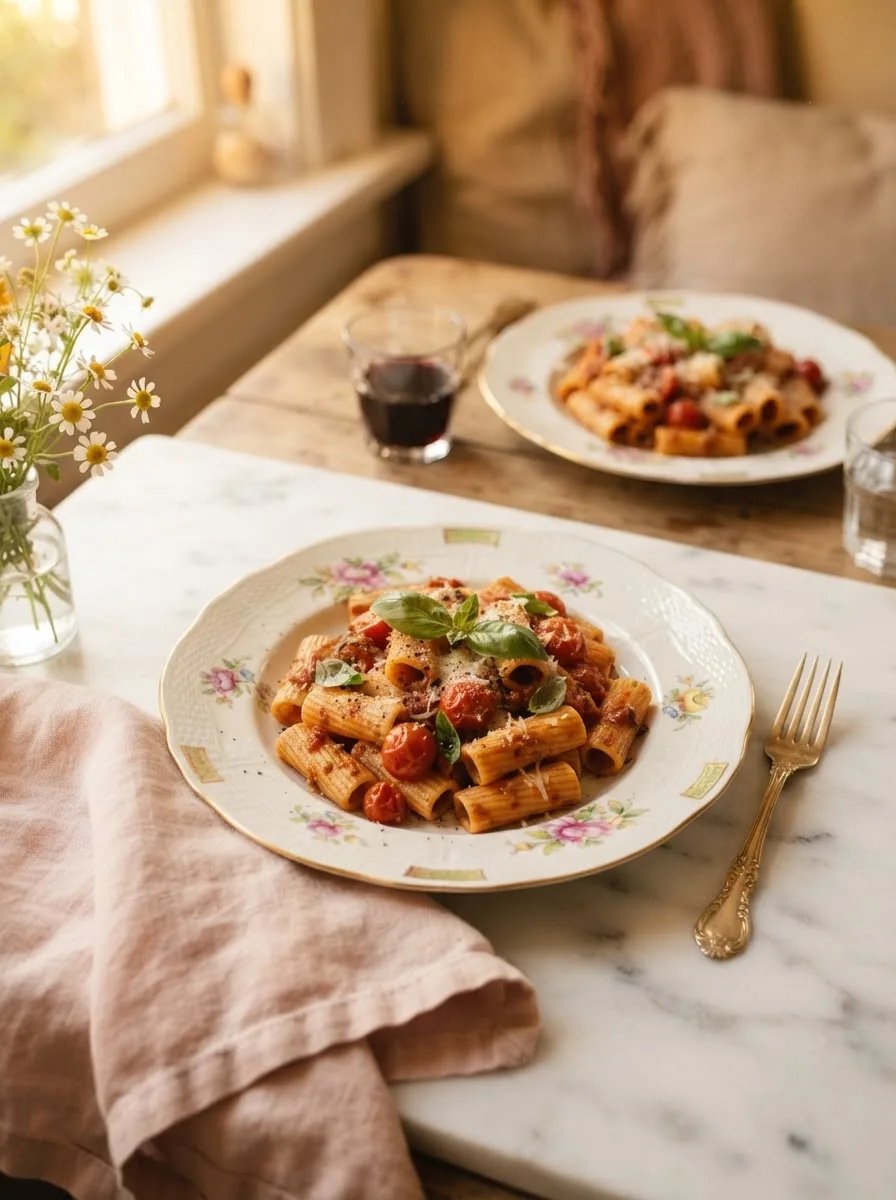
Remove the pan from the heat. Stir in the butter until it melts into the sauce, then add a generous handful of grated parmesan and toss again. Tear the basil leaves over the top and serve immediately, while the sauce is still glossy.
Pro Tips for Perfect Pasta Asciutta
Tip 1: Undercook the pasta before it hits the sauce. Pull it 1–2 minutes before al dente. It finishes cooking in the sauce and absorbs flavor instead of just sitting on top of it.
Tip 2: Add the pasta water gradually, not all at once. Dumping in a full cup at once is how you end up with the “too wet” version from the test above. A splash at a time gives you control.
Tip 3: Take the sauce off the heat before adding butter. Butter added to a still-simmering sauce can separate and turn greasy instead of glossy. Pull the pan off the burner first.
Tip 4: Serve it immediately. Pasta asciutta is at its best the moment it’s tossed. As it sits, the starch in the sauce keeps absorbing and the whole dish tightens up — reheat with a splash of water if you have leftovers.
Variations and Substitutions
Dietary Variations:
- Gluten-free: Swap in a gluten-free rigatoni or penne. The texture is slightly less chewy, but the sauce clings just as well — cook 1 minute less than the package instructions since GF pasta softens faster.
- Dairy-free: Skip the butter and use an extra tablespoon of olive oil instead, and swap the parmesan for nutritional yeast. The sauce won’t be quite as glossy, but it stays clingy.
Flavor Variations:
- Add pancetta: Render 3 ounces of diced pancetta in the pan before adding the garlic, and use the rendered fat in place of some of the olive oil.
- Add anchovy: Melt 2 anchovy fillets into the oil along with the garlic for a deeper, savory undertone — you won’t taste “fish,” just more depth.
Ingredient Substitutions:
- Rigatoni → penne, ziti, or fusilli all hold sauce well; avoid long thin noodles like spaghetti here since the sauce is thick enough that it needs ridges or tubes to grip onto.
- San Marzano tomatoes → any good-quality whole peeled tomatoes, crushed by hand.
If you’re building out a full Italian-style dinner, my cheesy ranch potatoes and sausage makes a great sheet-pan side that can go in the oven while the sauce simmers.
Troubleshooting
My sauce turned watery — what happened?
Most likely too much pasta water went in too fast, or the sauce wasn’t reduced long enough in Step 4. Simmer it a few minutes longer next time until it coats the back of a spoon before adding the pasta.
My pasta clumped together and the sauce won’t spread?
This usually means the pasta water was skipped, or the pasta sat too long after draining before hitting the sauce. Toss the pasta into the sauce immediately after draining, and add a splash of the reserved water to loosen it back up.
The sauce looks greasy or separated instead of glossy?
The butter was likely added while the pan was still too hot. Pull the skillet fully off the heat before stirring in the butter — high heat breaks the emulsion instead of smoothing it.
Storage and Make-Ahead
Counter: Not recommended beyond 2 hours — this pasta is best served fresh while the sauce is glossy.
Refrigerator: Store in an airtight container for up to 3 days. The sauce will thicken further as it chills; that’s normal.
Freeze: The sauce alone (without pasta) freezes well for up to 3 months. Freeze the finished pasta only if you’re comfortable with a slightly softer texture after reheating.
Reheating: Reheat gently in a skillet over low heat with a splash of water or broth to loosen the sauce back up. Microwaving works too — just add water first or it will dry out.
Make-Ahead: The tomato sauce can be made up to 2 days ahead and stored in the fridge. Reheat it gently, then cook and toss the pasta fresh right before serving.
Frequently Asked Questions
Q: What does “pasta asciutta” actually mean? A: “Asciutta” translates to “dry” in Italian, referring to any pasta dish served with a sauce that coats the noodles rather than a broth-based or soupy pasta. It’s the opposite of “pasta in brodo,” which is pasta served in soup.
Q: Can I make this ahead of time? A: The sauce can be made up to 2 days ahead and refrigerated. Cook the pasta fresh and toss it with the reheated sauce just before serving for the best texture.
Q: Is this recipe vegetarian? A: Yes, as written it’s fully vegetarian. Skip the optional pancetta or anchovy variations to keep it that way.
Q: Can I freeze pasta asciutta? A: The sauce freezes well on its own for up to 3 months. I don’t recommend freezing it already tossed with pasta, since the noodles get mushy on reheating.
Q: Why do I need to reserve the pasta water? A: The starch in pasta water is what lets the sauce cling evenly to the noodles instead of pooling underneath them. It’s the single most important step in this recipe — see the Controlled Test section above.
Q: What pasta shape works best? A: Anything with ridges or a hollow center — rigatoni, penne, or fusilli — grips the thickened sauce well. Long thin noodles like spaghetti tend to slide right through it.
Q: Can I double this recipe? A: Yes. Use a large Dutch oven for the sauce instead of a skillet so you have room to toss the pasta, and boil the pasta in two batches if your pot isn’t large enough for double the amount.
Q: My sauce tastes too acidic — how do I fix it? A: A pinch of sugar or an extra tablespoon of butter at the end rounds out acidity from the tomatoes without making the sauce taste sweet.
More Recipes You’ll Love
- Cheesecake Bread — a sweet, tangy quick bread that makes a great dessert after a tomato-forward dinner
- Dolly’s Chicken and Stuffing Casserole — another comforting, tested weeknight main
- Cheesy Ranch Potatoes and Sausage — a sheet-pan side that pairs well with any Italian-style dinner
- Banana Tempura — a crispy, unexpected dessert if you want something different to finish the meal
Pasta Asciutta Recipe (Foolproof)
Ingredients
For the pasta:
- 1 lb rigatoni
- Kosher salt, for the pasta water
For the sauce:
- 3 tablespoon extra virgin olive oil
- 4 clove garlic, thinly sliced
- 1/4 teaspoon crushed red pepper flakes (optional)
- 2 tablespoon tomato paste
- 1 (28 oz) can San Marzano whole peeled tomatoes, crushed by hand
- Kosher salt and black pepper, to taste
- 2 tablespoon unsalted butter
- 1/2 cup freshly grated parmesan, plus more for serving
- 1/4 cup reserved pasta water, added gradually
- Fresh basil leaves, torn, for serving
Instructions
- Bring a large pot of generously salted water to a boil. Add the rigatoni and cook 1–2 minutes less than the package instructions for al dente. Reserve at least 1 cup of the pasta water before draining.
- While the pasta cooks, warm the olive oil in a large skillet over medium heat. Add the garlic and red pepper flakes, cooking 60–90 seconds until golden and fragrant. Remove from heat immediately if it starts to brown.
- Stir in the tomato paste and cook 30 seconds until it darkens slightly. Add the crushed San Marzano tomatoes and stir to combine.
- Simmer the sauce uncovered for 12–15 minutes, breaking up the tomatoes with a spoon, until thickened enough to coat the back of the spoon. Season with salt and pepper.
- Add the drained pasta directly to the skillet. Toss over low heat, adding the reserved pasta water a splash at a time, until the sauce clings evenly with no pooled liquid.
- Remove the pan from the heat. Stir in the butter until melted, then add the parmesan and toss again. Top with torn basil and serve immediately.
Notes
- Add the pasta water gradually, not all at once — this is the step that determines whether your sauce clings or turns soupy. See the Controlled Test section in the post for exact results.
- Store leftovers in an airtight container in the fridge for up to 3 days. Reheat gently in a skillet with a splash of water to loosen the sauce back up.