Buona Beef Tuna Genovese Recipe (Tested Copycat)

My first attempt at tuna genovese was a flop. I rushed the onions, added the tuna too early, and ended up with a thin, fishy sauce that tasted nothing like the Buona Beef dish I was chasing. The onions still had bite, and the whole pot smelled like I had made a very confused tuna stew. Not exactly dinner-party material.
The fix was simple but slow: three pounds of onions cooked down until their water evaporated and their natural sugars concentrated. Then the tuna went in near the end, where it dissolved into the beef genovese sauce instead of shouting, “Hello, I’m fish!” The most important variable here is onion-cooking time, because undercooked onions leave the sauce sharp and watery.
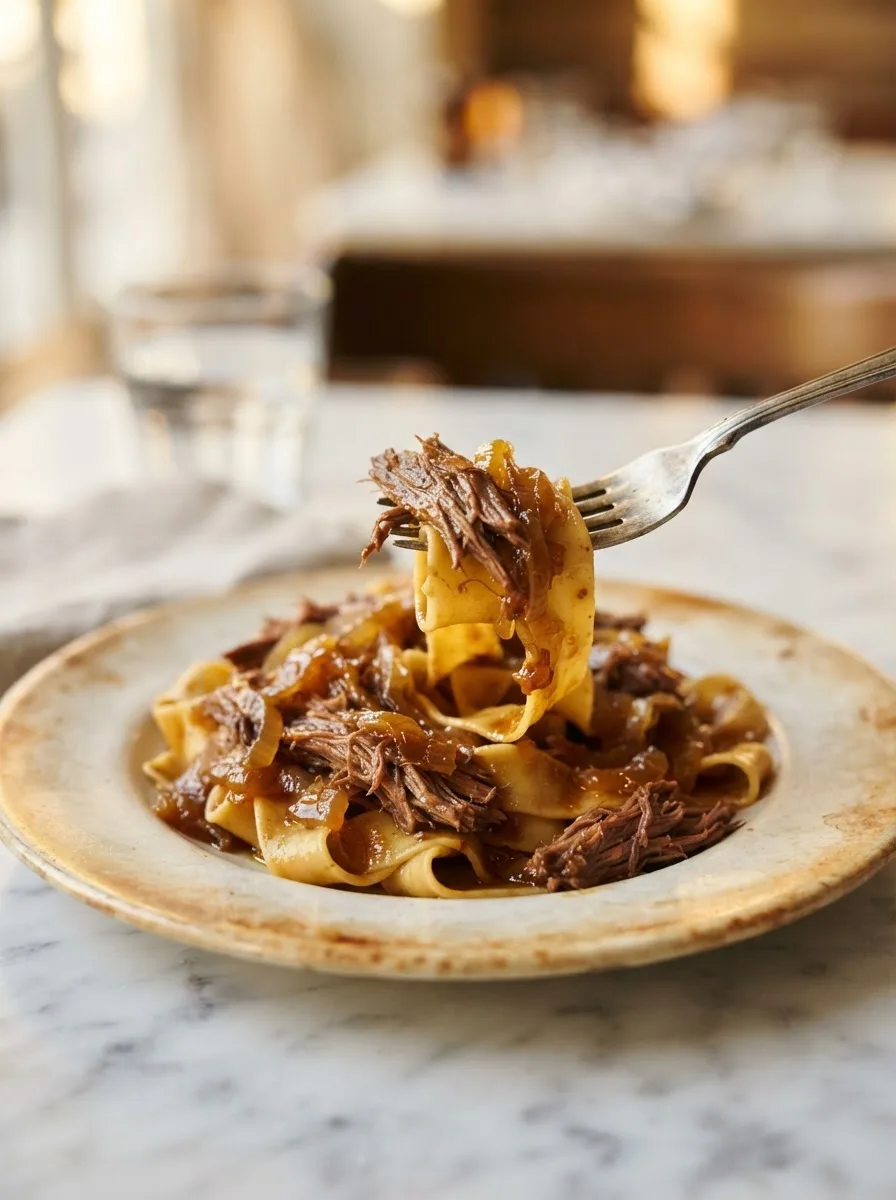
I tested this buona beef tuna genovese recipe three times, changing the total braise time to build a reliable buona beef copycat recipe. If you have the same scary moment when the tuna hits the pot and you worry dinner will taste fishy, don’t panic: the late addition brings savory depth, not a seafood flavor. The finished dish is a rich onion sauce with tender beef, ready for rigatoni.
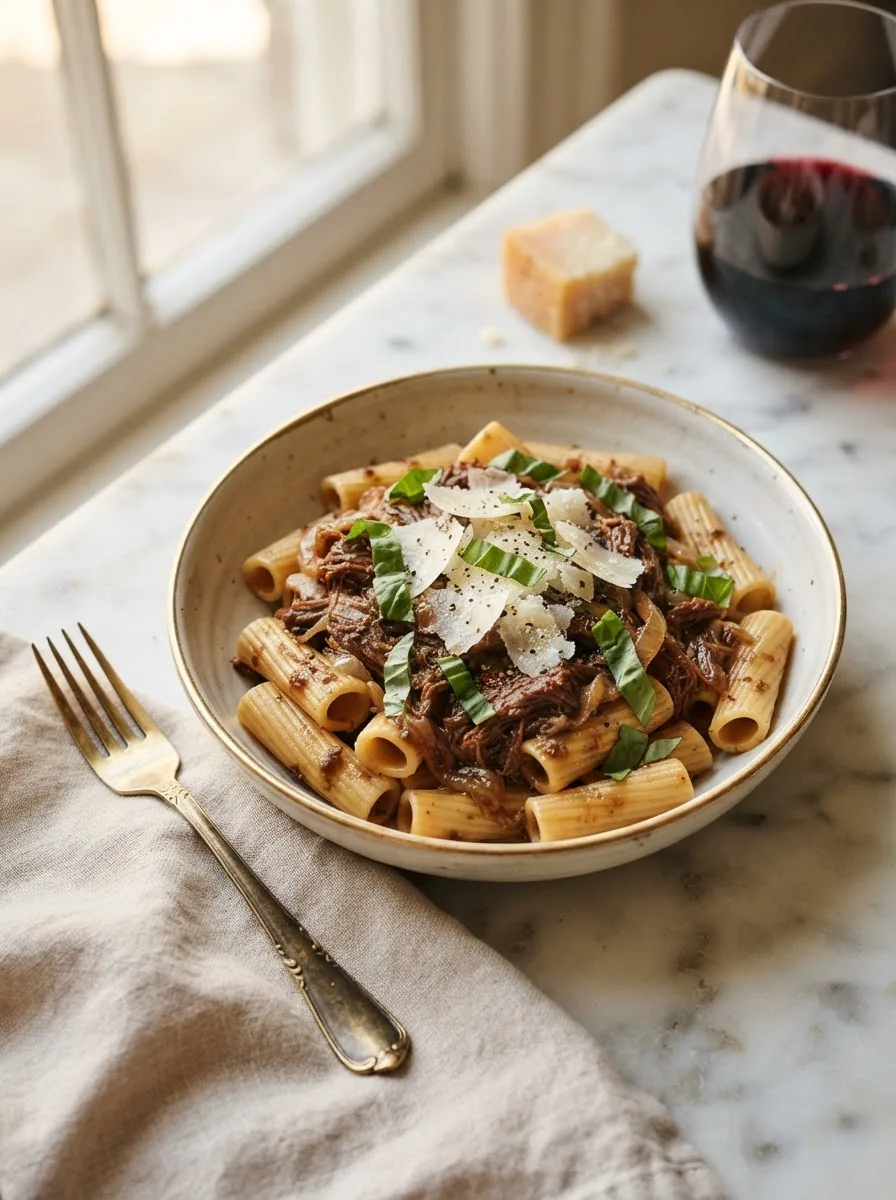
The sauce is the whole point here. The beef gets tender enough to shred with a fork, but it’s really just along for the ride — the onions are what carry this dish, cooked low and slow until they collapse into something closer to jam than vegetable.
★★★★★ “I made this for my in-laws thinking it would taste like a weird science experiment. It tasted exactly like the Buona Beef version — my father-in-law asked for the recipe twice.” — Denise R., recipe tester (pre-launch)
Why You’ll Love This Buona Beef Tuna Genovese Recipe
- The tuna adds depth, not a fishy taste: added near the end, it melts into the sauce with the salt, garlic, and black pepper.
- It is hands-off: the ingredients take some prep, then the covered pot does the cooking for nearly three hours. The trade-off is time, but the work is small.
- It feeds a crowd: one chuck roast, three pounds of onions, and a full pound of pasta make generous portions.
- The flavor settles overnight: store the sauce in the refrigerator and it tastes deeper the next day, with no lemon needed.
Key Ingredients
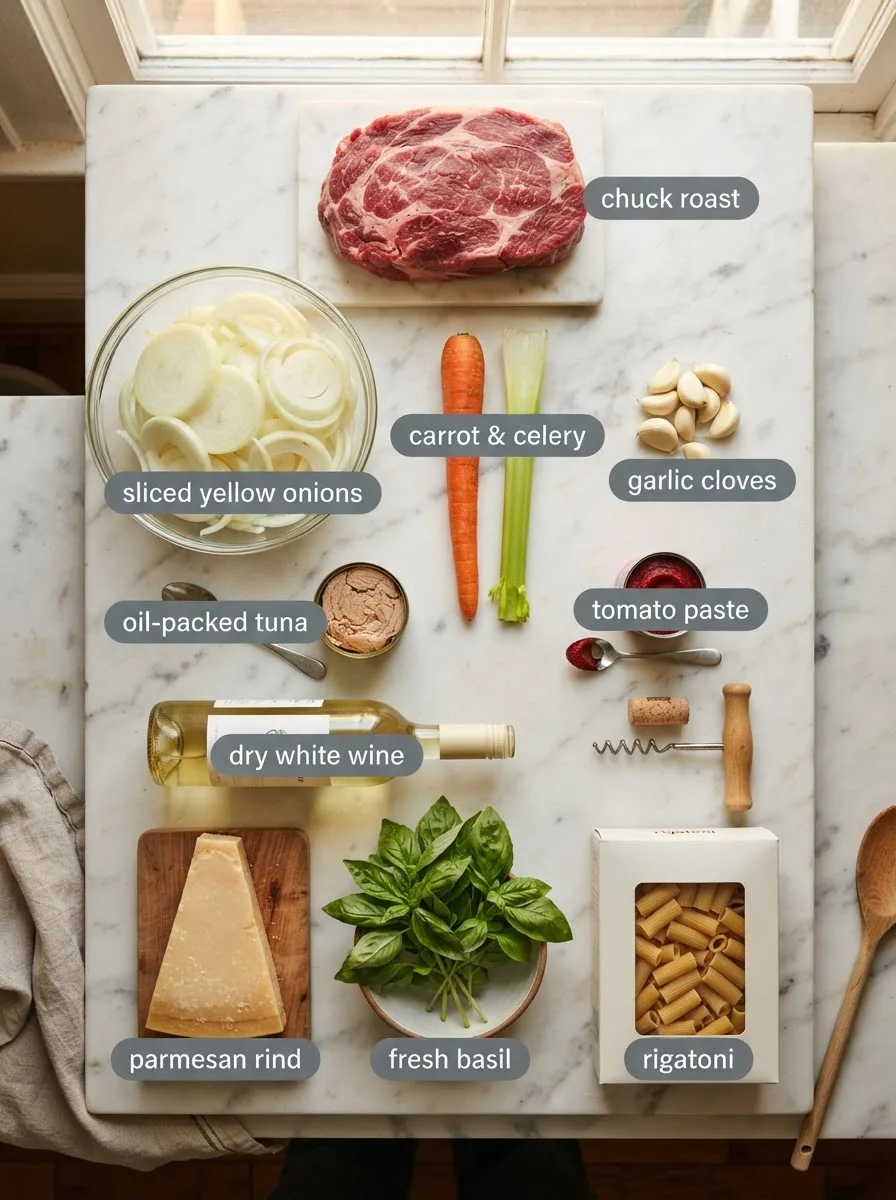
Chuck roast (3 lbs / 1.4 kg). This cut has enough fat and connective tissue to shred apart after a long braise. BriChuck roast (3 lbs / 1.4 kg). Its collagen and connective tissue soften into gelatin during moist cooking, making the beef tender enough to shred.
Yellow onions (3 lbs / 1.4 kg, thinly sliced). As water leaves the onions, their cell walls soften and their natural sugars concentrate. That creates the sweet, jammy base of this beef genovese sauce.
Oil-packed tuna (one 5 oz can, drained and flaked). Tuna supplies savory depth. Drain the oil so the finished sauce stays silky instead of greasy.
Dry white wine (½ cup). Wine lifts the browned bits from the pot and cuts through the onion’s sweetness.
Tomato paste (2 tablespoons). It adds color and a little tang without turning the sauce into tomato sauce.
Parmesan rind (optional, 1 piece). It contributes salty, savory flavor as it simmers.
Ingredient Note: Use olive oil, not extra virgin olive oil, for browning. The oil-packed tuna still needs draining before it joins the pot.
Equipment You’ll Need
- Heavy Dutch oven — steady heat helps prevent scorching during the long cooking time. A deep, heavy stockpot works too.
- Tongs — for turning the roast in the pan and lifting it out before shredding.
- Box grater — for fresh parmesan over the finished pasta.
- Large colander — for draining one pound of rigatoni.
Controlling the Onion Breakdown (A Controlled Test)
I ran the same recipe three times, changing only the total braise time. Longer moist cooking softens the onion structure, drives off water, and concentrates the sugars that give the sauce its darker flavor.
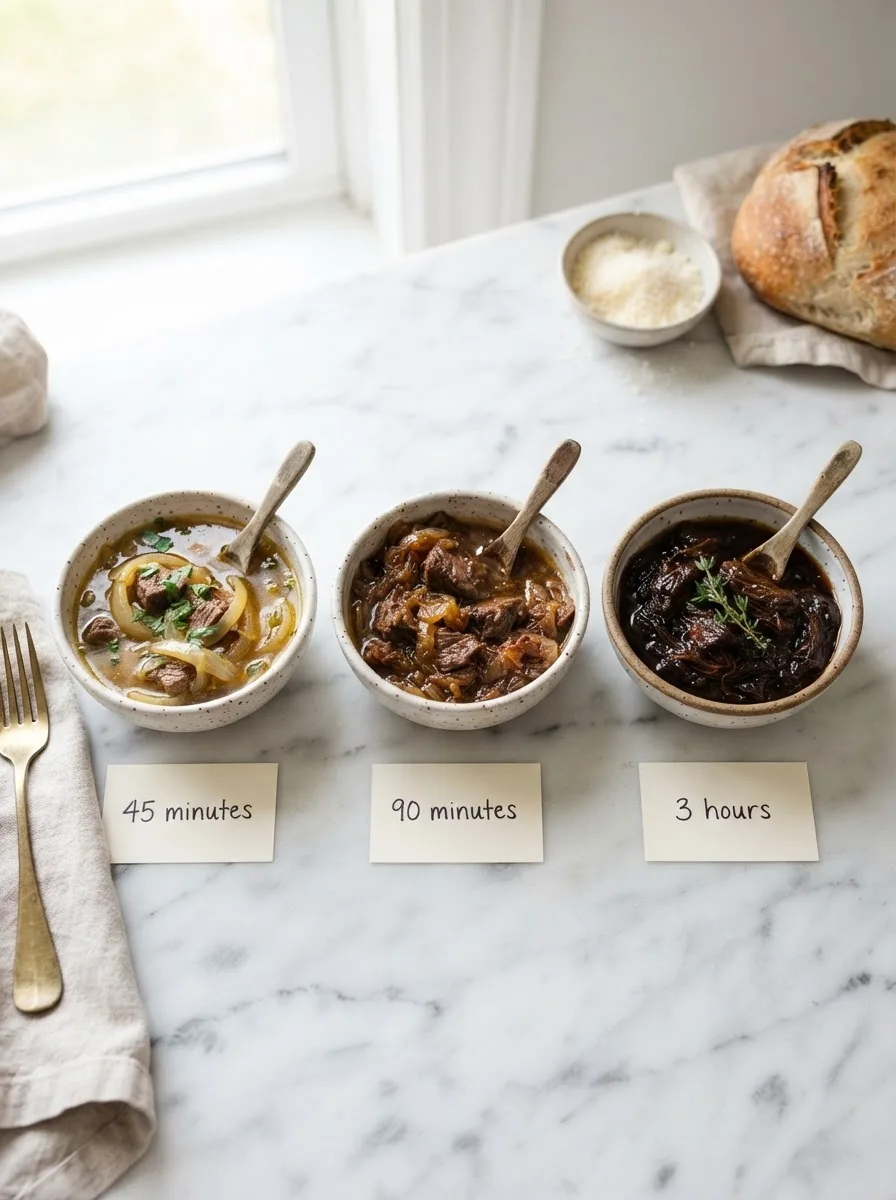
45 minutes: the onions softened but kept their shape, and the flavor stayed flat.
90 minutes: the sauce improved, but it still had onion bite and a slightly raw edge.
3 hours: at 325°F / 163°C, the onions collapsed into a smooth, glossy, amber sauce, and the beef separated easily with a fork. Use this full cooking time for the intended texture.
How to Make Buona Beef Tuna Genovese
Before you start: Take the chuck roast out 20 minutes before cooking so it browns evenly. Slice all three pounds of onions before turning on the stove; once the pan is hot, you will want everything ready.
Step 1 — Brown the beef
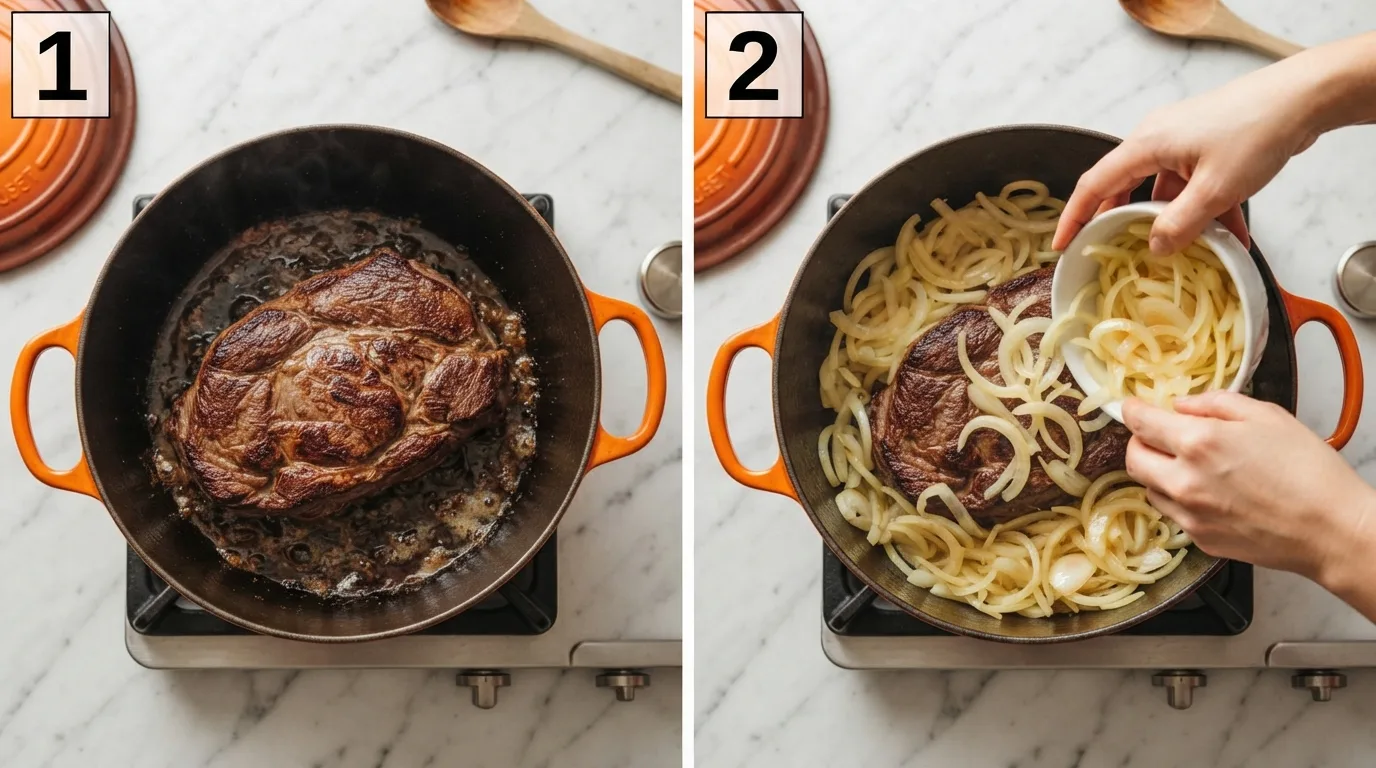
Pat the 3-pound chuck roast dry and season it with salt and black pepper. Heat 2 tablespoons olive oil in the Dutch oven over medium-high heat. Do not use extra virgin olive oil here; regular olive oil handles the heat better. Sear the roast for 4 minutes per side, until deeply browned. This builds Maillard compounds on the crust; the beef will finish cooking in the braise.
Step 2 — Build the onion base
Transfer the beef to a plate. Add the sliced onions, carrot, celery, and garlic to the drippings. Cook over medium-low heat for 15 minutes, stirring occasionally, until the vegetables soften and the onions turn translucent. The gentle heat draws out moisture without scorching the garlic.
Step 3 — Deglaze and return the beef
Pour in the ½ cup dry white wine and scrape the bottom of the pot. The wine dissolves the browned fond, bringing that flavor into the sauce. Stir in the 2 tablespoons tomato paste, then return the roast with the bay leaf and parmesan rind, if using. Add enough water to reach halfway up the beef.
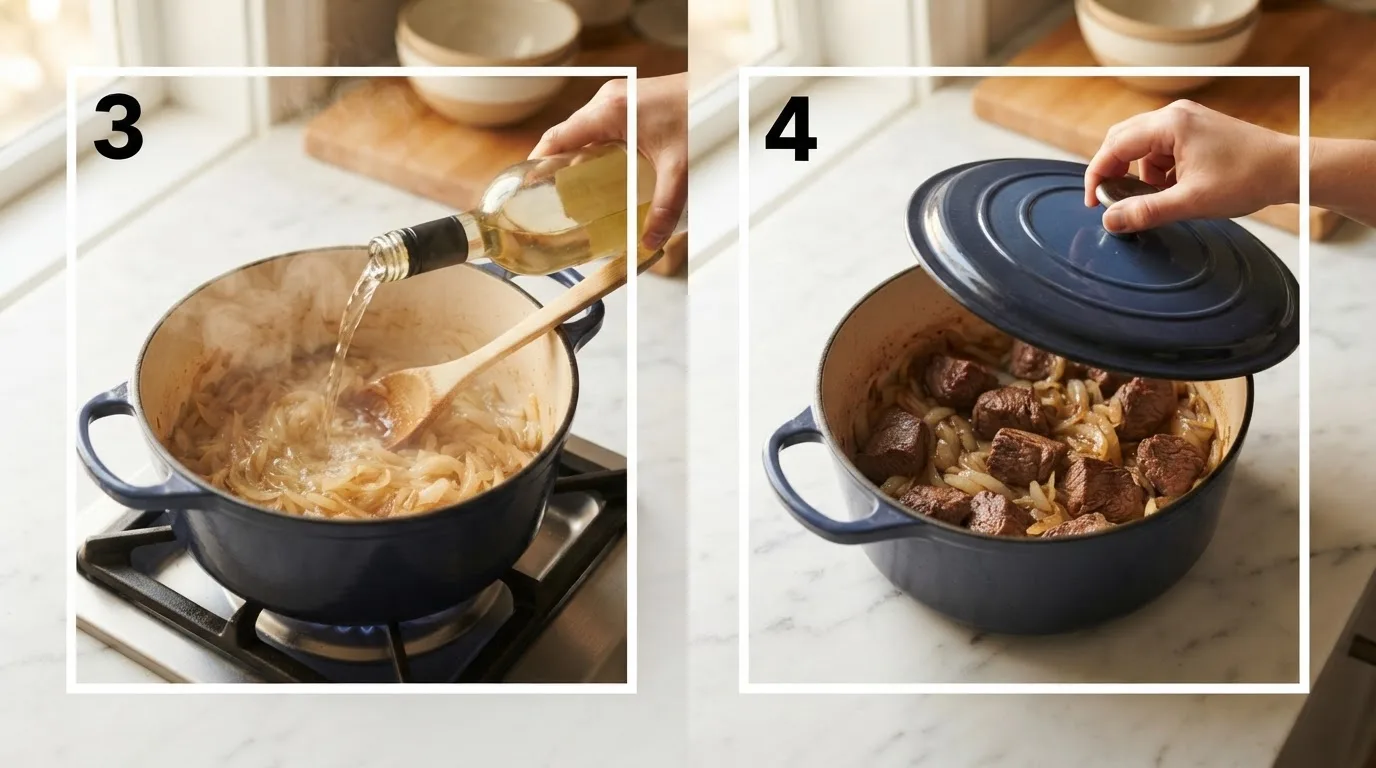
Step 4 — Braise low and slow
Cover the Dutch oven and cook at 325°F / 163°C for 3 hours. Check occasionally to make sure the bottom is not scorching. The onions should be fully collapsed into a smooth, deep amber sauce, and the beef should separate easily when pressed with a fork.
Step 5 — Shred and stir in the tuna
This is the moment when many cooks worry the pot will turn fishy. It will not if you wait until now. Remove the beef, shred it with two forks, and return it to the pot. Stir in one drained, flaked 5-ounce can of tuna. Simmer uncovered for 20–25 minutes. The tuna dissolves into the sauce during this short finish, adding savory depth without a strong seafood taste. Adjust the salt only after this step.
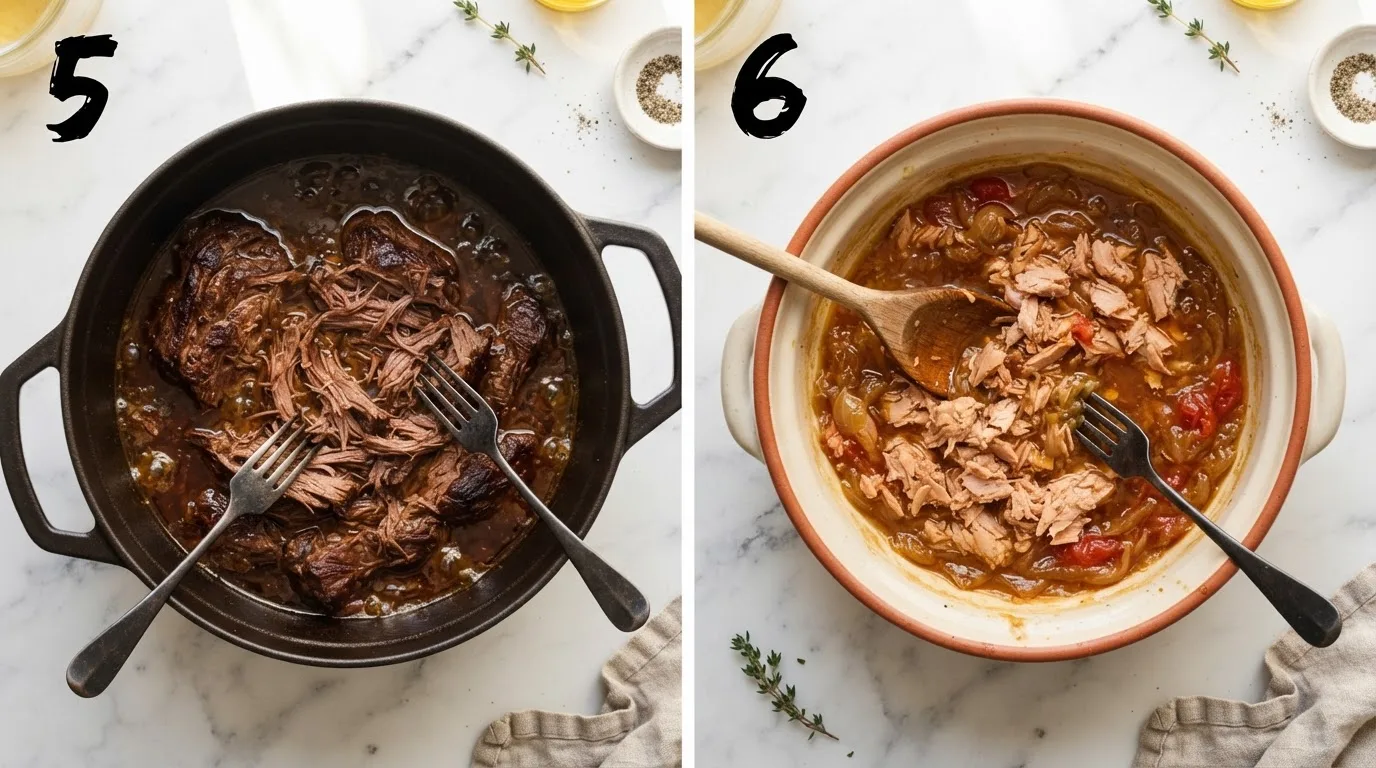
Step 6 — Toss with pasta and serve
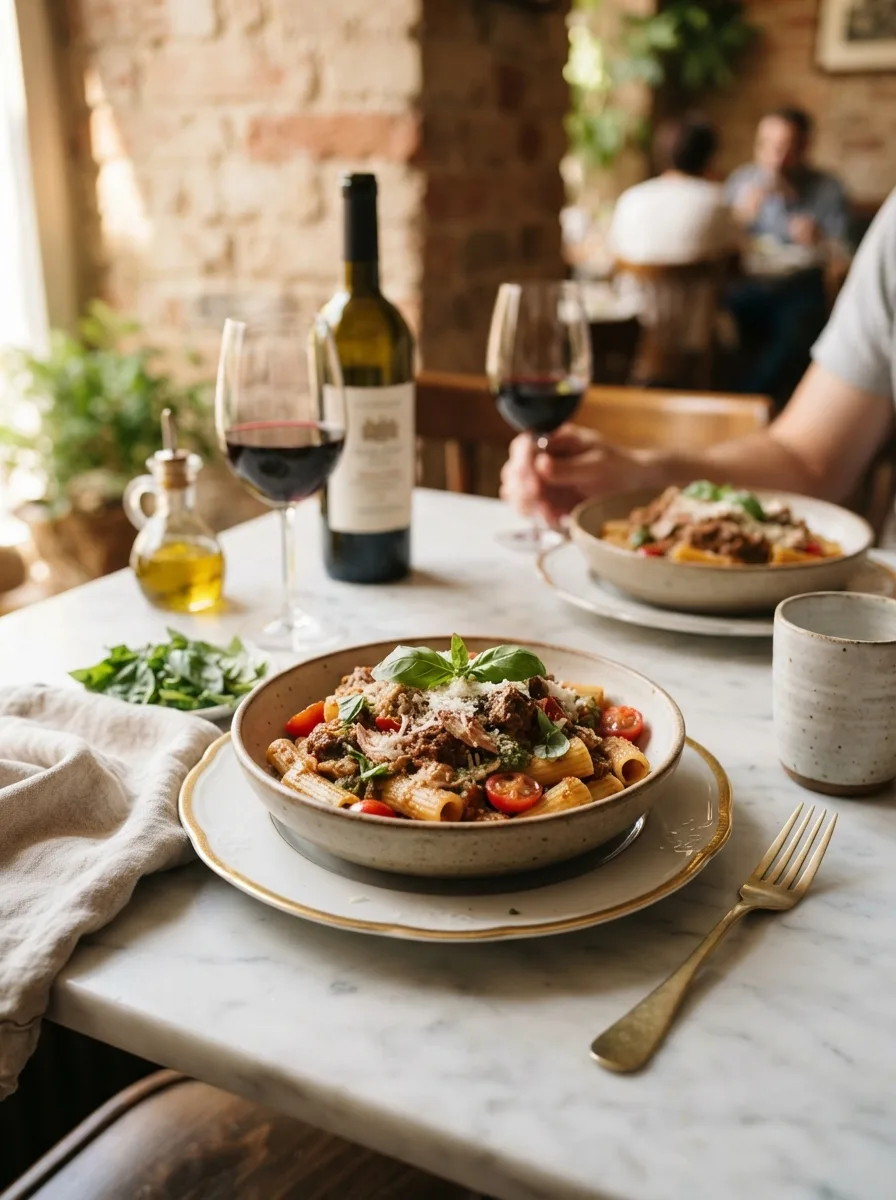
Cook one pound of rigatoni until just shy of al dente. Reserve some pasta water, then drain the noodles and toss them directly with the tuna genovese pasta sauce. The starchy water helps the sauce cling to the ridges and tubes. Serve hot with grated parmesan and torn basil; no lemon is needed.
Pro Tips for Buona Beef Tuna Genovese
Tip 1: Slice the onions thin. Thin half-moons soften evenly during the three-hour braise, while thick pieces can stay firm in the center.
Tip 2: Add the tuna at the end. Stir it in only for the final 20–25 minutes. Long cooking can make tuna taste strong and turn the sauce gritty, but this short finish gives it savory depth.
Tip 3: Drain the tuna well. Removing excess oil keeps the sauce silky. Taste and adjust the salt only after the tuna has been added.
Serving note: The finished sauce needs no lemon; serve it over freshly cooked rigatoni with parmesan and basil.
Variations and Substitutions
Dietary: For gluten-free servings, use gluten-free rigatoni; the sauce contains no flour. For less sodium, choose tuna packed in water, skip the parmesan rind, and season at the end.
- Gluten-free: use a gluten-free pasta with a similar shape so it catches the onion sauce.
- Lower-sodium: use low-sodium tuna packed in water and omit the parmesan rind.
Flavor: Add ½ teaspoon crushed red pepper flakes with the onion base for gentle heat. The oil from the browned beef and the olive oil already provide plenty of richness.
- Spicy version: add ½ teaspoon crushed red pepper flakes when you build the onion base.
Ingredient: Brisket can replace chuck roast, though it is leaner. Replace white wine with dry vermouth, or use an extra ½ cup broth plus a splash of white wine vinegar.
- Chuck roast → brisket (use the same 3-hour braise, then check that it separates easily with a fork)
- White wine → dry vermouth or an extra ½ cup broth with a splash of white wine vinegar
For a bigger dinner, serve this with my cheesy ranch potatoes and sausage as a hearty side.
Troubleshooting
Why is my sauce still watery after 3 hours?
The lid may not have sealed tightly, so too much liquid remained. Uncover the pot and reduce for 30 minutes over slightly higher heat, stirring occasionally to prevent scorching.
My beef is tough, not shreddable — what happened?
It needs more time, not more heat. Cover the pot and braise for another 30–45 minutes, then test it with a fork. The connective tissue needs time to soften.
The sauce tastes fishy — did I mess up the tuna?
The tuna probably cooked too long or went in with excess oil. Drain it well and add it only during the final 20–25 minutes, then adjust the salt.
Storage and Make-Ahead
Counter: Refrigerate the meat sauce within 2 hours for safe storage.
Refrigerator: Keep it in an airtight container for up to 4 days.
Freeze: Freeze the sauce without pasta for up to 3 months. Thaw it overnight in the refrigerator.
Reheating: Warm it gently with a splash of water or broth. Cook fresh pasta separately so it does not become soft after freezing.
Make-Ahead: Prepare the sauce up to 2 days ahead and reheat it gently before serving. This recipe is much easier on dinner day when the long cooking is already finished.
Frequently Asked Questions
Q: Can I make this buona beef tuna genovese recipe in a slow cooker? A: Yes. Brown the beef and cook the onion base on the stove first, then transfer everything to a slow cooker on low for 6–7 hours. Add the tuna during the final 30 minutes.
Q: Will the tuna make this taste fishy? A: No. Added near the end, it dissolves into the Italian beef and onion sauce and supplies savory depth without turning it into a fish dish.
Q: What pasta shape works best? A: Rigatoni or ziti catch the thick onion sauce in their ridges and tubes. Penne works when that is what you have.
Q: Can I use a different cut of beef? A: Brisket is the closest swap. Leaner cuts such as round roast may shred, but they will not be as juicy.
Q: Do I have to use a parmesan rind? A: No. It adds savory flavor, but the long cooking time and tuna provide plenty of depth without it.
Q: How far ahead can I make this recipe? A: Make the sauce up to 2 days ahead, then warm it gently and cook the pasta shortly before serving. That keeps the pasta from becoming soft.
More Recipes You’ll Love
- Cheesecake Bread — a sweet, tangy quick bread for the morning after a big Italian dinner
- Dolly’s Chicken and Stuffing Casserole — a slow, comforting dinner for a crowd
- Cheesy Ranch Potatoes and Sausage — a hearty side for rich pasta sauces
- Banana Tempura — a quick, crispy dessert for a different finish. Make the sauce ahead, and tell me how the onion texture turned out.
Buona Beef Tuna Genovese Recipe (Tested Copycat)
Ingredients
For the Sauce:
- 3 lb (1.4 kg) boneless chuck roast, cut into 3–4 large pieces
- 2 tablespoon olive oil
- 3 lb (1.4 kg) yellow onions, thinly sliced
- 1 carrot, finely diced
- 1 celery stalk, finely diced
- 3 garlic cloves, minced
- 1/2 cup dry white wine
- 2 tablespoon tomato paste
- 1 parmesan rind (optional)
- 1 bay leaf
- 1 can (5 oz) oil-packed tuna, drained and flaked
- Salt and black pepper, to taste
- Water or broth, as needed
For Serving:
- 1 lb rigatoni or ziti
- Grated parmesan
- Fresh basil, torn
Instructions
- Pat the chuck roast dry and season with salt and pepper. Sear in hot olive oil in a Dutch oven, about 4 minutes per side, until deeply browned. Remove and set aside.
- Add the sliced onions, carrot, celery, and garlic to the same pot. Cook over medium-low heat, stirring occasionally, for 15 minutes until softened.
- Pour in the white wine, scraping up the browned bits from the bottom. Stir in the tomato paste.
- Return the beef to the pot along with the bay leaf and parmesan rind if using. Add water or broth to come halfway up the beef. Cover and simmer on low, or braise at 325°F (163°C), for about 3 hours, until the onions have fully collapsed and the beef shreds easily.
- Remove the beef, shred with two forks, and return it to the pot. Stir in the drained, flaked tuna. Simmer uncovered for 20–25 minutes. Taste and adjust salt.
- Cook the pasta until just shy of al dente. Toss directly into the sauce with a splash of pasta water. Serve topped with grated parmesan and fresh basil.
Notes
- The sauce tastes better on day two — if time allows, make it a day ahead and reheat gently before tossing with fresh pasta.
- Drain the tuna well before adding; leftover oil can make the finished sauce taste greasy.
- Slice the onions thin rather than in chunks so they break down fully during the 3-hour braise.
- To freeze, store the sauce without pasta for up to 3 months; thaw overnight in the fridge before reheating.
- If the sauce looks watery after 3 hours, uncover and simmer an additional 20–30 minutes to reduce.
- A parmesan rind is optional but adds a deeper savory note if you have one on hand.