One Pan Chicken with Buttered Noodles

If you’ve ever made a “one pan” dinner that quietly used three pans anyway, I get it. I wanted a version of one pan chicken with buttered noodles where the sauce, the chicken, and the noodles actually meet in the same skillet at the end — not just cooked near each other and plated together.
I tested this three times, changing only the amount of broth in the pan sauce. Too little and it turned gluey the second the noodles hit it. Too much and it pooled at the bottom of the plate instead of clinging to anything.
The version below is the one that worked: a sauce just thick enough to coat every noodle and glaze the chicken, made with pantry ingredients, in one skillet, in about 35 minutes.
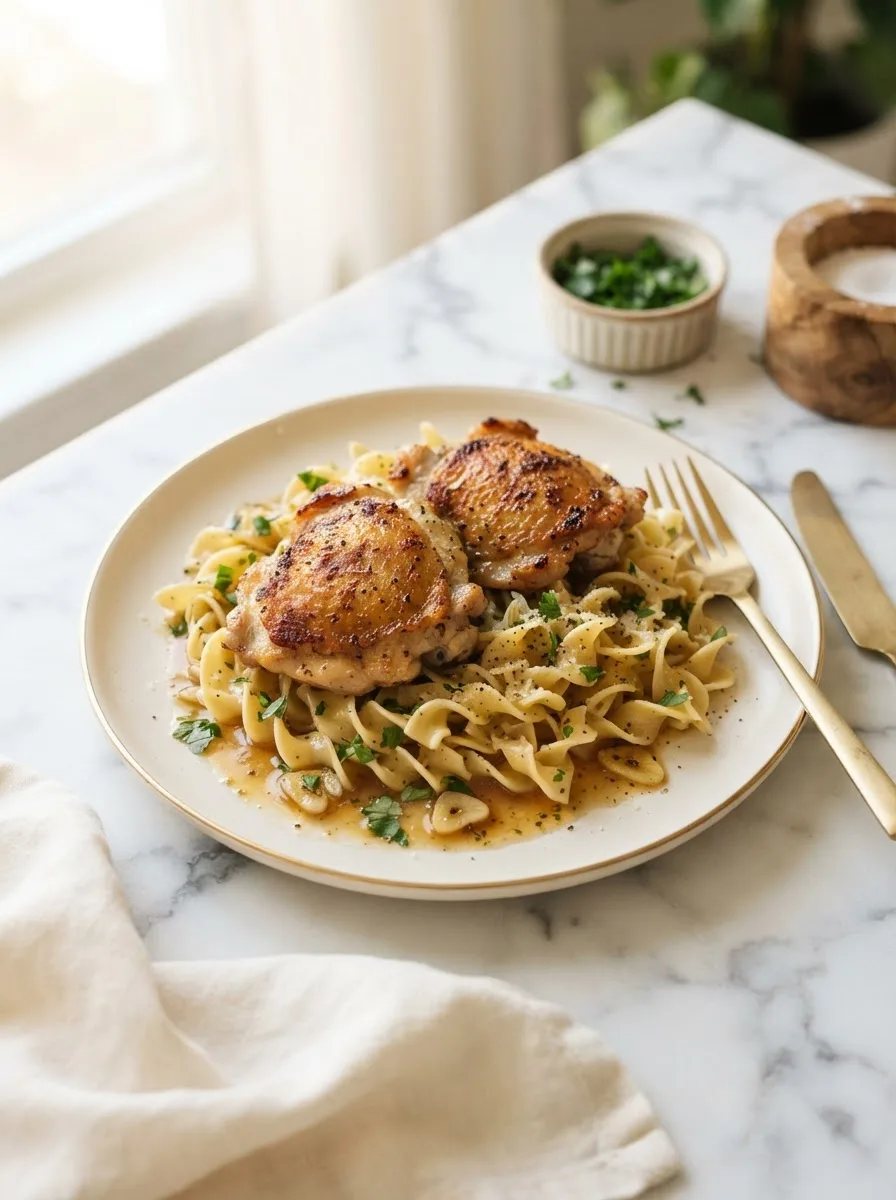
What makes this version different is the order of operations. The chicken sears first and gets pulled out. The garlic butter sauce builds in the same fat and browned bits left behind. The noodles cook separately in salted water (this is the one exception to “one pan,” and it’s non-negotiable — more on that below), then everything comes back together in the skillet for the last two minutes so the noodles actually absorb the sauce instead of just sitting next to it.
The result is a weeknight dinner that tastes like it took more effort than it did, with a sauce that behaves the same way every time you make it.
★★★★★ “I’ve made a lot of ‘one pan’ recipes that leave you with a dry chicken breast and noodles swimming in butter with no flavor. This one actually tastes like the sauce was made on purpose. My husband asked if I’d started using stock instead of water for the noodles — I hadn’t, it’s just the sauce.” — Danielle, recipe tester (pre-launch)
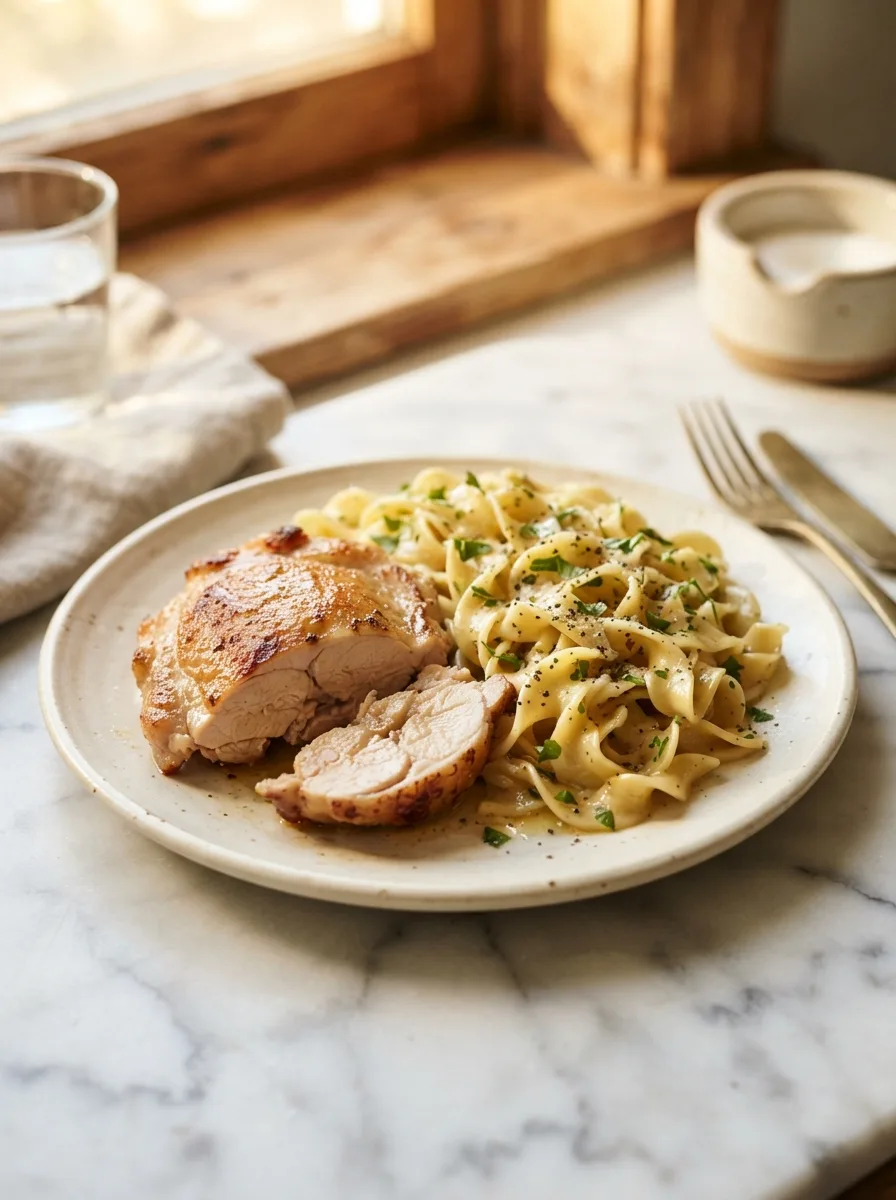
Why You’ll Love This One Pan Chicken with Buttered Noodles
- One skillet, minimal cleanup: The chicken sears and the sauce builds in the same pan, so you’re not scrubbing three pots after dinner — just the pot the noodles boiled in.
- The sauce actually clings: Because it’s built from the browned bits left after searing the chicken, the sauce has real flavor and the right thickness to coat noodles instead of pooling underneath them.
- Ready in 35 minutes: From raw chicken to plated dinner, this is a genuine weeknight recipe — no marinating, no oven required.
- Forgiving for beginners: If your chicken pieces aren’t perfectly even in size, the sauce step still works — you’re just adjusting simmer time, not starting over.
Key Ingredients
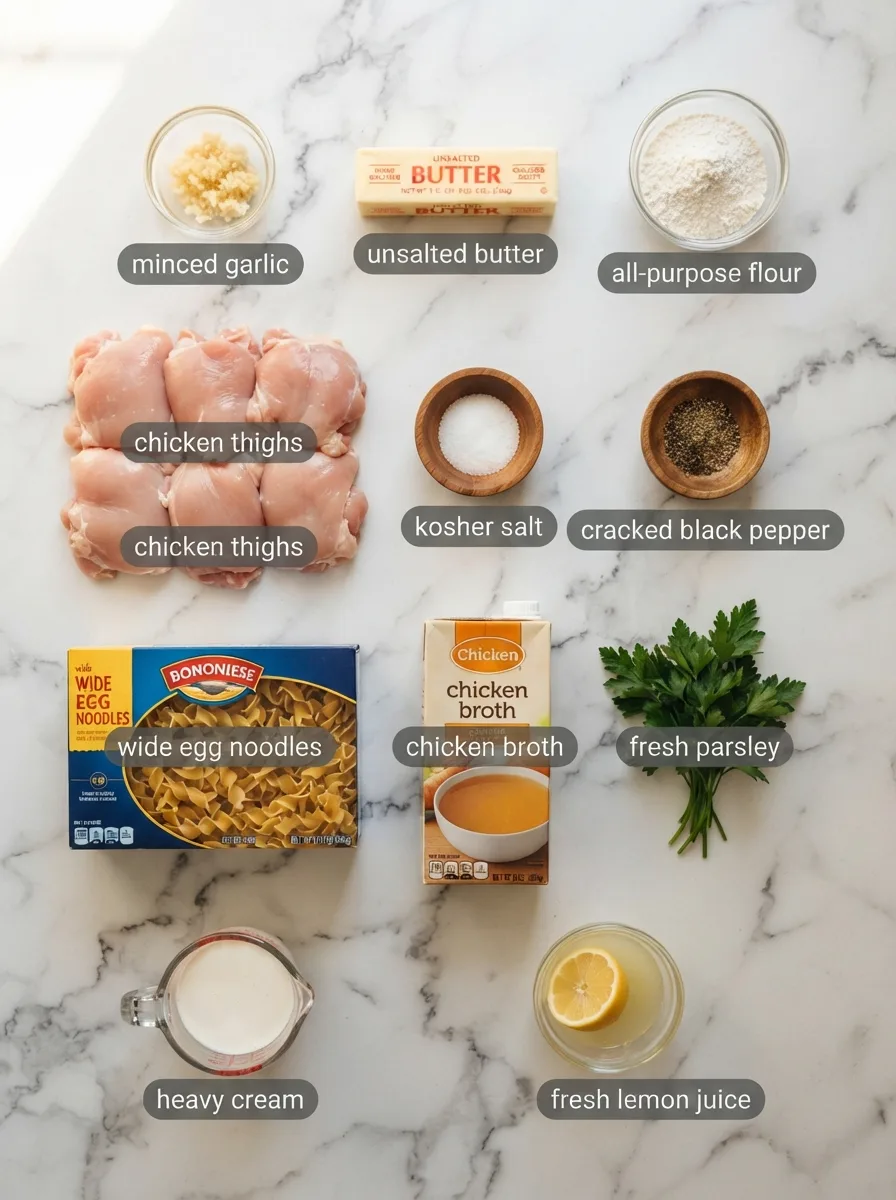
Boneless, skinless chicken thighs (1.5 lbs). Thighs stay juicy even if you overshoot the simmer time by a minute or two — they have more fat than breasts, which forgives beginner timing mistakes. Chicken breast works (see Variations), but plan to watch it more closely.
Unsalted butter (5 tablespoons, divided). This is doing double duty: some sears the chicken and builds the sauce base, and the rest gets tossed with the noodles at the end. Using unsalted lets you control the salt level instead of guessing around it.
Garlic (4 cloves, minced). Added after the chicken comes out, into the same buttery fond left in the pan. This is where most of the sauce’s actual flavor comes from — don’t rinse or wipe out the pan before this step.
Chicken broth (¾ cup). This is the most important ingredient in the whole recipe. Too little and the sauce turns pasty the moment noodles hit it. Too much and it never thickens. Low-sodium is worth seeking out here, since the sauce reduces and concentrates.
Heavy cream (¼ cup). Rounds out the sharpness of the garlic and lemon and gives the sauce body. Half-and-half works as a lighter substitute; the sauce will be slightly thinner but still good.
Fresh lemon juice (1 tablespoon). Cuts through the butter so the dish doesn’t taste one-note rich. Bottled juice works in a pinch, but fresh has noticeably more brightness for the same amount.
Wide egg noodles (12 oz). Their surface holds sauce better than a smooth pasta shape like spaghetti. If you only have regular egg noodles, that’s fine — just don’t substitute a shape with a smooth, dense surface.
Fresh parsley (2 tablespoons, chopped). Mostly for brightness and color, but it also cuts the richness of the butter in a way dried parsley can’t replicate.
Ingredient Note: Don’t skip deglazing the pan with broth right after the garlic. Those browned bits stuck to the bottom of the skillet (the fond) are the actual flavor source for the sauce — if you build the sauce in a clean pan instead, it will taste like garlic butter and nothing else.
Equipment You’ll Need
- Large skillet, 12-inch (stainless steel or cast iron) — Needs to be big enough to hold the chicken and, later, the noodles together without crowding. A nonstick skillet works but won’t build fond as well.
- Large pot for noodles — Any 4-quart-or-larger pot works. This is the one piece of equipment beyond “one pan,” and it’s unavoidable — noodles need their own boiling water.
- Instant-read meat thermometer — Not required, but the fastest way to know the chicken hit 165°F without cutting into it and losing juices.
- Tongs — For turning the chicken and tossing the noodles into the sauce at the end.
Controlling the Sauce Consistency (A Controlled Test)
The single biggest variable in this recipe is how much broth goes into the pan sauce. I tested three versions, changing only that number, to find the amount that would coat the noodles without turning gluey or thin.
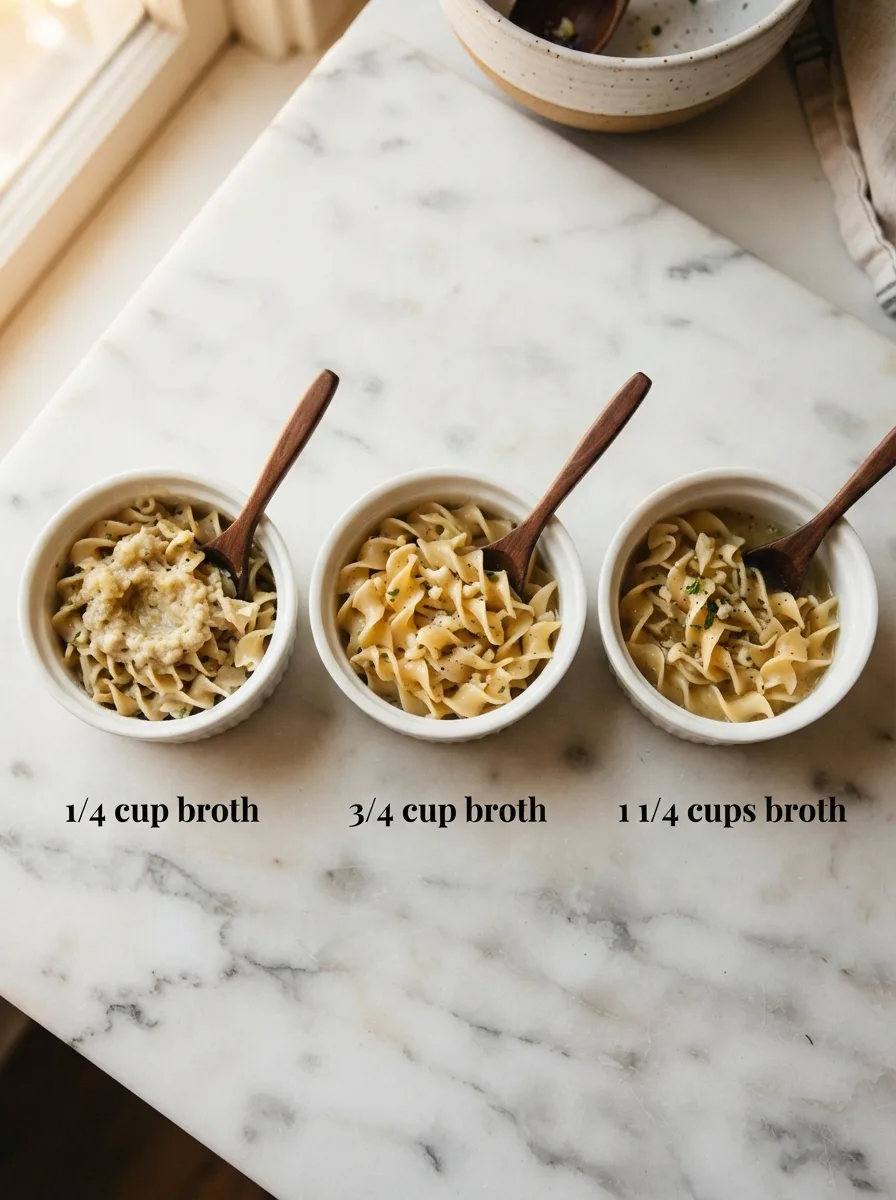
¼ cup broth: The sauce reduced almost immediately into a thick, gluey paste. The moment the noodles were tossed in, they soaked up whatever moisture was left and turned dry within a minute of sitting.
¾ cup broth (the winner): The sauce stayed glossy and thin enough to move around the pan, but reduced just enough over 3–4 minutes to cling to the noodles instead of running off them. This is the amount in the recipe below.
1¼ cups broth: The sauce never fully thickened, even after an extra 5 minutes of simmering. It tasted fine but pooled at the bottom of the plate instead of coating anything — closer to a soup than a pan sauce.
The takeaway: ¾ cup of broth, reduced for 3–4 minutes after the garlic goes in and before the cream, is the amount that actually clings. If your skillet is wider than 12 inches, add broth in 2-tablespoon increments until the sauce moves like heavy cream before adding the noodles.
How to Make One Pan Chicken with Buttered Noodles
Before you start: Pat the chicken completely dry with paper towels. Wet chicken won’t sear — it will steam, and you’ll lose the browned bits the whole sauce depends on. Also get your noodle water going first; it takes longer to boil than the chicken takes to sear.
Step 1 — Sear the chicken
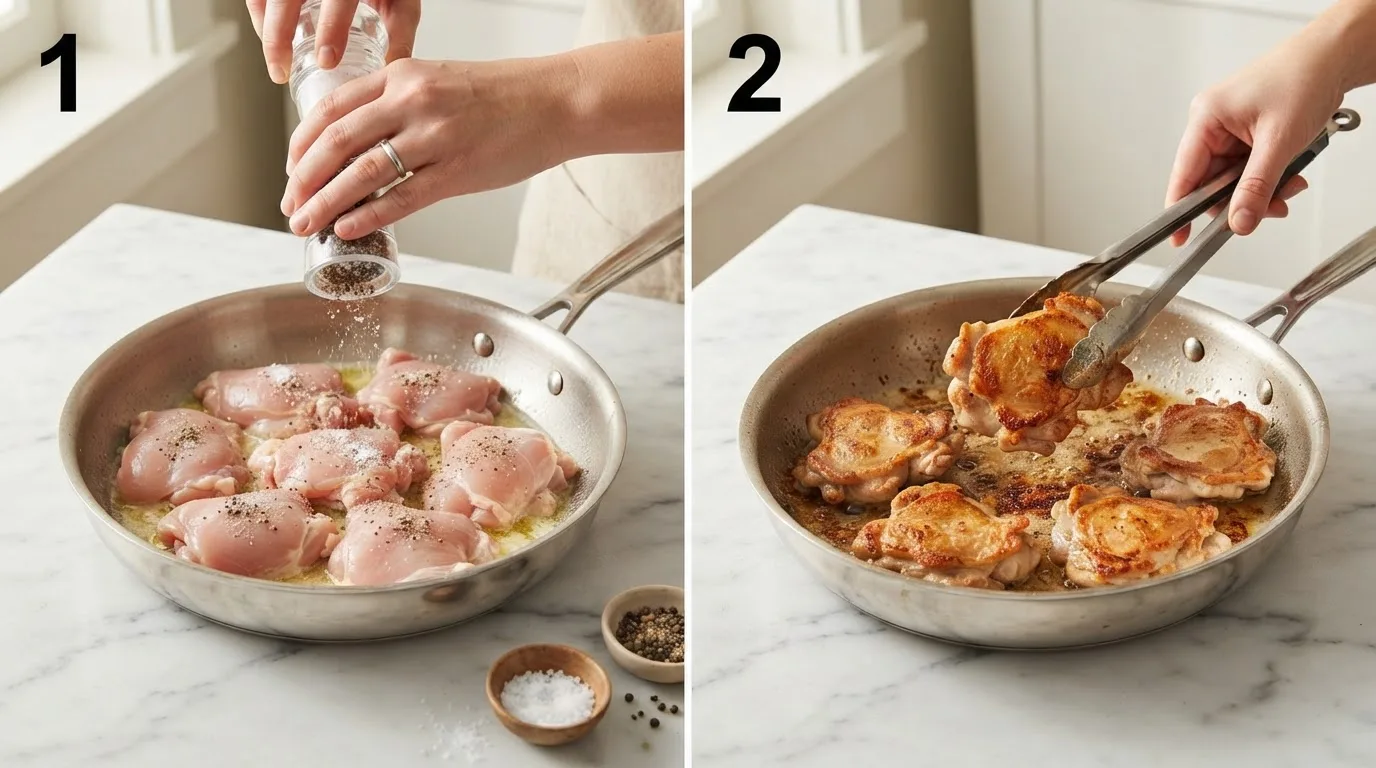
Season both sides of the chicken thighs generously with salt and pepper. Melt 2 tablespoons of butter in the skillet over medium-high heat until it stops foaming, then add the chicken. Sear for 5–6 minutes per side, without moving it, until deeply golden and the internal temperature reads 165°F. Remove the chicken to a plate and tent loosely with foil.
Step 2 — Boil the noodles
While the chicken rests, drop the egg noodles into a large pot of well-salted boiling water. Cook according to the package time, usually 6–8 minutes, until just tender. Drain and set aside — don’t rinse, since a light coating of starch actually helps the sauce grip the noodles later.
Step 3 — Build the pan sauce
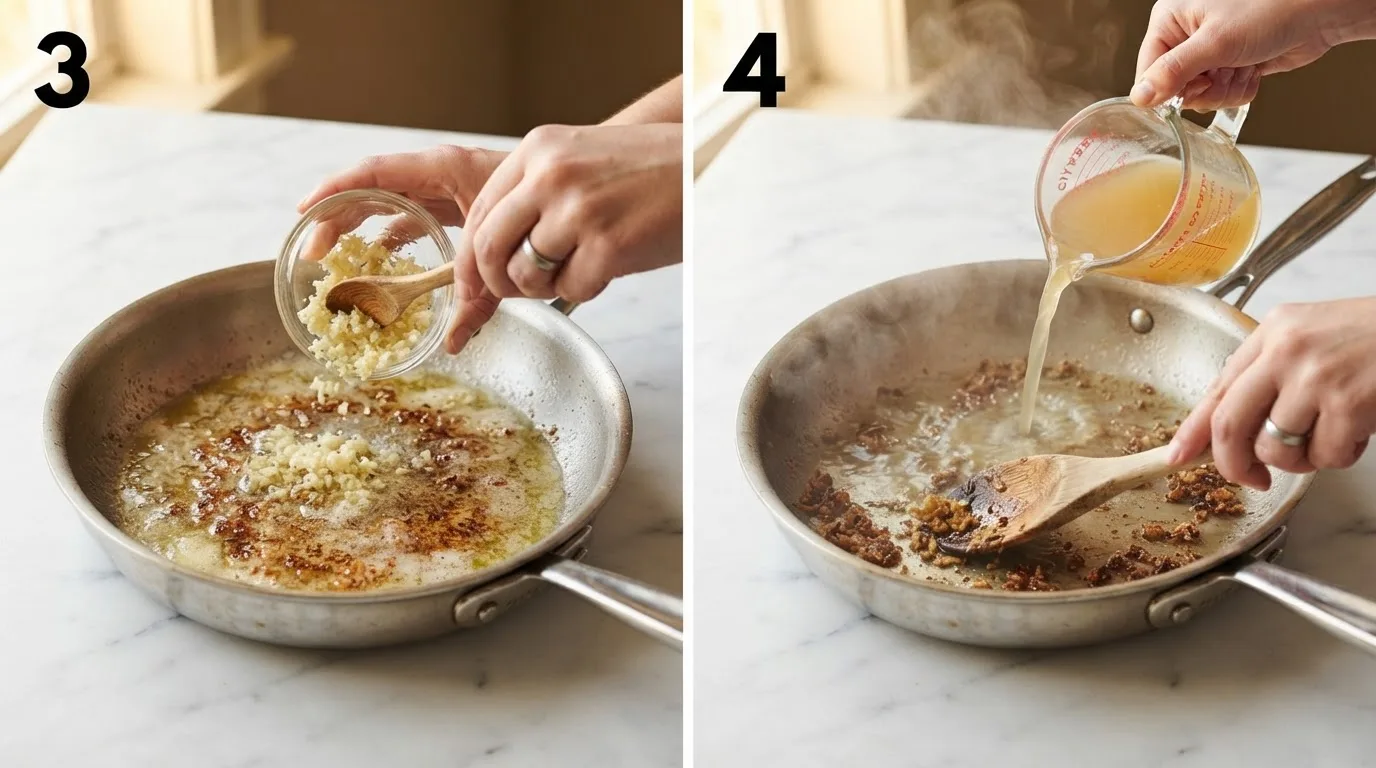
In the same skillet, reduce heat to medium and melt 1 tablespoon of butter into the browned bits left behind. Add the garlic and cook for 30 seconds, just until fragrant — it burns fast, so don’t walk away. Pour in the chicken broth and scrape the bottom of the pan with a wooden spoon to release the fond. Let it simmer for 3–4 minutes, until reduced by about a third.
Step 4 — Finish the sauce
Stir in the heavy cream and lemon juice and simmer for 1–2 more minutes, until the sauce coats the back of a spoon and a line drawn through it with a spoon stays visible for a couple of seconds. Taste and adjust salt — the reduced broth can vary in saltiness depending on the brand.
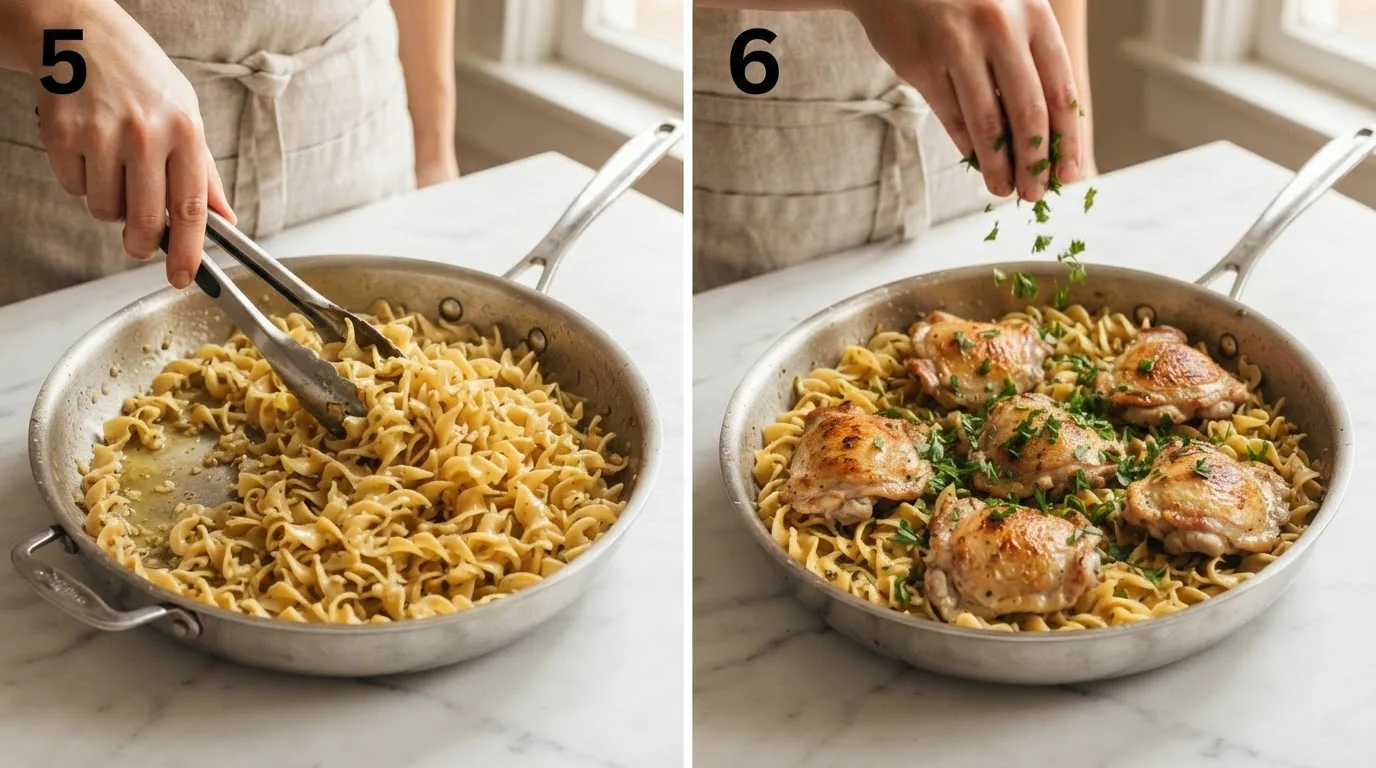
Step 5 — Bring it all together
Add the drained noodles directly into the skillet with the sauce. Toss with tongs until every noodle is coated, then nestle the chicken back into the pan on top of the noodles for the last minute, just to rewarm and glaze it in the sauce. Scatter with fresh parsley before serving.
Pro Tips for Perfect One Pan Chicken with Buttered Noodles
Tip 1: Don’t crowd the skillet during the sear. If your pan is on the smaller side and the thighs are touching, sear in two batches. Crowded chicken steams instead of browning, and you lose the fond the sauce depends on.
Tip 2: Salt the noodle water like you mean it. Under-salted noodle water is the one mistake the sauce can’t fix later — the noodles themselves need seasoning, not just the sauce sitting on top of them.
Tip 3: Reduce the broth before adding cream, not after. Cream slows down reduction significantly. If you add it too early, you’ll be simmering for twice as long to hit the right sauce consistency.
Tip 4: Rewarm the chicken in the pan, don’t recook it. By the time the sauce is done, the chicken has already hit 165°F. The final minute in the skillet is just to glaze it and bring it back to serving temperature — any longer and it starts to dry out.
Variations and Substitutions
Dietary Variations:
- Gluten-free: Swap the egg noodles for a gluten-free wide noodle or fettuccine shape, and use a 1:1 gluten-free flour blend if you dredge the chicken. Cook time on the noodles may run 1–2 minutes shorter — check early.
- Dairy-free: Use a neutral oil instead of butter for searing and sauce-building, and swap the cream for full-fat coconut milk or a dairy-free cream alternative. The sauce will taste slightly different but still thickens properly.
Flavor Variations:
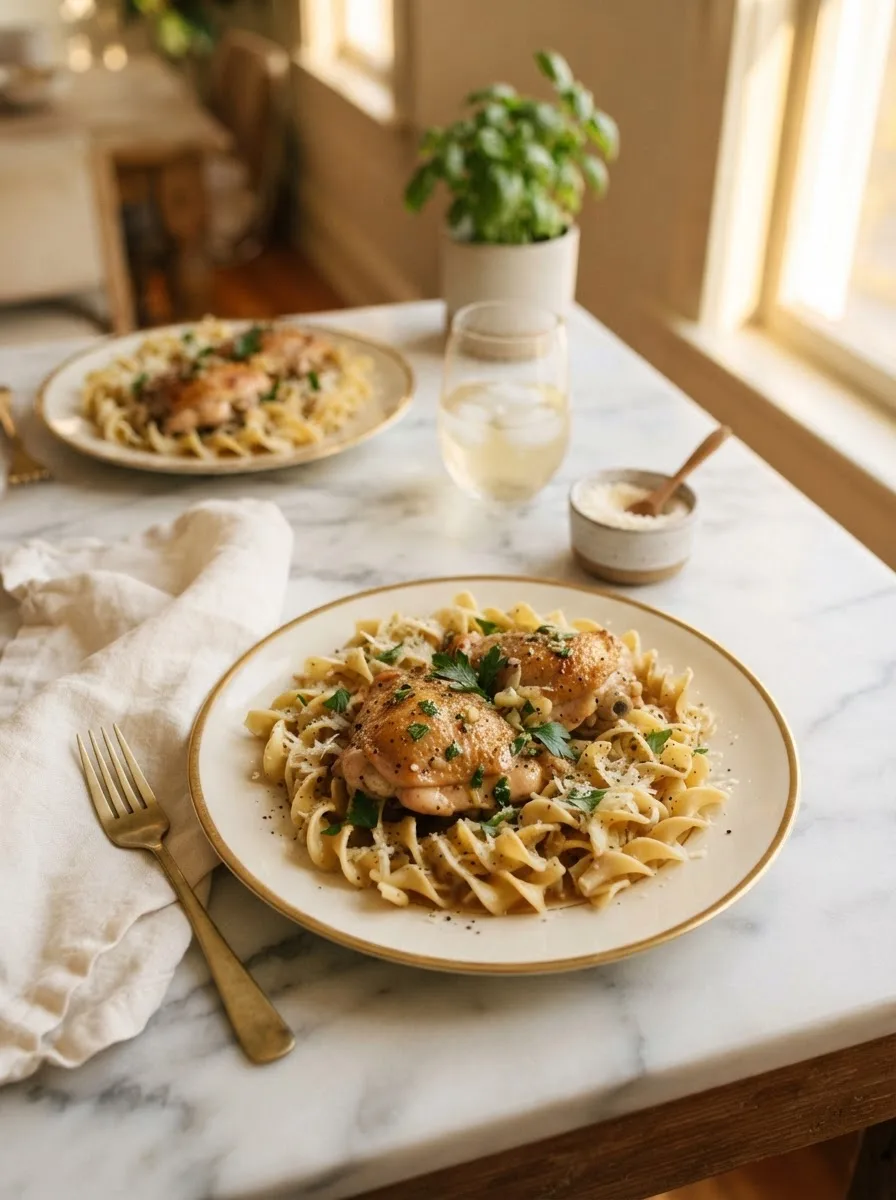
- Creamier, alfredo-style version: Double the cream to ½ cup and stir in ¼ cup grated parmesan at the end for a richer, more alfredo-adjacent sauce. If you love that direction, my cheesecake factory alfredo sauce is worth trying as its own recipe too.
Ingredient Substitutions:
- Chicken thighs → boneless chicken breast, pounded to even thickness; reduce sear time to 4–5 minutes per side and watch closely, since breast dries out faster than thigh.
- Heavy cream → half-and-half (thinner sauce) or full-fat coconut milk (dairy-free, slightly sweeter).
- Egg noodles → fettuccine or pappardelle, if that’s what’s in the pantry.
If you’re a fan of creamy chicken and pasta combinations in general, my chicken alfredo bread bowl takes the same idea in a completely different, shareable direction.
Troubleshooting
My sauce turned gluey the second I added the noodles — what happened?
This is almost always too little broth relative to how long the sauce reduced. If your sauce looks thick and paste-like before the noodles even go in, whisk in an extra 2–3 tablespoons of broth or cream to loosen it before combining.
My chicken is dry even though I hit 165°F?
Most likely it sat in the skillet too long during the final “bring it all together” step. That step is meant to rewarm and glaze, not cook further. Pull the chicken the moment it’s warmed through — usually well under a minute once it’s back in the hot sauce.
The noodles stuck together in a clump after draining?
This usually means they sat too long before hitting the sauce. Have your sauce fully finished and ready before you drain the noodles, so they go straight from the colander into the skillet with minimal wait time.
Storage and Make-Ahead
Counter: Don’t leave this dish out longer than 2 hours — it contains both chicken and cream-based sauce.
Refrigerator: Store in an airtight container for up to 3 days. The noodles will absorb more sauce as they sit, so leftovers are noticeably less saucy by day 2.
Freeze: This dish doesn’t freeze particularly well — cream sauces tend to separate on thawing, and the noodles turn mushy. If you want to freeze a component, freeze the seared, unsauced chicken alone for up to 2 months and make a fresh batch of sauce and noodles when you reheat it.
Reheating: Reheat gently in a skillet over medium-low heat with a splash of broth or cream to loosen the sauce back up. Microwaving works too, in 30-second bursts, stirring between each.
Make-Ahead: You can sear the chicken and build the sauce up to a day ahead, then refrigerate separately from freshly boiled noodles. Reheat the sauce and chicken together, then toss in noodles cooked fresh right before serving.
Frequently Asked Questions
Q: Can I make this with chicken breast instead of thighs? A: Yes. Pound the breasts to an even thickness first so they cook evenly, and reduce the sear time to about 4–5 minutes per side. Breast dries out faster than thigh, so pull it the moment it hits 165°F.
Q: Why do I need a separate pot for the noodles if this is a “one pan” recipe? A: Pasta needs a large volume of boiling water to cook evenly without turning gummy — there isn’t enough room in a skillet to do that alongside the chicken. Everything still comes together in the one skillet at the end, which is where the name comes from.
Q: Can I use milk instead of heavy cream? A: You can, but the sauce will be noticeably thinner and more likely to separate over heat. If using milk, whisk in ½ teaspoon of flour with the broth to help it hold together.
Q: How do I know when the sauce is thick enough? A: It should coat the back of a spoon, and a line drawn through it with your finger should stay visible for a couple of seconds before the sauce fills back in. If it runs immediately, it needs more time to reduce.
Q: Can I double this recipe for a crowd? A: Yes, but sear the chicken in batches rather than crowding the pan, and use a wider skillet or Dutch oven for the sauce and noodle-tossing step so everything has room to combine evenly.
Q: What can I serve alongside this? A: A simple green salad or steamed green beans balances the richness well. This dish is filling enough on its own that you don’t need much else.
More Chicken and Pasta Recipes You’ll Love
- Chicken Alfredo Bread Bowl — creamy chicken alfredo served in a hollowed-out bread bowl for an easy shareable dinner.
- Cheesecake Factory Alfredo Sauce — the copycat alfredo sauce recipe to pair with any pasta or chicken dish.
- Buffalo Mac and Cheese (Buffalo Wild Wings Copycat) — a spicy, cheesy mac and cheese for when buttered noodles aren’t enough heat.
- Mission BBQ Mac and Cheese Recipe — a smoky, creamy mac and cheese copycat worth adding to your weeknight rotation.
One Pan Chicken with Buttered Noodles
Ingredients
For the Chicken:
- 1.5 lb boneless, skinless chicken thighs
- Salt and black pepper, to taste
- 2 tablespoon unsalted butter
For the Sauce:
- 1 tablespoon unsalted butter
- 4 clove garlic, minced
- 3/4 cup low-sodium chicken broth
- 1/4 cup heavy cream
- 1 tablespoon fresh lemon juice
For the Noodles:
- 12 oz wide egg noodles
- 2 tablespoon unsalted butter
- 2 tablespoon fresh parsley, chopped
- Salt, for the pasta water
Instructions
- Pat the chicken thighs dry and season both sides generously with salt and pepper.
- Melt 2 tablespoons butter in a large skillet over medium-high heat. Sear the chicken 5–6 minutes per side, undisturbed, until golden and internal temperature reaches 165°F. Remove to a plate and tent with foil.
- Bring a large pot of well-salted water to a boil. Cook the egg noodles according to package instructions, about 6–8 minutes, until just tender. Drain and set aside.
- In the same skillet over medium heat, melt 1 tablespoon butter into the browned bits left behind. Add garlic and cook 30 seconds until fragrant.
- Pour in the chicken broth, scraping the pan bottom to release the fond. Simmer 3–4 minutes until reduced by about a third.
- Stir in the heavy cream and lemon juice. Simmer 1–2 minutes until the sauce coats the back of a spoon. Taste and adjust salt.
- Add the drained noodles to the skillet along with 2 tablespoons butter. Toss until evenly coated in the sauce.
- Nestle the chicken back into the skillet on top of the noodles for 1 minute to rewarm and glaze.
- Scatter with fresh parsley and serve immediately.
Notes
- **Broth amount matters most:** ¾ cup broth, reduced for 3–4 minutes before the cream goes in, is the amount that actually clings to the noodles instead of pooling or turning gluey.
- **Don’t rinse the noodles after draining.** The light starch coating helps the sauce grip them.
- **Chicken breast works** as a substitute — pound to even thickness and reduce sear time to 4–5 minutes per side.
- **Leftovers thicken as they sit.** Loosen with a splash of broth or cream when reheating.
- **This recipe doesn’t freeze well** once assembled; freeze plain seared chicken separately if needed, and make the sauce and noodles fresh.
- **Double the recipe** in a wider skillet or Dutch oven rather than crowding a 12-inch pan.