Foolproof Johnny Carino’s Spicy Romano Chicken

If you’ve ever ordered Johnny Carino’s spicy romano chicken and then tried to recreate it at home, you already know the letdown: the crust goes soggy, the sauce turns bland, or the “spicy” part disappears entirely. I ran into all three problems before I got this right.
I tested this recipe four times, changing one thing each round — the breading method, the sauce base, the heat level, and finally the broil step that melts the provolone into that signature golden top. The version below is the one that finally tasted like the restaurant plate, not a watered-down guess at it.
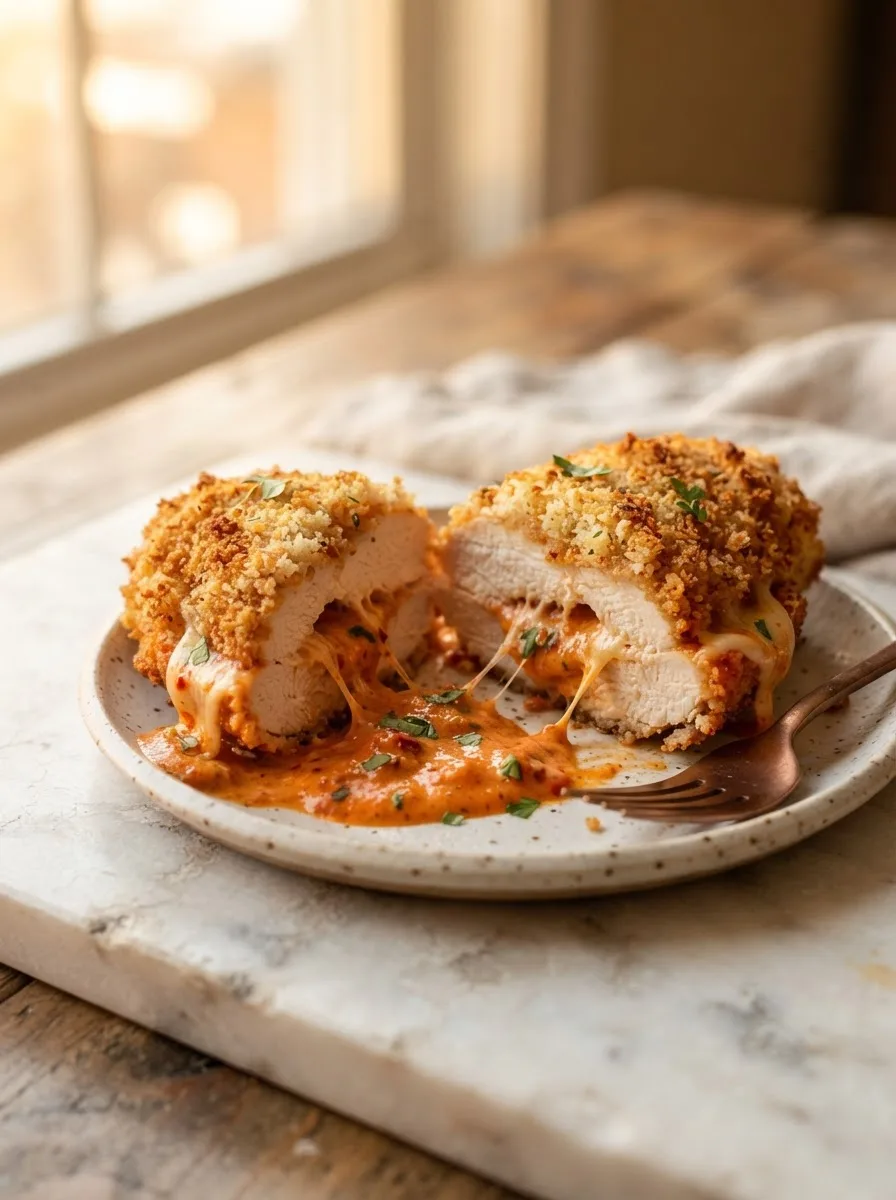
What makes this work is the Romano cheese baked right into the breadcrumb crust (not just sprinkled on top after), and a cream sauce built on roasted red peppers instead of straight tomato — that’s the flavor most copycat versions miss entirely.
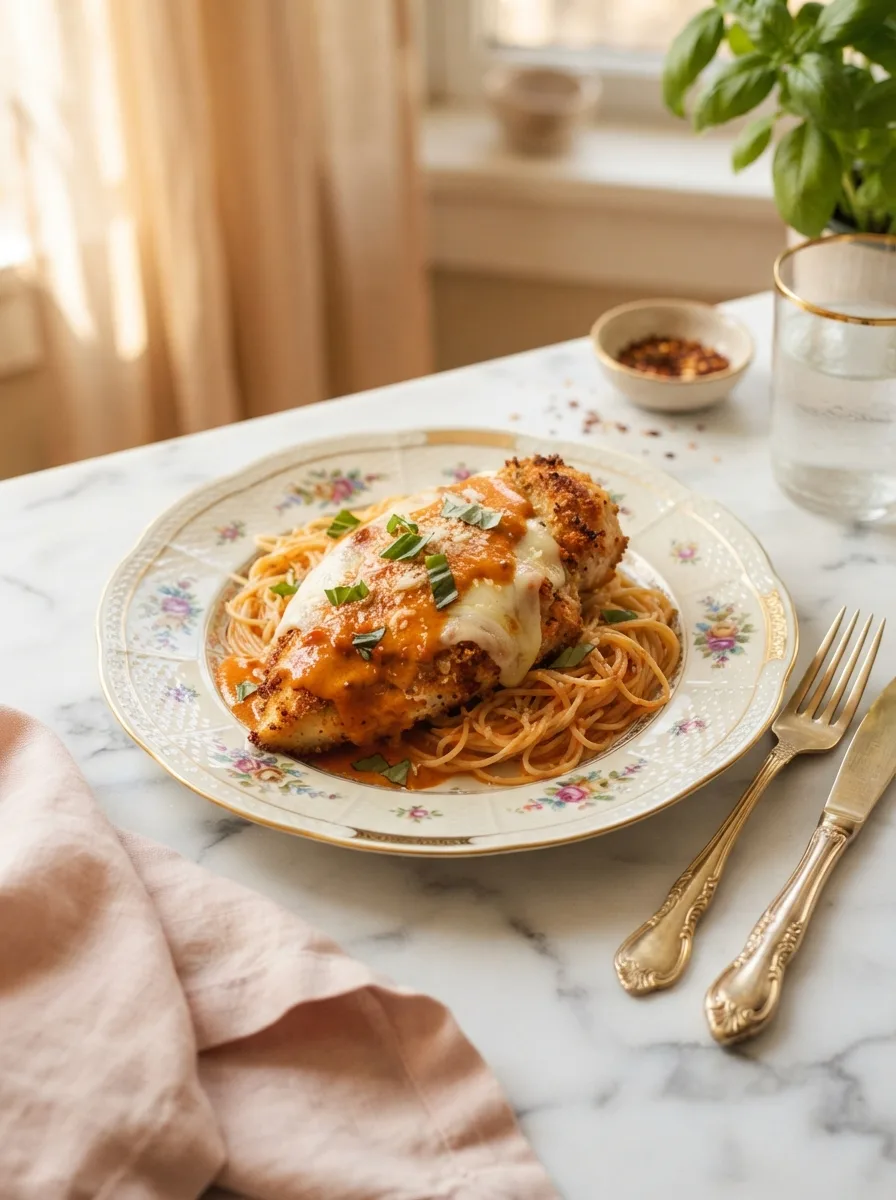
The crust is the part I obsessed over most. Most copycat recipes bread the chicken, fry it, and call it done — but Carino’s crust has a sharper, saltier bite than a plain breadcrumb coating gives you. Working Romano cheese directly into the breading, not just melting it on top later, is what closes that gap.
The sauce is the other half of the equation. It needs real heat, not just red pepper flakes floating on the surface, and it needs body from actual roasted red peppers blended in — not just a splash of jarred liquid for color.
★★★★★ “I’ve ordered this exact dish at Carino’s more times than I’ll admit, and this was shockingly close. The sauce has real heat, not just red flecks for show.” — Diane R., recipe tester (pre-launch)
Why You’ll Love This Spicy Romano Chicken
- The crust stays crisp under the sauce: Baking the Romano cheese into the breading (not on top) means it holds its crunch even after the sauce goes on and it goes under the broiler.
- Real, adjustable heat: The crushed red pepper is blended right into the sauce base, so the spice level is even from bite to bite — and you control exactly how hot it gets.
- One pan, restaurant results: The chicken, the sauce, and the broiled cheese topping all happen in the same skillet. Fewer dishes, same payoff.
- Freezes better than the restaurant version: The sauce and chicken both hold up in the freezer far better than you’d expect from a cream-based dish — more on that in Storage below.
Key Ingredients
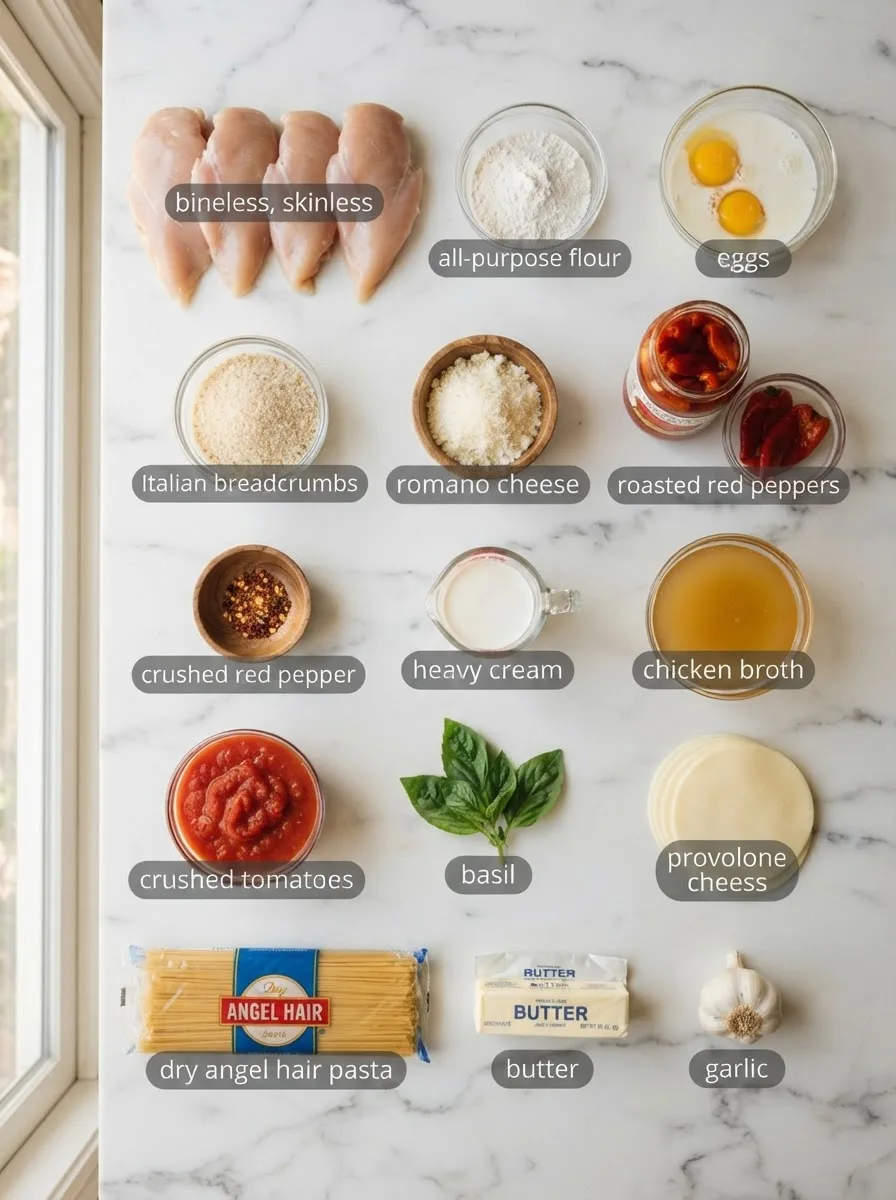
Romano cheese (½ cup in the crust, ½ cup in the sauce). This is the ingredient the whole dish is named for, and it does double duty. Mixed into the breadcrumbs, it adds a sharp, salty edge that plain Parmesan doesn’t have. In the sauce, it thickens things slightly and rounds out the heat. Don’t substitute Parmesan for all of it — a blend is fine, but pure Parmesan tastes flatter.
Jarred roasted red peppers (½ cup, diced). These give the sauce its body and a smoky sweetness that plain tomato sauce can’t fake. Buy the kind packed in water or brine, not oil-marinated — the oil-packed version throws off the sauce’s texture.
Crushed red pepper flakes (1 teaspoon, adjustable). This is the actual heat source, and it’s the ingredient most home versions skimp on. See the Controlled Test section below for exactly how much to use for your preferred spice level.
Heavy cream (1 cup). Full-fat cream is non-negotiable here — half-and-half breaks when it hits the acidity from the peppers and tomato, leaving you with a grainy, separated sauce instead of something glossy.
Provolone cheese (4 slices). Provolone melts into long, stretchy strands under the broiler in a way that mozzarella doesn’t quite match — it has more flavor and holds its shape better as it browns.
Ingredient Note: Pound your chicken breasts to an even ½-inch thickness before breading. Uneven cutlets are the #1 reason the crust burns on the thin end while the thick end stays undercooked.
Equipment You’ll Need
- Large oven-safe skillet — cast iron or stainless steel, since it goes from stovetop to broiler. A regular nonstick skillet will melt under the broiler, so skip it here.
- Meat mallet or heavy rolling pin — for pounding the chicken to an even thickness. A heavy skillet works in a pinch.
- Three shallow dishes — for the flour, egg wash, and breadcrumb stations. Pie plates or wide bowls both work.
- Instant-read thermometer — the fastest way to confirm the chicken hit 165°F without cutting into it and losing juices.
Controlling the Heat Level (A Controlled Test)
The single biggest variable in this recipe is how much crushed red pepper goes into the sauce, and how it’s added. I ran three versions side by side to find the level that matches the restaurant without tipping into “can’t taste anything else” territory.
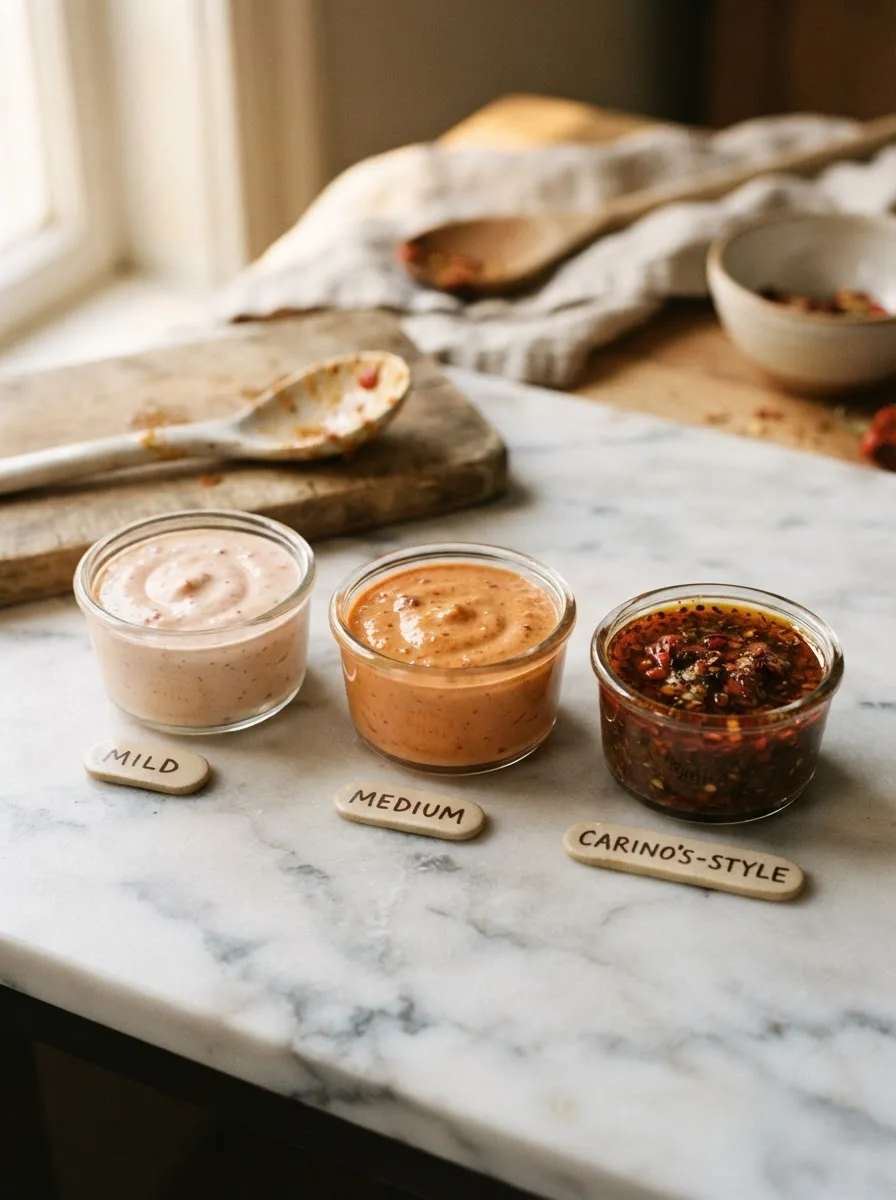
½ teaspoon crushed red pepper (mild): Barely registers. Good if you’re serving picky eaters, but this isn’t really “spicy” romano chicken anymore — it’s just romano chicken.
1 teaspoon crushed red pepper (medium — my default): This is the sweet spot. You get real warmth on the back of the throat by the second bite, but the roasted pepper and cream still come through clearly.
2 teaspoons crushed red pepper (carino’s-style): This is closest to what I remember from the restaurant — noticeably hot, borderline aggressive, but the cream keeps it from tasting harsh. If you like real heat, this is the number to use.
The takeaway: start at 1 teaspoon if you’re unsure. You can always add a pinch more crushed red pepper at the table, but you can’t take heat back out of a finished sauce.
How to Make Johnny Carino’s Spicy Romano Chicken
Before you start: Pound your chicken to an even ½-inch thickness and let it sit at room temperature for 15 minutes — cold chicken hitting a hot pan is the fastest way to end up with a pale, greasy crust instead of a golden one.
Step 1 — Prep the chicken
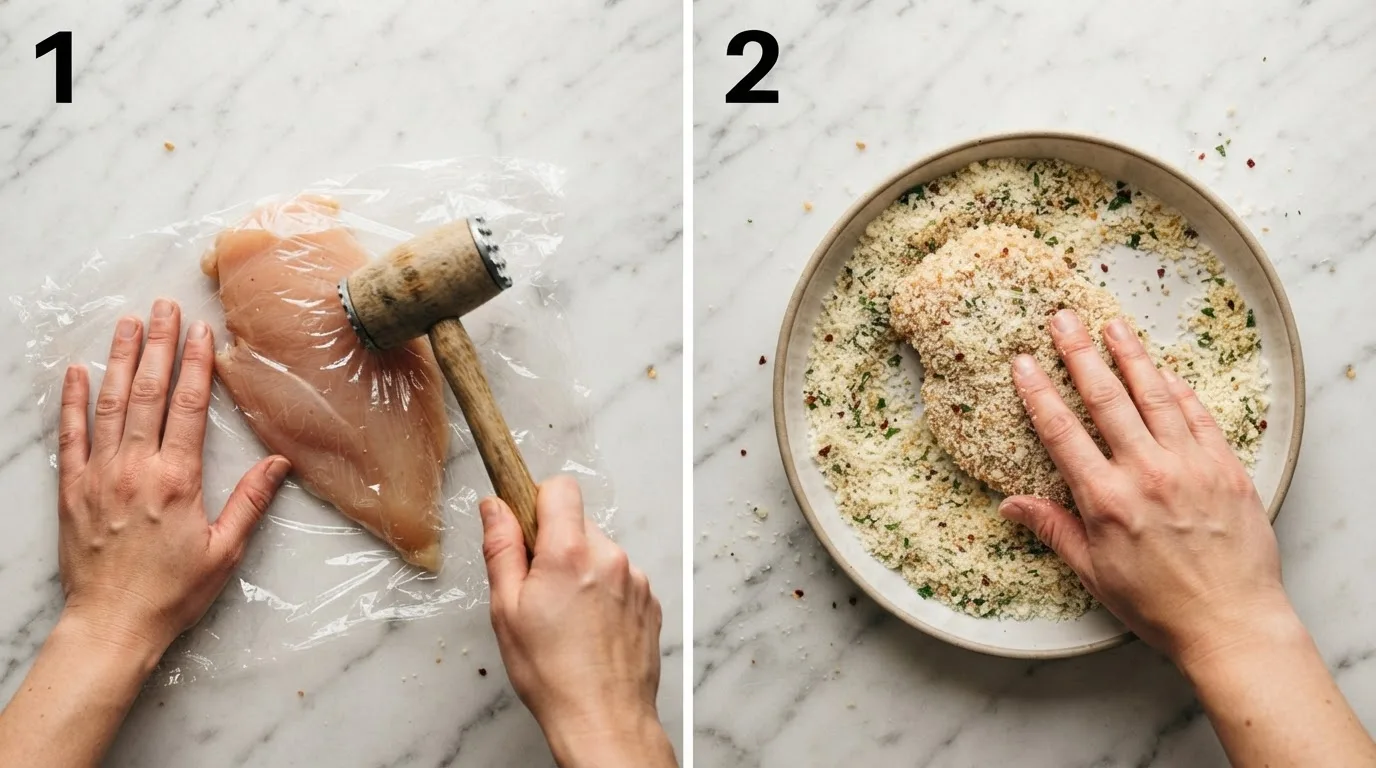
Slice each chicken breast horizontally if it’s especially thick, then pound each piece between two sheets of plastic wrap until it’s an even ½ inch thick throughout. Season both sides lightly with salt and pepper before breading — this is your only chance to season the meat itself, since the crust and sauce carry most of the flavor after this point.
Step 2 — Set up the breading station and coat the chicken
In one shallow dish, whisk the flour with a pinch of salt. In a second, whisk the eggs with the milk. In a third, combine the breadcrumbs with ½ cup of the Romano cheese, mixing until the cheese is evenly distributed — not clumped in one spot. Dredge each cutlet in flour, shake off the excess, dip in the egg wash, then press firmly into the breadcrumb mixture on both sides. Press, don’t just dip — that’s what makes the crust actually stick through frying.
Step 3 — Pan-fry the chicken
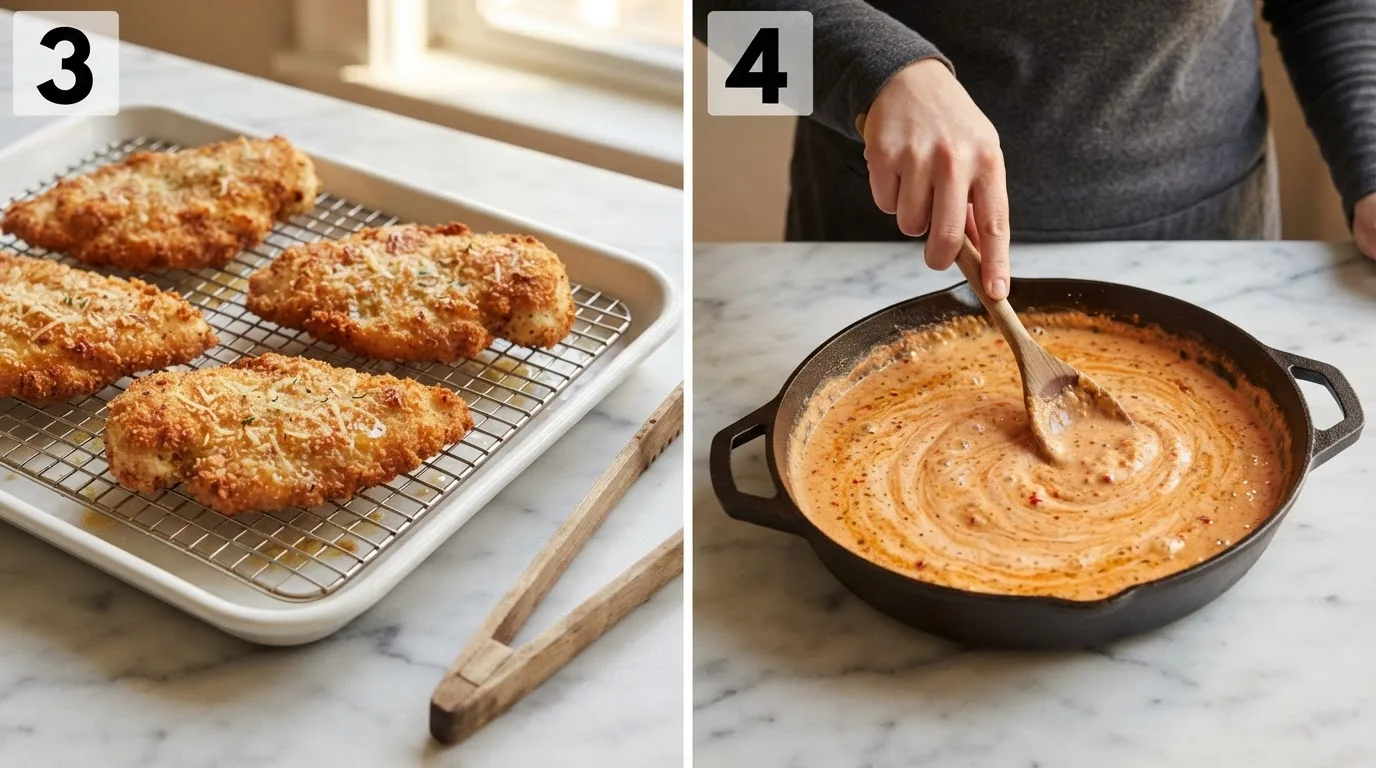
Heat the olive oil in your oven-safe skillet over medium heat until it shimmers. Fry the breaded cutlets for 3 to 4 minutes per side, until deep golden brown and just cooked through — an instant-read thermometer should read close to 165°F. Move the chicken to a plate and set the skillet aside; you’ll build the sauce in the same pan to pick up all the browned bits left behind.
Step 4 — Make the spicy Romano cream sauce
In the same skillet, melt the butter over medium heat and scrape up any browned bits from the chicken. Add the garlic and cook for 30 seconds, just until fragrant — any longer and it turns bitter. Stir in the roasted red peppers and crushed red pepper flakes, then pour in the white wine (or broth) and let it bubble for a minute. Add the heavy cream, chicken broth, and crushed tomatoes, and simmer for 5 to 6 minutes until the sauce thickens slightly and coats the back of a spoon. Stir in the remaining Romano cheese and basil, then taste and adjust the salt and heat.
Step 5 — Return the chicken to the pan and broil
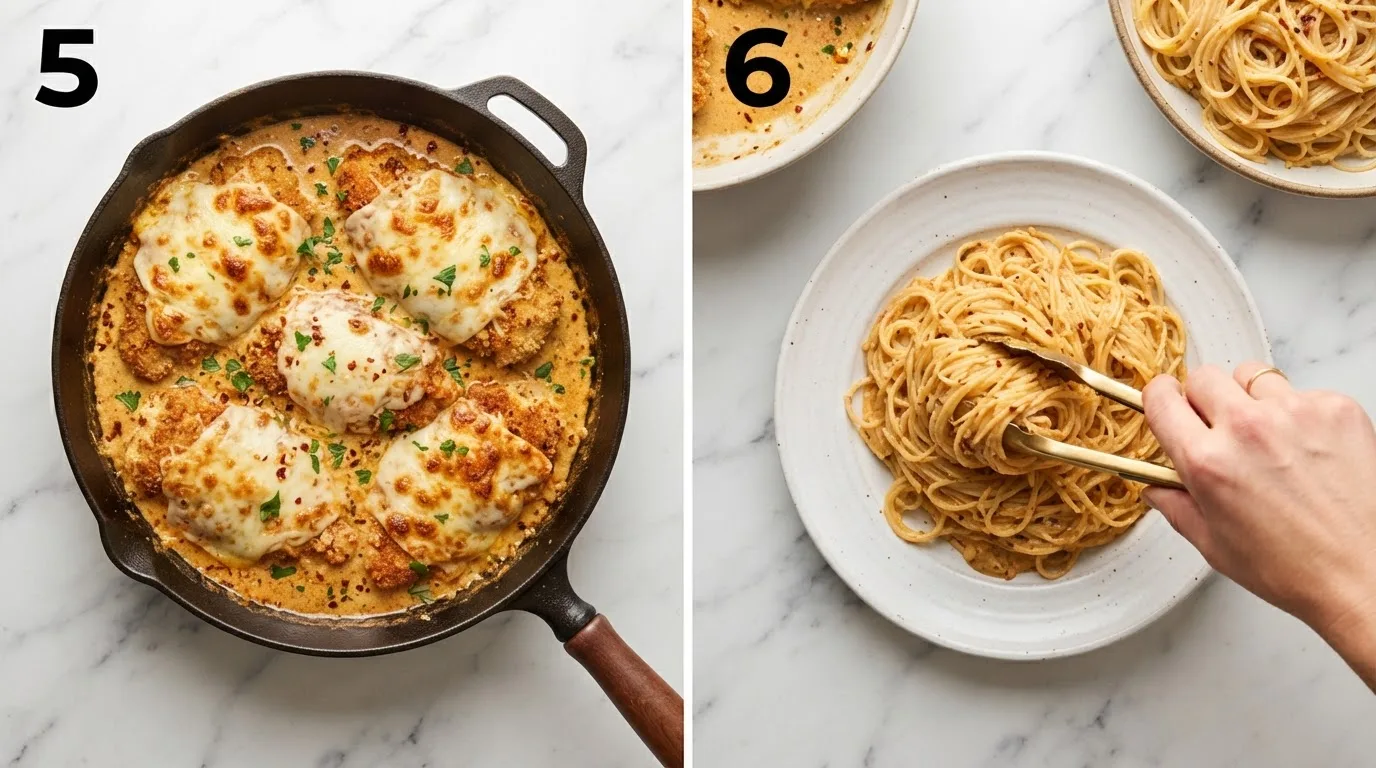
Nestle the fried chicken cutlets back into the sauce, spooning some sauce over the top of each piece. Lay a slice of provolone over each cutlet, then slide the whole skillet under a preheated broiler for 2 to 3 minutes, just until the cheese is melted and starting to brown in spots. Watch it closely here — provolone goes from perfectly melted to scorched in under a minute.
Step 6 — Toss the pasta and plate
While the chicken broils, cook the angel hair pasta in salted boiling water until just al dente, about 3 to 4 minutes. Drain and toss it directly in a spoonful of the extra sauce from the skillet so it doesn’t sit there plain. Plate the pasta first, top with a chicken cutlet, spoon extra sauce around the plate, and finish with a sprinkle of Romano cheese and fresh basil.
Pro Tips for Perfect Spicy Romano Chicken
Tip 1: Press the breading, don’t just dip it. A light dip leaves patchy spots that fall off in the pan. Pressing the breadcrumbs firmly onto both sides of the cutlet with your palm gives you full, even coverage that survives frying.
Tip 2: Don’t skip the resting step after breading. Let the breaded cutlets sit for 5 minutes before frying. This gives the coating time to set slightly, so it doesn’t slide off the second it hits hot oil.
Tip 3: Use an oven-safe skillet from the start. Building the sauce in the same pan you fried the chicken in — then broiling everything together — is what gives you that browned-bit flavor throughout the sauce. Switching pans partway loses that.
Tip 4: Taste the sauce before you add the cheese. Romano cheese adds saltiness fast. Get the heat and acidity balanced first, then stir in the cheese at the end so you don’t oversalt the whole pan.
Variations and Substitutions
Dietary Variations:
- Gluten-free: Swap the flour and breadcrumbs for a 1:1 gluten-free flour and gluten-free panko blend. The crust will be slightly less golden but still crisps up well. Serve over gluten-free pasta or spiralized zucchini.
- Lower-carb: Skip the pasta entirely and serve the chicken over sautéed spinach or roasted broccoli — the sauce is rich enough to carry a vegetable side on its own.
Flavor Variations:
- Extra garlicky version: Double the garlic in the sauce and add a smashed clove to the oil while frying the chicken for a subtle garlic-infused crust.
- Sun-dried tomato swap: Replace half the roasted red peppers with chopped sun-dried tomatoes for a deeper, slightly sweeter sauce.
Ingredient Substitutions:
- No Romano cheese on hand? A 50/50 blend of Parmesan and Pecorino gets close, though the flavor will be milder.
- No provolone? Use fresh mozzarella, but broil it slightly less — mozzarella scorches faster than provolone.
If you’re building out a full Italian-style dinner around this dish, a simple side like fritar tomate rounds out the plate without competing with the rich cream sauce.
Troubleshooting
Why did my crust fall off in the pan?
This almost always means the breading wasn’t pressed on firmly enough, or the chicken went straight into the oil without the 5-minute rest after breading. Press hard when coating, and give the coating a few minutes to set before frying.
My sauce turned grainy instead of smooth — what happened?
This is what happens when heavy cream is substituted with half-and-half or milk. Those lower-fat options can’t handle the acidity from the tomatoes and roasted peppers without breaking. Stick with full-fat heavy cream for a sauce that stays silky.
The chicken cooked through but the crust never got dark enough — why?
Your oil probably wasn’t hot enough when the chicken went in. The oil should shimmer and a breadcrumb dropped in should sizzle immediately. If the pan isn’t hot enough, the chicken releases moisture and steams instead of frying, leaving you with a pale, soggy crust.
Storage and Make-Ahead
Counter: Don’t leave this dish out longer than 2 hours — the cream sauce is not shelf-stable at room temperature.
Refrigerator: Store chicken and sauce together in an airtight container for up to 3 days. The crust will soften slightly in the fridge, but the flavor holds up well.
Freeze: Freeze the sauce and fried (unsauced) chicken separately for up to 2 months. Freezing them together tends to make the crust go mushy on thaw.
Reheating: Reheat the sauce gently in a skillet over low heat, then add the chicken to warm through for the last few minutes. A microwave works in a pinch but can make the cream sauce separate slightly — stir it back together if that happens.
Make-Ahead: You can bread the chicken up to 4 hours ahead and refrigerate it uncooked on a wire rack. The sauce can also be made a day ahead and reheated gently before combining with freshly fried chicken.
Frequently Asked Questions
Q: What does Romano cheese taste like compared to Parmesan? A: Romano is sharper and saltier than Parmesan, with a slightly tangier bite. That’s why it holds up so well against the heat and acidity in this sauce — Parmesan alone tends to get lost.
Q: Can I make johnny carino’s spicy romano chicken without a broiler? A: Yes. If you don’t have a broiler, cover the skillet and cook over low heat for 3 to 4 minutes just until the provolone melts. You won’t get the browned, slightly bubbly top, but the flavor is the same.
Q: How spicy is spicy romano chicken supposed to be? A: The restaurant version leans noticeably spicy, not mild. Based on my testing (see the Controlled Test section above), 2 teaspoons of crushed red pepper gets you closest to that level. Start at 1 teaspoon if you want a gentler version.
Q: Can I use chicken thighs instead of breasts? A: You can, but pound them to an even thickness first since thighs cook unevenly otherwise. The flavor works well with the sauce, though the classic version uses breast meat.
Q: What pasta does Johnny Carino’s actually serve this with? A: The restaurant typically serves it over angel hair, though fettuccine and penne both work fine if that’s what you have on hand.
Q: Can I make the sauce ahead of time? A: Yes — the sauce reheats well. Make it up to a day ahead, store it covered in the fridge, and reheat gently over low heat before adding the freshly fried chicken.
Q: Why did my provolone slide off instead of melting evenly? A: This usually happens if the chicken and sauce weren’t hot when the cheese went on. Make sure the skillet is still warm from the stovetop before it goes under the broiler so the cheese starts melting immediately.
More Chicken Recipes You’ll Love
- Salmon and Scallops Recipe — for when you want that same rich, restaurant-style dinner but with seafood instead of chicken
- Smithfield’s Brunswick Stew Recipe — another tested comfort-food copycat, perfect for a cold night
- Fritar Tomate — a simple, bright side dish that balances out this rich, creamy main
- Naomi Watts Pavlova Recipe — if you’re building a full dinner menu, this is the light dessert to close it out with
Foolproof Johnny Carino’s Spicy Romano Chicken
Ingredients
For the chicken:
- 4 boneless, skinless chicken breasts (about 6 oz each), pounded to ½-inch thickness
- 1 cup all-purpose flour
- 1/2 teaspoon salt
- 1/2 teaspoon black pepper
- 2 large eggs
- 2 tablespoon milk
- 1 cup Italian-style breadcrumbs
- 1/2 cup grated Romano cheese
- 1/4 cup olive oil, for frying
For the spicy Romano cream sauce:
- 3 tablespoon butter
- 4 clove garlic, minced
- 1/2 cup jarred roasted red peppers, drained and diced
- 1 teaspoon crushed red pepper flakes (up to 2 teaspoons for restaurant-level heat)
- 1/4 cup dry white wine (or chicken broth)
- 1 cup heavy cream
- 1/2 cup chicken broth
- 1/2 cup crushed tomatoes
- 1/2 cup grated Romano cheese
- 2 tablespoon chopped fresh basil
- Salt and pepper, to taste
For topping and serving:
- 4 slice provolone cheese
- 8 oz angel hair pasta
- Extra Romano cheese and basil, for garnish
Instructions
- Pound each chicken breast between plastic wrap to an even ½-inch thickness. Season both sides with salt and pepper.
- Set up three shallow dishes: flour in one, whisked eggs and milk in the second, and breadcrumbs mixed with ½ cup Romano cheese in the third. Dredge each cutlet in flour, dip in egg wash, then press firmly into the breadcrumb mixture on both sides. Let rest 5 minutes.
- Heat olive oil in a large oven-safe skillet over medium heat until shimmering. Fry the cutlets 3 to 4 minutes per side, until golden and cooked through (165°F internal). Transfer to a plate.
- In the same skillet, melt the butter and add the garlic, cooking for 30 seconds. Stir in the roasted red peppers and crushed red pepper flakes. Add the white wine and simmer 1 minute. Stir in the heavy cream, chicken broth, and crushed tomatoes. Simmer 5 to 6 minutes until slightly thickened. Stir in the remaining Romano cheese and basil; season to taste.
- Nestle the chicken back into the sauce, spooning sauce over each piece. Top each cutlet with a slice of provolone. Broil for 2 to 3 minutes, until the cheese is melted and browned in spots.
- Meanwhile, cook the angel hair pasta in salted boiling water until al dente, about 3 to 4 minutes. Drain and toss with a spoonful of sauce from the skillet. Plate the pasta, top with a chicken cutlet, spoon extra sauce around the plate, and garnish with Romano cheese and basil.
Notes
- Full-fat heavy cream is essential — lower-fat substitutes will break when combined with the acidic tomatoes and peppers.
- Bread the chicken up to 4 hours ahead and refrigerate uncooked on a wire rack for easy weeknight assembly.
- Freeze the fried chicken and sauce separately for up to 2 months; combining them before freezing softens the crust on thaw.
- Reheat gently over low heat rather than high heat to avoid separating the cream sauce.