Foolproof Stalekracker Shrimp Boil

The first time I tried to recreate the stalekracker shrimp boil at home, I dumped the butter sauce over the drained shrimp and potatoes straight in the pot. It pooled at the bottom. Half the shrimp never touched it. The whole point of this method — that thick, clingy, garlic-butter coating on every single piece — was completely missing.
I tested it three more times after that, changing only one thing each round: how the sauce got onto the food, not what was in it. The seasoning wasn’t the problem. The method was.
If you’ve watched Wyatt Beckham shake a cooler bag full of shrimp, corn, and sausage on TikTok and thought “there’s no way that actually works better than tossing it in a bowl” — I thought the same thing. It does. Here’s exactly why, and how to get it right the first time.
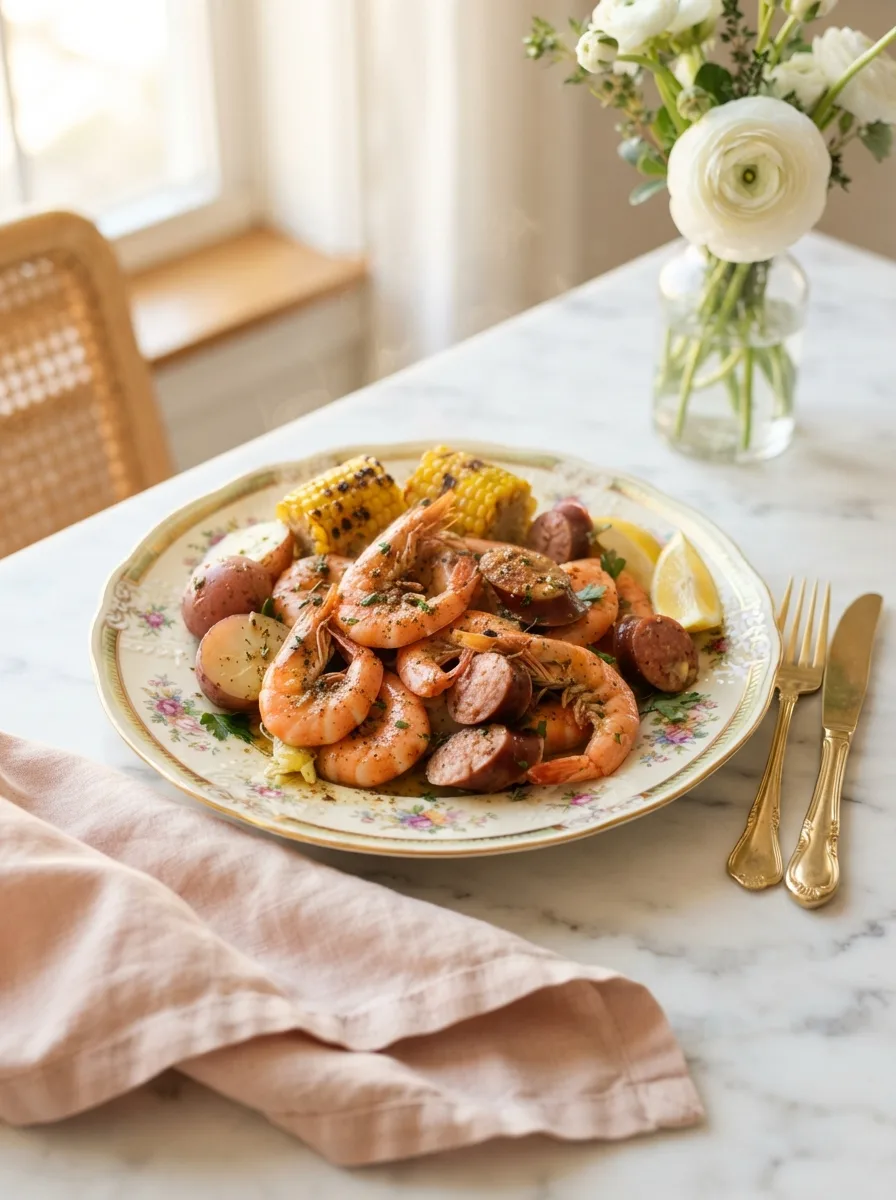
What makes this version different is the ratio — I use less butter than most copycat recipes call for, because too much just slides off instead of sticking. The seasoning goes into the butter, not just the boil water, so the flavor builds in layers instead of washing off when you drain everything.
The result is a shrimp boil that tastes like it was seasoned all the way through, not just dunked in hot water and dusted with Old Bay at the end.
★★★★★ “I’ve made shrimp boil for years and always ended up with bland potatoes and flavorless shrimp. The bag-shake trick actually works — every piece was coated.” — Marissa T., recipe tester (pre-launch)
Why You’ll Love This Stalekracker Shrimp Boil
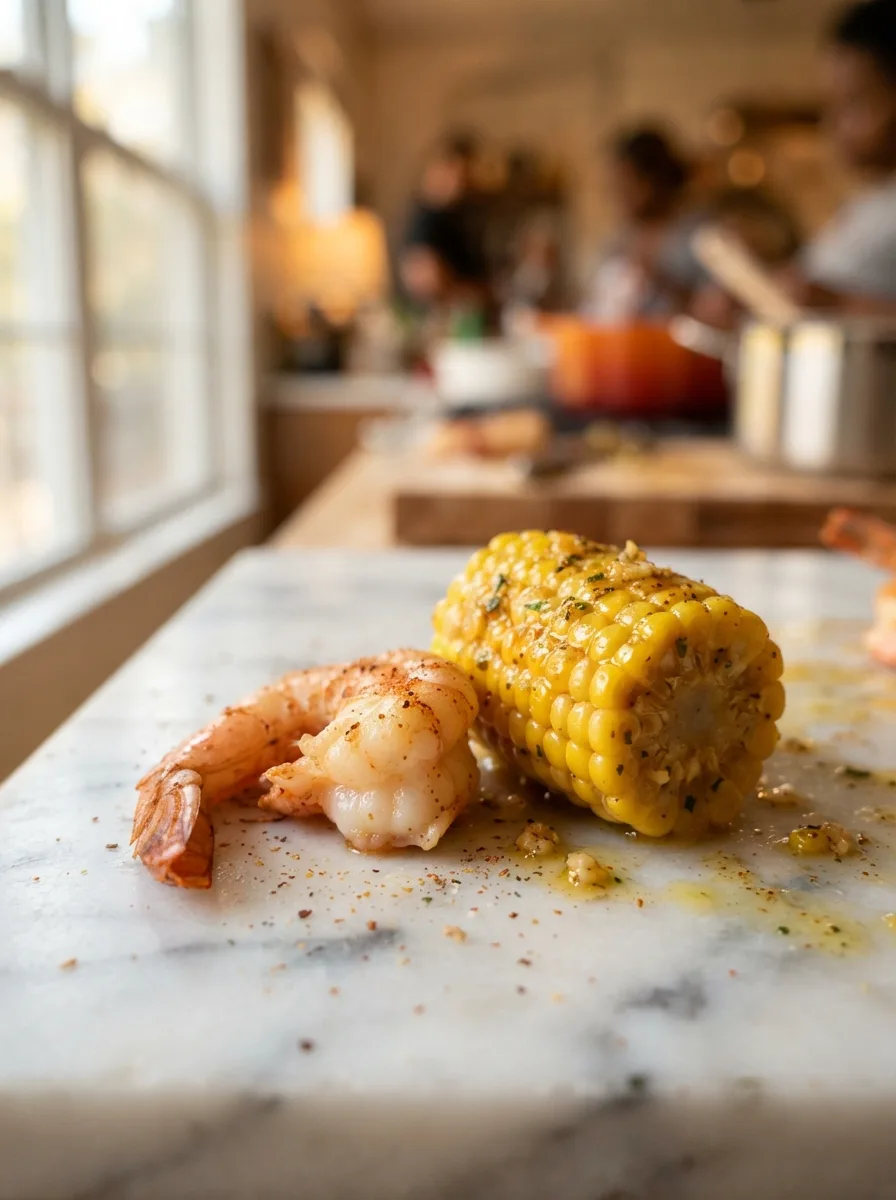
- The sauce actually sticks: No pooled butter at the bottom of the bowl — every piece comes out coated because of how it’s tossed, not just what it’s tossed in.
- One pot, one bag, minimal cleanup: Everything cooks in the same pot of seasoned water, then gets finished in a single bag. No sauté pan, no extra dishes.
- Built-in timing so nothing overcooks: The order you add ingredients matters more than the recipe card usually tells you — I’ll walk through exactly when the shrimp goes in and why.
- Scales easily for a crowd: Double the boil, double the butter sauce, same method. This is the recipe I make when people are coming over and I don’t want to be stuck in the kitchen.
Key Ingredients
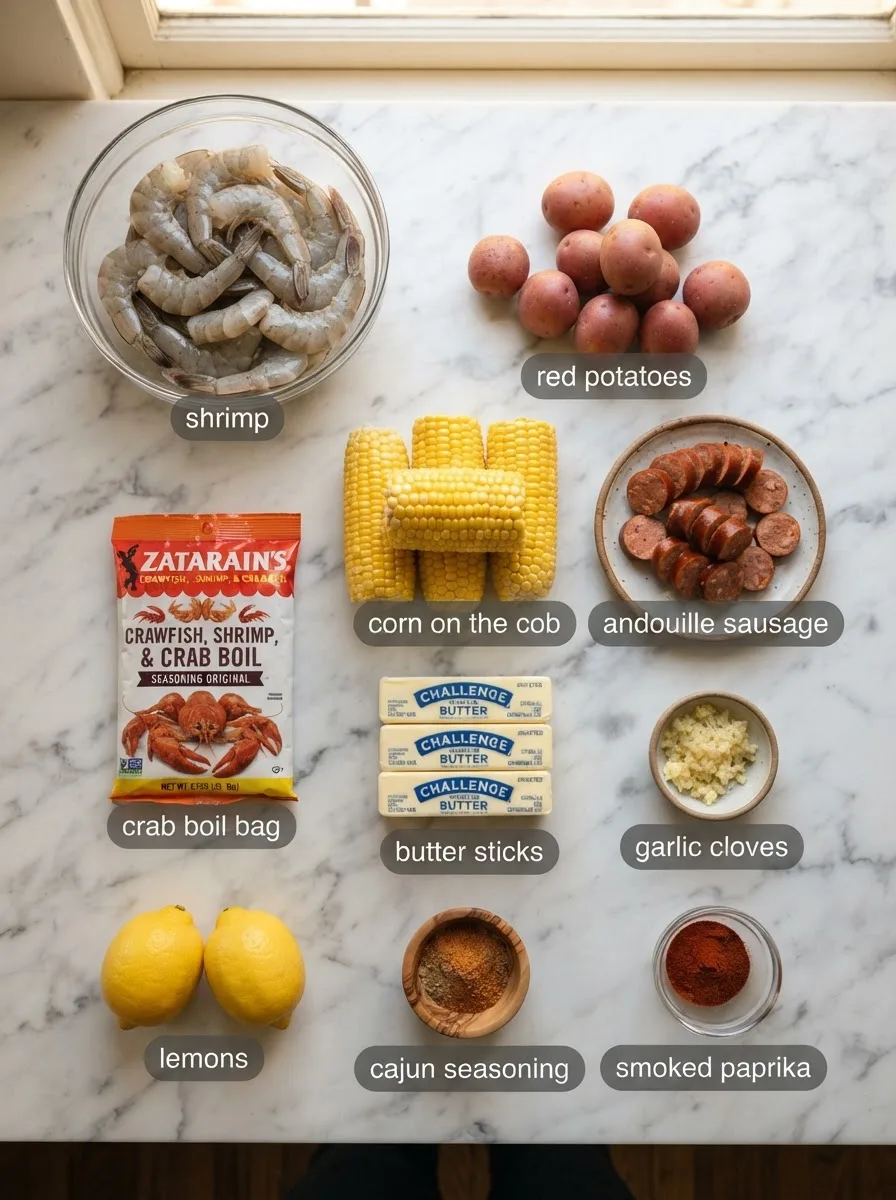
Shell-on shrimp (2 lbs, large, deveined). Shell-on holds up better in the boil and adds flavor to the water as it cooks — peeled shrimp turn rubbery faster and lose that extra layer of flavor. If you genuinely can’t stand peeling shrimp at the table, use peeled and just pull them off the heat about a minute earlier.
Crab boil seasoning bag (3 oz, Zatarain’s or Louisiana brand). This goes into the boiling water itself, not just the butter sauce. It’s what seasons the potatoes and corn from the inside out instead of leaving them tasting like plain boiled starch under a seasoned coating.
Andouille sausage (2 lbs, sliced). Smoked sausage works as a substitute, but andouille has a coarser grind and more black pepper heat that holds its own against the butter sauce. Don’t use fresh (raw) sausage here — it needs to already be fully cooked before it goes into the pot.
Unsalted butter (4 sticks, melted). Unsalted lets you control the salt level yourself, since the boil water and the cajun seasoning are both already salty. This is also the ingredient most copycat recipes get wrong by using too much — more butter does not equal more flavor, it just equals sauce that slides off instead of clinging.
Cajun seasoning (2 tbsp, Slap Ya Mama or Tony Chachere’s). This goes into the butter sauce, layered on top of the seasoning already in the boil water. That’s the double-seasoning trick that makes this taste like more than a five-minute dump recipe.
Ingredient Note: Buy your shrimp the day you’re cooking if at all possible. Previously frozen shrimp that’s been sitting in a fridge case for days will taste noticeably more “fishy” once it hits hot butter — fresh or properly thawed-that-morning shrimp is the single biggest difference between a good boil and a great one.
Equipment You’ll Need
- Large stock pot (8-quart or bigger) — you need enough room for potatoes, corn, and sausage to move around in the water. A smaller pot means uneven cooking.
- Large heavy-duty zip-top bag or a cooler with a lid — this is not optional for the sauce method. A mixing bowl works in a pinch, but you’ll lose some of the coating effect (more on this below).
- Slotted spoon or spider strainer — for pulling ingredients out in stages, since everything doesn’t go in at the same time.
- Instant-read thermometer (optional but helpful) — shrimp are done at 120–130°F internal. If you’ve overcooked shrimp before, this takes the guesswork out entirely.
Controlling the Sauce Coating (A Controlled Test)
The most important variable in this whole recipe isn’t the seasoning blend — it’s how the butter sauce actually gets onto the food. I tested this three ways: tossed in a mixing bowl, shaken in a zip-top bag, and shaken in a small cooler with the lid on.
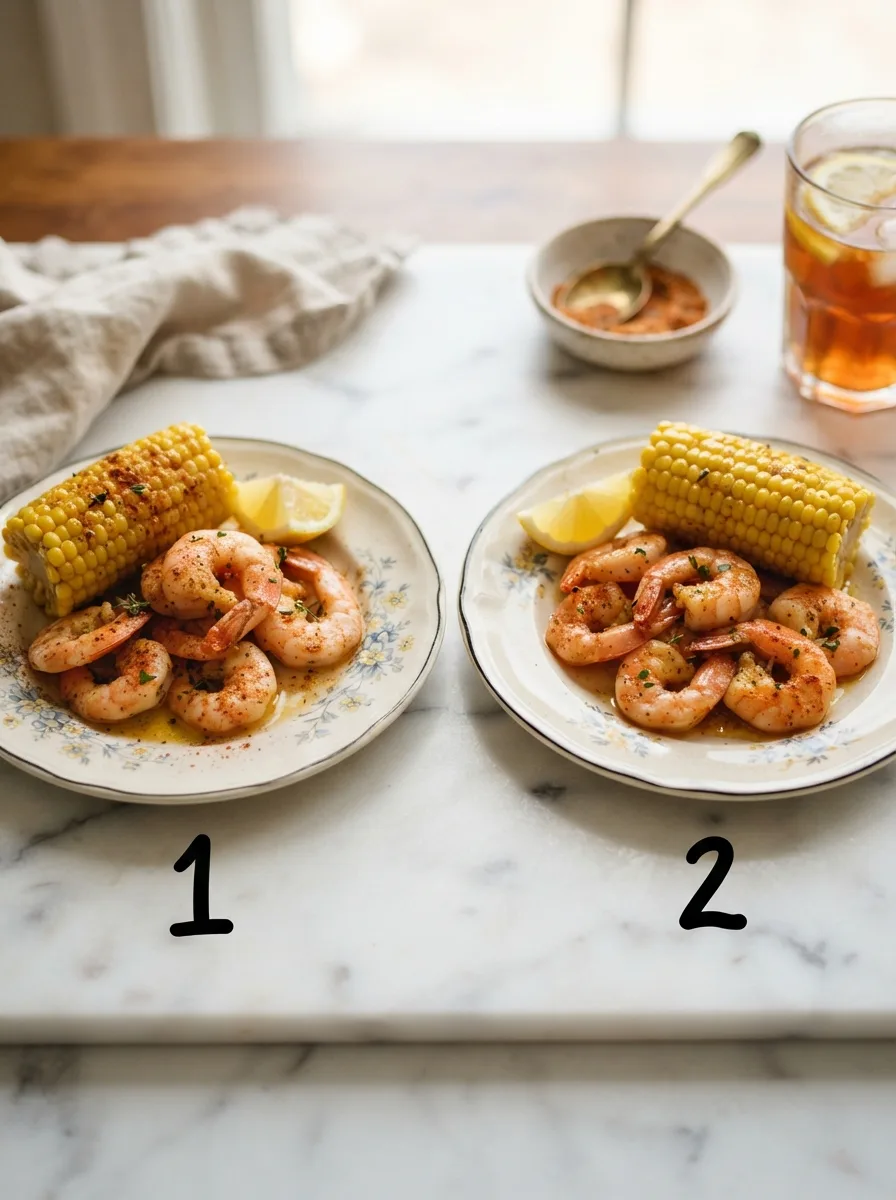
Bowl-tossed: The butter pooled in the bottom third of the bowl. Anything on top stayed nearly dry. This is the version most home cooks end up with, and it’s why bowl-tossed shrimp boil often tastes seasoned in some bites and bland in others.
Bag-shaken: Every piece got coated within about 15 seconds of shaking, because the bag forces contact on all sides instead of just the bottom layer. This is the stalekracker method, and it’s the one that actually works.
Cooler-shaken: Nearly identical results to the bag, with the bonus of being able to make a much bigger batch at once. If you’re feeding more than 6 people, this is worth setting up.
The takeaway: use a bag or a lidded container, not an open bowl. It costs you nothing extra and it’s the single biggest difference between a boil that tastes evenly seasoned and one that doesn’t.
How to Make Stalekracker Shrimp Boil
Before you start: Have your butter sauce ingredients measured out before the boil water even reaches a simmer — the timing on the back half of this recipe moves fast, and you don’t want to be mincing garlic while shrimp overcook.
Step 1 — Season and bring the water to a boil
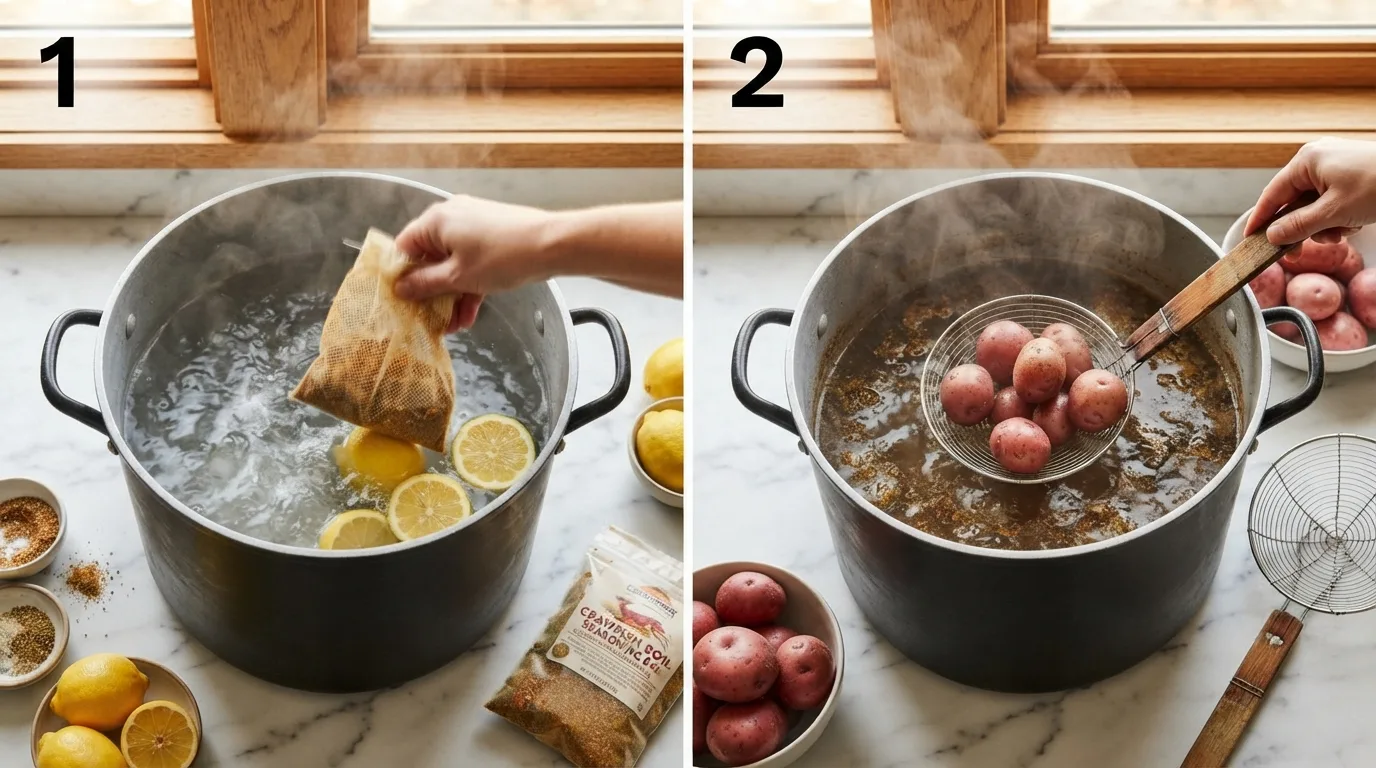
Fill your stock pot about two-thirds full with water. Add the crab boil seasoning bag, halved lemons, and halved garlic head. Bring it to a rolling boil over high heat — this usually takes 10–12 minutes depending on your stove. The water should smell strongly of the seasoning before you add anything else; if it doesn’t, let it boil a few minutes longer.
Step 2 — Cook the potatoes first
Add the red potatoes and boil for 12–15 minutes, until they’re just fork-tender but not falling apart. This is the ingredient that takes the longest, which is why it goes in first — everything else added later will finish cooking in roughly the same window.
Step 3 — Add the sausage and corn
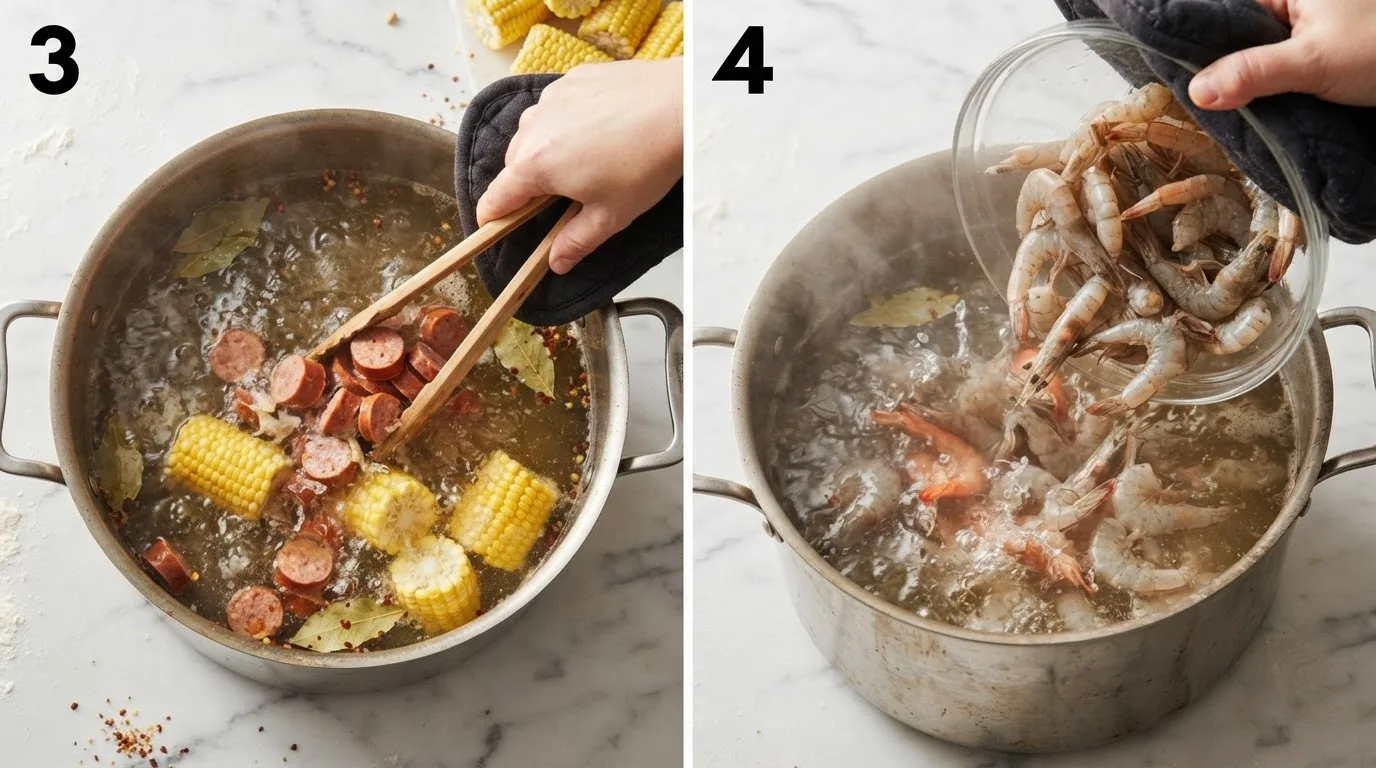
Add the sliced andouille and the corn pieces. Boil for another 6–8 minutes. The sausage is already fully cooked, so this step is really about letting it pick up flavor from the water, not cooking it through.
Step 4 — Add the shrimp last, and watch the clock
This is the scary moment, and it happens fast: add the shrimp and cook for only 2–3 minutes, just until they turn opaque and curl slightly. Shrimp go from perfectly cooked to rubbery in under a minute once they’re done — if you’re unsure, pull one out and check that the center isn’t still gray or translucent. It’s better to pull the pot off the heat a few seconds early than a few seconds late.
Step 5 — Drain everything and make the butter sauce
Drain the whole pot in a large colander. While it drains, melt the butter and whisk in the cajun seasoning, minced garlic, smoked paprika, and lemon juice. The sauce should look glossy and slightly separated — that’s normal, it comes back together once it hits the warm food.
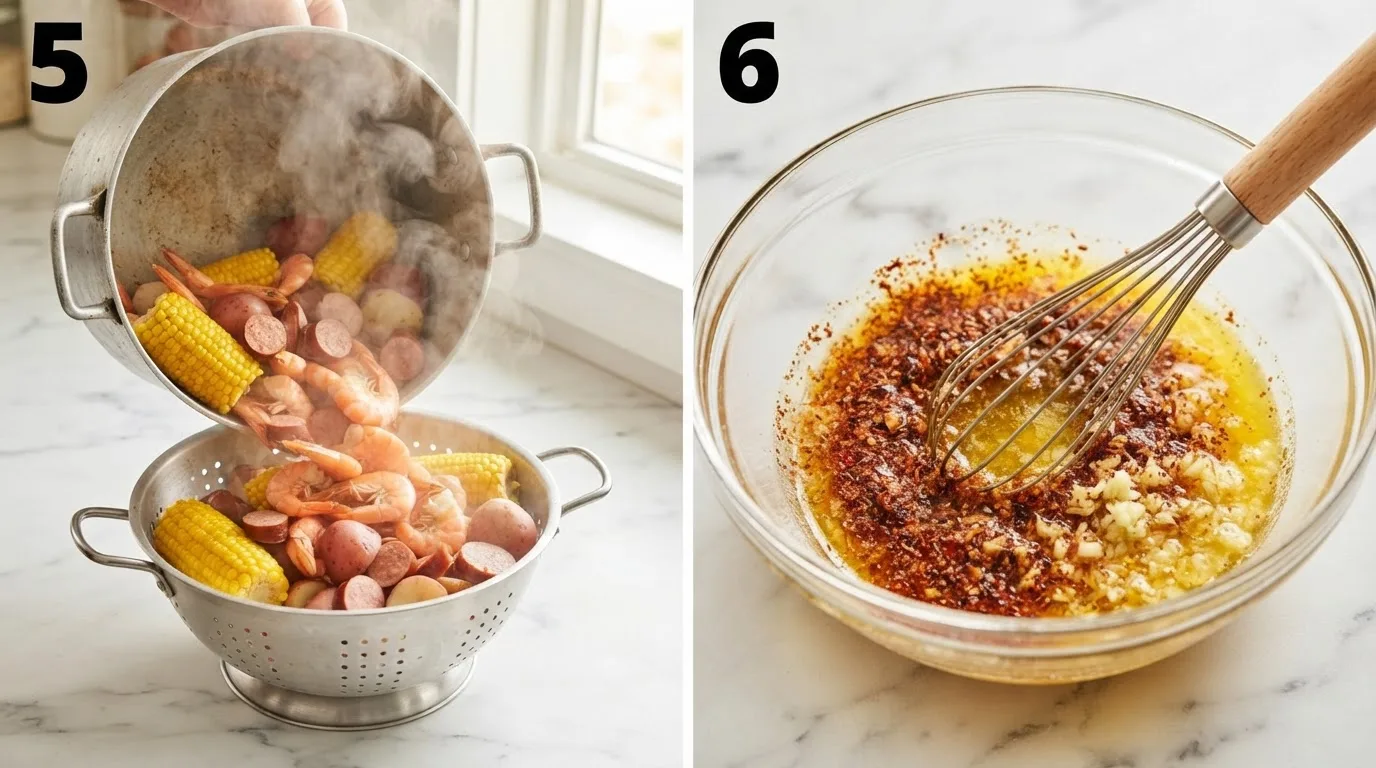
Step 6 — Shake it in the bag
Transfer the drained shrimp, corn, potatoes, and sausage into a large heavy-duty zip-top bag or a lidded cooler. Pour in the butter sauce, seal it, and shake vigorously for 30–45 seconds until everything is visibly glossy and coated. Dump it out onto a platter or newspaper-lined table and serve immediately, while it’s still hot.
Pro Tips for Perfect Stalekracker Shrimp Boil
Tip 1: Taste the boil water before you commit. After the seasoning bag has been boiling for a few minutes, taste a small spoonful of the water. It should taste distinctly salty and spiced — if it tastes like plain water with a hint of seasoning, the potatoes and corn won’t pick up enough flavor no matter how good your butter sauce is.
Tip 2: Don’t skip the shell-on shrimp unless you have to. The shells add flavor to the boil water as they cook, which is a small but real difference. If you use peeled shrimp, consider adding a few extra minutes of boil time to the potatoes and corn first, since peeled shrimp cook slightly faster.
Tip 3: Double-bag for a bigger batch. If you’re scaling this up for a crowd, use two bags instead of one oversized bag. An overfull bag doesn’t let the food move around enough to actually get coated — you’ll end up back at the bowl-toss problem.
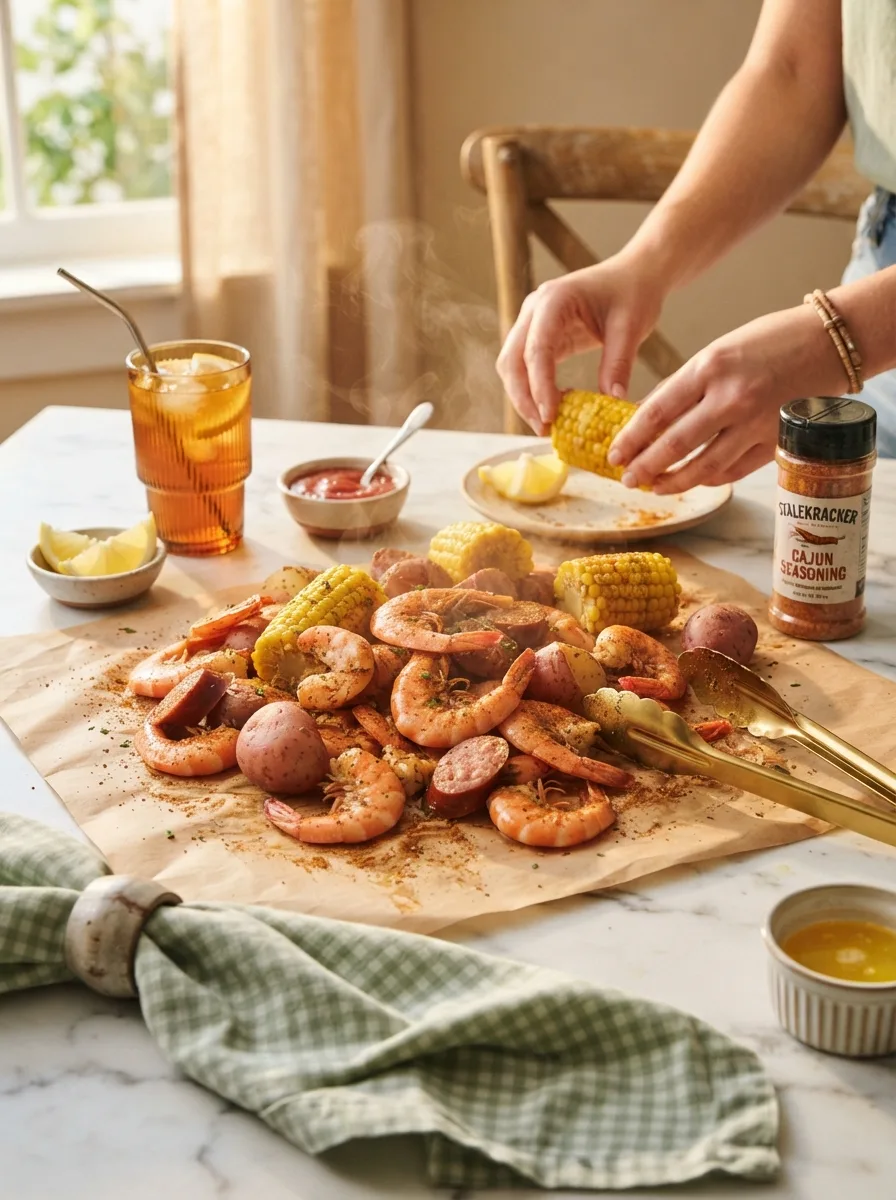
Tip 4: Serve it messy, on purpose. Dumping the finished boil directly onto a newspaper- or butcher-paper-lined table isn’t just for looks — it means nobody’s waiting for a serving spoon, and the butter sauce that drips off gets soaked up by whatever’s underneath instead of pooling on a plate.
Variations and Substitutions
Dietary Variations:
- Lower sodium: Use a low-sodium crab boil seasoning blend and cut the added salt in the butter sauce entirely. The dish will taste milder, but the garlic and paprika still carry plenty of flavor.
- Dairy-free: Swap the butter for an equal amount of melted ghee or a high-quality plant-based butter. Ghee actually clings slightly better than regular butter, so this isn’t a downgrade.
Flavor Variations:
- Extra spicy: Double the hot sauce in the butter mixture and add ½ teaspoon of cayenne. Taste-test the butter sauce alone before shaking it into the bag — it should taste almost too spicy on its own, since it mellows once it coats the food.
- Garlic-forward: Increase the minced garlic to 2 tablespoons and add it to both the boil water and the butter sauce. This version leans more toward a classic garlic butter shrimp flavor.
Ingredient Substitutions:
- Andouille sausage → smoked kielbasa (milder, less spice, same texture)
- Red potatoes → baby Yukon golds (slightly creamier, same cook time)
- Fresh corn → frozen corn on the cob, thawed first (add in the last 4 minutes only)
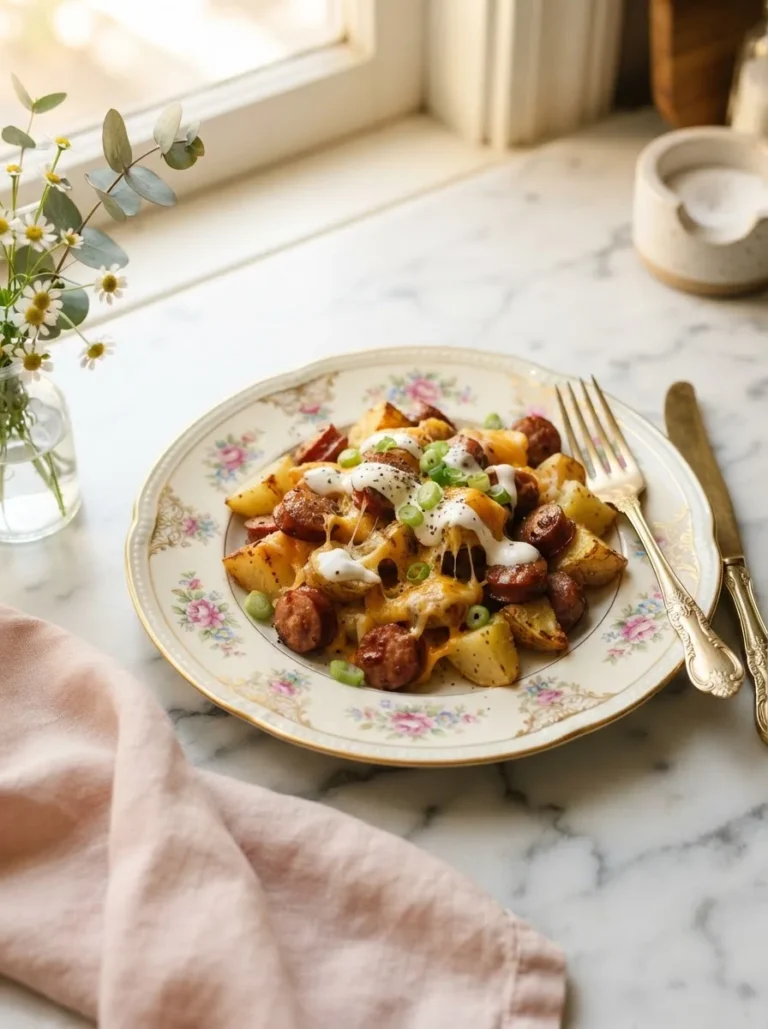
If you liked the potato-and-sausage combination in this boil, my cheesy ranch potatoes and sausage recipe uses the same pairing in a completely different, oven-baked direction — worth trying if you want that flavor combo without the pot of boiling water.
Troubleshooting
My shrimp came out rubbery — what happened?
This almost always means the shrimp went into the pot too early or stayed in too long. Shrimp only need 2–3 minutes once the water returns to a boil after adding them. If you’re cooking a large batch, pull them the moment they turn opaque and curl into a loose “C” shape — they’ll continue cooking slightly from residual heat even after you drain them.
The butter sauce isn’t sticking to anything — why?
Either there’s too much liquid still clinging to the food from the boil, or you’re using a bowl instead of a bag. Shake off excess water in the colander before transferring to the bag, and make sure you’re using a sealed bag or lidded container, not an open bowl — an open bowl can’t create the tumbling contact that makes the sauce cling evenly.
My potatoes are still hard after 15 minutes — what went wrong?
Large or extra-firm potatoes sometimes need longer than the standard 12–15 minutes. Check with a fork at the 12-minute mark, and if there’s real resistance, give them another 5 minutes before adding the sausage and corn. Cutting larger potatoes in half before boiling also speeds this up significantly.
Storage and Make-Ahead
Counter: Don’t leave the finished boil out longer than 2 hours, since it contains both shellfish and dairy — both spoil faster at room temperature than most leftovers.
Refrigerator: Store in an airtight container for up to 3 days. The butter sauce will solidify when cold; that’s normal.
Freeze: Freezing isn’t recommended for the finished dish — the potatoes turn grainy and the shrimp texture suffers on thawing. If you want to freeze ahead, freeze the raw shrimp and uncooked sausage separately and boil fresh.
Reheating: Reheat gently in a covered skillet over medium-low heat with a splash of water, just until warmed through — about 5 minutes. Microwaving works in a pinch but toughens the shrimp slightly.
Make-Ahead: You can prep the butter sauce up to 2 days ahead and store it covered in the fridge. Rewarm it gently on the stove or in the microwave until pourable again before shaking it with the boil.
Frequently Asked Questions
Q: What is a stalekracker shrimp boil, exactly? A: It’s a shrimp boil method popularized on social media by Wyatt Beckham (@stalekracker), where shrimp, corn, potatoes, and sausage are boiled in seasoned water, then drained and shaken in a bag or cooler with a garlic butter sauce instead of being served plain or just dusted with seasoning.
Q: Do I have to use a bag, or can I just toss everything in a bowl? A: A bowl works, but the coating comes out noticeably uneven — see the Controlled Test section above. A sealed bag or lidded cooler gives you full, even coverage in under a minute of shaking.
Q: Can I make this without seafood boil seasoning bags? A: Yes. Combine 2 tablespoons of Old Bay, 2 bay leaves, and a tablespoon of whole peppercorns as a substitute for the seasoning bag. It won’t taste identical, but it gets you close.
Q: How spicy is this recipe? A: As written, it’s mild to medium — noticeable cajun flavor without heavy heat. See the Flavor Variations section for how to push it spicier.
Q: Can I make this ahead for a party? A: The boil itself is best served fresh within about 15 minutes of finishing, since the shrimp texture declines the longer it sits in the warm butter sauce. You can prep the butter sauce ahead (see Make-Ahead above) to save time day-of.
Q: What should I serve with a shrimp boil? A: Crusty bread for soaking up extra butter sauce, a simple green salad to cut the richness, and cold beer or sweet tea are the classic pairings.
Q: Can I use frozen shrimp? A: Yes, but thaw it completely and pat it dry before adding it to the pot. Ice crystals on frozen shrimp will dilute your seasoned boil water.
Q: Why does my boil water need to taste “too salty” before I add anything? A: Because the potatoes and corn only pick up a fraction of the seasoning in the water as they cook. If the water tastes correctly seasoned to you before cooking, the finished vegetables will taste under-seasoned once they’re done.
More Recipes You’ll Love
- Cheesy Ranch Potatoes and Sausage — the same potato-and-sausage combination, baked instead of boiled
- Dolly’s Chicken and Stuffing Casserole — an easy make-ahead dinner for busy weeknights
- Cheesecake Bread — a sweet, cream-cheese-swirled loaf if you need dessert after this boil
- Banana Tempura — a crispy, unexpected way to end a big seafood spread
Foolproof Stalekracker Shrimp Boil
Ingredients
For the boil:
- 3 lb small red potatoes, halved if large
- 4 ears corn, cut into thirds
- 2 lb andouille sausage, sliced into 2-inch pieces
- 2 lb large shell-on shrimp, deveined
- 1 bag (3 oz) crab boil seasoning
- 2 lemons, halved
- 1 head garlic, halved
- Water, to cover
For the butter sauce:
- 2 cup (4 sticks) unsalted butter, melted
- 2 tbsp cajun seasoning
- 1 tbsp minced garlic
- 1 tsp smoked paprika
- Juice of 1 lemon
- 1 tsp hot sauce (optional)
Instructions
- Fill a large stock pot two-thirds full with water. Add the crab boil seasoning bag, halved lemons, and halved garlic head. Bring to a rolling boil over high heat, about 10–12 minutes.
- Add the red potatoes and boil for 12–15 minutes, until just fork-tender.
- Add the sliced sausage and corn pieces. Boil for another 6–8 minutes.
- Add the shrimp and cook for 2–3 minutes, just until opaque and curled.
- Drain everything in a large colander. While it drains, whisk together the melted butter, cajun seasoning, minced garlic, smoked paprika, lemon juice, and hot sauce.
- Transfer the drained boil into a large zip-top bag or lidded cooler. Pour in the butter sauce, seal, and shake vigorously for 30–45 seconds until everything is evenly coated.
- Dump onto a platter or lined table and serve immediately.
Notes
- Taste the boil water before adding the potatoes — it should taste distinctly salty and seasoned, not just faintly flavored.
- Shell-on shrimp add flavor to the boil water as they cook; peeled shrimp works but cooks slightly faster, so watch the timing closely.
- Use a sealed bag or lidded cooler for the butter sauce step, not an open bowl — this is what gives you even coating instead of pooled sauce.
- For a bigger batch, use two bags instead of overfilling one — an overfull bag won't tumble the food enough to coat evenly.
- Leftovers keep in the fridge for up to 3 days in an airtight container.
- Freezing the finished dish isn't recommended; the potato and shrimp texture both suffer. Freeze raw shrimp and sausage separately if prepping ahead.
- Reheat gently in a covered skillet with a splash of water over medium-low heat, about 5 minutes.
- The butter sauce can be made up to 2 days ahead and rewarmed before use.
- For a spicier version, double the hot sauce and add ½ teaspoon cayenne to the butter sauce.
- Low-sodium crab boil seasoning works as a substitute if you're watching sodium intake — cut the added salt from the butter sauce as well.