Steve’s Lava Chicken Recipe (Tested)

The first time I made steves lava chicken recipe, my glaze turned into hard amber candy stuck to the bottom of the pan. The second time, it stayed thin and just slid off the chicken instead of clinging to it. Somewhere between those two failures was the actual “lava” — glossy, thick enough to coat a spoon, pooling around the chicken instead of running off it.
I tested this four times, changing only the glaze simmer time each round, until I found the exact window where the honey and hot sauce turn syrupy without scorching.
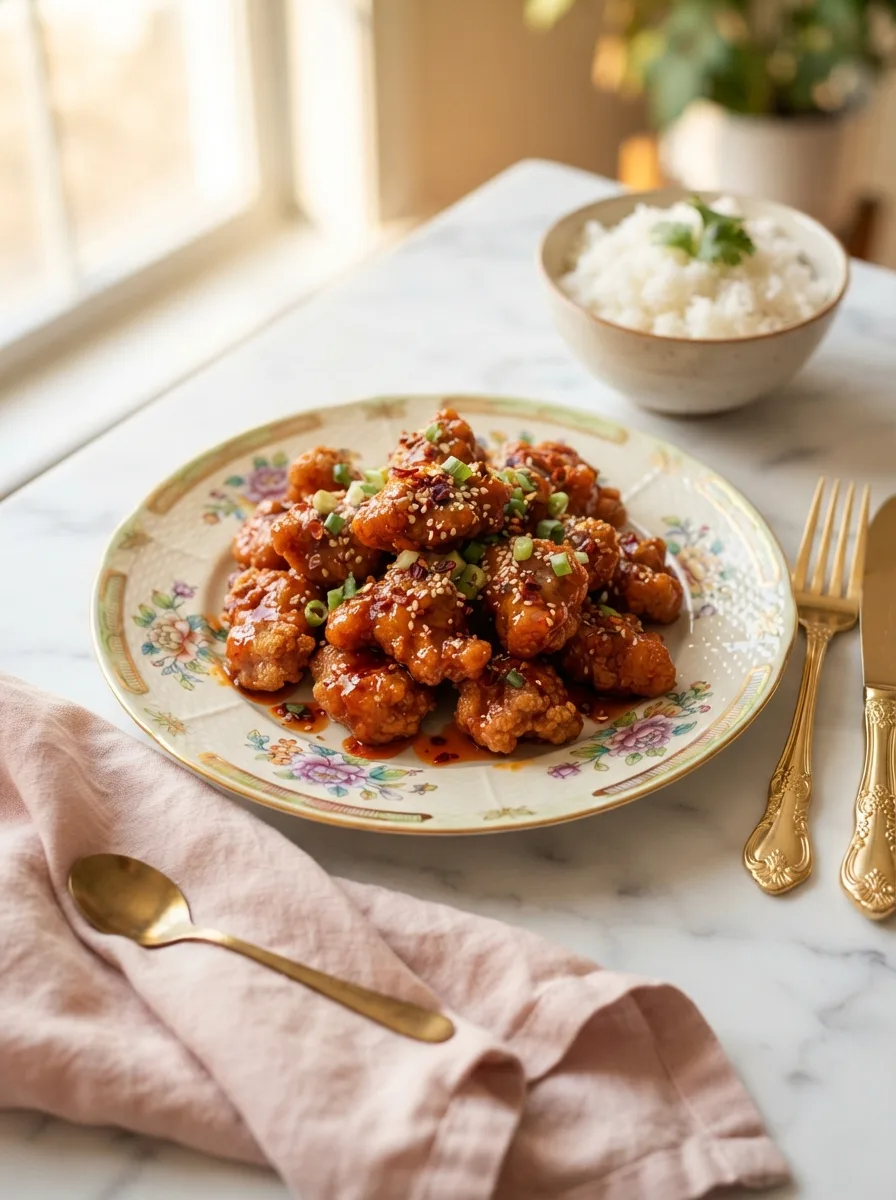
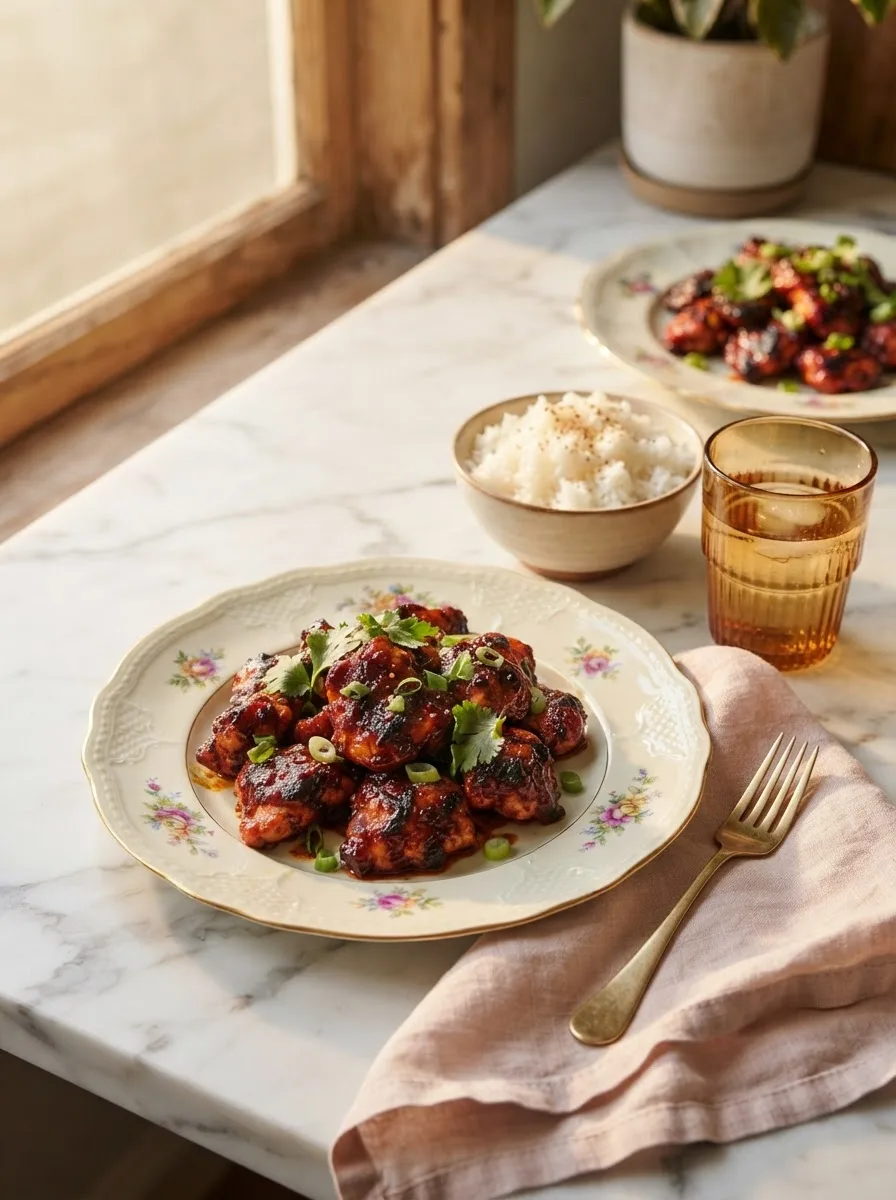
What you end up with is crispy, cornstarch-coated chicken thigh bites tossed in a butter-honey-hot sauce glaze that’s thick enough to coat every piece and shiny enough to actually look like lava when it catches the light. It’s spicy, sweet, and a little dangerous in the best way.
★★★★★ “I made this for my kids as a joke because they kept asking about the ‘lava chicken song,’ and now it’s in our weekly rotation for real. The glaze is the whole show.” — Priya, recipe tester (pre-launch)
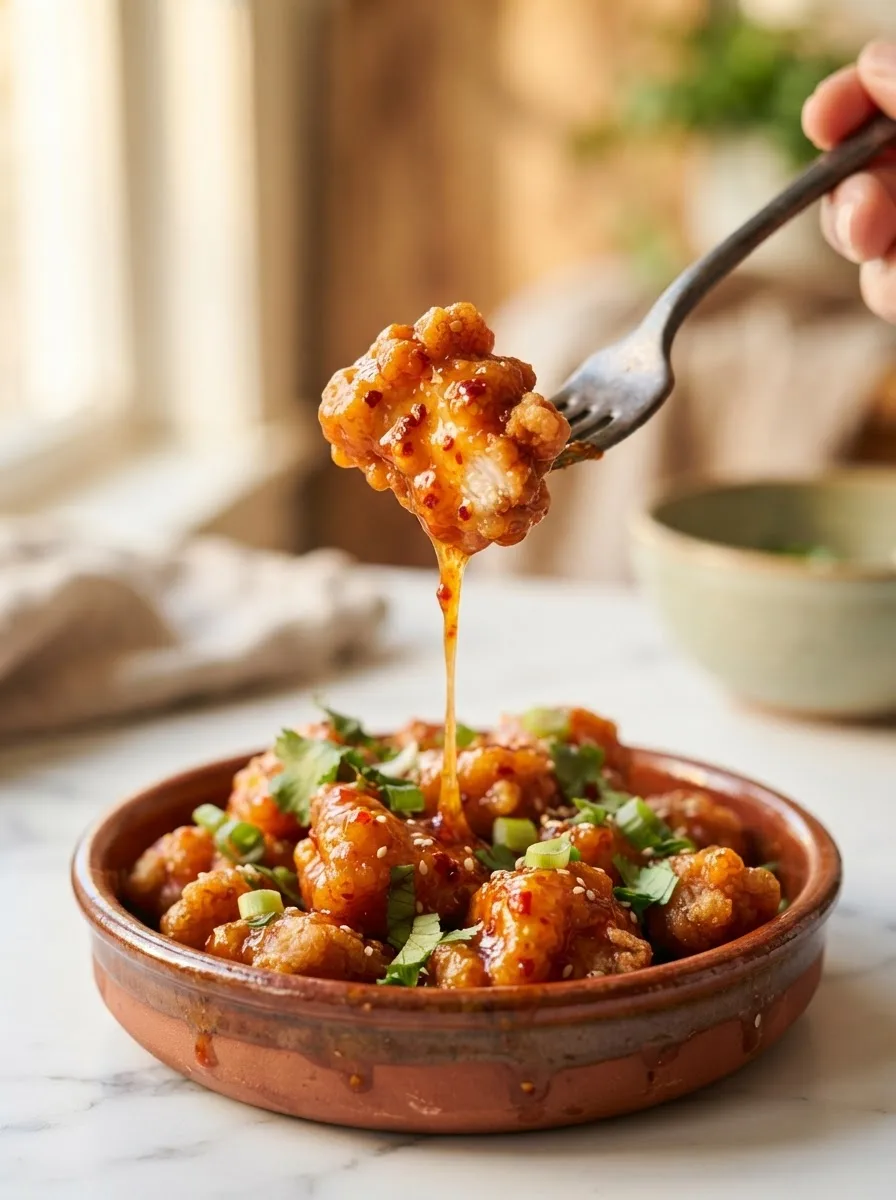
Why You’ll Love This Steve’s Lava Chicken Recipe
- The glaze actually behaves like lava: thick, glossy, and slow-moving — not a thin sauce that runs straight off the chicken.
- Crispy underneath the glaze: the cornstarch coating holds its crunch even after being tossed in a wet sauce.
- Ready in 35 minutes: this is a weeknight dinner, not a project.
- Built-in heat control: the base glaze is spicy-sweet, not blow-your-head-off — and it’s easy to dial up or down.
Key Ingredients
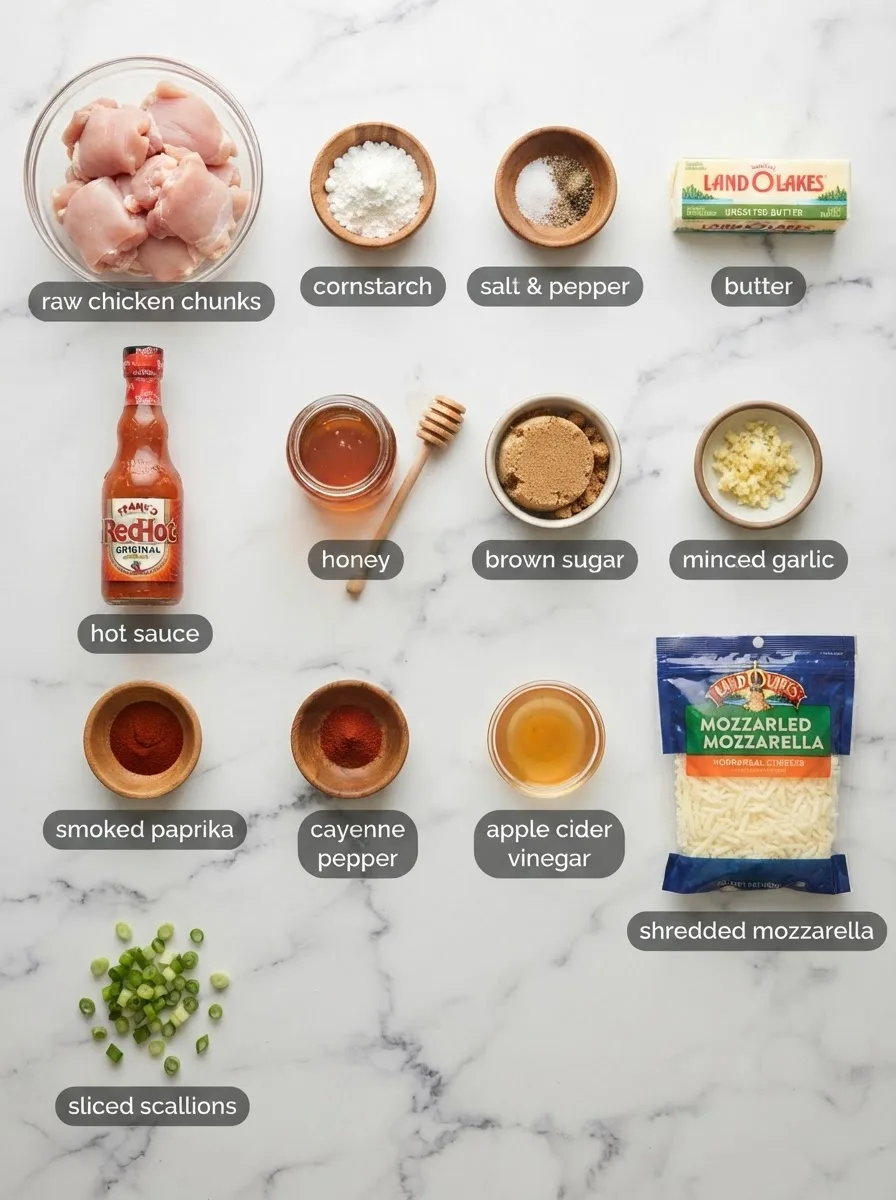
Chicken thighs (1.5 lbs / 680g). Boneless, skinless thighs stay juicy even after a hard sear, unlike breast meat, which dries out fast in a hot pan. Cut into 1-inch chunks so every piece gets maximum glaze contact. Chicken breast works as a substitute, but watch it closely — it goes from done to dry in about 90 seconds.
Cornstarch (⅓ cup / 40g). This is what makes the “crispy” half of the equation real. Cornstarch fries up into a light, craggy shell that actually holds onto the glaze instead of turning soggy the second it hits the sauce. Flour alone gives a softer, more cake-like crust — not what we want here.
Hot sauce (⅓ cup / 80ml). A classic cayenne-pepper hot sauce like Frank’s RedHot is the backbone of the glaze — vinegary, salty, and spicy without being fruity or sweet on its own. Sriracha changes the flavor direction (garlic-forward, thicker) but works if that’s what’s in your fridge.
Honey (¼ cup / 85g) and brown sugar (2 tablespoons / 30g). Honey gives the glaze its glossy, sticky lava texture. Brown sugar adds a deeper, more caramel-like sweetness that keeps the whole glaze from tasting one-note. Maple syrup can replace the honey at a 1:1 ratio, though the glaze sets up slightly less glossy.
Butter (4 tablespoons / 56g). Butter is what gives the glaze its shine and its cling. Without it, the glaze looks flat and matte instead of glossy and “molten.”
Ingredient Note: Dry the chicken thoroughly with paper towels before tossing it in cornstarch. Wet chicken makes the cornstarch clump instead of coating evenly, and clumpy coating is the #1 reason this recipe turns out soft instead of crispy.
Equipment You’ll Need
- Large skillet or cast-iron pan — needed for a hard, even sear. A nonstick pan works, but you won’t get quite as much crispy texture on the coating.
- Tongs — for turning the chicken pieces without knocking off the crust.
- Small saucepan (or the same skillet, wiped out) — for building the glaze separately so it reduces evenly.
- Instant-read thermometer — chicken thigh chunks are done at 165°F; this is the fastest way to check without cutting into every piece.
Controlling the Glaze Texture (A Controlled Test)
The entire identity of this recipe lives in the glaze. I tested three simmer times — 3 minutes, 5 minutes, and 8 minutes — to figure out exactly where “lava” actually happens.
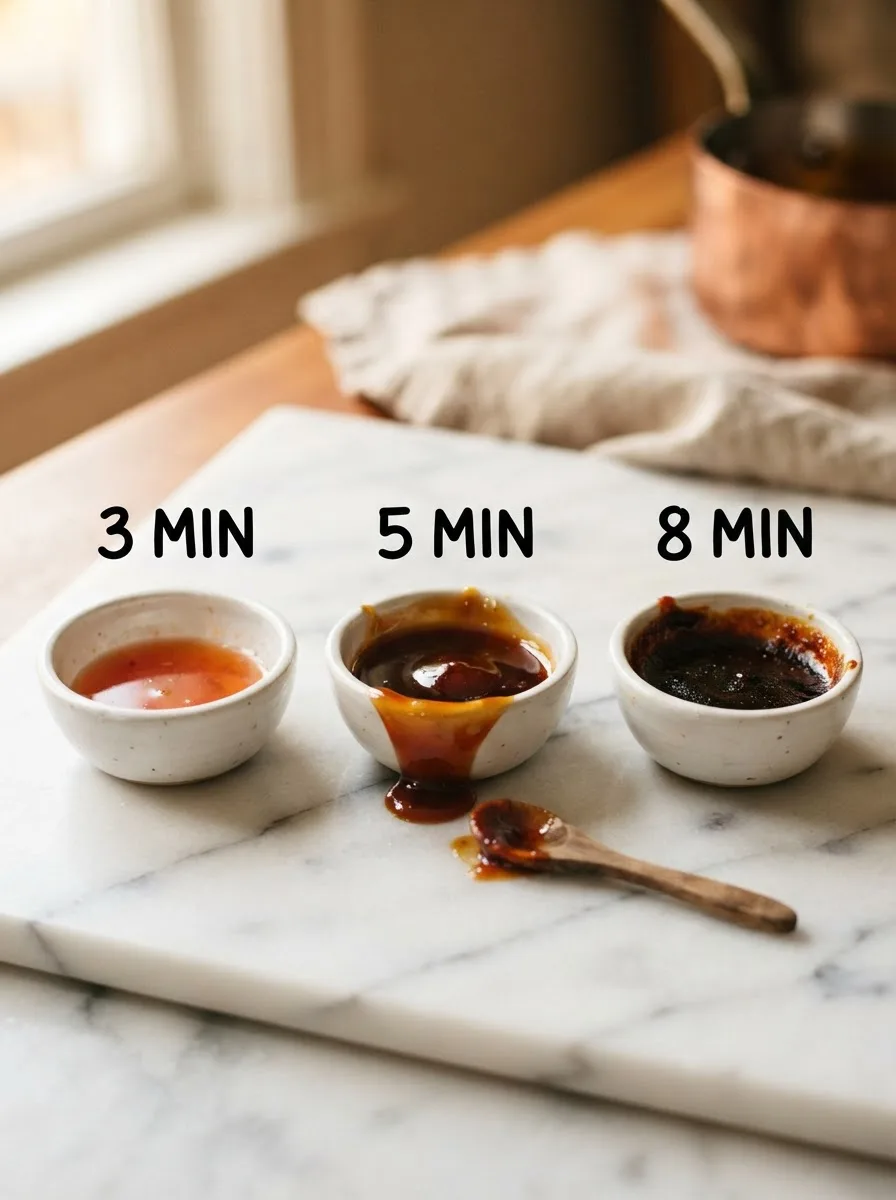
At 3 minutes, the glaze was still thin and watery — it slid straight off the chicken and pooled at the bottom of the bowl instead of clinging. At 8 minutes, the sugar had reduced too far and started to seize into a hard, taffy-like candy that cooled into a shell instead of staying glossy. 5 minutes was the sweet spot: thick enough to coat a spoon and hold its shape for a few seconds before slowly moving, which is exactly the “molten” effect we’re after. If your stove runs hot, start checking at the 4-minute mark.
How to Make Steve’s Lava Chicken
Before you start: Pat the chicken completely dry and let it sit at room temperature for 10 minutes. Cold, wet chicken straight from the fridge won’t crisp properly.
Step 1 — Cut and coat the chicken
Cut the chicken thighs into roughly 1-inch chunks. Toss them in a bowl with the cornstarch, salt, and pepper until every piece is coated in a thin, even layer. You should be able to see the chicken through the coating — a thick, pasty layer means too much moisture was left on the meat.
Step 2 — Sear until crispy and cooked through
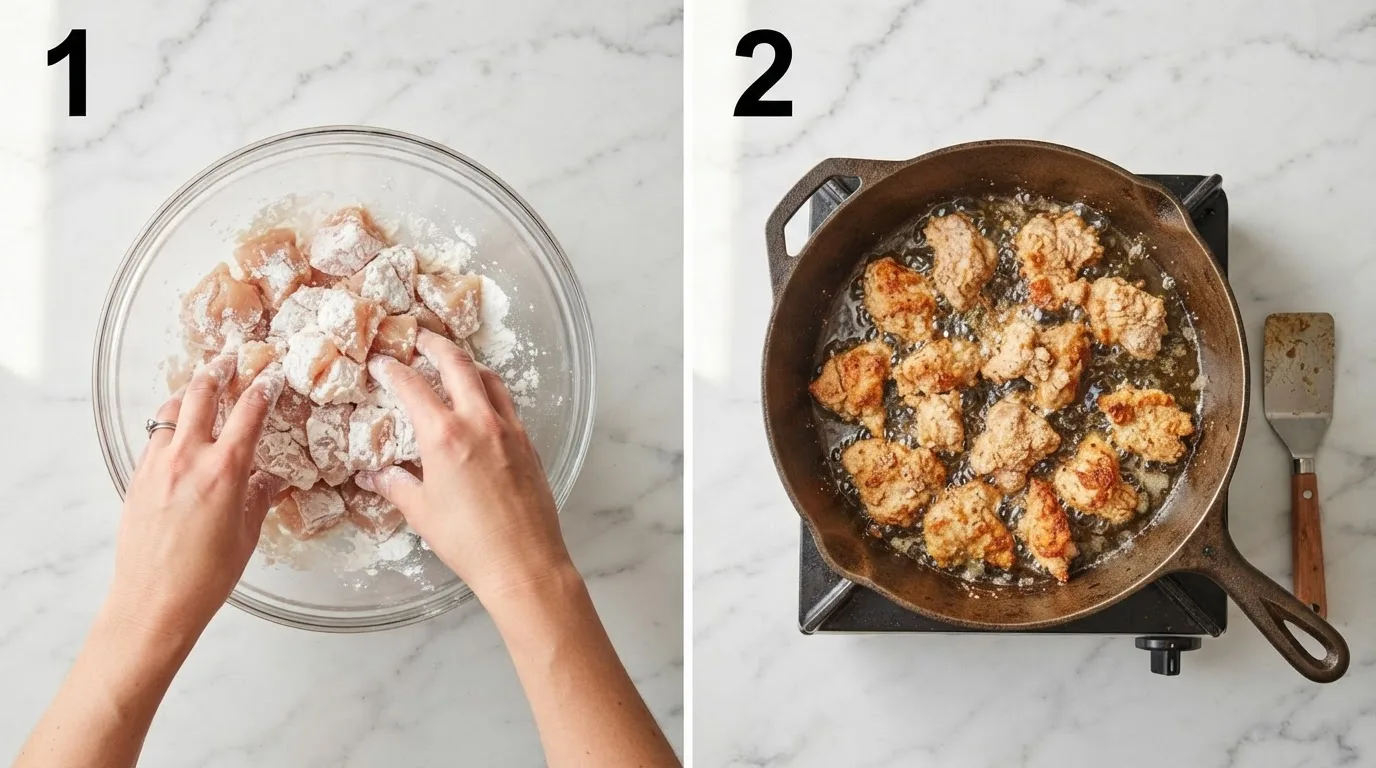
Heat the oil in a large skillet over medium-high until it shimmers. Add the chicken in a single layer, working in two batches if needed — overcrowding the pan traps steam and turns the crispy coating soggy. Sear for 3–4 minutes per side, until deep golden and the internal temperature reads 165°F. Transfer to a plate; don’t cover it, or the crust will soften.
Step 3 — Build the glaze base
In a small saucepan over medium heat, melt the butter. Add the minced garlic and cook for 30 seconds, just until fragrant — garlic burns fast, so keep the heat at medium, not high.
Step 4 — Reduce the glaze to “lava” texture
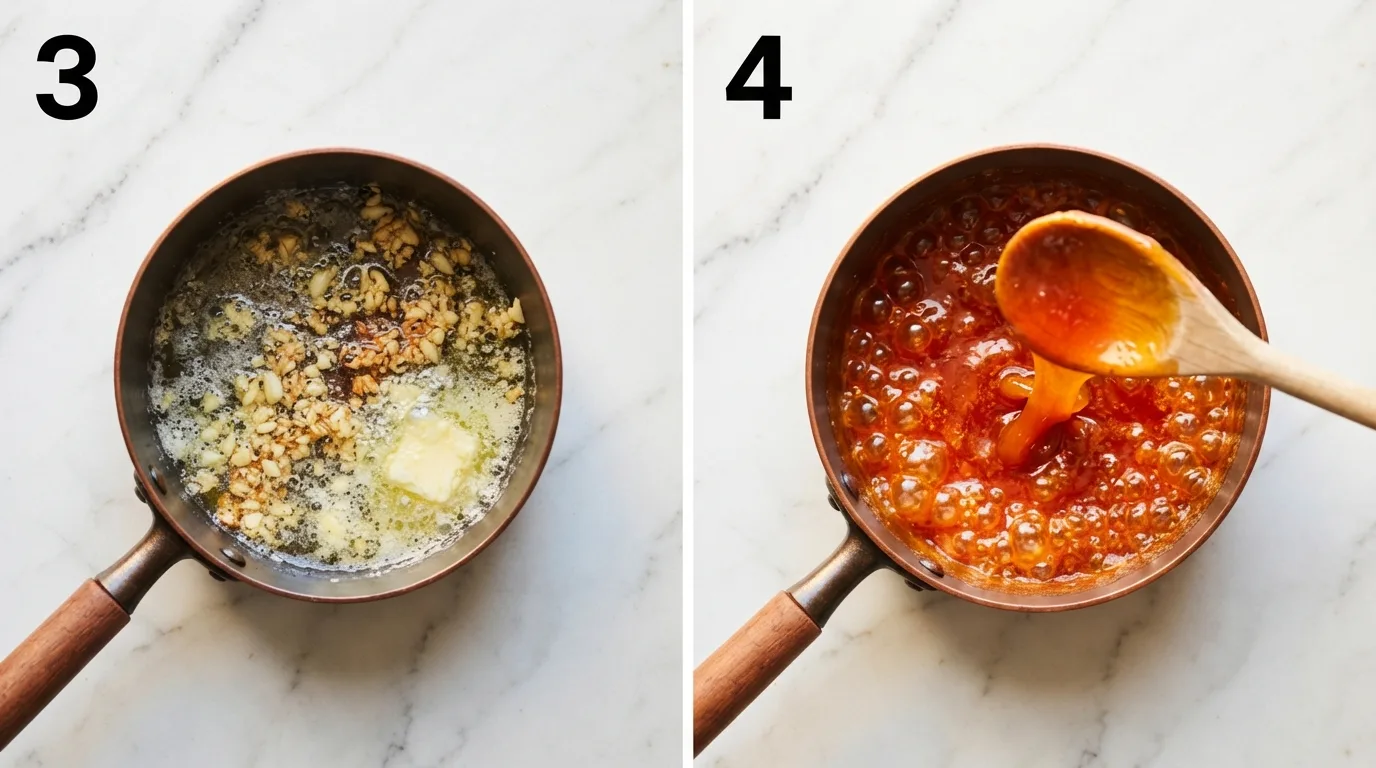
Stir in the hot sauce, honey, brown sugar, smoked paprika, cayenne, and apple cider vinegar. Bring to a gentle simmer and cook for about 5 minutes, stirring occasionally, until the glaze thickens enough to coat the back of a spoon and hold a slow-moving ribbon when you lift it out. This is the moment it turns from “sauce” into “lava.”
Step 5 — Toss the chicken in the glaze
Add the seared chicken back into the saucepan (or pour the glaze over the chicken in a large bowl) and toss until every piece is fully coated and glossy. Work quickly here — the glaze starts to set as it cools, so you want the chicken coated while it’s still hot and fluid.
Step 6 — Finish under the broiler (optional lava effect)
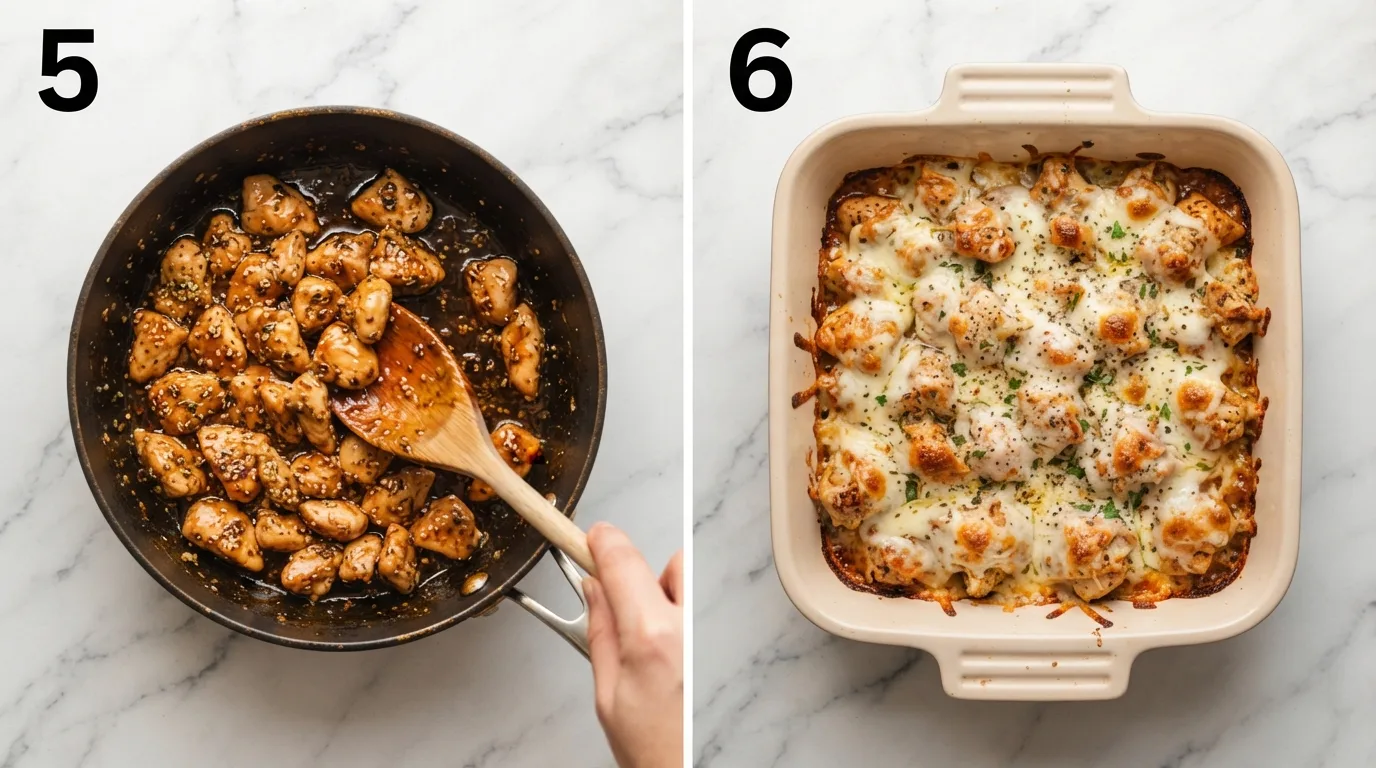
If you want the full “lava” cheese-pull effect, transfer the glazed chicken to an oven-safe dish, top with shredded mozzarella, and broil for 2–3 minutes until melted and just starting to brown in spots. Watch it closely — broilers turn cheese from melted to burnt in under a minute. Garnish with scallions and sesame seeds, and serve immediately while the glaze is still glossy.
Pro Tips for Perfect Steve’s Lava Chicken
Tip 1: Dry the chicken before coating. Any surface moisture turns the cornstarch gummy instead of crisp. A few extra minutes with paper towels makes a real difference here.
Tip 2: Don’t walk away from the glaze. Sugar-based glazes go from perfect to burnt in about 60 seconds once they hit the right temperature. Stay at the stove for the last 2 minutes of reduction.
Tip 3: Toss, don’t drown. Add the glaze gradually and toss as you go rather than dumping all of it in at once — this keeps the crispy coating from turning soft too fast.
Tip 4: Serve it hot. The glaze firms up as it cools, so this dish is best eaten within about 10 minutes of coating. If you need to hold it, keep the chicken uncoated and toss right before serving.
Variations and Substitutions
Dietary Variations:
- Gluten-free: Cornstarch is naturally gluten-free — just double-check your hot sauce label, since a few brands add wheat-based thickeners.
- Dairy-free: Swap the butter for a plain vegan butter or a neutral oil. The glaze will be slightly less glossy but still thickens properly.
Flavor Variations:
- Garlic-lime lava chicken: Add the zest and juice of one lime along with the garlic for a brighter, sharper version.
- Extra-fire version: Add ½ teaspoon of ghost pepper sauce or a pinch of ground ghost pepper to the glaze for serious heat — do this in small increments and taste as you go.
Ingredient Substitutions:
- Honey → maple syrup (1:1, slightly less glossy result)
- Chicken thighs → chicken tenders (cut into shorter pieces, reduce sear time by 1–2 minutes)
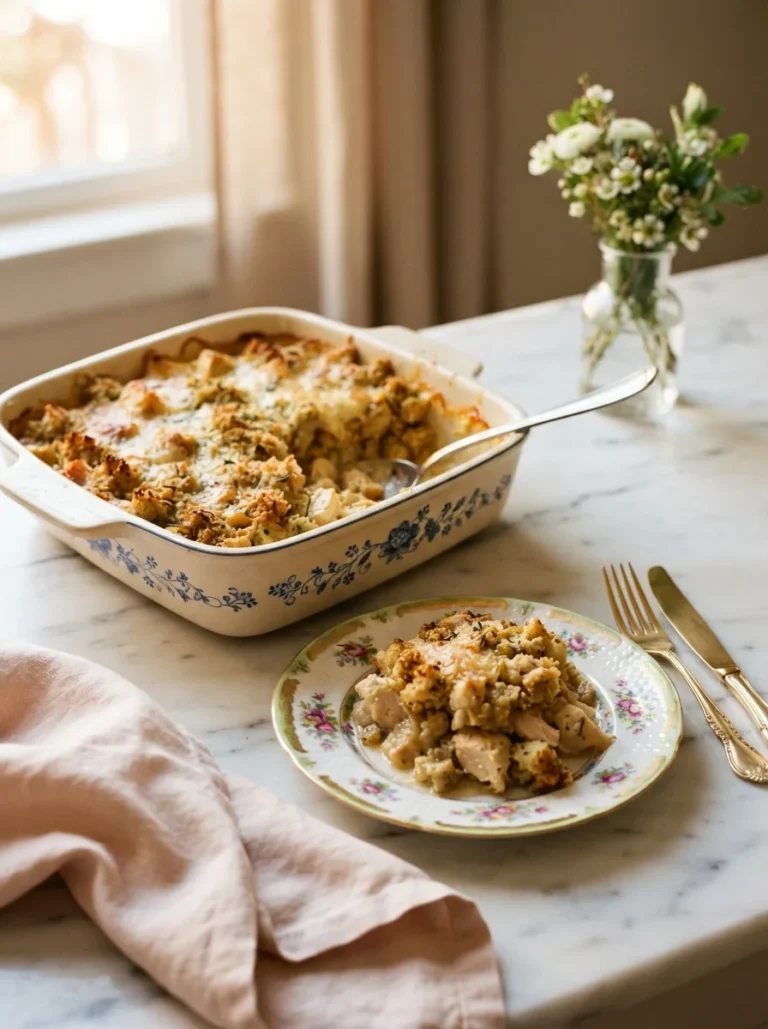
If you like recipes that lean sweet-and-savory with a similar cozy, crowd-pleasing energy, my dolly’s chicken and stuffing casserole is another one my testers keep coming back to.
Troubleshooting
Why is my glaze too thin and running off the chicken?
Most likely it didn’t simmer long enough. The glaze needs about 5 minutes at a gentle simmer to reduce and thicken — if you pull it early, it stays watery. Put it back on medium heat for another minute or two, stirring constantly, until it coats a spoon.
Why did my glaze turn into hard candy?
This means it simmered too long or the heat was too high. Sugar-based glazes cross from “glossy” to “seized” fast. If this happens, add a tablespoon of water and gently reheat while stirring — it usually loosens back up enough to toss with the chicken.
Why isn’t my chicken coating crispy?
The two most common causes are wet chicken before coating and an overcrowded pan. Pat the chicken fully dry before tossing in cornstarch, and sear in batches so each piece has room to actually make contact with the hot pan surface instead of steaming next to its neighbors.
Storage and Make-Ahead
Counter: Not recommended beyond 2 hours — the glaze softens and the chicken loses its texture.
Refrigerator: Store in an airtight container for up to 3 days. The coating won’t stay crispy, but the flavor holds up well.
Freeze: Freeze the seared, unglazed chicken pieces for up to 2 months. Make the glaze fresh when you’re ready to serve.
Reheating: Reheat in a 375°F oven for 8–10 minutes, or in an air fryer for 5 minutes, to bring back some crispness. Microwaving works but leaves the coating soft.
Make-Ahead: The glaze can be made up to 3 days ahead and stored in the fridge — reheat gently on the stove and toss with freshly seared chicken right before serving.
Frequently Asked Questions
Q: What is Steve’s lava chicken recipe? A: It’s a viral spicy-sweet chicken bite recipe inspired by the “lava chicken” trend — crispy cornstarch-coated chicken tossed in a thick, glossy honey-hot sauce glaze that pools and drips like molten lava.
Q: Why is it called lava chicken? A: The name comes from the glaze itself — when properly reduced, it’s thick, deep orange-red, and moves slowly, similar to the look of flowing lava.
Q: Can I make this less spicy? A: Yes. Cut the cayenne entirely and reduce the hot sauce to ¼ cup. The glaze will still have a mild tang and sweetness without much heat.
Q: Can I bake the chicken instead of pan-frying it? A: You can, at 425°F for about 18–20 minutes, flipping halfway. You’ll get less crispy texture than a hard pan sear, but it still works.
Q: Can I air fry the chicken? A: Yes — air fry the coated chicken at 400°F for 12–14 minutes, shaking the basket halfway through, then toss in the glaze as directed.
Q: Can I use chicken breast instead of thighs? A: You can, but watch it closely — breast meat dries out faster than thigh meat. Pull it from the pan the moment it hits 165°F.
Q: How do I store leftovers? A: In an airtight container in the fridge for up to 3 days. Reheat in the oven or air fryer to bring back some crispness.
Q: What should I serve with lava chicken? A: Steamed white rice is the classic pairing since it soaks up the extra glaze. It’s also good alongside cheesy ranch potatoes and sausage.
More Chicken Recipes You’ll Love
- Dolly’s Chicken and Stuffing Casserole — a cozy, savory baked casserole with a similar comforting, crowd-pleasing energy
- Cheesy Ranch Potatoes and Sausage — the perfect starchy side to serve alongside a saucy main
- Cheesecake Bread — if you want something sweet to follow up a spicy dinner
- Banana Tempura — another crispy-coated recipe if you loved the crunch on this chicken
Steve’s Lava Chicken Recipe (Tested)
Ingredients
For the chicken:
- 1.5 lb boneless, skinless chicken thighs, cut into 1-inch chunks
- 1/3 cup cornstarch
- 1/2 teaspoon salt
- 1/4 teaspoon black pepper
- 2 tablespoon neutral oil (avocado or vegetable)
For the lava glaze:
- 4 tablespoon unsalted butter
- 4 clove garlic, minced
- 1/3 cup (80ml) hot sauce (such as Frank’s RedHot)
- 1/4 cup honey
- 2 tablespoon brown sugar
- 1 teaspoon smoked paprika
- 1/2 teaspoon cayenne pepper (optional)
- 1 tablespoon apple cider vinegar
- Pinch of salt
For serving (optional):
- Steamed white rice
- 1/2 cup shredded mozzarella
- Sliced scallions and sesame seeds
Instructions
- Pat the chicken thoroughly dry and let sit at room temperature for 10 minutes.
- Toss the chicken with cornstarch, salt, and pepper until evenly coated.
- Heat oil in a large skillet over medium-high heat. Sear chicken in batches for 3–4 minutes per side, until golden and internal temperature reaches 165°F. Set aside.
- In a small saucepan over medium heat, melt the butter and cook the garlic for 30 seconds until fragrant.
- Add hot sauce, honey, brown sugar, smoked paprika, cayenne, and vinegar. Simmer for about 5 minutes, stirring occasionally, until the glaze coats the back of a spoon.
- Add the seared chicken to the glaze and toss until fully coated.
- Optional: transfer to an oven-safe dish, top with mozzarella, and broil for 2–3 minutes until melted and lightly browned.
- Garnish with scallions and sesame seeds. Serve immediately over rice.
Notes
- Dry the chicken completely before coating — moisture is the main cause of a soft, non-crispy crust.
- The glaze needs close attention in the final 2 minutes of reduction; sugar-based glazes can go from glossy to burnt quickly.
- Leftover chicken loses crispness in the fridge but reheats well in an air fryer or 375°F oven for 8–10 minutes.
- The glaze can be made up to 3 days ahead and reheated gently on the stove before tossing with fresh chicken.