Foolproof Svickova Recipe

If you’ve never had svickova, the short version is this: beef sirloin braised low and slow, sliced thin, and draped in a root vegetable cream sauce that tastes nothing like a regular pot roast gravy. It’s the dish Czech grandmothers make for Sunday dinner, and it’s also the dish that intimidated me for years because every version I tried online either turned out gritty from too much flour or thin and watery from not enough reduction.
I tested this svickova recipe four times before I was willing to publish it. The first attempt used a heavy flour roux and the sauce tasted like paste. The second skipped flour entirely but never thickened past soup. By the third and fourth rounds, I’d figured out the actual trick — it isn’t flour at all, it’s how long you reduce the pureed vegetables before the cream goes in.
The result is a sauce with real body, a beef sirloin that shreds tender with a fork, and none of the graininess that makes so many home versions taste like they came from a packet.
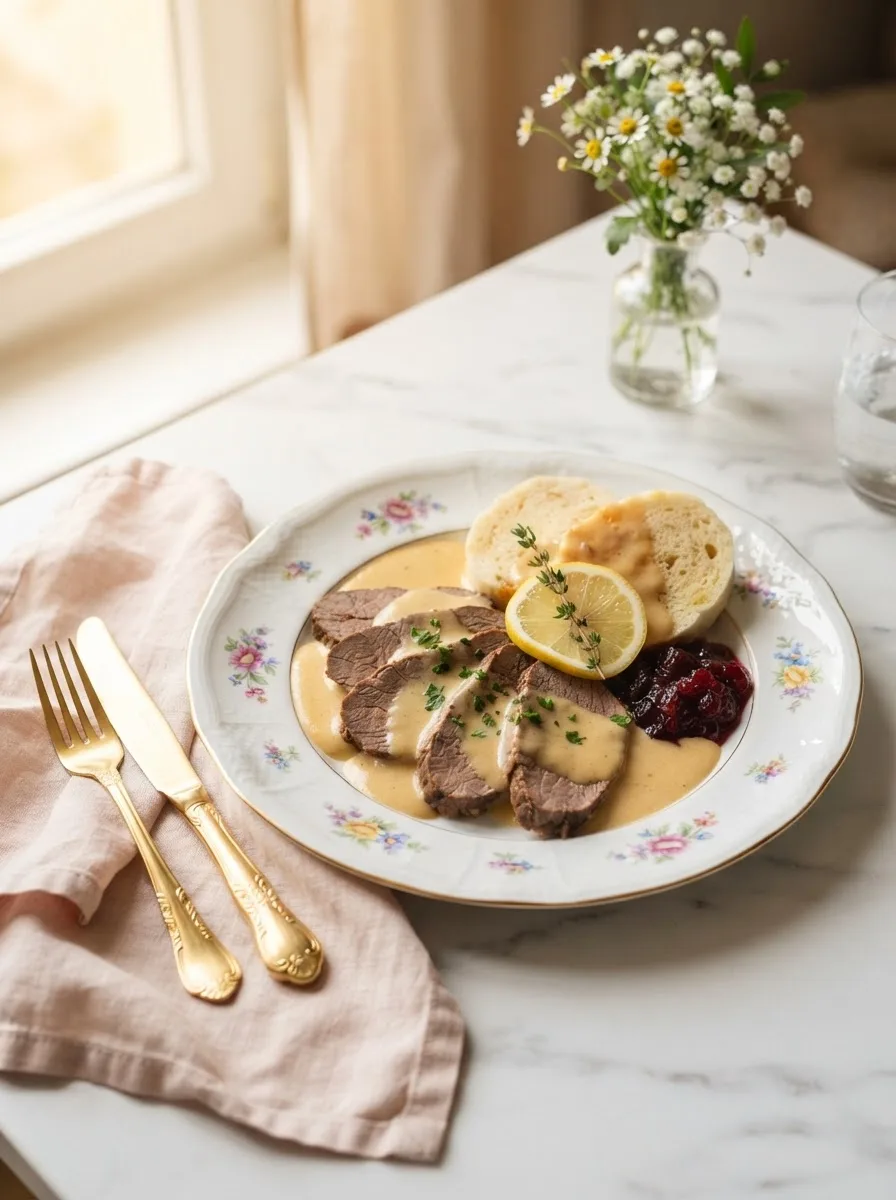
What makes this version different is the sauce texture. Most recipes I found online either lean too hard on flour (grainy, dull) or skip thickening altogether and call it “rustic” (it’s just thin). This one gets its body the honest way — from the vegetables themselves, reduced until they can carry the cream without a single spoonful of flour.
It’s not a fast weeknight dinner. It’s a Sunday project, the kind you start after breakfast and finish with the table set. But it’s genuinely forgiving once the beef is in the pot — most of the work is just waiting.
★★★★★ “I grew up eating svickova at my Czech grandmother’s table, and I was skeptical an American food blog could get it right. This one did — the sauce texture is exactly what I remember, and the beef came out fork-tender the first time I made it.” — Jana, recipe tester (pre-launch)
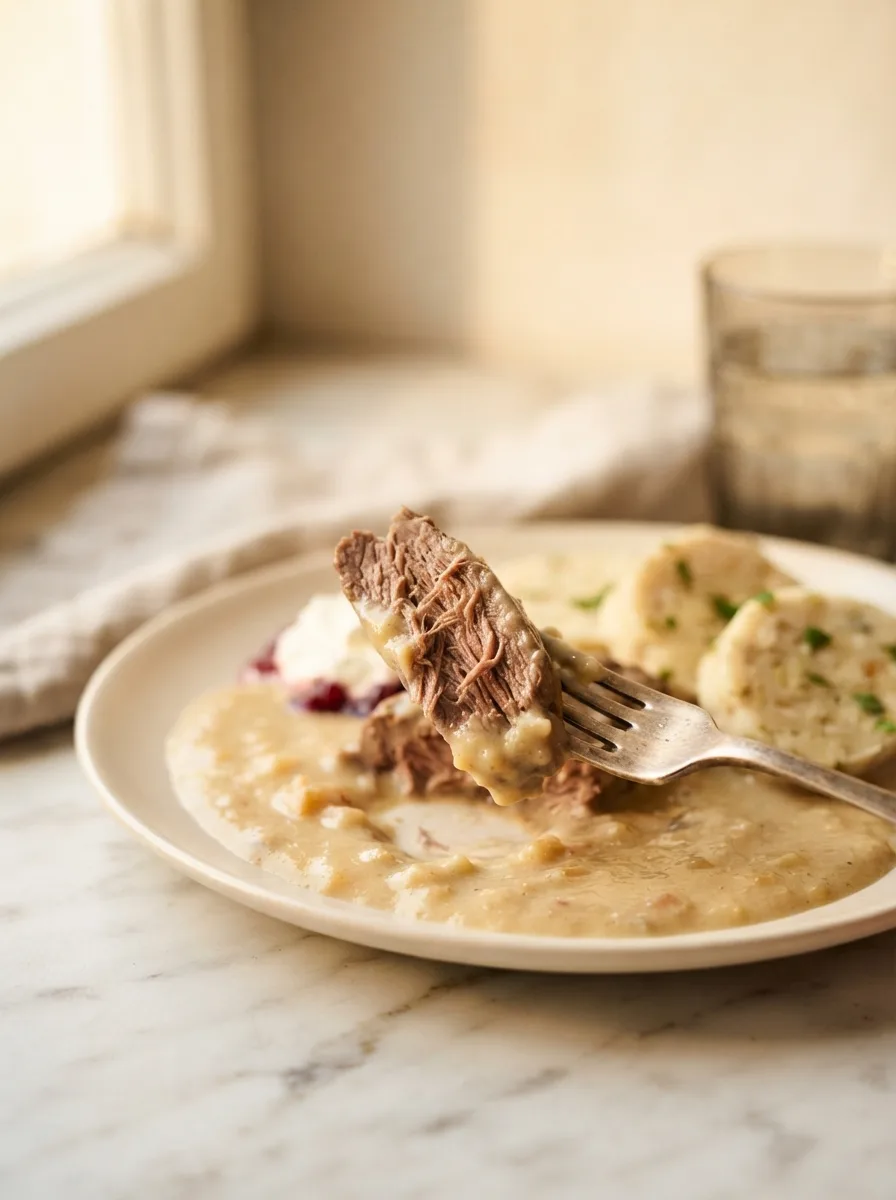
Why You’ll Love This Svickova Recipe
- No gritty flour sauce: The sauce gets its body from reduced root vegetables, not a raw flour paste — it stays silky, not chalky.
- Fork-tender beef, guaranteed: A long, low braise breaks down the sirloin until it shreds under gentle pressure, even if you’ve never braised meat before.
- Make-ahead friendly: The sauce actually improves overnight in the fridge, which makes this a genuinely low-stress dinner-party dish.
- A real taste of Czech Sunday dinner: Sweet-sour balance, warm allspice, and a tart cranberry-lemon finish — this isn’t a Americanized shortcut version.
Key Ingredients
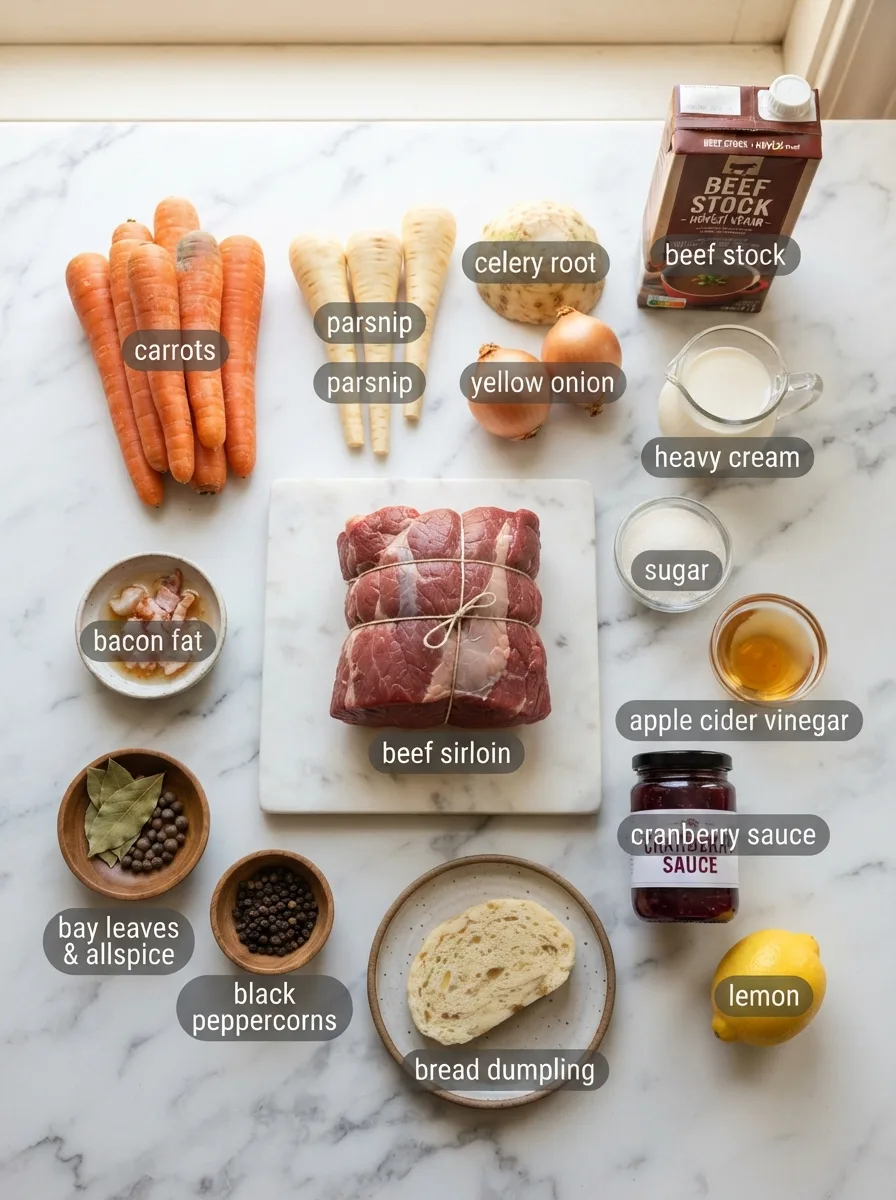
Beef sirloin roast (2½–3 lbs). Sirloin tip or a whole sirloin roast works because it’s lean enough to slice cleanly but still holds together through a 3-hour braise. Eye round or a small chuck roast both work as substitutes — chuck will be a little fattier and the sauce a shade richer.
Carrots, parsnip, celery root, and onion. This four-vegetable mix, called kořenová zelenina in Czech, is the entire backbone of the sauce — it’s what gives it sweetness and body without a spoonful of flour. If you can’t find celery root, use extra celery stalks, though the flavor will be milder and slightly grassier.
Bacon fat (or butter). Traditional recipes render bacon or use lard to sear the beef and soften the vegetables, which adds a faint smoky note under the sweetness. Unsalted butter or a neutral oil both work fine — you’ll just lose a little depth.
Whole allspice berries and bay leaves. This is the spice combination that makes svickova taste like svickova and not like a plain pot roast. Ground allspice works in a pinch, but whole berries infuse the braising liquid without turning the strained sauce gritty.
Heavy cream. Added only at the very end, off the heat, for richness. Use cream with at least 35% fat — half-and-half will taste noticeably thin and can separate when it hits the hot sauce.
Sugar and apple cider vinegar. The classic Czech sweet-sour balance. Start with the amounts in the recipe card and adjust to taste — some root vegetable batches are naturally sweeter than others.
Ingredient Note: Don’t skip weighing or at least eyeballing the root vegetable ratio — carrots and parsnip alone will make the sauce too sweet, while celery root alone makes it too savory. The four-vegetable mix is what balances it.
Equipment You’ll Need
- Heavy Dutch oven or braising pot — needed for even, low heat over 2.5–3 hours. A slow cooker works as a backup, though the sear step still needs a separate skillet.
- Immersion blender or standard blender — for pureeing the cooked vegetables into the sauce base. A potato masher works if you don’t mind a more rustic, slightly chunkier texture.
- Fine-mesh strainer — pushes out any remaining fibrous bits so the final sauce is silky, not stringy.
- Instant-read meat thermometer — not strictly required for a braise, but useful the first time you make this so you know when the beef has actually broken down (not just hit a safe temperature).
Controlling the Sauce Texture: To Roux or Skip It (A Controlled Test)
I tested three versions of this sauce side by side to settle the flour question once and for all: one with a traditional flour roux stirred in at the end, one with no thickener at all, and one that relied purely on a longer reduction of the pureed vegetables before the cream went in.
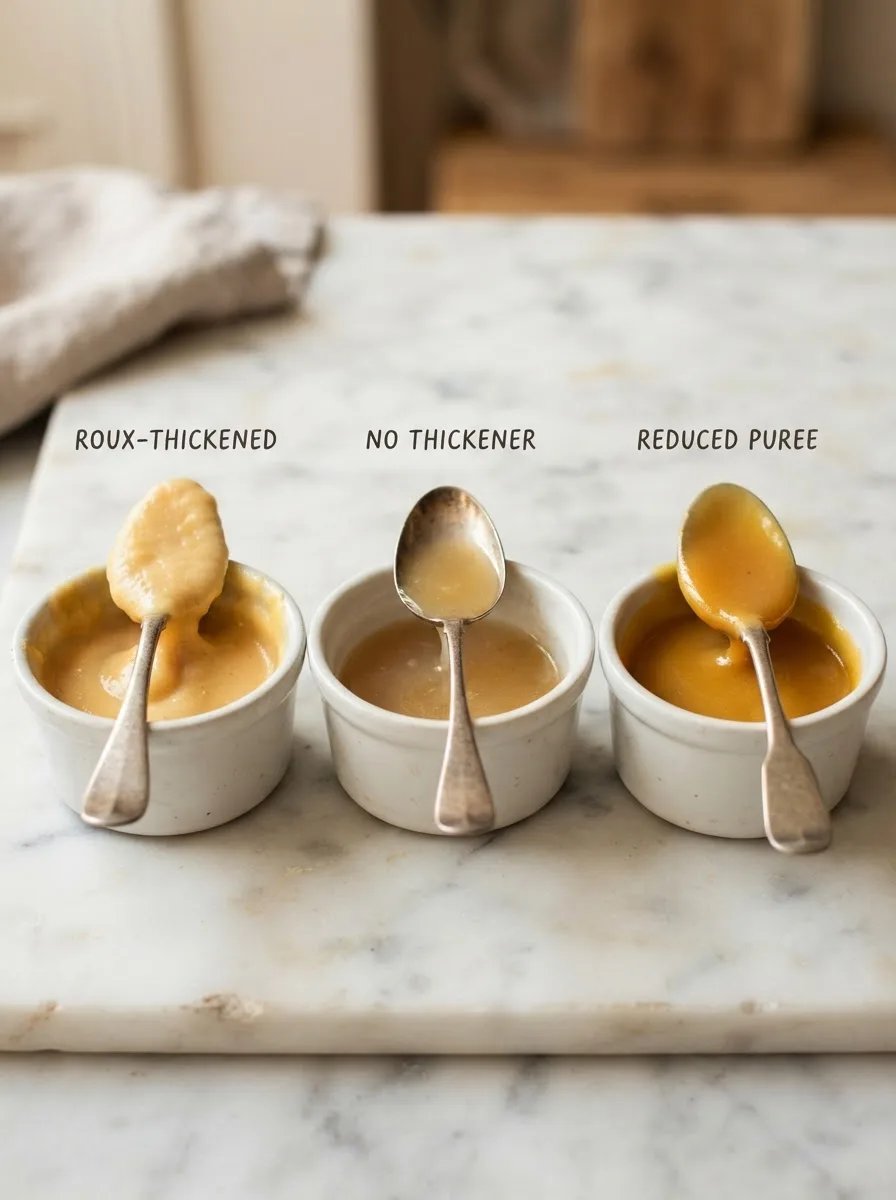
The roux version thickened fastest but tasted faintly starchy and turned matte instead of glossy once it cooled slightly on the plate.
The no-thickener version tasted the cleanest but never held onto the beef — it ran straight off the slices and pooled thin on the plate.
The reduced-puree version won clearly. Simmering the pureed vegetables uncovered for an extra 10–15 minutes before straining drove off enough liquid that the sauce coated a spoon and stayed glossy once the cream went in. The trade-off is a little extra hands-on time at the stove near the end, but it’s the only version that actually looked and tasted like the svickova I remembered from restaurants that get it right.
How to Make Svickova
Before you start: Pull the beef out of the fridge 30–40 minutes before searing so it comes closer to room temperature — a cold roast straight from the fridge will seize and sear unevenly. Have your blender or immersion blender within reach for later.
Step 1 — Sear the beef sirloin
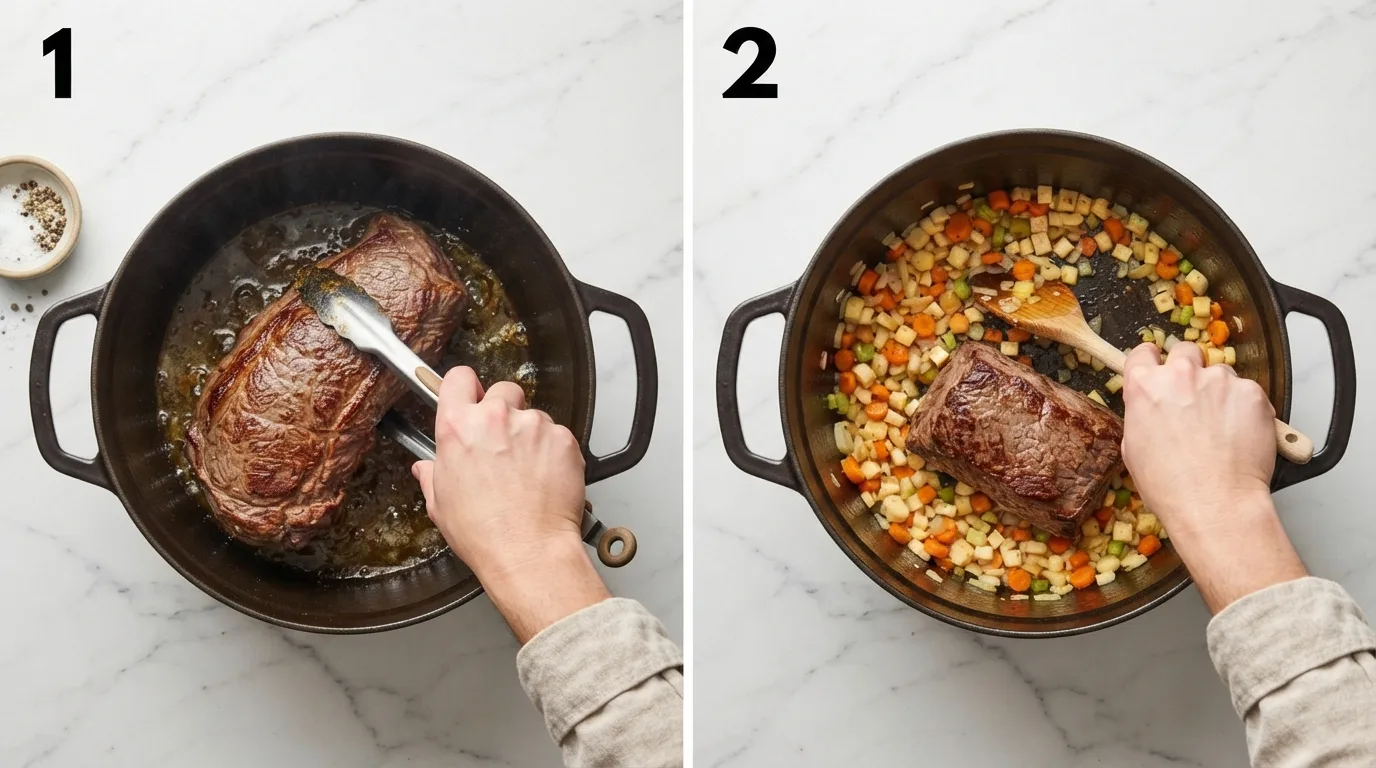
Pat the roast completely dry, then season generously with salt and pepper on all sides. Melt the bacon fat in your Dutch oven over medium-high heat until it shimmers, then sear the beef on all sides — about 3–4 minutes per side — until it’s deeply browned, not just gray. This crust is where a lot of the final flavor comes from, so don’t rush it or crowd the pot.
Step 2 — Build the root vegetable base
Remove the beef and set it aside. In the same pot, add the roughly chopped carrots, parsnip, celery root, and onion. Cook them in the rendered fat for 8–10 minutes, stirring occasionally, until they soften and pick up some color from the fond left behind by the beef.
Step 3 — Braise low and slow
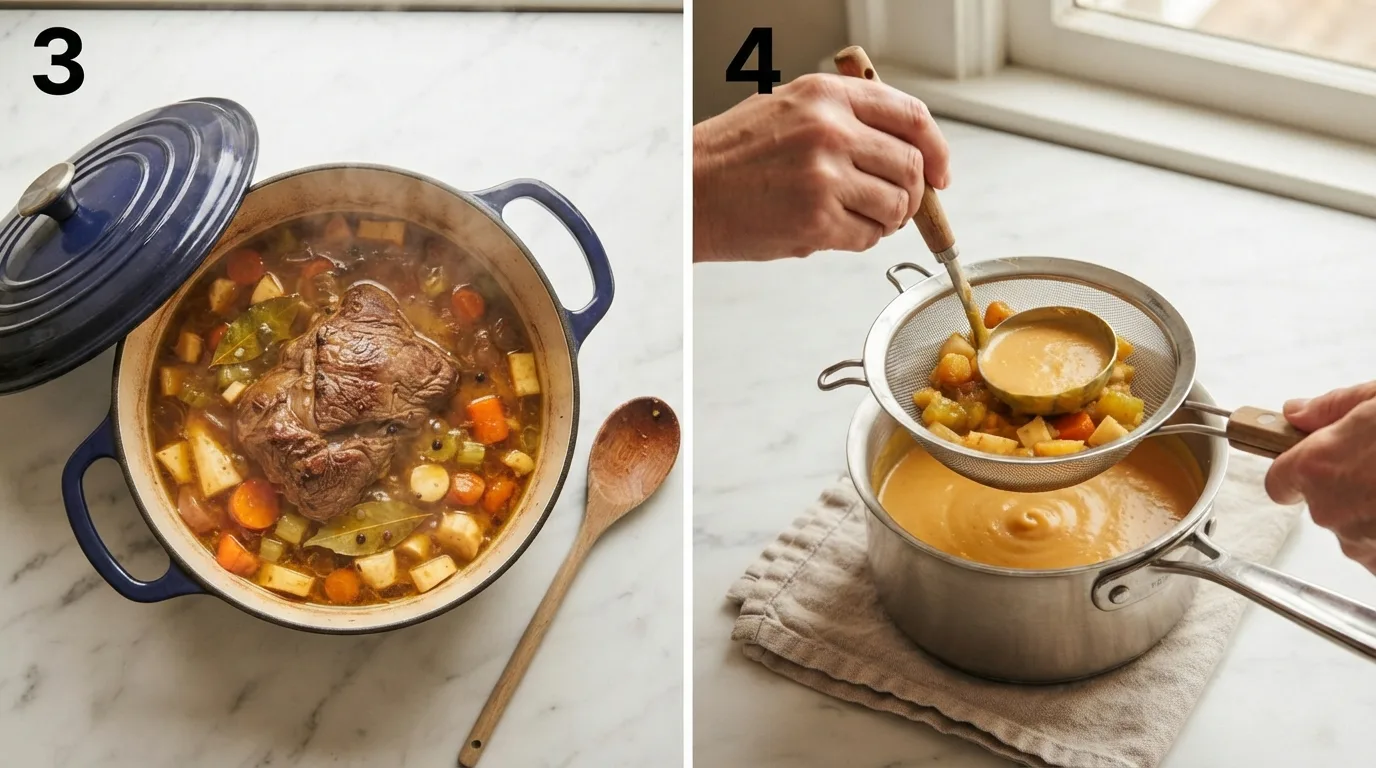
Return the beef to the pot, tuck in the bay leaves, allspice berries, and peppercorns, then pour in enough beef stock to come about two-thirds up the sides of the roast. Bring it to a gentle simmer, then cover and reduce the heat to low. Braise for 2.5–3 hours, turning the roast once halfway through, until a fork slides into the meat with almost no resistance.
Step 4 — Puree and strain the sauce
Lift the beef out onto a cutting board and tent it loosely with foil to rest. Fish out the bay leaves. Puree the remaining vegetables and braising liquid directly in the pot with an immersion blender (or transfer to a stand blender in batches) until completely smooth. Push the puree through a fine-mesh strainer into a clean saucepan to remove any remaining fibrous bits.
Step 5 — Finish the sauce with cream
Set the strained sauce over medium heat and simmer uncovered for 10–15 minutes, stirring occasionally, until it visibly thickens and coats the back of a spoon — this reduction step is what replaces the flour. Stir in the sugar and vinegar, taste, and adjust the balance. Take the pan off the heat entirely, then whisk in the heavy cream. Adding cream off the heat keeps it from curdling.
Step 6 — Rest, slice, and plate
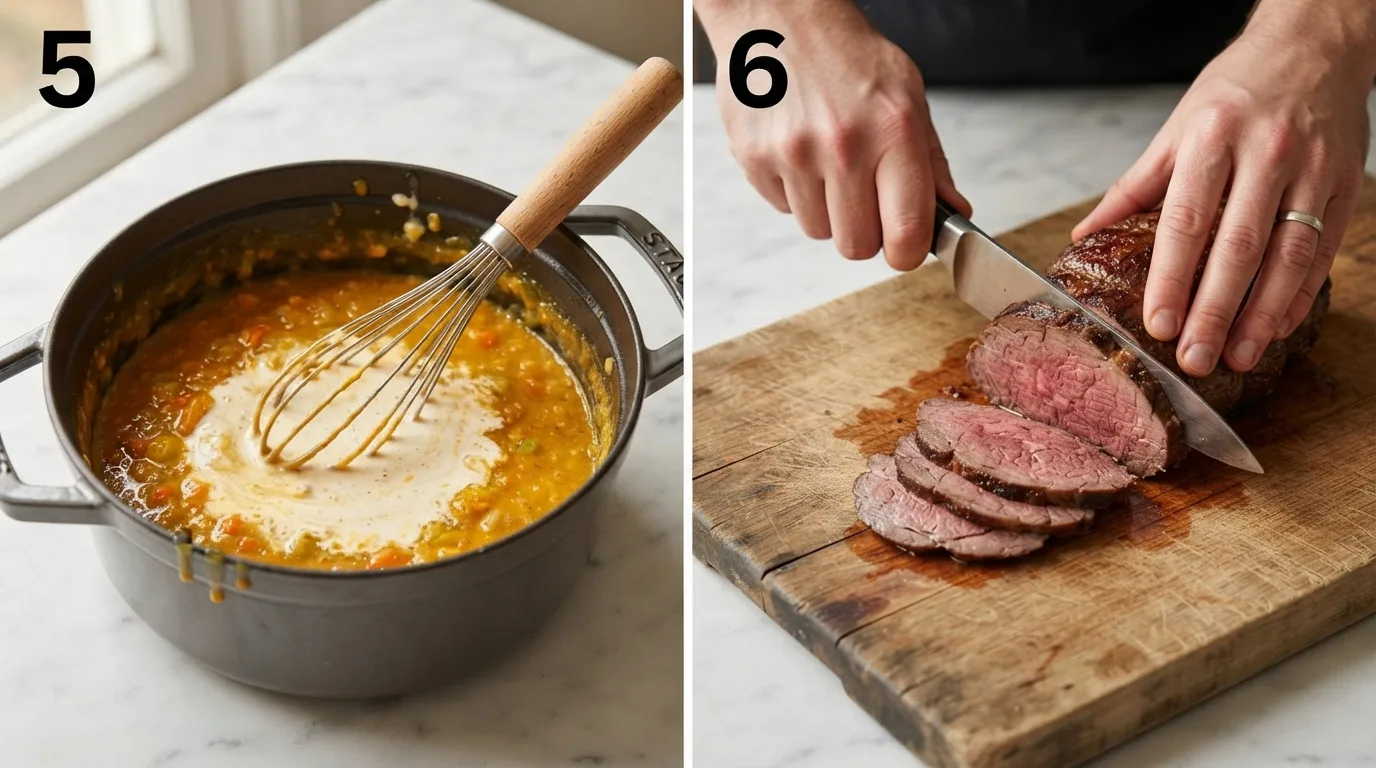
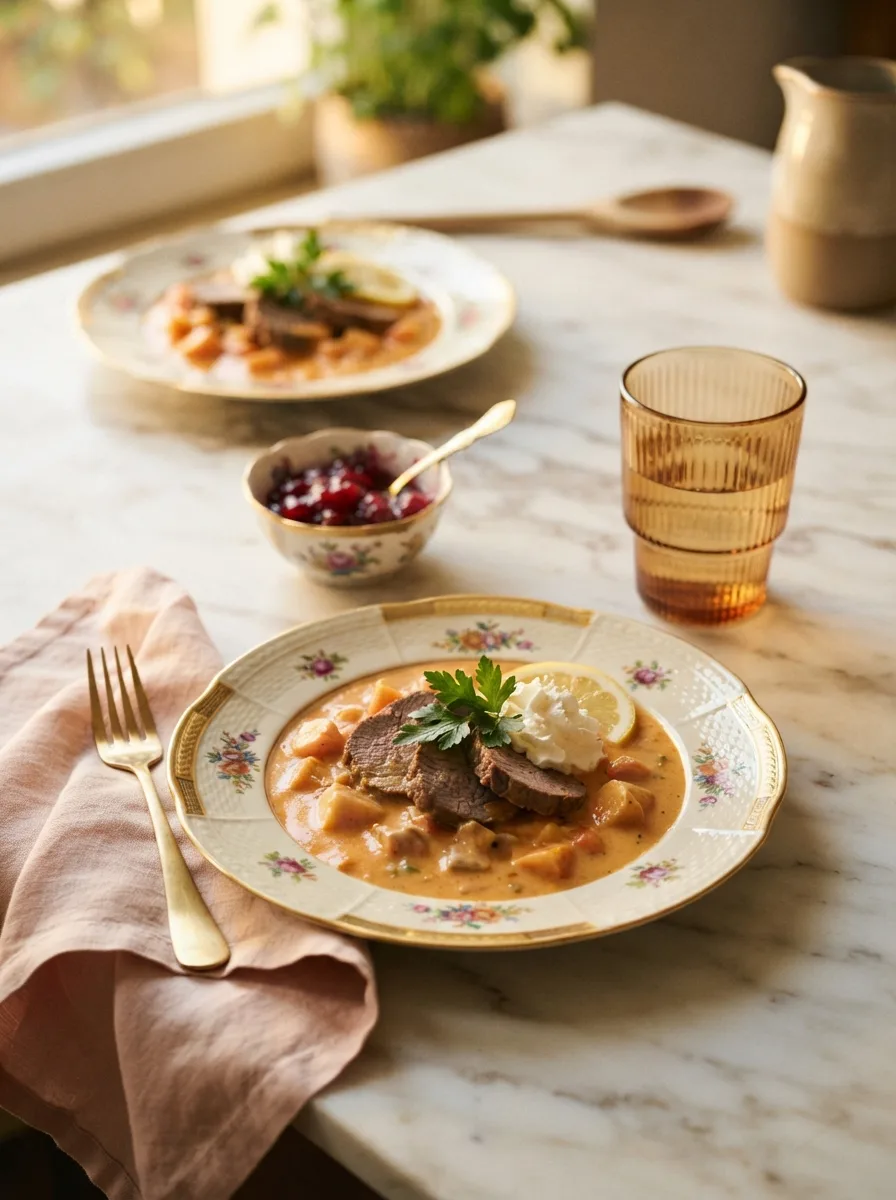
Let the beef rest for at least 10 minutes before slicing it thin, against the grain. Ladle a generous amount of sauce over the sliced beef, and serve alongside bread dumplings, a spoonful of cranberry sauce, and a thin lemon wheel.
Pro Tips for Perfect Svickova
Tip 1: Reduce the sauce before you strain it, not just after. A quick simmer of the whole puree before straining concentrates the flavor and makes straining go faster — you’re removing less liquid volume at that stage.
Tip 2: Slice against the grain, always. Sirloin has a visible grain running one direction. Slicing with it instead of against it makes even a perfectly braised roast feel chewy.
Tip 3: Taste the sauce before adding cream, not after. Cream mutes sweetness and acidity, so it’s much easier to correct the sugar-vinegar balance while the sauce is still concentrated.
Tip 4: Make the sauce a day ahead if you can. It tightens up and deepens in flavor overnight in the fridge — gently reheat it and adjust the cream at the end rather than reheating it with the cream already in.
Variations and Substitutions
Dietary Variations:
- Gluten-free: This recipe is already flour-free thanks to the reduced-puree method, so the sauce itself is naturally gluten-free. Just serve it with a gluten-free bread dumpling or boiled potatoes instead of traditional wheat dumplings.
- Dairy-free: Swap the heavy cream for full-fat coconut cream. The texture holds up well, though the flavor shifts slightly sweeter and less neutral — good in a pinch, not identical.
Flavor Variations:
- Venison svickova: Some regional versions use venison loin instead of beef sirloin for a deeper, more mineral flavor. Braise it the same way, but check for tenderness starting around the 2-hour mark since venison can dry out faster.
Ingredient Substitutions:
- Beef stock → mushroom broth, for a slightly lighter, earthier sauce
- Celery root → an equal weight of extra celery stalks plus one small diced potato, if celery root isn’t available
If you’re building out a full comfort-food Sunday menu, my cheesy ranch potatoes and sausage is another low-effort, one-pan dinner that holds up well for a crowd on the nights svickova feels like too much of a project.
Troubleshooting
Why is my sauce thin and watery?
Most likely the puree wasn’t reduced long enough before straining, or the vegetables were cut too large and didn’t fully break down during the braise. Simmer the strained sauce a bit longer, uncovered, before adding the cream — it should visibly coat a spoon first.
Why did my beef turn out tough instead of tender?
This almost always means it needs more time, not less heat. Sirloin needs to braise until it’s genuinely falling-apart tender, which can take closer to 3 hours depending on the size of the roast. If it’s still firm at the 2.5-hour mark, keep going rather than pulling it early.
Why is my sauce grainy or slightly curdled?
This happens when cream is added while the sauce is still actively boiling. Always pull the pan off the heat completely before whisking in the cream, and let the sauce cool for a minute first if it’s very hot.
Storage and Make-Ahead
Counter: Don’t leave svickova sitting out longer than 2 hours — the cream sauce is not shelf-stable at room temperature.
Refrigerator: Store the sliced beef and sauce together in an airtight container for up to 4 days. The flavor genuinely improves by day two.
Freeze: Freeze the beef and sauce (without cream, if possible) for up to 3 months. Add the cream fresh after reheating for the best texture.
Reheating: Reheat gently on the stovetop over low heat, stirring often, rather than in the microwave — high heat can cause the cream to separate.
Make-Ahead: Make the sauce base (before the cream) up to 2 days ahead and refrigerate separately from the sliced beef. Reheat both gently and whisk in the cream just before serving.
Frequently Asked Questions
Q: What is svickova? A: Svickova is a traditional Czech dish of braised beef sirloin served in a root vegetable cream sauce, typically plated with bread dumplings, cranberry sauce, whipped cream, and a slice of lemon.
Q: What cut of beef is best for svickova? A: A whole beef sirloin roast or sirloin tip is traditional because it slices cleanly after braising. Eye round or a small chuck roast both work as substitutes, though chuck will make a slightly richer sauce.
Q: Can I make svickova ahead of time? A: Yes — in fact it’s better made a day ahead. Braise the beef and make the sauce base, refrigerate separately, then reheat gently and whisk in the cream right before serving.
Q: What do you serve with svickova? A: The classic plate includes bread dumplings (knedlíky), a spoonful of cranberry sauce, a dollop of whipped cream, and a thin lemon wheel. Boiled potatoes are a fine stand-in if you don’t have time to make dumplings.
Q: Can I make this gluten-free? A: Yes. The sauce itself contains no flour in this recipe, so it’s naturally gluten-free. Just serve it with a gluten-free dumpling or potatoes instead of traditional wheat dumplings.
Q: Why is my svickova sauce not thick enough? A: The puree needs a longer uncovered simmer before straining and before the cream goes in — see the Controlled Test section above for exactly how long that reduction should take.
Q: Can I freeze svickova sauce? A: Yes, though it’s best to freeze it before adding the cream. Freeze the beef and vegetable sauce base for up to 3 months, then whisk in fresh cream after reheating.
More Recipes You’ll Love
- Dolly’s Chicken and Stuffing Casserole — another cozy, low-effort Sunday dinner that feeds a crowd
- Cheesy Ranch Potatoes and Sausage — a one-pan comfort dinner for busy weeknights
- Cheesecake Bread — a sweet finish if you’re planning a full multi-course meal
- Banana Tempura — a quick, crispy dessert that’s easy to make while the sauce simmers
Foolproof Svickova Recipe
Ingredients
For the Beef and Braise:
- 21/2 –3 lbs beef sirloin roast
- 2 tablespoon bacon fat (or unsalted butter)
- Salt and black pepper, to taste
- 3 medium carrots, roughly chopped
- 1 medium parsnip, peeled and roughly chopped
- 1 small celery root, peeled and roughly chopped
- 1 medium yellow onion, roughly chopped
- 2 bay leaves
- 6 whole allspice berries
- 8 whole black peppercorns
- 4 cup beef stock
For the Sauce:
- 1 tablespoon granulated sugar (plus more to taste)
- 1 tablespoon apple cider vinegar (plus more to taste)
- 1 cup heavy cream
For Serving:
- Bread dumplings (knedlíky) or boiled potatoes
- Cranberry sauce
- Whipped cream (optional)
- Lemon slices
Instructions
- Pat the beef sirloin roast completely dry and season generously on all sides with salt and pepper.
- Melt the bacon fat in a heavy Dutch oven over medium-high heat. Sear the beef on all sides, about 3–4 minutes per side, until deeply browned. Remove and set aside.
- Add the chopped carrots, parsnip, celery root, and onion to the same pot. Cook for 8–10 minutes, stirring occasionally, until softened and lightly golden.
- Return the beef to the pot. Add the bay leaves, allspice berries, and peppercorns, then pour in the beef stock until it reaches about two-thirds up the sides of the roast.
- Bring to a gentle simmer, cover, reduce heat to low, and braise for 2.5–3 hours, turning the roast once halfway through, until it is fork-tender.
- Remove the beef and tent loosely with foil to rest. Discard the bay leaves.
- Puree the remaining vegetables and braising liquid until completely smooth, using an immersion blender directly in the pot or a stand blender in batches.
- Push the puree through a fine-mesh strainer into a clean saucepan.
- Simmer the strained sauce uncovered over medium heat for 10–15 minutes, until it thickens and coats the back of a spoon.
- Stir in the sugar and vinegar, taste, and adjust to balance sweetness and acidity.
- Remove the pan from the heat completely, then whisk in the heavy cream until smooth.
- Slice the rested beef thin, against the grain. Serve topped with sauce, alongside bread dumplings, cranberry sauce, whipped cream, and a lemon slice.
Notes
- **Make-ahead:** The sauce base (before cream) can be made up to 2 days ahead and refrigerated separately from the sliced beef; reheat gently and whisk in fresh cream before serving.
- **Freezing:** Freeze the beef and vegetable sauce base (without cream) for up to 3 months. Add cream fresh after reheating.
- **Roux-free by design:** This sauce gets its body from a longer reduction of the pureed vegetables, not flour — don't skip the 10–15 minute uncovered simmer in step 9.
- **Doubling:** This recipe scales well for a larger roast; just extend the braising time slightly and check for tenderness with a fork rather than a clock.
- **Dumpling swap:** No time to make traditional dumplings? Boiled potatoes or crusty bread are both traditional-adjacent stand-ins.
- **Dairy-free swap:** Full-fat coconut cream works in place of heavy cream, though the flavor turns slightly sweeter.
- **Vegetable prep tip:** Cut the root vegetables into roughly similar-sized pieces so they braise and puree evenly.
- **Serving temperature:** Svickova is traditionally served hot, straight from the stovetop — the sauce thickens further as it cools, so don't let it sit too long before plating.
- **Reheating leftovers:** Reheat gently over low heat on the stovetop, stirring often; high heat can cause the cream to separate.
- **Sourcing celery root:** Look for celery root (celeriac) near the other root vegetables at most grocery stores; it's knobby and unattractive but peels easily with a sharp knife.