Foolproof Stalekracker Pastalaya Recipe

If you’ve spent any time on TikTok in the last couple of years, you’ve seen it: a guy everyone calls Stalekracker, standing over an enormous pot in his backyard, stirring what looks like jambalaya but isn’t quite jambalaya. That dish is pastalaya — the same holy trinity, sausage, and Cajun seasoning as jambalaya, except the rice gets swapped for pasta. This stalekracker pastalaya recipe is my scaled-down, kitchen-tested version of that viral pot, built for a normal stove instead of a 20-gallon cast-iron cauldron.
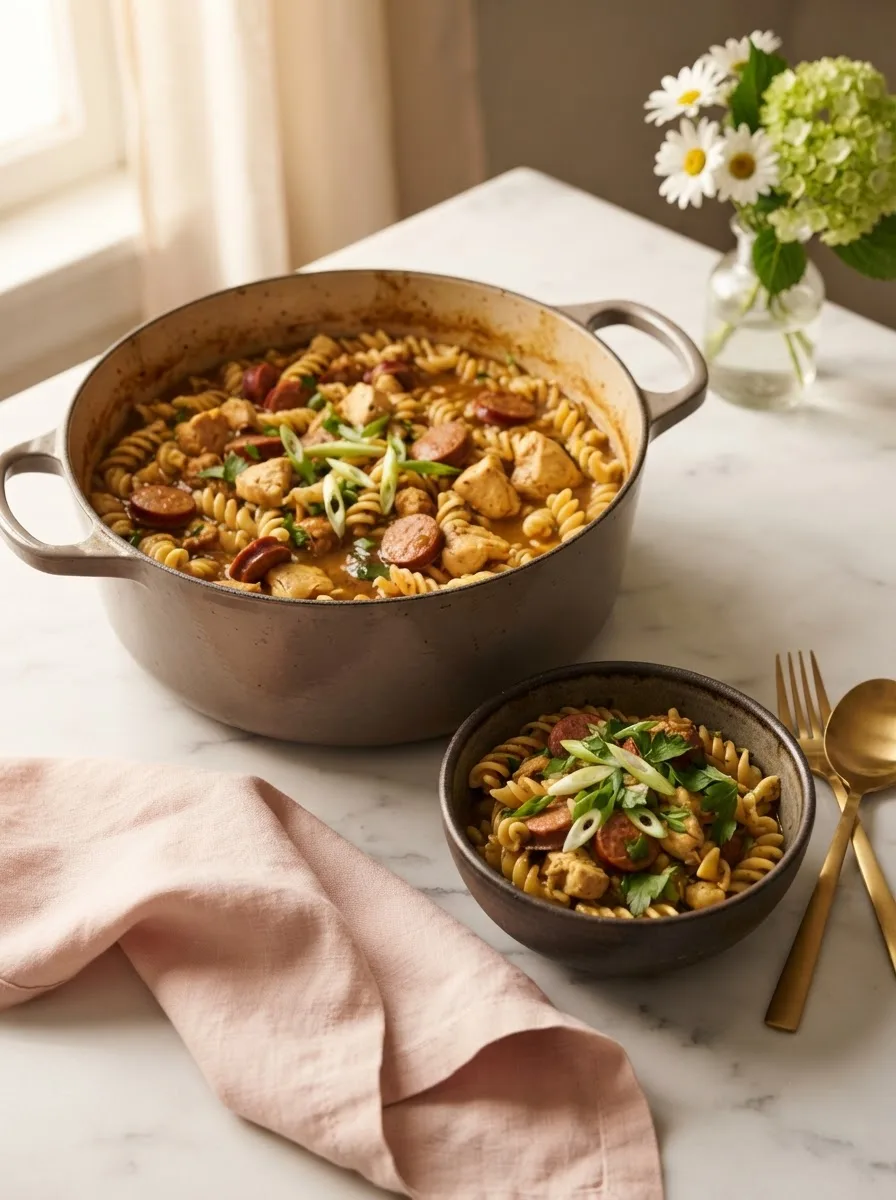
I tested this pastalaya stalekracker recipe four times before I trusted it. The first two batches had a real problem: the pasta on the bottom of the pot turned to mush while the pasta near the top stayed almost crunchy, because cooking pasta directly in broth (instead of boiling and draining it separately) behaves nothing like a normal box of noodles. Once I figured out the right broth ratio and stir timing, the fix was simple — and it’s the whole reason this version works every time.
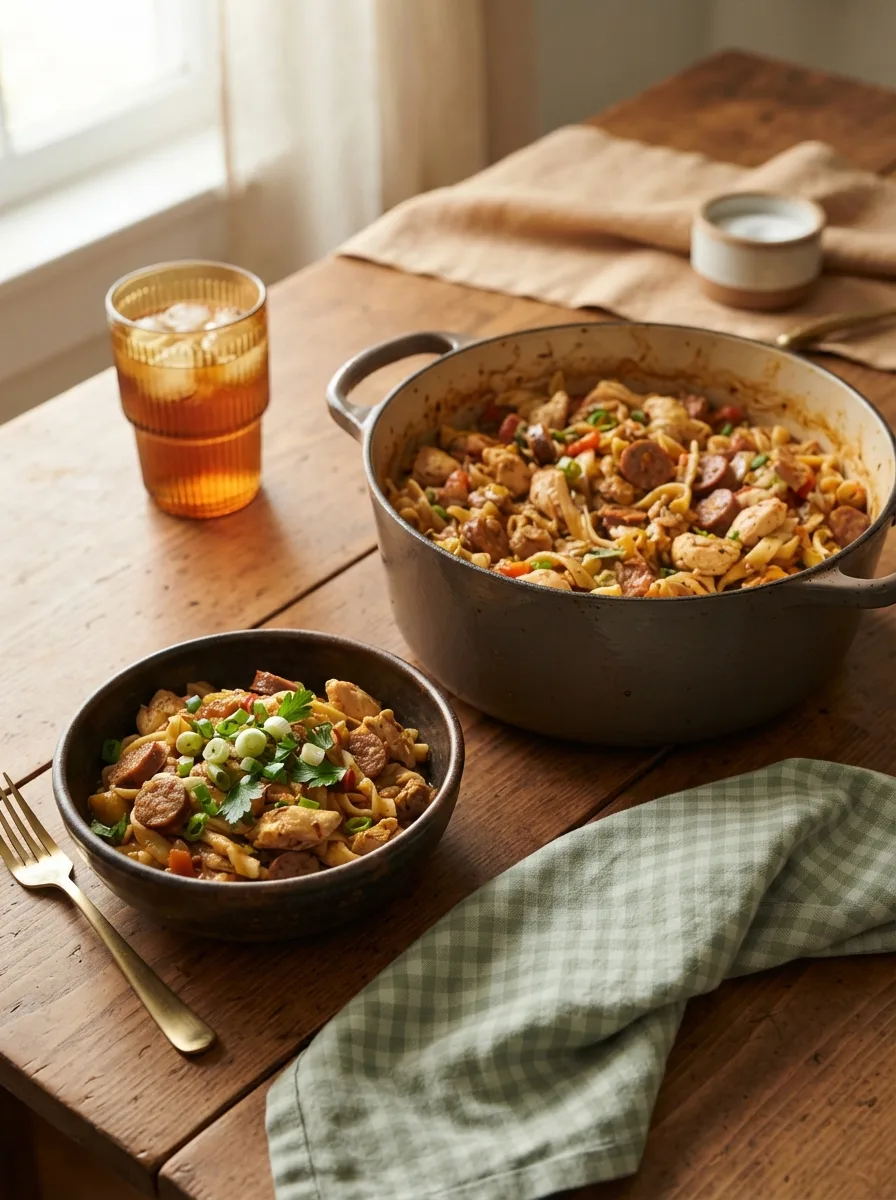
The result after test four: a pot of pasta that tastes like it simmered all day in sausage fat and Cajun seasoning, with every noodle cooked evenly from top to bottom. It’s smoky, a little spicy, deeply savory, and it makes enough for a real crowd — or enough leftovers to eat for three days straight, which is exactly what happened in my kitchen.
★★★★★ “I’ve made real jambalaya more times than I can count, and this pastalaya disappeared faster. My husband asked when I was making it again before he’d even finished his first bowl.” — Renee T., recipe tester (pre-launch)
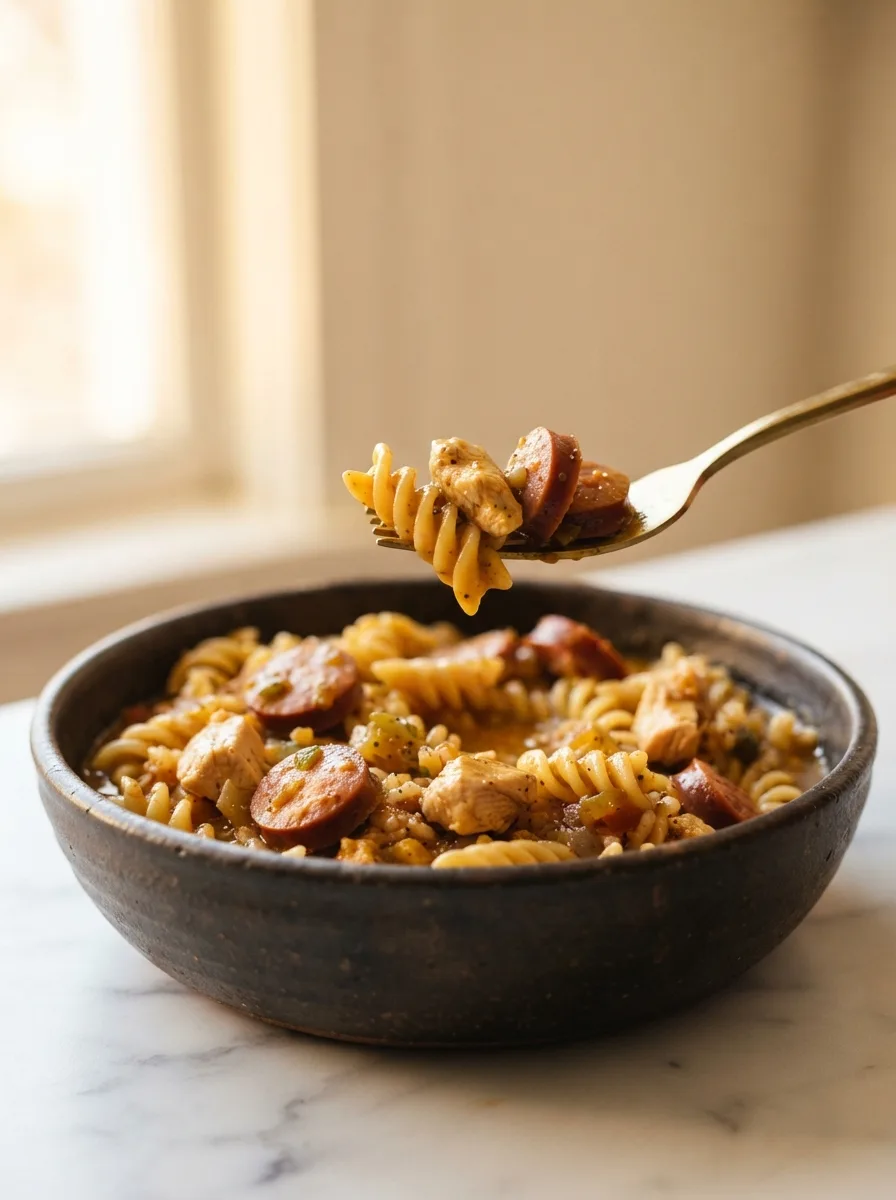
Why You’ll Love This Stalekracker Pastalaya Recipe
- One pot, one pan to wash: Everything — sausage, chicken, trinity, pasta — cooks in the same pot. No boiling pasta separately, no extra colander.
- Real Cajun flavor without a giant cauldron: This pastalaya stalekracker recipe keeps the smoky, deeply seasoned flavor of the viral version but scales down to a normal 6-quart pot.
- Feeds a crowd: This recipe makes 8 hearty servings, and it holds up beautifully as leftovers — the flavor gets even better on day two.
- No rice to worry about: If you’ve ever fought with gummy or undercooked rice in jambalaya, pasta is far more forgiving once you know the right broth ratio (more on that below).
Key Ingredients
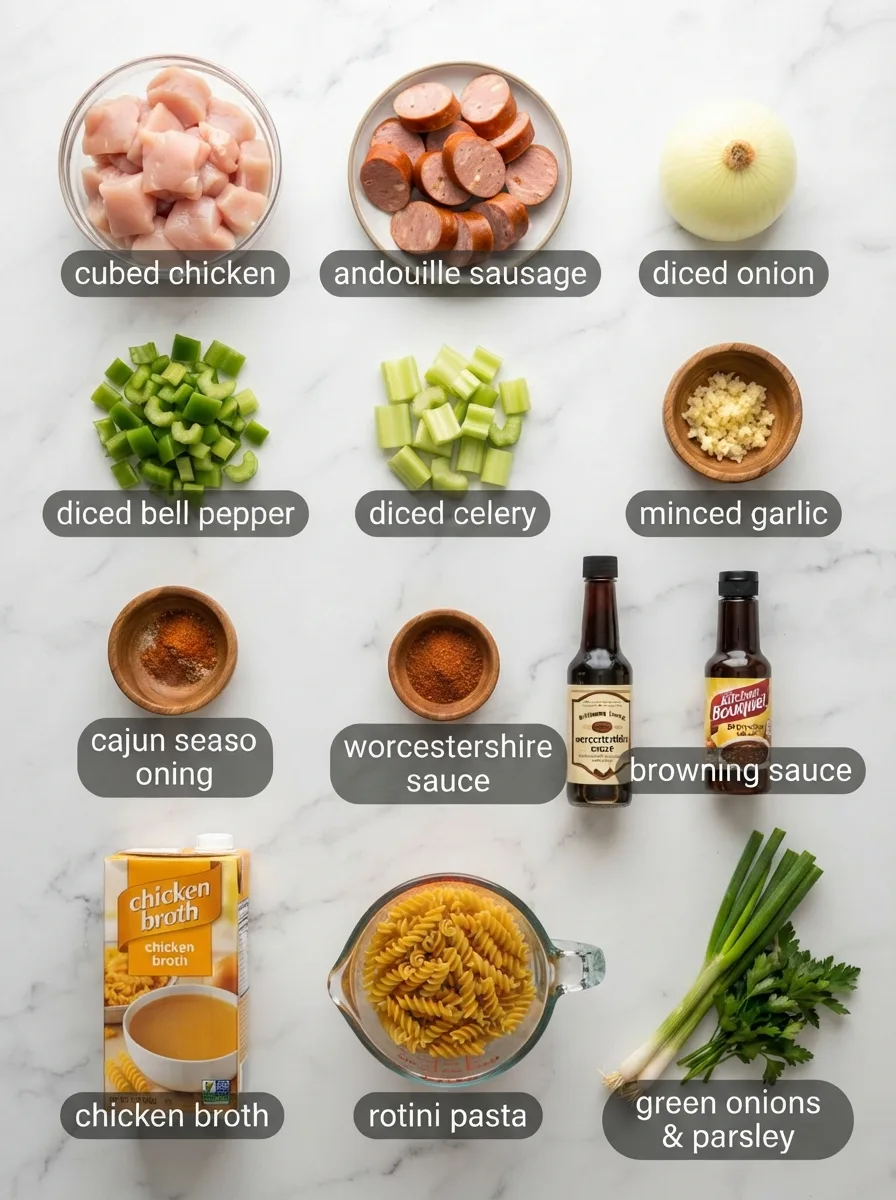
Andouille sausage (1 lb). This is the backbone of the smoky flavor here. Andouille is smoked and heavily seasoned, which is exactly what separates pastalaya from a plain sausage pasta bake. Kielbasa or a good smoked sausage works if andouille isn’t available, though you’ll lose a little heat.
Boneless, skinless chicken thighs (1 lb). Thighs stay juicy through the full simmer time; chicken breast tends to dry out and shred apart in the pot. Cut them into rough 1-inch cubes so every bite gets some.
The holy trinity (onion, green bell pepper, celery). This is non-negotiable in Cajun cooking — it’s the flavor base under everything. Don’t skip the celery even if you’re tempted; it adds a savory backbone the other two vegetables can’t.
Cajun/Creole seasoning (like Tony Chachere’s). This is the single ingredient that makes or breaks the flavor. Start with 2 tablespoons and taste before adding more — brands vary wildly in saltiness.
Chicken broth (4 cups). The broth is what the pasta cooks in, absorbing all that seasoning as it simmers. Use low-sodium broth so you can control the salt level yourself.
Rotini or cavatappi pasta (1 lb, uncooked). A pasta with ridges and curves holds onto the sauce far better than something smooth like spaghetti. This is the ingredient that makes this a pastalaya stalekracker recipe instead of a jambalaya.
Ingredient Note: Kitchen Bouquet is optional, but it’s the trick behind that deep mahogany-brown color you see in the viral videos. Skip it and the dish tastes identical — it’ll just look a shade lighter.
Equipment You’ll Need
- Large heavy-bottomed pot or Dutch oven (6-quart minimum) — Even heat distribution keeps the pasta from scorching on the bottom. A thin pot will burn the sausage fat before the trinity even softens.
- Wooden spoon or flat-edged spatula — You need something that can scrape the bottom of the pot cleanly once the pasta goes in, since it likes to stick.
- Sharp knife and cutting board — For the trinity and the chicken.
- Measuring cups — Precision on the broth amount matters more here than in almost any other one-pot meal.
Controlling the Pasta Texture (A Controlled Test)
The single biggest risk in any pastalaya is the pasta. Because it cooks directly in the broth instead of a big pot of boiling water, there’s no colander moment to bail you out if it goes wrong. I ran three side-by-side tests changing only one thing each time: how much broth was left in the pot when the pasta went in, and how often I stirred during the simmer.
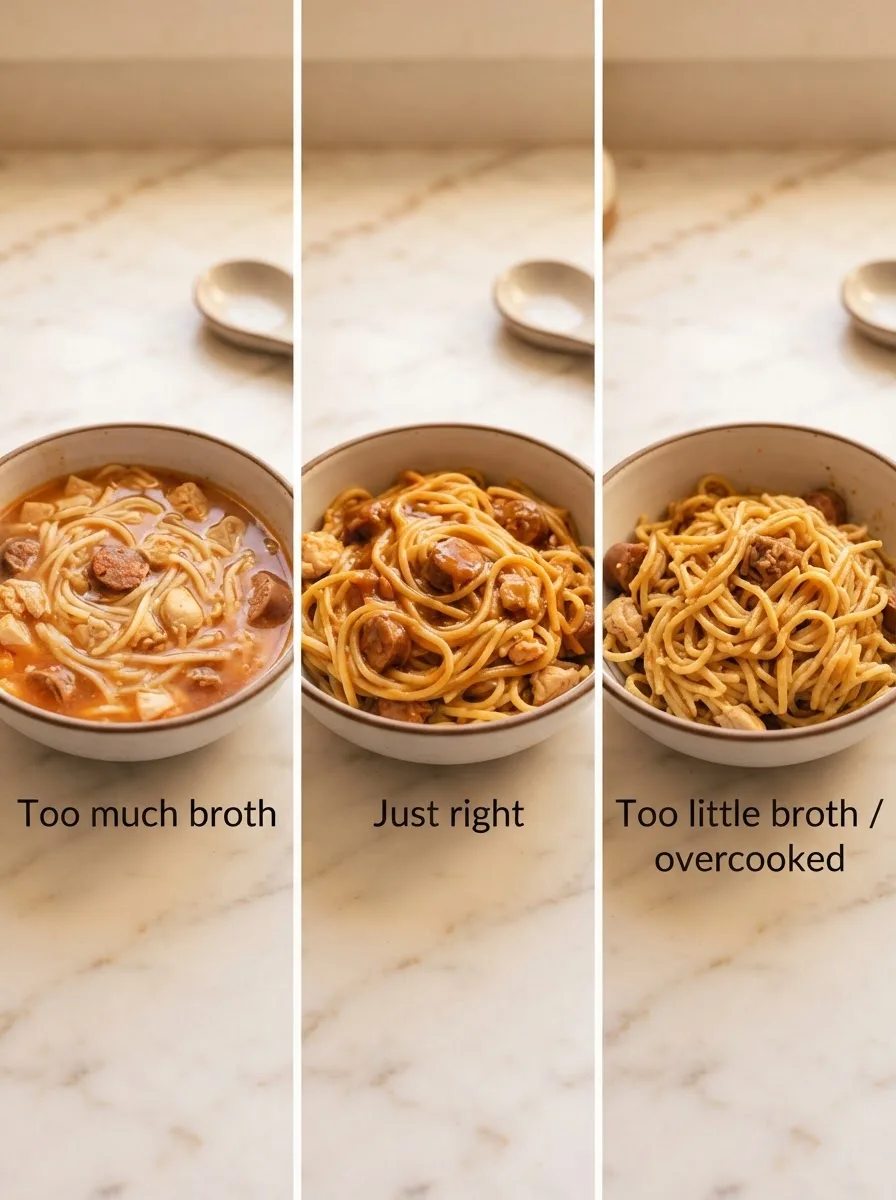
Too much broth, no stirring: The pasta on top stayed underdone while the bottom turned to paste. Soupy, not saucy.
4 cups broth, stirred every 3–4 minutes: This is the version in the recipe card. The pasta cooks evenly, the sauce clings instead of pools, and nothing sticks to the bottom of the pot.
Broth reduced too far before adding pasta: The noodles cooked unevenly and clumped together as the liquid disappeared faster than the pasta could soften.
The takeaway: 4 cups of broth for 1 pound of pasta, stirred regularly during the last 10 minutes, is the ratio that works every single time in my kitchen.
How to Make Stalekracker Pastalaya
Before you start: Have all your vegetables diced and your chicken cubed before you turn on the burner — this dish moves fast once the sausage hits the pot, and Cajun cooking doesn’t wait for you to chop an onion mid-step.
Step 1 — Sear the Andouille Sausage
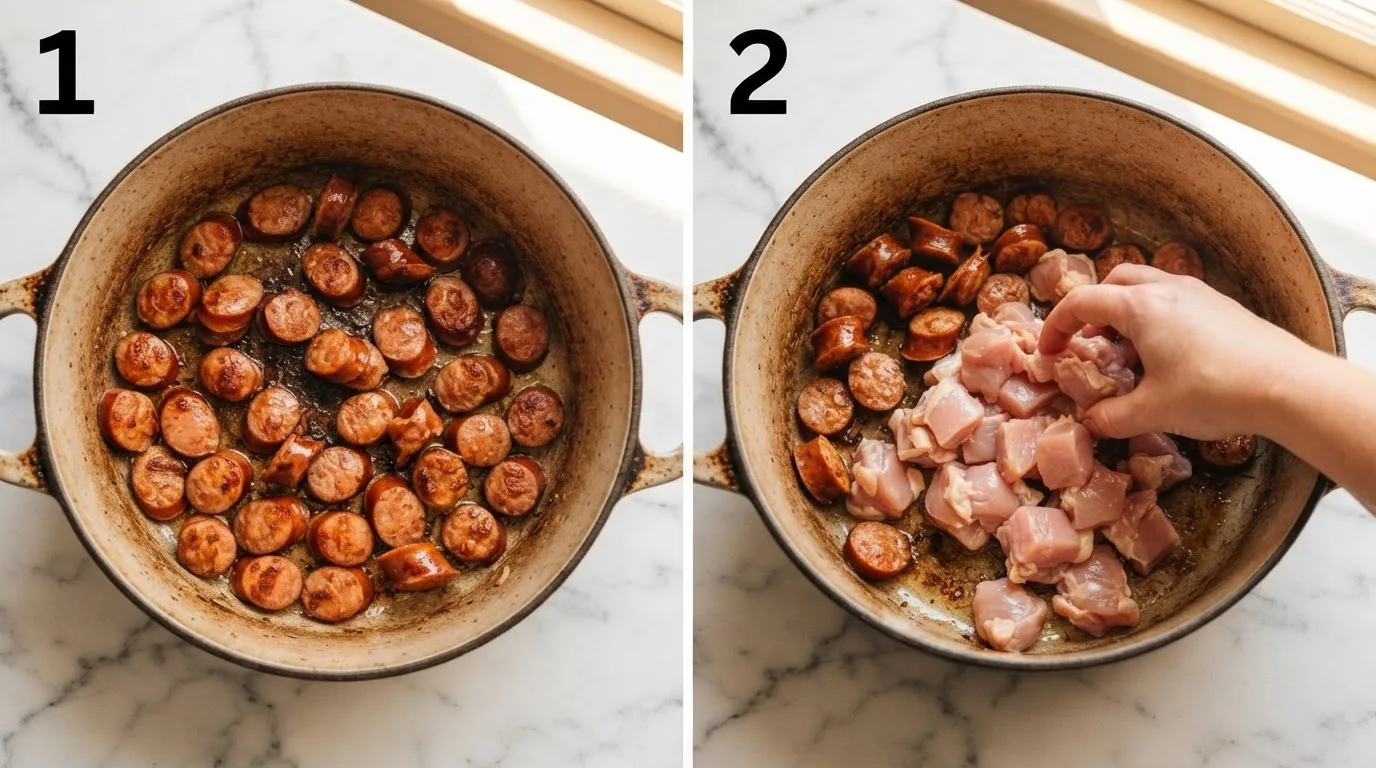
Add the sliced sausage to your dry pot over medium-high heat with no oil yet — andouille renders its own fat, and that fat is where most of the flavor in this dish comes from. Cook for 4–5 minutes, stirring occasionally, until the edges are deeply browned.
Step 2 — Brown the Chicken
Push the sausage to the side and add the cubed chicken thighs to the rendered fat. Cook for 5–6 minutes, stirring occasionally, until the chicken is browned on the outside — it doesn’t need to be cooked through yet, since it will finish simmering later.
Step 3 — Sauté the Holy Trinity
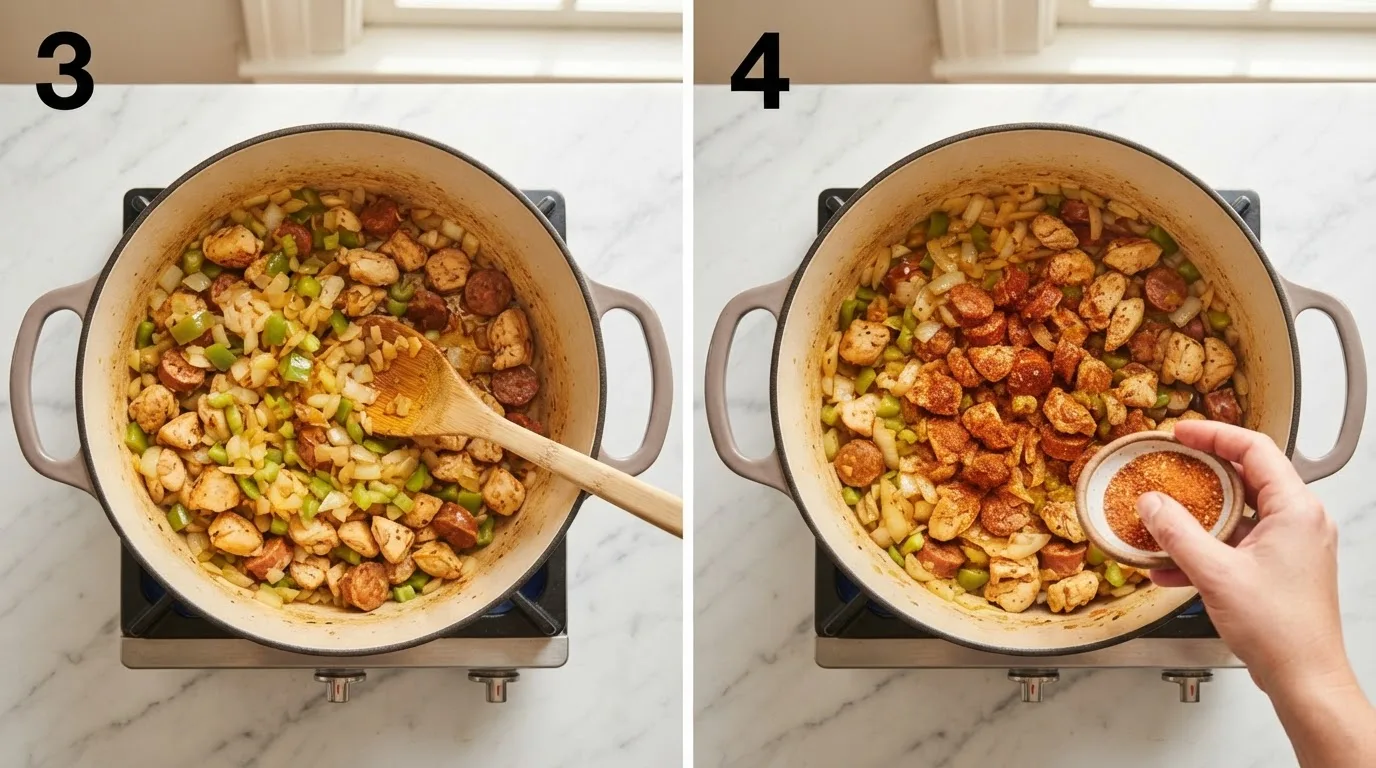
Add the diced onion, bell pepper, and celery straight into the pot with the sausage and chicken. Cook for 5–7 minutes, stirring often, until the onion turns translucent and the vegetables soften. Add the garlic in the last minute so it doesn’t burn.
Step 4 — Bloom the Cajun Seasoning
Sprinkle the Cajun seasoning, smoked paprika, and cayenne (if using) directly over the sausage-and-vegetable mixture. Stir for 30–60 seconds — you’ll notice the aroma turn sharper and more fragrant almost immediately. This short toasting step is what gives the broth its depth instead of tasting like seasoning was just stirred in raw.
Step 5 — Add Broth and Deglaze
Pour in the chicken broth, Worcestershire sauce, and Kitchen Bouquet if using, scraping the bottom of the pot with your spoon as you go. Bring the whole pot to a rolling boil, then taste the broth and adjust the salt and seasoning now — it’s much easier to fix before the pasta is in than after.
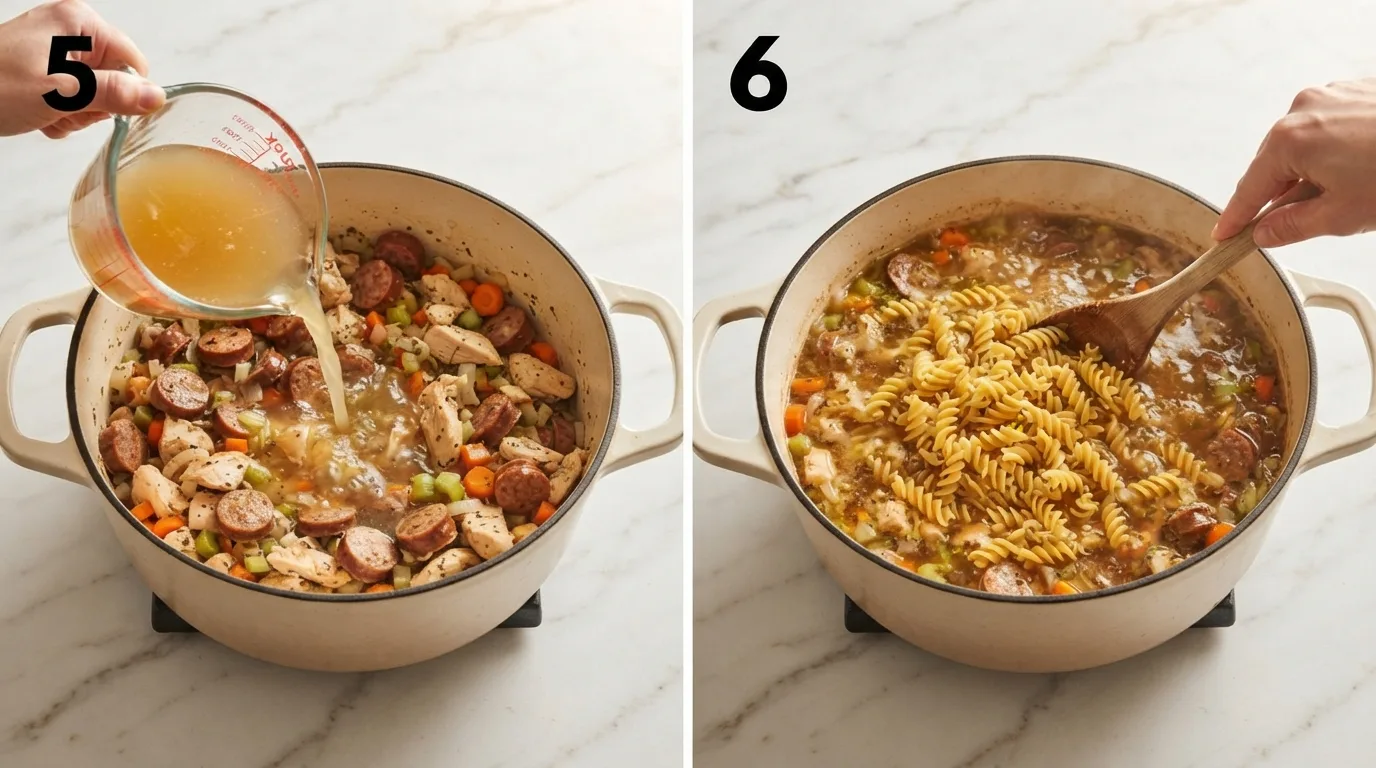
Step 6 — Stir in the Pasta and Simmer
Add the dry pasta directly to the boiling broth and stir well. Reduce the heat to a gentle simmer, cover, and cook for 12–15 minutes, stirring every 3–4 minutes to keep the pasta from sticking to the bottom. The pasta is done when it’s tender but still holds its shape, and most of the broth has thickened into a glossy sauce clinging to the noodles rather than pooling in the bottom of the pot.
Step 7 — Rest and Garnish
Remove the pot from heat and let it sit, covered, for 5 minutes — the sauce thickens slightly more as it rests. Stir in the sliced green onions and fresh parsley just before serving.
Pro Tips for Perfect Stalekracker Pastalaya
Tip 1: Don’t walk away during the last 10 minutes. Once the pasta goes in, the broth reduces fast and the bottom of the pot is the first place it’ll catch. A quick stir every few minutes is all it takes.
Tip 2: Taste the broth before the pasta goes in, not after. Pasta absorbs a lot of that seasoning as it cooks — if the broth tastes slightly over-seasoned right before you add the pasta, that’s actually correct.
Tip 3: Use a pot at least 6 quarts. This recipe nearly doubles in volume once the pasta absorbs the broth. A smaller pot means constant overflow and uneven cooking.
Tip 4: Cut the chicken and sausage to similar sizes. Uneven pieces mean some cook through while others are still raw when the pasta is ready. Aim for roughly 1-inch pieces across the board.
Variations and Substitutions
Dietary Variations:
- Gluten-free: Swap in your favorite gluten-free rotini or penne. It absorbs broth faster than wheat pasta, so start checking for doneness around the 9-minute mark instead of 12.
- Lower-sodium: Use unsalted chicken broth and cut the added salt entirely, then season to taste once everything is combined — Cajun seasoning blends already carry a lot of sodium.
Flavor Variations:
- Shrimp pastalaya: Add 1 pound of peeled, deveined shrimp during the last 3 minutes of simmering. They cook through fast and turn tough if added any earlier.
- Extra spicy: Double the cayenne and add a few dashes of hot sauce directly into the broth before the pasta goes in.
Scaling Up: The Big-Batch Pastalaya Stalekracker Recipe
If you want to get closer to the massive backyard-pot version this pastalaya stalekracker recipe is based on, this recipe scales up cleanly. Doubling it works best in a 12-quart or larger pot, and you’ll want to stir even more frequently once the batch gets that big — the surface area at the bottom increases, but so does the risk of scorching.
Ingredient Substitutions:
- Andouille sausage → kielbasa or any smoked sausage (less heat, still smoky)
- Chicken thighs → chicken breast (leaner, but watch simmer time to avoid drying it out)
- Rotini → cavatappi, penne, or farfalle (avoid long noodles like spaghetti — they don’t hold the sauce the same way)
If you’re building out a Cajun-leaning weeknight rotation, my cheesy ranch potatoes and sausage uses a similar one-pot, sausage-forward approach and comes together even faster.
Troubleshooting
Why is my pasta mushy?
This usually means it simmered too long after the broth had already mostly absorbed. Start checking doneness at the 12-minute mark, and pull it off heat the moment it’s tender — it continues to soften slightly as it rests.
Why did my pasta stick to the bottom of the pot?
Not stirring often enough in the last 10 minutes is the most common cause. Once the broth reduces, the pasta has almost nothing between it and the hot pot surface. Stir every 3–4 minutes, especially near the end.
My pastalaya tastes bland — what happened?
This almost always traces back to under-seasoning the broth before the pasta went in. Taste and adjust the broth aggressively at that stage; once the pasta absorbs it, it’s much harder to fix.
Storage and Make-Ahead
Counter: Safe for up to 2 hours at room temperature before refrigerating.
Refrigerator: Store in an airtight container for up to 4 days. The pasta continues to absorb liquid as it sits, so it thickens noticeably by day two.
Freeze: Freezes well for up to 2 months in a freezer-safe container. The pasta softens slightly upon thawing but still holds its shape.
Reheating: Reheat on the stovetop over medium-low heat with a splash of chicken broth stirred in to loosen the sauce back up. Microwave reheating works too, in 1-minute bursts, stirring between each.
Make-Ahead: You can dice all the vegetables and cube the chicken up to 24 hours ahead and store them separately in the fridge, which cuts the active cooking time down significantly on the day you make it.
Frequently Asked Questions
Q: What is pastalaya? A: Pastalaya is a Louisiana dish that takes the flavor base of jambalaya — sausage, chicken, the holy trinity, and Cajun seasoning — and cooks pasta directly in that broth instead of rice.
Q: What makes this pastalaya stalekracker recipe different from regular jambalaya? A: The method is nearly identical to jambalaya, but pasta replaces rice, and it cooks for a shorter time in slightly more liquid since pasta absorbs broth differently than rice does.
Q: Can I make this stalekracker pastalaya recipe ahead of time? A: You can prep the chicken and vegetables a day ahead, but the pasta itself is best cooked and served within a couple hours since it continues to absorb liquid the longer it sits.
Q: Can I use rice instead of pasta? A: At that point you’re making jambalaya rather than pastalaya, but yes — the broth and seasoning ratios in this recipe translate well to rice with a longer simmer time.
Q: Is pastalaya spicy? A: As written, it has a mild-to-medium warmth from the Cajun seasoning. Add cayenne or hot sauce to taste if you want more heat.
Q: Why is my broth too thin? A: Give it a few more minutes uncovered at a simmer before adding the pasta — the broth should look slightly reduced already, not watery, going into that step.
Q: Can I make a smaller batch? A: Yes — halve every ingredient and reduce the simmer time by 2–3 minutes, checking the pasta a little earlier since a smaller volume of broth reduces faster.
More Cajun & Comfort Food Recipes You’ll Love
- Dolly’s Chicken and Stuffing Casserole — a cozy one-pan chicken bake with the same comforting, feed-a-crowd energy
- Cheesy Ranch Potatoes and Sausage — another sausage-forward one-pot dinner that comes together fast
- Cheesecake Bread — if you want something sweet to follow up a spicy dinner like this one
- Banana Tempura — a crispy, unexpected dessert that’s become a reader favorite after dinner
Foolproof Stalekracker Pastalaya Recipe
Ingredients
For the Pastalaya:
- 1 lb andouille sausage, sliced into half-moons
- 1 lb boneless, skinless chicken thighs, cut into 1-inch cubes
- 1 large yellow onion, diced
- 1 green bell pepper, diced
- 2 celery stalks, diced
- 4 clove garlic, minced
- 2 tablespoon Cajun/Creole seasoning, plus more to taste
- 1 teaspoon smoked paprika
- 1/2 teaspoon cayenne pepper (optional)
- 4 cup low-sodium chicken broth
- 1 tablespoon Worcestershire sauce
- 1 teaspoon Kitchen Bouquet browning sauce (optional)
- 1 lb rotini or cavatappi pasta, uncooked
- 4 green onions, sliced
- 2 tablespoon chopped fresh parsley
- Salt and black pepper, to taste
Instructions
- Heat a large, heavy-bottomed pot over medium-high heat. Add the sliced andouille sausage (no oil needed) and cook for 4–5 minutes, stirring occasionally, until browned.
- Push the sausage to the side and add the cubed chicken thighs to the rendered fat. Cook for 5–6 minutes, stirring occasionally, until browned on the outside.
- Add the diced onion, bell pepper, and celery to the pot. Cook for 5–7 minutes, stirring often, until softened. Add the garlic in the last minute.
- Sprinkle in the Cajun seasoning, smoked paprika, and cayenne (if using). Stir constantly for 30–60 seconds until fragrant.
- Pour in the chicken broth, Worcestershire sauce, and Kitchen Bouquet (if using), scraping the bottom of the pot. Bring to a rolling boil and taste the broth, adjusting salt and seasoning as needed.
- Stir in the dry pasta. Reduce heat to a gentle simmer, cover, and cook for 12–15 minutes, stirring every 3–4 minutes, until the pasta is tender and the sauce has thickened and clings to the noodles.
- Remove from heat and let rest, covered, for 5 minutes. Stir in the green onions and parsley before serving.
Notes
- Kitchen Bouquet is purely for color — the dish tastes identical without it, just a shade lighter in the pot.
- Stir the pot every few minutes once the pasta goes in; it sticks to the bottom fast in the final 10 minutes of simmering.
- No andouille on hand? Kielbasa or any smoked sausage works, though the final dish will be a little less smoky and spicy.
- Leftovers thicken significantly in the fridge — reheat with a splash of chicken broth stirred in to loosen the sauce back to its original consistency.