Foolproof Sumac Slaw (Cava-Style)

The first time I tried to copy the sumac slaw Cava piles on top of its grain bowls, I ended up with a soggy, watery pile of cabbage that tasted mostly like lemon juice. So what is sumac slaw, exactly, and why is it so hard to get right at home? It’s just cabbage, sumac, lemon, and olive oil — but the ratio matters more than you’d think.
I tested this three times, changing only how long I salted the cabbage before dressing it. That one variable was the difference between a slaw that stayed crisp for two days and one that turned to mush by dinner.
If you’ve ever ordered a bowl specifically for the cava sumac slaw on top, this is the version I make at home now — same tang, same crunch, no restaurant trip required.
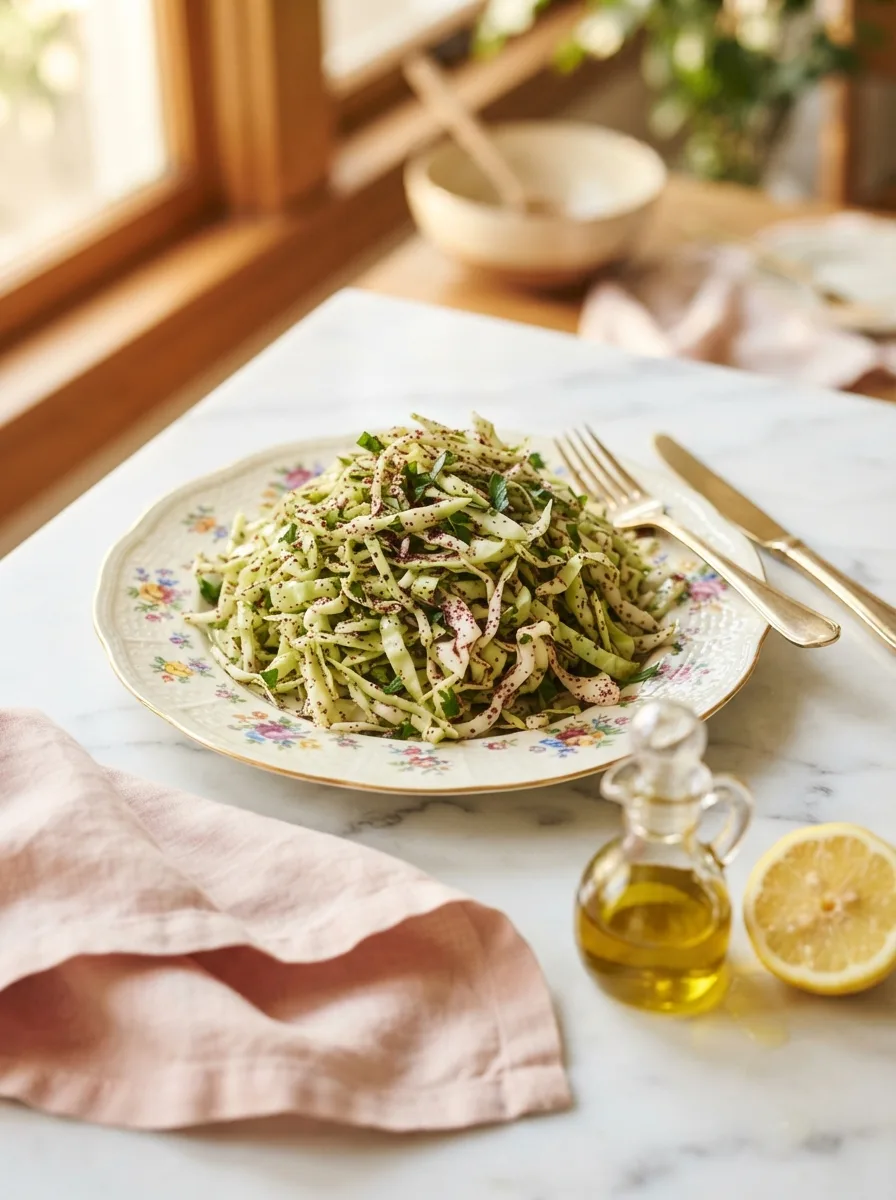
The result is a slaw that stays crunchy in the fridge for four days, tastes bright without being one-note-sour, and takes about fifteen minutes with a knife and a bowl. No mandoline required, though it helps.
I’m genuinely proud of this one — it’s the side dish I make most often now, and it disappears faster than the main it’s sitting next to.
★★★★★ “I made this for a dinner party thinking it would be a background side dish and three people asked for the recipe before dessert. It tastes exactly like the version from Cava.” — Priya, recipe tester (pre-launch)
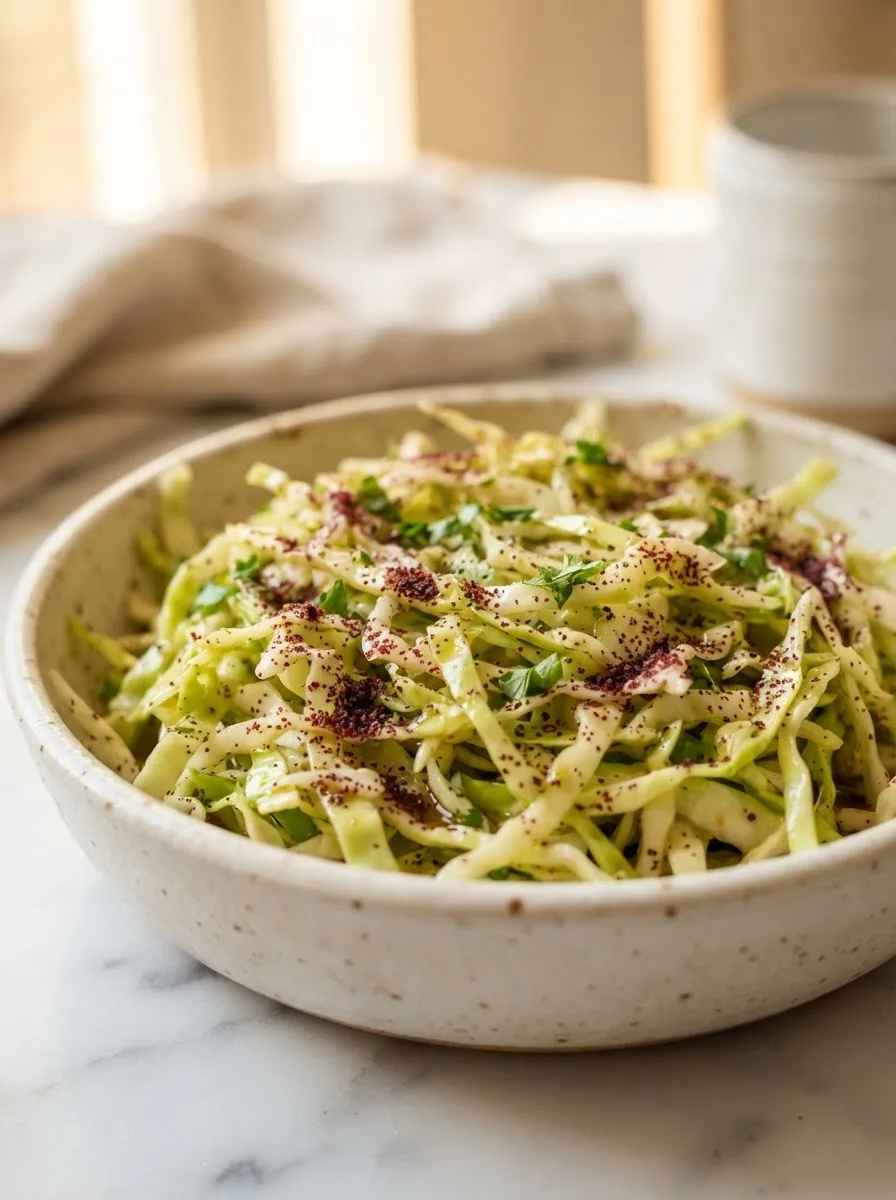
Why You’ll Love This Sumac Slaw
Just Like the Sumac Slaw Cava Serves
- It tastes like the real thing: The sumac-lemon-olive oil ratio is dialed in to taste like the sumac slaw Cava serves, not a vague approximation.
- It actually stays crunchy: Most homemade slaws go limp within an hour. This one holds its crunch for days because of how the cabbage is salted before dressing.
- Five ingredients, no cooking: Cabbage, sumac, lemon, olive oil, and salt. That’s the whole list.
- It’s a better value than the takeout version: One head of cabbage makes a bowl big enough for six people, for less than the cost of a single Cava order.
Sumac Slaw Cava Ingredients
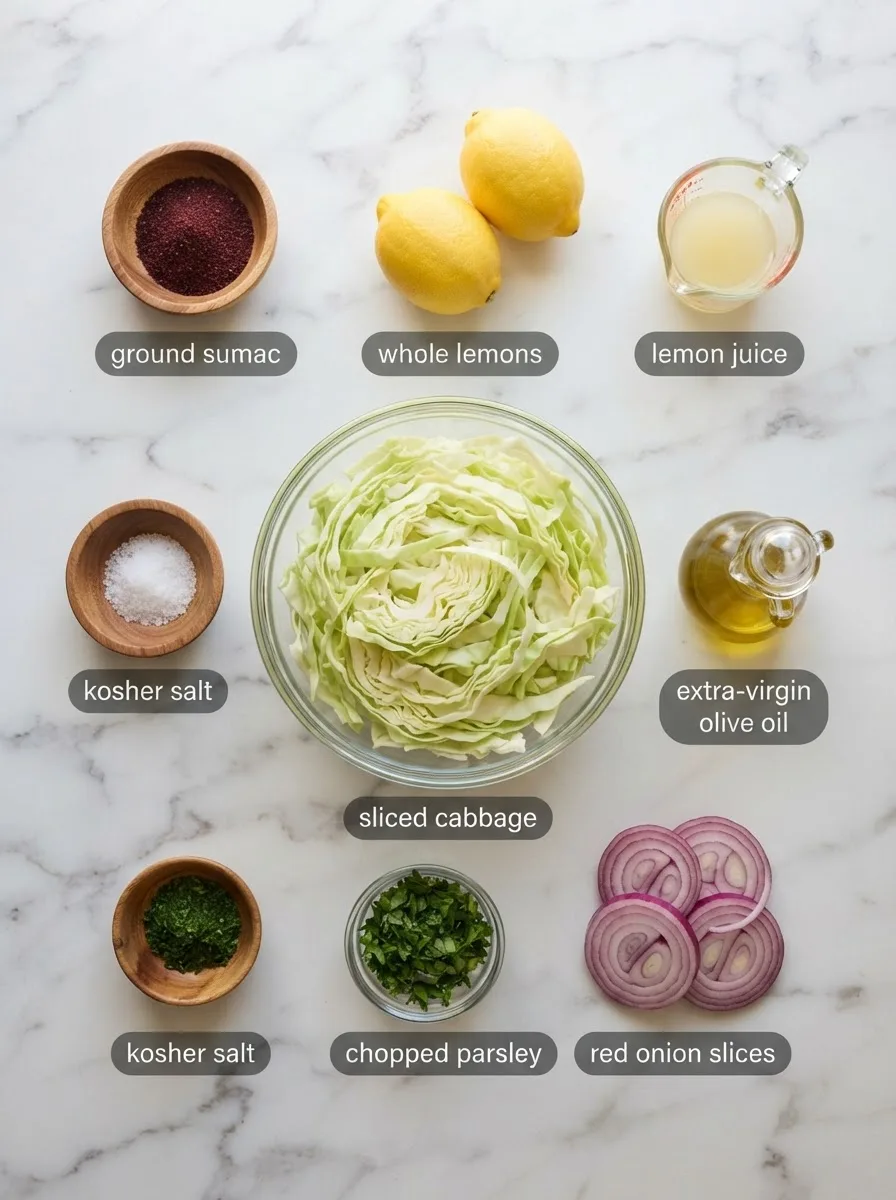
These are the exact sumac slaw cava ingredients — nothing fancy, nothing you can’t find at a regular grocery store.
Green cabbage (1 large head, about 2 pounds). The base of the slaw. Green cabbage holds its crunch better than napa or savoy here — it’s sturdier and doesn’t wilt as fast once dressed. Slice it as thin as you can manage; thick-cut cabbage takes longer to soften and tastes harsher.
Ground sumac (2 teaspoons, plus more for garnish). This is the ingredient that makes it this recipe and not just a lemon slaw. Sumac is a dried, ground berry with a sharp, fruity tartness — closer to tamarind or cranberry than to citrus. Find it in the spice aisle near za’atar, or order it online if your grocery store doesn’t carry it. There’s no real substitute; a squeeze of extra lemon gets you partway there but misses the fruity depth.
Fresh lemon juice (¼ cup, about 2 lemons). Bottled juice works in a pinch, but fresh has a rounder, less acidic edge that balances the sumac instead of fighting it.
Extra-virgin olive oil (¼ cup). Coats the cabbage so the sumac and salt cling instead of sliding off. Use a olive oil you’d actually taste on its own — this isn’t the place for a neutral cooking oil.
Kosher salt (1 teaspoon, plus more to taste). Does double duty: seasons the slaw and draws moisture out of the cabbage so it doesn’t dilute the dressing. This is the most important variable in the whole recipe — more on that below.
Ingredient Note: Ground sumac loses its tartness fast once opened. If yours has been sitting in the cabinet for over a year, buy a fresh jar — old sumac tastes dusty instead of bright, and no amount of extra lemon will fix that.
Equipment You’ll Need
- A sharp chef’s knife or a mandoline — Thin, even slices matter more here than in almost any other slaw. A mandoline gets you there fastest; a sharp knife and a little patience works fine too.
- A large mixing bowl — Big enough to toss the cabbage without it spilling over the sides.
- A citrus juicer or reamer — Not essential, but it gets more juice out of each lemon with less seed mess.
- A salad spinner (optional) — Useful if you rinse the cabbage first, though it’s not required for this recipe.
Controlling the Crunch: How Long to Salt the Cabbage
I tested this slaw three times, changing only how long the salted cabbage rested before I added the dressing. This is the single biggest variable in whether your sumac slaw stays crisp or turns watery.
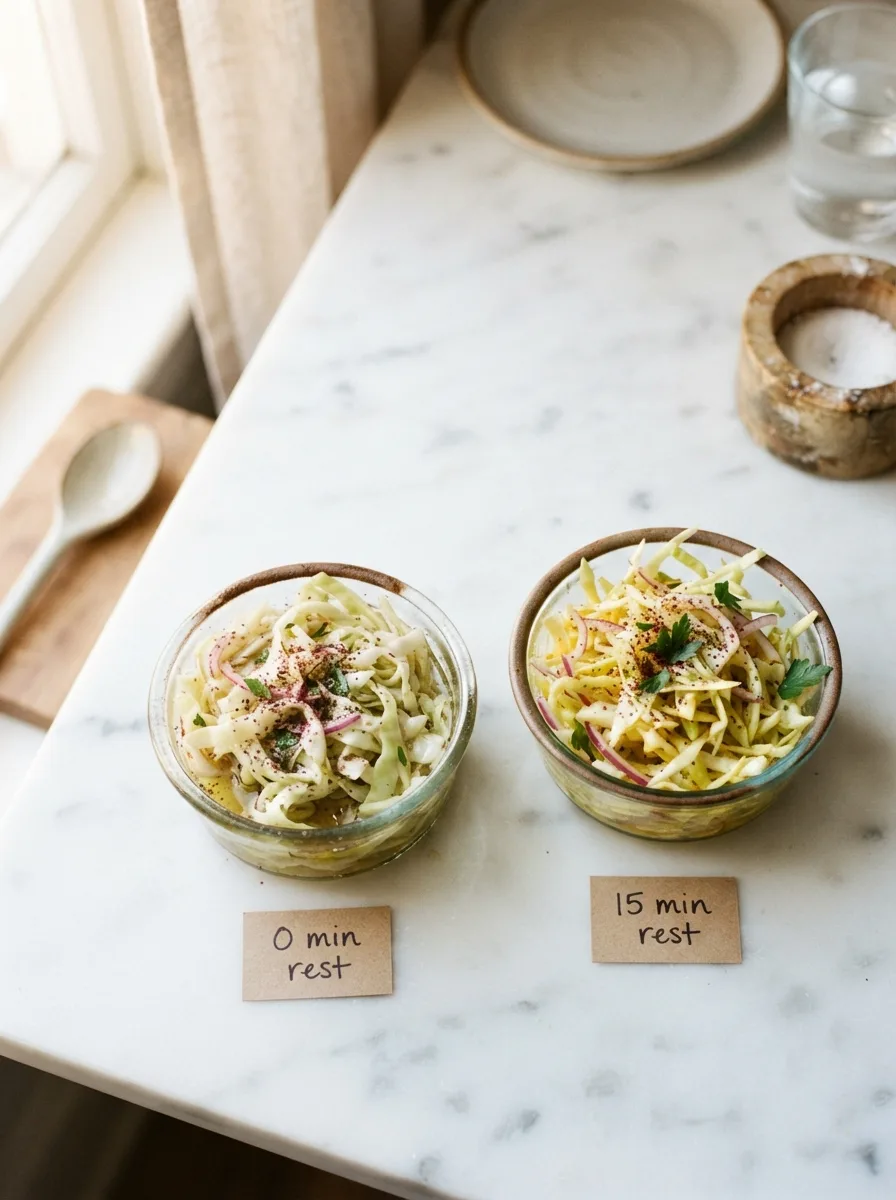
No rest (dressed immediately): The slaw tasted fine right away but pooled liquid in the bowl within 20 minutes. By the next day, it was noticeably softer and less appealing.
15-minute salt rest before dressing: This drew out just enough moisture that the cabbage stayed crisp for a full 4 days in the fridge, with almost no liquid pooling.
1-hour salt rest: Slightly crisper still, but the difference between 15 minutes and 1 hour was small enough that it isn’t worth the extra wait on a weeknight.
The takeaway: Salt the sliced cabbage and let it sit for at least 15 minutes before adding the dressing. It’s a small step that makes a real difference in how long the slaw lasts.
How to Make Sumac Slaw
Before you start: Slice the cabbage as thin and even as you can — uneven pieces mean uneven texture in every bite.
Step 1 — Slice the cabbage
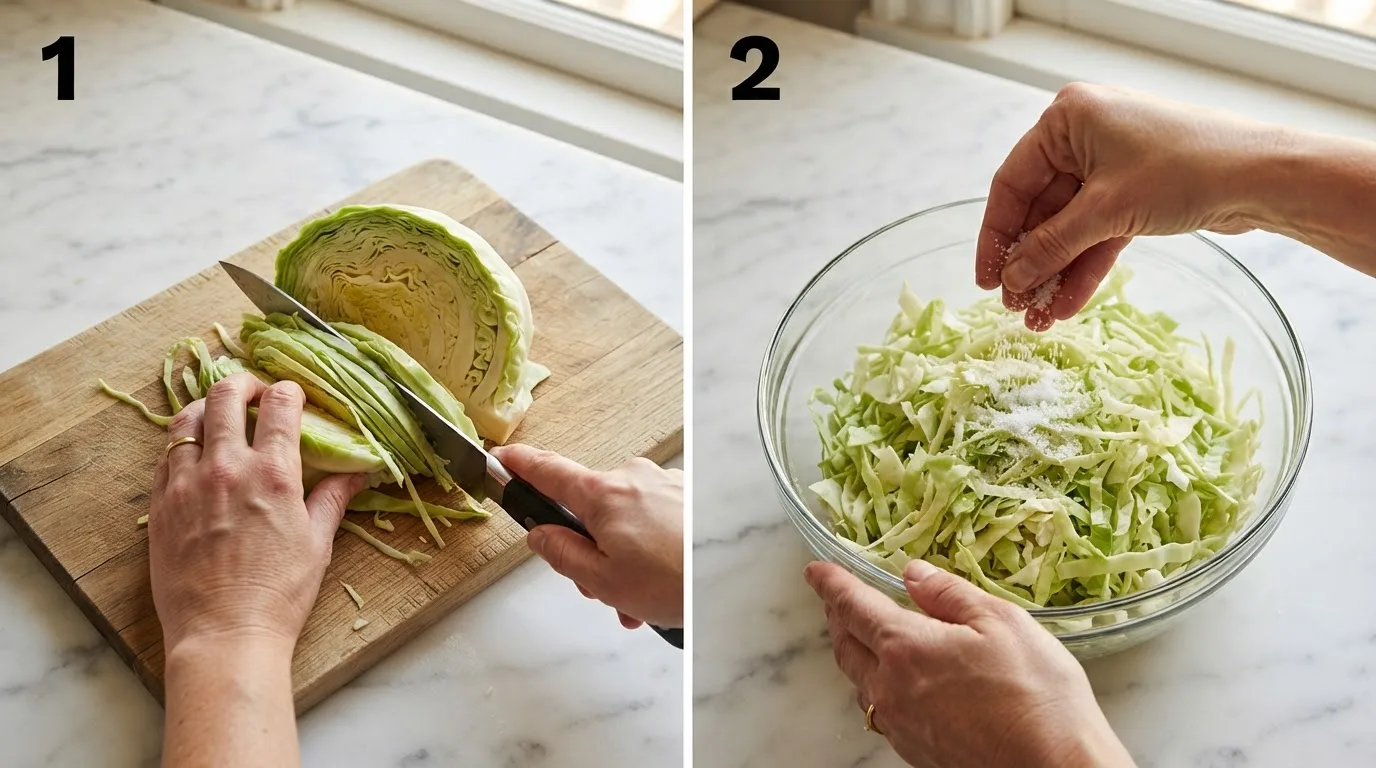
Cut the cabbage in half, then in quarters, and remove the tough core. Slice each quarter crosswise into very thin ribbons, about ⅛ inch thick. Aim for consistency over speed here; a mandoline makes this much easier if you have one.
Step 2 — Salt and rest the cabbage
Transfer the sliced cabbage to a large bowl and sprinkle with 1 teaspoon of kosher salt. Toss well with your hands to distribute it evenly, then let it sit for at least 15 minutes (up to 1 hour). You’ll notice a small amount of liquid collecting at the bottom of the bowl — that’s the salt doing its job. Drain that liquid off before moving on.
Step 3 — Whisk the dressing
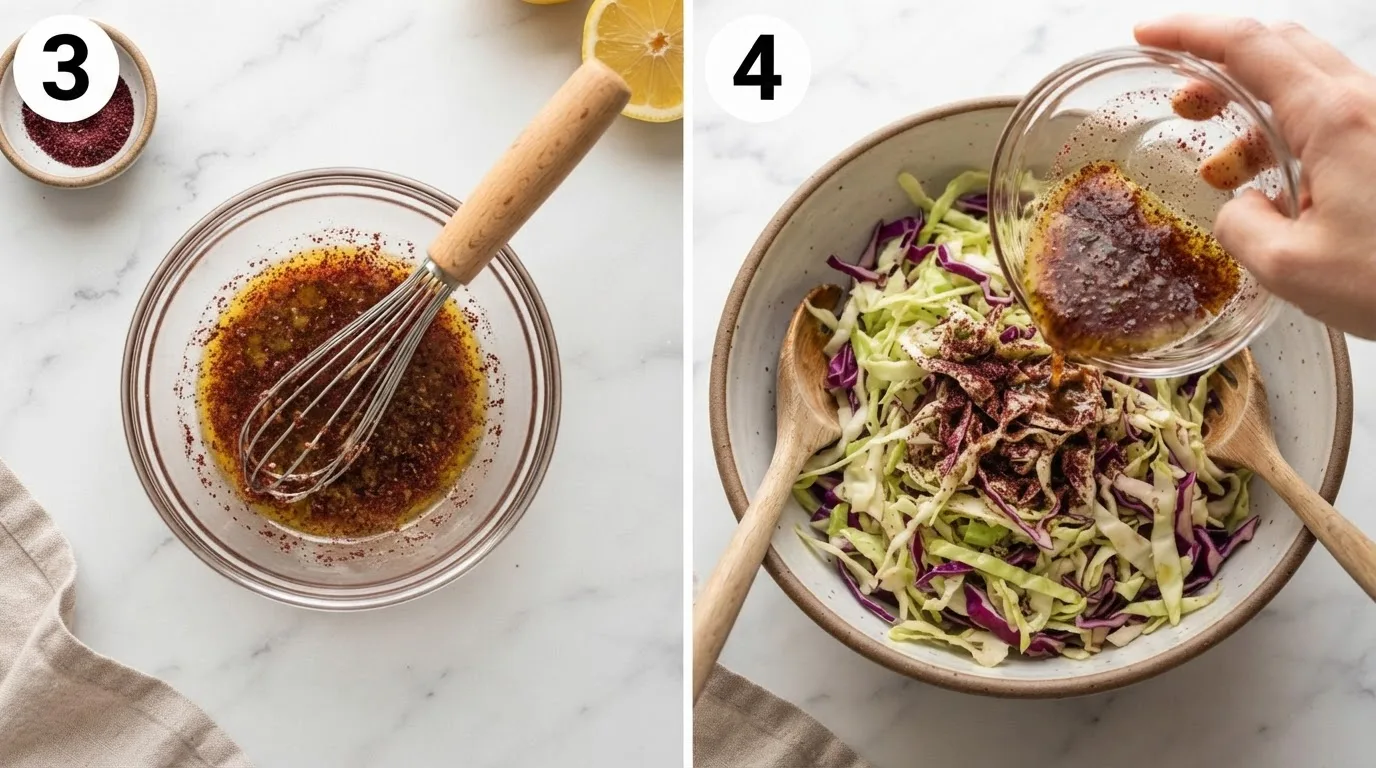
In a small bowl or jar, whisk together the lemon juice, olive oil, sumac, and a pinch more salt until it looks slightly cloudy and combined. It won’t fully emulsify, and that’s fine — a quick whisk right before tossing is enough.
Step 4 — Toss and dress the cabbage
Pour the dressing over the drained, salted cabbage. Toss thoroughly with your hands or two large spoons until every strand is coated — the cabbage should look glossy, not wet. This is where uneven coating shows up, so take an extra minute here.
Step 5 — Chill briefly before serving
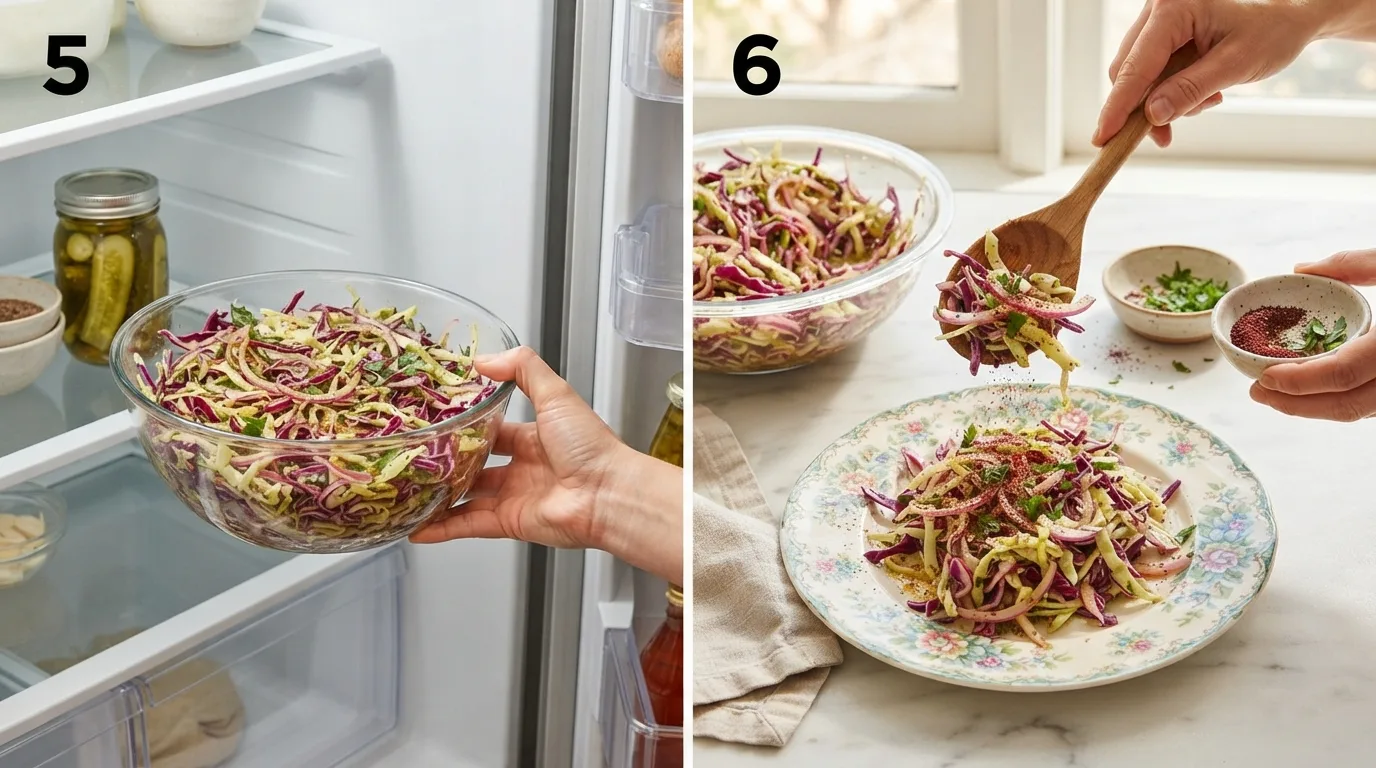
Let the dressed slaw sit in the fridge for at least 10 minutes before serving. This gives the sumac time to bloom into the dressing instead of sitting on top of it. Taste and adjust salt or lemon at this point — cabbage varies in sweetness, so this step matters more than it sounds like it should.
Step 6 — Garnish and serve
Just before serving, dust the top with a little extra ground sumac and a scattering of fresh parsley. This isn’t just for looks — the fresh sumac on top hits your nose first and makes the whole dish taste brighter than if it’s only mixed in underneath.
Pro Tips for Perfect Sumac Slaw
Tip 1: Don’t skip draining the salted cabbage. If you toss the cabbage into the dressing while it’s still sitting in its own salt-drawn liquid, the whole slaw turns watery within an hour. Thirty seconds of draining fixes this completely.
Tip 2: Slice thinner than you think you need to. Thick-cut cabbage tastes more bitter and takes longer to soften into a pleasant texture. Aim for ribbons about as thin as a matchstick.
Tip 3: Add the garnish sumac right before serving, not during mixing. Sumac mixed in early fades into the background. A fresh dusting on top right before it hits the table gives you that first-bite tartness that makes this taste like the version from Cava.
Tip 4: Taste before you add all the salt. Cabbage heads vary a lot in natural sweetness and water content. Add salt in two stages — once during the rest, once at the end — so you’re not guessing the whole amount up front.
Variations and Substitutions

Dietary Variations:
- Vegan and dairy-free: This recipe is already vegan and dairy-free as written — no swaps needed.
- Lower sodium: Cut the salt to ½ teaspoon in the rest step and season only to taste at the end. The slaw will hold up slightly less well over multiple days, so eat it within 2 days if you go this route.
Flavor Variations:
- Add red onion: Thinly sliced red onion, added along with the cabbage, gives the slaw a sharper bite and more color contrast. Soak the slices in cold water for 5 minutes first if you want to mellow the sharpness.
- Make it herbier: Fresh mint or dill in addition to the parsley pushes this closer to a Middle Eastern-style salad and pairs especially well with grilled chicken or lamb.
Ingredient Substitutions:
- Sumac → a mix of lemon zest and a small pinch of dried cranberry powder, if you truly can’t find sumac (the flavor is close but not identical)
- Green cabbage → napa cabbage, though expect a softer texture and a shorter fridge life (2 days instead of 4)
- Fresh lemon juice → fresh lime juice, which shifts the flavor slightly sweeter and less floral but still works
If you’re building a full spread around this slaw, it pairs especially well with something like my Thai chicken salad copycat — the bright, herby flavors work well side by side on the same table.
Troubleshooting
My sumac slaw turned watery overnight — what happened?
Most likely, the cabbage wasn’t drained after the salt rest, or it wasn’t salted at all before dressing. Salt draws moisture out of raw cabbage; if that liquid isn’t drained off before dressing, it dilutes the flavor and turns the slaw soggy within hours. Next time, salt, rest for at least 15 minutes, then drain before adding the dressing.
My slaw tastes flat, not tangy — what went wrong?
This usually means old sumac. Ground sumac loses its tartness within about a year of opening. If your jar has been in the cabinet a while, taste a pinch on its own — if it tastes dusty instead of sharp and fruity, replace it before making this again.
The cabbage tastes bitter — is that normal?
Some cabbage heads are naturally more bitter than others, especially the outer leaves. Peel off the tougher outer leaves before slicing, and make sure you’re cutting thin — thick pieces concentrate the bitterness in every bite.
Storage and Make-Ahead
Counter: Not recommended for longer than the length of a meal — dressed slaw with olive oil shouldn’t sit at room temperature for more than 2 hours.
Refrigerator: Store in an airtight container for up to 4 days. The texture stays crisp thanks to the salt-and-drain step; flavor actually improves slightly on day 2 as the sumac fully blooms into the dressing.
Freeze: Not recommended. Cabbage loses its crunch entirely once frozen and thawed, turning limp and watery.
Reheating: This is a cold dish — no reheating needed or recommended.
Make-Ahead: You can slice the cabbage and salt it up to a day ahead, then drain, dress, and garnish right before serving. This is the best make-ahead approach if you’re prepping for a gathering, since the dressing is best added within a few hours of serving for the brightest flavor.
Frequently Asked Questions
Q: What is sumac slaw? A: Sumac slaw is a raw cabbage salad dressed with lemon juice, olive oil, and ground sumac — a tart, dried berry spice common in Middle Eastern cooking. It’s best known in the U.S. as the crunchy, tangy topping served at Cava, but it’s simple enough to make at home with five ingredients.
Q: Is this the same as the sumac slaw Cava serves? A: It’s built to taste as close as possible to the sumac slaw Cava serves alongside its bowls and pitas — same core ingredients, same tangy-crunchy balance. It won’t be a molecular match since restaurant recipes aren’t published, but testers who’ve had the original say this version is very close.
Q: What does sumac taste like if I’ve never had it? A: Sharp, tart, and slightly fruity — closer to tamarind, pomegranate, or dried cranberry than to citrus, even though people often describe it as “lemony.” It doesn’t have much heat or bitterness on its own.
Q: Can I make this cava sumac slaw without a mandoline? A: Yes. A sharp chef’s knife works fine — just take your time and aim for thin, even ribbons. It’ll take a few extra minutes, but the result is the same.
Q: How long does sumac slaw last in the fridge? A: Up to 4 days in an airtight container, as long as the cabbage was salted and drained before dressing. Skip that step and it’ll only hold up well for about a day.
Q: Can I use pre-shredded coleslaw mix instead of a whole cabbage? A: You can, though pre-shredded mix is usually cut thicker and includes carrots, which changes the flavor and texture slightly. It works in a pinch, but slicing your own cabbage gets you closer to the real thing.
Q: What should I serve with sumac slaw? A: It’s excellent alongside grilled chicken, falafel, grain bowls, or pita sandwiches. It also holds its own as a side at a barbecue or potluck, similar to how you’d serve my Hawaiian Bros pasta salad copycat.
More Salad Recipes You’ll Love
- Cheesecake Factory Caesar Salad Copycat — a creamy, garlicky classic that comes together in one bowl
- Thai Chicken Salad (Cheesecake Factory Copycat) — crunchy, peanut-dressed, and packed with fresh herbs
- Hawaiian Bros Pasta Salad Copycat — a sweet-savory potluck favorite
- Cheesecake Factory Chicken Salad Sandwich Copycat — the grape-and-pecan version everyone asks about

Foolproof Sumac Slaw (Cava-Style)
Ingredients
For the Slaw:
- 1 large head green cabbage (about 2 pounds), thinly sliced
- 1 teaspoon kosher salt
For the Dressing:
- 1/4 cup fresh lemon juice (about 2 lemons)
- 1/4 cup extra-virgin olive oil
- 2 teaspoon ground sumac, plus more for garnish
- 1/4 teaspoon kosher salt, plus more to taste
- 1/4 teaspoon freshly cracked black pepper
- 2 tablespoon chopped fresh parsley, plus more for garnish
Instructions
- Cut the cabbage in half, remove the core, and slice crosswise into thin ribbons, about ⅛ inch thick.
- Transfer the cabbage to a large bowl, sprinkle with 1 teaspoon kosher salt, and toss well. Let rest for at least 15 minutes (up to 1 hour), then drain off any liquid that collects.
- In a small bowl, whisk together the lemon juice, olive oil, sumac, ¼ teaspoon salt, and black pepper.
- Pour the dressing over the drained cabbage and toss thoroughly until every strand is coated.
- Stir in the chopped parsley, then chill the slaw for at least 10 minutes before serving. Taste and adjust salt or lemon as needed.
- Just before serving, dust the top with a little extra ground sumac and parsley.
Notes
- Salting and draining the cabbage before dressing is the step that keeps this slaw crunchy for up to 4 days — don't skip it, even if you're short on time.
- If your ground sumac is more than a year old, taste it on its own first. If it tastes dusty instead of tart, replace it before making this recipe.
- This slaw can be prepped a day ahead through the salting and draining step, then dressed within a few hours of serving for the brightest flavor.**Green cabbage (1 large head, about 2 pounds).** The base of the slaw. Green cabbage holds its crunch better than napa or savoy here — it's sturdier and doesn't wilt as fast once dressed. Slice it as thin as you can manage; thick-cut cabbage takes longer to soften and tastes harsher.