Creamy Velveeta Beef Pasta with Bowtie Noodles

If you’ve ever made a “creamy velveeta beef pasta with bowtie noodles” that turned out either soupy or clumped into a gluey mess, you know the problem isn’t the idea — it’s the ratio. I tested this one four times, changing only the liquid amounts each round, because the first batch broke into a greasy puddle and the second one seized up into cheese concrete by the time it hit the table.
The fix turned out to be simpler than I expected: melt the Velveeta into a mix of broth and milk before it ever meets the pasta, not after. That one change is the difference between a sauce that clings to every bowtie noodle and one that slides off into a puddle at the bottom of the bowl.
This is a real weeknight recipe — one skillet, about 30 minutes, and it reheats without turning into paste. My kids ask for it by name, which in my house is the only review that actually matters.
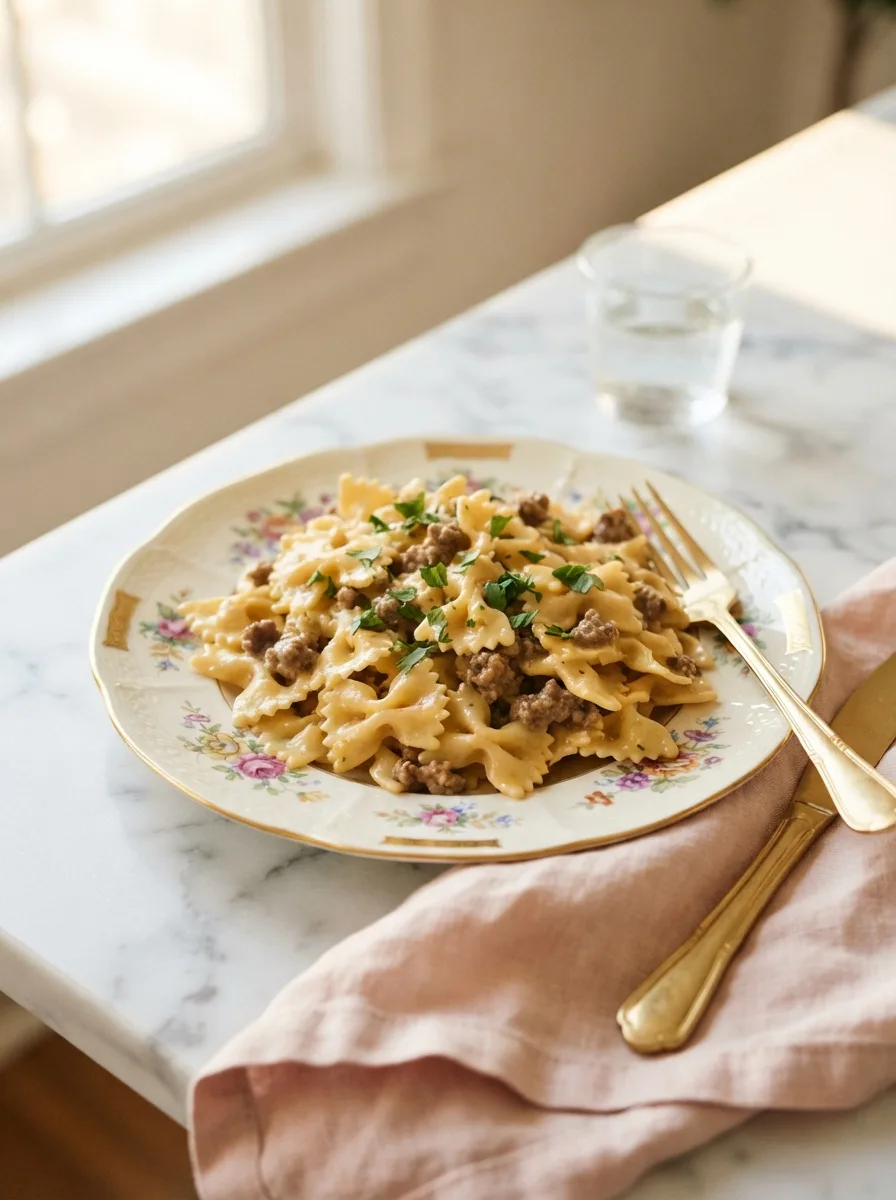
The result is a pasta that stays creamy from the first bite to the leftovers you eat cold out of the fridge the next day (I don’t judge — I do this too). No canned soup, no flour roux to babysit. Just browned beef, real melted cheese, and bowtie noodles that hold their shape instead of turning to mush.
What makes this version different from the recipe card that’s been passed around family group chats for decades is the milk-to-broth ratio in the sauce — more on that below, because it’s the single most important variable in the whole recipe.
★★★★★ “I made this for my husband who claims he ‘doesn’t like pasta with cheese sauce’ and he had two bowls. The noodles didn’t turn to mush even after sitting in the fridge overnight, which is the first time that’s happened with a Velveeta recipe for us.” — Danielle R., recipe tester (pre-launch)
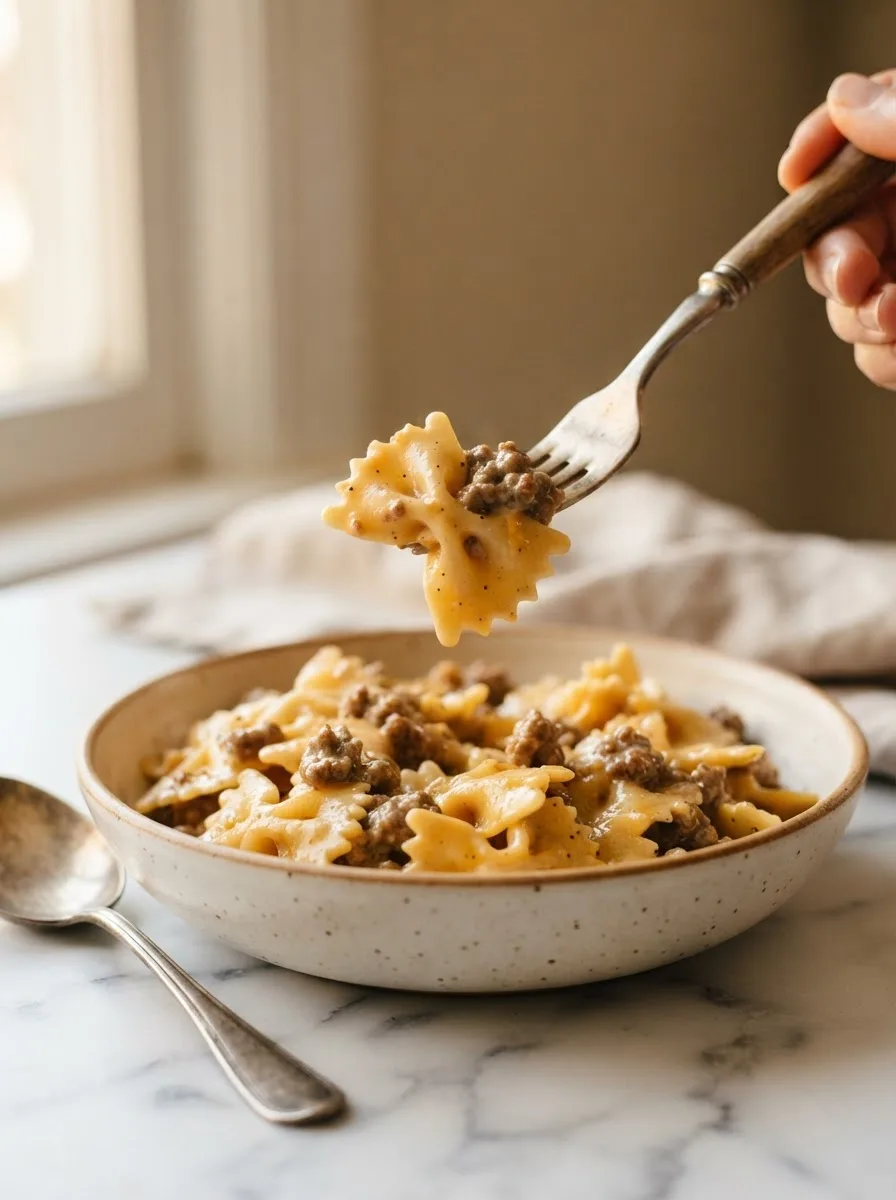
Why You’ll Love This Creamy Velveeta Beef Pasta with Bowtie Noodles
- One skillet, 30 minutes: Everything happens in one pan, including cooking the pasta if you use the skillet method (see Notes). Less cleanup, faster dinner.
- Reheats without turning gluey: The milk-and-broth ratio I landed on after testing keeps the sauce loose enough that leftovers loosen back up with a splash of milk instead of seizing into a solid block.
- No canned soup required: This isn’t a dump-and-bake casserole. The sauce is real melted cheese and broth, which means you can actually taste the beef and seasoning instead of just condensed soup.
- Kid-tested, picky-eater approved: Bowtie noodles hold the sauce in their folds better than penne or elbow macaroni, so every bite gets a fair share of cheese — which matters more than you’d think to a six-year-old.
Key Ingredients
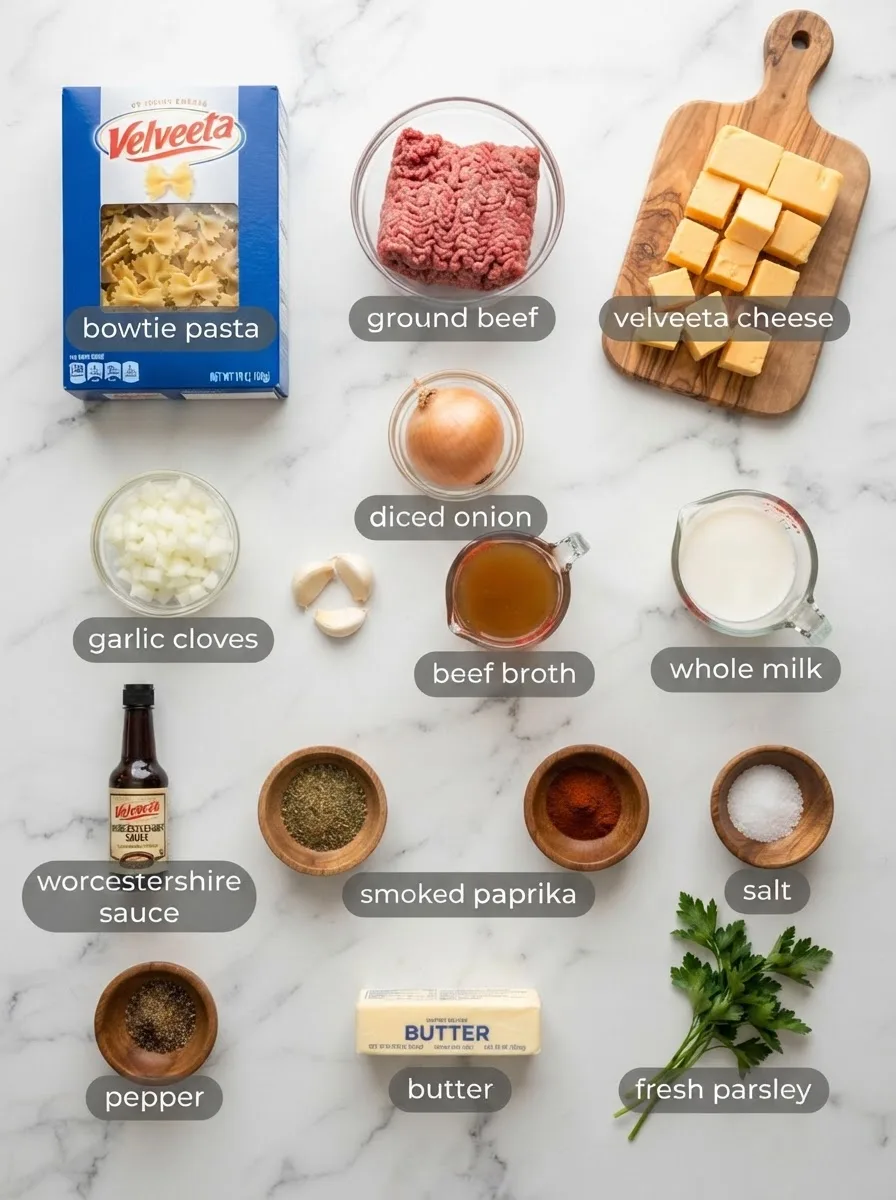
Bowtie (farfalle) pasta. The ridged folds catch and hold the cheese sauce better than smooth shapes like penne. Cook it just shy of al dente — it finishes softening in the sauce, and if it’s fully cooked before that, you’ll end up with mush by the time everyone’s at the table.
Ground beef (85/15). The extra fat renders into the sauce as you brown it, which adds richness you’d otherwise have to fake with more butter. Leaner beef (90/10) works, but add an extra tablespoon of butter to compensate.
Velveeta. This is not a recipe where “real cheddar” is a straight swap — Velveeta melts into a smooth, stretchy sauce because of how it’s processed, while shredded cheddar alone will seize into greasy clumps in a broth-based sauce. Cube it small so it melts evenly instead of sitting in the pan as one stubborn block.
Beef broth + whole milk. This is the most important pair in the recipe — see the Controlled Test section below for exactly why the ratio between them matters more than any other variable.
Worcestershire sauce. A small amount deepens the beef flavor without tasting like a specific ingredient on its own — it’s doing background work, not announcing itself.
Ingredient Note: Don’t substitute pre-shredded cheddar for the Velveeta and expect the same sauce. Velveeta is an emulsified processed cheese, which is exactly why it melts smoothly into a broth-based sauce instead of breaking into oil and solids the way natural cheese does.
Equipment You’ll Need
- Large deep skillet (12-inch) or Dutch oven — You want enough surface area to brown the beef in one layer and enough depth to hold the sauce and pasta together at the end. A regular 10-inch skillet works, but you’ll need to stir more carefully to avoid overflow.
- Wooden spoon or silicone spatula — For scraping up the browned bits from the bottom of the pan when you add the broth; those bits carry a lot of flavor.
- Liquid measuring cup — Precision matters here more than almost anywhere else in the recipe — the broth-to-milk ratio is the single biggest variable in how the sauce turns out.
- Colander — For draining the pasta. No stand mixer, no food processor, no specialty tools required.
Controlling Sauce Creaminess: The Milk-to-Broth Ratio (A Controlled Test)
This is the one variable that determines whether this recipe becomes a family favorite or a one-time disappointment. I tested three versions of the sauce, changing only the ratio of beef broth to whole milk while keeping the Velveeta amount identical across all three.
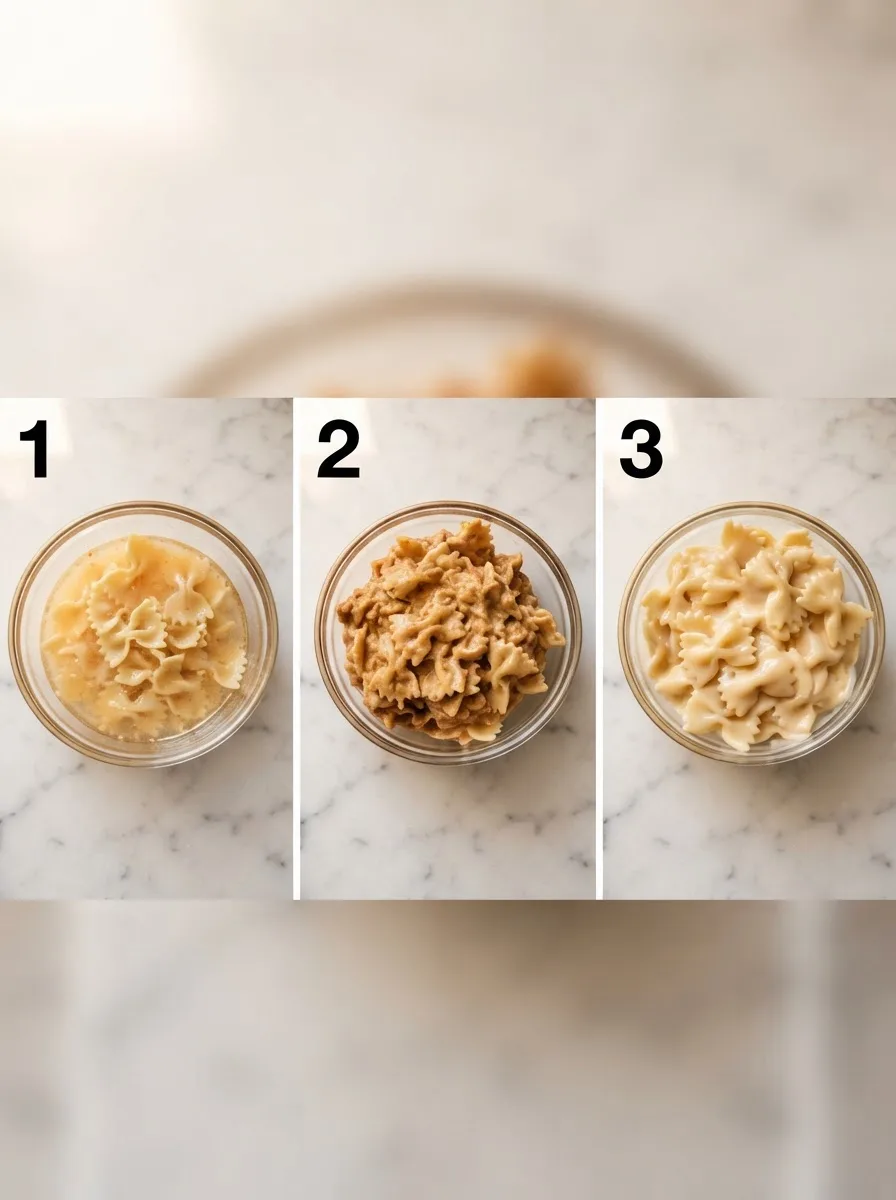
Test 1 — All broth, no milk: Thin, slightly greasy, and separated within 5 minutes of coming off the heat. The sauce ran to the bottom of the bowl instead of coating the noodles. Not what we want.
Test 2 — All milk, no broth: Thick, almost paste-like once it cooled for a few minutes, and lost the savory beef flavor — it tasted like a cheese sauce with beef added, rather than a cohesive dish.
Test 3 — Equal parts broth and milk (the winner): Glossy, evenly coating, and still fluid enough to toss through every bowtie noodle without pooling or seizing. It held that texture for a full 20 minutes on the counter, which is roughly how long it takes a family to actually sit down and eat.
The takeaway: Equal parts broth and milk gives you savory depth from the broth and richness from the milk, without either one taking over. If your sauce ever looks too thick, add broth (not more milk) to loosen it — milk alone will just make it sweeter and heavier, not looser.
How to Make Creamy Velveeta Beef Pasta with Bowtie Noodles
Before you start: Cube the Velveeta before you start cooking. It melts far more evenly in small cubes than in one large block dropped into hot liquid — a big chunk will sit and gum up while the edges scorch.
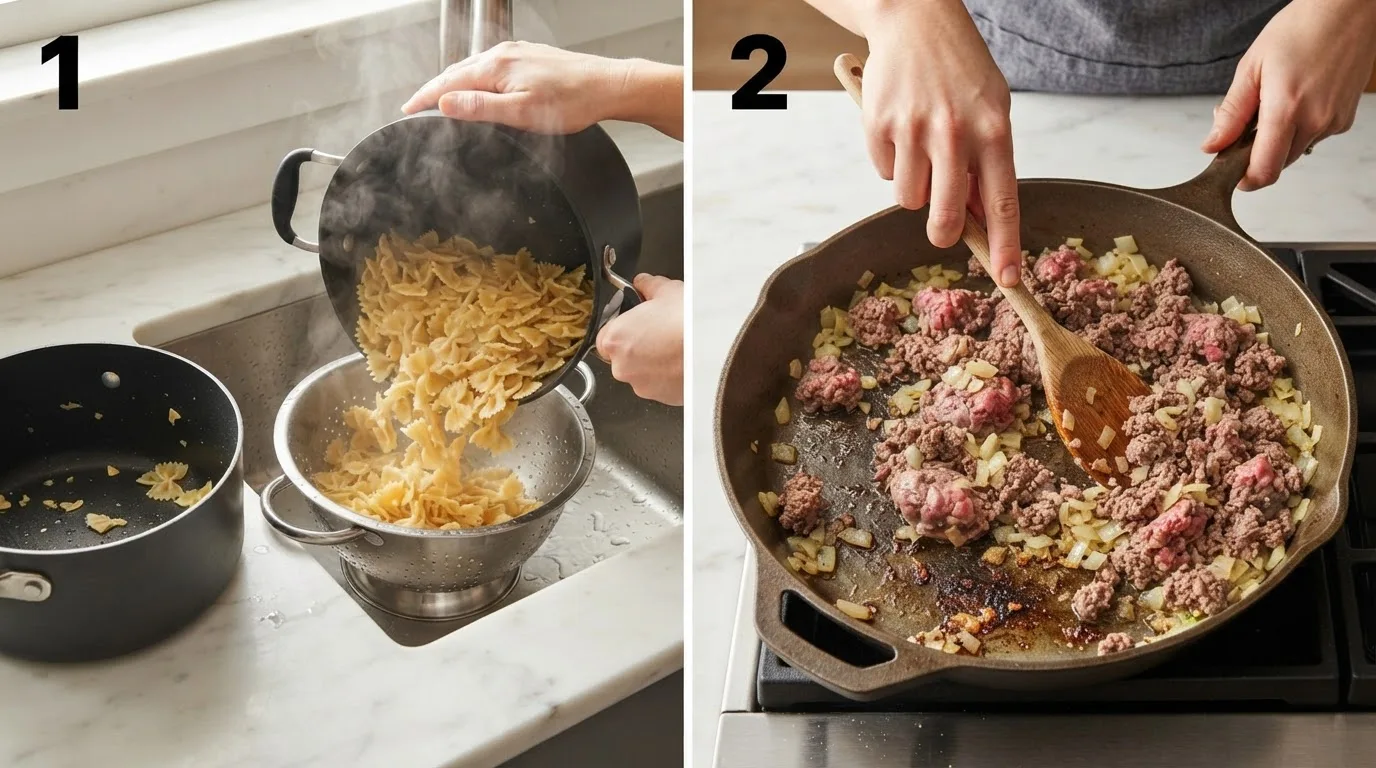
Step 1 — Cook the bowtie pasta
Bring a large pot of well-salted water to a boil and cook the bowtie pasta 1 minute less than the package instructions for al dente. It should still have a slight bite in the center — it finishes softening in the sauce later, and pasta that’s fully cooked now will be mush by serving time. Drain and set aside, reserving about ½ cup of the pasta water in case you need to loosen the sauce later.
Step 2 — Brown the beef and aromatics
In a large deep skillet over medium-high heat, add the ground beef and diced onion. Break the beef apart with a wooden spoon and cook, stirring occasionally, until no pink remains and the onion has softened, about 6–8 minutes. Add the garlic in the last minute so it doesn’t burn. Drain excess grease if there’s more than about 2 tablespoons pooling in the pan — a little fat carries flavor, but too much will make the sauce greasy instead of creamy.
Step 3 — Season and deglaze
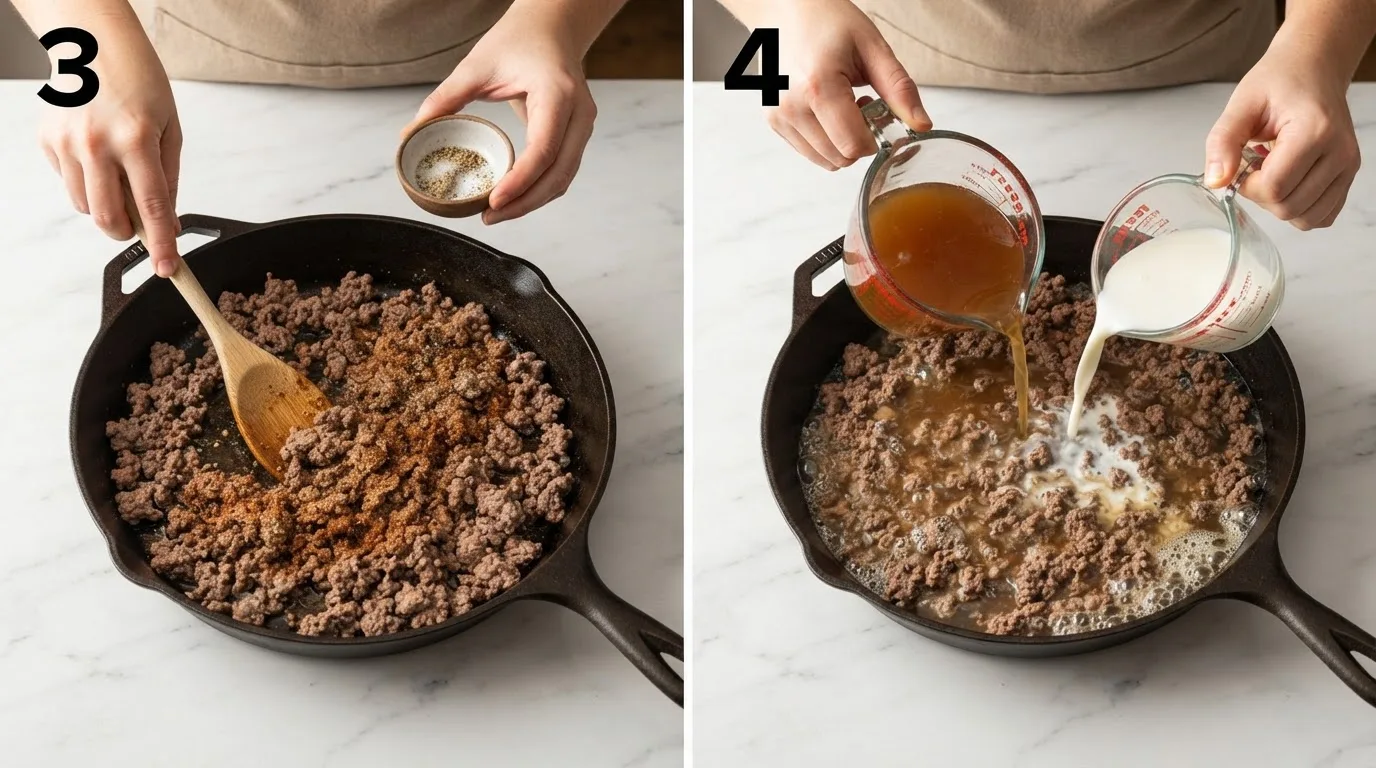
Stir the Worcestershire sauce, Italian seasoning, smoked paprika, salt, and pepper into the beef. Cook for 30 seconds, just until fragrant — this blooms the spices in the residual fat instead of leaving them tasting raw and dusty in the final sauce.
Step 4 — Simmer with broth and milk
Pour in the beef broth and whole milk, scraping up any browned bits stuck to the bottom of the pan with your spoon — that’s flavor you don’t want to leave behind. Bring the mixture to a gentle simmer over medium heat, about 2–3 minutes. You’re looking for small, steady bubbles at the edges of the pan, not a rolling boil, which can cause the milk to scorch on the bottom.
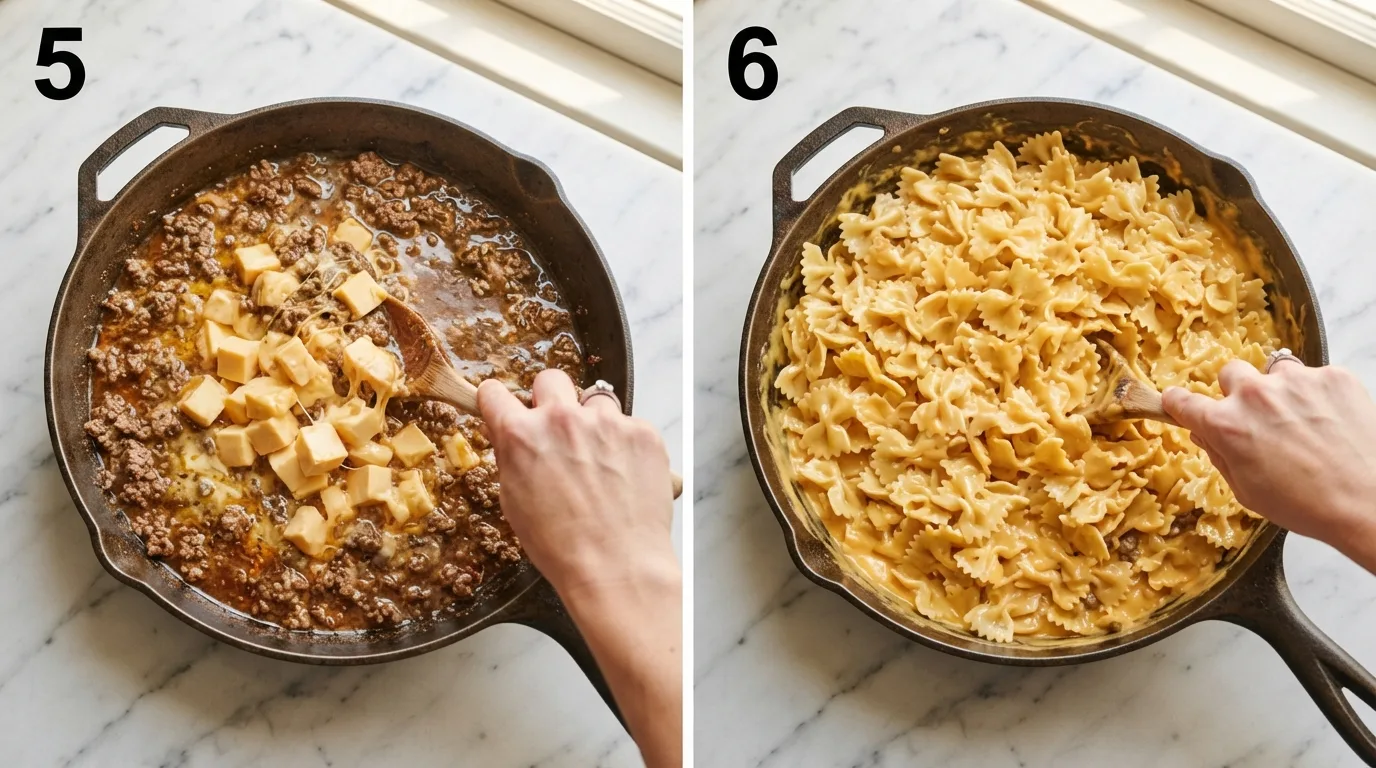
Step 5 — Melt in the Velveeta
Reduce the heat to low and add the cubed Velveeta a handful at a time, stirring after each addition until fully melted before adding more. Adding it all at once causes it to clump instead of melting smoothly. The sauce is ready when it’s glossy and coats the back of your spoon in an even layer — about 3–4 minutes total.
Step 6 — Fold in the pasta and rest
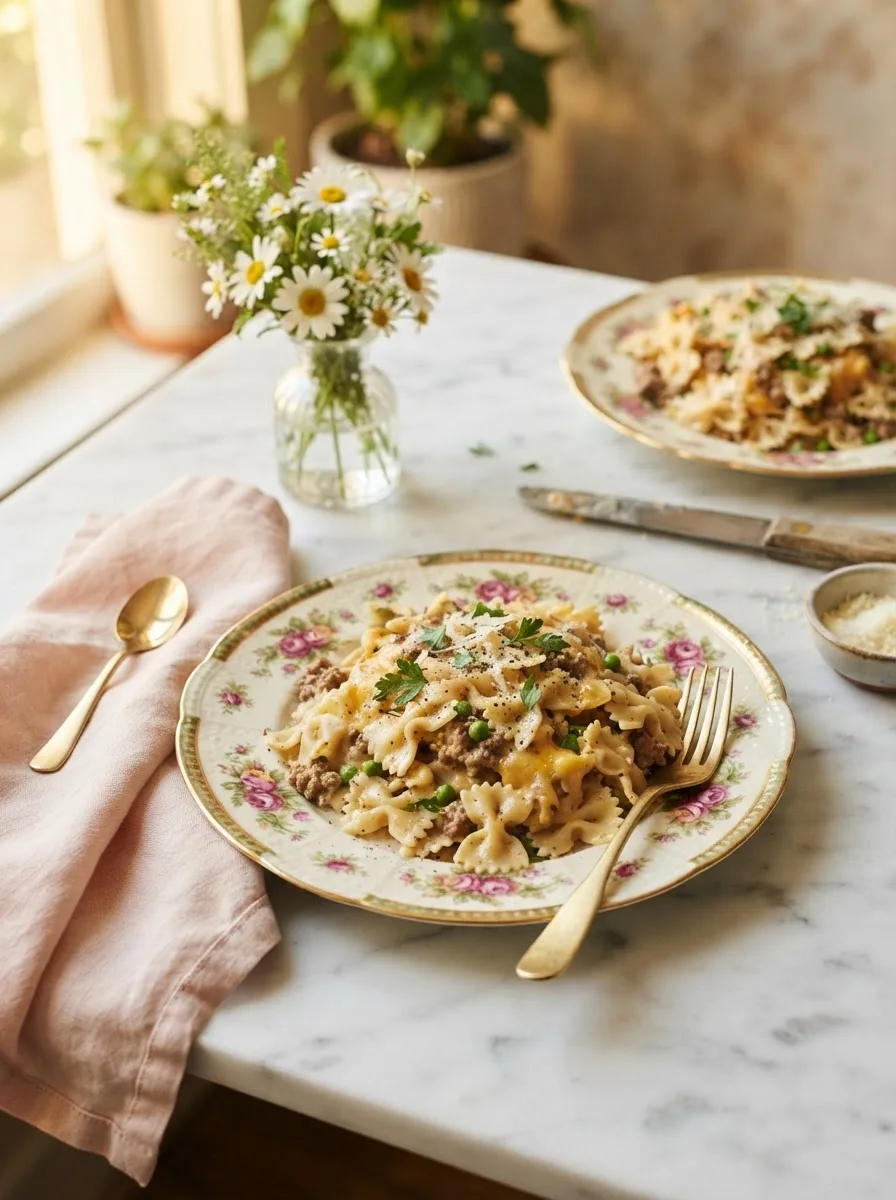
Add the drained bowtie pasta directly into the skillet and toss until every noodle is coated in sauce. If it looks even slightly thick, splash in some of the reserved pasta water, a tablespoon at a time, until it loosens back up. Let it rest off the heat for 2–3 minutes before serving — this is when the pasta finishes absorbing the last bit of sauce and the texture sets exactly right. Garnish with chopped parsley.
Pro Tips for Perfect Creamy Velveeta Beef Pasta with Bowtie Noodles
Tip 1: Undercook the pasta on purpose. Pull it 1 minute before the package says it’s done. It keeps cooking in the hot sauce, and starting it fully cooked is the fastest way to end up with mush.
Tip 2: Add the Velveeta in stages, low and slow. Dumping the whole block in at once on high heat is the most common reason this sauce turns grainy or clumpy instead of smooth.
Tip 3: Loosen with broth, not more milk. If the sauce thickens too much as it sits, a splash of reserved pasta water or extra broth brings it back without making it heavier or sweeter.
Tip 4: Don’t skip draining the excess beef fat. A little fat adds flavor, but a skillet full of grease will float on top of the sauce and make the whole dish taste heavier than it should.
Variations and Substitutions
Dietary Variations:
- Gluten-free: Swap in a gluten-free bowtie pasta (chickpea or rice-based blends hold their shape best). Cook 1–2 minutes less than the package suggests, since GF pasta softens faster once it hits a hot sauce.
- Lighter version: Use 93/7 ground beef or ground turkey, and swap whole milk for 2% — the sauce will be slightly less rich but still holds together fine.
Flavor Variations:
- Tex-Mex twist: Stir in a drained can of diced tomatoes with green chilies (Rotel-style) along with the broth in Step 4, and swap the Italian seasoning for chili powder and cumin.
Ingredient Substitutions:
- Ground beef → Ground turkey or Italian sausage (drain sausage well; it releases more fat)
- Whole milk → Half-and-half for an even richer sauce, or 2% for a lighter one
- Bowtie pasta → Rotini or shells both catch sauce similarly well
If you’re building out a comfort-food dinner rotation, this pairs well after a night of dolly’s chicken and stuffing casserole — both are one-pan, weeknight-friendly, and reheat without drying out.
Troubleshooting
Why did my sauce turn grainy or clumpy?
This almost always means the Velveeta was added too fast on heat that was too high. Cheese proteins tighten up and separate when they’re shocked with sudden heat. Next time, drop the heat to low before adding the cheese, and add it in small handfuls, stirring each addition in fully before adding more.
My pasta turned mushy — what happened?
The pasta was likely cooked all the way to al dente (or past it) before it ever hit the sauce. Pull it 1 full minute early next time — it finishes softening in the hot sauce, and starting it fully cooked leaves no room for that.
The sauce seized up after sitting for a few minutes — how do I fix it?
Velveeta sauce naturally thickens as it cools because the fat starts to set. Add a splash of warm broth or reserved pasta water and stir over low heat for a minute — it will loosen right back up. Avoid microwaving leftovers at full power without added liquid, since that’s the fastest way to make it seize permanently.
Storage and Make-Ahead
Counter: Safe for up to 2 hours at room temperature before it should go in the fridge.
Refrigerator: Store in an airtight container for up to 4 days. The sauce will thicken as it chills — that’s normal, not a sign it’s gone bad.
Freeze: This recipe freezes acceptably but not perfectly — cream-based sauces can separate slightly on thawing. Freeze in a freezer-safe container for up to 2 months, and expect to stir vigorously (with a splash of milk) after reheating to bring it back together.
Reheating: On the stovetop over low heat with a splash of milk or broth, stirring frequently, until warmed through and smooth again — about 5 minutes. Microwave works too; heat in 30-second bursts, stirring between each, with a splash of liquid added first.
Make-Ahead: Brown the beef and build the sauce up to a day ahead, then refrigerate separately from the cooked pasta. Reheat the sauce gently on the stove, then toss in freshly boiled pasta right before serving for the best texture.
Frequently Asked Questions
Q: Can I use a different cheese instead of Velveeta? A: You can, but the texture will change. Velveeta melts into a smooth, stretchy sauce because it’s an emulsified processed cheese. Shredded cheddar alone will separate into greasy clumps in a broth-based sauce like this one — if you want to try it, mix in 1 tablespoon of cornstarch with the cheese first to help it stay smooth.
Q: Can I make this ahead of time for a busy weeknight? A: Yes — brown the beef and build the sauce up to a day ahead, then store it separately from the cooked pasta. Reheat gently and toss with fresh pasta right before serving so the noodles don’t turn mushy sitting in the fridge together.
Q: How do I store leftover Velveeta beef pasta? A: In an airtight container in the fridge for up to 4 days. The sauce thickens as it chills, which is expected — a splash of milk when reheating brings it right back.
Q: Can I freeze this recipe? A: Yes, for up to 2 months, though cream-based sauces can separate slightly during freezing. Thaw in the fridge overnight and reheat slowly on the stove with added liquid, stirring often to bring the sauce back together.
Q: What pasta shape works best if I don’t have bowtie noodles? A: Rotini or medium shells both catch the sauce in their folds nearly as well as bowtie. Avoid smooth shapes like spaghetti or angel hair — the sauce will slide right off instead of clinging.
Q: Why is my sauce too thin? A: You likely added too much broth relative to milk, or added the pasta before the sauce had time to thicken over low heat for a few minutes. Let it simmer a bit longer on low, and it will thicken as it sits — see the Controlled Test section above for the ratio that worked best in my testing.
Q: Can I make this recipe spicy? A: Add a can of diced tomatoes with green chilies (Rotel-style) along with the broth, or stir in ½ teaspoon of cayenne with the other seasonings. Both keep the sauce smooth while adding real heat.
More Comfort Food Recipes You’ll Love
- Cheesecake Bread — a sweet, swirled bread that’s part dessert, part breakfast, and just as forgiving on a busy morning.
- Dolly’s Chicken and Stuffing Casserole — another one-pan, weeknight-tested comfort dinner with the same easy cleanup.
- Cheesy Ranch Potatoes and Sausage — if you love a cheesy, savory skillet dinner, this one uses a similar melt-it-in approach.
- Banana Tempura — a completely different direction, but a fun, crispy dessert if you want something sweet after a savory dinner like this one.
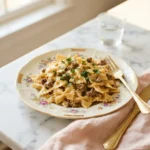
Creamy Velveeta Beef Pasta with Bowtie Noodles
Ingredients
For the Pasta:
- 1 lb (16 oz) bowtie (farfalle) pasta
For the Beef and Sauce:
- 1 lb ground beef (85/15)
- 1 small yellow onion, diced (about 1 cup)
- 3 clove garlic, minced
- 1 tablespoon Worcestershire sauce
- 1 teaspoon Italian seasoning
- 1/2 teaspoon smoked paprika
- 1/2 teaspoon salt, plus more to taste
- 1/4 teaspoon black pepper
- 1 cup beef broth
- 1 cup whole milk
- 8 oz Velveeta, cubed
- 2 tablespoon fresh parsley, chopped, for garnish
Instructions
- Bring a large pot of well-salted water to a boil. Cook the bowtie pasta 1 minute less than the package instructions for al dente. Drain, reserving ½ cup of the pasta water.
- In a large deep skillet over medium-high heat, brown the ground beef and diced onion together, breaking the beef apart with a wooden spoon, about 6–8 minutes, until no pink remains. Add the garlic in the last minute. Drain excess grease if more than about 2 tablespoons has pooled in the pan.
- Stir in the Worcestershire sauce, Italian seasoning, smoked paprika, salt, and pepper. Cook 30 seconds until fragrant.
- Pour in the beef broth and milk, scraping up any browned bits from the bottom of the pan. Bring to a gentle simmer over medium heat, 2–3 minutes.
- Reduce heat to low. Add the cubed Velveeta a handful at a time, stirring until fully melted before adding more, about 3–4 minutes total.
- Add the drained pasta and toss until fully coated. If the sauce looks thick, splash in reserved pasta water, a tablespoon at a time, until loosened. Rest off heat for 2–3 minutes before serving. Garnish with parsley.
Notes
- Pull the pasta 1 minute early — it finishes cooking in the hot sauce, and starting it fully al dente leads to mush by serving time.
- Add the Velveeta low and slow, in small handfuls. Dumping it in all at once on high heat is the most common cause of a grainy or clumped sauce.
- Leftovers thicken in the fridge — this is normal. Reheat with a splash of milk or broth over low heat, stirring until it loosens back to a smooth sauce.
- For a spicier version, stir in a drained can of diced tomatoes with green chilies along with the broth in step 4.